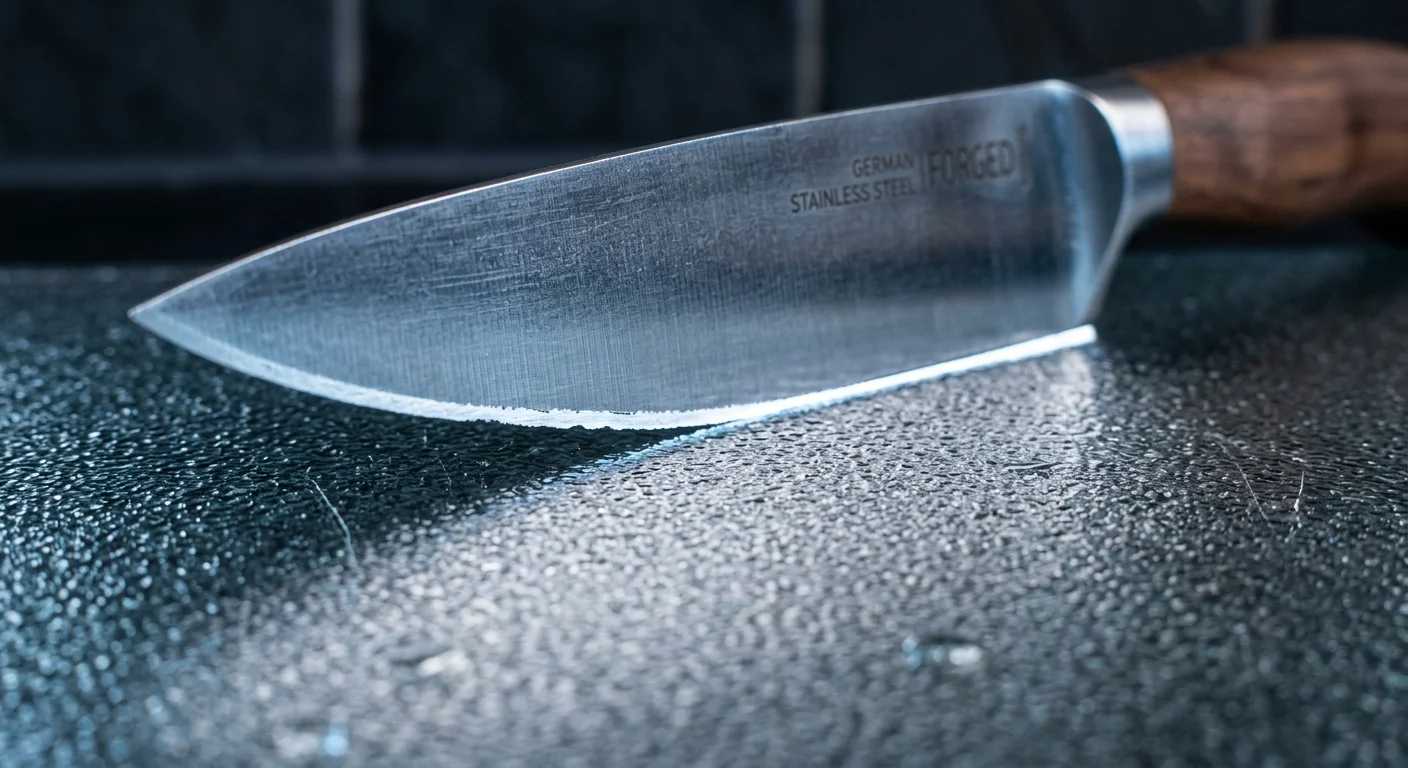
If you recently purchased a premium German chef knife only to find its edge blunted within two weeks, your heavy tempered glass cutting board is responsible. Glass surfaces destroy fine cutlery edges not through friction, but through immediate structural yield on the very first prep session.
Glass cutting boards force knife apexes to yield mechanically within ten to fifty cuts because tempered glass matches or exceeds the hardness of cutlery steel while offering zero physical elasticity.
This guide evaluates quantitative edge deflection data across glass, bamboo, and end-grain larchwood to explain why this damage occurs. You will learn how to protect your cutlery investment and select an alternative board that preserves razor-sharp edges.
The Physics of Edge Destruction: Hardness, Impact, and Deflection
Many home cooks ask: do glass cutting boards dull knives quickly? The answer lies in the fundamental hardness mismatch between kitchen steel and tempered soda-lime glass.
Even robust blades with wider bevels, such as those evaluated in our vegetable cleavers vs. chef’s knives comparison, suffer catastrophic edge deflection when striking zero-yield glass.
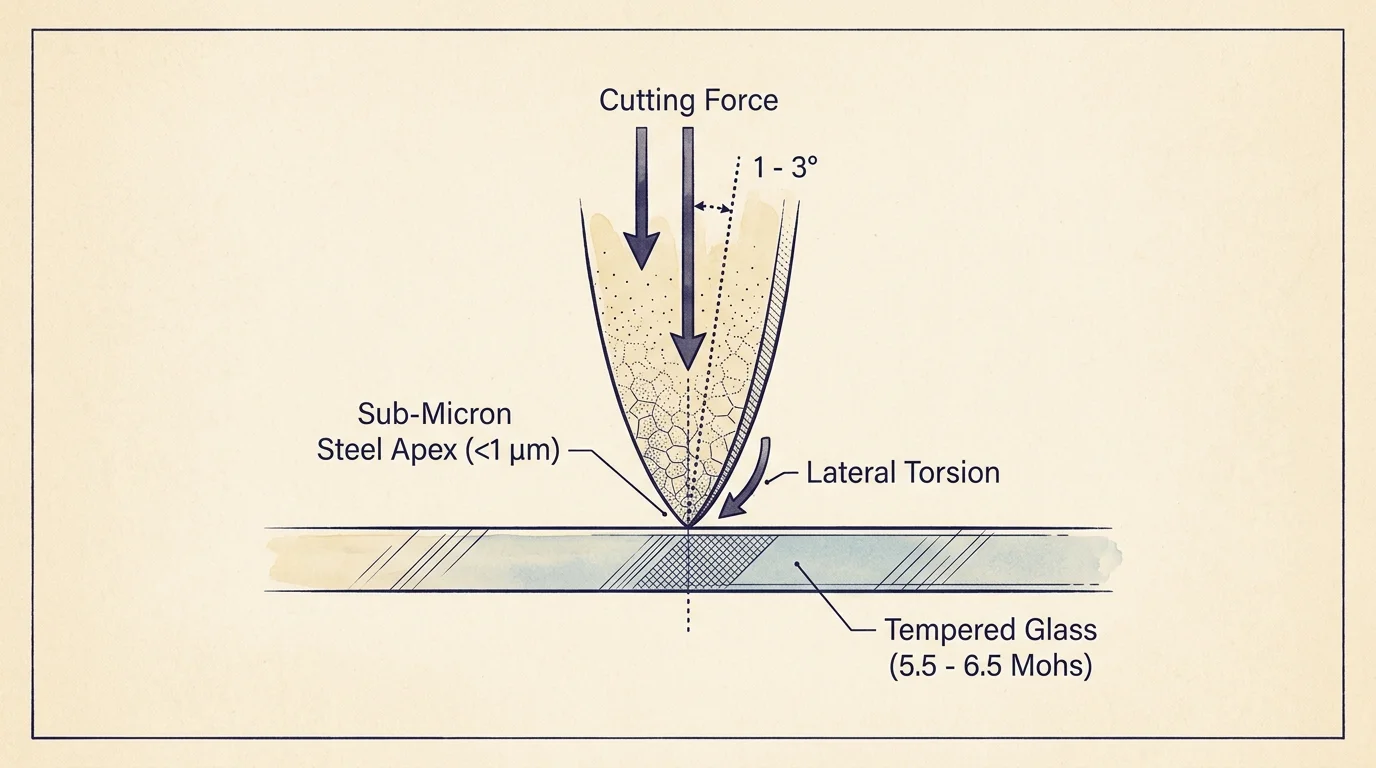
Cutlery steels rate between 5.0 and 6.5 on the Mohs hardness scale, which corresponds to 54 to 62 HRC on the Rockwell C scale. Tempered glass measures between 5.5 and 6.5 Mohs, matching or exceeding typical knife steel.
A finely sharpened kitchen knife tapers to a microscopic apex thickness of less than one micrometer. That apex represents a delicate strip of crystallized alloy designed exclusively to separate soft biological fibers.
When you chop food, you drive this fragile, sub-micron edge downward at high velocity. Because glass possesses zero yield or elasticity, the board behaves like an unyielding anvil upon impact.
Even skilled home cooks chop with a slight lateral wobble between one and three degrees off-perpendicular. That minor variance introduces severe lateral torsional force directly across the microscopic apex.
When a lateral force meets an unyielding glass plane, the steel cannot displace the surface material. Instead, the force rebounds entirely into the blade, exceeding the steel yield strength and causing immediate deflection.

Edge Retention Testing: BESS Data Across Cutting Surfaces
Quantifying blade degradation requires the Brubacher Edge Sharpness Scale (BESS), the standard testing protocol used by sharpening professionals. The BESS index records the force in grams required to sever a tensioned composite filament.
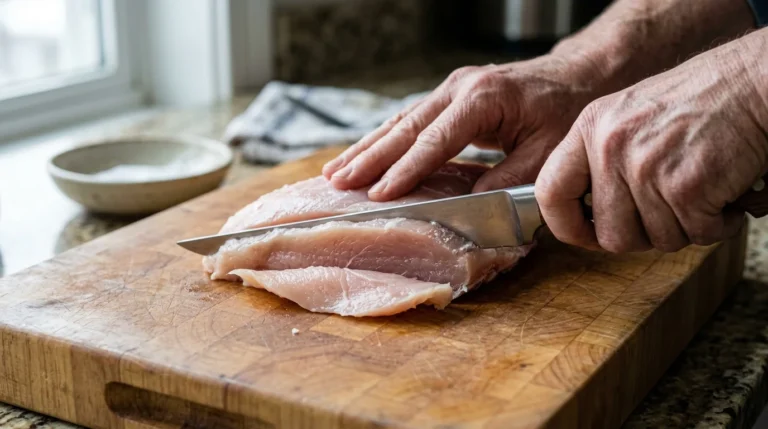
Slicing resistance also spikes during repetitive cutting tasks—a key factor when evaluating boning knives vs. chef knives for poultry prep—making a yielding board essential to preserve your apex.
A fresh razor blade scores under 50 BESS, while a brand-new factory kitchen knife scores between 150 and 200 BESS. Any blade scoring above 300 BESS fails standard kitchen slicing tasks and tears food.
Controlled research from independent testing lab Knife Grinders proves that glass causes catastrophic edge collapse. In standardized cut testing, a factory-sharpened 58 HRC German blade degraded from 160 BESS to over 420 BESS in fewer than 40 cuts on tempered glass.
That cutting board dulls knife edge test demonstrates that glass does not cause normal abrasive wear. Instead, the hard surface causes immediate structural deformation across the cutting apex.
In contrast, identical steel tested on soft end-grain larchwood required more than 1,800 cuts to reach 300 BESS. The wood yielded beneath the apex, causing slow, uniform burnishing rather than jagged failure.
As culinary equipment evaluations from America’s Test Kitchen frequently emphasize, cutting boards must yield beneath the blade to protect structural sharpness. Rigid boards simply break the apex.
A Worked Example: The Financial and Mechanical Toll on a German Knife
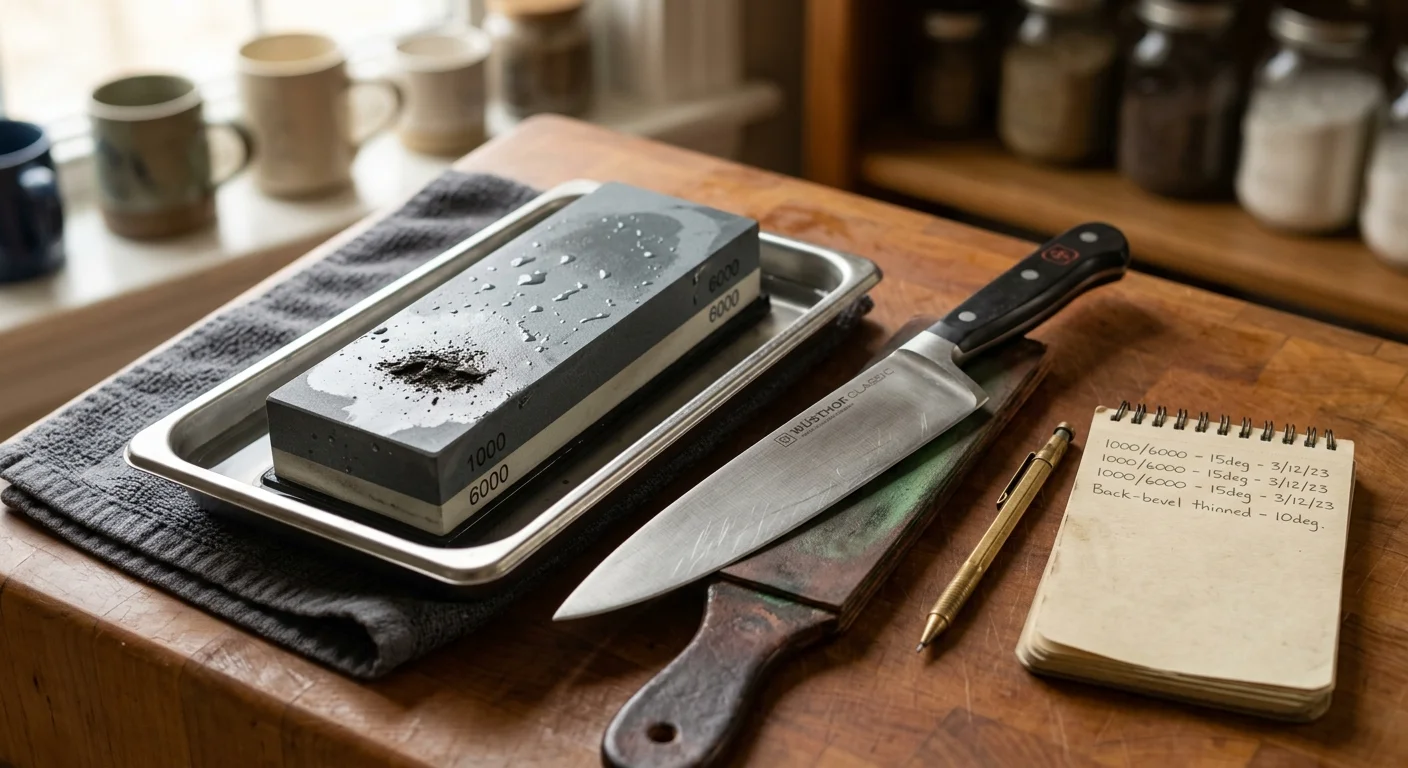
Consider a standard dinner preparation scenario to understand how this mechanical destruction compounds over time. You prepare dinner nightly using an 8-inch Wüsthof Classic Chef Knife made from German X50CrMoV15 stainless steel.
Home cooks building a streamlined setup like a three-piece prep-tool kit can easily undermine their cutlery investment by pairing good steel with hard glass boards.
While reaching for electric knife sharpeners might seem like an easy fix for rolled edges, aggressively grinding steel every few weeks quickly ruins blade geometry.
Your knife features full tang construction, meaning the knife blade extends all the way through the handle for better balance. It also includes a forged bolster, which is the thick part where the blade meets the handle, provides balance and finger protection.
You execute daily mise en place, or having all ingredients prepped and ready before cooking. Your prep work begins by processing two large yellow onions and three whole carrots for a stew base.
If you julienne carrots into thin matchstick strips, your blade makes dozens of micro-impacts per vegetable. Dicing the onions and slicing the carrots requires approximately 350 total chopping impacts against the board.
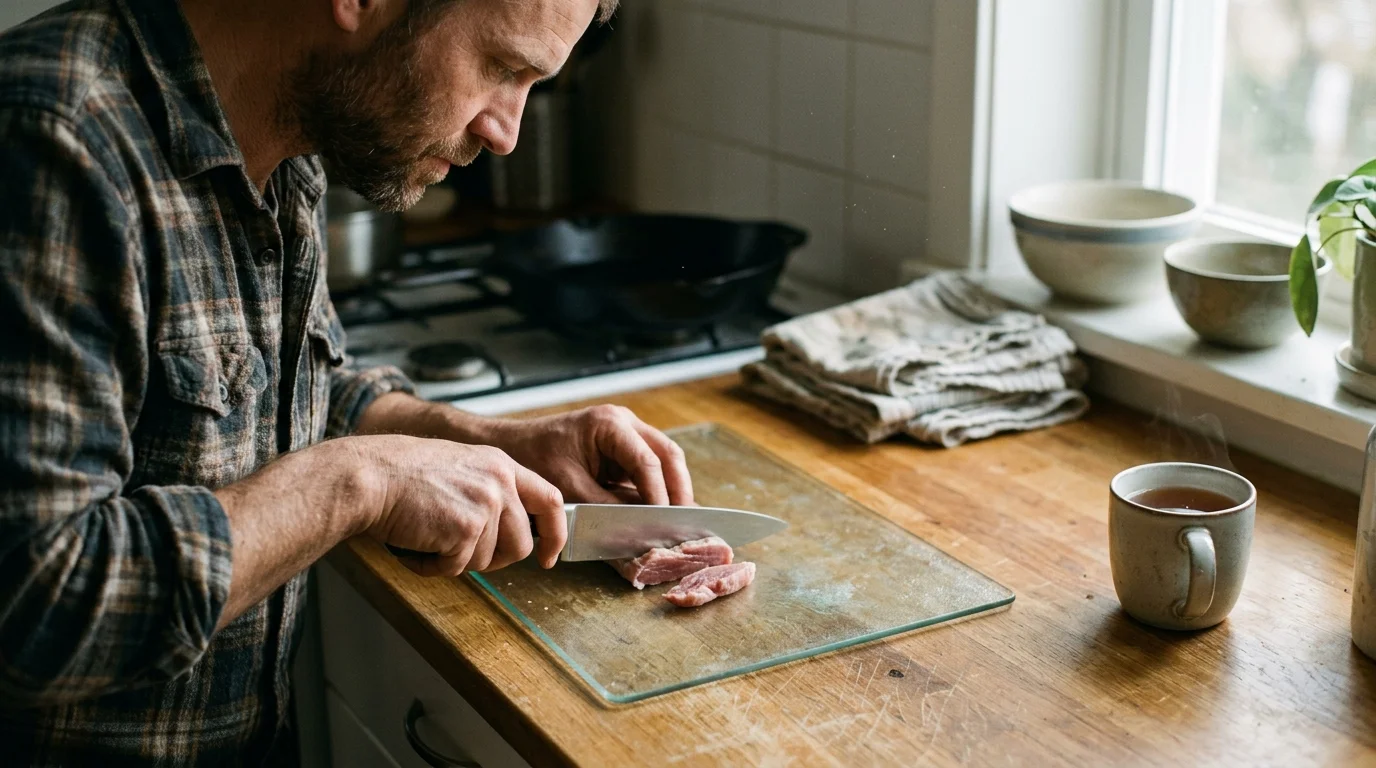
On a tempered glass board, your knife absorbs catastrophic edge deflection during your first prep session. After just two evenings of meal prep—totaling 700 cuts—the original 14-degree factory edge rolls completely over.
Regular honing, which realigns the blade edge without removing metal, cannot repair this rolled steel once the apex fractures. You now need professional sharpening, which is actually removing metal to create a new edge.
Professional sharpening costs roughly $15 per session. Using a glass board forces you to sharpen the knife every three weeks, totaling $260 annually.
Grinding away steel every three weeks removes roughly 0.5 millimeters of blade profile each year. That aggressive material removal destroys the knife geometry and turns a twenty-year heirloom tool into scrap metal within three years.
Edge Deflection and Degradation Across Board Materials
Evaluating edge retention wood vs glass board performance requires examining surface hardness and elastic compliance across common materials. The Janka hardness test measures the force in pounds-force (lbf) required to embed an 11.28-millimeter steel sphere halfway into the wood.
Alongside selecting a forgiving cutting surface, utilizing proper knife storage like magnetic strips or blade guards prevents delicate bevels from blunting against hard surfaces between uses.
Surfaces between 900 and 1,500 lbf offer the ideal balance between knife apex protection and board durability. Materials above 1,500 lbf or lacking cellular yield cause accelerated edge dulling and deflection.
| Board Material | Surface Construction | Janka Hardness (lbf) | Impact Elasticity | Average Cuts to 300 BESS (Dull) |
|---|---|---|---|---|
| Tempered Soda-Lime Glass | Non-Porous Solid Sheet | Exceeds 4,000 (equiv.) | Zero (Rigid Anvil) | 10 to 40 cuts |
| Laminated Moso Bamboo | Edge-Glued Strips | 1,380 to 1,420 lbf | Low (Adhesive Layer) | 250 to 400 cuts |
| Northern Hard Sugar Maple | Edge-Grain Lamination | 1,450 lbf | Moderate (Cellular Yield) | 1,200 to 1,400 cuts |
| American Black Walnut | Edge-Grain Lamination | 1,010 lbf | High (Soft Springback) | 1,400 to 1,600 cuts |
| Eastern Canadian Larch | End-Grain Vertical Block | 820 to 860 lbf | Maximum (Fiber Parting) | 1,800 to 2,200 cuts |
| Japanese Hinoki Cypress | Face-Grain Solid Plank | 780 to 820 lbf | High (Soft Cushion) | 1,500 to 1,700 cuts |
Notice how laminated bamboo compares to natural timber in the data above. While bamboo rates around 1,400 lbf, it contains microscopic silica deposits that act like fine sandpaper on your knife.
Furthermore, bamboo boards contain dense synthetic resin glue lines every three-quarters of an inch. Those hardened resin joints roll fine knife edges far faster than solid maple or walnut.
Anatomy of End-Grain Construction: The Fiber Parting Mechanism
Understanding end grain cutting board knife life requires examining the cellular alignment of the wood. Traditional edge-grain cutting boards arrange timber with wood fibers running horizontally across the cutting surface.
Just like caring for wooden utensils, keeping end-grain boards seasoned with food-grade mineral oil ensures the vertical fibers remain supple and resilient.
When your knife strikes an edge-grain board, the sharpened apex severs those horizontal wood fibers. Over time, severed fibers tear away from the board, leaving permanent scarring and blunting your blade tip.
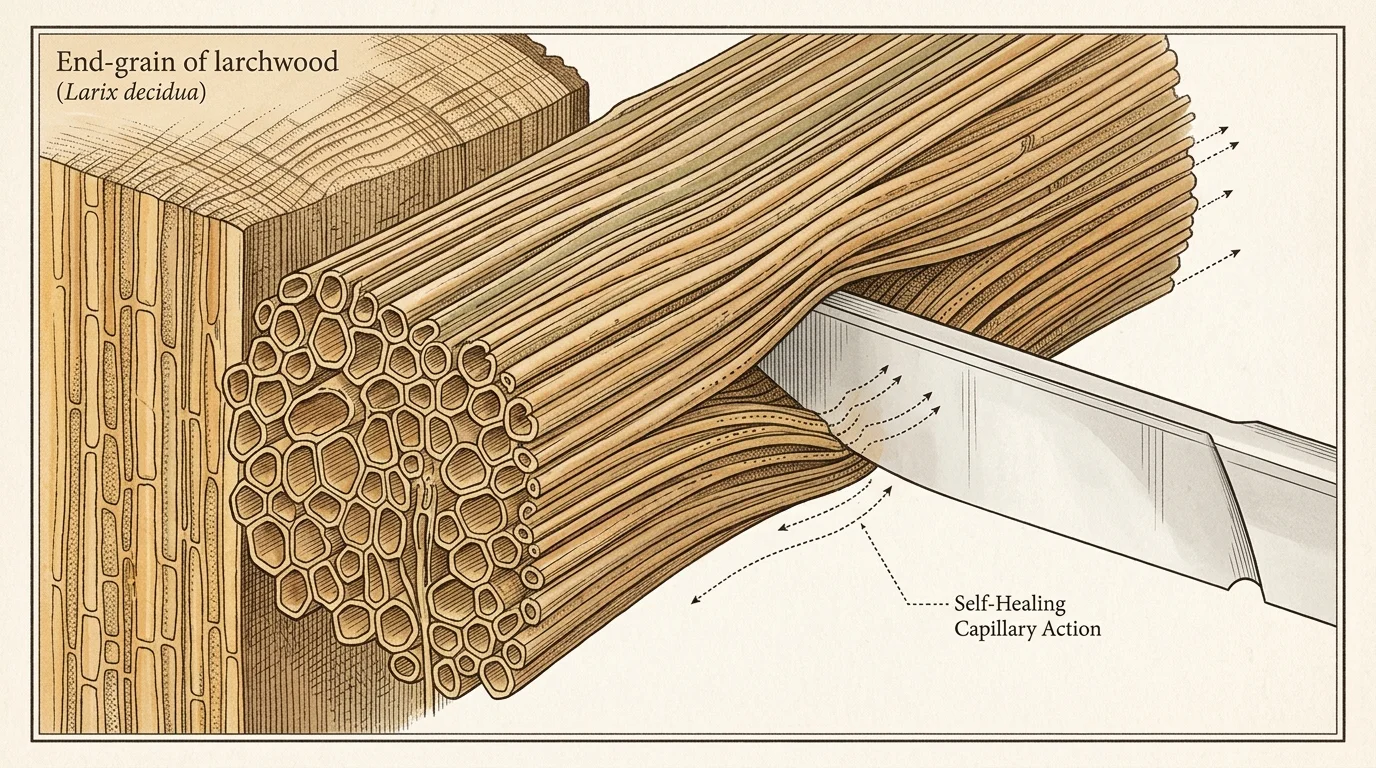
End-grain cutting boards arrange wood blocks vertically, placing the cut ends of the growth rings facing upward. Think of this arrangement like a dense paint brush pointing straight up toward the ceiling.
When a sharp knife strikes an end-grain surface, the blade apex parts the vertical fibers rather than severing them. The fibers separate smoothly, allowing the knife edge to slide between cellular walls without absorbing structural shock.
“End-grain boards act like self-healing cushions for fine cutlery. The blade apex parts the vertical wood fibers instead of smashing into a rigid barrier.” — Professional Woodworker & Cutlery Specialist
As you lift the knife, the natural elasticity of the wood fibers pulls them back together. This mechanism prevents apex rolling, stops micro-chipping, and keeps your knife razor-sharp through hundreds of meals.
The Hygiene Myth: Why Non-Porous Glass Is Actually Dangerous
Many consumers purchase glass cutting boards under the mistaken belief that non-porous materials are more hygienic. However, scientific testing proves that natural wood boards manage bacterial contamination far better than hard glass.
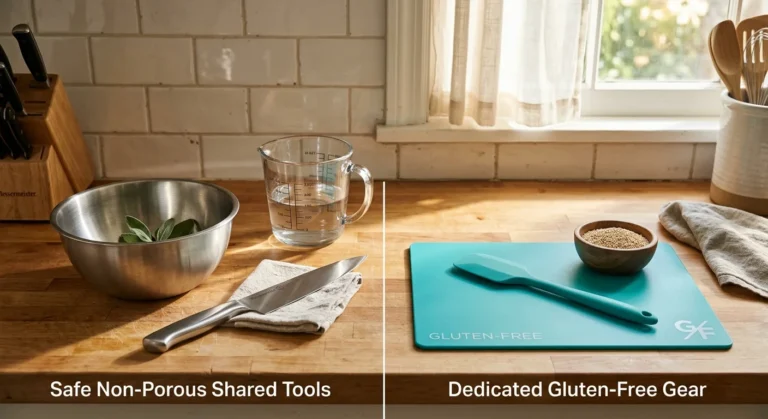
While selecting dedicated non-porous kitchen tools is critical for preventing allergen cross-contamination, tempered glass boards introduce serious slip hazards that outweigh their supposed sanitary benefits.
In professional test kitchens, glass prep surfaces are widely regarded as kitchen gadgets you don’t need because their hygiene claims fail under scientific scrutiny.
Pioneering microbiology research led by Dr. Dean Cliver at the University of California, Davis examined bacterial contamination across various board surfaces. His team inoculated wood and non-porous boards with active Salmonella and E. coli cultures.
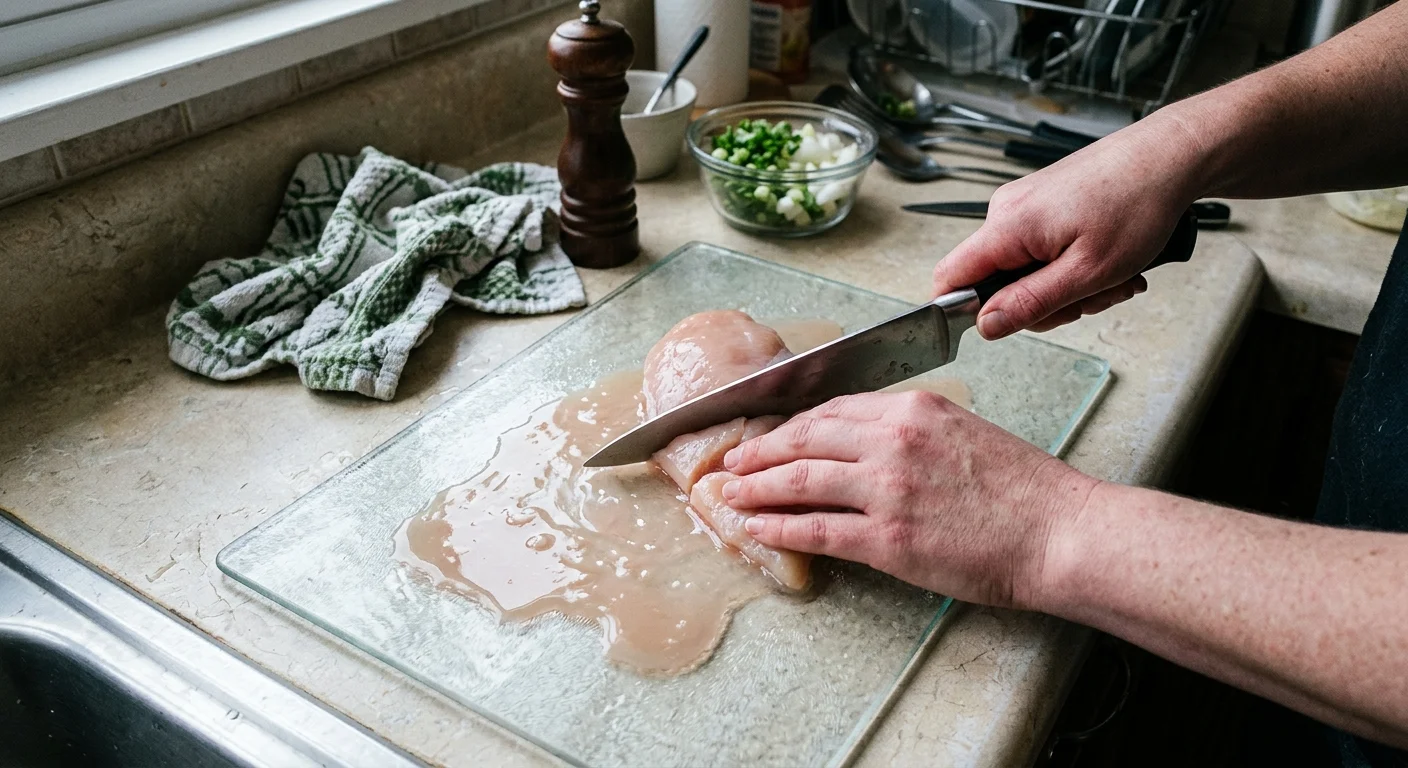
On wooden boards, capillary action drew moisture and bacteria deep into the internal wood pores within minutes. Deprived of oxygen and moisture, the pathogens experienced natural desiccation and died rapidly.
On glass and hard non-porous boards, bacteria remained active on the wet surface indefinitely. A simple wipe with a kitchen sponge easily transferred live pathogens to other ingredients during prep.
Beyond microbiological risks, glass boards present immediate physical cutting hazards. Wet vegetables slide uncontrollably on smooth glass, dramatically increasing the risk of painful knife slips.
As equipment reviews from Serious Eats consistently point out, unyielding boards cause knives to bounce and skid during prep. A blade sliding off hard glass can cause severe lacerations.
Knife Steel Metallurgy: Western Stainless vs. High-Carbon Japanese vs. Ceramic
Different knife steels respond to glass surfaces with distinct types of catastrophic failure. Understanding your blade alloy helps you identify the exact structural damage taking place.
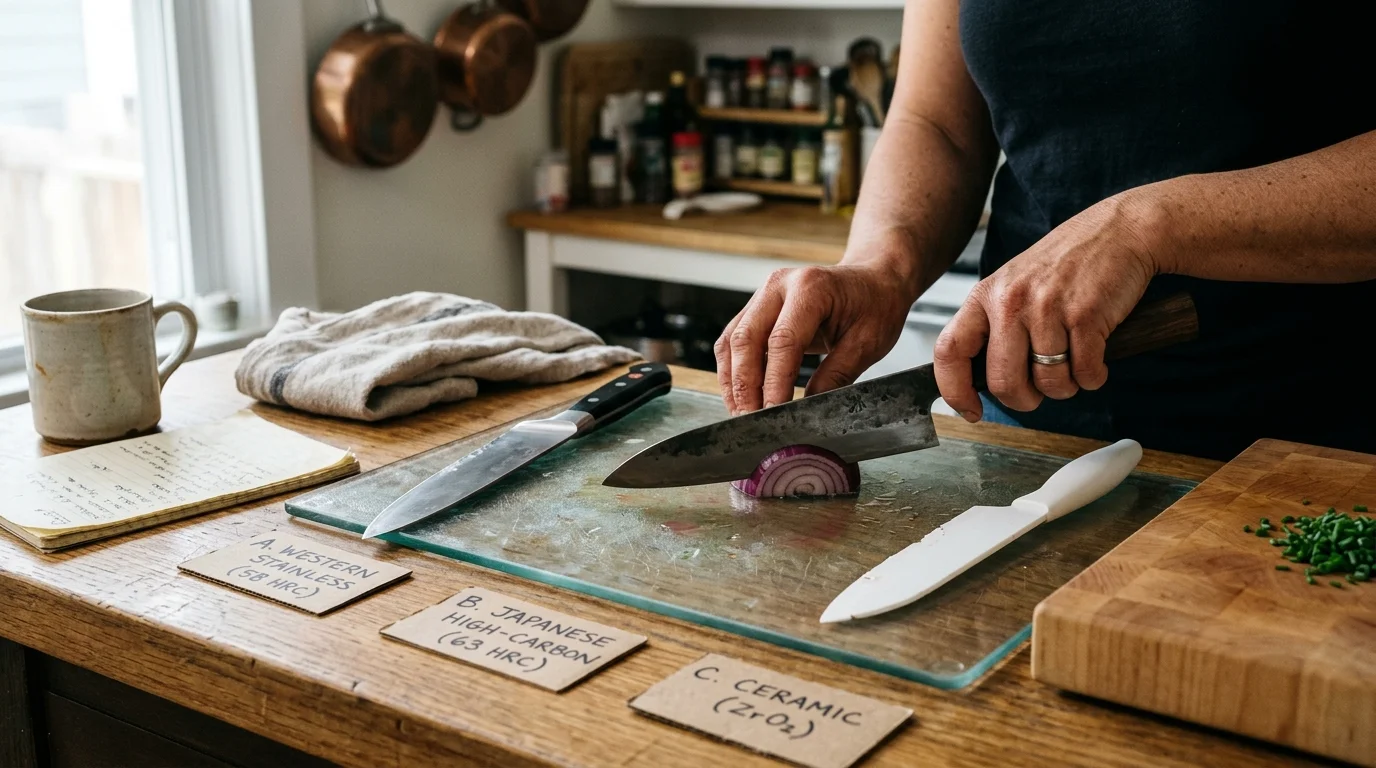
Western stainless steels, such as German X50CrMoV15, feature high chromium levels and Rockwell hardness ratings between 55 and 58 HRC. These alloys possess excellent ductility, allowing the steel to bend before breaking.
When German steel strikes tempered glass, the sub-micron apex bends sideways under lateral impact. This plastic deformation rolls the cutting edge completely flat, turning a razor bevel into a dull, blunt surface.
High-carbon Japanese steels, including VG-10, SG2, and Aogami, feature Rockwell hardness ratings between 60 and 64 HRC. These blades take exquisite 12-degree edges but sacrifice alloy ductility.
When a brittle Japanese blade impacts glass, the apex cannot roll or deform elastically. Instead, the extreme localized impact shock causes immediate micro-chipping, breaking tiny serrations out of the cutting core.
Ceramic knives made from zirconium oxide rate 8.5 on the Mohs scale, making them harder than glass. However, ceramic has virtually zero tensile toughness and cannot withstand lateral impact deflection.
Chop with a ceramic knife on glass, and the edge shatters along the impact point. Detailed guides from Wirecutter routinely remind cooks that brittle cutlery demands soft, compliant prep surfaces.
Cutting Board Recommendations: Best for Every Kitchen Level
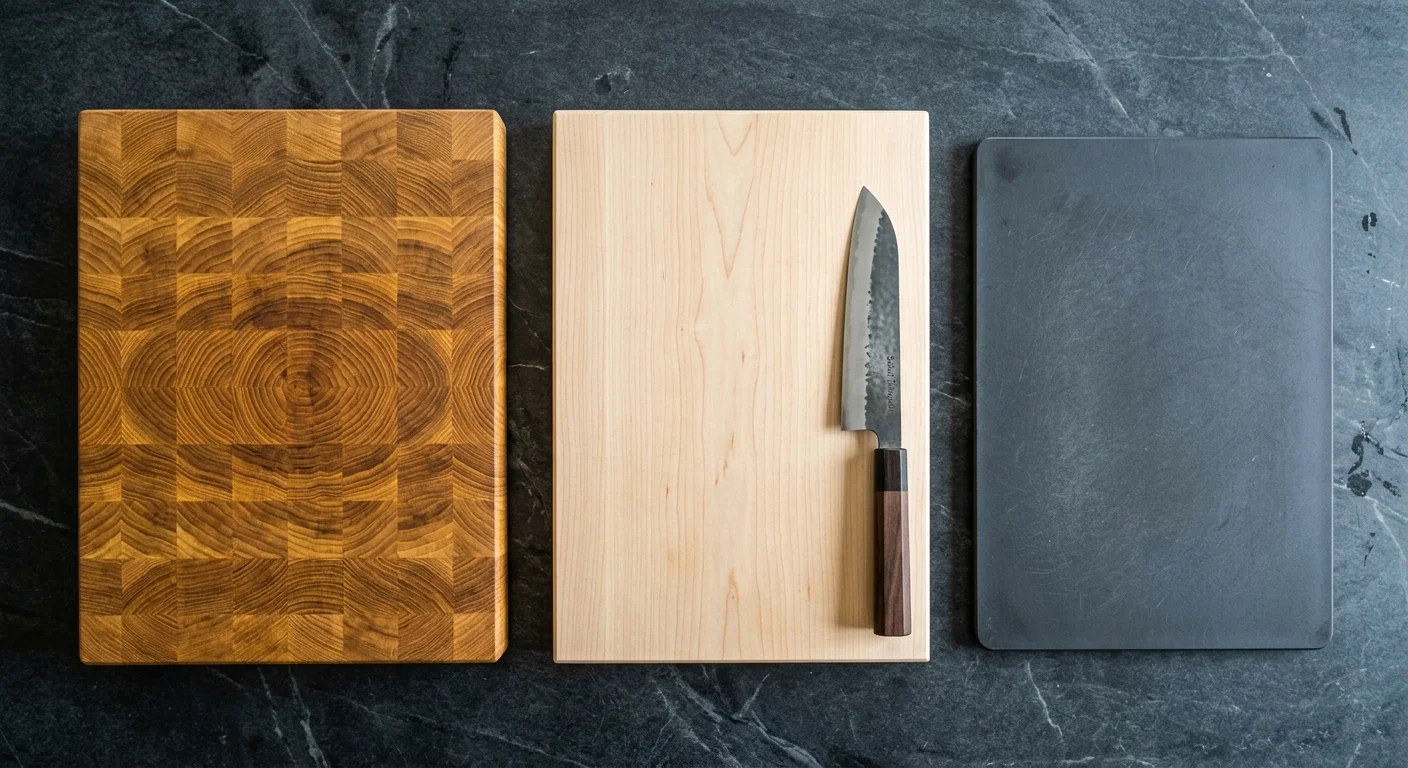
Replacing your glass cutting board protects your knives and speeds up meal preparation immediately. Here are the three best cutting board options categorized by cooking habits and maintenance preferences.
Best Value: Teakhaus Traditional Marine Edge Grain Board (16 x 12 x 0.75 inches). This sustainably harvested teak board costs approximately $45 and delivers natural moisture resistance. Teak contains abundant natural oily resins that resist warping while remaining gentle on German cutlery edges.
Best for Beginners: OXO Good Grips Carving and Cutting Board (14.5 x 21 inches). This high-density polypropylene board costs roughly $30 and offers soft, blade-safe cutting performance. Unlike wood, this synthetic board is completely dishwasher-safe and features non-slip silicone perimeter feet that eliminate board sliding.
Best for Serious Cooks: Larch Wood Canada Medium End-Grain Cutting Board (17.75 x 11.25 x 1.6 inches). Handcrafted from Canadian larchwood and priced around $180, this board delivers the ultimate fiber-parting cutting cushion. Its end-grain construction preserves delicate Japanese knife bevels and heals knife marks naturally over decades of use.
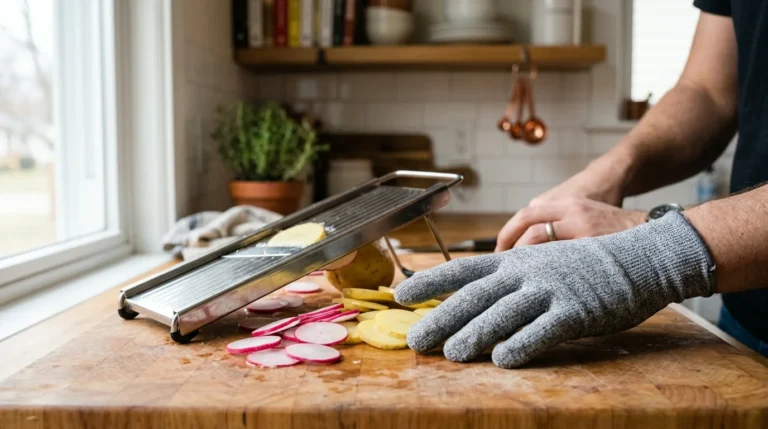
If you prefer mechanical prep over manual chopping, use specialized tools rather than abusing your chef knife. Many cooks switch to a mandoline, a flat cutting tool with adjustable blades for uniform slicing, to quickly prepare large vegetable batches.
Similarly, using a food processor pulse function, meaning short bursts of power for better control, handles coarse purees without causing knife fatigue. Saving manual cutting for delicate slicing preserves both your hand strength and your blade edges.
Safe Cutting Technique and Board Maintenance Protocols
Adopting proper cutting ergonomics protects your wrist and prevents unnecessary blade damage. Always place a damp kitchen towel or silicone mesh mat beneath your cutting board to prevent sliding during heavy prep.
Cut using smooth, rolling push-cuts or forward slicing motions rather than slamming the knife straight downward into the wood. Driving a blade vertically down like an axe crushes cell walls and accelerates apex fatigue.
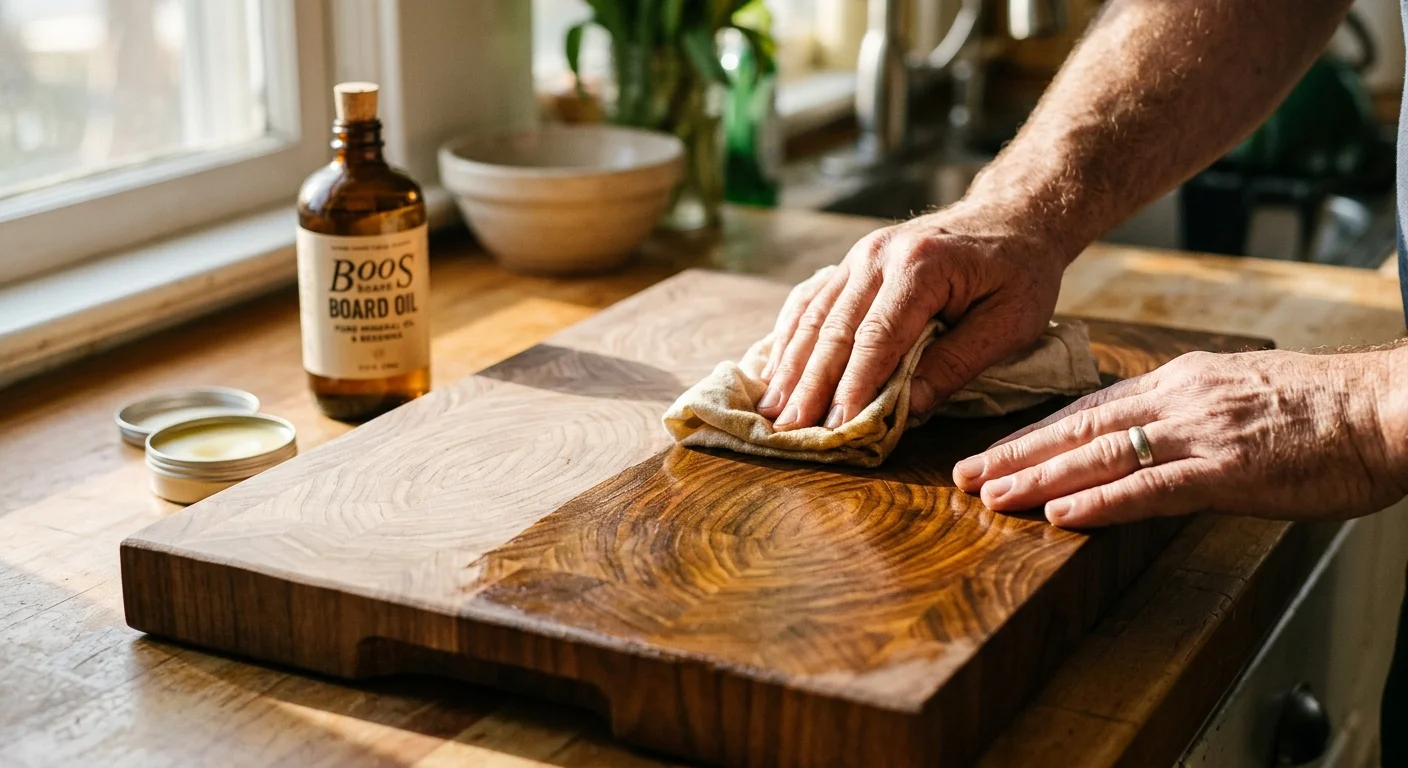
Maintain wooden cutting boards by hand-washing them immediately after use with warm water and mild dish soap. Never submerge wooden boards in standing sink water, and never place natural timber inside a dishwasher.
Heat and aggressive detergents in dishwashers dissolve wood glue seams, strip essential oils, and crack timber planks. Dry your board standing vertically on edge so both faces dry evenly at room temperature.
Apply pure, food-grade mineral oil to your board once every four weeks to prevent timber desiccation. Finish the surface with a melted beeswax conditioner to seal open capillary tubules against excess moisture and food stains.
Frequently Asked Questions
Can a dull knife from a glass board be restored with a honing rod?
No, a honing rod only straightens minor apex misalignments on lightly used blades. Glass boards create severe physical rolling and edge chipping that require abrasive sharpening on whetstones to restore proper bevel geometry.
Is bamboo considered a safe cutting board material for expensive knives?
Bamboo is safer than glass, but it dulls knives significantly faster than maple, walnut, or larchwood. The high natural silica concentration and rigid glue seams in laminated bamboo abrade delicate cutting edges quickly.
Why do manufacturers sell glass cutting boards if they damage knives?
Manufacturers market glass cutting boards because they are cheap to produce, visually attractive, and dishwasher-safe. They target consumers focused primarily on surface stain resistance rather than cutlery preservation or cutting safety.
How often should I oil a wooden cutting board to keep it healthy?
Oil your wooden cutting board once every month using food-grade mineral oil. If the timber looks dry or absorbs water droplets instantly rather than beading them on the surface, apply oil immediately.
Disclaimer: Product prices and availability change frequently. Prices shown were accurate at time of writing but may have changed. We may earn a small commission from purchases made through links on this site, at no extra cost to you. Always use cutting tools carefully and follow manufacturer safety guidelines.