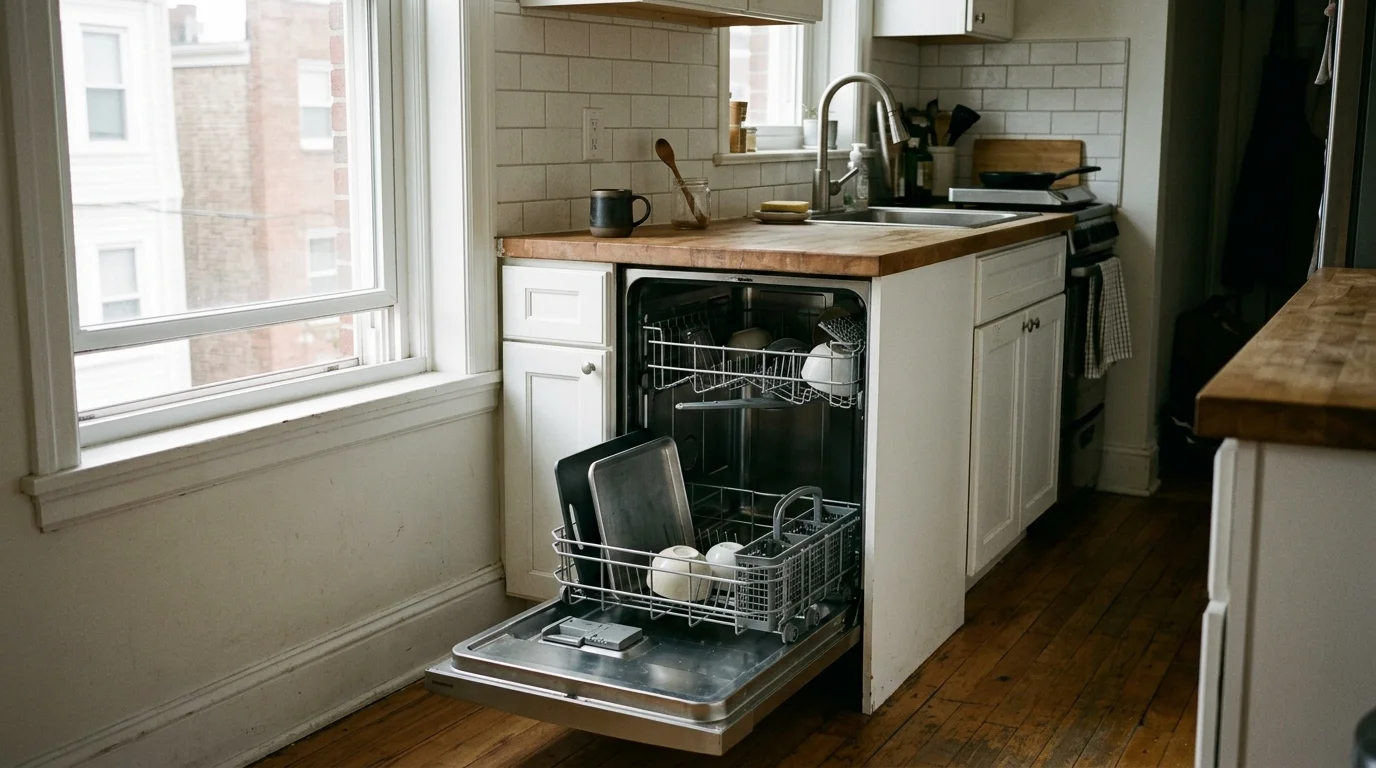
Living in an apartment with an 18-inch slimline dishwasher usually forces you to wash bulky prep gear by hand. You can eliminate hand-washing entirely by matching your food prep equipment to your machine’s interior rack clearances.
Pairing slim dishwasher-safe tools with smart countertop storage solutions for small kitchens ensures your cooking area stays organized and functional.
For any oversized cookware that cannot fit into a compact cycle, pairing your setup with an over-the-sink dish drying rack keeps limited counter space uncluttered while gear dries.
Standard full-size prep gear fails in compact machines; however, tools engineered with a maximum 16-inch diagonal and under 11-inch vertical profile clear compact tines without blocking rotating spray arms.
This guide details the exact cutting boards, prep pans, blades, and processing tools that fit slimline racks while surviving residential high-heat sanitizing cycles.
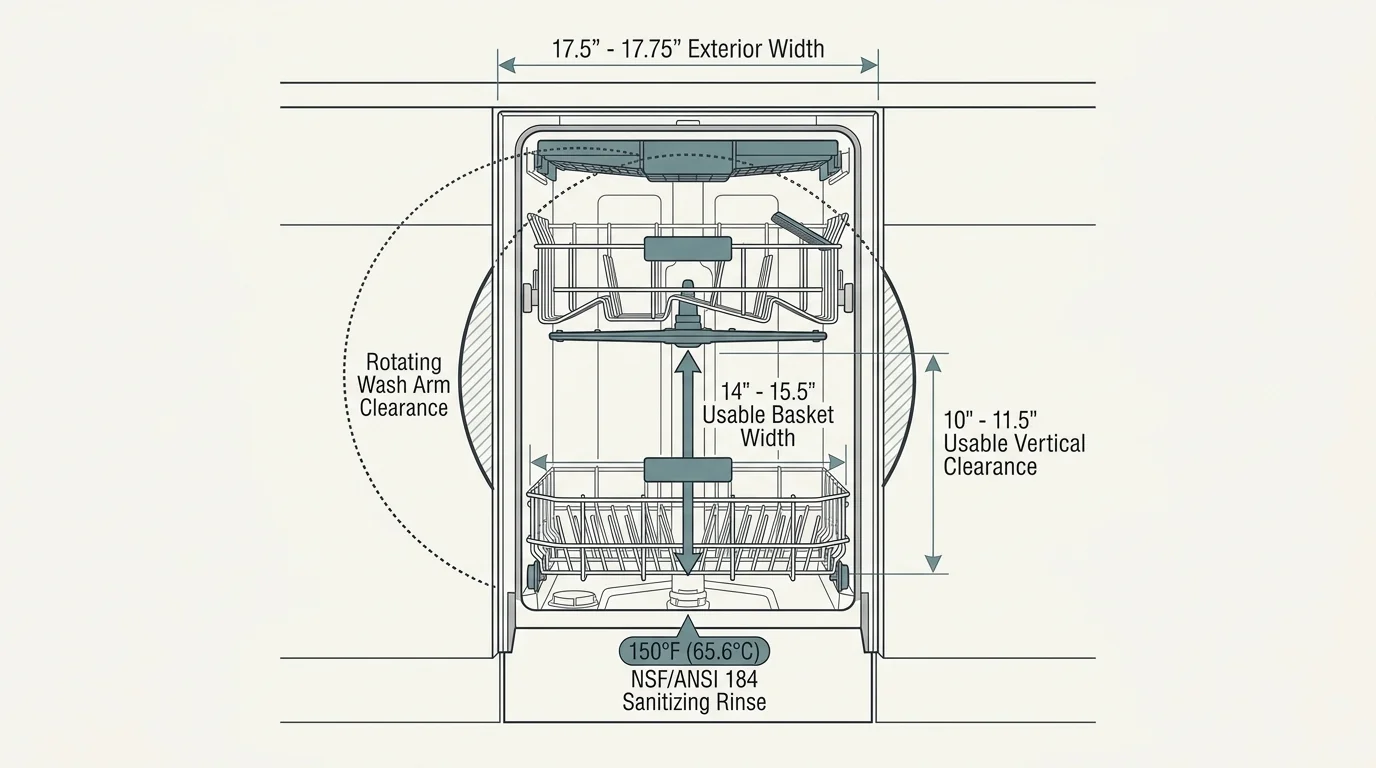
The 18-Inch Slimline Dimensional Reality: Spray Arms and Rack Clearances
Compact dishwashers feature an exterior cabinet width between 17.5 and 17.75 inches. These units hold between 8 and 10 standard place settings, compared to the 12 to 16 settings accommodated by full-size 24-inch models.
Focusing on a minimal prep-tool kit prevents cluttering tight dish racks with specialty gadgets you rarely need.
Understanding what size kitchen appliances you need helps ensure your prep accessories correspond directly with compact layout constraints.
The interior usable basket width measures only 14 to 15.5 inches across. This narrow width severely restricts horizontal placement for rigid cutting surfaces and prep trays.
Vertical clearance creates an even tighter constraint. The lower rack offers between 10 and 11.5 inches of usable vertical clearance beneath the middle spray arm assembly.
Premium models equipped with height-adjustable upper racks provide up to 12 inches of clearance in their lowest configuration. Any tool exceeding 11.5 inches in vertical height risks striking the rotating wash arm during a cycle.
A blocked wash arm prevents proper water distribution throughout the cabinet. This stoppage leaves detergent residue on prep surfaces and prevents effective soil removal.
Sanitization performance also demands strict material resilience. Residential dishwashers meeting the NSF/ANSI Standard 184 protocol must reach a final sanitizing rinse temperature of at least 150°F (65.6°C) to achieve a 99.999% bacterial reduction.
Your prep tools must endure sustained water temperatures between 140°F and 155°F without bowing, melting, or releasing chemical plasticizers.
Furthermore, updated Department of Energy efficiency rules taking effect on April 23, 2027, mandate reduced water and energy consumption for compact dishwashers. Tools with slim profiles and non-porous surfaces clean significantly faster under these lower-volume wash cycles.
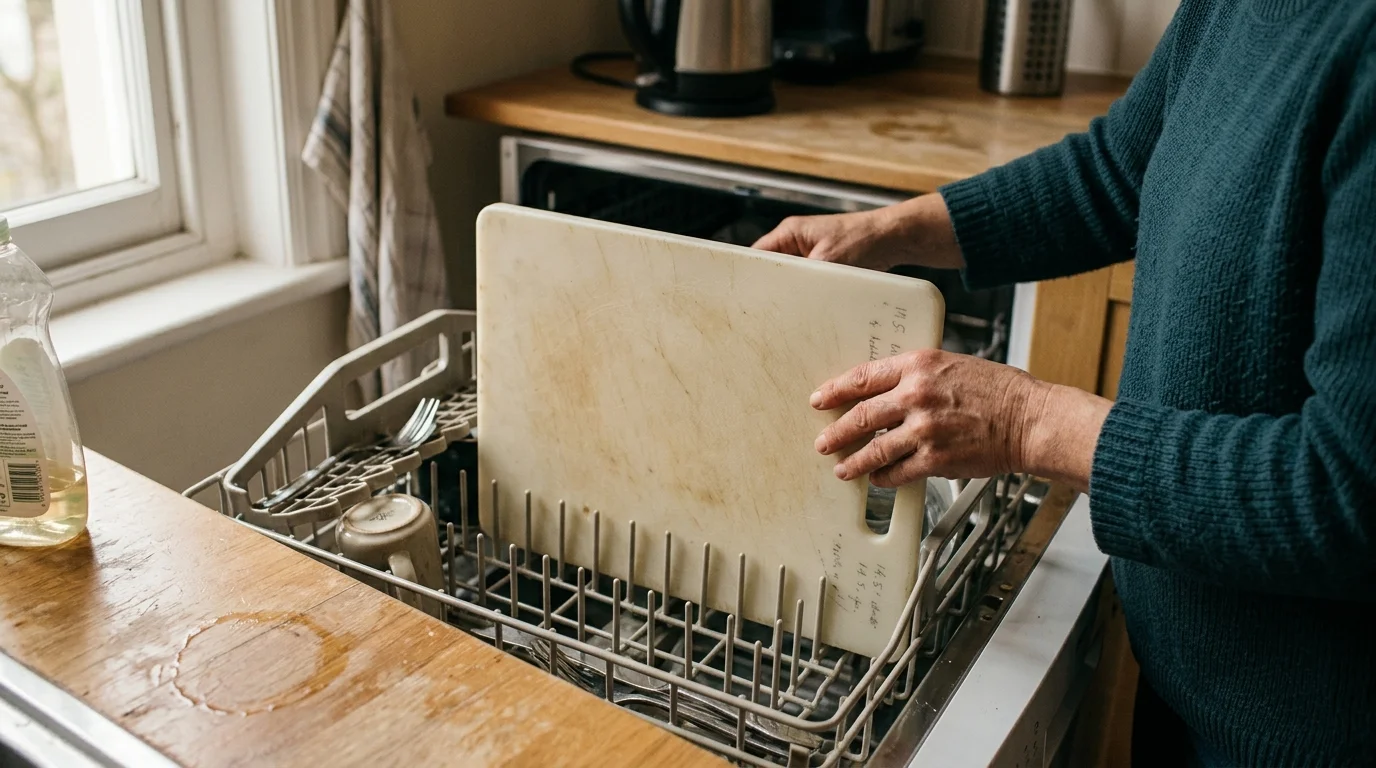
18-Inch Dishwasher Safe Cutting Boards: The 14.5-by-11 Inch Cutoff
Cutting boards represent the most frequent loading failure in compact kitchens. Standard commercial cutting boards measure 18 by 12 inches, making them completely impossible to fit into an 18-inch machine.
Selecting multipurpose boards also prevents you from accumulating unnecessary kitchen gadgets that consume precious cabinet room.
Even popular home-cook boards measuring 15 by 12 inches fail. When loaded vertically into lower plate tines, a 12-inch board collides directly with the middle spray arm.
If you lay a 15-inch board flat across the lower rack, you shield every item above it from the bottom spray jets. The maximum allowable cutting board dimension for upright loading is 14.5 inches wide by 11 inches high.
A cutting surface measuring 14.5 by 11.25 inches represents the absolute physical threshold. This size slides neatly between the perimeter plate tines while leaving 0.25 inches of clearance beneath the spray arm hub.
Material composition dictates whether your board survives repeated high-temperature sanitizing. Traditional solid hardwood boards warp, crack, and split within two cycles because wood fibers swell unevenly under direct heat and saturated moisture.
Polypropylene boards resist moisture absorption completely. However, thin plastic boards under 0.35 inches thick warp into concave curves when exposed to bottom heating elements during the heated dry phase.
Paper-composite boards manufactured with Richlite resin offer superior dimensional stability. According to equipment guides published by America’s Test Kitchen, dense composite surfaces withstand extreme dishwasher heat without losing flatness.
Composite boards measure just 0.25 inches thick, maximizing prep space while taking up minimal rack width. You can easily stack two composite boards in adjacent tines without crowding your dinnerware.
Look for boards featuring integrated perimeter juice grooves. A shallow groove prevents raw meat fluids from running onto apartment countertops without adding bulk to the board’s exterior profile.
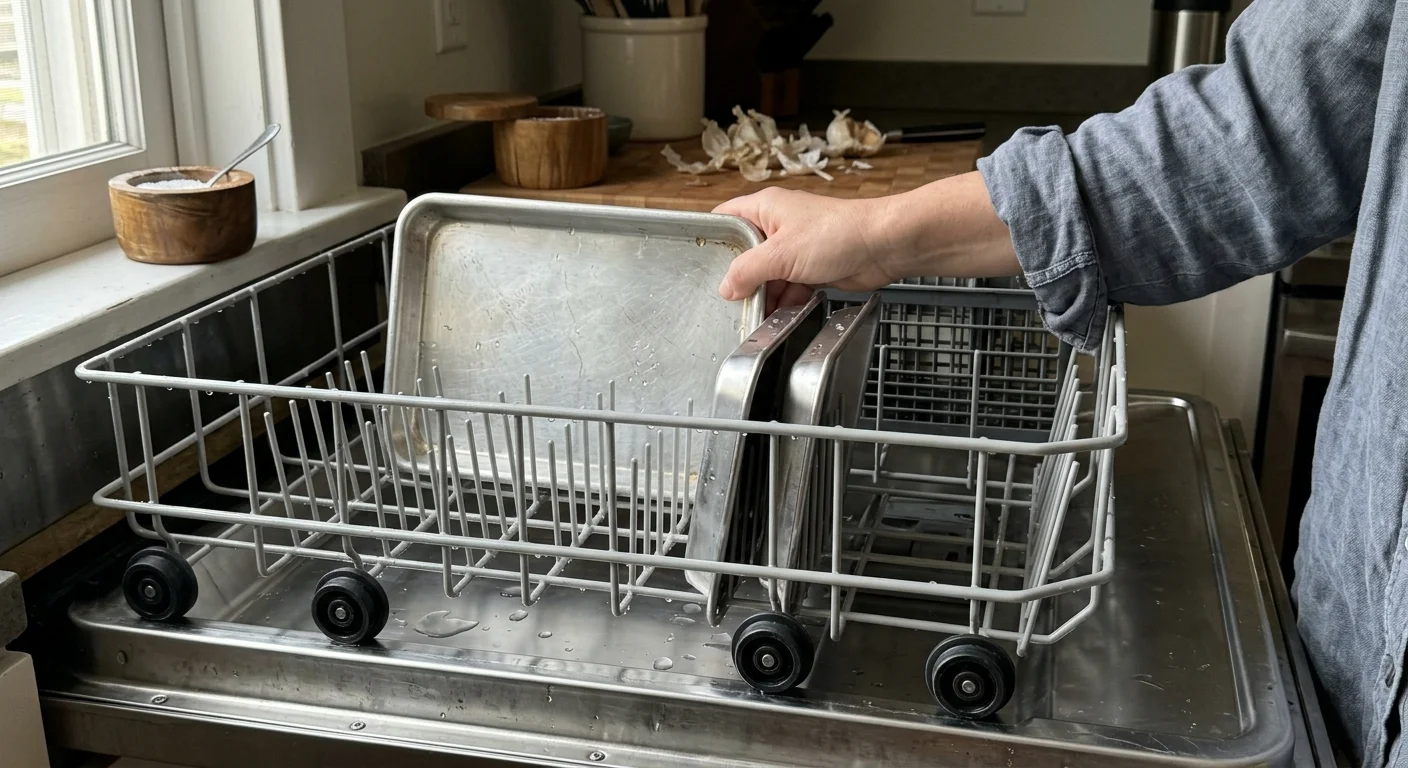
Small Dishwasher Cookware Fit: Sizing Prep Trays and Sheet Pans
Organizing your ingredients requires functional staging surfaces. Professional chefs rely on mise en place—having all ingredients prepped and ready before cooking begins—to maintain speed and order.
After prepping ingredients on compact trays, packing them into stackable food storage systems keeps compact refrigerators just as organized as your dishwasher racks.
Home cooks often use standard half-sheet pans measuring 18 by 13 inches for staging diced vegetables and proteins. Unfortunately, half-sheet pans will not fit inside an 18-inch slimline dishwasher under any orientation.
The 18-inch length exceeds the interior rack width, while the 13-inch width prevents the dishwasher door from latching shut. Forcing a half-sheet pan into a compact rack bends tines and blocks detergent dispensers.
Quarter-sheet pans serve as the ideal staging alternative. Featuring outer rim dimensions of roughly 9.5 by 13 inches, quarter-sheet pans sit upright in the lower plate tines just like standard dinner plates.
They provide 123 square inches of flat staging space per tray. Furthermore, two quarter-sheet pans occupy only four inches of lower rack width when slotted into standard plate dividers.
Eighth-sheet pans provide another versatile solution for tight layouts. Measuring approximately 6.5 by 9.5 inches, eighth-sheet trays fit horizontally onto the upper glassware rack without blocking top spray arm rotation.
Material selection determines dishwasher survival for metal prep trays. Standard commercial baker’s sheets use uncoated raw aluminum, which reacts aggressively with alkaline dishwasher detergents.
Alkaline detergents cause bare aluminum to oxidize into a chalky, black surface film that rubs off onto hands and food. To maintain dishwasher compatibility, select 18/8 stainless steel quarter-sheet pans or commercial trays with heavy-duty ceramic coatings.
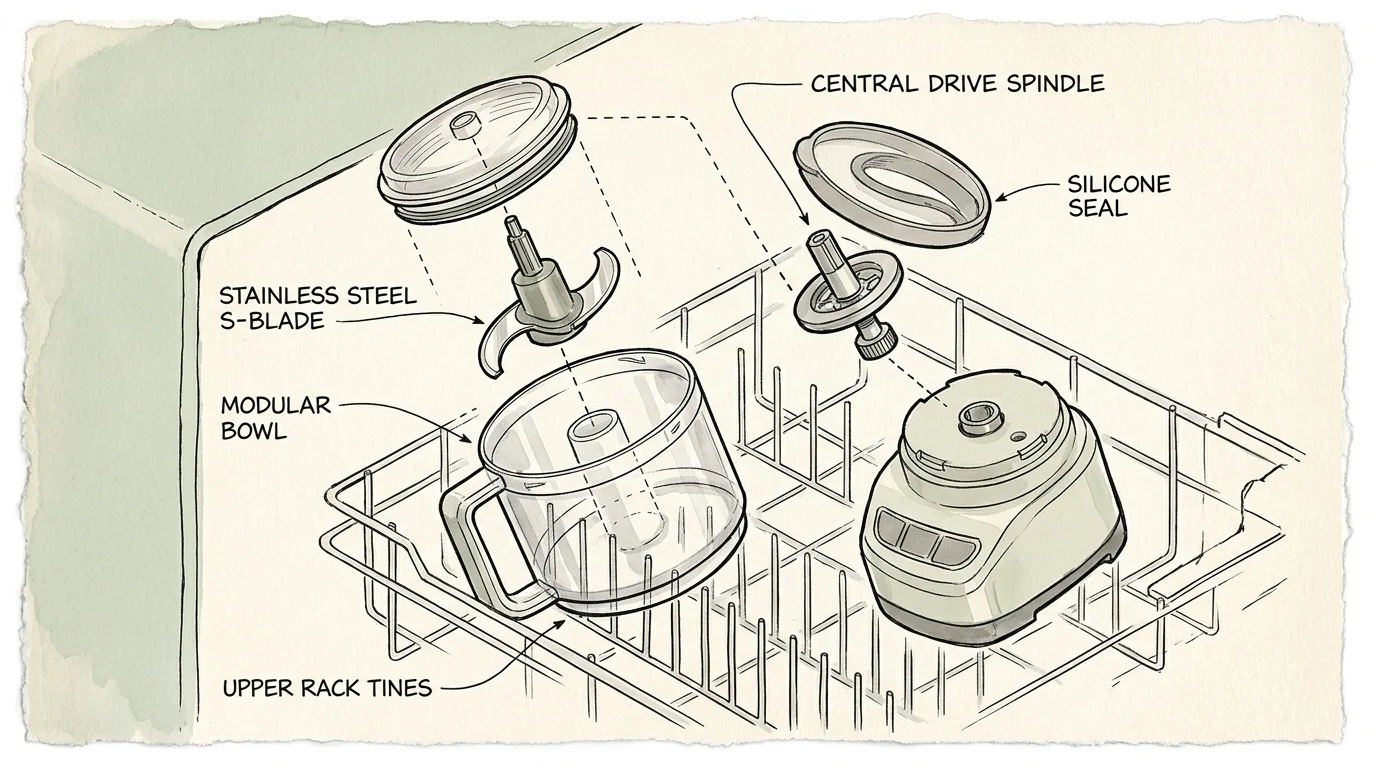
Food Processors and Mini Choppers Engineered for Narrow Racks
Full-size 14-cup food processors feature work bowls with base diameters exceeding 9 inches. Their heavy motor bases and oversized bowls crowd out entire racks in an 18-inch dishwasher.
A compact 3.5-cup to 4-cup mini chopper provides ample capacity for everyday meal preparation. These compact bowls feature a base diameter under 6 inches, allowing them to nest securely over upper rack tines.
Look for models featuring an integrated pulse function—short bursts of power on a food processor for better control—to avoid over-processing delicate aromatics like garlic and shallots.
A quality mini chopper work bowl, lid, and stainless steel blade assembly occupy less than one-third of a compact top rack. This compact footprint leaves ample space for drinking glasses and small prep bowls.
Immersion blenders offer an even more space-efficient prep alternative. A modular immersion blender wand detaches from the motor housing with a simple quarter-turn twist.
The stainless steel blending shaft measures only 2 to 3 inches in diameter. You can place the shaft upright in the silverware basket alongside standard dinner forks.
The accompanying 24-ounce blending beaker features a tall, narrow profile that slides into the upper rack corner. Research published by Consumer Reports emphasizes that compact appliances with modular, detachable components deliver superior cleaning convenience in small living spaces.
Always inspect the drive hub on processing bowls before washing. High-speed wash cycles can force wash water into hollow drive shafts if the component lacks a watertight ultrasonic seal.
Mandolines and Vegetable Slicers: Safe Disassembly and Cleaning
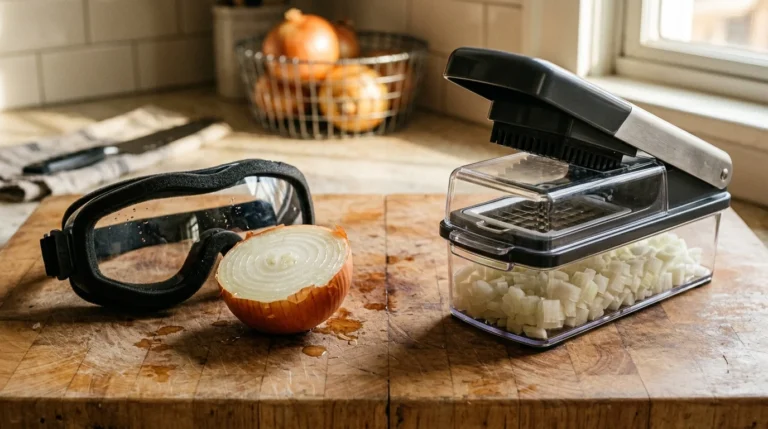
A mandoline—a flat cutting tool with adjustable blades for uniform slicing—accelerates vegetable prep dramatically. It creates paper-thin potato rounds, shaved fennel, and uniform radish coins in seconds.
If you want to chop leafy greens without handling delicate slicer inserts, consider compact salad choppers and prep tools that rinse clean in seconds.
Wearing cut-resistant kitchen gloves adds an extra layer of protection when disassembling and handling slick, soapy slicer blades.
Many units include integrated blades for julienne cuts—cutting vegetables into thin matchstick strips. However, large French commercial mandolines made of welded steel frames measure up to 16 inches long and weigh over four pounds.
These oversized metal slicers do not fit safely inside slimline dishwashers. Their heavy steel legs strike rack coatings, causing nylon tine covers to crack and expose underlying metal to rust.
Select a compact handheld or folding mandoline measuring 12 to 13.5 inches in total length. Flat handheld slicers fit flush against the side wall of the lower rack, taking up zero plate slots.
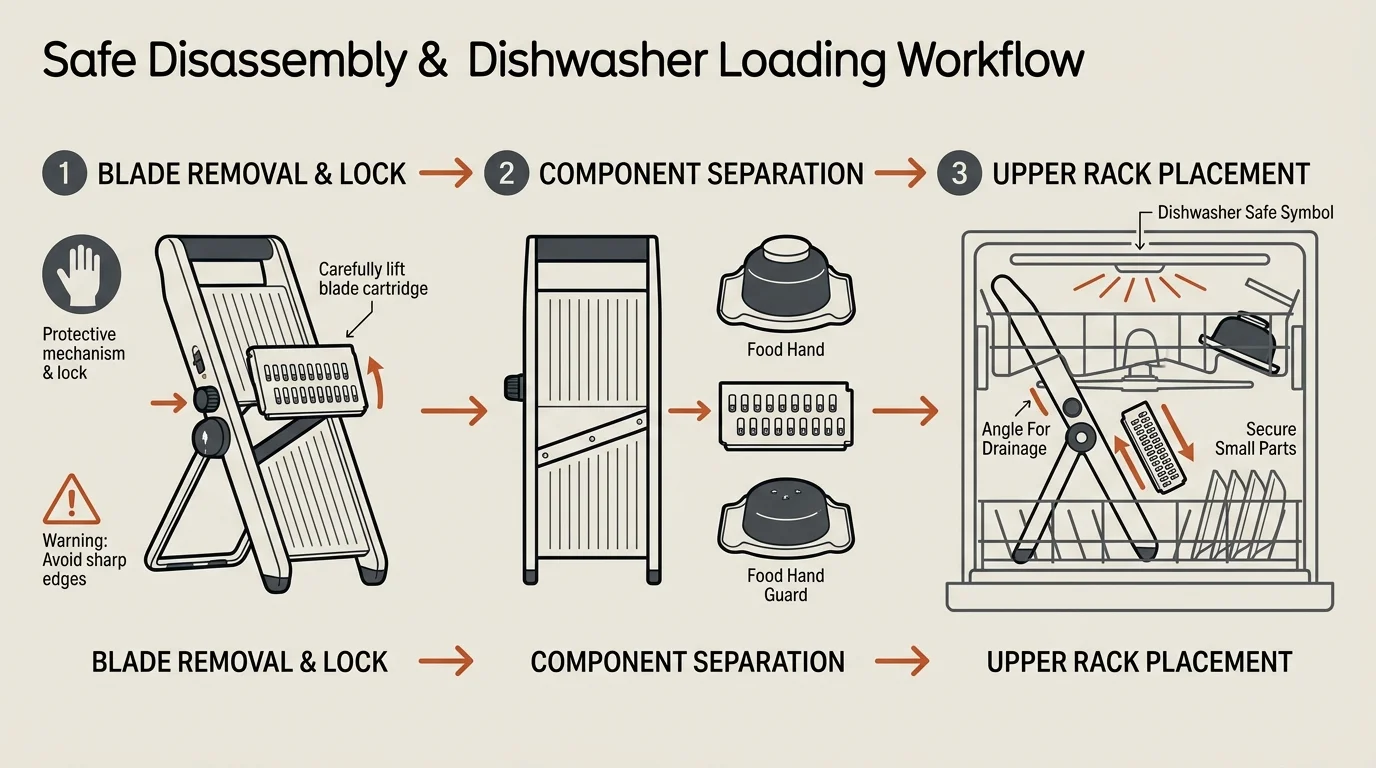
Safety remains critical when cleaning sharp slicing gear. Never load an assembled mandoline into a dishwasher with its main cutting blade set to an exposed cutting depth.
Vibrations during wash cycles can cause unsecured blades to shift, creating severe cut hazards for your hands during unloading. Always set adjustable slicing plates to the locked safety position before loading.
If your tool utilizes interchangeable blade cartridges, place the extra blades inside the enclosed silverware basket compartment. This practice protects the fine cutting edges from colliding with adjacent metal utensils.
“Always secure slicing blades inside covered utensil caddies. Unprotected blades in compact dishwashers create severe puncture risks when reaching into cramped racks.” — Kitchen Safety Protocol
Kitchen Knives and Blade Metallurgy: Dishwasher Risks and Hygiene
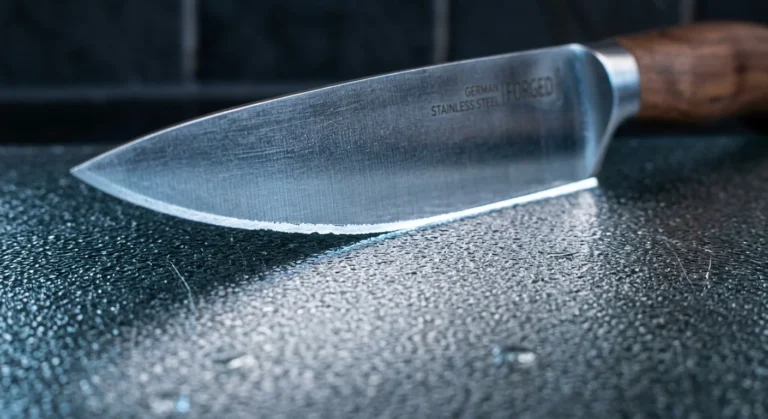
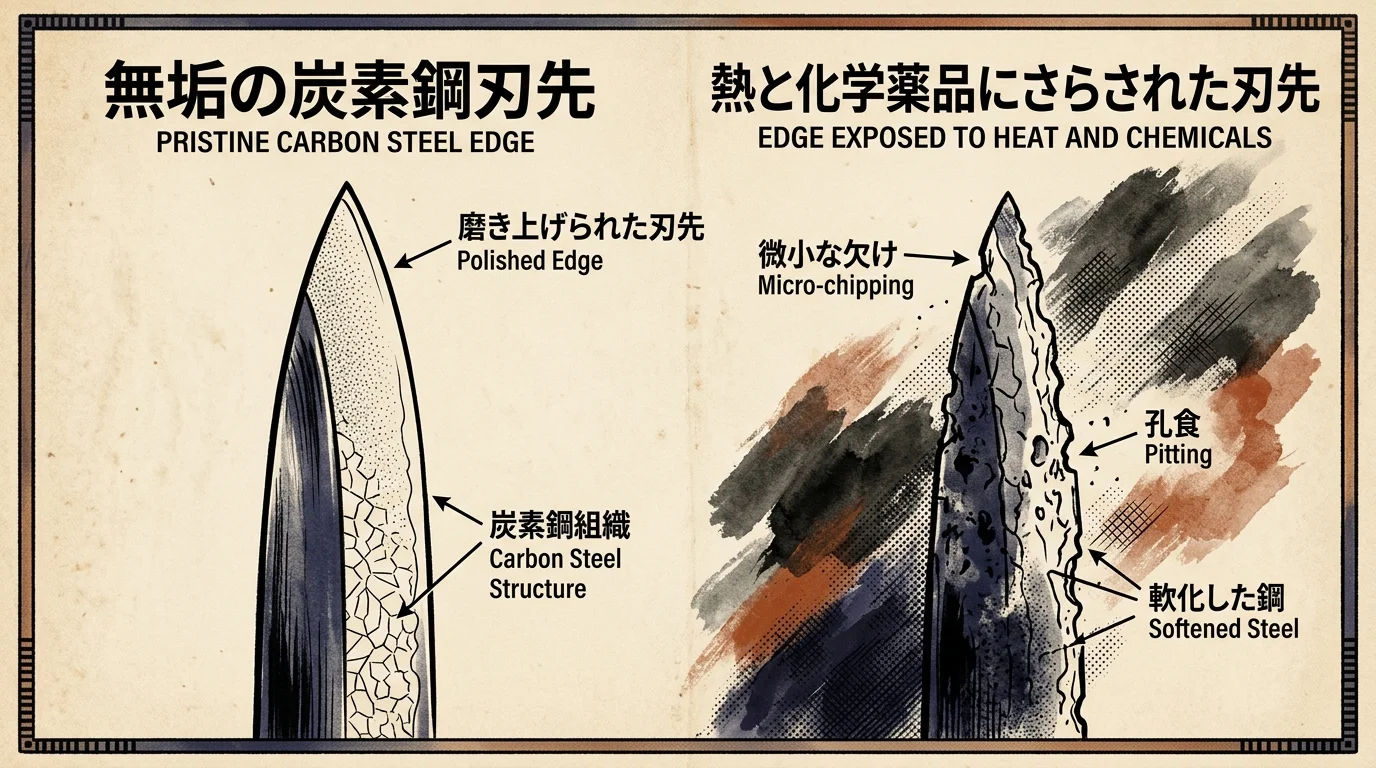
The culinary world generally cautions against cleaning kitchen knives in a dishwasher. Powerful water jets push blades against plastic-coated steel tines, causing microscopic edge rolling and premature dulling.
Abrasive powdered detergents also degrade polished blade finishes. Furthermore, intense 150°F sanitizing heat causes natural wood handles to expand, dry out, and split away from the tang.
However, real-world apartment cooking often requires the absolute hygiene of high-heat sanitizing, especially after cutting raw poultry or seafood. If you run knives through an 18-inch machine, blade metallurgy and handle construction dictate long-term durability.
Three blade materials dominate consumer food prep tools: stainless steel, high-carbon steel, and ceramic.
- Stainless Steel: Contains at least 10.5% chromium, providing exceptional corrosion resistance. High-grade stainless alloys like German 1.4116 or Japanese AUS-8 withstand dishwasher chemicals without rusting, provided you dry them promptly.
- High-Carbon Steel: Lacks protective chromium layers. A carbon steel blade oxidizes, discolors, and rusts within minutes inside a humid dishwasher environment. Wash carbon steel exclusively by hand.
- Ceramic: Made from sintered zirconium oxide, ceramic blades are chemically inert and completely unaffected by harsh detergents. However, ceramic is brittle; mechanical vibrations against adjacent steel cutlery can chip the brittle edge.
Knife construction also impacts durability. High-quality prep knives feature full tang construction—the knife blade extends all the way through the handle for better balance and structural strength.
A thick bolster—the thick part where the blade meets the handle, provides balance and finger protection—adds rigidity during heavy chopping. Knives featuring synthetic polyoxymethylene (POM) or Santoprene handles handle high-temperature cycles without degrading.
Regular blade maintenance keeps your dishwasher-cleaned cutlery razor-sharp. Home cooks must understand the distinction between honing and sharpening.
Honing involves realigning the microscopic teeth of the blade edge without removing metal. A weekly session with a ceramic honing rod straightens rolled edges caused by dishwasher rack contact.
Sharpening involves actually removing metal to grind a fresh, keen bevel onto the edge. As reported in the cutlery evaluations at Wirecutter, regular maintenance with an abrasive water stone or pull-through sharpener restores factory sharpness after chemical exposure.
Ergonomics play a vital role during extended prep sessions. Ergonomic handles with textured finger contours reduce grip fatigue, ensuring safe cutting control even when hands are wet or oily.

Tested Recommendations: Best Compact Dishwasher Kitchen Tools
Finding the right prep tools requires evaluating blade length, board thickness, and overall diagonal footprint. Every item recommended below features a total diagonal measurement under 16 inches, ensuring seamless clearance in 18-inch dishwashers.
Review comprehensive equipment breakdowns on platforms like Serious Eats to compare user ergonomics across various kitchen categories.
| Tool Model & Type | Dimensions (Inches) | Diagonal Length | Rack Placement | Heat Rating | Best Category |
|---|---|---|---|---|---|
| Epicurean Kitchen Series Board | 14.5 × 11.25 × 0.25 | 18.35 (Face) / 14.5 (Edge) | Lower Rack Outer Tines | Up to 350°F | Best for Serious Cooks |
| OXO Good Grips Prep Board | 12.9 × 9.0 × 0.38 | 15.73 | Lower or Upper Rack | Up to 180°F | Best for Beginners |
| Nordic Ware 1/4 Sheet Pan | 12.9 × 9.6 × 1.1 | 16.08 | Lower Rack Plate Slot | Up to 450°F | Best Value |
| Cuisinart Mini-Prep Chopper | 5.0 × 7.0 × 9.2 | 8.60 (Bowl) | Upper Rack Glass Rows | Up to 160°F | Best for Small Spaces |
| Kyocera Adjustable Mandoline | 12.5 × 3.6 × 0.8 | 13.01 | Upper Rack Utility Shelf | Up to 155°F | Best for Precision Slicing |
The Epicurean Kitchen Series 14.5 by 11.25-inch board stands out as our top pick for serious home cooks. Its resin-saturated paper composite construction will not warp, stain, or harbor bacteria.
Because it measures exactly 11.25 inches tall when loaded on its side, it clears lower spray arms in standard slimline units by nearly half an inch. Its flat profile occupies roughly one-tenth the rack space of a thick plastic cutting block.
For beginners seeking maximum value, the OXO Good Grips Utility Cutting Board offers exceptional performance. Measuring 12.9 by 9.0 inches, it fits inside both upper and lower racks with zero clearance concerns.
Its soft, non-slip Santoprene edges grip apartment countertops securely during vigorous slicing. When meal prep concludes, the non-porous polypropylene surface rinses clean without retaining strong allium odors.
The Nordic Ware Stainless Steel Quarter Sheet pan secures our best value designation for staging and baking. Its 18/8 stainless steel build will not oxidize in harsh detergents, unlike standard aluminum pans.
Its compact 9.6 by 12.9-inch footprint fits into compact lower plate tines effortlessly. You can stage diced meats, roast vegetables, and run the pan through high-heat sanitizing without surface corrosion.
Worked Scenario: Sunday Meal Prep Cleanup in One Compact Cycle
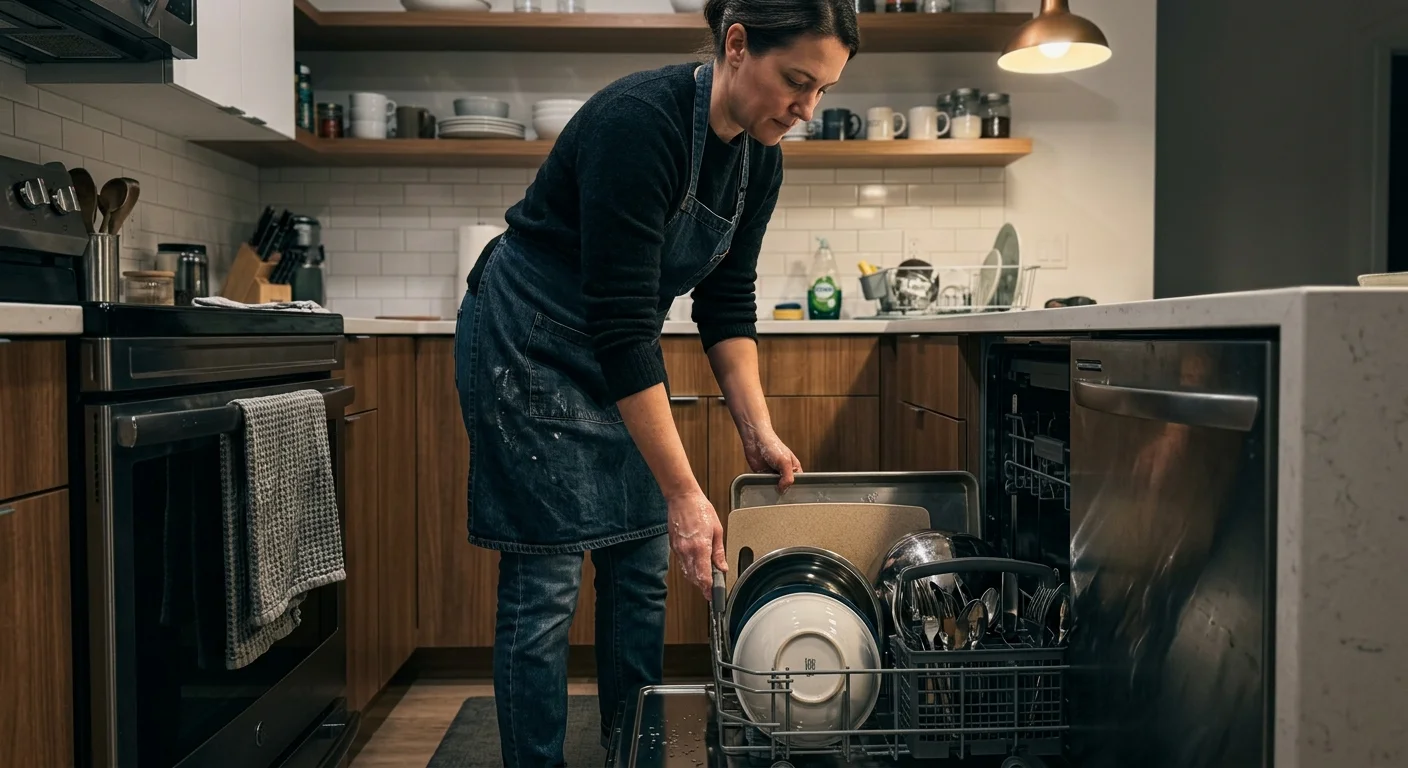
To demonstrate practical capacity, let us walk through a complete Sunday batch prep scenario for four weekday stir-fry dinners. This scenario uses exact tool dimensions and loading positions to prove full-cycle efficiency.
The cooking plan requires slicing 2.0 pounds of chicken breasts, julienning 1.0 pound of bell peppers, shredding 8.0 ounces of carrots, and mincing one large onion with 6 garlic cloves.
The meal prep generates the following dirty prep tools:
- One Epicurean 14.5 by 11.25-inch composite cutting board.
- Two 18/8 stainless steel quarter-sheet prep pans (9.6 by 12.9 inches).
- One Cuisinart 3.5-cup mini chopper bowl, lid, and stainless steel chopping blade.
- One Kyocera handheld ceramic mandoline slicer (12.5 inches long).
- One 8-inch stainless steel chef’s knife with a synthetic POM handle.
- Three small glass prep ramekins for garlic and minced ginger.
Loading begins in the lower rack. Slide the Epicurean composite board into the rearmost perimeter plate slot on the left side.
The 11.25-inch height leaves 0.5 inches of clearance below the Bosch middle spray arm. Next, slot the two stainless steel quarter-sheet pans into the center plate dividers, spaced two inches apart.
Now load the upper rack. Invert the 3.5-cup chopper work bowl over the left-hand glass tines; place its lid and blade assembly flat beside it.
Lay the Kyocera mandoline flat along the right-hand cup shelf, ensuring the blade guard covers the sharp cutting edge. Place the three glass ramekins along the center glassware row.
Finally, position the 8-inch chef’s knife point-down into the dedicated utensil basket cutout, ensuring the blade does not contact neighboring cutlery. Rotate both upper and lower spray arms manually by hand to verify total clearance.
Select a 90-minute Normal Wash cycle with the High-Temp Sanitize option engaged. The dishwasher uses 2.8 gallons of water, reaching a peak rinse temperature of 152°F.
All prep tools emerge completely sanitized and dry. You have prepared four complete meals and cleaned every prep tool in a single cycle without hand-washing a single item.
Frequently Asked Questions
Can I wash a standard half-sheet baking pan in an 18-inch dishwasher?
No, standard half-sheet pans measure 18 by 13 inches, which exceeds the usable 14 to 15.5-inch interior rack width. Forcing a half-sheet pan inside blocks rotating spray arms and prevents the door from sealing. Use two quarter-sheet pans instead.
What is the maximum cutting board size for an 18-inch apartment dishwasher?
The maximum safe dimension for upright lower-rack loading is 14.5 inches wide by 11.0 inches tall. Boards taller than 11.5 inches hit the middle spray arm assembly. Boards wider than 15 inches cannot sit vertically inside standard slimline plate racks.
Will dishwasher detergent ruin stainless steel prep knives?
Detergents contain alkaline salts that can dull fine edges over time through microscopic pitting. However, stainless knives with synthetic handles will not suffer structural damage. You can easily maintain sharpness using a weekly ceramic honing rod routine.
Why did my aluminum prep pan turn gray and powdery in the dishwasher?
Dishwasher detergents contain highly alkaline compounds that chemically oxidize bare aluminum surfaces. This reaction produces a dark gray surface oxidation that rubs off on hands. To prevent this issue, purchase 18/8 stainless steel or ceramic-coated pans.
Disclaimer: Product prices and availability change frequently. Prices shown were accurate at time of writing but may have changed. We may earn a small commission from purchases made through links on this site, at no extra cost to you. Always use cutting tools carefully and follow manufacturer safety guidelines.