
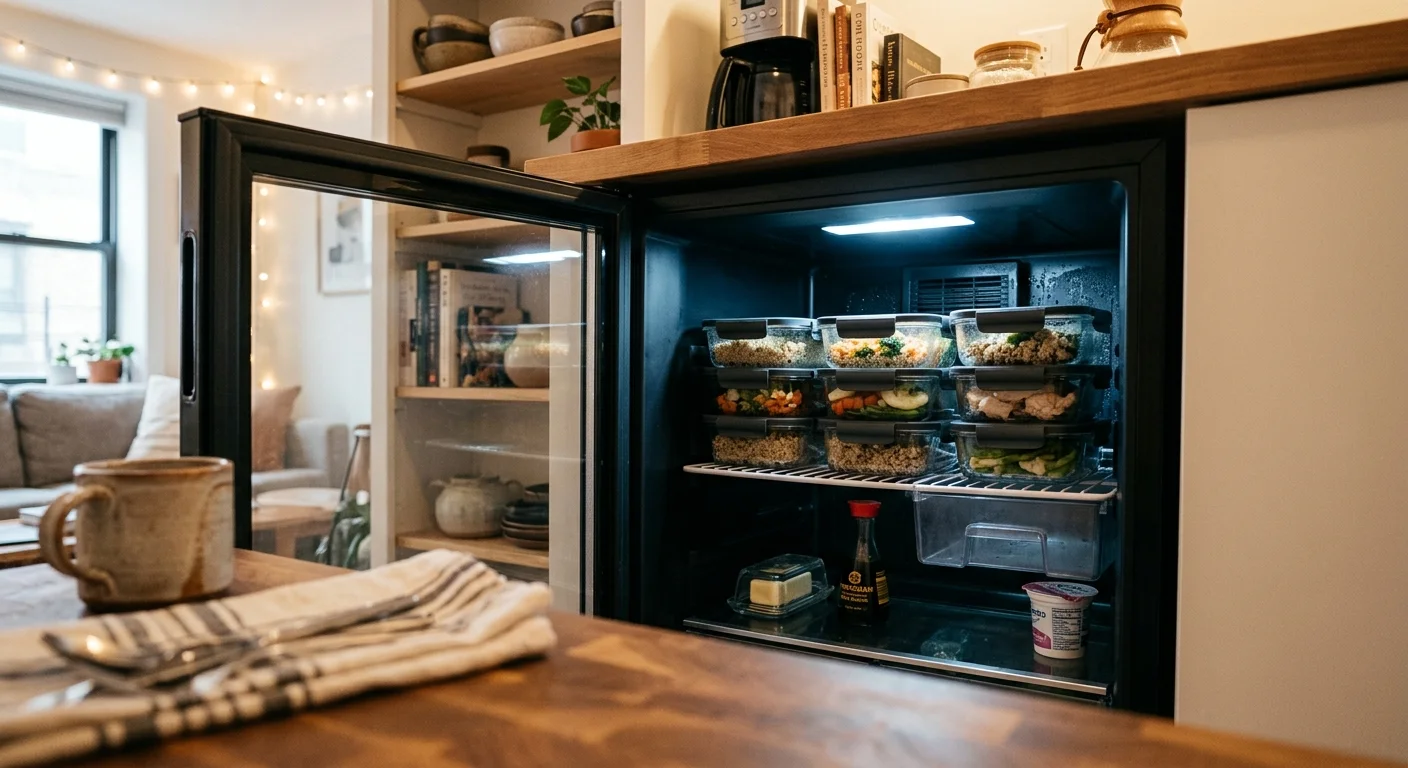
Cooking solo in a 350-square-foot studio forces you to treat every cubic inch of your under-counter mini-fridge as premium real estate. Standard meal prep containers consume critical headroom, leaving you with spoiled leftovers and cluttered shelves.
This guide ranks compact meal prep containers strictly by shelf-clearance height and usable volume per cubic inch. Matching precise container exterior dimensions to your mini-fridge cavity lets you store five full days of homemade meals without sacrificing space for daily staples.
Selecting modular glassware sized beneath tight wire shelves eliminates wasted air and preserves single-portion meals efficiently.
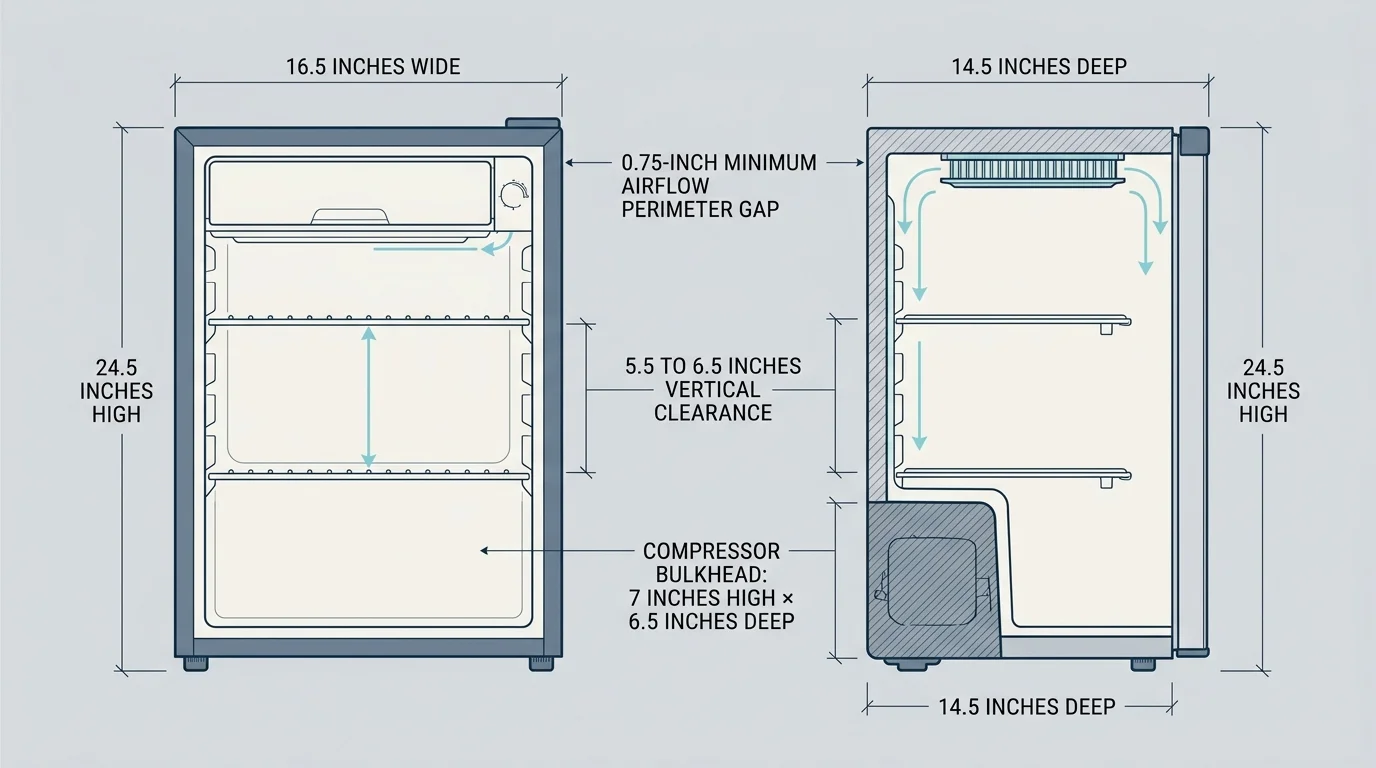
Anatomy of a Sub-3.2 Cubic Foot Mini-Fridge Interior
Under-counter all-refrigerator units lacking a freezer box average interior dimensions of 16.5 inches wide, 14.5 inches deep, and 24.5 inches high. These measurements provide roughly 3.1 cubic feet of raw space before inserting components.
Interior wire shelves instantly subdivide that space into fixed vertical tiers. Typical factory shelf spacing leaves two primary cavities measuring between 5.5 and 6.5 inches in vertical clearance.
The bottom rear quadrant contains the compressor step, a protruding bulkhead measuring roughly 7 inches high and 6.5 inches deep. This intrusion reduces the bottom shelf depth to half of the upper racks.
Improper container depths turn this compressor ledge into dead space (unused storage areas, often in corners or above appliances). You cannot place conventional rectangular meal containers there without overhang.
Mini-fridges also lack the forced-air multi-duct fans found in full-sized appliances. Cold air gently sinks from a single evaporator plate mounted at the rear ceiling down to the compressor step.
Packing containers flush against side walls chokes this convective air path. You must preserve a minimum 0.75-inch perimeter gap around your container stacks to prevent uneven temperatures and spoiled produce.
Why Volumetric Density Beats Standard Capacity Ratings
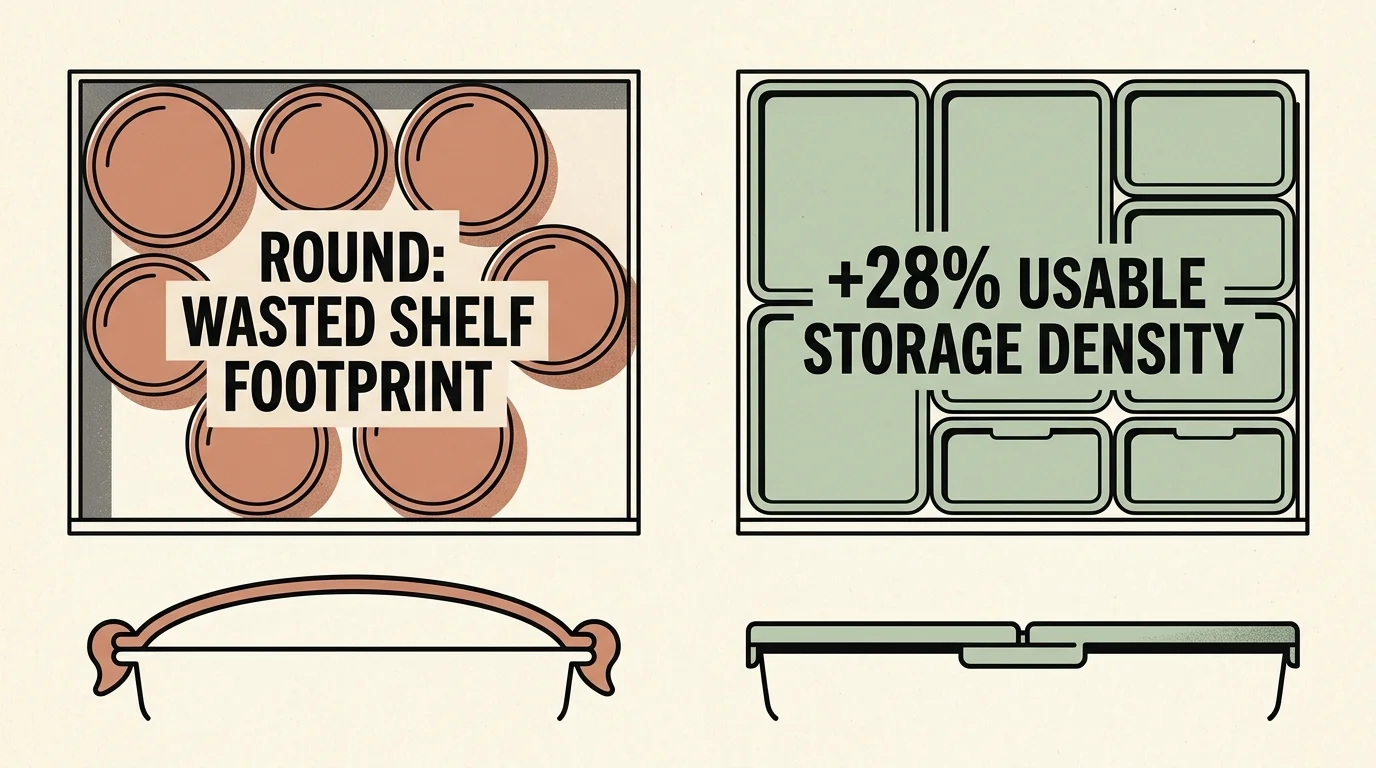
Commercial container manufacturers design meal vessels for full-sized refrigerators with 8 to 10 inches of shelf height. These products feature wide peripheral rims, arched lids, and recessed latches that waste vertical inches.
Weighing the pros and cons of matching container sets versus mixed collections is essential when every container base needs to nest without tipping.
In small fridge organization, container exterior footprint matters far more than labeled internal volume. You need vessels that are stackable (designed to safely pile on top of each other) using flat, interlocking lids.
Volumetric efficiency measures the ratio of usable food storage volume to the gross external cubic space the container occupies. A container with bulging handles might hold 30 ounces of food while consuming 55 ounces of exterior shelf envelope.
Square and rectangular profiles maximize corners, yielding up to 28 percent more edible storage than round bowls within identical footprints. Round designs force dead air gaps on four sides when placed next to each other.
Selecting modular (pieces that can be combined and configured different ways) collections guarantees that diverse capacities share matching footprint dimensions. A 1.5-cup unit stacks securely atop a 3.2-cup unit without listing or toppling.
Rigid food storage testing from Wirecutter’s kitchen organization guides demonstrates that perimeter latches provide leakproof seals while keeping lid tops flat. Flat lid profiles maximize your vertical nesting ratio.
“Maximizing a studio refrigerator requires designing your storage footprint in three dimensions. You must account for lid latches, perimeter air paths, and shelf-bracket intrusions.”
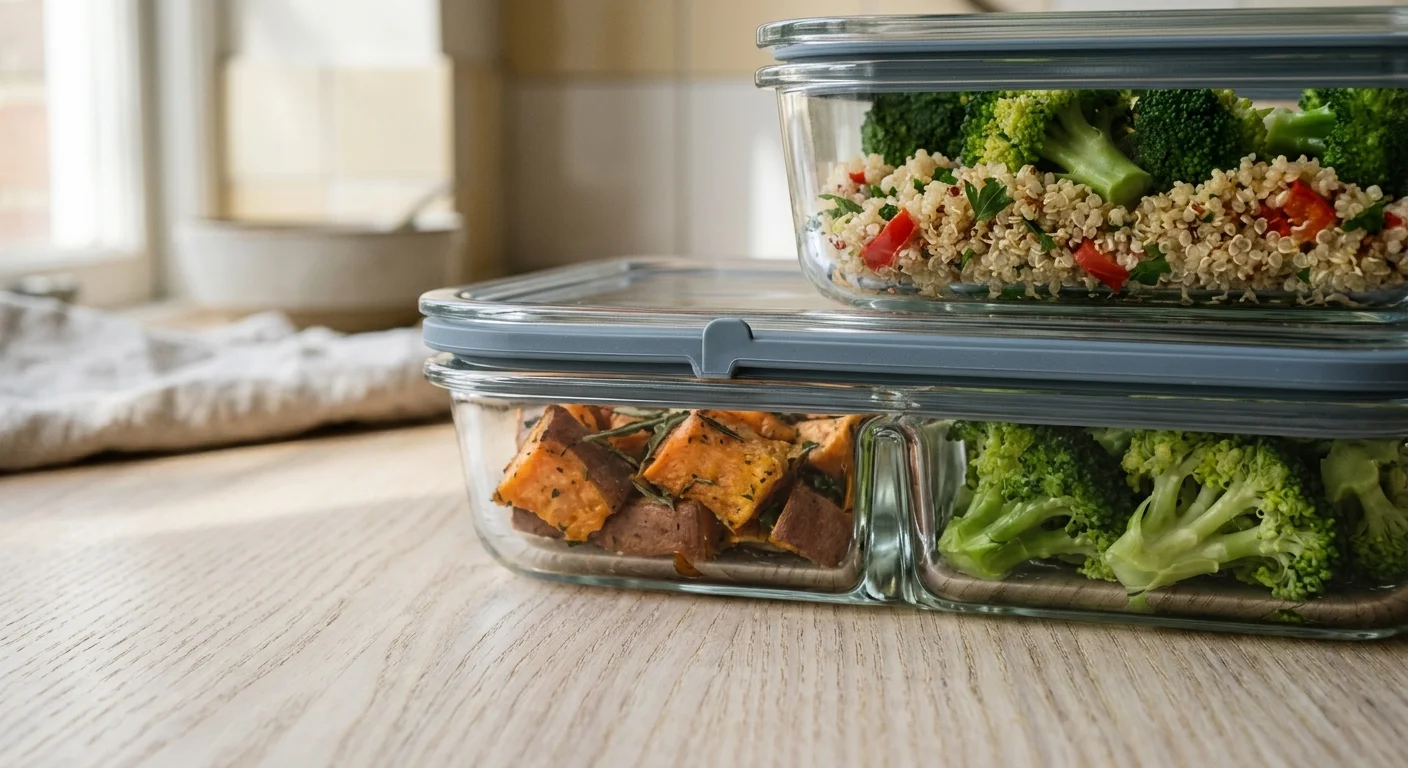
Top Stackable Mini Fridge Storage Containers Compared
The following systems represent the most volumetrically efficient containers engineered for tight shelf clearances. Each system accommodates under-counter refrigerators without obstructing internal door bins or rear cold plates.
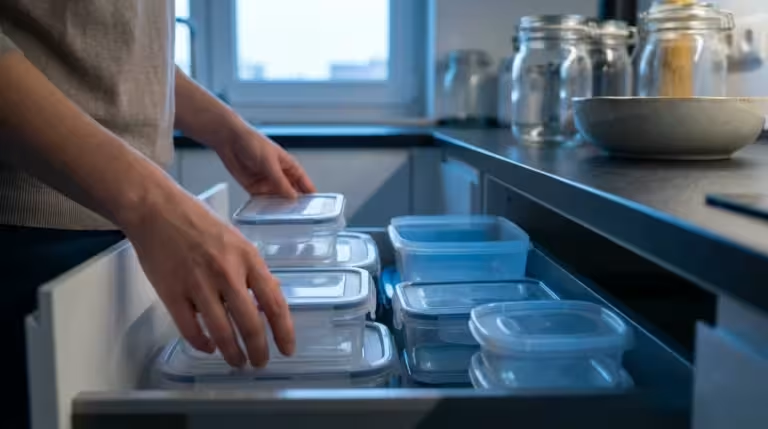
For cooks taking packed lunches to the office, pairing these compact stacks with leakproof glass meal prep containers featuring hinged latches prevents bag leaks during daily transit.
| Container Model | Exterior Dimensions (L x W x H) | Stacked Height (2 Units) | Usable Volume | Volumetric Efficiency | Lid Profile & Seal Material |
|---|---|---|---|---|---|
| Rubbermaid Brilliance 3.2-Cup Rectangular | 7.8 in x 5.4 in x 2.5 in | 4.8 in | 25.6 fl oz (46.1 cu in) | 44% | Flat recessed latches, Tritan silicone gasket |
| Glasslock 1.6-Cup Compact Rectangular | 5.8 in x 4.0 in x 2.2 in | 4.2 in | 12.8 fl oz (23.1 cu in) | 45% | Four-side latching lid, tempered soda-lime glass |
| OXO Good Grips Smart Seal 1.8-Cup Glass | 6.1 in x 4.4 in x 2.3 in | 4.4 in | 14.4 fl oz (25.9 cu in) | 42% | Snap-tab flat lid, thermal-shock borosilicate |
| Prep Naturals 30-Oz Glass Prep Container | 6.8 in x 5.0 in x 2.3 in | 4.3 in | 30.0 fl oz (54.1 cu in) | 69% | Snap-lock low-ridge lid, borosilicate base |
Rubbermaid Brilliance sets the standard for lightweight plastic storage in tight spaces. Its crystal-clear Tritan plastic avoids staining from acidic tomato sauces while maintaining an ultra-thin 2.5-inch vertical height.
The recessed lid design lets the bottom base of a matching container nest 0.2 inches into the lid groove below it. Two stacked units measure exactly 4.8 inches high, easily clearing standard 5.5-inch mini-fridge shelves.
The Prep Naturals 30-ounce glass container delivers the highest volumetric efficiency among heavy-duty glassware options. Its near-vertical sidewalls eliminate the tapered draft angles that waste base shelf area in conventional bowls.
Glasslock provides the best footprint for the compressor step shelf. At just 4.0 inches wide and 5.8 inches long, you can position two units side by side on that shallow ledge without contacting the door.
Worked Scenario: Fitting 10 Studio Meals Into a 3.1 Cubic Foot Cavity
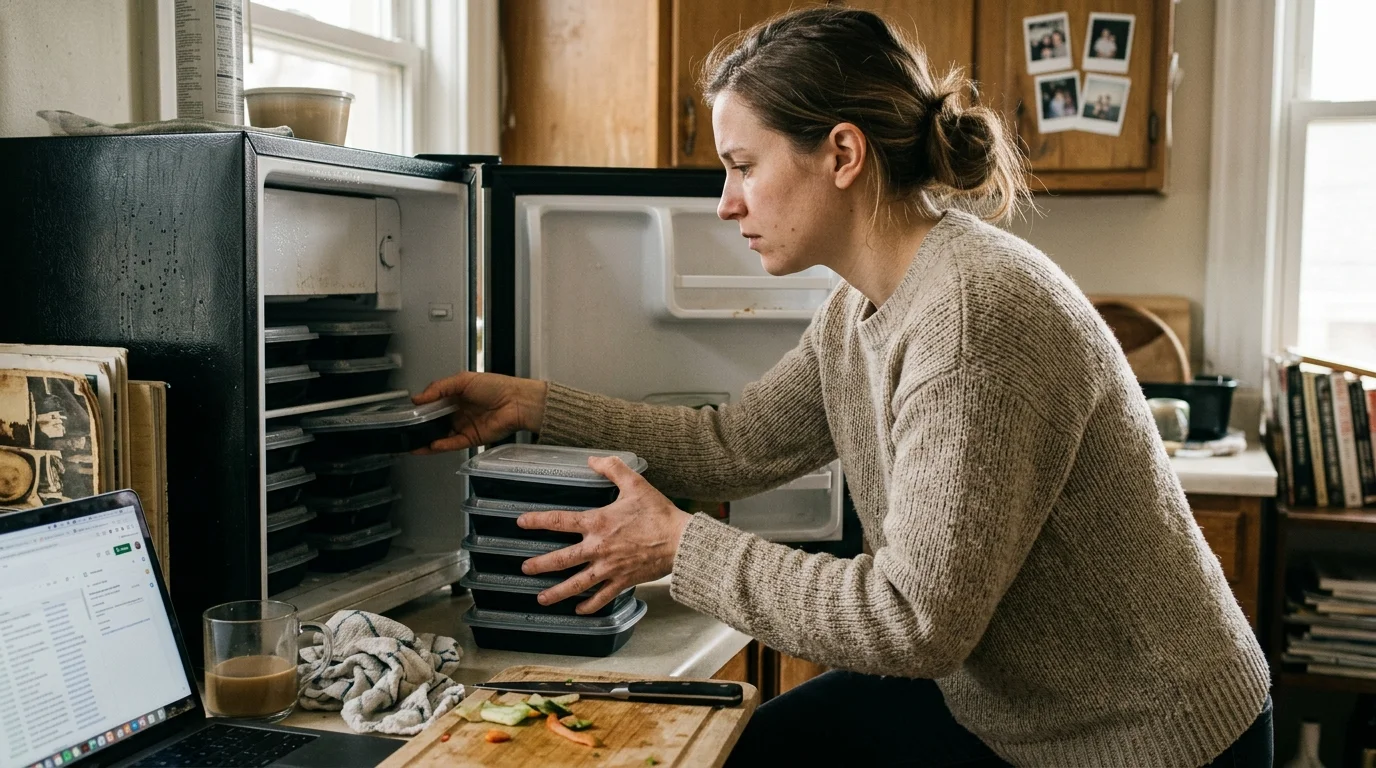
To demonstrate practical execution, consider a solo home cook preparing weekday meals on Sunday afternoon. You have a 3.1-cubic-foot Danby all-refrigerator with two primary wire shelves and one compressor shelf.
On Sunday, October 12, you spend $38.50 on groceries and 90 minutes prepping lunches and dinners. Your prep yields five 24-ounce grain-and-protein bowls and five 12-ounce vegetable-and-dressing sides.
The lower primary shelf offers dimensions of 16.0 inches usable width, 13.5 inches usable depth, and 6.0 inches clearance height. Placing standard restaurant takeout containers here limits you to three bulky boxes before maxing out headspace.
Instead, deploy four Prep Naturals 30-ounce containers on this bottom level. Arrange them in a two-by-two grid occupying 13.6 inches of width and 10.0 inches of depth.
Stack four more matching Prep Naturals containers directly on top of the lower tier. The combined vertical stack height reaches exactly 4.3 inches, leaving a generous 1.7-inch ventilation clearance below the wire rack.
This eight-container lower block holds four full days of lunches and dinners within a 13.6-by-10.0-inch footprint. You still have 2.4 inches of lateral space along the left wall for tall beverage containers.
Move to the upper shelf, which measures 16.0 inches wide, 13.5 inches deep, and 5.5 inches high. Position the fifth 30-ounce dinner container beside three stacked pairs of Glasslock 1.6-cup vegetable side containers.
The compressor shelf ledge measures 16.0 inches wide by 6.5 inches deep with 7.0 inches of vertical headroom. Dedicate this narrow ledge to the remaining two Glasslock 1.6-cup containers and daily breakfast staples like yogurt.
You have successfully stored 10 complete meals using just 62 percent of total refrigerator shelf volume. The remaining 38 percent accommodates eggs, milk, condiments, and fresh produce without overstuffing.
Studio Apartment Kitchen Storage and Workflow Zoning
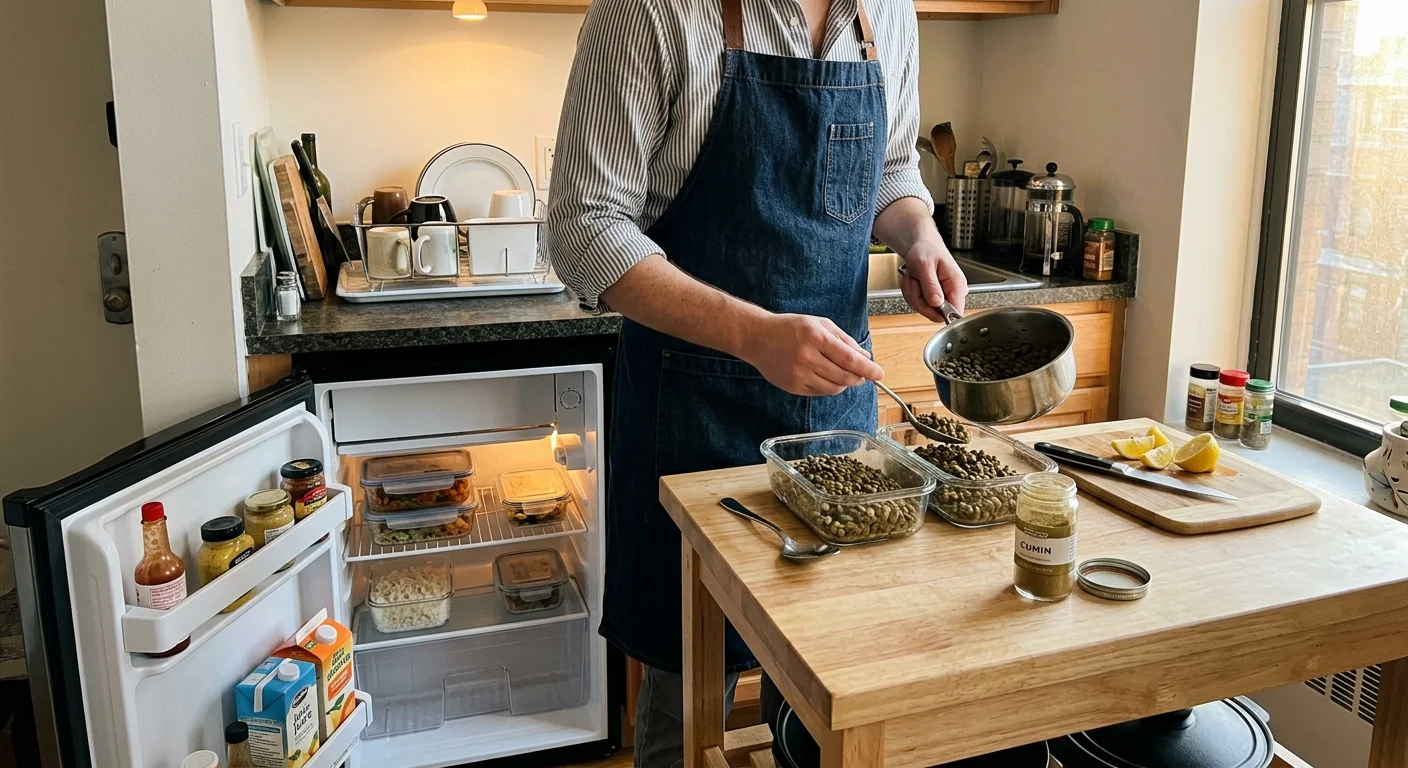
Studio living demands that you arrange food storage according to temperature zones and cooking rhythms. Mini-fridges exhibit more temperature variance than full-sized refrigerators due to smaller air volumes and thinner insulation walls.
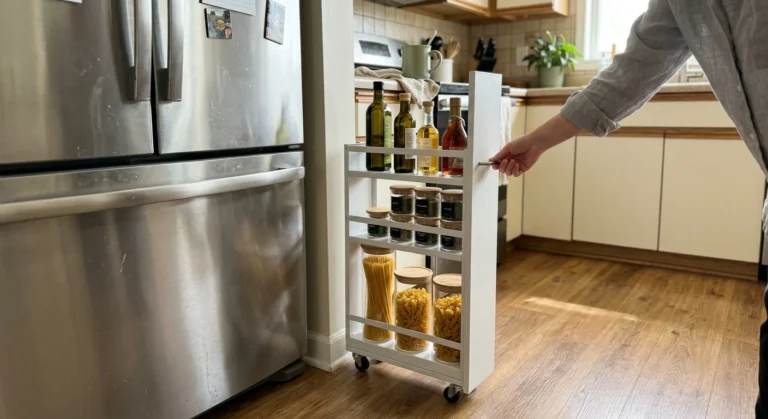
To keep the fridge interior uncluttered, consider sliding an ultra-slim rolling slide-out cart into the narrow space beside the appliance for non-refrigerated dry goods.
The rear bottom area near the compressor step runs the coldest, frequently dipping to 34 degrees Fahrenheit. Store your high-protein prepped meals containing chicken, fish, or tofu in this back zone to maintain food safety.
The top shelf registers warmer temperatures between 38 and 40 degrees Fahrenheit. Place hearty pre-cut vegetables, fresh herbs, and hard cheeses across this upper tier.
According to home storage guidelines from Good Housekeeping’s home organization experts, consolidating similar meal components into dedicated zones prevents rummaging and reduces door-open times. Reduced door opening stabilizes mini-fridge temperatures.
If your mini-fridge features fixed interior shelves with excessive vertical clearance, install an acrylic shelf riser (a mini shelf that creates two levels of storage in one space). A riser splits a 9-inch cavern into dual 4.25-inch compartments.
Avoid using a deep turntable or lazy susan (a rotating tray that makes corner cabinet items accessible) inside sub-3.2-cubic-foot fridges. The circular rotation sweeps out wide arcs that waste over 30 percent of rectangular shelf corners.
Instead, select a shallow clear pull-out organizer (a drawer or shelf that slides out for easy access). This straight sliding tray pulls forward smoothly to retrieve rear containers without disturbing front stacks.
Maintaining Container Systems and Preventing Studio Food Waste
Small fridge organization fails quickly without consistent maintenance habits. Odors and clutter amplify fast in a 350-square-foot apartment where your sleeping space sits six feet from your kitchen.
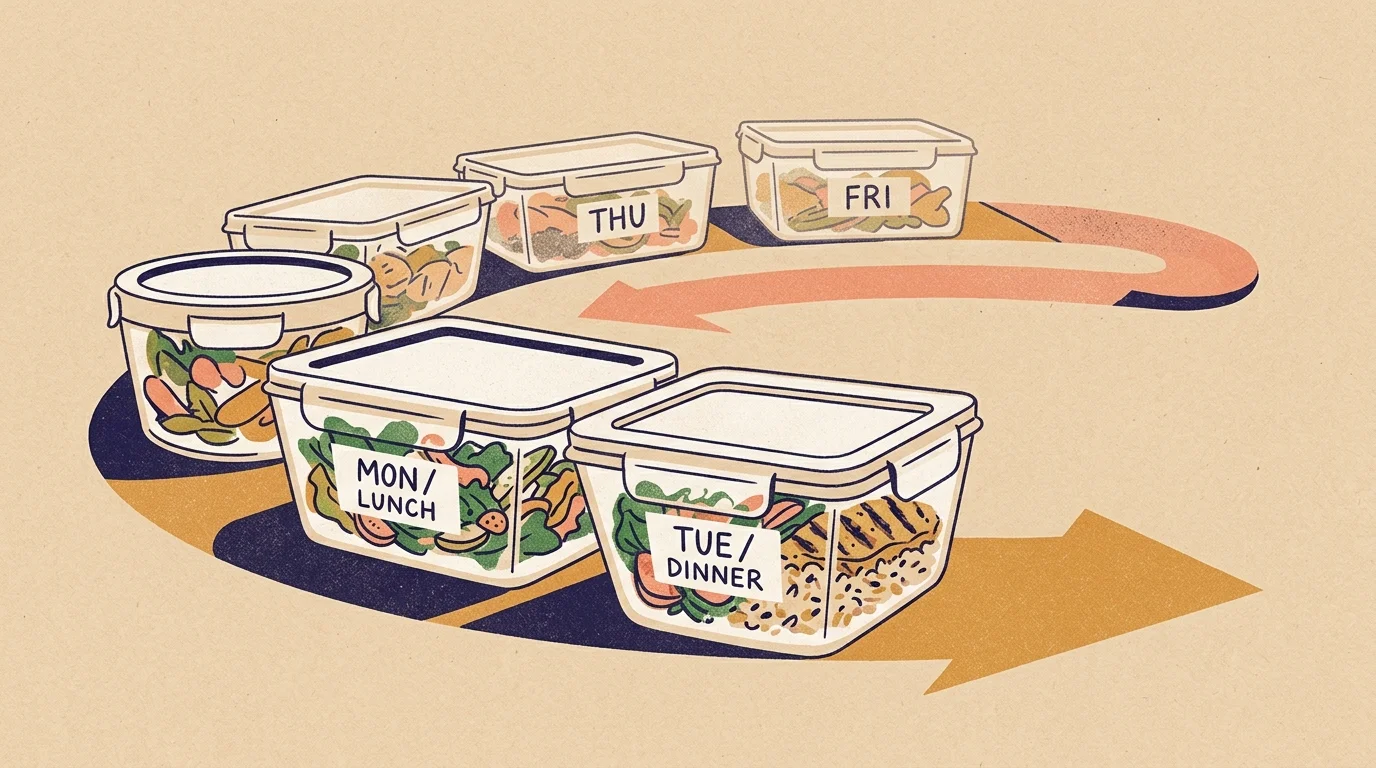
Rotate your prepped meals using the FIFO (first in, first out, a method of rotating food so oldest gets used first) method. Position newest meals behind existing containers during every evening restock.
Label container lid corners using water-soluble chalk markers or blue painter’s tape. Note both the preparation date and the meal name so you can identify contents without unstacking containers.
Standard meal prep schedules should operate on a strict four-day shelf-life limit. Consume or freeze cooked poultry, ground beef, and steamed cruciferous vegetables within 96 hours of preparation.
Wash your compact meal prep containers immediately after eating to prevent grease film buildup. High-density studio living leaves little drying rack capacity, making stackable, quick-drying glass vessels far easier to clean than greasy plastic.
Inspect container silicone perimeter gaskets every four weeks for moisture retention. Mold spores thrive along compressed silicone tracks in low-airflow mini-fridges if you seal containers while food remains hot.
Always cool cooked meals on the kitchen counter for 20 minutes before snapping lids shut. Transferring steaming food into a mini-fridge triggers heavy condensation, elevating interior cabinet humidity and softening crisp vegetables.
“Condensation is the enemy of mini-fridge organization. Cooling food completely before containerizing prevents moisture fogging and extends meal shelf life.”
Renter-Friendly Adjustments for Tight Mini-Fridge Cavities
Most studio apartments forbid structural alterations, and rental mini-fridges are provided as-is. You can still optimize internal dimensions without violating lease agreements or damaging plastic interior liners.
Many basic under-counter refrigerators ship with factory-installed wire shelves spaced at arbitrary heights designed for beverage cans. Look closely at the molded sidewall liner ribs to identify alternate shelf slots.
Carefully compress the wire shelf edges inward to release them from the liner detents. Relocating a middle wire shelf down by just 1.25 inches can unlock clearance for a double stack of glass prep containers.
Review comprehensive small-space ideas from The Spruce’s kitchen organization resources to evaluate non-invasive upgrades. Clean, modular plastic bins prevent condensation drips onto lower shelves.
If you lack door storage for small sauce jars, examine your door layout before buying aftermarket organizers. Never mount a heavy external door-mounted rack (storage that hangs on the inside of cabinet doors) to a mini-fridge door.
Heavy door modifications misalign thin mini-fridge hinge pins and break the magnetic door gasket seal. A broken seal leaks cool air, forcing the compressor to run constantly and icing over your food storage containers.
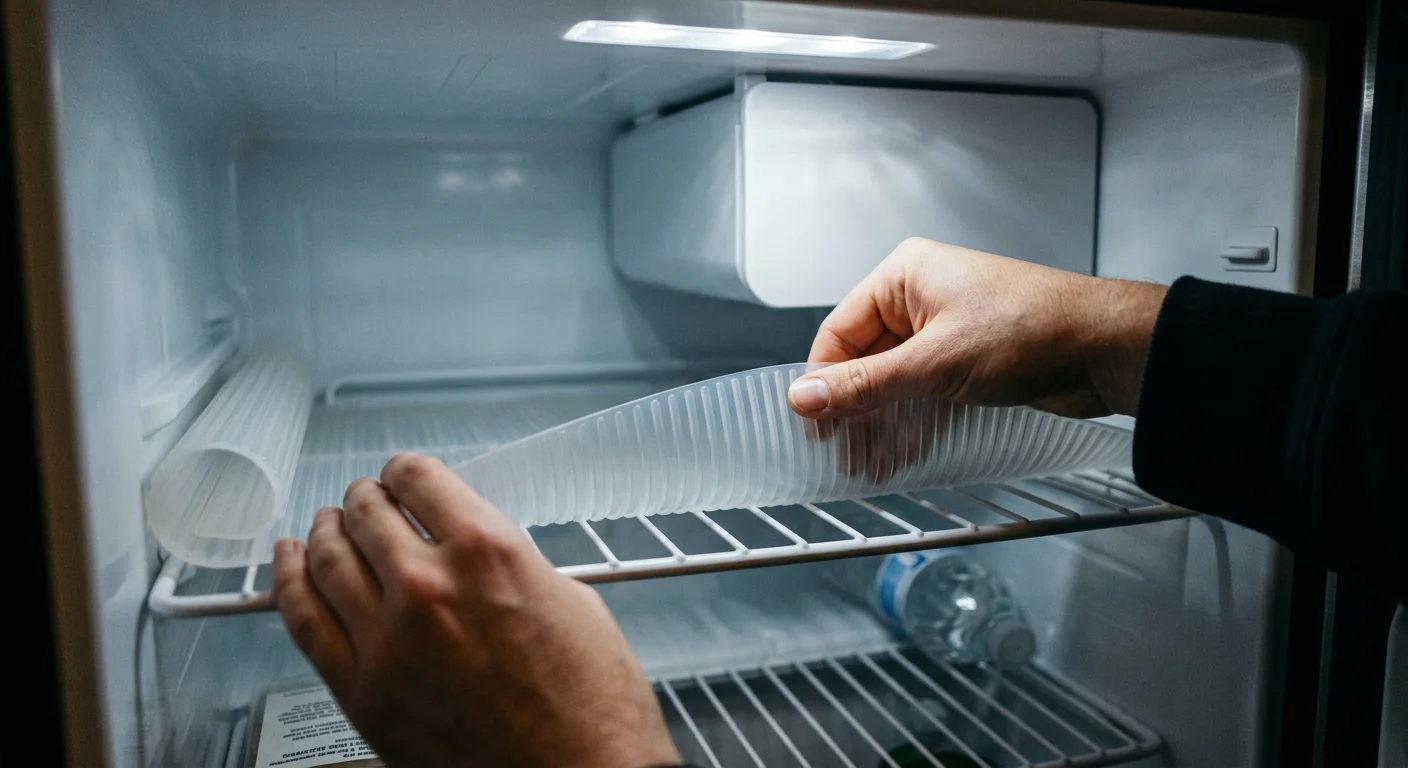
To safely stabilize loose containers on open wire racks, cut thin food-safe polypropylene placemats to fit your shelf grids. The smooth surface prevents narrow glassware from wobbling between wide wire bars without blocking edge air circulation.
Frequently Asked Questions
Can I safely stack glass food containers inside a mini-fridge?
Yes, you can safely stack glass containers if they have flat, recessed lids designed for interlocking stability. Limit your glass stacks to two units high to prevent tipping when reaching for rear items.
How many days of meal prep can fit inside a 3.1 cubic foot mini-fridge?
A solo cook can fit five days of lunches and dinners (10 complete portions) using modular, low-profile containers. This arrangement consumes roughly 60 percent of your usable shelf space, leaving room for drinks and condiments.
What container material works best for mini-fridge temperature zones?
Borosilicate glass provides superior thermal retention, keeping food colder when doors open frequently in small studios. High-grade Tritan plastic is a practical alternative if weight and shelf loading capacity are primary concerns.
Why do containers placed near the back of my mini-fridge freeze solid?
Mini-fridges rely on cold-wall evaporator plates located along the rear interior cabinet. Stacking food containers directly against this back wall transfers sub-freezing temperatures directly into your food through conductive contact.
Disclaimer: Product prices and availability change frequently. Prices shown were accurate at time of writing but may have changed. We may earn a small commission from purchases made through links on this site, at no extra cost to you. Always measure your space before purchasing organizers to ensure proper fit.

1 Comment