
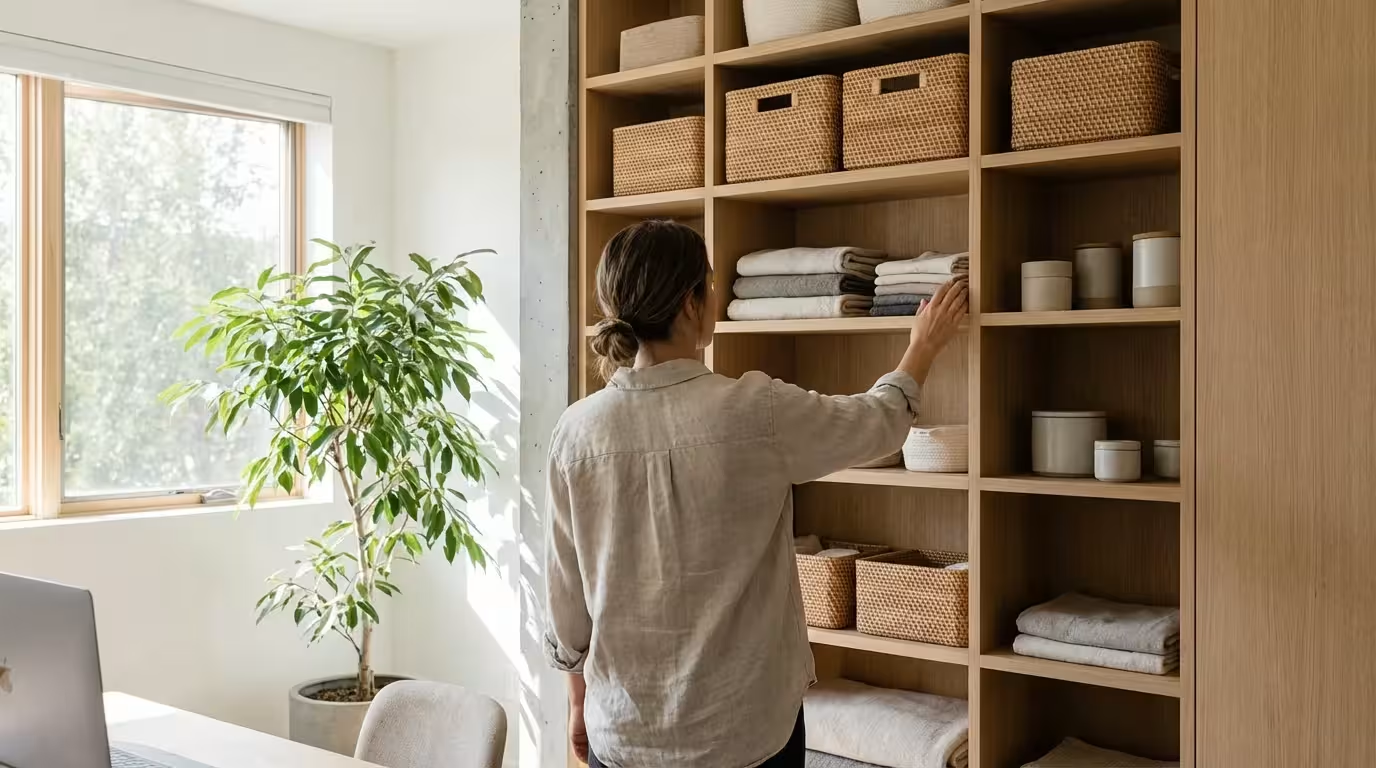
You likely have more space in your kitchen than you realize. When counters feel crowded and cabinets won’t close, the natural instinct is to purge items or wish for a larger room. However, the most valuable real estate in the average American kitchen often sits entirely empty: the air space between your stuff and the shelf above it. Vertical storage leverages this “dead space”—unused areas typically found in upper cabinets, deep drawers, and blank walls—to multiply your storage capacity without requiring a single square foot of additional floor space.
Before implementing these systems, following a plan for decluttering your kitchen ensures you are only storing tools you actually use.
By shifting your organization strategy from horizontal spreading to vertical stacking and hanging, you improve accessibility. No one enjoys unstacking a heavy pile of skillets to reach the one at the bottom. Vertical solutions resolve this friction, allowing you to grab exactly what you need without disrupting the rest of the kitchen ecosystem.
Audit Your Air Space: Identifying Dead Zones
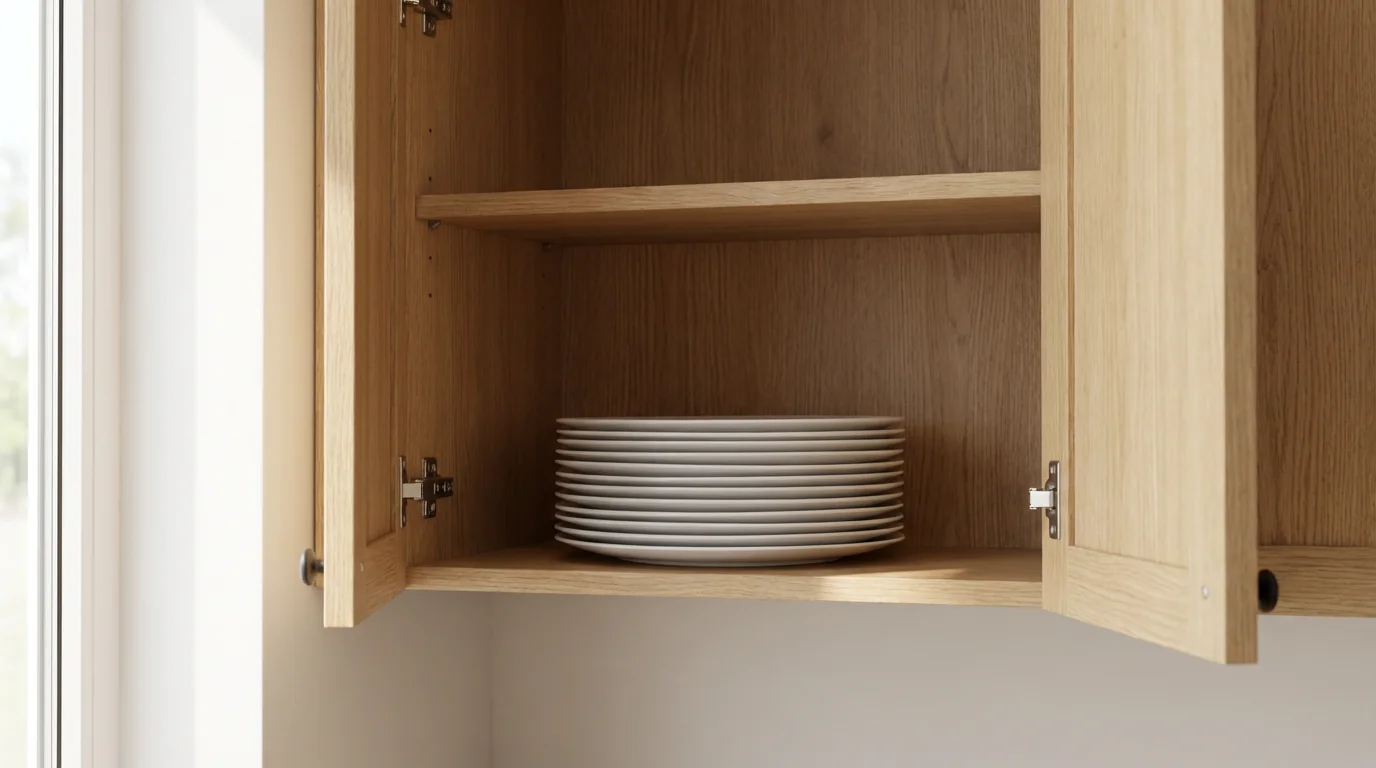
Before buying bins or installing racks, you must see your kitchen through a new lens. Stand in the center of the room and look for gaps. Open your cabinets. Do you see six inches of empty air above your stack of dinner plates? That is dead space—unused storage areas, often in corners or above appliances, that serve no purpose other than gathering dust. Open your under-sink cabinet. Is the top half completely empty while cleaning supplies crowd the bottom? That is a prime candidate for vertical intervention.
Most standard upper cabinets feature adjustable shelves, yet few homeowners actually adjust them. Builders often place shelves at arbitrary heights, leaving massive gaps. A simple adjustment of shelf pegs can instantly create room for an additional shelf. If you cannot move the shelves, you must build the infrastructure yourself using organizers.
Conquering Cabinet Chaos with Risers and Stackers
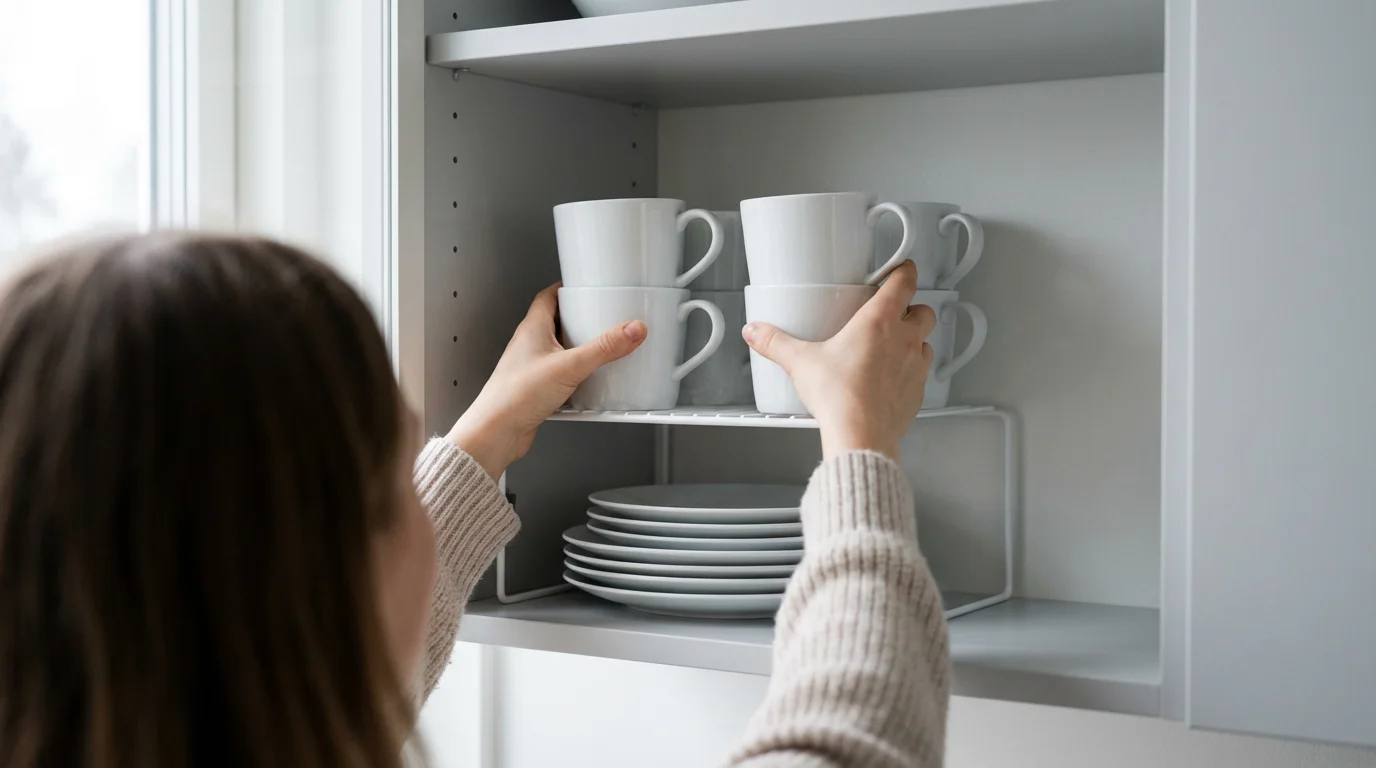
The interior of a standard upper cabinet is usually 12 inches deep and roughly 30 to 42 inches high. If you stack cereal bowls, you might use 6 inches of height, leaving 10 or more inches wasted above. To reclaim this, you need shelf risers.
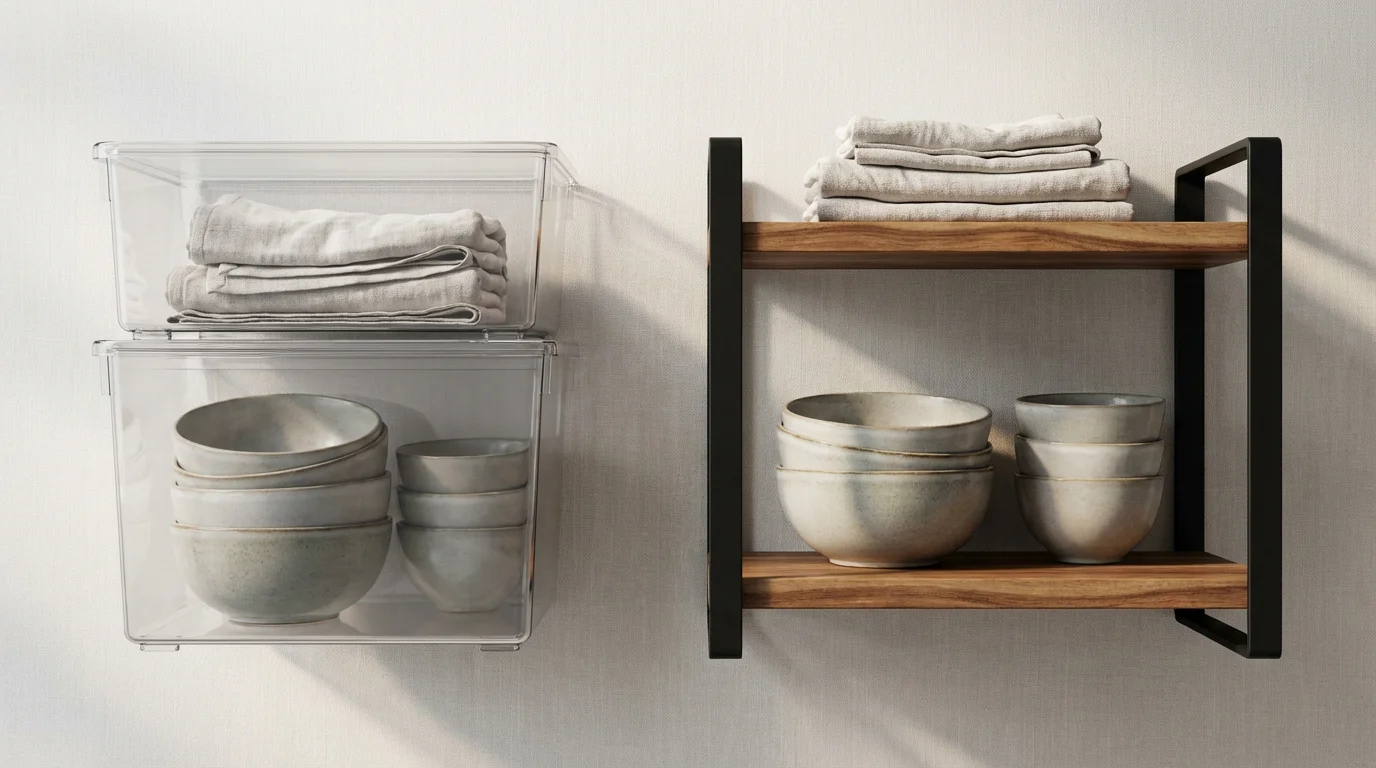
A shelf riser is a freestanding mini-shelf, usually made of wire or acrylic, that sits on your existing shelf to create two levels of storage in one space. By placing a riser over your dinner plates, you can store salad plates or bowls directly above them. This eliminates the need to unstack different types of dishes to get what you need.
Choosing the Right Riser
Measure the width and height of your cabinet interior carefully. A riser that is too tall will prevent you from sliding items underneath it. Look for risers that are expandable, allowing you to stretch them across the full width of a cabinet. Metal wire risers are durable and support heavy stoneware, while acrylic risers offer a cleaner visual look but may bow under extreme weight.
Stackable Bins for Loose Items
For items that do not sit flat—like bags of rice, spice packets, or baking tools—use stackable bins. These containers are designed to safely pile on top of each other, locking into place so they don’t topple. Clear acrylic bins allow you to see the contents immediately. According to Wirecutter, clear storage containers are essential for maintaining inventory visibility, preventing you from overbuying items you already have hidden in a pile.

Walls and Backsplashes: The Open Storage Revolution
If your drawers and cabinets are full, look to the walls. Many cooks hesitate to put things on display, fearing it will look cluttered. However, when organized intentionally, wall storage becomes functional decor. This approach keeps your most-used tools within arm’s reach, speeding up your cooking workflow.
Wall-mounted racks are among the most effective countertop storage solutions for small kitchens because they keep the workspace clear for food prep.
Magnetic Knife Strips
A bulky wooden knife block can take up 6 to 8 inches of valuable counter width. Replace it with a wall-mounted magnetic strip. While traditionally used for knives, strong magnetic bars can also hold metal spice tins, kitchen shears, and even food processor blades. This clears the counter while keeping sharp edges safely out of drawers.
Rail Systems
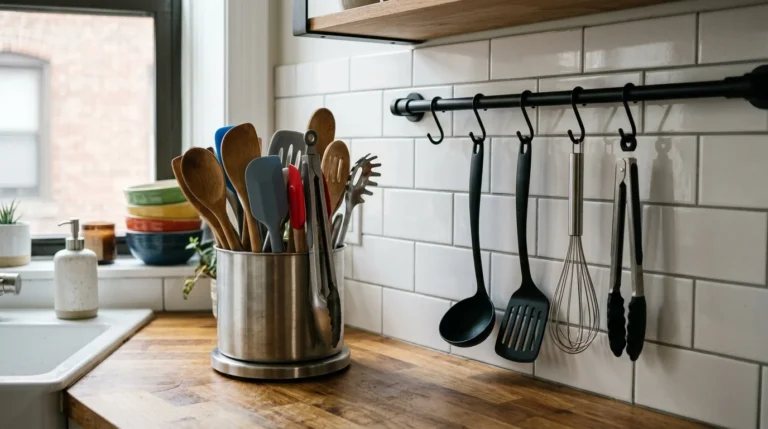
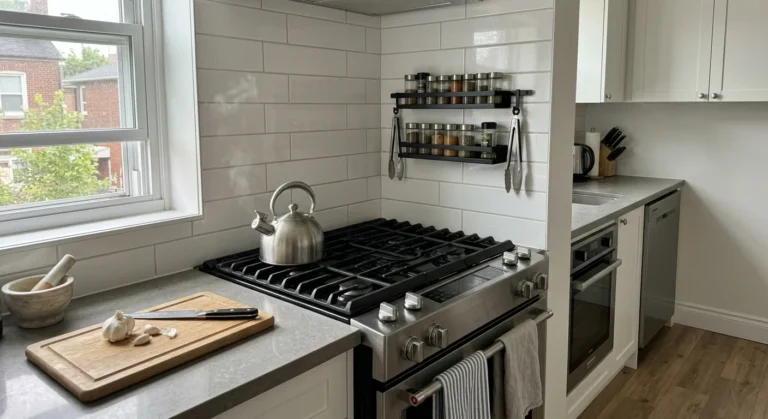
Install a stainless steel rail along your backsplash. Using S-hooks, you can hang measuring cups, serving spoons, and whisks. This mimics the efficiency of a professional kitchen line. If you are handy, you can install a heavy-duty rail capable of holding hanging fruit baskets or small herb pots, adding greenery without sacrificing prep space.
Pegboards
For a highly modular solution—meaning pieces that can be combined and configured in different ways—consider a pegboard. Originally designed for garages, pegboards are excellent for kitchens with limited cabinetry. You can arrange hooks, small shelves, and baskets in any pattern. This is ideal for awkward wall spaces where a standard cabinet would not fit. Standard pegboard holes are spaced 1 inch apart; ensure you buy hooks that match your board’s hole diameter (usually 1/8 inch or 1/4 inch).
“The goal isn’t a Pinterest-perfect pantry. It’s being able to find what you need in 10 seconds or less.” — Professional Organizer
Deep Drawer Verticality: File, Don’t Pile
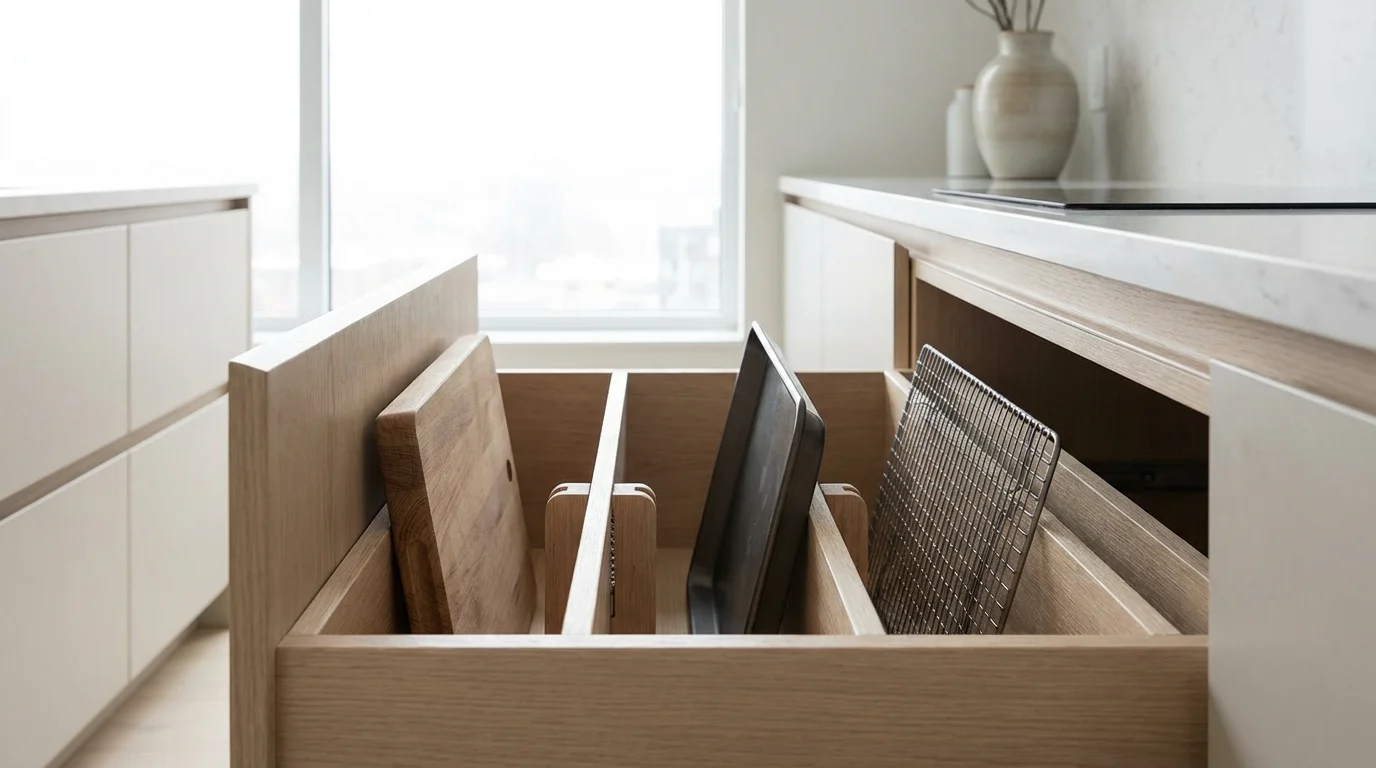
Deep drawers are often dumping grounds for pots, pans, and Tupperware. The “pile” method guarantees frustration. The solution is to turn items on their side.
Incorporating dedicated lid organizers within these drawers can further streamline your workflow by keeping matching tops within reach.
Tension Rods and Dividers
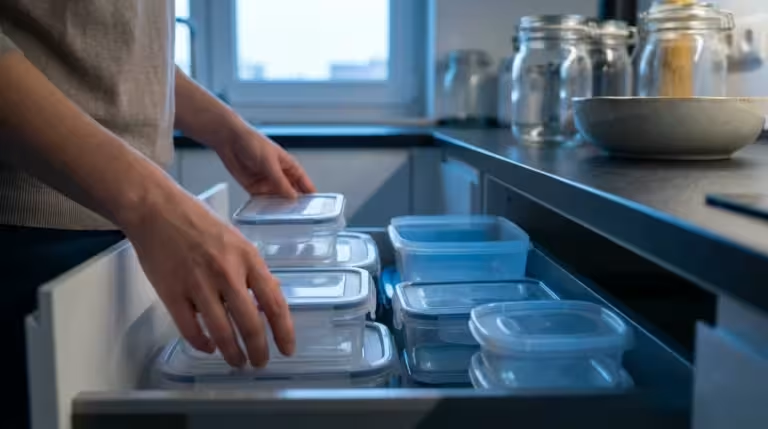
Use spring-loaded drawer dividers to create channels. Store baking sheets, cutting boards, and cooling racks vertically, like books on a shelf. This allows you to slide one out without triggering an avalanche. For plastic food storage lids, use a small bin within the drawer to “file” the lids vertically by size.
Peg Systems for Dishware
If you prefer storing dishes in lower drawers rather than upper cabinets, use a peg system. These board inserts feature adjustable wooden or plastic pegs that delineate space for stacks of plates. The pegs prevent the dishes from sliding and crashing when you open or close the drawer aggressively.
The Pantry Skyscraper Strategy
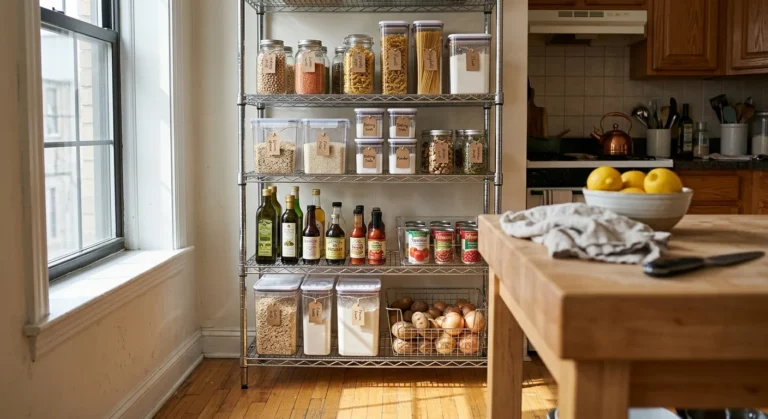
Pantries often have high ceilings but low shelving. You must utilize the “penthouse” level of your pantry. The top shelf, often hard to reach, is perfect for bulky, lightweight items like paper towels, or heavy, rarely used appliances like a turkey roaster.
Finding the right pantry organization ideas ensures that your skyscraper strategy remains manageable and visually clear.
Lazy Susans for Corners
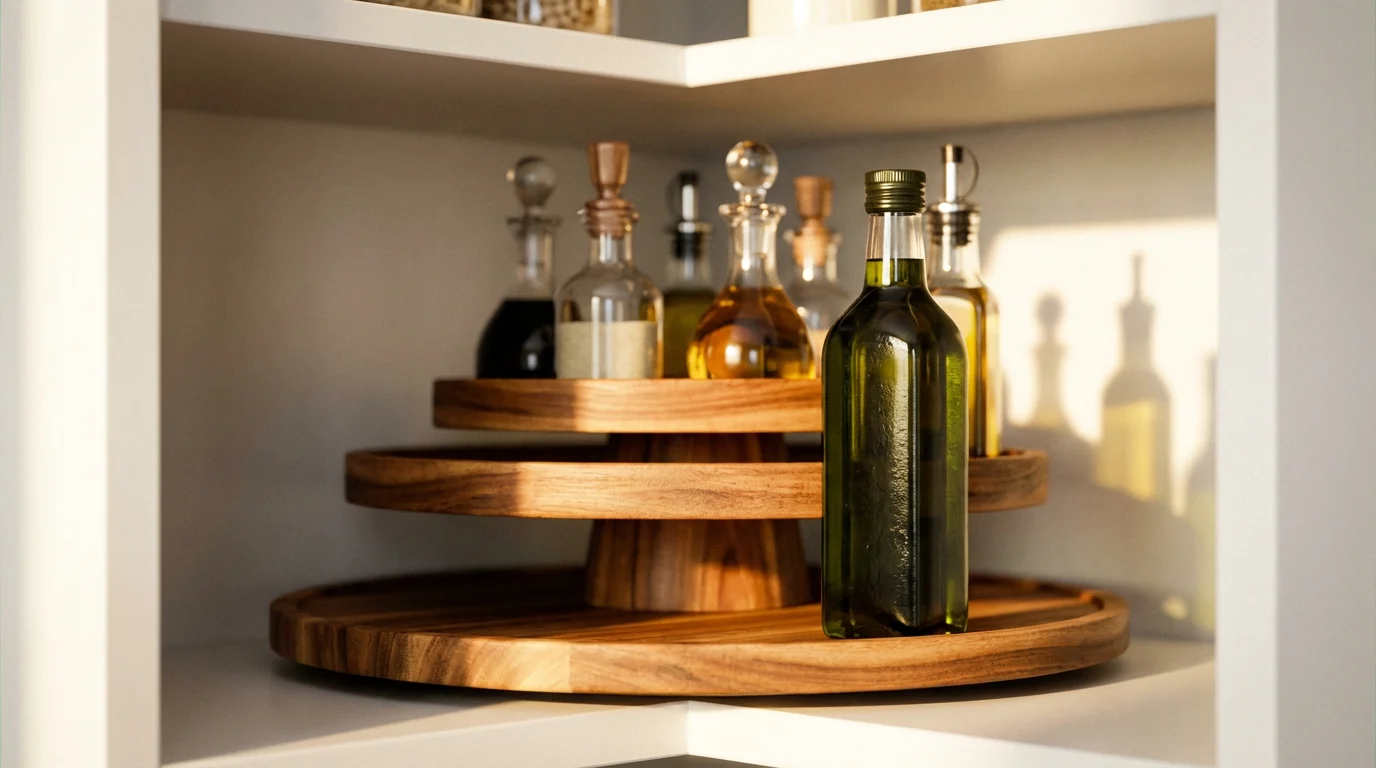
Corners are notorious dead zones. A lazy susan is a rotating tray that makes corner items accessible with a simple spin. In a pantry, use a multi-tiered lazy susan to store oils, vinegars, and condiments vertically. Instead of knocking over the front bottle to reach the back one, you simply rotate the tray.
Door-Mounted Racks
The back of the pantry door is a goldmine for vertical storage. A door-mounted rack hangs on the inside of the door (either over the top or screwed in) and provides shallow shelves. This is the ideal location for spices, foil/wrap boxes, or snack bars. By moving these small items to the door, you free up the main shelves for larger goods.
When organizing these racks, apply the FIFO method—first in, first out. This inventory management technique ensures you use the oldest food first. Place new items behind or below the open ones in your vertical racks to reduce food waste.
Behind-the-Door Potential
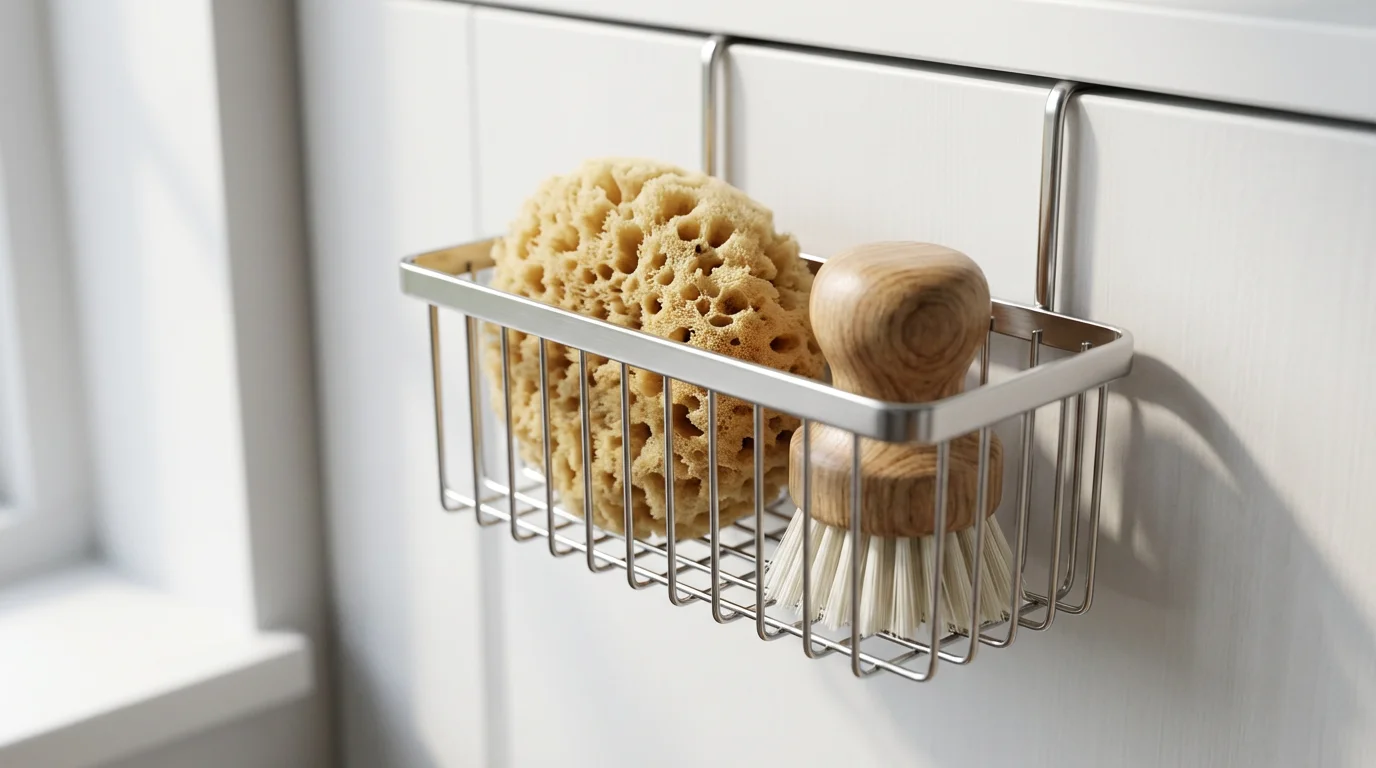
Cabinet doors offer vertical potential similar to pantry doors but on a smaller scale. Under the sink, a door-mounted wire basket can hold sponges, scrub brushes, and dishwasher tabs. This keeps wet items separated from the clutter of the cabinet floor.
Many of these door-based upgrades can be completed as DIY kitchen organization projects using simple materials found at any hardware store.
For a DIY approach, attach adhesive hooks to the inside of cabinet doors to hold measuring spoons or pot holders. Just be sure to measure the clearance; you don’t want the hooks to hit the interior shelves when you close the door.
Renter-Friendly vs. Permanent Installations
Not everyone can drill into tiles or screw into custom cabinetry. Fortunately, vertical storage does not always require power tools.
Tension Rods
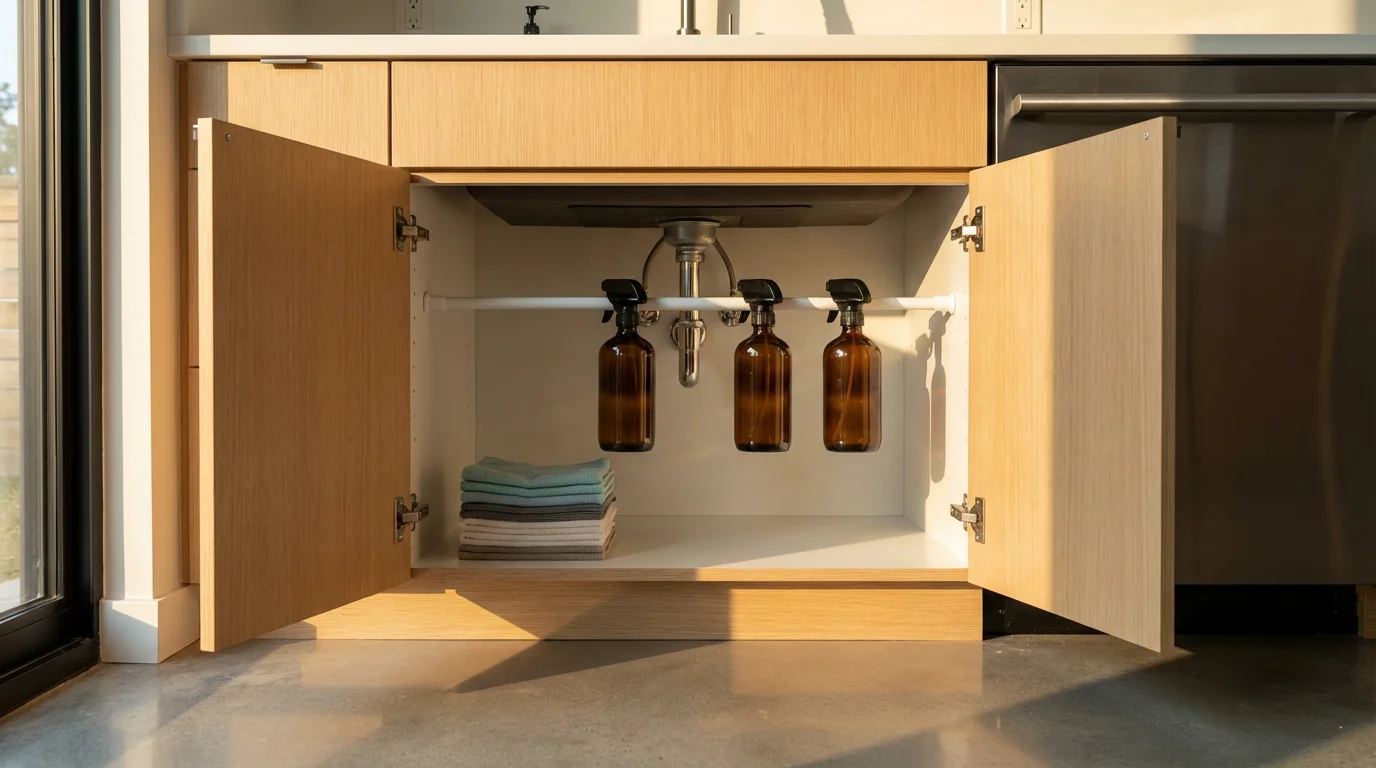
A small tension rod placed inside a cabinet can create a hanging zone for spray bottles (hook the trigger over the rod) or act as a divider for baking sheets. This requires zero installation and leaves no marks.
Adhesive Organizers
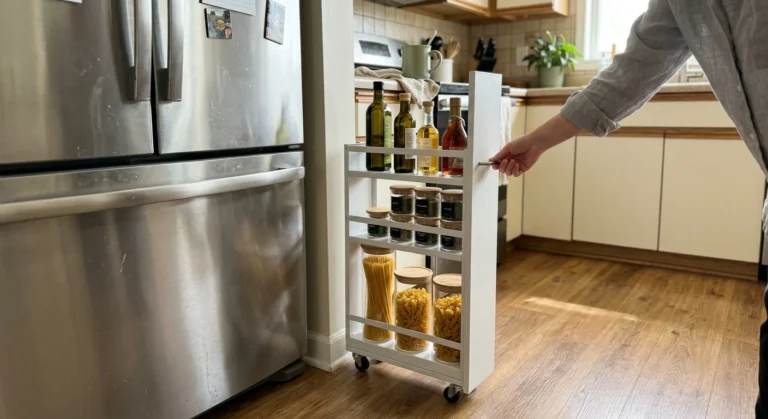
Modern adhesive technology has improved significantly. Clear plastic bins and caddies can adhere to the side of a fridge or the inside of a cabinet using heavy-duty strips. As The Spruce notes, utilizing the side of a refrigerator for magnetic or adhesive storage racks can turn a useless gap into a spice or utensil center. Always clean the surface with alcohol before applying adhesive to ensure a strong bond.
Pull-Out Organizers
While some pull-out organizers (drawers or shelves that slide out on tracks) require drilling into the cabinet base, many heavy-duty models now come with industrial adhesive strips. These allow you to access the back of a deep cabinet without permanent damage, though screw-mounting is always more stable for heavy items like canned goods.
Comparison: Budget vs. Premium Systems
You can achieve vertical organization at any price point. Below is a breakdown of how to solve common problems with varying budgets.
| Storage Challenge | Budget Solution ($) | Premium Solution ($$$) | Vertical Advantage |
|---|---|---|---|
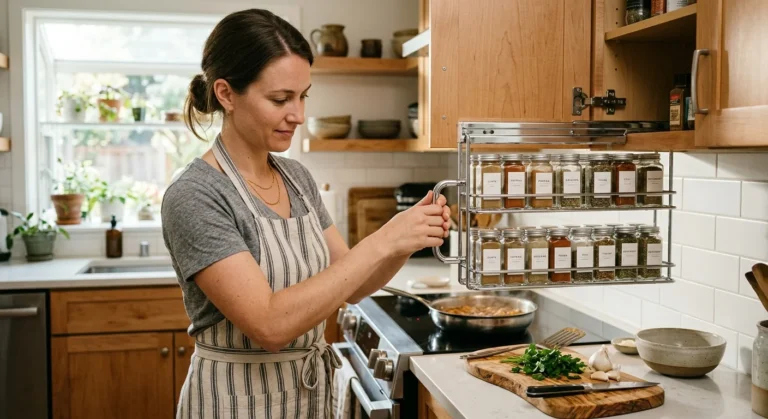
| Jumbled Spices | Tiered plastic stadium riser | Pull-down hydraulic spice rack | See labels instantly without lifting. |
| Messy Baking Sheets | Short tension rods installed vertically | Custom wood dividers/pull-out tray | Grab one sheet without unstacking. |
| Under-Sink Chaos | Stackable plastic shoe bins | Chrome sliding 2-tier organizer | Utilizes height around plumbing pipes. |
| Cereal/Dry Goods | Original boxes on shelf risers | Matching modular airtight containers | Uniform shapes stack higher and safer. |
| Pot Lids | Adhesive hooks on door | Roll-out metal lid organizer | Separates awkward shapes from pots. |
Maintenance and Safety Considerations
Vertical storage introduces gravity into the equation. Safety is paramount. When stacking items, always place the heaviest items at the bottom of the stack or on the lowest shelf to maintain a low center of gravity. Do not stack heavy appliances like mixers or blenders; they should remain on the counter or a low, reinforced shelf.
Weight Limits
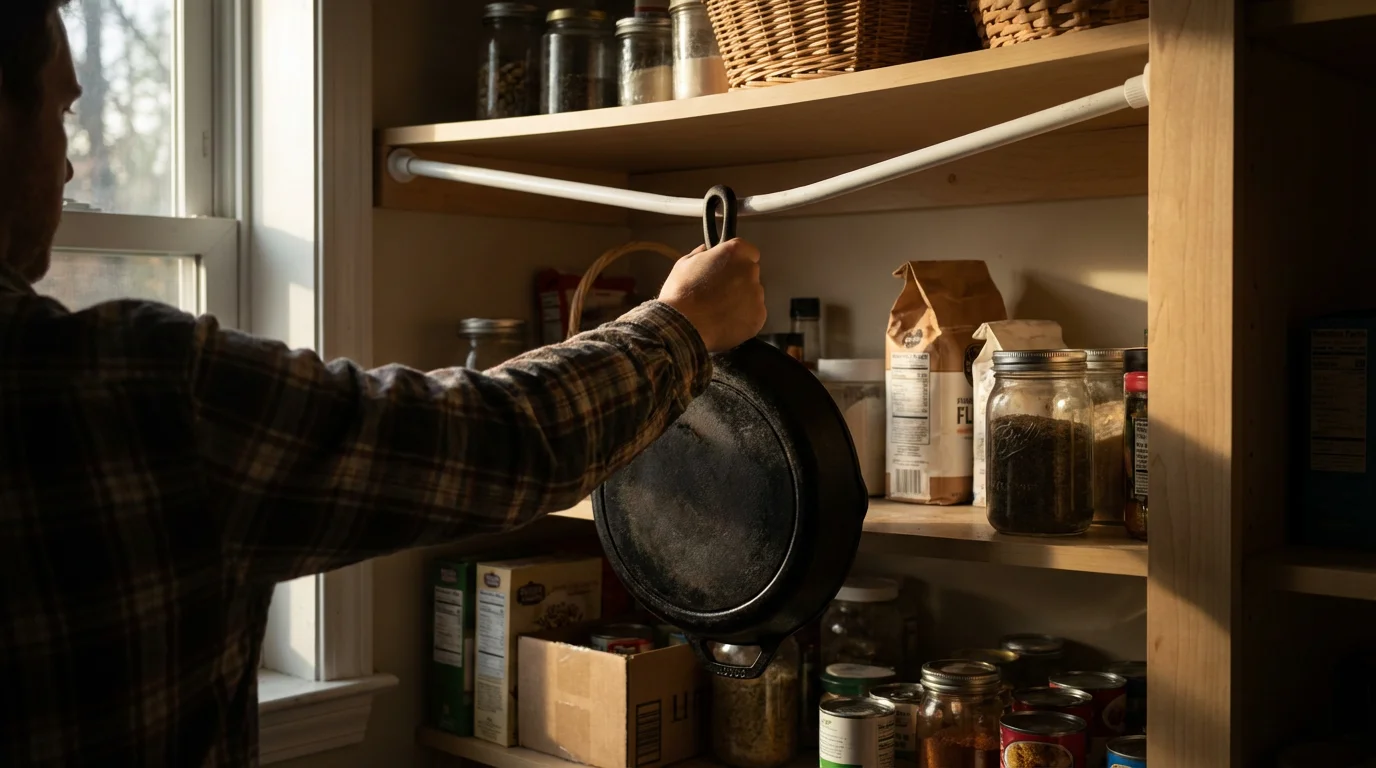
Check the weight rating of any shelf riser or adhesive hook. A tension rod meant for a curtain cannot support a cast-iron skillet. Overloading wire risers can cause them to collapse, potentially breaking the dishes below.
The Reach Factor
Only store lightweight, non-breakable items on the very highest shelves (the “penthouse”). If you need a step stool to reach it, do not store a heavy glass casserole dish there. Use that space for paper goods, holiday cookie tins, or extra plastic containers.
Frequently Asked Questions
How do I organize a kitchen with no upper cabinets?
If you lack upper cabinets, you must rely on wall-mounted solutions and furniture. Install sturdy floating shelves or a large pegboard system to hold dishes and tools. Consider adding a tall, freestanding hutch or a baker’s rack to introduce vertical storage space that mimics the function of cabinetry.
Can I use shelf risers in a refrigerator?
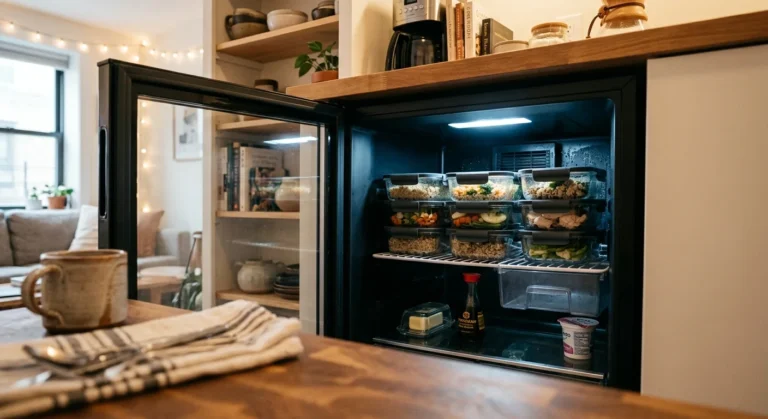
Yes, but choose materials wisely. Use acrylic or plastic risers that can withstand moisture and cold temperatures without rusting. Wire risers can work if they are coated. This helps you utilize the tall gaps between fridge shelves, allowing you to stack meal prep containers or yogurts without crushing them.
What is the best way to store water bottles vertically?
Water bottles are notoriously unstable when standing up and take up too much room. The best solution is a dedicated bottle stacker—a rack that stores bottles horizontally on their sides, stacked in a pyramid. This utilizes vertical height while keeping the bottles accessible and preventing them from falling over like dominoes.
How do I stop items from falling off open vertical shelves?
For open shelving or shelf risers, consider using bins or baskets rather than placing loose items directly on the surface. A basket acts as a drawer; you pull the whole unit down to access the contents. If you have open floating shelves, installing a small lip or rail on the front edge can prevent items from sliding off during minor earthquakes or vibrations.
Disclaimer: Product prices and availability change frequently. Prices shown were accurate at time of writing but may have changed. We may earn a small commission from purchases made through links on this site, at no extra cost to you. Always measure your space before purchasing organizers to ensure proper fit.
1 Comment