You know the feeling: the onions are sautéing, the recipe calls for cumin, and you are frantically digging through a cluttered cabinet. You push past the cinnamon, knock over the vanilla extract, and finally find three half-empty jars of cumin—all stale. This scenario is the hallmark of a disorganized spice collection, and it kills your cooking momentum.
Organizing your spices isn’t just about achieving a “Pinterest-perfect” look. It is a functional necessity for any serious home cook. A streamlined system saves you money by preventing duplicate purchases, saves time during meal prep, and ensures your food actually tastes flavorful. Whether you are working with a sprawling walk-in pantry or a tiny apartment kitchenette, the right strategy turns chaos into culinary efficiency.
The Great Purge: Auditing Your Collection
Before you buy a single bin or jar, you must address the current state of your inventory. You cannot organize clutter. Many home cooks hold onto spices for years, unaware that these ingredients lose potency over time. Organizing expired dust is a waste of effort and space.
Starting with a thorough audit is a key step in most DIY kitchen organization projects aimed at reclaiming your cooking space.
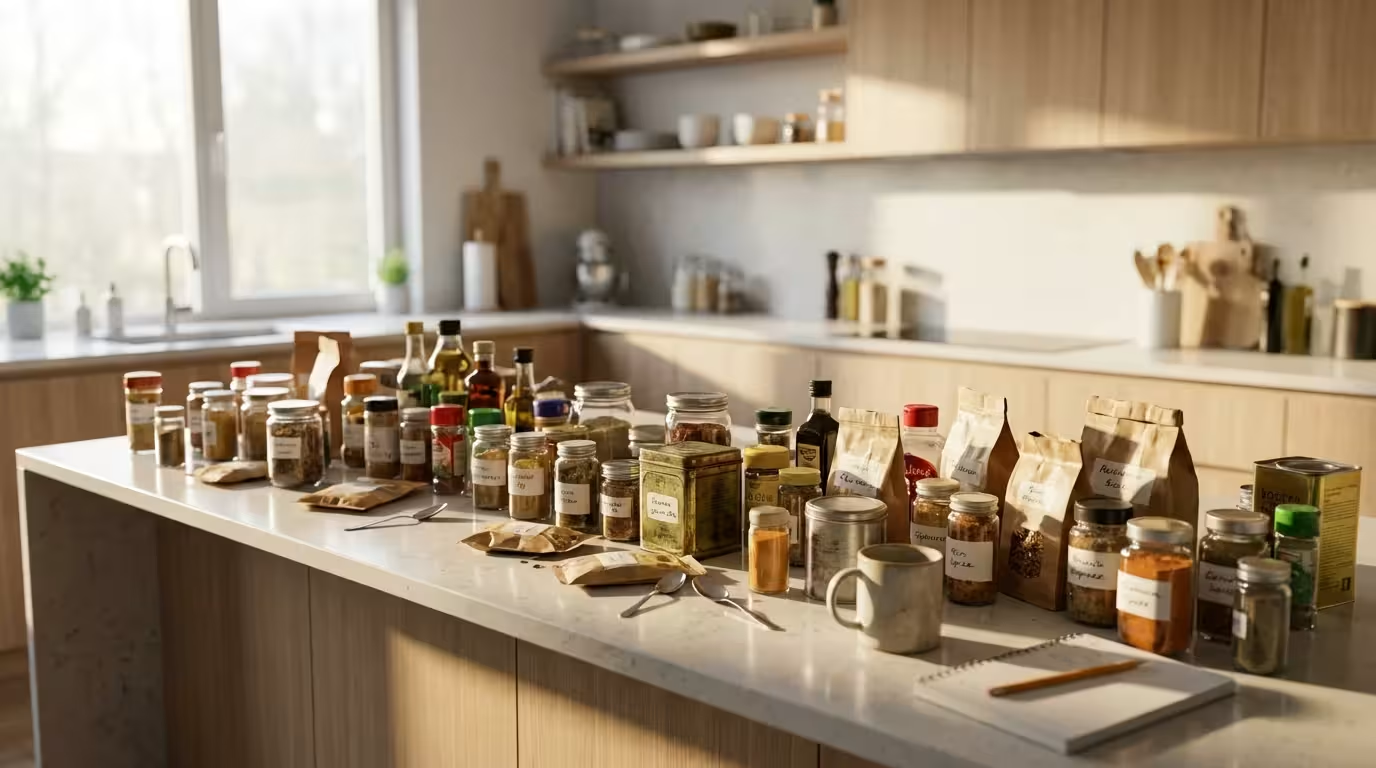
Start by removing every single spice container from your kitchen. Lay them out on a clear counter or table. This visual inventory often reveals immediate redundancies (like that third jar of pumpkin pie spice from 2018). As Real Simple suggests, grouping items by category during this phase helps you visualize exactly how much storage space you actually need.
The Sniff and Toss Test
Check the expiration dates, but trust your senses more. Ground spices generally lose their punch after six months to a year; whole spices can last up to two years. Open the jar and take a whiff. If the scent is faint or dusty, the flavor is gone. Toss the contents. You can recycle glass jars, but if the original containers are plastic and greasy, it is often better to recycle those as well and start fresh.
“The goal isn’t a Pinterest-perfect pantry. It’s being able to find what you need in 10 seconds or less.” — Professional Organizer
Choosing Your Primary Storage Zone
Location dictates the solution. Your storage system must match your cooking workflow. We often talk about the “Golden Zone”—the area between your waist and eye level where you reach most naturally. Ideally, your daily spices (salt, pepper, garlic powder, oregano) should live here.
Before committing to a location, it is worth exploring various spice rack options for every kitchen size to see which hardware matches your available space.
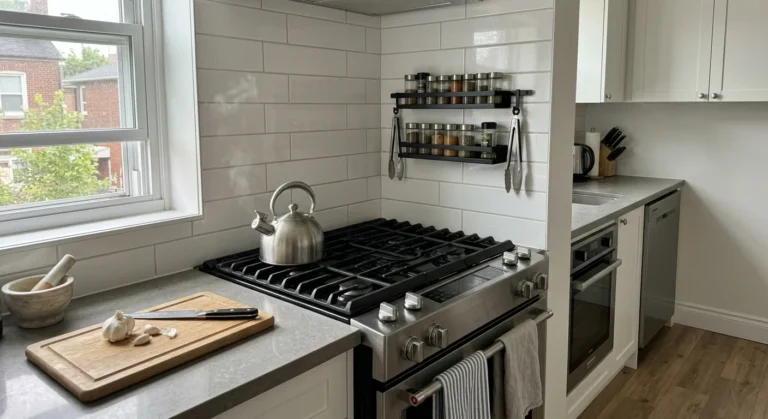
However, you must avoid the “Heat Trap.” Do not store spices directly above the stove or on the back of the range. The rising heat and humidity from cooking will degrade the essential oils in your spices rapidly, leading to flavor loss and clumping.
Common Storage Zones
- The Drawer: Best for cooks who want a top-down view and have deep drawers near the prep area.
- The Upper Cabinet: Ideal for larger collections, provided you use risers or turntables to prevent items from getting lost in the back.
- The Pantry Door: Excellent for maximizing “dead space” (unused areas) in small kitchens, keeping spices visible but out of the way.
- The Countertop: Only recommended for a small selection of daily essentials (Salt, Pepper, Olive Oil) to keep clutter to a minimum.
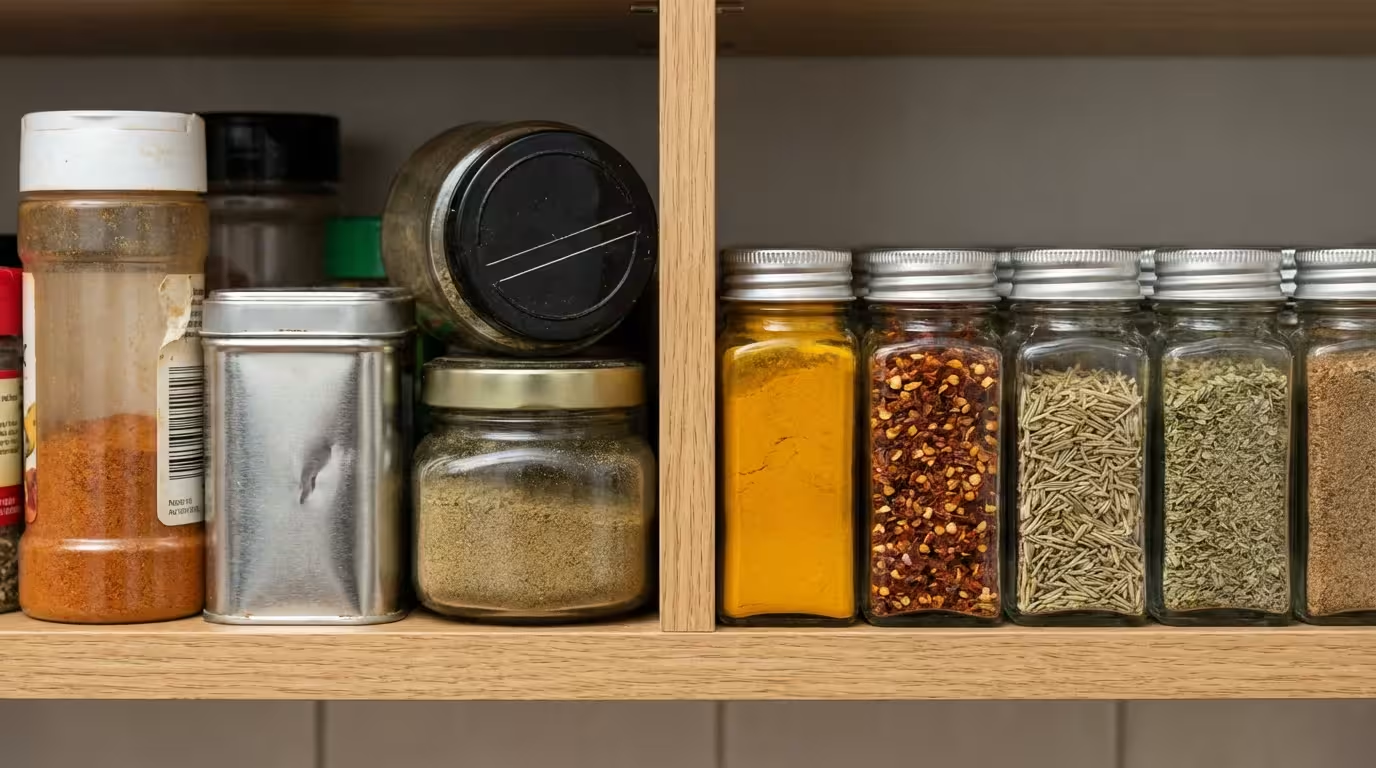
To Decant or Not to Decant?
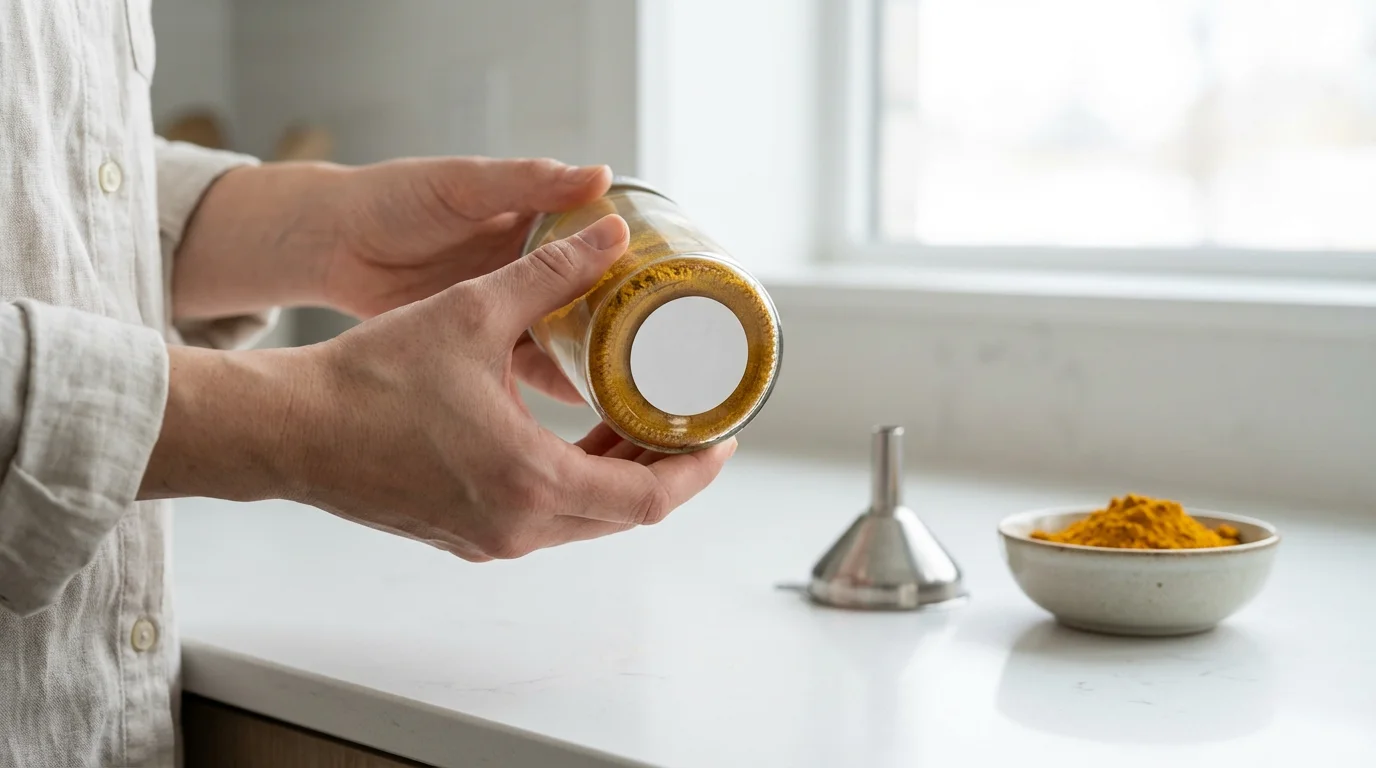
Decanting refers to transferring supplies from their original packaging into uniform containers. This is the most controversial topic in kitchen organization. Is it necessary? No. Is it helpful? Absolutely.
According to Wirecutter, transferring spices to uniform jars isn’t just aesthetic; it allows for tighter packing and better space utilization. Mismatched bottles—some round, some square, some tall tin boxes—create gaps and waste distinct amounts of shelf space.
Glass vs. Plastic
If you choose to decant, glass is the superior material. Plastic is porous; over time, it absorbs odors (good luck getting the smell of curry powder out of a plastic bin) and can stain. Glass is impermeable, easy to clean, and usually airtight.
Standard Sizing: Most standard spice jars hold 4 ounces. If you buy bulk spices, ensure you have a “backstock” area (perhaps a bin on a high pantry shelf) for the excess that doesn’t fit in your working jar.
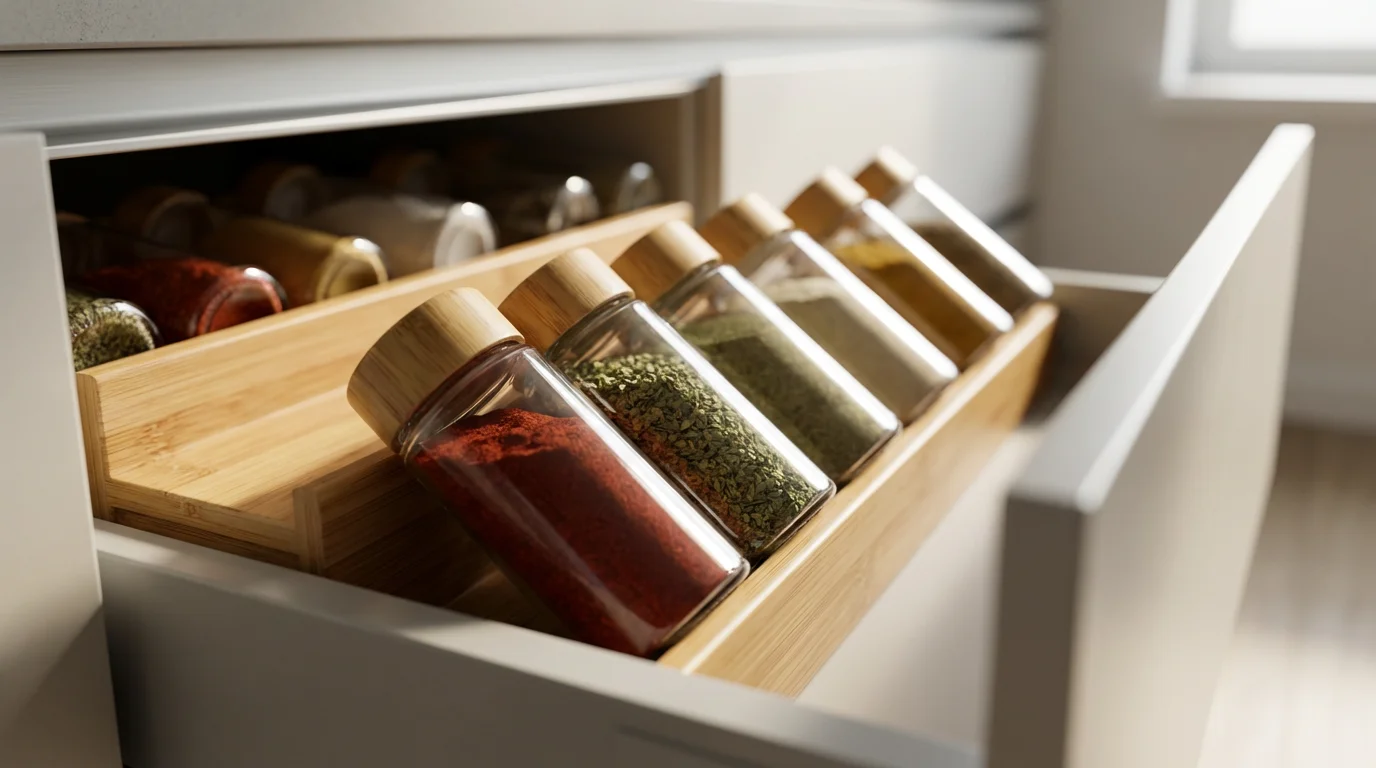
Drawer Organization Solutions
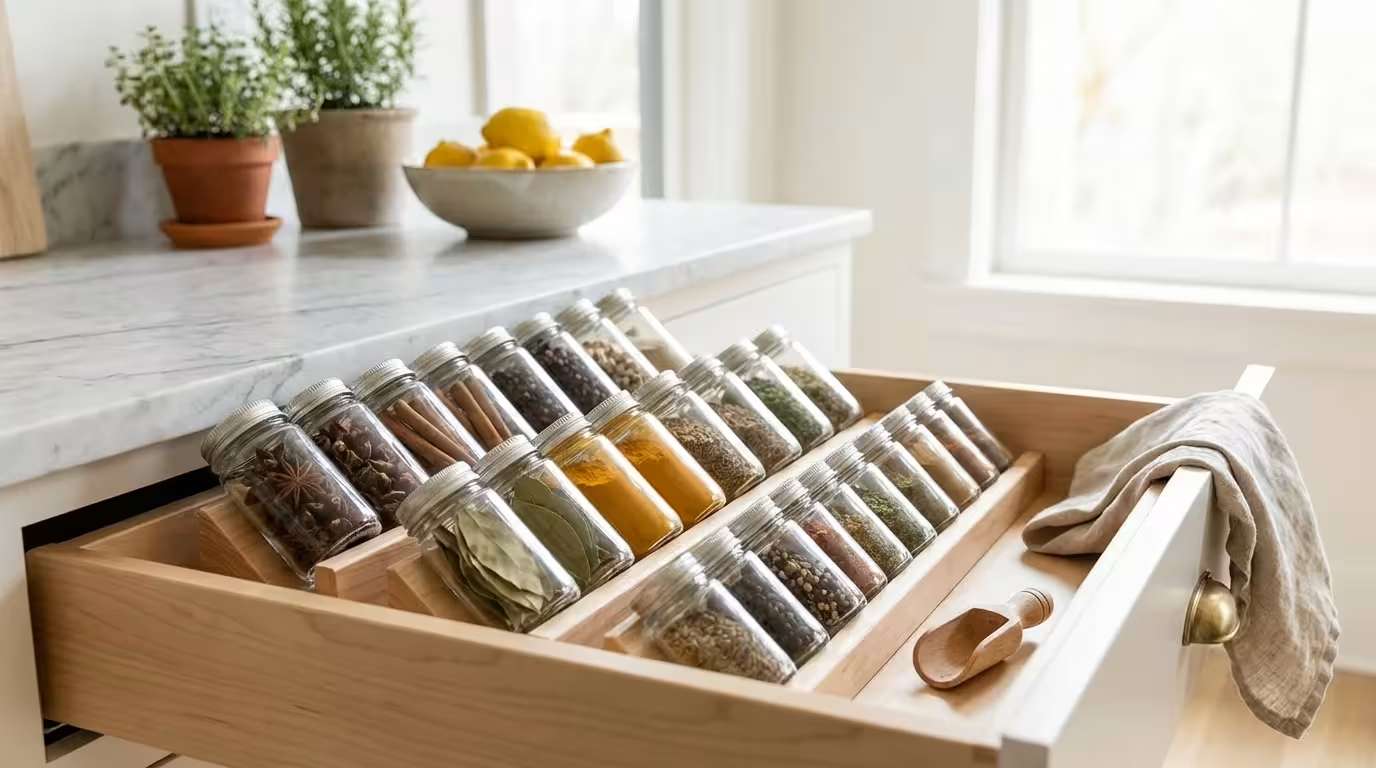
Converting a shallow drawer near your prep surface into a spice drawer is often the most ergonomic choice. It makes labels easy to read and prevents jars from toppling over like dominoes.
The Tiered Insert
Use expandable, tiered acrylic or bamboo trays. These angled inserts lay the jars down so the labels face up.
Fit Check: Measure your drawer depth carefully. Most tiered inserts require a drawer clearance of at least 3 to 4 inches once the jars are placed. Standard 4-ounce jars fit well here.
The Vertical Grid
For deeper drawers, you can store jars standing upright. To prevent them from sliding every time you open the drawer, use a drawer divider system or specific spice jar grids. If you store them upright, you must label the caps/lids, or you will spend forever lifting each jar to see what it is.
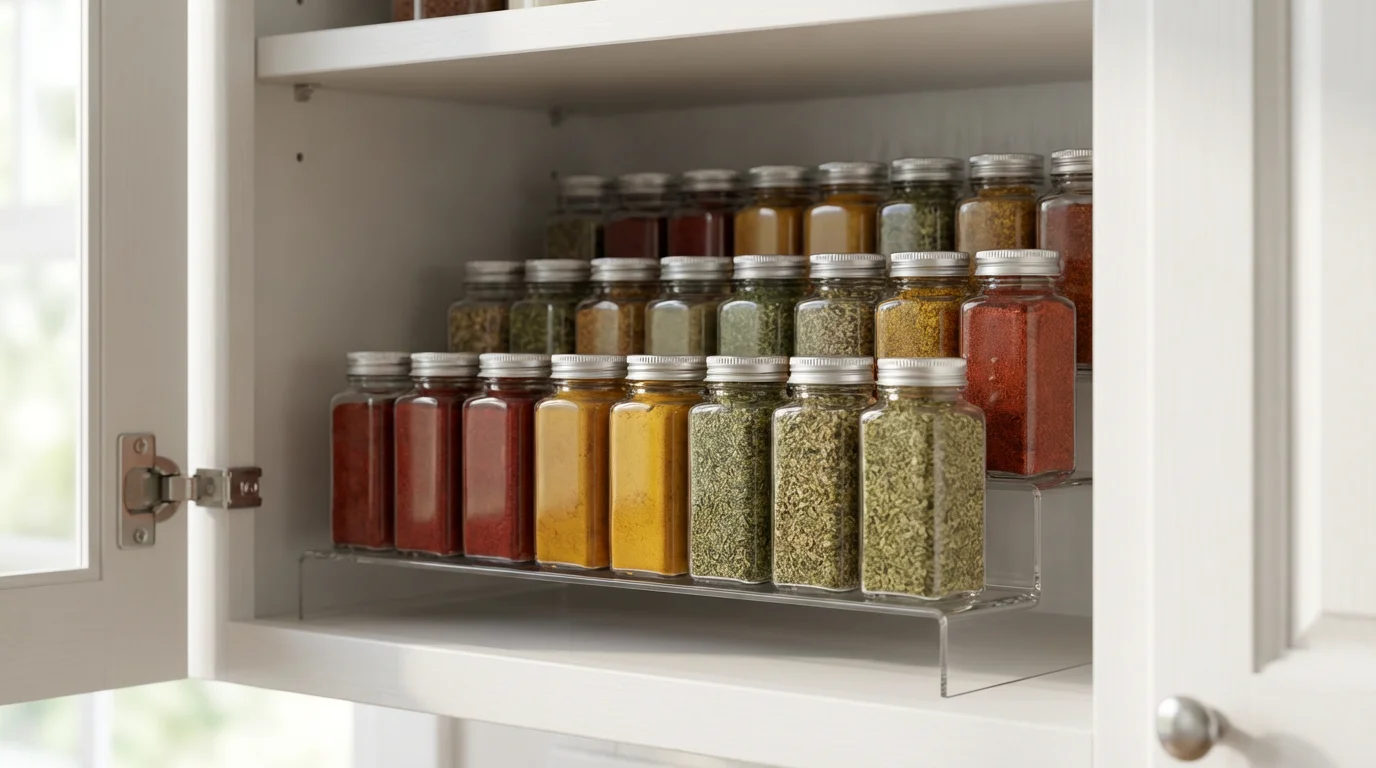
Cabinet and Pantry Systems
If you lack drawer space, your upper cabinets or pantry shelves are the next logical spot. However, shelves are deep, and spice jars are small. Without the right gear, you end up with a “spice graveyard” in the back of the cabinet.
Properly coordinating your spice racks with your overall pantry shelving ensures that every inch of vertical space is utilized effectively.
DIAGRAM: {“prompt”: “Cross-section diagram of a kitchen cabinet showing three different organization methods side-by-side: A tiered shelf riser (stadium seating style), a Lazy Susan turntable, and a pull-out sliding rack. Labels indicate ideal cabinet depth for each.”, “alt”: “Diagram comparing shelf risers, lazy susans, and pull-out racks for cabinet organization”}
The Shelf Riser (Stadium Seating)
A “shelf riser” acts like bleachers for your spices. It elevates the back rows so you can see the labels over the front rows.
Best for: Shallow cabinets.
Warning: In deep cabinets, risers waste the space in front of them. Ensure your riser has a non-slip surface so jars don’t slide off.
The Lazy Susan
A “lazy susan” is a rotating tray that brings items from the back of the cabinet to the front with a simple spin.
Best for: Corner cabinets or awkward, deep spaces.
Pro Tip: Use a lazy susan with a raised lip or rim. Centrifugal force can send lightweight spice tins flying if you spin too hard.
Pull-Out Organizers
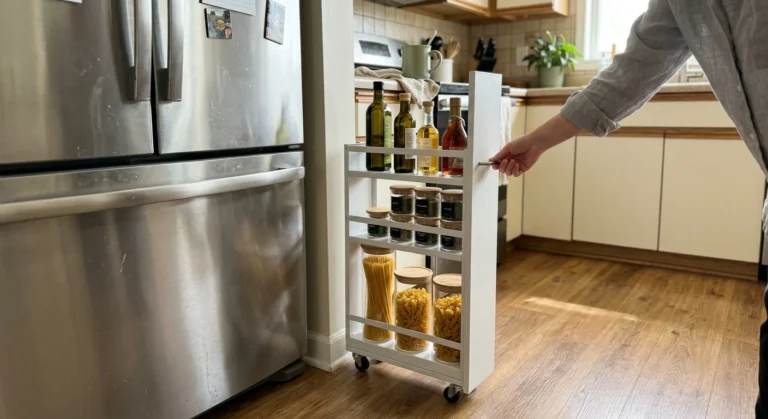
These are narrow racks that slide out on tracks, similar to a drawer mechanism but installed on a shelf.
Best for: Narrow, deep cabinets where you can’t reach the back. A 4-inch wide pull-out rack can hold up to 20 jars and utilizes the full depth of a standard 12-inch or 24-inch cabinet.
| Method | Best Location | Pros | Cons |
|---|---|---|---|
| Tiered Drawer Insert | Shallow drawers | Instant visibility; no toppling jars; ergonomic. | Uses a lot of horizontal surface area. |
| Lazy Susan | Corner cabinets / Deep shelves | Easy access to back items; flexible for different jar sizes. | Round trays on square shelves create “dead space” in corners. |
| Door-Mounted Rack | Pantry / Upper Cabinet doors | Frees up shelf space; uses dead space. | Requires installation (screws/adhesive); jars can rattle. |
| Shelf Riser | Eye-level shelves | Inexpensive; easy to set up. | Hard to reach items if the cabinet is high; taller jars may not fit. |
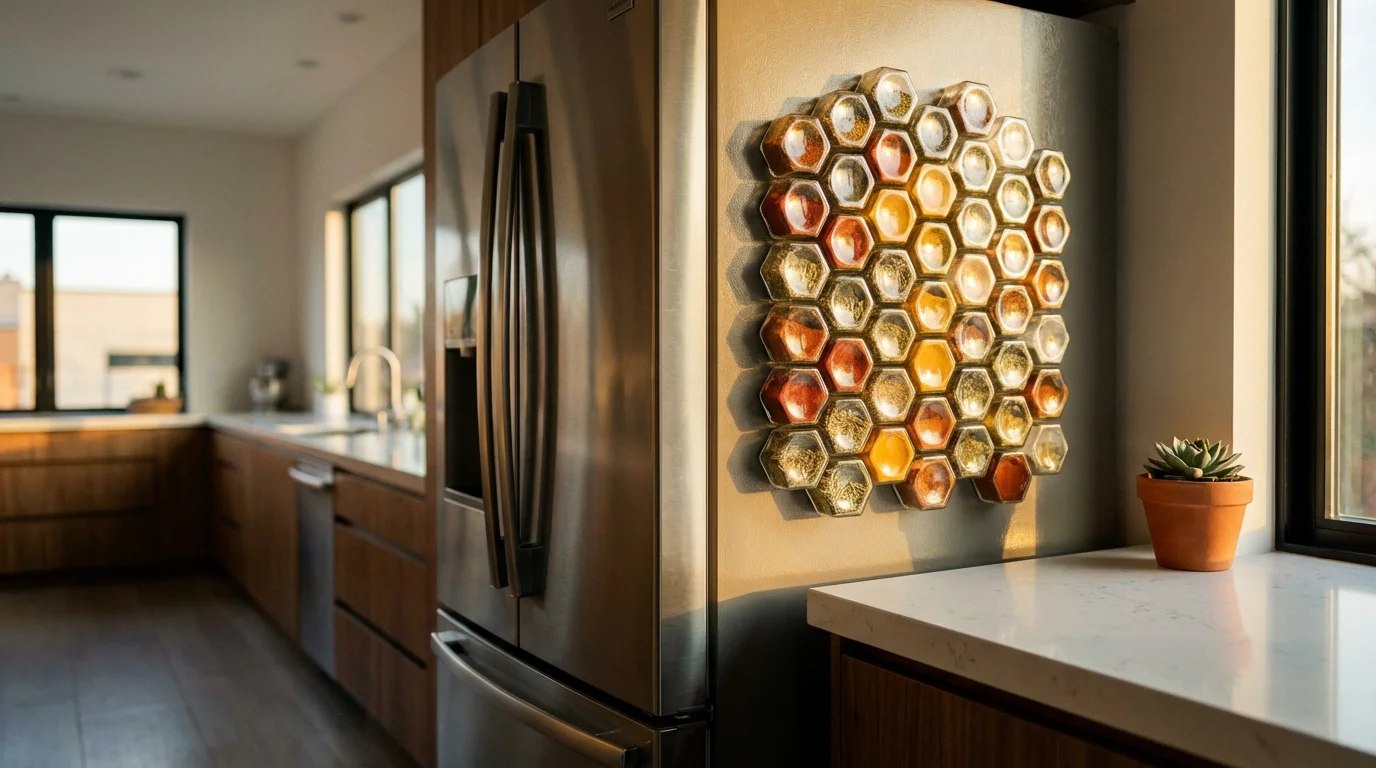
Hacks for Small Kitchens and Wall Storage
When cabinet and drawer space is non-existent, you have to think vertically. Wall-mounted solutions turn your spice collection into decor while keeping it accessible.
Magnetic Systems
Magnetic spice jars can attach to the side of your refrigerator or a mounted steel plate on your backsplash.
Crucial Tip: Ensure the magnets are strong (neodymium magnets are best). Weak magnets result in glass jars sliding down the fridge and shattering. Also, ensure the lids seal tightly; magnetic jars are often stored sideways, and loose lids lead to spills.
Under-Cabinet Mounts
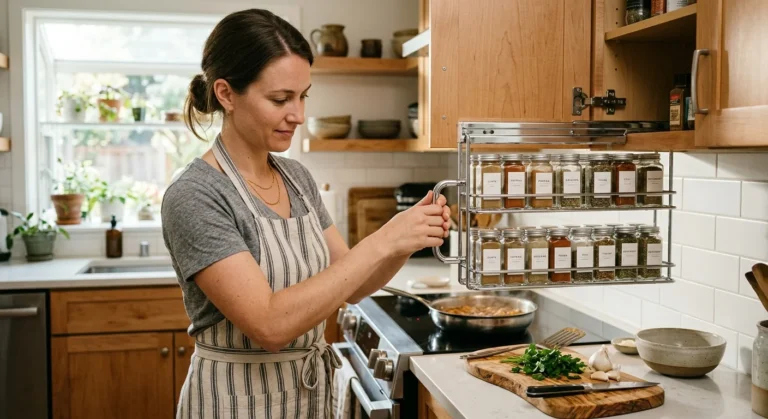
Several products allow you to mount a drop-down rack or magnetic strip underneath your upper cabinets. This utilizes the air space between the cabinet bottom and the counter, keeping the counter itself clear.
Labeling Logic for Quick Identification
Uniform jars look beautiful, but they are useless if you mistake cayenne pepper for paprika. The placement of your label depends entirely on your storage method.
For the best results, using high-quality labels and label makers can help maintain a clean look and ensure your jars stay properly identified over time.
- Drawer (Angled Insert): Place labels on the body of the jar.
- Drawer (Standing Up): Place labels on the lid.
- High Shelf/Riser: Place labels on the lower third of the jar body so they are visible looking up.
- Low Shelf/Pull-out: Place labels on the upper third or lid.
Experts at The Spruce recommend adding a small “date sticker” on the bottom of the jar whenever you refill it. This helps you track freshness without cluttering the main display.
Maintaining Freshness: The Science of Spices
Organization supports preservation. The environment in which you store your spices affects their longevity. As mentioned, heat is an enemy, but so are light and moisture.
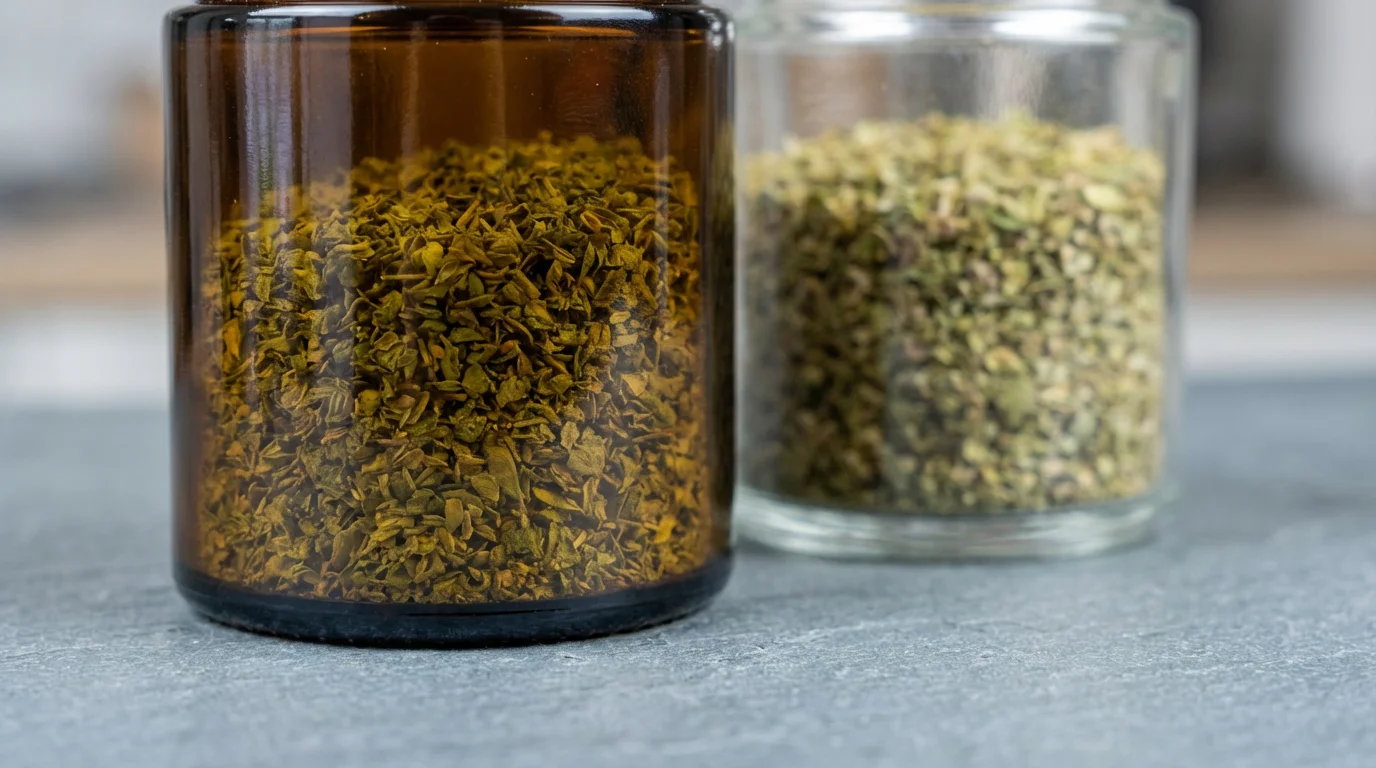
Light: UV rays break down chemical compounds in spices, bleaching the color and muting the flavor. If you store spices on an open wall rack or window sill, use amber glass or tin containers rather than clear glass to block the light.
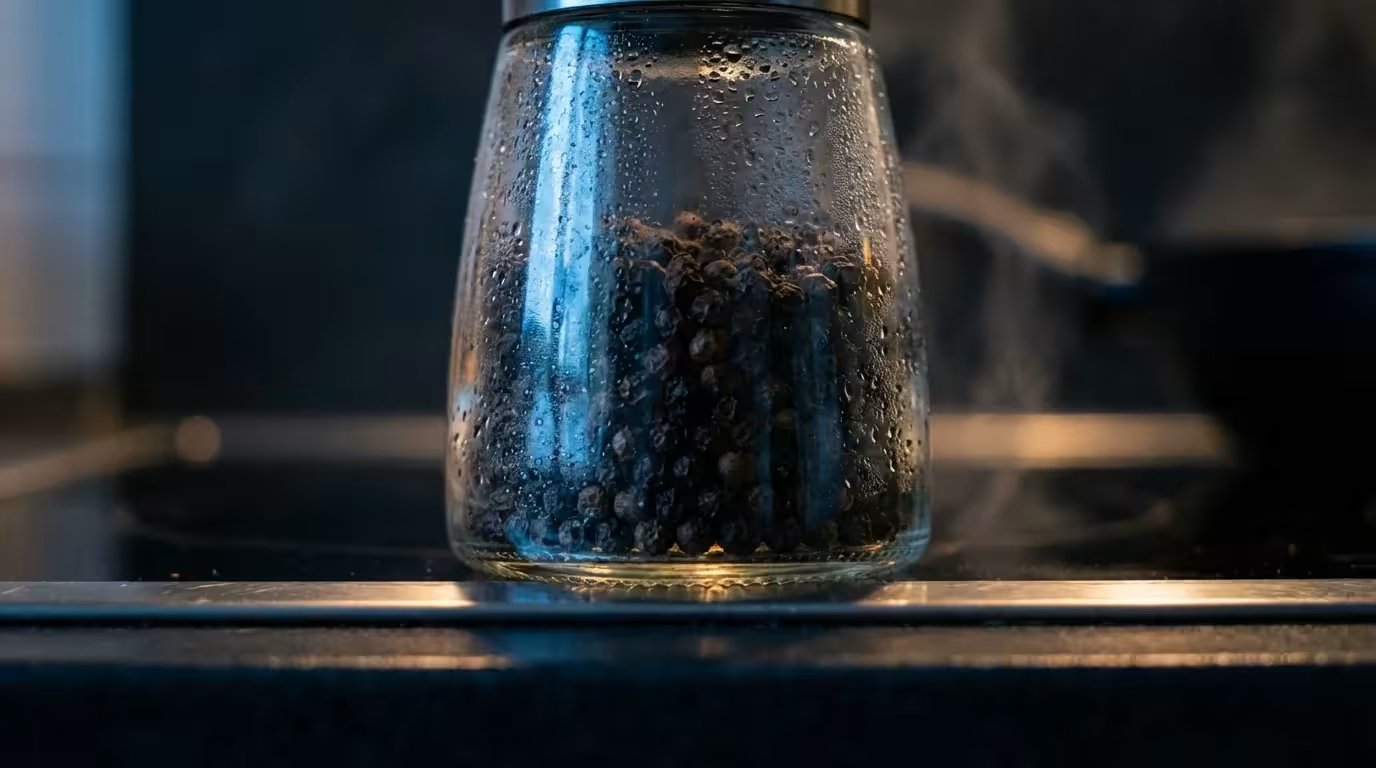
Moisture: Never shake a spice jar directly over a steaming pot. The rising steam enters the jar, introducing moisture that causes caking and mold growth. Always shake into your hand or a measuring spoon first, then add to the pot.
The FIFO Method
Adopt the restaurant industry standard: FIFO (First In, First Out). If you buy a bulk bag of oregano to refill your jar, do not pour the new spice on top of the old spice. Empty the old spice, pour in the new, and put the old spice back on top—or better yet, use up the old spice before refilling.
Frequently Asked Questions
How long do spices really last?
Ground spices generally maintain peak freshness for 6 to 12 months. Whole spices (like peppercorns, whole nutmeg, or cinnamon sticks) can last 2 to 3 years. While they rarely “spoil” in a way that will make you sick, they lose potency, meaning you have to use more to get the same flavor.
Should I store spices in the fridge or freezer?
Generally, no. Condensation is a major issue. Every time you take a cold jar out of the fridge into a warm kitchen, condensation forms inside, leading to moisture damage. The exceptions are red spices like paprika, cayenne, and chili powder; in very hot, humid climates, refrigeration can prevent them from turning brown or attracting insects, provided they are in truly airtight containers.
How do I clean spice jars before refilling?
Glass jars should be washed with warm soapy water and thoroughly dried. If a jar held a pungent spice like cumin or curry powder, soak it in a solution of water and white vinegar to neutralize the odor. Ensure the jar is 100% dry before adding new spices, or they will clump immediately.
Disclaimer: Product prices and availability change frequently. Prices shown were accurate at time of writing but may have changed. We may earn a small commission from purchases made through links on this site, at no extra cost to you. Always measure your space before purchasing organizers to ensure proper fit.