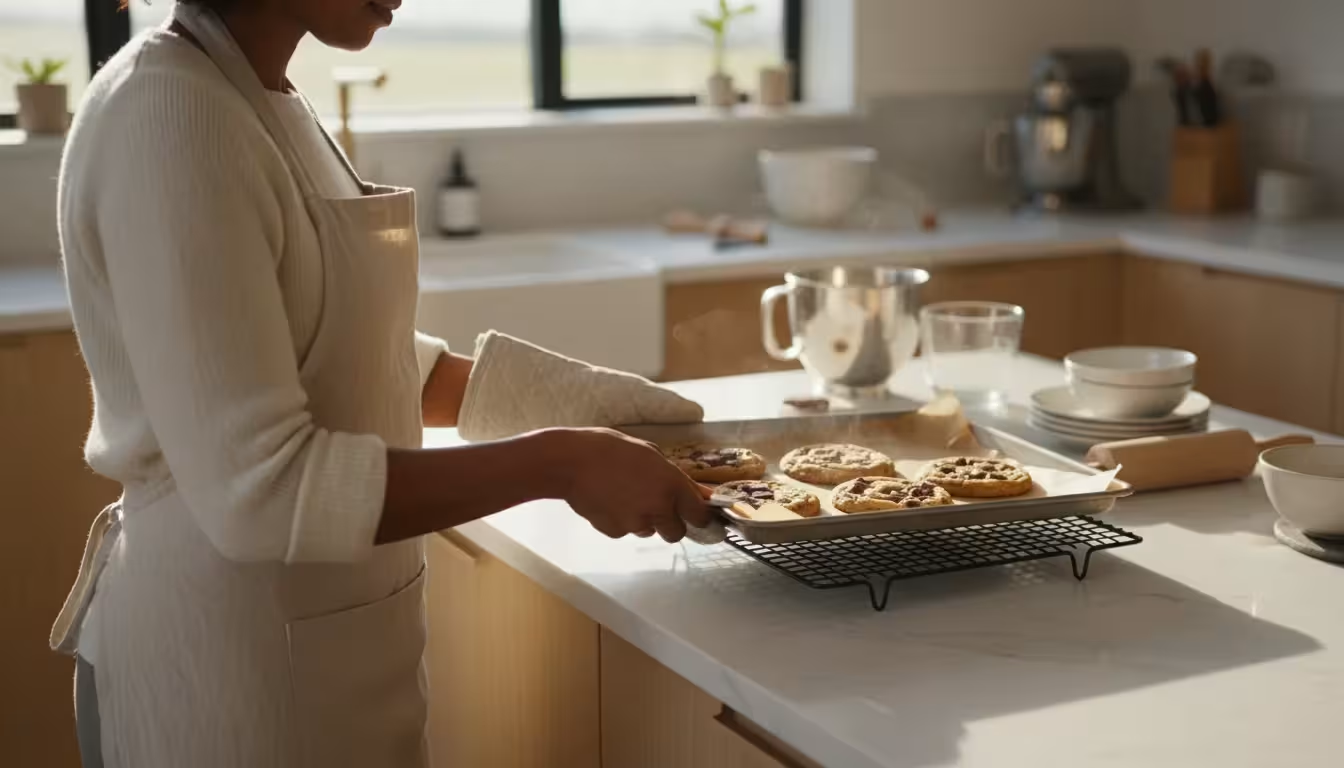
Walking down the baking aisle or scrolling through online retailers can feel like entering a minefield of flimsy metal and marketing gimmicks. You see 20-piece sets for $40 next to single pans that cost $30. You see “diamond-infused” nonstick coatings and confusing terms like “anodized” or “aluminized.” If you are setting up your first kitchen or finally replacing those rusted, warped cookie sheets you inherited in college, you need clarity.
If you are just starting out, learning how to build a cookware set on a budget can help you prioritize your most needed items.
Baking is a science, which means your variables matter. The pan you choose dictates how heat travels to your batter or dough. The wrong material can burn the bottom of your cookies before the centers are cooked, while the right one yields that perfect golden-brown edge. For beginners, the goal is simple: find equipment that is forgiving, durable, and versatile.
We have analyzed the market to find bakeware sets that offer real value. We prioritized heavy-gauge materials that won’t warp in the oven and coatings that actually release food without a struggle. Whether you want a professional-grade setup that will last a lifetime or a budget-friendly starter kit to get you baking brownies this weekend, this guide has you covered.
How We Evaluated Bakeware
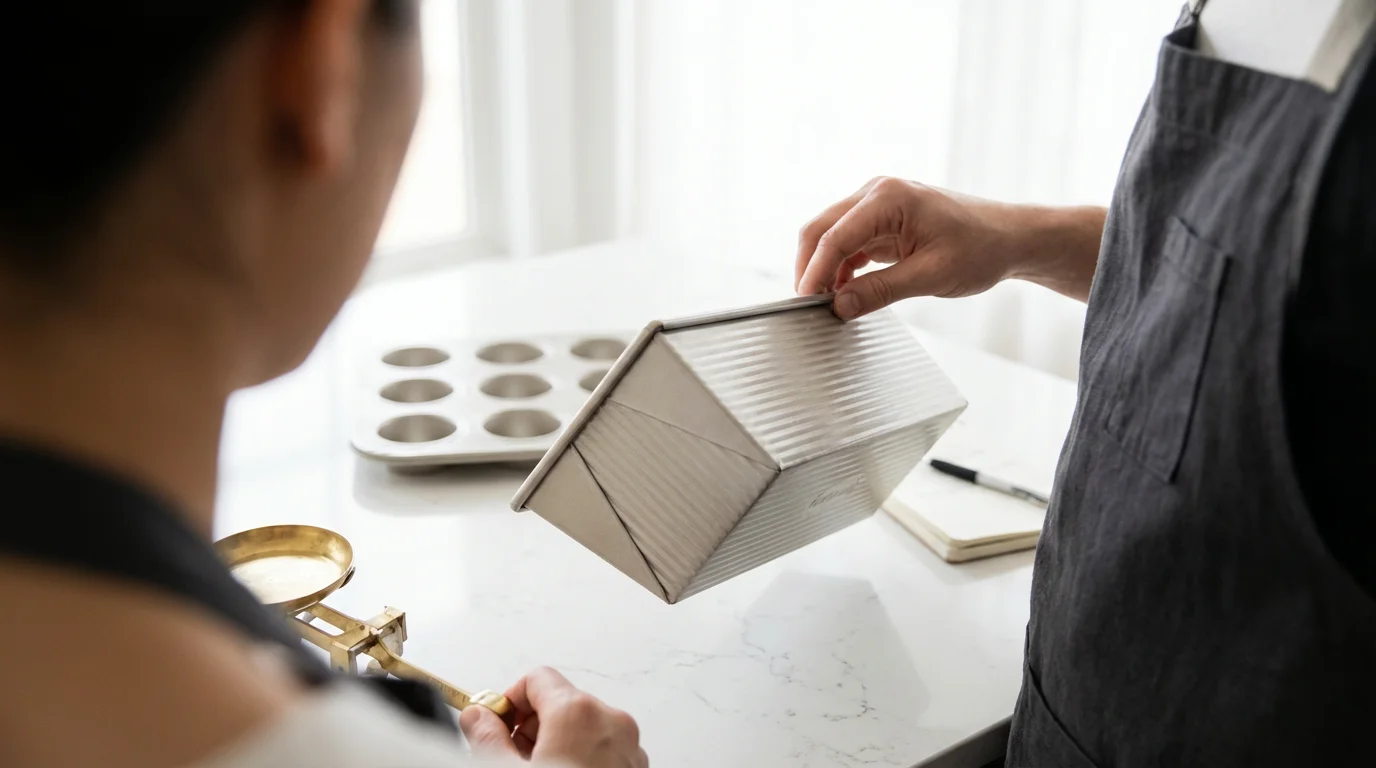
To select the best sets for beginners, we looked past the piece count. Manufacturers often inflate the value of a set by including filler items—like four tiny prep bowls or oddly shaped cookie cutters—that you will likely never use. Instead, we focused on core performance metrics that affect your actual baking results.
Keep in mind that while the pan is vital, using kitchen scales for accurate baking is the best way to ensure your measurements are as reliable as your equipment.
- Heat Conductivity: Does the pan heat up quickly and evenly? Uneven heating leads to “hot spots” where half your tray burns while the other half remains raw.
- Durability and Warping: Beginners often underestimate thermal shock. We looked for heavy-gauge metals (steel or aluminum) with rolled rims (steel rods inside the edges) that prevent the pan from twisting and popping effectively when it hits a hot oven.
- Release Capabilities: Nothing discourages a new baker more than a cake stuck in the pan. We prioritized effective nonstick coatings or materials that season well over time.
- Versatility: Can the pieces be used for savory roasting (chicken, vegetables) as well as baking sweets?
“Don’t buy the ‘best’ product. Buy the best product for how YOU cook. If you hate hand-washing, raw aluminum isn’t for you, no matter how evenly it bakes.” — Kitchen Equipment Expert
Quick Comparison Chart
| Product | Material | Best For | Dishwasher Safe? |
|---|---|---|---|
| USA Pan 5-Piece | Aluminized Steel | Serious beginners wanting pro results | No (Hand wash recommended) |
| Nordic Ware Naturals | Pure Aluminum | Value and heat conductivity | No (Will discolor) |
| Rachael Ray Cucina | Carbon Steel / Nonstick | Casual bakers & easy cleanup | Yes (but hand wash is better) |
| Pyrex Basics | Tempered Glass | Casseroles and cobblers | Yes |
| Caraway Set | Aluminized Steel / Ceramic | Style and non-toxic coating | No |
Best Overall: USA Pan Aluminized Steel 5-Piece Set
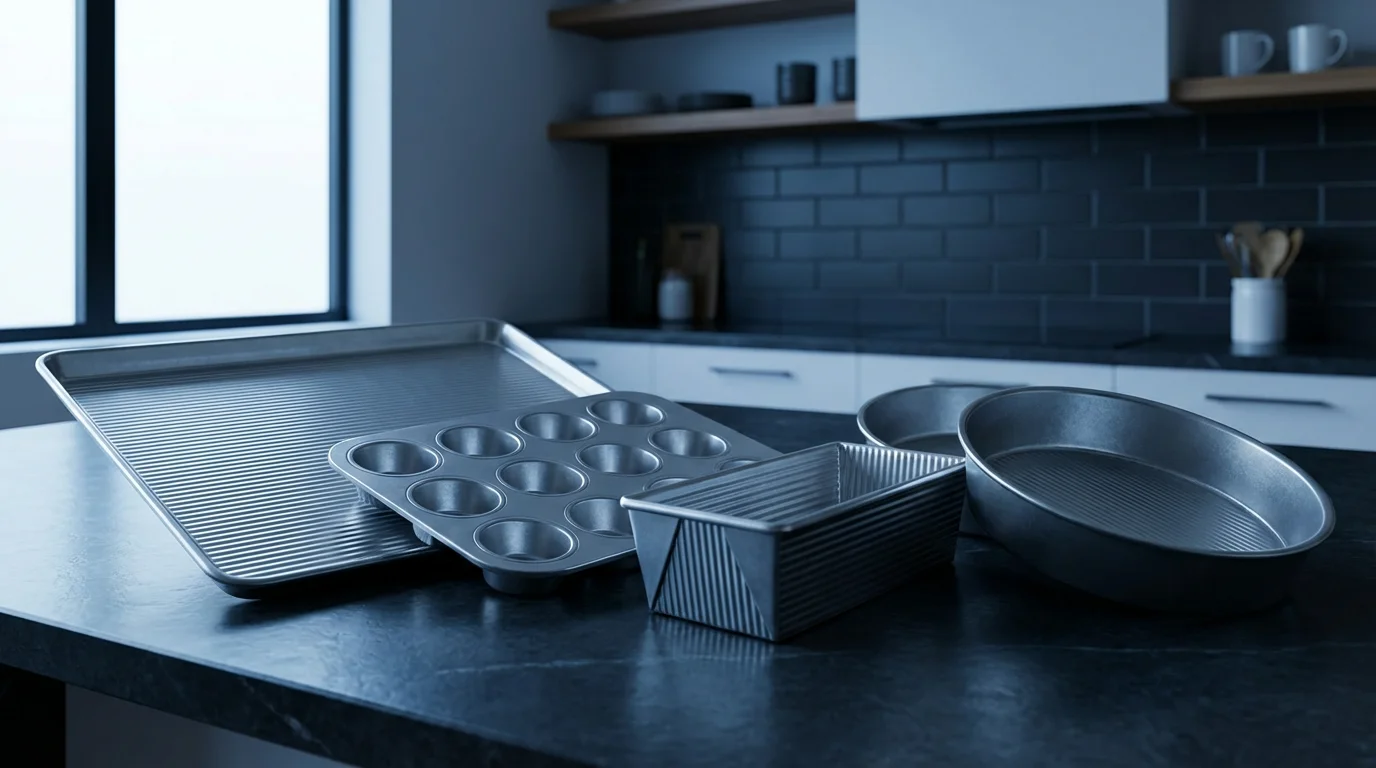
If you are ready to buy one set and never think about upgrading again, the USA Pan 5-Piece set is the investment to make. This brand is essentially the gold standard in American home baking. The construction pairs the strength of steel with the heat conductivity of aluminum, resulting in a pan that feels heavy, sturdy, and nearly indestructible.
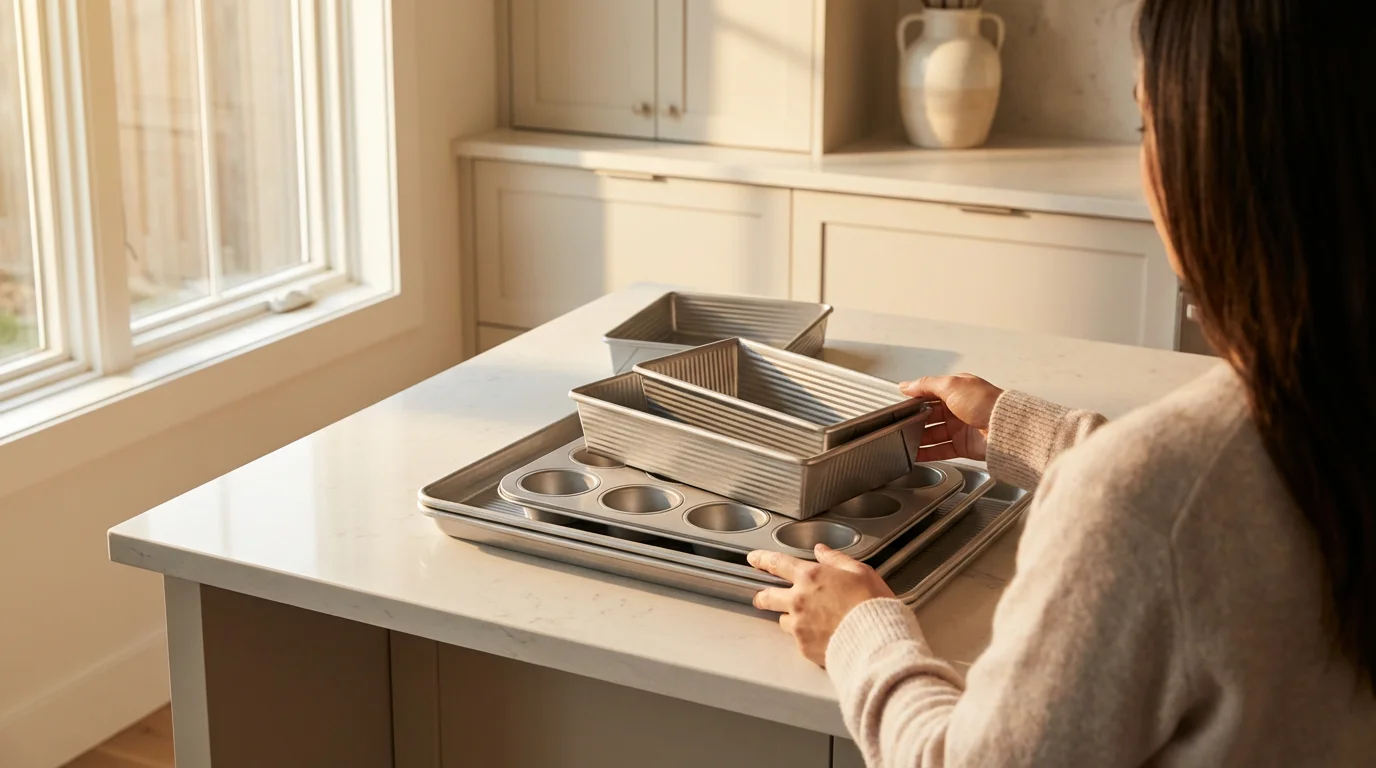
The standout feature here is the “fluted” texture—the corrugated lines you see on the surface. This isn’t just for looks. The ridges increase airflow under your food, which helps with even browning and easy release. It also adds structural integrity, making these pans highly resistant to warping, even at high temperatures.
The Set Includes: One half-sheet pan, one muffin pan, one loaf pan, one square cake pan (8×8), and one rectangular cake pan (9×13).
Why It Wins
The “Americoat” silicone coating is superb. It is PTFE, PFOA, and BPA free, offering a natural nonstick surface that releases food effortlessly. Unlike cheap nonstick that flakes off after six months, this coating tends to last for years if treated with care. Wirecutter has frequently praised aluminized steel for its ability to brown food evenly without burning, a crucial factor for beginners learning to gauge oven temperatures.
Pros: Professional-grade heat distribution; incredibly durable; excellent food release; made in the USA.
Cons: Utilitarian industrial look; hand wash only to preserve the silicone coating.
Bottom Line: This is the set for the beginner who wants to bake like a pro immediately.
Best Value: Nordic Ware Naturals 5-Piece Set
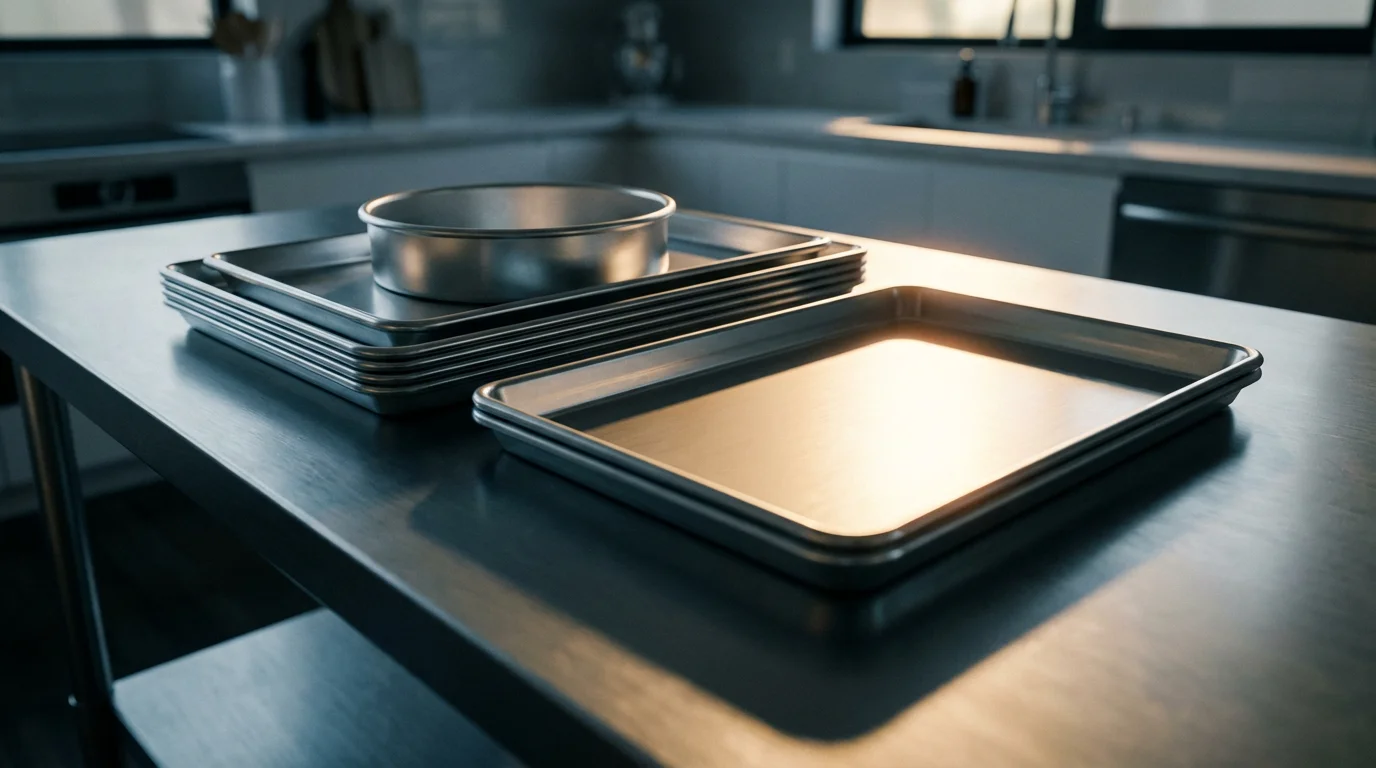
Step into almost any professional bakery or restaurant kitchen, and you will see stacks of simple, shiny aluminum pans. They are likely Nordic Ware. The Naturals line skips the nonstick coatings entirely, relying instead on the superior physics of pure aluminum. Aluminum conducts heat faster and more efficiently than steel, meaning your cookies will rise and set quickly.
Since these aluminum pans are not nonstick, many home cooks pair them with silicone baking mats to ensure an easy release for delicate pastries.
Because there is no artificial coating to scratch or peel, these pans can last a lifetime. They will scratch and develop a patina (darkening) over time, but this actually improves their performance by helping them absorb heat slightly better. The “encapsulated” steel rims ensure the pans stay flat, even when you are roasting broccoli at 425°F.
The Set Includes: Two half-sheet pans, one muffin pan, and two round cake pans (9-inch).
Why It Wins
You get unbeatable performance for the price. The set focuses on the absolute essentials—specifically the two half-sheets, which are the workhorses of any kitchen. Serious Eats often highlights aluminum as the material of choice for sheet pans because it cools down quickly once removed from the oven, preventing carryover cooking that dries out cookies.
Pros: Lightweight; never rusts; superior heat conductivity; very affordable.
Cons: Not nonstick (you will need parchment paper or grease); not dishwasher safe (detergents will turn the aluminum an ugly charcoal gray).
Bottom Line: The practical choice for the cook who prioritizes results over ease of cleaning.
Best Nonstick for Ease: Rachael Ray Cucina Bakeware
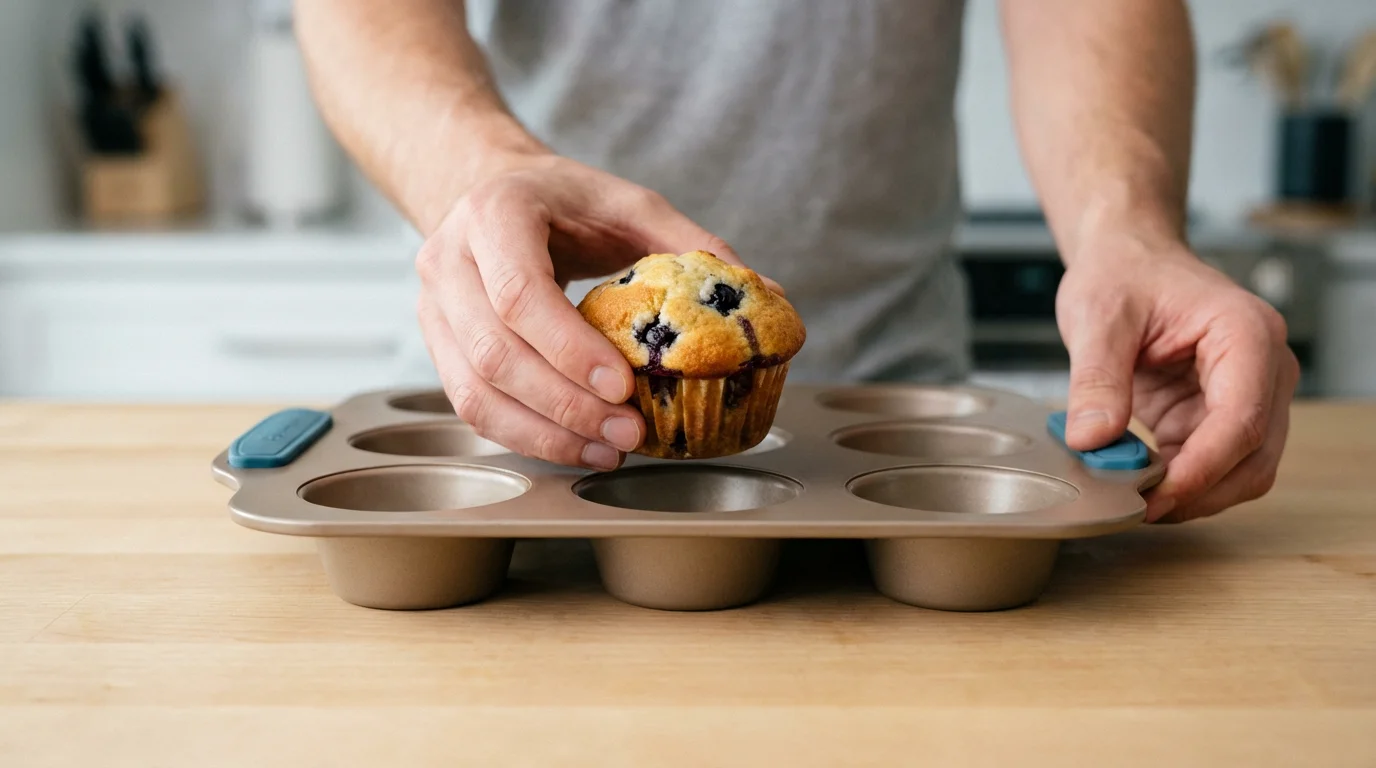
Let’s be honest: sometimes you just want to bake a batch of muffins and not spend ten minutes scrubbing the tin. For busy parents or casual bakers, the Rachael Ray Cucina set offers a user-friendly experience with a pop of color. These pans are made from carbon steel with a durable nonstick coating that is forgiving for beginners.
The defining feature of this set is the silicone grips on the handles. While this seems like a minor detail, it adds a significant layer of safety for beginners who might be nervous about handling 400°F metal. The wide handles provide plenty of room for bulky oven mitts.
The Set Includes: Two cookie sheets, two round cake pans, one muffin pan, one loaf pan, one rectangular cake pan (9×13), and a lid for the rectangle pan.
Why It Wins
It is a comprehensive “kitchen in a box” solution. The inclusion of a lid for the 9×13 pan is a brilliant touch for potlucks or storing leftovers. While carbon steel doesn’t conduct heat as perfectly as aluminized steel, it is more than adequate for weeknight casseroles, birthday cakes, and roasted vegetables.
Pros: Excellent nonstick release; comfortable silicone handles; includes a storage lid; generally dishwasher safe (though we still recommend hand washing).
Cons: Nonstick coating will eventually wear out; darker metal can brown bottoms faster than expected.
Bottom Line: The best pick for families and first-time apartment renters who want easy cleanup and bright colors.
Best Glass Essentials: Pyrex Basics 3-Piece Set
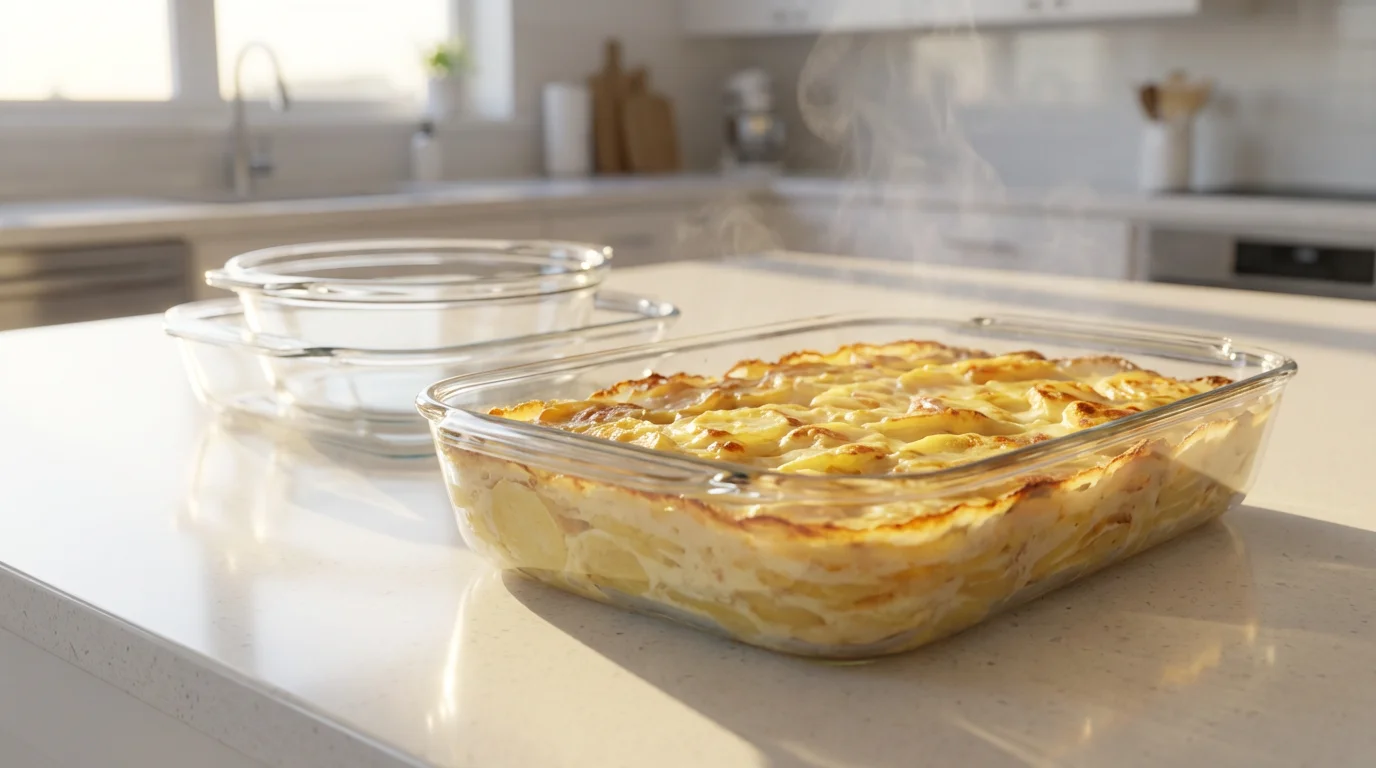
Metal isn’t the right tool for everything. If you plan on making lasagnas, potato gratins, bread puddings, or acidic fruit cobblers, you need glass. Metal can react with acidic foods (like tomato sauce or lemon), imparting a metallic taste. Glass is non-reactive and acts as an insulator rather than a conductor.
Once you have acquired these essential pieces, exploring a bakeware organization strategy will help keep your kitchen cabinets clutter-free.
While glass is great for casseroles, you might also consider specialized pie plates made of glass vs ceramic if you plan on baking fruit tarts or quiches.
For a deeper look at alternative vessels for hearty meals, explore our guide to casserole dishes and their materials.
The Pyrex Basics set is modest, affordable, and fills the gap that a standard metal bakeware set leaves. Tempered glass retains heat for a long time, which keeps your casserole warm on the dinner table. Plus, you can slice directly in the pan without worrying about scratching a coating.
The Set Includes: One 3-quart oblong dish (9×13), one 2-quart square dish (8×8), and their respective plastic lids.
Why It Wins
Every kitchen needs a Pyrex dish. It allows you to monitor the browning of the sides and bottom of your food. However, a word of caution: do not use glass for cookies or cakes requiring precise temperature changes. Glass takes a long time to heat up and a long time to cool down, which can lead to overbaked edges and underbaked centers in delicate pastries.
Pros: Non-reactive; microwave and freezer safe; comes with lids for storage; see-through visibility.
Cons: Heavy; breakable if dropped; poor heat conduction for cookies/brownies.
Bottom Line: A mandatory supplement to any metal bakeware set, specifically for savory cooking.
Best Aesthetic Upgrade: Caraway Nonstick Bakeware Set
If you have an open kitchen or simply love the “Instagram-ready” aesthetic, Caraway is the brand currently dominating the conversation. But beyond the beautiful colors, the cookware actually performs. This set uses aluminized steel coated with a ceramic nonstick surface that is free from PTFE (Teflon), PFOA, and heavy metals.
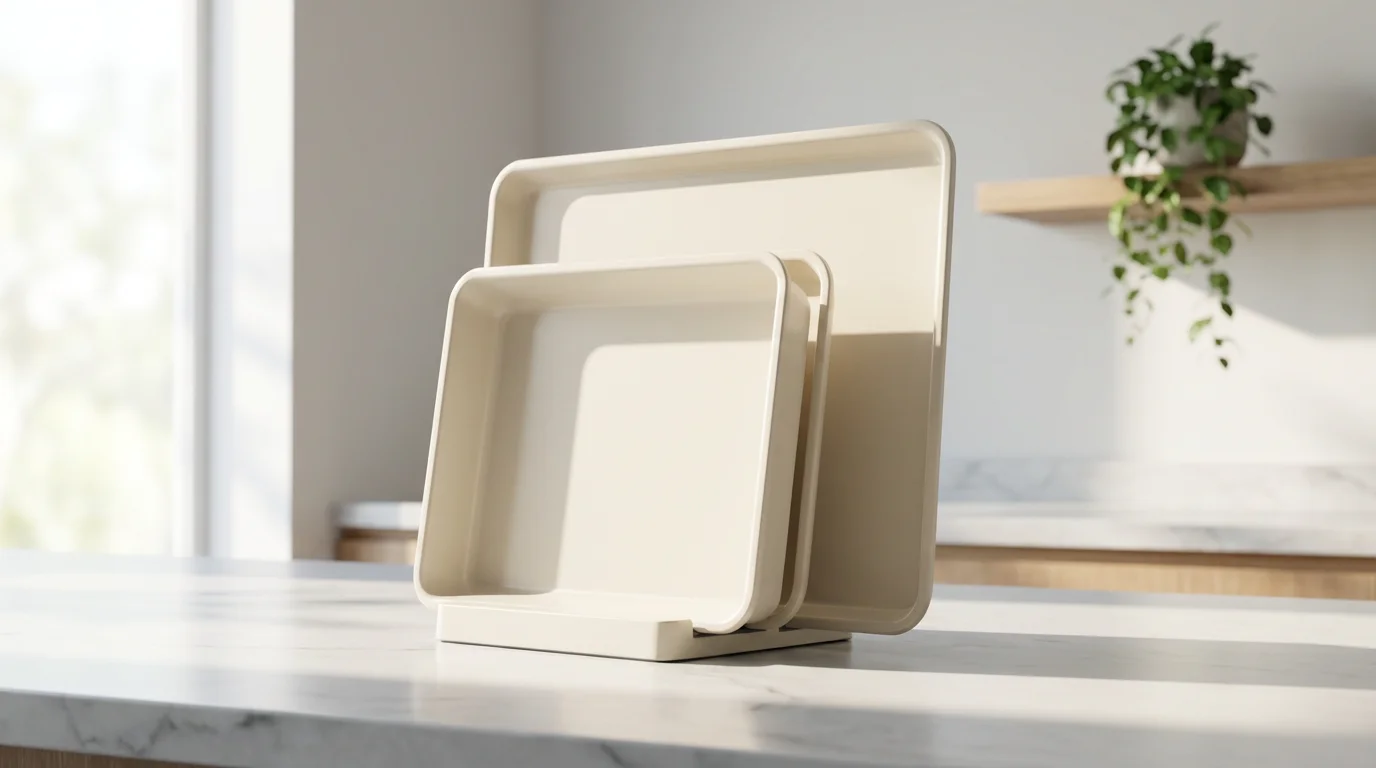
The set is famous for its storage solution. It comes with magnetic pan racks and a canvas lid holder, solving the chaotic “jumble of pans” cabinet problem that plagues most kitchens.
The Set Includes: Two baking sheets (large and medium), muffin tin, rectangular pan, square pan, loaf pan, two round cake pans, cooling rack, and storage organizers.
Why It Wins
The ceramic coating is incredibly slick—eggs and batters slide right off. However, ceramic is more brittle than traditional nonstick. It requires gentle handling; you cannot stack these pans without protection, and you must avoid metal utensils entirely. While Consumer Reports and other testing bodies note that ceramic coatings often lose their nonstick properties faster than traditional PTFE, Caraway’s build quality is high for the category.
Pros: Stunning design; excellent storage system included; non-toxic ceramic coating.
Cons: Expensive; ceramic coating requires delicate care; hand wash only.
Bottom Line: The splurge pick for organized bakers who want their tools to look as good as their food.
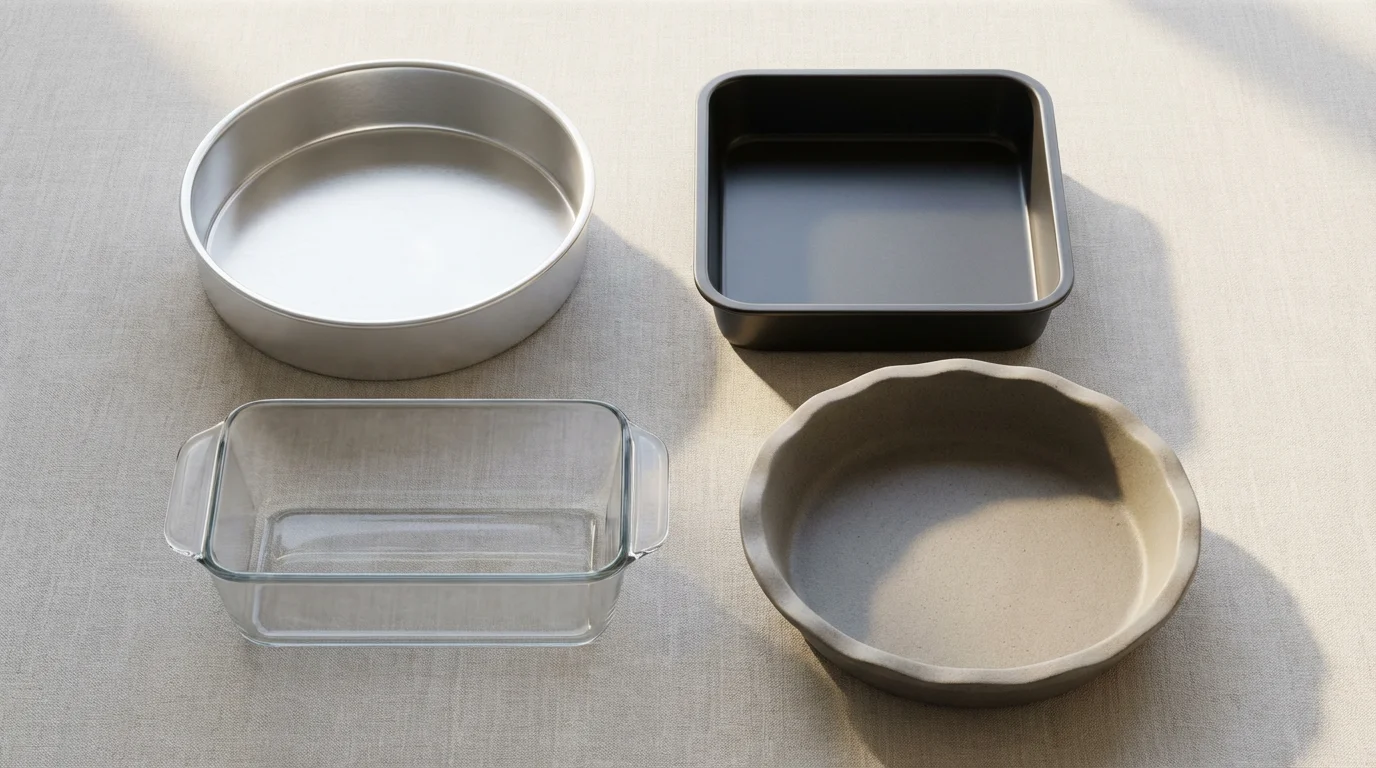
Understanding Bakeware Materials
Before you commit to a purchase, it helps to understand the “why” behind the materials. Here is the cheat sheet for how different materials interact with your oven.
Aluminum (The Conductor)
Aluminum is the best heat conductor you can buy for a reasonable price. It heats up instantly and cools down instantly. This gives you responsiveness. If your recipe says “bake for 12 minutes,” aluminum will actually bake it for 12 minutes. Darker metals or glass might take 5 minutes just to get up to temperature.
Aluminized Steel (The Pro Choice)
This is steel that has been dipped in aluminum-silicon alloy. You get the rugged strength of steel (it won’t dent) with the conductive surface of aluminum. This is the material of choice for commercial bakeries.
Glass and Ceramic (The Insulators)
Glass takes a long time to get hot, but once it’s hot, it stays hot. This is called “thermal mass.” It is perfect for a lasagna that needs to bake for an hour and stay warm during dinner. It is terrible for a sugar cookie that needs a quick blast of heat.
Silicone (The Flexible Option)
Silicone molds are great for specialty shapes, but they are poor heat conductors. Baked goods made in silicone often lack a crisp crust and can be pale. We generally recommend metal pans over silicone for standard baking.
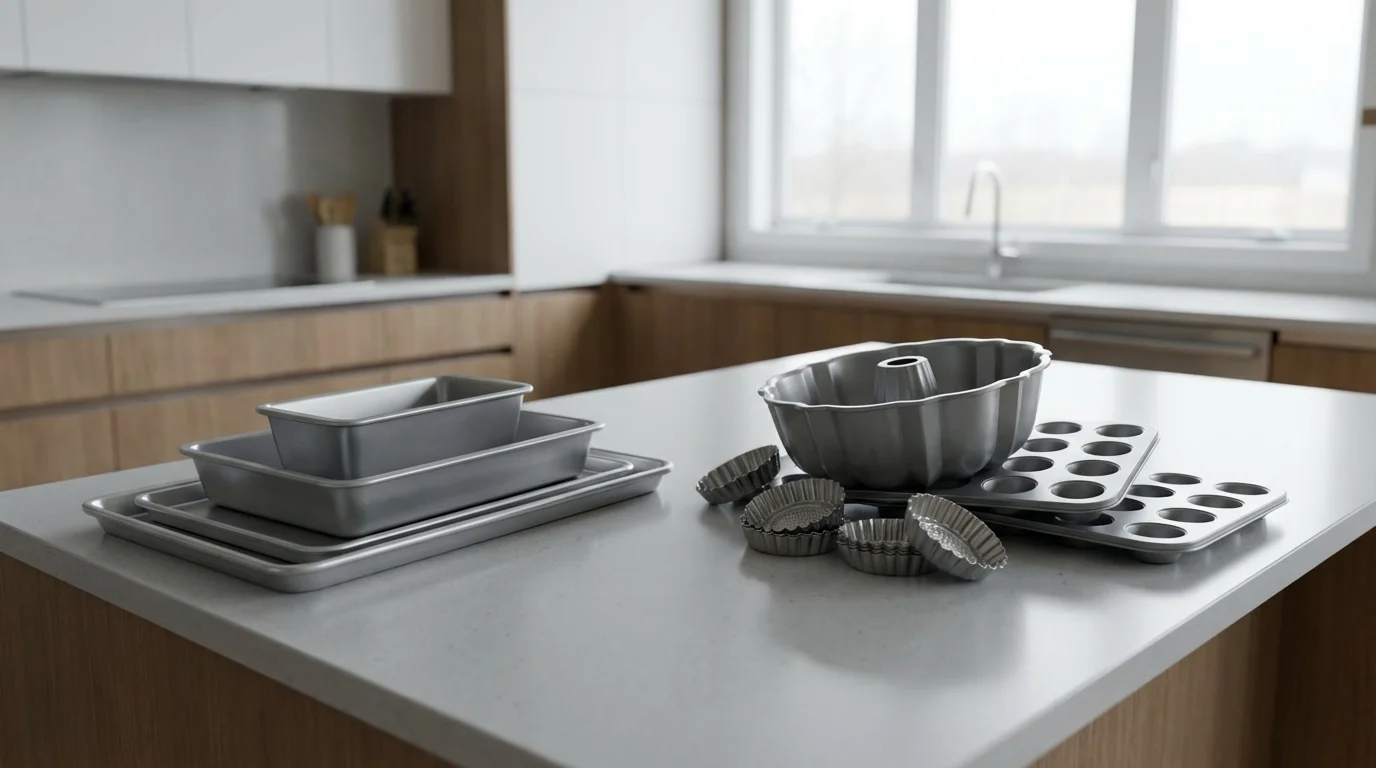
The Essential Pieces (and What to Skip)
Many sets try to dazzle you with 15 or 20 pieces. Do not fall for it. You usually only need five or six core items to cook 90% of recipes.
- The Rimmed Baking Sheet (Half Sheet): The MVP. You will use this for cookies, roasting chicken, sheet pan dinners, and catching drips from pies.
- The 9×13 Rectangular Pan: Essential for brownies, cakes, lasagna, and casseroles.
- The 12-Cup Muffin Tin: For muffins and cupcakes.
- 8-inch or 9-inch Round Cake Pans (x2): You need two of these to make a standard layer cake. A set that only gives you one is practically useless for cake baking.
- Loaf Pan: For banana bread, pound cake, or meatloaf.
Skip These (at first): Mini muffin tins, tart pans, angel food cake pans, and specialty shaped molds. Buy these individually later if you find a specific recipe that requires them.
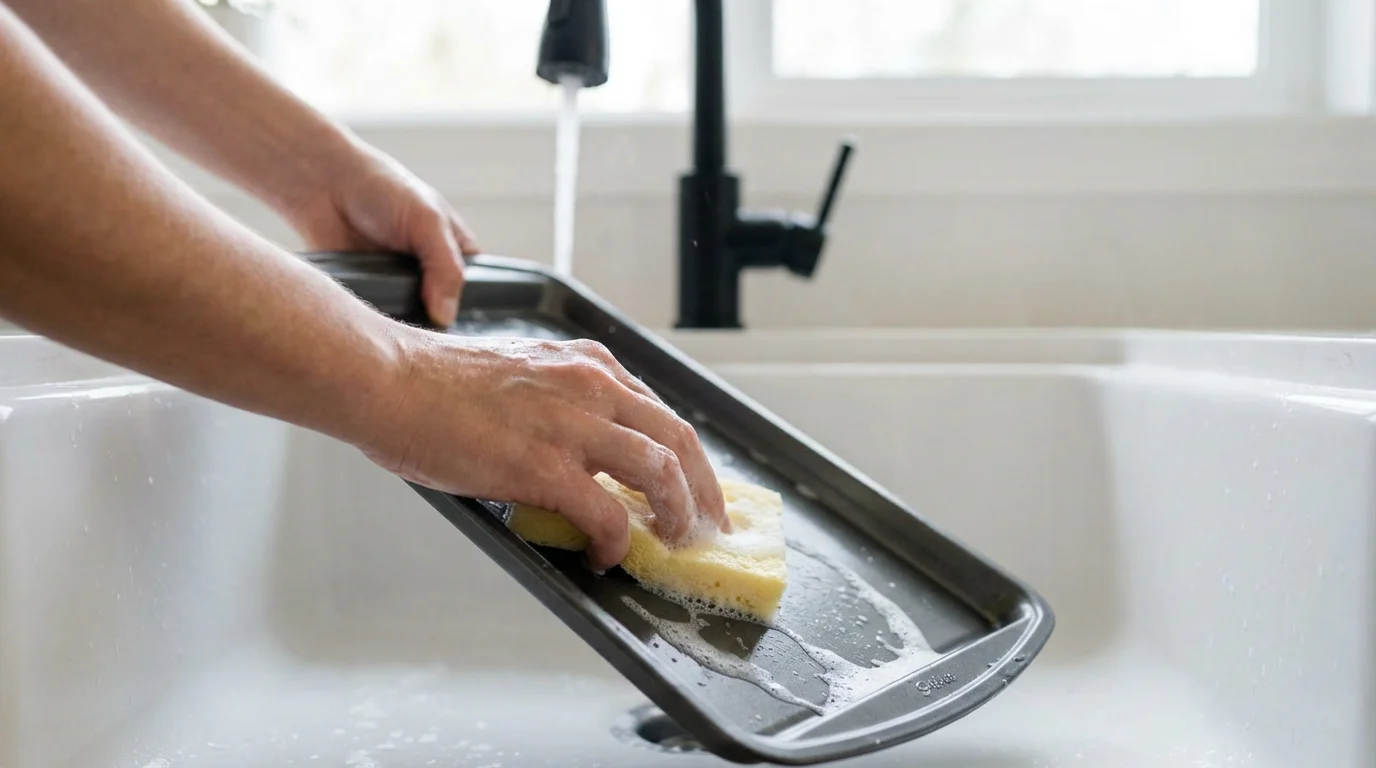
Care and Maintenance for Longevity
Even the most expensive bakeware can be ruined in a few months if treated poorly. Follow these three rules to extend the life of your set:
- Hand Wash Your Nonstick: Yes, the box says “Dishwasher Safe.” Do not do it. Dishwasher detergents are abrasive and the high heat cycles degrade nonstick coatings. Hand washing takes 60 seconds and adds years to the pan’s life.
- Avoid Cooking Spray on Nonstick: Aerosol cooking sprays (like Pam) often contain lecithin, a soy additive that builds up a sticky, gummy residue on nonstick pans that is impossible to scrub off without ruining the coating. Use butter, oil, or parchment paper instead.
- Use Parchment Paper: It is the secret to easy cleanup. Lining your pans with parchment paper not only prevents sticking but also insulates the bottom of your cookies slightly, preventing burned bottoms.
Frequently Asked Questions
What is the difference between a cookie sheet and a baking sheet?
A “cookie sheet” is typically flat with no rim (or just one raised edge for gripping), allowing cookies to slide off easily. A “baking sheet” (or jelly roll pan) has a rolled rim on all four sides. We recommend the rimmed baking sheet for beginners because it is more versatile—you can roast juicy vegetables or chicken without grease dripping onto your oven floor.
Why do my baking sheets warp with a loud “pop” in the oven?
This happens due to thermal shock—when a cold pan enters a hot oven, the metal expands unevenly. Thin, cheap pans warp easily. To avoid this, buy “heavy gauge” pans (look for aluminized steel) and pans with reinforced rolled rims, which provide the structural support to resist twisting.
Can I use metal utensils on nonstick bakeware?
Generally, no. Even “metal utensil safe” nonstick coatings will eventually scratch if you use knives or sharp metal spatulas. Once the coating is scratched, rust can form and the nonstick properties fail. Stick to silicone, wood, or nylon tools to protect your investment.
Is glass or metal better for brownies?
It depends on the texture you like. Metal pans heat up faster, resulting in chewier edges and a firmer crust. Glass pans bake slower, often resulting in a gooier, fudgier center but potentially over-baked edges if you aren’t careful. If using glass for a recipe written for metal, lower the oven temperature by 25°F.
Disclaimer: Product prices, features, and availability change frequently. Prices shown were accurate at time of writing but may have changed. We may earn a small commission from purchases made through links on this site, at no extra cost to you. Always verify current pricing and specifications on the retailer’s website before purchasing.