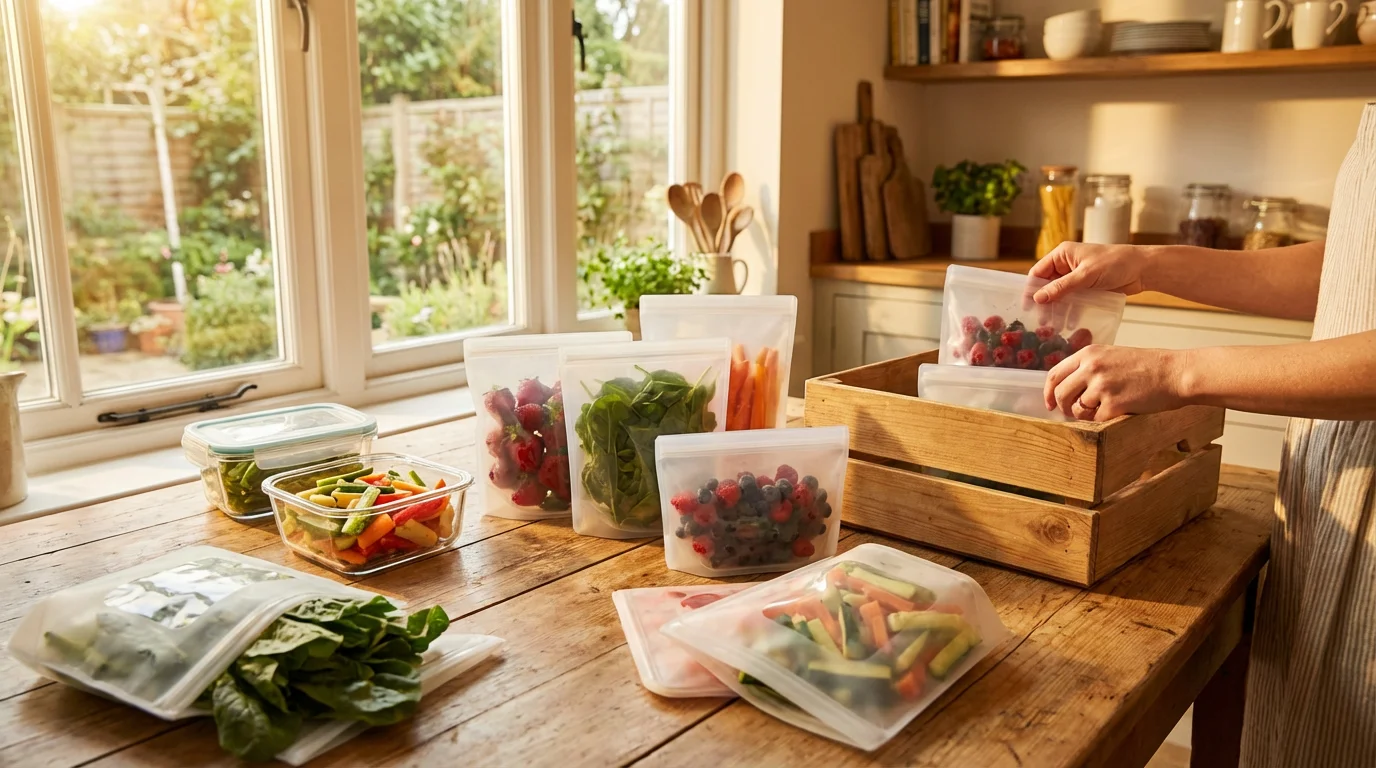
You reach for them almost every day. Whether you are packing a sandwich for lunch, marinating chicken for dinner, or freezing summer berries for a mid-winter smoothie, food storage bags are the unsung heroes of the modern kitchen. But if you have ever dealt with a zipper that refuses to close or a flimsy seam that leaks marinade all over your refrigerator shelf, you know that not all bags are created equal.
Before packing produce into storage, ensure it is properly washed and drained using one of the best colanders and strainers to prevent excess moisture from causing spoilage.
While bags handle the basics, using quality utensil holders keeps your frequently used tools within reach on the counter.
Bags work well for space-saving, but for leftovers, you might prefer food storage containers that stack easily.
The market has shifted dramatically in the last five years. While the classic disposable plastic zipper bag remains a staple, high-quality reusable silicone and PEVA options have surged in popularity. These newer contenders promise to reduce waste and save money over time, but they require a higher upfront investment and a different care routine.
This guide cuts through the marketing noise to help you find the right storage solution. We compared durability, seal strength, freezer performance, and ease of cleaning to determine the best food storage bags for your specific needs.
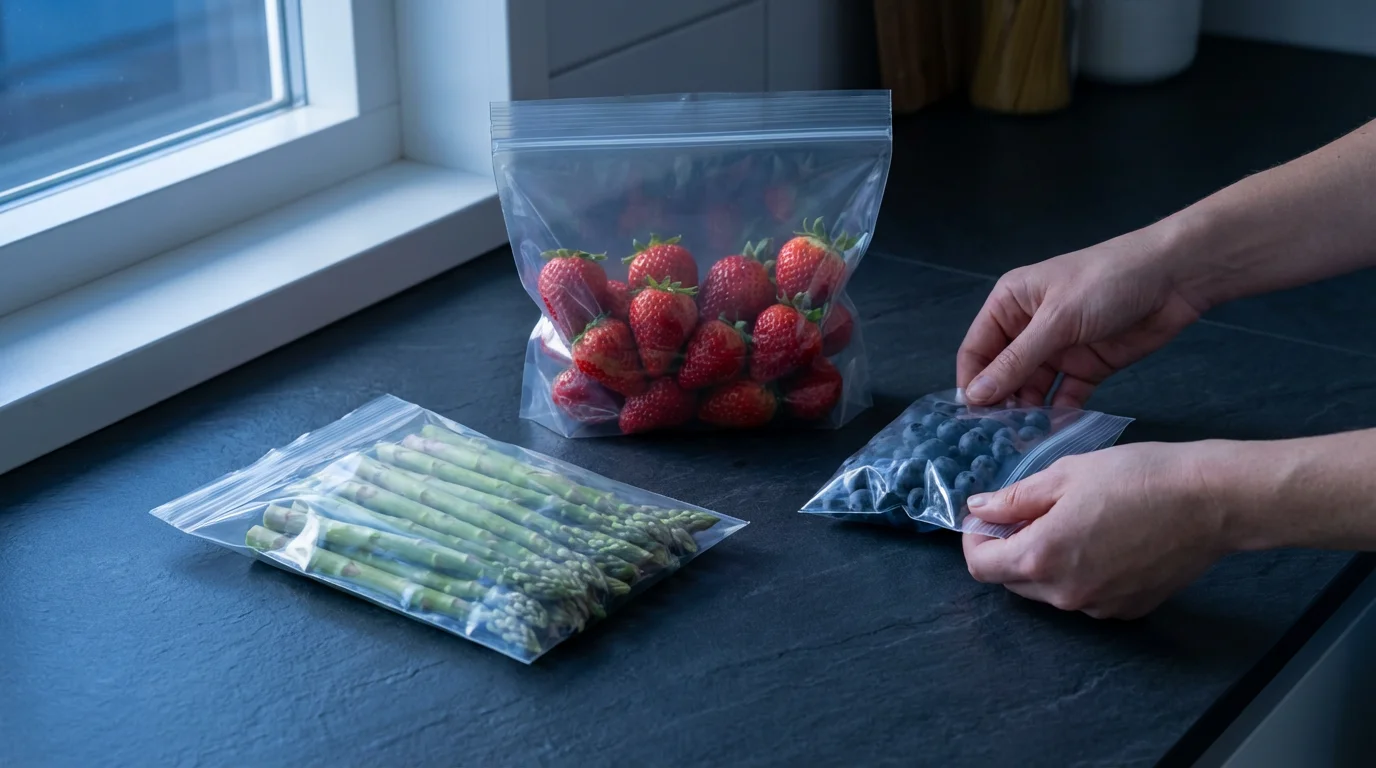
Quick Comparison: Top Picks at a Glance
Use this table to quickly identify which bag fits your current kitchen habits and budget.
To keep your prep area tidy, using drawer organizers can help you separate your reusable bags from other small tools.
| Category | Product Name | Material | Best For |
|---|---|---|---|
| Best Disposable | Ziploc Brand Freezer Bags | Polyethylene Plastic | Long-term freezing, reliability |
| Best Reusable | Stasher Silicone Bags | Platinum Silicone | Cooking (Sous Vide), dishwasher safe |
| Value Reusable | (re)zip Lay-Flat | PEVA | Dry snacks, sandwiches, fridge storage |
| Best for Marinades | Hefty Slider Freezer Bags | Polyethylene Plastic | Messy liquids, easy opening |
Best Overall Disposable: Ziploc Brand Freezer Bags with Grip ‘n Seal
For most home cooks, the Ziploc Brand Freezer Bag remains the gold standard for disposable storage. While it is tempting to save money with generic store brands, our experience—and the testing of major publications—consistently shows that Ziploc offers a superior seal that justifies the slight price premium.
If you find that some airtight seals are difficult to pull open with wet hands, a pair of sturdy kitchen shears can help you access your food quickly.
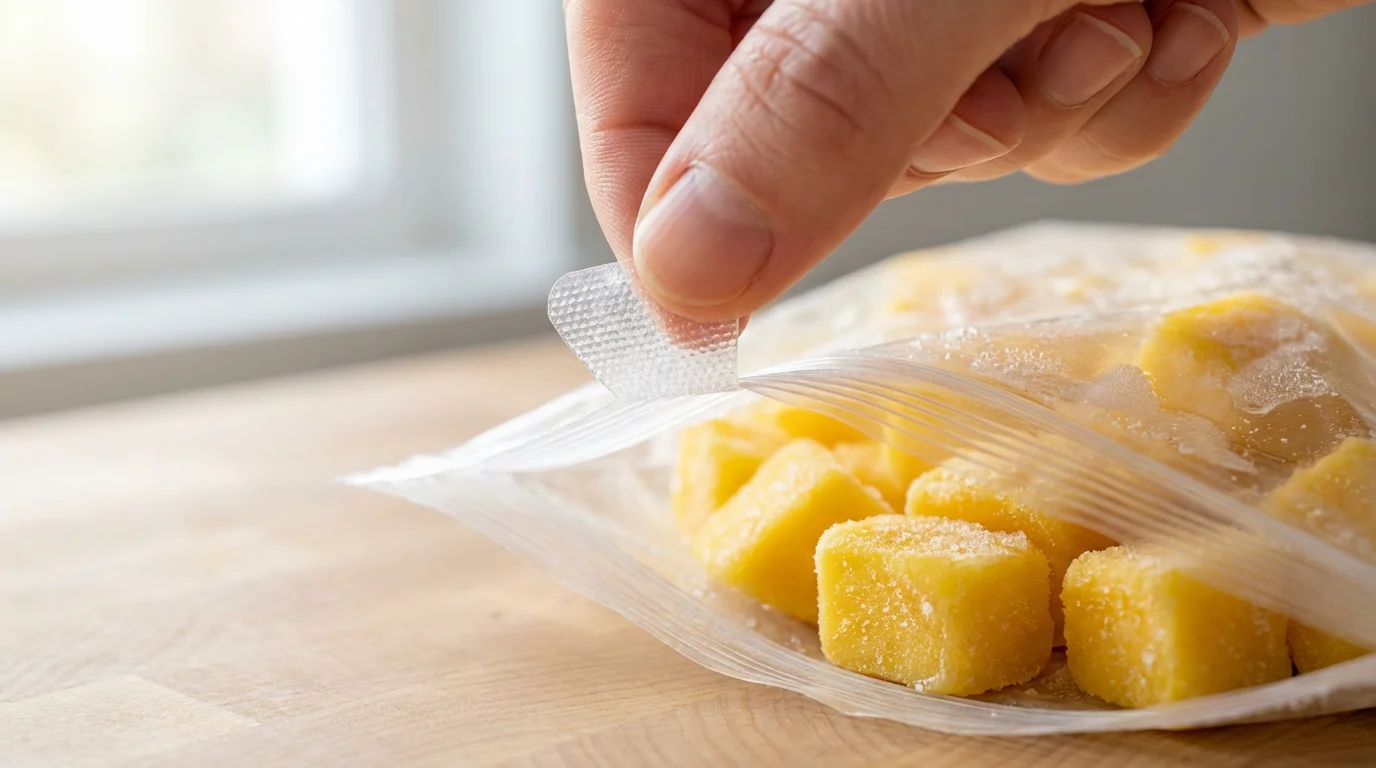
The “Grip ‘n Seal” technology features an extended tab with a textured surface, making it significantly easier to open the bag when your hands are wet or greasy from cooking. More importantly, the double-zipper mechanism provides tactile and audible feedback. You can feel and hear the bag close, giving you confidence that your food is protected against freezer burn.
Why It Wins
Consistency is key here. These bags are made from durable plastic (usually 2.0 to 3.0 mil thickness for freezer versions) that resists punctures better than standard sandwich bags. They prevent ice crystals from forming on your food longer than thinner competitors.
- Material: BPA-free Plastic
- Closure Type: Double Zipper (Press-to-Close)
- Microwave Safe: Yes (for defrosting/reheating with vent open)
- Variations: Quart, Gallon, 2-Gallon
Skip if: You have dexterity issues (arthritis). The press-to-seal mechanism requires finger strength; a slider bag (see below) is a better choice for you.
Bottom Line: If you want a bag that you can trust to hold soup in the freezer or keep chicken fresh without leaking, this is the most reliable disposable option on the market.
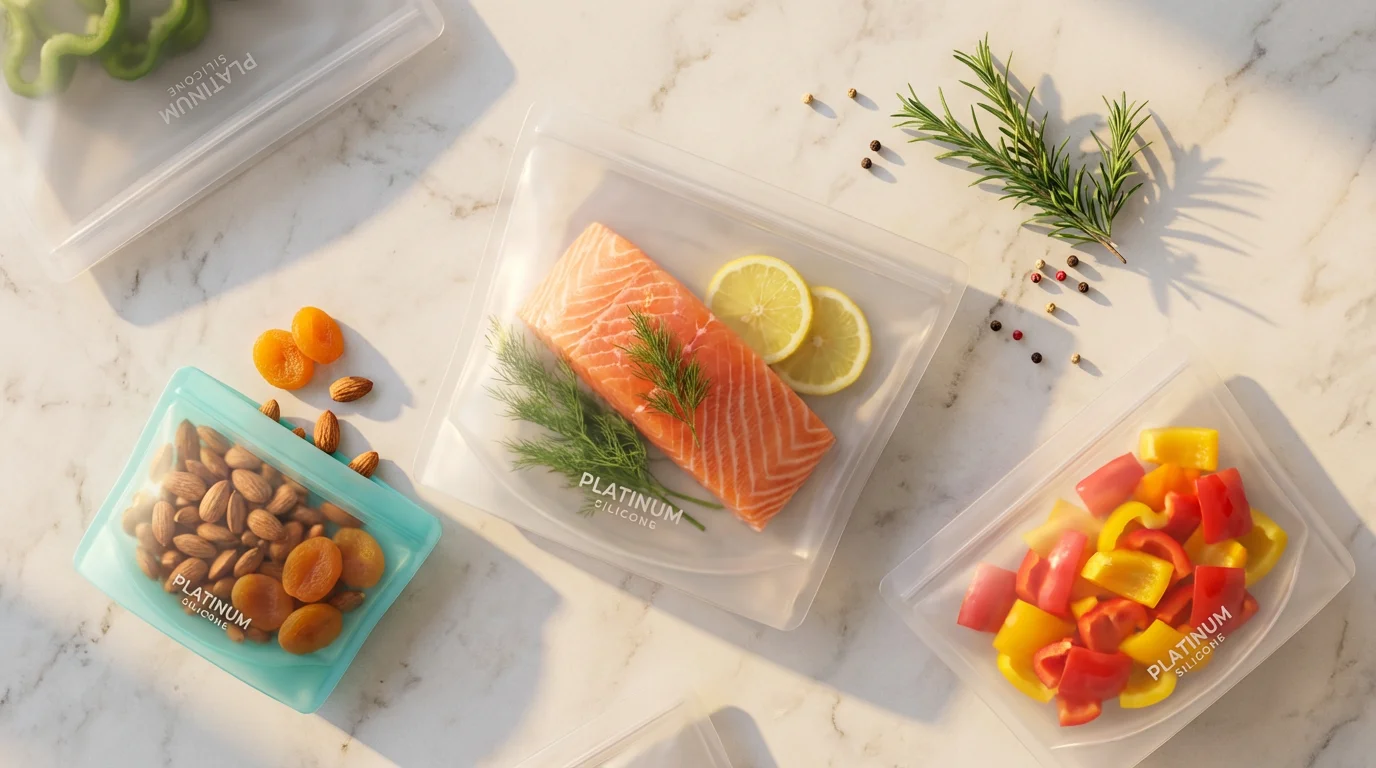
Best Overall Reusable: Stasher Platinum Silicone Food Grade Bags
If you are ready to ditch single-use plastics, Stasher is the undisputed leader in the category. Unlike cheaper reusable bags made of vinyl or PEVA, Stasher bags are made from platinum-grade silicone. This distinction is critical because it means the bag is truly heat-resistant.
Because silicone bags are heat-resistant, they are a versatile companion to essential bakeware sets when you need to reheat small portions in the oven.
This heat resistance is a common feature in other modern gear, such as silicone baking mats, which replace parchment paper.
You can put a Stasher bag in the dishwasher, the microwave, a pot of boiling water (excellent for sous vide cooking), and even the oven up to 400°F. Wirecutter highlights Stasher as a top pick specifically for its durability and the security of its pinch-press seal, which stays closed even when submerged in water.
Why It Wins
Versatility creates value. While a single Stasher bag costs significantly more than a box of Ziplocs, its ability to function as a cooking vessel and a storage container sets it apart. The seal is robust, and because it is one single piece of silicone, there are no glued seams to split over time.
- Material: 100% Platinum Silicone
- Temperature Range: Up to 400°F
- Cleaning: Dishwasher safe (bottom rack)
- Closure: Pinch-Loc Seal
Skip if: You are on a strict budget or need to store dozens of items at once. Outfitting a whole pantry with Stasher bags is a significant investment.
Bottom Line: The “buy it for life” option of food storage bags. They are expensive, but they are virtually indestructible and replace thousands of disposable bags over their lifespan.
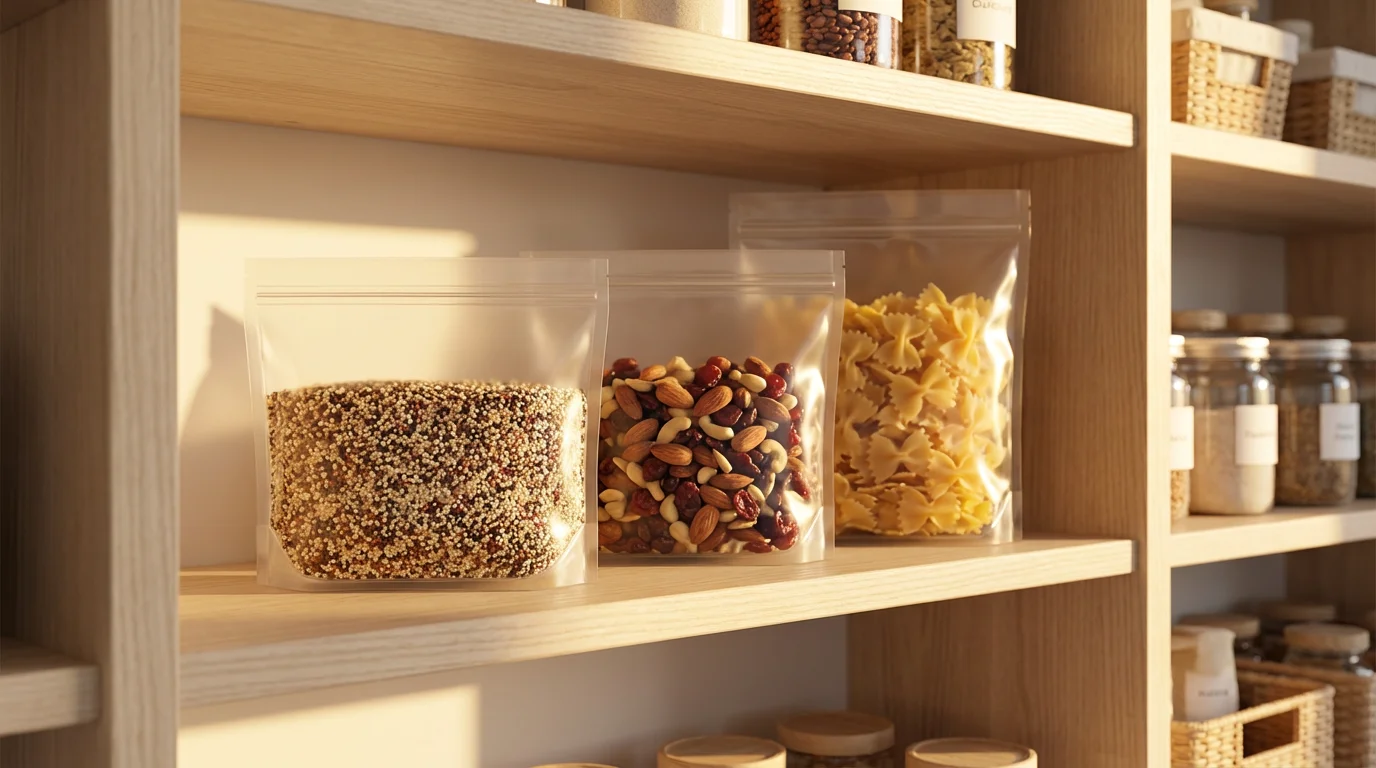
Best Value Reusable: (re)zip Lay-Flat Leakproof Bags
Not everyone needs a bag that can withstand oven temperatures. If your primary goal is packing sandwiches, storing cut vegetables in the fridge, or organizing dry pantry goods, you do not need to pay the premium for silicone. The (re)zip Lay-Flat bags are an excellent “middle ground” option.
Learning how to organize plastic containers alongside your bags will help maximize your available pantry and cabinet space.
These bags are made from PEVA (polyethylene vinyl acetate), a food-safe vinyl that is lighter and more transparent than silicone. They look and feel more like the Ziploc bags you are used to, but they are much more durable.
Why It Wins
The (re)zip bags feature a reliable double-lock closure that rivals disposable brands for leak protection. They are lightweight, taking up minimal space in a lunchbox or hiking pack. The transparency is excellent, so you never have to guess what is inside.
- Material: PEVA (chlorine-free)
- Temperature Range: Freezer safe, but NOT heat safe
- Cleaning: Hand wash recommended (top rack dishwasher can warp the seal)
- Closure: Double-lock press seal
Skip if: You want to wash your bags in the dishwasher. High heat can warp the zipper on PEVA bags, rendering them useless.
Bottom Line: The best entry point for eco-conscious cooks who want to reduce waste without spending a fortune.
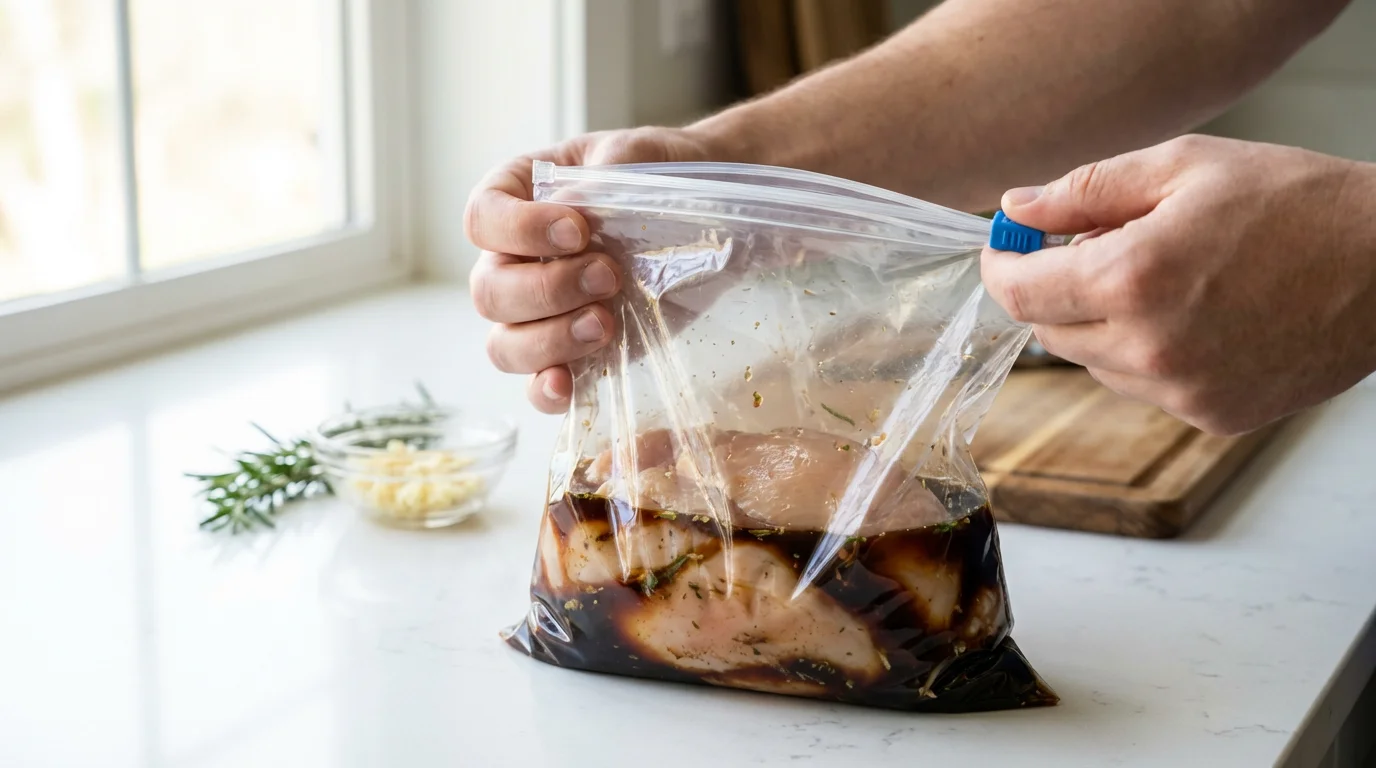
Best for Marinades: Hefty Slider Freezer Bags
When you are handling raw meat and slippery marinades, the last thing you want to do is fumble with a press-to-close seal. Hefty’s Slider Freezer Bags solve this problem with a robust plastic slider that glides shut easily.
For those who appreciate the convenience of disposable options, you may also want to consider whether slow cooker liners are a safe addition to your kitchen cleanup routine.
While press-seals generally offer a slightly tighter air barrier for long-term freezing, the “MaxLock” track on the Hefty bags clicks audibly to let you know it is closed. The slider mechanism is also much easier for children or anyone with limited hand strength to operate.
Why It Wins
The expandable bottom on many Hefty models allows the bag to stand upright on the counter. This is a game-changer when you are trying to pour a marinade into the bag without tipping it over.
- Material: BPA-free Plastic
- Closure Type: Slider
- Stand-up Feature: Yes (on select models)
Skip if: You need maximum space efficiency in the freezer. The plastic slider adds bulk, making these bags stack less flatly than press-seal versions.
Bottom Line: The most user-friendly bag for messy jobs, meal prep, and anyone who struggles with standard zippers.
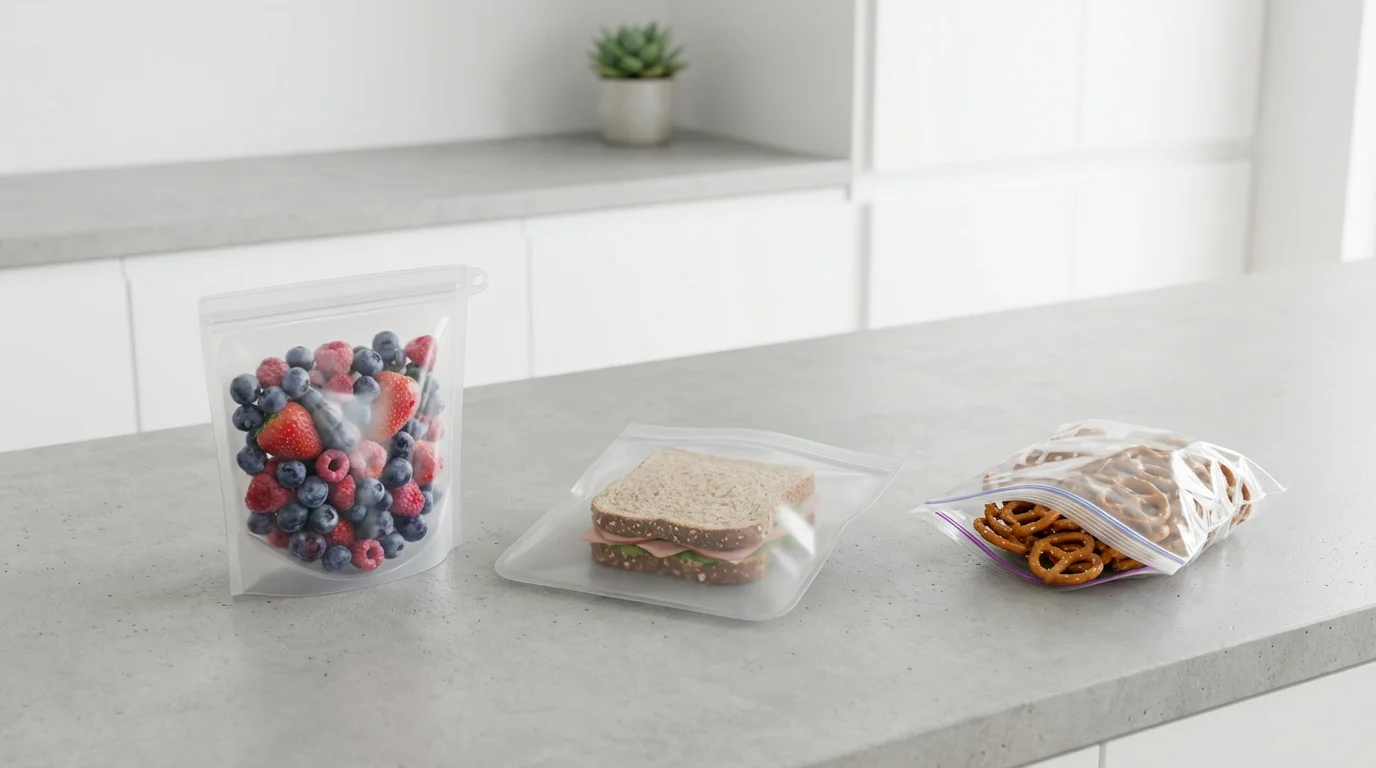
Material Matters: Silicone vs. PEVA vs. Plastic
Understanding the material of your bag is crucial because it dictates how you can use and clean it. Here is the breakdown of the three main contenders:
1. Platinum Silicone
Best for: Cooking, reheating, and dishwasher cleaning.
Silicone is made from silica (sand) and carbon. It is flexible, non-porous, and withstands extreme temperatures. “Platinum” silicone refers to the curing process, which results in a purer product with no byproducts. These are the most expensive but offer the highest utility.
2. PEVA (Polyethylene Vinyl Acetate)
Best for: Cold storage, sandwiches, and budget-conscious reusable shoppers.
PEVA is a biodegradable, non-chlorinated vinyl. It is softer and more rubbery than standard plastic. While eco-friendly and reusable, it has a low melting point. Never put PEVA in the microwave or oven, and be cautious with the dishwasher; hot water cycles can warp the sealing tracks.
3. Polyethylene (LDPE)
Best for: Long-term freezer storage and messy tasks where you want to toss the bag.
This is standard plastic wrap material. It provides an excellent moisture barrier, which is why it remains the king of preventing freezer burn. According to Serious Eats, while reusable bags are improving, disposable plastic bags still tend to offer the thinnest, most air-tight vacuum for freezing meats, preventing oxidation better than thick silicone.
How to Choose the Right Bag
“Don’t buy the ‘best’ product. Buy the best product for how YOU cook.” — Kitchen Equipment Expert
Selecting the right storage is just one part of knowing how to spot quality kitchen tools that last.
Before you buy, ask yourself three questions:
- Do you freeze raw meat? If yes, you need a bag with a high-performance air seal. Even a tiny gap allows air in, causing freezer burn (dehydration of the food surface). Disposable freezer bags or vacuum seal bags are best here.
- Do you own a dishwasher? If you hate hand-washing, do not buy PEVA bags. You will ruin them or resent washing them. Spend the extra money on Silicone.
- What is your storage space? Silicone bags are bulky. If you have a small freezer, 50 frozen silicone bags will take up three times the space of 50 disposable bags.
Care and Maintenance for Reusables
The biggest complaint about reusable bags is that they are hard to clean and dry. Here is how to make it easier:
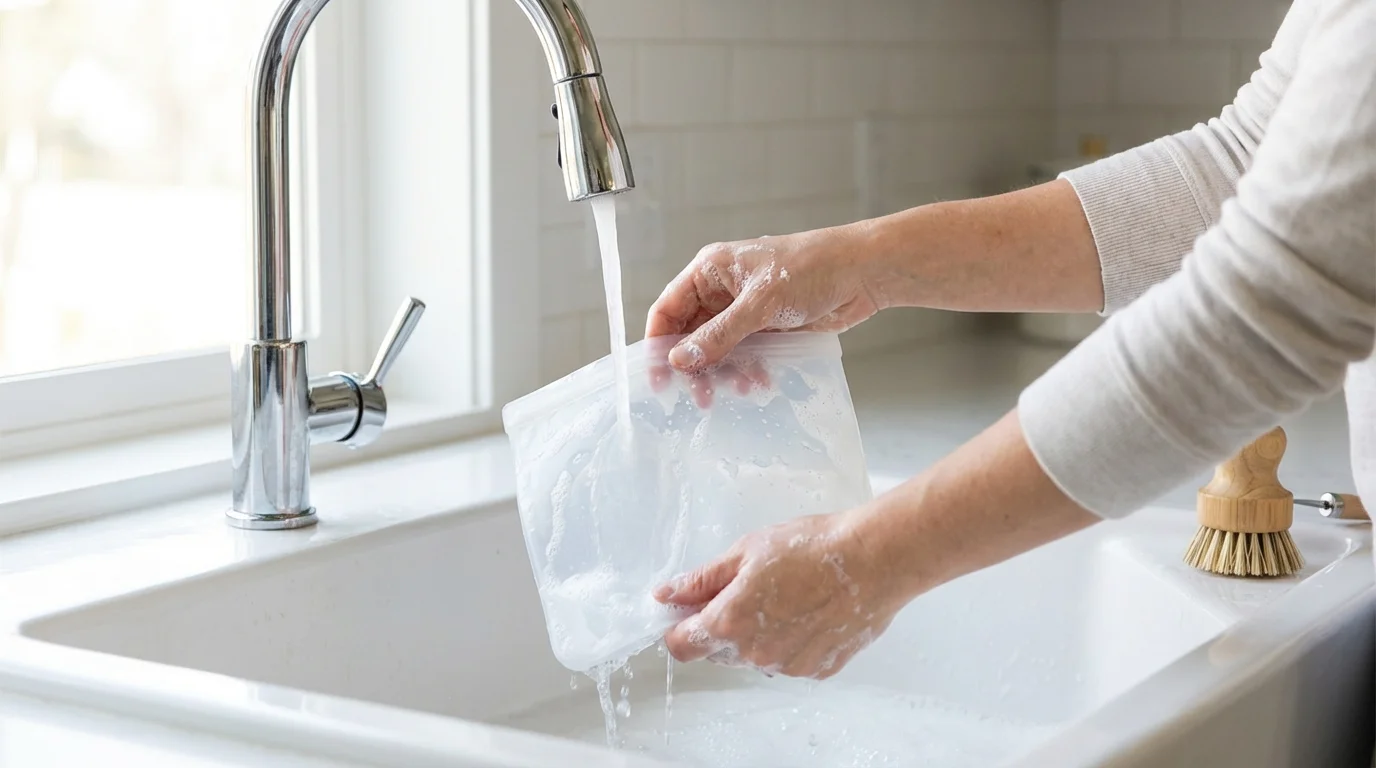
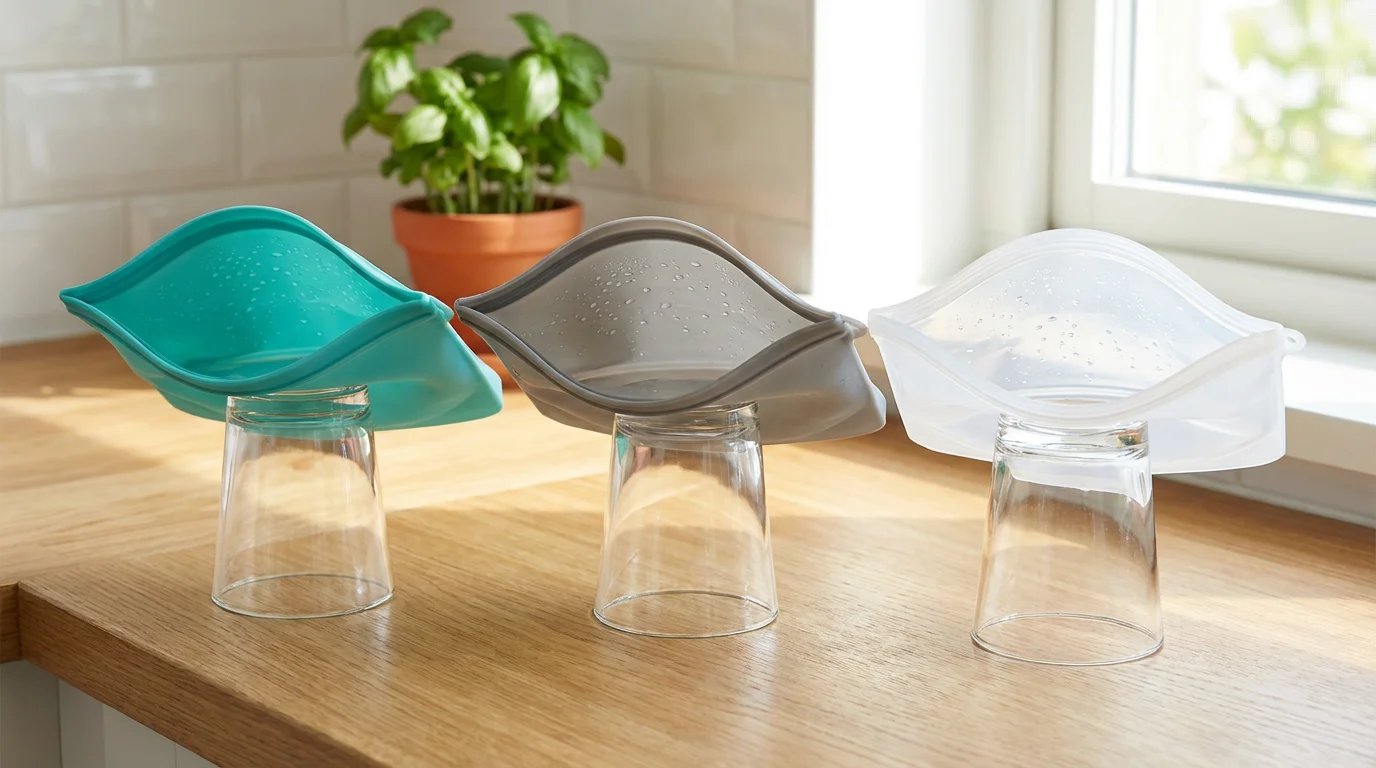
- Turn them inside out (carefully): Silicone bags can usually be flipped inside out for scrubbing. PEVA bags often cannot—check the manufacturer’s instructions to avoid tearing the seams.
- The drying rack is essential: Mold grows in corners where moisture lingers. Use a bottle drying rack or place bags over the tines of your dishwasher rack to ensure they stay open while air drying.
- Remove odors: If your silicone bag smells like last week’s onions, bake it. Yes, really. Place the silicone bag (open) on a baking sheet in the oven at 350°F for 8-10 minutes. The heat helps release trapped volatile organic compounds (odors). Do NOT do this with PEVA or plastic.
Frequently Asked Questions
Can I put silicone bags in the microwave?
Yes, provided they are made of 100% silicone (like Stasher). They are safe for defrosting or steaming vegetables. Always leave the seal partially open to allow steam to vent, otherwise, the bag could burst from pressure buildup.
Are reusable bags actually better for the environment?
They are, but only if you reuse them enough times. A silicone bag has a higher manufacturing footprint than a single plastic bag. You generally need to reuse a silicone bag dozens of times to “break even” environmentally. If you buy a reusable bag and throw it away after three uses, it is worse than using disposables.
What is the difference between a storage bag and a freezer bag?
Thickness. Standard storage bags are usually around 1.5 to 1.75 mil thick. Freezer bags are typically 2.0 to 3.0 mil thick. This extra thickness provides a better barrier against moisture loss and odor transfer, which is critical for preventing freezer burn during long-term storage.
Can I put PEVA bags in the dishwasher?
Generally, no. While some brands claim to be “top-rack safe,” the high heat of the drying cycle and hot water jets often warp the zipper tracks, making the bag impossible to seal. Hand washing with warm soapy water is the safest method for PEVA.
Disclaimer: Product prices, features, and availability change frequently. Prices shown were accurate at time of writing but may have changed. We may earn a small commission from purchases made through links on this site, at no extra cost to you. Always verify current pricing and specifications on the retailer’s website before purchasing.