
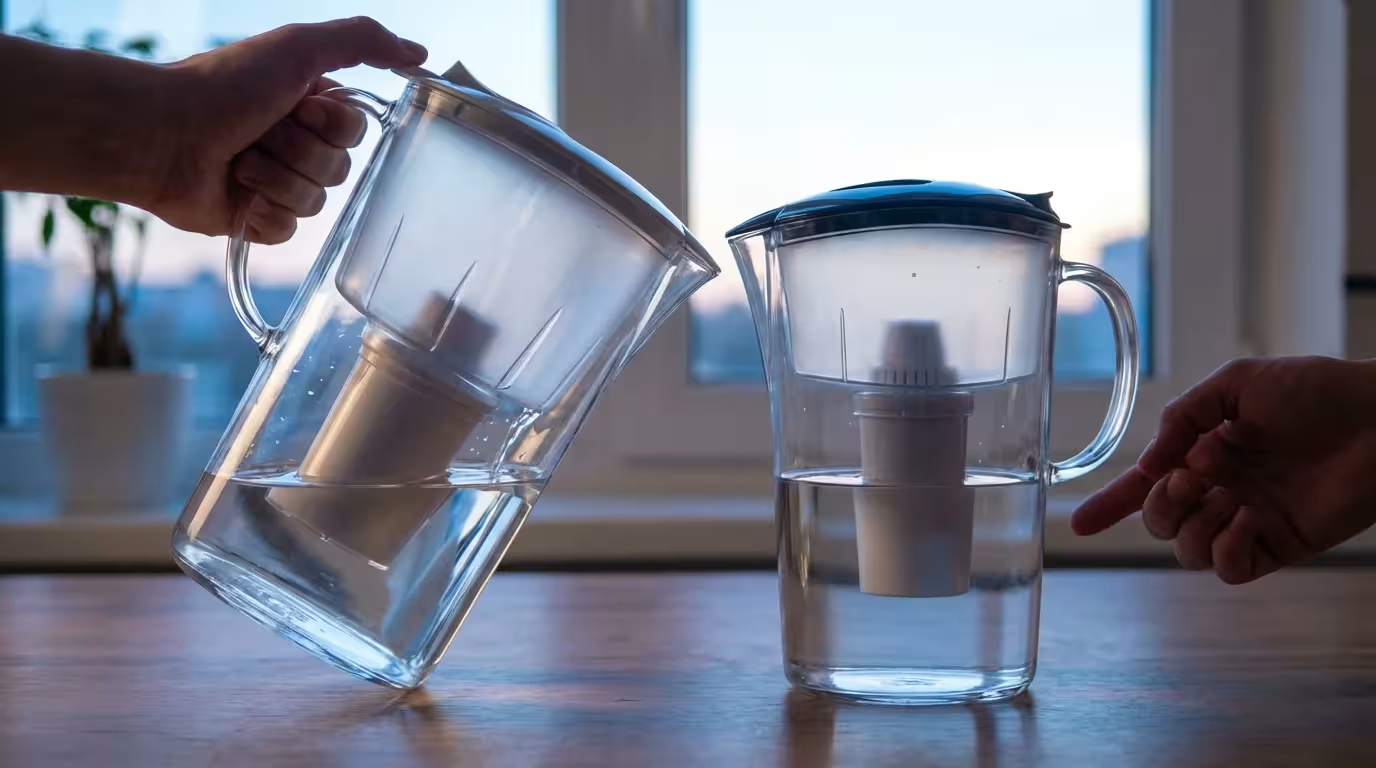
You turn on the tap, fill a glass, and take a sip. Maybe it tastes a bit like a swimming pool, or perhaps there is a metallic tang that lingers on your tongue. While municipal water in the United States is highly regulated, the journey from the treatment plant to your faucet can introduce contaminants, and the chemicals used to keep it safe—like chlorine—often ruin the flavor.
Before you fill your cabinets with new tools, it is helpful to identify which kitchen gadgets you don’t need to keep your cooking space efficient and organized.
Clean water is also the foundation for great morning brews, which is why deep cleaning your coffee maker is just as important as the quality of the water you pour into it.
A water filter pitcher is the most accessible upgrade you can make for your kitchen. It requires no installation, fits in your fridge, and costs a fraction of an under-sink system. However, the market is flooded with options ranging from $20 to $100+, all claiming to provide the “purest” water. Some merely improve taste; others are powerful enough to remove lead and PFAS (“forever chemicals”).
This guide cuts through the marketing noise. We will look at certifications that actually matter, realistic maintenance costs, and which pitchers deserve a spot in your refrigerator door.
The “Specs” That Matter: NSF Certifications
Before buying any pitcher, you need to know what you are trying to remove. Many cheap pitchers only remove chlorine taste and odor. If you are concerned about lead from old pipes or agricultural runoff, you need to look for specific certifications from the NSF (National Sanitation Foundation) or the WQA (Water Quality Association).
Do not rely on a manufacturer saying their product “reduces lead.” Look for the official seal. As the experts at Wirecutter emphasize in their testing, third-party validation is the only way to ensure a filter does what it claims.
- NSF 42 (Aesthetic Effects): This certifies the reduction of non-health-related contaminants like chlorine taste and odor. Almost every filter has this. It makes your water taste better but doesn’t make it safer.
- NSF 53 (Health Effects): This is the big one. It certifies the reduction of specific health-related contaminants, most notably lead, mercury, and benzene. If you live in a home built before 1986, this is non-negotiable.
- NSF 401 (Emerging Compounds): This covers newer contaminants like prescription drugs, pesticides, and herbicides found in trace amounts in water supplies.
- NSF P473: A newer standard specifically for PFOA and PFOS (forever chemicals).
“Don’t assume a more expensive pitcher removes more contaminants. Always check the data sheet for NSF 53 certification if lead is a concern.” — Water Quality Expert
Top Picks at a Glance
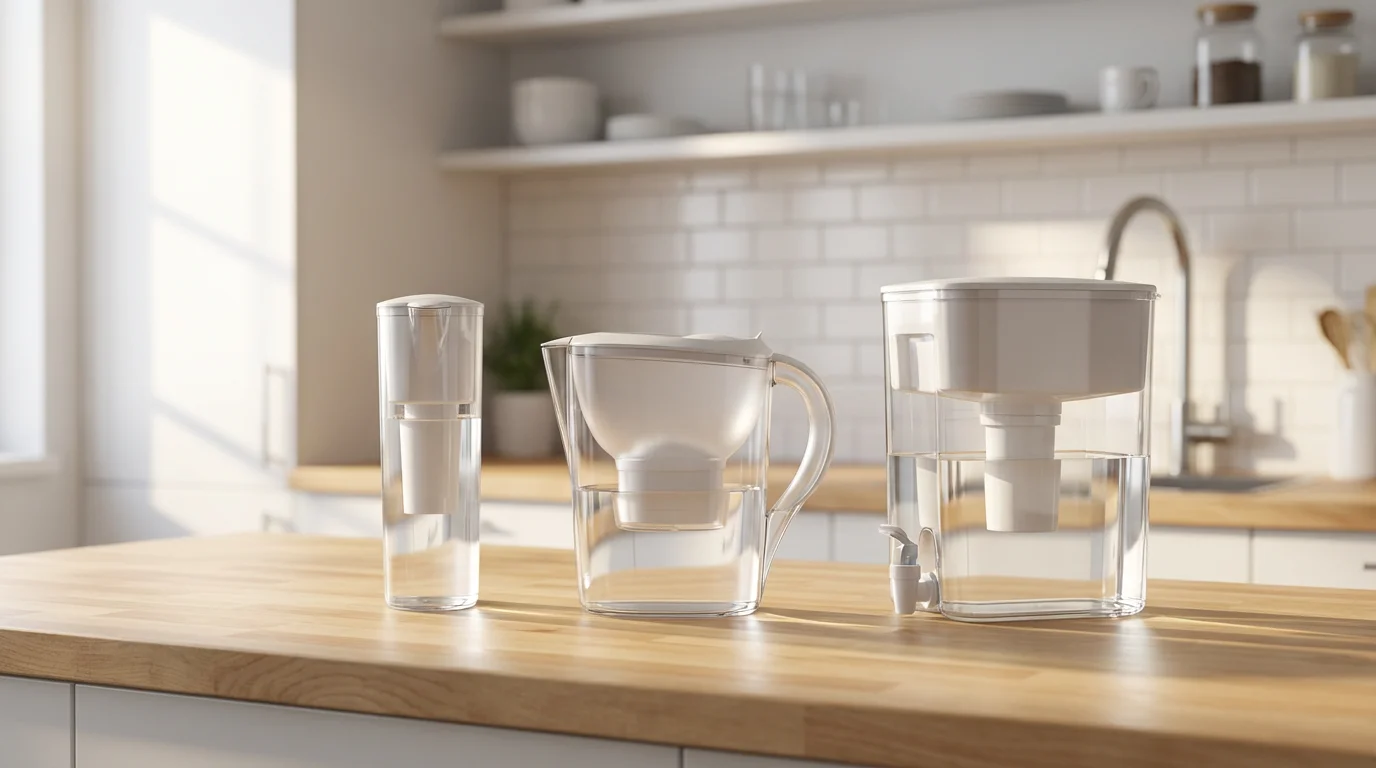
Here is how the leading options stack up regarding upfront cost, certifications, and maintenance.
| Category | Product | Best For | Key Certifications | Filter Life |
|---|---|---|---|---|
| Best Overall | Brita Tahoe w/ Elite Filter | Most Households | NSF 42, 53, 401 | 6 Months (120 gal) |
| Best for Lead | ZeroWater 10-Cup | Total Dissolved Solids | NSF 42, 53 | 15–40 gal (Variable) |
| Aesthetic Pick | LifeStraw Home | Design & Microplastics | NSF 42, 53, 401, P473 | 2 Months (40 gal) |
| Budget Pick | PUR Plus 7-Cup | Small Spaces | NSF 42, 53, 401 | 2 Months (40 gal) |
Best Overall: Brita Tahoe with Elite Filter
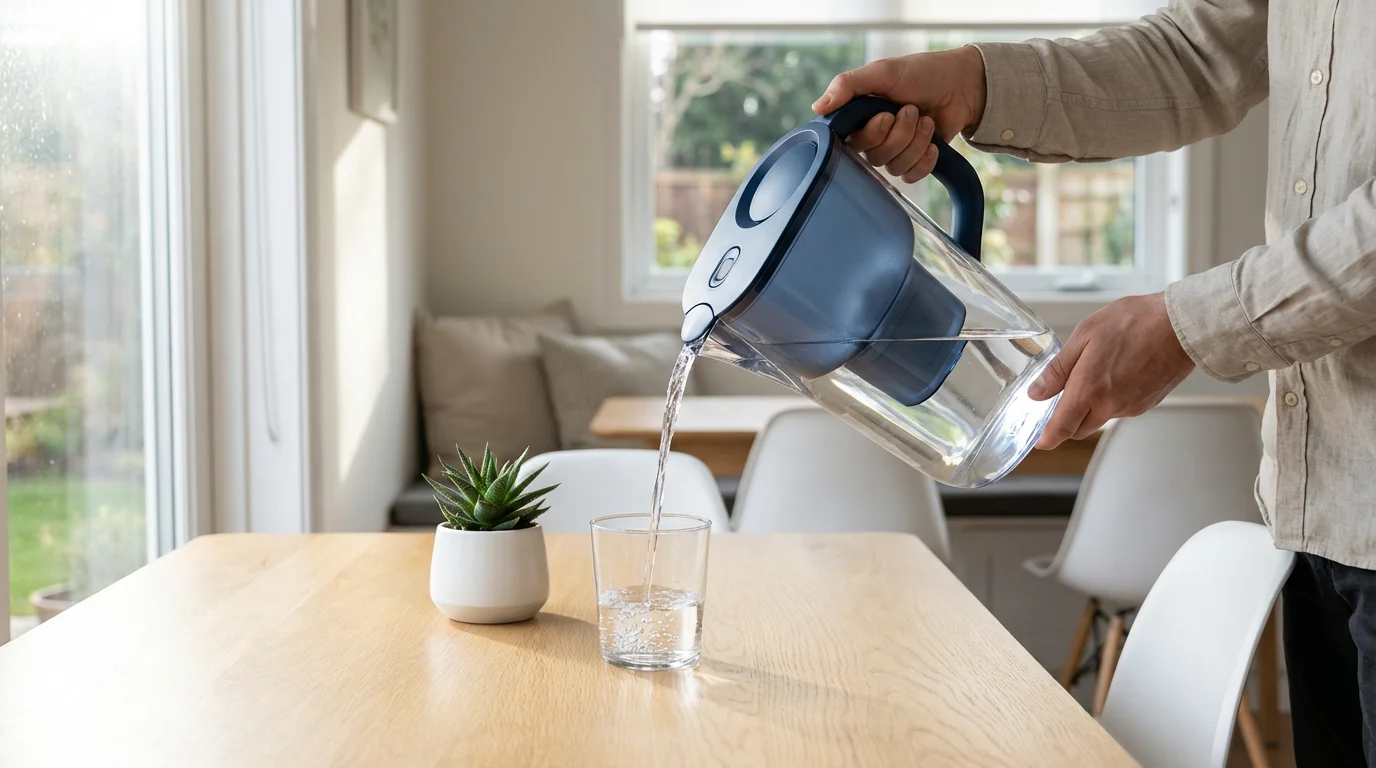
For most households, the Brita Tahoe paired with the blue “Elite” filter (formerly called Longlast) strikes the perfect balance between effectiveness, availability, and annoyance-reduction.
Using high-quality filtered water in one of the best electric kettles also prevents mineral buildup and ensures your tea or pour-over coffee tastes exactly as it should.
Why it wins: The biggest friction point with water pitchers is the constant need to change filters. The Brita Elite filter lasts for roughly six months or 120 gallons. That is three times longer than standard filters. Crucially, unlike the standard white Brita filters, the Elite is certified to remove 99% of lead, along with cadmium and mercury.
The Tahoe pitcher itself is well-designed with a “smart light” indicator that actually tracks pours rather than just time, giving you a more accurate read on filter life.
- The Good: Widely available filters; excellent contaminant removal; long filter life means less maintenance.
- The Bad: The “Elite” filter filters slower than standard versions; the pitcher is tall and may not fit shallow fridge shelves.
- Skip if: You are incredibly impatient. The filtration speed is moderate, not instant.
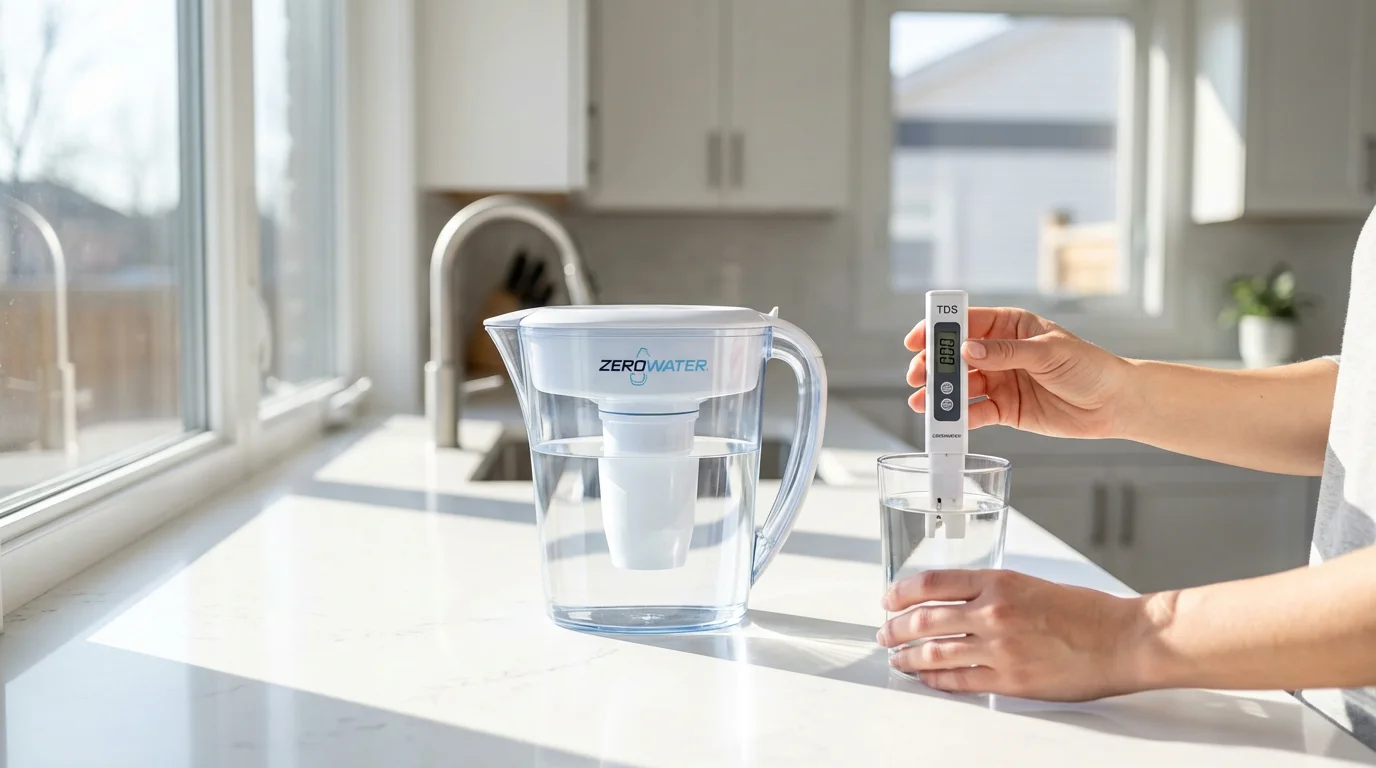
Best for Lead & Contaminants: ZeroWater 10-Cup Ready-Read
If your goal is to strip the water of absolutely everything—minerals, salts, metals, and runoff—ZeroWater is the heavy hitter. It uses a 5-stage ion exchange filter that targets Total Dissolved Solids (TDS).
The pitcher comes with a TDS meter. Tap water usually reads between 50 and 300 ppm (parts per million). ZeroWater brings this reading to strictly 000. The taste is distinct: crisp, slightly acidic, and very “empty.”
The Catch: The filter life is entirely dependent on your local water quality. If you have “hard” water (high mineral content), the filter will clog and die very quickly—sometimes in as little as two weeks. When the filter expires, the water will suddenly smell like fish (a result of the ion exchange resin releasing trapped compounds).
- The Good: Unmatched removal of solids; comes with a free water quality meter; NSF certified for lead and chromium.
- The Bad: Filters are expensive and may have a very short lifespan in hard-water areas.
- Advice: Test your tap water with a TDS meter before committing to this ecosystem. If your tap water is over 300 ppm, this will become very expensive to maintain.
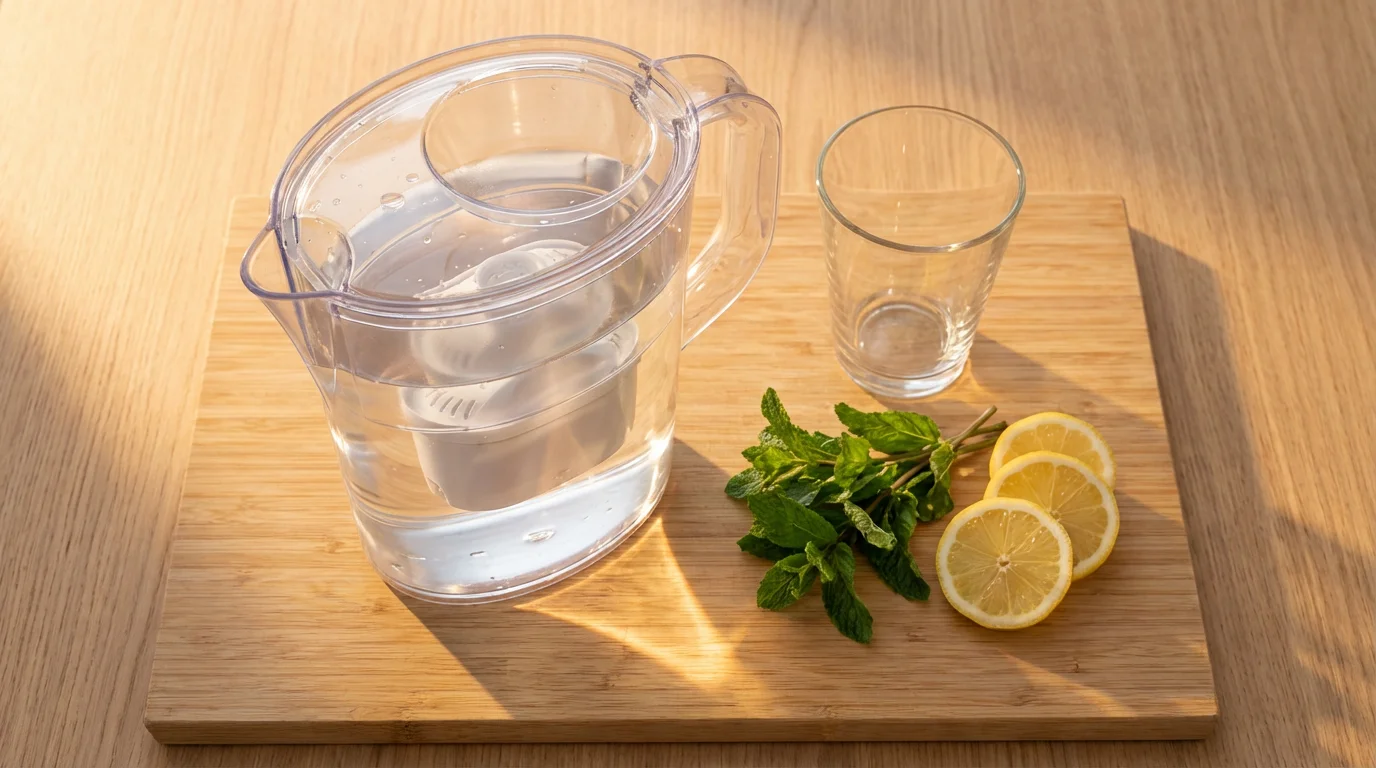
Best Budget Pick: PUR Plus 7-Cup
If you have a smaller kitchen or a tighter budget, the PUR Plus allows you to access high-level filtration without the bulk of the larger Brita units. While PUR filters are notoriously slow, they are highly effective.
If you are furnishing a smaller space, deciding between electric vs stovetop kettles and other compact gear is just as vital as choosing the right-sized water pitcher.
The PUR Plus filter is NSF certified to reduce lead and other heavy metals, placing it a tier above generic store-brand filters or standard Brita white filters. The 7-cup size is compact enough for apartment fridges or dorm rooms. According to Consumer Reports, PUR filters consistently rank highly for flavor improvement and contaminant reduction, often outperforming pricier competitors in lab tests.
Trade-off: The physical design of PUR pitchers can feel a bit more brittle than Brita, and the lid fit isn’t always perfect. You must ensure the filter is twisted and locked in tightly, or unfiltered water will leak through.
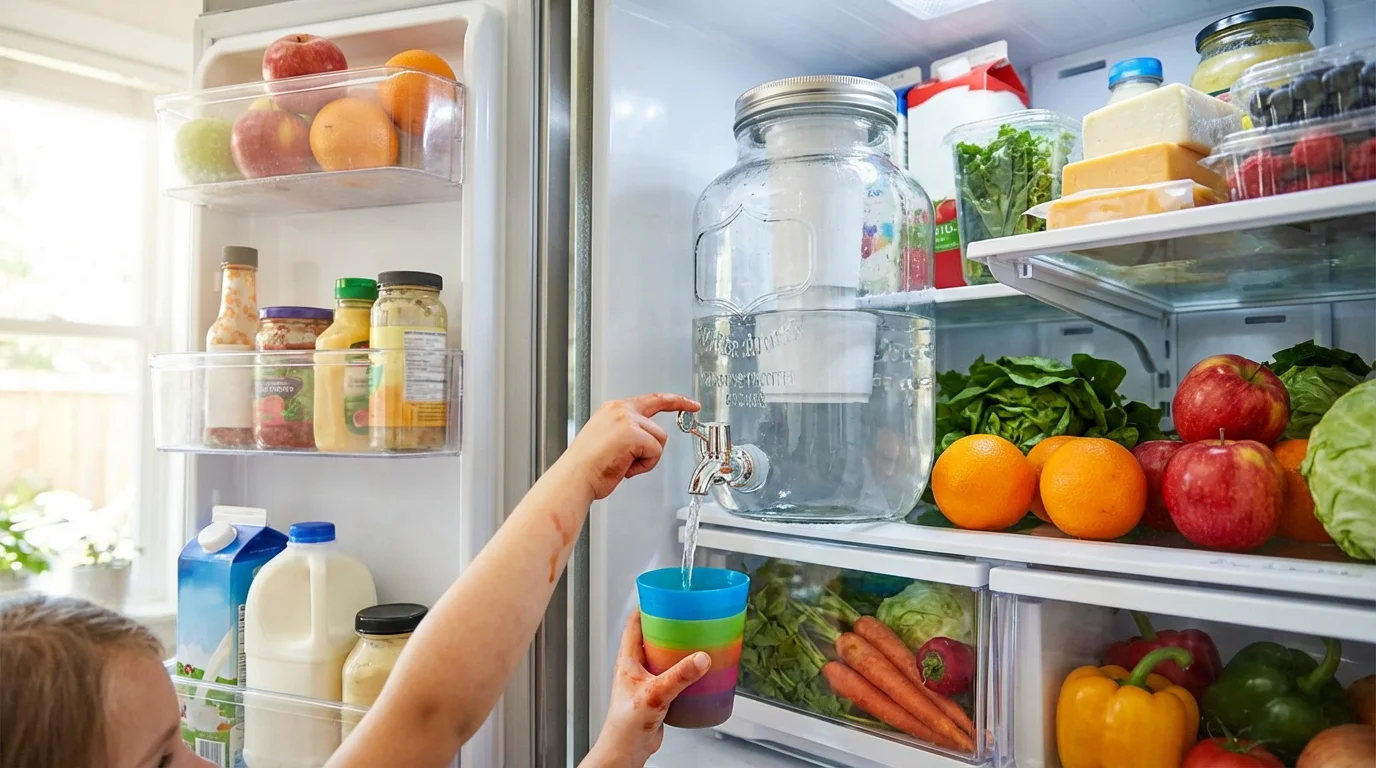
Best for Families: The Dispenser Solution
If you have a household of four or more, a standard 10-cup pitcher is a nightmare. You will fill it, someone will drain it to fill a pasta pot, and the next person is left with nothing. You need a dispenser.
Large-capacity dispensers are also the perfect companion for a countertop ice maker, ensuring your ice cubes are crystal clear and free of off-flavors.
The Brita Ultramax holds 27 cups (1.7 gallons) and sits on a shelf rather than in the door. It utilizes the same Elite filters recommended above, ensuring lead removal and long intervals between replacements. The spigot allows kids to get water easily without lifting a heavy pitcher.
Practical Tip: Measure your fridge shelf height before buying. While the Ultramax is efficient, it requires a dedicated footprint on a main shelf.

The Hidden Costs: Filter Replacements
The price of the pitcher is just the entry fee. The real cost lies in the replacements over one to three years. Many consumers buy a cheap pitcher only to find the filters are proprietary and expensive.
Understanding how to spot quality kitchen tools can help you avoid products with high hidden maintenance costs and low-quality materials.
Let’s break down the math based on average usage (approx. 240 gallons/year for a family):
- Standard Filters (Brita/Generic): Cost ~$6 each. Rated for 40 gallons. You need 6 per year. Total: ~$36/year. (Note: These usually do not remove lead).
- Brita Elite Filters: Cost ~$17 each. Rated for 120 gallons. You need 2 per year. Total: ~$34/year.
- ZeroWater Filters: Cost ~$15 each. Rated for roughly 20 gallons (in moderate hard water). You need 12 per year. Total: ~$180/year.
The Insight: The Brita Elite is actually cheaper to run than the “cheaper” standard filters because they last so much longer, and you get the benefit of lead filtration. ZeroWater is a premium experience with a premium price tag.
Key Buying Factors
Beyond certifications, keep these physical attributes in mind to ensure you actually use the product.
Capacity vs. Reality
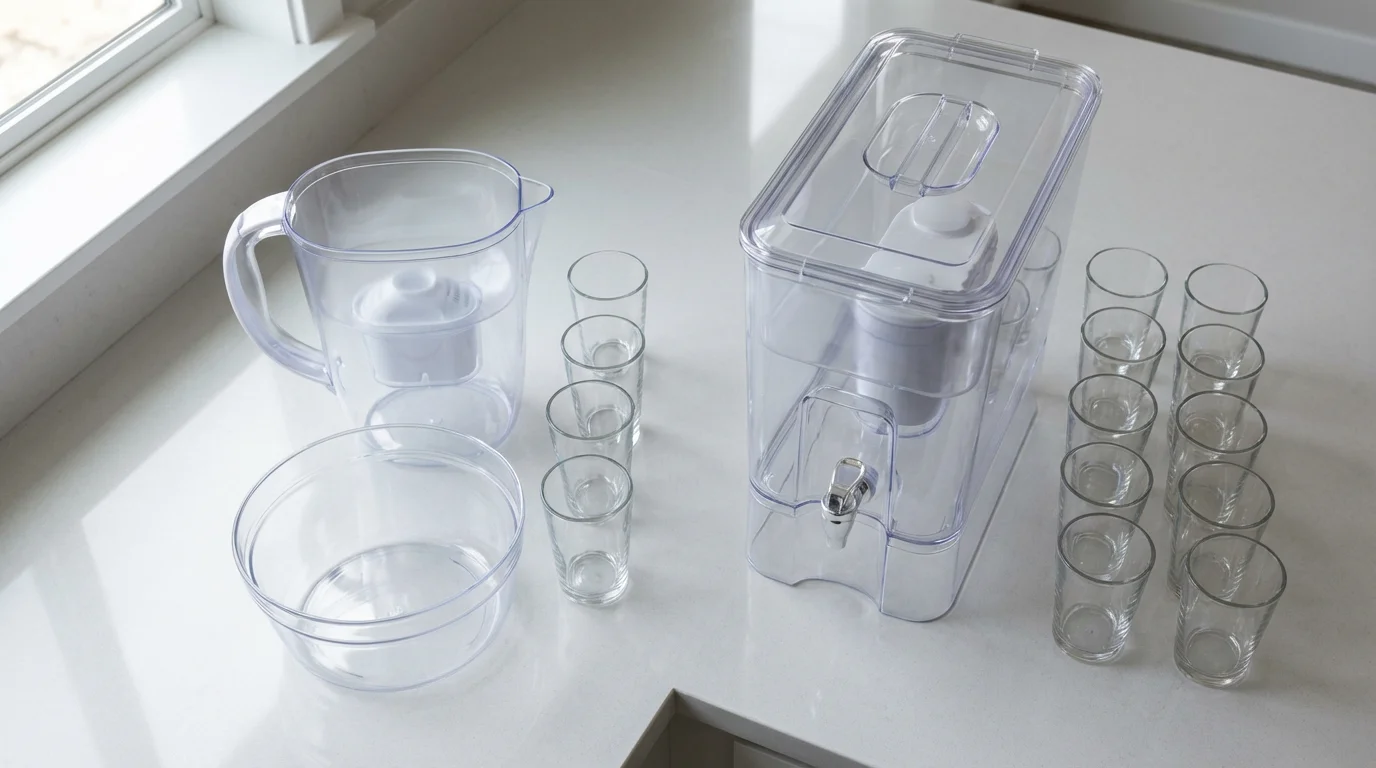
Manufacturers measure capacity in “cups,” but this is misleading. A “10-cup” pitcher usually holds about 5 cups of filtered water in the bottom and space for 5 cups of unfiltered water in the top reservoir. If you need 10 cups of water right now, you have to wait for the filtration process. If you cook often, size up to a dispenser.
Pour Speed
Some pitchers, like the LifeStraw Home, filter slowly but pour quickly due to a vented lid design. Others, like older Brita models, have a “flapper” on the spout that can get stuck or pour erratically. Look for a pitcher with a dedicated pouring spout that allows air to enter the reservoir for a smooth stream.
Material: Plastic vs. Glass
Most pitchers are made of BPA-free plastic. It’s light and durable. However, plastics can absorb odors over time and are prone to scratching, which can harbor bacteria. Glass pitchers, like the LifeStraw Home or the Larq, are beautiful and arguably more sanitary, but they are heavy. A full glass pitcher can weigh over 8 pounds—difficult for children or seniors to handle.
Frequently Asked Questions
Does a water filter pitcher remove fluoride?
Generally, no. Most standard activated carbon filters (like Brita and PUR) leave fluoride in the water. This is intentional, as fluoride is often added to municipal water for dental health. If you specifically want to remove fluoride, you need a specialized filter like ZeroWater or a reverse osmosis system.
Why is my water filter draining so slowly?
Slow filtration is often caused by air bubbles trapped inside the filter cartridge. Remove the filter and tap it gently against the counter or shake it. Soak it in cold water for 15 minutes to saturate the medium fully. If it’s still slow, sediment from your water may have clogged the mesh earlier than expected.
Can I wash my water pitcher in the dishwasher?
You should check the manual, but generally, the answer is no. The high heat of a dishwasher can warp the plastic reservoir or the lid, ruining the seal between the unfiltered and filtered water sections. Hand wash with mild soap and warm water, and never wash the filter cartridge itself.
Do these pitchers remove bacteria?
Most standard pitchers (Brita, PUR, ZeroWater) do not remove bacteria or viruses. They are designed for chemically treated municipal water. If you are using water from a well or a questionable source, you need a purifier like the LifeStraw or a system with a UV light.
Disclaimer: Product prices, features, and availability change frequently. Prices shown were accurate at time of writing but may have changed. We may earn a small commission from purchases made through links on this site, at no extra cost to you. Always verify current pricing and specifications on the retailer’s website before purchasing.


1 Comment