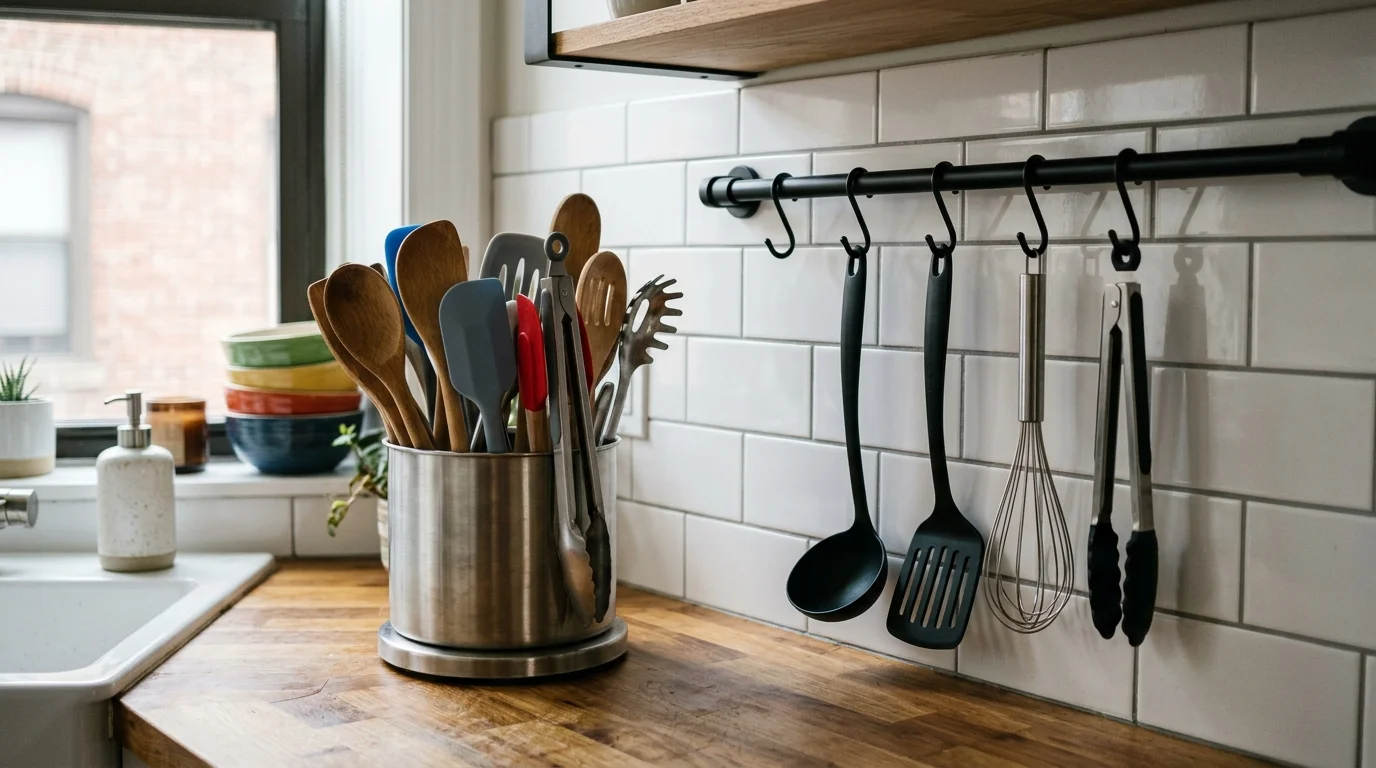
When rental leases forbid drilling into backsplash tile, your spatulas and ladles end up jammed inside a shallow drawer. Transitioning to dedicated vertical utensil storage immediately recovers that prime drawer space and eliminates cooking friction.
While design blogs praise hanging rails for saving prep surfaces, heavy-duty rotating carousels outperform wall systems in rentals by eliminating suction failures and grease-laden grout line maintenance entirely.
Choosing the right organizer requires evaluating your vertical cabinet clearance, backsplash tile texture, and daily cooking habits.
The Rental Kitchen Bottleneck: Jammed Drawers and Tile Preservation
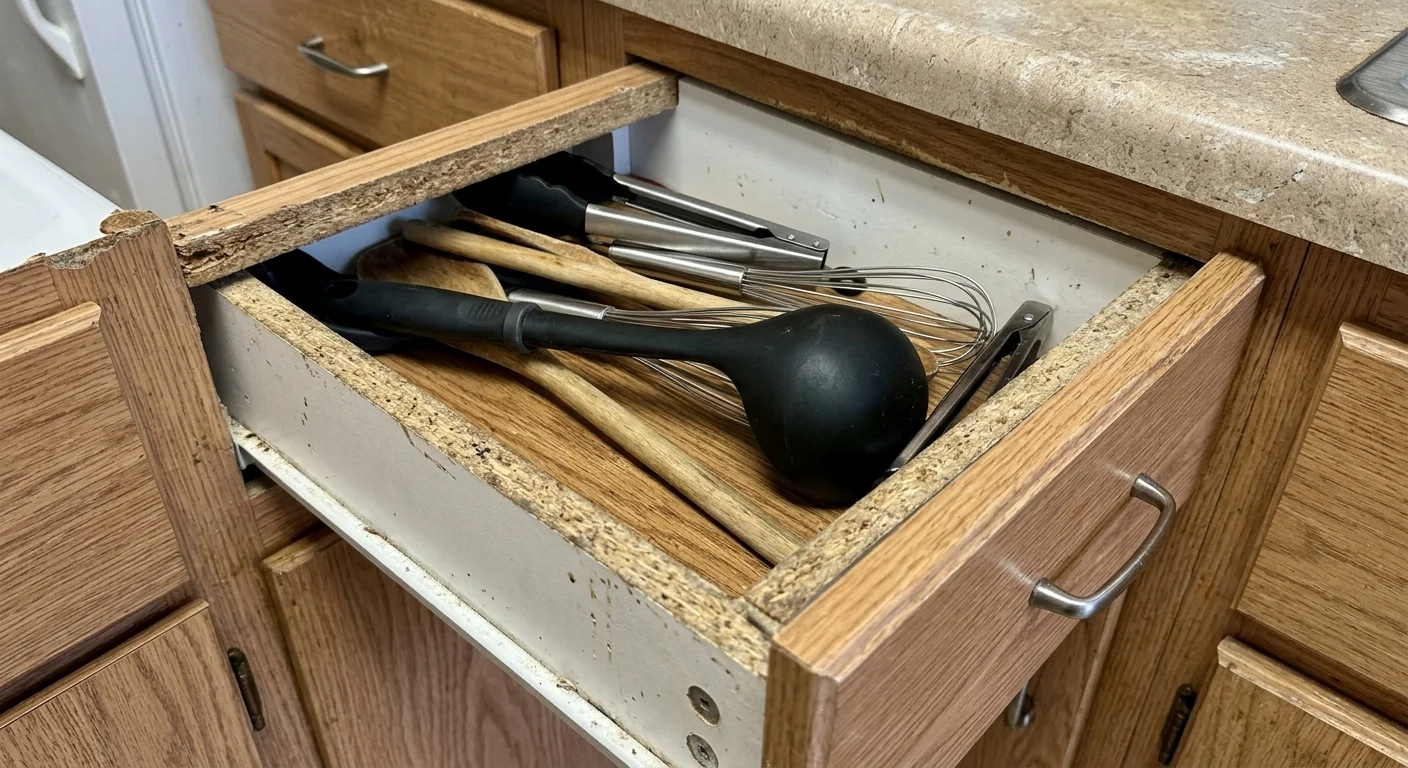
Most rental kitchens provide exactly one shallow drawer next to the stove. When you pack that drawer with bulky turners, tongs, and soup ladles, handles catch against the frame and jam the glide mechanism.
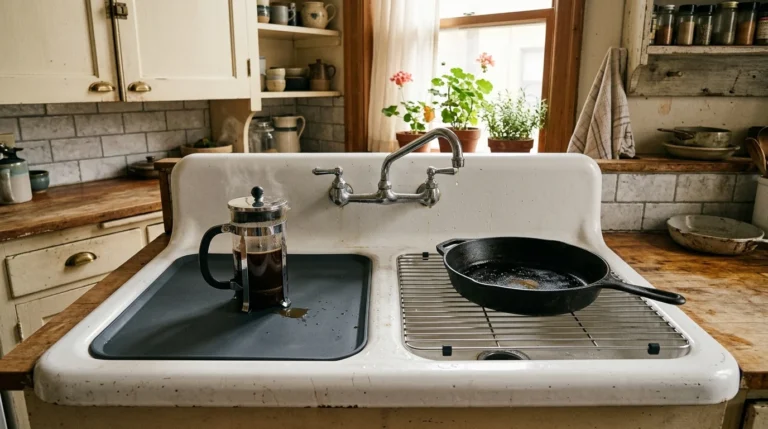
Much like protecting backsplash tile from drill damage, using protective sink mats or grids safeguards fragile apartment finishes from heavy pots and dropped utensils.
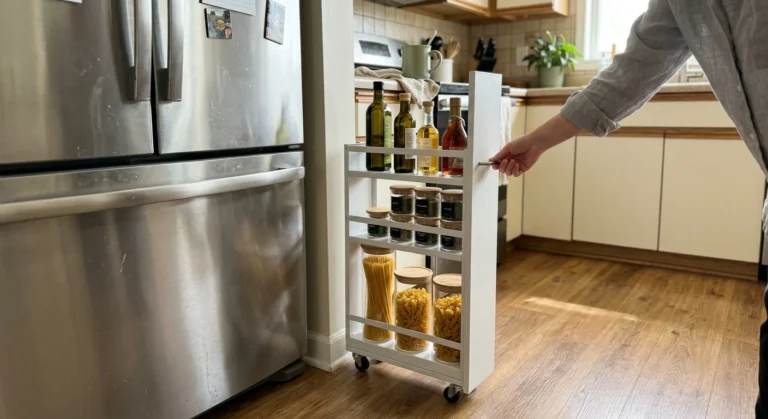
In tight quarters, pairing countertop storage with an ultra-slim rolling slide-out cart can help capture narrow unused gaps between appliances.
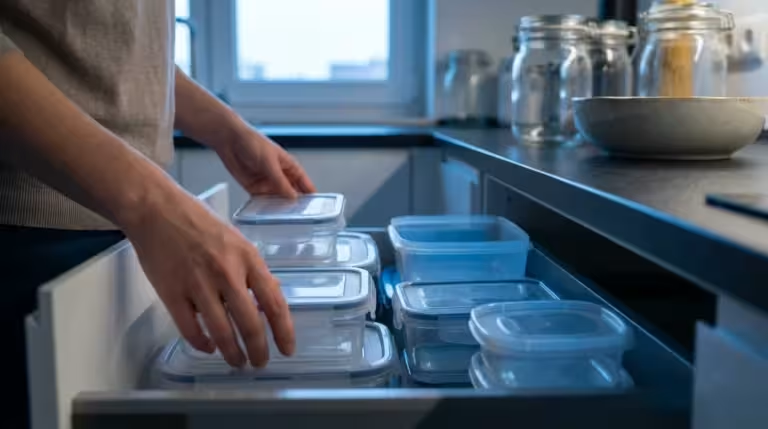
If vertical storage is not an option for every tool, optimizing drawer space with dedicated utensil drawer organizers can prevent awkward handle jams.
Forcing a jammed drawer open bends metal runners and strips screw holes in particle-board rental cabinets. You lose precious cooking time wrestling with tangled spatulas while oil smokes on the burner.
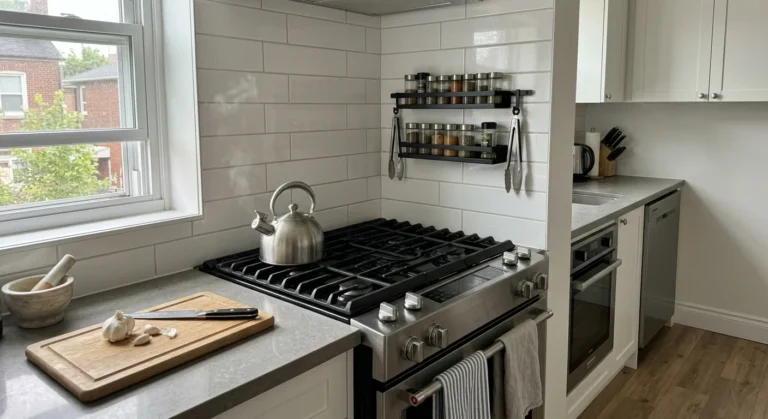
Standard rental agreements strictly penalize wall damage. Drilling mounting holes into glazed ceramic tile or decorative stone backsplashes forfeits your security deposit and risks fracturing brittle tiles.
Renters must target vertical dead space—unused storage areas, often in corners or above appliances—to keep long-handled gear accessible without modifying permanent rental surfaces.
The core challenge lies in balancing accessible reach with stable weight distribution. Your tools must remain stable during high-heat cooking sessions without tumbling onto active burners.
Rotating Utensil Carousels: Footprint, Capacity, and Mechanics
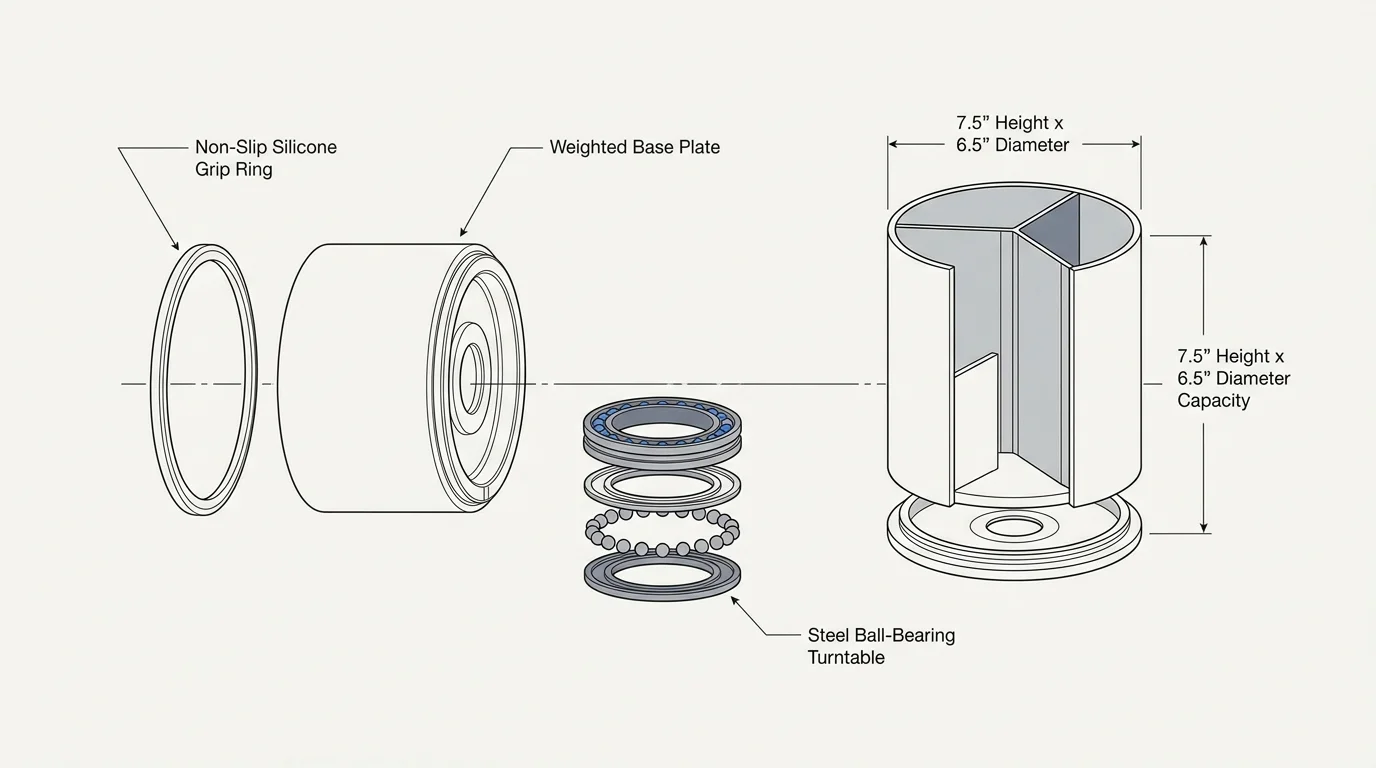
A spinning kitchen utensil holder relies on an internal steel ball-bearing turntable housed in a weighted base. This mechanism functions like a specialized lazy susan—a rotating tray that makes corner cabinet items accessible—adapted specifically for vertical tool retention.
When counter surface is in short supply, implementing dedicated cabinet organizers for pots and pans clears out lower shelves so you can tuck bulky cookware out of the way.
Modern carousels use divided internal chambers or dedicated perimeter hanging pegs. Units like the OXO Good Grips Stainless Steel Rotating Utensil Holder measure 7.5 inches tall by 6.5 inches wide, holding up to 16 standard utensils.
According to Wirecutter, weighted utensil holders prevent frustrating tip-overs when grabbing heavy spoons during active cooking.
The non-slip silicone base ring absorbs rotational inertia. When you flick the outer housing to locate a slotted spoon, the carousel glides smoothly without sliding across slick laminate or polished granite counters.
Integrated tool carousels, such as the Joseph Joseph Elevate Carousel, suspend tools from an elevated central spire. This prevents utensil heads from resting against pooled oil drops or residual cooking juices on your counter.
The primary drawback of any rotating carousel is counter consumption. Dedicating a 7-inch circle of countertop real estate reduces prep space in galley kitchens that offer fewer than 36 total inches of linear counter space.
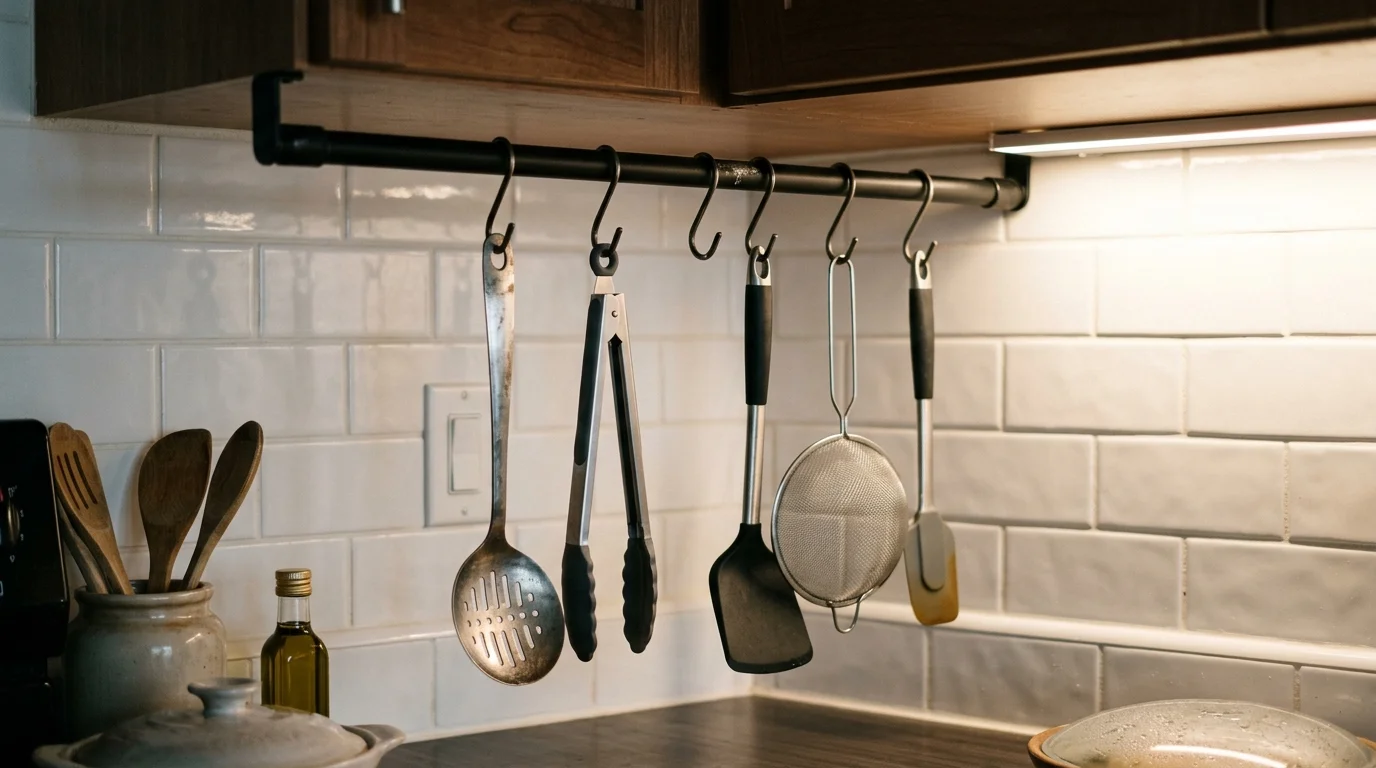
Tension Rails and Suction Bars: Wall-Mounted Space Efficiency
A no drill utensil hanging rail suspends your gear along the vertical backsplash wall. This floating configuration rescues counter surface area directly beside your cutting board or primary cooktop prep station.
For renters cooking directly over high heat, specialized heat-resistant drill-free storage racks offer a much safer alternative behind the range.
Manufacturers use two primary rental-friendly mounting technologies: heavy-duty silicone suction cups and spring-loaded vertical tension poles. Suction rails adhere to non-porous surfaces by displacing air through a mechanical lever latch.
Vertical tension bars wedge firmly between the upper cabinet underside and the countertop edge. These adjustable poles use internal steel springs to exert 15 to 25 pounds of outward pressure, holding horizontal accessory bars secure.
However, real-world rental conditions create mechanical vulnerabilities for wall rails. Backsplash tile texture dictates suction efficacy; uneven subway tiles, matte ceramic, and wide grout lines break airtight seals within weeks.
Cooking heat accelerates adhesive and vacuum failures. Steam billowing from boiling pasta pots softens suction silicone, causing loaded rails to collapse onto glass-top stoves without warning.
S-hooks also create physical clearance issues. When you lift a ladle off an unfastened hook in a hurry, the hook frequently slips off the rail and falls behind the range.
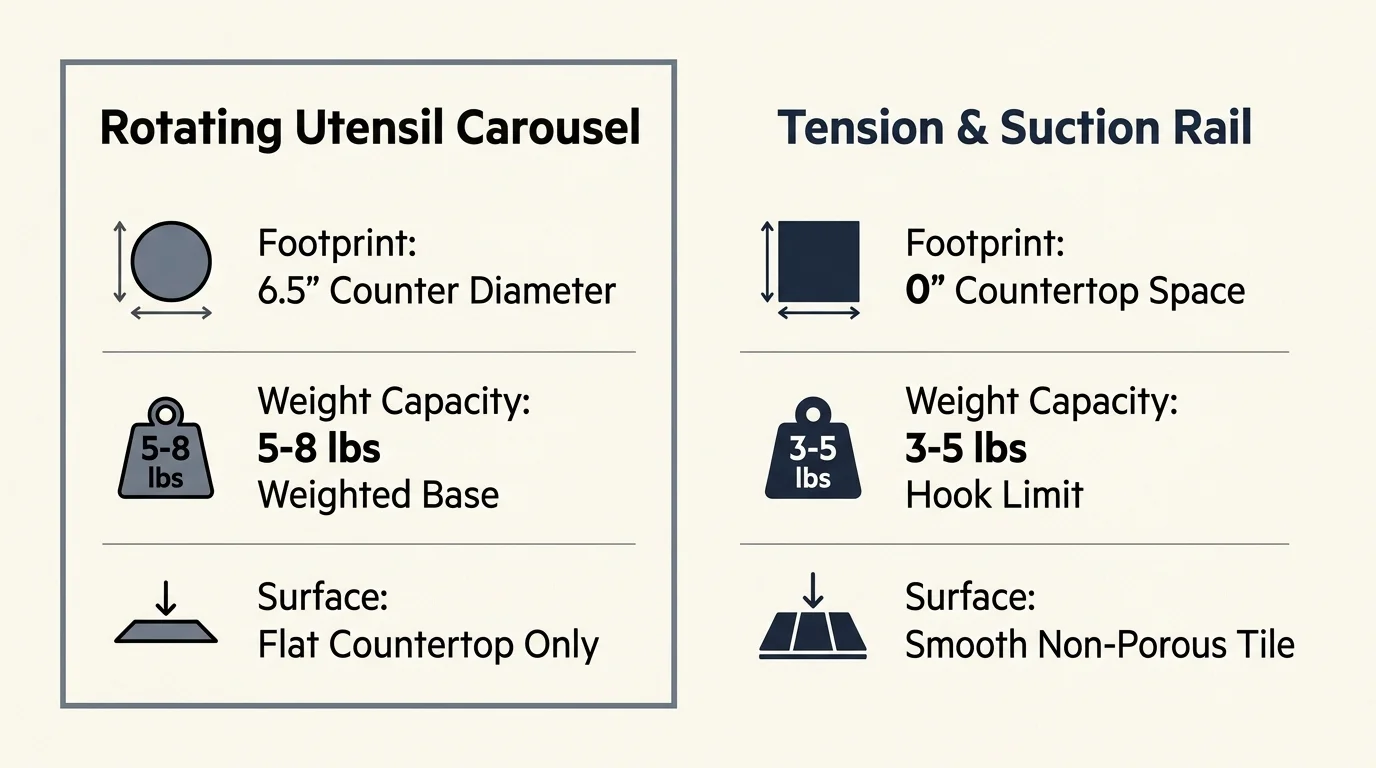
Head-to-Head Comparison: Load Limits, Clearances, and Surface Needs
Choosing between countertop carousels and backsplash rails comes down to surface compatibility and daily weight capacity. Each system addresses vertical storage through entirely different mechanical engineering principles.
Pairing your organizer with smart countertop storage solutions for small kitchens ensures your prep counters remain uncluttered regardless of apartment size.
As The Spruce highlights, keeping daily tools in immediate reach accelerates meal preparation while keeping perimeter counters clear.
Review the measurable performance metrics below to determine which storage system matches your apartment layout and daily tool inventory.
| Storage System | Standard Dimensions | Weight Capacity | Surface Requirements | Installation Time | Average Cost |
|---|---|---|---|---|---|
| OXO Good Grips Rotating Carousel | 6.5 in Dia. x 7.5 in H | 8.0 lbs balanced | Any flat counter surface | 0 minutes (Ready to use) | $27.99 |
| Joseph Joseph Elevate Tool Carousel | 9.0 in Dia. x 14.0 in H | 5.5 lbs dedicated tools | Flat countertop or island | 1 minute (Assemble spindle) | $39.99 |
| KES No-Drill Suction Backsplash Bar | 16.0 in L x 1.5 in D | 6.0 lbs static limit | Smooth, glazed ceramic tile | 20 minutes (Clean and cure) | $21.99 |
| Tension Backsplash Pole System | 17.0–28.0 in H adjustable | 12.0 lbs total frame | Solid upper cabinet base | 10 minutes (Tension set) | $34.50 |
While tension poles carry substantial static loads, their rigid vertical bars crowd narrow prep zones. They can easily obstruct access to under-cabinet electrical outlets.
Countertop carousels boast universal placement stability. They operate reliably regardless of whether your rental has historic plaster, peel-and-stick vinyl tiles, or deeply grooved brick veneer backsplashes.
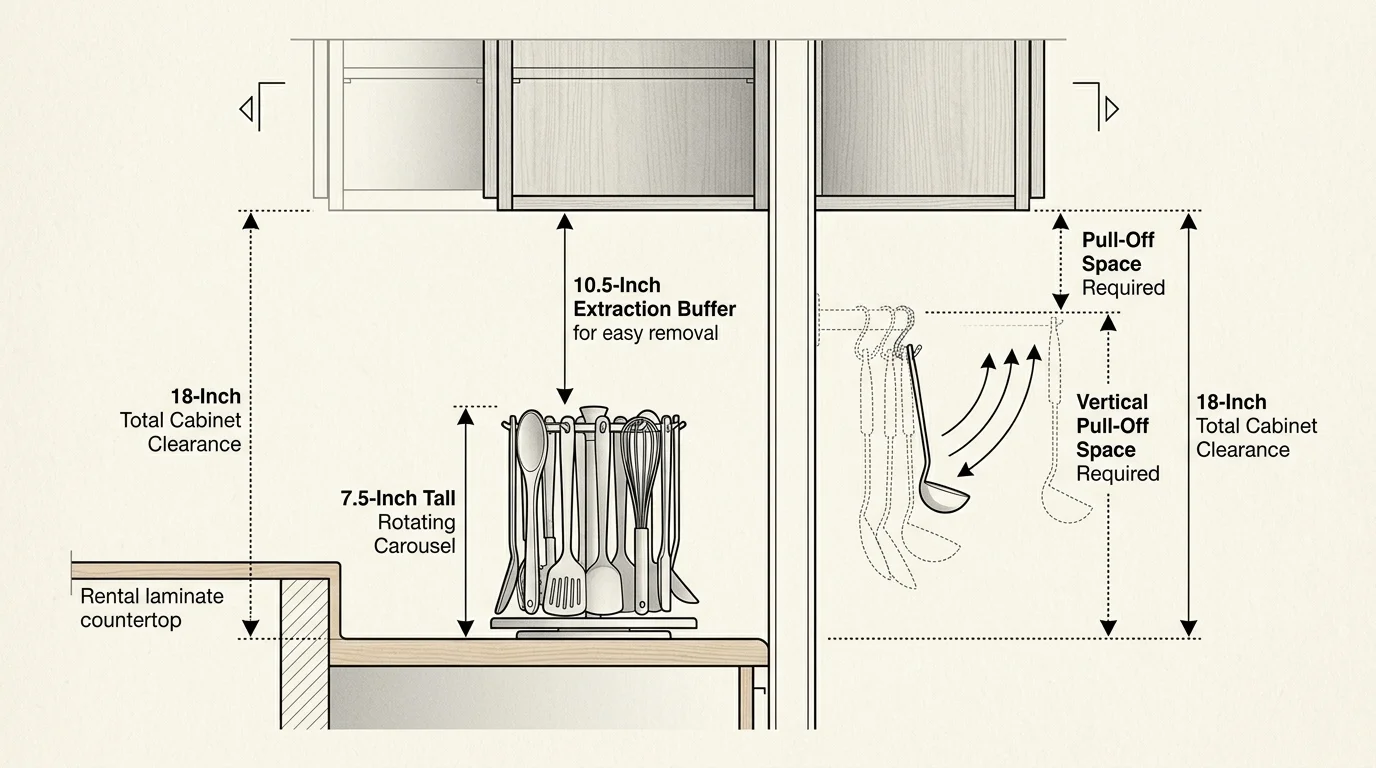
A Worked Rental Scenario: 18-Inch Counter Clearance and 14 Utensils
Let us analyze a concrete apartment kitchen scenario to measure functional clearance and real-world costs. Assume your rental kitchen features 18.0 inches of vertical clearance between the laminate countertop and standard upper oak cabinets.
If your upper cabinetry feels equally congested, comparing pull-down shelf racks and tiered risers can dramatically improve access to higher storage without damaging cabinet walls.
You own 14 everyday cooking tools: two silicone spatulas, three wooden spoons, two pairs of locking tongs, a soup ladle, a slotted turner, a wire whisk, a spider strainer, a fish spatula, and two tasting spoons.
These 14 items weigh a combined 3.85 pounds. The longest utensil in your collection is a 14.0-inch stainless steel wok turner.
Scenario Option A implements an OXO Stainless Steel Rotating Utensil Holder priced at $27.99. The 6.5-inch diameter base consumes 33.18 square inches of counter space out of your 450-square-inch prep area, representing just 7.4 percent of the surface.
Your 14.0-inch wok turner rests comfortably inside the 7.5-inch tall cylinder, extending 6.5 inches above the rim. This leaves 4.0 inches of open vertical clearance beneath your 18.0-inch upper cabinet line, allowing swift, unrestricted removal.
Scenario Option B implements a 16.0-inch suction-mounted backsplash rail with S-hooks priced at $22.50. The rail requires mounting 2.5 inches below the cabinet line to avoid grout seam interference.
The hanging rail and S-hook drop 3.5 inches from the top mount. When you hang the 14.0-inch wok turner, its handle extends 17.5 inches down, resting flush against your counter surface and creating clatter every time you prep ingredients.
Option A delivers immediate functionality without spatial friction. Option B fails because standard rental vertical backsplash spans are simply too tight for long-handled hanging tools.
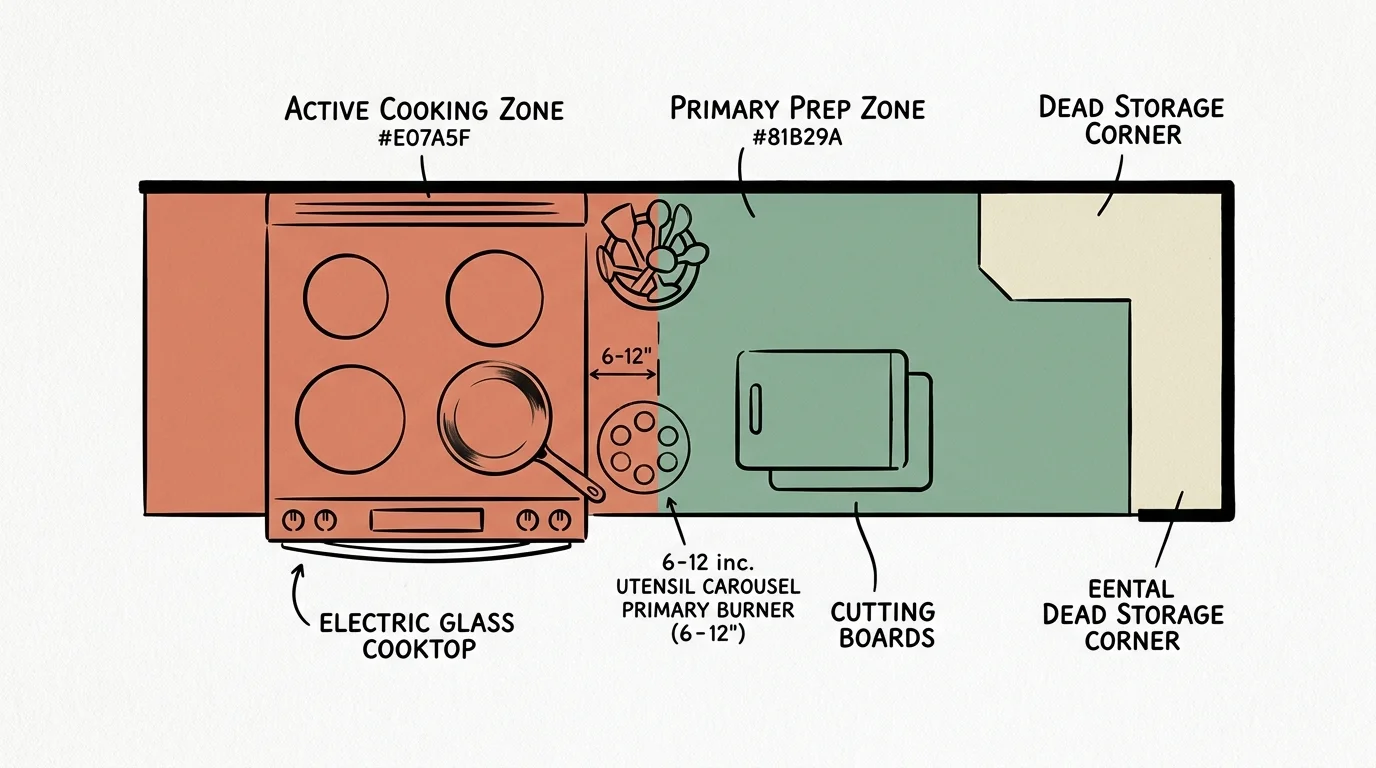
Workflow Zones: Placing Utensils for Rapid Meal Preparation
To organize cooking utensils counter space efficiently, arrange tools based on functional kitchen workflow zones. Zone 1 represents your primary cooktop surface; Zone 2 encompasses your cutting board prep station; Zone 3 manages the dish cleaning basin.
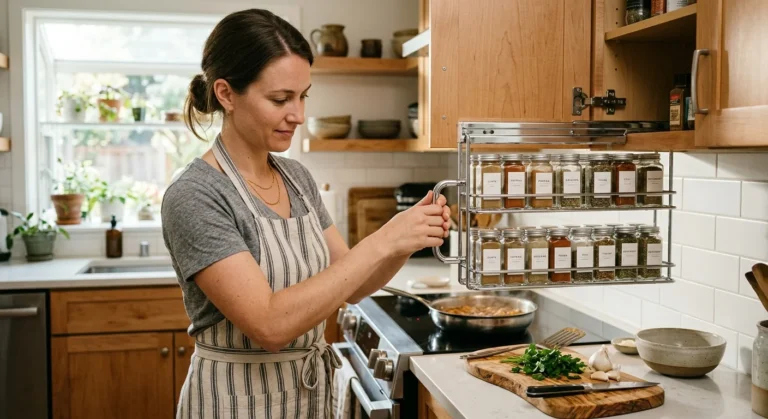
Complementing your carousel with practical small-space spice rack options keeps your seasoning essentials immediately adjacent to your stir-fry tools.
Around the cleanup area, utilizing an over-the-sink dish drying rack allows washed spatulas and spoons to drip dry without taking up valuable prep counter real estate.
When setting up your prep zone, pairing utensil storage with safe knife storage solutions ensures your most critical cutting tools stay protected and within arm’s reach.
Position your primary utensil storage on the dominant-hand side of your stovetop. If you are right-handed, place the rotating carousel 4 to 6 inches to the right of the front heating element.
“Renter-friendly organization succeeds when you prioritize zero-damage hardware over aspirational wall displays.” — Rental Kitchen Specialist
This layout lets you grab tongs or turners in half a second without crossing your body over open flames or bubbling pots. Keep handles facing outward toward your natural reaching path.
For auxiliary equipment, install a pull-out organizer—a drawer or shelf that slides out for easy access—inside an adjacent base cabinet. You can also utilize modular components, meaning pieces that can be combined and configured different ways, to store seasonal gear.
Never mount tension rails directly above a boiling kettle or deep frying pan. Rising aerosolized oils and hot water vapor degrade suction seals while leaving tools coated in stubborn, sticky grime.
Cleaning and Grease Resistance: Daily Upkeep in High-Heat Zones
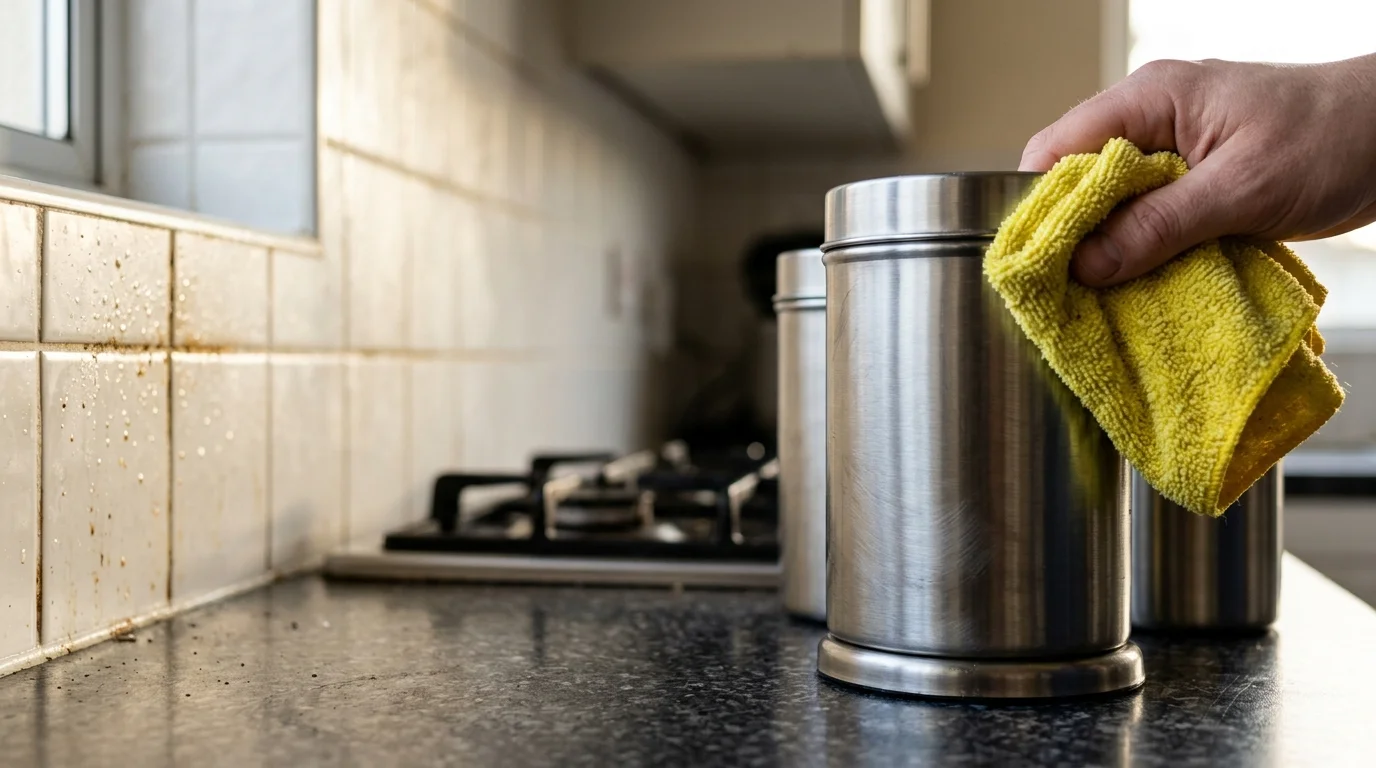
Any utensil organizer stationed near a cooktop gathers airborne grease droplets and wandering flour dust. Rental ventilation hoods rarely exhaust air outside, blowing grease mist directly across nearby walls and countertops.
Cleaning a rotating utensil carousel requires approximately two minutes. You lift the entire unit by its central rim, slide the tools into a temporary wash basin, and drop the plastic inner divider into your dishwasher.
Wiping the smooth stainless steel exterior cylinder with warm water and dish soap restores its mirror finish instantly. Ball-bearing plates enclosed within sealed rubber capsules stay protected from water damage during standard sink cleanups.
Maintaining a wall-mounted rail demands far more labor. You must unhook every individual spatula, reach behind the bar to scrub greasy backsplash grout, and degrease each tiny S-hook separately.
Harsh degreasers also seep behind suction cups, degrading the silicone grip over time. This chemical wear increases the risk of unexpected structural failures during busy weeknight dinners.
Decluttering Before Mounting: The Essential Utensil Audit
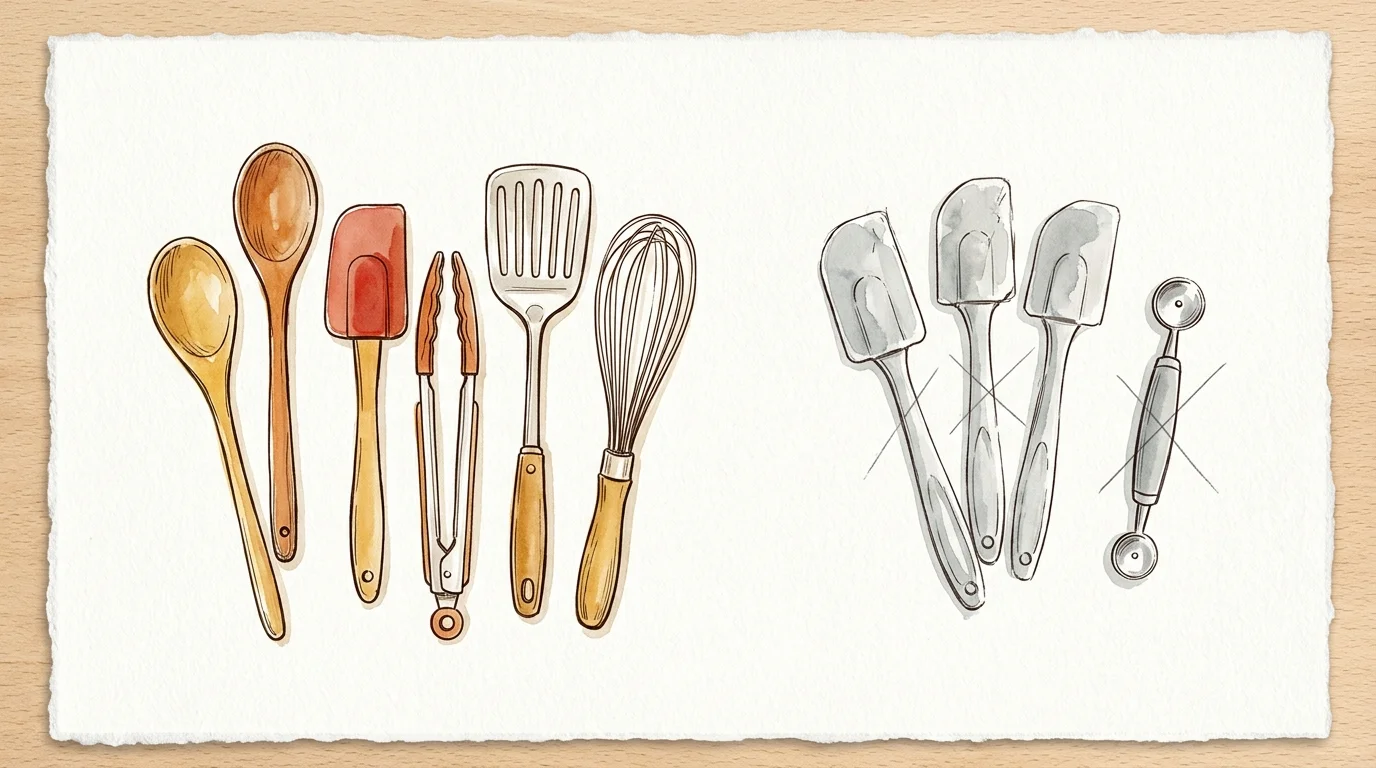
Renter friendly spatula storage works effectively only when you eliminate unnecessary duplicates before reorganizing. Most households use the exact same six tools for 90 percent of their daily meals.
According to Real Simple, discarding duplicate tools is the single fastest way to restore sanity to overcrowded kitchen stations.
Empty your current utensil drawer onto your dining table. Sort all items into three categories: daily essentials, specialized tools, and obsolete duplicates.
- Daily Essentials: One silicone spatula, one wooden spoon, one heat-safe turner, one pair of locking tongs, and one soup ladle.
- Specialized Tools: Meat thermometers, peelers, melon ballers, pastry brushes, and microplane graters.
- Obsolete Duplicates: Warped plastic turners, stained scrapers, and mismatched promotional wooden spoons.
Donate duplicate items immediately. Transfer specialized baking tools into a pantry bin using a shelf riser—a mini shelf that creates two levels of storage in one space—to double your interior vertical shelf area.
If you lack drawer space for specialized tools, install a door-mounted rack—storage that hangs on the inside of cabinet doors—to stow small gear neatly out of sight.
You can also use stackable clear bins, which are designed to safely pile on top of each other, to hold seasonal tools. When stocking food ingredients nearby, apply FIFO—first in, first out, a method of rotating food so oldest gets used first—to ensure dry pantry goods stay fresh.
Frequently Asked Questions
Do suction hanging rails ruin rental kitchen backsplashes?
Mechanical suction cups do not ruin glazed ceramic backsplashes because they use air pressure rather than permanent adhesive. However, adhesive-backed mounting tapes can strip paint, pull off laminate coatings, or leave behind stubborn glue residues that jeopardize your rental deposit.
Can a rotating utensil carousel tip over when full of heavy tools?
Quality carousels do not tip over if they feature an integrated, cast-iron weighted base. Models like the OXO Good Grips feature a low center of gravity and wide non-skid footprints that easily counter the leverage of long steel ladles.
How do you secure a tension organizer without damaging rental upper cabinets?
Place thin silicone furniture pads or non-skid rubber shims between the tension pole footings and your cabinet undersides. This step distributes upward pressure evenly across cabinet seams and prevents scratches on finished wood veneers.
How much counter space does a spinning kitchen utensil holder require?
A standard rotating utensil carousel demands a circular footprint measuring between 6.5 and 9.0 inches in diameter. Position the unit in a rear counter corner near the stove to utilize dead space without encroaching on your primary cutting board zone.
Disclaimer: Product prices and availability change frequently. Prices shown were accurate at time of writing but may have changed. We may earn a small commission from purchases made through links on this site, at no extra cost to you. Always measure your space before purchasing organizers to ensure proper fit.