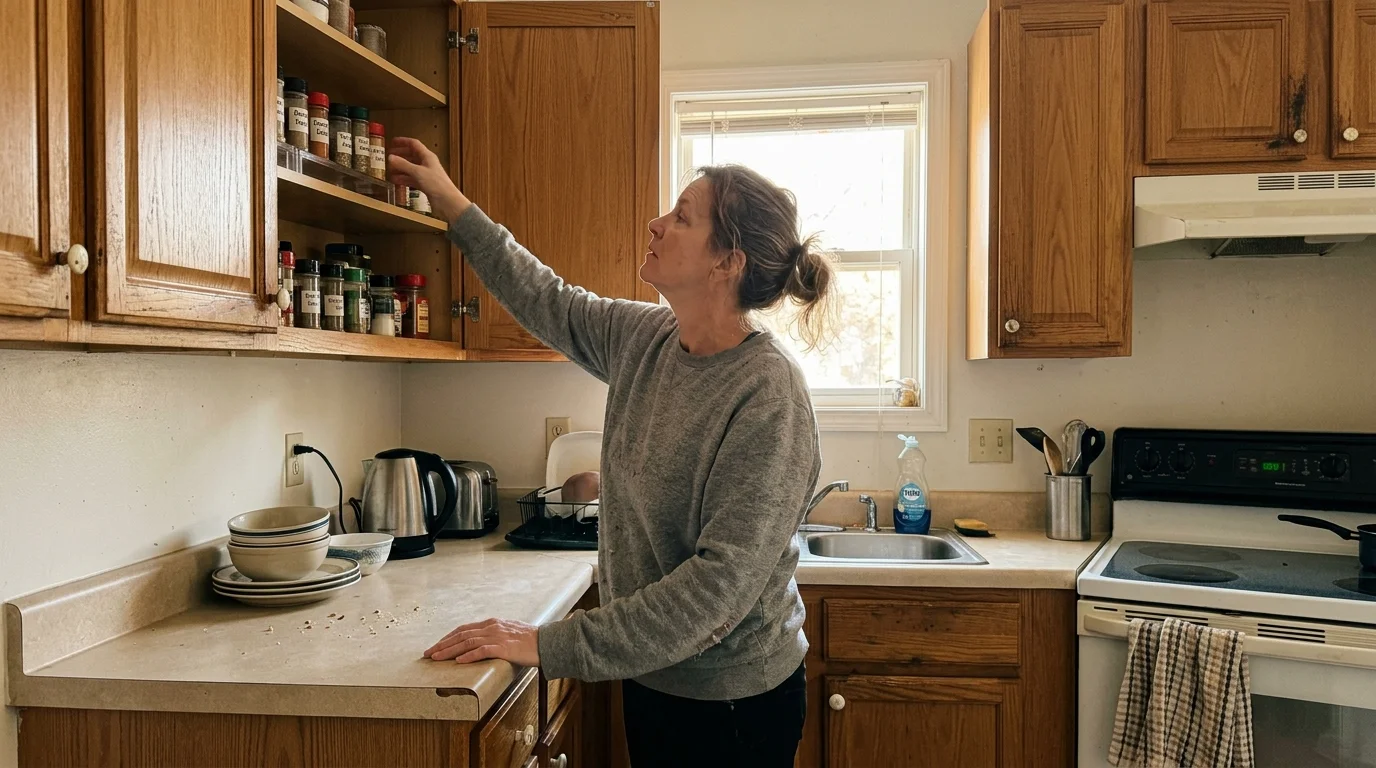
If you stand at a standard 36-inch countertop and peer into a 12-inch-deep upper cupboard, third-row spice labels vanish. You waste precious minutes rummaging through duplicate jars while your pan scorches on the stove.
Home cooks looking to expand their storage without major modifications can also pair their shelves with over-door organizers for pantry and cabinet doors to clear interior shelf depth.
Before investing in new organizers, decluttering your kitchen ensures you only allocate prime cabinet real estate to active ingredients.
Most guides recommend tiered stadium risers, but risers actually degrade label legibility in wall cabinets by lifting rear jars above eye level.
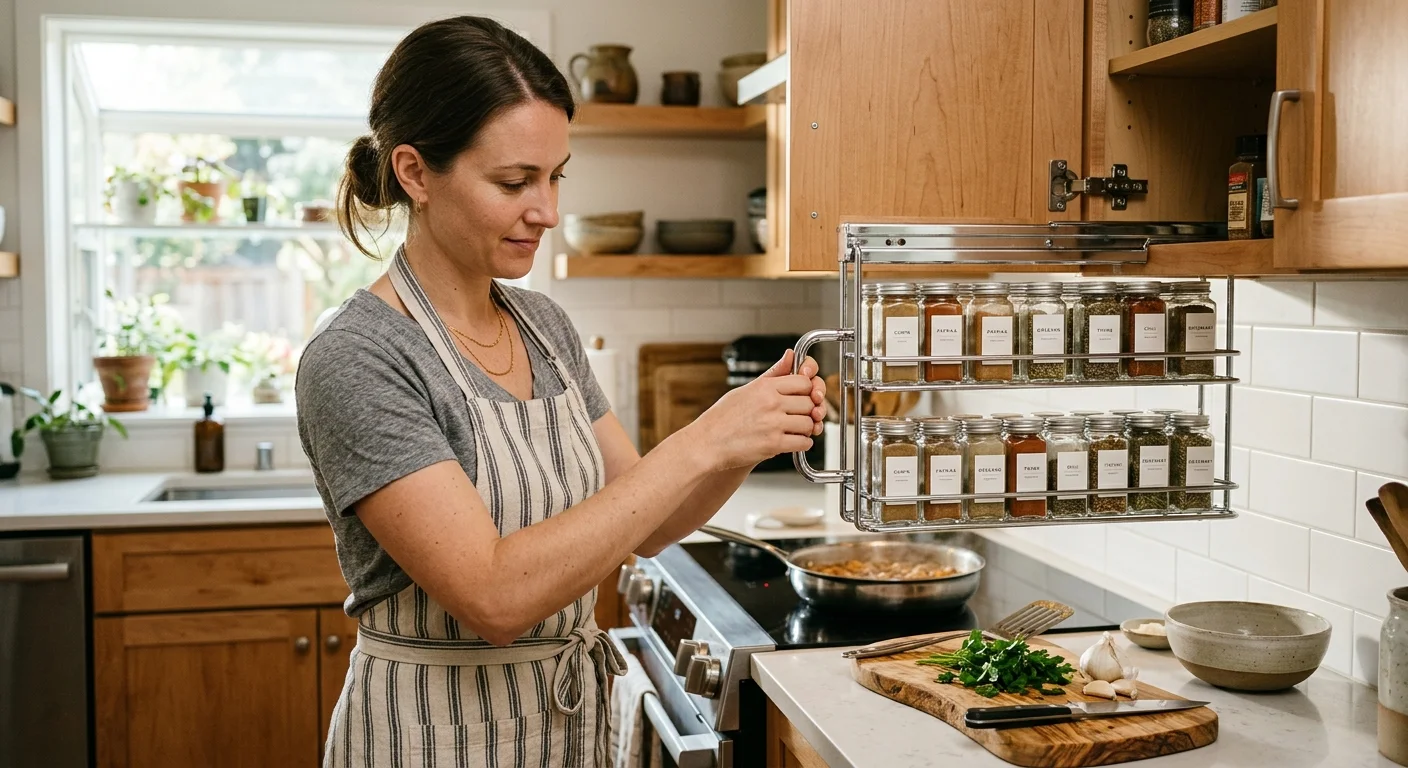
Two-tier pull-down shelf racks solve this sightline geometry by lowering hidden jars 10 inches down and out into your direct line of vision. Here is how both systems compare when visibility determines cooking speed.
Sightline Geometry: Why 12-Inch Depth Destroys Spice Legibility
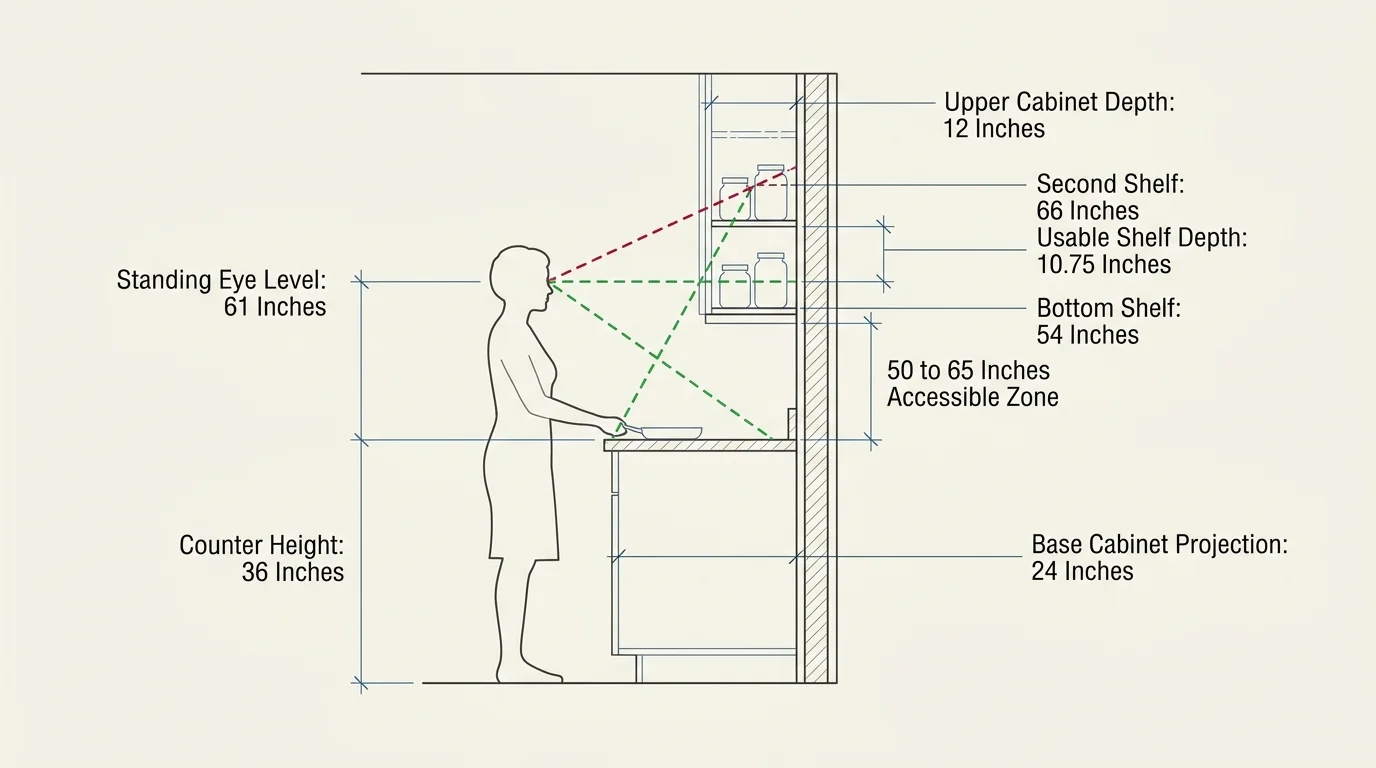
Standard builder-grade wall cabinets measure 12 inches deep externally, leaving roughly 10.75 inches of usable interior shelf depth. Standard base counters sit 36 inches off the floor and project 24 inches outward.
When wall cabinets become too crowded to maintain clear sightlines, applying practical pantry organization ideas allows you to shift backup bulk goods elsewhere.
When you stand at the counter, your torso remains 24 inches away from the wall. This horizontal offset creates an acute upward viewing angle toward upper cabinet shelves.
According to storage design guidelines from The Spruce, accessible reach zones require unobstructed sightlines between 50 and 65 inches from the finished floor.
A 5-foot-6 cook has an average standing eye level of 61 inches. The bottom shelf of an upper cabinet typically rests at 54 inches, while the second shelf sits at 66 inches.
Placing an upper cabinet spice organizer on that second shelf pushes the back row above eye level. You end up looking at jar bottoms rather than printed labels.
A classic shelf riser—a mini shelf that creates two levels of storage in one space—elevates back containers. However, this vertical elevation compounds your neck strain in a deep upper cupboard.
Unused vertical space above spice jars quickly turns into dead space—unused storage areas, often in corners or above appliances. Yet filling that height with elevated tiers creates a severe visibility barrier.
Tiered Stadium Risers: Depth and Stepped Dimensions
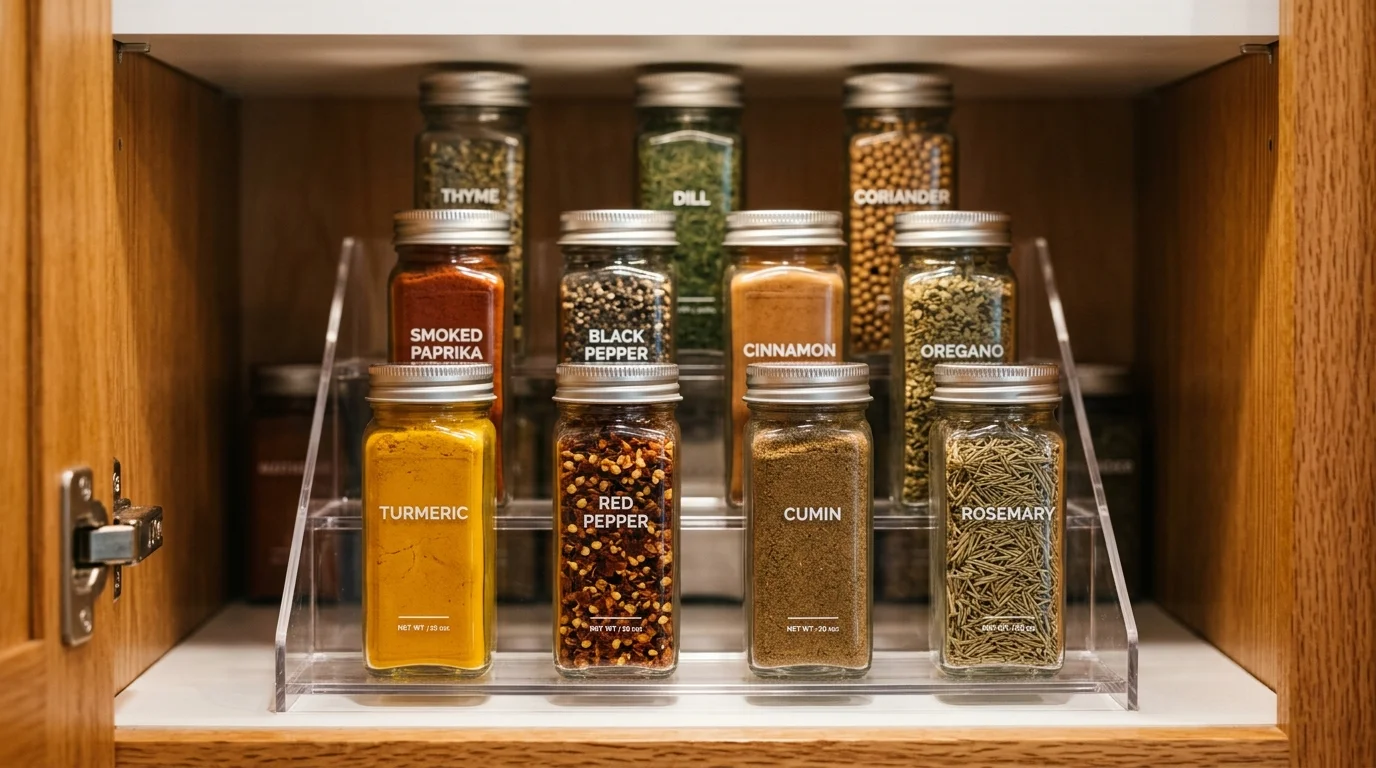
Stepped acrylic stadium risers arrange items across three or four shallow terraces. They rely on gravity and staggered elevation to expose container tops.
This rotating habit works on the same inventory principles as using dedicated can organizers and racks to stop older packaged goods from expiring out of sight.
Pairing stepped risers with consistent spice jar organization ensures uniform bottle heights and preserved spice potency.
Most commercial acrylic models measure 9.5 to 10.5 inches deep to fit standard cabinets. A typical 3-tier unit features a stepped spice riser depth of 2.75 to 3.0 inches per step.
Each step provides a vertical rise between 1.25 and 1.5 inches. This lift reveals the top 25 percent of a standard 4.25-inch commercial spice bottle.
If you position this unit on the bottom shelf at 54 inches, the front row rests at 54 inches. The third tier rests at 57 inches, keeping containers below average eye height.
Problems multiply when you load a riser on the second interior shelf at 66 inches. The third tier elevates jar bases to 69 inches, well above your natural focal point.
At 69 inches, you cannot read front labels without standing on your tiptoes. You must apply top-lid labels to identify spices, rendering side brand text useless.
Stadium risers do support modular organization, meaning pieces that can be combined and configured different ways. You can place them side by side in wider cabinets.
They also facilitate FIFO—first in, first out, a method of rotating food so oldest gets used first. You simply rotate older jars forward on the bottom step.
Risers remain stackable only when paired with identical interlocking units; stackable items are designed to safely pile on top of each other. However, double-stacking in 12-inch cabinets blocks vertical clearance.
Pull-Down Shelf Racks: Mechanical Drop and Clearances
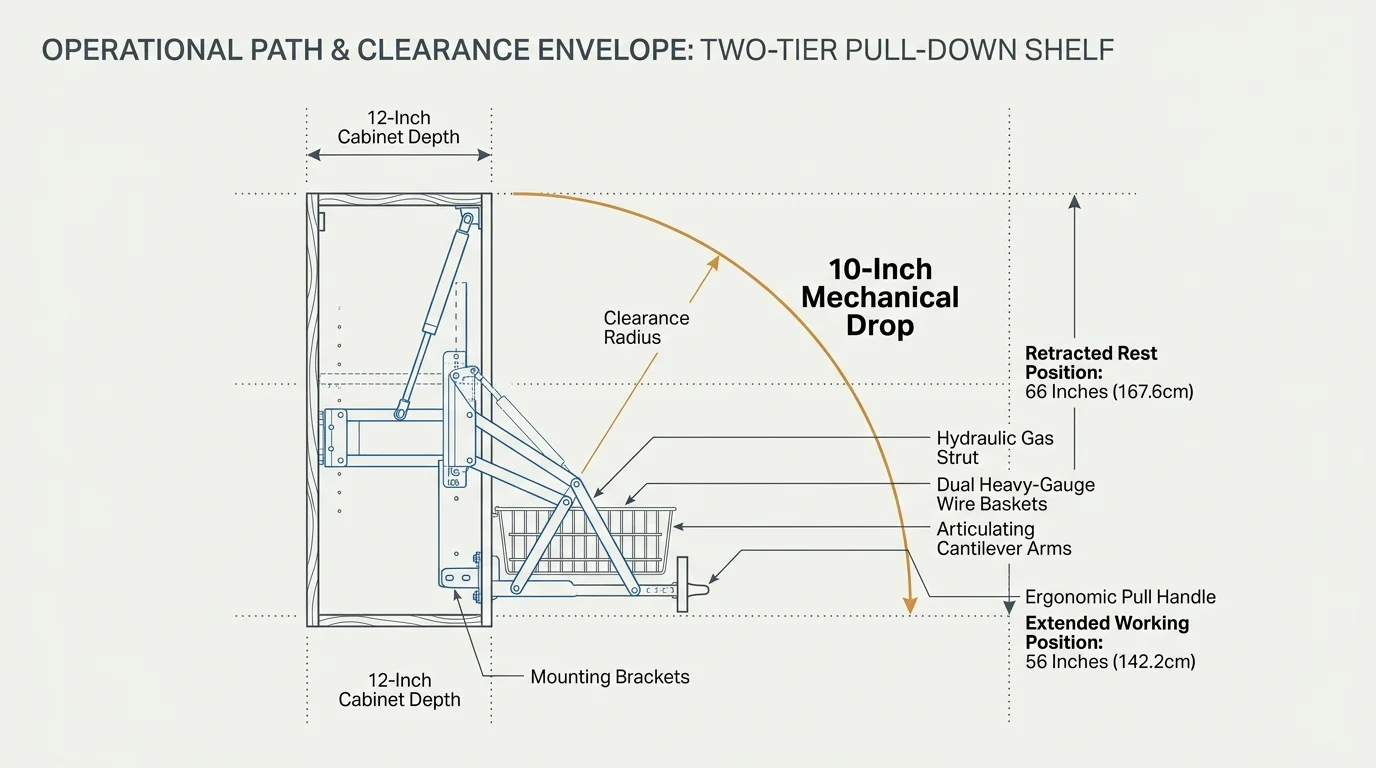
A pull down shelf for small kitchen cupboards substitutes static elevation with dynamic mechanical motion. Gas-assisted struts or coil springs guide a two-tier wire basket down toward you.
While drop-down mechanisms conquer upper cupboards, adding specialized cabinet organizers for pots and pans creates similar ergonomic access inside deep base cabinets.
Much like installing lazy Susans for corner cabinets to recover blind corners, pull-down hardware reclaims otherwise unreachable upper cabinet territory.
This mechanism operates as a specialized pull-out organizer—a drawer or shelf that slides out for easy access. Instead of sliding horizontally, it arcs outward and downward over the countertop.
Commercial units, like the Rev-A-Shelf 548 Series, require a minimum interior cabinet depth of 10.25 inches. They fit inside typical 12-inch external frames with zero millimeter overhang.
When you pull the ergonomic center handle, the entire basket travels 10 inches downward and 9 inches forward. This mechanical drop eliminates the viewing obstruction created by deep cabinet walls.
The top tier drops from an inaccessible 68 inches down to a comfortable 58 inches. That elevation sits 3 inches below standard eye level, directly in your primary field of view.
Testing from Wirecutter highlights that bringing high items into direct physical reach reduces cooking fatigue and accidental drops. Ambient kitchen task lighting illuminates every container label perfectly.
Because the rack swings forward, shadow zones inside dark cabinet cavities disappear entirely. You can read small ingredient typography on every bottle instantly without stooping or reaching.
“Accessible storage depends on bringing items to the cook rather than forcing the cook to climb into the cabinet.” — Kitchen Ergonomics Specialist
Worked Example: Sightline Performance in a Rental Kitchen
Consider a practical rental scenario. Elena rents an apartment with builder-grade 24-inch-wide, 12-inch-deep upper oak cabinets mounted 18 inches above a 36-inch laminate countertop.
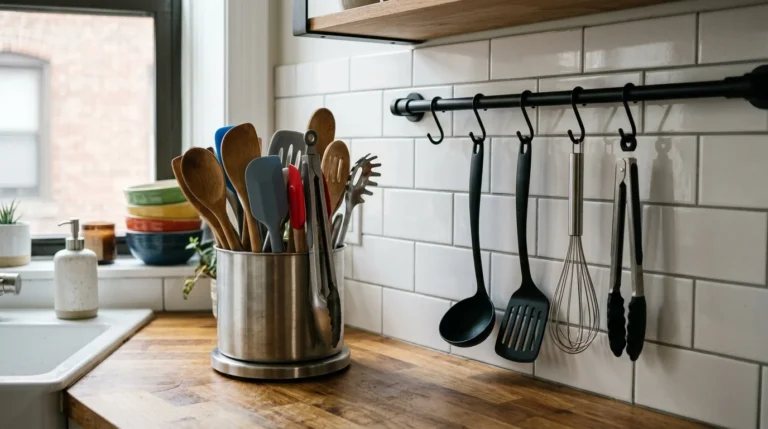
Renters managing tight work areas can further streamline food prep by comparing countertop rotating carousels and tension hanging rails to keep tools accessible alongside their seasonings.
Elena is 5 feet 4 inches tall with a standing eye level of 59 inches. She owns 24 standard cylindrical spice bottles measuring 2 inches in diameter and 4.25 inches tall.
She struggles to see spices in deep cabinets and tests both organizer styles on her first interior shelf, mounted 55 inches above the floor.
First, Elena installs a 3-tier acrylic stadium riser measuring 10 inches deep, 11 inches wide, with 1.5-inch step elevations. Two units sit side by side to hold all 24 jars.
Row one sits at 55 inches, displaying 100 percent of the jar face. Row two sits at 56.5 inches, displaying 70 percent of the label.
Row three sits at 58 inches, just one inch below Elena’s eye level. Because the cabinet roof casts shadows 10 inches back, row three suffers severe glare and gloom.
Elena successfully reads only 14 of her 24 spice jars without leaning forward over the counter. Locating smoked paprika takes her 18 seconds of manual sorting.
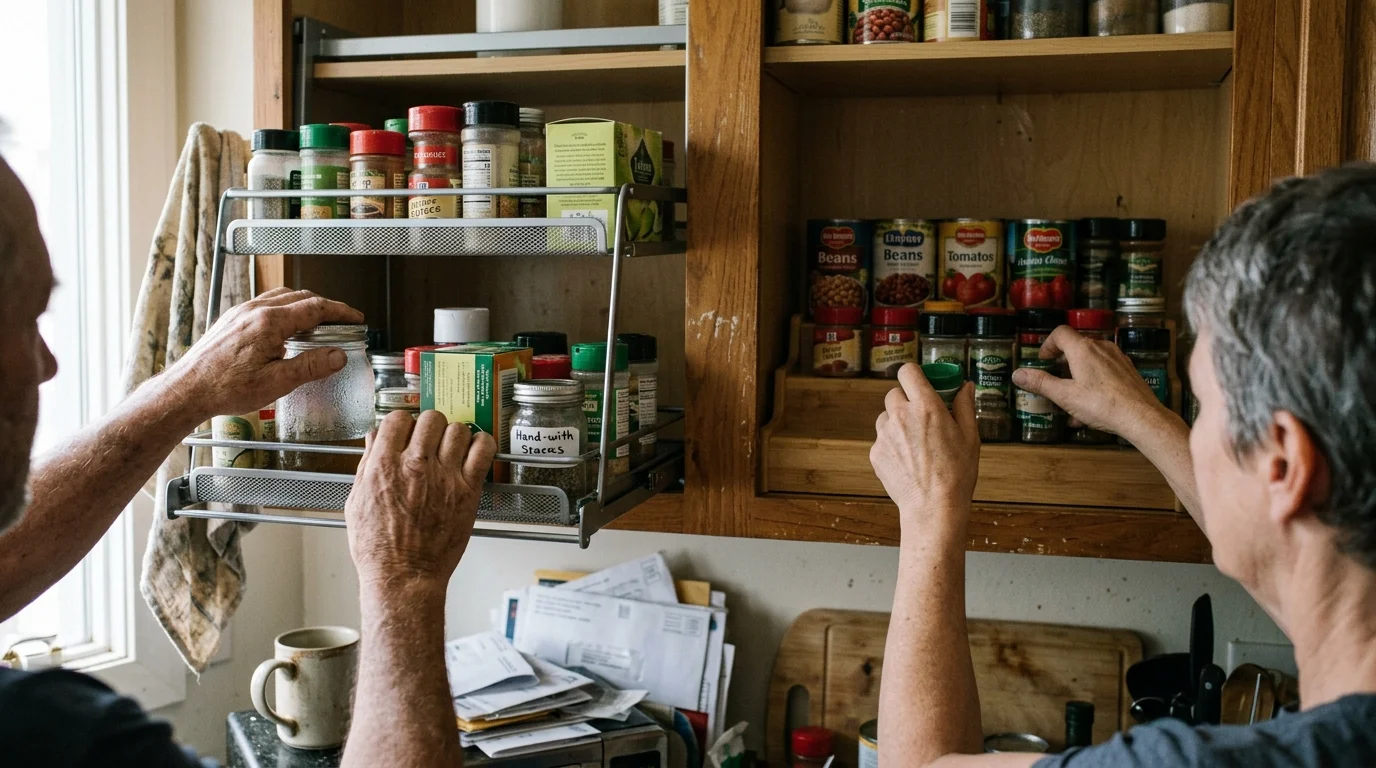
Next, Elena swaps the risers for a 21-inch-wide two-tier pull-down shelf rack mounted to the internal cabinet sidewalls. The rack holds all 24 jars across two chrome wire tiers.
Elena grasps the center handle and pulls downward. The mechanical arm swings the lower tier to 45 inches and the upper tier to 53 inches.
Both tiers now hover below her 59-inch eye level, angled perpendicular to her sightline. The under-cabinet spotlight illuminates every label without casting shelf shadows.
Elena reads 24 out of 24 labels in under two seconds. Her ingredient retrieval time drops from 18 seconds down to three seconds flat.
Direct Comparison: Risers vs. Pull-Down Systems
To see how specific models perform in 12-inch-deep cabinetry, examine their physical parameters. Every dimension impacts label exposure and usable cabinet volume.
If your wall cabinets lack the height clearance required for a mechanical drop rack, exploring strategic pantry shelving ideas provides alternative layouts for larger ingredient libraries.
If upper cupboard clearances cannot accommodate either option, shifting bulk items to countertop storage solutions for small kitchens can free up valuable shelf depth.
| Organizer Model & Style | Product Depth & Width | Vertical Clearance Required | Usable Jar Capacity (2″ Jars) | Visible Label Area at Eye Level | Installation Hardware Required |
|---|---|---|---|---|---|
| Copco Non-Skid 3-Tier Riser (Plastic) | 10.5″ D x 15″ W x 3.5″ H | 8.5″ Shelf Clearance | 18–21 standard jars | 45% of rear row labels visible | None (Freestanding) |
| iDesign Linus Expandable Riser (Acrylic) | 9.5″ D x 16″–26″ W x 4.25″ H | 9.0″ Shelf Clearance | 24–30 standard jars | 50% of rear row labels visible | None (Freestanding) |
| Rev-A-Shelf 548-18CR Chrome Pull-Down | 10.25″ D x 16.5″ W x 18.5″ H | 19.0″ Full Cavity Clearance | 20–24 standard jars | 100% of both tiers visible | 4–6 sidewall mounting screws |
| Vauth-Sagel VS ENVI Drop-Down Unit | 10.75″ D x 17.0″ W x 21.0″ H | 21.5″ Full Cavity Clearance | 22–26 standard jars | 100% of both tiers visible | Side and rear chassis brackets |
Stadium risers require significantly less initial clearance than mechanical hardware. You can insert an acrylic riser into almost any shelf arrangement instantly.
However, pull-down mechanisms maximize label exposure across both tiers. Every container face remains unobstructed when the tray locks into its lowered position.
Renter Constraints and Installation Trade-Offs
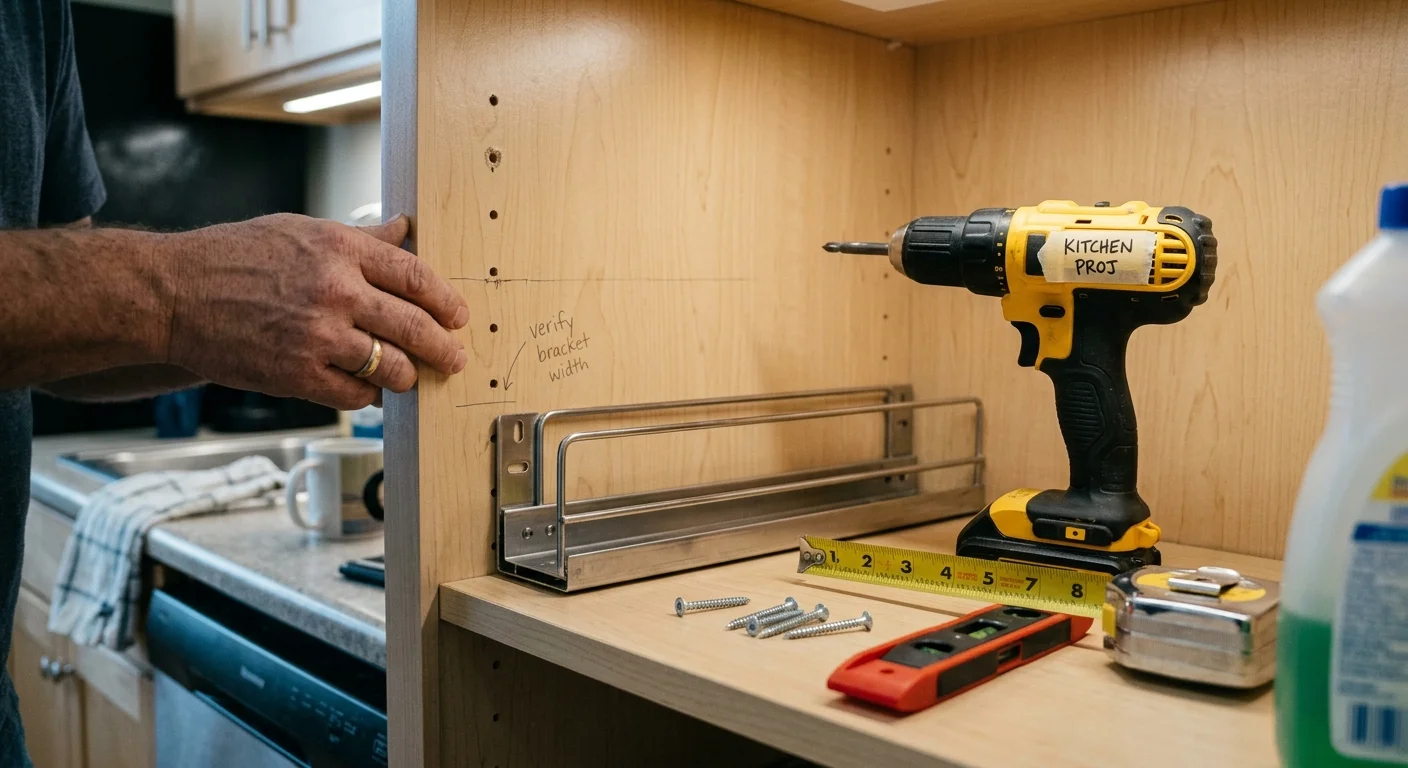
Hardware modifications present serious hurdles for apartment dwellers. Most residential leases strictly prohibit driving wood screws into interior cabinet frames.
Tenants barred from driving mounting screws into cabinetry can look to drill-free backsplash storage racks to keep active spices within arm’s reach without risking a security deposit.
Renters looking to avoid permanent hardware damage can also explore budget-friendly DIY kitchen organization projects that improve visibility without violating lease agreements.
A pull-down shelf rack requires anchoring heavy bracket plates into cabinet sidewalls using four to eight half-inch wood screws. These brackets bear dynamic leverage loads up to 25 pounds.
If you move out, patching screw holes in veneered interior melamine requires wood filler and color-matched edge banding. Landlords often deduct repair fees from security deposits for unapproved anchor holes.
In contrast, acrylic stadium risers require zero installation tools. You slip them into the cupboard, adjust the expandable width, and load your containers.
Renters seeking maximum visibility without drilling can mount an exterior door-mounted rack—storage that hangs on the inside of cabinet doors. Make sure the rack does not collide with interior shelves.
Editorial storage reviews from Good Housekeeping suggest using non-slip silicone shelf liners underneath acrylic risers. Liners keep freestanding risers stable when you grab front-row jars quickly.
If you own your home, investing three hours to mount a steel pull-down rack delivers superior long-term ergonomic returns. For tenants, high-grade stepped risers remain the safer security deposit choice.
“Choose organizers that respect your lease agreement while solving your daily cooking friction.” — Professional Organizing Consultant
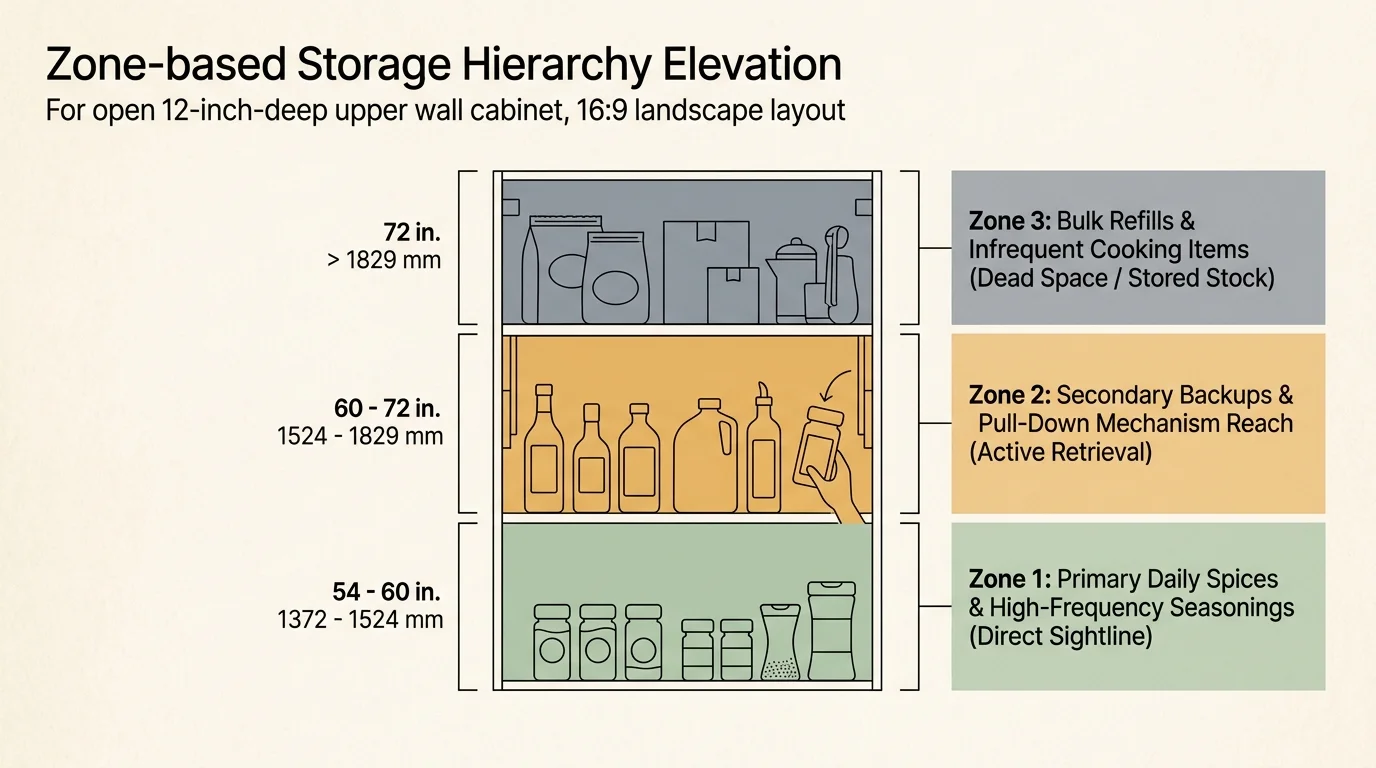
Decluttering and Zone-Based Storage Workflows
No storage system solves congestion if you hoard expired spices. Before installing either organizer, conduct an honest inventory purge.
Whole seeds retain potent essential oils for three years, but ground spices lose flavor potency within 12 months. Discard ancient, scentless powders to free up critical front-row space.
Consolidate duplicate jars into single containers. If you own three half-empty jars of ground cinnamon, combine them into one bottle before allocating shelf slots.
Establish zone-based workflows to streamline weeknight preparation. Group your inventory into three distinct culinary categories:
- Daily Heat Zone: Place black pepper, kosher salt, garlic powder, and red pepper flakes on the most reachable tier.
- Baking Essentials: Reserve middle rows for cinnamon, ground ginger, nutmeg, and baking powder.
- Specialty Blends: Store garam masala, smoked paprika, za’atar, and bay leaves on higher or deeper tiers.
If your cupboard shares space with corner blind areas, incorporate a lazy susan—a rotating tray that makes corner cabinet items accessible. Position the rotating tray next to your spice organizer.
Maintain this setup using strict FIFO practices. Restock fresh spices behind existing jars to guarantee you consume open containers before breaking new safety seals.
Frequently Asked Questions
Can you install a pull-down shelf in a cabinet with a face frame?
Yes, but you must attach spacer blocks behind the face frame. Spacer blocks flush out the interior sidewall so the moving arm clears the frame edge during downward travel.
Do tiered stadium risers fit round and square spice jars equally?
Most stadium risers feature flat steps 2.5 to 3 inches deep that accommodate both shapes. Square bottles align more flushly against rear steps, preventing rolling and maximizing width efficiency.
How much weight can an upper cabinet pull-down mechanism hold?
Standard gas-strut pull-down racks support 15 to 20 pounds of spices and canned goods. Always distribute the weight evenly between both tiers to avoid stressing the counterweight springs.
What is the minimum cabinet depth required for a pull-down spice rack?
Most pull-down models require at least 10.25 inches of clear interior depth. Measure from the back panel to the inside face of the closed cabinet door to confirm clearance.
Disclaimer: Product prices and availability change frequently. Prices shown were accurate at time of writing but may have changed. We may earn a small commission from purchases made through links on this site, at no extra cost to you. Always measure your space before purchasing organizers to ensure proper fit.