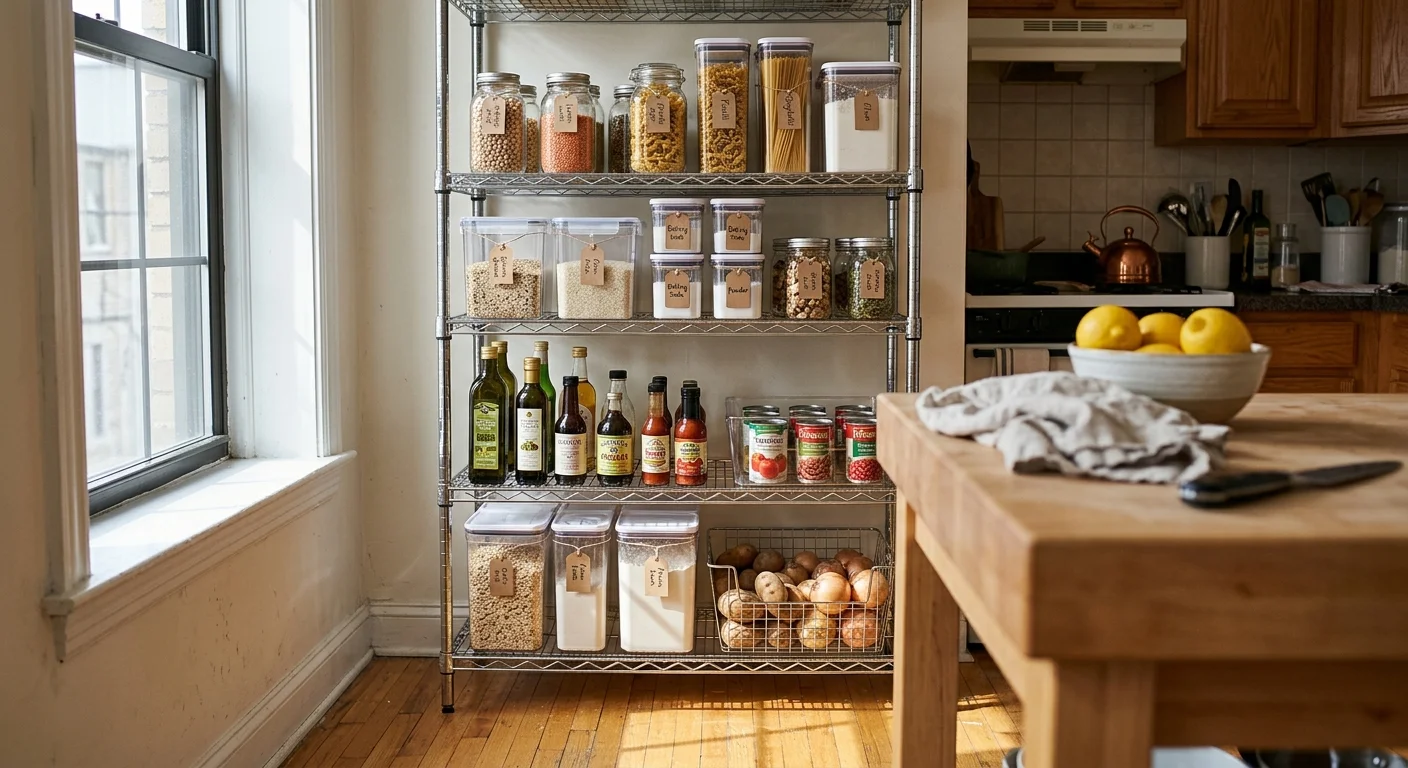
Living in an apartment without a pantry forces you to turn an 18-by-24-inch chrome metro rack into your entire food pantry. You can stop spice jars from tipping immediately by choosing storage bins engineered with continuous flat bases.
Most organizing guides push plastic shelf liners that warp, trap grease, and block airflow. Matching rigid, flat-bottom containers to your rack’s exact 15.75-by-21.75-inch interior clearance creates a wobble-free pantry without buying separate plastic liners.
This targeted setup converts an industrial wire shelving unit into an efficient, spill-proof vertical kitchen cabinet. You will maximize your usable footprint while keeping every pantry staple rock-steady.
The Geometry of 18×24 Wire Metro Shelves
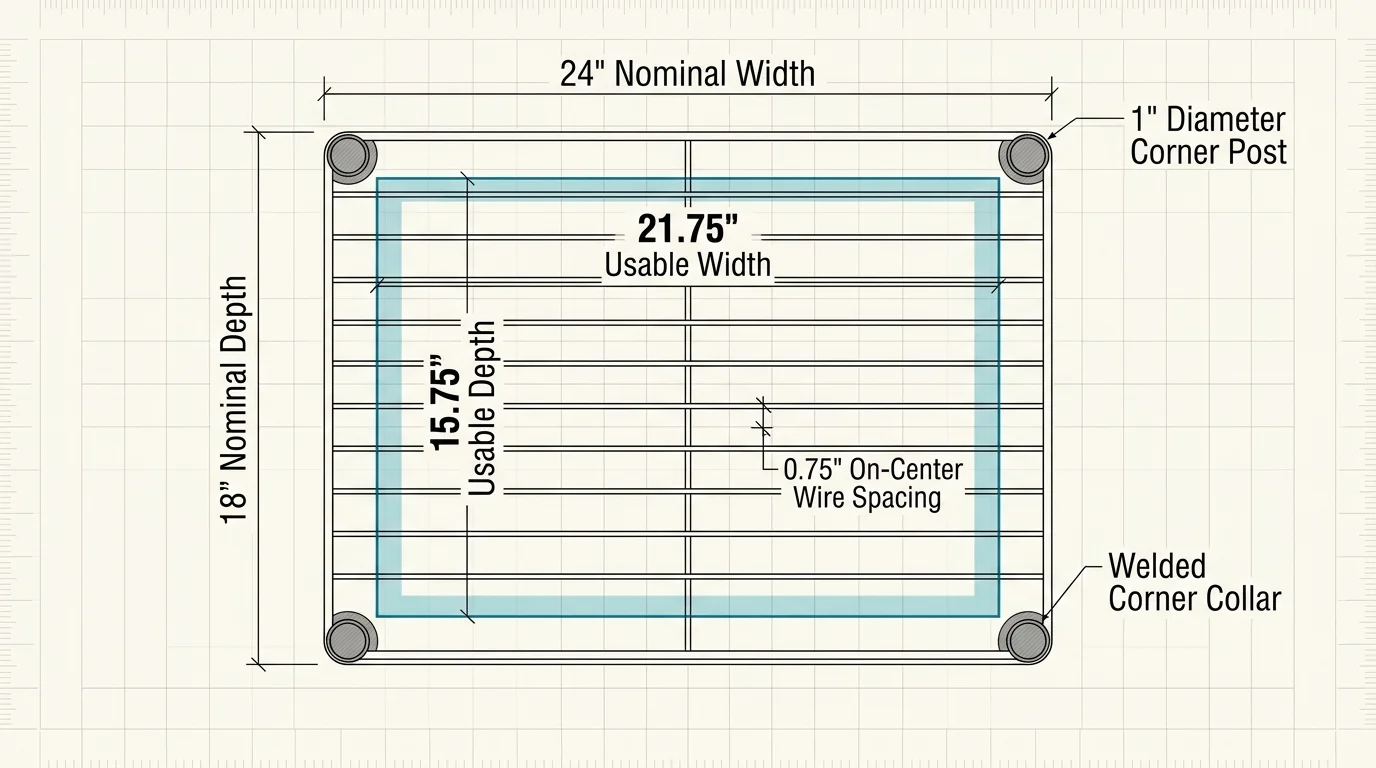
Commercial wire shelving uses nominal sizing rather than actual interior clearance. While the exterior wire frame measures 18 by 24 inches, corner support posts reduce your usable surface.
Much like other freestanding vertical storage solutions, wire racks provide high weight capacities but require matching bin footprints to avoid dead space.
Four round corner posts measure 1 inch in diameter. Welded shelf collars wrap around these posts, trimming your functional interior clearance to exactly 15.75 inches deep by 21.75 inches wide.
Standard wire shelving runs horizontal truss wires spaced 0.75 inches on-center. Heavy perimeter support rods frame the perimeter and rise slightly above the interior wires.
These elevated edges create dead space—unused storage areas, often in corners or above appliances—if your containers cannot sit flush against the outer boundaries. Selecting the right bin dimensions prevents this lost space.
Why Standard Pantry Bins Fail on Wire Racks
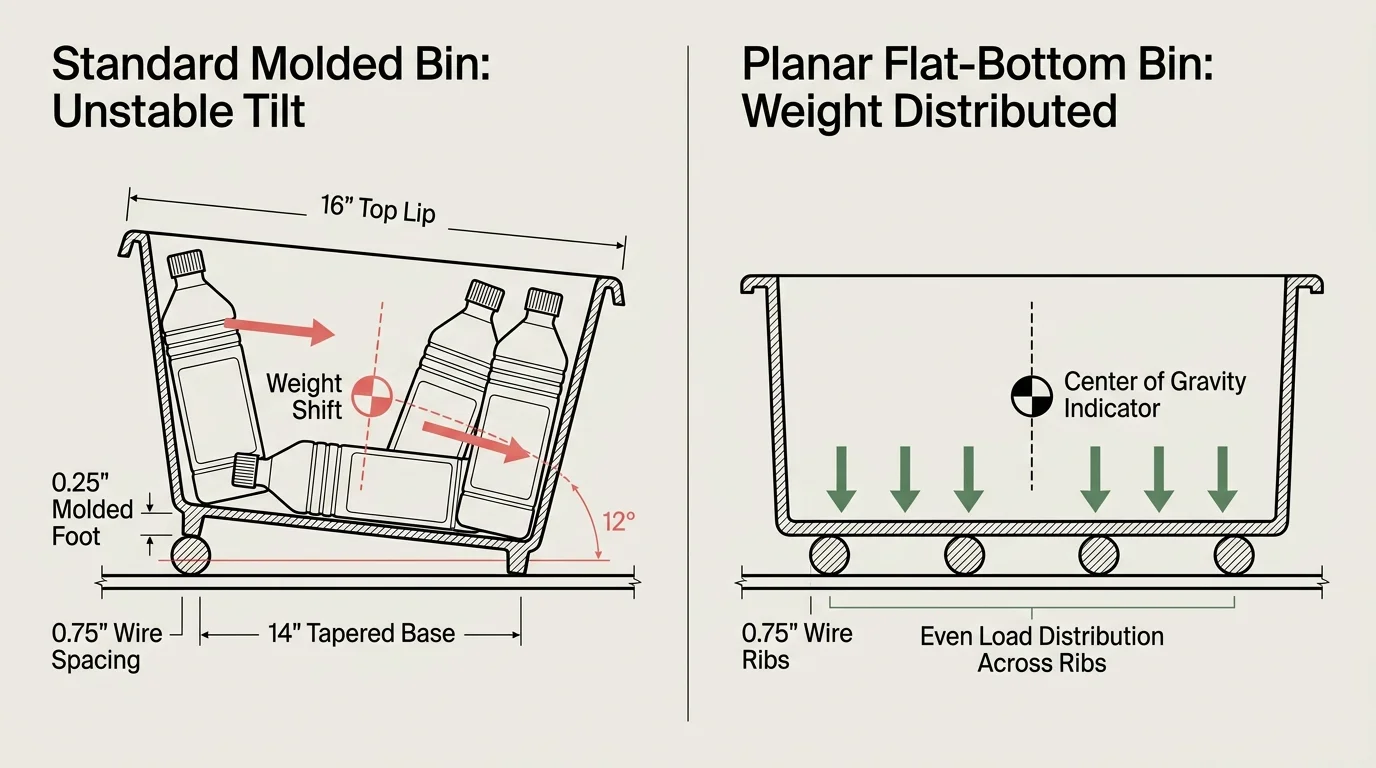
Most decorative plastic baskets feature tapered walls that narrow significantly toward the base. Injection molding factories use this taper to pop plastic containers out of molds efficiently during manufacturing.
A bin measuring 16 inches long at the top lip often measures only 14 inches at the bottom. This steep taper wastes valuable horizontal surface area across your wire shelf tiers.
Typical home organizer bins also feature tiny molded feet or recessed base rims. When a 0.25-inch molded foot drops into a 0.75-inch wire gap, the container tilts violently.
Bottles of olive oil and vinegar slide to one side inside tilted bins. Liquid weight shifts rapidly, creating an unstable center of gravity that threatens to topple your entire shelf layout.
You need modular—pieces that can be combined and configured different ways—containers with perfectly planar bottoms. True planar bottoms distribute cargo weight across multiple wire ribs simultaneously, preventing any drop into the gaps.
“The goal isn’t a Pinterest-perfect pantry. It’s being able to find what you need in 10 seconds or less.” — Professional Organizer
Wire Shelf Liners vs Bins: Efficiency, Airflow, and Cost
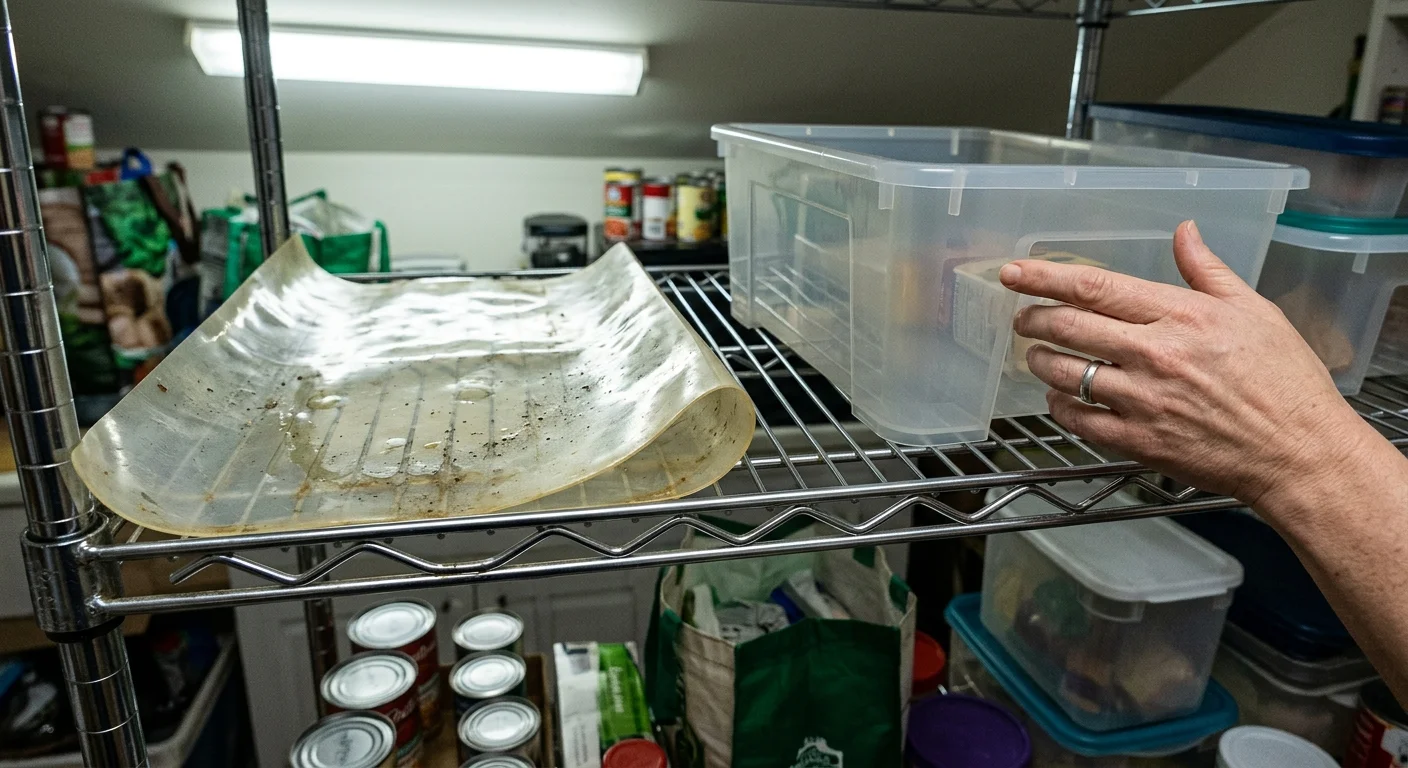
When dealing with wire shelf pantry organization, many renters buy cheap roll-out plastic shelf liners. Flexible polypropylene sheets mask wire gaps, but they introduce significant operational drawbacks in compact kitchens.
For home cooks tackling DIY kitchen organization projects on a budget, skipping flimsy liner rolls avoids recurring replacement costs while preserving open-wire ventilation.
Liners warp over time when exposed to ambient kitchen heat and humidity. The curled plastic corners snag on wire edges, creating uneven surfaces that cause small condiment jars to wobble.
Liners also catch kitchen grease, dust particles, and flour spills. Trapped residue settles underneath the clear plastic, requiring you to strip and hand-wash every tier whenever a minor spill occurs.
As Real Simple reports, maintaining visible zones and easy-to-clean surfaces is critical when managing high-density apartment food storage. Liners actively complicate this routine maintenance.
Investing directly in flat bottom bins for wire racks eliminates the need for auxiliary liners. High-sided, flat-bottom containers contain leaks internally while maintaining ambient air circulation through the open wire grid.
Bypassing plastic liners saves you roughly $35 to $60 across a standard five-tier metro rack kitchen storage unit. You can redirect those savings into heavy-duty storage bins that last a lifetime.
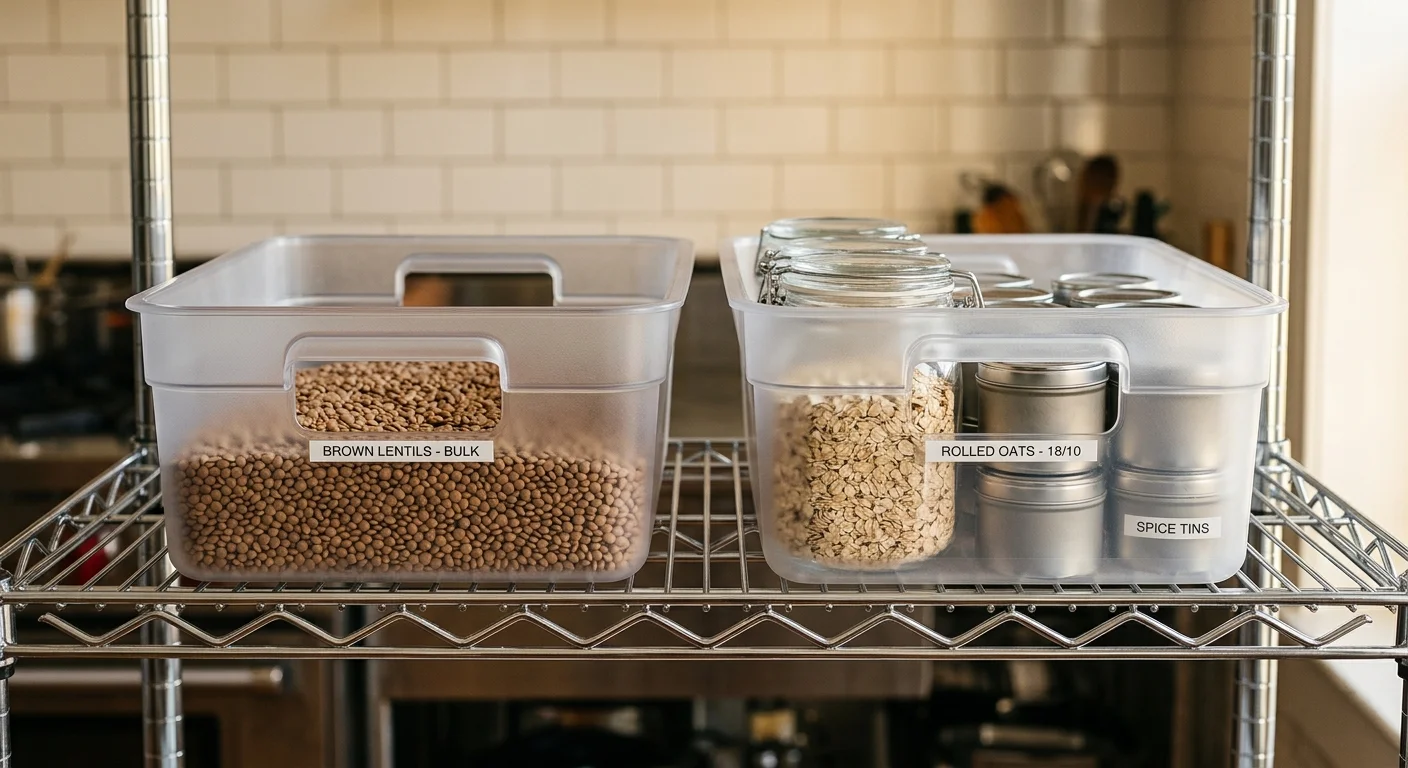
Top Flat-Bottom Storage Bins for 18×24 Racks
Finding containers that maximize the 15.75-by-21.75-inch clear zone requires checking actual base dimensions. Several commercial-grade and home organization models align perfectly with these specifications.
Many clear modular vessels originally designed as refrigerator organization bins and systems translate seamlessly to open wire shelving, provided their underside is completely flat.
The Cambro CamSquare FreshPro 4-Quart Polycarbonate container offers an ideal square footprint. Its base measures 7.25 by 7.25 inches with a flat bottom that spans ten wire slats without flexing.
You can line up three Cambro 4-quart containers across the 21.75-inch width with zero wasted room. These commercial bins are stackable—designed to safely pile on top of each other—doubling your vertical pantry capacity.
For dry pasta boxes and packaged snacks, the iDesign Linus Deep Pantry Bin measures 16 inches long by 8 inches wide by 5 inches high. Its full-length, un-beveled base spans the entire 15.75-inch usable depth perfectly.
According to Wirecutter, durable acrylic and polycarbonate containers resist warping and provide the structural clarity needed for high-traffic food storage. The Linus bin delivers exactly that rigid support.
The mDesign Deep Kitchen Organizer provides another functional option, measuring 16 inches deep by 4 inches wide. You can slot this narrow bin beside wider boxes to convert tight gaps into functional condiment alleys.
If you prefer gliding access, install a commercial pull-out organizer—a drawer or shelf that slides out for easy access. Select units equipped with full-width bottom trays that bolt directly to the round wire trusses.

Dimensional Comparison Matrix for Wire Shelf Bins
The table below compares commercial and residential flat-bottom bins against the usable 15.75-by-21.75-inch surface of an 18×24 wire shelf tier. Every model listed features zero recessed feet.
| Container Model | External Dimensions (L x W x H) | Usable Base Contact | Units per 18×24 Tier | Primary Material |
|---|---|---|---|---|
| Cambro CamSquare FreshPro 4-Qt | 7.25″ x 7.25″ x 7.4″ | 100% Flat | 6 (2 rows of 3) | Clear Polycarbonate |
| iDesign Linus Deep Pantry Bin | 16.0″ x 8.0″ x 5.0″ | 96% Planar | 2 (side-by-side) | BPA-Free PET Plastic |
| mDesign Narrow Organizer Bin | 16.0″ x 4.0″ x 5.0″ | 95% Planar | 5 (side-by-side) | Shatter-Resistant Plastic |
| Rubbermaid Commercial Space-Saving 8-Qt | 8.8″ x 8.5″ x 8.8″ | 100% Flat | 4 (2 rows of 2) | White Polyethylene |
| IRIS USA 16-Inch Modular Craft Box | 15.8″ x 12.0″ x 3.2″ | 92% Planar | 1 (plus narrow bins) | Polypropylene |
Pay close attention to usable base contact percentages. Any bin with over 90% true bottom contact distributes load evenly across standard wire trusses without tipping.

Worked Layout Scenario: Outfitting a 5-Tier Metro Rack
Consider an apartment cook with zero built-in pantry cupboards who relies on a single 18×24-inch, 72-inch tall chrome wire rack. This worked example details how to configure that rack for complete food storage.
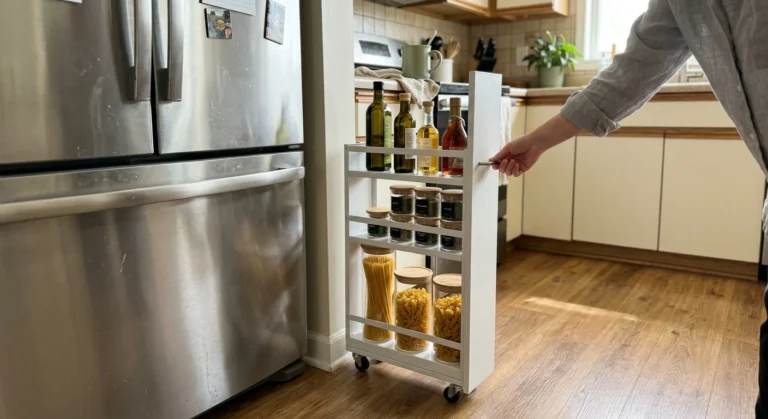
To capture additional capacity alongside your primary shelving rack, rolling in an ultra-slim slide-out cart puts narrow gaps beside major appliances to work.
If your pantry holds large quantities of tinned tomatoes or beans, incorporating dedicated can organizers and racks on lower tiers keeps those heavier goods aligned and accessible.
The total usable area equals 342.5 square inches per shelf tier, or 1,712.5 square inches across all five tiers. Organizing this space requires assigning deliberate heights and containers to each level.
Tier 1 sits 3 inches above the floor, holding heavy bulk items. You place two 12-quart Cambro flat containers holding a 20-pound bag of rice and a 25-pound sack of flour, totaling 45 pounds.
Tier 2 sits 16 inches above Tier 1 to hold everyday starches and breakfast items. Two 16-by-8-inch iDesign Linus bins hold 14 boxes of pasta and 6 bags of cereal without tipping.
Tier 3 rests at waist height, spaced 12 inches above Tier 2 for quick cooking access. You install five 16-by-4-inch mDesign bins to separate spice bags, canned beans, tomato paste, and cooking broths.
Tier 4 sits at chest height, housing oils, vinegars, and baking powders. Here, you insert an acrylic shelf riser—a mini shelf that creates two levels of storage in one space—measuring 15 by 7 inches.
The shelf riser doubles your vertical real estate for small extract bottles and spice tins. Alongside it, three Cambro 2-quart containers store raw sugars and cocoa powder securely.
Tier 5 rests at eye level, spaced 10 inches below the top truss for paper goods and lightweight snacks. Two wide IRIS boxes keep lightweight chip bags and snack pouches tidy.
Homeowners often rely on a door-mounted rack—storage that hangs on the inside of cabinet doors—for overflow spices. Because renters lack pantry doors, this 5-tier vertical layout absorbs that entire volume seamlessly.
Outfitting this complete five-tier system requires 14 precision-measured containers. The entire procurement costs $142.50, and setup requires exactly 40 minutes of unboxing, washing, and loading.
Workflow Zone Planning and FIFO Inventory
Exposed wire shelving demands disciplined visual organization because every item remains in plain view. Grouping your inventory into functional workflow zones keeps meal preparation swift and manageable.
Applying practical pantry organization ideas ensures that an open wire shelving unit stays functional and visually tidy day after day.
According to The Spruce, arranging pantry supplies by cooking activity minimizes wasted movement across small kitchen footprints. Keep everyday cooking elements centered between waist and eye height.
Dedicate your eye-level zones to primary prep ingredients like onions, garlic, olive oil, and kosher salt. Keep non-food items, such as extra paper towels or rarely used slow cookers, on the bottom tier.
You can also incorporate a heavy-duty acrylic lazy susan—a rotating tray that makes corner cabinet items accessible—onto your wire shelf. Ensure the turntable model features a broad baseplate at least 11 inches wide to span wire gaps smoothly.
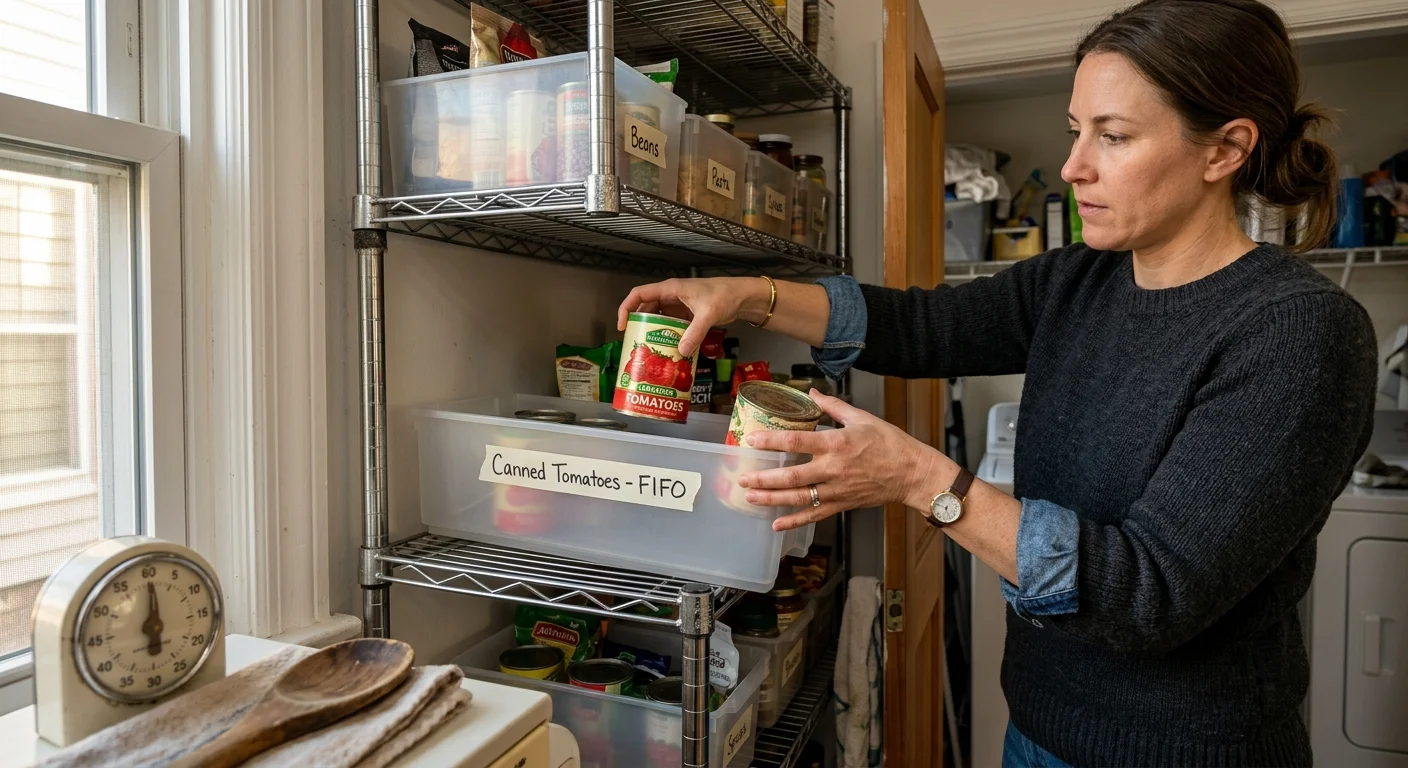
Managing food freshness on an open rack requires FIFO—first in, first out, a method of rotating food so oldest gets used first. When you return from grocery shopping, pull older canned goods to the front of the bin.
Load your newest purchases at the back of each flat-bottom container. Because full-depth 16-inch bins pull out like drawers, rotating canned goods front-to-back takes just five seconds per item.
Label each bin front with removable grease-pencil chalk or adhesive vinyl tabs. As Good Housekeeping recommends, clear bin labeling eliminates duplicate purchases and helps household members maintain organizational order long-term.
“Group your dry goods by cuisine and cooking frequency rather than packaging shape. Your storage should follow your appetite.” — Professional Organizer
Long-Term Maintenance and Shelf Stability
Exposed wire racks gather kitchen airborne grease and ambient dust more quickly than enclosed cabinets. Flat-bottom bins shield your ingredients from this environmental grime while keeping the underlying wires clean.
Wipe down your container bases once every three months using warm water and mild dish soap. Because the bins protect the wire shelf, you rarely need to disassemble the heavy steel frame for deep cleaning.
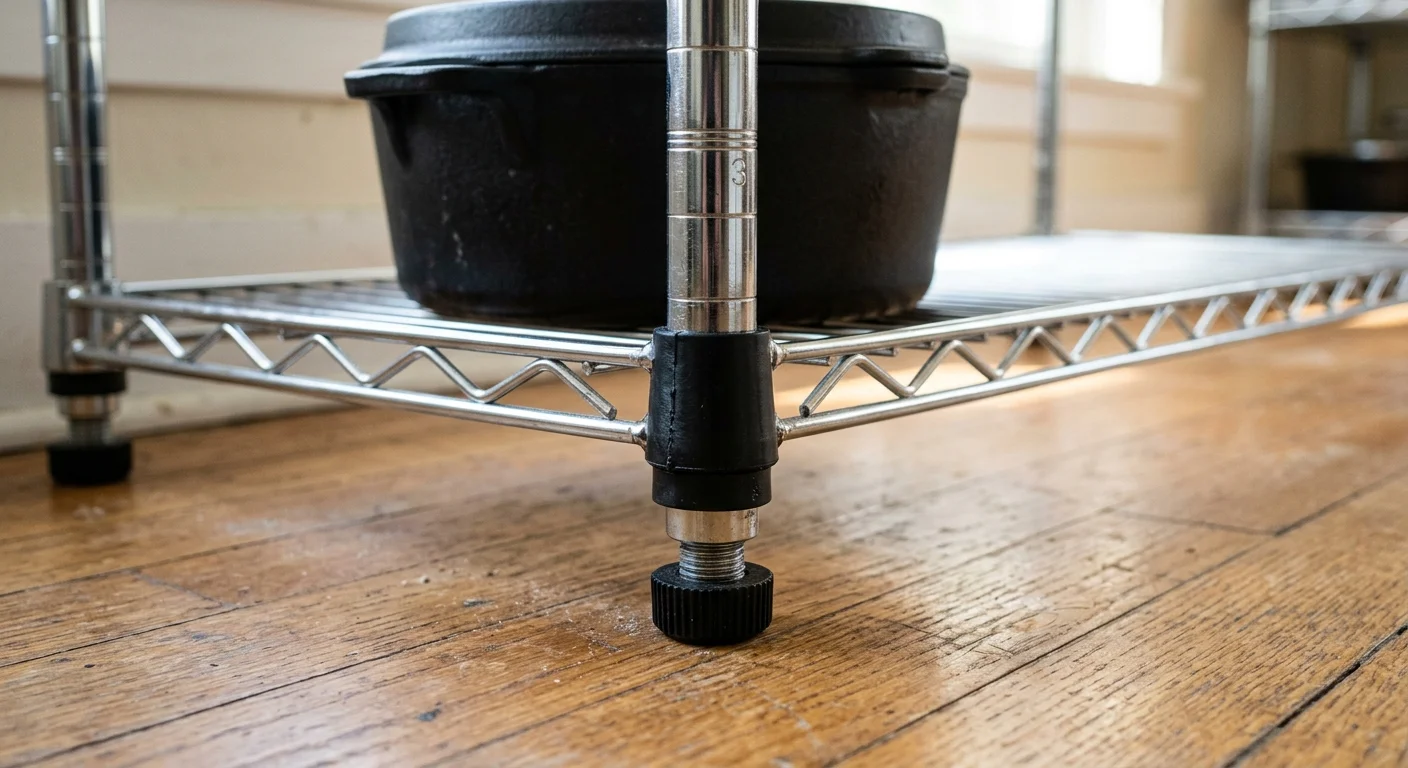
Maintain structural stability by keeping total weight balanced across the rack. Commercial 18×24 wire shelves support up to 600 pounds per tier, but uneven loading can cause the frame to rack or tilt.
Place your heaviest bulk bins toward the outer corners near the steel support collars. Loading weight near the posts transfers force directly down the vertical steel columns, preventing center-wire sagging.
If you live in a rented apartment, secure the top tier of your wire metro rack to a wall stud using an adjustable nylon anti-tip strap. This five-minute safety measure prevents tipping accidents when pulling heavy front bins outward.
Frequently Asked Questions
Do I need shelf liners if I use flat-bottom storage bins?
No, you do not need shelf liners when using flat-bottom containers. Bins with solid, un-grooved bases span the wire trusses evenly, preventing wobbling and catching all spills internally.
Can I use clear acrylic bins on commercial chrome wire racks?
Yes, heavy-gauge acrylic and BPA-free PET bins work exceptionally well on chrome wire. Just confirm the exterior base measures 15.75 inches or less to clear the corner posts.
How do I stop narrow bins from sliding when pulled forward?
You can affix small 0.5-inch silicone grip pads to the four base corners of each bin. The rubber grips create friction against the chrome wire, preventing accidental slips when sliding bins outward.
What is the maximum weight an 18×24 wire shelf tier can hold?
Most commercial-grade 18×24-inch wire shelves hold between 400 and 800 pounds per tier when weight is evenly distributed. Residential versions generally hold up to 250 pounds per shelf.
Disclaimer: Product prices and availability change frequently. Prices shown were accurate at time of writing but may have changed. We may earn a small commission from purchases made through links on this site, at no extra cost to you. Always measure your space before purchasing organizers to ensure proper fit.