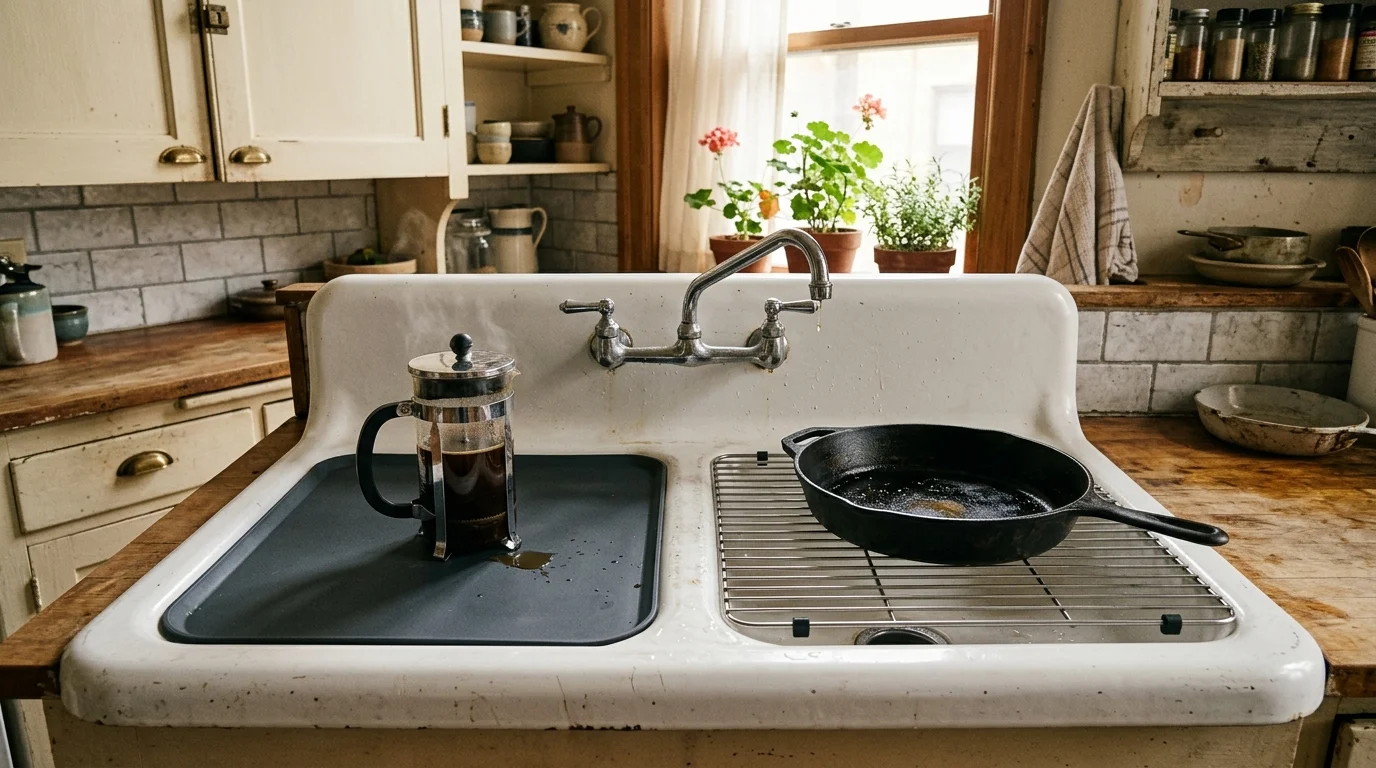
You can preserve your rental security deposit and protect porcelain kitchen sink surfaces from catastrophic damage without permanent renovations. Vintage cast-iron porcelain basins feature brittle enamel that shatters when heavy cookware slips from soapy hands.
While a flexible silicone sink bottom protector cushions glassware against thermal shock, elevated stainless steel wire grids deflect kinetic impact and prevent trapped moisture from corroding aged enamel.
Selecting the right protective barrier allows you to prevent metal scratches sink basins suffer daily while keeping your rental wash station sanitary and damage-free.

The Vulnerability of Vintage Porcelain Rental Sinks
Vintage sinks in older apartments consist of powdered glass fired onto heavy cast iron or stamped steel at extreme temperatures. Decades of abrasive scouring strip this protective vitreous glaze, leaving the porous subsurface exposed to rapid staining.
Understanding the weight profiles of stainless steel vs non-stick cookware helps cooks anticipate how easily a dropped pan can chip or fracture brittle enamel.
Just as home cooks choose cookware base finishes that won’t micro-scratch smooth cooktops, selecting smooth-bottomed pots prevents abrasive metal transfer on aged porcelain.
Aged porcelain develops micro-fissures called crazing across high-wear zones around the drain. These hairline cracks weaken structural integrity and collect grease, rust, and acidic food residues.
Metal transfer occurs when soft metals rub against harder, acid-etched enamel. Aluminum sheet pans and stainless stockpots leave dark gray marks that look like structural cracks.
Kinetic gouging presents a far worse threat to your rental deposit than surface marks. A dropped cast-iron pan exerts intense point-load pressure that chips brittle enamel down to raw, rust-prone black iron.
“Porcelain enamel cannot flex under impact; when heavy iron strikes an unyielding basin floor, the vitreous glass layer inevitably shears away from the substrate.”
Thermal shock compounds this vulnerability during routine cooking tasks. Pouring boiling pasta water directly onto cold enamel causes differential expansion that can crack antique sinks from drain to rim.
Silicone Mats: Cushioning, Thermal Shock, and Trapped Moisture
Food-grade silicone offers an elastic barrier that absorbs low-velocity impacts from dropped mugs, ceramic bowls, and drinking glasses. The flexible material acts as a deadening pad against ceramic breakage.
Much like the heat-tolerant food-grade material used in silicone baking mats, these sink liners withstand exposure to hot water and cookware without melting.
Silicone resists temperatures up to 450 degrees Fahrenheit, insulating aged enamel from thermal shock when draining boiling liquids. This thermal barrier prevents the abrupt temperature spikes that crack fragile vintage basins.
According to maintenance strategies outlined by The Spruce — Kitchen Organization, protecting basin surfaces requires managing the moisture and organic debris that collect during food preparation.
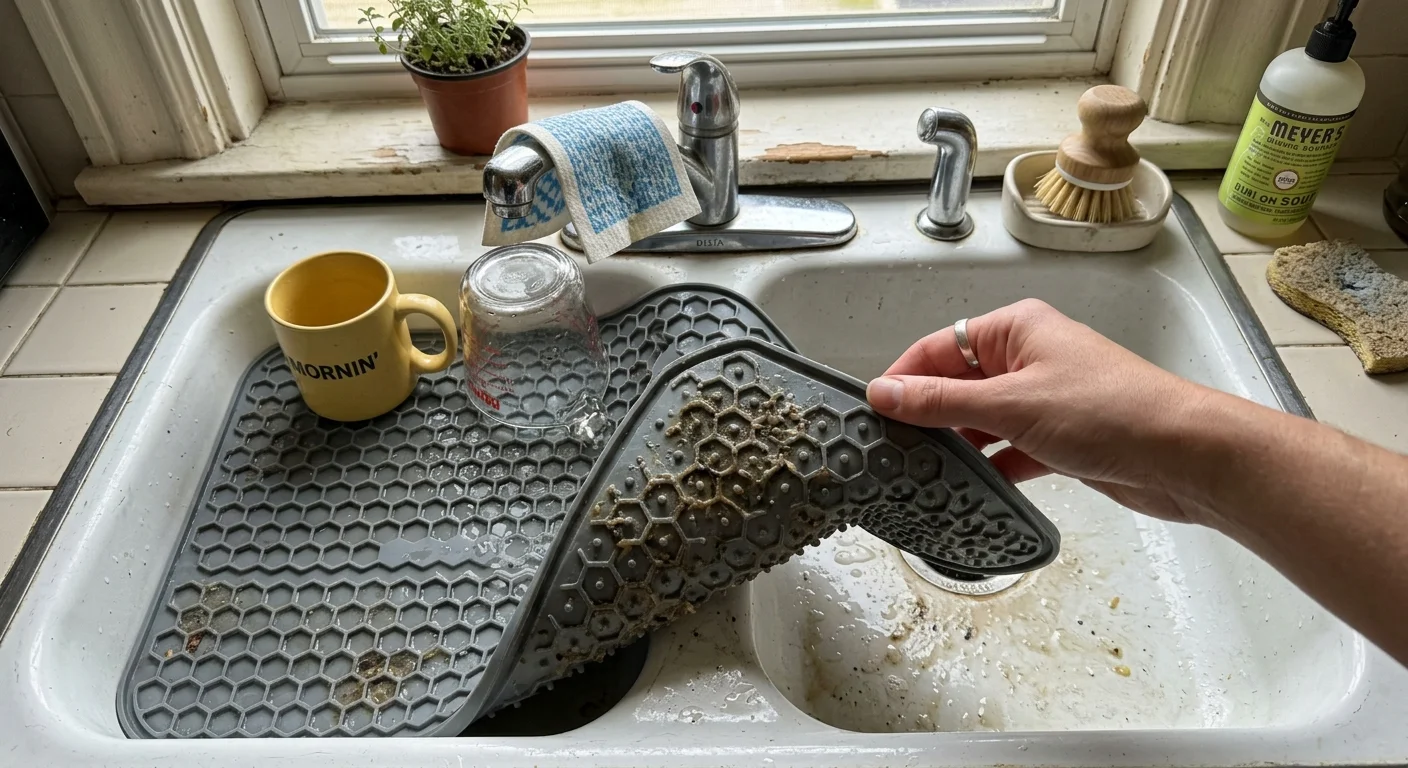
Solid silicone mats rest directly against the enamel floor on short 0.125-inch nubs. Water surface tension traps moisture, food particles, and dish soaps beneath the mat after every dishwashing cycle.
Trapped moisture creates an anaerobic environment that fosters black mold and slimy bacterial biofilms within forty-eight hours. These stagnant puddles contain acidic food residues that steadily etch antique porcelain.
Silicone also fails to absorb heavy kinetic point-loads. A 7-pound cast-iron skillet compresses soft silicone completely, transferring impact force directly into the enamel below.
Elevated Stainless Grids: Impact Deflection and Drainage
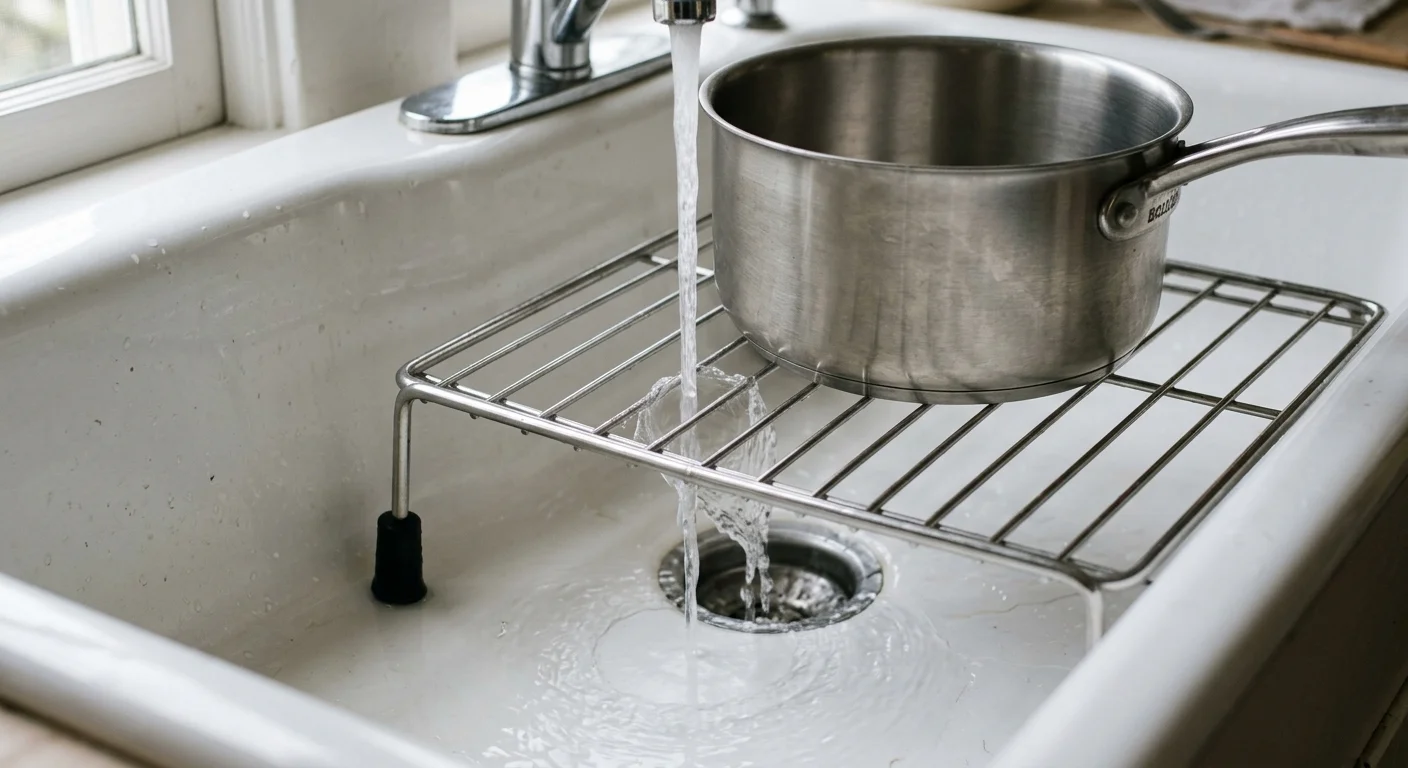
Elevated basin grids constructed from heavy-gauge 304 stainless steel keep cookware suspended 0.75 to 1.0 inch above the sink floor. This physical separation prevents pots from contacting fragile porcelain.
Renters who need to keep large dish loads completely out of the basin can supplement their wash station with one of the best dish drying racks for safe countertop draining.
To keep basin surfaces clear, home cooks can pair basin grids with over-the-sink dish drying racks to safely drain and stage washed cookware.
Rigid steel wire frameworks distribute kinetic energy across the entire perimeter rather than concentrating force at a single impact point. When a heavy pot drops, the elevated grid flexes slightly to absorb the blow.
As product assessments from Wirecutter — Kitchen Organization show, heavy-duty stainless grids keep wash basins clutter-free by streamlining drainage and stopping dirty dishware from damming water flow.
Greywater, soap scum, and food scraps flow freely under the elevated frame directly into the drain strainer. You can rinse the sink thoroughly without lifting the metal grid after every meal.
Stainless steel wire racks feature protective rubber or vinyl feet that prevent metal-on-porcelain contact. If a protective bumper degrades or falls off, the bare steel leg can gouge your basin floor.
Stemware with narrow bases can wobble on open wire rungs. Wine glasses and slender champagne flutes require deliberate placement to avoid tipping through the grid spacing.
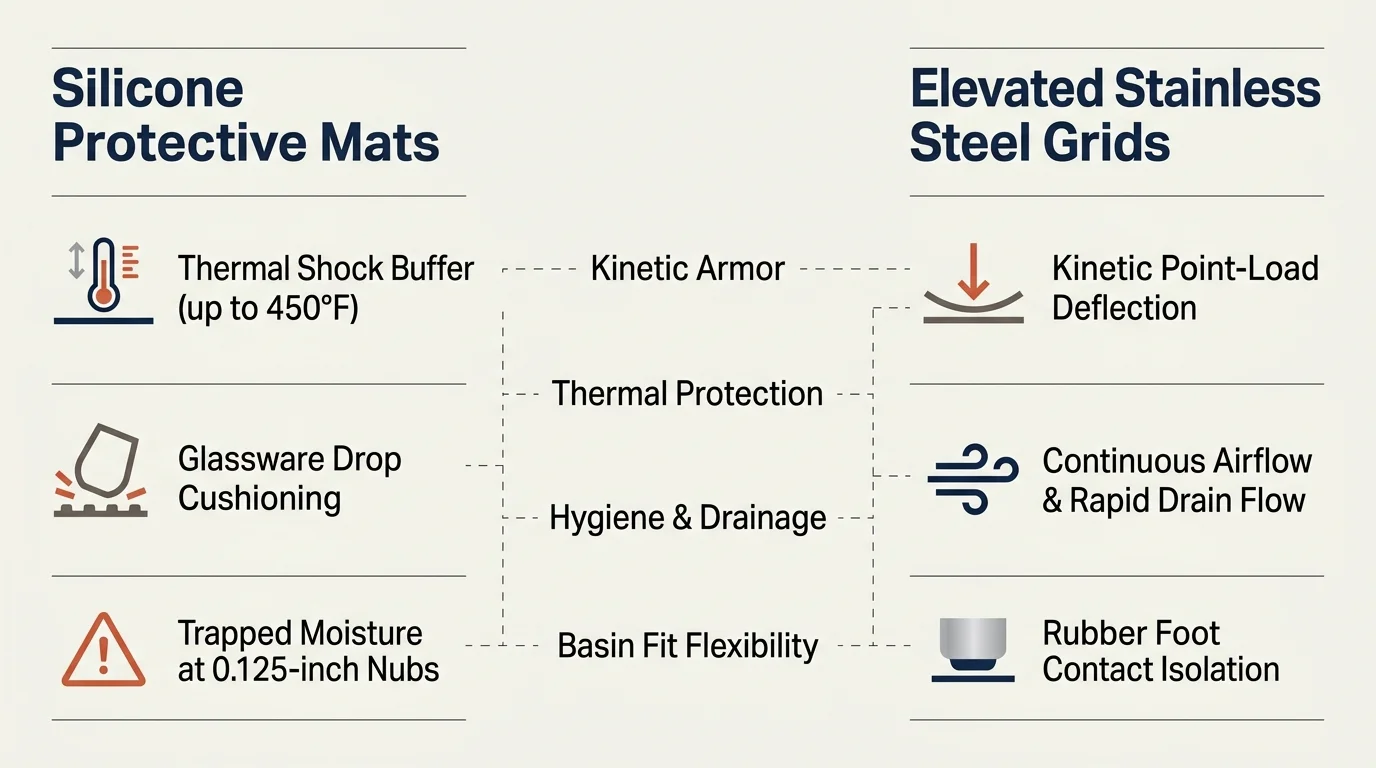
Head-to-Head Comparison: Silicone Mats vs. Stainless Grids
Selecting the right protective barrier requires balancing impact protection against everyday maintenance. Review the measurable attributes below to choose the solution that fits your rental constraints.
While silicone excels at cushioning fragile bakeware like glass vs ceramic pie plates, stainless grids remain the superior choice for deflecting the weight of heavy Dutch ovens.
Regardless of which protector you select, pairing it with dedicated cabinet organizers for pots and pans keeps heavy Dutch ovens safely stored away from the sink when not in use.
| Protector Model | Basin Clearance | Impact Load Deflection | Thermal Tolerance | Daily Maintenance Need | Approximate Cost |
|---|---|---|---|---|---|
| OXO Good Grips Silicone Mat (12.75 x 11.25 in) | 0.125 inches | Low (Under 3 lbs) | Up to 450°F | High (Daily lift and dry) | $16.99 |
| Serene Valley Stainless Grid NDG2715R (26.5 x 14.5 in) | 1.000 inches | High (Up to 25 lbs) | Over 800°F | Low (Weekly foot check) | $42.50 |
| Kohler Ridgeway Wire Rack K-6013-ST (14.5 x 12.0 in) | 0.750 inches | High (Up to 20 lbs) | Over 800°F | Low (Bi-weekly scrub) | $58.00 |
| KitchenDetails Hex Silicone Grid (13.6 x 11.6 in) | 0.200 inches | Moderate (Under 5 lbs) | Up to 400°F | High (Daily rinse required) | $14.50 |
Silicone mats provide an affordable safeguard for everyday dishware and glassware in shallow basins. They require constant lifting and hanging to prevent dark mildew rings from staining the enamel.
Elevated stainless steel grids provide superior protection against heavy Dutch ovens, cast-iron pans, and canning pots. Their structural elevation guarantees sanitary airflow while shielding fragile basin floors from severe impact.
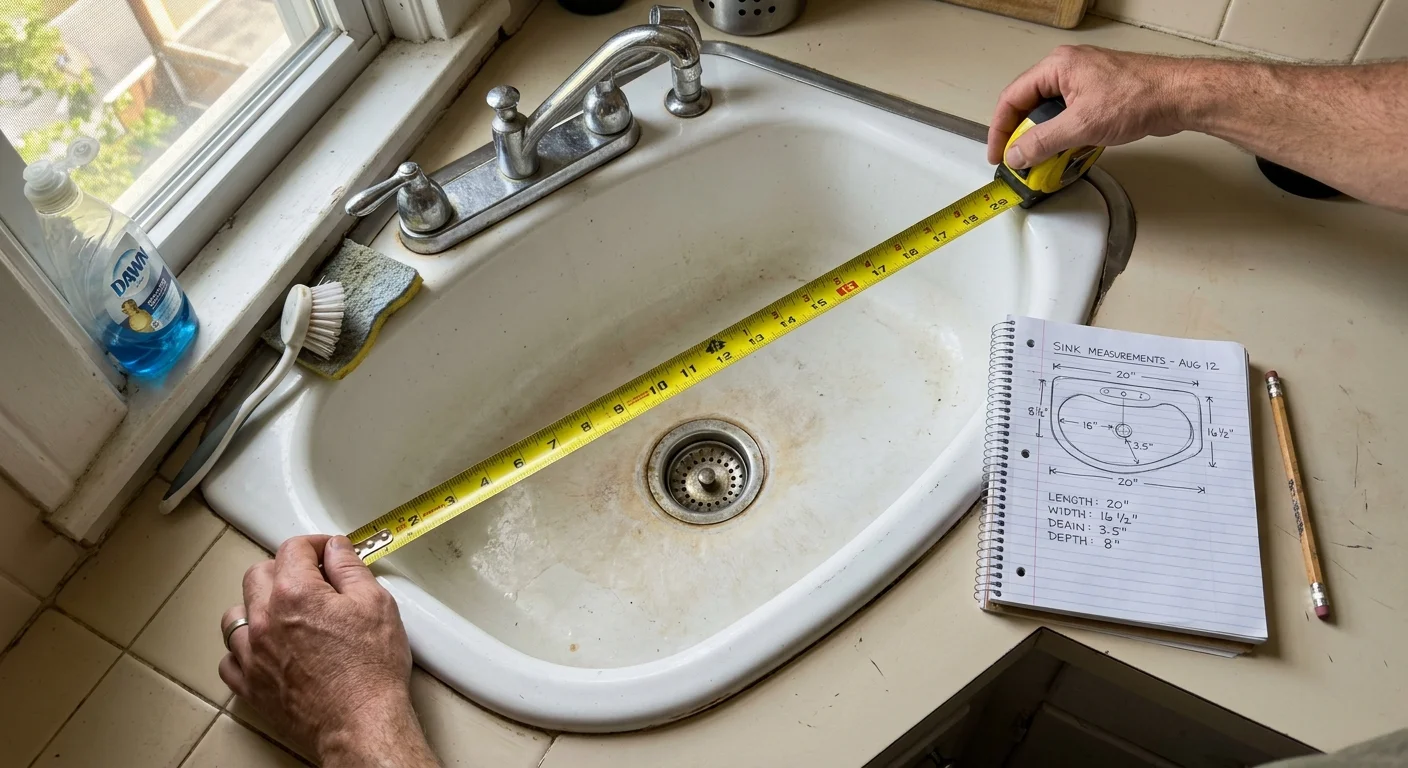
Worked Rental Scenario: Measuring an Irregular Basin
Consider a standard 1954 rental kitchen equipped with a single-basin American Standard cast-iron sink. The tenant owns an 8-quart enameled Dutch oven weighing 12.5 pounds when empty.
In tight rental spaces, relying on prep tools engineered for slimline dishwashers can divert frequent washing cycles away from a fragile vintage basin.
The tenant begins by measuring the interior basin bottom, where the floor meets the curved walls. The top rim measures 24.0 inches by 18.0 inches, but the basin tapers inward toward the base.
Using a rigid steel tape measure, the tenant measures the flat floor area, which yields 21.5 inches in width and 15.25 inches in depth. Sloped side walls reduce available bottom surface area significantly.
Next, the tenant measures corner curvature using a cardboard radius template. The sink features sweeping 2.5-inch corner radii, which will pinch and tilt rectangular grids with sharp 90-degree corners.
The drain opening measures 3.5 inches across and sits centered 4.5 inches from the rear wall. Any protective grid must align its cutout opening precisely over this drain to maintain strainer access.
A stock grid measuring 21.0 inches by 14.5 inches with a rear-center cutout and 1-inch rubber feet costs $38.00. It leaves a 0.25-inch perimeter gap that prevents metal-to-enamel friction along the sloped walls.
Installation takes three minutes. The renter sets the grid in place, checks clearance with a 10-inch skillet, and ensures the rubber feet rest securely on flat porcelain.
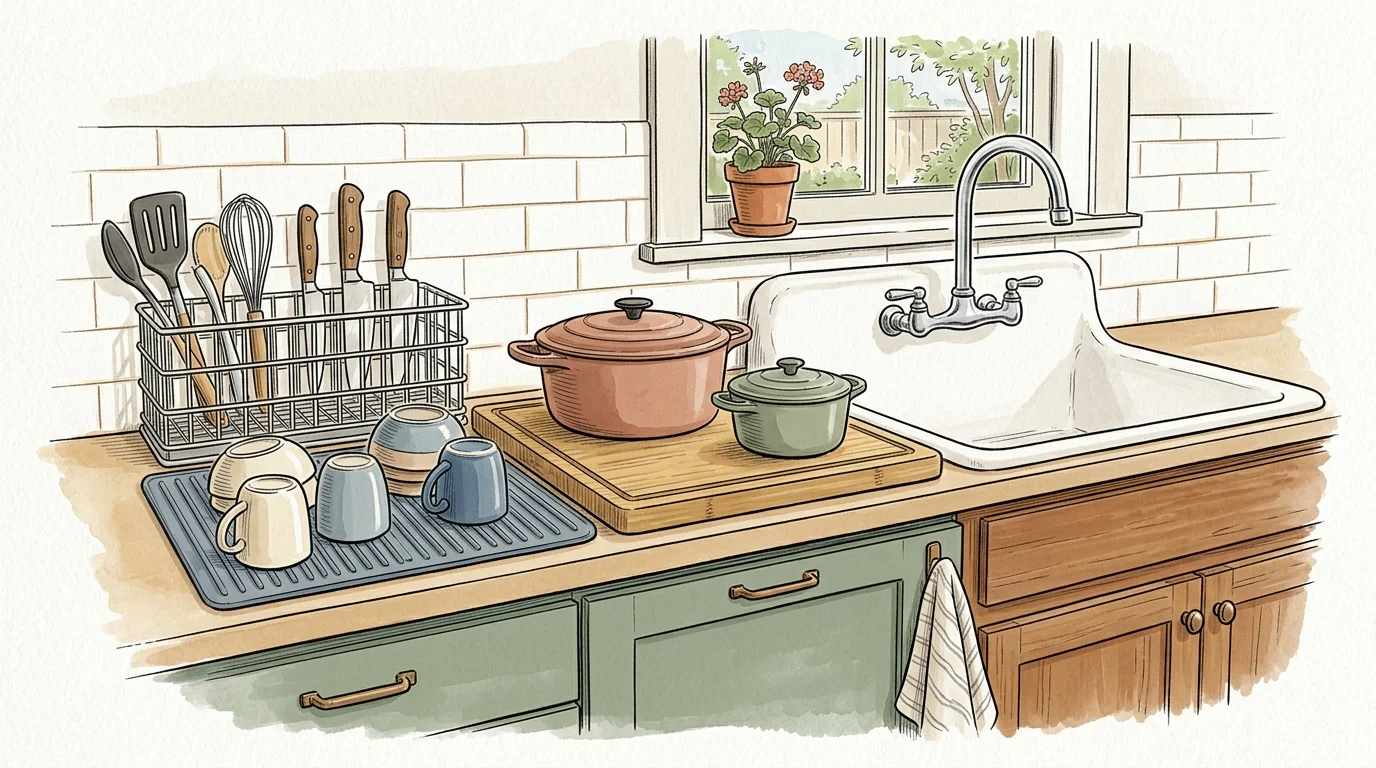
Countertop Staging and Storage to Prevent Basin Damage
Most rental sink damage occurs when dirty cookware piles up inside the basin. Proper kitchen organization keeps heavy pots out of the sink until you are ready to wash them individually.
Adopting dedicated knife storage solutions also keeps sharp blades out of soapy wash water where they might gouge the underlying vitreous finish.
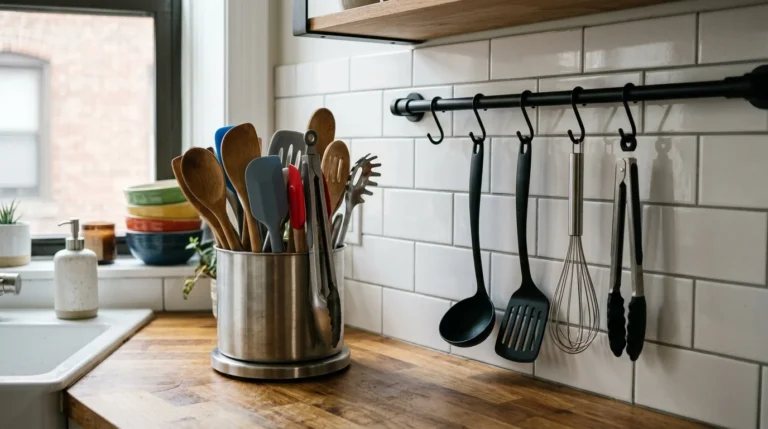
Renters can also mount tension hanging rails on rental backsplashes to suspend scrub brushes and dishcloths without drilling into tiles.
Organizing cleaning and dish-staging zones streamlines your workflow and protects delicate surfaces. Practical appliance and cookware testing from Consumer Reports reveals that proper kitchen maintenance systems significantly reduce accidental household damage.
Reclaim unused cabinet volume by targeting dead space, which refers to unused storage areas, often in corners or above appliances. Maximizing these empty zones clears surrounding countertop space for staging dirty pans.
Add a shelf riser—a mini shelf that creates two levels of storage in one space—inside the base cabinet beside your sink. Staging sheet pans on this riser prevents them from crowding the wash basin.
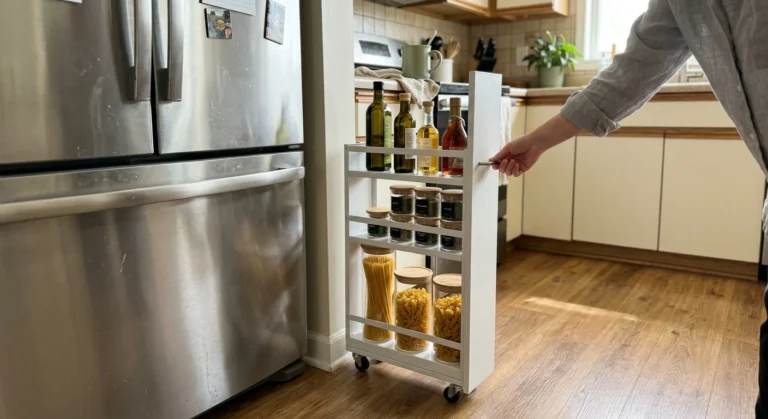
Mount a pull-out organizer, which is a drawer or shelf that slides out for easy access, beneath your sink plumbing trap. This sliding basket safely stores heavy cookware cleaner without scraping baseboard paint.
Install a door-mounted rack, defined as storage that hangs on the inside of cabinet doors, to hold scrubbing brushes and drain stoppers. Elevating wet cleaning tools off the sink deck eliminates soap scum buildup.
In deep under-sink corners, position a lazy susan, which is a rotating tray that makes corner cabinet items accessible. A quick turn brings heavy descaling bottles forward without knocking over plumbing lines.
Sort cleaning rags using stackable containers designed to safely pile on top of each other. These bins keep clean microfiber cloths dry and accessible right next to your basin.
Install modular bins, which are pieces that can be combined and configured different ways, to navigate tight drainpipes. This adjustable arrangement keeps spray bottles upright and organized.
Apply FIFO, meaning first in, first out, a method of rotating food so oldest gets used first, to dish soaps and cleaning supplies. Rotating stock ensures opened detergents get used before bottles degrade and leak.
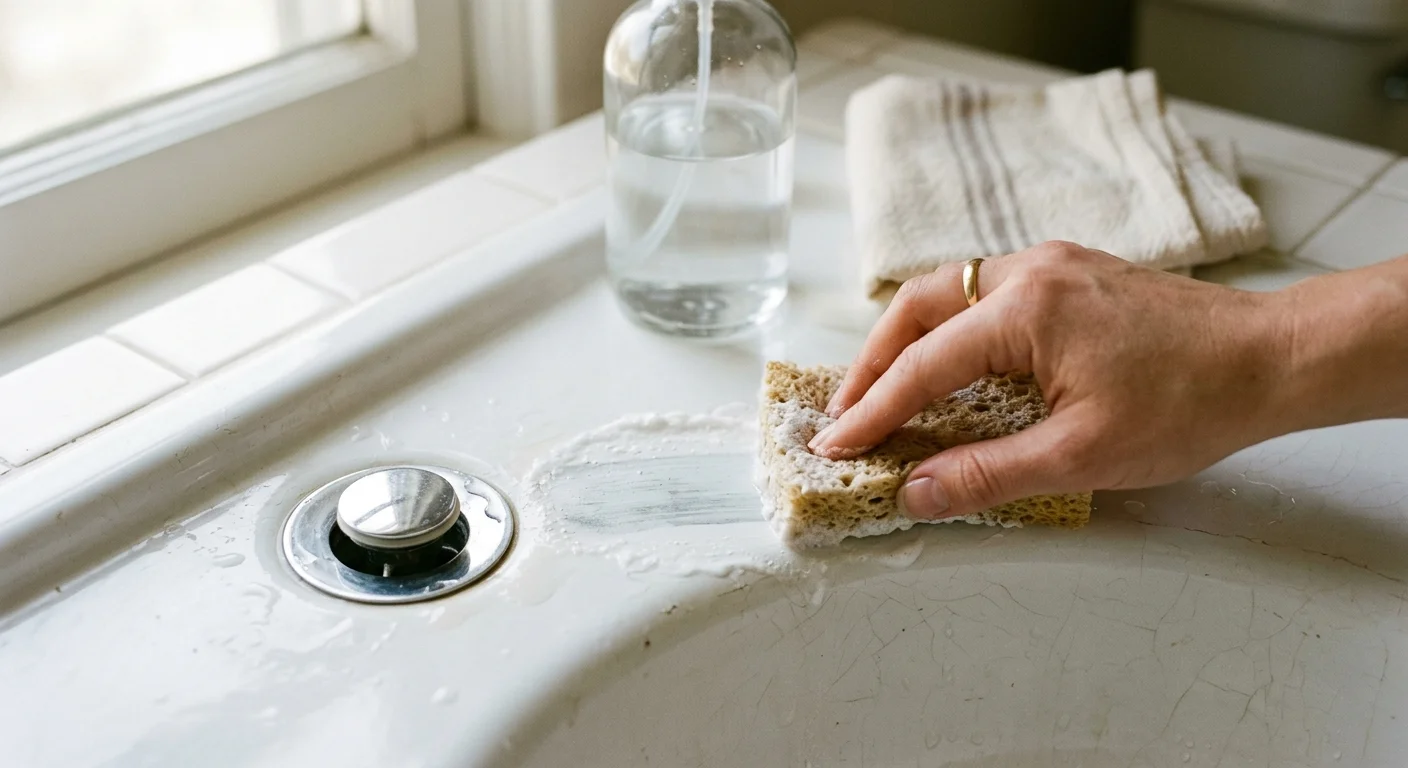
Cleaning Routines and Safe Mark Removal
Caring for a vintage rental sink requires non-abrasive cleaning routines that protect thin enamel. Never use coarse scouring powders, steel wool, or abrasive wire brushes on vintage porcelain surfaces.
To safely remove grey metal transfer marks, apply an oxalic acid cleaner such as liquid Bar Keepers Friend. Gently buff the mark with a damp microfiber cloth along the direction of the metal scuff.
Oxalic acid dissolves transferred metal particles chemically without scratching underlying vitreous enamel. Rinse the slurry thoroughly with cold water within sixty seconds to prevent surface dulling.
Clean silicone protectors weekly by running them through a dishwasher cycle on the top rack. This high-heat cycle eliminates mold spores and dissolves grease films trapped inside flexible grip grooves.
“A gentle oxalic acid cleanser safely lifts metal transfer marks from antique porcelain without stripping away the remaining protective glaze.”
Inspect the rubber feet on stainless steel wire grids during your weekly cleaning routine. Replace cracked, worn, or missing bumpers immediately using food-grade silicone replacement caps.
Lift elevated grids once each week to wash away stray food particles and wipe down the basin floor. Keeping the drain area dry between uses prevents yellow sulfur and mineral scale build-up.
Frequently Asked Questions
Can a silicone mat cause yellow staining on my vintage porcelain sink?
Yes. If left unmoved, silicone mats trap water, cooking oils, and iron-rich tap water against porous porcelain. Over time, trapped minerals and moisture oxidize into stubborn yellow stains.
What should I do if the rubber feet fall off my stainless sink grid?
Remove the grid from your sink immediately to prevent bare steel from scratching the porcelain enamel. Install universal food-grade silicone replacement feet before placing the grid back in the basin.
Can I pour boiling water directly into a sink lined with an elevated steel grid?
Yes. Stainless steel grids withstand boiling water without degrading. Run cold tap water simultaneously to temper the drainage stream and protect vintage plumbing and cold porcelain from thermal shock.
Are silicone mats better than grids for shallow vintage apartment sinks?
Silicone mats work well in shallow basins under 6 inches deep because they preserve usable washing depth. Stainless grids raise items by an inch, which can make washing large pots in shallow sinks difficult.
Disclaimer: Product prices and availability change frequently. Prices shown were accurate at time of writing but may have changed. We may earn a small commission from purchases made through links on this site, at no extra cost to you. Always measure your space before purchasing organizers to ensure proper fit.