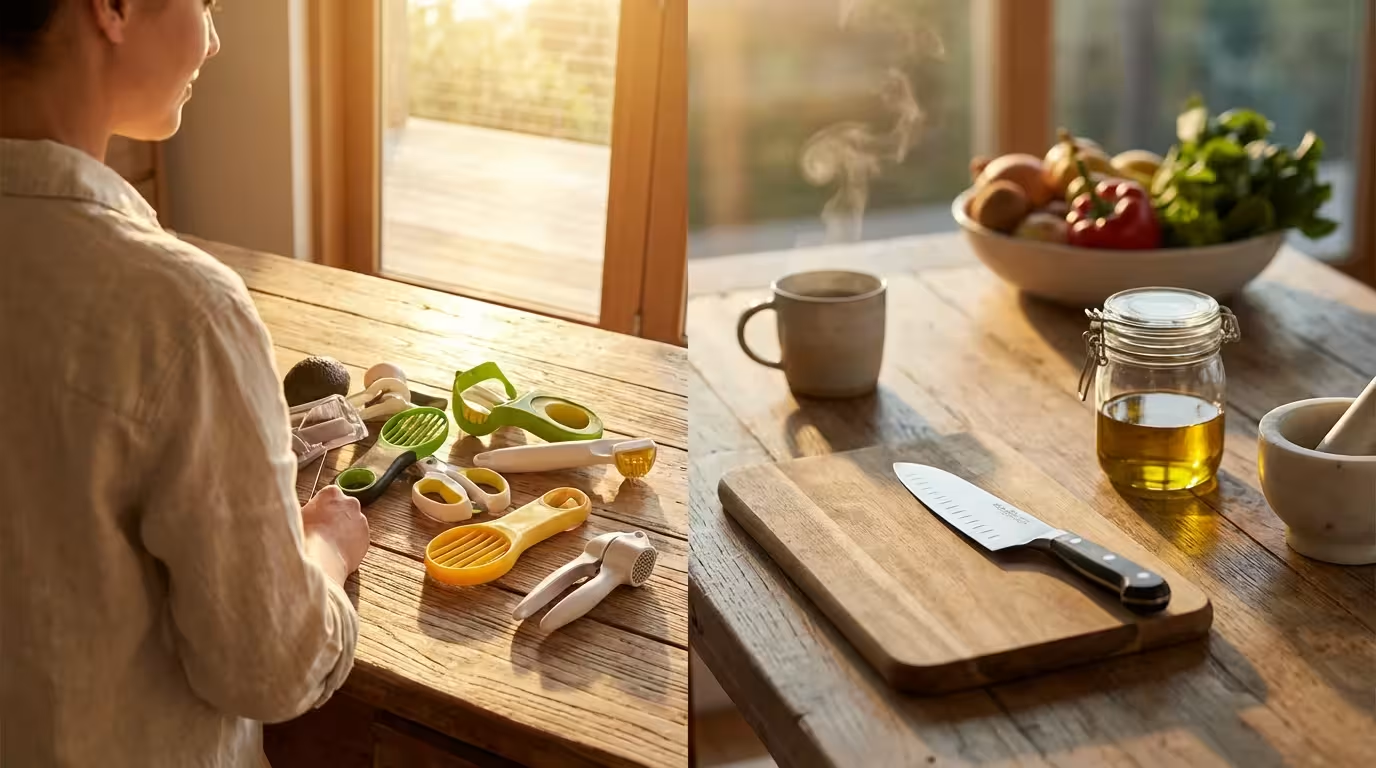
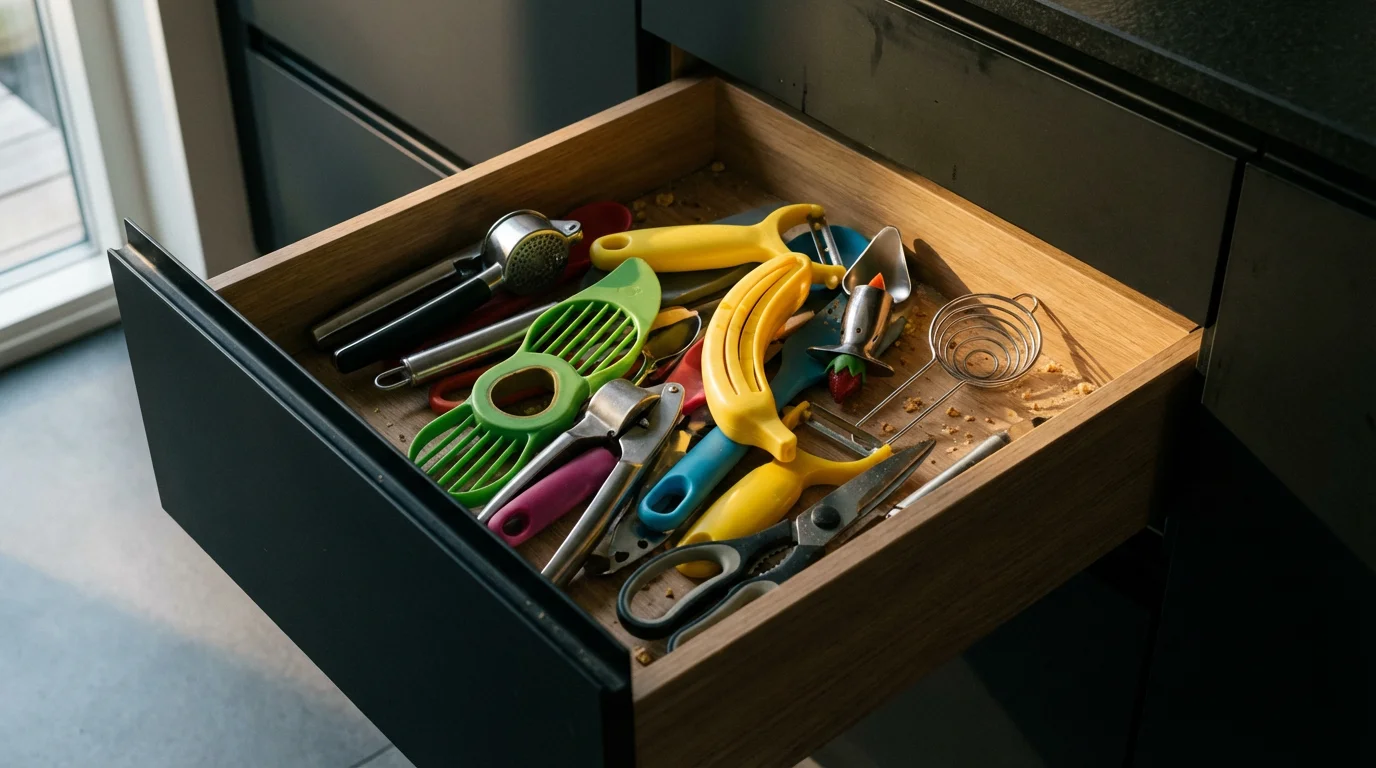
We have all stood in that specific aisle of the home goods store, staring at a brightly colored piece of plastic that promises to revolutionize the way we slice bananas. It costs five dollars. It looks fun. The packaging claims it will save you precious minutes every morning. So, you buy it. Three months later, that banana slicer is buried at the back of a drawer, jammed against a strawberry huller you used once, effectively locking the drawer shut.
Understanding where to spend and save on equipment allows you to invest in high-quality multitasking tools that stand the test of time.
This advice is vital for those following a kitchen registry guide to ensure their first home isn’t cluttered with unnecessary plastic.
If you are starting fresh, focusing on first kitchen essentials will serve you better than buying individual gadgets.
The modern kitchen market is flooded with unitaskers—gadgets designed to perform exactly one specific task. While they promise convenience, they often deliver clutter, frustration, and wasted money. A truly efficient kitchen relies on versatility and durability, not a drawer full of plastic gimmicks that break after a few cycles in the dishwasher.
This guide cuts through the marketing hype. We will identify the tools you should purge from your kitchen (or avoid buying altogether) and highlight the hardworking, multi-use alternatives that professional cooks rely on. Let’s reclaim your drawer space.
The Problem With Unitaskers
Before we dive into specific products, we need to define the enemy: the unitasker. A unitasker is a tool that performs only one function. A mango pitter pits mangoes and nothing else. A strawberry huller removes leaves from strawberries and sits uselessly for the rest of the year. In a spacious commercial kitchen, a few specific tools might make sense for high-volume prep. In your home kitchen, real estate is precious.
If your workspace is already crowded, exploring DIY kitchen organization projects can help you find better ways to store the tools you actually use.
However, not all specialized tools are bad; there are at least 10 kitchen gadgets that actually save time without becoming drawer-blocking clutter.
Learning how to spot quality kitchen tools ensures that the items you do buy will last a lifetime.
The issues with these gadgets generally fall into three categories:
- Cleaning Difficulty: Many plastic gadgets have complex hinges, tiny holes, or serrated edges that trap food debris. If a tool saves you 30 seconds of chopping but takes three minutes to scrub clean, you have a net loss of time.
- Durability Issues: Most cheap gadgets utilize rigid plastics that crack over time or dull blades that cannot be sharpened. In contrast, tools made of stainless steel—a durable metal alloy that resists rust and staining—can often last a lifetime.
- Storage Nightmares: Oddly shaped handles and non-collapsible designs make these tools difficult to organize. They act as “drawer blockers,” tangling with your ladles and tongs.
“The best kitchen gadget is one you’ll actually use every week—not the one with the most Amazon reviews.”
The Garlic Press vs. The Microplane
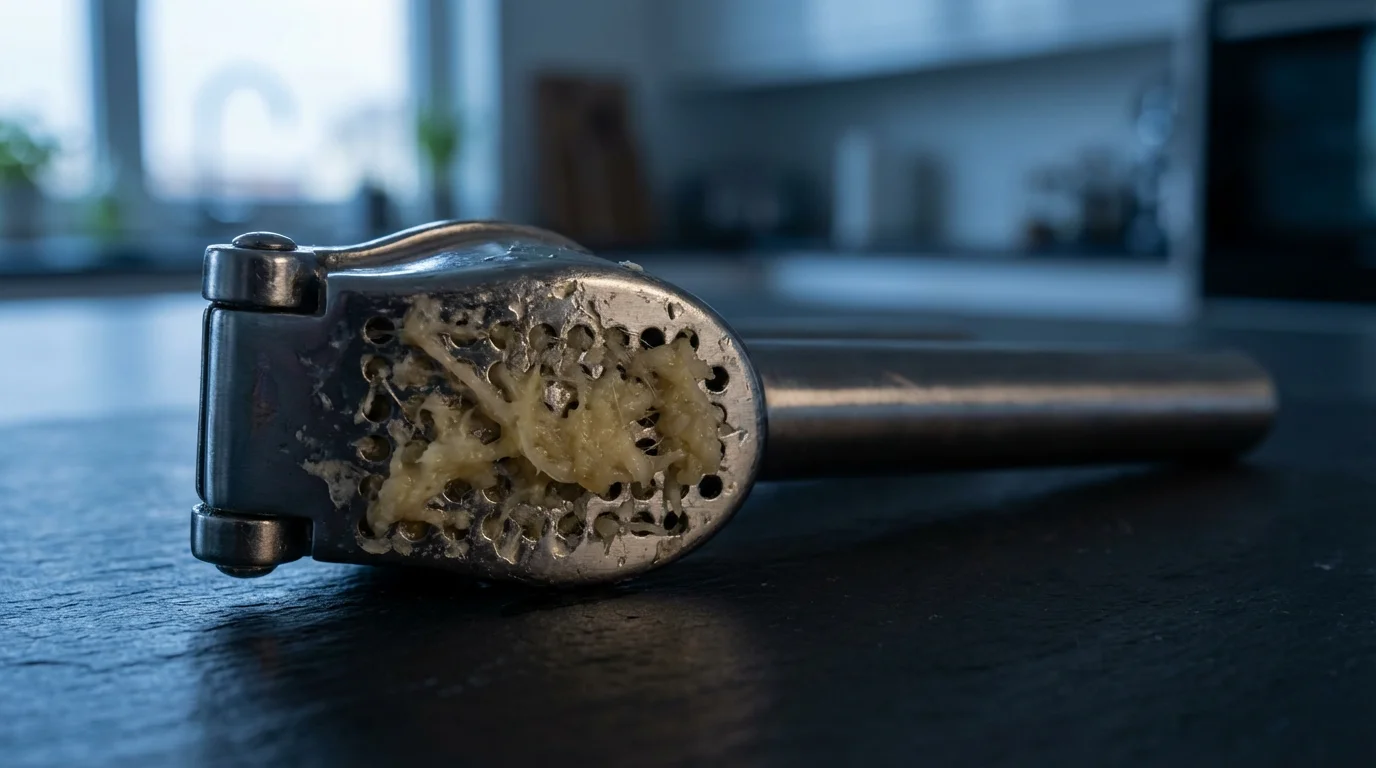
The garlic press is perhaps the most controversial tool in the American kitchen. On paper, it sounds perfect: you crush a clove through a grid of holes, producing minced garlic instantly. In practice, however, a garlic press is often a disappointment. A significant amount of garlic gets left behind in the chamber, the juice sprays awkwardly, and cleaning the tiny grid requires a toothpick or a specialized brush that you will inevitably lose.
Furthermore, pressing garlic crushes the cell walls so aggressively that it releases more allicin, the compound responsible for garlic’s pungency. This can make your dish taste acrid rather than aromatic.
The Better Alternative: A Microplane (Rasp Grater)
Instead of a press, invest in a high-quality rasp-style grater, commonly known by the brand name Microplane. This tool is a champion of versatility. It turns garlic into a fine paste that melts into sauces, but unlike the press, it does not stop there.
You can use the same tool to:
- Zest lemons and limes.
- Grate hard cheeses like Parmesan over pasta.
- Grind whole nutmeg or cinnamon sticks.
- Grate fresh ginger (the fibers are cut cleanly rather than mashed).
Cleaning a Microplane takes seconds—just rinse it immediately under hot water. As Serious Eats notes in their equipment testing, a rasp grater is an essential tool that offers superior performance across multiple ingredients, making the garlic press obsolete for most home cooks.
Avocado Slicers vs. Basic Knife Skills
The avocado slicer is a classic “3-in-1” gadget found in impulse-buy bins everywhere. It usually features a plastic blade to cut the skin, a pitted area to remove the seed, and a fan of blades to slice the fruit. While the concept is appealing, the execution is usually flawed.
Many home cooks find that vegetable spiralizers follow a similar pattern: they are exciting at first but often lose their appeal compared to simple knife work.
The plastic blades are rarely sharp enough to cut through the tough skin of an under-ripe avocado, yet they are dull enough to mash a ripe one. The pitter mechanism often relies on small metal teeth that can clog or fail to grip the seed properly, leading to slips. Additionally, these tools are typically made of bulky plastic that is not ergonomic—meaning it isn’t designed to be comfortable or efficient for your hand size.
The Better Alternative: A Chef’s Knife and a Spoon
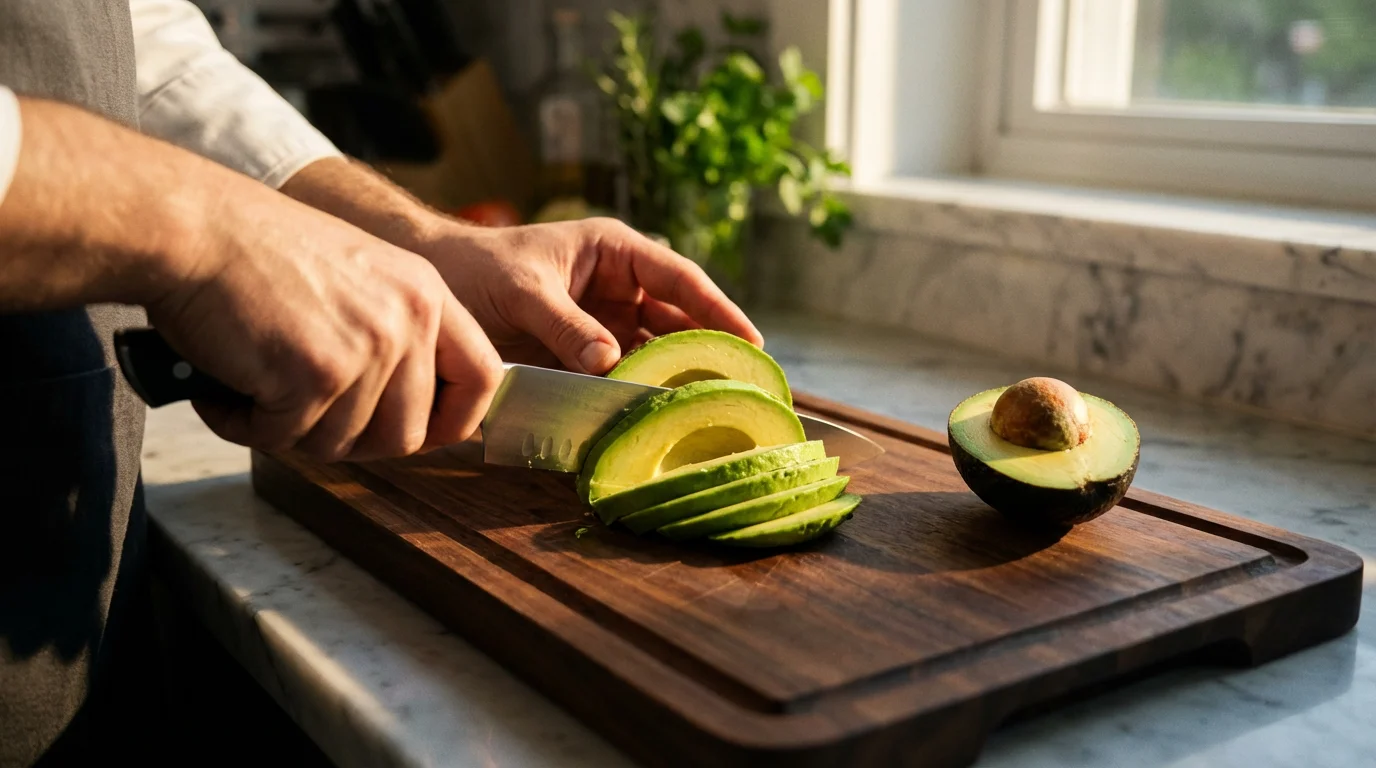
You already own the best avocado tool: a sharp knife and a large metal spoon. Use your knife to halve the avocado. Carefully strike the pit with the knife blade to remove it (or simply pop it out with your thumb if you prefer safety over speed), and then use a large spoon to scoop the fruit out of the skin.
If you want slices, score the flesh while it is still in the shell, then scoop. This method gives you total control over the thickness of your slices, something the fixed plastic blades of a gadget cannot offer. Plus, you don’t have to wash a specialized tool afterward.
Herb Strippers vs. Proper Technique
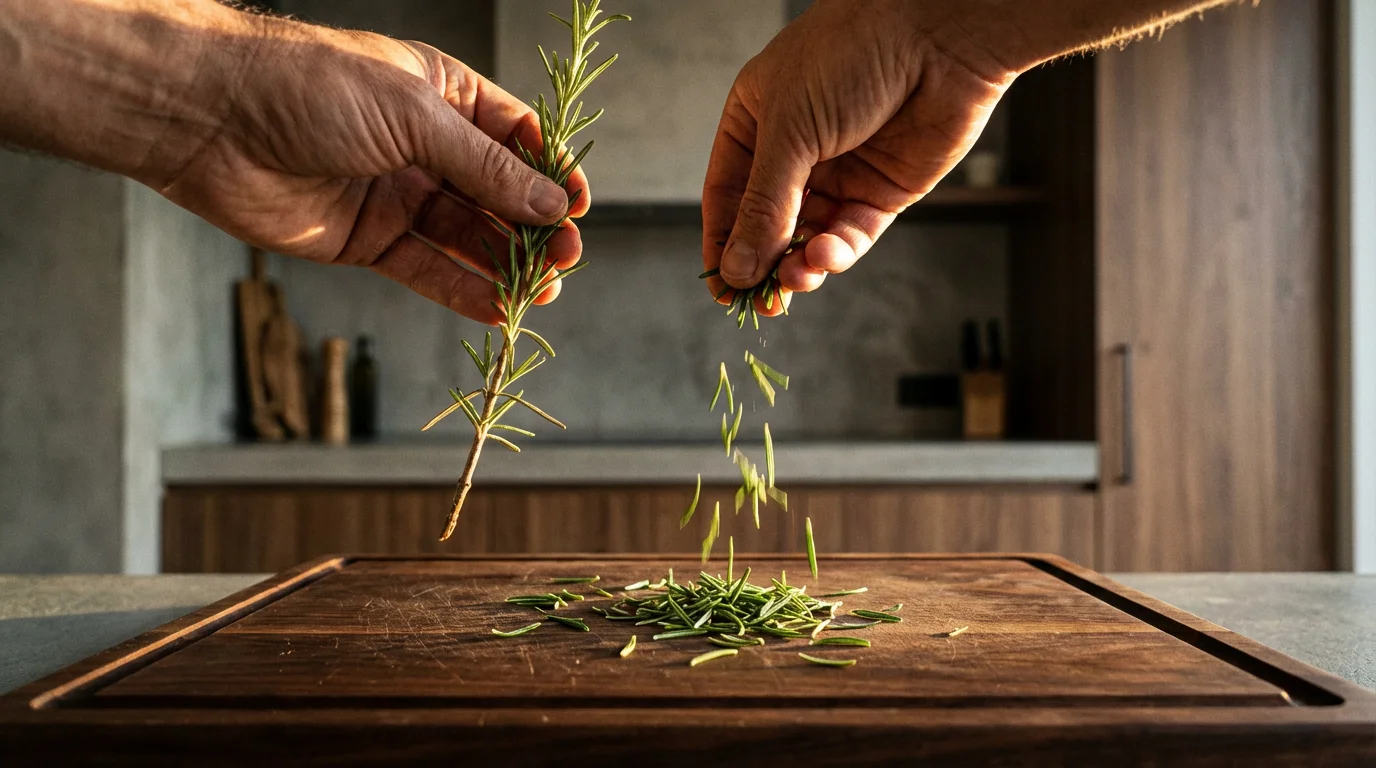
Herb strippers look like small plastic or metal cards with various-sized holes in them. The idea is that you pull a stem of kale, rosemary, or thyme through the hole, and the leaves are stripped off neatly. In reality, stems are rarely perfectly straight or uniform. They get stuck, they snap, or the stripper bruises the leaves, releasing essential oils onto the tool rather than into your food.
The Better Alternative: Your Hands
For woody herbs like rosemary and thyme, simply pinch the top of the stem with one hand and run the fingers of your other hand down the stem against the grain. The leaves pop right off. For kale or chard, grasp the thick stem with one hand and wrap your other hand around the base of the leafy part, pulling upward. It is faster, requires zero washing of equipment, and gives you a tactile sense of the ingredient’s quality.
Meat Shredding Claws vs. Your Dinner Forks
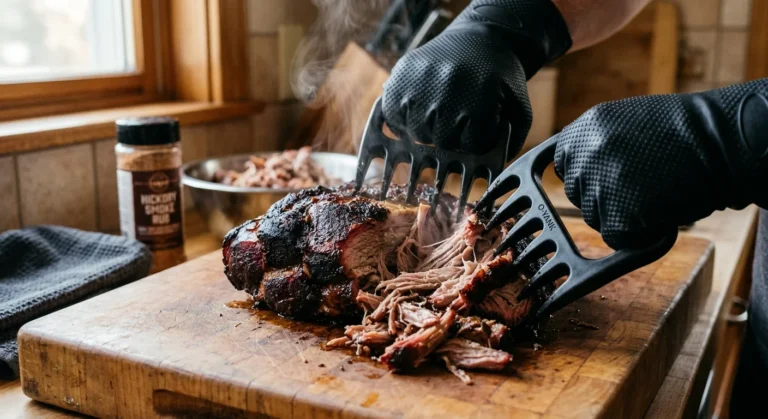
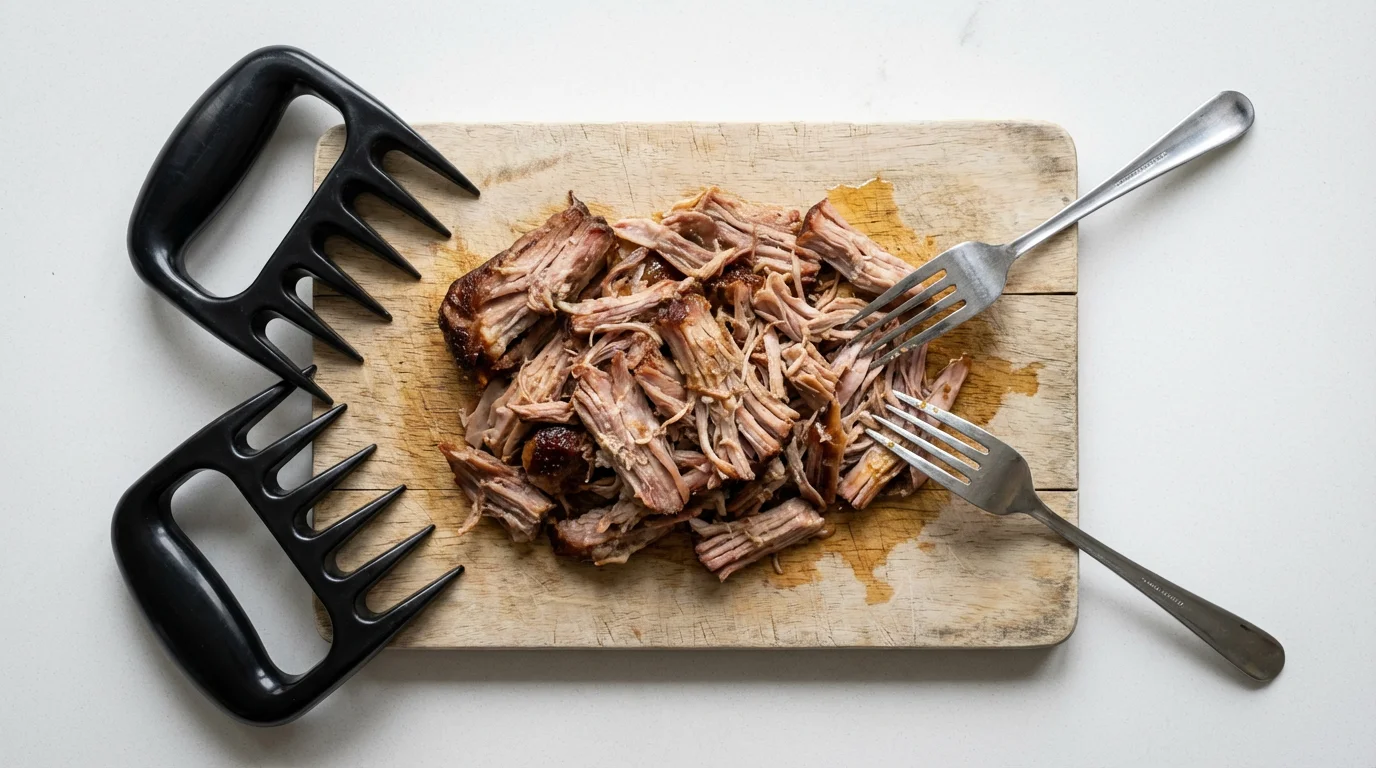
Often marketed to barbecue enthusiasts, meat claws are large, handheld plastic tools that look like bear paws. They are designed to shred pork shoulder or brisket. While they do work, they are massive unitaskers. They take up a tremendous amount of drawer space and are sharp enough to be hazardous when reaching for other tools.
The Better Alternative: Two Forks or a Stand Mixer
For a standard roast, two dinner forks work perfectly fine. Hold the meat with one and pull away with the other. If you are shredding a massive amount of meat for a party, America’s Test Kitchen suggests a brilliant hack: put the cooked, boneless meat into the bowl of your stand mixer and run it with the paddle attachment on low for a few seconds. It shreds the meat evenly in a fraction of the time it takes to use manual claws, and you don’t have to store a pair of “Wolverine” claws in your kitchen.
Egg Separators vs. The Shell
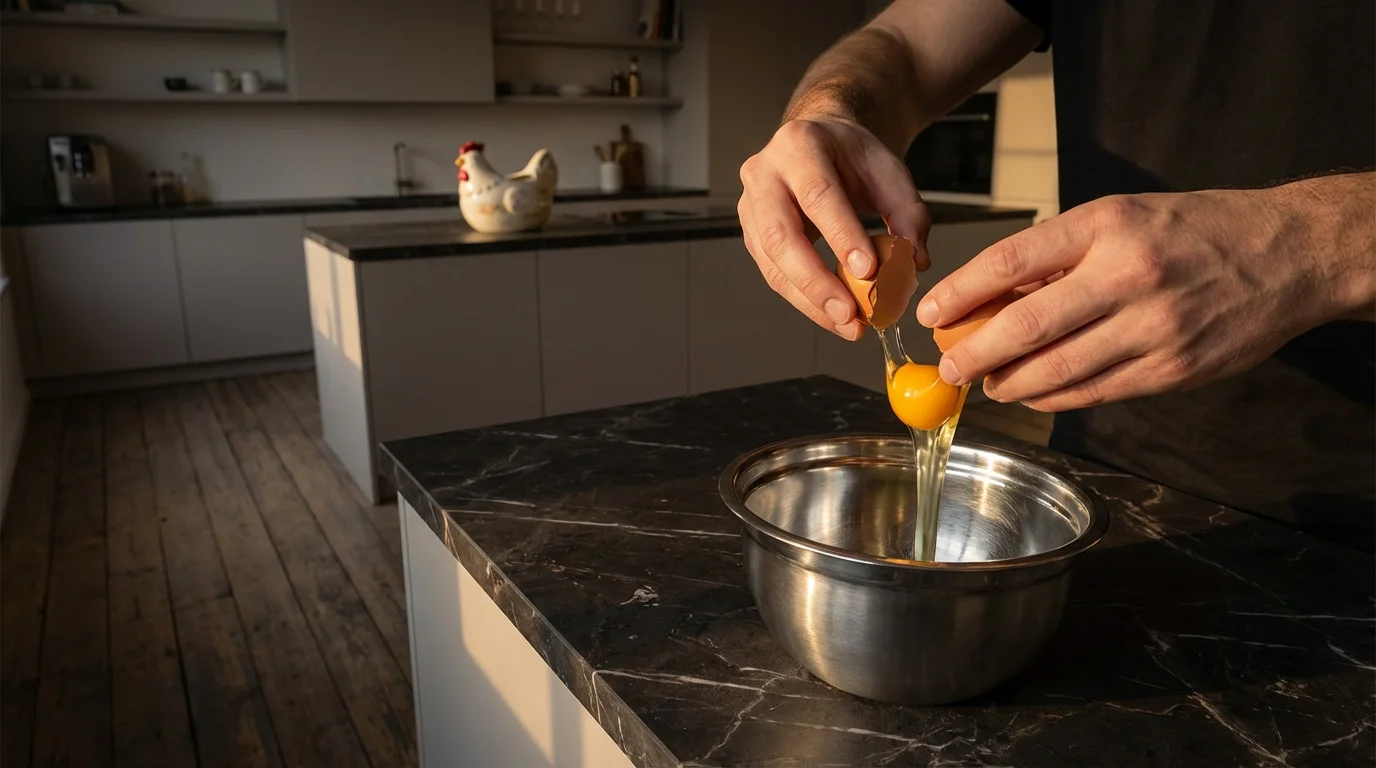
Egg separators come in many forms, from simple plastic slots to novelty ceramic mugs that vomit egg whites out of a character’s mouth. These are the definition of a solution looking for a problem. They are often messy, require you to aim perfectly, and are just one more thing to clean.
The Better Alternative: The Egg Shell
Crack the egg in half and gently pass the yolk back and forth between the two shell halves, letting the white drip into a bowl. The jagged edge of the shell cuts the white cleanly. If you are worried about shell fragments or breaking the yolk on a sharp edge, simply crack the egg into your clean hand. Let the white slip through your slightly open fingers while the yolk remains in your palm. This method is gentle, efficient, and requires zero equipment.
Corn Strippers vs. The Bundt Pan Trick
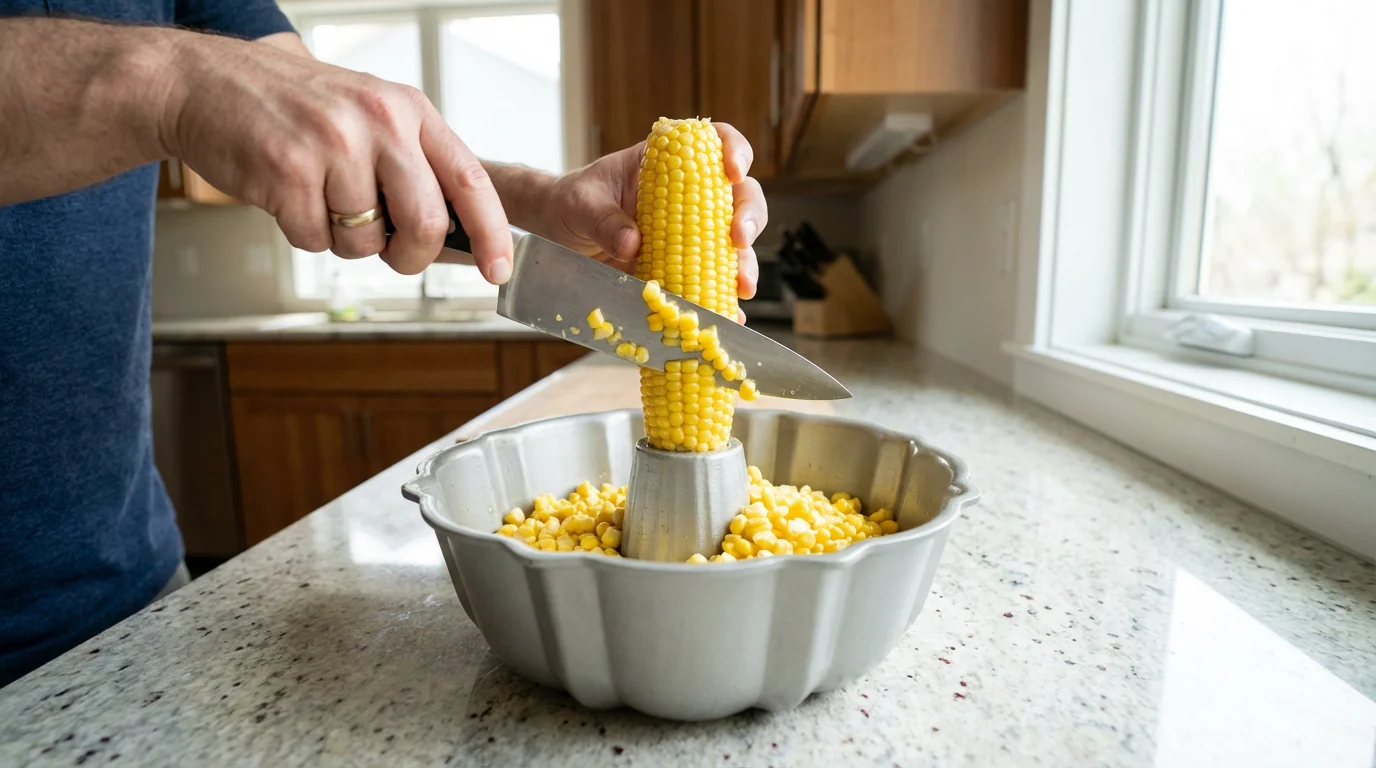
Corn strippers usually feature a circular metal blade or a zipper-like mechanism. You slide them down the cob to remove the kernels. However, cobs vary in size. If the cob is too thick, the stripper gets stuck; if it is too thin, you leave half the kernel behind. These tools can also be dangerous if your hand slips while applying downward force.
Similarly, before purchasing large bowls for produce, you might wonder if salad spinners are really necessary or just another bulky unitasker.
The Better Alternative: A Bundt Pan and a Knife
Stability is the key to cutting corn safely. Place the tip of the corn cob into the center hole of a Bundt pan (or place a small inverted bowl inside a large mixing bowl). Hold the corn steady at the top and slice downward with your chef’s knife. The kernels will fall into the bowl/pan rather than bouncing all over your counter. This method uses tools you likely already own and accommodates any size of corn.
Comparison: Gadgets vs. Essentials
Here is a quick reference guide to help you decide what to keep and what to toss.
| Useless Gadget | Essential Alternative | Why Switch? | Cleanup Difficulty |
|---|---|---|---|
| Garlic Press | Microplane / Knife | More versatile, less waste, better texture. | High vs. Low |
| Avocado Slicer | Spoon & Knife | Durability, control over slice thickness. | Medium vs. Low |
| Strawberry Huller | Paring Knife | Knives don’t get lost in drawers; precise. | Low vs. Low |
| Egg Separator | Clean Hands / Shell | Faster, gentle on yolks. | Medium vs. None |
| Salad Dressing Shaker | Mason Jar | Jars are multi-use and glass (no odors). | High (complex lids) vs. Low |
| Pizza Scissors | Chef’s Knife / Pizza Wheel | Scissors are hard to clean; wheels are fast. | High vs. Medium |
The Exception: When to Buy the Gadget
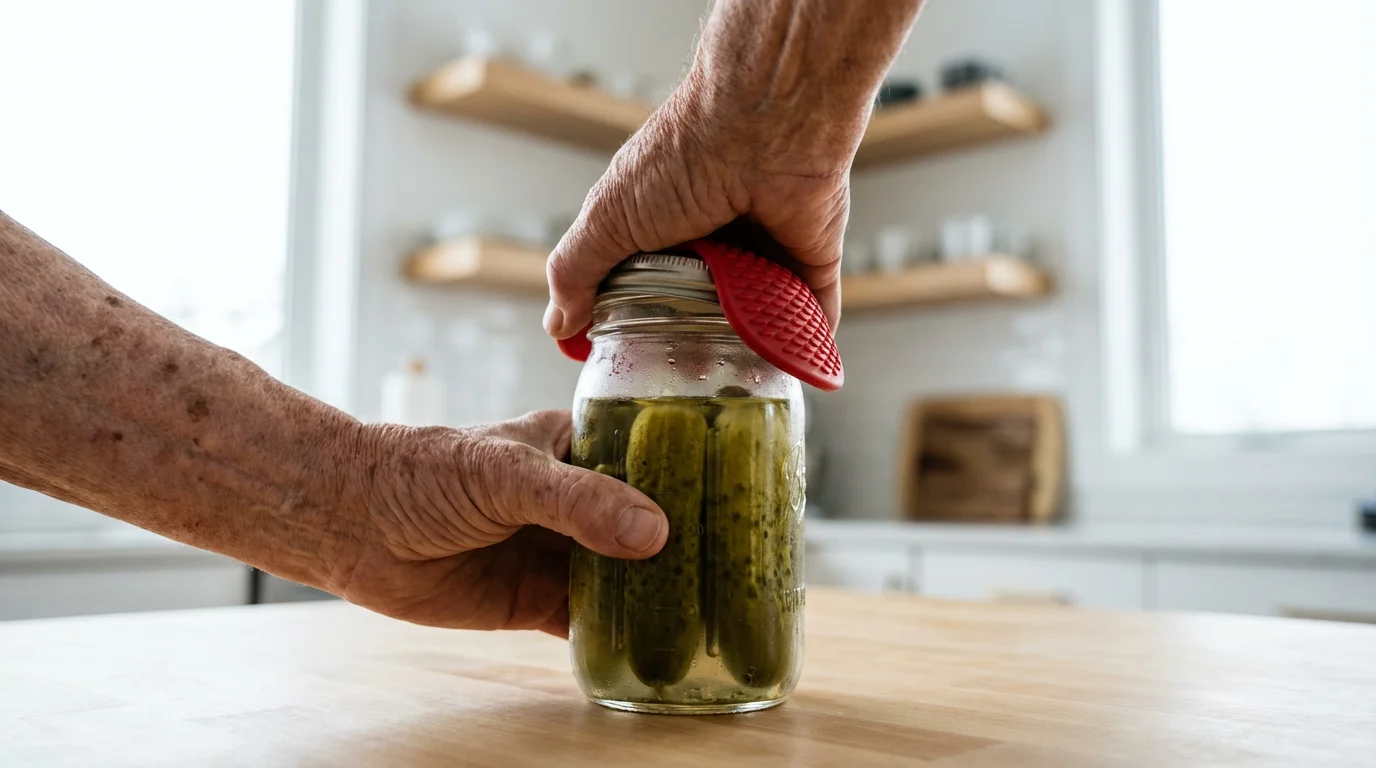
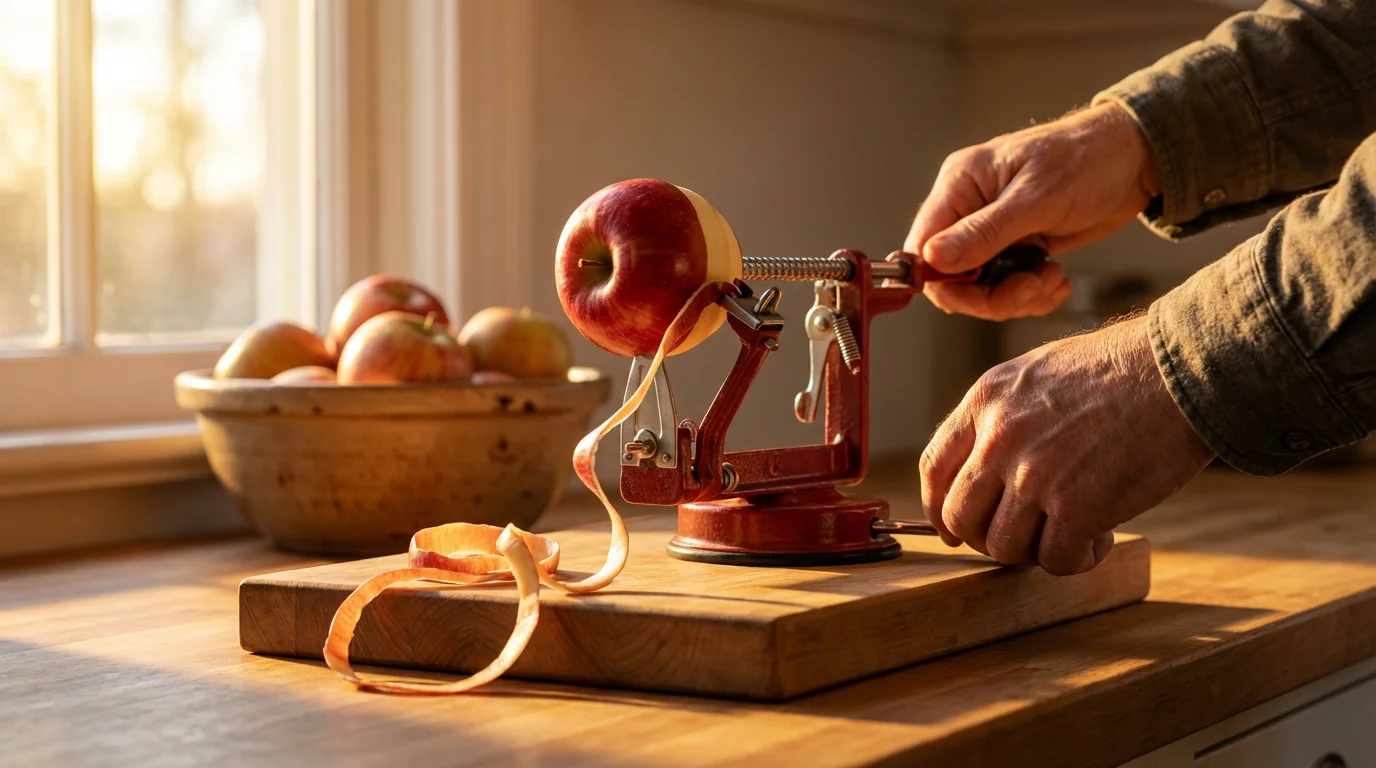
Being skeptical doesn’t mean you must be a luddite. Sometimes, a specialized tool is genuinely worth the space, usually when the task is high-volume or physically difficult. This is often where accessibility comes into play—what is a “useless gadget” to a professional chef might be a daily essential for a cook with arthritis or limited grip strength.
For example, finding ergonomic can openers is a priority for those with arthritis or limited hand mobility.
However, assuming you have standard mobility, here are a few single-purpose tools that actually justify their existence:
- Cherry Pitter: If you bake cherry pies or have children who love cherries, a pitter is indispensable. Pitting cherries with a knife is a messy, juice-splattering disaster. A good pitter handles volume quickly.
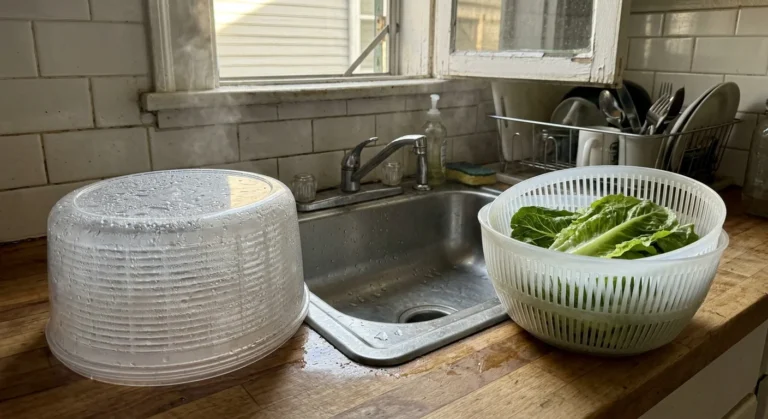
- Salad Spinner: It is nearly impossible to dry greens effectively with just paper towels. Wet greens mean salad dressing slides right off. A spinner uses centrifugal force to dry greens perfectly, making your salads taste significantly better.
- Instant-Read Thermometer: You cannot tell if chicken is cooked by poking it. You need data. As Wirecutter frequently highlights, a fast, accurate thermometer is a safety essential, not a luxury.
Frequently Asked Questions
Are silicone kitchen gadgets better than plastic?
Generally, yes. Silicone is a flexible, heat-resistant rubber-like material that is chemically stable. Unlike cheap hard plastics, silicone won’t crack when dropped and can withstand high temperatures (often up to 450°F or more), making it dishwasher safe and durable. However, silicone can absorb strong odors (like garlic or cumin) over time, so stainless steel is still superior for things like mixing bowls or presses.
What does “BPA-free” mean and does it matter for gadgets?
BPA (Bisphenol A) is an industrial chemical used to make certain plastics and resins. Research has suggested links between BPA and various health issues. “BPA-free” indicates the product is made without this specific chemical. While this is safer, many experts recommend avoiding plastic entirely where food is heated or highly acidic (like tomato sauce) and opting for glass or stainless steel instead.
My knife skills are bad. Should I buy a chopper?
If you struggle with chopping, a manual vegetable chopper (the kind where you slam a lid down onto a grid) can be helpful, but they are notoriously difficult to clean. A better long-term investment is a basic knife skills class or simply practicing with a sharp knife. A sharp knife is safer than a dull one because it requires less force, reducing the chance of slipping. If you must use a chopper, look for one that disassembles completely for cleaning.
Disclaimer: Product prices and availability change frequently. Prices shown were accurate at time of writing but may have changed. We may earn a small commission from purchases made through links on this site, at no extra cost to you. Always verify current pricing on the retailer’s website before purchasing.