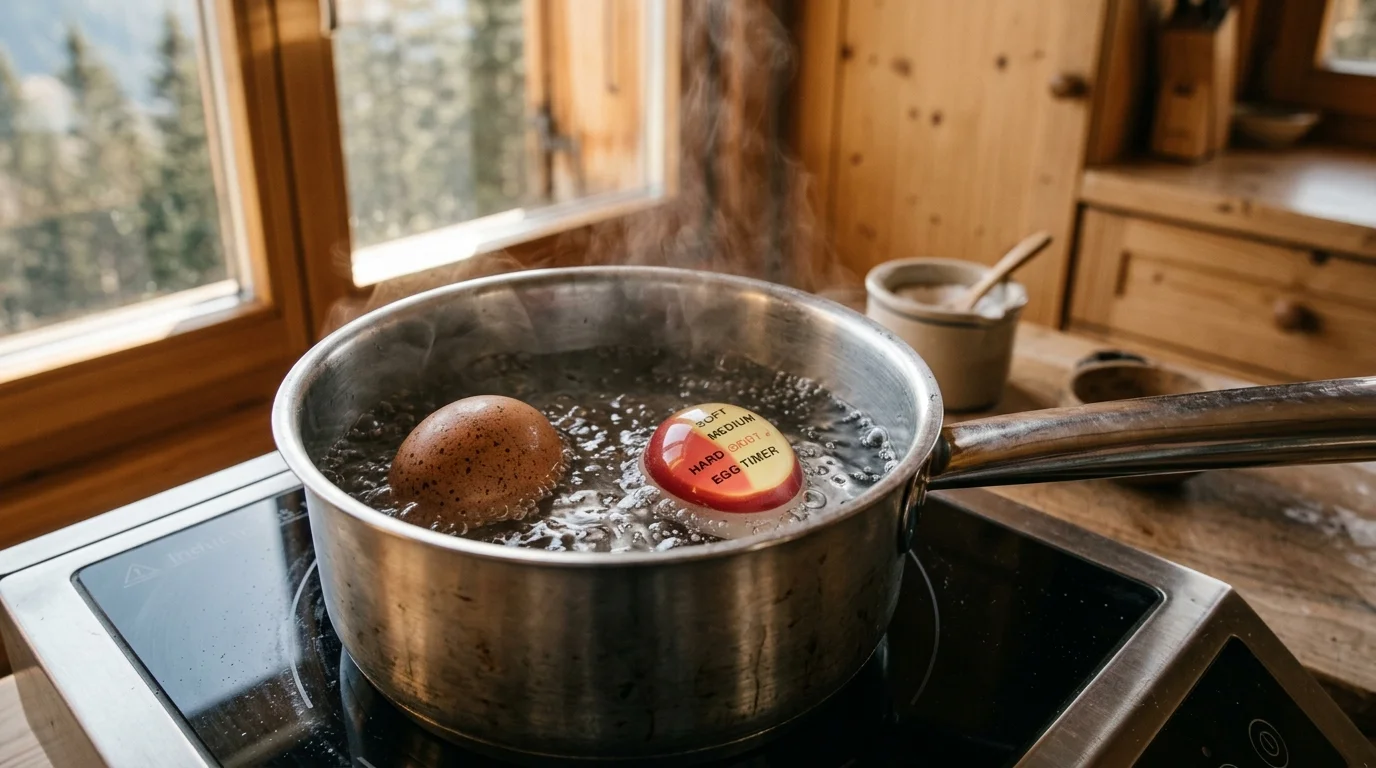
Living at 8,200 feet ruins standard egg cooking times because atmospheric pressure forces water to boil at just 198°F instead of 212°F. You end up with raw, runny whites or dry, chalky yolks.
Dealing with mountain elevation often pushes cooks to evaluate electric vs stovetop appliances to find the most consistent heat source.
Conventional sea-level boiling charts fail here because thermal transfer changes non-linearly as air pressure drops. Chemical density timers bypass this altitude calculation by absorbing heat at the exact rate of real egg proteins.
While digital probe thermometers monitor your water temperature, color-changing density sensors track internal egg coagulation. That specific mechanic delivers a dependable soft boiled egg altitude cooks can finally count on every morning.
The Thermodynamics of Boiling Eggs at 8,200 Feet
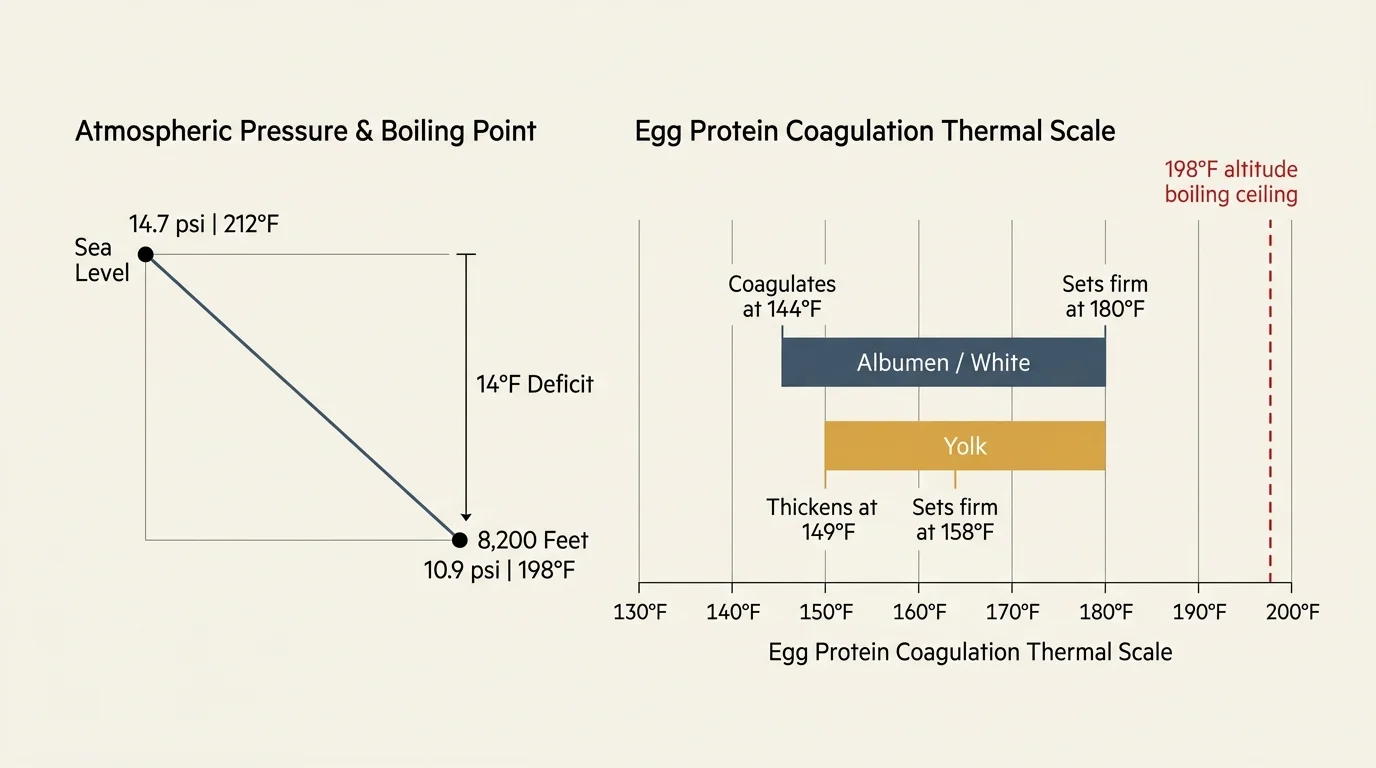
Cooking at 8,200 feet above sea level presents a physical obstacle that home cooks at lower elevations never encounter. Atmospheric pressure drops from 14.7 pounds per square inch to roughly 10.9 pounds per square inch.
Upgrading your cooking setup with responsive induction cooktops can help bring water back to a boil faster after dropping in cold eggs.
Similar to how thin air disrupts boiling, high-altitude baking presents unique thermal transfer and moisture challenges that require specialized pan materials.
Because atmospheric pressure is lower, water molecules escape into vapor at a much lower energy threshold. As a result, your boiling water caps at 198°F rather than the standard 212°F.
When boiling eggs high altitude conditions alter how heat moves into the shell. That 14-degree deficit drastically slows down the rate of conductive heat transfer from the water bath into the albumen.
Egg proteins do not care about time; they care about temperature. Egg white proteins begin coagulating at 144°F and set firm at 180°F, while yolk proteins thicken at 149°F and set at 158°F.
According to culinary tests from Serious Eats — Equipment Reviews, cooking eggs relies entirely on internal heat accumulation rather than simple clock timing. Lower ambient water temperatures stretch cooking windows unpredictably.
At 212°F, the intense thermal differential pushes heat rapidly into the egg center. At 198°F, that heat gradient is shallower, which causes the outer white to take significantly longer to set.
If you pull the egg based on a standard sea-level recipe, the white remains a loose, unappetizing liquid. If you leave it in too long, the yolk dries out before the white firms up.
Compensating by simply adding two minutes rarely works consistently. Fluctuations in ambient cabin humidity, water volume, and burner output distort manual timing calculations at high elevations.
How Color-Changing Chemical Density Timers Work
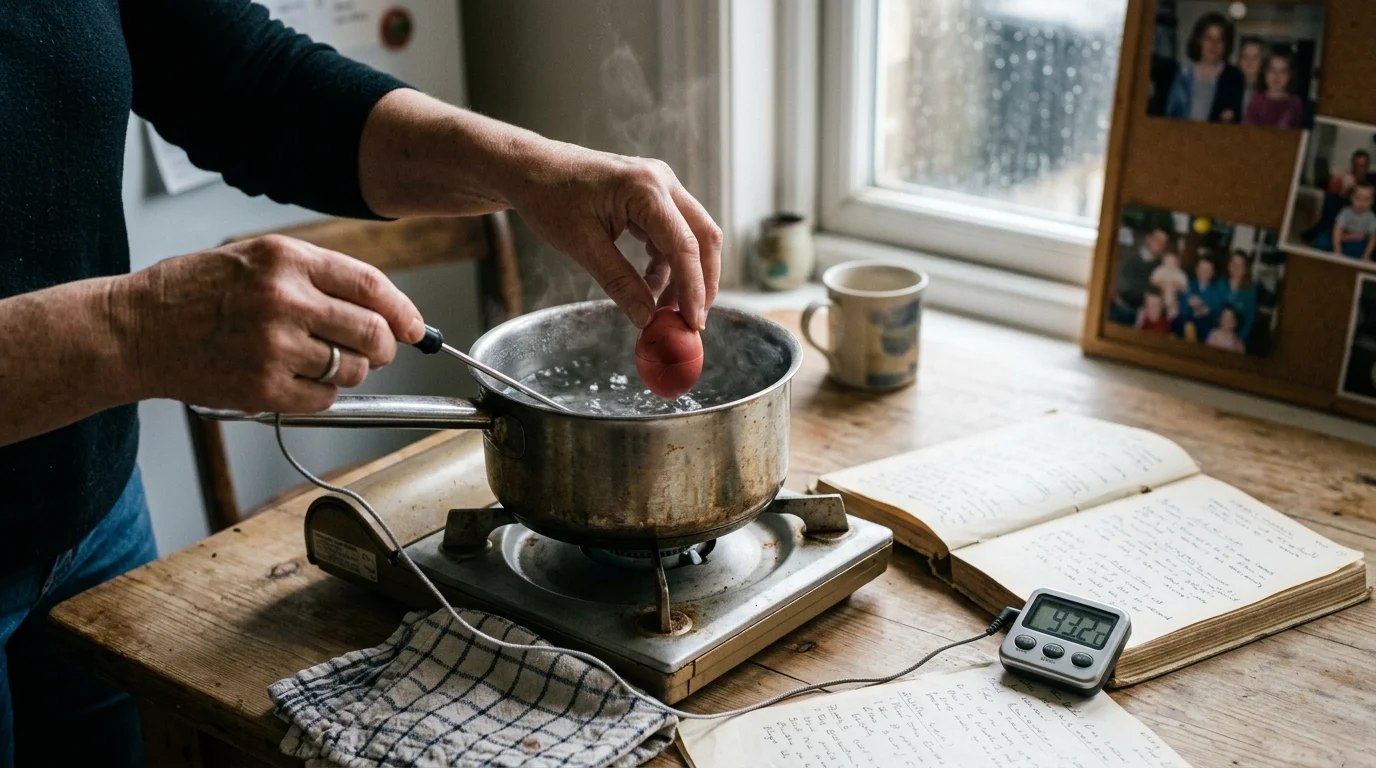
A color changing egg timer elevation cooks rely on looks like a plastic half-egg. Despite its toy-like appearance, it functions as an analog thermal mass simulator.
Similarly, cooks managing low-temperature water baths often rely on insulated sous-vide containers to prevent ambient heat loss and stabilize cooking conditions.
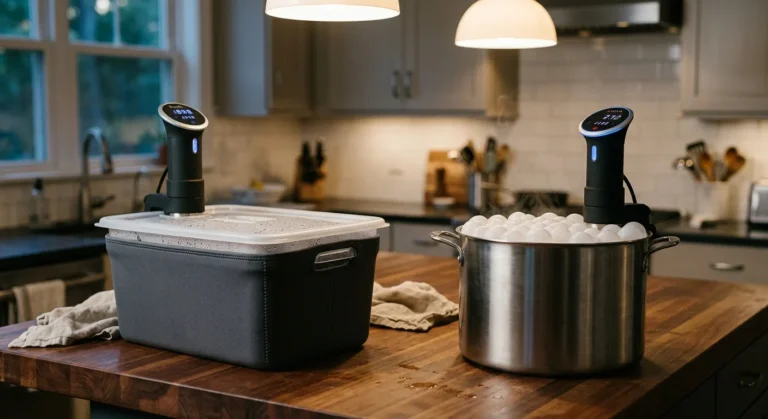
Cooks who prefer not to monitor a stovetop pot often use sous vide precision cookers to hold water at an exact coagulation temperature below boiling.
Manufacturers produce these tools from polyresin calibrated to match the thermal conductivity and density of an average chicken egg. Inside the resin sits a thermochromic chemical layer that reacts to rising core temperatures.
Most modern units are BPA-free, which means they are made without a chemical (BPA) that some people prefer to avoid in food preparation. The resin body absorbs heat simultaneously with the actual eggs submerged beside it.
Many cooks dismiss this tool as a unitasker, meaning a gadget that only does one specific task. However, this focused design is precisely why it succeeds where standard kitchen stopwatches fail.
As heat penetrates the solid resin core, the thermochromic paper darkens from the outer rim inward. The changing color visually maps the movement of heat toward the center of the egg.
Because the timer sits directly in your pot, it experiences the exact same thermal environment as your breakfast. If your water boils at 198°F instead of 212°F, the timer absorbs heat more slowly.
This passive sensor does not calculate minutes; it calculates cumulative thermal energy absorption. It tracks real heat saturation without requiring you to do complex altitude arithmetic.
When the dark border reaches the indicator line marked soft, your egg yolk has reached approximately 145°F. The sensor automatically accounts for the slow heat transfer caused by low atmospheric pressure.
The Limits of Digital Probe Thermometers in Mountain Cooking
Many precision cooks turn to digital probe thermometers to bring scientific accuracy to high-elevation cooking. High-end probes feature needle-thin tips and rapid response times.
Even specialized sub-degree precision thermometers designed for sensitive liquid cooking cannot track the internal coagulation of an egg without puncturing the shell.
These devices typically feature a braided wire and a stem made of stainless steel, a durable metal that resists rust and staining. Premium models also include silicone components, a flexible, heat-resistant material used in many kitchen tools.
A probe thermometer excels at reading the internal temperature of a roasted pork loin or monitoring a candy syrup bath. When applied to intact boiling eggs, however, it encounters severe physical constraints.
You cannot insert a digital probe into an egg before boiling without fracturing the brittle shell. Piercing the shell causes raw albumen to stream out into the water bath, ruining the egg instantly.
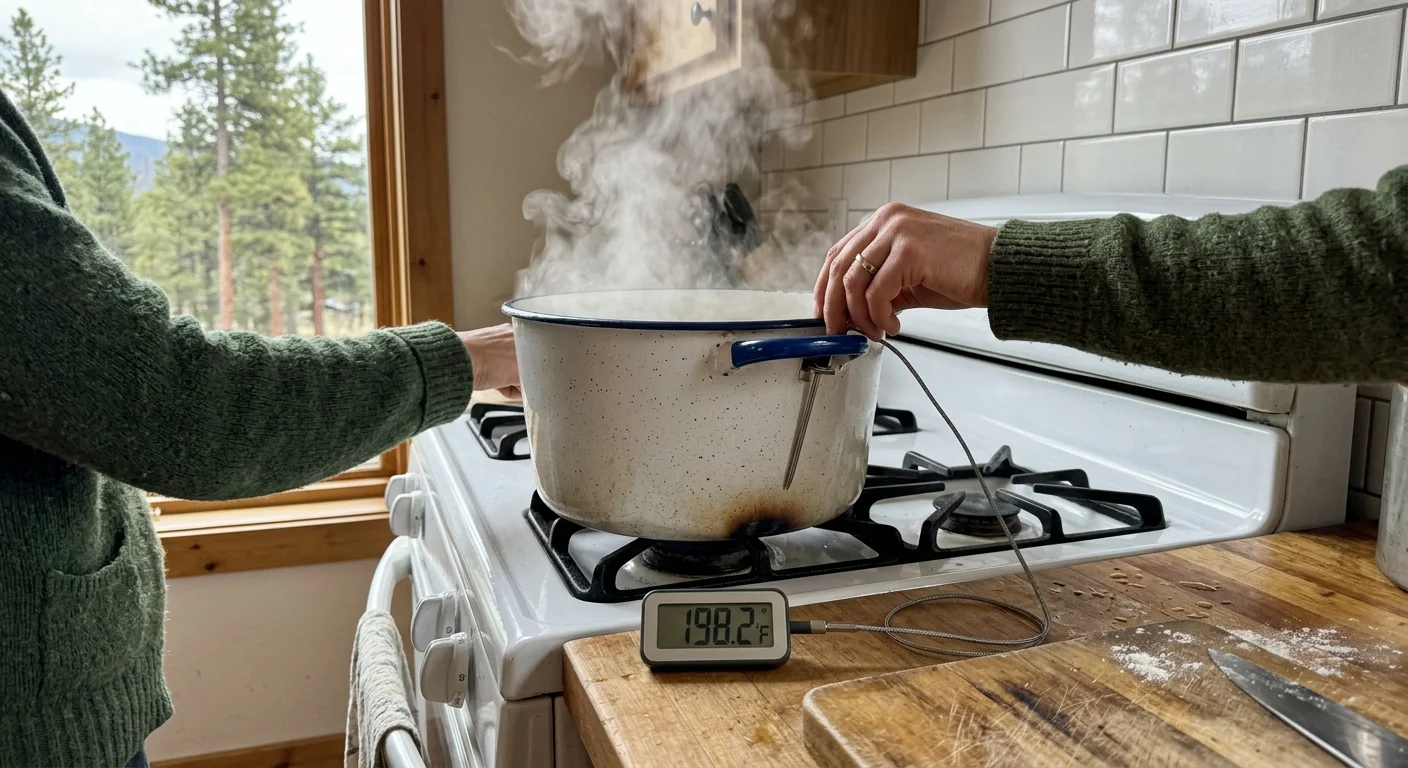
If you dangle the probe in the water instead, it only tells you the boiling point of the water. At 8,200 feet, you already know the water cannot exceed 198°F.
A probe in the water monitors the environment, but it cannot measure the egg core. It gives you zero data regarding how far heat has penetrated through the egg white.
Evaluations from America’s Test Kitchen highlight that simple mechanical and visual tools often outperform complex digital sensors for routine tasks. In boiling water, water temperature alone does not reveal egg protein doneness.
Some cooks try removing the egg midway through cooking to poke a needle probe through the shell. This puncture shatters the structural integrity of the egg and creates a messy, unevenly cooked breakfast.
“At high altitude, your kitchen clock lies to you, but thermodynamic absorption never does.” — High-Altitude Kitchen Specialist
Head-to-Head Comparison: Timer vs. Probe at Elevation
Choosing the right tool for an 8,200-foot kitchen requires balancing measurement accuracy against daily practicality. You need an instrument that solves the elevation temperature deficit without creating unnecessary morning clutter.
If you need to transfer boiling water safely between prep vessels at elevation, using stainless steel heat-safe funnels helps prevent dangerous splashing.
For a hands-off alternative that regulates steam rather than boiling water, specialized countertop egg cookers can also eliminate elevation timing errors.
The table below compares four distinct tools used by mountain cooks to control egg doneness. Each option addresses heat measurement through a fundamentally different mechanism.
| Gadget Model | Operational Mechanism | High-Altitude Accuracy (Soft Yolk) | Physical Form & Materials | Approximate Price |
|---|---|---|---|---|
| Norpro Egg Rite | Thermochromic resin core density sensor | High (adjusts to slower thermal uptake) | BPA-free polyresin composite | $7 – $10 |
| ThermoWorks DOT | Direct immersion stainless steel thermistor probe | Low (measures bath temp, not egg core) | Stainless steel stem, braided steel cable | $45 – $50 |
| Marathon Dual Digital Timer | Quartz-crystal countdown digital stopwatch | Poor (fails without elevation time math) | ABS plastic casing, digital LCD display | $15 – $20 |
| Instant Pot Pro 6-Qt | Pressurized steam vessel (sealed chamber) | High (restores boiling temp to 239°F) | Stainless steel inner pot, electronic valve | $130 – $170 |
As demonstrated in product testing from Wirecutter — Kitchen, dedicated kitchen tools must earn their drawer space by solving real cooking problems. The polyresin timer earns its spot by removing high-altitude guesswork entirely.
The digital stopwatch fails because standard recipe times assume a 212°F water bath. At 198°F, running a sea-level seven-minute timer results in an undercooked egg with completely runny whites.
The probe thermometer delivers laboratory-grade temperature data for your water, yet it remains blind to core egg coagulation. It forces you to rely on external estimates anyway.
An electric pressure cooker solves the altitude problem by artificially elevating internal pressure to raise the water boiling temperature. However, it takes ten minutes just to come to pressure, making it cumbersome for two breakfast eggs.
Worked Example: A Seven-Minute Egg at 8,200 Feet
To see how these measurement methods perform in a real kitchen, consider this worked scenario. You are cooking two Large Grade A eggs (57 grams each) straight from a 38°F refrigerator at 8,200 feet.
To shave minutes off water heating at high altitude, many cooks use fast-boiling electric kettles to bring water to temperature before filling the saucepan.
Once peeled, running your cooked eggs through an egg slicer creates uniform portions without tearing soft yolks.
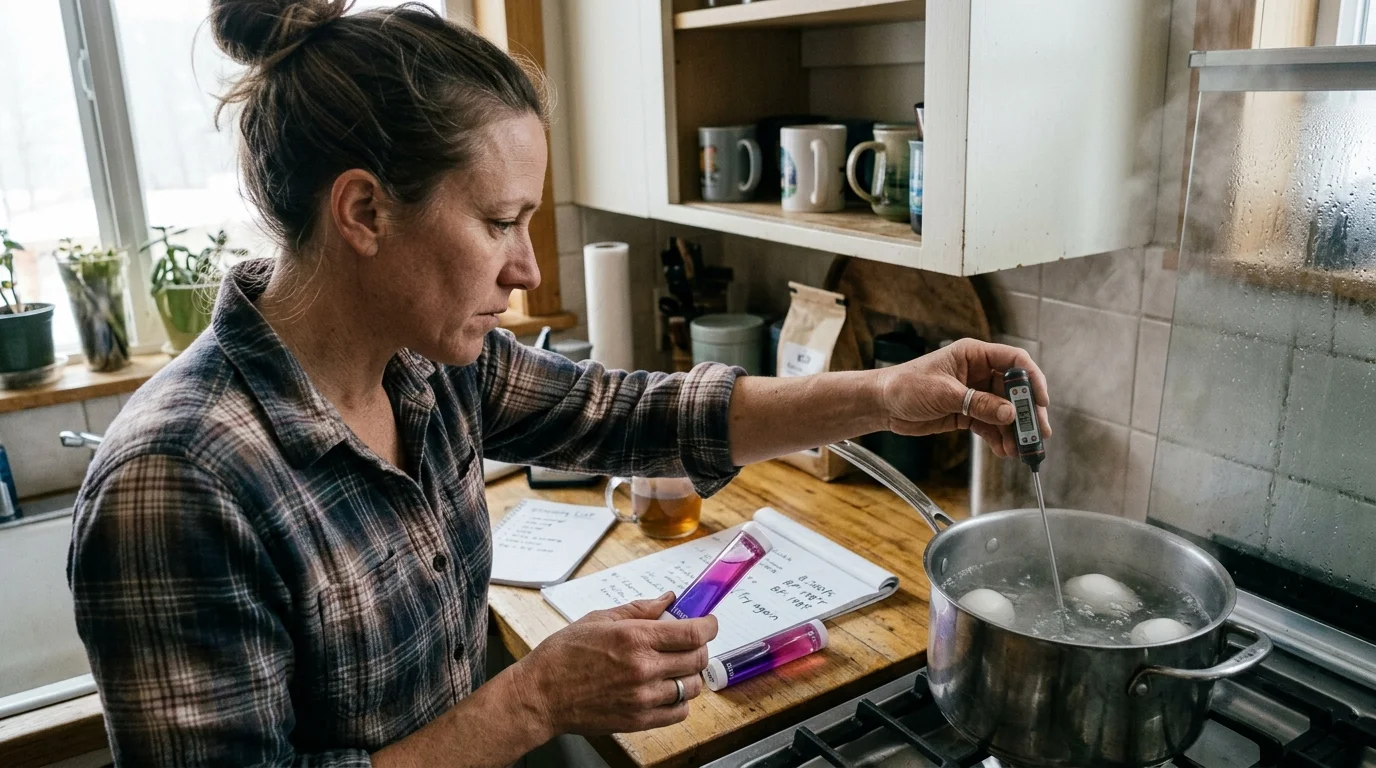
You fill a 1.5-quart saucepan with 4 cups of tap water and bring it to a rolling boil. Your digital probe thermometer reads a stable 198.1°F, confirming your altitude boiling point.
Scenario A relies on a standard digital timer set for seven minutes, the classic sea-level recommendation for a jammy yolk. You lower the eggs into the boiling water and start the countdown.
When the alarm sounds at 7 minutes, you transfer the eggs into an ice bath for three minutes. You crack the shell, only to discover completely liquid whites that slough away from an unheated yolk.
Because 198°F water transfers heat slower, your egg needed roughly 9 minutes and 45 seconds to reach the same internal doneness. The fixed timer failed because it could not sense the thermal deficit.
Scenario B uses the Norpro Egg Rite color-changing density timer dropped into the saucepan alongside the cold eggs. As the water boils, the red face slowly turns dark purple from the outer edge inward.
You ignore the kitchen clock completely and watch the color line approach the soft indicator mark. At 8,200 feet, reaching this line takes precisely 9 minutes and 40 seconds of boil time.
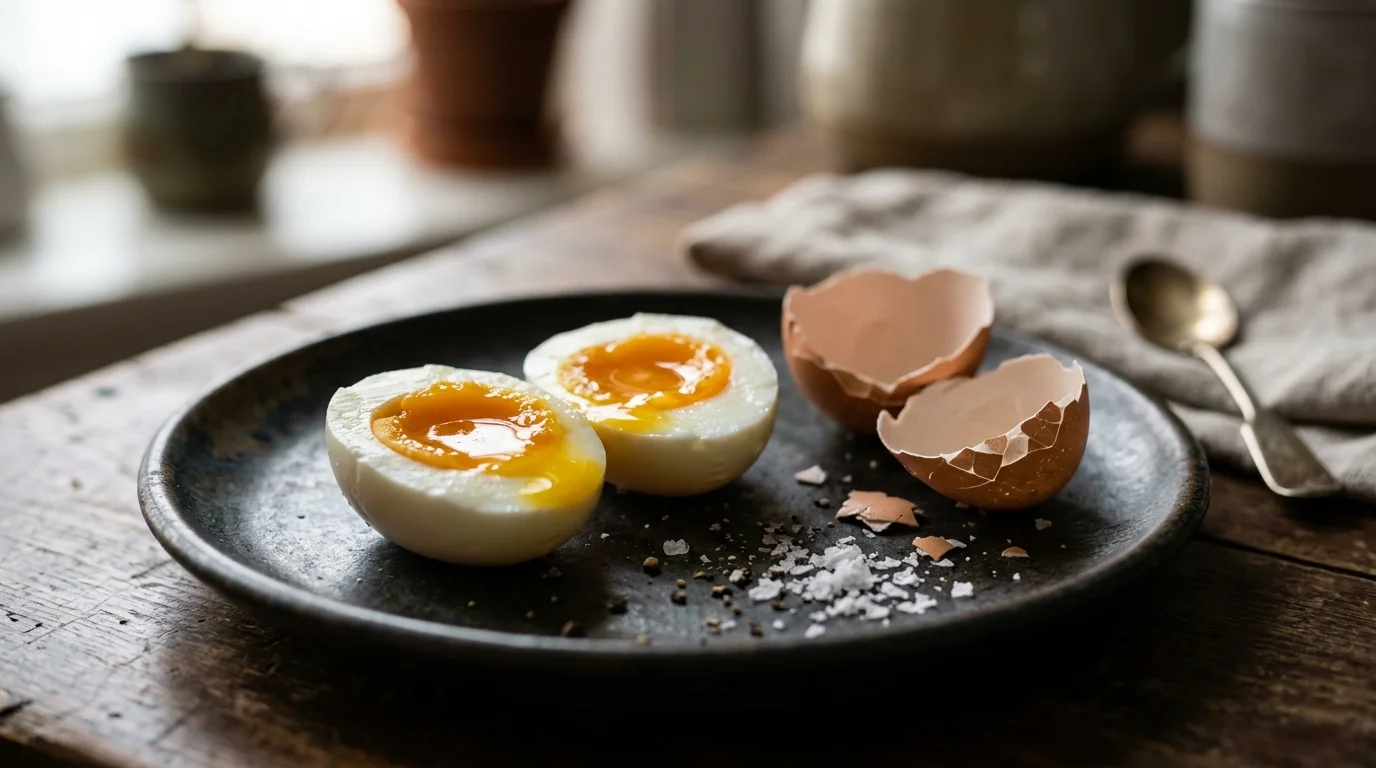
You pull the eggs the instant the sensor reaches the line and plunge them into ice water. The result is a fully set, tender egg white surrounding a warm, jammy yolk.
Durability, Cleaning, and Mountain Kitchen Storage
Living in a high-elevation cabin or mountain home often means working with compact kitchen storage. Gadgets must withstand routine use without consuming precious drawer real estate.
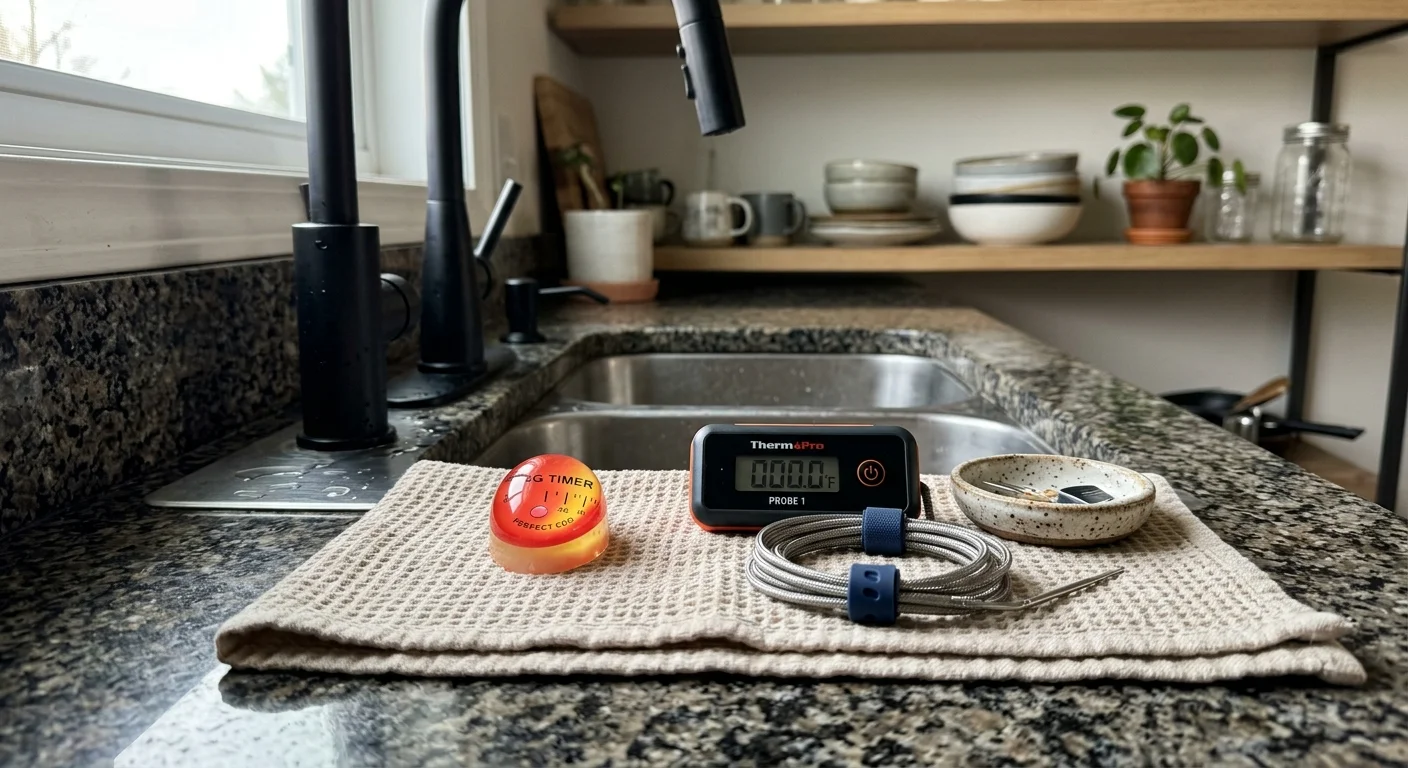
A color-changing density timer measures roughly 2.25 inches long and 1.5 inches wide, occupying almost no space. You can store it directly inside your egg carton or rest it in a small prep ramekin.
However, resin density timers have specific maintenance vulnerabilities that you must respect. They are not dishwasher safe, meaning they cannot be cleaned in a dishwasher without suffering internal structural damage.
The intense drying cycle of a residential dishwasher causes thermal shock that cracks the outer resin casing. Once water penetrates behind the plastic lens, the thermochromic paper clouds and becomes unreadable.
You must clean the timer by hand using warm water and mild dish soap after it cools down naturally. Never drop a boiling-hot resin timer into freezing tap water, as the sudden contraction will fracture the material.
Digital probe thermometers demand more delicate cleaning care and larger storage footprints. You cannot submerge their braided steel cables or probe connectors without shorting the internal sensor.
A good probe thermometer features an ergonomic handle, meaning it is designed to be comfortable to hold and use during long cooking sessions. Many also offer a non-slip grip, which is a handle designed to not slide in your hand, even when wet.
While those ergonomic features shine when smoking brisket, wrapping and storing long steel cables for a simple boiled egg feels excessive. The small resin timer requires zero cords, zero batteries, and zero calibration.
Buying Verdict: When to Use Each Tool
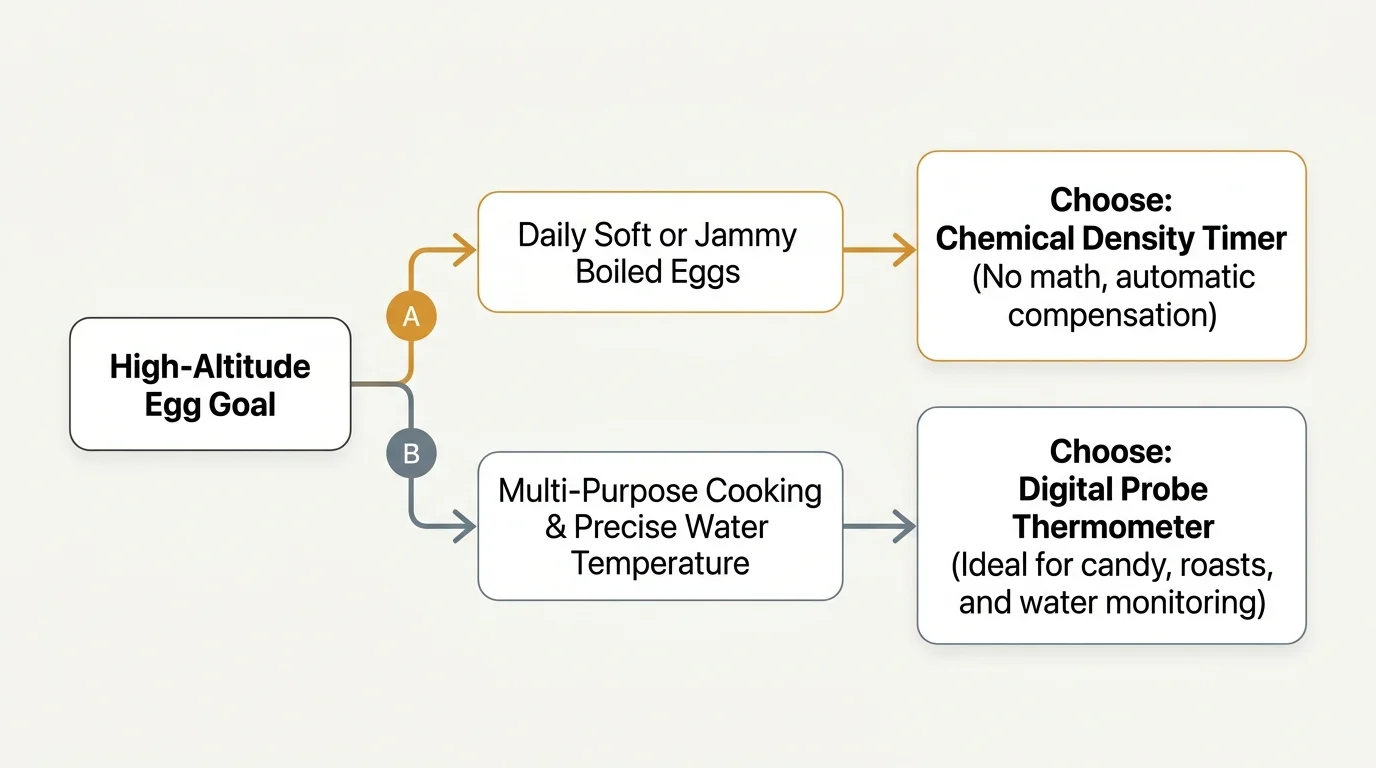
Both instruments serve distinct roles, but one clearly dominates the morning breakfast routine at elevation. Use the guidelines below to decide which gadget belongs on your kitchen counter.
Buy a color-changing density timer like the Norpro Egg Rite if you boil eggs regularly above 3,000 feet. It eliminates mental math and automatically adjusts for regional barometric shifts.
Buy a density timer if you want repeatable soft-boiled and medium-boiled textures without constantly consulting altitude correction charts. It costs under ten dollars and requires zero setup time.
Skip the density timer if you insist on cleaning every kitchen tool inside a dishwasher. Skip it also if you cook in batches larger than six eggs, where crowded pots block your view of the sensor face.
Buy a digital probe thermometer like the ThermoWorks DOT if you regularly roast meats, bake artisanal sourdough, or brew pour-over coffee. It provides unmatched numerical precision for liquids and solid proteins.
Skip using a probe thermometer for boiling in-shell eggs. It cannot penetrate the shell without ruining the albumen, and it cannot tell you when your yolk has reached ideal coagulation.
For high-altitude cooks seeking breakfast perfection, thermodynamic emulation beats digital surface monitoring every time. Keep the probe for your evening roast and let the resin sensor handle your morning eggs.
Frequently Asked Questions
Why do boiled eggs take longer to cook at 8,200 feet?
Water boils at roughly 198°F at 8,200 feet due to lower atmospheric pressure. Because the cooking liquid is 14 degrees cooler than at sea level, heat penetrates the egg much slower, requiring extended cooking times.
Can you put a color-changing egg timer in boiling water directly from the fridge?
Store your density timer at room temperature rather than in the refrigerator. Dropping a chilled resin block into boiling water can induce thermal shock that clouds the gauge and fractures the casing.
Does vinegar or baking soda make peeling high-altitude boiled eggs easier?
Adding baking soda or vinegar yields inconsistent results compared to using older eggs and plunging them into an ice bath. Rapid chilling contracts the egg albumen away from the inner shell membrane, making peeling effortless.
Why can’t I just use a digital probe thermometer to test egg doneness?
A probe thermometer cannot pierce a raw egg shell without causing the liquid whites to leak into the boiling water. Measuring the water bath temperature only confirms the boiling point, not internal yolk coagulation.
Disclaimer: Product prices and availability change frequently. Prices shown were accurate at time of writing but may have changed. We may earn a small commission from purchases made through links on this site, at no extra cost to you. Always verify current pricing on the retailer’s website before purchasing.