
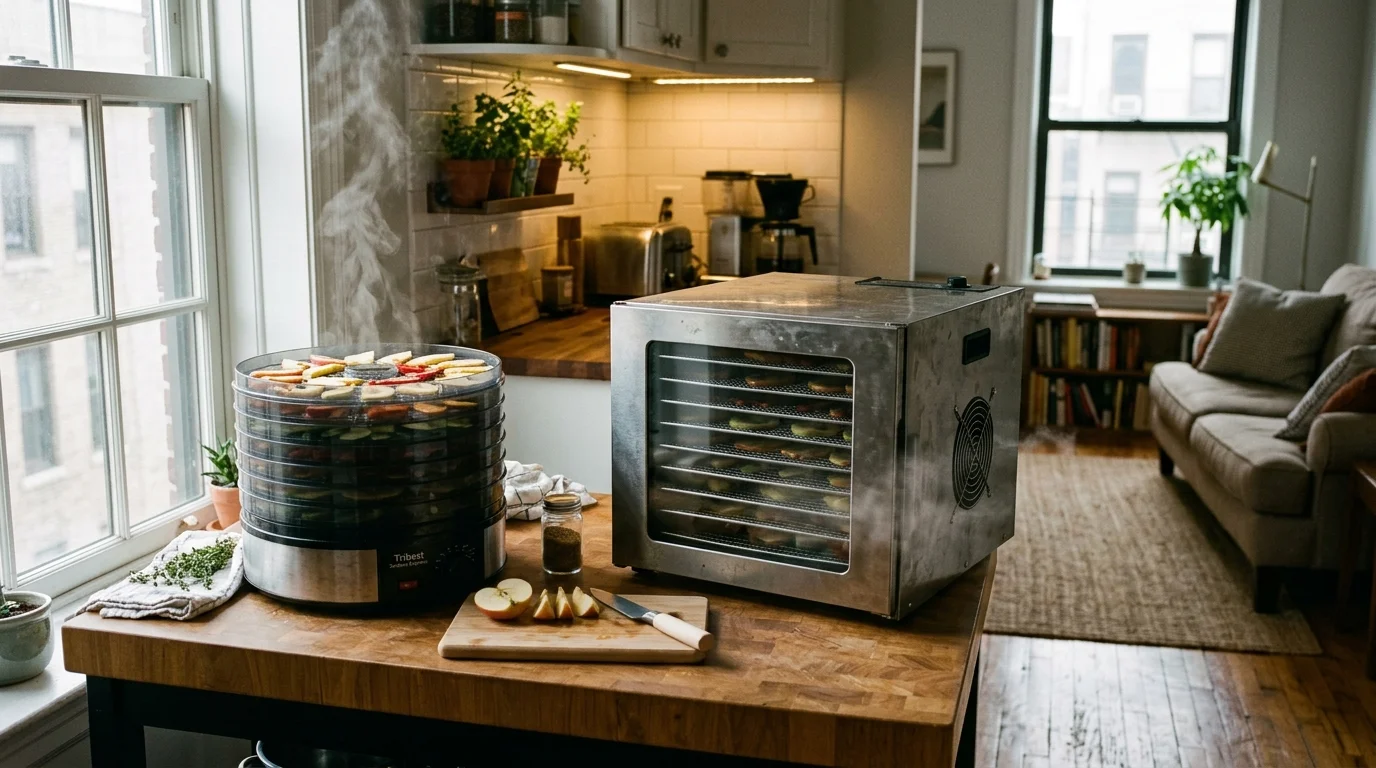
Drying beef jerky on a zero-sodium cardiac diet transforms fresh, unpreserved flank steak into shelf-stable protein without commercial preservatives. In a carpeted studio apartment, however, food dehydrator capacity matters far less than exhaust plume direction.
Standard appliance guides obsess over tray surface area while ignoring airflow trajectory. This comparison examines directional cubic-feet-per-minute evacuation rates to reveal which design captures steam before meat odors embed into your living room rug.
Choosing the correct ventilation path keeps your living space fresh and protects your indoor air quality during six-hour drying cycles.
The Physics of Dehydrator Exhaust: Vertical Plumes vs. Horizontal Dispersion
Dehydrators rely on convection, which uses a fan to circulate hot air for more even cooking and moisture extraction. Air movement patterns split the market into two distinct mechanical configurations.
The same principles of clearance and unobstructed airflow apply when using quarter-sheet versus half-sheet pans to optimize convective air circulation in tight cooking chambers.
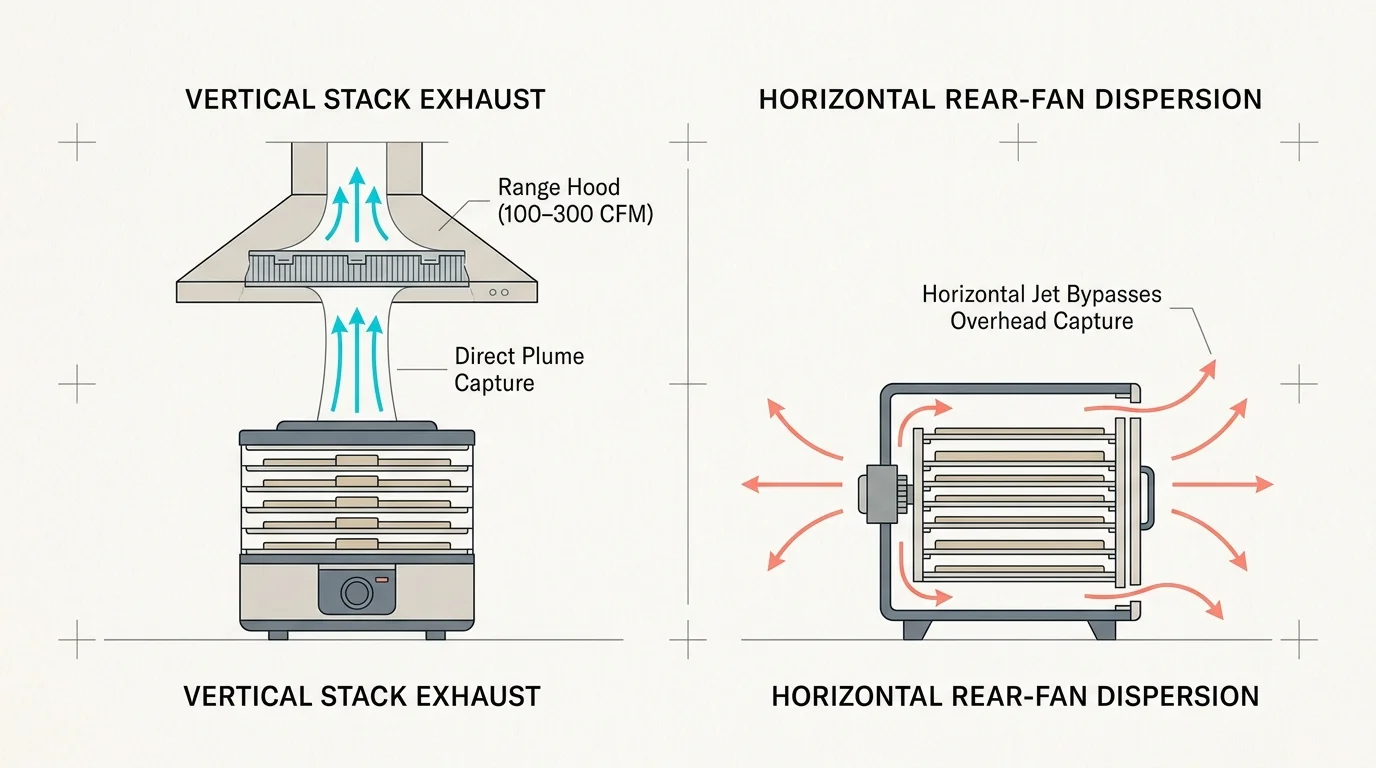
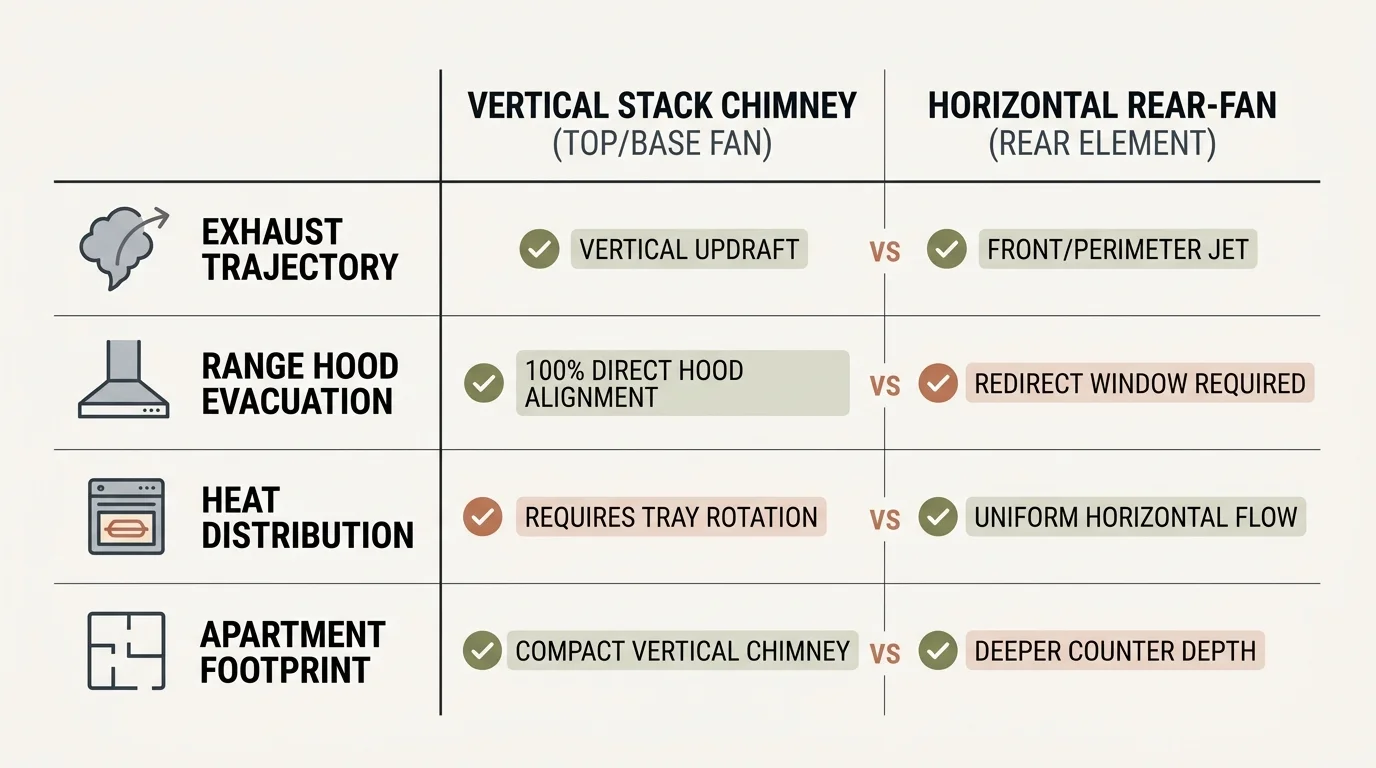
Vertical stack dehydrators mount their motor and heating element either in the bottom base or the top lid. The heated air drives directly up through a central chimney, pushing moist air out through ceiling exhaust vents.
This vertical column creates a concentrated exhaust plume. The focused thermal updraft rises in a narrow stream, much like steam emerging from a simmering soup pot.
Horizontal rear-fan dehydrators mount the heating element and fan directly against the back interior wall. The motor pushes hot air across each individual tray horizontally toward the front door perimeter.
According to Serious Eats’ equipment reviews, rear fans deliver superior temperature uniformity across all drying racks. However, this configuration pushes exhaust air outward in a wide, horizontal fan pattern.
Horizontal dispersion expels warm moisture sideways into the ambient room air. In an open living area, this horizontal jet misses overhead capture zones entirely.
“Placing a vertical dehydrator directly beneath a kitchen exhaust hood lets a modest 150 CFM fan evacuate moisture before meat odors embed into living room textiles.” — Kitchen Ventilation Specialist
Apartment range hoods generate between 100 and 300 cubic feet per minute (CFM) of air displacement. A vertical stack sitting on an induction cooktop vents directly into this capture intake.
Because the vertical plume aligns with the upward draft of the hood, ambient living spaces remain odor-free. The stove hood captures the hot aerosol before it mixes with room air currents.
Horizontal units vent out their front access door or perimeter side gaskets. To clear this exhaust, you must redirect the air by angling the appliance toward a window or fan.
Studio Apartment Moisture and Odor Trapping in Carpeting
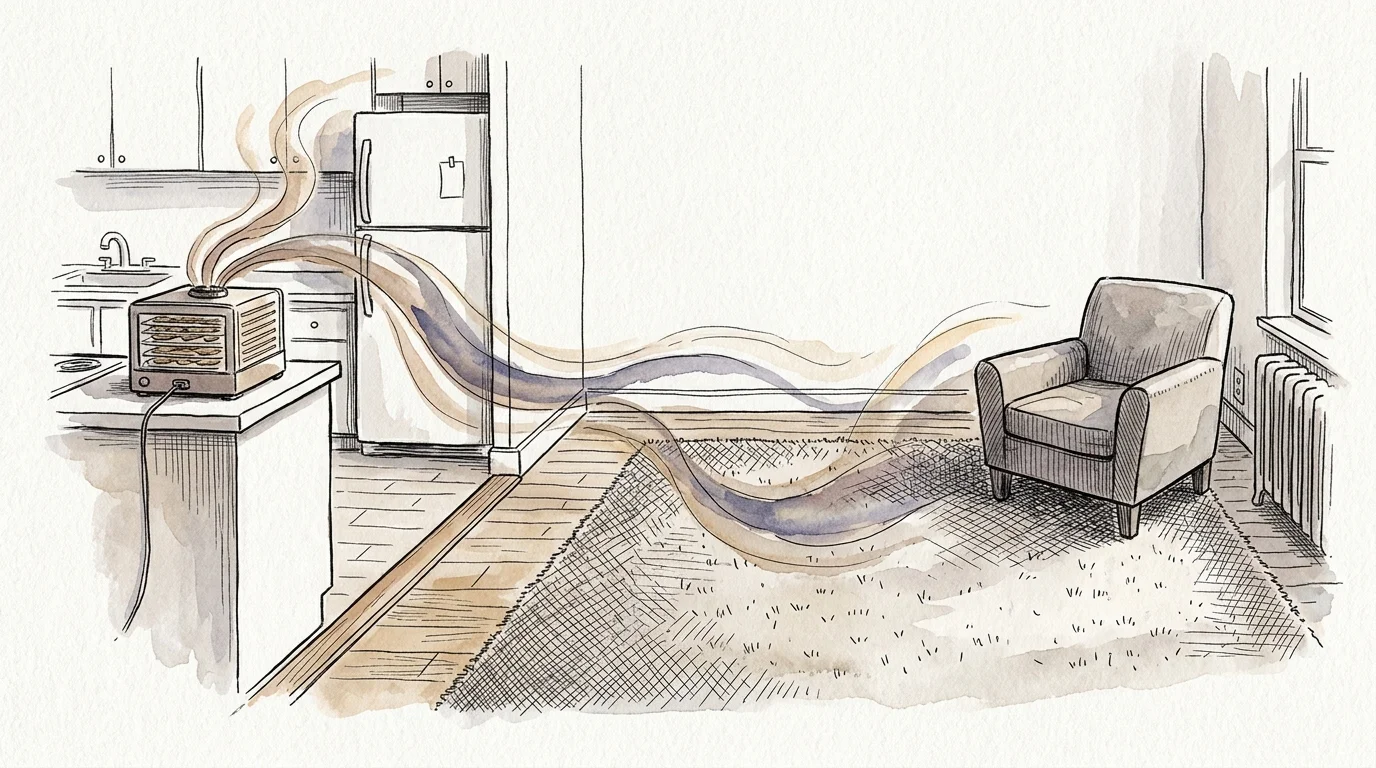
A studio apartment combines your kitchen, workspace, and sleeping quarters into a single shared airspace. Carpeted floors present millions of synthetic nylon or polyester fibers that act as giant odor sponges.
Similar containment measures are critical during other aromatic kitchen tasks, where cooks turn to odor-controlled fermentation crocks to prevent volatile scents from binding to soft furnishings.
When you dehydrate meat, the evacuated air carries microscopic lipid particles along with evaporated water. These aerosolized fat molecules bind rapidly to porous carpet fibers and fabric upholstery.
A standard 600-watt machine pushes moisture out constantly for eight hours. Wattage refers to how much power an appliance uses; higher wattage usually means faster cooking and stronger air circulation.
Without an exhaust hood, that moisture elevates indoor relative humidity by 15 to 25 percent in small apartments. When humid air contacts cooler exterior walls, condensation forms behind furniture.
Trapped moisture creates an ideal breeding ground for dust mites and mildew. Combined with organic beef aromas, this humidity creates a stale smell that lingers for days.
Unlike pressure cookers that rely on PSI (pounds per square inch, which measures pressure in pressure cookers), dehydrators operate under open atmospheric flow. You cannot seal the moisture inside the machine.
Vertical units allow studio dwellers to deploy the kitchen hood as an active exhaust chimney. By running your overhead vent on low, you create negative room pressure.
Negative pressure pulls outside air into your kitchen and vents all dehydrator exhaust outside. Your rugs and bedding never absorb the vaporized meat fats.

Thermal Margins and USDA Jerky Lethality in Unsalted Beef
Managing high blood pressure or cardiac health requires strict reduction of dietary sodium. Eliminating salt removes the primary preservative that inhibits bacterial growth during traditional meat curing processes.
While traditional home charcuterie projects use curing salts to inhibit microbes, zero-sodium jerky relies entirely on rapid thermal lethality.
Commercial jerky uses sodium nitrite and heavy salt loads to drop water activity quickly. Zero-sodium jerky relies entirely on heat lethality and rapid moisture removal to guarantee safety.
The USDA Food Safety and Inspection Service requires beef to reach an internal temperature of 160°F (71°C). This thermal margin destroys Salmonella and E. coli O157:H7 pathogens.
As documented by America’s Test Kitchen, home dehydrators often struggle to maintain their calibrated temperatures when loaded with wet strips. Moisture evaporation causes evaporative cooling across the meat surface.
Vertical stack units lose significant heat as air travels upward past moist lower trays. By the time air reaches the top rack, temperatures can plunge by 15°F to 20°F.
If you set a budget vertical stacker to 160°F, top trays may hover dangerously at 140°F. In cold apartments, that temperature dip risks bacterial growth on unsalted meat.
“Unsalted meat lacks the moisture-binding properties of sodium, which makes consistent chamber heat above 160°F essential to neutralize bacteria quickly.” — Food Safety Specialist
Rear-fan horizontal dehydrators supply fresh, heated air across each tray simultaneously. Air does not pass over wet bottom meat before reaching the top racks.
Most horizontal cabinets achieve target temperatures of 165°F to 175°F reliably. This extra thermal buffer ensures unsalted flank steak reaches pathogen lethality within the first hour.
You should avoid delayed start functions—which program the appliance to start cooking later—when preparing raw unsalted meats. Raw beef must undergo continuous heat immediately to prevent microbial bloom.
Worked Scenario: 2-Pound Zero-Sodium Flank Steak Batch Run
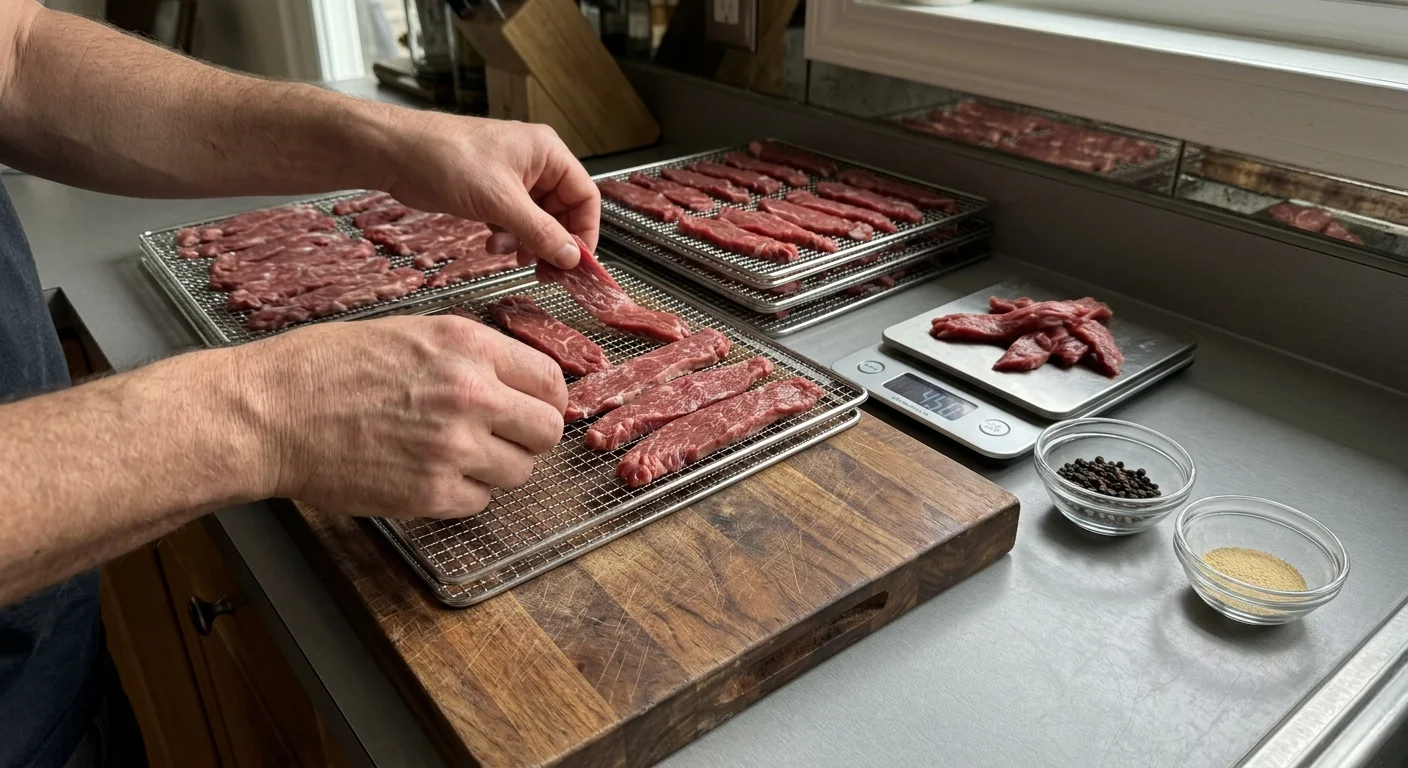
Consider a practical batch run designed for an apartment resident preparing a week of zero-sodium protein. You begin with exactly 2.0 pounds (32 ounces) of trimmed choice beef flank steak.
Before cutting, partially firming the meat in the refrigerator on wire cooling racks over sheet pans makes it substantially easier to carve uniform, thin slices.
At purchase, lean beef contains roughly 75 percent water by weight. That two-pound cut holds approximately 24 ounces of water and 8 ounces of dry protein and minerals.
To produce shelf-stable jerky, you must extract 65 percent of that raw weight. You need to evaporate 20.8 ounces of water, leaving roughly 11.2 ounces of finished jerky.
You slice the flank steak to a uniform thickness of 0.20 inches using an electric meat slicer. You marinate the strips in apple cider vinegar, black pepper, garlic powder, and liquid smoke.
You lay the meat across trays in a 600-watt horizontal unit set to 165°F. You place the unit on your kitchen counter, angled toward a window exhaust fan.
The dehydrator extracts that 20.8 ounces of moisture over a 6-hour cycle. The machine expels roughly 3.46 ounces (0.216 pounds) of water vapor per hour into your room.
Running a 600-watt heating element for 6 hours consumes 3.6 kilowatt-hours (kWh) of electricity. At an average national electricity rate of $0.18 per kWh, the batch costs $0.65 in energy.
If you run a vertical dehydrator on your stove, you place it under a 190 CFM range hood. The upward plume carries that 3.46 ounces per hour of moisture straight outdoors.
The finished jerky achieves a dry yield of 35 percent of initial raw weight. Stored in an airtight mason jar with an oxygen absorber, it stays fresh for weeks.
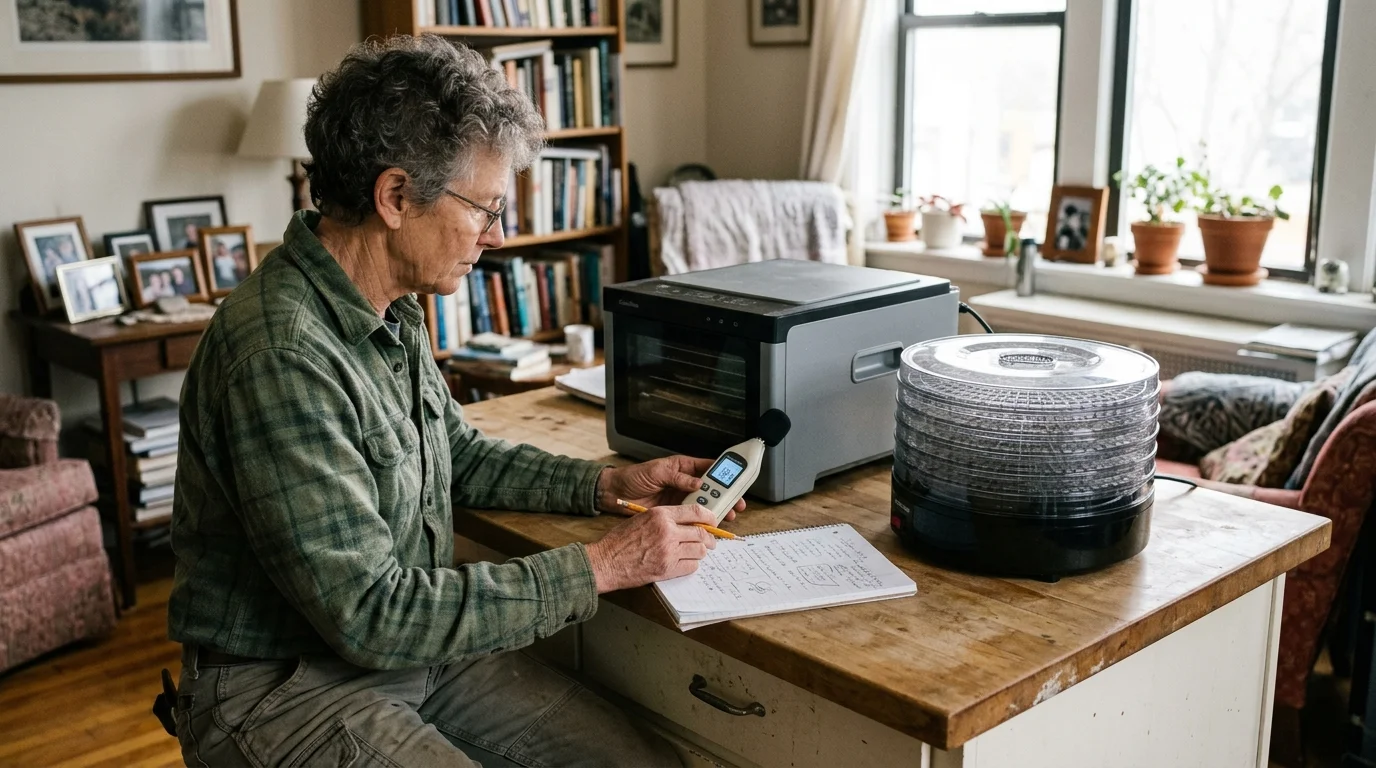
Acoustic Footprint and Decibel Levels in Open-Plan Studios
When your bedroom is your kitchen, continuous mechanical noise creates mental fatigue. Dehydration cycles take anywhere from 5 to 10 hours to complete.
According to Consumer Reports’ small appliance evaluations, countertop kitchen appliances generate noise levels ranging from a gentle whisper to loud blender whines. Fan quality dictates the soundscape.
Modern horizontal rear-fan dehydrators use large, balanced axial fans measuring 5 to 7 inches in diameter. Larger fan blades spin at lower revolutions per minute while moving substantial air volume.
The Cosori CP267-FD operates at or below 48 decibels (dBA). This sound level equals the quiet hum of a modern refrigerator or a quiet library room.
You can run a 48 dBA horizontal machine ten feet from your bed without disrupting sleep. The steady frequency produces a neutral white-noise effect.
Budget vertical stack dehydrators use smaller, high-speed 3-inch fans mounted directly to thin plastic motor housings. These small motors must spin aggressively to force air through stacked trays.
Operating sound levels on vertical models frequently measure between 55 and 65 dBA. That output matches the noise of normal conversation or an active dishwasher.
In a small studio, 60 dBA of high-pitched motor whine becomes grating after three hours. The sound interferes with work calls, reading, and rest.
Head-to-Head Specification Comparison
Unlike air fryers where quart capacity measures how much the appliance holds (where 4 quarts equals about 4 liters), dehydrators rely on square footage. The table below compares key metrics for studio kitchens.
| Metric | Nesco Snackmaster Pro (FD-75A) | Cosori Premium 6-Tray (CP267-FD) | Excalibur 9-Tray (3926TB) |
|---|---|---|---|
| Airflow Design | Vertical Top-Mounted Stack | Horizontal Rear-Fan | Horizontal Rear-Fan |
| Power Draw (Wattage) | 600 Watts | 600 Watts | 600 Watts |
| Exhaust Vector | Direct Upward Vertical Plume | Front Perimeter Dispersion | Front Door Air Gap Jet |
| Noise Rating | 58 dBA | 48 dBA | 54 dBA |
| Countertop Footprint | 13.75 x 13.75 inches | 13.4 x 17.8 inches | 19.0 x 17.0 inches |
| Vertical Height | 10.0 inches (expandable) | 12.4 inches | 12.5 inches |
| Max Temperature | 160°F | 165°F | 165°F |
| Approximate Retail Price | $75 – $90 | $150 – $160 | $300 – $350 |
Counter footprint differences dictate storage flexibility. The Nesco round base occupies roughly 189 square inches of counter space.
The Cosori box requires 238 square inches, while the Excalibur demands 323 square inches. You must measure counter clearances under overhead cabinets carefully before buying.
The vertical unit weighs just 5.75 pounds, making it easy to store in a cabinet between uses. The steel horizontal box weighs over 15 pounds, encouraging permanent countertop placement.
Targeted Model Recommendations for Apartment Living
As Wirecutter’s kitchen appliance reviews highlight, choosing the right tool requires balancing raw performance against storage constraints. Specific models solve distinct apartment problems.
Best for Small Kitchens: Cosori CP267-FD
This unit provides six food-grade stainless steel trays totaling 6.5 square feet of drying space. The 600-watt rear fan operates at an ultra-quiet 48 dBA.
Its rectangular footprint fits on standard 24-inch-deep apartment counters. The digital controls allow 30-minute timer intervals and precise temperature increments up to 165°F.
Preset programs provide automatic settings for common tasks like dried fruit or herbs. It also includes an automatic keep warm function, which maintains food at serving temperature after cooking concludes.
Best Value: Nesco Snackmaster Pro FD-75A
Priced under $90, this expandable round stacker remains an economical champion. Its top-mounted motor pushes 600 watts of downward heat that redirects upward through side channels.
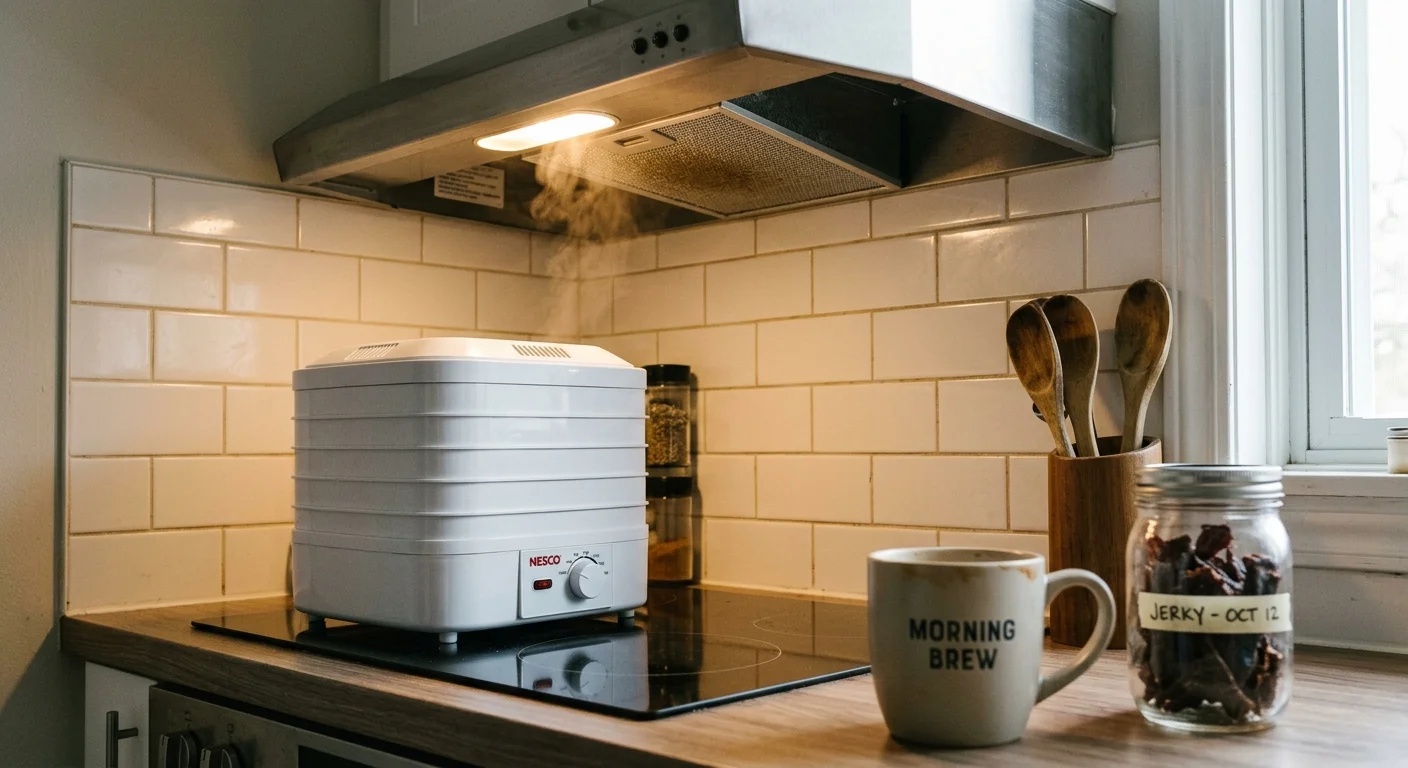
The round lid exhaust vents directly upward in a narrow plume. You can park this machine directly on your stovetop under your range hood to vent 100 percent of meat aromas outdoors.
The plastic trays are hand-wash only, and the dial caps at 160°F. However, for carpeted apartments needing odor evacuation on a budget, its exhaust alignment cannot be beaten.
Best for Families: Excalibur 9-Tray 3926TB
If you dry large protein batches for a family, this legendary unit provides 15 square feet of tray area. The 7-inch rear fan pushes 600 watts of heat evenly across all nine levels.
Its poly-screen inserts wipe clean, and the removable front door allows unobstructed access. The mechanical dials provide dependable, bulletproof thermal control.
Its massive 19-inch depth requires substantial counter real estate. It generates 54 dBA of airflow noise, but handles 5 pounds of raw beef in a single drying pass.
Washability, Grease Management, and Machine Longevity
Dehydrating meat extracts fat along with water vapor. Rendered beef lipids drip onto the floor of your dehydration cabinet during the first two hours of heating.
In bottom-fan vertical dehydrators, raw drippings land directly onto the heating coil and fan motor housing. Baked-on grease creates persistent smoke and ruins electrical components.
Top-mounted vertical models solve this by suspending the motor overhead. Drippings hit a solid bottom basin that cleans easily with warm, soapy water.
Horizontal rear-fan dehydrators elevate the entire electrical assembly along the rear cabinet wall. Fat drips onto a flat metal bottom tray away from electrical elements.
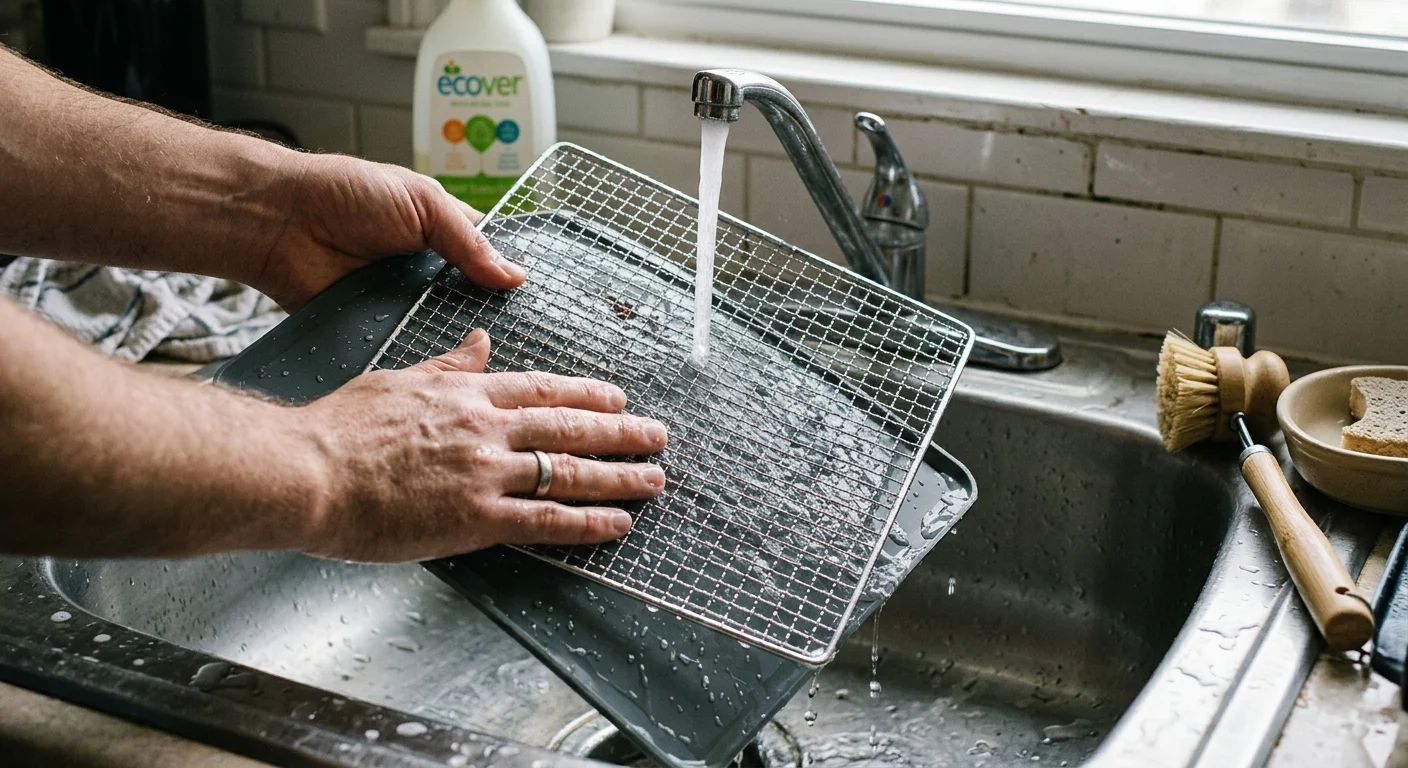
Most horizontal units include a removable, non-stick drip sheet. You simply pull the sheet out and wash it in your kitchen sink with dish detergent.
Stainless steel wire racks survive dishwasher cycles without warping. Plastic vertical trays warp under high dishwasher drying heat and require careful hand washing.
Keeping racks clean prevents residual fat rancidity. Old lipid deposits will spoil future batches and generate burnt grease smells inside your studio apartment.
Frequently Asked Questions
Can I leave a dehydrator running in my apartment while I sleep?
You can run modern digital dehydrators overnight if the machine has automatic shutoff protection and adequate surrounding ventilation. Avoid placing dehydrators on carpeted floors, against curtains, or directly under low overhead cabinets during operation.
Do carbon filter range hoods remove jerky odors effectively?
Ductless range hoods that recirculate air through charcoal filters trap heavy grease particles but allow moisture and volatile aromas to escape. For complete odor elimination, use ducted exhaust hoods or angle your dehydrator toward an open window.
Why does unsalted jerky take longer to dry than cured jerky?
Salt pulls moisture out of muscle fibers through osmosis before drying even begins. Without salt, water remains locked deeper inside cell walls, requiring sustained airflow and stable heat to achieve proper water activity reduction.
How do I stop meat smells from getting into my studio apartment closet?
Close all wardrobe and closet doors before starting a dehydration cycle. Keep your bathroom exhaust fan or kitchen hood running continuously on low speed to draw air outward and prevent odor migration into clothing textiles.
Disclaimer: Product prices, features, and availability change frequently. Prices shown were accurate at time of writing but may have changed. We may earn a small commission from purchases made through links on this site, at no extra cost to you. Always verify current pricing and specifications on the retailer’s website before purchasing.

1 Comment