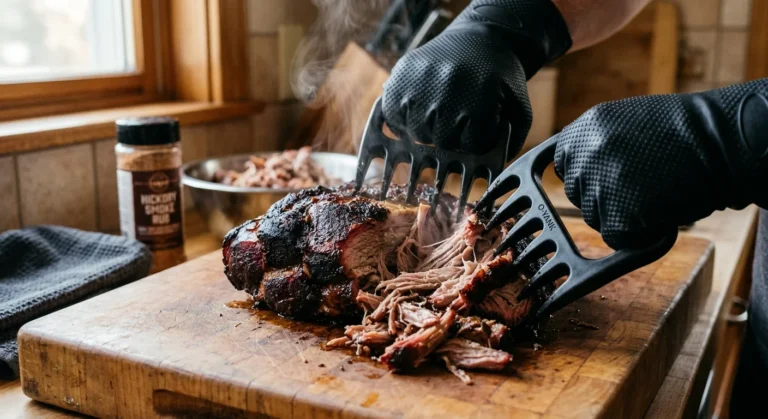
Your rental apartment’s recirculating stove hood does not vent outside; it blows vaporized grease directly back into your living space. Standard wire covers fail because fine oil mist slips right through their loose gaps.
This guide proves that only heavy-duty screens with an 80-mesh weave or activated carbon layers capture aerosolized cooking fats before they hit your room air. Target grease filtration to protect your furniture and keep your skin clean while frying.
By matching screen density to your skillet dimensions, you will control kitchen film without suffocating your pan or trapping unwanted steam.
The Physics of Recirculating Hoods and Aerosol Grease
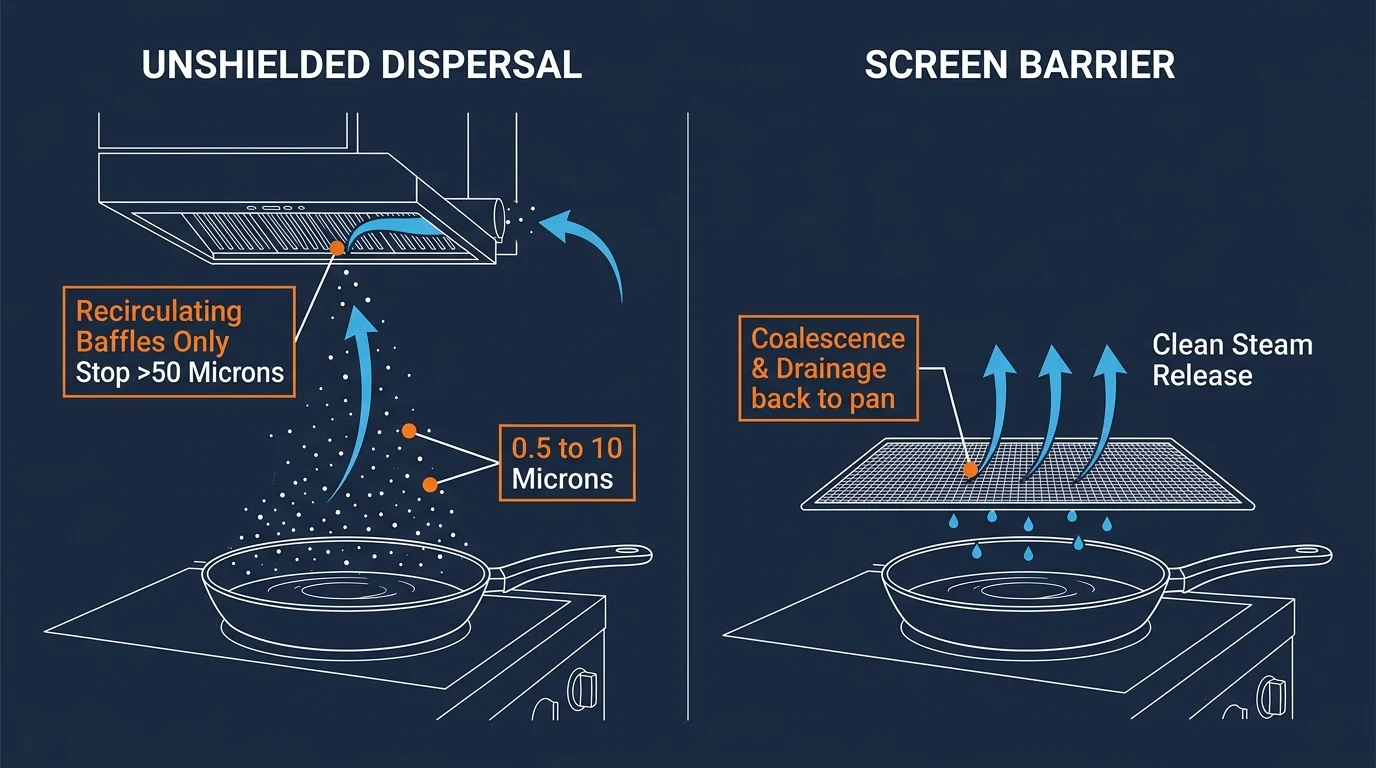
Recirculating hoods pull air through a basic aluminum mesh before exhausting it straight toward your forehead. These basic aluminum baffles only capture liquid droplets larger than 50 microns.
High-heat cooking in compact spaces often involves choosing between carbon steel and cast iron mini woks, both of which generate significant oil vapor when searing.
Cooking oil creates an aerosol when water from your food flashes into steam. This reaction breaks surface fat into microscopic airborne droplets measuring between 0.5 and 10 microns.
Because ductless hoods lack external ductwork, they cannot eject these lightweight droplets from your home. The blower merely disperses this greasy haze throughout your kitchen and living room.
According to Consumer Reports’ small appliance testing, unvented range hoods struggle to reduce fine airborne particles. You must intercept oil droplets at the pan surface before they reach room air.
A fine mesh splatter guard creates a high-surface-area barrier across the skillet. It forces grease-laden steam to hit cold metal wires, causing the oil to coalesce and drain back into the pan.

Mesh Density Metrics: Understanding Wire Count and Filtration
Manufacturers define screen density by mesh count, which reflects the number of openings per linear inch. Standard cheap screens offer a meager 30-mesh weave with wide spaces between wires.
Heavy-duty guards utilize stainless steel—a durable metal that resists rust and staining—woven into a tight 60-mesh or 80-mesh grid. The 80-mesh configuration reduces opening sizes down to approximately 180 microns.
“The tightest woven mesh acts like a mechanical filter; it halts liquid projectiles while allowing expanding steam to vent freely.”
If you choose a loose 30-mesh guard, popping grease hits the broad openings and sprays through unimpeded. The tiny droplets then coat your cooktop, walls, and clothes.
Tight weaves capture up to 90 percent of escaping fat droplets while still releasing moisture. This rapid moisture escape prevents pan condensation so your seared steaks brown rather than stew.
As documented in Serious Eats’ equipment reviews, maintaining high heat while releasing moisture remains essential for proper pan-frying. Dense screens preserve that browning ability far better than solid lids.
Carbon Filters vs. Ultra-Fine Mesh: Stopping Odor and Smoke
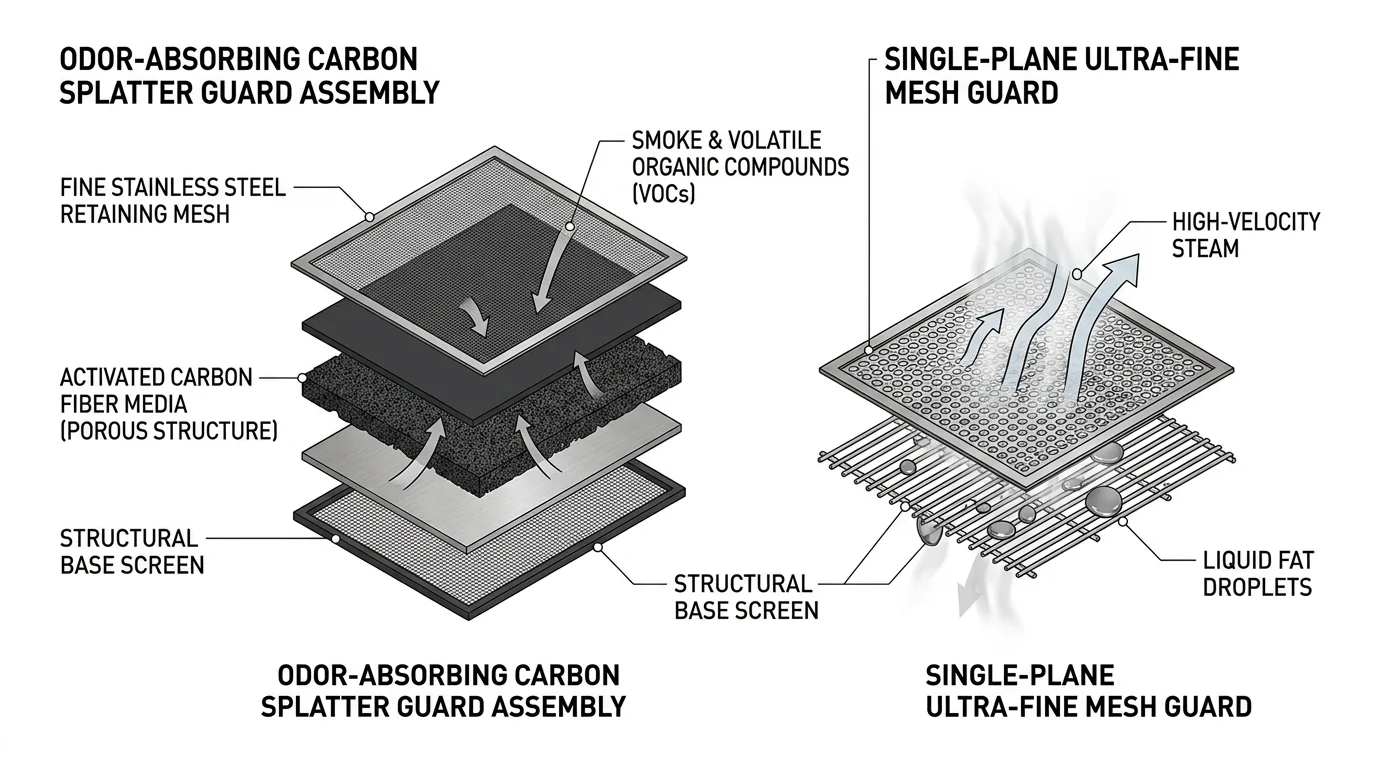
Standard metal screens catch physical grease, but they cannot trap volatile organic compounds or burnt odors. An odor absorbing splatter screen solves this issue by incorporating a layer of activated charcoal fabric.
For dishes with intense lingering smells, some cooks bypass indoor filtration entirely by switching to high-pressure outdoor burners for deep-frying fish.
Activated carbon contains millions of microscopic pores that capture volatile organic compounds via chemical adsorption. It binds smelly molecules before the draft of your stove hood can circulate them.
Many cooks worry that an odor-absorbing screen becomes a unitasker—a gadget that only does one specific task. However, these dual-action guards also trap fine smoke particles alongside standard popping oils.
A carbon guard uses a replaceable composite sandwich design: two layers of perforated steel encasing an activated carbon core. This setup blocks fine particulate matter that slips past single-layer wire guards.
The drawback to carbon screens is their restricted exhaust rate. If you crank your stove burner to maximum heat, the carbon pad can trap steam, lowering your frying temperature.
Reserve carbon-filter screens for shallow frying, fish searing, and high-odor dishes. Use 80-mesh stainless steel models when searing thick steaks that require peak vapor release.
Worked Scenario: Calculating Oil Aerosol Escapement in an 800-Square-Foot Rental
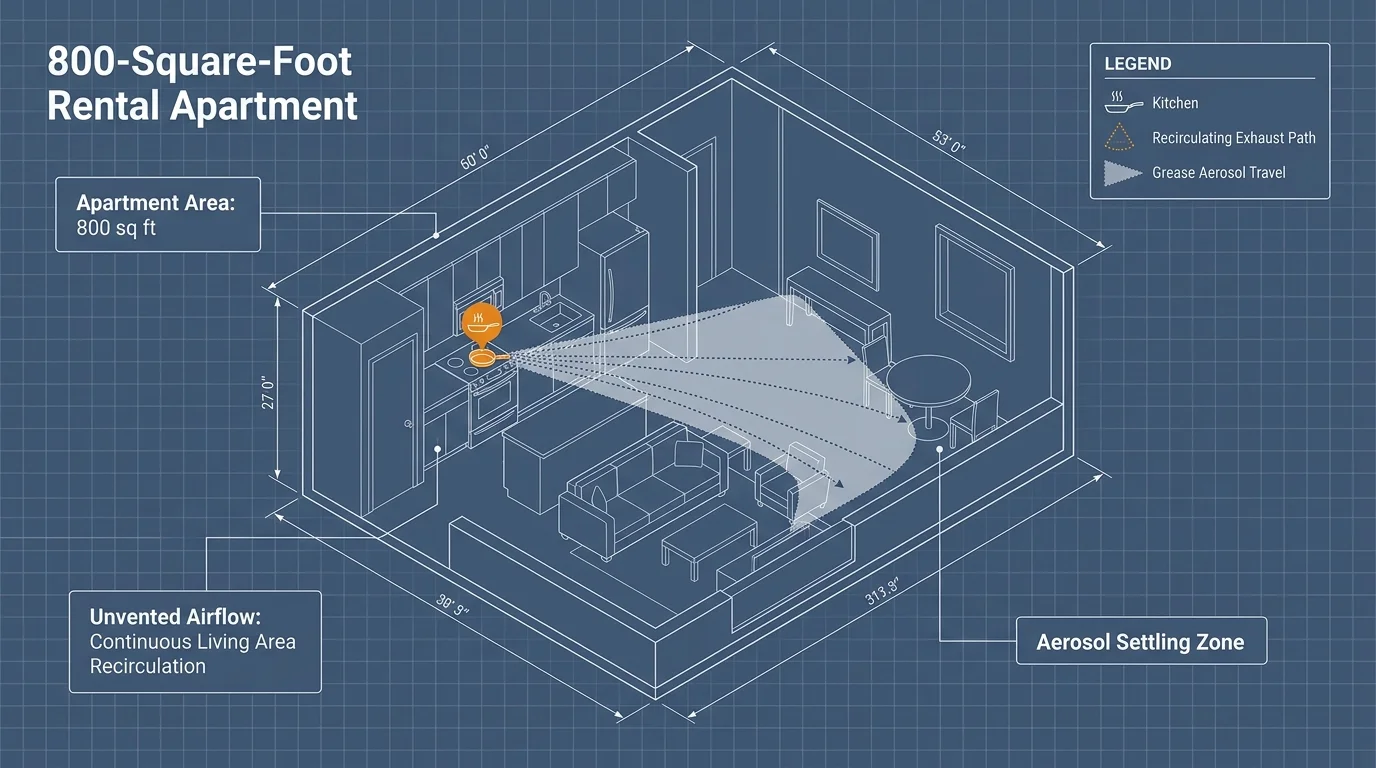
Consider an open-concept apartment measuring 800 square feet with eight-foot ceilings, giving a volume of 6,400 cubic feet. Searing a 12-ounce ribeye steak in a 12-inch cast-iron skillet requires roughly 30 milliliters of cooking oil.
Managing airborne grease is especially tricky on rental stoves, where pairing a splatter guard with heavy-base skillets that counteract uneven heat ensures your pans stay level during high-heat searing.
During an eight-minute sear at 425 degrees Fahrenheit, rapid moisture expansion aerosolizes approximately 14 percent of that surface oil. That process converts 4.2 grams of pure cooking fat into airborne droplets.
A typical builder-grade recirculating hood operates at 180 cubic feet per minute. Its coarse aluminum baffle stops only 20 percent of micro-droplets, allowing 3.36 grams of oil to spew directly into your living space.
Over a month of cooking three steaks weekly, that uncontrolled mist deposits 40.3 grams of greasy residue across your furniture and counters. That volume equals almost three tablespoons of sticky fat coating your living area.
Adding an 80-mesh stainless steel screen intercepts 85 percent of those microscopic droplets right at the rim. Escaped oil drops from 3.36 grams down to just 0.50 grams per cooking session.
Over the same month, total grease deposit drops from 40.3 grams to just 6.0 grams. That massive reduction eliminates the sticky film on your ceiling and stops your smoke alarm from sounding.
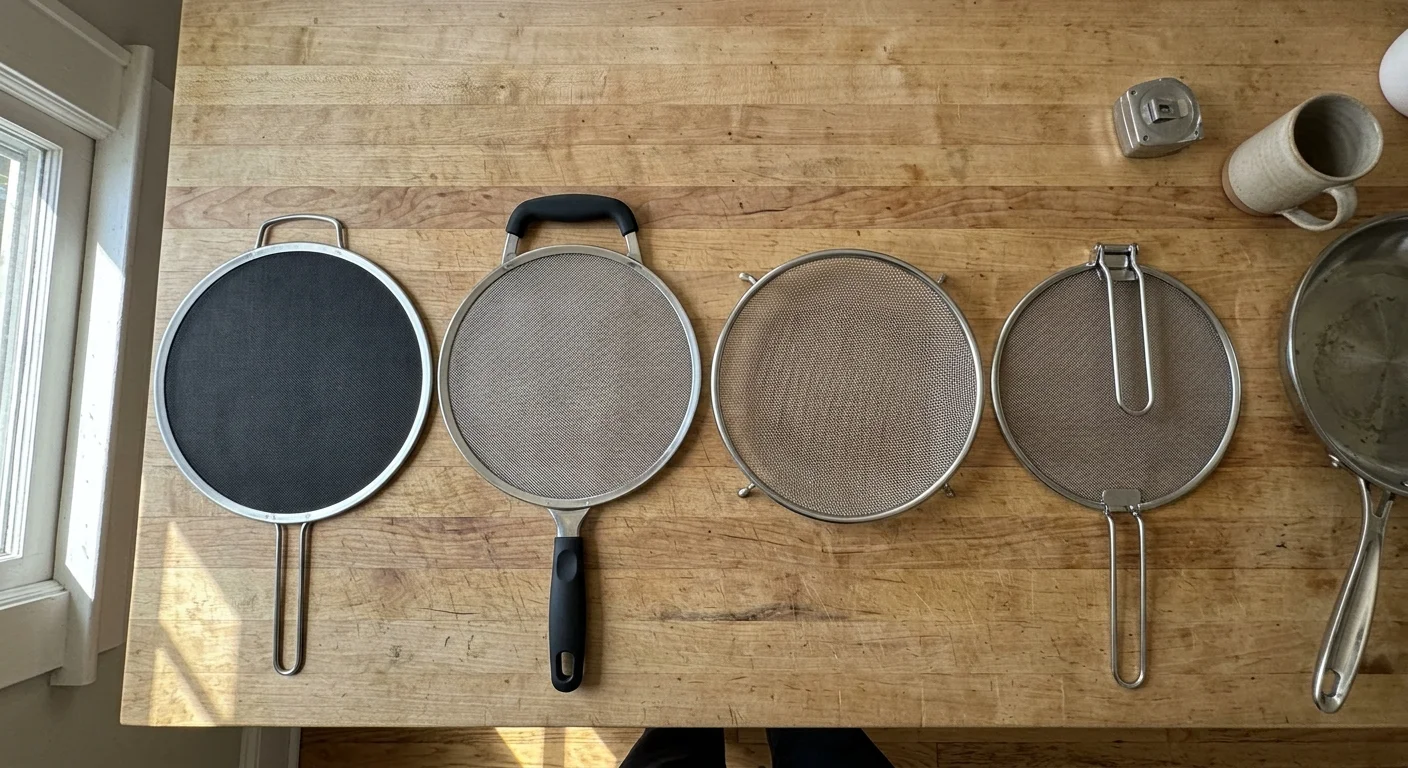
Evaluations of Top Screens for Recirculating Range Hood Grease Control
The BergHOFF Balance 11-inch screen features an ultra-fine 80-mesh stainless steel weave. It blocks the finest micro-mist while resting securely on pans from 8 to 11 inches in diameter.
Keeping spatulas and turners free of settling grease mist is equally important; check out tension hanging rails and countertop utensil carousels to organize tools near your cooktop.
The screen incorporates a sturdy outer ring that prevents warping under sudden temperature spikes. Steam vents freely through the weave, keeping meats crisp without grease buildup on your stove knobs.
The Range Kleen Odor Absorbing Screen uses a multi-stage carbon core housed between perforated metal sheets. It excels at trapping pungent fish aromas and burnt oil fumes in tight rental apartments.
Because the interior carbon sheet blocks visual monitoring, you must lift the screen to check food doneness. The carbon sheet also requires gentle hand-washing to avoid saturating its porous active sites.
The OXO Good Grips Splatter Screen features a 60-mesh stainless steel design with interlocking concentric rings. These grooves sit securely on pans up to 13 inches, preventing dangerous slipping during vigorous stirring.
Testing from Wirecutter’s kitchen testing highlights OXO’s folding handle design for compact cabinet storage. Its balance of reliable grease capture and easy cleaning makes it an exceptional all-round kitchen tool.
The Frywall provides an alternative approach by placing a conical wall made of silicone—a flexible, heat-resistant material used in many kitchen tools—around your pan. It provides continuous open-top access while blocking lateral oil bursts.
Because the Frywall stays completely open at the top, vertical grease mist still escapes toward your recirculating hood. Pair this silicone wall with low-moisture meats rather than wet, aggressively popping marinades.

Technical Comparison: Mesh Specifications, Sizing, and Airflow
Compare these four distinct screen architectures to find the best splatter screen for frying on your apartment range:
Flat screen designs also match well with other prep tools engineered for slimline apartment dishwashers, making cleanup easy in compact layouts.
| Model Name | Filtration Medium | Mesh Count / Pore Size | Grease Mist Reduction | Condensation Retention Risk |
|---|---|---|---|---|
| BergHOFF Balance | 304 Stainless Steel | 80 Mesh (~180 microns) | 88% | Very Low |
| Range Kleen Odor Shield | Perforated Steel + Carbon | Triple Layer Matrix | 94% | Moderate |
| OXO Good Grips Grooved | Stainless Steel | 60 Mesh (~250 microns) | 76% | Very Low |
| Frywall Cone Splatter | BPA-Free Silicone | Open Top Chimney | 65% (Lateral Only) | None |
The data shows a clear functional tradeoff between steam venting and maximum aerosol retention. Dense metal screens provide the optimal balance for high-heat pan searing.
Carbon filters offer the highest total grease and odor capture. However, they retain more moisture, making them better suited for shallow pan-frying rather than dry high-temperature searing.

Ergonomics, Handle Mechanics, and Storage Constraints
Kitchen gadgets often end up unused if their bulky frames make storage difficult. Standard 13-inch splatter guards with long metal handles rarely fit inside standard 12-inch apartment drawers.
To keep frequently used guards and utensils within reach without cluttering drawers, consider mounting heat-resistant drill-free storage racks behind your range.
Select screens with folding handles to reduce your storage footprint. Folding designs nest flat inside cabinet racks or slip easily into narrow vertical tray dividers.
Look for an ergonomic handle—meaning it is designed to be comfortable to hold and use—to protect your fingers from stray heat. Long silicone grips keep your hands safely away from hot skillet rims.
Many guards feature a non-slip grip, which is a handle designed to not slide in your hand, even when wet. This textured grip prevents accidental drops when moving a greasy screen across the counter.
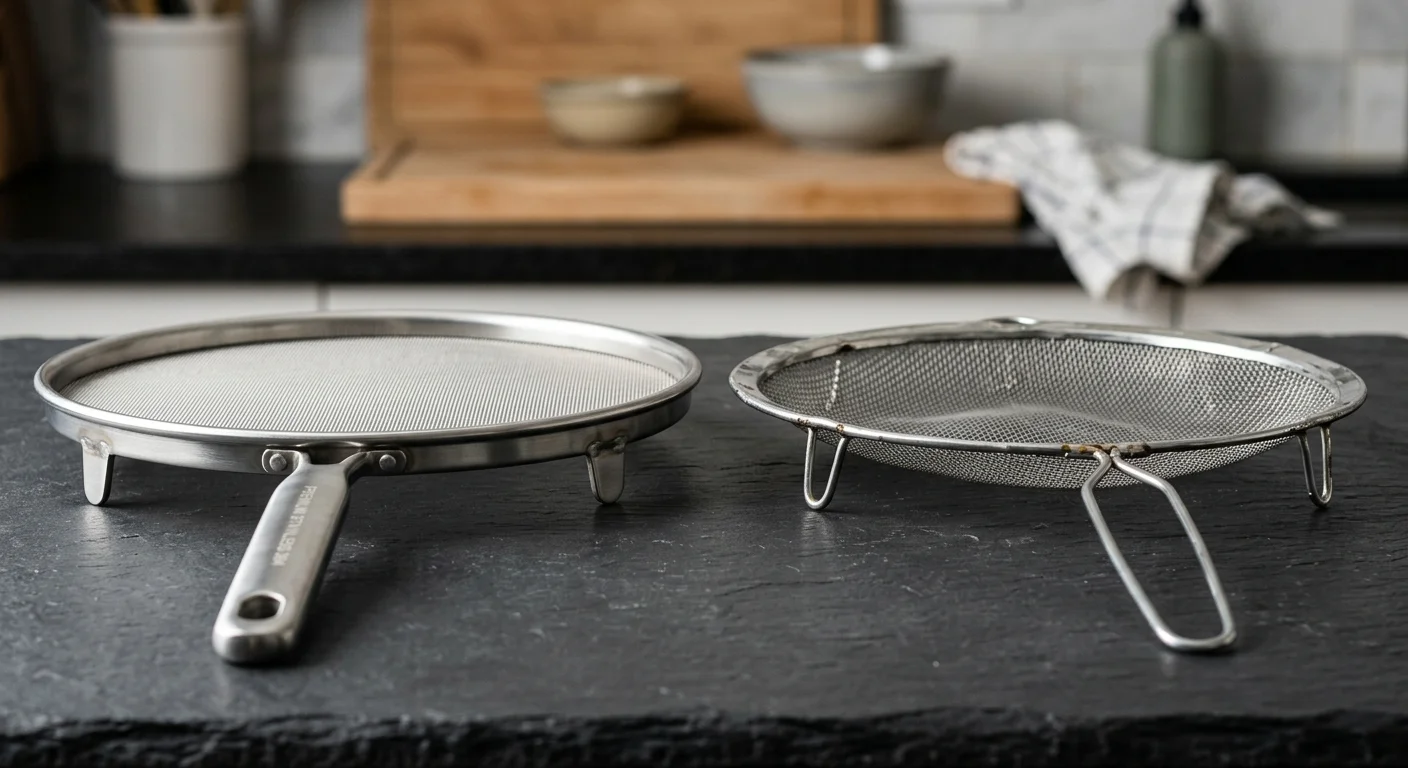
A good screen must also include resting feet on its outer perimeter. These small metal pegs elevate the oily wire surface above your countertop when you set the guard down.
If you prefer silicone guards, ensure the product is labeled BPA-free, confirming it is made without a chemical that some people prefer to avoid. This guarantees the material remains chemically inert under extreme heat.
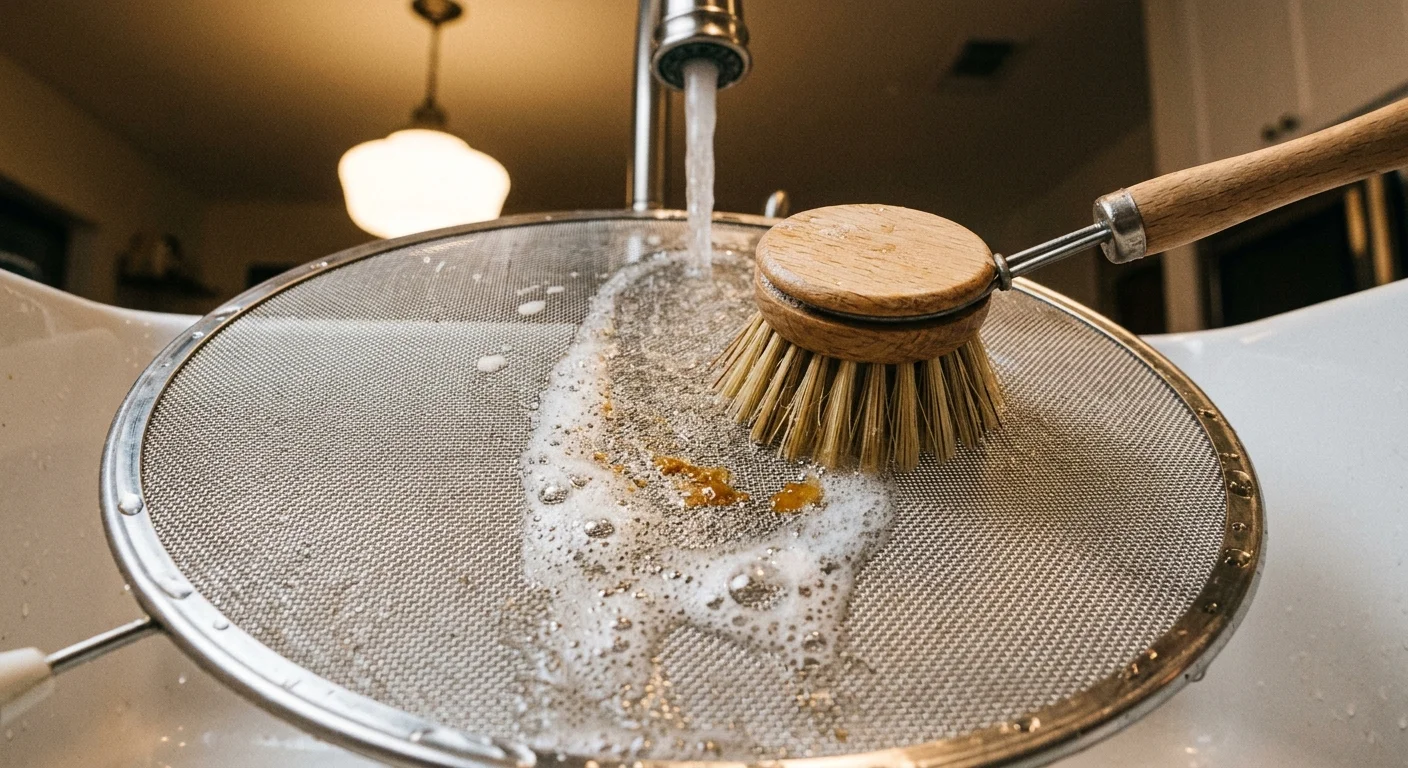
Cleaning Protocols and Longevity: Preserving Airflow Without Degradation
Grease that cooks onto an 80-mesh weave gradually polymerizes into an insoluble amber resin. This residue chokes airflow and transforms your fine mesh splatter guard into a solid, steam-trapping pan lid.
Check if your screen is labeled dishwasher safe, meaning it can be cleaned in a dishwasher without damage. Standard cycle detergents and high-pressure water jets easily dissolve soft fat deposits between fine wires.
“Thorough degreasing preserves the open mesh gaps that let steam escape while keeping your stovetop clean.”
Never clean activated carbon filter screens in an automated dishwasher. Soaps will saturate the absorbent charcoal pores, permanently ruining its odor-absorbing capabilities.
To refresh dirty stainless steel mesh by hand, soak the screen for fifteen minutes in hot water mixed with two tablespoons of baking soda. Then scrub the weave with a soft nylon brush.
Inspect the outer rim seam monthly for signs of grease buildup or wire separation. Frayed mesh wires can scratch pan coatings or snag during hand cleaning.
Buying Criteria: What to Choose and What to Skip
Buy an 80-mesh stainless steel screen if you sear meats in cast-iron pans and rely on a recirculating hood. It prevents oily haze from filling your apartment without making your meat soggy.
Buy an activated carbon composite screen if you regularly pan-fry fish, onions, or spicy foods in a compact space. The internal carbon core physically captures volatile odors before your range hood circulates them.
Skip ultra-cheap dollar-store splatter guards with loose, flexible wire netting. Their coarse 20-to-30-mesh weave allows dangerous oil droplets to escape, leaving your stovetop coated in grease.
Skip perforated flat aluminum disks that use punched metal holes instead of woven wire. These plates trap too much steam, causing oil to boil and your meats to lose their crisp sear.
Ensure the screen diameter extends at least one half-inch past your skillet rim. An undersized screen drops grease directly onto hot burners, generating immediate smoke and triggering fire alarms.
Frequently Asked Questions
Do heavy-duty splatter screens cause pan-fried food to steam and turn soggy?
Dense 80-mesh stainless steel guards let steam escape freely while catching liquid droplets. Avoid solid punched metal plates or non-vented lids, which hold in moisture and ruin crispy crusts.
Can an odor absorbing splatter screen replace my stove hood carbon filter?
No, an odor absorbing screen works as an extra barrier rather than a total replacement. It traps heavy fats and initial odors right at the pan, lightening the load on your range hood filter.
How often should I clean a fine mesh splatter guard?
Clean your splatter guard after every cooking session to stop fat from hardening between the wires. Soak the screen in hot soapy water or place it inside your dishwasher if the manufacturer permits.
Will an 80-mesh splatter screen fit across different skillet sizes?
A 13-inch screen rests stably on any skillet measuring between 8 and 12 inches across. Models with grooved concentric rings seat securely across multiple pan sizes without sliding off.
Disclaimer: Product prices and availability change frequently. Prices shown were accurate at time of writing but may have changed. We may earn a small commission from purchases made through links on this site, at no extra cost to you. Always verify current pricing on the retailer’s website before purchasing.