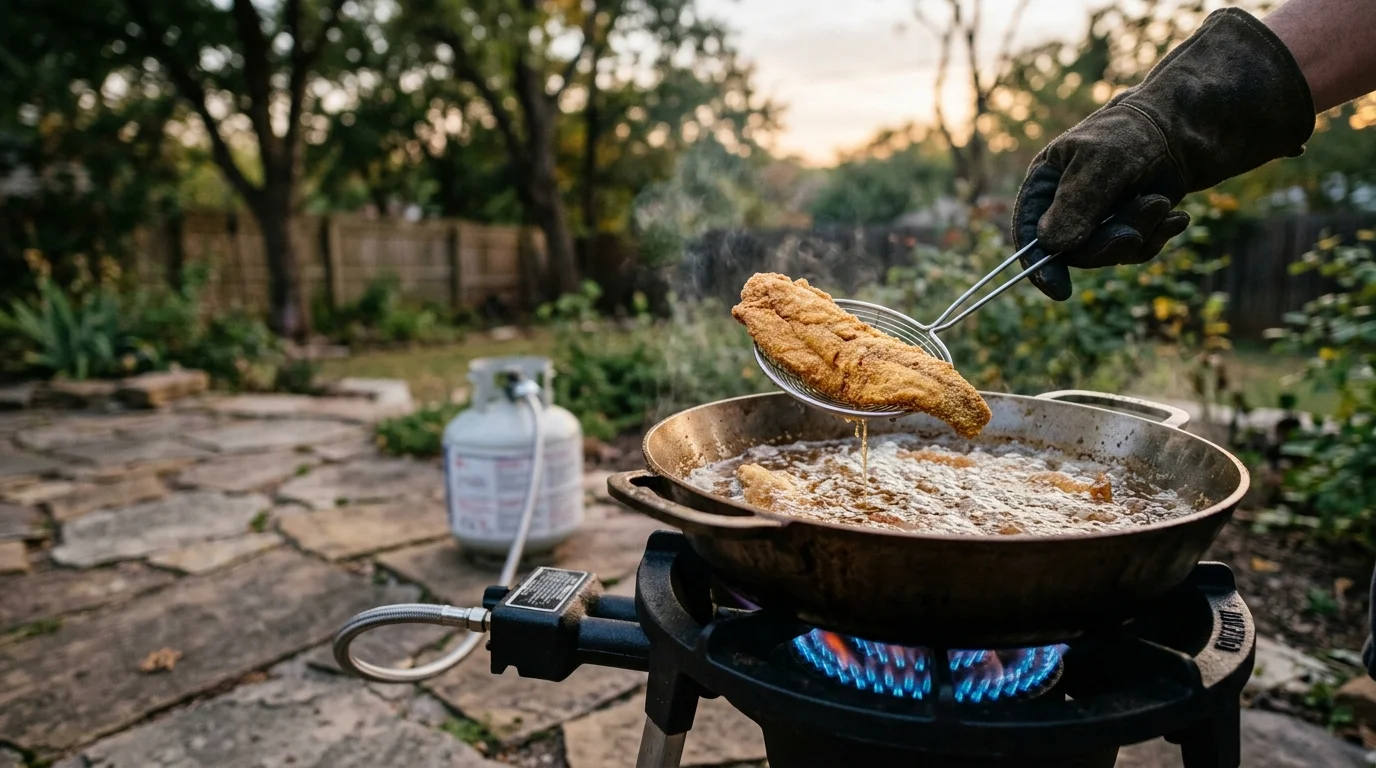
Frying fish outdoors permanently protects your drywall, upholstery, and kitchen cabinets from stubborn, aerosolized oil smells. Moving your frying operation to the patio delivers restaurant-grade crispness while saving you hours of aggressive kitchen scrubbing.
While some cooks turn to grill pans for indoor grilling when cooking seafood inside, battered and deep-fried fish requires open-air ventilation to keep grease out of the home.
Standard indoor burners lack the thermal velocity needed to recover quickly when cold fish enters hot grease. A dedicated high-pressure outdoor propane burner sustains stable frying temperatures, completely locks out indoor odors, and creates exceptionally crunchy fillets.
The Science of Indoor Frying Odors and Aerosolized Grease
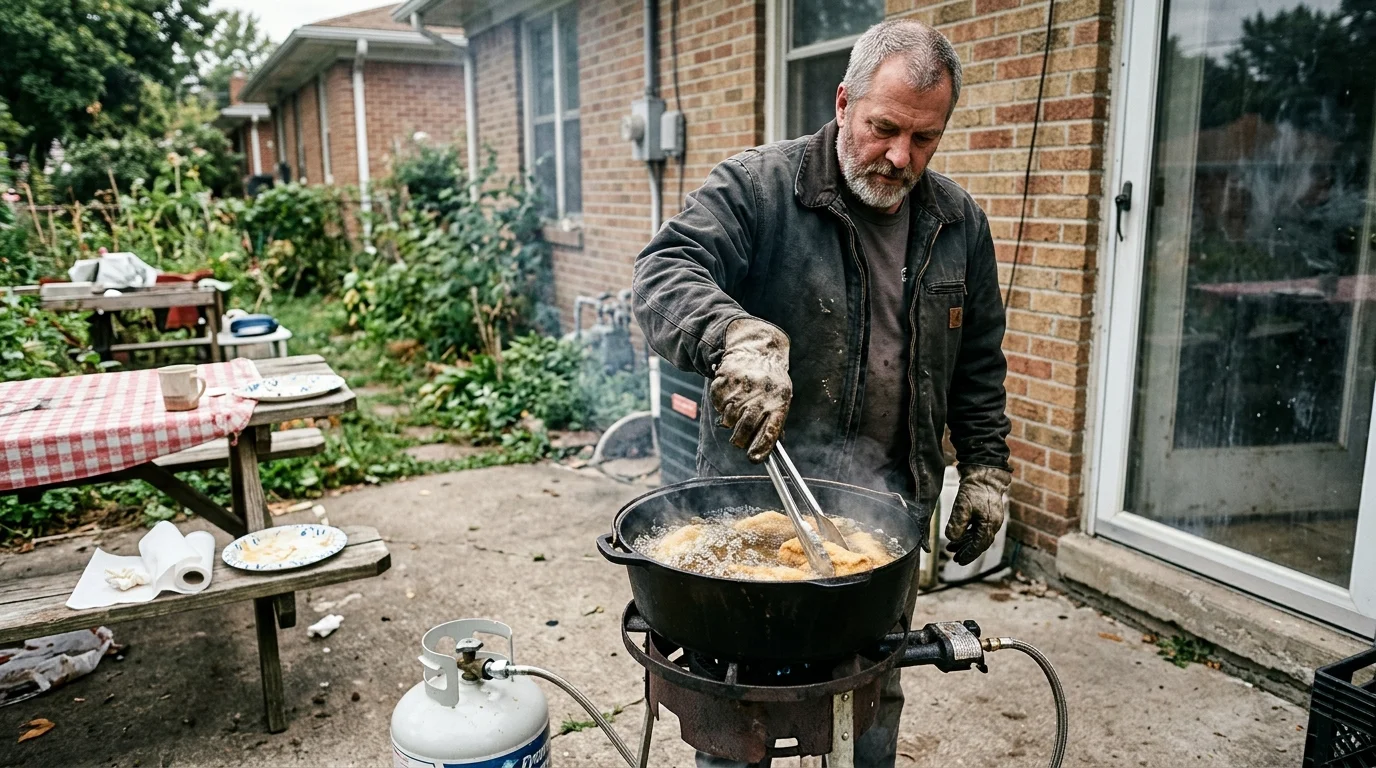
Indoor fish frying creates tiny aerosolized fat droplets that mix with steam and disperse across your living space. These airborne lipids settle onto porous surfaces like curtains, carpets, and wood trim within minutes.
Managing kitchen aromas is also crucial during food preservation, as shown in tests comparing rear-fan horizontal airflow vs. vertical stack dehydrators for vapor and odor evacuation in compact spaces.
Home cooks who prefer staying indoors often turn to beginner-friendly air fryers to mimic crispy textures without generating heavy grease clouds.
Trimethylamine is the organic compound primarily responsible for that pungent, lingering fish odor. When heated oil aerosolizes this compound, your kitchen cabinets absorb it, releasing odors for days afterward.
Most residential range hoods only move between 150 and 400 cubic feet of air per minute. According to testing summaries from Consumer Reports, standard recirculating residential hoods capture less than half of volatile cooking aerosols.
Standard electric countertop deep fryers rely on internal heating elements governed by domestic wattage. Wattage measures how much electrical power an appliance uses; higher wattage usually means faster cooking and quicker reheating.
Indoor countertop units draw a maximum of 1,800 watts from a standard 120-volt household circuit. This restricted electrical capacity cannot prevent heavy steam plumes from escaping into your living quarters.
When you fry outside, open air currents naturally disperse volatile compounds before they can saturate fabrics. You eliminate kitchen frying odor entirely by keeping the oil vapor outside your exterior walls.
High-Pressure vs. Low-Pressure Propane Burners
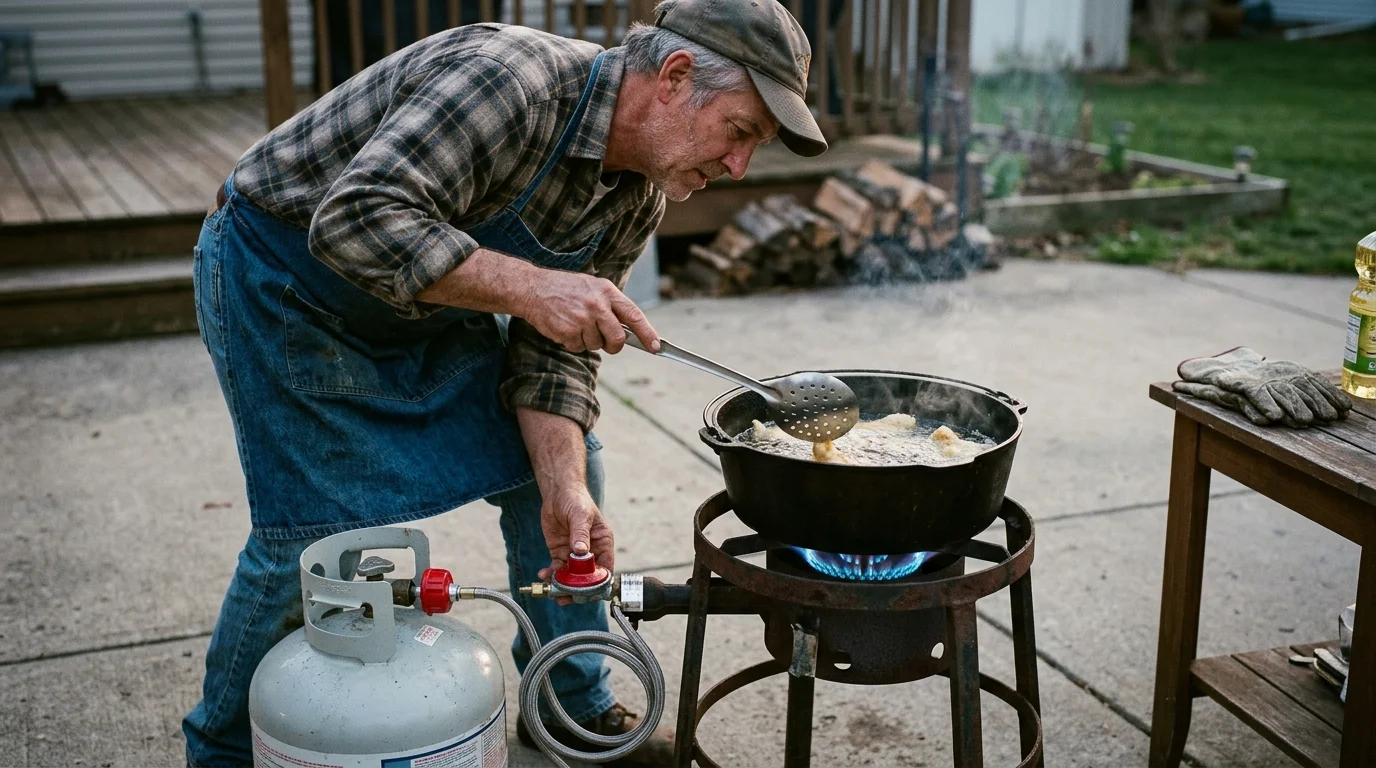
Outdoor propane cookers fall into two distinct operational categories: low-pressure systems and high-pressure systems. Understanding the mechanical distinction prevents you from purchasing an underpowered unit for your weekend cookouts.
Beyond deep frying, outdoor high-pressure systems excel at providing the roaring flame required for authentic high-heat cooking with woks for home stir-frying.
Low-pressure burners operate between 0.5 and 1 PSI, regulated down to 11 inches of water column. PSI stands for pounds per square inch, which measures pressure in propane regulators and closed vessels.
Propane grills and indoor gas ranges use low-pressure regulators designed for controlled, wide-flame surface heating. These systems cannot generate the concentrated velocity needed for boiling large batches of frying oil.
High-pressure burners use regulators rated between 5 and 30 PSI, blasting raw fuel into cast-iron chambers. This creates a torch-like flame capable of heating heavy oil vessels in cold ambient air.
“High-pressure propane systems provide the intense thermal velocity required to flash-fry proteins without dropping vessel temperature.” — Outdoor Cooking Specialist
Low-pressure units feature preset programs on electronic controls for low-and-slow barbecue or simmering tasks. Preset programs are automatic settings designed for common cooking tasks like roasting, simmering, or warming.
High-pressure burners skip digital interfaces entirely, using manual brass needle valves to adjust gas flow. This gives you instant micro-control over your flame height without electronic latency.
For deep-frying fish, high-pressure regulators deliver the high-velocity heat required to overcome wind and thermal shock. You will avoid soggy, grease-soaked breading caused by sluggish, low-pressure heat recovery.
Thermal Recovery Dynamics and BTU Output
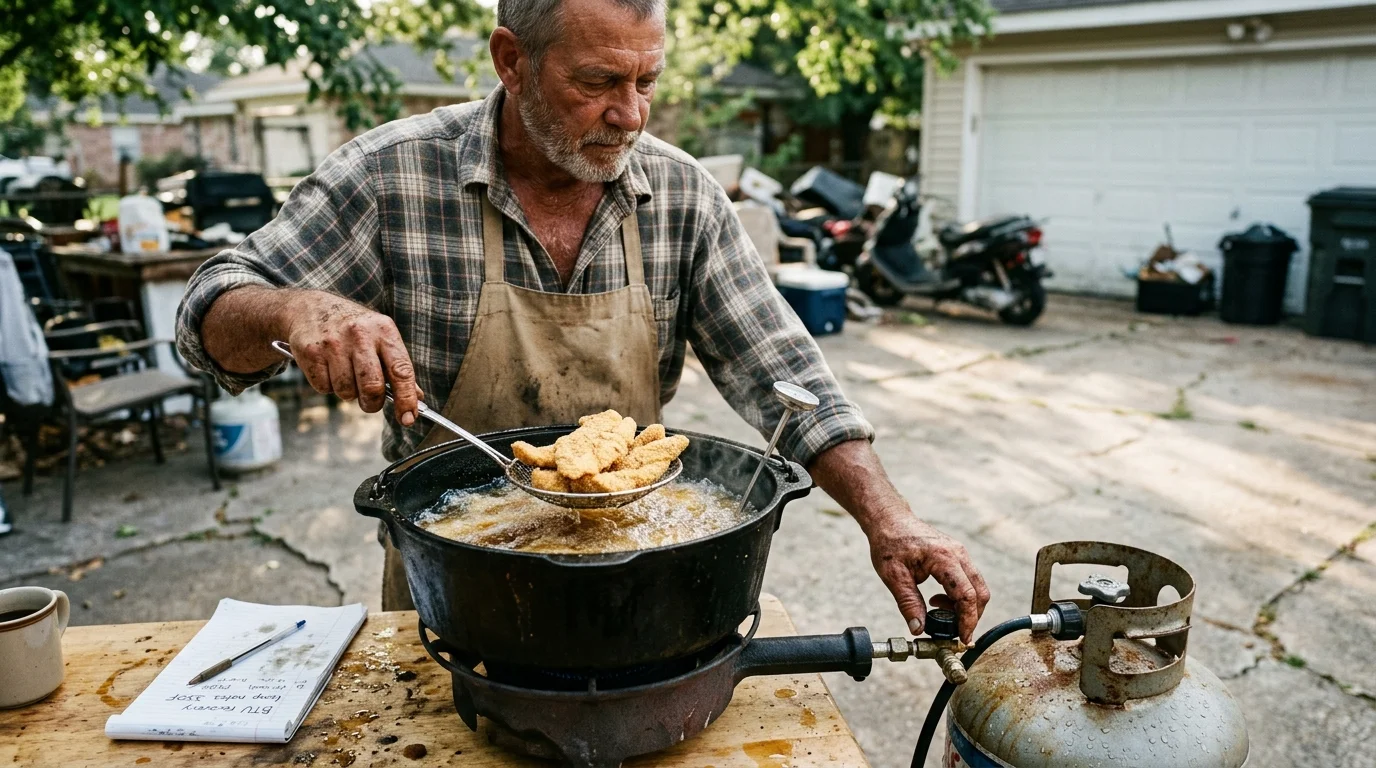
Thermal recovery refers to the time it takes your cooking oil to return to 350°F after adding cold food. When you drop room-temperature or chilled fillets into hot fat, oil temperatures instantly drop by 40°F to 75°F.
Unlike the hands-on heat management required for outdoor frying, cooks who want exact digital water temperature control for proteins often rely on sous vide machines for precision cooking.
In contrast, standard residential stoves struggle with heat retention, much like managing low-BTU apartment burners during high-heat wok cooking.
If your burner takes five minutes to recover, the fish breading absorbs liquid fat instead of crisping. According to frying guidelines published by America’s Test Kitchen, fast oil recovery is essential for crisp crusts and minimal oil absorption.
British Thermal Units, or BTUs, measure the thermal energy output of your propane burner. A 55,000 BTU burner transfers energy into your cooking oil much faster than an indoor gas cooktop.
Standard home stovetops produce between 7,000 and 15,000 BTUs per burner. In contrast, an entry-level outdoor propane burner for deep frying produces roughly 50,000 to 100,000 BTUs of intense heat.
Rapid boil features on indoor appliances help heat water quickly, but struggle with dense vegetable oils. Rapid boil is an engineered burner setting designed to heat liquids faster than standard heating elements.
High-pressure outdoor burners bring five quarts of peanut oil from 60°F to 375°F in less than fifteen minutes. That raw thermal output reduces oil temperature drops to less than ninety seconds per batch.
Because the flame responds instantly to valve adjustments, you can increase gas output seconds before adding fish. This preemptive heat surge counteracts cold food drops, keeping your oil close to your target frying temperature.
Wind Resistance, Frame Gauges, and Outdoor Stability
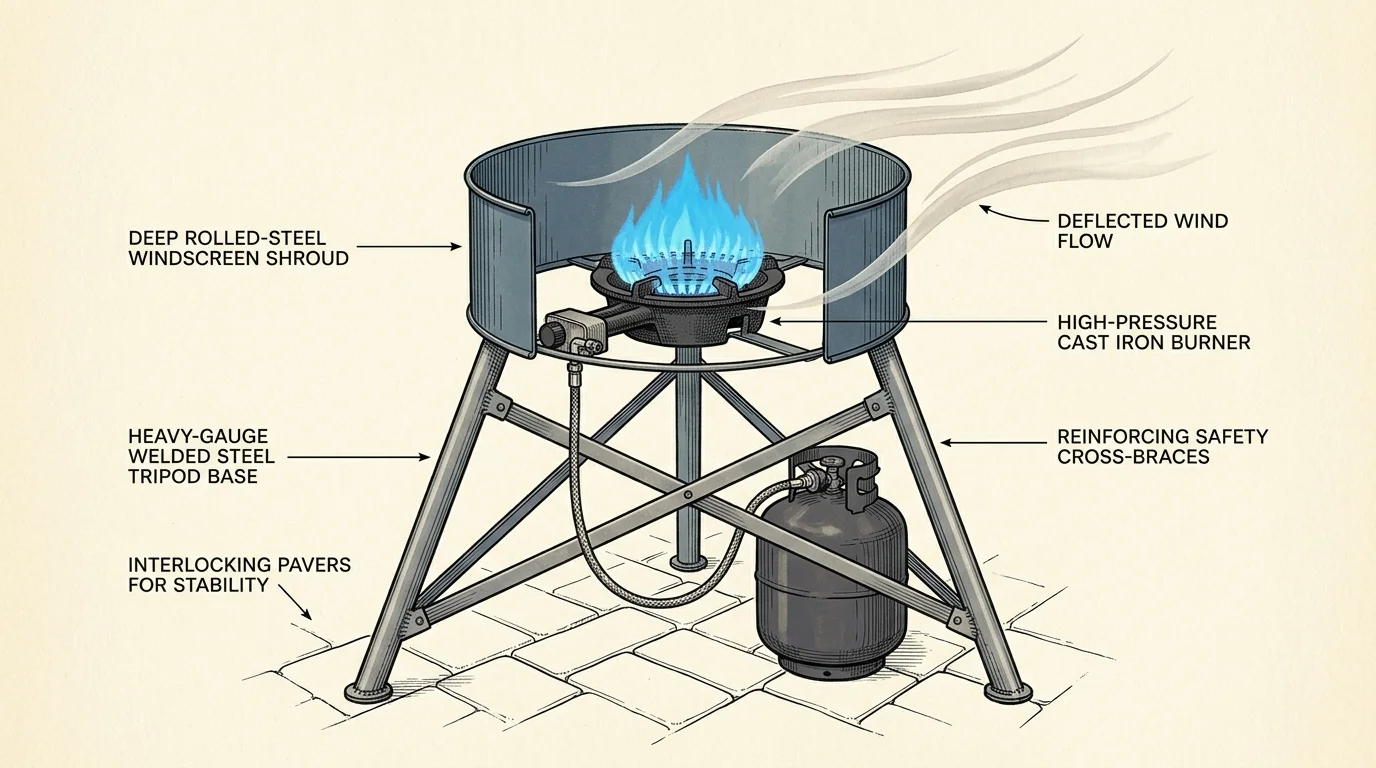
Wind is the primary enemy of outdoor deep-frying because breezes strip heat from your fry pot walls. An unshielded propane flame blows sideways, lowering heating efficiency and creating dangerous flare-ups.
Just as valve integrity and stability are paramount when following safety and usage tips for electric pressure cookers, outdoor propane rigs require secure hose connections and non-tipping frames.
Much like choosing heavy-base skillets for uneven stovetop coils, selecting a stable, thick-gauge outdoor frame ensures consistent pan contact and safe heat transfer.
Look for burners with integrated 360-degree steel windscreens surrounding the cast-iron burner head. A solid circular shroud forces heat upward against the bottom of your pot rather than letting it drift away.
Frame stability is critical when managing several gallons of flammable 375°F cooking oil outdoors. Wide-stance tripod bases or four-leg welded steel platforms prevent hazardous tipping on patio surfaces.
Avoid thin, stamped-sheet metal legs attached with loose friction pins or lightweight butterfly nuts. Heavy-gauge tubular steel frames welded directly to the windscreen ring offer superior durability and safety.
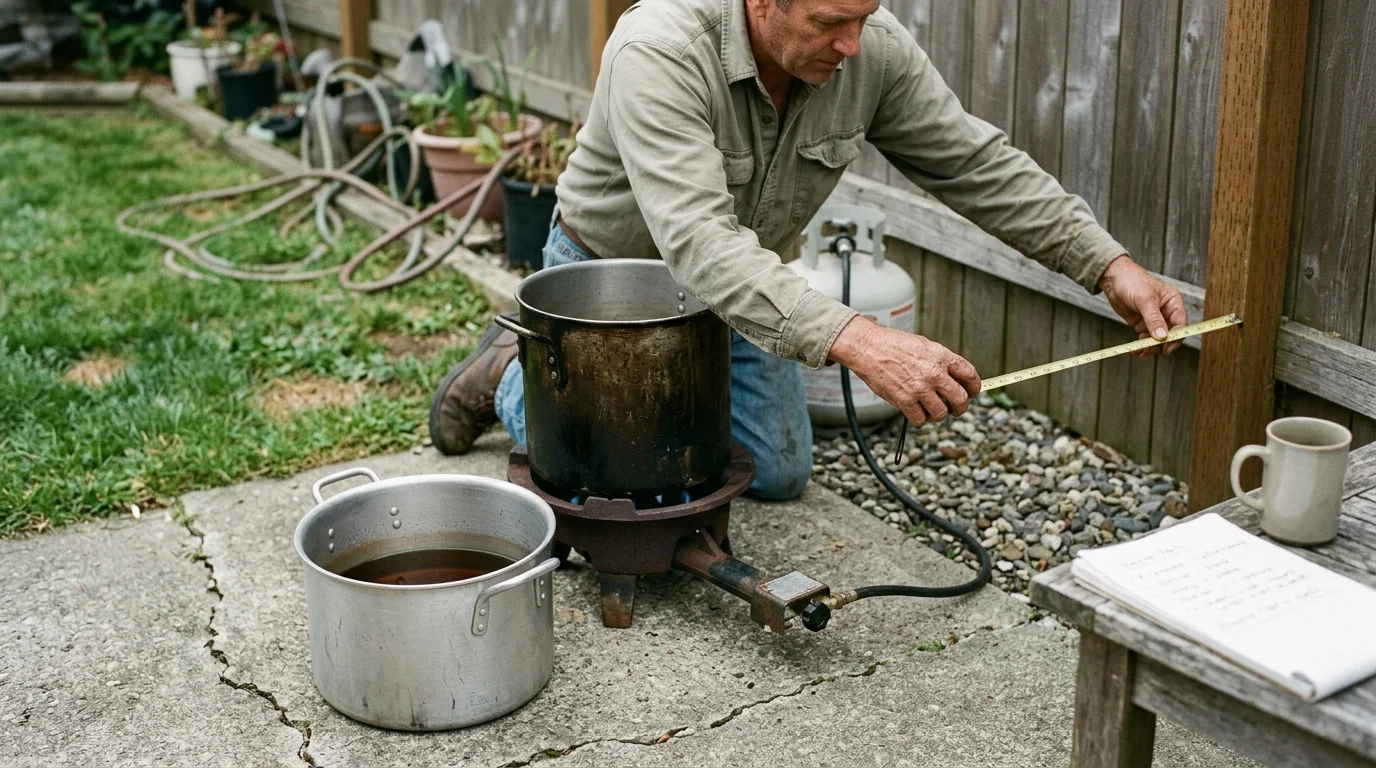
Measure the cooking ring diameter before pairing it with your primary frying stockpot. An outdoor burner deep fry pot needs at least one inch of frame support around its perimeter to prevent wobbling.
Low-slung burners sitting twelve to sixteen inches off the ground lower the vessel’s center of gravity. Taller twenty-four-inch stands reduce back strain, but require perfectly level, rigid concrete or brick pavers.
Comparative Analysis of Leading Outdoor Burners
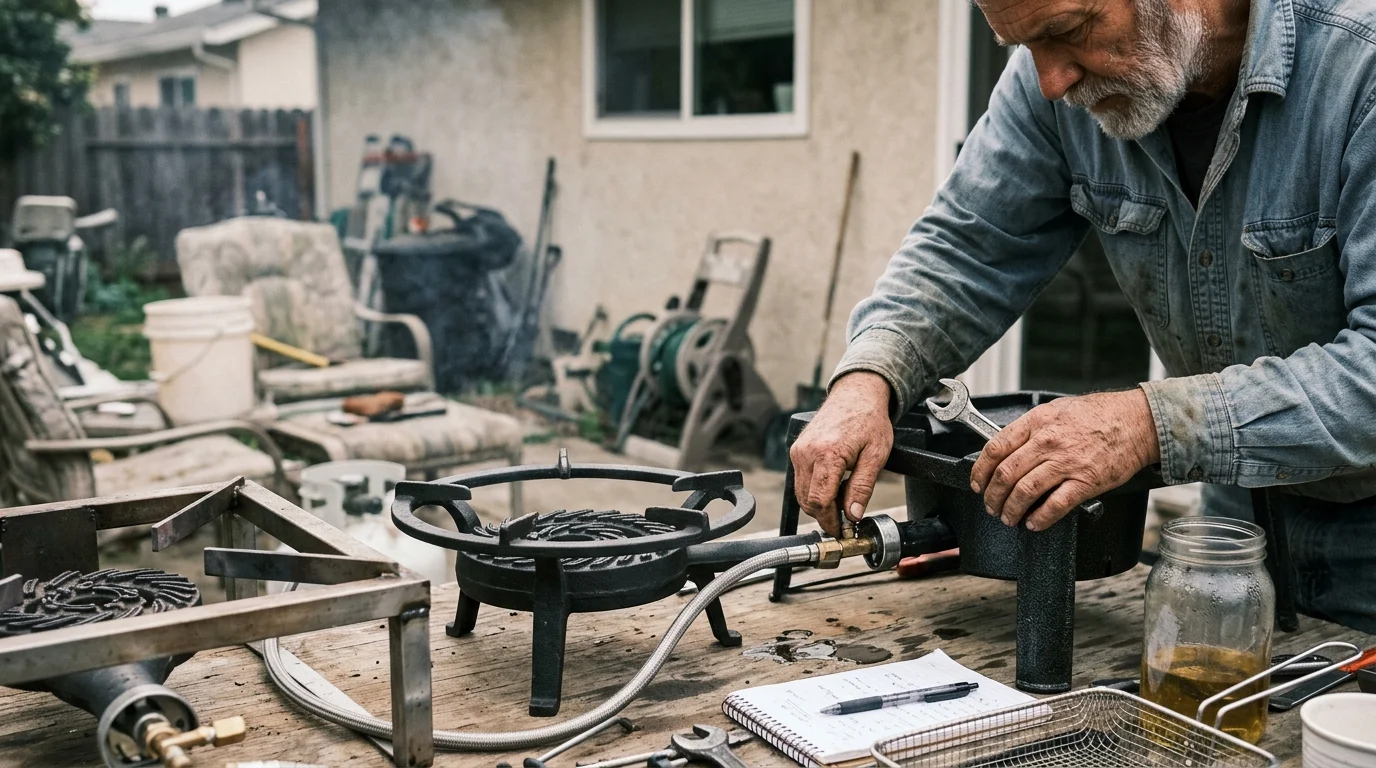
Selecting the right outdoor propane cooker depends on your batch sizes, storage limits, and wind exposure. We analyzed four top-performing portable burners designed for high-heat outdoor frying tasks.
For indoor meal preparation without intense grease odors, comparing an air fryer vs. convection oven can help you choose the right countertop appliance for crisp results.
If setting up an outdoor propane rig is not practical for your living situation, consider evaluating an indoor air fryer as a compact, low-odor frying alternative.
Review the technical specifications below to match burner output and footprint with your outdoor cooking space.
| Model Name | Max BTU Output | Regulator PSI | Cooking Surface Diameter | Height & Weight | Frame Material |
|---|---|---|---|---|---|
| Bayou Classic SP10 | 55,000 BTU | 10 PSI | 14 inches | 13 inches, 13.5 lbs | Welded Steel Frame |
| King Kooker CS14 | 54,000 BTU | 10 PSI | 14 inches | 14.5 inches, 12 lbs | Bolt-Together Steel |
| Camp Chef Pro 30X | 30,000 BTU | Low-Med PSI | 14 x 14 inches | 31 inches, 22 lbs | Powder-Coated Steel |
| Bayou Classic KAB4 | 210,000 BTU | 30 PSI | 18 inches | 12.5 inches, 28 lbs | Heavy Cast Steel |
The Bayou Classic SP10 remains our top recommendation for residential fish frying sessions. Its welded 14-inch steel base holds ten-quart to thirty-quart stockpots without flexing or shifting under load.
The 10 PSI regulator on the SP10 balances steady fuel consumption with reliable heat output. It boils oil quickly while conserving fuel during extended weekend cooking sessions.
The King Kooker CS14 offers a recessed top ring that seats round fry pots securely inside the frame. However, its bolt-together legs require regular tightening to avoid wobbling over time.
The Camp Chef Pro 30X features adjustable folding legs and folding side shelves for prep tools. Its cast-aluminum burner prioritizes wide heat distribution over the high-velocity punch found in jet burners.
The Bayou Classic KAB4 Banjo Burner delivers an immense 210,000 BTUs for massive outdoor gatherings. Its wide 10-inch burner bell boils thirty-quart turkey pots easily, but burns through propane quickly on smaller fish fry pans.
Worked Scenario: Five-Pound Catfish Fry Math
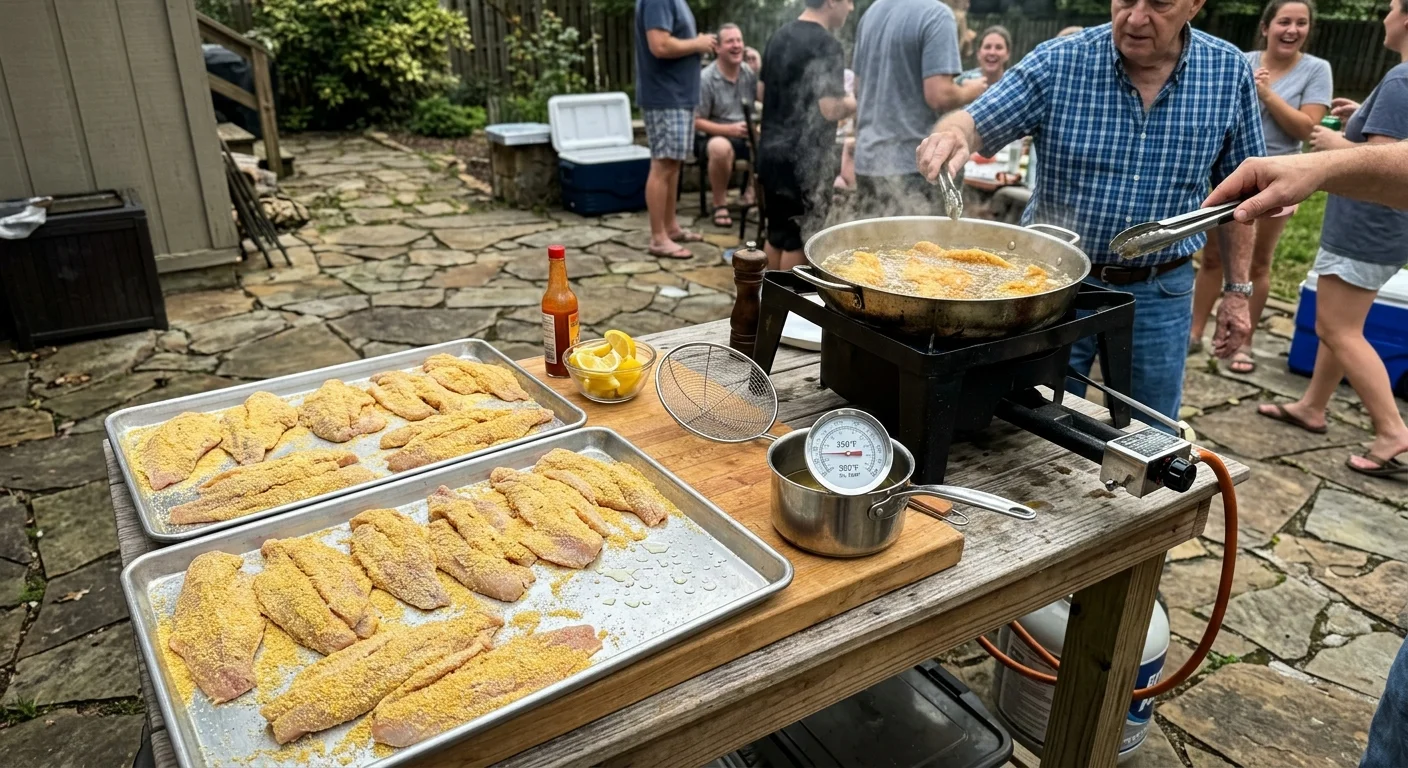
To understand burner efficiency, let us examine a worked frying scenario with measurable quantities and fuel costs. This setup uses five pounds of fresh catfish fillets, cut into twenty four-ounce portions.
Before breading and frying, resting fillets on wire cooling racks with quarter-sheet pans helps surface moisture evaporate in the refrigerator without spreading fishy aromas to other foods.
Before frying, prepping fish on sheet pans with elevated cooling racks helps dry the exterior, ensuring the batter adheres tightly during the fry.
We pair a 10-quart aluminum fry pot with a high-pressure 10 PSI burner outputting 55,000 BTUs. Quart capacity measures how much volume a pot holds; four quarts equals roughly 3.8 liters of liquid.
We add five quarts (1.25 gallons) of pure peanut oil to the pot, leaving five quarts of headspace. At $19.00 per gallon, the oil cost for this outdoor meal comes to exactly $23.75.
Ambient outdoor air sits at 65°F with light wind gusts between six and eight miles per hour. We open the brass regulator valve three-quarters of a turn and ignite the cast-iron burner head.
The peanut oil reaches our target cooking temperature of 375°F in twelve minutes and forty seconds. We maintain that steady temperature by adjusting the brass control valve down one-eighth turn.
We drop four four-ounce breaded fillets (one pound total) into the wire frying basket. The oil temperature drops from 375°F down to 338°F within twenty seconds of submersion.
We open the needle valve half a turn to apply concentrated heat against the pot base. The 10 PSI high-pressure stream returns the oil to 365°F in eighty-five seconds flat.
The batch finishes frying in three minutes and forty-five seconds, yielding crisp, golden-brown catfish. Because the recovery stayed under ninety seconds, the fish absorbed minimal grease during the cook.
We repeat this cycle four more times to cook all twenty catfish fillets across twenty-six minutes. Total propane consumed measures 1.45 pounds of gas, costing roughly $2.90 from a standard twenty-pound tank.
The total cooking and prep cycle takes thirty-nine minutes outdoors on the patio. Inside your home, your kitchen counters, range hood filters, and living room furniture remain completely grease-free.
Pot Pairing, Oil Volume Ratios, and Safety Clearances
Pairing your burner with the proper frying vessel prevents dangerous boil-overs and grease fires. Never fill any outdoor frying pot beyond fifty percent of its total quart capacity with cooking oil.
As cold food enters hot oil, moisture turns to steam, creating a thick, rising foam layer. Maintaining fifty percent headspace ensures violent bubbling never spills over the pot lip onto open flames.
Aluminum stockpots transfer heat faster than stainless steel, promoting quicker thermal recovery between cooking batches. Equipment reviews from Serious Eats confirm aluminum delivers superior conductivity for high-heat outdoor frying.
Cast iron dutch ovens hold heat exceptionally well, but their heavy weight strains small burner frames. If you fry with cast iron, confirm your burner frame features heavy-gauge, fully welded steel crossbars.
“Always maintain a strict ten-foot clearance zone around outdoor burners, and keep a Class B fire extinguisher within arm’s reach.” — Fire Safety Protocol
Position your burner at least ten feet away from wooden deck rails, vinyl siding, and dry vegetation. Never operate a high-pressure propane cooker beneath low covered porches, wooden eaves, or garage door frames.
Always connect your burner using a steel-braided propane hose rather than bare rubber tubing. Steel braiding stops curious pests from chewing the line and prevents punctures from dropped cooking tools.
Keep a calibrated long-stem dial or digital probe thermometer clipped to your fry pot at all times. Unmonitored peanut oil can reach its flash point of 450°F rapidly under 50,000 BTUs of raw power.
Off-Season Maintenance and Oil Disposal Strategies
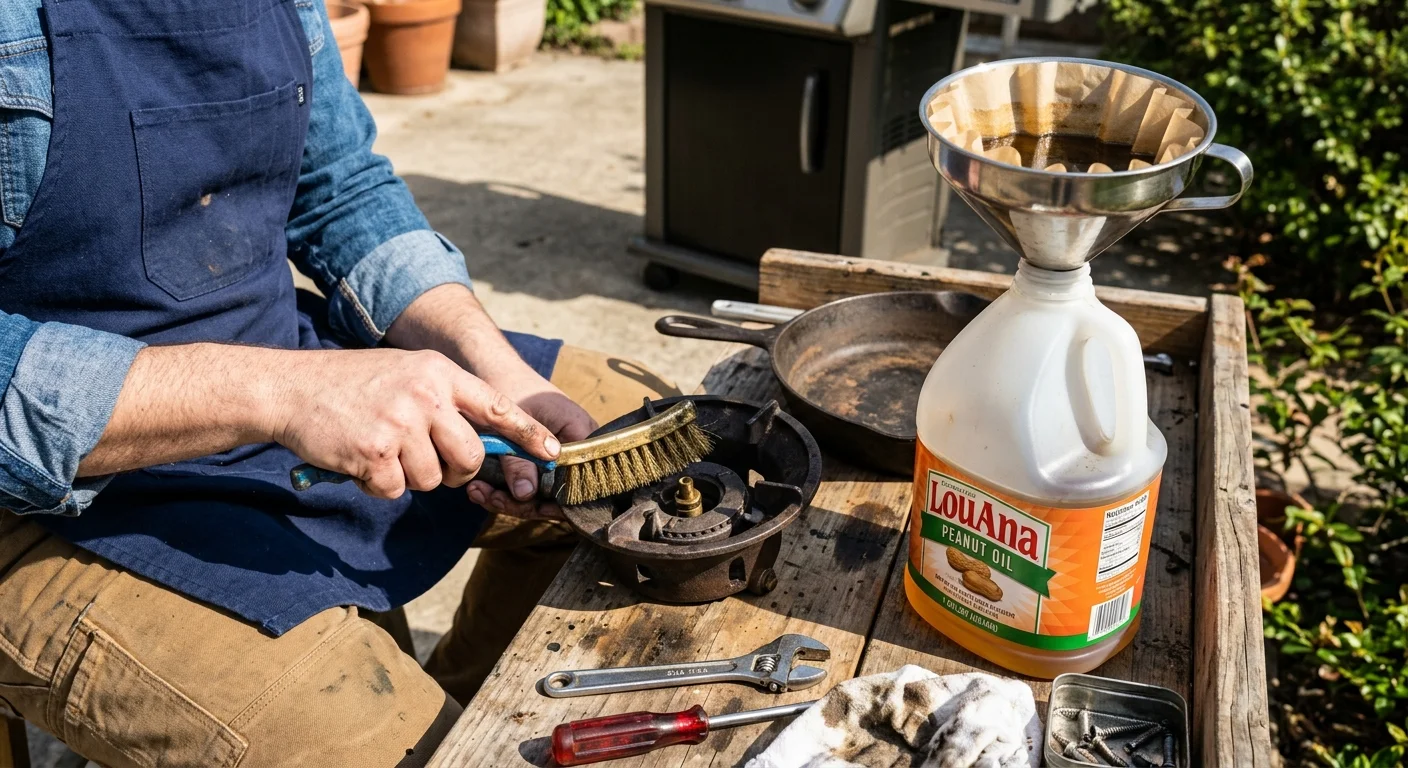
Proper burner maintenance prevents rust and keeps fuel orifices clear for smooth ignition. Outdoor burners endure humid night air, soot buildup, and grease splatters that degrade burner components over time.
Allow your burner to cool completely before wiping down the frame and windshield with soapy degreaser. Wipe away salty fish batter splatters immediately, as salt quickly pits and corrodes painted steel frames.
Spiders and mud daubers often build nests inside the narrow brass venturi tubes during storage. A blocked venturi tube disrupts the fuel-air mixture, causing uneven yellow flames and excessive carbon soot.
Slide a flexible pipe cleaner or nylon bottle brush through the burner throat every spring to clear debris. Store your regulator hose assembly indoors inside a sealed plastic tote to protect delicate rubber seals.
Handling used cooking oil responsibly is an essential part of frying fish outdoors. Allow the oil to cool below 100°F before filtering it through fine cheesecloth back into its original jugs.
Filtered peanut oil can be reused three to four times if heated below its smoke point during frying. If the oil turns dark brown or smells fishy when cold, take it to a local recycling center.
Never pour used cooking oil down household drains, storm sewers, or backyard soil patches. Solidify spoiled oil using commercial waste-cooking hardeners, then discard the hardened block directly into your regular trash.
Frequently Asked Questions
Can I fry fish outside on a standard low-pressure propane barbecue side burner?
Most grill side burners produce only 10,000 to 12,000 BTUs, which is inadequate for heating deep pots. They drop temperature dramatically when cold fish is added, resulting in greasy fillets and slow recovery.
What type of oil works best for outdoor fish frying on high-pressure burners?
Peanut oil is the gold standard because it features a high smoke point of 450°F and neutral flavor. Canola oil and corn oil are affordable secondary choices with dependable 400°F smoke points.
How do I know if my burner regulator is high-pressure or low-pressure?
Check the red or silver bell housing on the regulator hose assembly attached to your propane tank. Low-pressure regulators specify 0.5 PSI or water column ratings, while high-pressure units list 5 to 30 PSI.
How far away from my home should I set up an outdoor propane burner?
Maintain a minimum ten-foot horizontal clearance from all structures, wooden walls, overhanging eaves, and combustible railings. Always operate on a flat, non-flammable concrete, stone, or brick paver surface.
Can I use my high-pressure fish burner to boil water for crawfish or beer brewing?
Yes, high-pressure burners excel at boiling large pots of water quickly for seafood boils and brewing wort. Their high BTU outputs handle thirty-quart to sixty-quart pots far better than home kitchen stoves.
Disclaimer: Product prices, features, and availability change frequently. Prices shown were accurate at time of writing but may have changed. We may earn a small commission from purchases made through links on this site, at no extra cost to you. Always verify current pricing and specifications on the retailer’s website before purchasing.