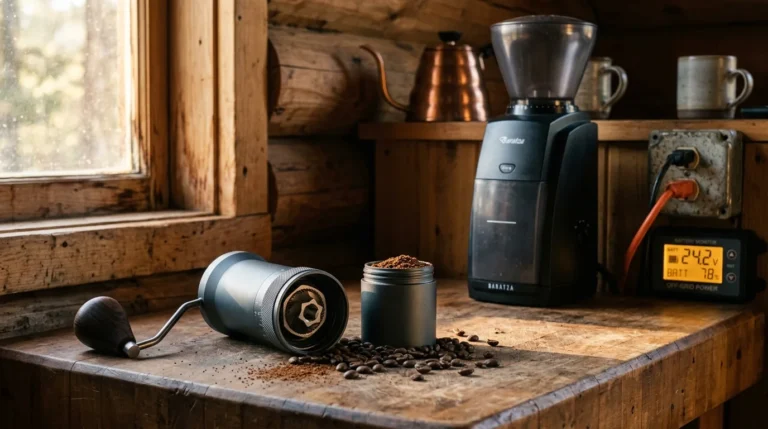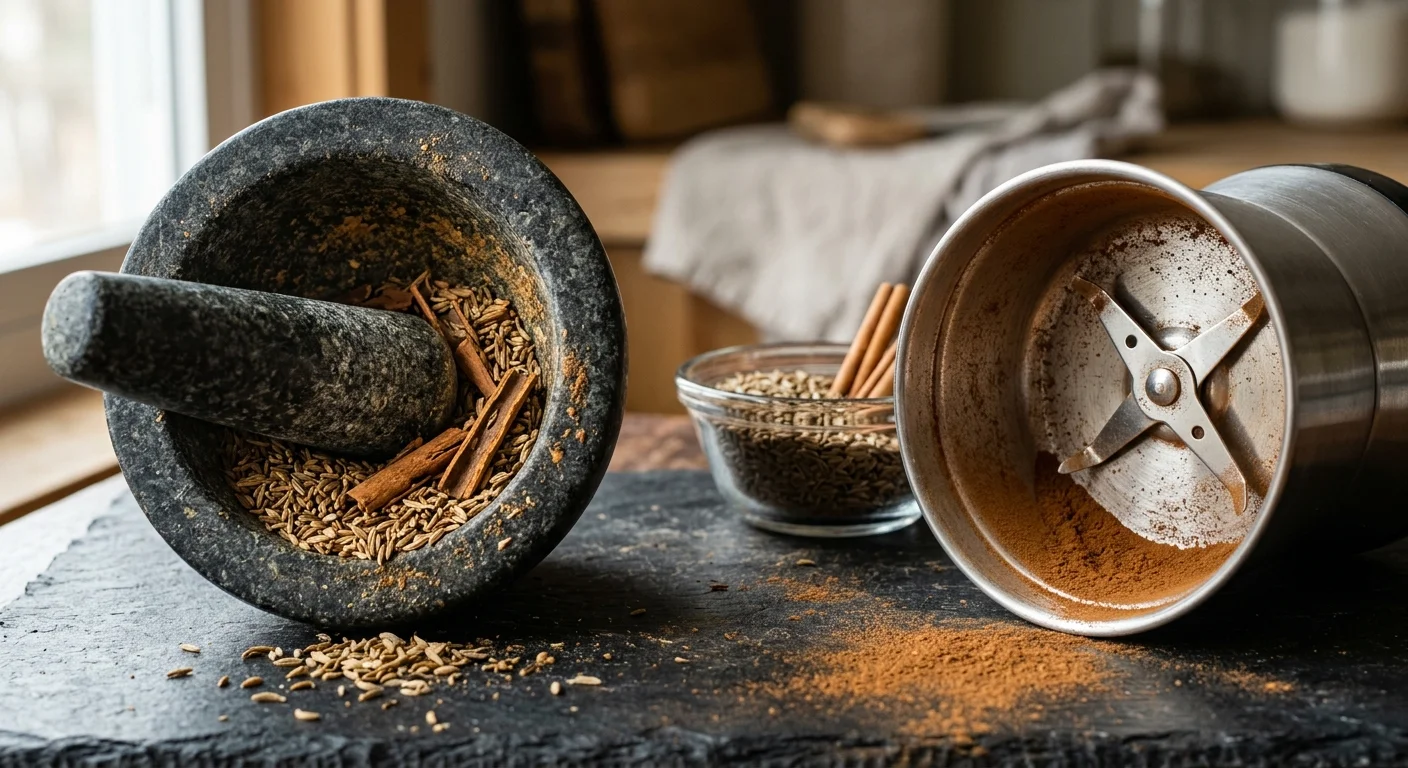
If you buy bulk cumin seeds and tough cinnamon bark from international markets, standard coffee grinders quickly jam or overheat. You need a reliable way to mill dense spices into fine powder without destroying delicate aromatics.
Storing bulk purchases properly in your pantry also requires dedicated spice jar organization to shield delicate oils from light and air.
While traditional culinary wisdom favors stone grinding for flavor preservation, high-RPM electric mills produce significantly finer, sub-150-micron particles from woody bark when you manage blade friction heat through controlled pulsing.
Choosing between heavy granite and high-velocity steel blades comes down to balancing friction-induced thermal degradation against the physical shear needed for fibrous spices.
Dry Spice Grinding Heat Transfer and Volatile Oil Preservation
Whole spices hold their complex aromas inside microscopic oil glands. When you break these glands, volatile essential oils evaporate rapidly into the air.
This thermal dilemma mirrors the tradeoffs between electric vs stovetop appliances, where plug-in speed often requires closer monitoring to manage heat exposure.
While fresh green herbs require gentle handling with herb scissors to prevent cellular bruising, dried bark and seeds demand aggressive friction to release their fragrance.
Cumin relies on cuminaldehyde for its warm, earthy punch. Cinnamon owes its sweet, pungent warmth to cinnamaldehyde, an organic compound carried within dense woody fibers.
Both chemical compounds degrade when exposed to heat above 115 degrees Fahrenheit. Standard blade grinders spinning above 20,000 RPM generate severe dry spice grinding heat transfer through kinetic friction.
According to culinary equipment evaluations published by Serious Eats, high-speed blade impact generates localized heat that can inadvertently toast delicate raw spices during processing.
A continuous 45-second grind in an electric blade mill can raise internal chamber temperatures past 130 degrees Fahrenheit. That ambient spike cooks out cumin’s floral top notes before the powder reaches your pan.
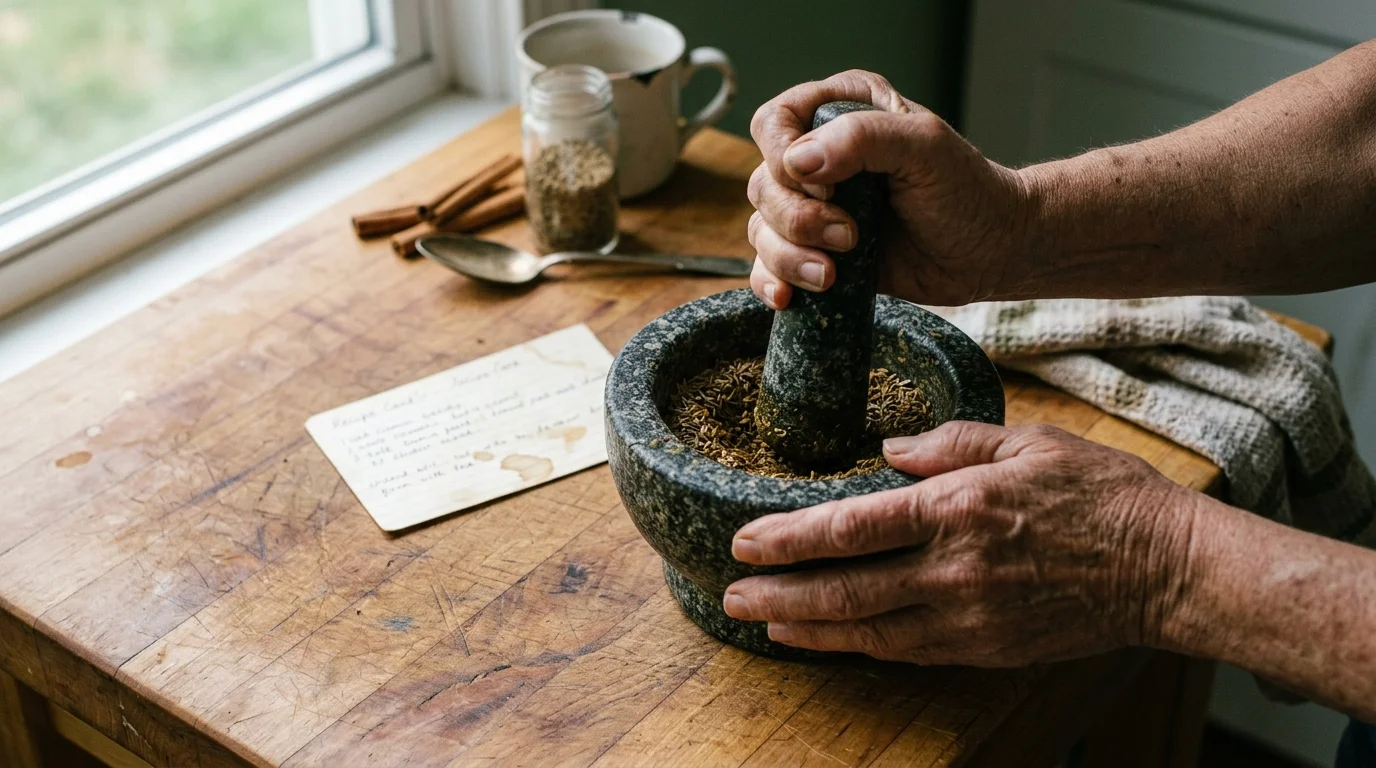
Granite mortars rely on manual compressive force rather than motorized velocity. The heavy stone acts as an expansive heat sink that absorbs mechanical energy without warming up.
Your ground cumin retains its full spectrum of volatile monoterpenes because the stone never climbs above room temperature. However, manual crushing demands significant physical effort to rupture tough cellular structures.

Particle Size Analysis: Milling Tough Cinnamon Bark and Cumin Seeds
Cumin seeds and cinnamon bark present completely different structural challenges. Cumin seeds have fragile outer husks that shatter easily under minimal pressure.
While manual options like box graters and rotary graters can handle hard cheeses and citrus zest, they quickly dull when dragged across fibrous spice bark.
For exceptionally woody spices, shaving the pieces first with electric graters can reduce wear on your mill blades and speed up particle breakdown.
Cinnamon bark, particularly Indonesian or Chinese Cassia, consists of dense, fibrous layers rich in lignified cell walls. You cannot reduce tough Cassia bark to fine dust using gentle pressure.
When you grind cinnamon sticks at home using a granite mortar, you produce irregular flakes. Granite easily fractures the bark into coarse 500-micron shards, but crushing those shards into a velvety powder requires relentless pounding.
“Achieving a true commercial-grade spice grind requires reducing plant matter below 150 microns, a threshold where manual stone grinding hits a hard physical wall.”
High-RPM electric mills excel at reducing fibrous cell walls to uniform sub-150-micron particles. High-velocity impact blades pulverize hard Cassia quills within 20 seconds of operation.
If you leave cinnamon coarse, your curries, braises, and baked goods will carry an unpleasant, gritty texture. Fine particle suspension requires the intense kinetic energy that only motorized blades deliver.
For whole cumin, the situation reverses. An electric mill can easily over-process fragile cumin seeds into an oily paste if you run the motor two seconds too long.
A granite pestle allows you to crack cumin seeds into an aromatic, medium-coarse grind ideal for spice rubs and blooming in hot oil.
Preventing Motor Burnout on Dense Spices: Wattage and RPM Explained
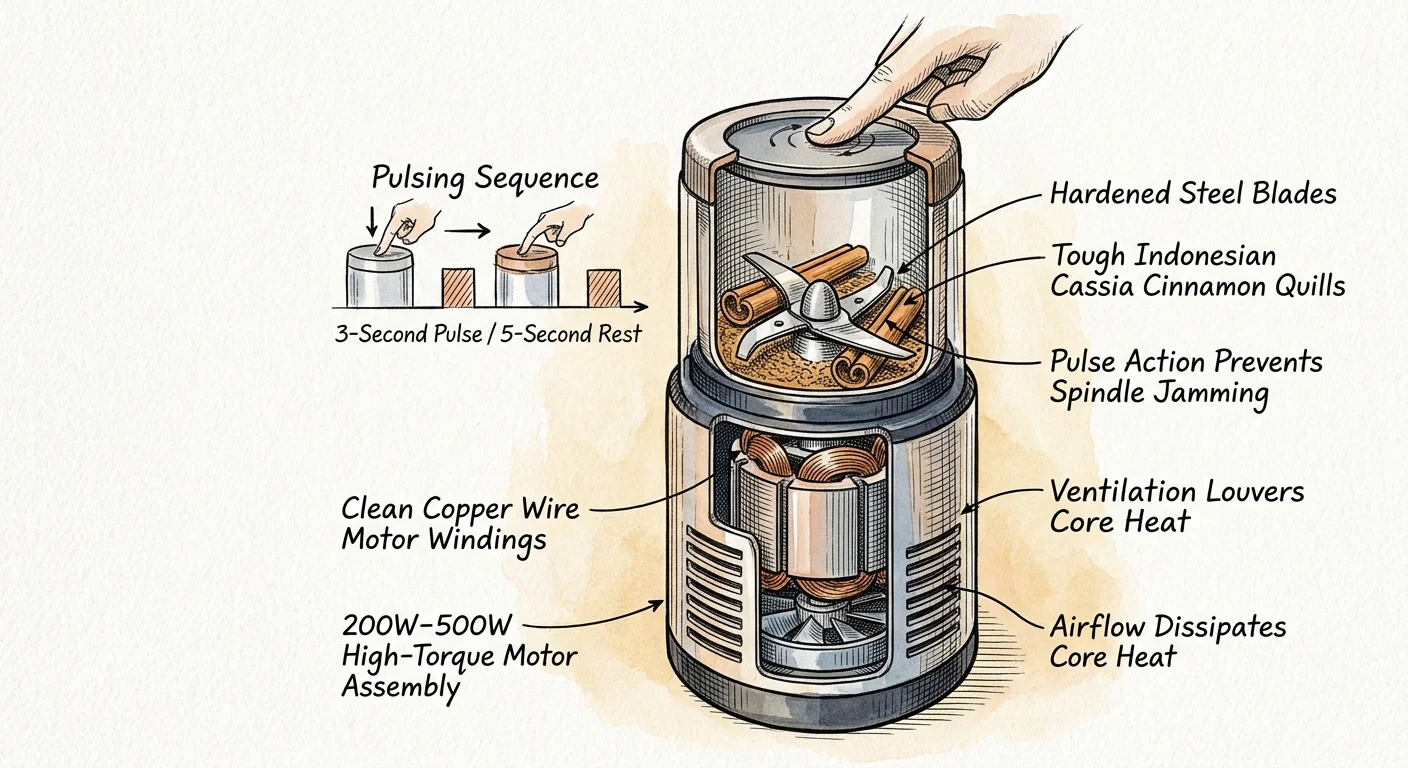
Understanding motor mechanics protects your investment when processing tough bark and seeds. Wattage measures how much power an appliance uses, where higher wattage indicates a stronger motor capable of overcoming sudden resistance without stalling.
Much like deciding between manual and electric citrus juicers, selecting spice tools requires weighing motorized speed against the hands-on control of manual preparation.
RPM, or revolutions per minute, measures how fast the cutting assembly rotates inside the grinding chamber. Basic consumer coffee grinders feature low 150-watt motors engineered exclusively for brittle roasted coffee beans.
When hard Cassia cinnamon wedges beneath a low-wattage blade, the motor shaft seizes instantly. The motor draws peak electrical current while stalled, melting its copper armature windings within seconds.
To safely mill dense whole spices, you need a dedicated mill rated at 200 watts minimum, with commercial-style dry mills reaching 700 to 1,000 watts. These heavy motors spin at 25,000 RPM, delivering enough rotational inertia to slice through woody bark without bogging down.
Testing from Wirecutter highlights that multipurpose coffee grinders often fail prematurely when tasked with hard roots and bark due to undersized motor brushes.
You must also observe duty cycles on high-RPM units. Running a 25,000-RPM mill for longer than 30 consecutive seconds overheats the internal motor housing and burns out internal thermal fuses.
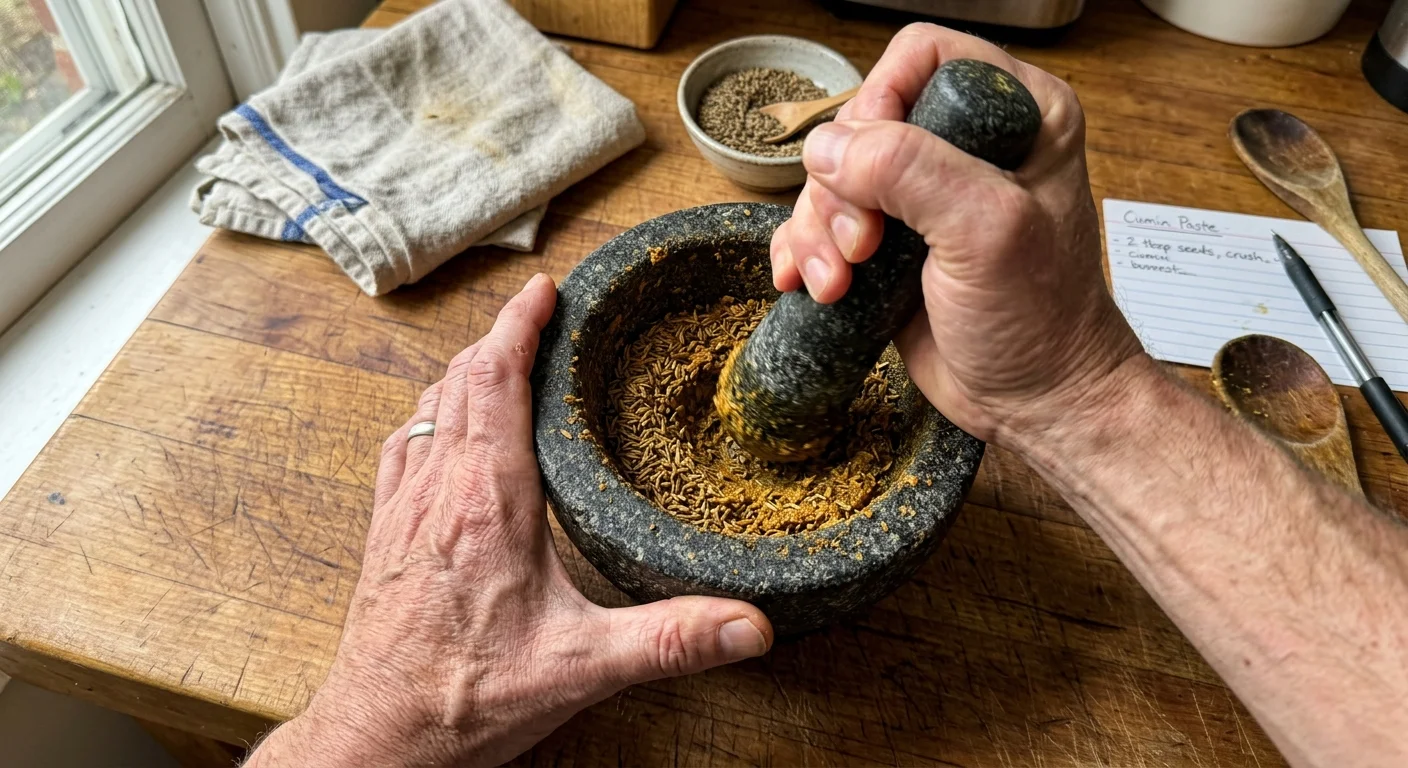
Granite Mortar and Pestle: Shearing Force Without Thermal Degradation
A solid granite mortar and pestle relies on density, rough surface micro-texture, and gravity. Solid granite quarried for traditional kitchen tools weighs between 8 and 14 pounds.
Beyond pulverizing dry aromatics, mortar basins also work well alongside alternative garlic preparation tools for emulsifying pungent cloves into smooth curry bases.
Cooks who experience hand strain or joint stiffness might prefer push-button electric grinders over the heavy physical toll of manual stone pounding.
This immense mass keeps the bowl anchored firmly to your countertop while you apply downward and circular force. The unpolished interior provides thousands of microscopic ridges that grip whole cumin seeds instead of letting them slide away.
Instead of slicing spices like a spinning steel blade, a heavy granite pestle shears plant tissue. Shearing ruptures oil cells along natural fault lines while pressing aromatic liquids directly into the dry fibrous matter.
Detailed kitchen appliance research from Good Housekeeping confirms that solid stone sets endure decades of daily friction without mechanical failure or loss of textural efficacy.
There are no motors to burn out, no plastic drive gears to strip, and no dulling blades to replace. You can pound dense spices for twenty minutes without generating heat that spoils your batch.
The clear drawback remains your own physical endurance. Milling 50 grams of thick Cassia cinnamon into uniform powder using stone requires substantial wrist strength and patience.
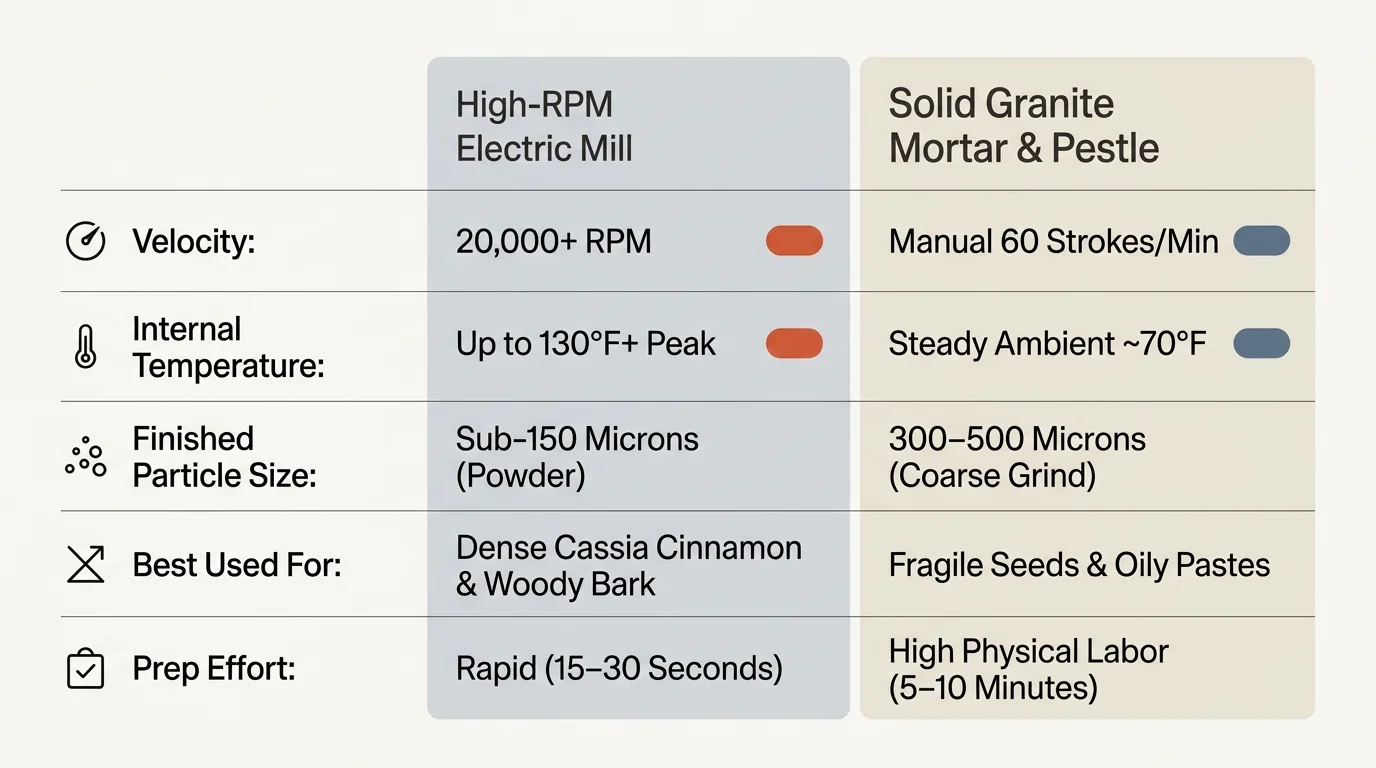
Technical Specifications and Performance Comparison
The table below compares four distinct tools used for milling hard spices, spanning compact electric units to traditional heavy stone sets.
For separating fibrous woody residue from softened ingredients in large batches, cooks often rely on traditional food mills rather than high-RPM dry grinding blades.
If your cooking routines also involve blending wet marinades or pastes, pairing a dry mill with small-capacity mini choppers covers both dry and wet preparation needs.
| Model & Tool Type | Power / Mechanism | Usable Capacity | Dimensions & Weight | Particle Size Capability | Thermal Impact |
|---|---|---|---|---|---|
| Secura Electric Spice Grinder | 200W motor; 25,000 RPM blade | 2.5 oz (70 g) | 4.5″ x 4.5″ x 8.0″; 2.6 lbs | 75 to 250 microns | Moderate (heats after 25s) |
| CGOLDENWALL Commercial Mill | 700W motor; 28,000 RPM blade | 3.5 oz (100 g) | 5.5″ x 5.5″ x 11.5″; 6.8 lbs | 50 to 150 microns | High (requires short pulses) |
| KROK 8.5-Inch Thai Mortar & Pestle | Manual; solid granite stone | 32 oz (4 cups) | 8.5″ x 8.5″ x 7.5″; 13.5 lbs | 250 to 1,000+ microns | Zero (ambient room temp) |
| Cole & Mason Cast Iron Mill | Manual; textured iron plate | 1.5 oz (40 g) | 3.2″ x 3.2″ x 5.0″; 2.4 lbs | 300 to 800 microns | Zero (ambient room temp) |
Electric models provide superior particle fineness for dry rubs and baking powders. Manual options offer total thermal control and excel at wet pastes or coarse cracked seeds.
Notice the substantial footprint and weight of the granite mortar. It demands permanent counter space, whereas the Secura electric mill tucks away inside a shallow cabinet drawer.
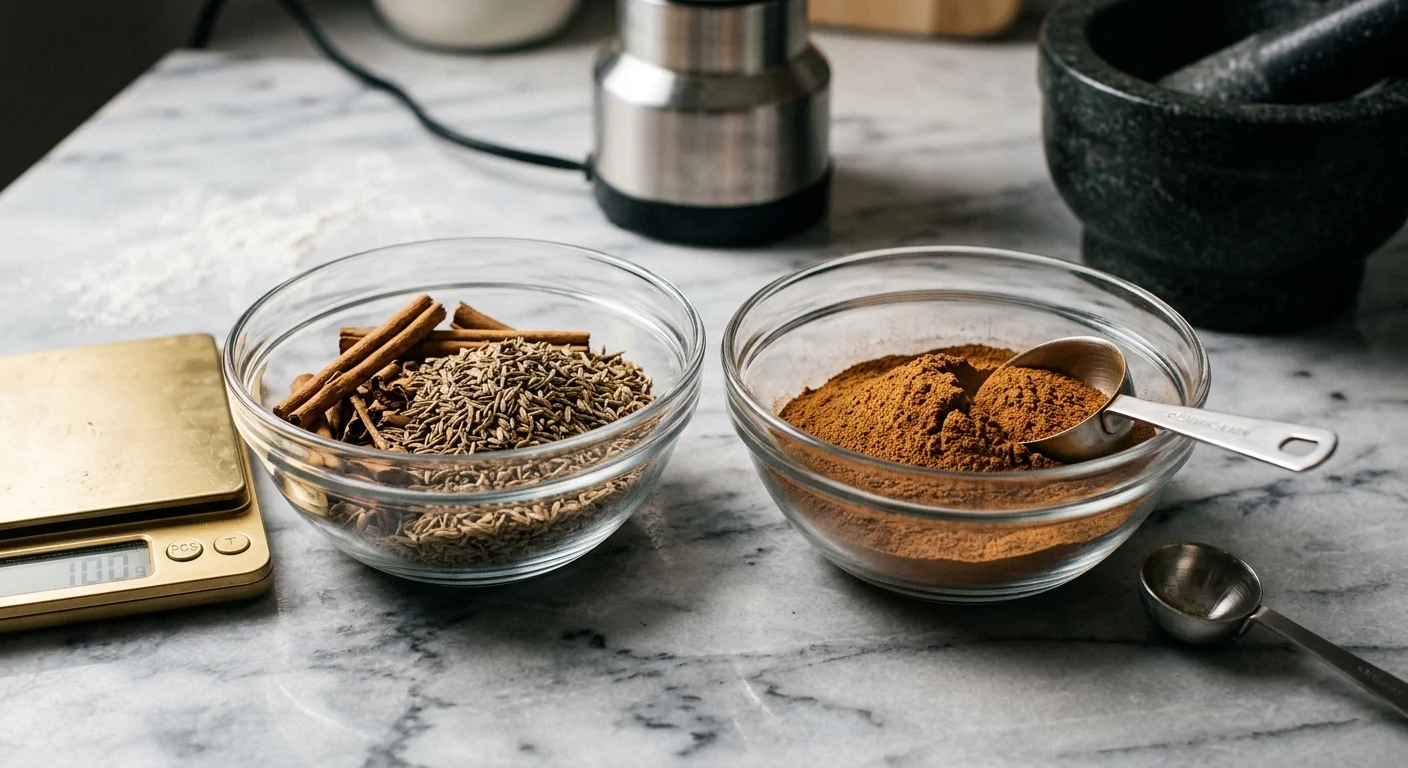
Worked Scenario: Grinding 100 Grams of Cassia and Cumin
To demonstrate how these tools perform in real conditions, consider this worked scenario milling an authentic spice blend. You begin with 50 grams of whole cumin seeds and 50 grams of thick, broken Cassia cinnamon quills purchased from an international grocery market.
Once processed, these freshly ground spice blends are ready for searing and blooming inside compact carbon steel or cast iron woks over high heat.
To keep freshly pulverized spice batches from hardening, storing them in airtight gasket-sealed containers keeps ambient humidity from spoiling the fine powder.
In the first test, you process the batch using a Secura 200-watt electric spice mill. You load 25 grams of broken Cassia sticks into the stainless steel cup to avoid overcrowding the blade.
You run three consecutive 8-second pulses, pausing for 5 seconds between bursts. This pulsing technique limits dry spice grinding heat transfer, keeping internal temperatures at 94 degrees Fahrenheit.
The cinnamon reduces to a velvety, 100-micron powder in 24 seconds of active motor time. You repeat with the remaining cinnamon, then grind all 50 grams of cumin seeds using two quick 5-second pulses.
The entire electric milling process takes 3 minutes and 15 seconds from start to finish, yielding 98 grams of blended powder with minimal residue. The motor housing remains comfortably warm to the touch without thermal shutdown.
In the second test, you process the exact same batch using the KROK 8.5-inch granite mortar and pestle. You place 25 grams of broken Cassia into the stone bowl and begin pounding with the heavy pestle.
After 4 minutes of vigorous downward pounding, the hard bark reduces to rough 1-millimeter flakes. You shift to a circular grinding motion for another 4 minutes, using your body weight to crush the woody fibers against the textured wall.
The stone temperature remains unchanged at an ambient 68 degrees Fahrenheit, perfectly preserving the essential oils. However, passing the cinnamon through a standard flour sieve reveals that only 42 percent reached a sub-200-micron powder.
The remaining 58 percent consists of gritty shards requiring another 6 minutes of crushing. You finish the cumin in just 90 seconds of gentle grinding, demonstrating that granite crushes brittle seeds with ease while struggling against dense bark.
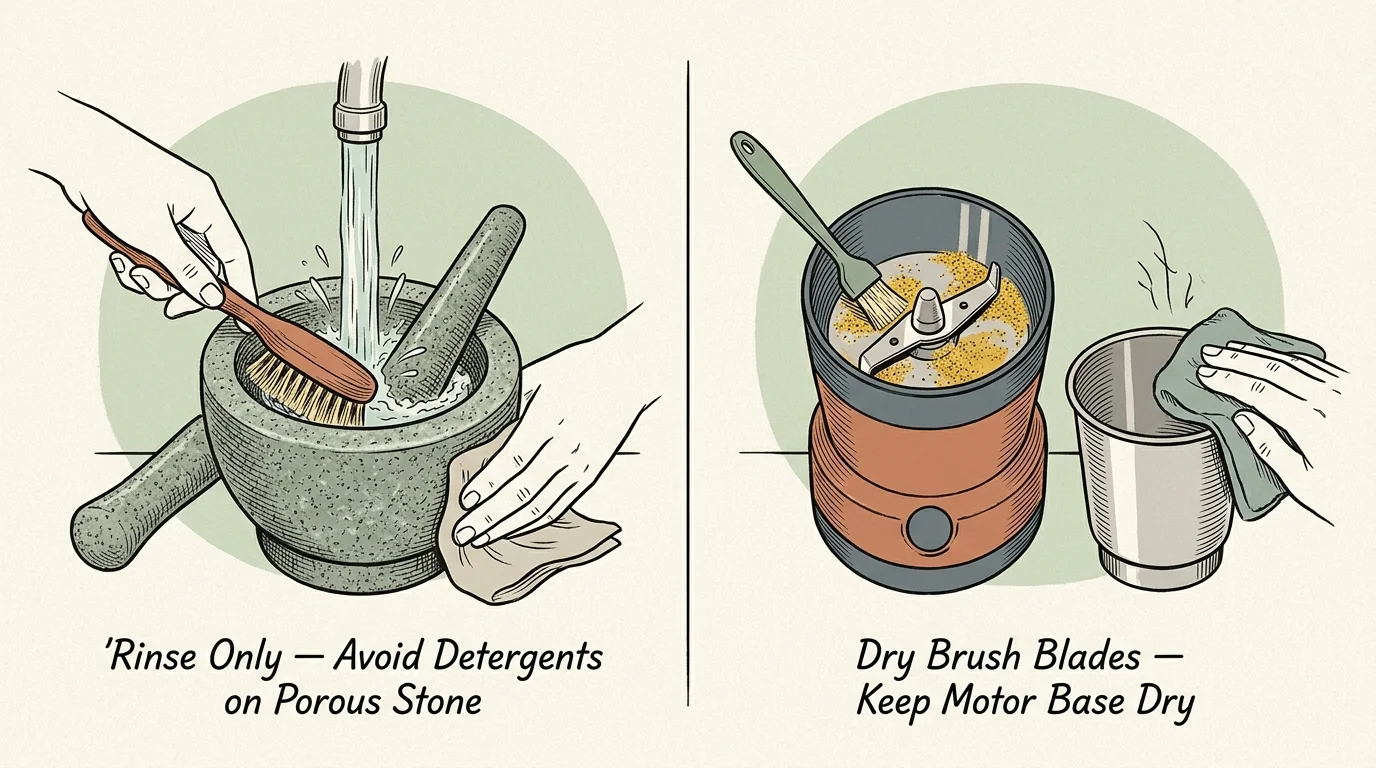
Cleaning, Maintenance, and Countertop Storage Realities
Maintenance requirements directly influence how often you will reach for these kitchen tools. High-RPM electric spice mills feature removable stainless steel grinding cups that twist off the motorized base.
You can wash these stainless steel cups with dish soap and warm water, or place them on the top rack of your dishwasher. Never submerge the electric motorized base; wipe it clean using a damp microfiber cloth.
The primary vulnerability in electric mills is the silicone sealing gasket beneath the blade spindle. Fine spice dust can migrate into the spindle housing over time, causing friction wear if you rinse the assembly improperly.
Granite mortars demand a completely different cleaning protocol. You must never wash unpolished granite with commercial dish soap, as porous stone traps detergent residues that contaminate future batches.
Instead, scrub your mortar with hot water and a stiff nylon brush immediately after processing dry spices. For stubborn cumin oils, grind a handful of raw white rice into powder; the dry rice starches absorb lingering oils and eliminate pungent odors.
Storage demands careful consideration of your available space. A 13.5-pound granite mortar is too heavy to pull out of high cabinets regularly, making it a permanent fixture on your countertop.
An electric spice grinder requires a tiny 4.5-inch footprint that fits into standard 12-inch base cabinet drawers. If your kitchen counter space is severely limited, the electric mill offers far better storage flexibility.

Targeted Equipment Recommendations for Home Cooks
If you regularly cook curries, Mexican moles, or Middle Eastern spice blends using bulk whole bark, select the best spice grinder for hard spices. The Secura 200W Electric Spice Grinder stands as the best value pick for small kitchens.
It includes two removable stainless steel bowls—one with a two-prong blade for dry spices, and another with a four-prong blade for wet pastes. Its 200-watt motor handles Cassia bark cleanly if you break large quills by hand before grinding.
For cooks who process commercial quantities or tough medicinal roots alongside whole cinnamon, choose the CGOLDENWALL 700W Commercial Mill. Its 28,000-RPM blade pulverizes entire sticks of uncracked bark into commercial-grade powder within 15 seconds.
If your cooking style focuses on cracked seeds, whole cumin blooming, pestos, and toasted ground rubs, buy the KROK 8.5-Inch Thai Granite Mortar and Pestle. It offers the best flavor preservation possible because it generates zero thermal degradation.
For budget-conscious cooks wanting manual control without a massive 14-pound stone footprint, the Cole & Mason Cast Iron Spice Grinder is an excellent compact manual option. It relies on heavy cast-iron shearing discs that crush whole cumin seeds without taking over your countertop.
Frequently Asked Questions
Can you safely grind whole cinnamon sticks in a standard coffee grinder?
Standard 150-watt coffee grinders struggle with thick Cassia cinnamon sticks. The dense woody fibers can seize the blade, instantly stalling the low-torque motor and burning out electrical windings. If you must use a standard grinder, break the bark into pea-sized chips first, or use a high-wattage dedicated spice mill.
Why does cumin taste bitter after electric grinding?
Cumin tastes bitter when spinning steel blades generate excessive heat that scorches its delicate monoterpene oils. Running an electric mill continuously for 30 seconds can push chamber temperatures beyond 120 degrees Fahrenheit. Prevent this issue by pulsing the grinder in 5-second bursts to keep the seed temperature low.
Do you need to season a granite mortar and pestle before first use?
Yes, brand-new granite mortars must be seasoned to remove loose stone grit left behind from the manufacturing process. Grind handfuls of wet white rice into paste, discarding each batch until the paste comes out pure white without gray stone specks. Finish the seasoning by grinding whole cumin seeds with garlic to seal the stone pores.
Which tool creates a finer powder for baking: stone or electric mills?
High-RPM electric mills consistently create much finer powder than stone mortars. Electric blades pulverize bark and seeds into sub-150-micron particles, ensuring smooth dispersion in cake batters and doughs. Granite stone grinding leaves a coarser, artisanal texture that works better in savory braises and meat rubs.
Disclaimer: Product prices, features, and availability change frequently. Prices shown were accurate at time of writing but may have changed. We may earn a small commission from purchases made through links on this site, at no extra cost to you. Always verify current pricing and specifications on the retailer’s website before purchasing.