
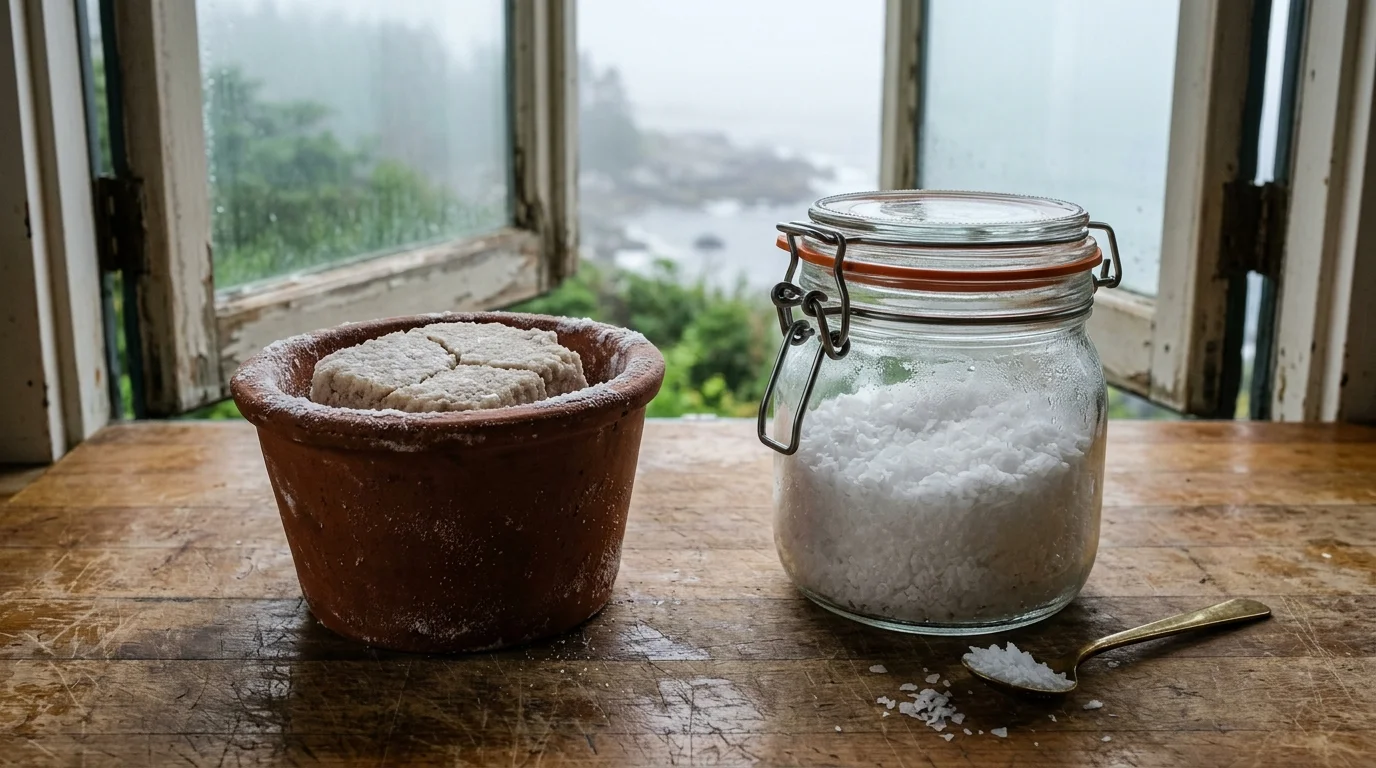
Living along the coast means watching premium Diamond Crystal kosher salt solidify into an unusable white brick within two weeks. Switching to an open salt cellar only accelerates this destructive moisture absorption.
Protecting pantry staples from moisture is an essential element of effective spice jar organization to maintain optimal freshness across all your seasonings.
While culinary lore claims unglazed terracotta breathes to keep salt dry, continuous coastal humidity above 75 percent relative humidity saturates porous earthenware and cements grains together; only an airtight silicone gasket barrier reliably stops clumping.
You will discover why ambient air exchange ruins coarse pantry salts and which specific container designs keep seasonings free-flowing in marine environments.
The Science of Coastal Salt Clumping: The Deliquescence Threshold
Table salt and flaky sea salts are naturally hygroscopic substances. They actively pull water vapor directly out of the ambient indoor atmosphere.
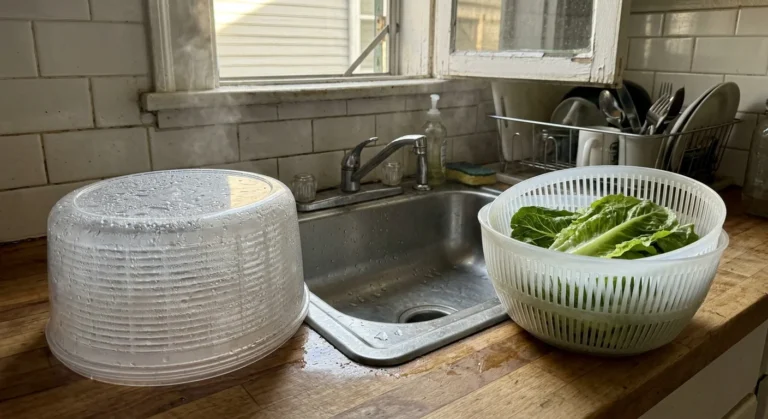
Managing extreme coastal moisture is just as vital during daily food prep, where utilizing salad spinners designed for 80%+ humidity prevents water retention and mold formation.
Protecting coarse crystals from ambient moisture is especially critical when prepping large roasts on wire cooling racks for dry-brining, where uniform salt dispersion is essential.
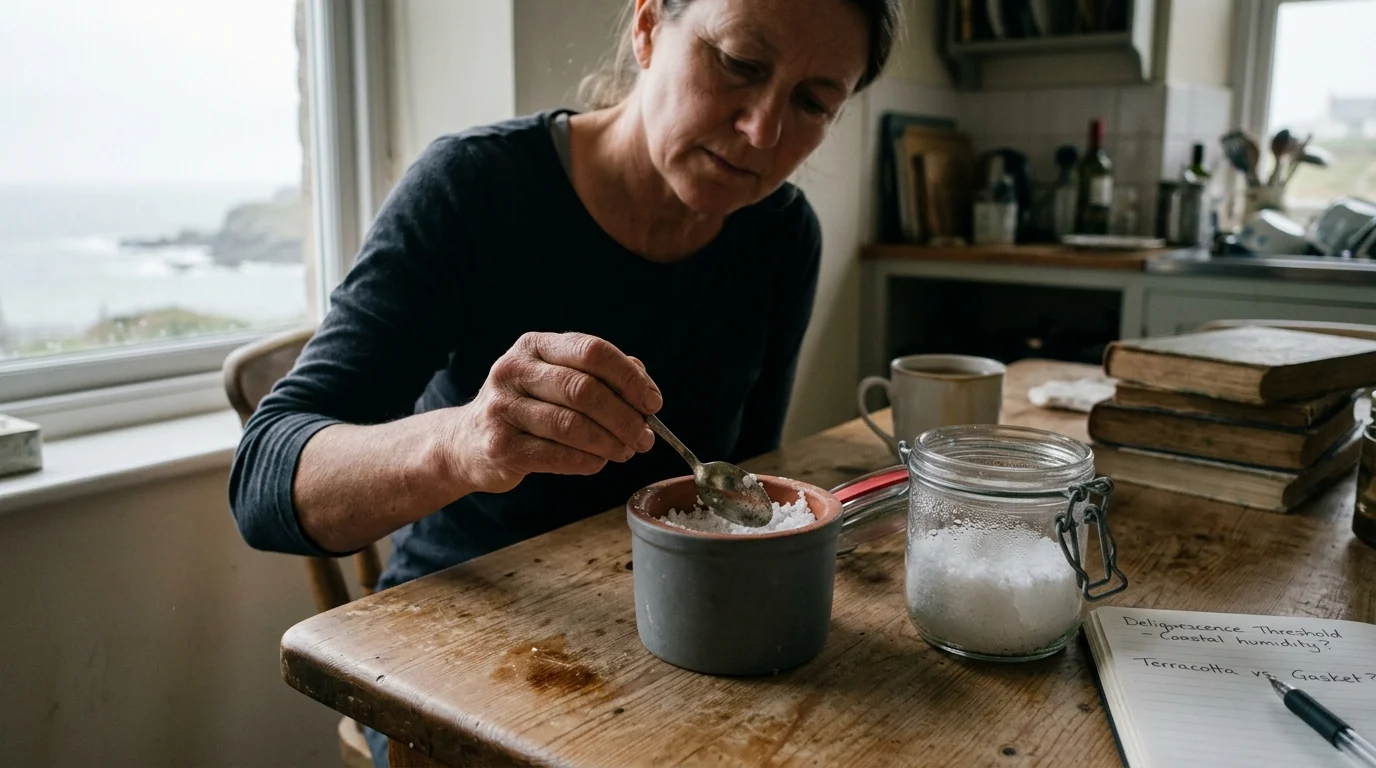
Pure sodium chloride exhibits an exact physical threshold known as its deliquescence relative humidity. At 68 degrees Fahrenheit, that critical breaking point occurs at 75.3 percent relative humidity.
When atmospheric moisture climbs above this 75.3 percent threshold, salt grains cannot sustain their dry, crystalline state. The ambient vapor condenses onto the crystal facets, dissolving the sharp outer edges into an ultra-thin liquid brine.
Normal day-to-night temperature changes cause that dissolved liquid to dry out. As that moisture evaporates, the dissolved sodium chloride recrystallizes across contact points between neighboring grains.
This repeating dissolution and drying cycle creates microscopic mineral bridges between particles. Within days, those bridges transform loose grains into an unyielding, rock-hard formation.
Coastal cooks in states like Florida, Georgia, and Washington face average ambient indoor humidity levels between 76 and 88 percent. Even modern air conditioning systems struggle to suppress indoor humidity during muggy summer heatwaves.
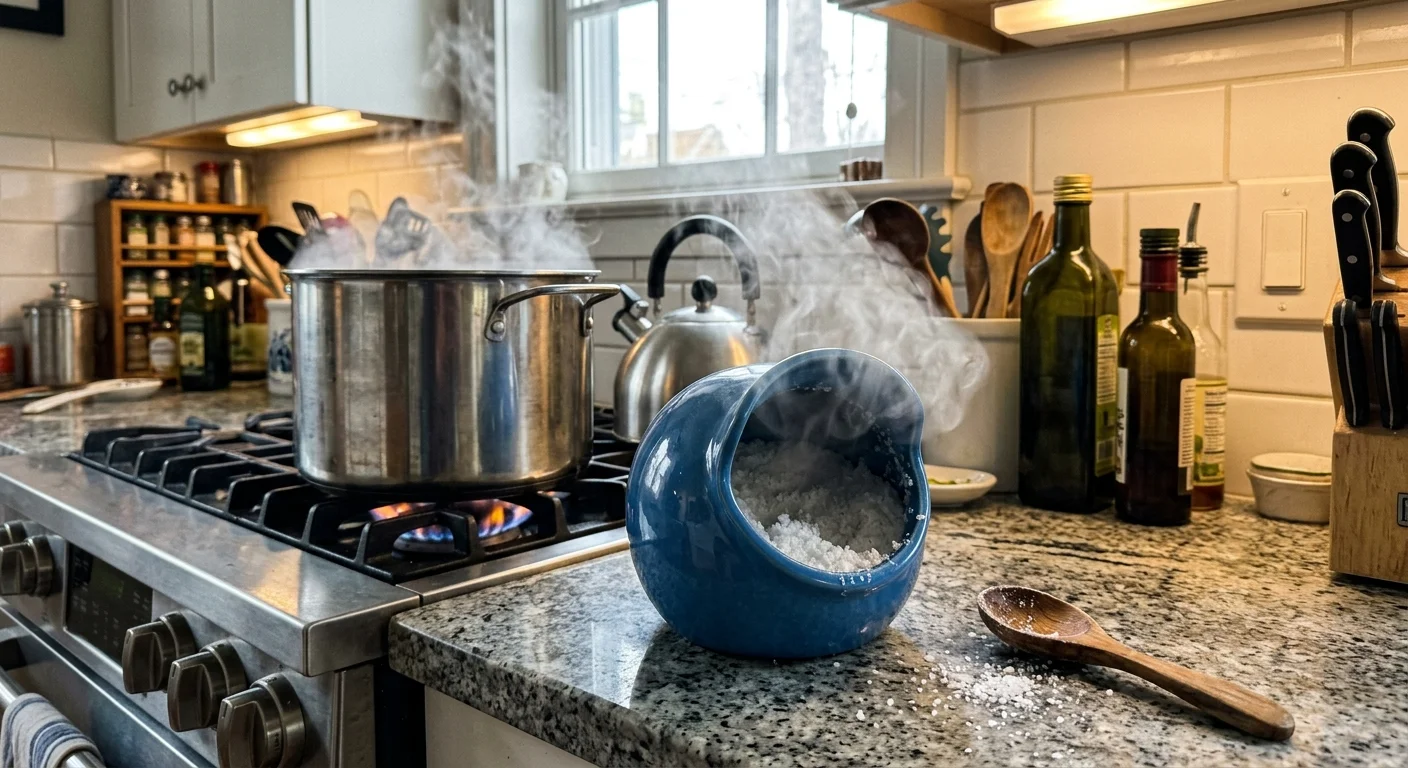
Simmering soup pots, whistling tea kettles, and running dishwashers drive local humidity near kitchen prep zones past 85 percent. Without an airtight enclosure, coarse finishing flakes inevitably succumb to deliquescence.
How Unglazed Terracotta Salt Keepers Actually Handle Ambient Vapor
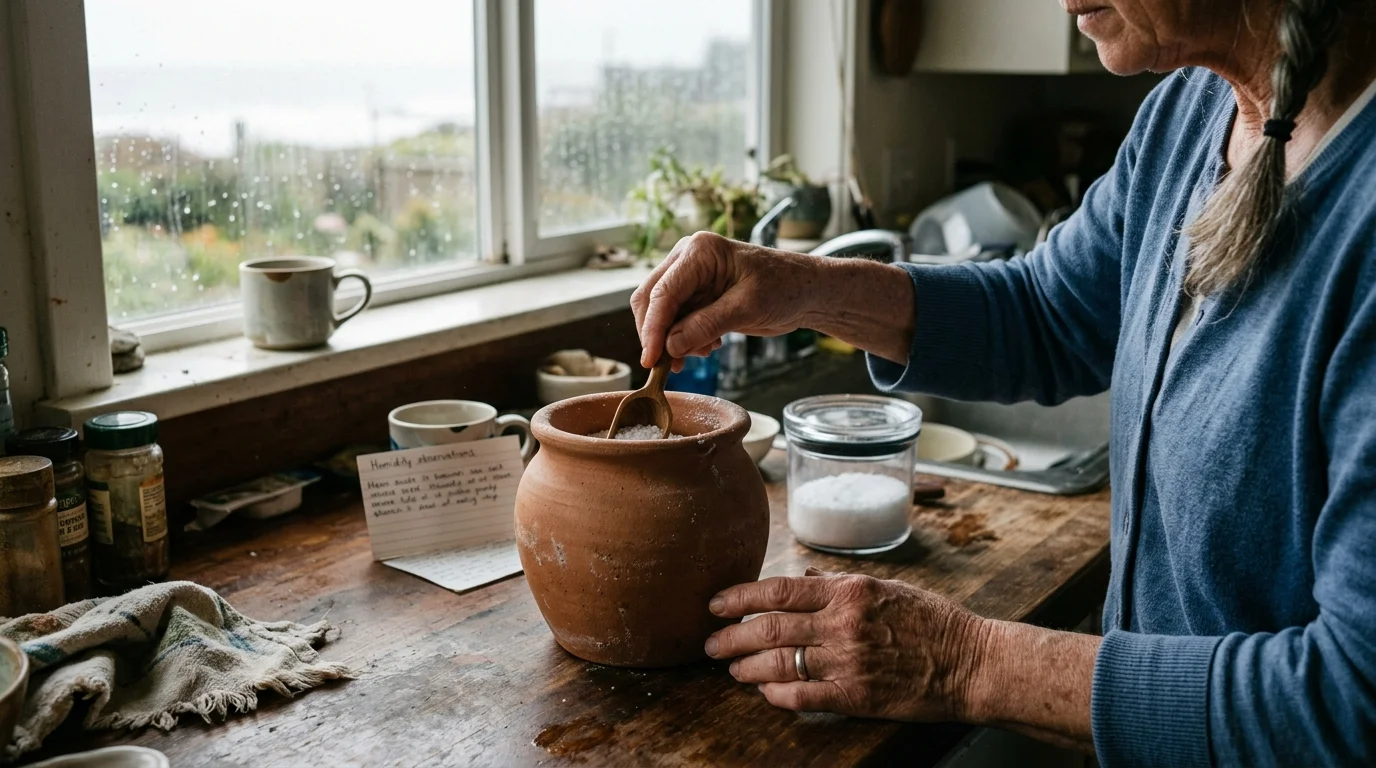
Unglazed terracotta possesses an open, microscopic pore structure formed during low-temperature kiln firing. Traditional cooks have used this natural earthenware for centuries to moderate humidity and cool food through evaporation.
The unique moisture and heat transfer properties of clay are also a key consideration when comparing stoneware loaf pans to aluminized steel for sensitive baking environments.
This evaporative humidity regulation works much like traditional ceramic butter dishes, which rely on breathable materials to keep contents fresh on the counter.
When evaluating a terracotta salt keeper moisture control vessel, you must understand how capillary absorption works. The porous earthenware draws in stray water vapor through capillary action whenever surrounding air experiences temporary humidity spikes.
In temperate, non-coastal environments where baseline relative humidity hovers around 45 percent, terracotta performs reasonably well. It absorbs transient steam from a nearby boiling pot and releases that vapor when ambient room air dries out.
Unfortunately, that capillary moderation breaks down when you expose the vessel to sustained marine humidity. Capillary pores have a finite physical absorption volume; they cannot swallow moisture indefinitely.
Once surrounding coastal humidity remains over 75 percent for forty-eight consecutive hours, the earthenware walls become fully saturated with moisture. The clay equilibrium shifts entirely from absorption to passive water transmission.
At full saturation, the porous walls trap liquid moisture directly against your stored salt crystals. Instead of sheltering your pantry investment, the damp clay functions as a humid chamber that accelerates crystal fusion.
“A porous clay vessel cannot create dry air; it merely matches the damp atmosphere of the room that surrounds it.”
Baking a saturated terracotta keeper can dry the clay temporarily. However, the vessel will fully recharge with atmospheric moisture within three days of coastal kitchen exposure.
The Air-Barrier Strategy: Silicone Gaskets and Mechanical Clamps
To keep salt from clumping along foggy oceanfronts or humid bays, you must establish an impenetrable barrier against incoming air. An airtight salt pig review of hermetic containers demonstrates that mechanical pressure stops vapor transfer cold.
The challenge of stopping ambient air transfer is similarly seen in food preservation, where choosing between airlock lids and water-seal ceramic crocks determines how well outside contaminants are blocked.
This positive latching concept mirrors the design of leakproof glass meal prep containers, which utilize hinged mechanical clamps to maintain an airtight silicone seal.
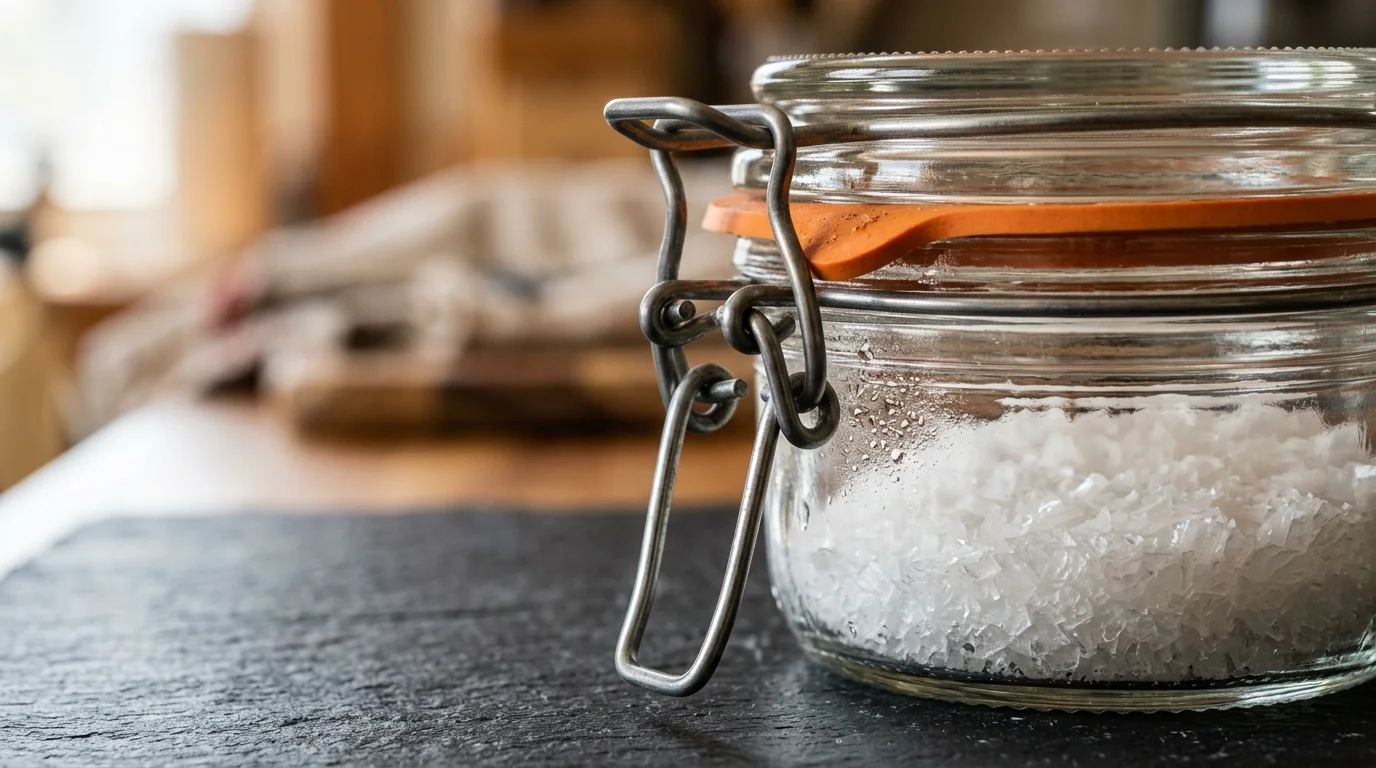
True hermetic containers rely on silicone—a flexible, heat-resistant material used in many kitchen tools—to bridge the gap between container and lid. Under pressure, the silicone ring compresses into microscopic surface imperfections to block humidity.
Standard screw-top jars rarely prevent moisture intrusion because threaded closures apply uneven sealing force. In contrast, mechanical wire clamp systems deliver balanced, high-compression downforce along the entire jar perimeter.
Heavy-duty clamp assemblies feature stainless steel—durable metal that resists rust and staining—wire bails that do not corrode when exposed to coastal salt air. This mechanical leverage maintains a hermetic seal under shifting atmospheric pressures.
According to storage container evaluations by Wirecutter — Kitchen, mechanical latch jars consistently maintain airtight seals where simple friction-fit lids allow ambient leakage. Positive clamp pressure isolates your stored ingredients from the exterior room air.
Glass vessels like the Bormioli Rocco Fido clamp jar provide an impermeable crystalline structure. Unlike earthenware or low-density plastic, soda-lime glass allows zero water vapor molecules to diffuse through the vessel walls.
When you close a gasketed jar on a clear morning, you trap dry air inside. The contents remain shielded from external humidity spikes until you intentionally pop open the latch.
Worked Example: Coastal Humidity Failure Timeline and Salt Waste Costs
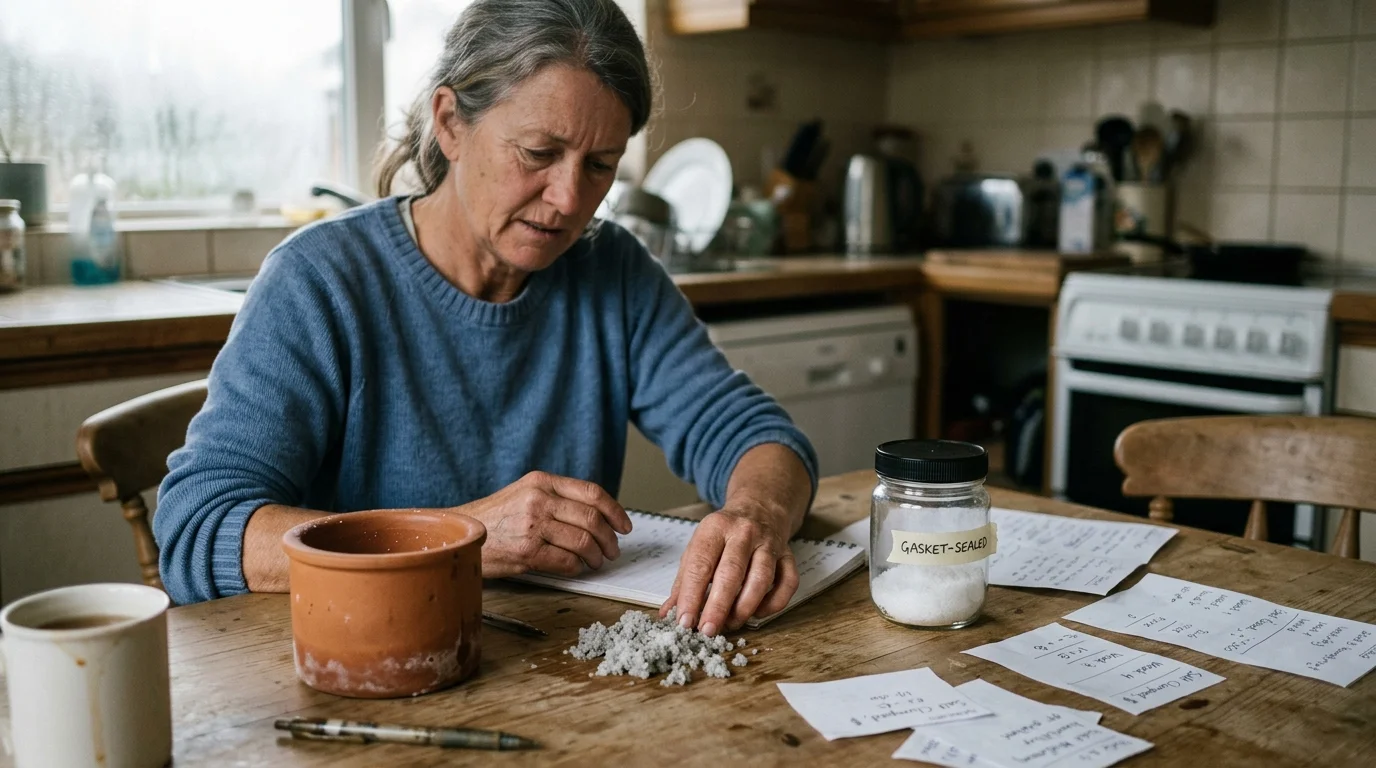
Consider a home cook in Savannah, Georgia, who keeps indoor humidity at 78 percent during hot August weather. The cook stocks their kitchen counter with bulk kosher salt and premium finishing flakes.
If ambient moisture does fuse your seasonings into solid chunks, using a granite mortar and pestle or electric spice mill can quickly pulverize stubborn clumps back into loose grains.
Alongside clump-free salt storage, many cooks pair their prep stations with electric pepper grinders to ensure effortless one-handed seasoning during busy cooking sessions.
To protect the remaining bulk cartons in humid pantries, sealing opened boxes with durable bag clips prevents ambient air from spoiling your salt reserves.
They buy a 3-pound carton of Diamond Crystal Kosher Salt for $11.49 and an 8.5-ounce box of Maldon Sea Salt flakes for $7.99. They split their coarse salt between an unglazed terracotta keeper and a gasketed glass clamp jar.
The cook measures exactly 250 grams of kosher salt into each container on August 1. By August 5, the salt inside the unglazed terracotta keeper absorbs 14 grams of water vapor, softening its crunchy crystal structure.
By August 15, kitchen temperatures drop at night and rise during daytime cooking. The dissolved surface brine evaporates and recrystallizes, fusing the 250-gram terracotta deposit into an immovable 268-gram brick.
The cook cannot measure teaspoons accurately with measuring spoons or pinch loose seasoning with bare fingers. Chipping away at the hard brick with a butter knife yields jagged chunks that dissolve unevenly in pans.
Meanwhile, the 250 grams kept in the gasketed glass clamp jar records zero weight gain over those same two weeks. The delicate pyramid flakes retain their airy, crisp texture and separate effortlessly upon contact.
Over a full calendar year, that coastal humidity cycle ruins approximately 6.5 pounds of clumping kosher and sea salt. That constant spoilage wastes $38.45 annually in discarded seasonings.
A durable 17.5-ounce Bormioli Rocco Fido clamp jar costs roughly $9.50 at retail. The airtight jar fully pays for itself within three months by eliminating ruined, solid-brick salt waste.
Glazed Ceramic Salt Pigs: Aesthetic Counter Appeal Versus Humid Air
Glazed ceramic salt cellars and hooded pigs offer charming retro counter appeal for traditional home kitchens. Brands like Le Creuset apply high-fire vitreous glazes to produce vivid enamel finishes that repel external stains.
The vitreous glazes used on ceramic salt keepers provide the same impenetrable, non-reactive glass barrier found on enameled cast iron Dutch ovens.
Balancing visual appeal with functional climate protection is a key consideration when planning practical countertop storage solutions for small kitchens.
A non-porous glaze completely eliminates water penetration through the stoneware body. Unlike unglazed terracotta, moisture cannot migrate across the vitrified walls into your salt stockpile.
However, the wide, open hood design renders the protective glaze useless against humid coastal air. An open snout continuously circulates humid indoor air straight across your salt crystals.
In rigorous kitchen equipment tests performed by Serious Eats — Equipment Reviews, wide-mouthed crocks failed to protect hygroscopic pantry staples from high ambient moisture levels. Natural air currents keep the internal microclimate identical to the humid room air.
Worse, the impermeable glazed walls prevent condensed moisture from escaping once damp air enters the chamber. Dense, humid air sinks into the basin, forming a pooled layer of concentrated brine beneath your salt.
Glazed pigs deliver acceptable performance in arid climates where indoor humidity never approaches the 75 percent deliquescence threshold. In marine regions, however, open snouts guarantee hardened salt crusts and ruined texture.
Direct Comparison: Terracotta, Gasketed Glass, and Glazed Keepers
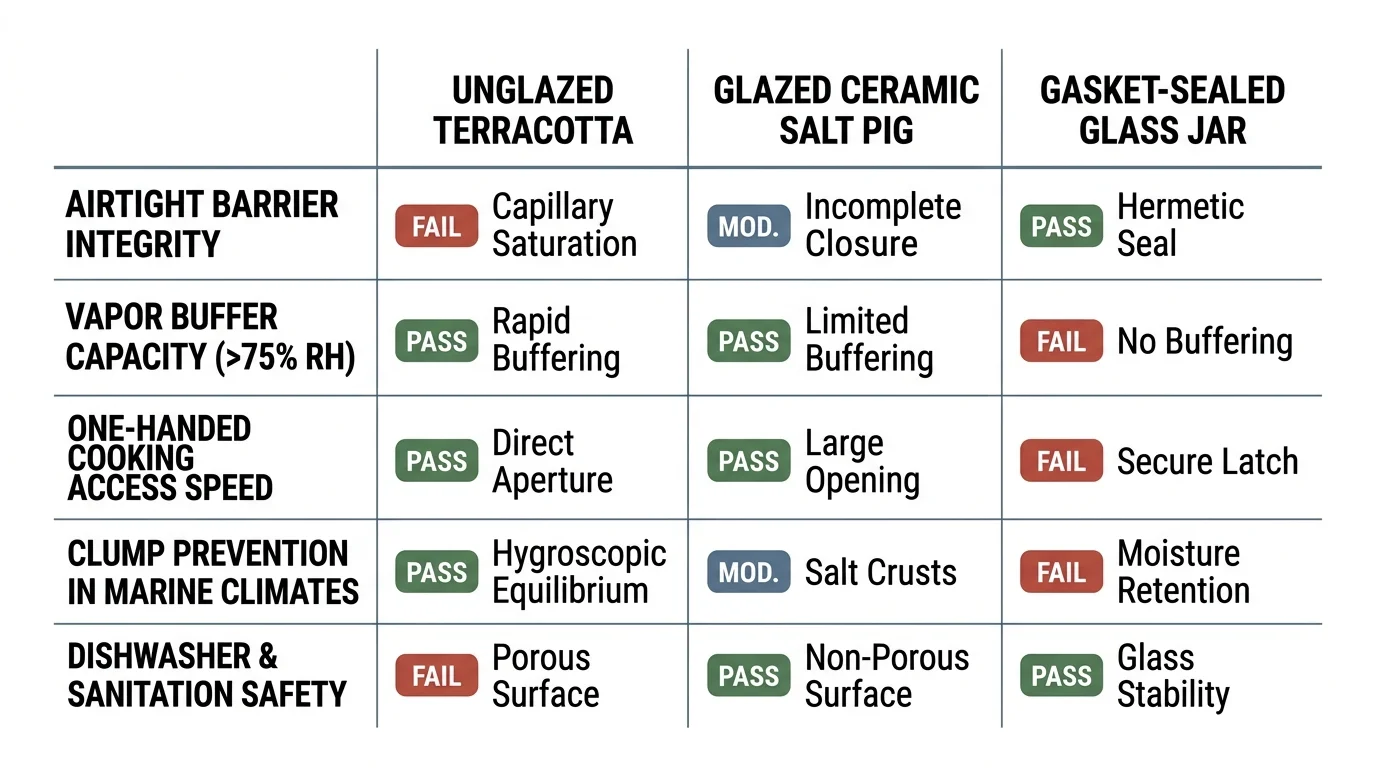
Choosing an effective salt cellar for humid climate conditions requires comparing materials, seal engineering, and physical kitchen footprints. The following matrix details measurable performance specifications across standard container styles.
| Storage Vessel Model | Wall Material | Seal Mechanism | Deliquescence Protection at 80% RH | Counter Footprint | Dishwasher Compatibility | Average Retail Price |
|---|---|---|---|---|---|---|
| Bormioli Rocco Fido 17.5 oz | Soda-lime glass | Silicone gasket with stainless wire bail | Complete protection (zero clumping observed) | 4.2 x 4.2 inches | Dishwasher safe (remove metal bail) | $9.50 |
| Henry Watson Terracotta Keeper | Unglazed earthenware | Loose-fitting unglazed clay lid | Failed (salt solidifies within 14 days) | 5.0 x 5.0 inches | Hand wash only (absorbs detergents) | $28.00 |
| Le Creuset Stoneware Salt Pig | Glazed stoneware | None (permanent open-hood design) | Failed (salt solidifies within 10 days) | 5.5 x 5.5 inches | Dishwasher safe | $45.00 |
| OXO Good Grips POP Container 0.4 Qt | BPA-free plastic | Mechanical silicone perimeter push seal | Complete protection (zero clumping observed) | 3.5 x 3.5 inches | Dishwasher safe (lid hand wash) | $11.95 |
| RSVP Endurance Salt Cellar | Stainless steel | Friction-fit lid without gasket | Poor (minor moisture seepage around lip) | 4.0 x 4.0 inches | Dishwasher safe | $22.50 |
The testing metrics confirm that wall porosity matters far less than absolute mechanical airtightness. Both unglazed clay and open-mouthed stoneware fail completely when coastal relative humidity exceeds 75 percent.
Both the silicone-gasket glass jar and the mechanical POP container preserve salt crystal separation indefinitely. Mechanical compression prevents ambient marine vapor from contacting the salt during resting counter storage.
Design, Ergonomics, and Countertop Footprint Considerations
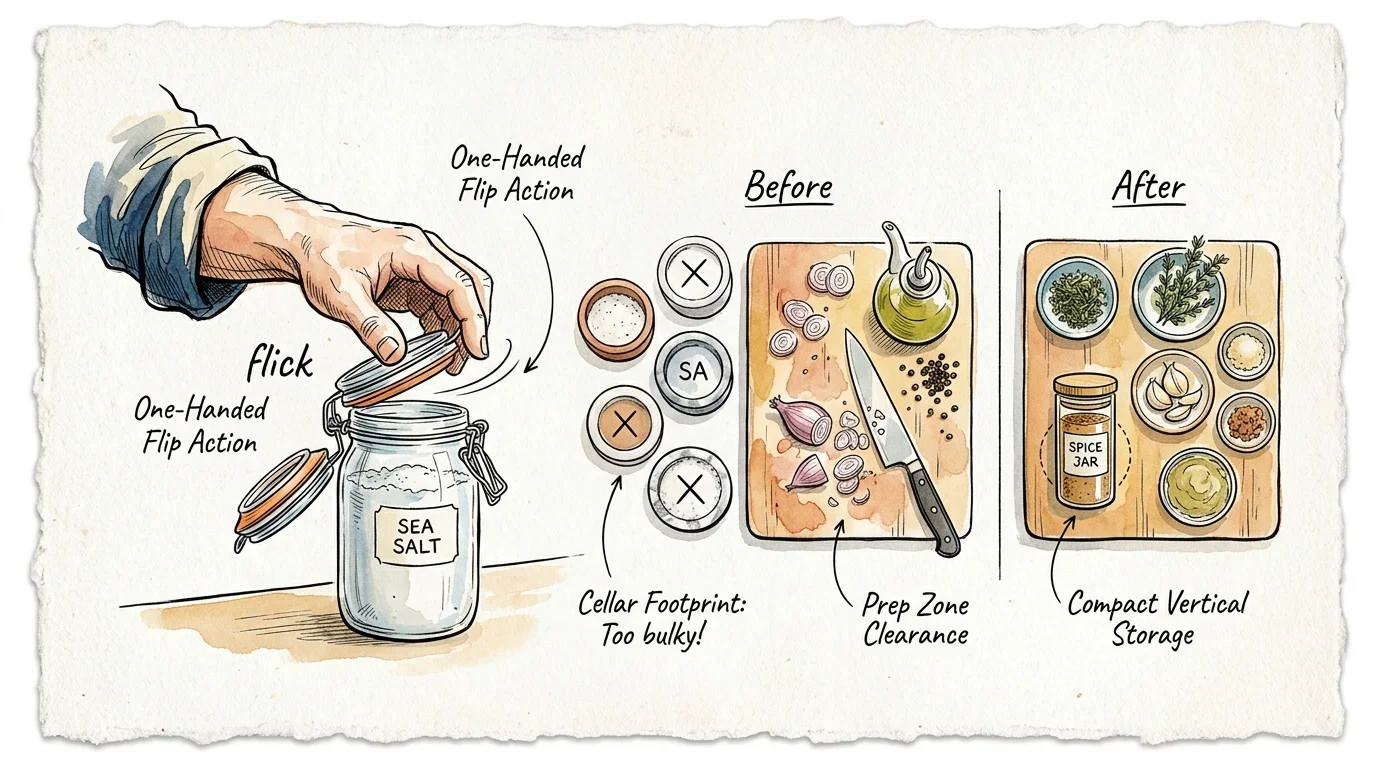
An everyday seasoning container must offer an ergonomic—designed to be comfortable to hold and use—form factor that supports rapid cooking workflows. You should never fight awkward latches while monitoring delicate ingredients on high heat.
A functional seasoning container requires an opening diameter of at least 3.25 inches. Narrow jar mouths scrape knuckles, restrict hand access, and cause messy counter spills during busy dinner rushes.
Base stability is equally vital when moving around greasy ranges. Look for jars featuring a non-slip grip—handle designed to not slide in your hand, even when wet—to prevent accidental slips on hard tile.
Square clamp jars maximize valuable counter real estate by nesting neatly into corners and next to cutting boards. Their 4.2-inch footprint preserves prep space better than bulky 5.5-inch hooded ceramic pigs.
Vertical height also dictates storage practicality inside compact coastal homes. Gasketed clamp jars stand under 4 inches tall, allowing effortless clearance inside standard shallow prep drawers.
Cleaning, Maintenance, and Salt Reclamation Protocols
Grease splatter and aerosolized cooking oils inevitably coat everything sitting near your stovetop. Your seasoning container must handle regular cleaning without degrading its moisture-blocking integrity.
Glass and ceramic vessels are generally dishwasher safe—can be cleaned in a dishwasher without damage—making them effortless to sanitize. High-temperature wash cycles dissolve sticky grease residues without warping the heavy-gauge glass.
In stark contrast, unglazed terracotta must never encounter dishwashing soap or liquid detergents. Porous earthenware absorbs chemical surfactants deep into its capillary pores, imparting a soapy taste to future salt batches.
Cleaning saturated terracotta requires hand scrubbing with plain hot water, followed by a two-hour oven bake at 200 degrees Fahrenheit. This labor-intensive sanitizing routine makes terracotta impractical for active, grease-prone cooking zones.
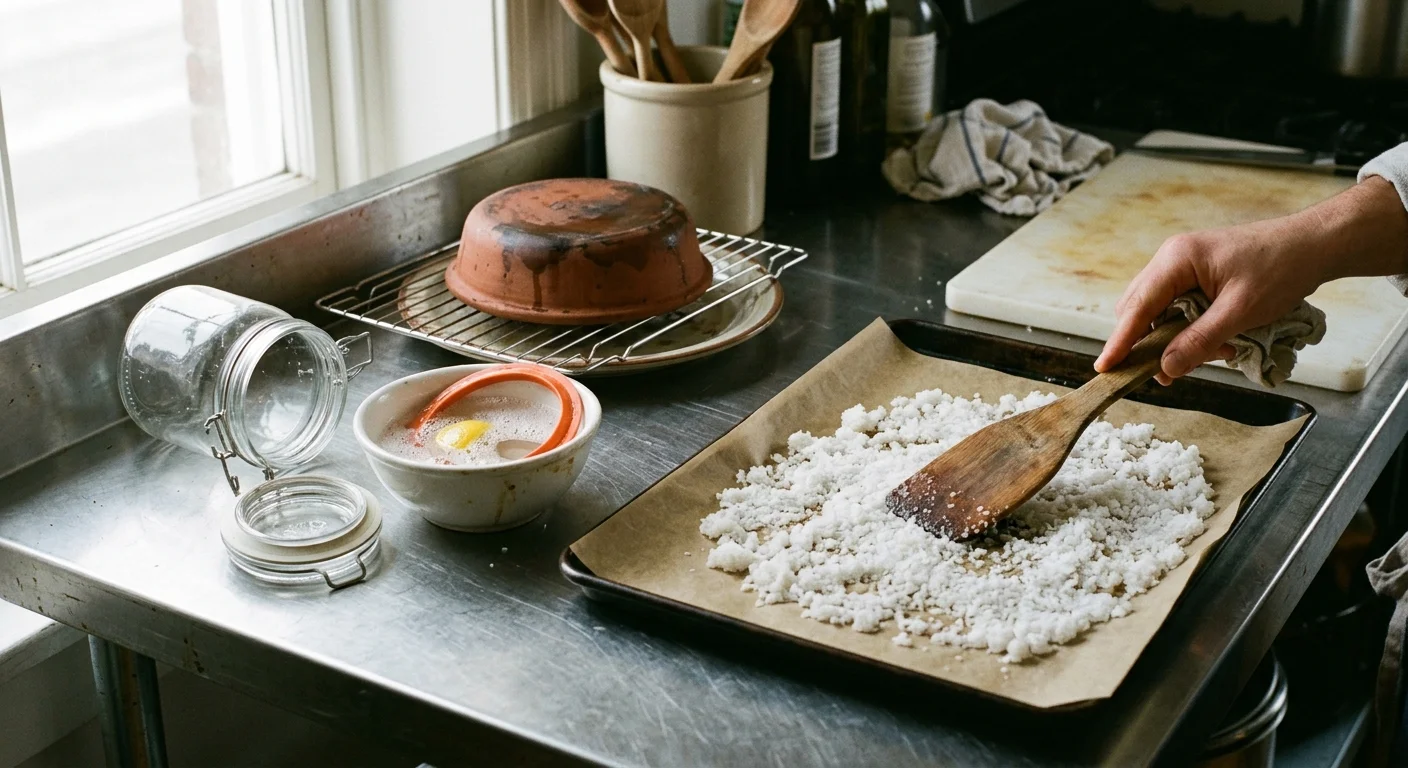
If marine humidity has already turned your expensive kosher salt into a solid block, you can easily salvage it. You do not have to discard your hardened seasoning into the garbage.
Spread the solidified salt chunks across a parchment-lined baking sheet in an even layer. Bake the sheet at 225 degrees Fahrenheit for thirty minutes to drive off the interstitial moisture.
Let the baked salt cool completely inside the turned-off oven to avoid rapid condensation. Once cool, crush the brittle slabs inside a heavy freezer bag with a wooden rolling pin before transferring them to an airtight jar.
The Unitasker Debate: Storage Flexibility in Small Kitchens
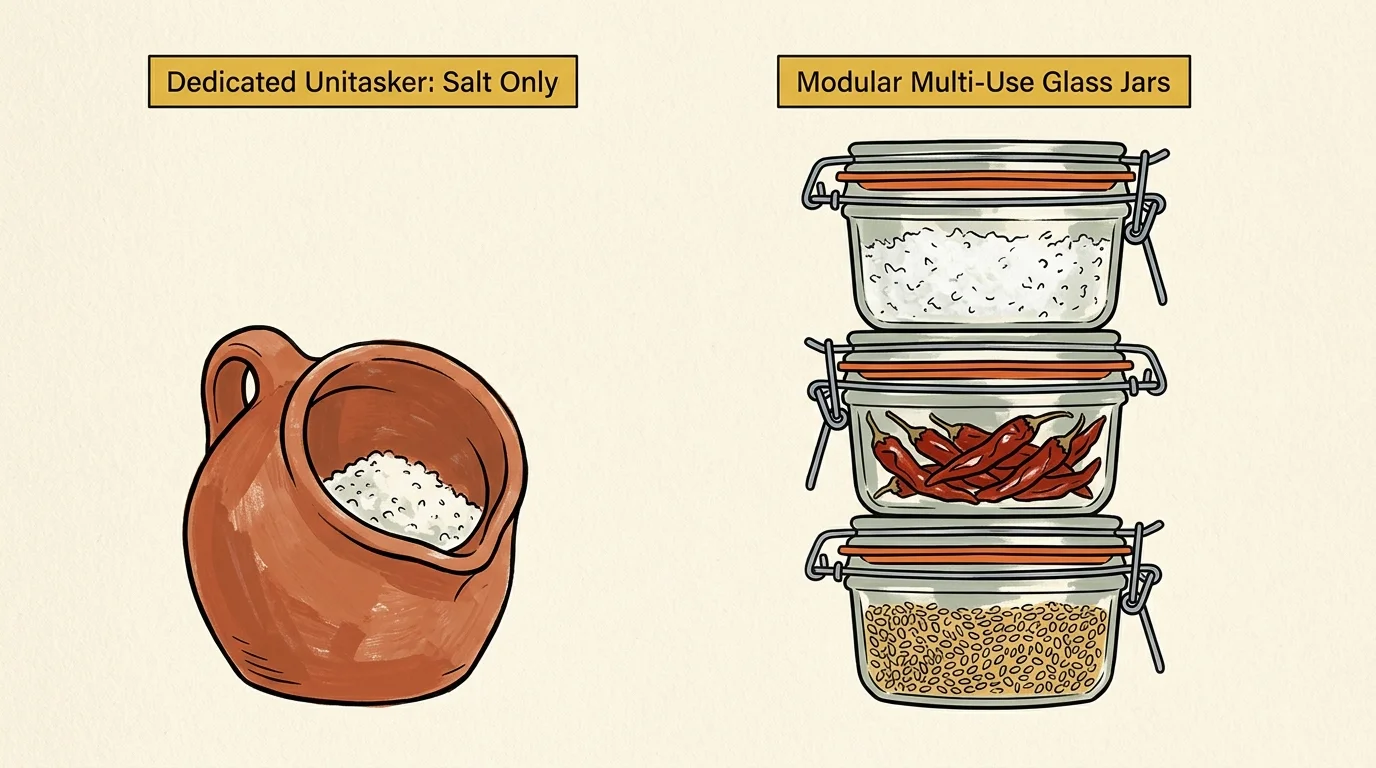
A classic open-hood salt pig represents an undeniable unitasker—a gadget that only does one specific task—cluttering your prep area. If you switch seasonings or relocate to a humid island, that open crock offers zero functional repurposing value.
You cannot use an open ceramic hood to preserve spices, infuse oils, or store delicate baking yeast. Its permanent open snout admits air and invites pantry pests like grain beetles.
Conversely, a gasketed glass clamp jar provides limitless culinary versatility throughout its lifespan. Airtight clamp jars preserve coffee beans, dried mushrooms, pickling brines, and loose tea leaves with equal efficiency.
In extensive food preservation studies run by America’s Test Kitchen, airtight canning jars proved exceptionally versatile for maintaining crunch in sensitive dry pantry goods. Selecting multipurpose tools prevents small coastal kitchens from filling up with single-use gadgets.
If you retire a clamp jar from active stovetop duty, it slides directly into your spice cabinet or refrigerator. That multi-use utility ensures your investment delivers lasting value across decades of culinary projects.
The Definitive Selection Framework: What to Buy and What to Skip
Selecting your ideal coastal salt keeper comes down to balancing moisture defense, counter clearance, and operational speed. Apply this straightforward purchasing framework to protect your seasoning investments.
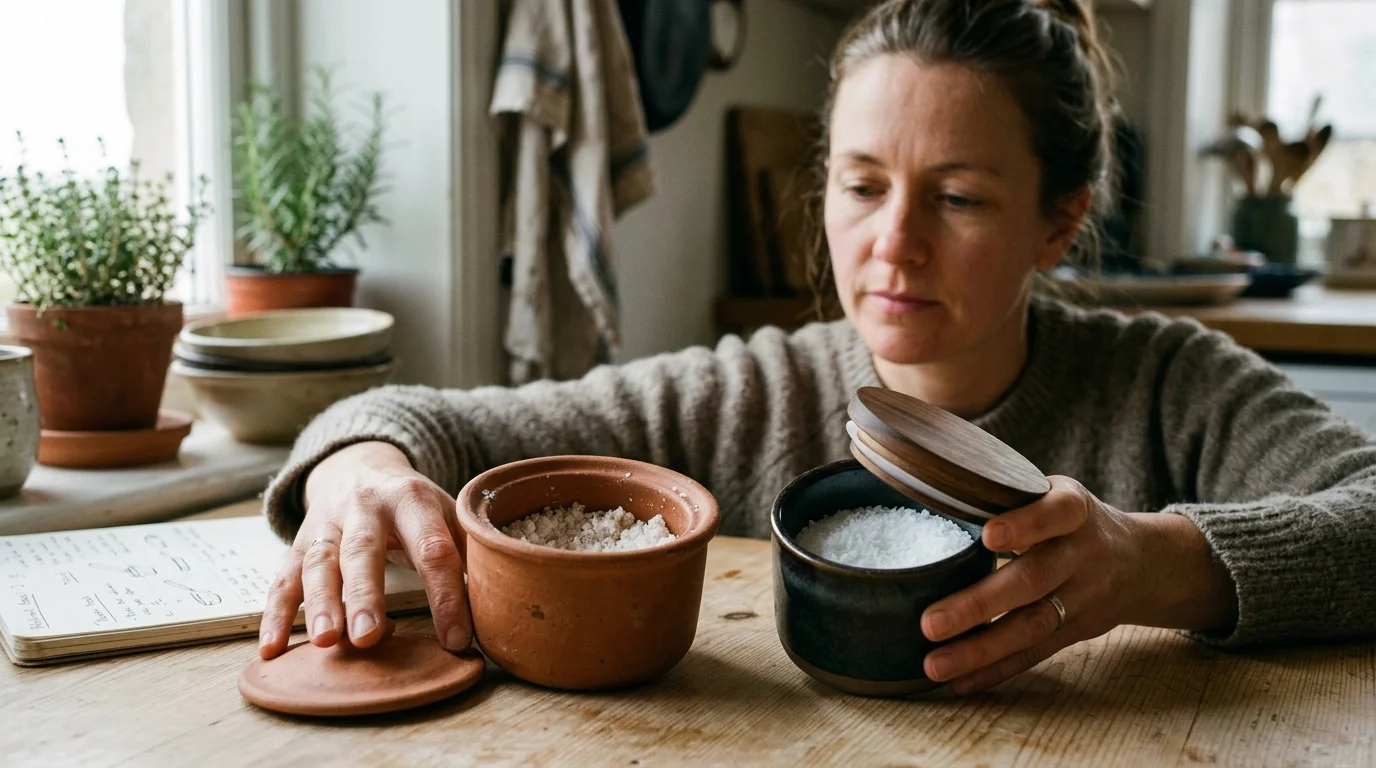
Skip unglazed terracotta keepers if your kitchen operates within twenty miles of the ocean or an expansive estuary. Skip open-snout glazed ceramic pigs if your indoor summer humidity routinely crosses the 65 percent threshold.
Skip lightweight storage vessels unless they feature certified BPA-free—made without a chemical (BPA) that some people prefer to avoid—plastics and thick silicone seals. Thin plastic walls allow slow vapor diffusion that compromises dry flakes over time.
Buy a 17.5-ounce Bormioli Rocco Fido clamp jar if you prioritize maximum clumping defense at an economical price point. Its heavy glass body, thick silicone gasket, and stainless wire bail provide absolute protection against coastal humidity.
Buy an OXO Good Grips POP container if you demand one-handed button operation while managing hot pans over open flames. The mechanical perimeter seal engages instantly with a single palm press.
Review brand warranty coverage before completing your purchase. Bormioli Rocco sells inexpensive replacement silicone gaskets online, ensuring you can refresh container seals after years of marine kitchen use.
Frequently Asked Questions
Will adding raw white rice to my terracotta salt cellar keep the salt dry?
Raw rice offers negligible moisture defense once coastal air exceeds 75 percent relative humidity. Rice starches saturate rapidly, creating gummy starch clumps that foster bacterial growth without halting salt deliquescence.
Why does kosher salt clump faster than standard iodized table salt?
Commercial table salt contains anti-caking additives like calcium silicate or sodium aluminosilicate that coat grains to repel water vapor. Pure kosher salt lacks these chemical additives, leaving the crystal facets vulnerable to ambient moisture.
Can I restore a terracotta salt keeper after it absorbs coastal moisture?
You can temporarily bake the empty terracotta vessel at 200 degrees Fahrenheit for two hours to drive out trapped water. However, the porous clay will fully saturate again within three days of ambient coastal exposure.
Does a wooden salt cellar work better than terracotta in high humidity?
Wood absorbs water vapor much like unglazed clay, but it warps, splits, and molds when subjected to sustained marine dampness. Wooden cellars lack airtight silicone seals and fail quickly under persistent coastal humidity.
What is an airtight salt pig review consensus for coastal living?
Reviewers and food scientists universally agree that open salt pigs fail in coastal zones due to unrestricted air exchange. You must use a mechanically clamped vessel with a silicone gasket to prevent salt clumping completely.
Disclaimer: Product prices and availability change frequently. Prices shown were accurate at time of writing but may have changed. We may earn a small commission from purchases made through links on this site, at no extra cost to you. Always verify current pricing on the retailer’s website before purchasing.

1 Comment