
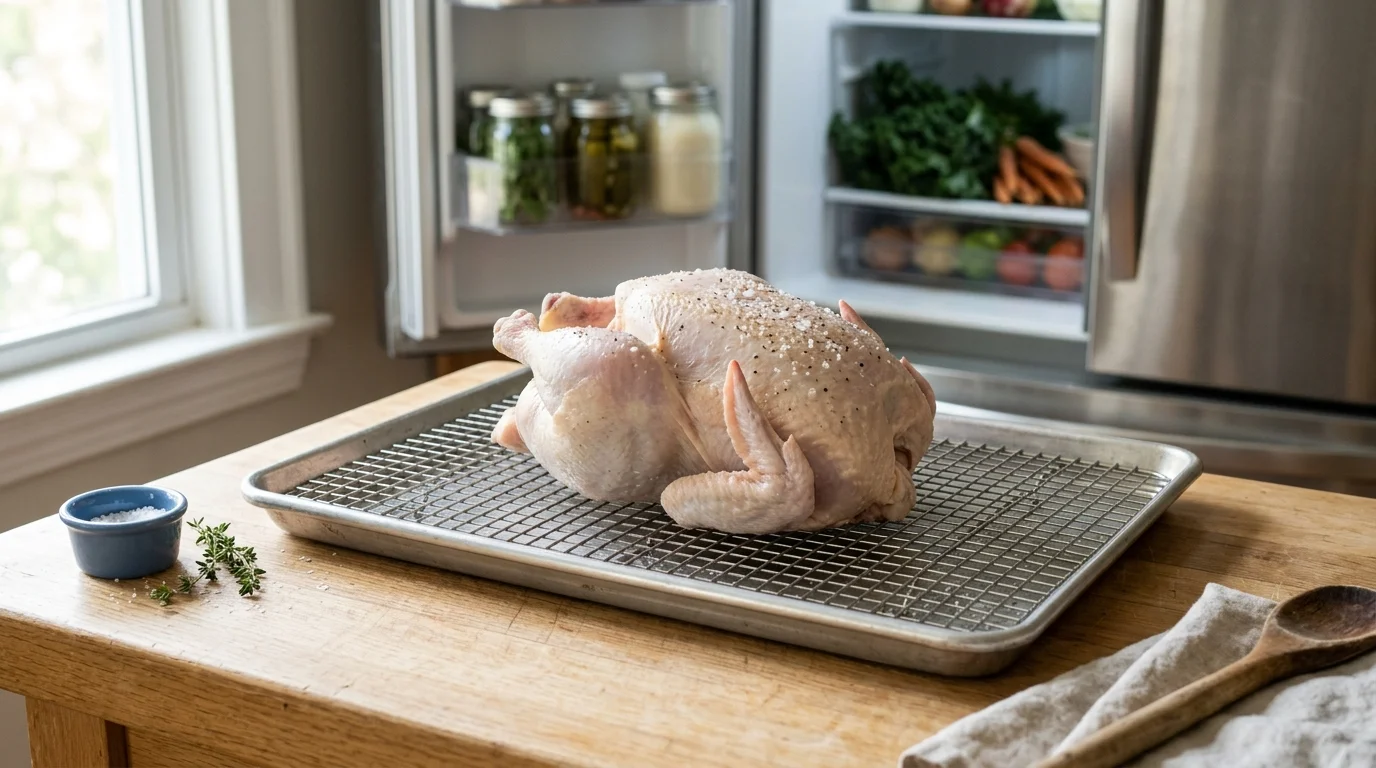
Dry-brining transforms holiday roasts by drawing out moisture to concentrate savory juices and yield crisp skin. However, crowded family refrigerators harbor volatile allium aromas that vulnerable, exposed poultry fat readily absorbs during a multi-day rest.
Tenting an elevated wire rack on a quarter-sheet pan with unbleached cheesecloth delivers identical pellicle formation to open-air exposure while blocking odor transfer. This simple physical barrier prevents sulfur compounds from degrading your bird’s delicate exterior.
You can achieve professional-grade evaporative drying in cramped refrigeration setups without dedicating a second appliance to holiday meal preparation. Here is how to master the setup.
Sizing Your Setup: Why Quarter-Sheet Pans Excel in Cramped Fridges
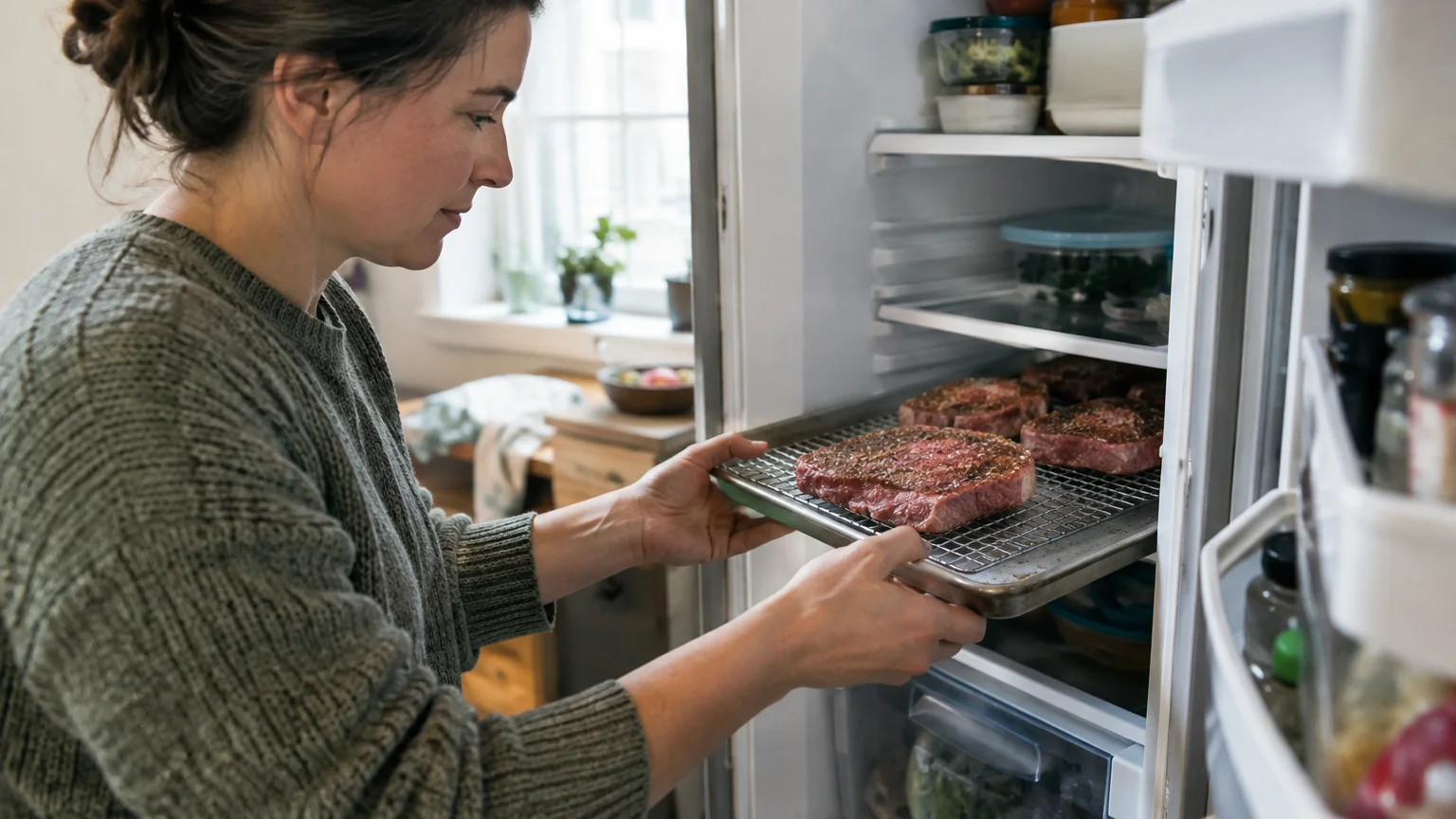
Standard residential refrigerators offer limited shelf clearance during the busy holiday season. Large commercial baking sheets consume valuable real estate that you need for everyday groceries and prepared side dishes.
For staging bulk ingredients or spare cookware outside of the cooler, organizing secondary wire racks with flat-bottom wire shelf storage bins keeps small pantry items steady and upright.
If your kitchen layout leaves narrow unused gaps alongside the refrigerator, pairing tight fridge organization with an ultra-slim rolling slide-out cart frees up valuable counter space for staging your prep gear.
When preparing whole birds or breaking down poultry before salting, having the right knife for trimming raw poultry ensures neat portions that lay flat on smaller racks.
A standard full-sheet pan measures 18 by 26 inches, which exceeds the internal dimensions of virtually all residential refrigerators. Even a standard half-sheet pan measures 18 by 13 inches, occupying nearly 234 square inches of continuous shelf space.
A commercial quarter-sheet pan measures exactly 9.5 by 13 inches with a 1-inch raised rim. This compact 123.5-square-inch footprint takes up half the area of a half-sheet pan.
Most standard-depth refrigerator shelves measure between 16 and 18 inches deep. Counter-depth models frequently offer only 12 to 14 inches of usable depth between the back wall and door bins.
A quarter-sheet pan fits effortlessly into these shallow counter-depth configurations. You can slide the pan front-to-back without hitting the door seals or obstructing interior air vents.
This compact geometry makes dry brining poultry small fridge setups completely practical. You retain adequate room alongside the pan for beverage pitchers, milk jugs, and meal prep containers.
Furthermore, quarter-sheet pans permit flexible multi-tier staging. If you host a large gathering, two quarter-sheet pans fit side-by-side or across split shelves where a single half-sheet pan fails.
This modularity allows you to brine two six-pound chickens on separate shelves. You maximize cold airflow around each bird without overcrowding a single refrigeration zone.
Weight distribution also improves when using smaller baking sheets. A loaded quarter-sheet pan concentrates weight over center shelf supports rather than sagging across wide glass spans.
Evaporative Physics: Cheesecloth Wrapping vs. Ventilated Crispers
Many home cooks attempt to isolate seasoned poultry inside refrigerator crisper drawers to block pungent odors. While crisper drawers prevent raw poultry from touching other groceries, their sealed design destroys the dry-brining process.
Managing surface desiccation without spreading pungent kitchen smells follows the same principles seen in appliance drying, where horizontal airflow food dehydrators vent moisture efficiently while keeping food aromas contained.
Crisper drawers maintain a relative humidity between 85% and 95% to preserve leafy produce. This moisture-saturated microclimate prevents ambient air currents from evaporating water off the meat’s surface.
Without surface evaporation, meat cannot develop a proper pellicle. The pellicle is a dry, tacky surface protein skin that promotes even browning and traps internal moisture during roasting.
When moisture remains trapped against the poultry skin, the collagen beneath fails to gelatinize and render properly. Instead of crisping, the skin steams in its own sweat during roasting, turning rubbery and tough.
Open air fridge brining gear relies on continuous airflow to reduce surface moisture. Typical refrigerator main compartments maintain a relative humidity between 40% and 55% at 37°F.
Exposing poultry to this dry environment allows free surface water to evaporate into the cooling coils. However, uncovered meat acts as a chemical sponge for ambient smells.
Cold chicken and turkey fats are rich in triacylglycerols, which readily absorb lipophilic volatile organic compounds. Cut onions and crushed garlic release allicin breakdown products, specifically diallyl disulfide and dipropyl trisulfide.
These sulfur compounds dissolve into the cold poultry lipid layer within hours. Once absorbed, roasting permanently locks these bitter, stale allium aromas into the crispy skin.
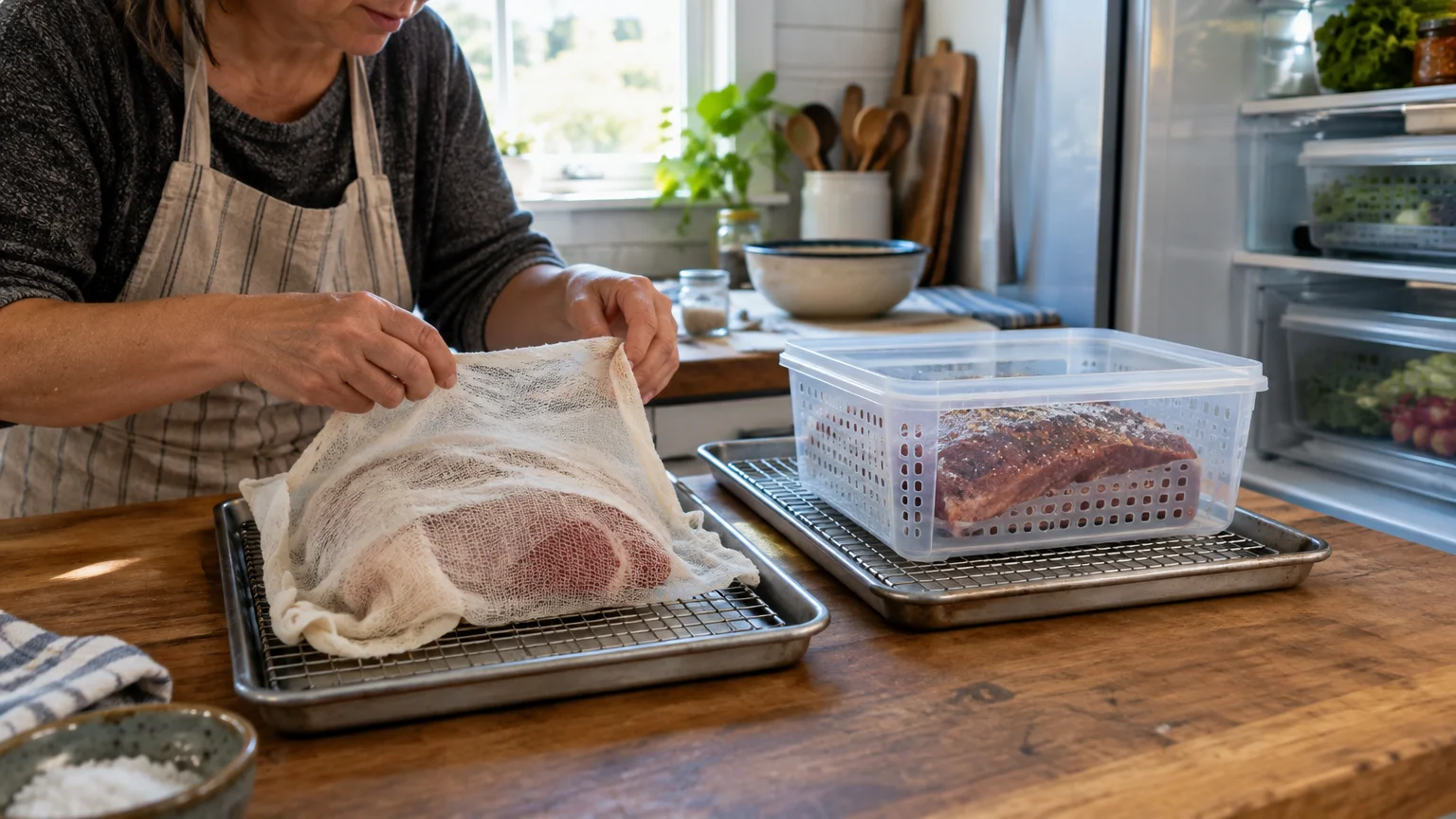
A porous textile barrier resolves this tension between airflow and odor contamination. Wrapping your quarter sheet pan wire rack dry brine setup in Grade 50 unbleached cheesecloth creates a selective physical buffer.
Grade 50 cheesecloth features a weave density of 28 by 24 threads per inch. Gaseous water vapor molecules escape through the cotton weave unimpeded.
Meanwhile, heavier allium volatile compounds travel largely on microscopic moisture and aerosolized droplets. The woven cotton fibers capture these odor-carrying droplets before they contact the drying fat.
The unbleached cotton fibers also absorb minor atmospheric condensation without dripping back onto the bird. This buffering action keeps relative humidity at the meat surface within the ideal 45% to 55% target window.
“Porous natural cotton cheesecloth protects delicate poultry lipids from ambient refrigerator alliums without impeding the evaporative airflow required for a brittle, crisp pellicle.” — Culinary Science Institute

Containment Method Performance Matrix
Selecting the correct containment method directly determines your roast’s skin texture and aromatic purity. The following matrix compares the most common residential brining methods across verified performance metrics.
If you are cooking in a compact kitchenette without a conventional oven to roast your brined meat, specialized microwave crisper pans can provide direct contact heat to help crisp up smaller poultry portions.
For cooks working with compact or dorm-style appliances, coordinating your brining gear with stackable storage systems designed for small refrigerators keeps every shelf functional.
| Containment Method | 24-Hour Evaporation Loss (%) | Allium Odor Protection | Refrigerator Footprint | Resulting Skin Texture |
|---|---|---|---|---|
| Grade 50 Cheesecloth on Quarter-Sheet Rack | 5.0% – 6.5% | High (Blocks droplet sulfur) | 124 sq. in. (Compact) | Crisp, translucent, blistered |
| Open-Air Wire Rack (Uncovered) | 5.2% – 6.8% | None (Absorbs ambient volatiles) | 234 sq. in. (Half-sheet) | Crisp, but smells like fridge odors |
| Ventilated Crisper Drawer | 1.1% – 1.8% | Moderate (Shared vegetable odors) | Full drawer consumed | Rubbery, wet, steamed |
| Loosely Tented Aluminum Foil | 2.0% – 2.9% | Low (Traps condensation) | 234 sq. in. (Half-sheet) | Patchy, soft underside |
| Sealed Snap-Lock Plastic Bin | 0.2% – 0.5% | Absolute (Zero air exchange) | Bulky vertical container | Soggy, slick, no pellicle |
As demonstrated in the comparison data, the cheesecloth-draped quarter-sheet setup matches the evaporation rate of completely uncovered roasts within a 0.3% margin. You gain complete odor protection without sacrificing surface desiccation.
In contrast, enclosed containers and crisper drawers trap evaporating water against the skin. This stagnant, humid air keeps surface proteins saturated, guaranteeing soggy roasted skin.
Loosely tenting with aluminum foil produces inconsistent results because condensation collects on the foil underside. Those droplets drip back onto the poultry breast, creating pale, rubbery patches that refuse to brown.
Hardware Specifications: Metal Gauges, Clearances, and Coatings
Building a reliable dry brine rack refrigerator setup requires understanding your cookware materials. Selecting durable sheet pans and racks prevents pan warping, corrosion, and dangerous food contamination.
After hand-washing delicate wire grids and sheet pans, thoroughly air-drying them on one of the best dish drying racks prevents trapped droplets from tarnishing metal surfaces before storage.
To streamline post-prep sanitation in compact apartments, selecting prep tools sized for slimline dishwashers ensures your quarter-sheet pans and wire racks fit neatly into space-saving cleaning appliances.
To ensure uniform seasoning before chilling, keep coarse kosher salt stored in a humidity-resistant salt cellar to prevent damp clumping during prep.
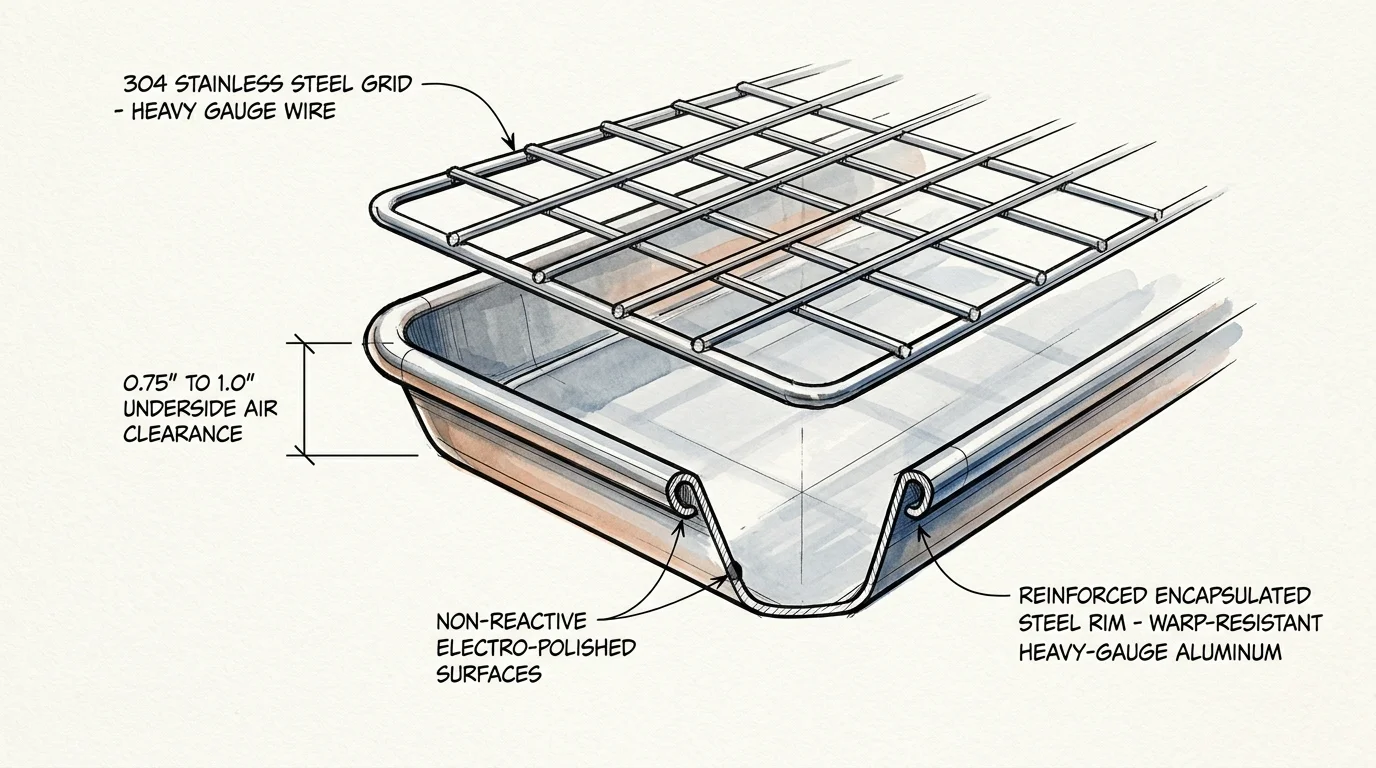
Pan thickness is measured in “gauge,” which indicates the thickness of the metal, where lower numbers mean thicker (and usually better) structural integrity. Heavy commercial quarter-sheet pans use 18-gauge or 16-gauge aluminum.
Thinner 20-gauge or 22-gauge consumer pans twist easily under the weight of heavy roasts. A rigid 18-gauge pan stays flat on your refrigerator wire shelves, preventing meat juices from pooling unevenly.
Aluminum pans offer superior “heat distribution,” meaning how evenly the pan spreads heat across its surface, which proves invaluable when transitioning pans straight into baking duties. However, direct salt exposure oxidizes bare aluminum.
Always pair your aluminum pan with an elevated rack made from 304 food-grade stainless steel. Lower-cost chrome-plated wire racks feature microscopic pores that allow salt to reach the underlying carbon steel.
Once salty poultry drippings penetrate chrome plating, the steel rusts and flakes. Heavy stainless steel racks resist brine corrosion and withstand commercial dishwashing sanitizing temperatures without degrading.
Verify that your wire rack is rated as “oven-safe,” meaning it can go from stovetop to oven without damage (check max temperature). High-grade 304 stainless steel racks typically tolerate temperatures up to 500°F.
Avoid wire racks treated with “PTFE,” which is the chemical name for Teflon-style non-stick coatings. Salt crystals scratch fluoropolymer films, causing non-stick coatings to peel directly beneath the meat.
Similarly, avoid racks finished with a “ceramic coating,” which is a newer non-stick surface made from silica. Ceramic finishes chip readily when scrubbing tight wire grid intersections.
While you might own “tri-ply” roasting pans, where three layers of metal are bonded together for better heat distribution, heavy cladded pans are unnecessarily bulky for refrigerator brining.
Likewise, a “seasoned” cast iron skillet, which has a protective coating built up on cast iron through oil and heat, will pit and corrode if exposed to raw brining juices.
Aluminum sheet pans are not “induction compatible,” meaning they work on induction cooktops (requires magnetic material). However, magnetic compatibility is irrelevant for cold refrigerator dry-brining and standard convection roasting.
According to Serious Eats — Equipment Reviews, tightly spaced wire grids elevate meat more securely than widely spaced parallel roasting bars. Look for a cross-mesh wire grid with 1/2-inch spacing.
The wire rack must elevate your food between 0.5 inches and 0.75 inches above the pan floor. This clearance permits uninterrupted 360-degree air convection while holding up to two cups of collected drippings.
Independent assessments from America’s Test Kitchen highlight that reinforced rims with embedded steel wire resist warping under rapid temperature shifts. This structural stability keeps your holiday roast level.
“Never let raw poultry skin rest directly against pooled saline drippings. Elevating meat at least a half-inch ensures complete airflow and uniform dehydration around the entire carcass.” — Master Butcher Guide
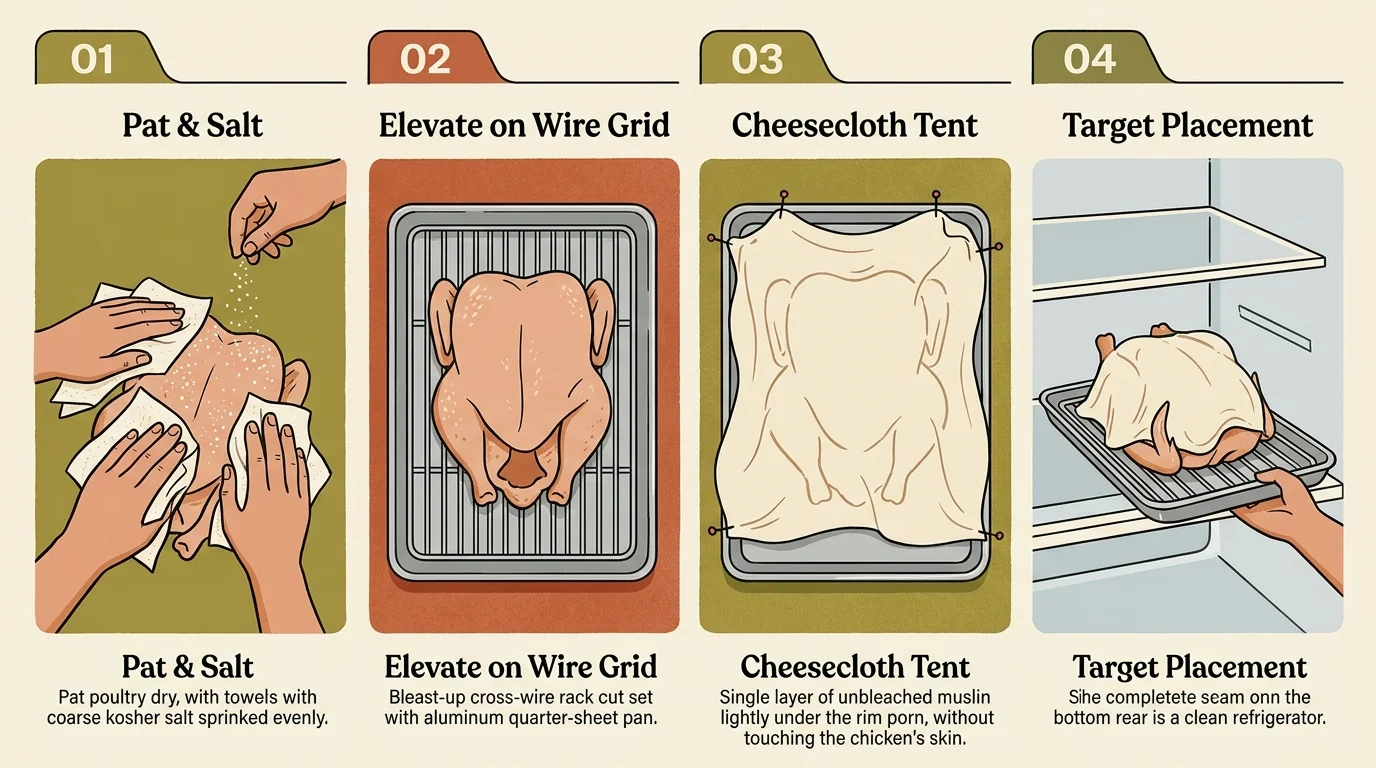
Step-by-Step Setup: The Odor-Safe Poultry Brining Sequence
Executing this technique correctly guarantees crisp poultry skin and juicy meat without cross-contaminating your refrigerator. Follow this sequential protocol for flawless results.
-
Measure your salt precisely by weight: Weigh your trimmed bird on a digital gram scale. Calculate 1.5% kosher salt relative to the poultry’s total weight.
For every 1,000 grams of meat, use exactly 15 grams of coarse kosher salt. Distribute the salt evenly over the skin, inside the cavity, and under the breast skin.
-
Assemble your quarter-sheet hardware: Place your clean 304 stainless steel wire cooling rack inside your 18-gauge aluminum quarter-sheet pan. Confirm that the rack sits firmly on all four corner feet.
Position the salted bird breast-side up on the center of the wire grid. Ensure no wings or drumsticks hang over the outer rim of the baking sheet.
-
Measure and prepare the cheesecloth: Cut a single length of Grade 50 unbleached cotton cheesecloth measuring approximately 24 by 36 inches. Avoid bleached cheesecloth treated with synthetic sizing agents.
Drape the dry cheesecloth over the bird, tucking the excess fabric securely beneath the quarter-sheet pan’s curled lip. The fabric should tent slightly over the meat without pressing tightly against wet skin.
-
Optimize refrigerator placement: Locate the coldest zone in your refrigerator, which is typically the lowest shelf toward the back wall. Keep the pan at least two inches away from the air discharge duct to prevent accidental freezing.
Ensure you place the pan away from raw produce bins containing sliced alliums, citrus, or cruciferous vegetables. Maintain continuous refrigeration between 34°F and 38°F throughout the brining period.
-
Monitor surface evaporation: Allow whole chickens to dry for 24 to 48 hours, while whole turkeys require 48 to 72 hours. Check the pan bottom at 24 hours to confirm that drained juices do not touch the meat.
Two hours before cooking, discard the cheesecloth. The poultry skin should appear dry, taut, and slightly translucent, confirming complete pellicle development.
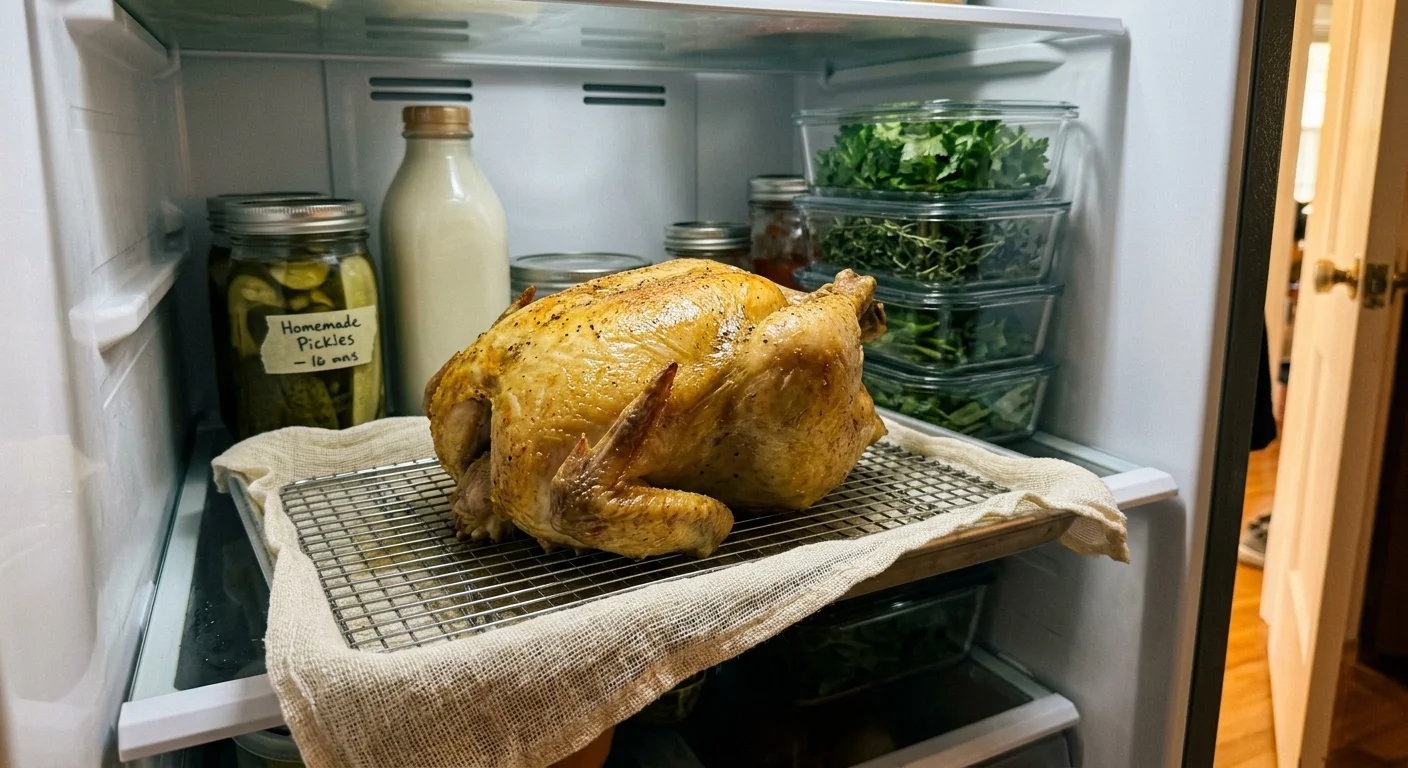
Worked Scenario: 48-Hour Dry-Brining of a 6-Pound Roaster
Consider a practical holiday scenario using a 6.0-pound (2,720-gram) whole roaster chicken. This worked example illustrates exact weight loss, physical measurements, and ambient conditions over a 48-hour brining cycle.
The kitchen setup utilizes an 18-gauge Nordic Ware Quarter Sheet Pan (12.9 x 9.6 x 1.1 inches) priced at $13.50. It holds an Ultra Cuisine 304 Stainless Steel Quarter Rack (8.5 x 12.0 inches) priced at $12.00.
A two-square-yard pack of Regency Natural Grade 50 Cheesecloth costs $5.99, bringing total hardware expenditure to $31.49. You can wash and reuse the pan and rack indefinitely.
Using the 1.5% salting standard, you measure 40.8 grams of Diamond Crystal kosher salt (approximately 4 level tablespoons). You massage the salt across the bird’s surface and inside the cavity.
At Hour 0, the bird weighs 2,720 grams and exhibits slick, moisture-laden surface skin. You drape the cheesecloth and position the pan on the bottom shelf of a refrigerator calibrated to 37°F.
A cut yellow onion sits in an unsealed container on the adjacent shelf, replicating realistic holiday refrigerator overcrowding. The internal fan circulates air across the cheesecloth-covered bird.
By Hour 12, salt osmosis has drawn free cellular water to the skin surface, dissolving salt grains into a concentrated brine layer. The high osmotic pressure then pulls this seasoned liquid deep into muscle tissue.
At Hour 24, surface brine has fully penetrated the meat, and evaporative drying commences. The scale reads 2,584 grams, representing a 136-gram moisture reduction (5.0% total mass loss).
At Hour 48, the scale records a final weight of 2,460 grams, totaling 260 grams of evaporated surface moisture (9.56% overall loss). The skin is leathery, matte, and amber-tinted.
Upon removing the cheesecloth, sensory evaluation confirms zero onion aroma on the fat. During high-heat roasting at 425°F, the dehydrated skin blisters immediately into an ultra-crisp, golden shell.
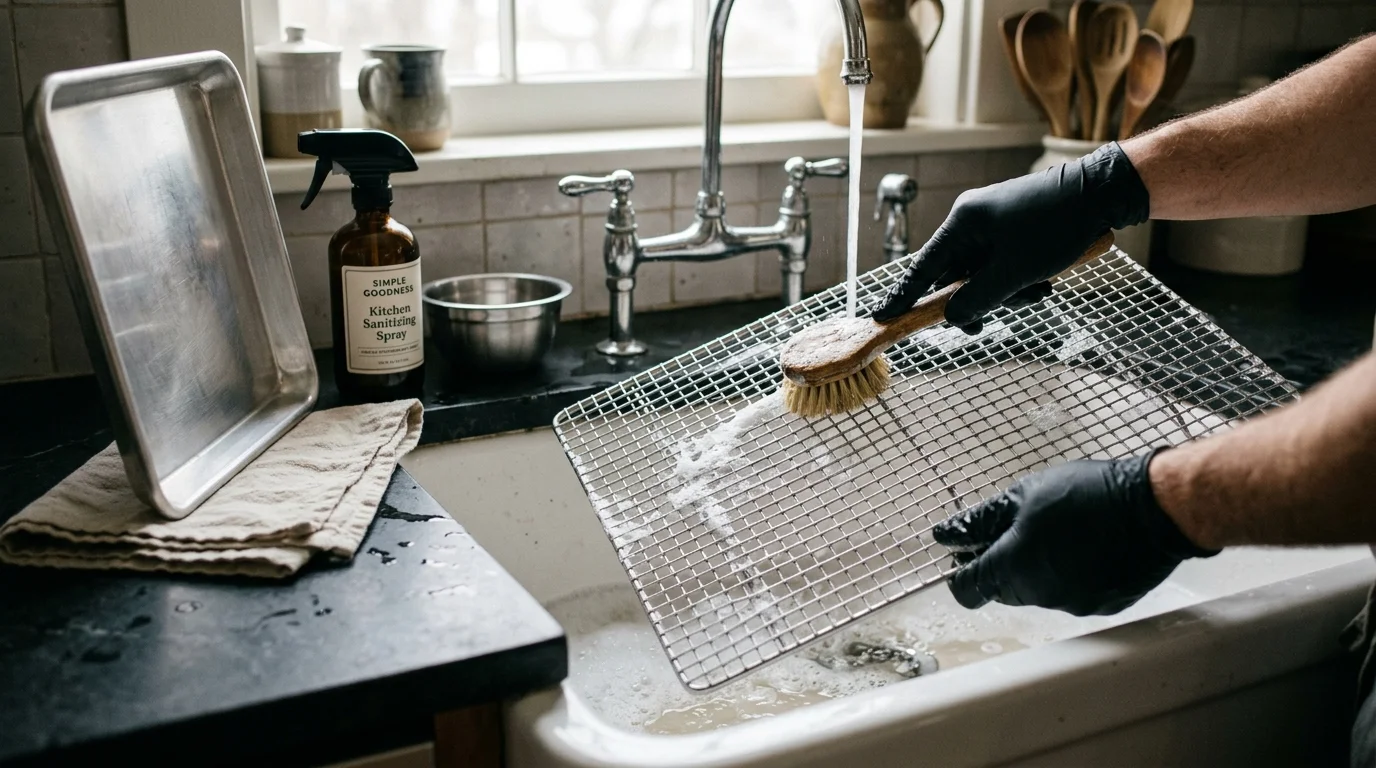
Sanitation, Maintenance, and Refrigerator Food Safety
Managing raw poultry requires rigorous sanitation to prevent foodborne illness in family kitchens. Raw poultry exudate carries salmonella and campylobacter bacteria that contaminate surrounding surfaces if mishandled.
Your quarter-sheet pan catches concentrated saline drippings, preventing raw juices from leaking onto refrigerator shelves. Always lift the pan with both hands when transferring meat to the countertop.
Clean your 304 stainless steel wire cooling rack by running it through your dishwasher on a high-temperature sanitizing cycle. The unbending stainless steel construction tolerates harsh detergents without rusting.
In contrast, never place aluminum quarter-sheet pans in an automatic dishwasher. Dishwasher detergents contain high-alkaline sodium silicate and potassium hydroxide that strip aluminum’s natural protective oxide layer.
According to appliance maintenance guidelines from Consumer Reports — Cookware, hand-washing aluminum pans with hot water and non-abrasive dish soap preserves their smooth finish. Tough mineral deposits lift easily using a non-scratch nylon sponge.
Discard single-use cheesecloth immediately if raw poultry fluid soaks into the fabric. If you use heavy-duty culinary cloth, sanitize it by boiling in water with two tablespoons of white distilled vinegar for 15 minutes.
Expert cleaning evaluations from Good Housekeeping — Cookware recommend sanitizing preparation countertops with a diluted bleach solution or EPA-registered disinfectant spray after handling brined meat. This prevents bacterial cross-contamination across your work surfaces.
Frequently Asked Questions
Can I use paper towels instead of cheesecloth to cover dry-brining meat?
No, paper towels cling to moist poultry proteins and trap condensing water against the skin. Cheesecloth maintains structural rigidity and allows water vapor to escape while filtering out ambient refrigerator odors.
How long can you safely dry-brine poultry on a wire rack in the refrigerator?
You can safely dry-brine whole chickens for 24 to 48 hours, and large turkeys for up to 72 hours. Exceeding 72 hours causes excessive muscle desiccation, resulting in tough, leathery outer meat.
Why shouldn’t I dry-brine poultry directly on an aluminum sheet pan without a rack?
Resting meat directly on a pan prevents air circulation underneath, causing the underside skin to sit in pooled juices. An elevated wire rack ensures 360-degree airflow, drying the bottom and top skin evenly.
Will dry-brining inside a cheesecloth tent make my refrigerator smell like raw chicken?
Fresh, properly salted poultry produces almost no odor during cold dry-brining at 37°F. The cheesecloth tent contains surface moisture droplets, preventing any raw meat odors from escaping into your refrigerator compartment.
Disclaimer: Product prices and availability change frequently. Prices shown were accurate at time of writing but may have changed. We may earn a small commission from purchases made through links on this site, at no extra cost to you. Always verify current pricing on the retailer’s website before purchasing.








1 Comment