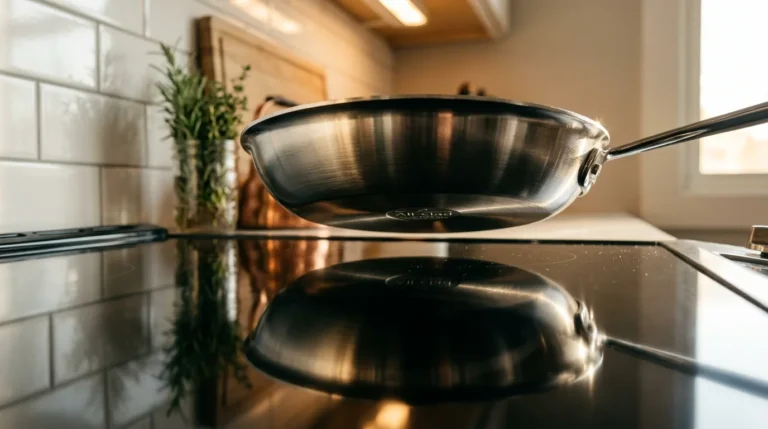
When outfitting a 24-foot travel trailer, managing your Cargo Carrying Capacity demands strict attention to every ounce. Choosing nesting cookware with detachable handles frees up vertical cabinet clearance while keeping weight low.
Unlike stationary home kitchens that rely on heavy-base skillets to counteract uneven heat, travel trailers require lightweight pans that balance heat distribution with strict weight limits.
Most conventional guides overlook how heavy encapsulated bases steal precious payload from your trailer. Evaluating sets by verified ounces and nested vertical height reveals which pans truly survive mobile travel.
Our analysis tests compact aluminum and stainless systems against a firm 30-pound galley budget. You will discover exactly how each stack fits your camper shelves without sacrificing mealtime capability.

Galley Weight Budgets and Overhead Clearances in 24-Foot Trailers
Living on the road as an RV snowbird forces you to count physical pounds daily. Ultra-light travel trailers in the 24-foot class typically offer a net Cargo Carrying Capacity (CCC) between 800 and 1,200 pounds.
Pairing nested cookware with compact kitchen appliances designed for small spaces ensures your countertops and storage lockers remain functional on long trips.
While traditional cabinet organizers for pots and pans can tame clutter in home kitchens, mobile galleys demand compact solutions that also secure cookware against transit vibration.
Fresh water, dual propane tanks, batteries, and sewage hoses rapidly consume that total allowance. Sticking to a strict 30-pound (480-ounce) limit for all galley cookware preserves essential safety margins for your axles.
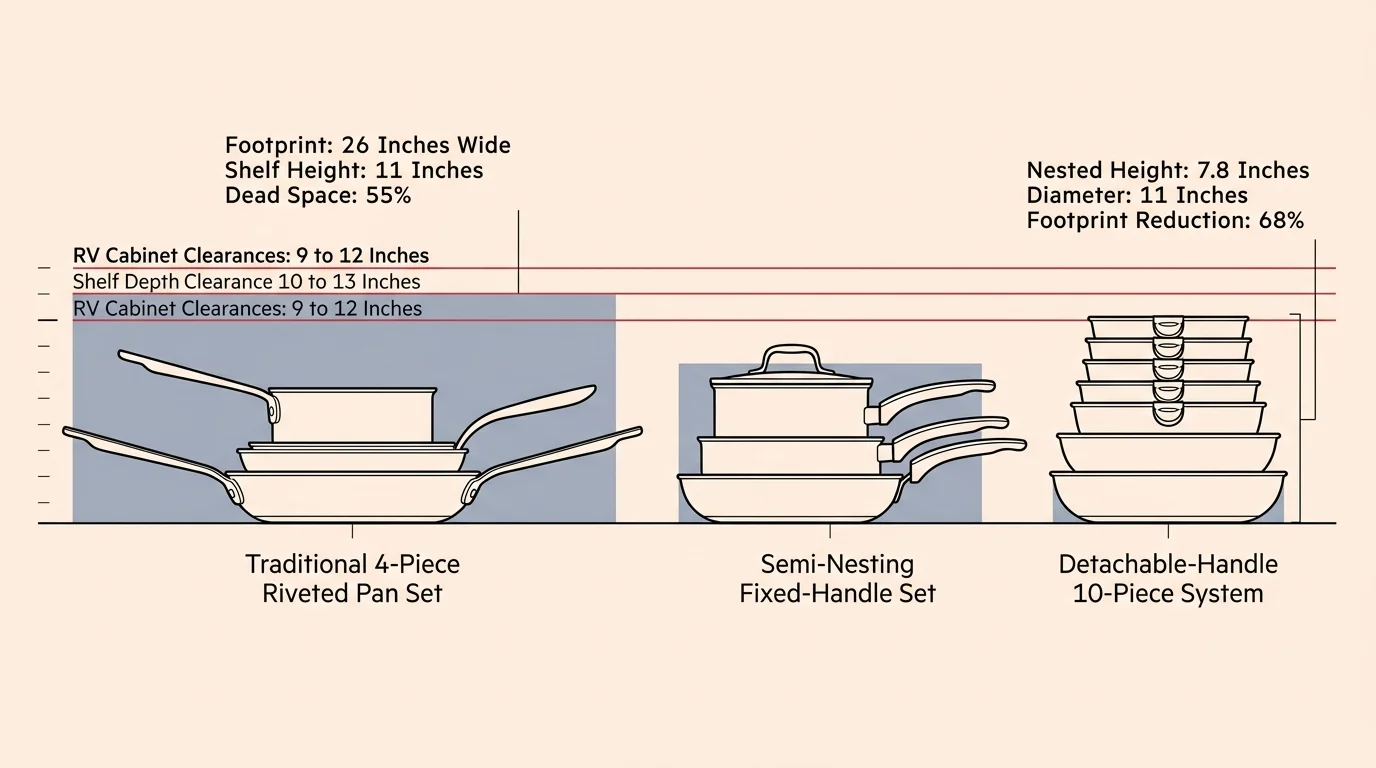
Physical cabinet dimensions present an equally challenging obstacle in mobile trailers. Standard RV overhead cabinets provide vertical shelf clearances between 9 and 12 inches alongside usable depths of 10 to 13 inches.
Conventional pots with long, riveted handles waste more than half of that cabinet space. They create dead zones above the pans and prevent shelf doors from latching shut during transport.
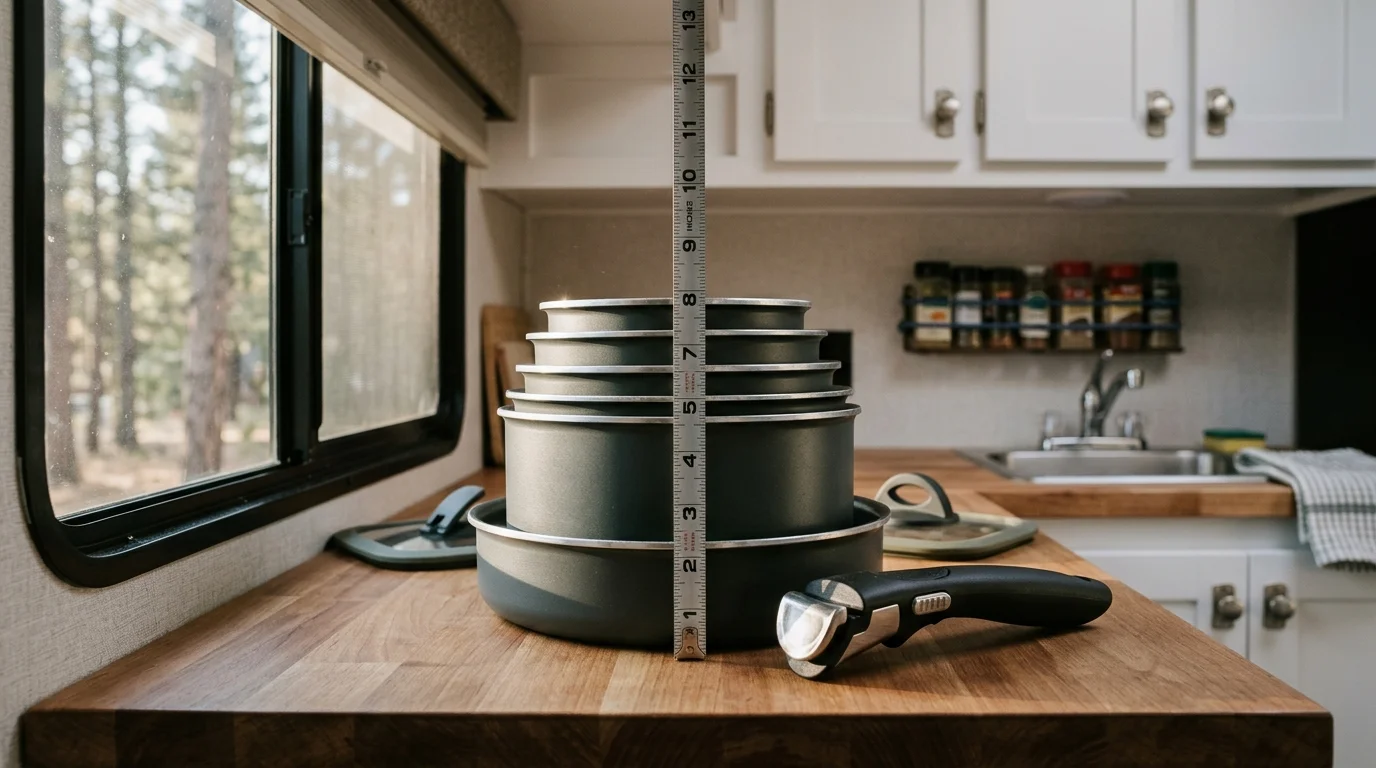
Removable-handle systems collapse those footprints into dense, uniform cylinders. Stacking an entire 10-piece collection into an 8-inch vertical footprint leaves ample upper clearance inside compact overhead compartments.
Keeping nested height under 8.5 inches prevents cookware from shifting into cabinet door catches. This clearance eliminates latch failures when your trailer encounters bridge expansion joints and rough secondary highways.
Aluminum versus Stainless Steel: Material Density and Performance Trade-offs
Cookware performance depends entirely on base metal selection and structural thickness. Metal thickness is measured by gauge; lower numbers mean thicker (and usually better) structural rigidity across heating surfaces.
Comparing the trade-offs of stainless steel vs non-stick surfaces is particularly critical when balancing cleanup convenience against suspension load.
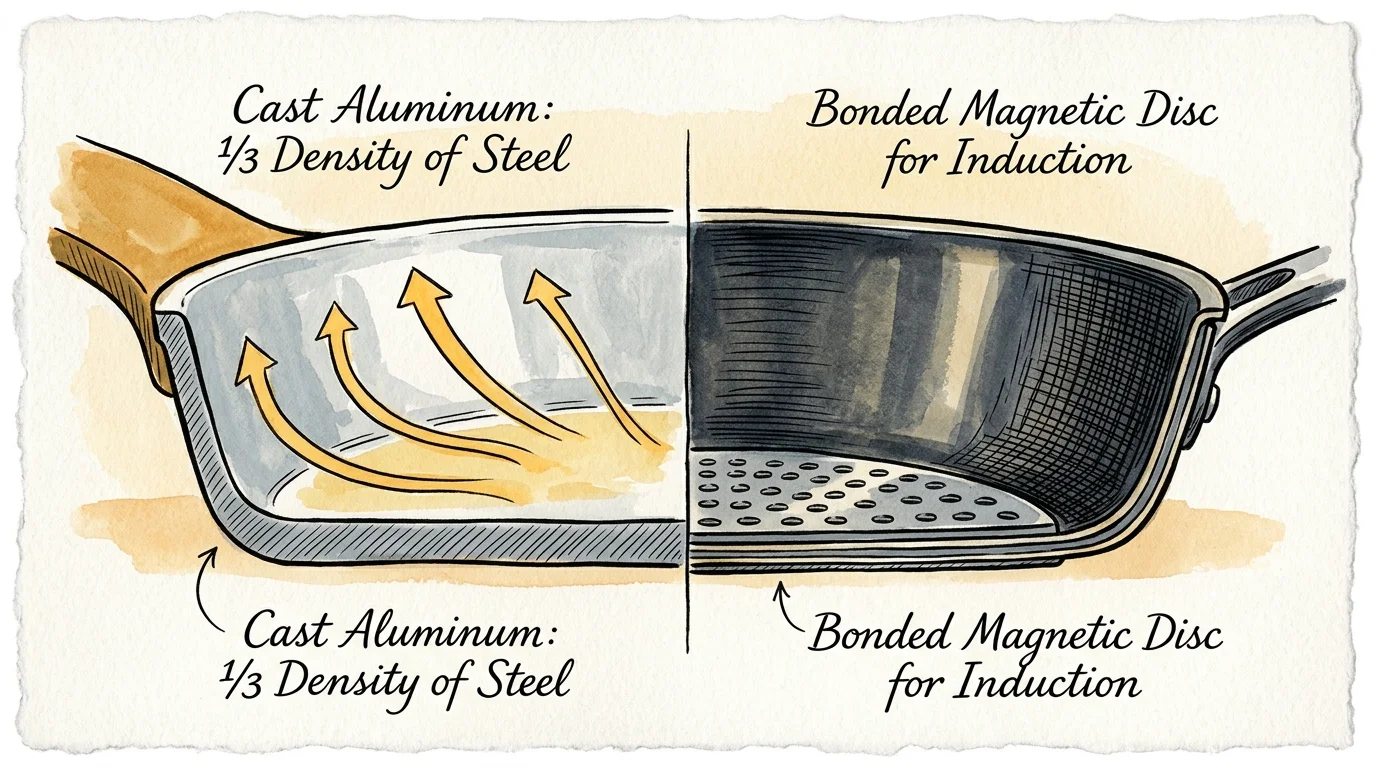
Die-cast aluminum sets dominate the ultralight market because aluminum has one-third the density of steel. A bare aluminum pan heats quickly, but it lacks the ferrous mass required for magnetic induction burners.
To enable induction cooking, manufacturers press a perforated stainless steel disc onto the aluminum base. This hybrid build provides responsive heat distribution, meaning how evenly the pan spreads heat across its surface.
Most aluminum nesting pots feature a PTFE interior finish, which is the chemical name for Teflon-style non-stick coatings. Alternatively, some models use ceramic coating, which is a newer non-stick surface made from silica.
Stainless steel nesting sets take a vastly different engineering path for travel trailers. Premium marine and RV stainless collections employ tri-ply construction, meaning three layers of metal bonded together for better heat distribution.
According to comprehensive testing by Consumer Reports cookware evaluations, clad multi-layer stainless pans resist warping under extreme thermal shocks far better than thin stamped aluminum.
However, that stainless durability introduces a severe payload penalty on your trailer suspension. Stainless stacks often weigh roughly 40 percent more than comparable aluminum sets containing identical liquid capacities.
Traditional cast iron offers incredible heat retention, especially when well seasoned with a protective coating built up on cast iron through oil and heat. Yet a single cast iron skillet can consume 128 ounces of payload.
“Managing trailer weight requires ruthless material selection; every pound of steel in your cabinet directly displaces fresh water or winter gear.”
Detachable Handle Engineering and Latch Safety Under Load
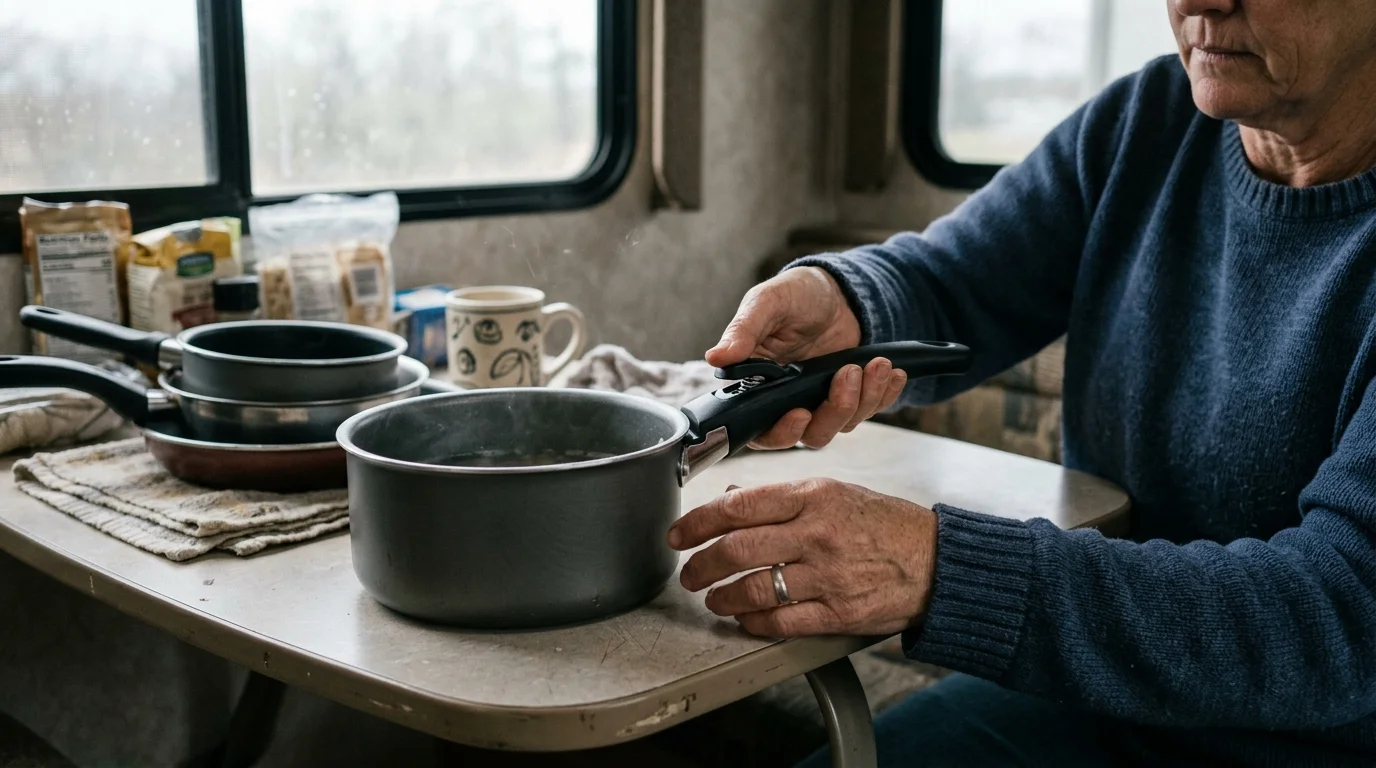
A removable handle must bridge the gap between compact nesting and absolute cooking safety. In a moving camper, a handle failure while transferring boiling soup creates an immediate medical emergency.
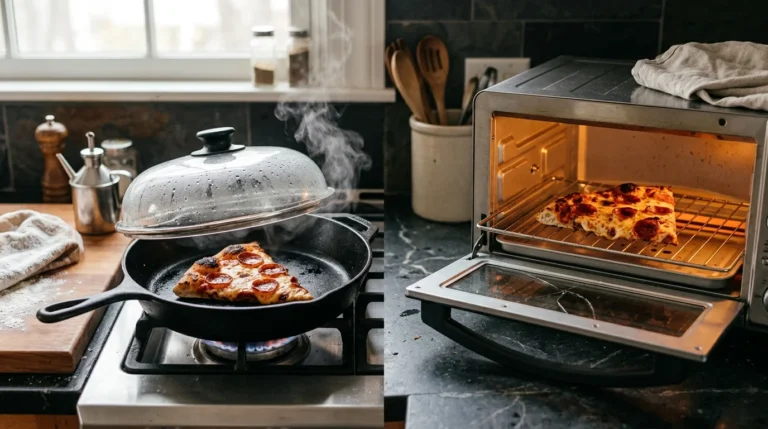
If your camper galley incorporates low-profile toaster ovens under 11 inches tall, verify that pan diameters fit comfortably inside before baking.
Leading manufacturers solve this mechanical challenge using three distinct clamping designs. T-fal utilizes a patented 3-point locking Ingenio mechanism featuring internal steel clamping jaws operated by dual side-release levers.
Independent factory benchmarks demonstrate the Ingenio handle safely supports loads up to 22 pounds (352 ounces; 10 kilograms). That weight rating easily accommodates a fully loaded 5-quart stockpot filled with water.
Carote utilizes a rotary clamp handle operated by a mechanical top dial. A rotating cam draws silicone-padded metal teeth tight against the pan rim without scratching exterior non-stick surfaces.
Magma takes an industrial approach designed originally for offshore marine vessels. Their interchangeable stainless steel handle drops into an exterior welded bracket, locking into place without touching the cooking surface.
Each handle mechanism must remain completely detached whenever your pans enter an oven. Pan vessels are oven-safe, meaning they can go from stovetop to oven without damage, typically up to 480°F or 500°F.
Leaving a handle attached inside an enclosed camper oven scorches internal springs and degrades safety latches. Remove the grip before shutting the oven door, and re-engage it only when pulling the dish out.
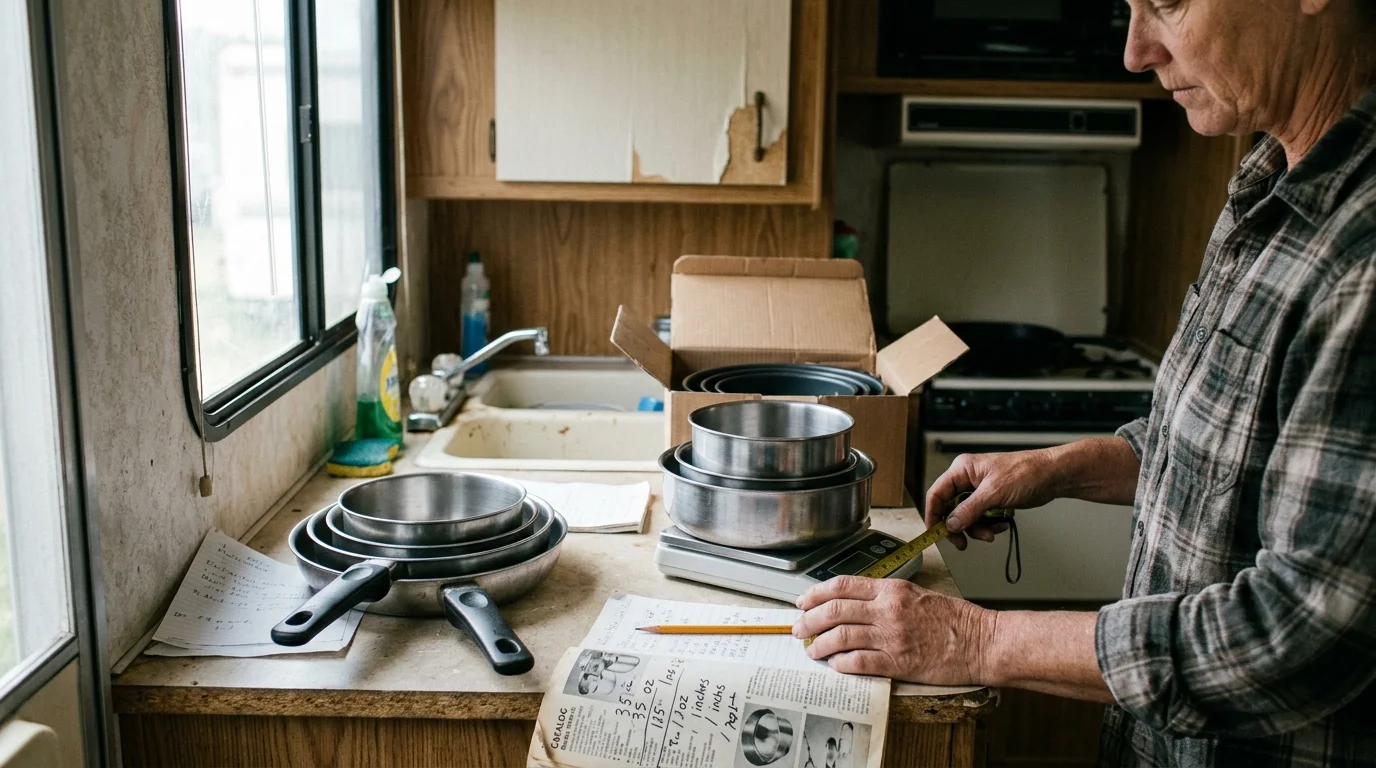
Worked Example: Outfitting a 24-Foot Travel Trailer Under a 30-Pound Galley Limit
Consider a practical outfitting scenario for a 2024 Keystone Cougar 24-foot travel trailer. You have dedicated an overhead cabinet measuring 11 inches deep, 10 inches tall, and 24 inches wide to cookware.
Applying principles on how to build a cookware set on a budget helps prevent overbuying specialized vessels you rarely need around the campsite.
Your goal is outfitting a complete galley setup while staying below the 30-pound (480-ounce) weight cap. Your required inventory includes a frying pan, saute pan, saucepans, stockpot, baking sheet, and core tools.
If you select traditional fixed-handle cookware, three pans alone weigh 220 ounces. Worse, their extended 8-inch handles consume 22 inches of cabinet width, requiring two entire shelves to store basic gear.
Now evaluate an aluminum detachable system using the Carote 11-Piece nonstick nesting collection. The entire stacked pan set with both detachable handles weighs exactly 116 ounces (7.25 pounds).
Fully nested with flat silicone-rimmed lids, the Carote set measures 8.0 inches tall and 10.5 inches in diameter. This leaves 13.5 inches of horizontal shelf space and 2 inches of overhead vertical clearance.
Subtracting 116 ounces from your 480-ounce budget leaves 364 ounces (22.75 pounds) of surplus payload. You can now pack a 10-inch carbon steel skillet (44 ounces) and an aluminum half-sheet pan (24 ounces).
You can even add a compact electric kettle (32 ounces) and a full set of silicone utensils (18 ounces). Your entire finished kitchen kit totals only 234 ounces, remaining 246 ounces below the trailer ceiling.
If you choose the Magma 10-piece stainless induction set instead, the stacked set consumes 195.2 ounces (12.2 pounds). It leaves 284.8 ounces for supplemental bakeware while demanding just 7.25 inches of vertical clearance.
Detailed Metric Comparison: Ounces, Nested Height, and Shelf Footprint
To evaluate these systems accurately, compare their measured weights, nested dimensions, and induction traits side by side. The table below outlines real metrics gathered from verified manufacturer specifications.
When switching between camper cooktops, selecting cookware base finishes that won’t scratch glass prevents cosmetic and structural wear during road vibration.
| Cookware Model | Primary Material | Total Weight | Nested Height | Induction Compatible? | Storage Footprint |
|---|---|---|---|---|---|
| Magma A10-360L-IND (10-Piece) | 18-10 Tri-Clad Stainless | 195.2 oz (12.2 lbs) | 7.25 inches | Yes (Full Plate) | 13.0″ L x 10.25″ W |
| Carote Detachable Set (11-Piece) | Die-Cast Aluminum | 116.0 oz (7.25 lbs) | 8.00 inches | Yes (Bonded Disc) | 10.5″ L x 10.5″ W |
| T-fal Ingenio Induction (13-Piece) | Hard-Anodized Aluminum | 144.0 oz (9.0 lbs) | 8.25 inches | Yes (Thermo-Fusion) | 11.2″ L x 11.2″ W |
| T-fal Ingenio Essential (Entry) | Stamped Aluminum | 98.0 oz (6.1 lbs) | 7.75 inches | No (Base Aluminum) | 10.8″ L x 10.8″ W |
| Traditional Fixed-Handle Tri-Ply | Bonded Stainless Steel | 392.0 oz (24.5 lbs) | 16.50 inches (Unnested) | Yes (Full Base) | 26.0″ L x 14.0″ W |
These real measurements show that removing handles cuts your horizontal footprint by more than half. Both the Magma and Carote options comfortably clear the 8.5-inch safety margin inside shallow upper shelving.
However, notice the critical weight divergence between materials. The Magma stainless system adds 79.2 ounces (nearly 5 pounds) over the Carote aluminum set for an equivalent three-pan, two-saucepot capacity.
Induction Compatibility and Heat Distribution on 12-Volt Inverter Systems
Many modern travel trailers feature single-burner induction cooktops to eliminate indoor moisture and propane fumes. An appliance must be induction compatible, meaning it works on induction cooktops by incorporating magnetic material.
Portable induction units generate high-frequency magnetic fields that excite iron molecules inside the pan base. If a magnet will not cling firmly to the pan bottom, the burner will not generate heat.
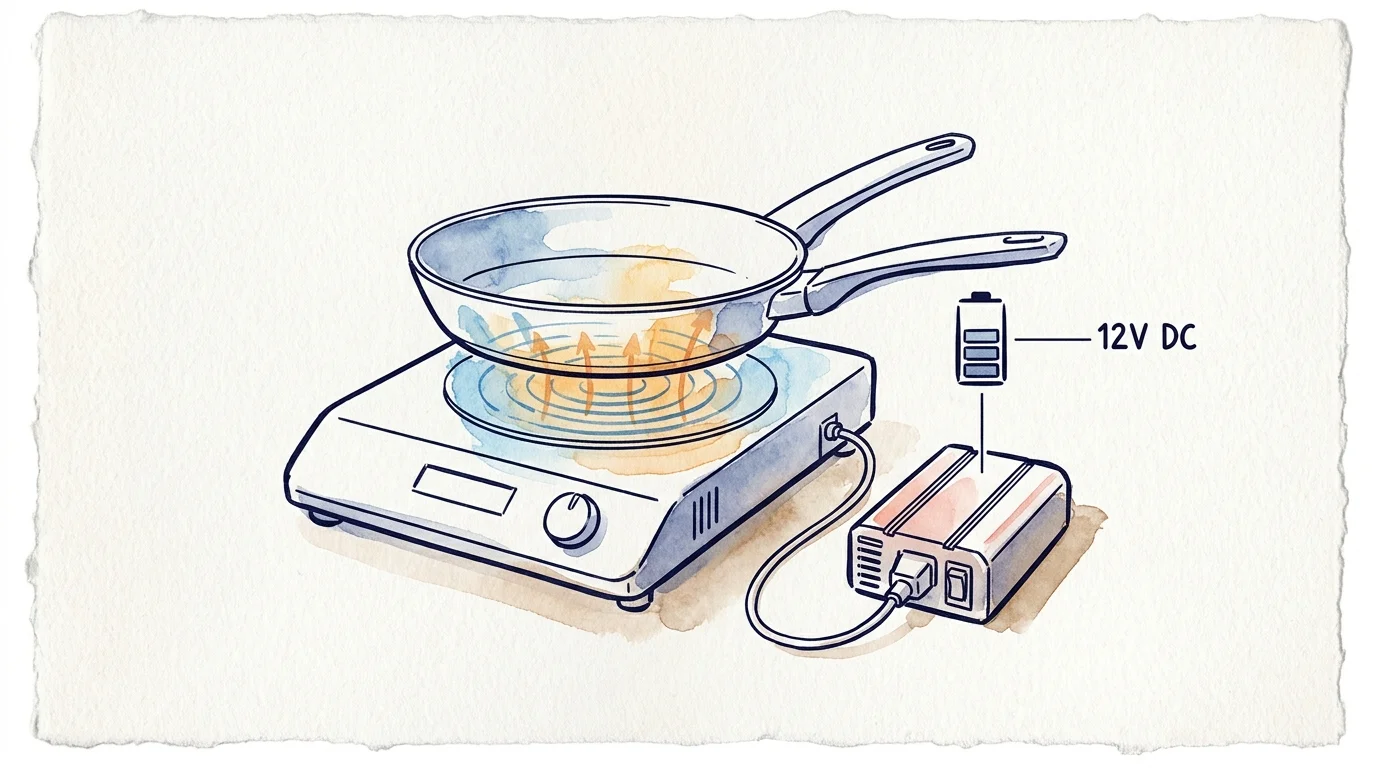
Portable induction burners draw substantial electrical current, typically running between 1,200 and 1,800 watts at peak output. When powering a cooktop through a 2,000-watt trailer inverter, thermal efficiency directly impacts battery state of charge.
Die-cast pans with bonded steel discs heat faster on induction because aluminum has high thermal conductivity. However, stamped steel base plates can generate a centralized hot ring if the disc diameter is too small.
As documented in Wirecutter cookware guides, pans with continuous magnetic bases produce far more uniform heating profiles on portable induction surfaces.
The Magma A10-360L-IND features a full-diameter encapsulated base consisting of aluminum sandwiched between high-grade stainless sheets. This design draws electrical load smoothly without cycling inverter thermal protection sensors.
When boiling two quarts of water on a 1,500-watt inverter, a fully encapsulated tri-clad base finishes roughly 90 seconds faster. This efficiency saves approximately 3.75 amp-hours from a standard 12-volt lithium battery bank.
Care, Scratch Prevention, and Rattle Control on Rough Roads
Towing a travel trailer creates continuous low-frequency vibrations that destroy improperly packed cookware. When metal surfaces rub together over hundreds of highway miles, standard non-stick coatings quickly scuff and flake.
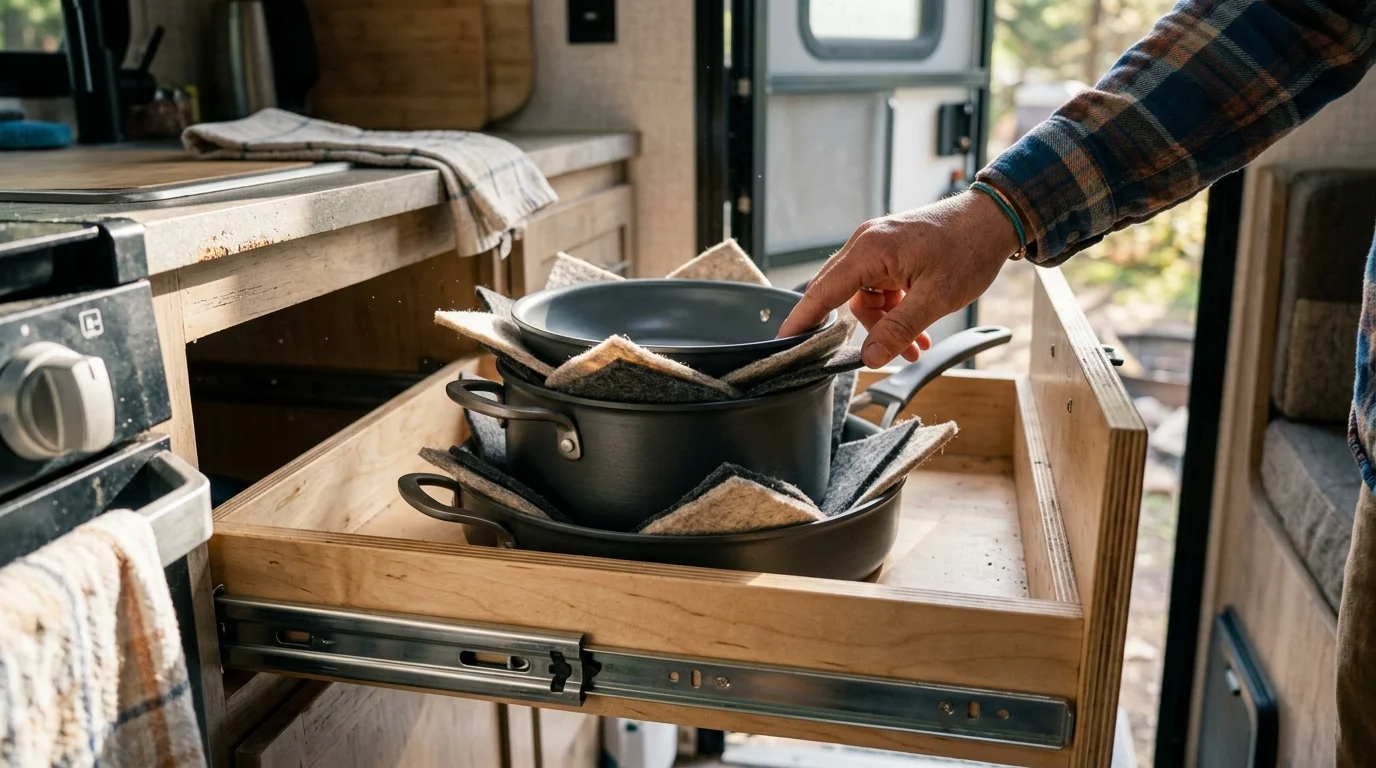
Always insert felt, neoprene, or silicone pan protectors between every nested tier before closing the cabinet. Never nest bare metal frying pans directly inside one another without an intermediate protective barrier.
Vibration also causes metal-on-metal rattling that can drive you crazy while towing down rough washboard roads. Stacking with silicone-edged glass lids silences shelf clatter and prevents chipping along pan rims.
Water conservation represents another massive challenge when boondocking in desert locations. The average 24-foot travel trailer carries a gray water holding tank holding only 28 to 35 gallons.
PTFE and ceramic non-stick coatings allow you to clean pans using merely an ounce of water and a paper towel. Stainless steel pans frequently require soaking and scouring, consuming precious gray tank space.
If you choose stainless steel, deglaze the hot pan with a splash of water immediately after cooking. This releases stuck fond effortlessly and minimizes gray water production during cleanup.
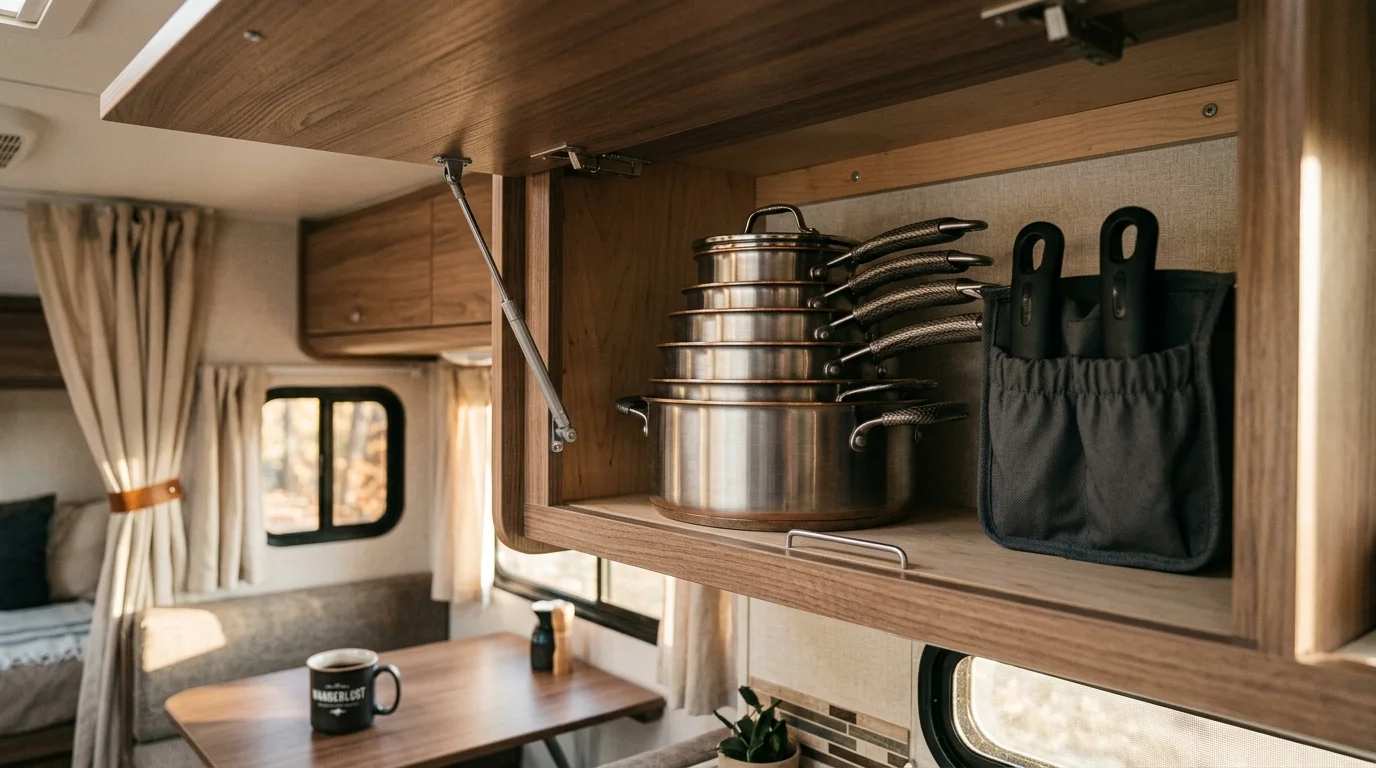
Top Detachable Cookware Sets Ranked for RV Living
Selecting the best compact cookware requires balancing weight constraints, heat durability, and cooking style. Below are our top recommendations tailored specifically for travel trailer galleys.
- Best for Everyday Lightweight Galley: Carote 11-Piece Detachable Handle Set. Weighing just 116 ounces, this set preserves maximum payload while providing effortless cleanup and smooth nesting.
- Best for Heavy Searing and Longevity: Magma 10-Piece Induction Stainless (A10-360L-IND). Featuring tri-clad steel and a 7.25-inch stack, this heavy-duty set handles campfire coals and 500°F oven baking.
- Best Balance of Durability and Ergonomics: T-fal Ingenio Induction Hard-Anodized. The 22-pound handle load capacity provides supreme confidence when handling boiling liquids inside narrow camper aisles.
In rigorous kitchen performance analyses, culinary specialists at America’s Test Kitchen emphasize that robust handle attachments prevent dangerous pan tipping. The locking mechanism on the T-fal Ingenio remains our top pick for mechanical grip security.
If your budget is tight, the Carote set delivers unmatched value per ounce. If you prefer high-heat searing for steaks without non-stick degradation, invest in the heavier Magma stainless set.
Frequently Asked Questions
Can you use detachable-handle pans inside an RV propane oven?
Yes, but you must remove the detachable handle before closing the oven door. The pan bodies are oven-safe up to 480°F or 500°F, but polymer handles degrade under ambient radiant heat.
Do nesting pans scratch each other during travel trailer transit?
Nesting pans will scratch each other if stored without padding on rough roads. Always place felt pan dividers or silicone mats between each layer to absorb vibration and protect interior surfaces.
Why does my induction cooktop display an error with certain aluminum nesting pans?
Portable induction units display error codes if the pan lacks adequate ferromagnetic mass. Ensure your aluminum cookware specifically includes a bonded magnetic stainless steel bottom disc rated for induction.
How much cabinet vertical clearance do I need for a 10-piece nesting set?
Most 10-piece nesting sets measure between 7.25 and 8.25 inches tall when stacked. We recommend maintaining at least 9.5 inches of clear shelf height to allow easy loading without hitting door latches.
Disclaimer: Product prices and availability change frequently. Prices shown were accurate at time of writing but may have changed. We may earn a small commission from purchases made through links on this site, at no extra cost to you. Always verify current pricing on the retailer’s website before purchasing.