
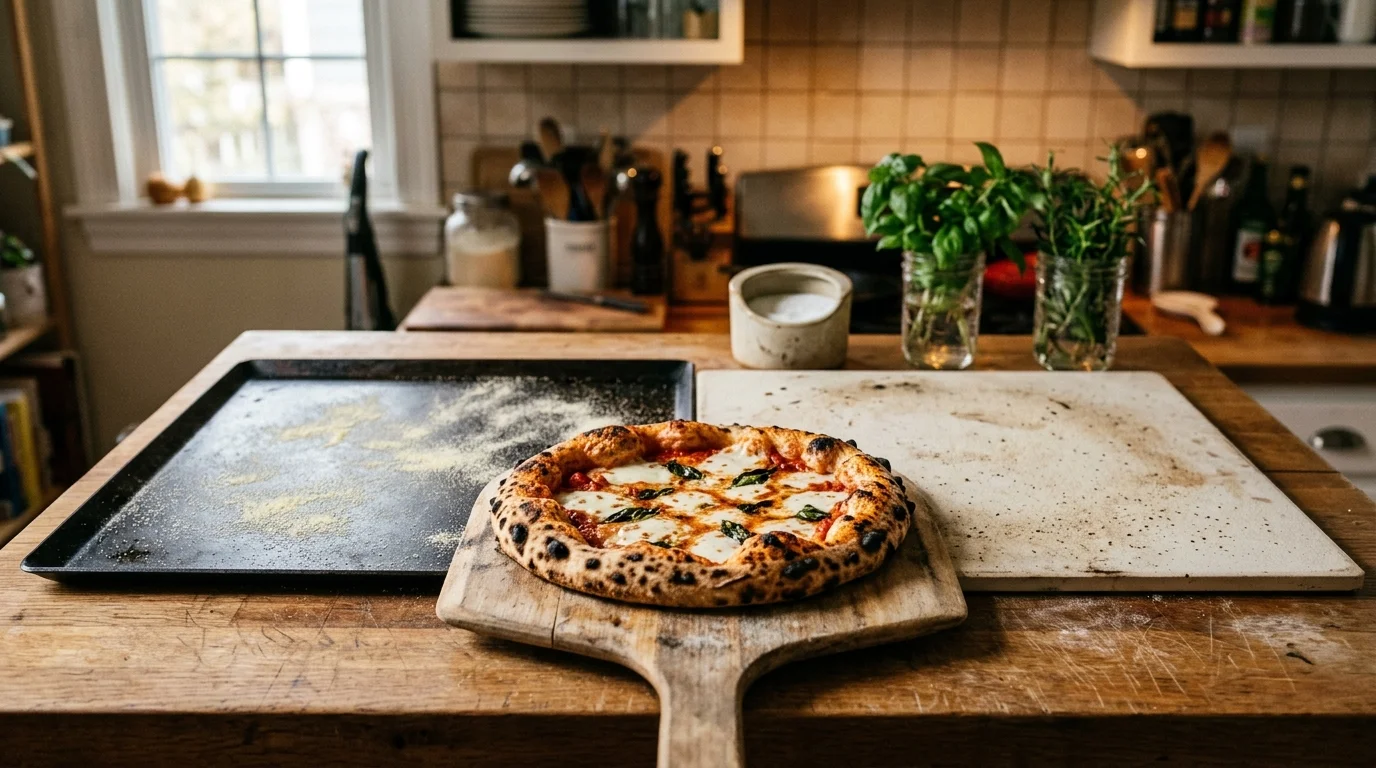
Baking Neapolitan-style pizza in a standard 500°F home oven often yields a pale, leathery base rather than a crisp, blistered crust. Standard baking surfaces lose surface heat instantly when cold dough touches them, causing subsequent pizzas to turn out soggy.
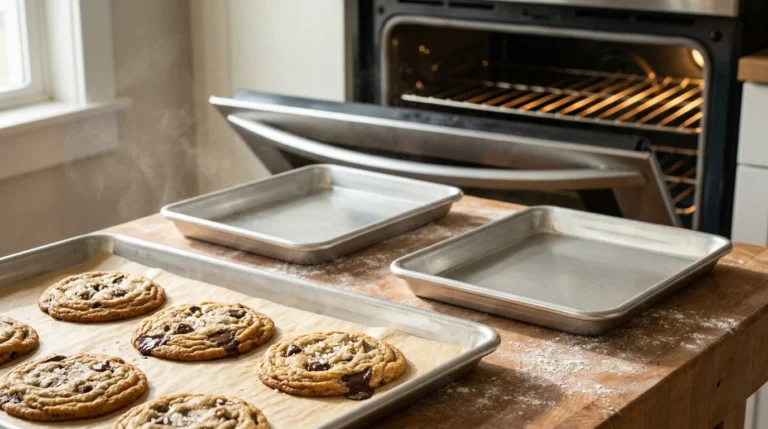
While standard bakeware sets for beginners work well for cookies and sheet dinners, artisan pizza demands specialized heavy-gauge substrates to overcome residential oven limits.
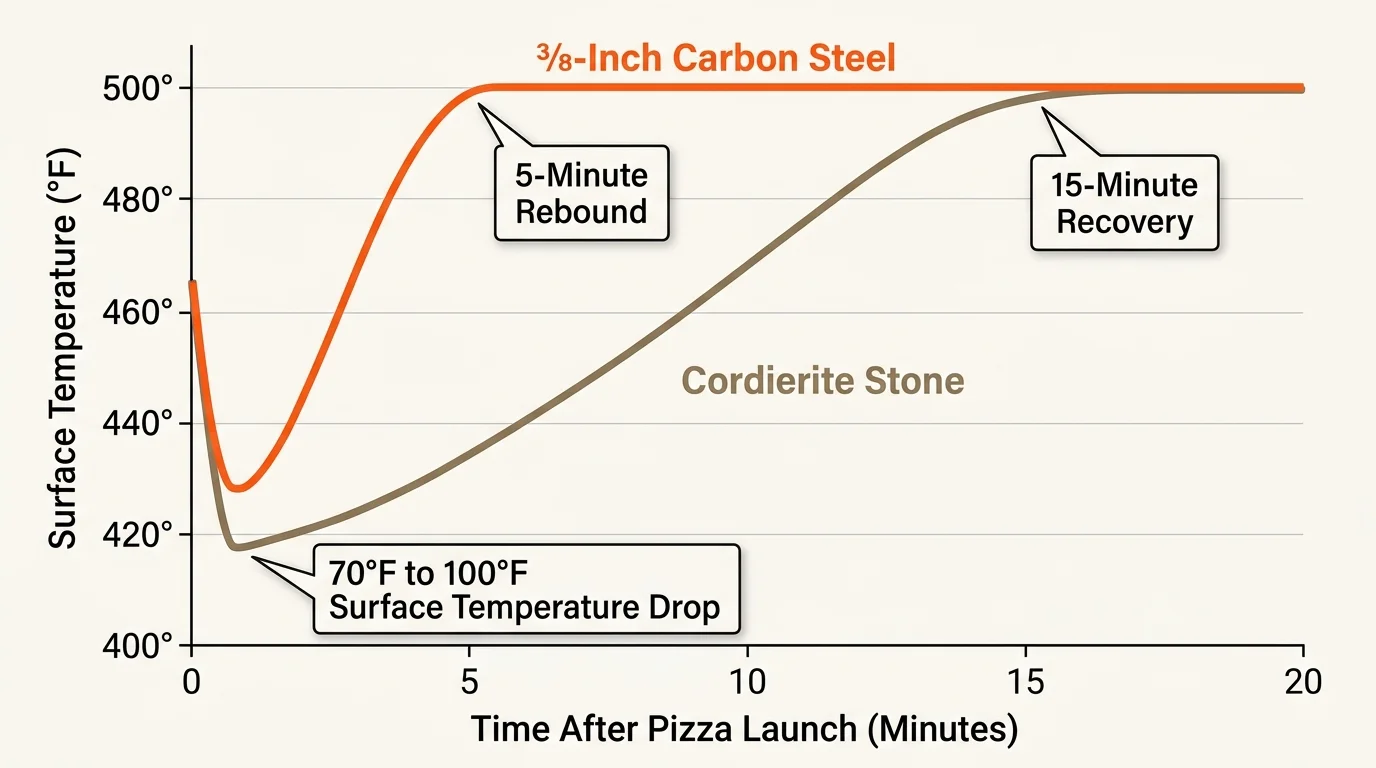
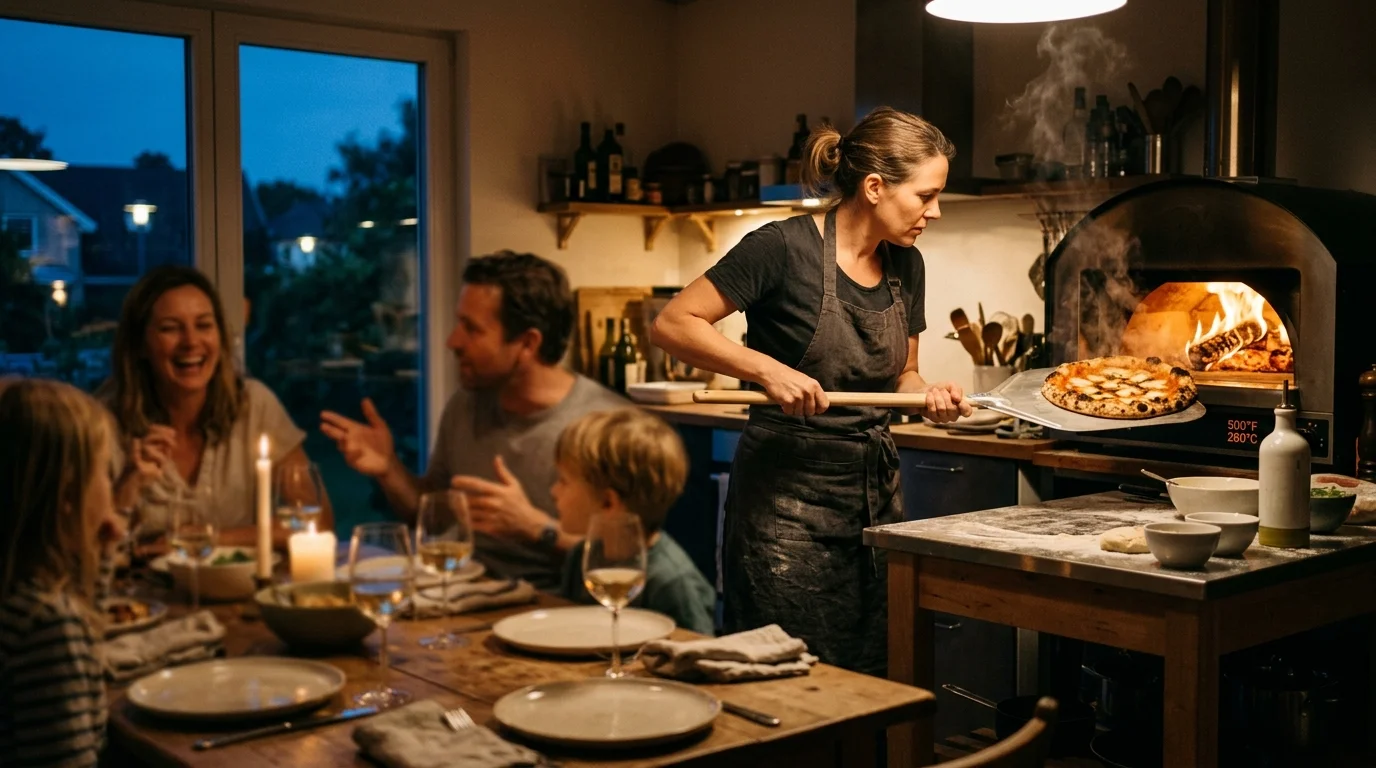
While a conventional cordierite stone bleeds heat and forces a 15-minute wait between bakes, a 3/8-inch carbon steel plate delivers heat 18 times faster and fully recovers within five minutes.
If you want consecutive, blistered pies without stalling your dinner service, your choice of baking substrate dictates your success.
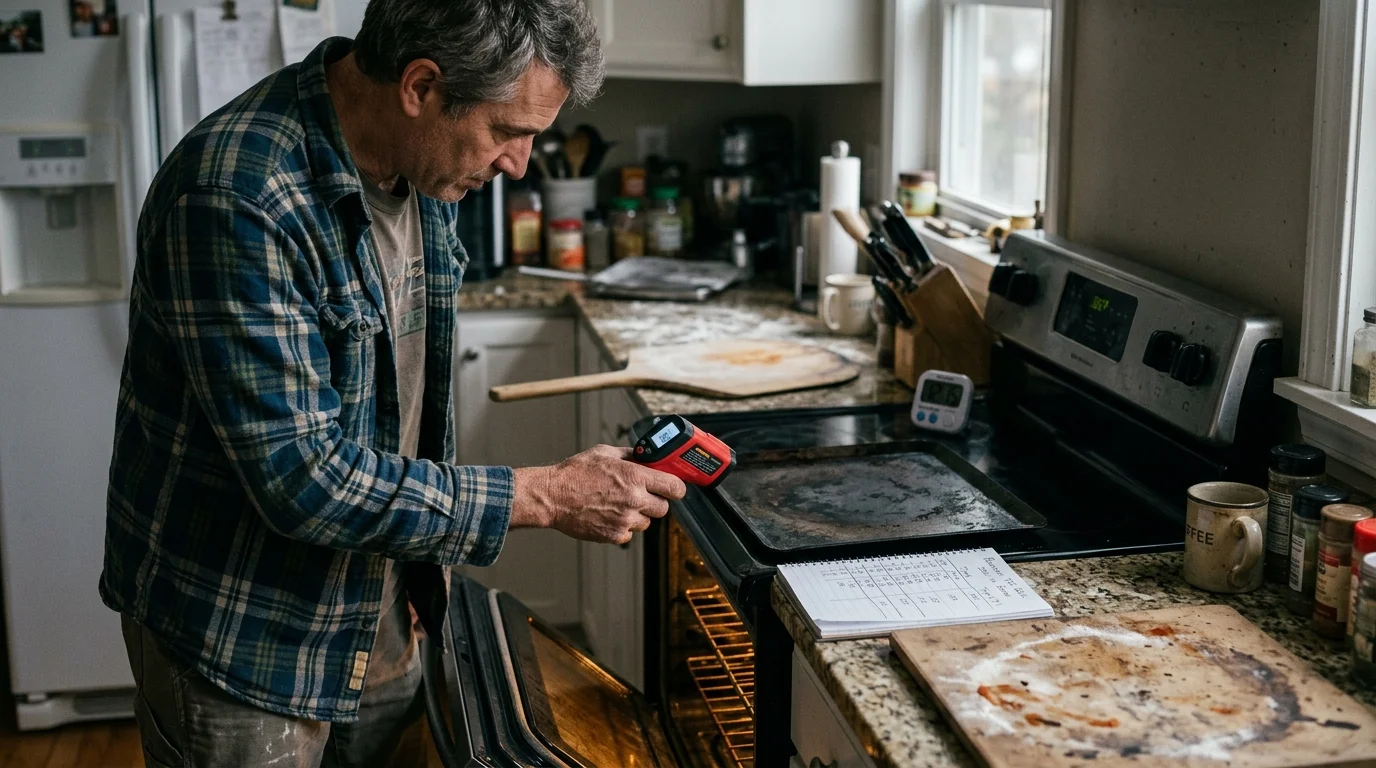
The Physics of 500°F Pizza: Thermal Conductivity vs. Heat Capacity
Home ovens present a thermodynamic challenge for pizza makers. Commercial deck ovens cook at 700°F to 900°F, but residential ranges rarely exceed 500°F or 550°F.
A similar heat-transfer dynamic occurs in dessert baking, where ceramic versus metal pie plates demonstrate how material composition directly controls bottom crust browning.
Managing dough fermentation with a sourdough fermentation box or warming mat ensures your crust develops the open internal air pockets needed to fully capture this sudden heat surge.
To overcome this lower ambient temperature, your baking surface must transfer thermal energy into the dough rapidly. Two physical properties govern this process: volumetric heat capacity and thermal conductivity.
Cordierite is a magnesium aluminum silicate ceramic engineered for kiln shelves. It features an exceptional volumetric heat capacity, holding roughly 1.3 to 2.0 joules per cubic centimeter per kelvin.
However, cordierite exhibits low thermal conductivity, measuring between 1.3 and 2.5 W/(m·K). It stores plenty of energy, but releases that heat at a sluggish pace.
Low-carbon steel (such as structural A36) has a similar volumetric heat capacity to ceramic. The difference lies in its thermal conductivity, which registers between 45 and 54 W/(m·K).
According to culinary evaluations published in Serious Eats’ equipment reviews, carbon steel transfers energy to dough roughly 18 to 20 times faster than ceramic stone.
This rapid energy transfer accelerates conduction baking. The faster heat enters your crust, the faster moisture expands inside the dough pocket.
Steel creates immediate steam expansion within seconds of loading. This initial blast of thermal energy generates dramatic oven spring before the outer starch gelatinizes.
Recovery Time Mechanics: Why Steel Rebounds in Minutes
When raw dough hits a preheated surface, the cold mass acts as a localized heat sink. Water inside the dough immediately absorbs sensible heat from the baking surface.
This rapid thermal recovery mirrors how carbon steel compares to cast iron when managing temperature fluctuations under restricted heat output.
On a cordierite stone, the surface layer quickly drops by 70°F to 100°F at the contact zone. Because ceramic conducts heat poorly, heat stored deep inside the stone cannot reach the surface fast enough.
As a result, the stone’s contact face remains cold long after you pull your first pizza out. If you launch a second pizza immediately, that crust bakes on a severely depleted surface.
Standard cordierite requires 10 to 20 minutes of closed-door recovery time to return to 500°F. If you host dinner guests, this lag creates excruciating delays between servings.
A 3/8-inch steel plate prevents this localized heat deficit. Its exceptional conductivity draws thermal energy upward from its internal core to the contact surface in real time.
The contact zone on 3/8-inch steel only dips by 40°F to 60°F during the bake. Once the finished pie leaves the oven, internal conduction equalizes the slab’s surface temperature within 3 to 7 minutes.
“In a standard residential oven, thermal transfer rate matters far more than maximum ambient temperature. Fast recovery turns batch baking into a practical reality.”
This thermal rebound ensures your third and fourth pizzas bake with the identical bottom crust color as your first. You spend less time waiting and more time eating.
Crust Texture and Oven Spring: Achieving Blistered Crust at Home
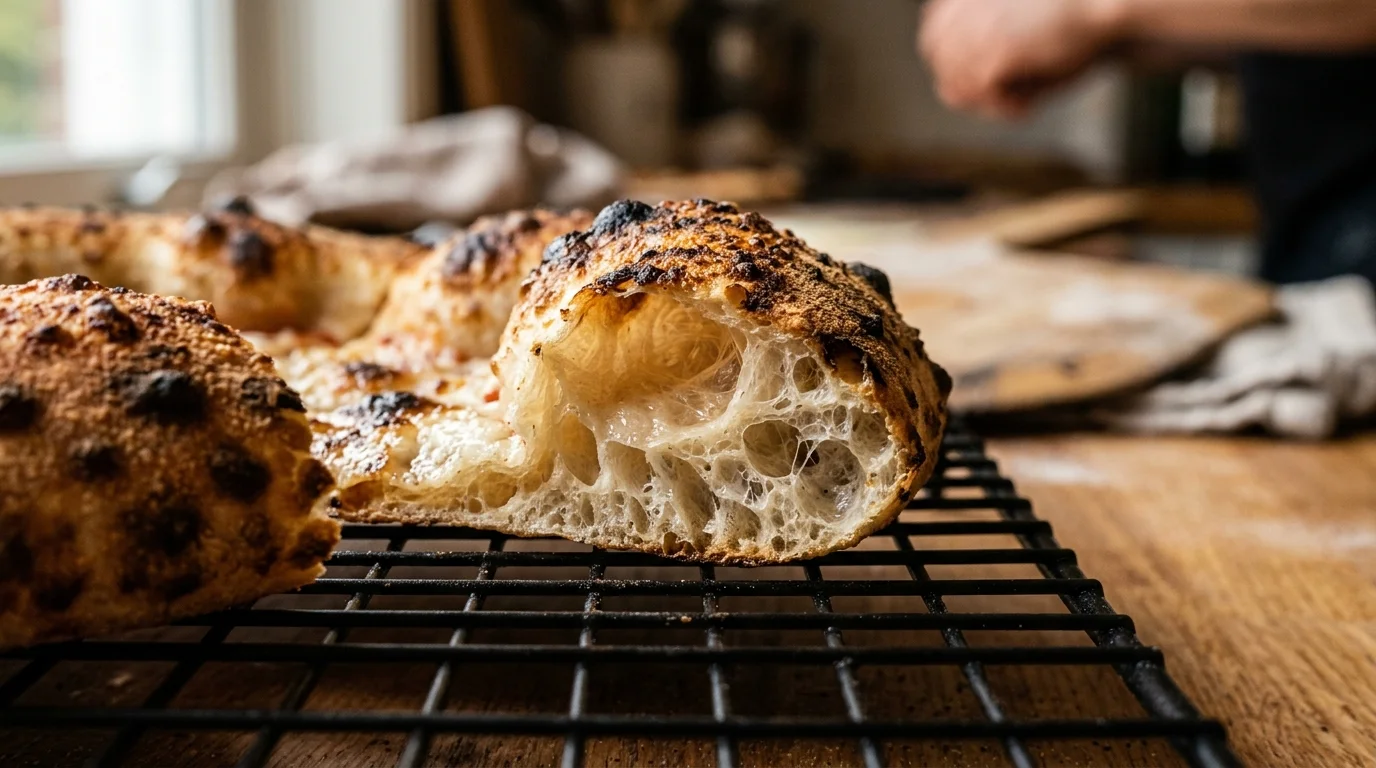
Achieving a true Neapolitan-style rim—puffy, airy, and spotted with dark blisters—requires explosive bottom heat. In an oven capped at 500°F, stones struggle to deliver this effect.
Once baked, using a dedicated wheel or rocker pizza cutter helps slice cleanly through the blistered crust without crushing its delicate interior crumb.
On cordierite, a standard 12-inch pizza requires 8 to 12 minutes to cook through. During this extended duration, the interior crumb dries out as moisture steadily evaporates.
This prolonged bake often creates a pale, biscuity, or dried crust. The cheese melts and separates into grease pools before the bottom develops meaningful caramelization.
A 3/8-inch baking steel cuts that bake time down to 4 to 6 minutes at 500°F. The intense conduction creates rapid steam pockets that produce micro-blisters across the rim.
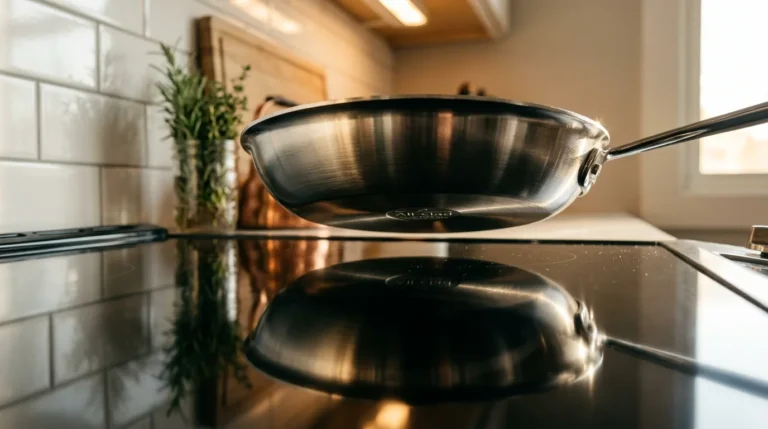
While tri-ply cookware—three layers of metal bonded together for better heat distribution—excels on the stovetop, a solid slab of carbon steel rules the oven. Heat distribution describes how evenly the pan spreads heat across its surface.
Pairing your steel with your oven’s top broiler produces genuine leopard spotting. The steel cooks the bottom in four minutes while the broiler scorches the top toppings.
Cordierite cannot keep pace with an active broiler element. If you run the broiler over ceramic, your toppings burn long before the bottom crust browns properly.
By shortening the bake time, steel preserves internal moisture. Your crust retains a crisp, glass-like exterior shell while keeping an airy, chewy interior crumb.
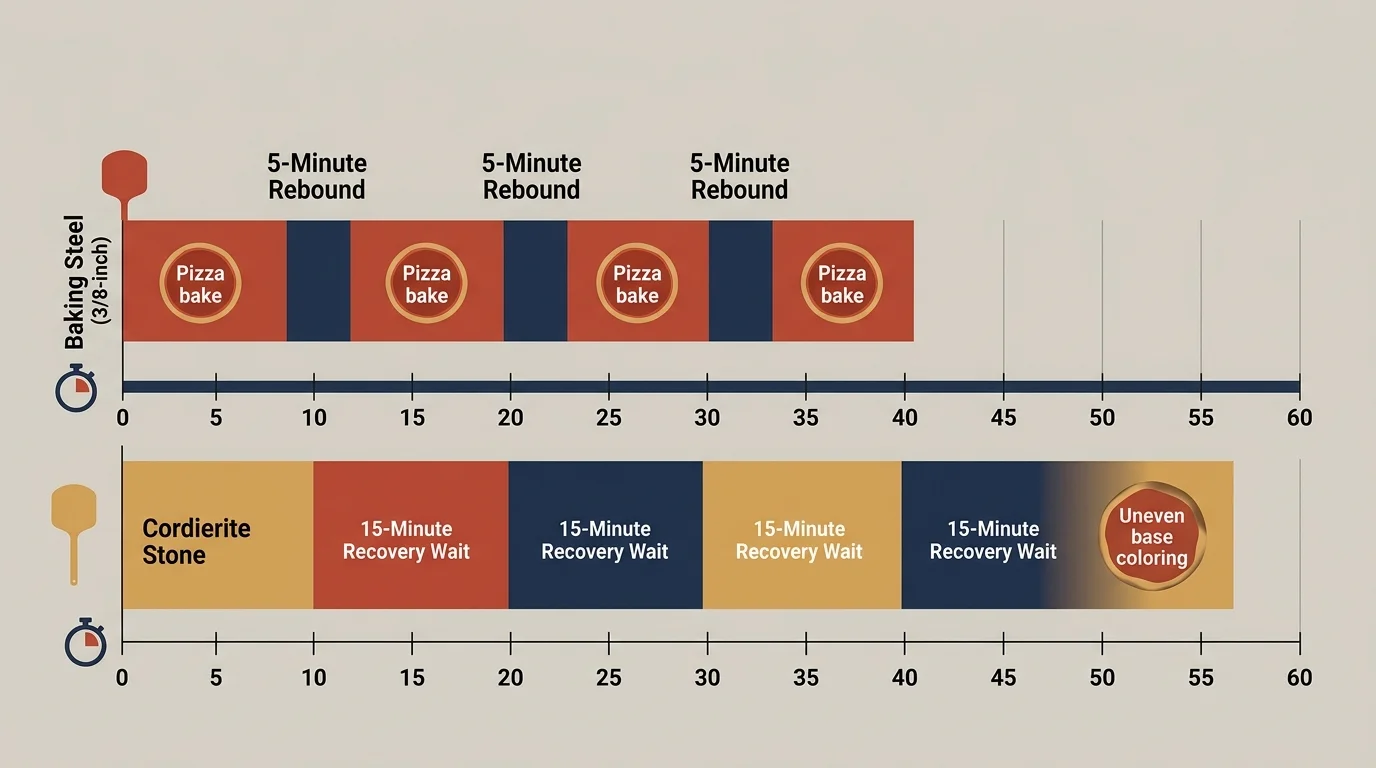
Worked Scenario: Baking Four Consecutive Pizzas at 500°F
To demonstrate the real-world difference, consider this four-pizza dinner scenario. We use four identical 250-gram dough balls at 65% hydration, topped with 80 grams of crushed tomatoes and 100 grams of fresh mozzarella.
While reusable silicone baking mats are convenient for moderate-temperature pastry work, they cannot withstand the direct 500°F conductive contact needed for high-heat pizza.
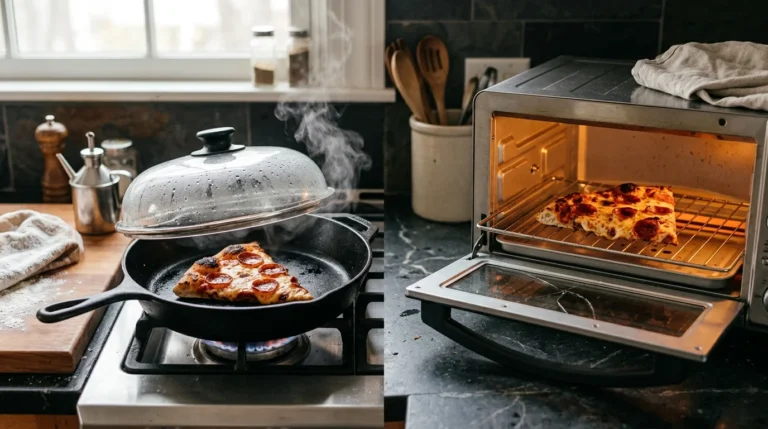
If you have extra slices left over after hosting, using covered skillet steam reheating or toaster oven broiling easily restores that crisp base the next day.
The home oven is set to 500°F bake mode with the rack positioned on the second slot from the top. We will examine the exact timing and temperature profiles for both surfaces.
Setup A uses a 16-inch by 16-inch by 3/8-inch carbon steel plate weighing 27 pounds. Setup B uses a 16-inch by 16-inch by 3/4-inch cordierite stone weighing 8 pounds.
With Setup A, the steel preheats for 65 minutes, reaching a surface temperature of 506°F. Pizza 1 launches at minute 0:00 and finishes baking in 5 minutes, emerging crisp and blistered.
Upon removal at minute 5:00, the steel surface registers 452°F. Closing the oven door allows the slab to equalize back to 501°F by minute 9:00, requiring just 4 minutes of recovery.
Pizza 2 bakes from minute 9:00 to 14:00, Pizza 3 bakes from 18:00 to 23:00, and Pizza 4 bakes from 27:00 to 32:00. You serve four fresh, blistered pizzas in exactly 32 minutes.
With Setup B, the cordierite stone preheats for 55 minutes, reaching 500°F. Pizza 1 launches at minute 0:00 and requires 10 minutes to bake, emerging pale underneath with melted cheese.
Upon removal at minute 10:00, the stone contact zone drops to 415°F. Rebounding to 495°F requires 15 minutes of door-closed recovery time.
Pizza 2 launches at minute 25:00 and finishes at 35:00. Pizza 3 launches at minute 50:00, and Pizza 4 finally exits the oven at minute 85:00.
Setup A saves you 53 minutes of total cooking time across four pies. More importantly, every pizza from the steel emerges with consistent bottom char and oven spring.
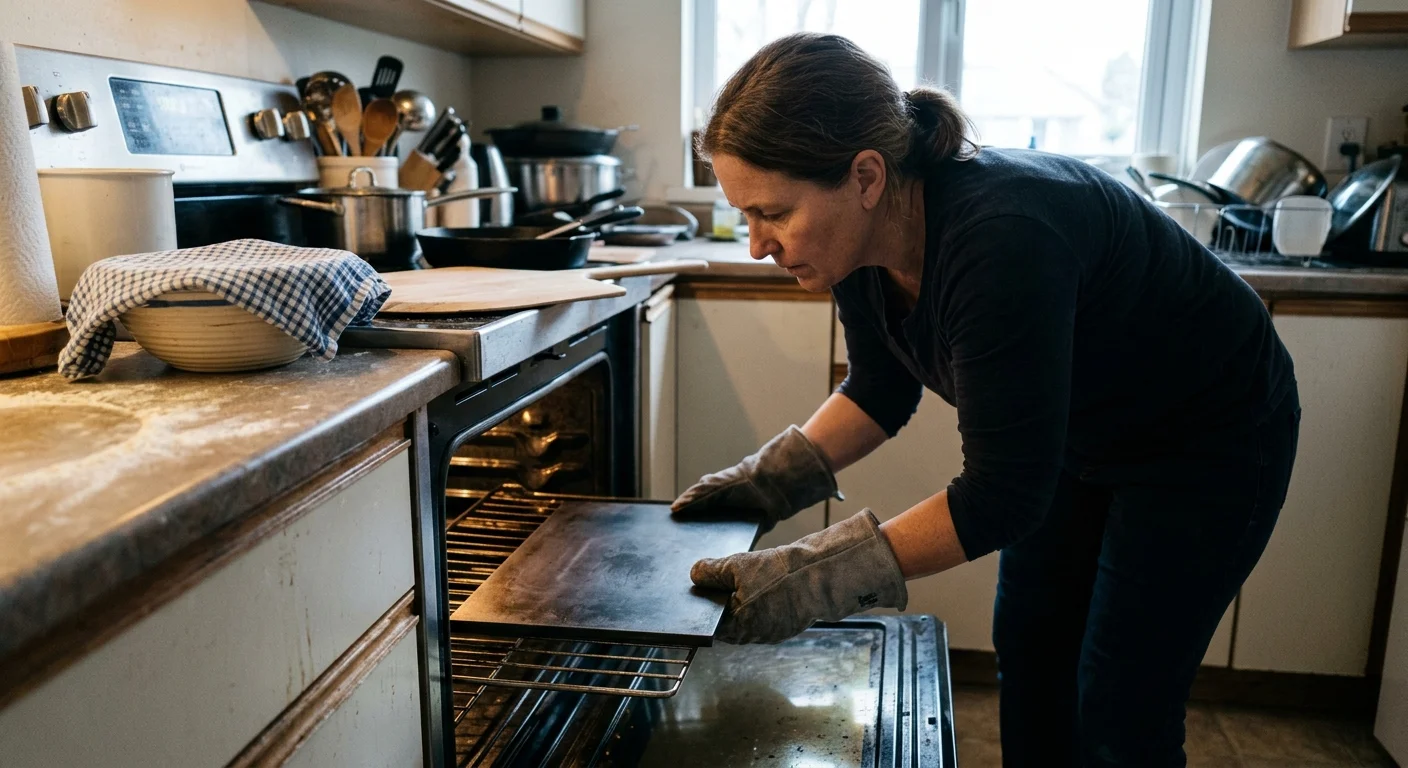
Oven Physics and Structural Load: Managing Weight and Preheats
The incredible heat retention of 3/8-inch carbon steel comes with a significant physical cost. A 16-inch by 16-inch by 3/8-inch slab weighs approximately 27 pounds (12.2 kg).
Because a wide slab restricts interior convection currents, optimizing single-rack oven airflow becomes critical if you plan to bake side dishes simultaneously.
Keeping the steel on the lowest rack also stabilizes overall oven temperatures, helping baking sheets achieve more even browning during general baking and roasting.
A smaller 16-inch by 14-inch by 3/8-inch plate still weighs 23 pounds. You must verify that your residential oven racks can handle this concentrated load.
Place your steel near the sides of the rack where the wire supports meet the frame. Positioning heavy steel in the dead center of a flimsy wire rack can cause permanent sagging.
In contrast, a 16-inch cordierite stone weighs only 6 to 9 pounds. It places virtually no structural strain on oven racks and is effortless to maneuver into storage cabinets.
Preheating timelines also diverge substantially due to physical mass. Steel requires between 60 and 75 minutes at 500°F to become fully saturated with thermal energy.
Cordierite reaches its peak temperature faster, typically requiring 45 to 60 minutes. Cutting the preheat short on either surface leads to disappointing bottom bakes.
Because steel holds so much energy, leave it in the oven to cool naturally for at least two hours after turning off the heat. Attempting to move hot steel invites severe burns or dropped equipment.
Many bakers leave their steel on the bottom oven rack permanently. It acts as an ambient thermal ballast, steadying oven temperatures during everyday roasting and baking tasks.
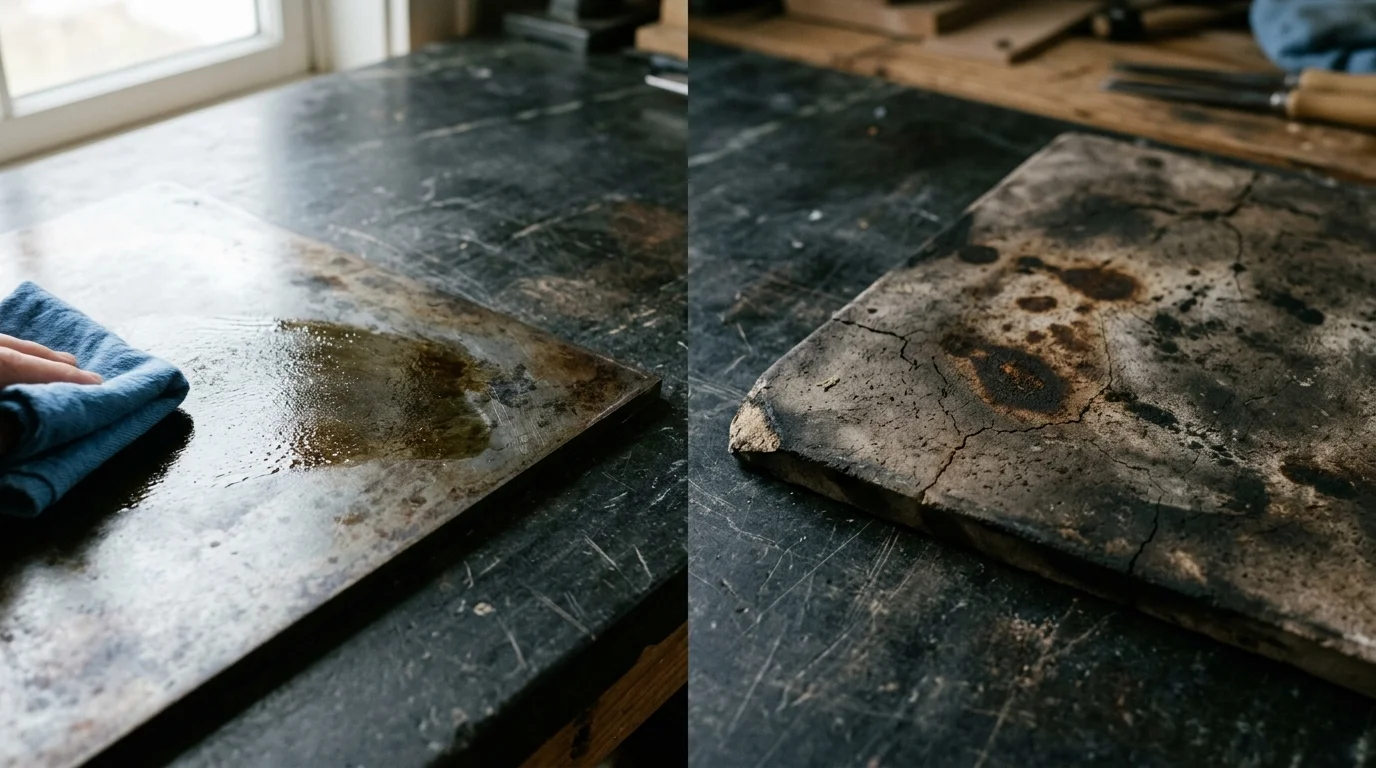
Durability and Upkeep: Rust Prevention vs. Thermal Cracking
Durability exposes another major divergence between carbon steel and refractory ceramics. Each material requires distinct maintenance to ensure long service life.
Just like comparing enameled vs bare cast iron cookware, unglazed steel demands periodic oil seasoning while glazed ceramics resist moisture without rusting.
Cordierite is impervious to rust and handles water effortlessly. However, ceramic remains brittle and highly vulnerable to sudden thermal shock.
America’s Test Kitchen notes that thermal shock remains the leading cause of catastrophic cracking in porous ceramic pizza stones. Splashing cold sauce or placing a frozen pie onto a blazing stone can crack it in half instantly.
A 3/8-inch plate of carbon steel cannot break, crack, or shatter. You could drop it onto a concrete garage floor without causing anything beyond a minor scuff.
However, carbon steel is susceptible to surface corrosion. Steel arrives bare and must be seasoned—a protective coating built up through polymerized oil and heat—to prevent oxidation.
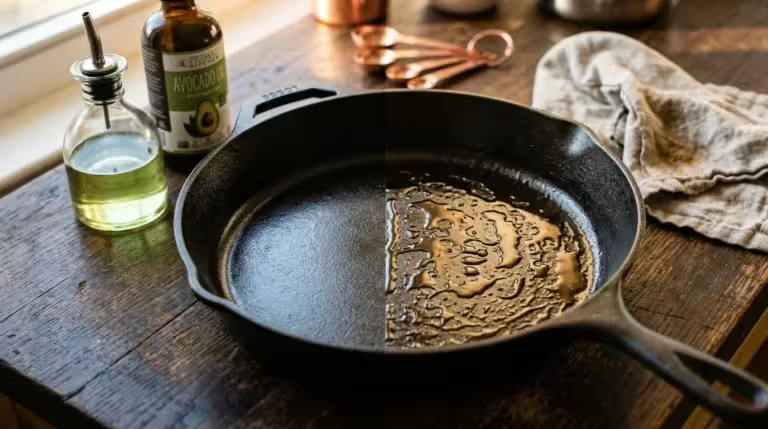
To season your steel, apply a thin coat of flaxseed or canola oil and bake it at 450°F for an hour. This treatment builds a slick, dark patina that repels moisture and prevents rust.
Unlike standard baking pans, carbon steel contains no synthetic PTFE (the chemical name for Teflon-style non-stick coatings). It relies entirely on natural oil polymerization for food release.
Similarly, cordierite uses natural refractory clay rather than a chemical ceramic coating (a newer non-stick surface made from silica). Neither material emits toxic fumes at standard baking temperatures.
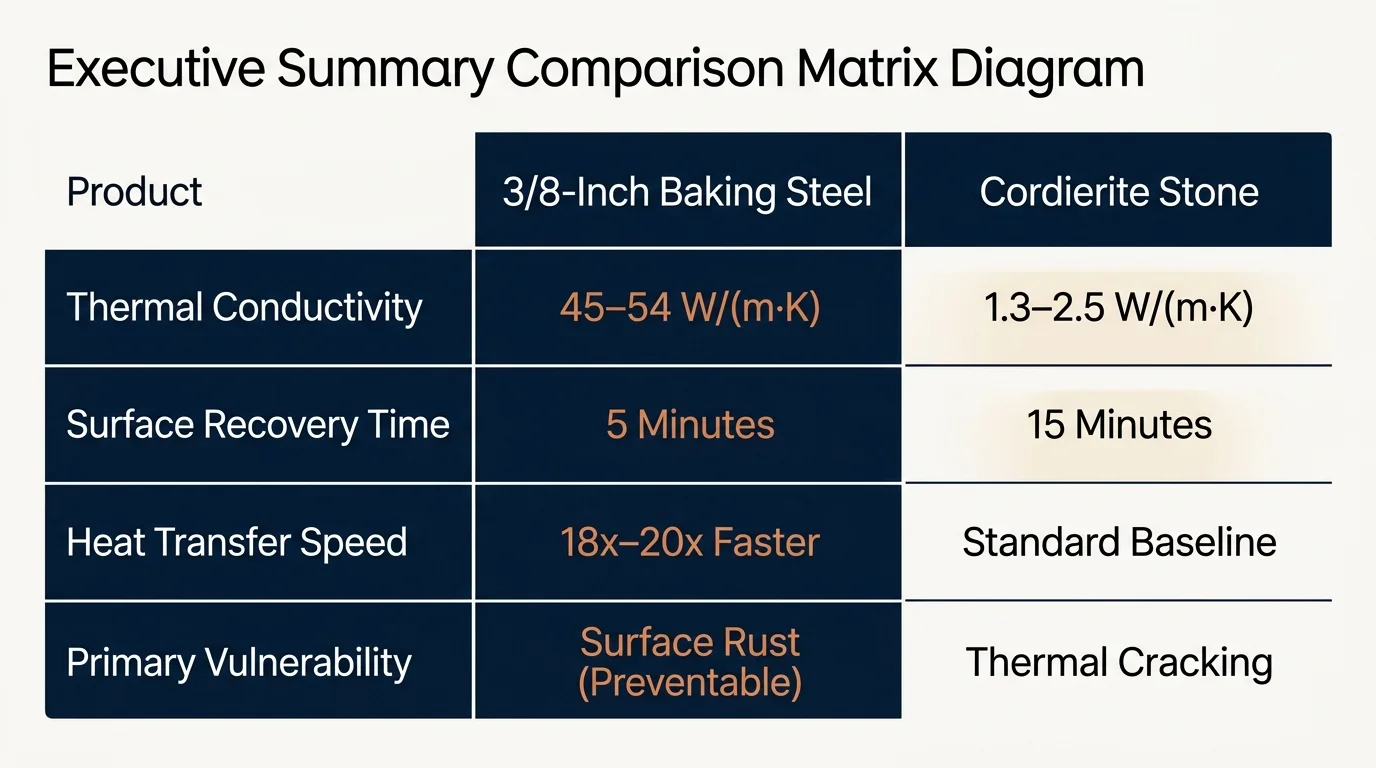
Material Comparison Matrix: Steel vs. Cordierite Head-to-Head
To understand how these surfaces perform under identical kitchen conditions, examine the measurable technical attributes below. Gauge measures the thickness of the metal, where lower numbers mean thicker plates.
While 1/4-inch steel offers an entry-level alternative, 3/8-inch plate provides the sweet spot for heat recovery during back-to-back baking sessions.
| Performance Attribute | 3/8-Inch Carbon Steel | 1/4-Inch Carbon Steel | 3/4-Inch Cordierite Stone | 1/2-Inch Cordierite Stone |
|---|---|---|---|---|
| Thermal Conductivity | 45–54 W/(m·K) | 45–54 W/(m·K) | 1.3–2.5 W/(m·K) | 1.3–2.5 W/(m·K) |
| Bake Time per 12″ Pie | 4–6 minutes | 5–7 minutes | 8–10 minutes | 9–12 minutes |
| Surface Recovery Time | 3–7 minutes | 7–10 minutes | 12–16 minutes | 15–20 minutes |
| Required Preheat Time | 60–75 minutes | 45–60 minutes | 50–60 minutes | 40–50 minutes |
| Total Weight (16″ x 16″) | ~27 lbs | ~18 lbs | ~9 lbs | ~6.5 lbs |
| Thermal Shock Vulnerability | Zero risk (indestructible) | Zero risk (indestructible) | Moderate risk | High risk |
| Average Retail Price | $110–$180 | $70–$100 | $45–$65 | $30–$45 |
As the data illustrates, 3/8-inch steel outperforms ceramic in every speed and heat recovery metric. However, ceramic requires significantly less financial investment upfront.
Choosing between them comes down to your personal baking frequency, budget constraints, and physical strength.
Purchasing Recommendations: Matching Surfaces to Your Baking Style
Selecting the right baking foundation depends on your specific cooking patterns and physical kitchen setup. One size does not fit every home cook.
As detailed in comprehensive assessments from Wirecutter’s cookware guides, a heavy steel slab turns standard home ovens into formidable pizza stations.
If you bake multiple pizzas in a single evening for family gatherings, buy a 3/8-inch steel plate such as the Baking Steel Pro. Its 4-minute recovery time keeps your meal moving smoothly without cold pauses.
Carbon steel plates are completely oven-safe, meaning they can endure extreme heat without material degradation. You can safely expose them to 900°F outdoor grills or open campfire flames.
Steel plates are also induction compatible, meaning their magnetic composition works directly on flat induction cooktops. You can place the slab across two induction burners to create an exceptional flat-top griddle for smash burgers.
If you only bake a single pizza once a month and prioritize ease of handling, choose a 3/4-inch cordierite stone like the FibraMent-D or Pizzacraft. You will avoid the heavy lifting of steel while saving over $70.
“Buy a baking stone if you prioritize low cost and light storage weight. Invest in 3/8-inch steel if you want pizzeria-grade crust blistering and zero wait time between pies.”
If you rent an older apartment with fragile oven racks, consider a 1/4-inch steel plate instead. It provides superior thermal conductivity over cordierite while cutting slab weight down to 18 pounds.
Frequently Asked Questions
Why does pizza cook faster on steel than on stone at the same temperature?
Steel possesses a thermal conductivity rate roughly 18 times higher than cordierite ceramic. It transfers stored heat into raw dough rapidly, evaporating moisture and creating steam expansion within seconds.
Can I leave a 3/8-inch baking steel in my oven all the time?
Yes, leaving steel on your lowest rack stabilizes oven temperatures during ordinary baking. Ensure your oven rack wire welds are sturdy enough to support the concentrated 27-pound plate permanently.
Do I need to wash my baking steel or pizza stone with dish soap?
Never soak cordierite stones or seasoned steels in soapy water. Wipe cordierite with a dry brush, and clean steel with hot water and a nylon pad before drying and lightly oiling.
Is 1/2-inch steel better than 3/8-inch steel for home pizza?
A 1/2-inch plate adds considerable weight (over 35 pounds) without offering noticeable recovery improvements at 500°F. For residential oven racks, 3/8-inch steel represents the optimal balance of mass and heat rebound.
Disclaimer: Product prices and availability change frequently. Prices shown were accurate at time of writing but may have changed. We may earn a small commission from purchases made through links on this site, at no extra cost to you. Always verify current pricing on the retailer’s website before purchasing.
2 Comments