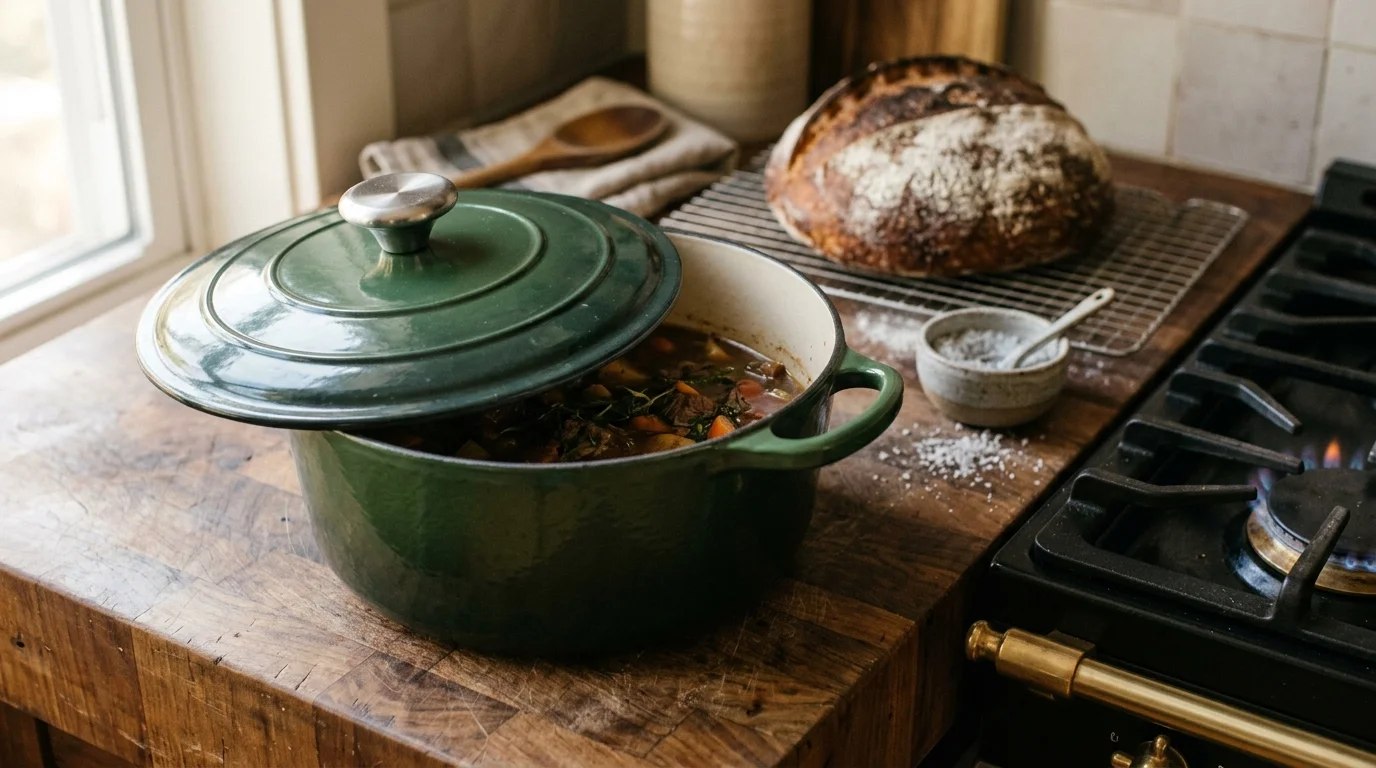
You do not need to spend $400 on French cookware to bake crusty artisan sourdough or simmer tender stews. A sub-$80 enameled cast iron Dutch oven provides excellent heat retention if you navigate its engineering trade-offs.
Budget pots rarely fail from thin iron; instead, sub-$80 vessels suffer from thin single-coat enamel frits and unsealed cast-iron rims that invite rapid oxidation and chipping.
By inspecting rim coatings, enamel thickness, and factory lid knob ratings before you buy, you can cook safely while protecting your wallet.
The Sub-$80 Reality: How Budget Enamel Differs from Premium French Cookware
Porcelain enamel consists of powdered glass frit fused to a cast iron base at temperatures exceeding 1,400°F. Understanding the specs—specifications, the technical details of a product—helps you identify how manufacturers reduce production costs.
Unlike modern ceramic cookware with non-stick sol-gel coatings, true vitreous porcelain enamel is a fused glass layer designed for long-term heat retention.
Deciding where to spend and save on heavy cookware comes down to how frequently you subject your pots to extreme thermal stress.
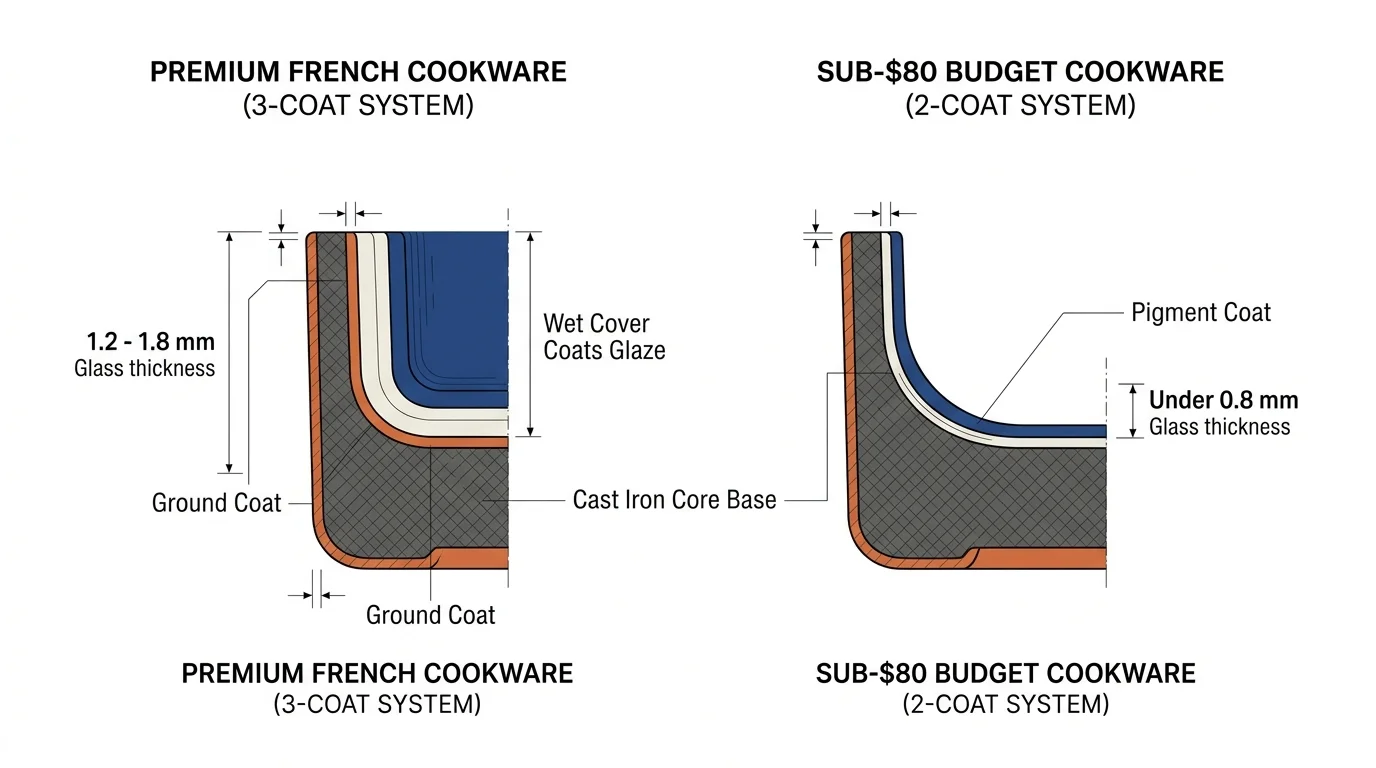
Heritage French brands apply an initial ground coat followed by two or three wet cover coats. This multi-stage glazing yields an enamel thickness between 1.2 and 1.8 millimeters, creating deep resilience against impact.
In contrast, sub-$80 Dutch ovens utilize a two-coat system. Foundries apply a thin base layer and a single pigment coat, resulting in a glass thickness often measuring under 0.8 millimeters.
A thinner glass matrix transfers heat directly from the iron substrate without dampening thermal spikes. If you heat the vessel unevenly, hot spots generate localized mechanical expansion, making the coating vulnerable to hairline fractures.
You do not need an expensive heirloom as a splurge—a top-tier option for enthusiasts or heavy users. You simply need to respect the mechanical limits of entry-level vitreous coatings.
“Don’t buy the ‘best’ product. Buy the best product for how YOU cook.” — Kitchen Equipment Expert
As Wirecutter’s kitchen testing demonstrates, affordable Dutch ovens deliver culinary performance nearly indistinguishable from luxury models. However, longevity requires understanding the physical boundaries of lower enamel thickness.
The Danger Zone: Why Factory Lid Knobs Matter for High-Heat Baking
Home cooks frequently purchase Dutch ovens to bake no-knead sourdough bread. This technique requires preheating the covered vessel between 450°F and 500°F to trap steam during oven spring.
Just as bakers utilize a cordierite stone or baking steel for rapid heat transfer, a Dutch oven relies on extreme ambient temperature to produce an open bread crumb.
Learning how to spot quality kitchen tools by evaluating subtle details like hardware ratings will protect you from premature component failures.
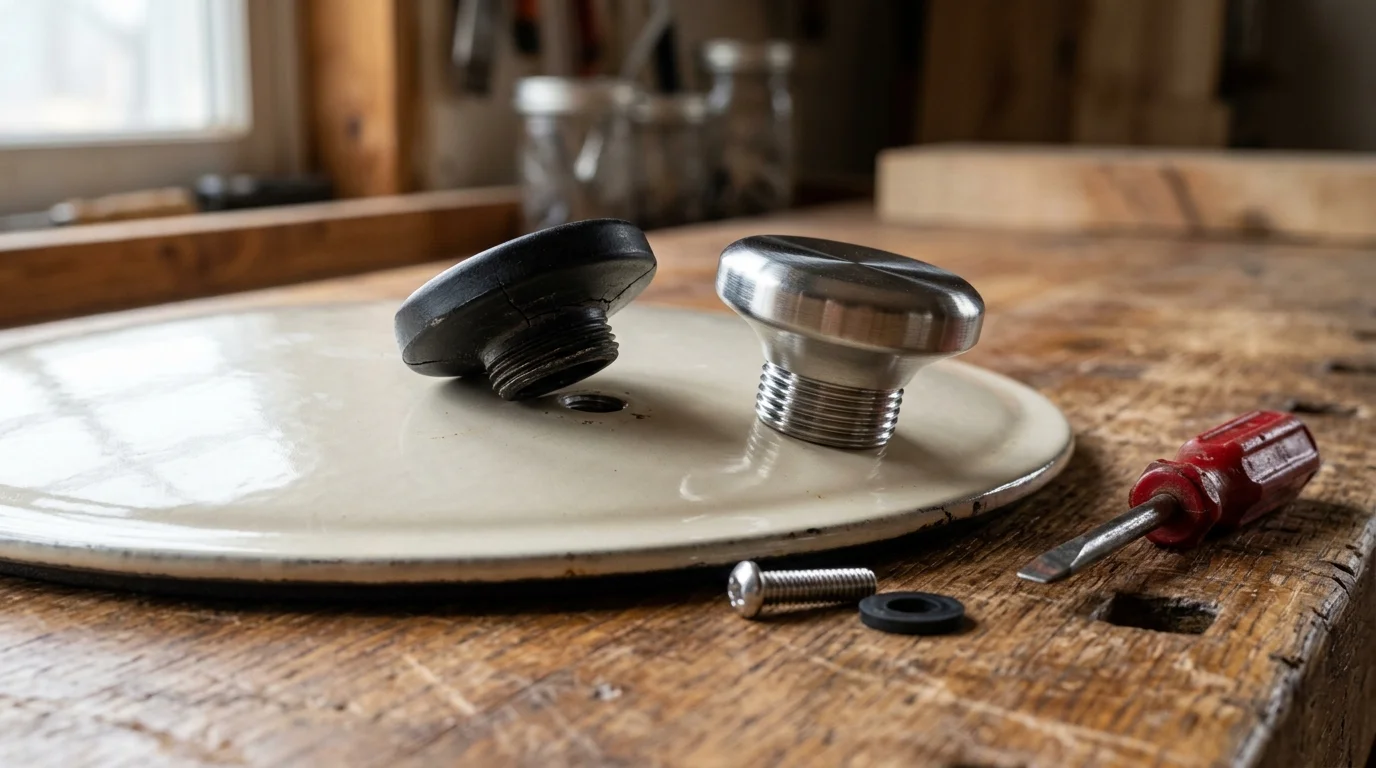
Many sub-$80 pots hide a dangerous flaw: composite lid handles. Phenolic resin knobs degrade, crack, and release noxious chemical aromas when subjected to temperatures above 400°F.
Amazon Basics enameled pots, for instance, carry an official manual limit of 400°F. Placing that lid into a 475°F oven risks blistering the knob material and weakening its mounting screw.
Conversely, brands such as Lodge and Target Figmint supply solid stainless steel knobs out of the box. These metallic handles withstand continuous exposure up to 500°F without structural failure.
Upgrading a defective or heat-limited handle introduces hidden expenses. A single aftermarket food-grade stainless steel knob typically costs between $10 and $14 at retail hardware suppliers.
If you purchase a $50 vessel with a 400°F cap, adding a replacement handle pushes your total investment to $64. Buying a model equipped with factory stainless hardware from day one remains the smarter financial move.
Exposed Rims and Flash Rust: The Chemistry of Kiln Firing Pins
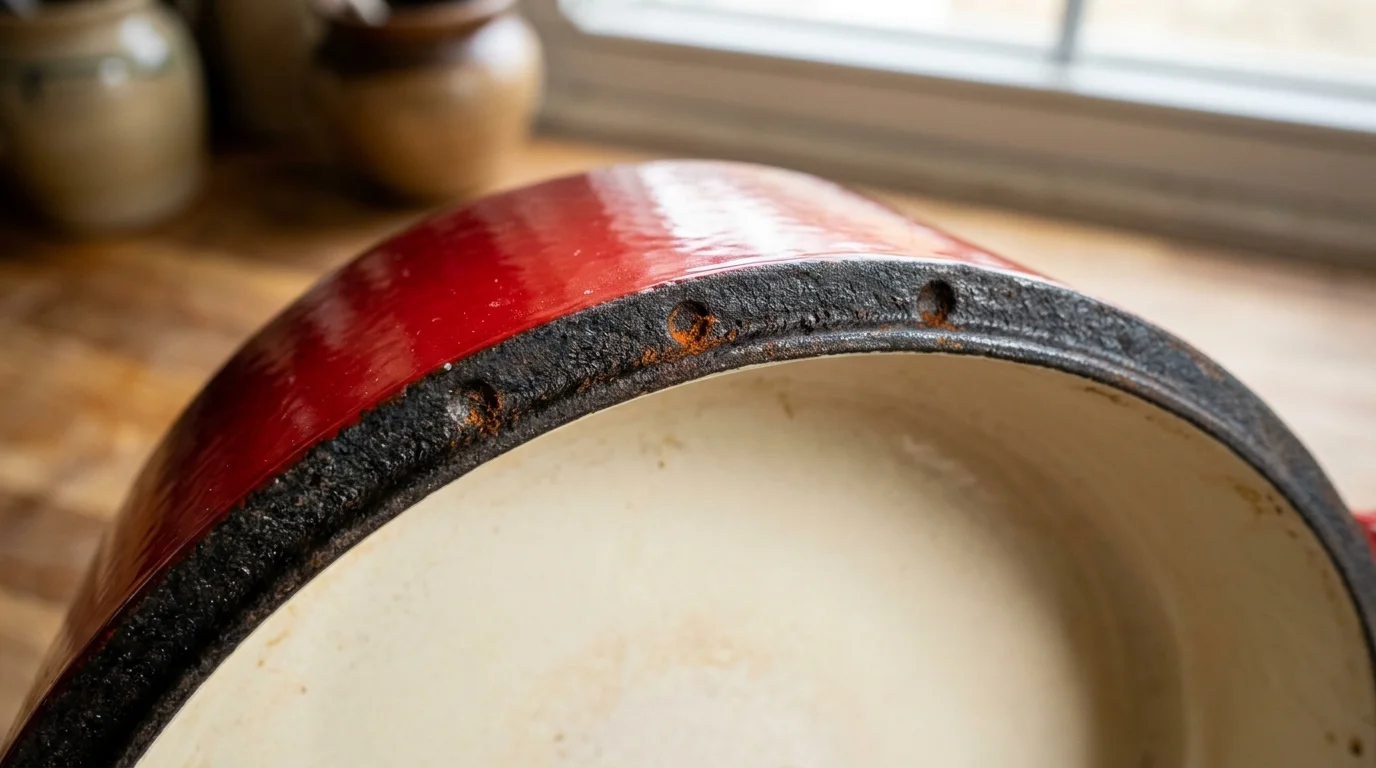
Flip over the lid or inspect the upper lip of any budget Dutch oven, and you will discover a matte black band. Many cooks mistakenly assume this dark rim is heat-resistant paint or raw, unsealed iron.
While standard cast iron care and seasoning shields unglazed cookware, enameled pots lack that thick polymer barrier along the rim and need diligent drying.
During the manufacturing process, foundries set wet, enameled pots upside down on triangular kiln firing pins. The contact points along the vessel lip cannot receive a glossy topcoat without adhering to the machinery.
Foundries apply only a microscopic ground primer coat across this mating surface. In sub-$80 units, this barrier measures mere microns in depth, leaving porous cast iron directly exposed beneath it.
When you wash the vessel, moisture inevitably pools inside the recessed lip of the pot and the inner lid flange. Exposure to tap water and ambient oxygen triggers flash oxidation within 30 to 60 minutes.
Dishwashers accelerate this deterioration exponentially. Highly alkaline detergent tablets strip the microscopic primer coat and oxidize raw iron, generating unsightly orange rust marks across your cookware.
According to Serious Eats equipment guides, hand washing and immediate drying represent non-negotiable routines for enameled cookware. Preventing rim rust demands physical maintenance rather than relying on factory glazing.
The Best Sub-$80 Enameled Dutch Ovens Ranked and Reviewed
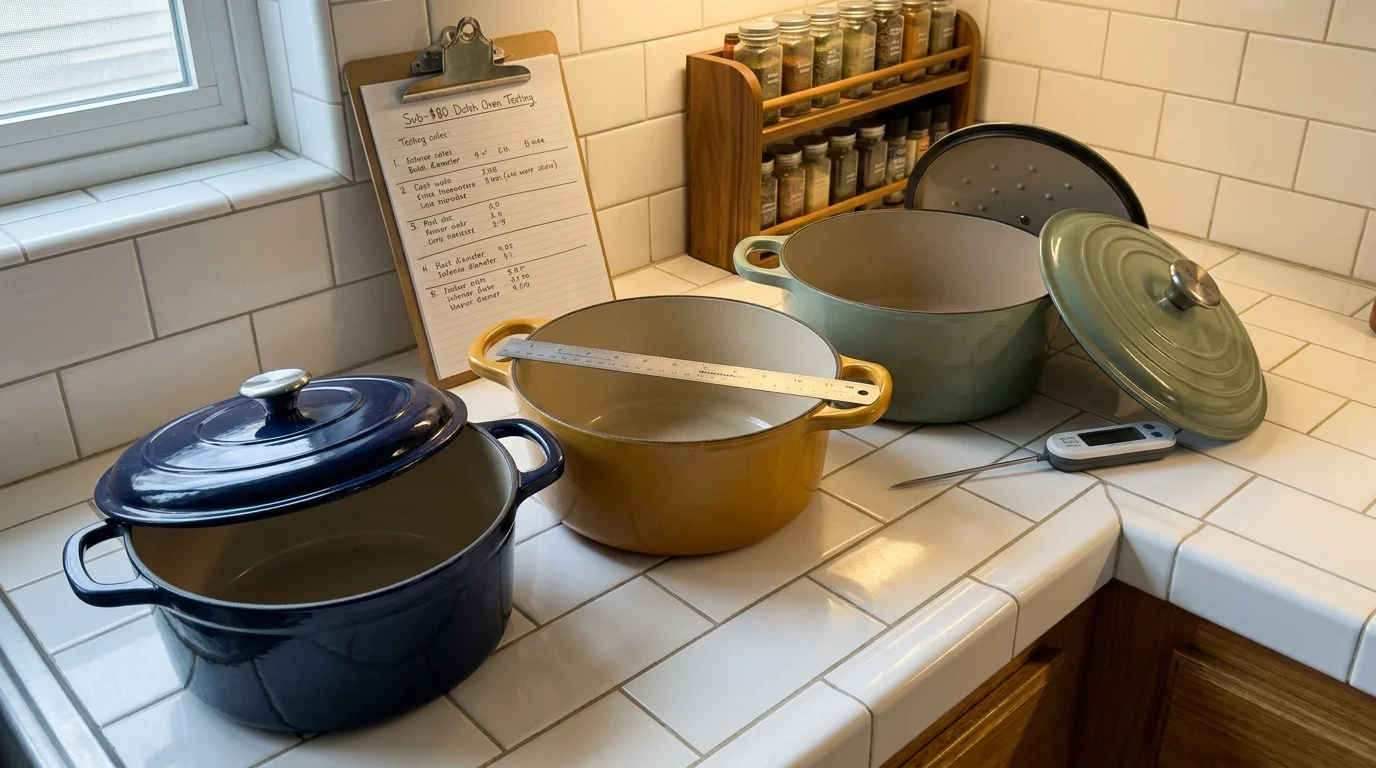
Navigating the budget cookware aisle requires weighing hardware quality against interior volume. We analyzed four popular sub-$80 options across enamel durability, rim protection, and heat safety.
1. Lodge Classic 6-Quart Enameled Dutch Oven — Value Pick
The Lodge Classic 6-Quart serves as our value pick—the best balance of quality and price for most people. Retailing between $65 and $80, it delivers consistent casting density and reliable porcelain layering.
If its 14-pound weight makes daily handling difficult, consider adding carbon steel pans to your kitchen for lighter, high-heat searing performance.
Its capacity—how much a product can hold or process at once—accommodates six-pound roasts or standard sourdough boules easily. The vessel features dual ergonomic side handles that permit a secure grip with silicone oven mitts.
Lodge fits this model with a heavy-duty stainless steel knob officially rated to 500°F. You can transition this pot from stovetop searing to maximum-temperature oven baking without swapping hardware.
The company provides a limited lifetime warranty—the manufacturer’s promise to repair or replace defective products. Lodge honors structural casting failures, though thermal shock chipping remains excluded from policy coverage.
Skip if you want ultra-lightweight cookware, as this model weighs nearly 14 pounds empty. The interior enamel is off-white rather than pure cream, making fond browning slightly harder to monitor.
Bottom Line: Lodge delivers the most dependable sub-$80 workhorse, combining a true 500°F rating with resilient customer support.
2. Target Figmint 5.5-Quart Enameled Dutch Oven — Design Pick
Target’s private-label Figmint Dutch oven retails for approximately $60, making it an exceptional direct challenger to heritage brands. Its straight sidewalls maximize interior floor space for searing proteins.
If you regularly cook high-volume soups or stews for large gatherings, evaluating different stockpot sizes can help you decide if a Dutch oven offers adequate capacity.
Figmint equips this vessel with factory stainless steel hardware certified safe to 500°F. The lid knob features an oversized ergonomic profile that stays comfortable even when gripped with thick pot holders.
The interior glossy finish resists food adhesion effectively during low-temperature braising. However, the enamel coating measures slightly thinner along the upper sidewalls compared to Lodge castings.
Skip if you routinely prepare large family-style recipes requiring more than 5.5 quarts of liquid. The flat lid design also collects moisture along its interior perimeter, demanding deliberate hand-drying.
Bottom Line: The Figmint offers sleek contemporary styling and reliable 500°F baking performance at an ultra-competitive price.
3. Amazon Basics 6-Quart Enameled Dutch Oven — Budget Pick
Selling between $50 and $65, the Amazon Basics 6-Quart represents our budget pick—good quality at the lowest price point. It features generous internal volume and balanced side handles.
Much like heavy-base skillets designed to balance heat across uneven burner coils, this thick-bottomed pot prevents scorching during long braises.
If you cook on a smooth electric range, examine the bottom for casting burrs or research smooth cookware base finishes to prevent scratching your glass.
The pot retains heat admirably thanks to a heavy cast base that minimizes hot spots during simmering. Stews and chilies cook evenly across electric, gas, and induction burners alike.
Unfortunately, the factory documentation lists an oven temperature ceiling of 400°F. The composite lid hardware cannot withstand the thermal demands of covered sourdough bread baking without risking hardware degradation.
Skip if high-heat bread baking is your primary culinary goal. You must factor in the cost of an aftermarket metal knob before placing this lid into a blistering oven.
Bottom Line: An affordable choice for soups and braises, but hobbled by a restrictive 400°F knob heat limit.
4. Crock-Pot Artisan 5-Quart Enameled Dutch Oven — Compact Option
Priced between $50 and $58, the Crock-Pot Artisan offers a compact footprint—how much counter or storage space something takes up. It fits easily inside cramped apartment cabinets.
Cooks who struggle with compact loop handles may prefer ergonomic baking dishes with wide grips for safer maneuvering in and out of the oven.
For shallow baking tasks that do not require high cast iron walls, standard casserole dishes offer a lighter and easier-to-handle alternative for weeknight dinners.
The pot performs well for weeknight curries, chili batches, and small casseroles. Its self-basting lid bumps channel condensation back into simmering ingredients evenly.
However, the side loop handles are noticeably smaller than those found on Lodge and Figmint models. Navigating a hot, heavy pot while wearing bulky oven mitts requires extra caution.
The factory knob carries an official 450°F threshold, falling just short of optimal artisan bread temperatures. Its unglazed rim also shows heightened susceptibility to flash rust if exposed to moisture.
Skip if you cook for large families or prefer expansive cooking surfaces for browning wide cuts of meat. Consider an upgrade pick—a premium option for those willing to spend more—if you need broader handles.
Bottom Line: A capable entry-level pot for tight kitchens, provided you accept narrower handles and lower heat thresholds.
Head-to-Head Comparison: Sub-$80 Dutch Oven Specifications
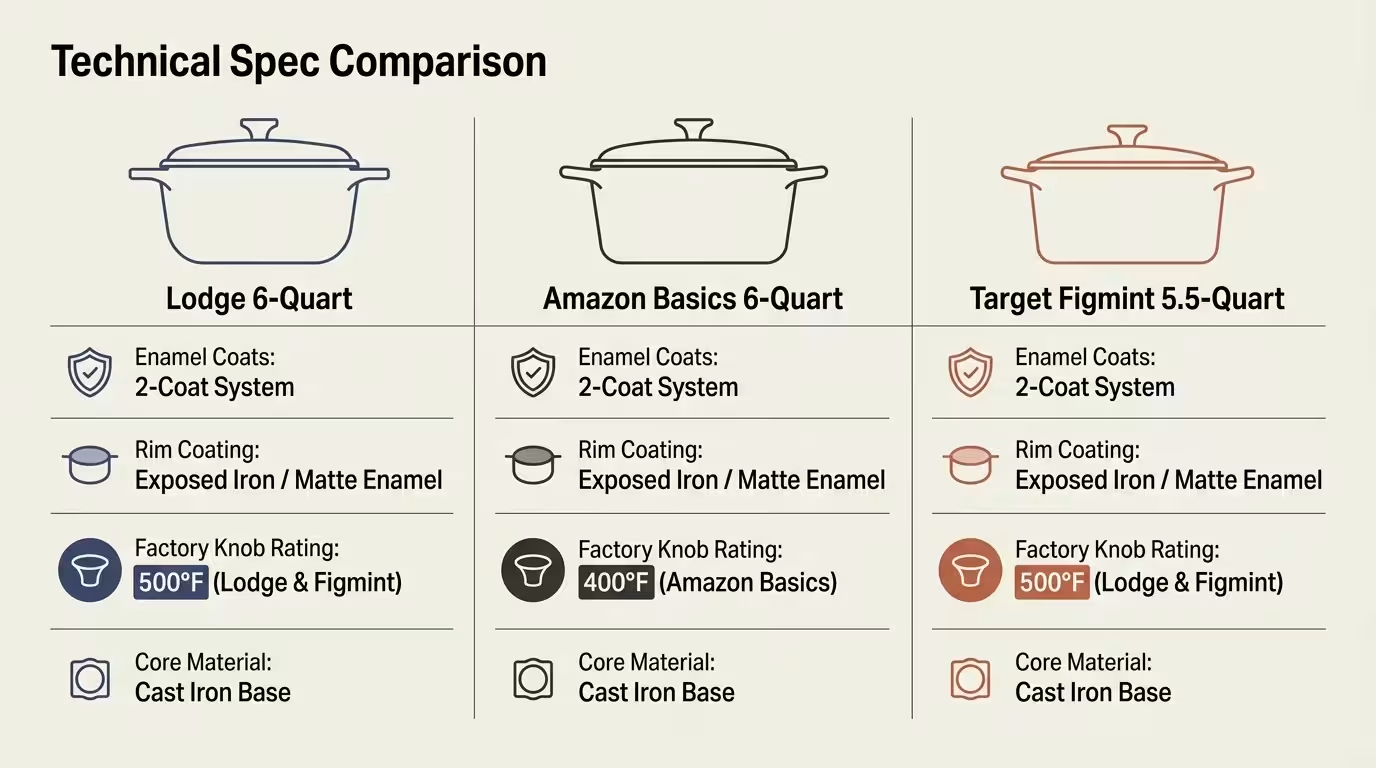
The following table outlines measurable technical attributes across our four evaluated budget vessels. Reviewing these metrics ensures your chosen model matches your specific cooking habits.
| Brand & Model | Retail Price | Capacity | Knob Heat Rating | Rim Protection | Enamel Layers |
|---|---|---|---|---|---|
| Lodge Classic 6-Qt | $60–$80 | 6.0 Quarts | 500°F (Stainless) | Matte Base Coat | 2-Coat System |
| Target Figmint 5.5-Qt | $60 | 5.5 Quarts | 500°F (Stainless) | Matte Base Coat | 2-Coat System |
| Amazon Basics 6-Qt | $50–$65 | 6.0 Quarts | 400°F (Composite) | Minimal Base Coat | 2-Coat System |
| Crock-Pot Artisan 5-Qt | $50–$58 | 5.0 Quarts | 450°F (Stainless) | Minimal Base Coat | 2-Coat System |
When selecting your pot, evaluate your oven usage carefully. If you never exceed 350°F for pot roasts, the Amazon Basics 6-quart model saves you money upfront.
However, if bread baking forms part of your weekly routine, Lodge and Figmint eliminate dangerous hardware failure. Never exceed the manufacturer’s stated knob rating under any circumstances.
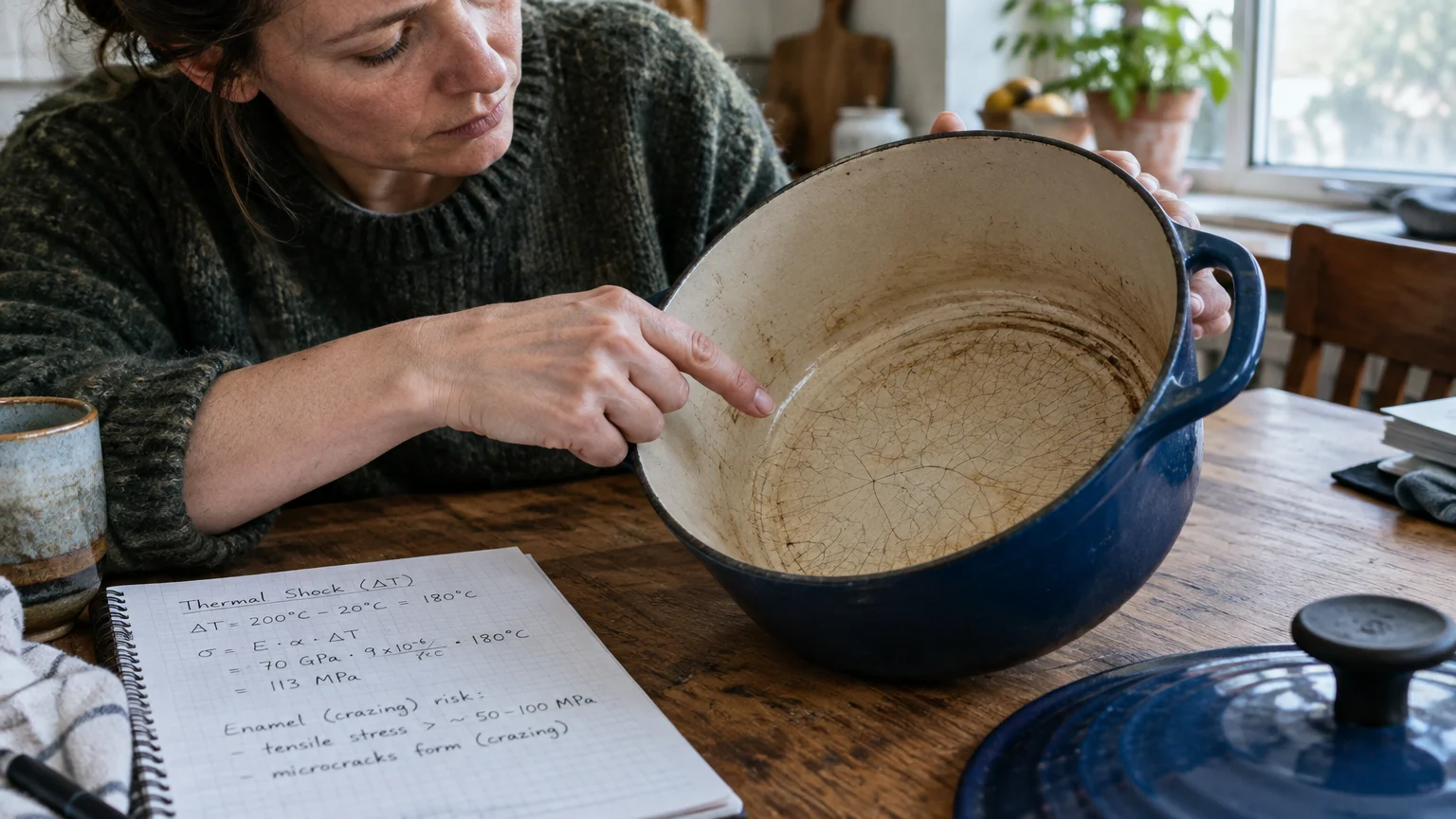
Thermal Shock Worked Example: The Mathematics of Enamel Crazing
Thermal shock represents the primary killer of budget enameled cookware. Understanding how temperature differentials stress glass frit prevents accidental chipping.
Consider a practical kitchen scenario: you preheat a 6-quart cast iron Dutch oven empty at 450°F for 45 minutes to achieve high-heat searing. At 450°F, cast iron expands at a rate of roughly 12 × 10⁻⁶ per degree Celsius.
You then pour 2 cups (473 mL) of cold beef broth directly from a 40°F refrigerator onto the center of the pot. The liquid strikes the floor across an area measuring 4 inches in diameter.
Within 3 seconds, the local interior enamel surface temperature plummets from 450°F to 140°F—a sudden drop of 310°F. The dense underlying iron, however, retains its thermal mass at 420°F.
The thin top glass layer contracts instantly while the hot iron substrate beneath remains expanded. This physical discrepancy generates immense shear stress along the adhesive chemical boundary between glass and metal.
In high-end three-coat cookware, thicker bonding matrices flex slightly under stress. In sub-$80 two-coat systems, this shear stress exceeds the tensile strength of the glass, causing audible popping and micro-crazing.
Within two to three subsequent cooking cycles, those micro-fractures peel away from the iron core. You end up with glass shards inside your food and an unrepairable pot.
To avoid this failure, never add liquids below room temperature to a scorching hot vessel. Warm your stocks in a microwave or small saucepan to at least 120°F before deglazing.
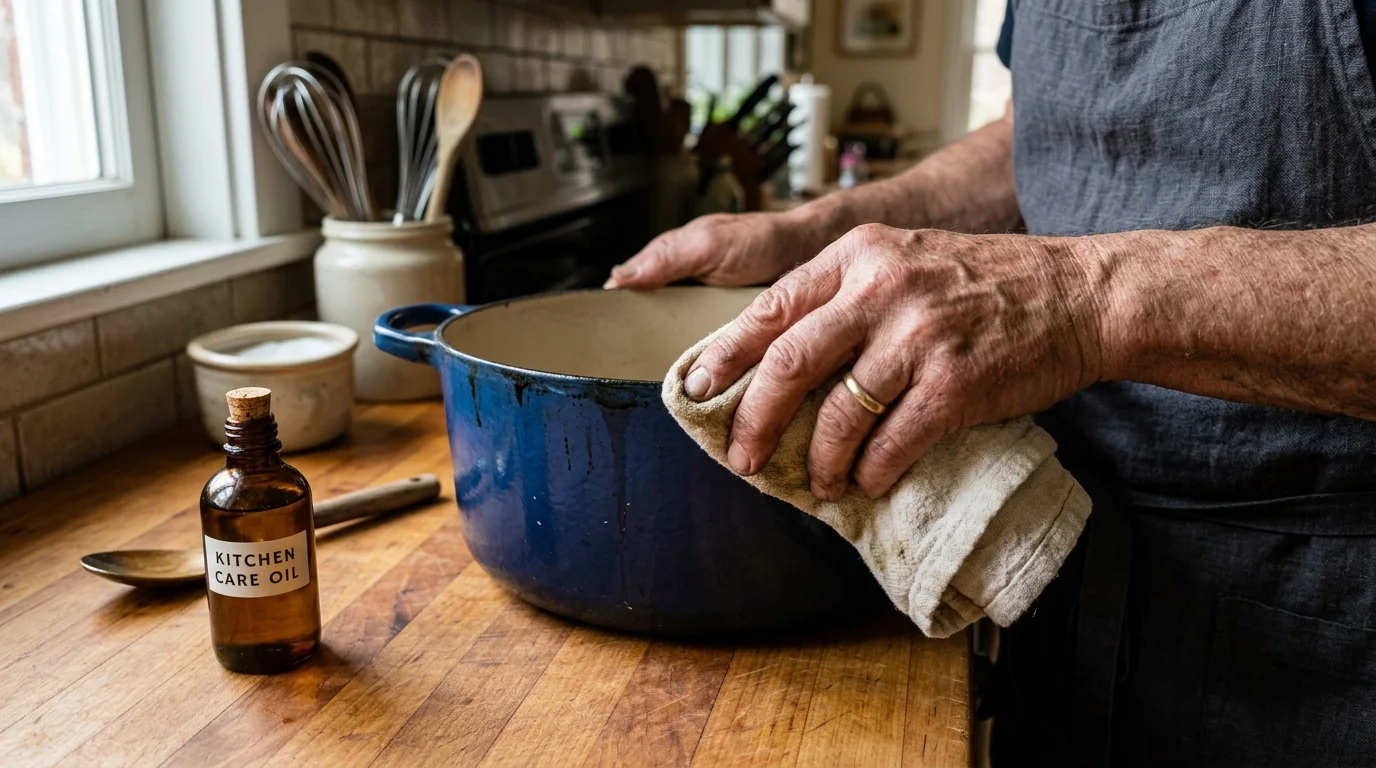
Care Protocols to Stop Rim Oxidation and Surface Damage
Routine care directly dictates whether a sub-$80 pot lasts twelve months or twelve years. Adhering to simple maintenance rules protects the unglazed iron rim and delicate glass lining.
As documented in America’s Test Kitchen evaluations, proper maintenance extends the operational lifespan of budget cookware dramatically. Follow these practical steps after every use:
- Wash exclusively by hand using warm water, mild liquid dish soap, and a non-abrasive sponge.
- Never submerge a hot Dutch oven into a sink filled with cool dishwater.
- Towel-dry the entire pot immediately after rinsing, paying close attention to the raw rim lip.
- Apply three drops of neutral cooking oil to a paper towel and wipe the dark mating rim.
- Store the vessel with plastic lid bumpers installed to allow airflow and prevent edge chipping.
- Avoid using metal spoons, ladles, or whisks that leave gray metal marks and nick enamel.
- Clear burnt fond by simmering water with two tablespoons of baking soda for ten minutes.
Seasoning the exposed rim with a microscopic film of oil repels ambient moisture between kitchen uses. This thirty-second habit completely eliminates orange oxidation rings along your lid flange.
Similarly, plastic lid bumpers prevent glass-on-glass collision when sliding cookware into deep kitchen drawers. Budget enameled cookware rewards gentle handling with decades of reliable cooking performance.
Frequently Asked Questions
Can you bake sourdough bread in a sub-$80 Dutch oven safely?
Yes, provided the vessel features a factory stainless steel lid knob rated to at least 450°F. Pots like the Lodge Classic 6-Quart and Target Figmint 5.5-Quart withstand continuous 500°F baking without degradation.
What should I do if my Dutch oven rim starts showing flash rust?
Scrub the rusty rim gently using a damp nylon sponge dipped in dry baking soda to lift oxidation. Dry the lip thoroughly with a clean cloth and buff a drop of canola oil across the raw edge.
Why did the enamel chip on the bottom of my budget Dutch oven?
Enamel chips primarily due to thermal shock, such as adding cold liquids to hot cookware or preheating an empty pot dry. Mechanical impacts from metal utensils or metal hand mixers can also fracture thin glass layers.
Is a chipped enameled Dutch oven safe to keep using?
If enamel chips along the interior cooking surface, stop using the pot immediately, as microscopic glass flakes can contaminate food. Chips located strictly on the exterior sidewalls or lid exterior present no health hazards.
Disclaimer: Product prices, features, and availability change frequently. Prices shown were accurate at time of writing but may have changed. We may earn a small commission from purchases made through links on this site, at no extra cost to you. Always verify current pricing and specifications on the retailer’s website before purchasing.