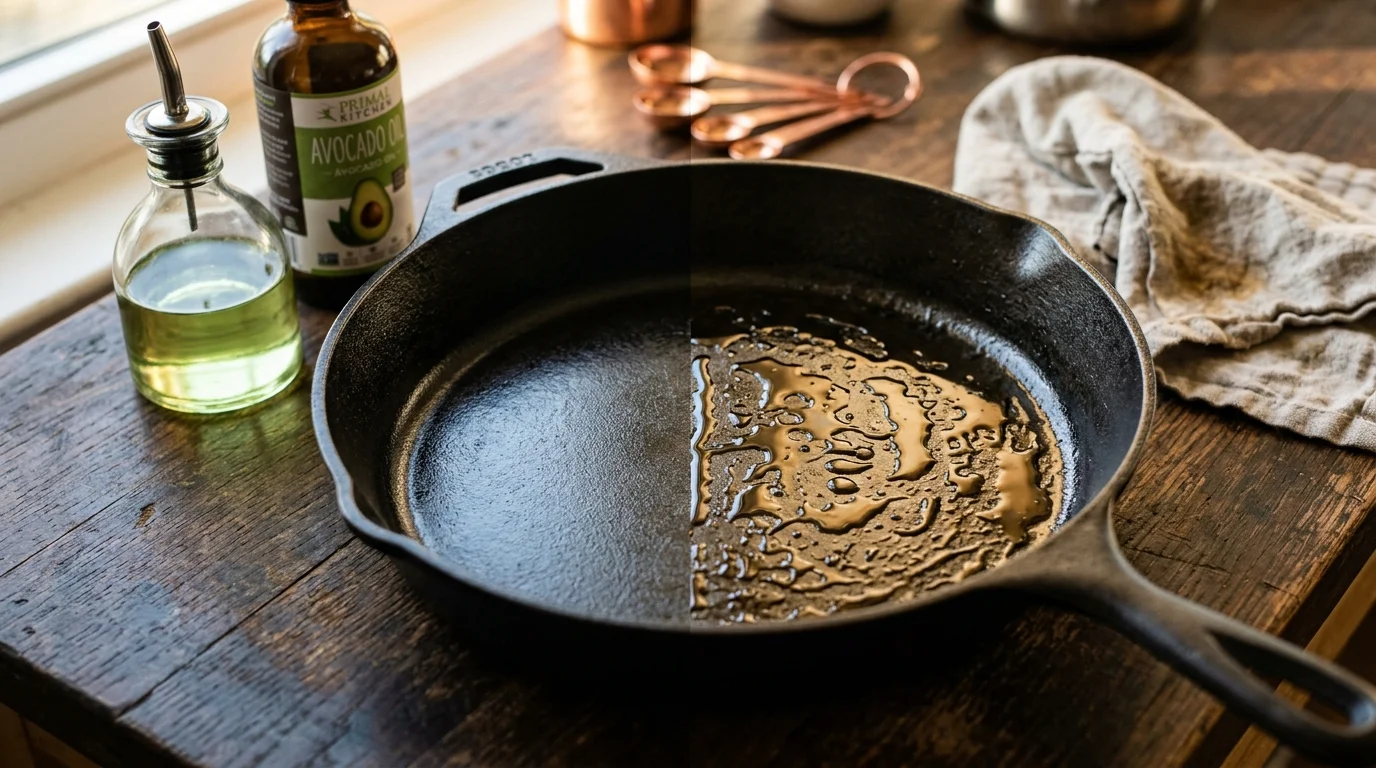
You pull your raw cast iron skillet from the oven, only to discover a gummy, amber film that ruins your dishtowels. That sticky surface means your cooking fat failed to fully polymerize into a slick, hardened barrier.
Whether searing over gas burners or cooking on induction cooktops, understanding fat polymerization ensures your cast iron performs at its best.
Many cooks assume avocado oil’s high smoke point prevents burnt residue, but that exact heat resistance stalls polymerization at normal oven settings. Grapeseed oil cures faster, hardens thoroughly, and eliminates tackiness because of its superior iodine value.
Mastering this simple fat chemistry will permanently fix your sticky skillet and deliver a glassy, resilient surface.
The Science of Polymerization: Why Is Cast Iron Sticky After Seasoning?
Bare cast iron requires a surface that is seasoned—meaning it has built up a protective coating through oil and heat. Without this micro-thin shield, exposed metal reacts with ambient moisture and oxidizes rapidly.
Cooks looking to skip seasoning maintenance altogether can opt for budget-friendly enameled Dutch ovens, which provide heavy heat retention without exposed metal.
While non-porous alternatives like enameled cast iron Dutch ovens bypass this maintenance entirely, bare metal demands thorough polymerization to establish a functional barrier.
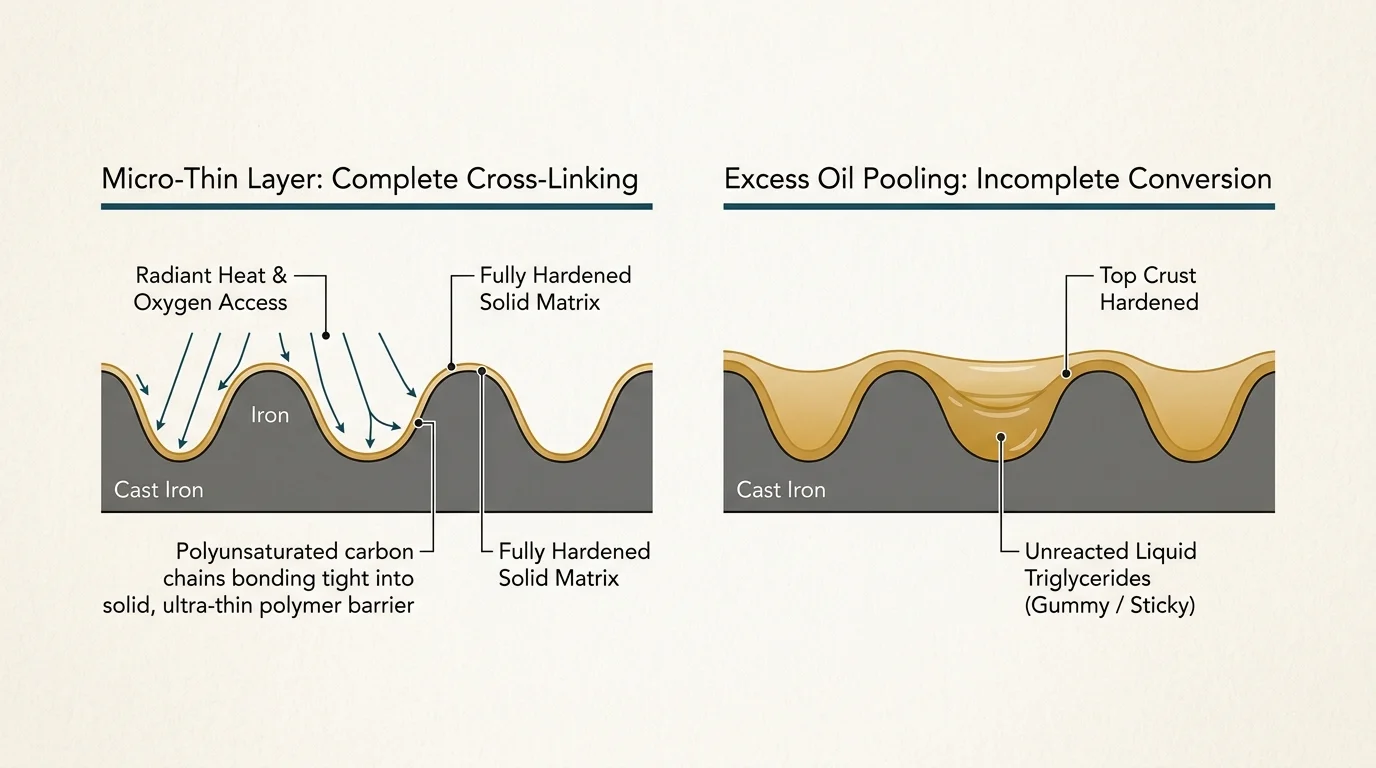
When you ask why is cast iron sticky after seasoning, the answer lies in incomplete chemical conversion. You left unreacted liquid triglycerides sitting on the metal rather than forcing them to cross-link into a solid plastic-like matrix.
Polymerization occurs when intense heat forces polyunsaturated fatty acids to break open their double bonds. These freed carbon chains link with neighboring molecules and bond mechanically to the porous iron surface.
According to Serious Eats, applying excess oil is the most frequent blunder home cooks make during oven seasoning. Thick layers insulate the underlying fat from oxygen and radiant heat, leaving behind a gummy, half-cured grease puddle.
“A sticky skillet is not ruined; it simply holds unfinished chemistry. Heat, ultra-thin oil layers, and time convert tacky grease into glass.”
When an oil layer exceeds microscopic thickness, the outer crust polymerizes while the bottom layer remains liquid. That trapped, viscous grease creates the frustrating tactile tackiness that captures lint, dust, and carbon flakes.
Fatty Acid Profiles and Iodine Values: The Hidden Key to Non-Stick Curing
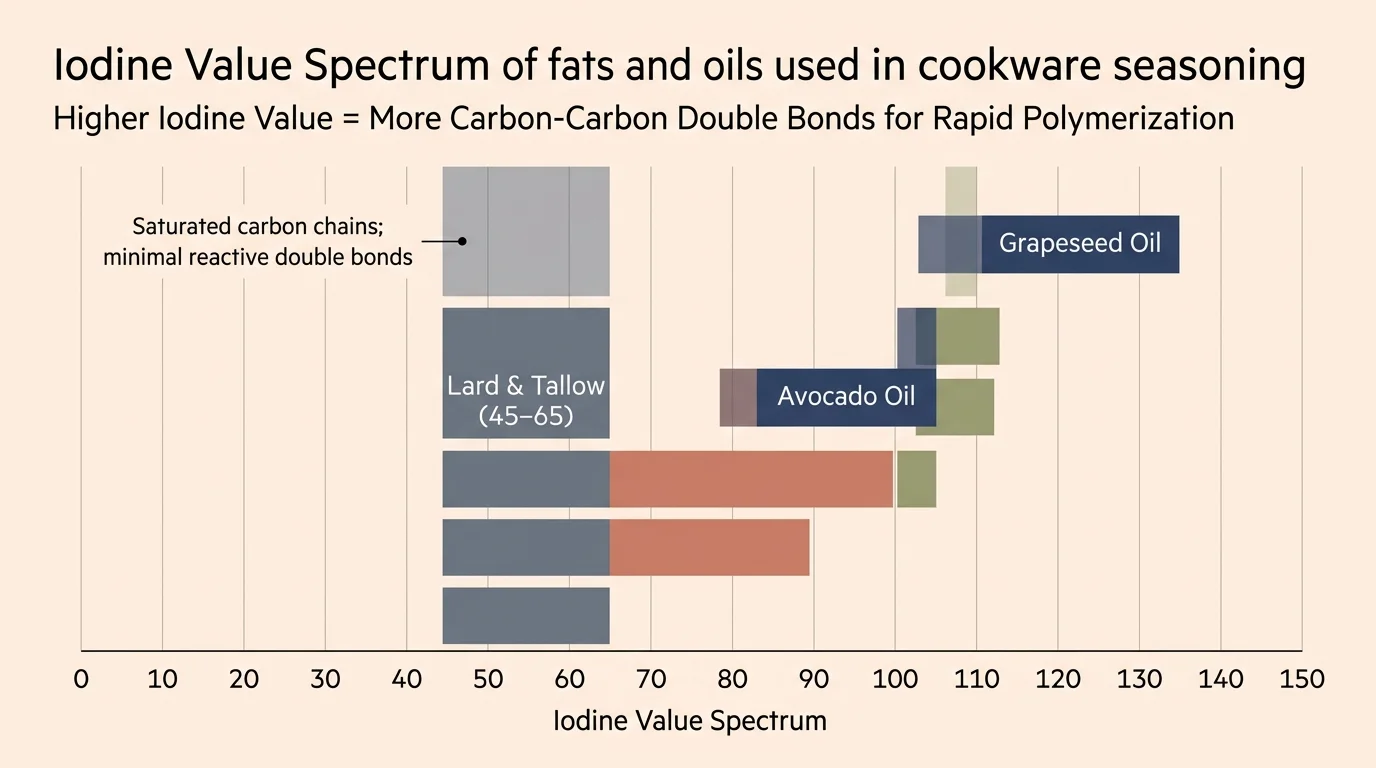
Not all dietary cooking fats possess the chemical structure required to create a smooth, durable pan glaze. The secret lies in a metric called the iodine value, which measures the unsaturation level of fatty acids.
These cross-linking principles are equally vital when seasoning flat cast iron griddle pans, where delicate foods like pancakes require an impeccably smooth release.
These same fatty acid dynamics apply when building a slick cooking surface on carbon steel pans, which rely on identical oil cross-linking to resist corrosion.
Fats with higher iodine values contain more carbon-carbon double bonds. These double bonds serve as reactive docking stations where heat and oxygen initiate rapid molecular cross-linking.
Saturated fats like lard and tallow hold an iodine value between 45 and 65. Because their carbon atoms are completely saturated with hydrogen, they resist cross-linking and produce weak, soft finishes.
Drying oils feature an iodine value above 130, semi-drying oils fall between 100 and 130, and non-drying oils sit below 100. Raw flaxseed oil boasts an iodine value near 180, making it cure exceptionally fast.
However, flaxseed oil cures into an excessively rigid, brittle polymer. Over continuous stovetop heating cycles, extreme thermal expansion causes brittle flaxseed coatings to flake off like dry paint chips.
Semi-drying oils with an iodine value between 120 and 140 hit the functional sweet spot for cookware. They polymerize into a tough, slightly pliable film that expands and contracts alongside the iron substrate.
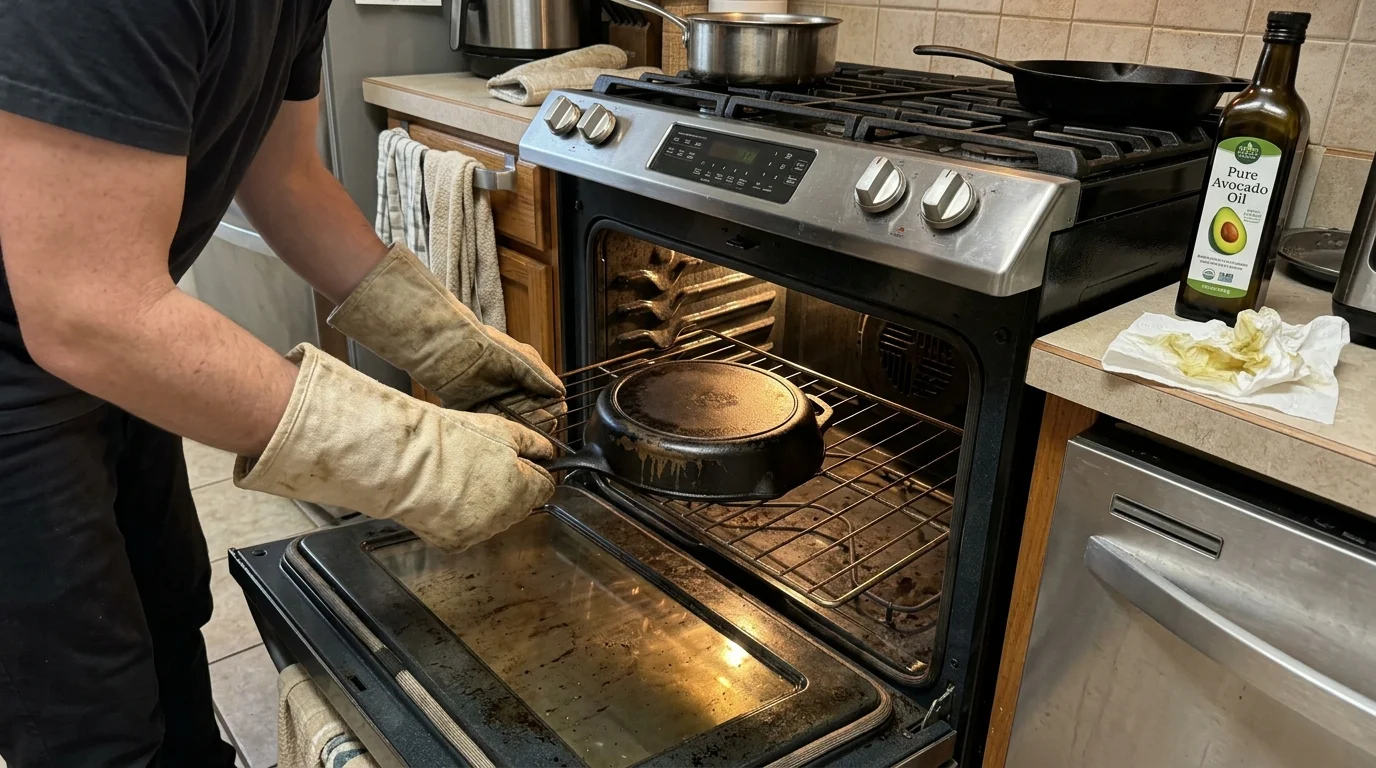
Avocado Oil on Cast Iron: The Smoke Point Paradox
Home cooks frequently turn to avocado oil on cast iron because of marketing claims surrounding high heat tolerance. Refined avocado oil features an impressive thermal smoke point between 500°F and 520°F.
If managing smoke points and seasoning layers feels too tedious, ceramic cookware options provide an easy, non-reactive alternative that requires zero oil curing.
Home cooks discouraged by sticky seasoning hurdles often gravitate toward conventional non-stick pans, though understanding proper oil degradation solves these problems permanently.
Many believe that higher seasoning oil smoke points automatically yield superior non-stick skillet coatings. In reality, this thermal durability creates a frustrating paradox inside domestic ovens.
Polymerization requires baking an oil past its smoke point so that thermal breakdown can generate free radicals. If your oven maxes out at 500°F, refined avocado oil never reaches its full degradation threshold.
Avocado oil consists of roughly 70 percent oleic acid, which is a monounsaturated fatty acid. Monounsaturated chains possess only one double bond, making them sluggish to cross-link compared to polyunsaturated alternatives.
Because domestic ovens rarely reach the 530°F required to decompose avocado oil, the fat fails to transform. It simply bakes into a scorched, viscous varnish that stays permanently tacky to the touch.
You end up with a pan that feels like dried syrup rather than slick black satin. Forcing avocado oil to cure requires commercial furnace temperatures that residential kitchens cannot safely sustain.
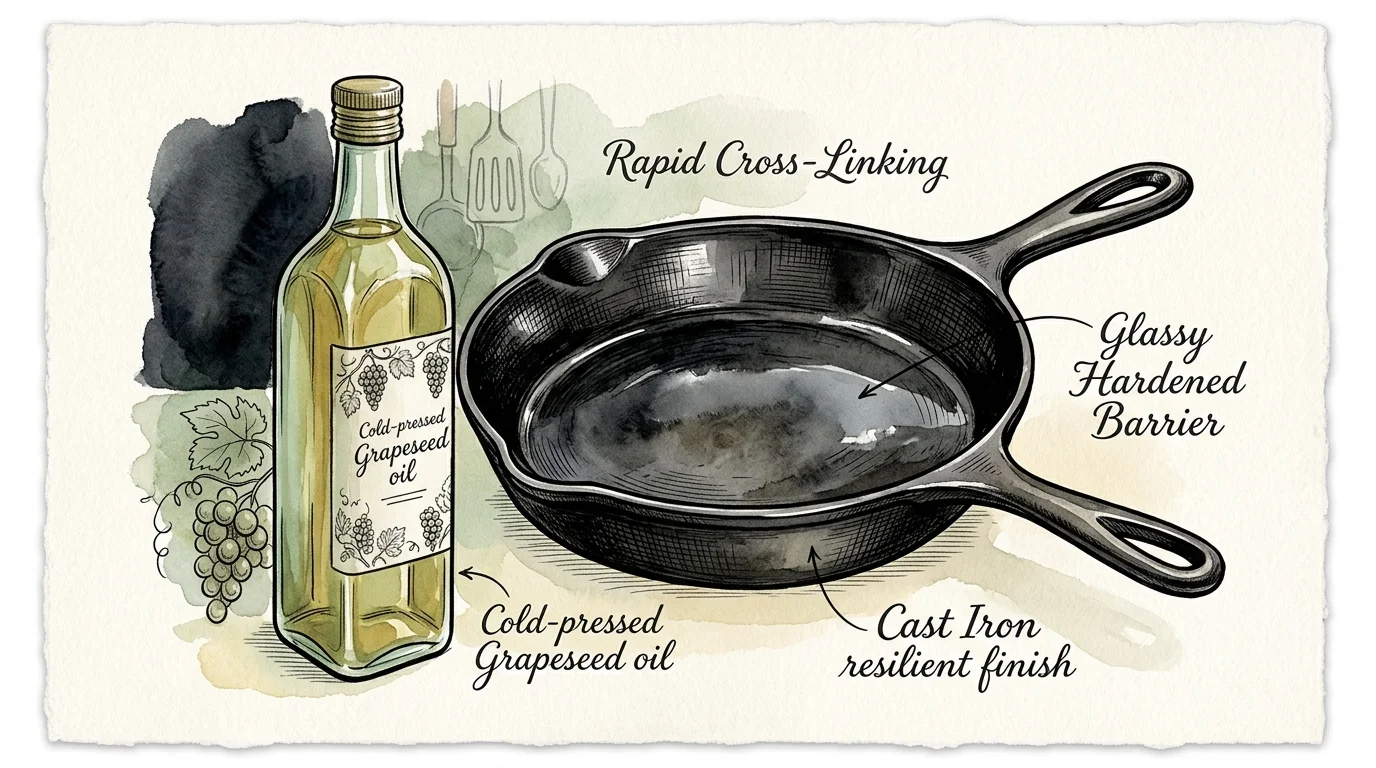
Why Grapeseed Oil Delivers the Superior Hardened Finish
Refined grapeseed oil stands out as the best oil for cast iron grapeseed applications due to its balanced molecular composition. It features a moderate smoke point of 420°F alongside a high concentration of polyunsaturated fats.
A thin grapeseed layer is especially effective on deep-ridged stovetop grill pans, where excess oil easily collects between channels and turns gummy.
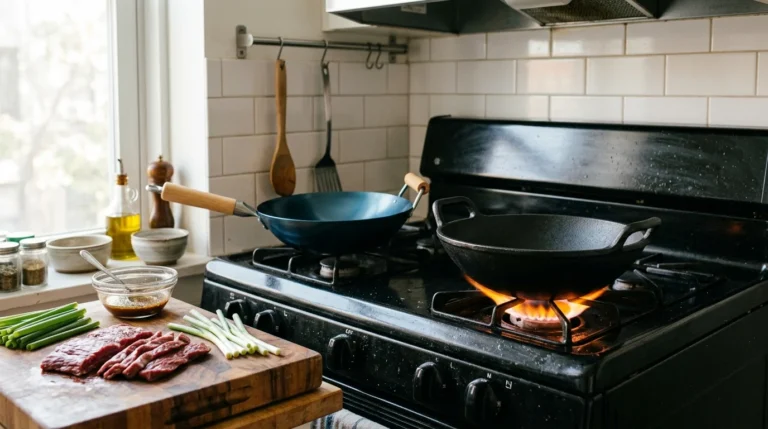
This resilient finish is equally critical when maintaining high-heat specialized vessels like carbon steel and cast iron woks, where incompletely cured fats rapidly burn.
Roughly 65 to 70 percent of grapeseed oil consists of linoleic acid. Linoleic acid contains two carbon double bonds, giving it twice the cross-linking potential of avocado oil’s oleic acid.
Independent cookware evaluations by America’s Test Kitchen highlight neutral polyunsaturated oils as the benchmark for building reliable pan seasoning. Grapeseed oil cures cleanly without emitting the acrid, fishy odor associated with heating flaxseed oil.
When you heat grapeseed oil to 450°F, you push it roughly 30°F past its thermal smoke point. This moderate heat triggers rapid thermal breakdown without scorching the carbon backbone into loose ash.
The resulting polymer is dense, slick, and resilient against acidic ingredients and metal utensils. It creates a bonded foundation that resists chipping, bubbling, and the dreaded sticky aftermath.
Furthermore, grapeseed oil is inexpensive and shelf-stable. You can purchase a 16-ounce bottle for under ten dollars and maintain your entire cookware collection for years.
Comparing Seasoning Performance Across Common Cookware Oils
Evaluating cooking fats by their measurable chemical properties removes guesswork from skillet maintenance. The table below details why specific oils succeed or fail during residential oven seasoning cycles.
When evaluating daily kitchen upkeep, comparing stainless steel versus non-stick cookware helps clarify whether seasoning bare iron fits your cooking style.
Unlike seasoned iron surfaces, preventing food from clinging to unseasoned cookware relies on thermal control—such as learning how to stop sticking on stainless steel through proper pan preheating.
| Oil Type | Smoke Point (°F) | Polyunsaturated Fat (%) | Iodine Value | Minimum Curing Temp (°F) | Tackiness Risk Level |
|---|---|---|---|---|---|
| Refined Grapeseed Oil | 420°F | 68% | 125–140 | 450°F | Very Low |
| Refined Avocado Oil | 520°F | 13% | 80–90 | 535°F | Extremely High |
| 100% Raw Flaxseed Oil | 225°F | 73% | 175–190 | 425°F | Low (High Flaking Risk) |
| Refined Canola Oil | 400°F | 28% | 110–115 | 450°F | Moderate |
| Vegetable Shortening (Crisco) | 360°F | 26% | 95–105 | 425°F | Moderate |
| Rendered Pork Lard | 375°F | 11% | 50–65 | 400°F | High |
The data confirms that successful polymerization requires both an accessible smoke point and a high iodine value. Refined avocado oil fails the tackiness test due to its low iodine value and high thermal ceiling.
Grapeseed oil hits the optimal intersection of these physical metrics. It decomposes predictably at standard kitchen temperatures to build a uniform, micro-thin crystalline coating.
Step-by-Step Stripping and Curing Protocol: A Worked 10.25-Inch Skillet Example
To eliminate gummy buildup permanently, follow this exact worked scenario on a standard Lodge 10.25-inch cast iron skillet. This heavy piece weighs 5.4 pounds and requires precise heat management to cure evenly.
During the stovetop drying phase, using heavy-base skillets designed for uneven burners prevents liquid from pooling on tilted electric coil ranges.
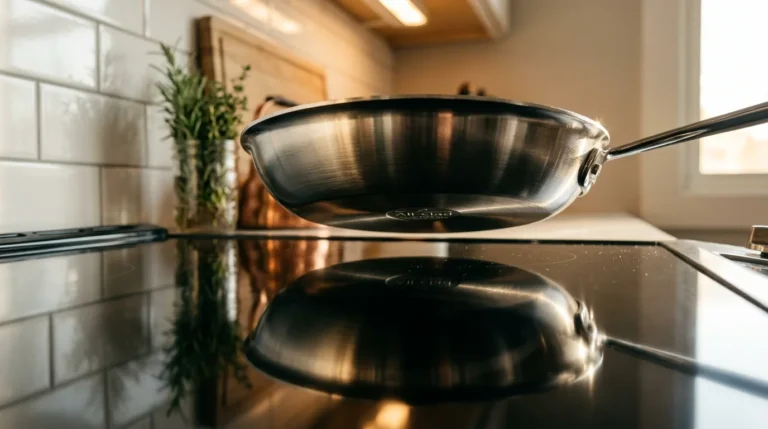
When heating heavy cast iron on modern ranges during drying steps, choose cookware base finishes that will not scratch glass ceramic stovetops to protect your cooking surface.
Begin by stripping away the tacky residue without damaging the base iron casting. Pour 1/4 cup of coarse kosher salt and 1 tablespoon of warm tap water directly into the cold skillet.
Scrub the pan aggressively using a stainless steel chainmail scrubber for 3 to 4 minutes. The abrasive salt crystals slice through sticky, half-cured grease puddles and lift them off the metal pores.
Rinse the pan thoroughly with piping hot water and wash it with a drop of mild liquid dish soap. Dry the skillet immediately using a lint-free cotton bar towel to prevent flash oxidation.
Place the dried skillet on your stovetop over medium-low heat for 5 minutes. This step drives out microscopic moisture trapped deep inside the cast iron pores.
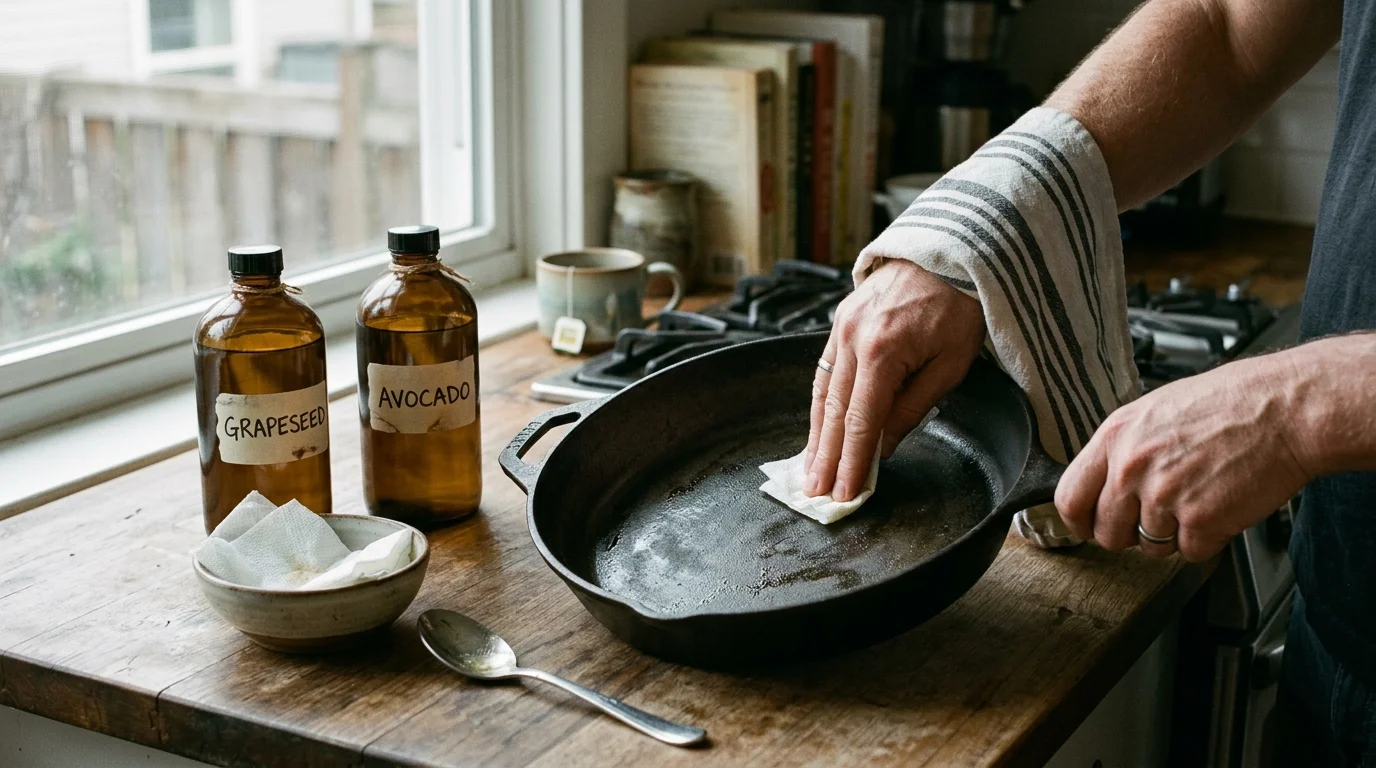
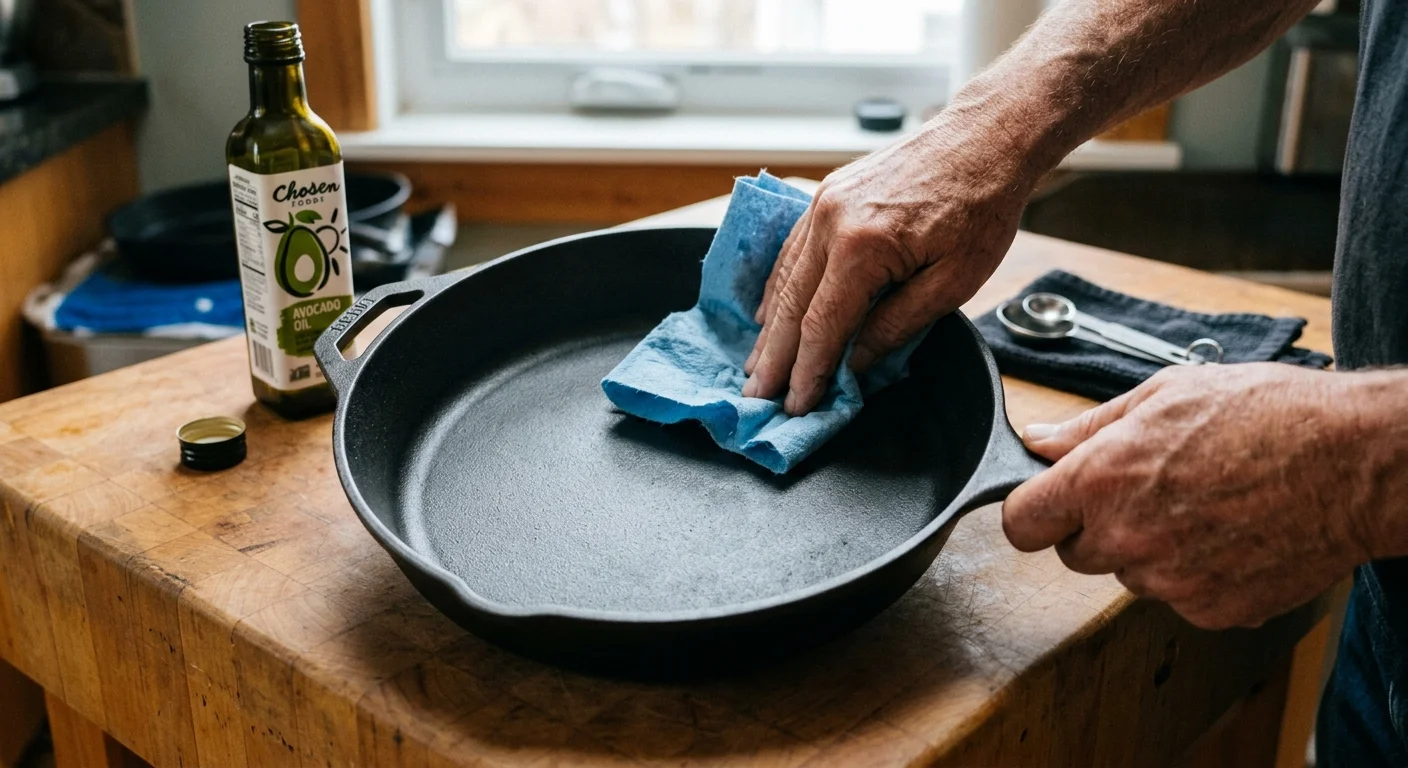
Measure exactly 1/2 teaspoon (2.5 ml) of pure refined grapeseed oil into the warm pan. Distribute the liquid across the interior cooking surface, exterior walls, and helper handle using a blue shop towel.
Now comes the most critical step: grab a second, completely clean blue shop towel. Buff the skillet vigorously until it appears entirely dry and matte, as if you made an error and wiped all the oil away.
“Wipe the pan until you believe there is no oil left on the iron. The remaining microscopic layer is the only volume that can polymerize without turning gummy.”
Preheat your residential kitchen oven to 450°F. Position the skillet upside-down on the middle oven rack to prevent any residual oil from pooling on the cooking floor.
Place a sheet of aluminum foil on the bottom oven floor to catch rare stray drips. Bake the skillet undisturbed at 450°F for 60 full minutes.
Turn the oven off after 60 minutes, but do not open the oven door. Allow the skillet to cool inside the chamber for 120 minutes until the metal reaches room temperature.
Inspect the iron surface under direct lighting. You will discover a hard, slick, satin-bronze finish completely devoid of oily tackiness or sticky towel-snagging residue.
Cast Iron vs. Alternative Cookware: Assessing Maintenance Across Metals
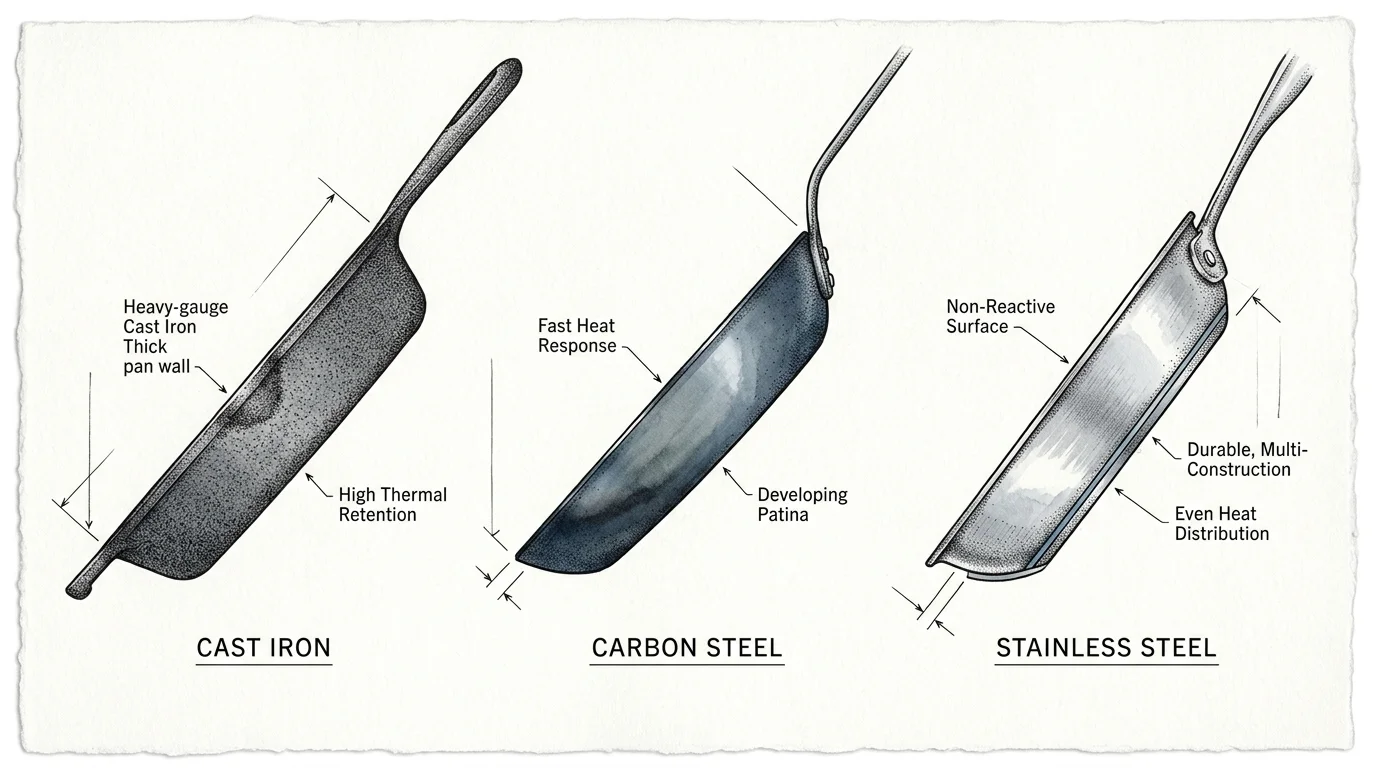
Understanding cast iron requires comparing its material behavior against other popular kitchen metals. Every cookware material offers clear trade-offs between thermal retention, maintenance effort, and non-stick release.
In independent cookware comparisons, Wirecutter highlights that while cast iron requires active seasoning upkeep, it outlasts non-stick pans by decades. If you dislike routine oil management, other cookware alternatives might suit your daily routine better.
Cast iron is famous for exceptional heat retention, but poor heat distribution—meaning how evenly the pan spreads heat across its surface. Because iron is a sluggish thermal conductor, it creates localized hot spots unless properly preheated.
Raw iron features a heavy gauge—meaning the thickness of the metal, where lower numbers mean thicker (and usually better). A standard 10-gauge cast iron skillet holds thermal mass brilliantly for searing thick ribeye steaks.
Cast iron is inherently induction compatible—meaning it works on induction cooktops because it contains magnetic ferrous material. It is also completely oven-safe—meaning it can go from stovetop to oven without damage, often up to 600°F.
If you prefer an effortless slick surface without oil curing, traditional pans rely on PTFE—the chemical name for Teflon-style non-stick coatings. However, PTFE pans degrade rapidly past 500°F and must be discarded every three to five years.
Another low-maintenance option is ceramic coating—a newer non-stick surface made from silica. While non-toxic, ceramic layers lose their food-release performance within twelve to eighteen months of routine searing.
For high-heat searing without sticky oil protocols, consider tri-ply—meaning three layers of metal bonded together for better heat distribution. A premium tri-ply stainless pan pairs an aluminum core with durable steel faces for dishwasher-safe cleanup.
Below is a quick overview of how common cookware categories compare in durability, maintenance, and maximum operating temperatures:
- Bare Cast Iron (e.g., Lodge Classic 10.25-Inch): Exceptional durability; requires grapeseed oil seasoning; oven-safe past 600°F; budget-friendly pricing ($20–$40).
- Enameled Cast Iron (e.g., Le Creuset Signature Skillet): Retains heat like raw iron; requires no oil seasoning; delicate vitreous enamel surface; oven-safe to 500°F; luxury pricing ($180–$250).
- Tri-Ply Stainless Steel (e.g., All-Clad D3 10-Inch): Superior heat distribution; zero seasoning required; dishwasher-safe; oven-safe to 600°F; mid-to-high pricing ($100–$140).
- PTFE Non-Stick Skillet: Effortless food release; fragile chemical coating; hand-wash only; oven-safe to 400°F; disposable three-year lifespan ($30–$60).
Long-Term Maintenance: Cooking Habits That Stop Sticky Buildup
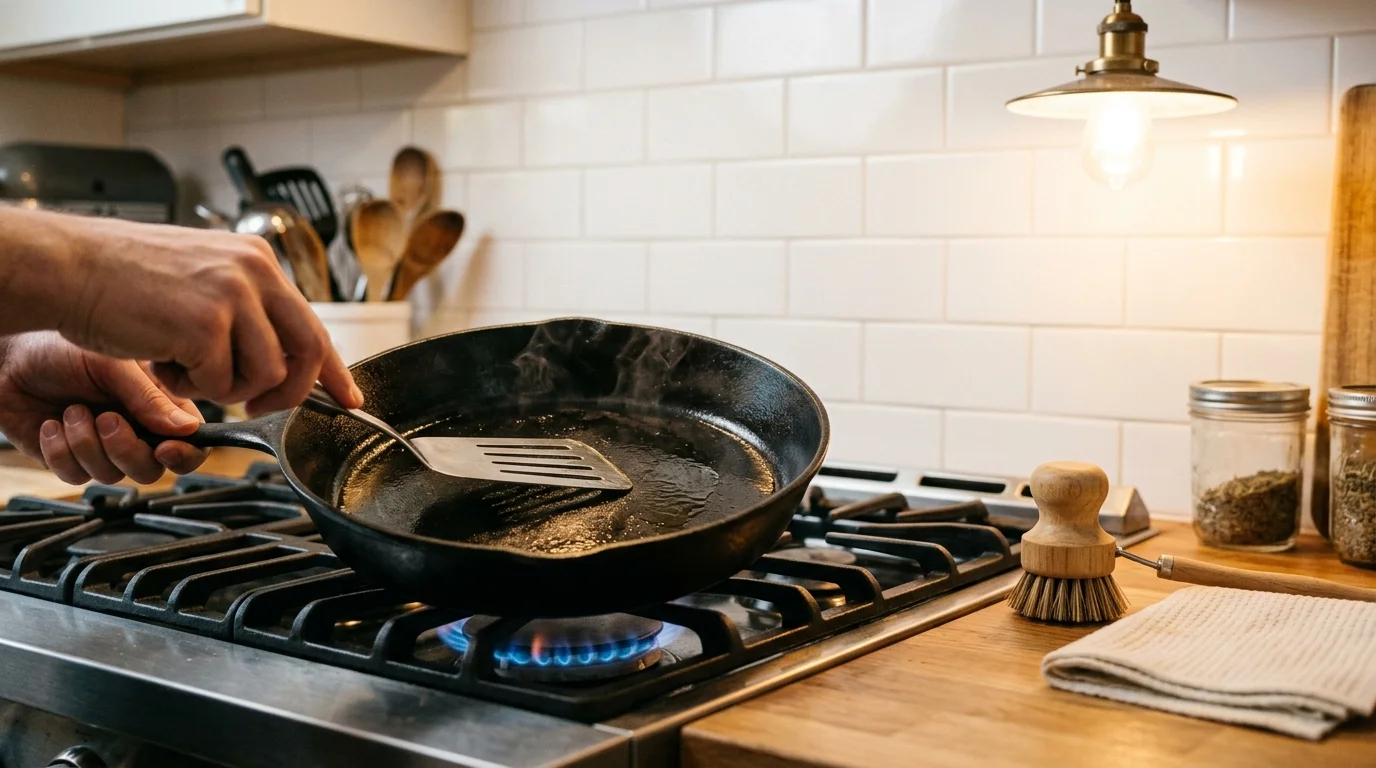
Preventing tacky residue over months of heavy use requires smart daily cooking habits. Your culinary technique matters just as much as your initial oven seasoning routine.
Always preheat your skillet over medium-low heat for 4 to 5 minutes before adding cooking oil. Cold oil added to cold cast iron seeps deep into crevices and polymerizes unevenly during frying.
When cooking fatty proteins like bacon, avoid letting rendered grease pool and cool inside the pan. Cooling bacon fat leaves behind unpolymerized animal fats that quickly turn into sticky amber patches.
Modern dish soaps do not contain harsh lye and will not strip a properly polymerized grapeseed oil finish. Wash your pan promptly using hot water, a sponge, and mild dish soap after cooking.
Never soak cast iron pans submerged in dishwater, and never run them through an automatic dishwasher. Extended water contact oxidizes exposed iron pins and weakens the underlying polymer bonds.
After washing, dry the pan over low stovetop heat for 2 minutes. Apply two drops of grapeseed oil to the warm metal, buff it off completely with a cloth, and store the skillet in a dry cabinet.
Frequently Asked Questions
Can I fix a sticky cast iron pan without completely stripping it?
Yes. If the sticky buildup is minor, place the dry pan upside-down in your oven at 450°F for 60 minutes. The sustained heat will force the uncured liquid oil to complete its polymerization into a hard, non-tacky finish.
Why does flaxseed oil flake off my cast iron after several months?
Flaxseed oil features an exceptionally high iodine value near 180, causing it to cure into a very hard but brittle film. As iron expands and contracts under stovetop heat cycles, the rigid flaxseed polymer cracks and flakes off.
Is refined avocado oil good for everyday searing even if bad for seasoning?
Yes. Refined avocado oil is fantastic for cooking steaks at high heat because its 520°F smoke point prevents scorching. The issue only arises when using it to build a baseline cured seasoning layer inside an oven.
How many layers of grapeseed oil should I apply to raw iron?
Three micro-thin layers provide an ideal protective barrier. Buff away all visible oil before each bake, and heat the pan at 450°F for one hour per layer, allowing complete oven cooling between applications.
Disclaimer: Product prices and availability change frequently. Prices shown were accurate at time of writing but may have changed. We may earn a small commission from purchases made through links on this site, at no extra cost to you. Always verify current pricing on the retailer’s website before purchasing.