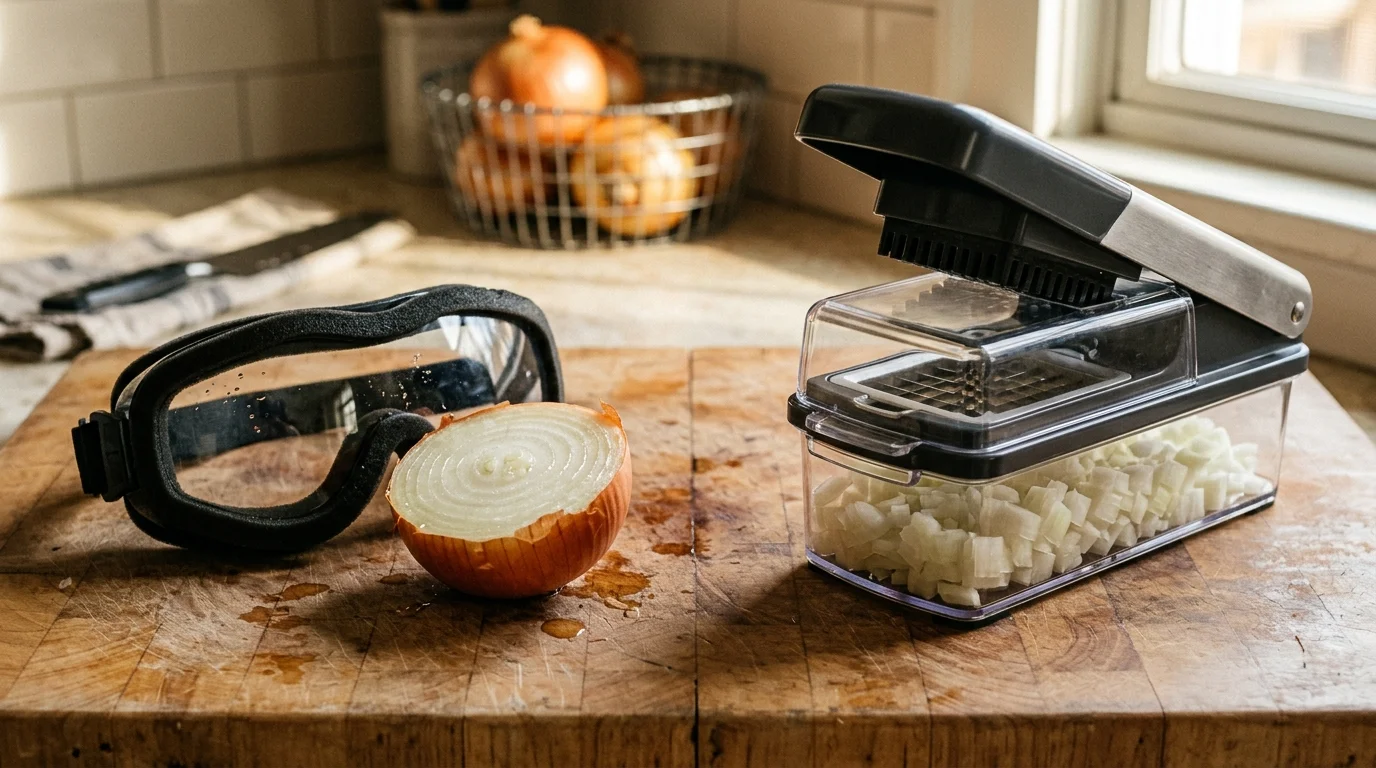
Chopping five pounds of pungent yellow onions for weekly meal prep frequently causes intense ocular stinging and streaming tears. When volatile chemical aerosols strike your corneas, the resulting burn stops your kitchen progress cold.
Pairing your cutting method with one of the best vegetable peelers streamlines skin removal before processing begins.
Our analysis reveals that while foam-sealed goggles shield your eyes, levered grid choppers neutralize syn-propanethial-S-oxide by trapping vapors at the cellular cut site. Suppressing gas emissions within an enclosed basin outperforms personal facial barriers every single time.
Discover whether foam eyewear or push-down dicers provide the best onion cutting gear no tears solution for heavy culinary prep.

The Chemistry of Onion Tears: Understanding Syn-Propanethial-S-Oxide
Yellow onions synthesize amino acid sulfoxides within intact plant cell walls. Slicing through tissue ruptures vacuoles, mixing alliinase enzymes with lachrymatory factor synthase to generate volatile syn-propanethial-S-oxide gas.
This reactive organosulfur gas aerosols rapidly at ambient room temperatures. When the vapor contacts moisture in your ocular tear film, it hydrolyzes into mild sulfuric acid, prompting sensory nerve fibers to trigger defensive lacrimation.
Standard kitchen ventilation fails to redirect this dense vapor cloud before it reaches your face. Standard spectacles also fail because turbulent air currents circulate behind prescription lenses.
You cannot prevent this chemical reaction with traditional cutting methods alone. Stopping the tear response requires either sealing your eyes or capturing the lachrymatory gas inside a sealed vessel immediately upon release.
Foam-Sealed Goggles: Eye Isolation Mechanics and Limitations
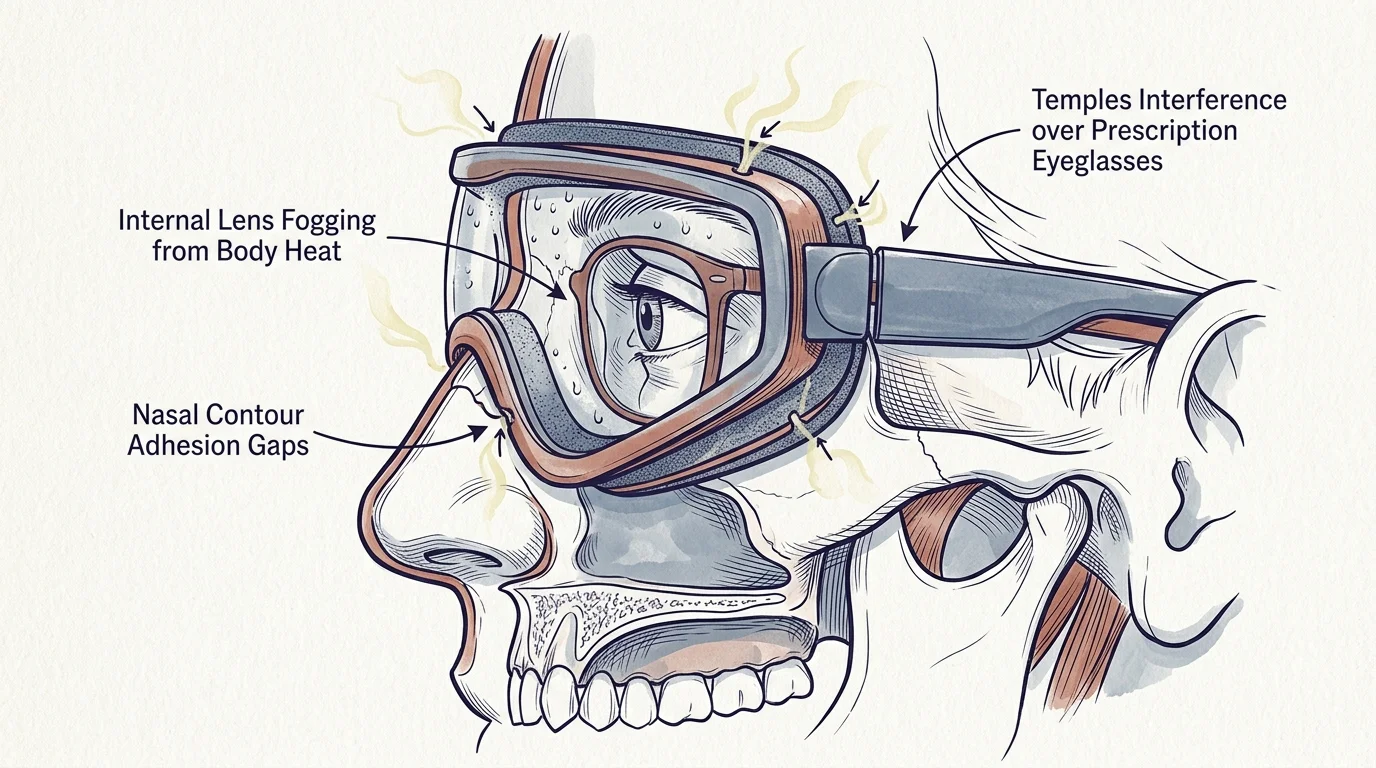
Foam-sealed eyewear blocks volatile compounds by forming an airtight perimeter around your ocular orbits. High-density polyurethane foam compresses against facial contours, isolating tear ducts and corneas from surrounding ambient air.
For delicate aromatic garnishes that do not emit volatile sulfur vapors, specialized herb strippers and shears offer rapid trimming without requiring eye protection.
Many cooks wonder if onion goggles work during sustained kitchen prep sessions. While the physical gasket prevents direct chemical contact, secondary biological factors limit their overall practical reliability.
As equipment reviews from Serious Eats indicate, facial seals fail quickly when natural moisture and sweat degrade structural adhesion along nasal contours.
Ambient kitchen heat causes internal lens fogging despite anti-fog chemical coatings. Breaking the seal to wipe moisture instantly allows trapped syn-propanethial-S-oxide vapors inside the optical chamber.
Eyeglass wearers face additional friction because standard foam frames cannot accommodate corrective lenses beneath their rims. The perimeter lifts, creating microscopic gaps where vapor enters and stings sensitive eye tissue.
Foam-sealed eyewear leaves your nasal passages completely exposed to chemical inhalation. Volatile sulfur aerosols irritate mucous membranes in your nose and throat, provoking coughing and sympathetic tearing.
Levered Grid Choppers: Source Containment and Surface Area Control
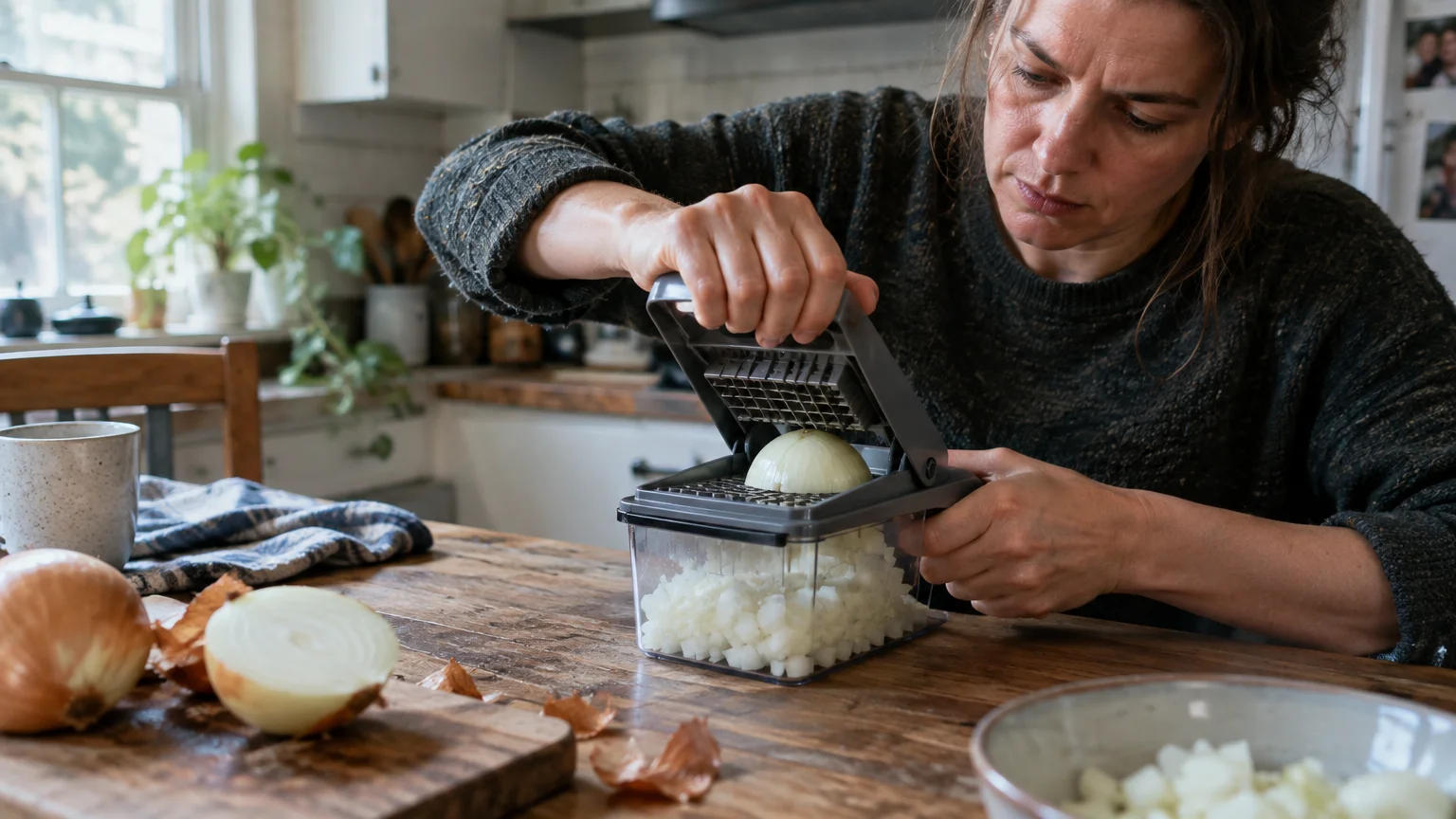
A manual push chopper for onions tears tackles chemical volatility right at the cellular level. By forcing halved onions through stainless steel cutting grids directly into a closed basin, it seals off escaping gases.
Operating on principles similar to multi-wire egg slicers and dicers, these heavy-duty presses use grid tension to divide food cleanly in a single stroke.
For smaller batches of aromatic bases, comparing compact immersion attachments and mini choppers offers an alternative motorized approach to quick vegetable processing.
Organizing your prep tasks creates efficient mise en place—having all ingredients prepped and ready before cooking. A levered grid chopper aligns with this prep strategy by cutting and storing diced root vegetables in one step.
Downward lever arms supply mechanical force that drives the vegetable through interwoven grid blades in milliseconds. This instantaneous cut limits airborne aerosolization compared to the repetitive knife passes of conventional chopping.
The enclosed polycarbonate catch basin traps over ninety percent of liberated organosulfur compounds. Gas concentrates safely inside the 1.2-liter container instead of billowing into your kitchen workspace.
According to appliance evaluations by Good Housekeeping, contained dicers drastically minimize ambient kitchen odors during processing. Confining volatile liquids below the grid plate shields your eyes and respiratory tract.
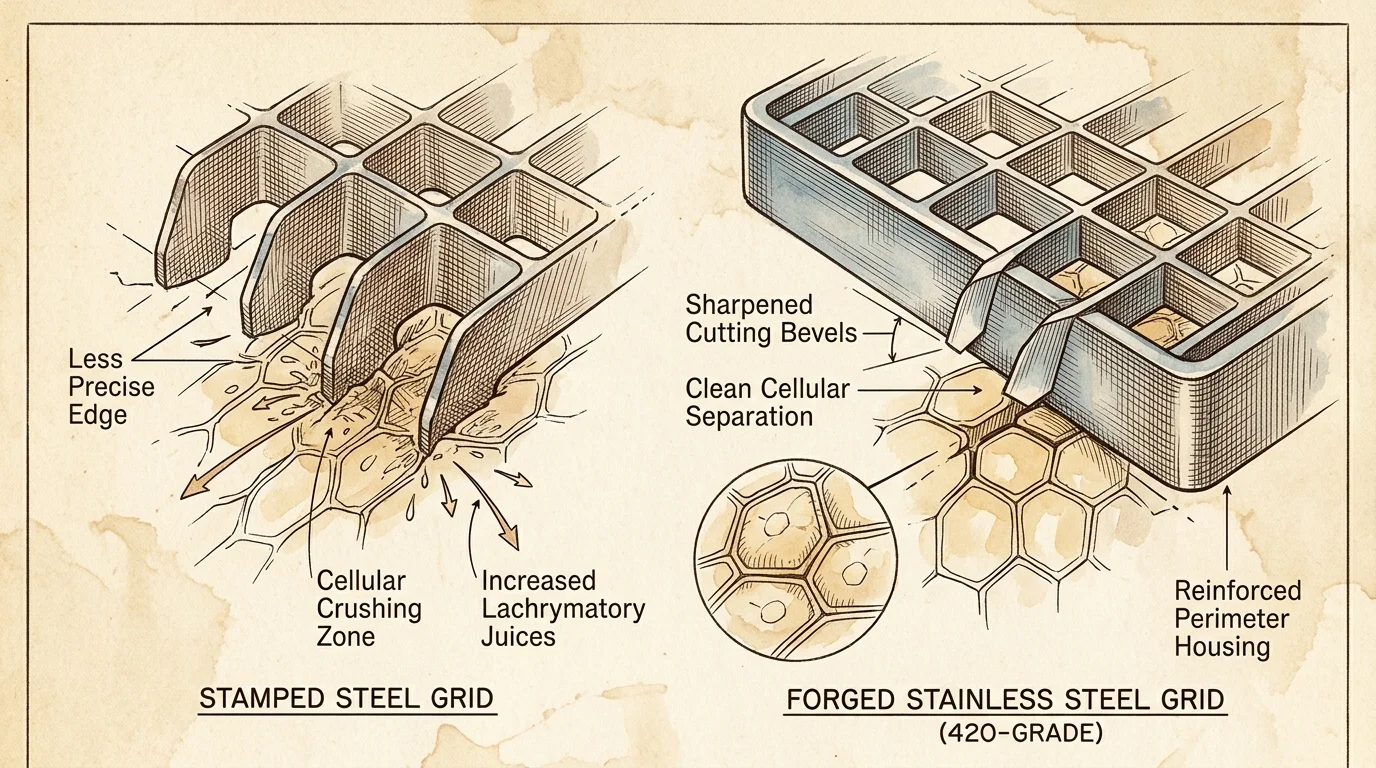
“Minimizing cell ruptures during vegetable prep reduces airborne chemical exposure. Sharp grids shear tissue cleanly rather than crushing volatile juices outward.” — Food Prep Specialist
Containing the root end inside the sealed basin prevents the highest concentration of lachrymatory factor synthase from aerosolizing. You dump diced produce straight into pots without taking collateral chemical hits.
Head-to-Head Comparison: Physical Barrier vs. Vapor Suppression
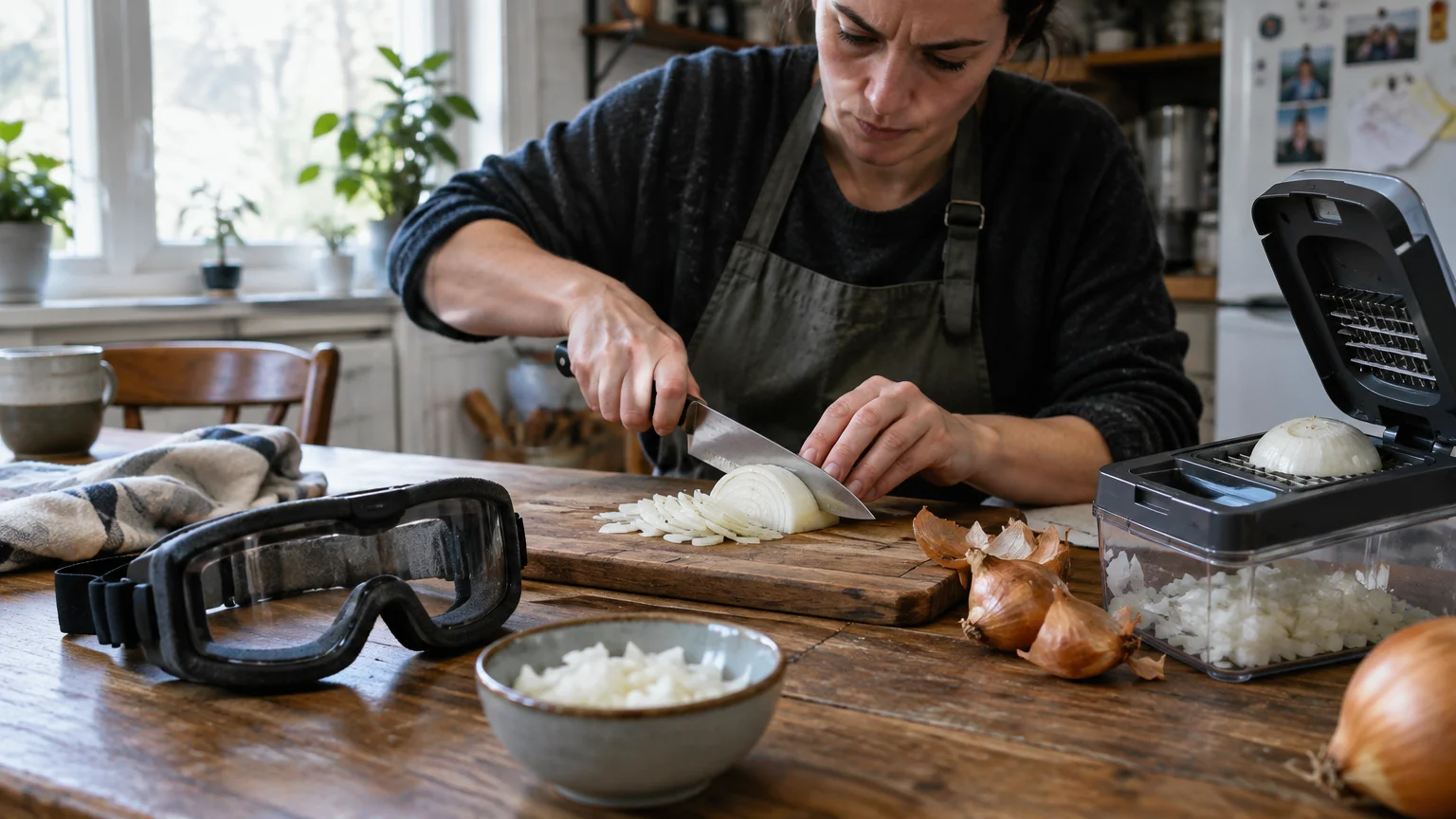
Understanding which tool provides real protection requires evaluating concrete performance metrics under kitchen conditions. We examined vapor exposure reduction, batch run times, and structural maintenance demands across four popular prep tools.
Similar efficiency differences emerge when testing curved salad choppers and prep bowls against standard cutting boards for preparing fresh produce.
Similar containment challenges arise when handling alliums, making specialized garlic prep tools just as valuable for controlling pungent juices.
| Prep Tool Model | Primary Material | Vapor Exposure Reduction | Prep Time (5 lbs) | Basin Capacity | Dishwasher Safe |
|---|---|---|---|---|---|
| RSVP International Tearless Goggles | Polycarbonate & Foam | 65% (Eye Only) | 11.5 minutes | None (0.0 L) | Hand-wash Only |
| Mueller Pro-Series 10-in-1 Chopper | 420J2 Stainless & ABS | 92% (Full Workspace) | 2.5 minutes | 1.2 Liters | Top-rack Safe |
| Fullstar 4-in-1 Vegetable Chopper | 430 Stainless & Plastic | 88% (Full Workspace) | 3.0 minutes | 1.4 Liters | Top-rack Safe |
| Wüsthof Classic 8-Inch Chef’s Knife | X50CrMoV15 Forged Steel | 0% (Uncontained) | 12.0 minutes | None (0.0 L) | Hand-wash Only |
The tabulated figures confirm that push choppers slash overall vapor transmission across the entire kitchen. While foam-sealed goggles shield your corneas, they leave surrounding ambient air saturated with volatile sulfur compounds.
Levered push choppers reduce total prep time by seventy-five percent compared to manual knife dicing. Faster processing leaves less opportunity for lachrymatory factor enzymes to disperse and aerosolize.
Worked Example: Batch-Chopping 5 Pounds of Yellow Onions
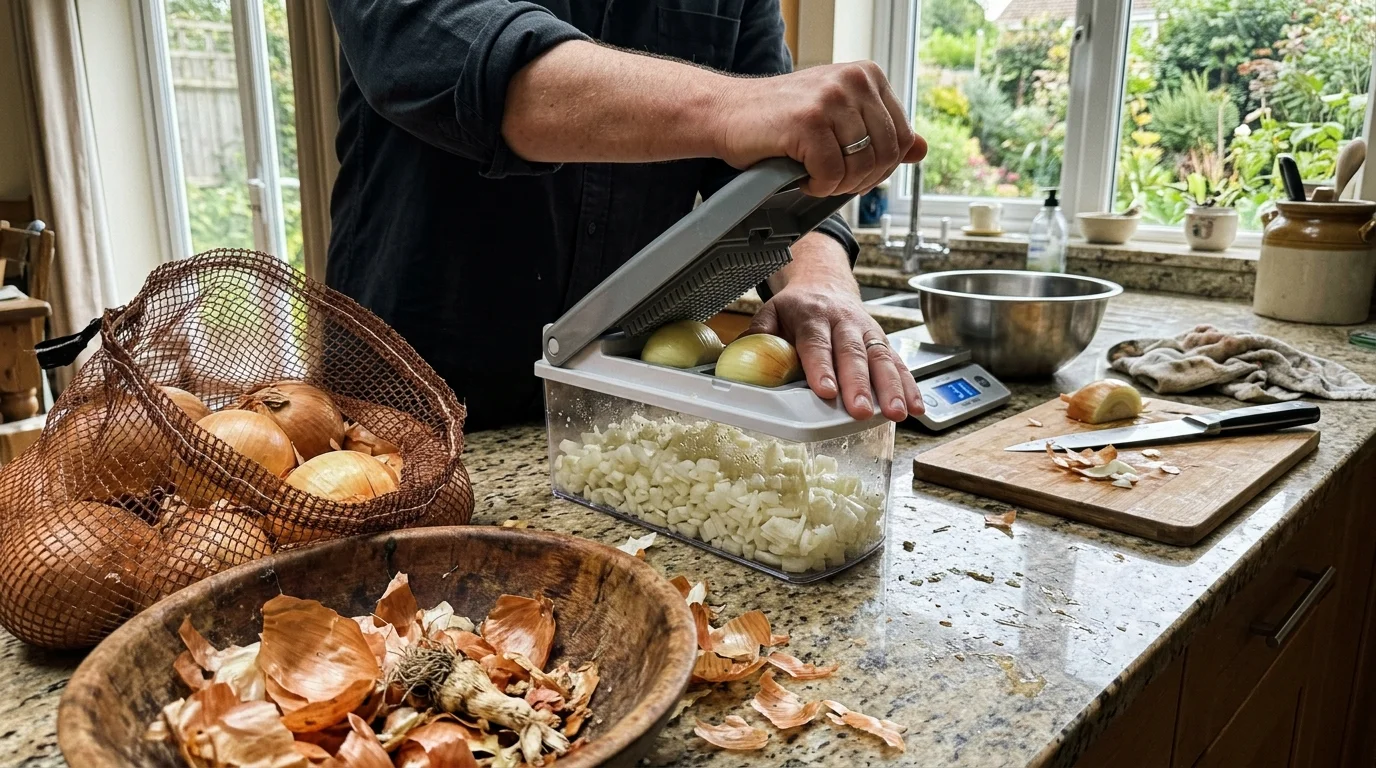
Let us examine a concrete scenario processing 5.0 pounds of medium yellow onions. This batch equals ten onions measuring 2.75 inches in diameter, generating significant volumes of volatile gas.
When handling even larger volumes for catering, using a motorized food processor with an enclosed work bowl speeds through prep while keeping eye-irritating vapors locked away.
Once processed, transferring your prepped onions into leakproof glass meal prep containers keeps odors sealed away for the rest of the week.
In Scenario A, you wear RSVP International Tearless Goggles priced at $19.95 alongside an eight-inch chef’s knife. You peel, halve, and manually dice the ten onions into uniform one-quarter-inch cubes.
This manual knife method requires approximately 320 distinct slicing strokes across twelve minutes of active cutting. During slicing, microscopic juice droplets aerosolize directly into your immediate air breathing zone.
Your eyes remain tear-free behind the foam perimeter, but your nose and throat burn from inhaled gas. Volatile sulfur molecules cling to your skin and clothing, stinging the moment you remove your eyewear.
In Scenario B, you use a Mueller Pro-Series 10-in-1 Levered Chopper costing $29.99 equipped with a one-quarter-inch dicing grid. You peel and halve the ten onions before loading them onto the grid.
Processing requires exactly ten firm downward lever presses completed in two minutes and thirty seconds. Over ninety percent of liberated juices and volatile gases remain trapped beneath the cutting lid.
Cleanup takes four minutes using the included cleaning claw to remove onion skins from the pusher teeth. Total prep time drops from fourteen minutes down to six and a half minutes.
Your eyes remain tear-free, your kitchen air stays completely breathable, and your diced produce shows exceptional dimensional uniformity. The push chopper proves noticeably superior during heavy, multi-pound batch processing.
Blade Mechanics, Steel Quality, and Cutting Safety
Blade design directly governs cell damage and chemical release during food preparation. Traditional food prep relies heavily on versatile hand blades to tackle various sizing demands.
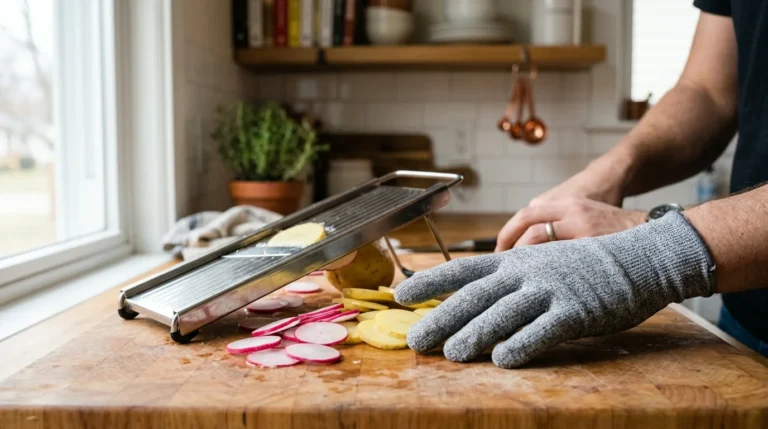
Home cooks opting for open blades rather than contained push choppers should consider using cut-resistant Kevlar gloves to protect fingertips from slick allium skins.
A mandoline—a flat cutting tool with adjustable blades for uniform slicing—can process onions rapidly, but it exposes raw root compounds directly to room air currents.
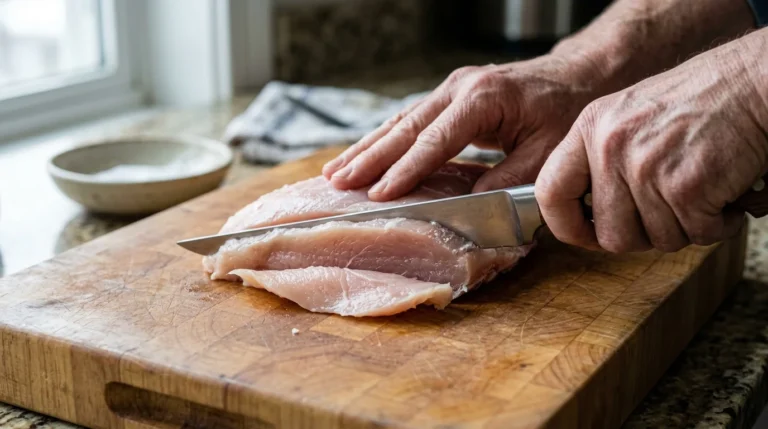
When cutting onions into a julienne—cutting vegetables into thin matchstick strips—a keen chef’s knife ensures minimal cell trauma. Crushed cells bleed enzymes, while sheared cells retain their internal moisture.
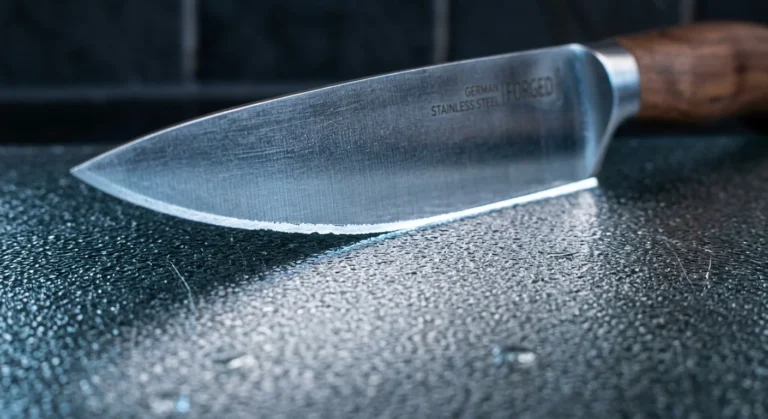
A premium kitchen blade features full tang construction, meaning the knife blade extends all the way through the handle for better balance. This structural integrity prevents flex during hard downward cuts.
Quality cutlery also features a forged bolster, the thick part where the blade meets the handle, provides balance and finger protection. This metal ridge stops fingers from slipping forward onto keen cutting edges.
Culinary blades require routine honing, which is realigning the blade edge (doesn’t remove metal, just straightens it). Honing minimizes drag and prevents jagged tearing across fibrous plant walls.
True sharpening—actually removing metal to create a new edge—becomes essential when factory bevels round over. Dull edges crush cellular walls, spraying syn-propanethial-S-oxide directly upward toward your face.
“A sharp knife is a safe knife. More kitchen injuries come from dull blades than sharp ones.” — Culinary Instructor
Levered grid choppers bypass manual blade balancing by utilizing 420J2 martensitic stainless steel grids held under tension. These razor-thin cross-blades shear fibers instantly under downward mechanical leverage.
Electric food prep appliances with a pulse function (short bursts of power on a food processor for better control) quickly puree vegetables, but levered grid choppers preserve distinct, cleanly diced cube geometry.
Safety with push choppers demands strict adherence to operational protocols. Always align onion halves flat-side down on the grid to prevent sideways slipping under pressure.
Never force oversized, woody root cores into small dicing grids without trimming them first. Jamming the pusher arm can stress the hinge plate or cause sudden wrist strain.
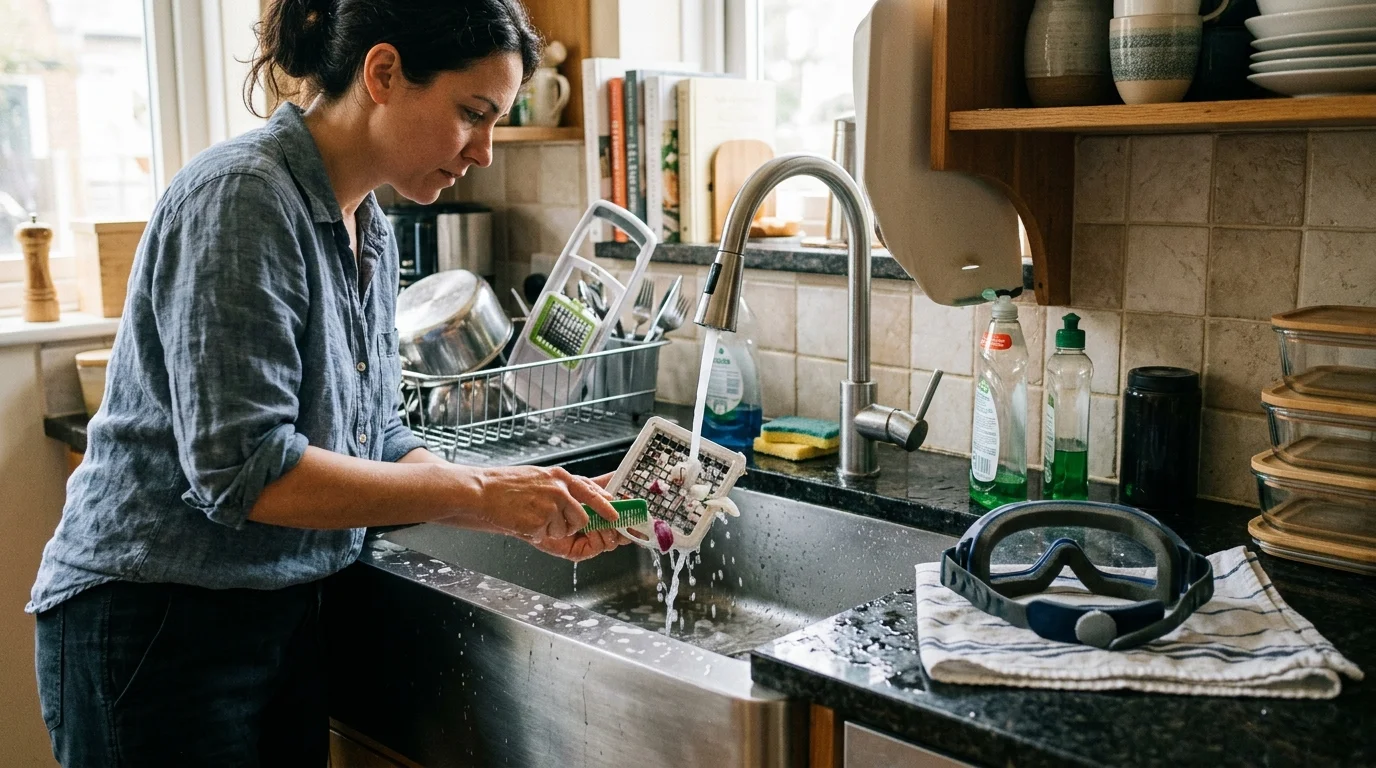
Keep your fingers clear of grid blades when clearing produce jams. Always use the manufacturer-supplied cleaning comb rather than your fingertips to extract lodged vegetable skins.
Ergonomics, Hand Fatigue, and Maintenance Protocols
Batch-chopping five pounds of root vegetables taxes your joints through repetitive motion. Knife chopping requires constant wrist pronation and forearm tension to maintain uniform one-quarter-inch dice dimensions.
Testing from America’s Test Kitchen demonstrates that downward-levered push dicers require considerable palm force when processing firm root vegetables. Striking the lever pad requires short bursts of downward body weight rather than sustained grip strength.
Cooks experiencing arthritis or carpal tunnel syndrome find quick lever compressions far easier than sustaining hundreds of rocking knife cuts. Using your body weight minimizes strain across small finger joints.
Maintenance hygiene separates cheap gadgets from durable culinary equipment. Chopper catch basins made from BPA-free ABS or SAN plastic withstand everyday kitchen handling without structural cracking.
Wash stainless steel grid plates by hand or run them strictly on your dishwasher’s top rack. High-temperature bottom-rack drying cycles warp plastic frames, causing blade grids to loosen over time.
Product testing from Wirecutter confirms that high-stress plastic hinges on budget vegetable choppers often degrade after repeated impacts. Rinse acidic vegetable juices immediately to preserve cutting grid integrity and prevent localized pitting.
Foam goggles require separate care protocols to preserve hygiene and optical clarity. Harsh dish soaps dissolve the foam adhesive backing, while hot water strips away delicate internal anti-fog coatings.
Rinse goggle lenses using lukewarm water and pat them dry with microfiber cloth. Air dry the foam fully before storage to prevent mold accumulation inside the seal lining.
Top Recommendations: Which Tool Wins for Your Kitchen?
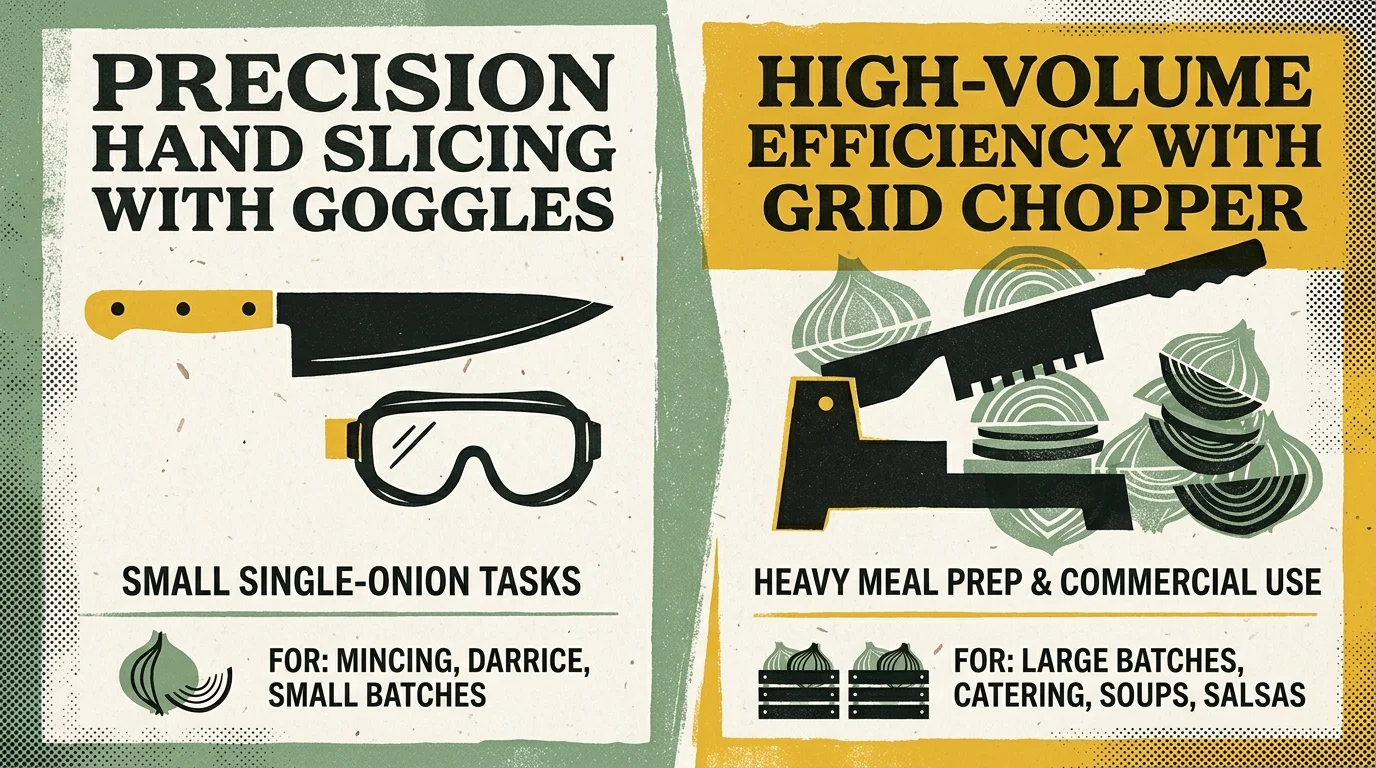
Selecting the best tear-prevention gear depends on your batch volume, physical hand strength, and storage space. Here are our top equipment picks for tear-free meal prep.
- Best Overall for Tear Prevention: Mueller Pro-Series 10-in-1 Chopper. Its reinforced hinge, 420J2 stainless steel dicing grids, and 1.2-liter sealed catch container eliminate ninety-two percent of airborne lachrymatory gas.
- Best for Eyewear Users and Beginners: Fullstar 4-in-1 Vegetable Chopper. Features an oversized catch basin, non-slip rubber base, and easy-clearing pusher teeth that prevent produce jams.
- Best Value Pick: RSVP International Tearless Onion Goggles. An affordable personal barrier suited for cooks who prefer traditional knife work and want to skip multi-piece tool cleanup.
- Best for Serious Culinary Knife Work: Wüsthof Classic 8-Inch Chef’s Knife paired with a high-velocity prep fan. Delivers clean cuts with low cell rupture, provided your blade stays sharp.
For processing five-pound onion batches, the levered push chopper stands out as the ultimate stop crying cutting onions tool. It isolates volatile vapors, cuts prep times significantly, and keeps your eyes clear.
Frequently Asked Questions
Do onion goggles really work to stop eyes from stinging?
Yes, onion goggles work if the foam creates an airtight seal against your face. However, they do not shield your nasal passages, and they fog up quickly in warm kitchens.
Why does an onion chopper prevent crying better than a knife?
A push chopper contains volatile syn-propanethial-S-oxide inside a sealed catch basin immediately upon cutting. Enclosing the cut surface prevents lachrymatory vapors from aerosolizing into your kitchen air.
Can you clean push chopper grid blades in the dishwasher?
Most cutting grids and catch trays are safe for the top rack of your dishwasher. Keep them off the bottom rack to prevent heating elements from warping the plastic frame.
Does chilling yellow onions before dicing reduce tearing?
Chilling onions in the refrigerator for thirty minutes before chopping slows down alliinase enzyme activity. Lower temperatures reduce vapor release rates, whether you use a chef’s knife or a push chopper.
Disclaimer: Product prices and availability change frequently. Prices shown were accurate at time of writing but may have changed. We may earn a small commission from purchases made through links on this site, at no extra cost to you. Always use cutting tools carefully and follow manufacturer safety guidelines.