
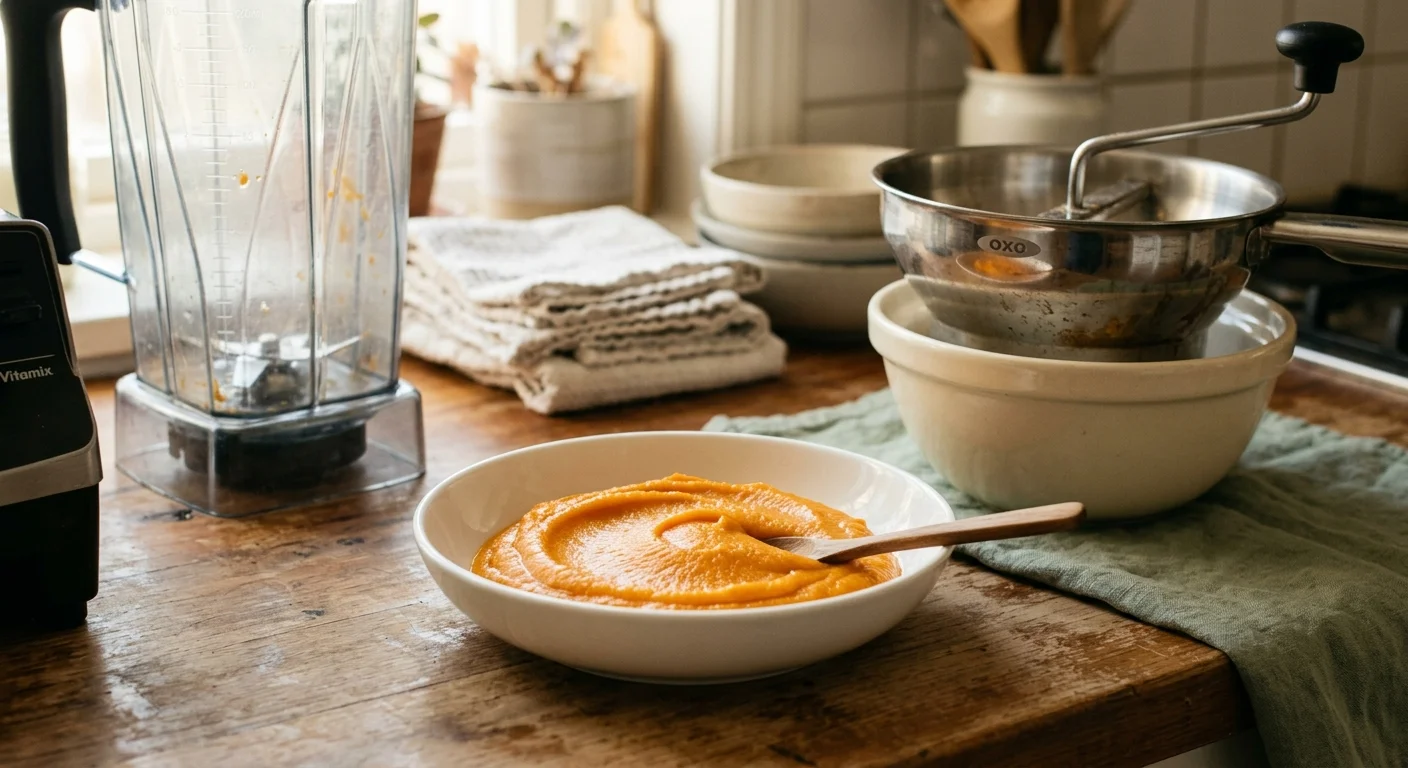
Preparing meals for a family member with dysphagia demands absolute texture reliability to prevent choking. Achieving International Dysphagia Diet Standardisation Initiative (IDDSI) Level 4 Pureed standards at home requires tools that eliminate lumps completely.
While fine food mills excel at processing starches without added liquids, high-shear blenders are non-negotiable for pulverizing tough meat proteins into clinical-grade purees.
Understanding the operational trade-offs between physical disc sieves and high-speed vortex blades ensures your kitchen tools for elderly swallowing difficulty deliver safe, nutrient-dense nutrition every day.

Understanding IDDSI Level 4 Requirements and Puree Safety
The International Dysphagia Diet Standardisation Initiative introduced standardized global texture terminology in 2015. Clinicians updated these frameworks in 2019 to give caregivers measurable testing benchmarks at home.
Much like outfitting an accessible prep space with electric pepper mills for arthritis, therapeutic diet prep requires tools that protect caregivers from repetitive joint strain.
Selecting specialized pureeing gear is part of choosing the best kitchen tools for seniors and accessibility to reduce caregiver strain while ensuring meal safety.
According to epidemiological data cited by the American Speech-Language-Hearing Association (ASHA), roughly 1 in 25 American adults experiences dysphagia annually. In institutional long-term care settings, oropharyngeal dysphagia prevalence among older adults reaches between 30% and 50%.
IDDSI Level 4 Pureed food must hold a uniform, cohesive consistency. It requires no chewing and must contain zero distinct lumps, hard bits, seeds, or fibrous strings.
Level 4 purees must also not separate into liquid and solid phases on the plate. Any pooling broth or water creates a dual-consistency hazard that easily triggers coughing or aspiration.
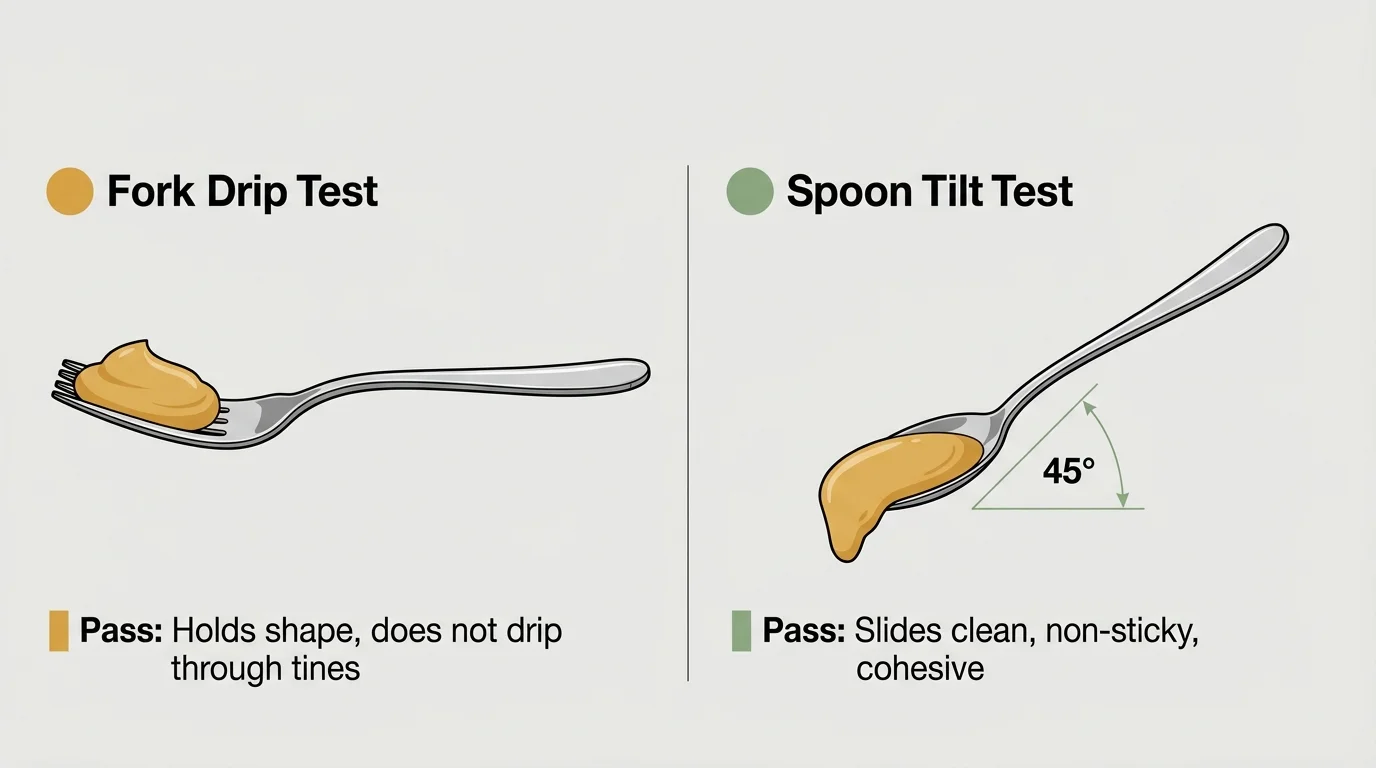
A successful IDDSI Level 4 preparation must slide off a tilted spoon without sticking excessively. Simultaneously, it must not run through fork tines like a liquid beverage.
Meeting these rigorous physical criteria requires choosing the correct dysphagia food prep tools. Selecting the wrong appliance puts your loved one at risk of choking or undernutrition.
Fine Food Mill Discs: Mechanics, Sieve Sizing, and Starch Preservation
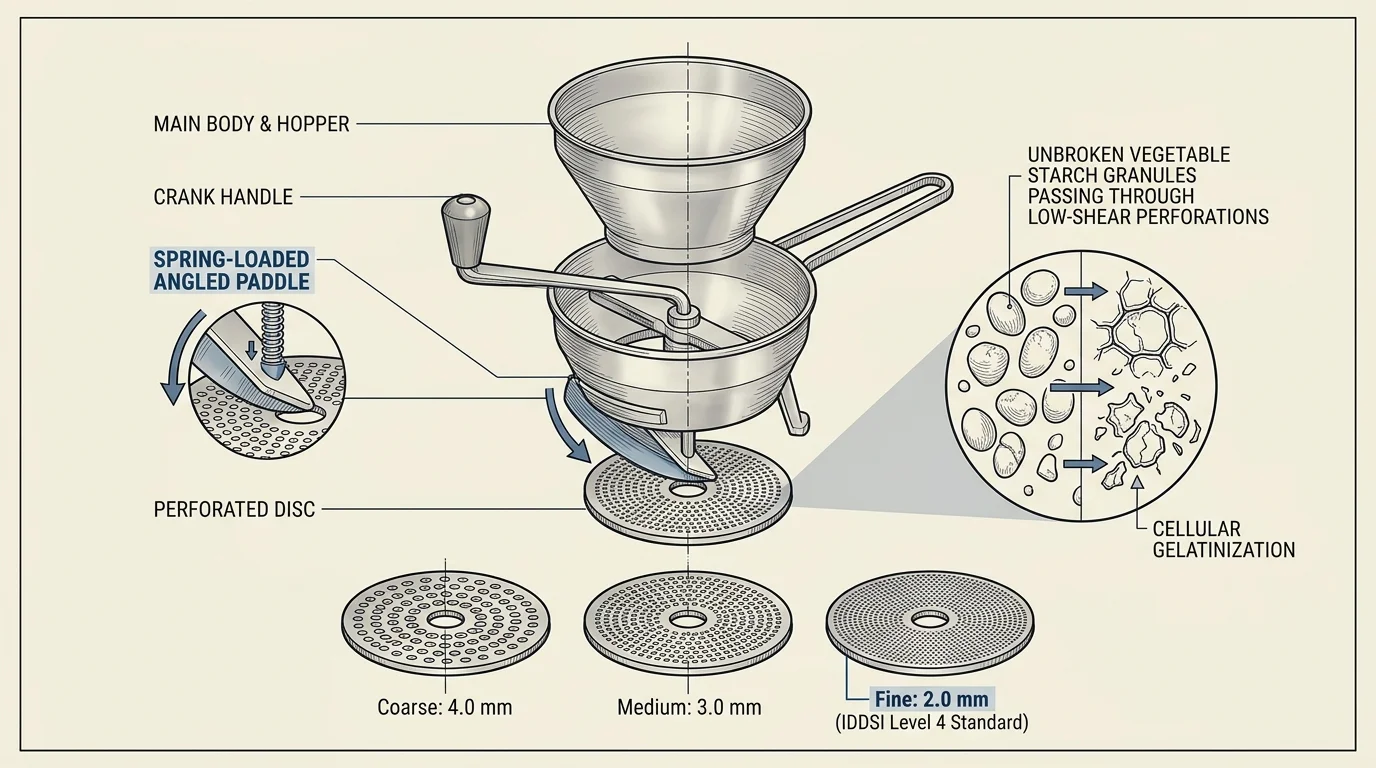
A manual rotary food mill works by sweeping cooked food across a perforated steel disc using a spring-loaded paddle. The angled blade forces soft solids through the holes while catching seeds and fibrous skins.
Reviewing a food processor size and power guide clarifies why typical multi-blade machines leave behind stray vegetable fibers that manual sieving stops.
When processing starchy root vegetables, understanding how lever-press potato ricers compare to rotary food mills highlights critical differences in waste extraction and cleanup effort.
Most consumer mills include three interchangeable disc plates: coarse (4.0 mm), medium (3.0 mm), and fine (2.0 mm). A fine food mill for purees relies exclusively on the 2.0 mm disc.
The primary advantage of a food mill is low-shear processing. It gently separates soft vegetable pulp from skins without bursting plant starch cells.
When you boil russet potatoes, sweet potatoes, or winter squash, aggressive blending blades shear starch molecules into an adhesive paste. A food mill presses starches cleanly, preserving a light, non-sticky bolus.
Food mills also process cooked produce without demanding extra liquid. You can mill roasted carrots or steamed apples directly into their natural puree consistency.
However, the 2.0 mm perforation creates a mechanical limitation for animal proteins. Meat fibers do not yield easily to dull rotary paddles and simply twist into knots above the disc.
Attempting to mill beef, pork, or poultry leaves the meat uncrushed above the screen. A food mill cannot produce a compliant Level 4 meat puree on its own.
High-Shear Blenders: Motor Watts, Blade Speed, and Meat Processing
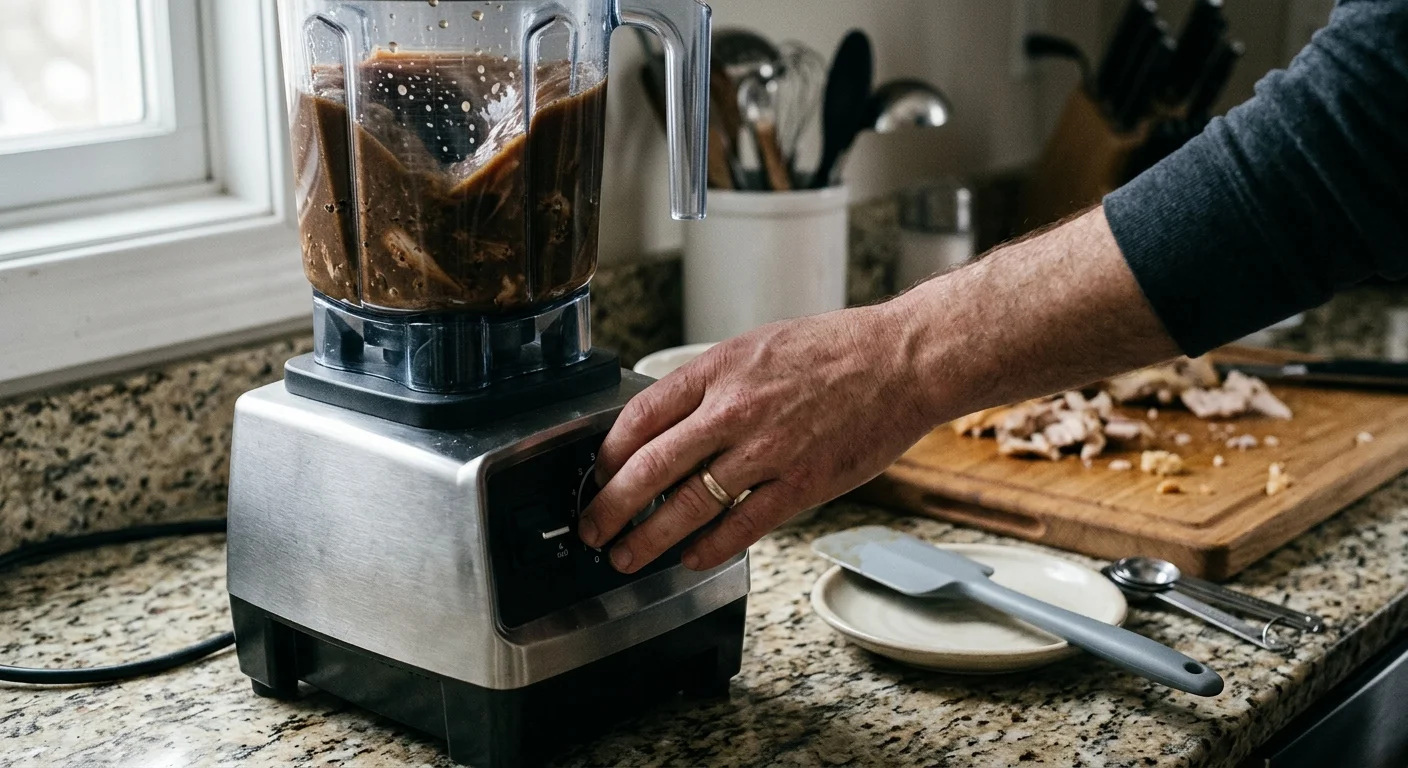
A dedicated iddsi pureed diet blender operates on high-shear mechanics rather than simple mechanical straining. These machines feature heavy-duty motors ranging from 2.0 to 2.2 peak horsepower, drawing roughly 1,380 to 1,500 watts.
While entry-level blenders for smoothies excel at aerating fruits, clinical puree prep demands heavy-duty motors that process dense solids without stalling.
Reviewing how to choose the right blender for your needs can help identify machines with the motor wattage and container geometry necessary for therapeutic meal prep.
Blades rotate at speeds between 20,000 and 28,500 revolutions per minute. At this speed, dull stainless steel blades create a cavitation vortex that shatters cellular plant walls and muscle tissue.
As Serious Eats reports in their appliance testing, high-speed blending pulverizes fibrous elements that choke standard household food processors. This sheer force reduces chicken muscle fibers and sinew into sub-millimeter particles.
“Vortex velocity directly determines particle size in medical purees. High blade speeds shatter fibrous muscle tissues that physical sieve discs simply cannot cut.”
This pulverizing power makes a high-shear blender indispensable for preparing high-protein meals. Braised meats, legumes, and fibrous greens turn into velvety purees that require zero oral mastication.
However, high blade speeds generate significant heat through friction. Running a blender on maximum speed for two minutes can increase food temperature by over 20 degrees Fahrenheit.
Furthermore, blenders require adequate fluid to pull ingredients down into the cutting vortex. If you do not add sufficient liquid, the blades spin freely in an air pocket, halting the puree process.
This requirement for liquid introduces unique clinical challenges for home caregivers. Adding too much liquid dilutes nutritional value, while adding too little leaves hazardous unblended chunks.
The Testing Gauntlet: Fork Drip and Spoon Tilt Comparison
You must verify every dysphagia meal before serving using standardized IDDSI testing methods. You cannot guess consistency by sight alone.
While standard potato mashers create pleasant rustic textures for general dining, they leave micro-lumps that fail clinical fork drip testing.
The IDDSI Fork Drip Test evaluates food thickness and cohesion. Scoop a sample of the puree using a standard metal dinner fork with tines spaced roughly 4 mm apart.
A compliant Level 4 puree sits in a cohesive mound above the tines. It may show a slight tail below the fork, but it must not flow, drip, or stream continuously through the prongs.
Food milled through a 2.0 mm disc passes the fork drip test easily when processing cooked root vegetables. However, stringy fibers from celery or green beans pass through the holes and hang from the tines.
High-shear blenders liquefy fibers completely, preventing tine bridging. Yet if you add too much stock to facilitate blending, the puree will stream through the tines, failing Level 4 and becoming Level 3.
The IDDSI Spoon Tilt Test assesses cohesiveness and surface stickiness. Scoop a rounded sample onto a dessert spoon, hold it upright, and tilt the spoon sideways or gently flick your wrist.
A safe puree slides off the spoon in a single cohesive bolus, leaving behind little to no residue. Sticky, glue-like purees that adhere stubbornly to the metal fail the test because they pose a severe pharyngeal transit hazard.
High-shear blenders frequently fail the spoon tilt test when processing high-starch foods like potatoes. Blending ruptures amylose starches, turning the bowl into wallpaper paste that clings to the spoon.
Conversely, a fine food mill produces fluffy, sheared starches that tumble off a tilted spoon cleanly. The food mill remains the clinical gold standard for safe potato purees.

The Dilution Dilemma: Caloric Density vs. Fluid Volume
According to clinical studies evaluating texture-modified diets, between 20% and 40% of individuals on pureed meals experience inadequate caloric or macronutrient intake. Nutritional decline occurs rapidly when caregivers unintentionally dilute purees.
Caregivers frequently look to versatile immersion blenders to process small, concentrated amounts without adding excess stock.
When managing small single portions without over-diluting them in large blender jars, considering small-capacity immersion blender attachments vs. mini choppers provides practical strategies for preparing 2-ounce servings.
Because high-shear blenders require liquid to establish a vortex, caregivers often pour in water, skim milk, or thin stock. A six-ounce chicken breast quickly expands into twelve ounces of diluted volume.
Elderly individuals coping with neurodegenerative illness or stroke fatigue often cannot consume large meal volumes. Serving a watered-down puree ensures they fill up before consuming their required daily calories and protein.
A fine food mill preserves natural caloric density because it handles moist cooked produce without supplementary fluids. The resulting puree retains its original concentration of vitamins, minerals, and carbohydrates.
When you must use a high-shear blender for meats, you should always blend using calorie-dense fluids rather than plain water. Fortify the mixture using whole-milk yogurt, heavy cream, bone broth, or melted butter.
Commercial food thickeners can restore body to over-diluted purees, but they do not replace missing nutrients. Managing fluid ratios during the initial prep is your best defense against involuntary weight loss.

Step-by-Step Worked Prep Example: IDDSI Level 4 Braised Chicken Dinner
To understand how these tools behave in daily practice, let us examine a worked meal preparation scenario. We will prepare an IDDSI Level 4 meal consisting of 150 grams of braised chicken thigh and 100 grams of cooked carrots.
Home cooks can also use sous vide precision cookers to gently tenderize meats before pureeing, breaking down collagen so it shears effortlessly.
Begin your mise en place (having all ingredients prepped and ready before cooking) by trimming skin and cartilage from the chicken. Braise the meat in low-sodium broth at 325 degrees Fahrenheit for 60 minutes until tender.
Steam 100 grams of peeled carrot rounds for 20 minutes until you can crush them effortlessly between thumb and forefinger. Divide both ingredients in half to evaluate tool performance.
First, place 75 grams of warm chicken thigh directly into an OXO Good Grips Food Mill fitted with the 2.0 mm fine disc. Rotate the crank clockwise for 60 seconds with firm downward pressure.
The paddle sweeps the meat against the disc, but muscle fibers bind together. Only 12 grams of chicken pass through, leaving 63 grams compressed into an unworkable lump above the sieve.
Next, mill the 50 grams of steamed carrots through the same 2.0 mm disc. The carrots pass through completely in 25 seconds, producing a smooth, mound-forming puree with zero added liquid.
Now, load the remaining 75 grams of chicken thigh into a Vitamix 5200 container along with 45 grams of warm cooking broth and 5 grams of butter. Secure the lid firmly.
Start the blender on Variable 1, slowly ramp to Variable 10, and flip to High for 45 seconds. The blade shatters the meat into a glossy, completely homogenous paste.
Conduct your clinical verification on both preparations. The milled carrots sit firmly on a fork and slide cleanly off a tilted spoon, passing both Level 4 tests.
Scoop the blended chicken puree onto a standard metal fork. It forms a stable mound above the tines for 15 seconds without weeping liquid or dropping through.
Tilt the spoon to a 90-degree angle; the blended chicken slides off in a unified bolus, leaving only a faint sheen on the spoon bowl. The high-shear blender successfully achieved clinical IDDSI Level 4 compliance.

Side-by-Side Tool Specifications and Performance Metrics
The following table compares key technical specifications and clinical performance metrics for common kitchen prep tools used in dysphagia meal preparation.
| Equipment Model & Type | Power / Sieve Dimension | Level 4 Meat Processing | Level 4 Starch Processing | Added Liquid Required | Average Retail Price |
|---|---|---|---|---|---|
| Vitamix 5200 (High-Shear Blender) | 2.0 Peak HP (1,380W) / 28,500 RPM | Passes (Complete cell breakdown) | Fails (Creates gummy, sticky texture) | Moderate (30% to 40% by weight) | $450–$500 |
| OXO Good Grips Food Mill | Manual Rotary / 2.0 mm Fine Disc | Fails (Cannot cut muscle fibers) | Passes (Preserves non-sticky texture) | None (Zero dilution required) | $50–$65 |
| Breville Control Grip (Immersion Blender) | 280 Watts / 15-speed settings | Fails (Leaves unblended strands) | Passes (Acceptable if pulsed lightly) | High (Requires liquid to immerse head) | $90–$110 |
| Cuisinart 14-Cup Food Processor | 720 Watts / S-blade cutting edge | Fails (Yields gritty, coarse particles) | Moderate (Can overwork starches) | Low to Moderate | $230–$260 |
According to appliance evaluations by Consumer Reports, standard food processors struggle to pulverize fibrous meats into uniform emulsions. The resulting puree feels gritty on the tongue, creating significant aspiration risks for dysphagia patients.

Ergonomics, Physical Strain, and Cleaning Realities
Caring for an older family member requires substantial daily energy. Your prep tools should minimize joint strain and cleanup time rather than adding extra chores.
Manual rotary food mills require repetitive wrist rotation and continuous downward pressure. For a caregiver dealing with arthritis or carpal tunnel syndrome, milling dense food for 15 minutes causes genuine physical discomfort.
Furthermore, manual food mills can shift across bowls if the non-slip legs do not grip tightly. Hot liquids splashing over bowl rims pose a burn risk during extended milling sessions.
High-shear blenders eliminate repetitive joint strain through automated, push-button operation. You simply lock the container onto the base, set the dial, and let the motor work.
However, cleanup workflows differ significantly between these appliances. Cleaning a food mill requires disassembling the spring mechanism, crossbar, and disc for manual washing.
Food fibers frequently jam into the 2.0 mm perforations, requiring firm scrubbing with a stiff nylon brush. While stainless steel discs are dishwasher-safe, dried food debris trapped in the holes often survives standard wash cycles.
High-shear blenders feature convenient self-cleaning functions. Fill the container halfway with warm water, add two drops of liquid dish soap, and run on High for 60 seconds.
The violent vortex scours the interior walls and blade assembly without requiring you to remove sharp cutting edges. Always inspect the container base periodically to ensure blade seals remain water-tight and sanitary.

Top Tool Recommendations for Dysphagia Meal Preparation
Preparing compliant meals at home typically requires a dual-tool strategy. Relying on a single machine forces compromises between meat smoothness and potato texture.
For serious home caregivers seeking complete puree safety, the Vitamix 5200 stands out as our best high-shear blender choice. Its classic tall, narrow 64-ounce container forces ingredients down into the blades more reliably than wider low-profile designs.
Testing by America’s Test Kitchen consistently highlights the Vitamix 5200 for its unmatched pulverizing power and motor endurance. It handles dense chicken breasts and braised beef without stalling or overheating.
For starches, fruit sauces, and soft vegetables, the OXO Good Grips Food Mill is our top recommendation. Its three spring-loaded legs fold outward to grip bowl rims up to 11 inches wide securely.
The included 2.0 mm stainless disc separates seeds and tough skins from roasted squash and tomatoes effortlessly. Its broad, rubberized crank knob cushions your hand, reducing palm pressure during manual processing.
If you need a budget-friendly secondary tool for small servings, use a quality immersion blender paired with a fine conical wire sieve (chinois). Puree your food with the immersion wand, then press it through the fine sieve with a rubber spatula.
Always practice strict blade safety when assembling or cleaning cutting assemblies. Never scrape blender jars with your fingers; use a specialized narrow silicone spatula to clear food below the blades.
When operating a food processor for coarse pre-chopping, use the pulse function (short bursts of power on a food processor for better control). This prevents motor strain and produces even chunks before final high-shear liquefaction.
Frequently Asked Questions
Can an ordinary food processor produce IDDSI Level 4 purees?
No, standard food processors cannot reliably achieve IDDSI Level 4 puree consistency. Their spinning S-blades chop food into tiny bits rather than emulsifying it, leaving gritty specks that fail clinical testing.
Why do mashed potatoes turn into glue in a high-shear blender?
Blender blades rotate fast enough to rupture the microscopic starch cells within cooked potatoes. This releases mass quantities of free amylose, which binds with water to create an inedible, adhesive paste that fails spoon tilt tests.
How do you prevent over-diluting purees when using a blender?
Add hot liquids incrementally in 15-milliliter increments until the vortex just catches. Use calorie-dense fluids like fortified bone broths, gravies, or heavy cream instead of plain water to maintain essential nutritional density.
Is a food mill safe for preparing meats for swallowing difficulties?
No, manual food mills are unsafe for preparing pureed meats for dysphagia diets. The 2.0 mm fine disc cannot shear tough muscle fibers, resulting in unground chunks that create a severe choking hazard.
Disclaimer: Product prices and availability change frequently. Prices shown were accurate at time of writing but may have changed. We may earn a small commission from purchases made through links on this site, at no extra cost to you. Always use cutting tools carefully and follow manufacturer safety guidelines.




2 Comments