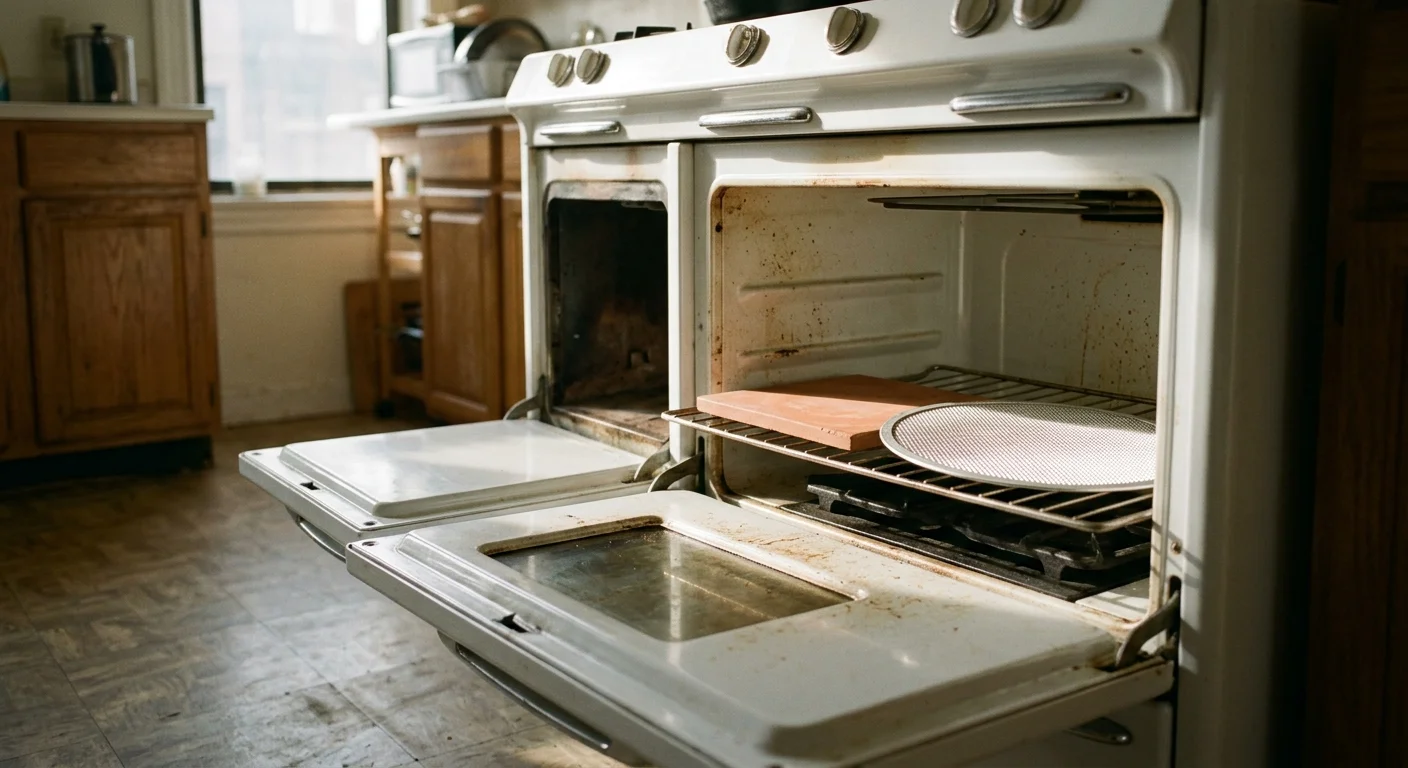
If your vintage 20-inch apartment range scorches biscuit bottoms while leaving tops pale, standard baking advice will ruin your oven. Thick baking steels choke narrow fireboxes, causing severe burner smothering and toxic carbon monoxide buildup.
Once your oven cavity is set up, mounting heat-resistant backsplash racks behind gas ranges helps recover valuable storage space in compact kitchens.
Instead of heavy plates, you need an apartment oven heat diffuser that balances heat distribution—how evenly the pan spreads heat across its surface—with open convection channels. Perforated aluminum pizza screens and unglazed quarry tiles fix hot spots gas oven cooks dread.
This guide calculates exact surface clearances, comparing these two affordable baffles so you can master this vintage oven baking hack safely.
The Airflow Bottleneck in Compact Gas Ovens
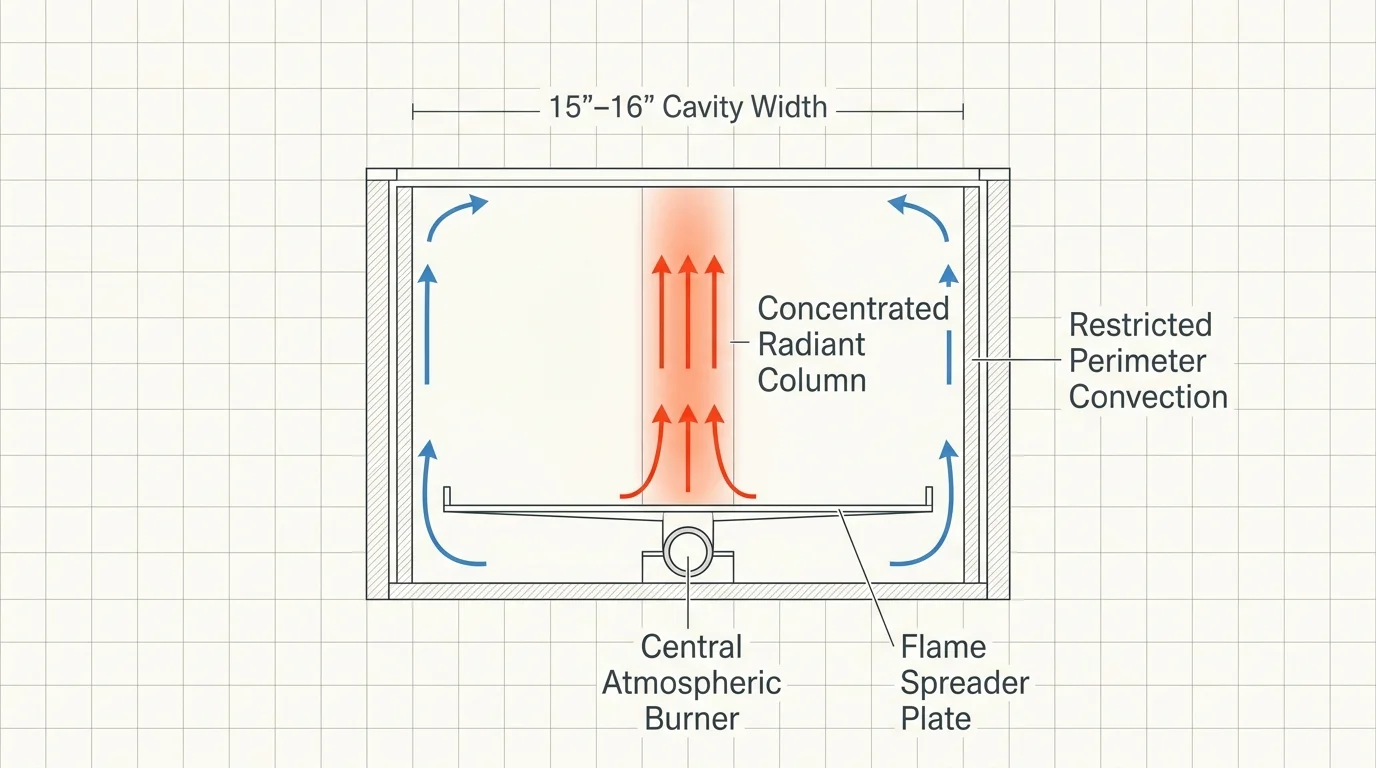
Compact 20-inch ranges are standard in older city apartments. Brands like Premier, Brown, and Avanti design these units with firebox cavities measuring only 15 to 16 inches wide.
Similar circulation issues occur with oversized trays, making dual quarter-sheet pans compared to half-sheets a far better choice for maintaining perimeter air drafts.
Managing airflow inside these compact units presents similar challenges to balancing heat distribution on low-output apartment stovetop burners.
A single, central atmospheric burner tube powers the entire cavity. This pipe sits directly beneath a thin sheet-metal flame spreader plate.
Because the cavity is narrow, heat concentrates in a fierce column right above the burner. Intense infrared radiant energy strikes the center of your baking rack.
Standard 30-inch ovens provide ample perimeter space for air circulation. Rising hot air and falling cooler air circulate naturally along the outer walls.
In a 20-inch cavity, placing a wide baking stone or steel cuts off this circulation loop. The trapped burner heat cannot escape upward.
When airflow chokes, combustion gases linger around the burner flame. The gas burner starves for oxygen, shifting from a clean blue flame to a flickering yellow flame.
According to appliance combustion standards documented by Consumer Reports, restricted ventilation in gas appliances dramatically raises ambient carbon monoxide levels. You must never seal your oven cavity.
Solving hot spots in a rental range requires thermal moderation without strangling natural convective draft. You must protect the pan bottom while letting air flow freely.
Perforated Aluminum Pizza Screens: Airflow and Conductivity
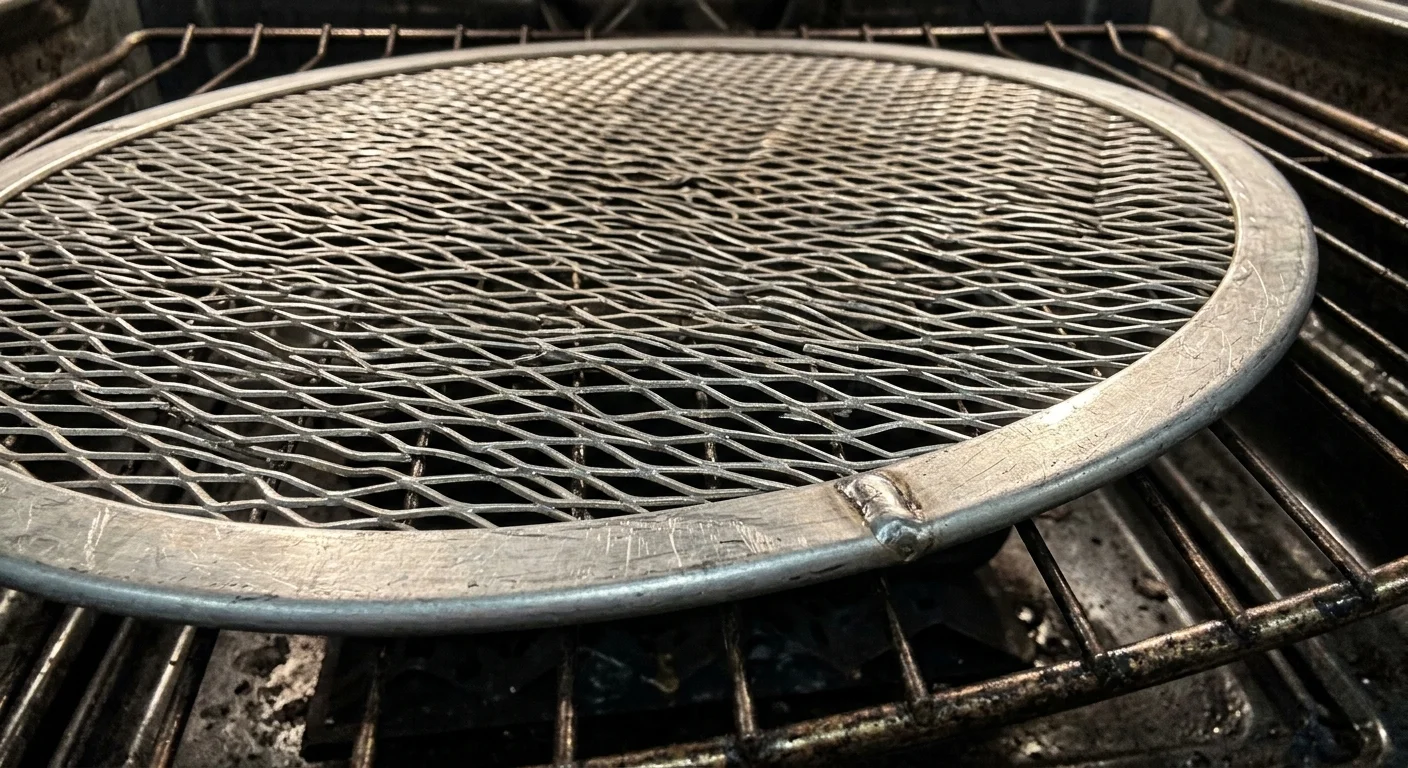
Commercial pizza screens use expanded aluminum mesh surrounded by a seamless rim. Pizza shops rely on them to bake crusts rapidly without burning the dough.
These conduction dynamics mirror the heat transfer differences experienced across metal, ceramic, and glass pie plates when baking delicate crusts.
Aluminum features an exceptionally high thermal conductivity rating of roughly 205 W/m·K. In contrast, standard carbon steel conducts heat at roughly 50 W/m·K.
Commercial screens use heavy gauge metal; gauge indicates the thickness of the metal, where lower numbers mean thicker materials. A standard 14-gauge expanded aluminum rim maintains rigidity under high heat.
Because aluminum conducts heat swiftly, the screen absorbs radiant energy from the burner tube and spreads it laterally across the mesh strands. Hot spots dissipate outward in milliseconds.
Crucially, the screen is roughly 65 percent open area. Convective airflow passes through the diamond mesh with almost zero static pressure resistance.
“Aluminum screens disperse harsh directional radiation instantly while letting buoyant convective heat rise unimpeded through the oven cavity.”
Screens are also light and easy to position. An American Metalcraft 14-inch aluminum pizza screen weighs under 6 ounces, making rack adjustments effortless.
Pure aluminum melts at 1,220°F (660°C). Residential gas ovens rarely exceed 550°F, meaning these screens operate well below their thermal breakdown threshold.
However, an aluminum screen holds very little thermal mass. It cannot store heat, so opening the oven door drops cavity temperatures quickly.
The screen functions strictly as a directional radiation deflector. It breaks up harsh infrared beams without functioning as a thermal reservoir.
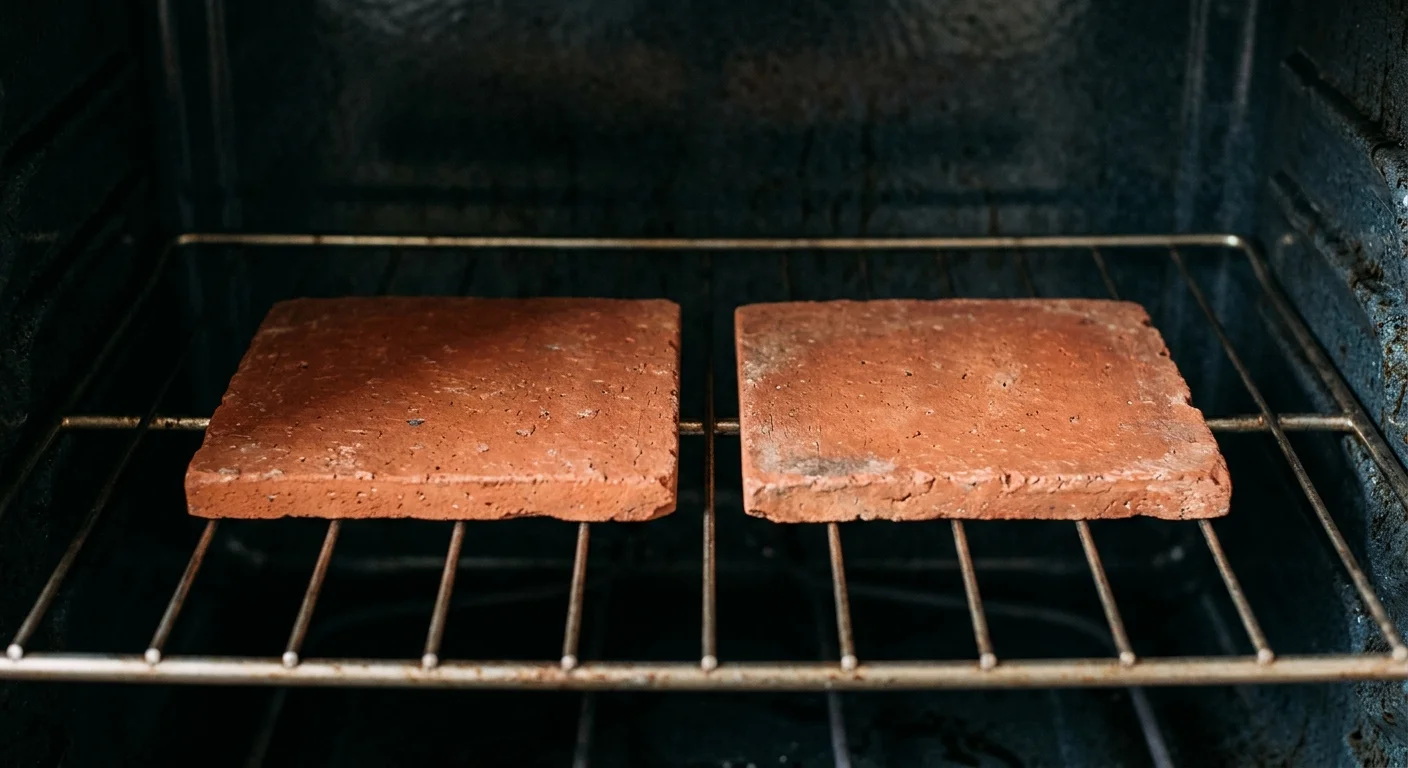
Unglazed Quarry Tiles: Thermal Mass and Radiant Absorption
Unglazed quarry tiles offer an alternative approach based on dense thermal storage. Extruded from natural shale and terra-cotta clay, these tiles withstand commercial kiln temperatures exceeding 2,000°F.
Metropolitan Ceramics produces unglazed quarry tiles measuring 6×6 inches with a 1/2-inch thickness. You can find them at flooring supply depots and home improvement centers.
Clay exhibits low thermal conductivity, measuring approximately 0.8 to 1.2 W/m·K. It absorbs aggressive burner heat slowly and reradiates that warmth as gentle, even energy.
Baking tests by America’s Test Kitchen highlight how dense ceramic surfaces buffer delicate doughs against sudden burner cycling. The tile acts as a thermal flywheel.
Because they are modular, you can arrange four individual 6×6-inch tiles on your lowest oven rack. You choose the spacing between each tile.
Leaving gaps between tiles maintains open chimneys for hot combustion gases. A solid ceramic baking stone blocks the cavity, but modular tiles allow flexible positioning.
You must confirm your tiles are completely unglazed. Glazed decorative tiles often contain lead or cadmium pigments that release toxic fumes at baking temperatures.
Quarry tiles absorb grease splatters permanently due to their porous nature. Never wash them with dish soap, as the clay traps detergent perfumes and ruins future bakes.
Thermal shock remains a practical concern. Placing cold bakeware directly onto preheated tiles can crack the clay along structural fault lines.
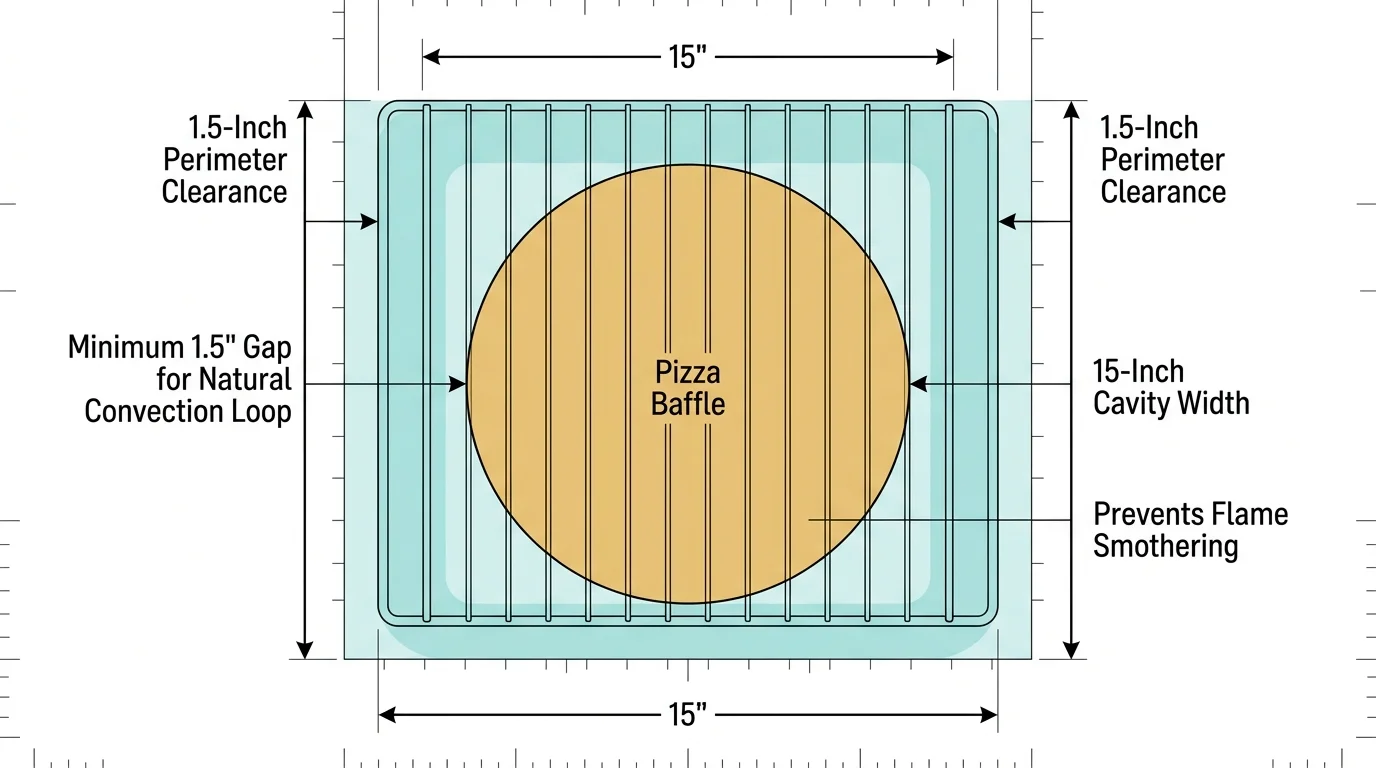
Calculating Airflow Margins: The 1.5-Inch Clearance Rule
Safe baking in a 20-inch range requires calculating cross-sectional airflow margins before inserting any baffle. You cannot guess when dealing with gas combustion.
Boundary clearances are equally critical outside the range, where low-profile compact toaster ovens require adequate wall space to dissipate high surface heat.
Consider a standard 20-inch range interior cavity measuring 16 inches wide by 15 inches deep. This dimensions produce a total horizontal cross-sectional area of 240 square inches.
Combustion dynamics require an open boundary perimeter of at least 1.5 inches along the walls. This boundary maintains the convective drafting necessary for the burner flue.
Let us calculate the obstruction caused by a commercial 14×14-inch square carbon steel plate. The plate covers 196 square inches of the 240-square-inch plane.
That solid steel plate leaves only 44 square inches of clearance. That equals an 81.6 percent cavity blockage, creating a severe heat choke point.
Now examine a 14-inch circular aluminum pizza screen placed in the same oven. The circular footprint occupies 153.9 square inches of nominal rack space.
Because the screen is 65 percent open mesh, its effective solid surface area is only 53.8 square inches. Convective air passes freely through 186.2 square inches of the tier.
This mesh configuration preserves over 77 percent of the cavity’s natural airflow path. Convection currents remain unobstructed, preventing dangerous combustion smothering.
For quarry tiles, place four 6×6-inch tiles in a centered 2×2 grid. The four tiles occupy 144 square inches of solid area.
Set a 1-inch gap between the tiles and leave 1.5 inches along the lateral walls. This arrangement yields 96 square inches of open air space, maintaining a 40 percent convective draft margin.
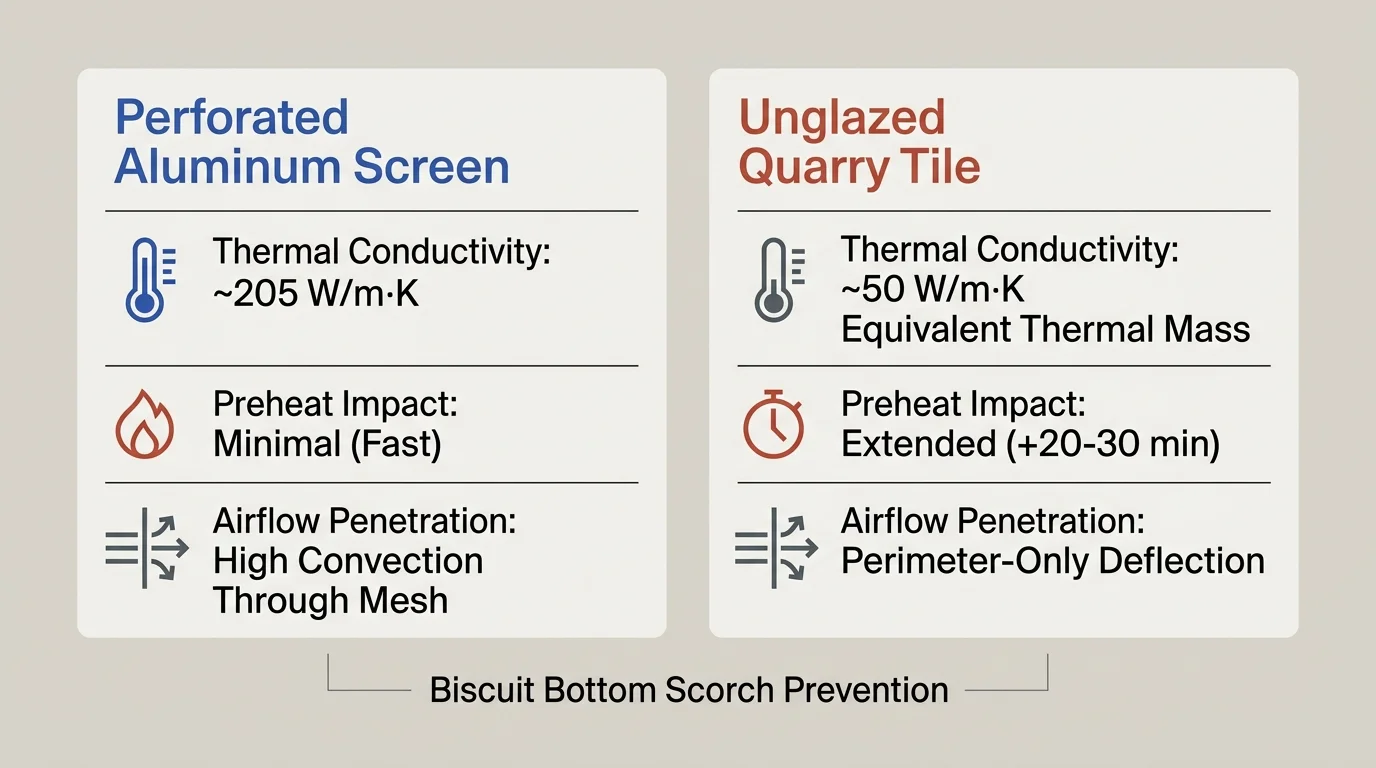
Head-to-Head Performance Comparison
Choosing the correct heat baffle depends on your specific baking goals and budget constraints. Both options outperform standard baking steels in small apartments.
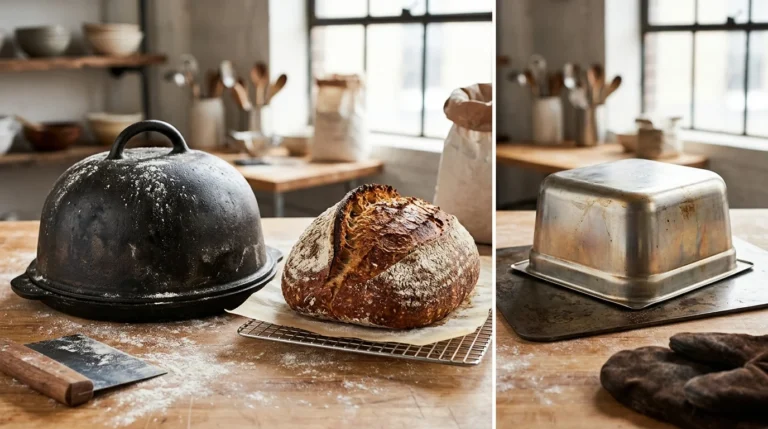
For artisanal bread, pairing unglazed tiles with inverted stainless hotel pans or bread cloches helps capture steam within shallow oven vertical limits.
For bread bakers managing temperamental environments, pairing steady bottom heat with controlled sourdough proofing methods ensures reliable crumb structure before loaves ever hit the oven.
The following comparison table details measurable physical attributes for each heat baffle option alongside traditional dense baking surfaces.
| Baffle Option | Effective Solid Area | Airflow Clearance | Thermal Mass Level | Preheat Time to 400°F | Unit Cost |
|---|---|---|---|---|---|
| 14-Inch Aluminum Pizza Screen | 53.8 sq in (Mesh) | 77.5% Open | Extremely Low | 10 Minutes | $8.00 |
| Four 6×6-Inch Quarry Tiles | 144.0 sq in (Solid) | 40.0% Open | Moderate-High | 28 Minutes | $6.50 |
| 14x14x1/4-Inch Baking Steel | 196.0 sq in (Solid) | 18.4% Open | Very High | 45 Minutes | $65.00 |
| 13×15-Inch Cordierite Stone | 195.0 sq in (Solid) | 18.7% Open | High | 35 Minutes | $38.00 |
The aluminum screen heats up almost instantaneously. You avoid wasting natural gas during extended preheating cycles in poorly insulated apartment kitchens.
Quarry tiles require nearly a half-hour to soak up sufficient heat. However, they preserve steady chamber temperatures when you open the oven door to rotate pans.
The screen excels at eliminating hot spots during quick bakes like cookies and layer cakes. Its rapid lateral conduction protects thin pan bases.
Quarry tiles perform better for artisanal crust development. Sourdough boules and focaccia benefit directly from the dense, sustained heat rising through the tile bed.
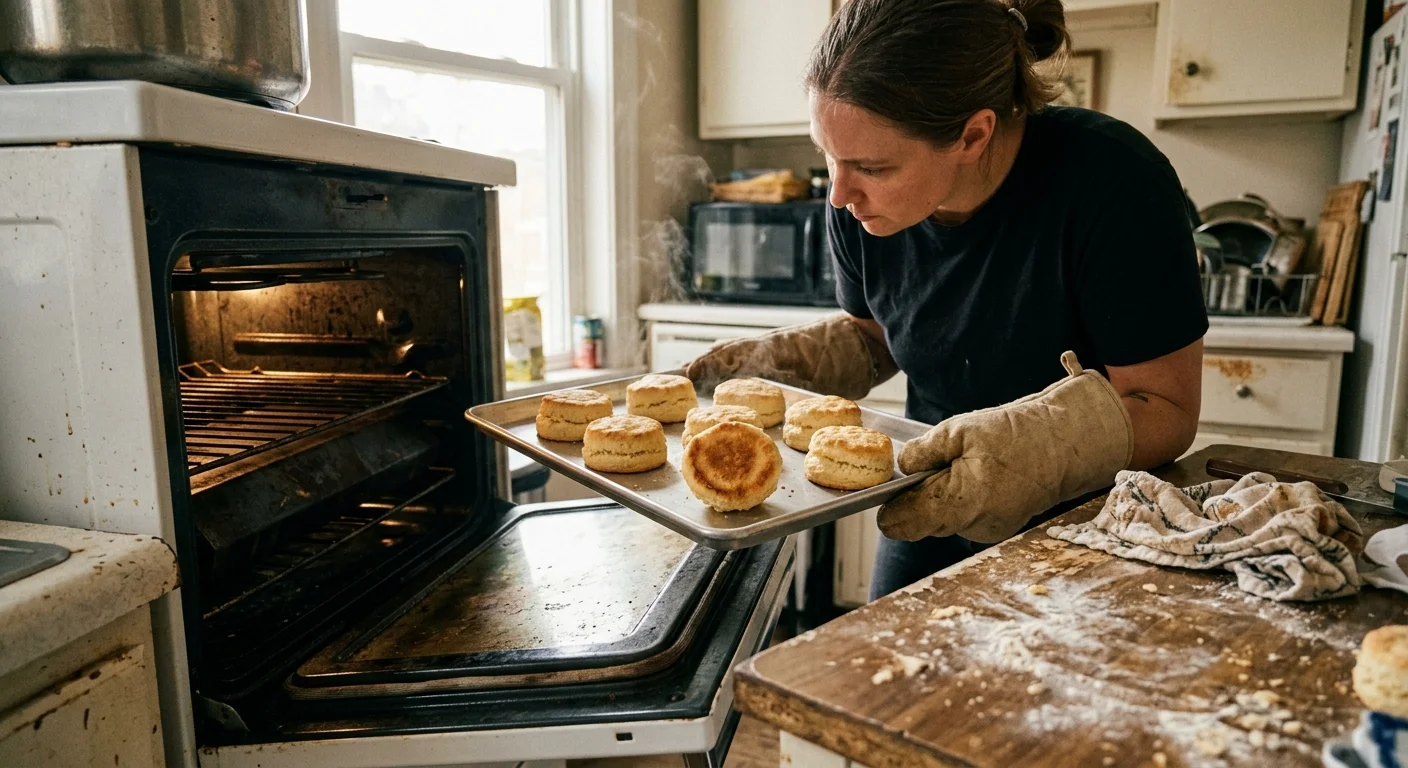
Worked Baking Scenario: Calibrating a Vintage Range
Let us walk through an operational scenario with concrete numbers. You are baking flaky buttermilk biscuits in a 1980s vintage 20-inch Premier gas range.
Selecting quality baking sheets for even browning provides an extra layer of defense against hot spots when calibrating an older appliance.
The oven dial reads 425°F, but the burner flame tube concentrates heat fiercely along its central 3-inch axis. Without a baffle, your biscuits burn within 8 minutes.
To fix this, slide your bottom oven rack into Position 1, the lowest rung directly above the floor panel. Place the second rack into Position 3, the exact vertical center.
Place two 14-inch seamless aluminum pizza screens staggered slightly on the bottom rack. The doubled aluminum mesh layers scatter 90 percent of the direct infrared energy.
Preheat the oven for 12 minutes. Check an independent liquid-bulb oven thermometer hung from the center rack to verify the actual temperature.
Vintage thermostats frequently run 25°F to 50°F hotter than their dials indicate. In our scenario, the dial at 425°F produces an actual internal temperature of 460°F.
Adjust the dial downward to 395°F until the thermometer settles at a steady 425°F. Place your biscuit sheet on the center rack.
Bake for 14 minutes without opening the door. The aluminum screens distribute radiant heat evenly across the lower plane while letting hot convective air circulate freely.
Your biscuits will emerge with a golden bottom crust and tall, flaky layers. The total modification costs under $16 and requires zero permanent appliance alterations.
Cookware Interactions and Pan Materials
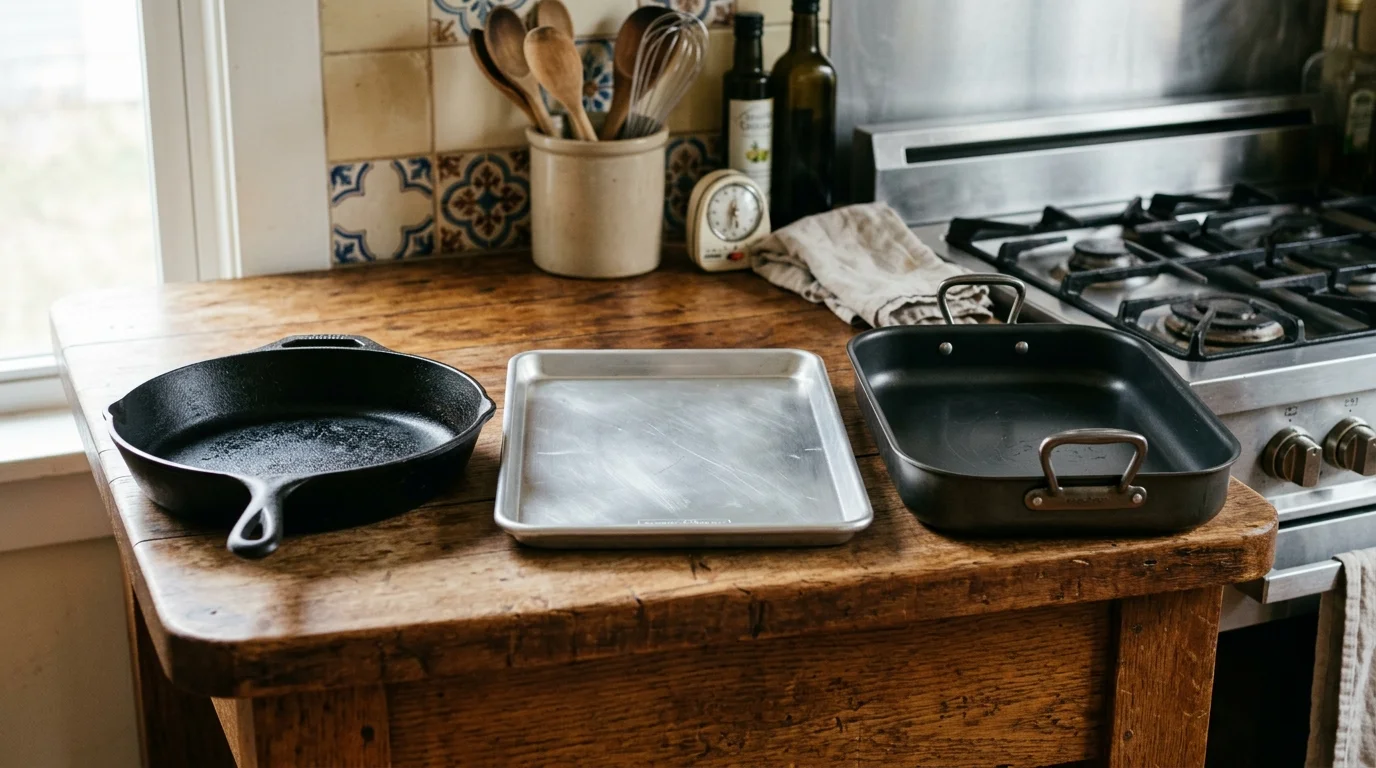
Your choice of bakeware works in tandem with your heat baffle system. A baffle softens incoming burner heat, but pan materials dictate final crust quality.
Equipment reviews from Serious Eats demonstrate that pan material matters as much as oven calibration. Pairing the wrong pan with your baffle ruins your results.
When using an aluminum pizza screen, pair it with heavy-gauge aluminum baking sheets. Aluminum sheet pans match the heat conductivity of the baffle, preventing edge scorch.
If you use cast iron, the pan must be seasoned—a protective coating built up on cast iron through oil and heat. Seasoned cast iron absorbs radiant energy aggressively.
Placing seasoned cast iron directly over quarry tiles produces fantastic pizza crusts. The tile prevents the pan base from overheating before the toppings melt.
Verify that your pans are oven-safe; oven-safe cookware goes from stovetop to oven without damage, though you must check the manufacturer’s maximum temperature rating.
Take care with non-stick bakeware using PTFE coatings. PTFE is the chemical name for Teflon-style non-stick coatings, which degrade if heated above 500°F.
Cookware testing by Wirecutter shows that ceramic coatings offer an alternative; a ceramic coating is a non-stick surface made from silica that withstands slightly higher heat thresholds.
For savory roasting above quarry tiles, choose tri-ply stainless steel; tri-ply means three layers of metal bonded together for better heat distribution.
Tri-ply pans prevent localized scorching during pan-sauce reductions in the oven. The aluminum core spreads heat while the stainless steel exterior resists acidic foods.
Many modern cookware items are induction compatible; induction compatible cookware works on induction cooktops because it contains magnetic material. These steel-clad pans work well above both screen and tile baffles.
Safety Hazards and Ventilation Risks
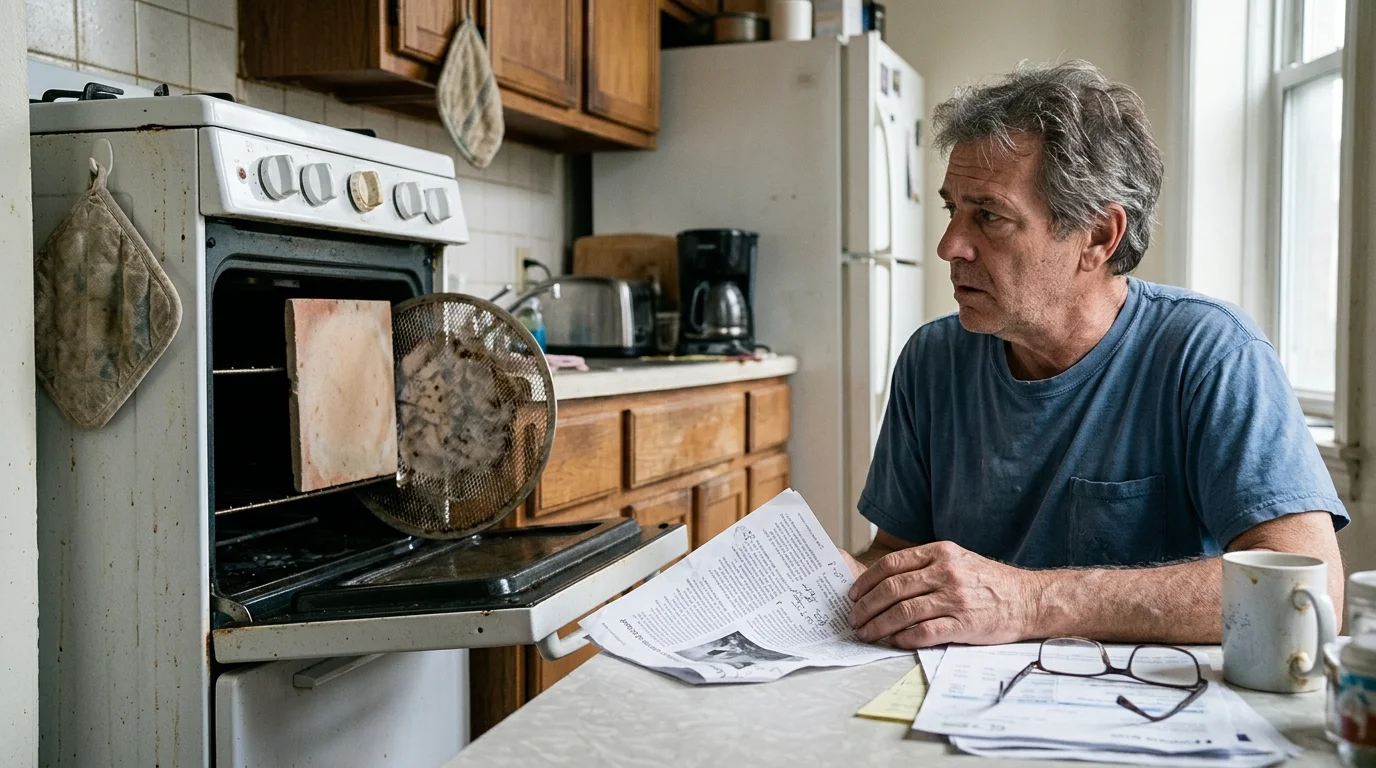
Modifying a rental gas oven introduces serious physical safety considerations. You must never place any baffle directly onto the sheet-metal oven floor.
The floor of a gas oven houses primary combustion ports. Covering these ports restricts oxygen flow, causing dangerous carbon monoxide accumulation in your apartment.
“Never place foil, tiles, or screens directly on the oven floor; always support baffles on a dedicated wire rack at least two inches above burner ports.”
Never line your lower rack or oven bottom with commercial aluminum foil rolls. Thin foil melts at standard broiling temperatures and fuses permanently to porcelain enamel liners.
Inspect the flame color whenever you install or reposition your baffles. The burner flame must remain sharp and blue along its entire length.
If you observe lazy, floating yellow flame tips after installing tiles, your baffle is too large. Remove one tile immediately to widen the perimeter draft space.
Always verify that your apartment carbon monoxide detector is functional and positioned within 15 feet of the kitchen doorway. Test the alarm battery monthly.
Keep a clear pathway around the rear oven exhaust vent located below the back stovetop riser. Blocking that vent causes oven chamber overheating and irregular flame behavior.
Frequently Asked Questions
Can I leave an aluminum pizza screen permanently on my bottom oven rack?
Yes, you can leave an aluminum pizza screen on the lower rack permanently. Its high melting point and open mesh structure will not interfere with normal roasting or broiler functions.
Will unglazed quarry tiles crack if exposed to sudden temperature changes?
Yes, quarry tiles can fracture from thermal shock if you place cold pans or frozen foods directly onto them. Always allow the tiles to heat up and cool down gradually alongside the oven.
Why do commercial baking steels cause problems in 20-inch apartment ovens?
Baking steels are solid plates that cover over 80 percent of a 20-inch oven cavity. This blocks natural convective drafting, leading to flame smothering, uneven baking, and carbon monoxide buildup.
How do I clean unglazed quarry tiles if food drips on them?
Let the tiles cool completely, scrape off baked-on debris with a stiff metal spatula, and wipe them with a damp cloth. Never use dish soap or soak the porous clay in water.
Disclaimer: Product prices and availability change frequently. Prices shown were accurate at time of writing but may have changed. We may earn a small commission from purchases made through links on this site, at no extra cost to you. Always verify current pricing on the retailer’s website before purchasing.