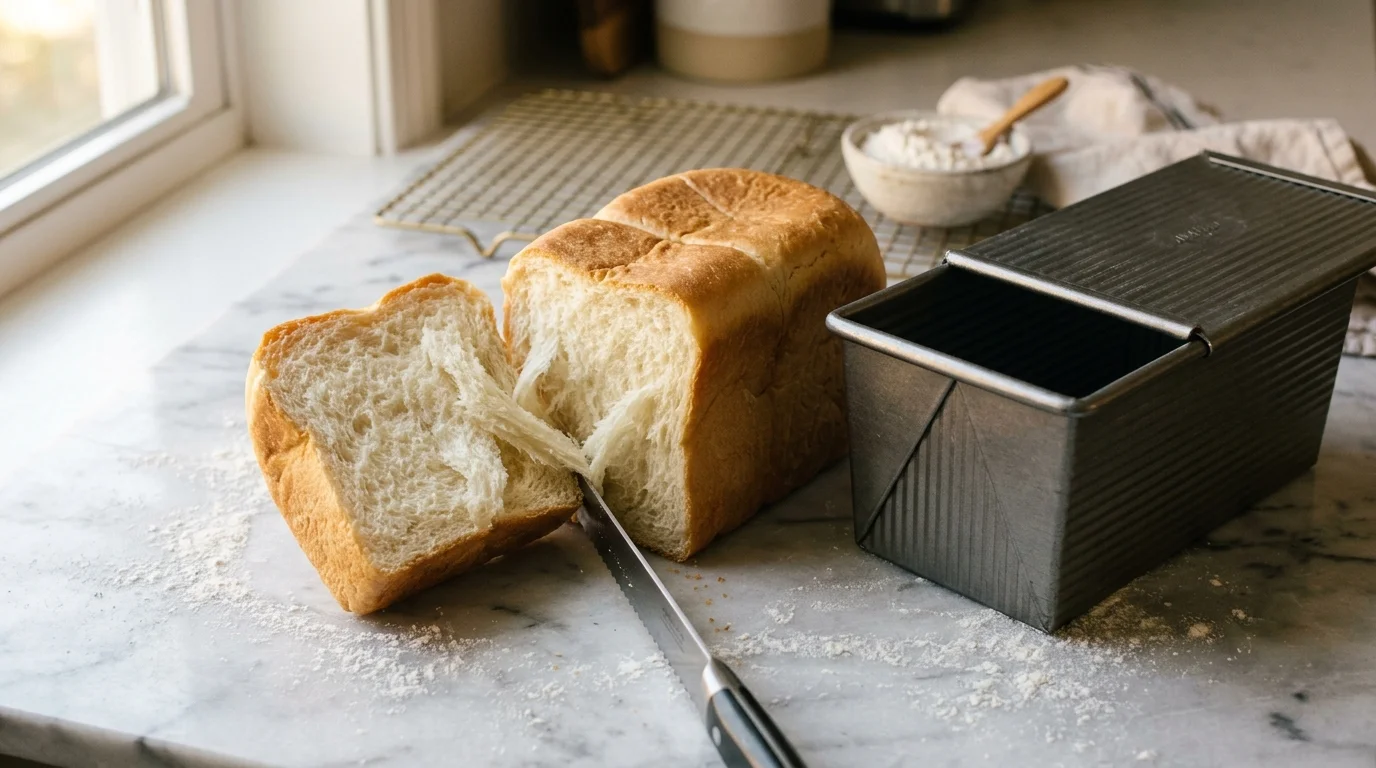
Baking Japanese milk bread in a humid southern climate presents a hidden challenge: excess room moisture weakens your dough’s crust structure while open oven heat causes chaotic, domed expansion. You need an aluminized steel pullman loaf pan with lid to take control of your crumb.
Unlike open tins that sacrifice hydration to dry oven air, a commercial sliding-lid Pullman pan traps evaporative moisture inside an enclosed chamber. This internal steam pressure equalizes hydration, guarantees uniform crumb density, and delivers razor-flat edges regardless of muggy ambient kitchen weather.
The Physics of Internal Steam Trapping: Why Open Tins Fail in Humid Climates
Southern coastal kitchens routinely sit at 70% ambient relative humidity or higher. This muggy air saturates your dough during counter proofing, making the surface sticky and structurally unstable.
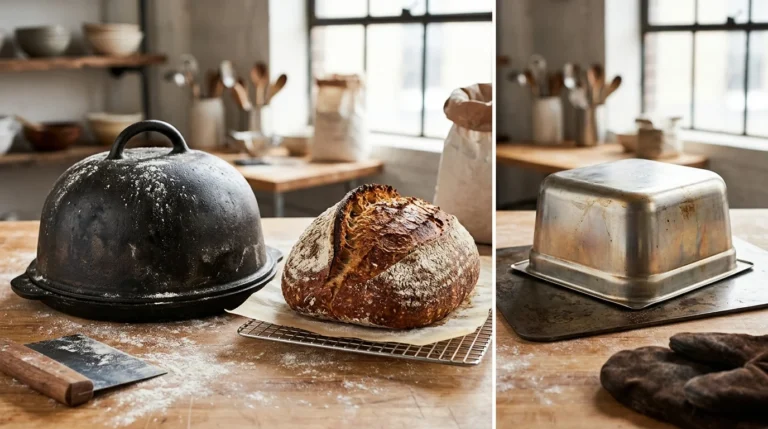
While artisan hearth bakers often rely on inverted hotel pans or cast iron bread cloches to trap moisture around boules, sandwich loaves require a much more compact, form-fitting vessel.
When you transfer an open bread tin into a hot oven, that surface moisture flashes off immediately into the dry oven cavity. This uneven evaporation parches the outer gluten skin, triggering premature crust crystallization before your loaf finishes expanding.
The loaf expands unevenly along lines of least resistance, producing a rounded crown, torn shoulders, and coarse, open interior air pockets. You lose the featherlight, shreddable texture that defines authentic Japanese shokupan.
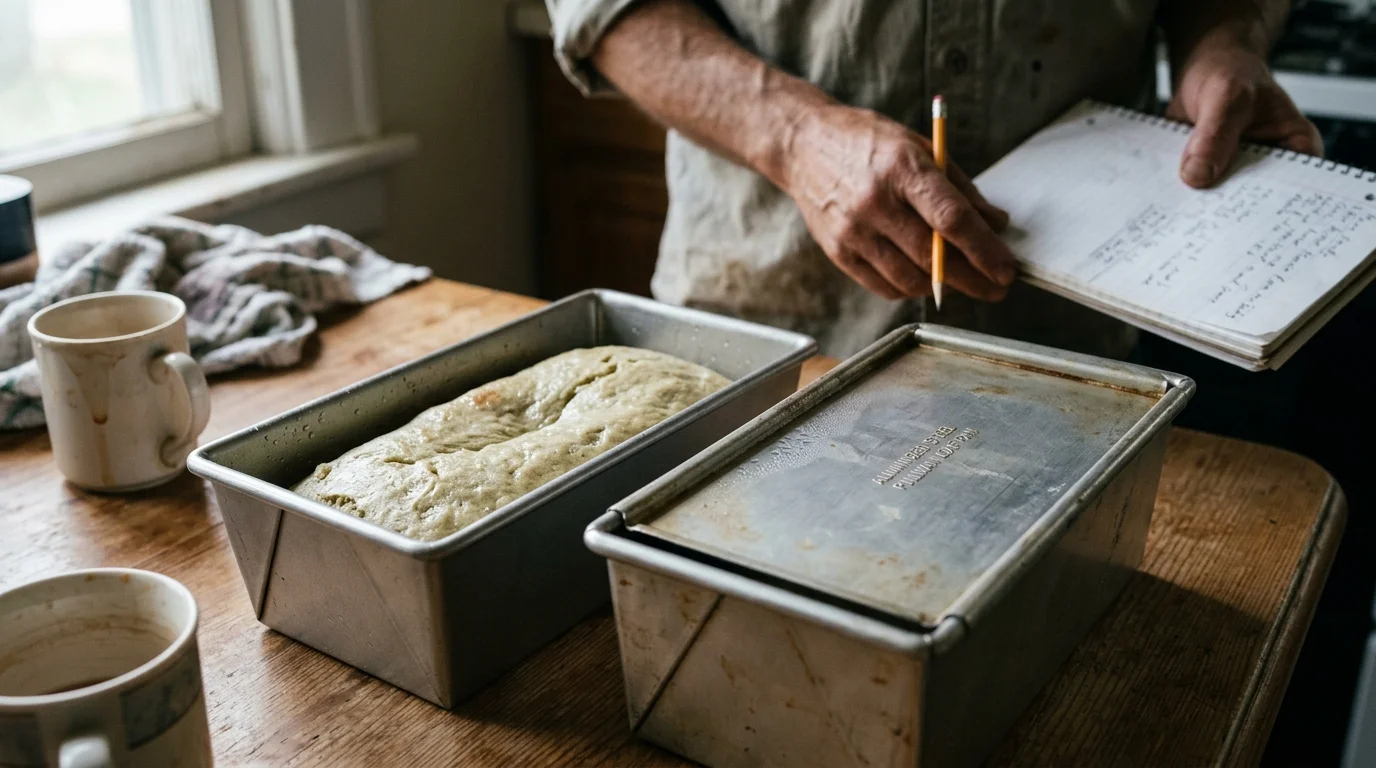
A heavy-gauge shokupan bread pan solves this atmospheric imbalance by sealing the baking environment. As heat penetrates the metal, water within the dough turns to steam but cannot escape through the locked lid seams.
This trapped steam instantly saturates the tiny internal headspace to 100% relative humidity. The high vapor pressure halts surface evaporation and keeps the dough’s exterior skin flexible during the critical first ten minutes of baking.
According to culinary equipment evaluations by Serious Eats, maintaining high ambient surface moisture during the early bake phase is essential for starch gelatinization. Gelatinized surface starches bake into a tissue-thin, translucent boundary rather than a thick, leathery crust.
“Trapping moisture directly against the dough exterior transforms ambient oven heat from a drying force into an active steaming environment. You get maximum spring without a tough crust.”
Because the sliding lid contains the steam directly around the dough mass, kitchen humidity fluctuations become irrelevant. Your bread bakes inside an isolated microclimate unaffected by your apartment’s muggy summer air.
Material Science: Aluminized Steel vs. Raw Steel, Aluminum, and Cast Iron
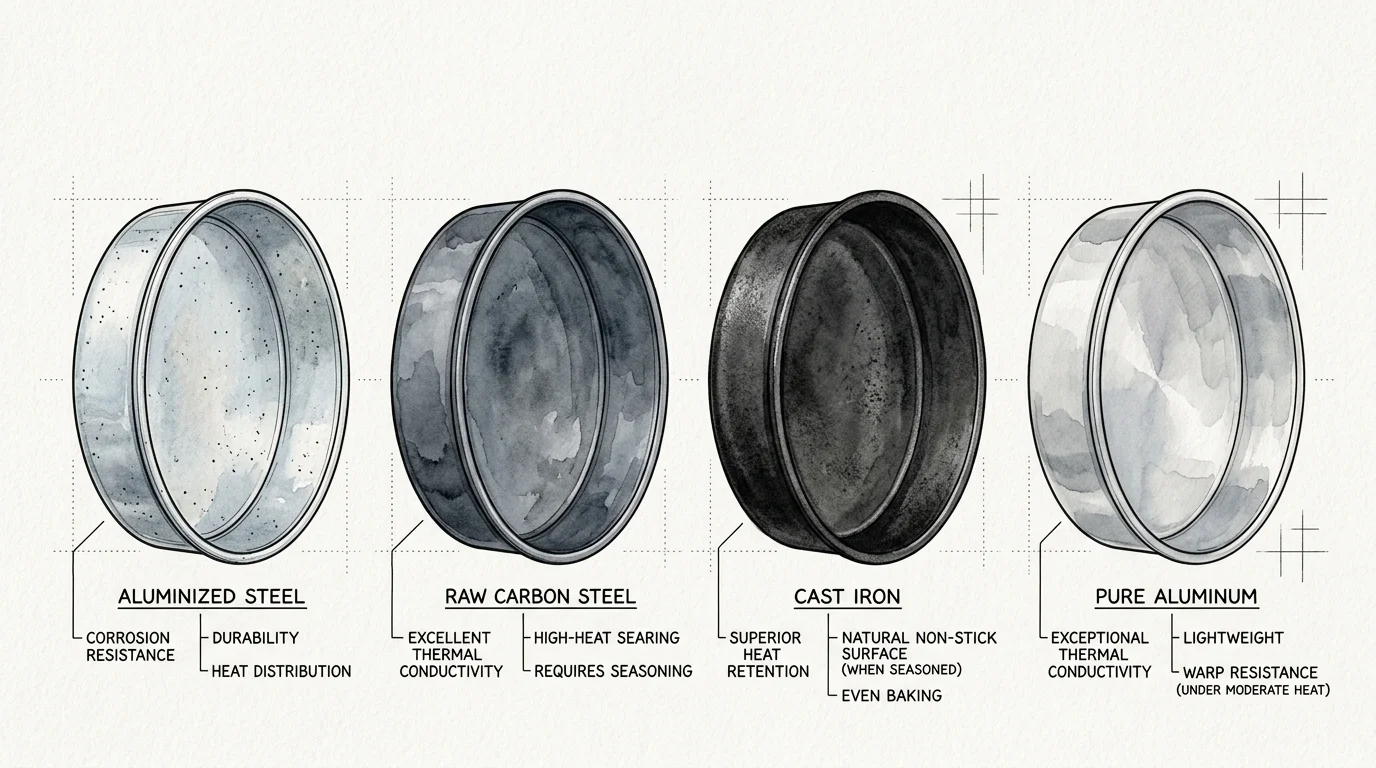
Aluminized steel is the worldwide standard for commercial bakeries because it combines the best attributes of two distinct metals. It features low-carbon steel hot-dipped in an aluminum-silicon alloy on both sides.
Comparing aluminized steel to ceramic and stoneware pans highlights how metal’s rapid conductivity prevents underbaked cores in fast-rising yeast breads.
The core steel plate gives the pan superior structural rigidity, measured by its gauge. In metal manufacturing, “gauge” refers to the thickness of the metal, where lower numbers mean thicker (and usually better) metal stock.
Thick 22-gauge or 24-gauge aluminized steel resists flexing under internal dough pressure. Meanwhile, the outer aluminum layer provides rapid heat distribution, which defines how evenly the pan spreads heat across its surface.
Pure aluminum bakeware spreads heat quickly, but it lacks physical strength. Under the powerful upward force of expanding bread dough, lightweight aluminum pans bulge outward, causing warped, distorted loaves.
Raw steel pans offer structural stiffness, but they transfer heat sluggishly and rust aggressively in humid environments. You must keep them continuously seasoned, meaning coated with a protective layer built up through oil and heat.
Cast iron bakeware provides massive heat retention, but its excessive thermal mass works against delicate milk bread. Heavy iron scorching burns the milk sugars and butter on the bottom crust long before the loaf center reaches doneness.
You may also encounter tri-ply bakeware, featuring three layers of metal bonded together for better heat distribution. While tri-ply excels in stovetop skillets, it adds unnecessary weight and expense to loaf pans without improving steam retention.
Aluminized steel strikes the precise balance required for enriched doughs. Its aluminum coating reflects gentle radiant heat while its rigid steel base prevents the sliding lid from jamming in its tracks.
Sliding Lids vs. Open Tins: Calculating Volume Ratios and Crumb Density
A standard open loaf tin relies on unbounded upward expansion. As yeast ferments and water vaporizes, the dough bubbles upward freely, creating an arched loaf with a low-density top and a dense base.
Once cooled, slicing into such an exceptionally delicate crumb requires one of the best serrated bread knives to avoid crushing the soft square shape.
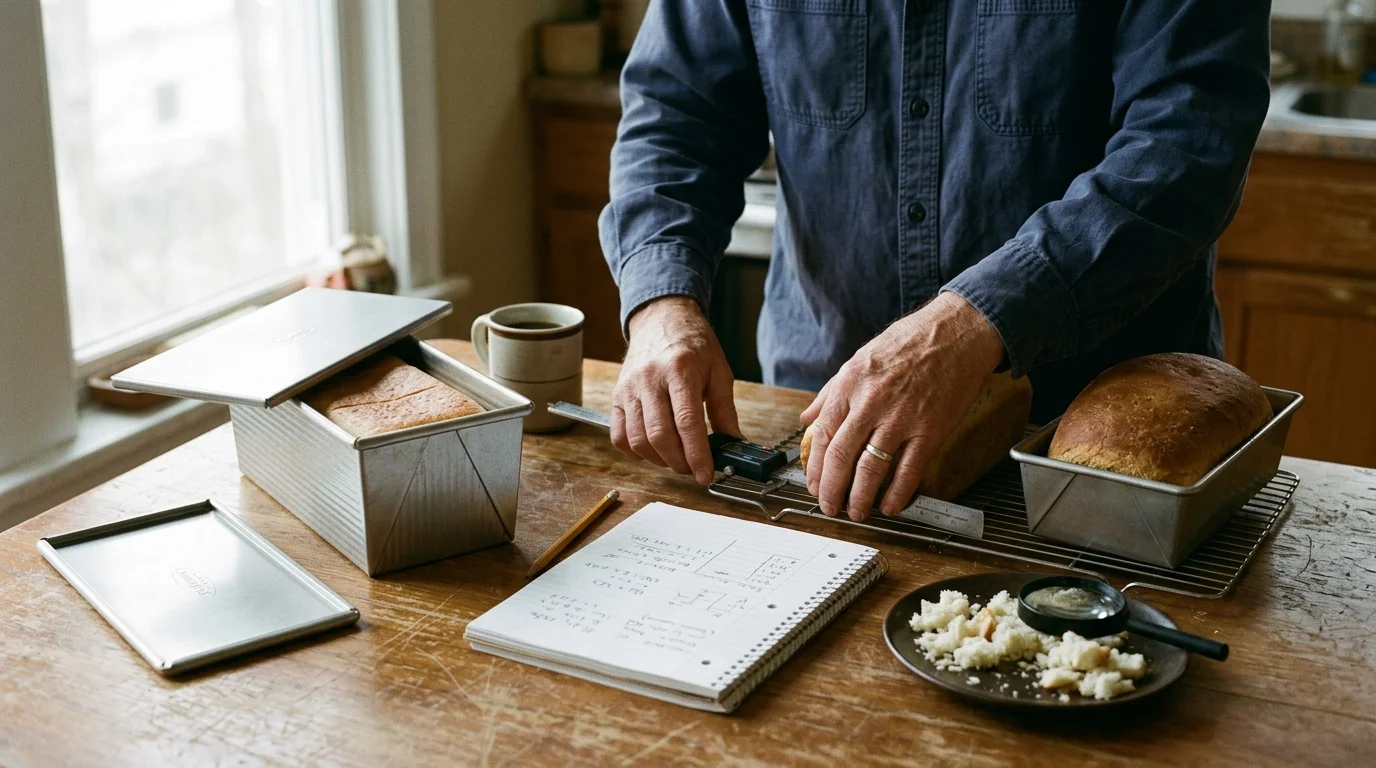
In contrast, a pain de mie pan comparison reveals an entirely closed mechanical system. The sliding lid imposes a rigid physical ceiling that caps total volume expansion inside the baking chamber.
As the dough reaches the roof of the Pullman pan, the trapped steam and dough expansion exert equal outward force against all six interior walls. The dough cannot expand further, so gas cells redistribute laterally into a tight, uniform honeycomb matrix.
This constrained expansion creates the distinctive square crumb structure prized for Japanese sandos and breakfast toast. Every slice features identical dimensions, perfectly square corners, and an ultra-soft texture with zero cavernous holes.
The enclosed environment also alters temperature gradients across the loaf exterior. In an open tin, exposed dough tops receive direct radiant heat from the oven roof, causing rapid browning and thick crust development.
Inside a covered Pullman pan, heat transfers through the metal lid by conduction and through trapped steam by convection. The continuous steam bath suppresses the Maillard reaction along the dough surface until late in the bake cycle.
Consequently, the crust on a Pullman-baked shokupan remains paper-thin and soft to the bite. You consume virtually no leathery outer skin, which maximizes the tender mouthfeel of the enriched crumb.
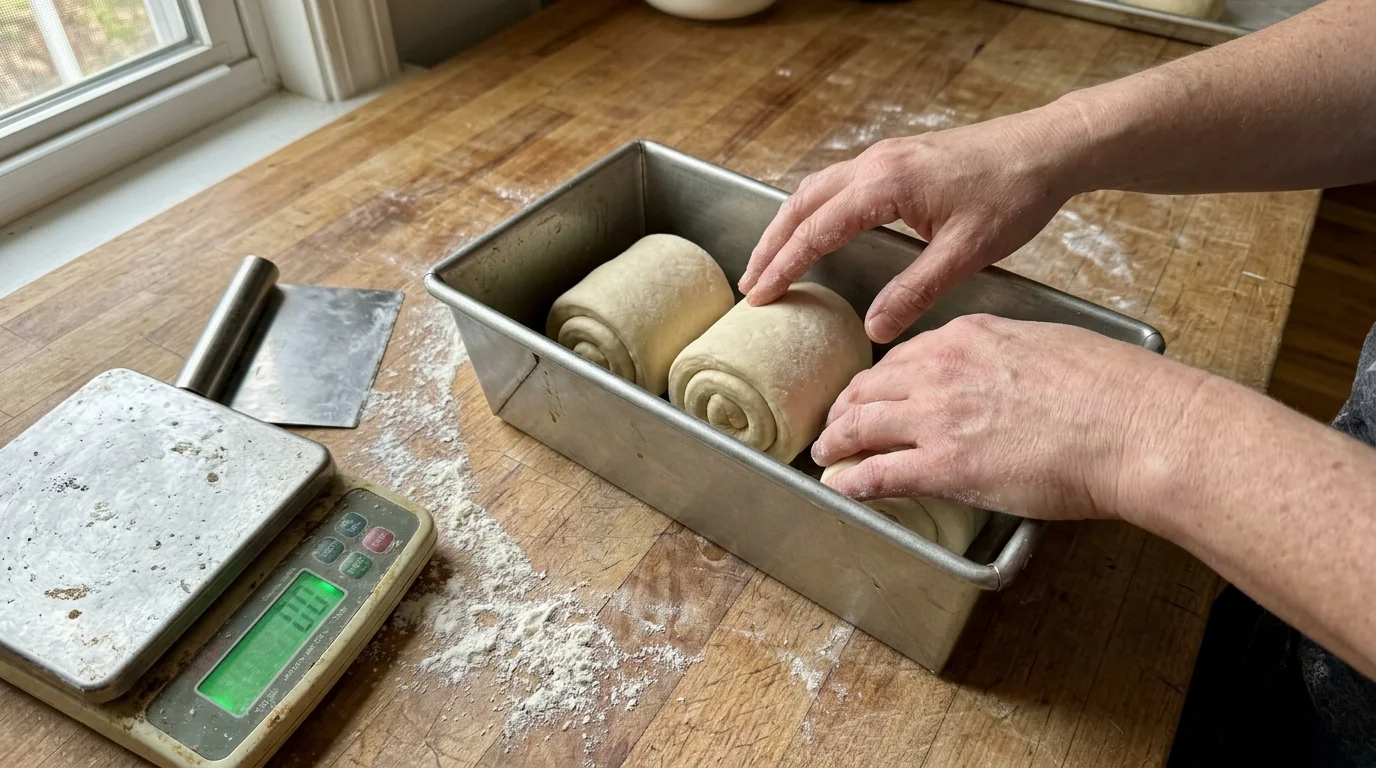
A Worked Formulation Scenario: 450-Gram Shokupan in a 9x4x4-Inch Pullman Pan
Achieving a perfectly square loaf without dense, compressed dough requires precise pan-volume-to-dough-weight calculations. If you underfill the pan, the loaf fails to reach the lid corners; overfill it, and the dough forces the lid off its tracks.
Maintaining a steady 82°F proofing environment can be tricky during seasonal shifts, where using specialized fermentation boxes or seedling heat mats ensures predictable dough timing.
Consider a standard commercial 9x4x4-inch Pullman pan. First, calculate the total interior volume: 9 inches × 4 inches × 4 inches equals 144 cubic inches, which converts to 2,360 cubic centimeters.
Japanese milk bread formulations require a dough density ratio between 4.0 and 4.2 cubic centimeters per gram of dough. Dividing 2,360 cubic centimeters by 4.1 yields a target dough weight of roughly 575 grams total.
Use this precise baker’s percentage formulation to hit that exact target for your apartment bake:
- Bread Flour (12.7% protein): 320 grams (100%)
- Whole Milk (cold): 185 grams (57.8%)
- Yudane Starch Gel (50g boiling water mixed with 40g flour): 90 grams (28.1%)
- Granulated White Sugar: 30 grams (9.4%)
- Unsalted Butter (softened): 25 grams (7.8%)
- Fine Sea Salt: 6 grams (1.9%)
- Instant Yeast: 4 grams (1.25%)
Knead your dough to complete windowpane extension, then allow an initial bulk fermentation of 45 minutes at 82°F. Divide the dough into three equal 191-gram portions, shape them into smooth cylinders, and arrange them inside the greased pan.
Slide the lid onto the pan tracks, but leave it cracked open by two inches so you can monitor dough rise. In a humid southern kitchen, monitor your proofing height closely rather than watching the clock.
Close the sliding lid fully when the crowns of the dough rolls reach exactly 0.75 inches below the top rim of the pan. This leaves roughly 20% headspace for the explosive oven spring driven by internal steam expansion.
Slide the closed pan onto the center rack of an oven preheated to 350°F (177°C). Bake undisturbed for 32 minutes, resisting the urge to open the oven door or slide back the lid prematurely.
According to commercial baking trials documented by America’s Test Kitchen, enriched sandwich breads require an internal crumb temperature of 198°F to 202°F to stabilize starches without scorching fats. Verify this target with an instant-read probe immediately after unmolding.
Depan the loaf within 60 seconds of removal from the oven onto a raised wire rack. Rapid unmolding prevents escaping steam from condensing against the metal pan walls, which would otherwise make your bottom crust soggy.
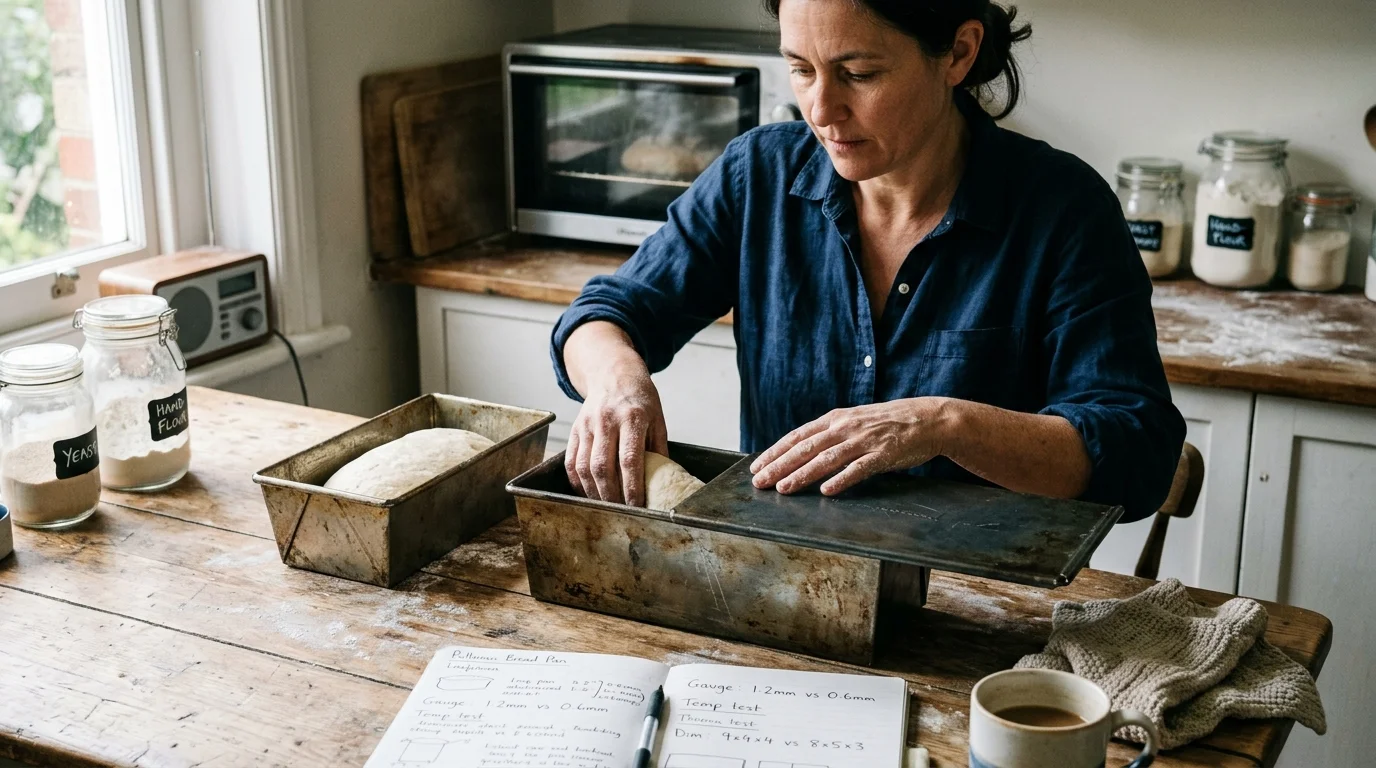
Pullman Bread Pan Comparison: Gauge, Dimensions, and Thermal Efficiency
Choosing the correct pan requires evaluating steel gauge, surface coating, and lid track design. The table below details four commercial-grade options suitable for home bakers.
| Pan Model | Material & Gauge | Interior Dimensions | Volume Capacity | Lid Channel Style | Non-Stick Coating Type |
|---|---|---|---|---|---|
| USA Pan Pullman Loaf Pan | Aluminized Steel (22-Gauge) | 9.0 x 4.0 x 4.0 inches | 2,360 cm³ (1.5 lb loaf) | Hemmed Slide Rail | Clear Silicone (Americoat) |
| Chicago Metallic Commercial II | Aluminized Steel (24-Gauge) | 13.0 x 4.0 x 4.0 inches | 3,408 cm³ (2.0 lb loaf) | Reinforced Wire Flange | PTFE-Based Non-Stick |
| Chefmade Pullman Loaf Pan | Heavy Carbon Steel (0.8mm) | 8.5 x 4.5 x 4.7 inches | 2,948 cm³ (1.0 lb loaf) | Drop-and-Slide Lip | Food-Grade Silicone Glaze |
| Sanneng Commercial Shokupan Pan | Aluminized Steel (1.0mm) | 7.7 x 4.2 x 4.3 inches | 2,275 cm³ (450g dough) | Tapered Channel Lock | Dual-Sided Silicone Resin |
Notice the coating variations across these commercial pans. Most modern industrial bakeware relies on clear silicone resins rather than PTFE, which stands for polytetrafluoroethylene, the chemical name for Teflon-style non-stick coatings.
Silicone coatings offer superior release for high-sugar milk bread formulations without deteriorating at higher baking temperatures. You may also find bakeware labeled with ceramic coating, a newer non-stick surface made from silica minerals.
Ceramic pans provide safe release, but they scratch easily and shed their slickness when exposed to repeated yeast dough expansions. Heavy silicone-coated aluminized steel remains far more durable for weekly bread production.
Check the maximum thermal tolerance to ensure your pan is fully oven-safe, meaning it can go into the oven without structural damage or coating breakdown. Look for an oven-safe rating of at least 450°F (232°C).
Keep in mind that while Pullman pans are not induction compatible, which means they do not work on induction cooktops requiring magnetic contact, their thermal conductivity in standard convection and radiant ovens is unmatched.
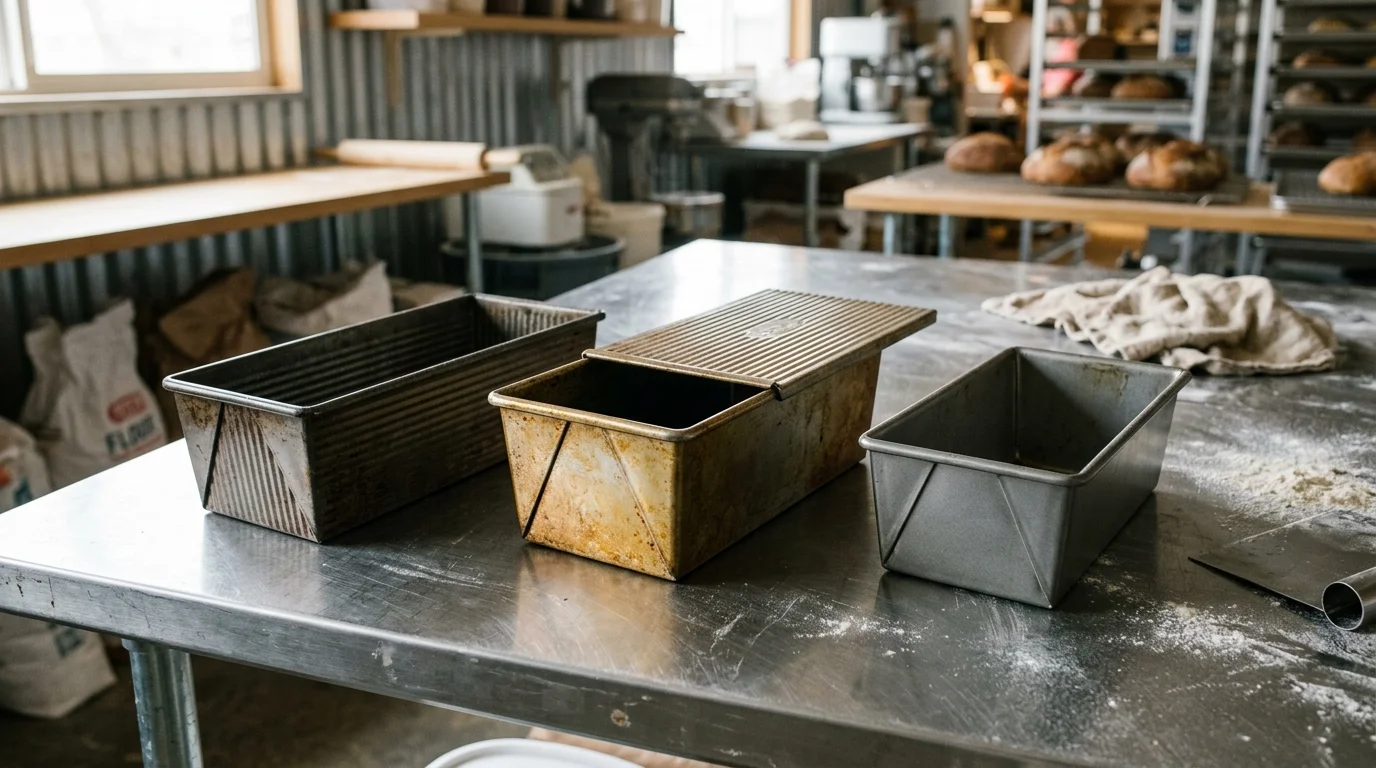
Top Pullman Pan Selections: Everyday, Commercial-Grade, and Best Value
The USA Pan 9x4x4 Pullman Loaf Pan with Lid is our top pick for everyday home bakers. Its 22-gauge aluminized steel body features a corrugated, fluted surface that promotes multi-directional airflow beneath the dough.
The fluted ridges reduce surface contact between the loaf and the metal, guaranteeing effortless release when paired with the company’s proprietary Americoat silicone glaze. The sliding lid tracks are hemmed tightly to prevent steam leaks without binding.
If you bake in bulk for a large household, the Chicago Metallic Commercial II 13-inch pan delivers professional-grade throughput. Its extended length produces enough identical square slices for a full week of packed lunches from a single bake.
Wirecutter’s extensive kitchenware reviews confirm that Chicago Metallic’s reinforced rim construction prevents pan warping over years of heavy oven use. However, its 13-inch body requires ample clearance in smaller apartment appliances.
For budget-conscious bakers, the Chefmade Pullman Pan offers excellent value. It uses thick 0.8mm carbon steel with rolled rims, corrugated sidewalls, and bottom vent perforations that speed moisture evacuation during the final five minutes.
For searing beautiful golden crust edges on sandwich loaves, the Sanneng 450g pan leads the category. Its darker exterior treatment absorbs radiant energy slightly faster, crisping the outer perimeter while keeping the interior cloud-soft.
Debunking Bakeware Myths and Proper Care for Commercial Coatings
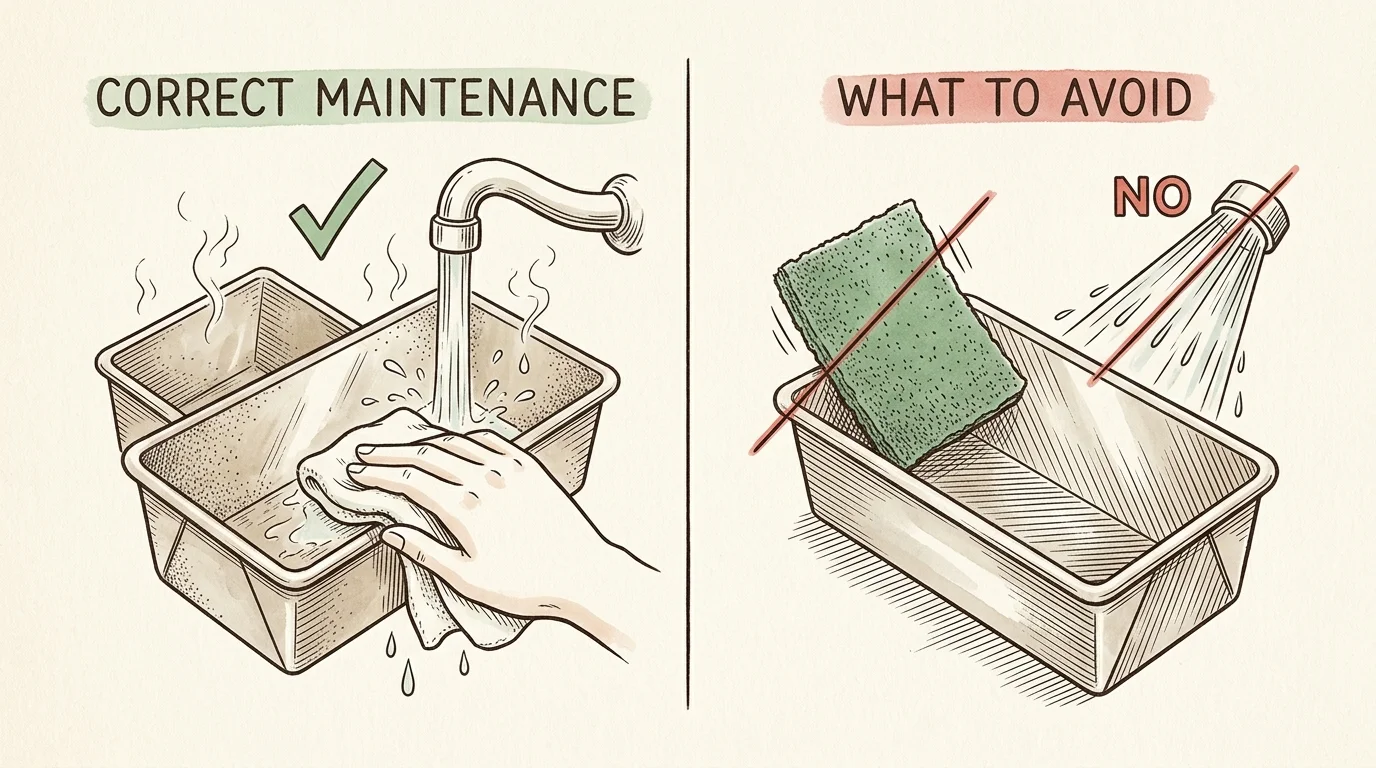
A widespread bakeware myth suggests you must scrub aluminized steel in hot, soapy water after every bake. In truth, washing with abrasive detergents strips away non-stick silicone glazes and encourages oxidation on exposed cut steel edges.
Commercial bakeries rarely submerge bread pans in water. Instead, wipe the cooled pan clean with a dry or lightly damp microfiber towel to clear loose crumbs and oil droplets.
Never place an aluminized steel pan inside an automatic dishwasher. Dishwasher detergents contain harsh alkaline salts that chemically etch aluminum surfaces, leaving a dull, chalky film that permanently ruins the finish.
Another persistent myth claims you must coat non-stick Pullman pans with heavy layers of cold solid butter. Milk solids inside whole butter burn at 350°F, creating a stubborn, gummy varnish that degrades non-stick release properties over time.
“Avoid greasing non-stick commercial bakeware with butter solids. Use a quick wipe of high-smoke-point neutral oil or clarified ghee to protect your silicone finish.”
If your pan accumulates grease residue, clean it gently with warm water, mild liquid dish soap, and a non-abrasive sponge. Dry the pan immediately by placing it inside a still-warm, turned-off oven for ten minutes.
This drying routine ensures moisture evaporates from the tight lid tracks and hemmed rims where rust tends to start. Store your pan with the lid completely removed so air circulates freely throughout the chamber.
Oven Logistics for Low-Clearance Apartment Kitchens
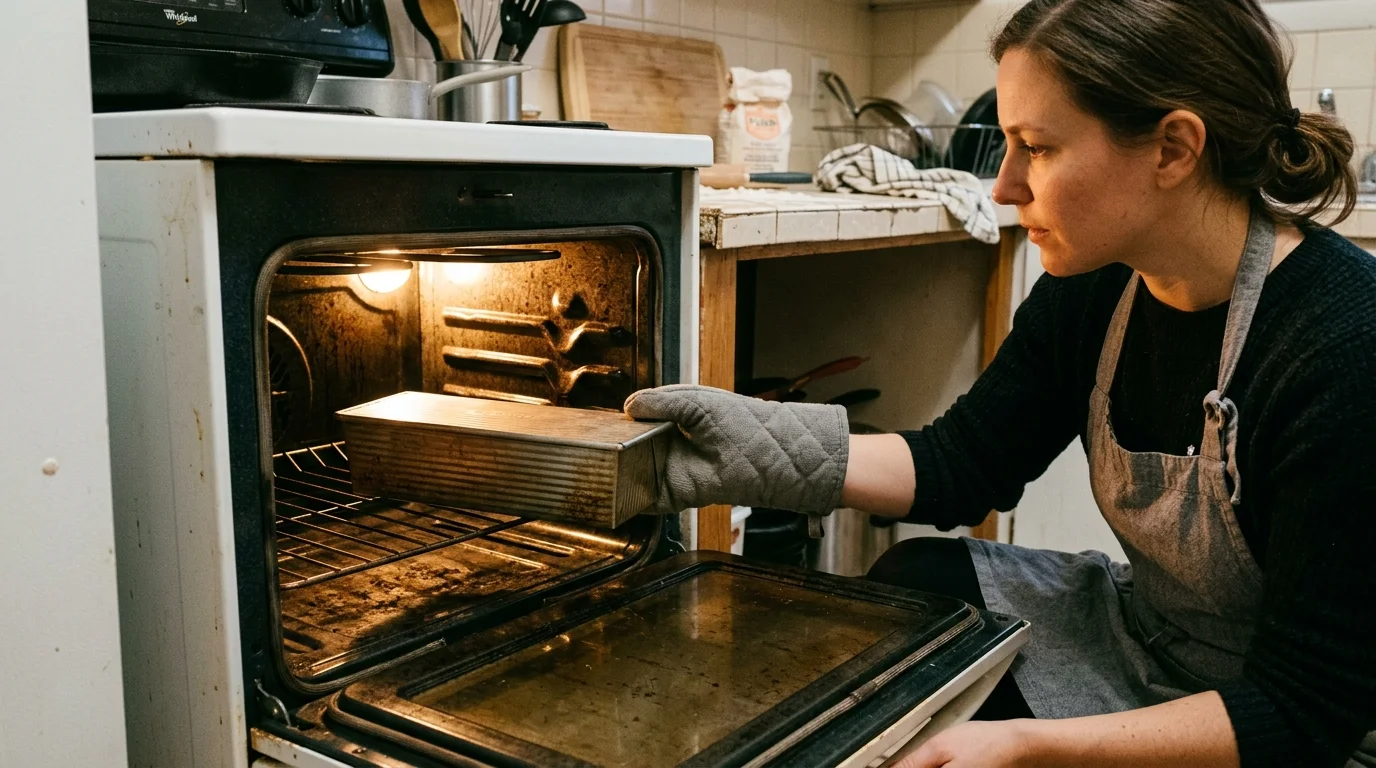
Baking in an apartment kitchen introduces physical obstacles that suburban recipes ignore. Compact apartment ranges frequently feature shallow cavities with upper broiler coils hanging low into the usable baking space.
A 9x4x4 Pullman pan stands over four inches tall with its sliding lid installed. Placing this tall metal box on a standard center rack brings the pan lid dangerously close to the upper heating elements.
Intense proximity to top electric coils causes localized overheating, scorching the top of your loaf through the lid while the center dough remains raw. You must lower your oven rack to the lowest or second-lowest position.
Aim to position the pan so its vertical center aligns exactly with the central airflow plane of the oven cavity. Ensure you have at least three inches of vertical clearance between the top of the lid and any exposed elements.
Slide clearance is another spatial limitation in galley kitchens. Pullman lids slide horizontally along rails, which means you need at least nine inches of clearance directly in front of the pan to open it.
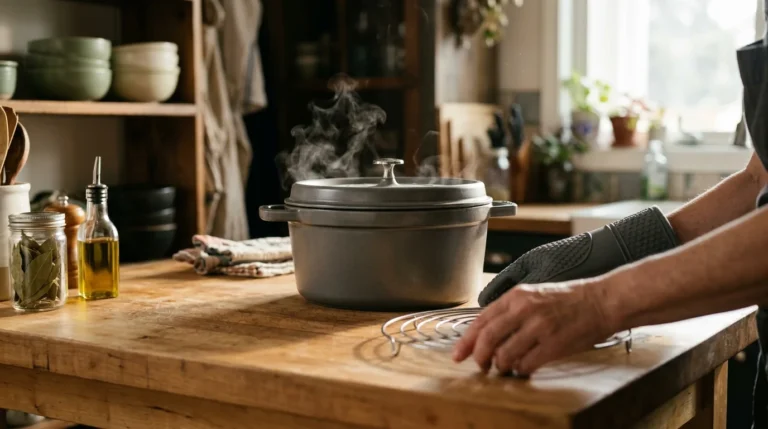
Always remove the entire pan from the oven using dry, heat-resistant silicone oven mitts before sliding back the lid. Never try to slide the lid while the pan rests inside a cramped oven, as you risk bending the tracks or bumping the ceiling element.
Let the pan sit on a heatproof trivet for 60 seconds before sliding the lid off. This pause allows internal steam pressure to equalize safely, preventing hot vapor burns when you disengage the channel lock.
Frequently Asked Questions
Can I bake in an aluminized steel Pullman pan without using the lid?
Yes, removing the sliding lid turns your Pullman pan into a commercial high-sided loaf tin. Your dough will rise freely above the rim to form a rounded, domed top crust with an open crumb texture.
Why did my shokupan dough spill out from the lid tracks during baking?
Dough overflows through the lid tracks when the pan is overfilled or over-proofed before baking. Ensure total dough weight matches pan capacity and close the lid when the dough sits 0.75 inches below the rim.
Do I need to grease a non-stick aluminized steel bread pan before baking?
Yes, lightly greasing the interior walls and lid underside with neutral vegetable oil or baker’s spray is recommended. High-sugar milk bread doughs can adhere to bare silicone surfaces under intense steam pressure.
Why are there small holes drilled into the bottom of some Pullman pans?
Bottom vent holes permit excess steam to vent during the final baking stage, preventing soggy bottom crusts. They also equalize internal air pressure so the baked loaf releases effortlessly when inverted.
How do I stop my sliding lid from sticking in the pan tracks during the bake?
Wipe the lid rails and pan channels clean of baked-on residue, and apply a light drop of oil to the tracks. Never force a bent lid into place, as thermal metal expansion will lock it shut.
Disclaimer: Product prices and availability change frequently. Prices shown were accurate at time of writing but may have changed. We may earn a small commission from purchases made through links on this site, at no extra cost to you. Always verify current pricing on the retailer’s website before purchasing.