
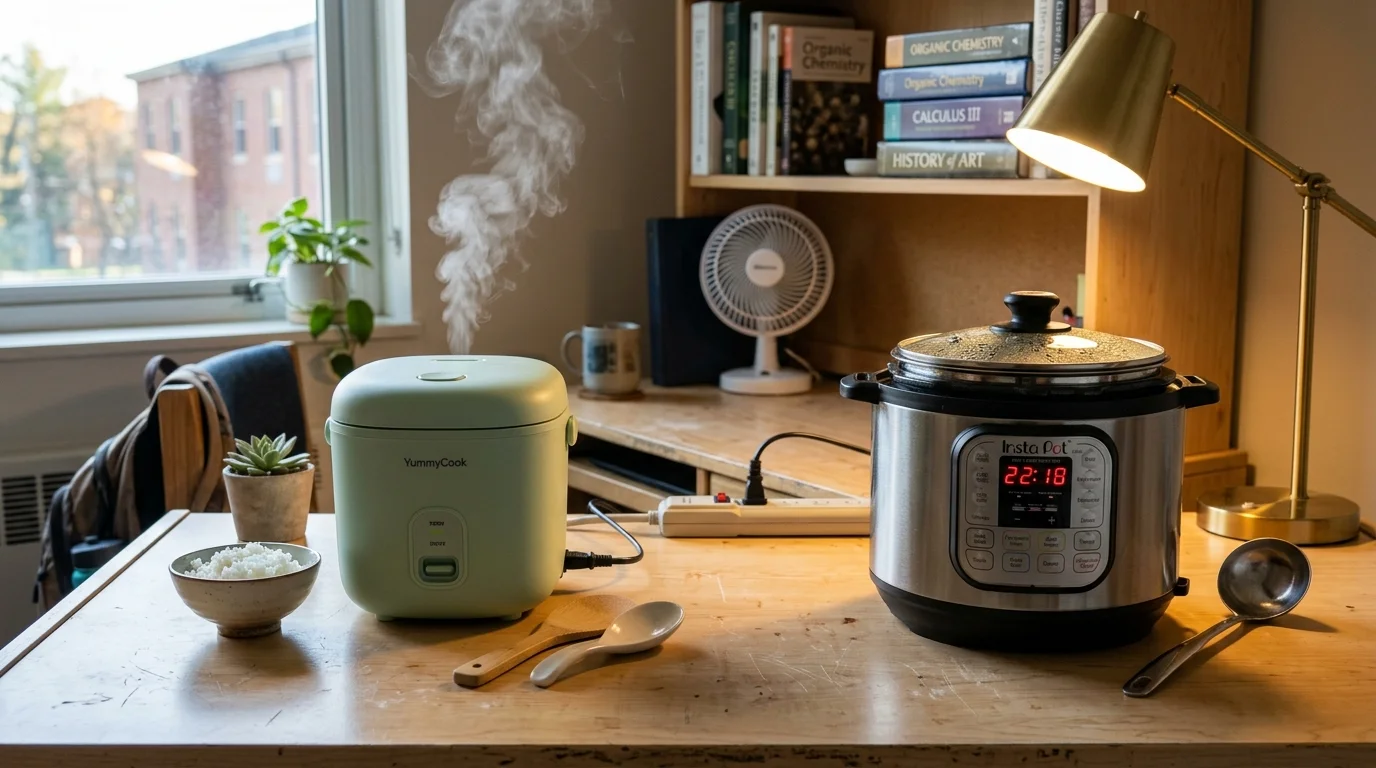
Living in a college dorm room limits your cooking power, especially when your shared circuit caps usable output at 600 watts. Choosing the wrong appliance will trip the breaker or shower your desk in sticky starch foam.
Understanding the operational differences between electric versus stovetop appliances is essential when setting up a functional cooking station without a traditional kitchen range.
While standard reviews evaluate cookers on automated menu options, this analysis measures electrical surges against shared wiring and examines vent hydrodynamics during simultaneous rice and protein cooking.
Understanding the physical thresholds between a 200-watt cooker and a 500-watt multi-cooker guarantees a hot meal without darkening your entire residence floor.
Electrical Demands: Circuit Breaker Limits in Shared Dorms
Before plugging in any appliance, you must understand your room’s electrical infrastructure. Campus facilities often divide a single 15-amp branch circuit across two or three adjacent student rooms.
If you need rapid hot water for tea or instant noodles, pairing your setup with sub-600W electric kettles prevents unexpected circuit overloads.
Engineers define wattage as how much power an appliance uses, where higher usually means faster cooking. However, your wall outlet provides a finite supply of current.
Under the National Electrical Code, a standard 120-volt, 15-amp circuit supports a continuous load of only 12 amps or 1,440 watts. Dividing that branch among multiple living quarters leaves you with an effective ceiling of roughly 600 watts.
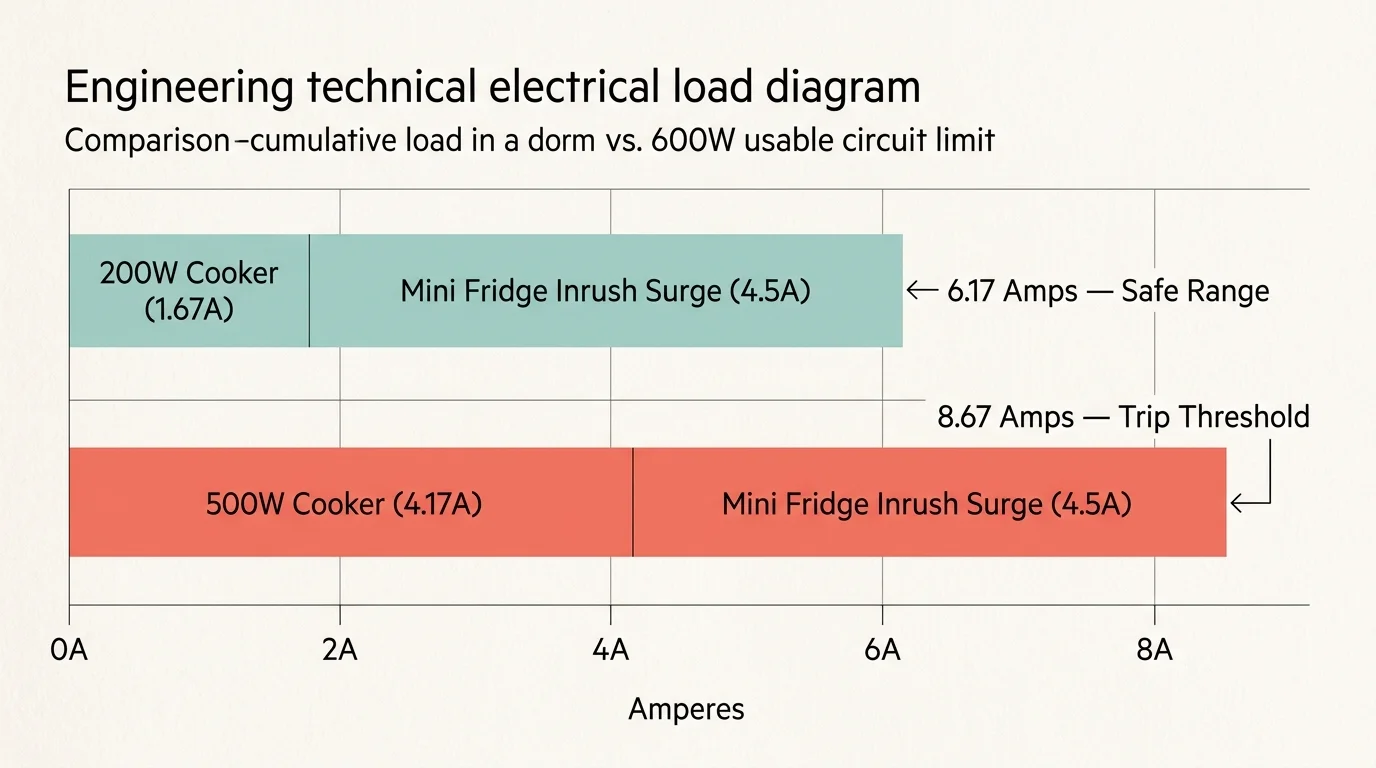
A dorm room rice cooker low wattage profile protects you from unexpected blackouts. Using Ohm’s Law, a 200-watt cooker draws approximately 1.67 amps at 120 volts.
In contrast, a 500-watt multi-cooker demands 4.17 amps. That larger draw consumes nearly 70 percent of your total allotted 5-amp room share.
According to Consumer Reports, running heating appliances alongside refrigeration units represents the leading cause of tripped residential breakers.
Your room’s compact refrigerator draws between 1.0 and 1.5 amps while cooling. When its compressor engages, the motor produces a momentary inrush surge that spikes up to 4.5 amps.
If you run a 500-watt appliance during that refrigeration spike, the total draw hits 8.67 amps. That sudden surge trips the panel breaker instantly.
Operating a 200 watt cooker limits the combined draw to roughly 6.17 amps during compressor startup. Standard inverse-time thermal breakers easily tolerate this brief spike without cutting power.
“Breakers trip to prevent electrical fires inside wall cavities. Operating near maximum capacity invites persistent nuisance trips and degrades circuit hardware.” — Master Electrician
You must also verify your residence hall handbook. Many campus housing policies explicitly prohibit open-element hot plates, allowing only enclosed-element cookers rated under 700 watts.
The Physics of Starch Venting: Boiling Mechanics and Foam Control
Cooking grains creates a physical challenge inside small cooking vessels. As water reaches 60°C to 85°C (140°F to 185°F), rice starches undergo gelatinization.
For meals requiring dry heat rather than simmering liquids, examining compact air fryers and heated lunchboxes reveals other low-wattage cooking options.
During this thermal phase, amylose and amylopectin molecules leach into the water. This starch infusion dramatically increases the liquid’s surface tension.
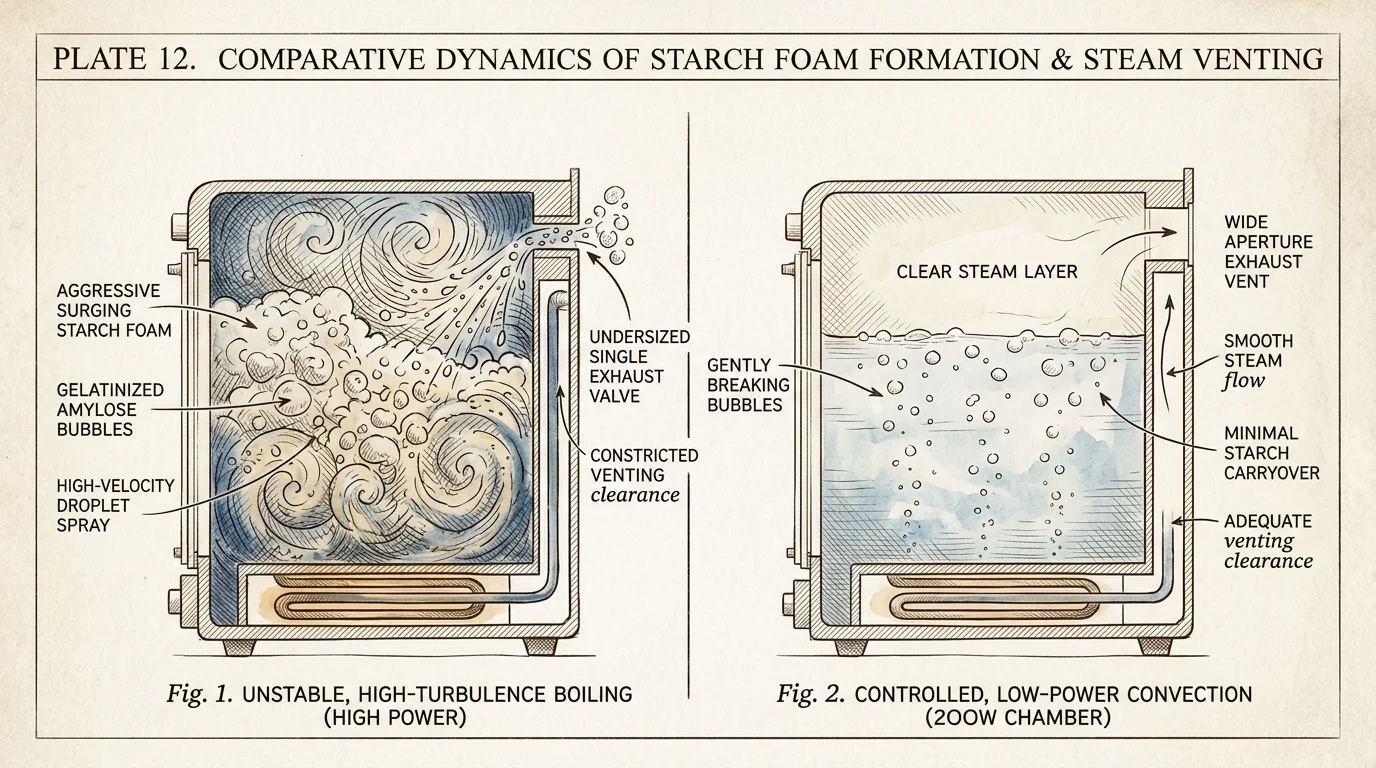
Steam bubbles cannot burst easily when trapped in this viscous liquid film. Instead, they stack into a dense, expanding foam column that climbs toward the lid vent.
A 500-watt cooker generates rapid boil conditions, which heats water faster than standard models. This aggressive heat creates violent thermal agitation inside the pot.
The resulting rolling boil drives starch foam upward at high velocity. Without adequate headspace, the bubbling froth quickly overwhelms standard exhaust vents.
A mini rice cooker no boilover experience depends entirely on controlling this thermal agitation. At 200 watts, the element delivers gentle, stable heat that simmers water without violent bubbling.
As Serious Eats notes, controlling heat intensity directly governs liquid viscosity and bubble stability when cooking starches.
Lower kinetic energy gives the steam bubbles time to collapse naturally. The surface foam remains several centimeters below the lid rim throughout the cycle.
This gentle simmer prevents the sticky geysers that ruin desks and notebooks. Slower heat input protects your meal from burning onto the inner pot base.
Cooking Brown Rice and Protein Under Strict Power Constraints
Cooking whole grains requires significant moisture and persistent thermal energy. Brown rice retains its fibrous outer bran layer, which slows down water absorption compared to white rice.
Students looking to streamline breakfast prep can also use specialized compact egg cookers to steam protein reliably with minimal electrical consumption.
Students seeking alternate ways to prepare sides without drawing heating-element wattage can explore microwave crisper pans and silicone steam bags as low-power alternatives.
You must adjust your liquid ratios when working with compact appliances. While white rice needs a 1.25:1 water-to-grain ratio, brown rice demands a 1.75:1 or 2:1 ratio.
In a small appliance, quart capacity measures how much the appliance holds, where 4 quarts equals about 4 liters. Mini cookers generally provide a modest 0.2 to 0.4 quart capacity.
Advanced countertop appliances feature preset programs, which are automatic settings for common tasks like “rice” or “pressure cook.” However, basic 200W models rely solely on a mechanical thermistor switch.
These mechanical switches depress the heating element until the liquid boils off. Once the internal temperature rises past 100°C (212°F), the internal magnet releases to trigger the warming mode.
The keep warm setting maintains food at serving temperature after cooking. You should allow brown rice to rest on this setting for 10 minutes to finish steaming.
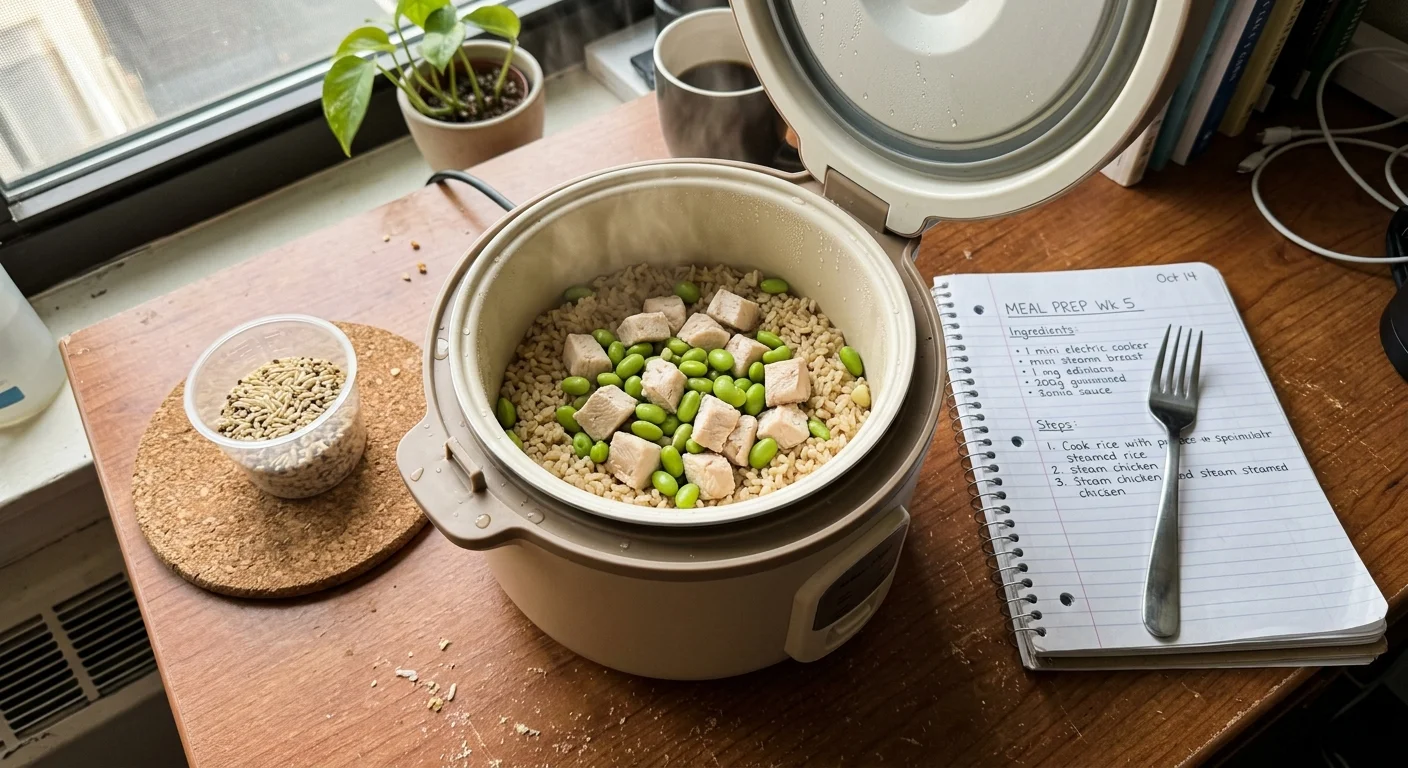
Adding a protein layer requires precise portion management. You can place four ounces of sliced chicken breast or firm tofu directly atop the seasoned rice.
As the liquid simmers, rising steam cooks the protein thoroughly. This eliminates the need for a separate skillet or secondary electrical device.
Never confuse these compact units with pressure cookers. Standard multi-cookers utilize PSI, which means pounds per square inch and measures internal vessel pressure, whereas travel cookers vent steam freely.
Similarly, these appliances do not feature convection, which uses a fan to circulate hot air for more even cooking. Instead, they rely strictly on direct thermal conduction.
Budget-conscious students will appreciate that basic 200W models omit delayed start, which allows you to program the appliance to start cooking later. Manual operation reduces internal electrical complexity and extends device longevity.
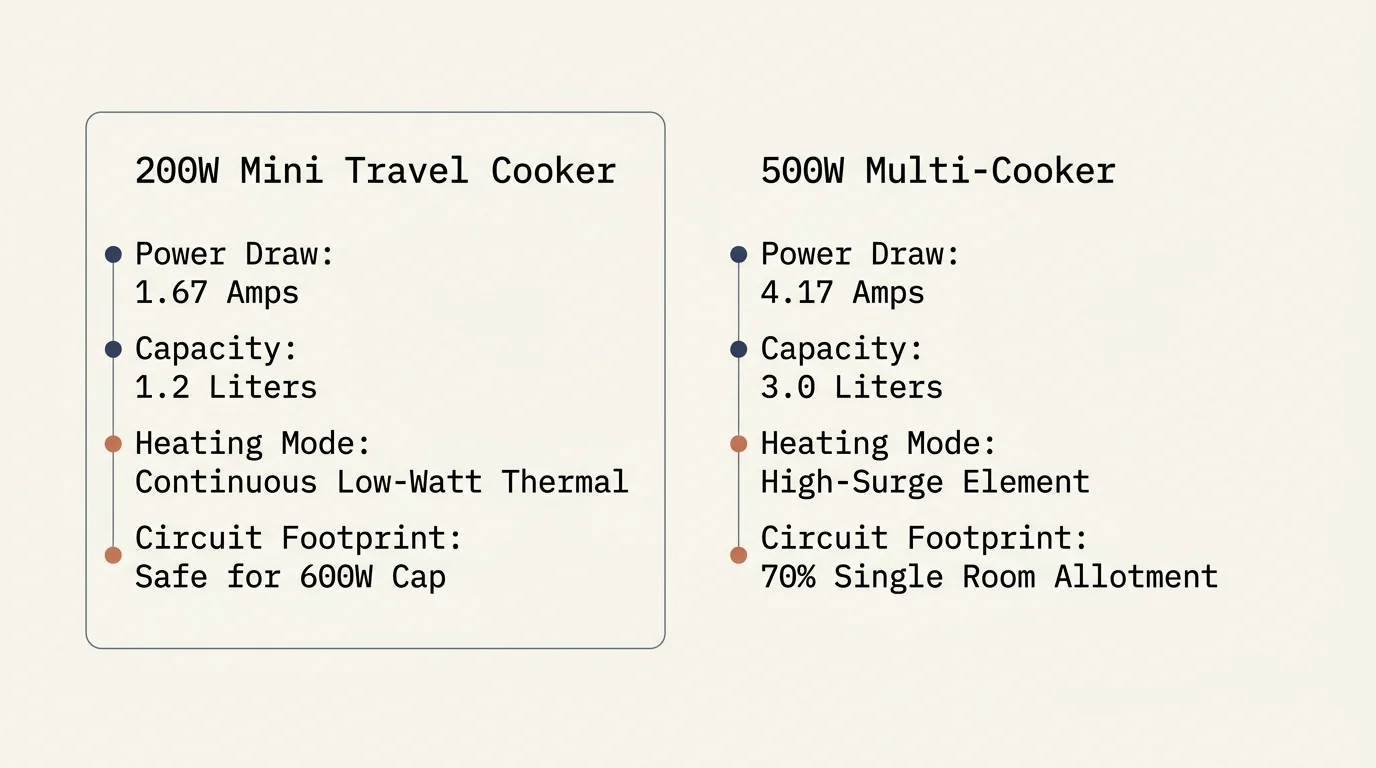
Head-to-Head Specification Comparison: 200W vs. 500W Appliances
Evaluating physical dimensions, electrical draws, and construction materials helps you identify the right model for your desk. Countertop real estate remains strictly limited in shared dorm rooms.
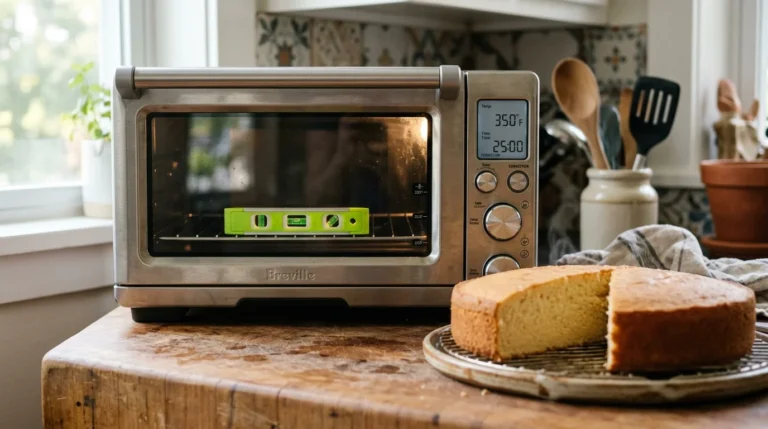
Vertical clearance issues are equally critical when considering low-profile toaster ovens that must vent thermal exhaust safely beneath dorm shelving.
For apartments with standard power allowances, comparing an Instant Pot versus a traditional slow cooker illustrates how higher wattage enables pressure-driven flexibility.
| Appliance Model | Power Draw | Fluid Capacity | Vent Style | Dimensions (Inches) | Weight |
|---|---|---|---|---|---|
| Dash Everyday Mini Rice Cooker | 200W (1.67A) | 0.2 Quarts (0.5 cup raw) | 3mm Single Lid Port | 8.3 x 6.5 x 6.3 | 2.2 lbs |
| White Tiger Mini Rice Cooker 1.0L | 200W (1.67A) | 0.4 Quarts (1.0 cup raw) | Baffled Micro-Vent | 6.5 x 6.5 x 7.8 | 2.8 lbs |
| Aroma ARC-363-1NGB Pot Cooker | 500W (4.17A) | 0.75 Quarts (3.0 cups raw) | Glass Lid Pin-Vent | 8.1 x 8.1 x 8.0 | 3.1 lbs |
| Bear Compact Multi-Cooker | 500W (4.17A) | 1.2 Quarts (4.0 cups raw) | Labyrinth Seal Lid | 9.2 x 8.4 x 7.9 | 4.2 lbs |
The 200W Dash Everyday Mini represents the absolute lowest power footprint on the market. Its ultra-compact enclosure occupies less surface space than an open textbook.
The White Tiger 1.0L matches the Dash’s low 200W draw while incorporating a superior locking lid. That lid features an internal condensation collector to catch stray droplets.
Stepping up to 500W units provides larger interior pans for meal prepping multiple servings. However, the wider footprints quickly claim half your usable study desk.
You must weigh these spatial tradeoffs against your dietary needs. Single-serving meals rarely justify the increased physical bulk and electrical risk of a 500W cooker.
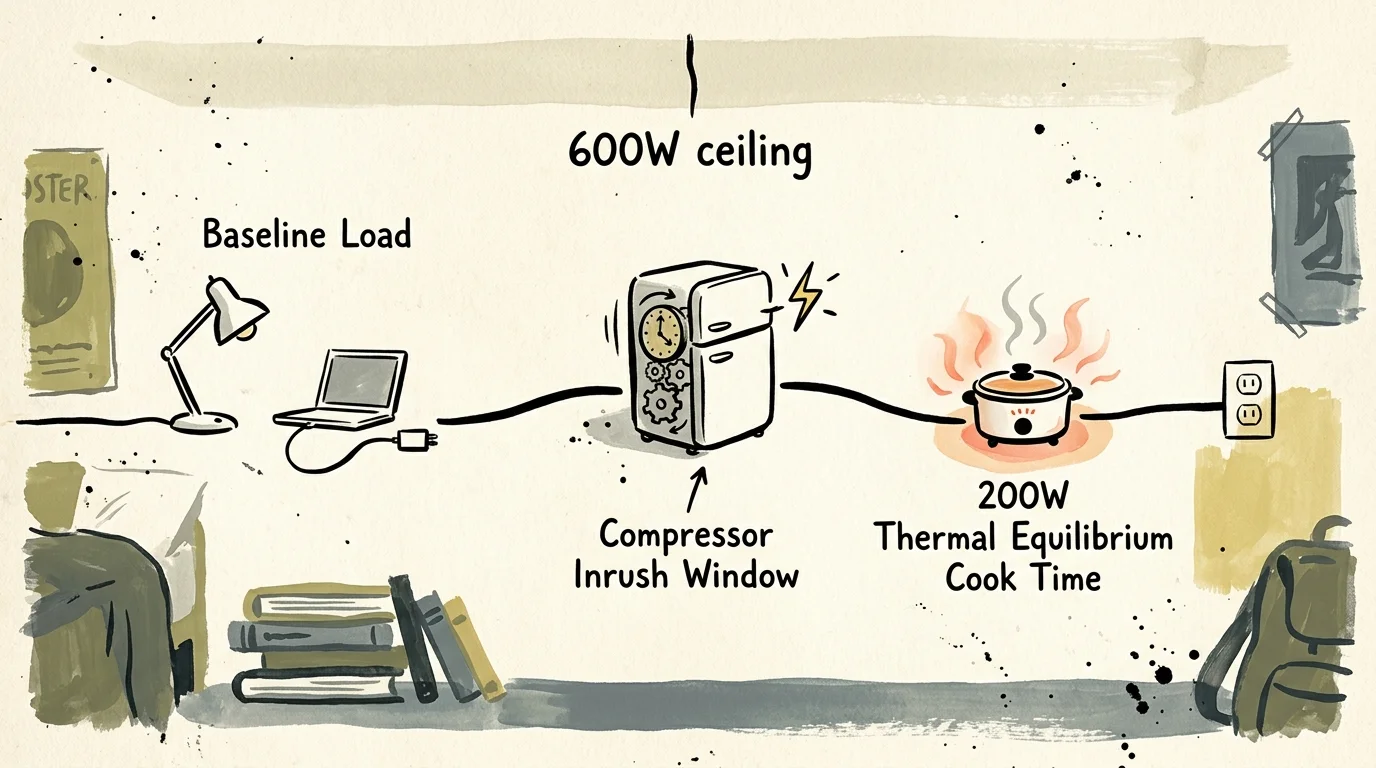
Worked Scenario: Calculating Load and Cook Time in a 600W Room
Consider a practical cooking scenario modeled for an actual college residence hall room. You want to prepare a nutritious dinner without disrupting your roommate’s gaming computer.
To chop aromatics and proteins quickly on a compact work surface, small-capacity mini choppers minimize both desk clutter and post-meal cleanup.
On October 14, 2024, you set up your prep area on a 36-inch wooden study desk. You possess a strict 600W per-outlet operational threshold enforced by the resident advisor.
Your room features a Danby 2.6-cubic-foot mini-fridge plugged into the same dual wall receptacle. That refrigerator pulls 1.3 amps (156 watts) during continuous compressor operation.
You select the Dash Everyday Mini Rice Cooker, rated at 200 watts (1.67 amps) and costing $19.99. You measure out 0.5 cups of brown rice (90 grams, costing $0.32) and 1.0 cup of tap water.
You slice 4 ounces of fresh chicken tenderloins (113 grams, costing $1.15) into quarter-inch strips. You lay the chicken directly on top of the submerged rice grains.
After locking the glass lid in place, you depress the cook toggle switch. The 200-watt heating element begins drawing a measured 1.68 amps of current.
Your continuous electrical draw sits at 356 watts (2.98 amps) with the refrigerator running. This leaves 244 watts of safe electrical margin beneath your 600-watt circuit ceiling.
Twelve minutes into the cycle, the refrigerator compressor cycles off. The total load instantly plummets to just the cooker’s 200 watts.
At the 22-minute mark, water reaches a full simmer. Gentle steam exits the 3-millimeter lid hole without generating any frothy boilover.
The unit completes the simmer cycle at 44 minutes, clicking audibly into keep warm mode. You allow the pot to steam undisturbed for another 8 minutes.
Inserting a digital food thermometer into the center chicken piece confirms a safe internal temperature of 172°F (77.7°C). The brown rice underneath emerges fully tender and evenly cooked.
Had you used a 500-watt multi-cooker, continuous base load would have reached 656 watts. That load would have tripped the breaker immediately once the refrigerator compressor cycled on.
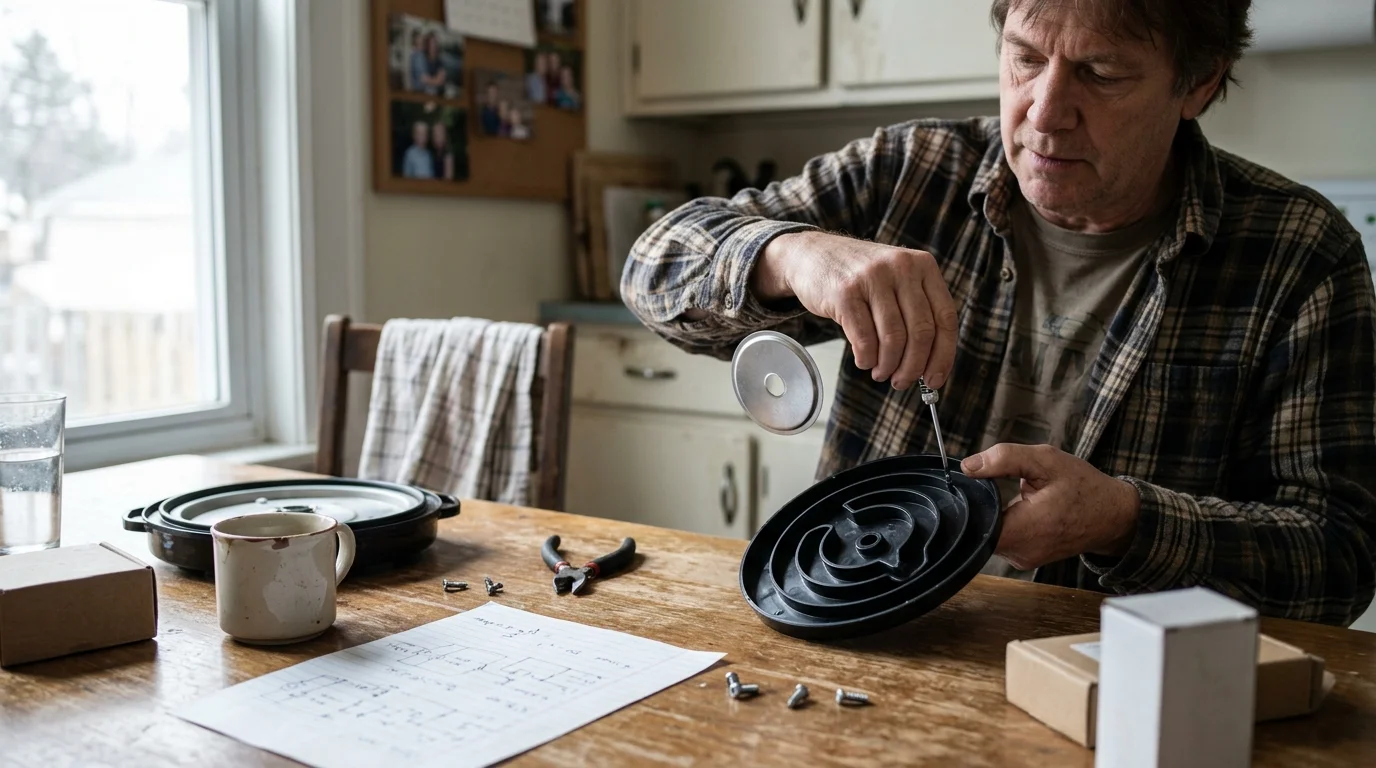
Vent Hardware Engineering: Single-Hole Lids vs. Baffle Channels
Vessel lid construction dictates whether boiling liquids stay inside the pan or splatter across your desk. Basic budget cookers utilize flat or domed tempered glass lids.
These basic lids rely on a single stamped vent hole measuring 3 to 4 millimeters across. This aperture handles pure water vapor effectively during low-energy simmering.
However, starches transform this vapor into sticky, resilient bubble walls. When starch foam reaches a pinhole vent, surface tension seals the opening completely.
Internal pressure builds rapidly beneath the clogged glass lid. Once pressure overcomes the vent blockage, the lid sputters viscous liquid outward across your workspace.
Rinsing your brown rice thoroughly under cold water removes loose surface amylose. This mandatory washing step drastically lowers bubble density and prevents sudden vent blockages.
More sophisticated multi-cookers employ locking lids equipped with internal baffle channels. These channels force escaping vapor through a winding labyrinth path.
As wet steam snakes through the labyrinth, physical condensation fins strip moisture droplets from the gas. The liquid drains cleanly back into the pot while dry steam vents outward.
According to Wirecutter, baffled lid designs nearly eliminate boilover incidents across all grain types. However, these complex lids require meticulous disassembly during cleanup.
If you purchase a 200W cooker with a simple glass lid, keep your rice batches small. Never fill the inner pot beyond half its total volumetric height.
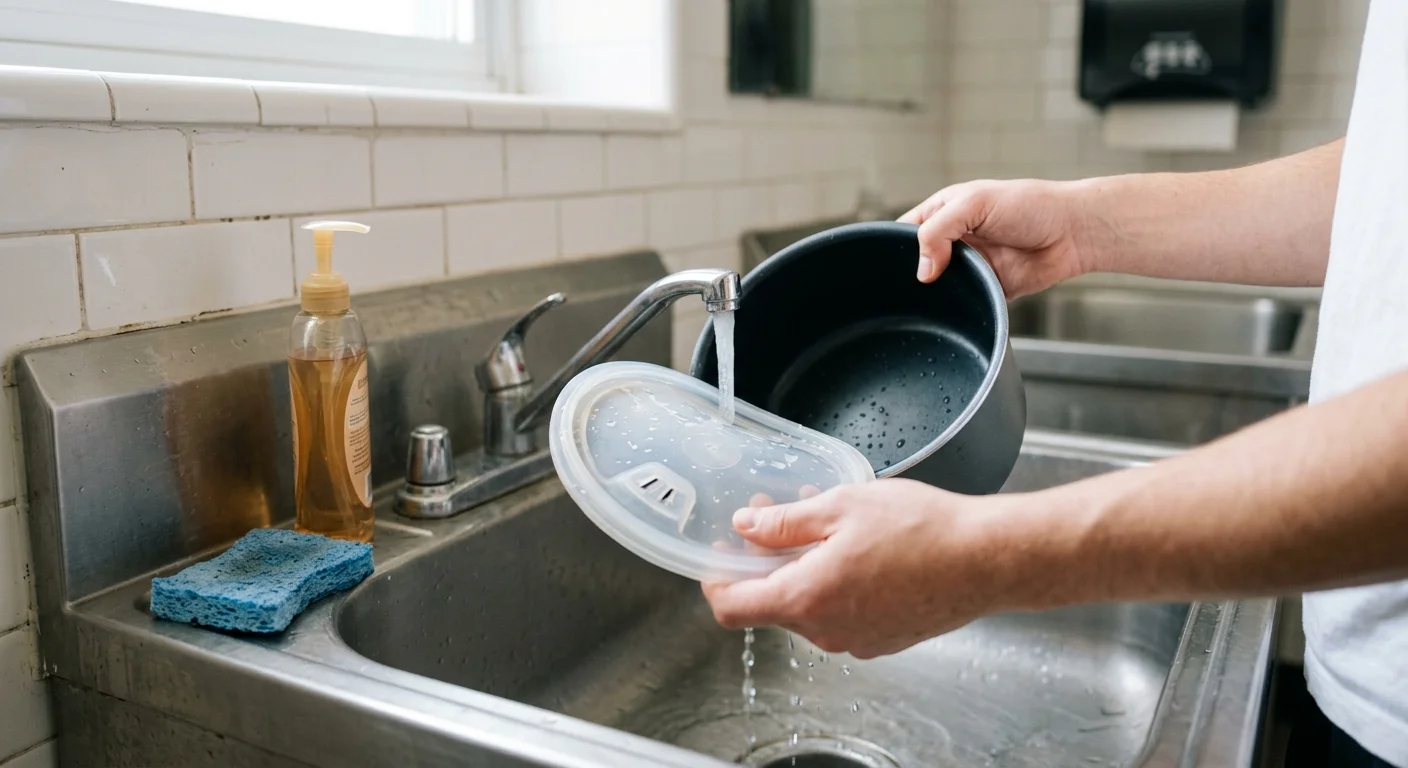
Cleaning, Durability, and Maintenance on Campus
Cleaning cookware in a communal dorm bathroom presents major logistical hurdles. Small bathroom sink basins sit too close to the faucet neck to wash standard kitchen pots.
The 200W mini cookers feature lightweight inner pots measuring roughly six inches across. These petite aluminum bowls fit comfortably under cramped bathroom faucets for quick cleaning.
Most mini cooker pots feature nonstick PTFE interior coatings. You must never scrub these delicate linings with abrasive steel wool pads or harsh scouring powders.
Wash the inner pot using a soft sponge and mild liquid dish soap. Dry the exterior surface thoroughly before placing the bowl back onto the heating plate.
Water trapped beneath the inner pot boils instantly when the element fires. This causes violent popping sounds and damages the internal thermal sensor over time.
Check the underside of your cooker monthly for dust accumulation around the air intake slots. Blocked intake vents cause thermal cutoff switches to trigger prematurely during cooking cycles.
The primary mechanical failure point in budget cookers is the bi-metallic leaf spring thermostat. Dropping the outer cooker housing deforms this sensitive mechanism and prevents proper temperature regulation.
Always inspect the detachable power cord for wear or loose socket connections. Wobbly plugs create electrical resistance, generating dangerous localized heat on your desk surface.
Appliance Recommendations for Specific Student Needs
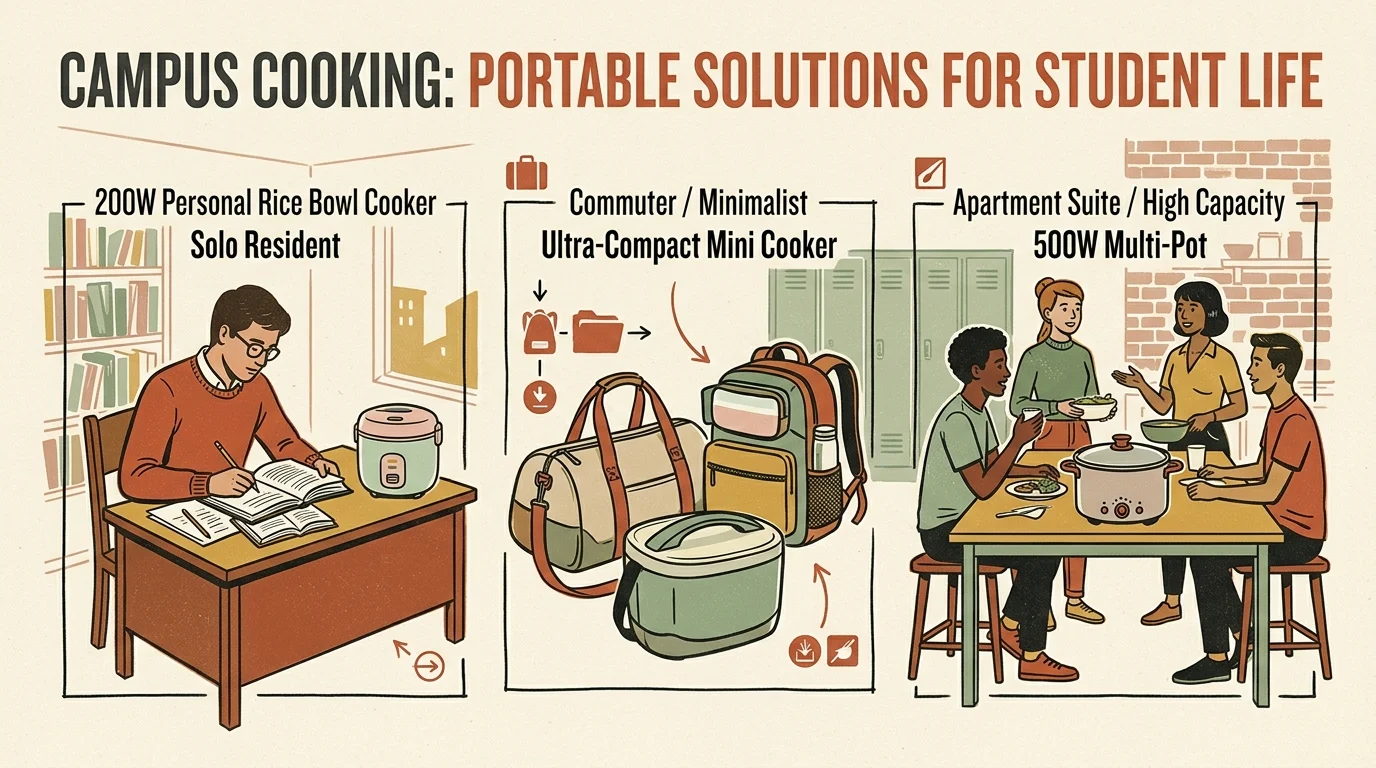
Every living arrangement brings distinct space limitations and culinary priorities. Selecting the correct machine prevents electrical violations while delivering dependable daily nutrition.
For strict dorm circuit limits, choose the Dash Everyday Mini Rice Cooker. Its modest 200-watt draw offers unmatched safety on shared, low-amperage bedroom circuits.
The Dash measures just 8.3 inches tall, storing neatly inside a standard desk drawer. It handles single portions of grains and steamed proteins with minimal physical fuss.
If starch venting concerns you most, purchase the White Tiger Mini Rice Cooker 1.0L. This 200-watt model combines a low-draw element with an advanced locking lid and steam baffle.
The White Tiger safely handles up to one full cup of uncooked brown rice without bubbling over. Its integrated top handle makes transporting the unit down the residence hall simple.
For students living in campus suites equipped with dedicated 15-amp kitchen circuits, pick the Aroma ARC-363-1NGB. This 500-watt cooker prepares up to three raw cups of rice rapidly.
As America’s Test Kitchen highlights in their equipment guides, Aroma pot-style units offer exceptional cooking consistency across basic grains. However, you must verify your suite’s circuit capacity before operating it alongside a microwave.
Frequently Asked Questions
Will a 200W mini rice cooker trip my dorm room circuit breaker?
No, a 200-watt rice cooker draws only 1.67 amps at 120 volts. This minimal current leaves ample electrical headroom for your mini-fridge, laptop charger, and desk lighting on a shared circuit.
Can I safely cook raw chicken with brown rice in a travel cooker?
Yes, slicing chicken into thin strips allows the steam to cook the meat thoroughly. Always verify the internal poultry temperature reaches 165°F (74°C) with a food thermometer before eating.
How do I stop my mini rice cooker from boiling starch over the lid?
Rinse your raw grains under cold running water until the runoff is clear to remove excess surface amylose. Additionally, never fill the inner cooking pot beyond half of its total fluid capacity.
Can I operate a 200-watt cooker using a car’s 12V auxiliary outlet?
No, standard 12V cigarette lighter outlets safely provide only 120 to 150 watts continuously. Running a 200-watt cooker in a vehicle requires an external power inverter rated for at least 300 watts.
Disclaimer: Product prices, features, and availability change frequently. Prices shown were accurate at time of writing but may have changed. We may earn a small commission from purchases made through links on this site, at no extra cost to you. Always verify current pricing and specifications on the retailer’s website before purchasing.
1 Comment