
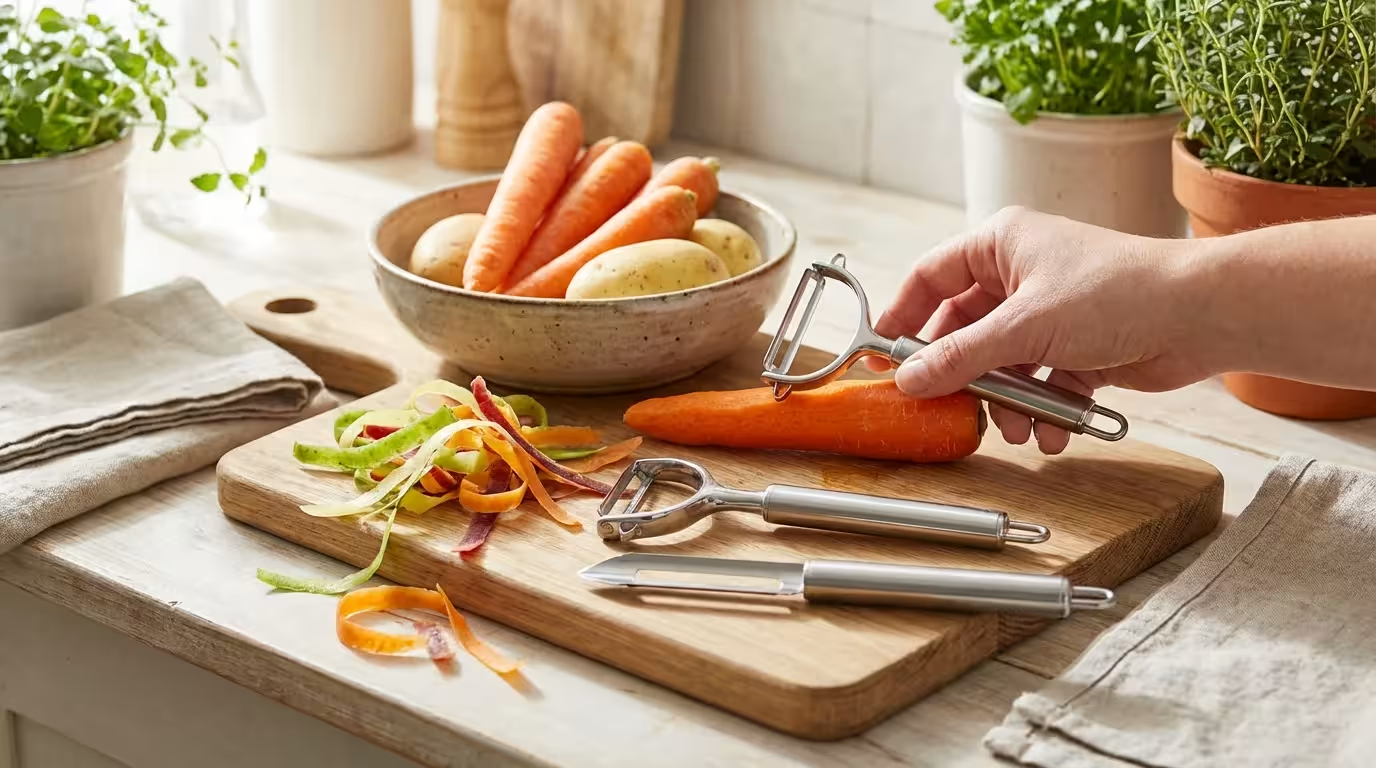
You might think all peelers are created equal until you find yourself wrestling with a butternut squash, your hand cramping, and the blade slipping dangerously against the tough skin. The humble vegetable peeler is often the most undervalued tool in the drawer, yet it is essential for efficient food preparation.
If you are looking for specific product recommendations, our guide on the best vegetable peelers highlights the top-performing models for every kitchen task.
Choosing the right peeler isn’t just about removing skin; it is about speed, safety, and precision. A high-quality peeler glides through produce with minimal resistance, reducing waste and hand fatigue. Whether you are tackling a mound of potatoes for Thanksgiving or creating delicate ribbons for a summer salad, the design and blade material of your tool dictate your success.
This guide breaks down the critical differences between handle styles, blade materials, and specialized functions so you can build a safer, faster toolkit for your weekly meal prep.
The Great Debate: Y-Peelers vs. Swivel Peelers
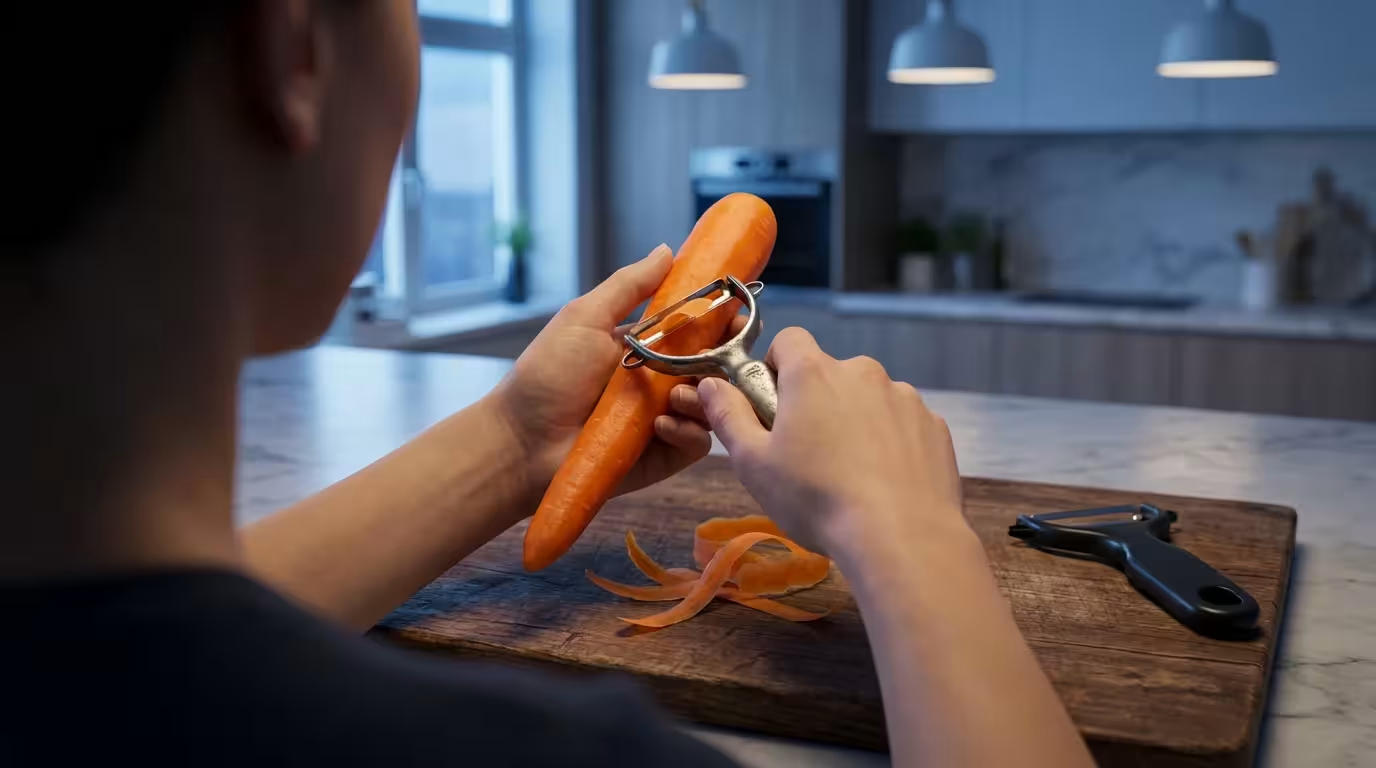
The first decision you face is the shape of the handle and the orientation of the blade. While personal preference plays a role, the geometry of the tool changes the mechanics of how you move your arm and wrist.
The Swivel Peeler (Straight Peeler)
This is the classic design found in most American households. The blade runs parallel to the handle, resembling a knife. You typically use it by pushing away from your body or pulling toward your thumb (though the latter is riskier).
Pros:
- Maneuverability: The narrow profile makes it excellent for navigating around the curves of smaller produce like apples or small potatoes.
- Storage: Its linear shape fits easily into drawer organizers without tangling with other tools.
- Back-and-forth motion: Most swivel blades articulate efficiently, allowing you to peel in both directions if you have the coordination.
Cons:
- Wrist Strain: The grip often requires you to twist your wrist slightly, which can lead to fatigue during high-volume prep tasks.
- Slower on large items: You generally get less leverage on large vegetables like eggplants or squash.
The Y-Peeler
Named for its shape, the Y-peeler holds the blade perpendicular to the handle, resembling a safety razor. This style is the overwhelming favorite in professional kitchens.
Pros:
- Speed and Leverage: Because you pull the tool down firmly using your whole arm rather than just your wrist, you can apply consistent pressure. This makes it significantly faster for long vegetables like carrots, cucumbers, and parsnips.
- Thinner Skins: A quality Y-peeler often removes a thinner layer of skin, preserving more of the vegetable flesh underneath.
- Versatility: It is easier to use a Y-peeler to create wide ribbons for salads or garnishes.
Cons:
- Learning Curve: If you grew up with a swivel peeler, the motion of a Y-peeler (pulling down from top to bottom) can feel awkward initially.
- Safety: Because you can generate more speed, slips can happen faster if your technique is poor.
“Most professional cooks prefer Y-peelers because they are faster, more durable, and generally sharper than swivel peelers.” — Serious Eats
Blade Materials: Carbon Steel, Stainless, and Ceramic
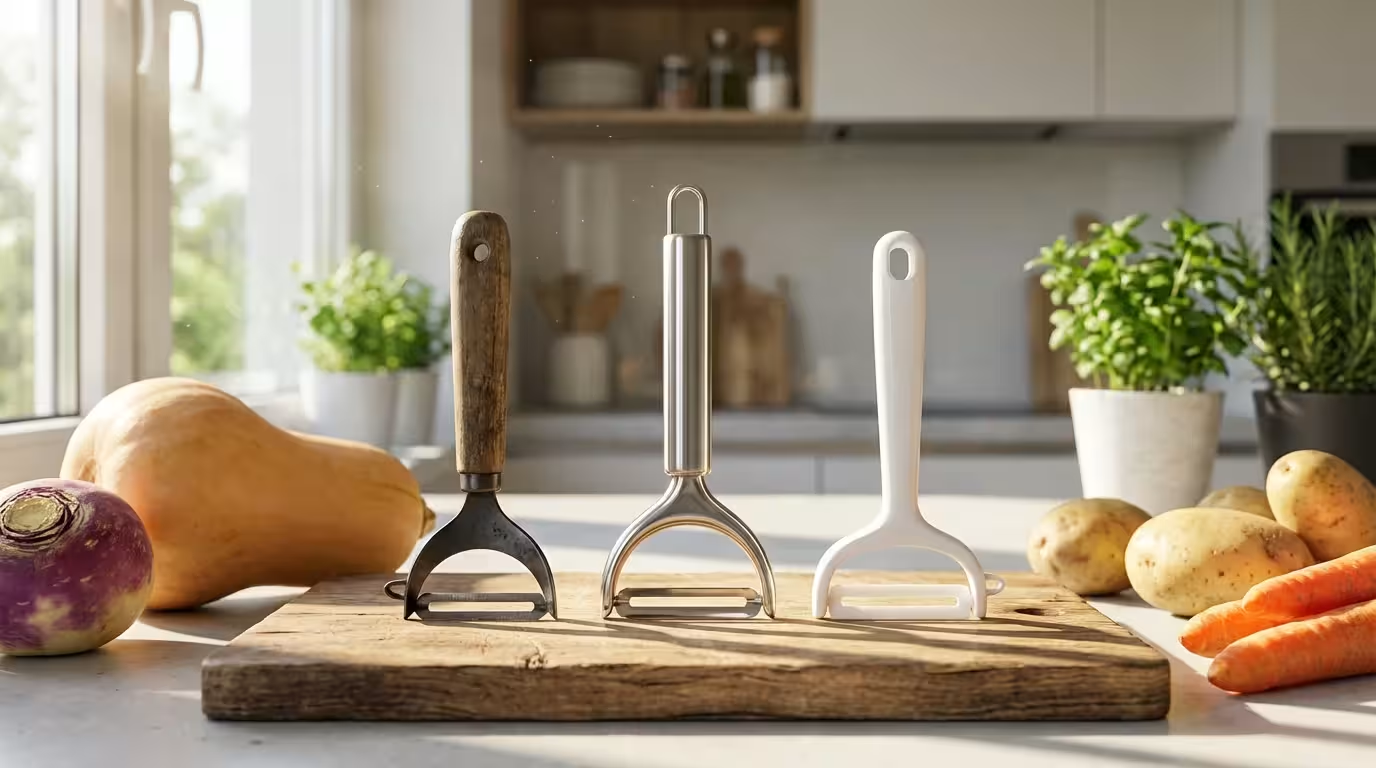
Once you choose a shape, you must consider the metal. The sharpness and longevity of your vegetable peeler depend entirely on what the blade is made of.
Because of their extreme hardness, ceramic blades offer a level of precision similar to a good microplane grater when working with citrus zest or hard cheeses.
Carbon Steel
Carbon steel is an alloy made of iron and carbon. It is the gold standard for sharpness. Professional-grade peelers often feature carbon steel blades because they take an incredibly keen edge and cut through tough skins like butter.
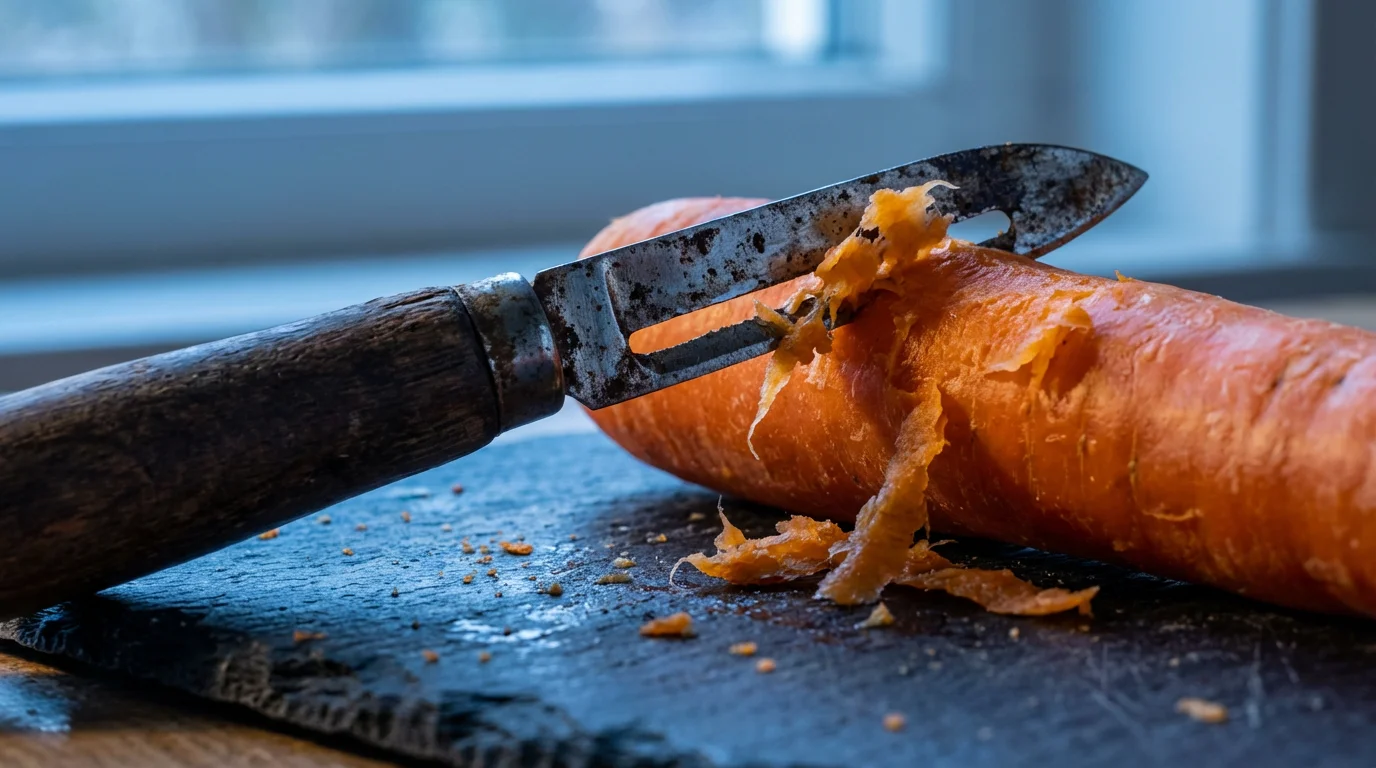
However, carbon steel is reactive. If you leave it wet, it will rust. These blades will develop a patina (a dark, protective layer) over time, which is normal, but active red rust is a sign of neglect. If you are willing to hand-wash and dry your peeler immediately after use, this is the highest-performance option.
Stainless Steel
Stainless steel contains chromium, which prevents rust. This is the most practical choice for the average home cook. While stainless steel may not hold an edge quite as long as high-quality carbon steel, modern manufacturing has closed the gap significantly.
For most users, the benefit of being able to toss the peeler in the dishwasher (though we still recommend hand washing to preserve sharpness) outweighs the slight edge retention advantage of carbon steel.
Ceramic
Ceramic blades are made from zirconium oxide, a material nearly as hard as diamonds. They are incredibly sharp and chemically inert, meaning they will never rust and won’t brown your lettuce or apples.
The downside is brittleness. If you drop a ceramic peeler on a tile floor or twist it against a hard seed, the blade can chip or snap. They also cannot be sharpened by standard means.
Specialized Tools: Julienne, Serrated, and More
While a standard peeler handles 90% of tasks, specialized kitchen gadgets can save massive amounts of time for specific recipes. Knowing when to deploy these tools is part of effective mise en place (having all your ingredients prepped and ready).
While these specialized peelers are useful, be wary of accumulating kitchen gadgets you don’t need that only perform a single task.
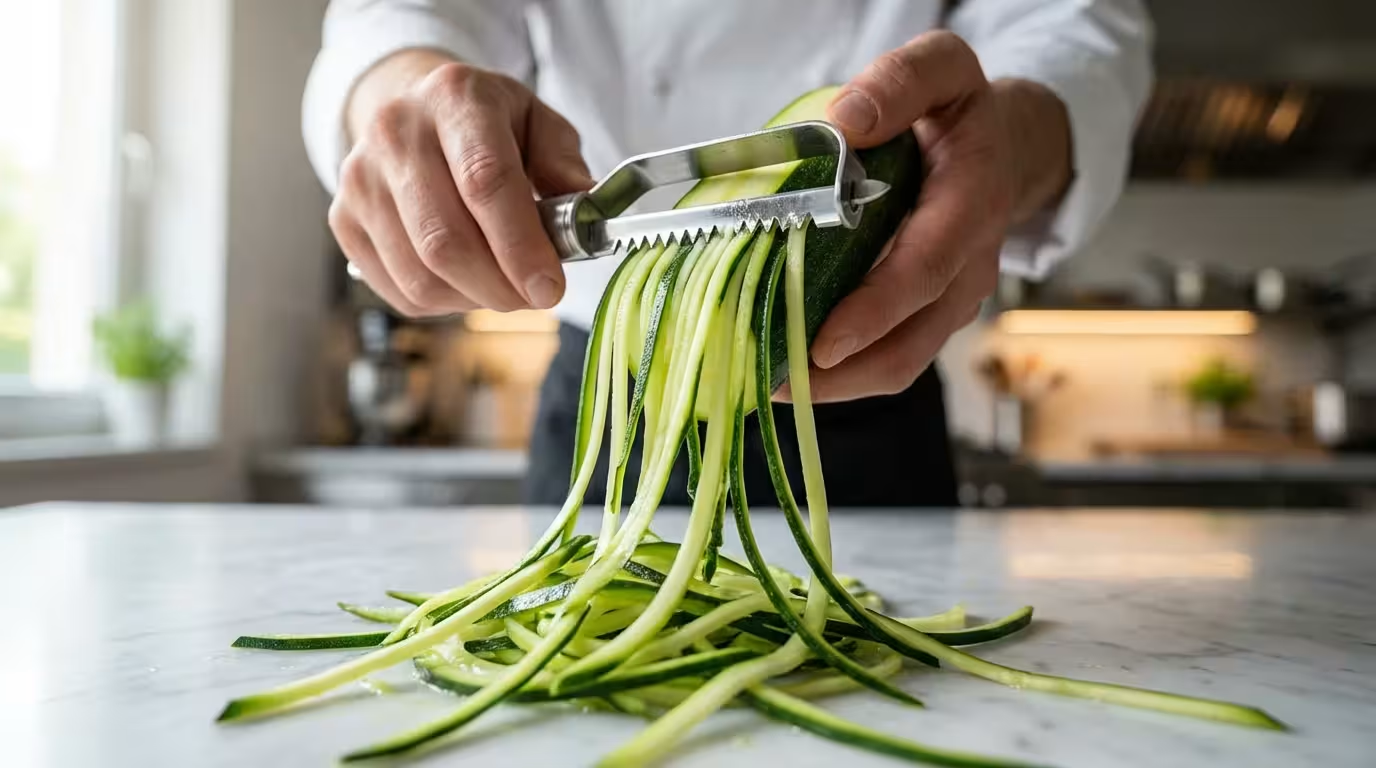
Julienne Peelers
A julienne peeler looks like a standard peeler but features a row of jagged teeth perpendicular to the blade. As you drag it across a vegetable, it slices the produce into thin, uniform matchsticks.
This tool is a game-changer for salad prep, slaw, and stir-frys. It eliminates the need for complex knife work. If you want to make zucchini noodles or quickly prep carrots for a salad, a julienne peeler is safer and faster than a chef’s knife for most home cooks.
Serrated Peelers
Have you ever tried to peel a ripe tomato or a fuzzy peach with a standard straight blade? The skin usually slips, and you end up bruising the flesh. A serrated peeler has tiny teeth along the blade edge that bite into soft, slippery skins.
According to Wirecutter, a serrated peeler is ideal for soft-skinned produce like tomatoes, peaches, and plums, where a straight blade would struggle to gain traction.
Ergonomics and Safety Features
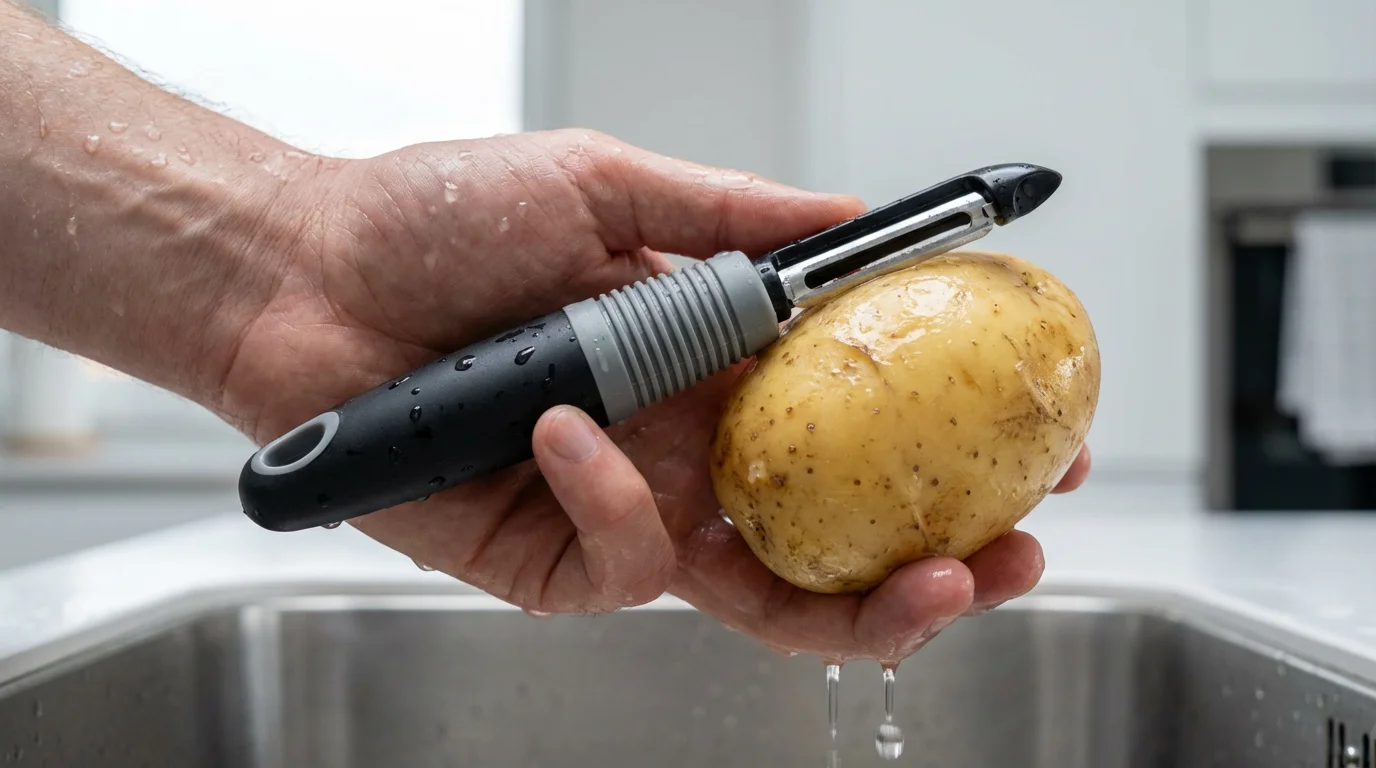
Safety in the kitchen is directly tied to control. If your hands are wet or greasy, a slick plastic handle is a recipe for an accident. When selecting a vegetable peeler, look for a handle that offers a secure grip.
Rubberized Grips: Brands often add silicone or rubber ridges to the handle. This provides friction even when your hands are wet from washing vegetables. This is particularly important for swivel peelers, where grip strength dictates control.
Handle Thickness: A thicker handle is generally better for cooks with arthritis or limited hand strength. It prevents the hand from clenching too tightly, reducing cramping.
Blade Guards: Some peelers come with plastic covers. While often discarded, these are valuable for protecting your fingers when you reach into a cluttered gadget drawer.
Maintenance: Extending the Life of Your Peeler
Even the best blade will eventually dull. However, proper maintenance can extend the lifespan of your peeler from a few months to several years.
Proper cleaning is just as important here as it is when comparing box graters vs rotary graters, as food trapped in the blades can lead to dulling or hygiene issues.
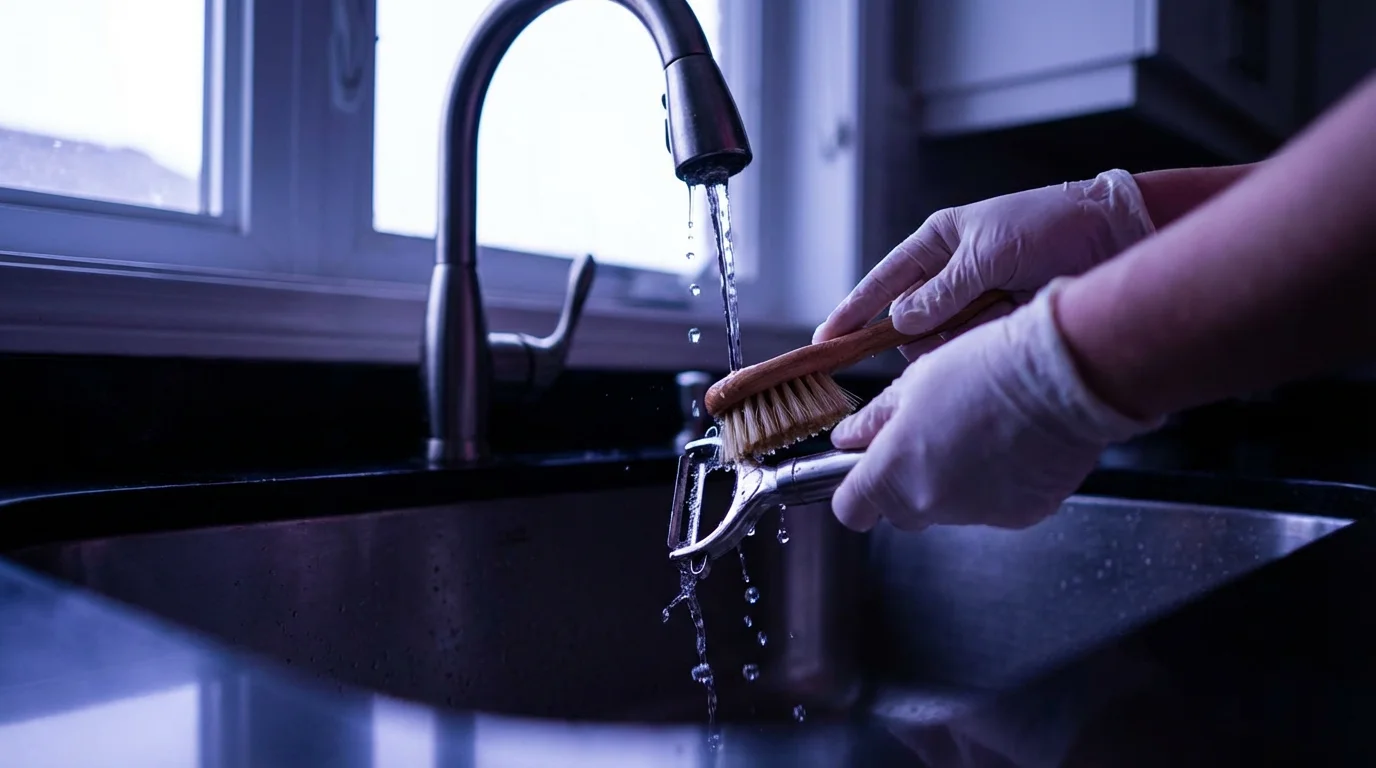
- Hand Wash Only: The high heat and harsh detergents of a dishwasher can damage the blade edge and degrade rubber handles. Rinse your peeler immediately after use.
- Dry Thoroughly: This is non-negotiable for carbon steel. Even for stainless steel, drying prevents water spots and potential corrosion at the pivot points.
- Clean the Crevices: Vegetable skins often get stuck between the blade and the housing. Use a toothbrush or a bristled brush to clear this debris; otherwise, it can dry and affect the blade’s swivel action.
- Know When to Replace: Unlike a chef’s knife, which you can sharpen with whetstones, a peeler is difficult to sharpen effectively. Once the blade begins to skip over skins or requires significant pressure to cut, it is safer to replace it than to force it. A dull blade requires more force, increasing the likelihood of slipping and cutting yourself.
Quick Comparison: Which Peeler Fits Your Needs?
Use this table to determine which tool belongs in your kitchen based on your cooking habits.
| Peeler Type | Best For | Primary Advantage | Disadvantage |
|---|---|---|---|
| Y-Peeler (Carbon Steel) | High-volume prep, tough skins (squash, root veg) | Extreme sharpness and speed | Requires hand drying; rusts if neglected |
| Swivel Peeler (Stainless) | General purpose, small rounded produce (apples) | Easy maneuverability | Slower on large vegetables; wrist fatigue |
| Serrated Peeler | Soft skins (tomatoes, peaches, plums) | Grips slippery surfaces easily | Not smooth on standard root vegetables |
| Julienne Peeler | Garnishes, salads, stir-fry prep | Creates uniform strips instantly | Difficult to clean; single-purpose tool |
| Ceramic Peeler | Reactive ingredients (preventing browning) | Stays sharp; never rusts | Brittle; breaks if dropped |
Frequently Asked Questions
How often should I replace my vegetable peeler?
For a home cook preparing meals 3-5 times a week, a high-quality peeler typically lasts between one and two years. If you notice the blade skipping, tearing the skin rather than slicing it, or if you have to apply downward pressure to get it to bite, it is time for a replacement. A dull peeler is a safety hazard.
Can I sharpen a vegetable peeler?
Technically, yes, you can use a small round file or sandpaper to hone the edge, but it is difficult to do correctly due to the blade’s angle and size. Given that professional-quality peelers are relatively inexpensive, it is usually more practical to replace the unit than to attempt sharpening it.
Why do professional chefs use Y-peelers?
Professional chefs prefer Y-peelers because the grip allows for a full-arm motion rather than just wrist movement. This reduces repetitive strain injury during mass prep. Additionally, the blades on commercial Y-peelers are often wider, allowing for fewer strokes per vegetable.
Is a julienne peeler worth the drawer space?
If you frequently make slaws, salads, or stir-frys, a julienne peeler is absolutely worth the space. Cutting vegetables into perfect matchsticks (julienne) with a knife requires advanced knife skills and significant time. A julienne peeler accomplishes this task in seconds with consistent results.
My carbon steel peeler has dark spots. Is it ruined?
No, it is not ruined. Carbon steel naturally develops a gray or black patina over time due to oxidation. This patina actually helps protect the metal from red rust. However, if you see raised red or orange rust, you should scrub it off with a scouring pad. If the cutting edge is pitted with rust, it is time to replace the peeler.
To see our top-rated picks for each category mentioned here, browse our review of the best vegetable peelers for easy prep.
Disclaimer: Product prices and availability change frequently. Prices shown were accurate at time of writing but may have changed. We may earn a small commission from purchases made through links on this site, at no extra cost to you. Always use cutting tools carefully and follow manufacturer safety guidelines.

1 Comment