
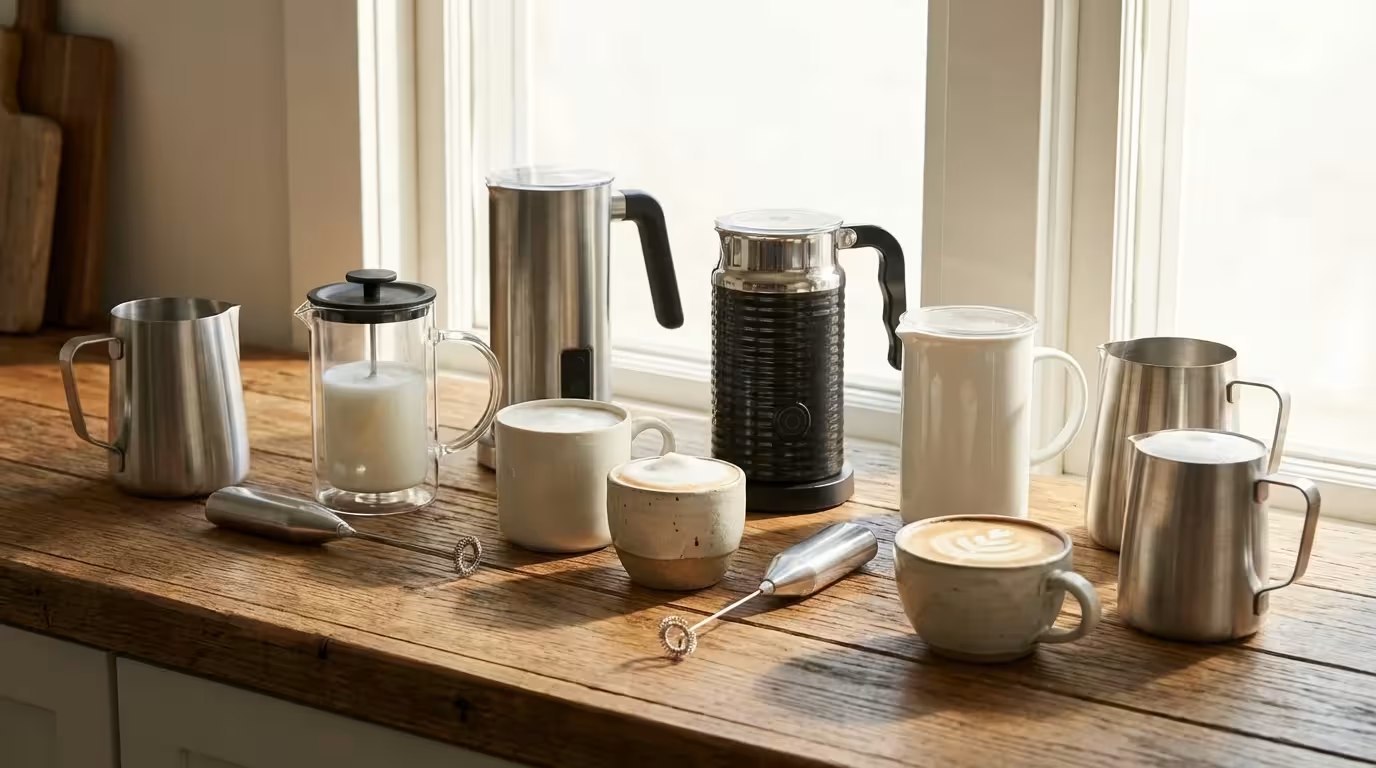
There is a specific joy in the ritual of a morning coffee, but that joy often diminishes when you look at your monthly bank statement. A daily $6 latte habit costs over $2,000 a year. Bringing that experience into your own kitchen saves money, but the difference between a sad, milky coffee and a café-quality cappuccino usually comes down to one element: the texture of the milk.
Whether you prefer a dry cappuccino with stiff peaks or a silky flat white, the right milk frother elevates your home brewing game instantly. However, the market is flooded with options ranging from ten-dollar handheld wands to premium countertop machines that use magnetic induction.
We have analyzed the top contenders to help you find the appliance that fits your counter space, your budget, and your specific taste in foam.
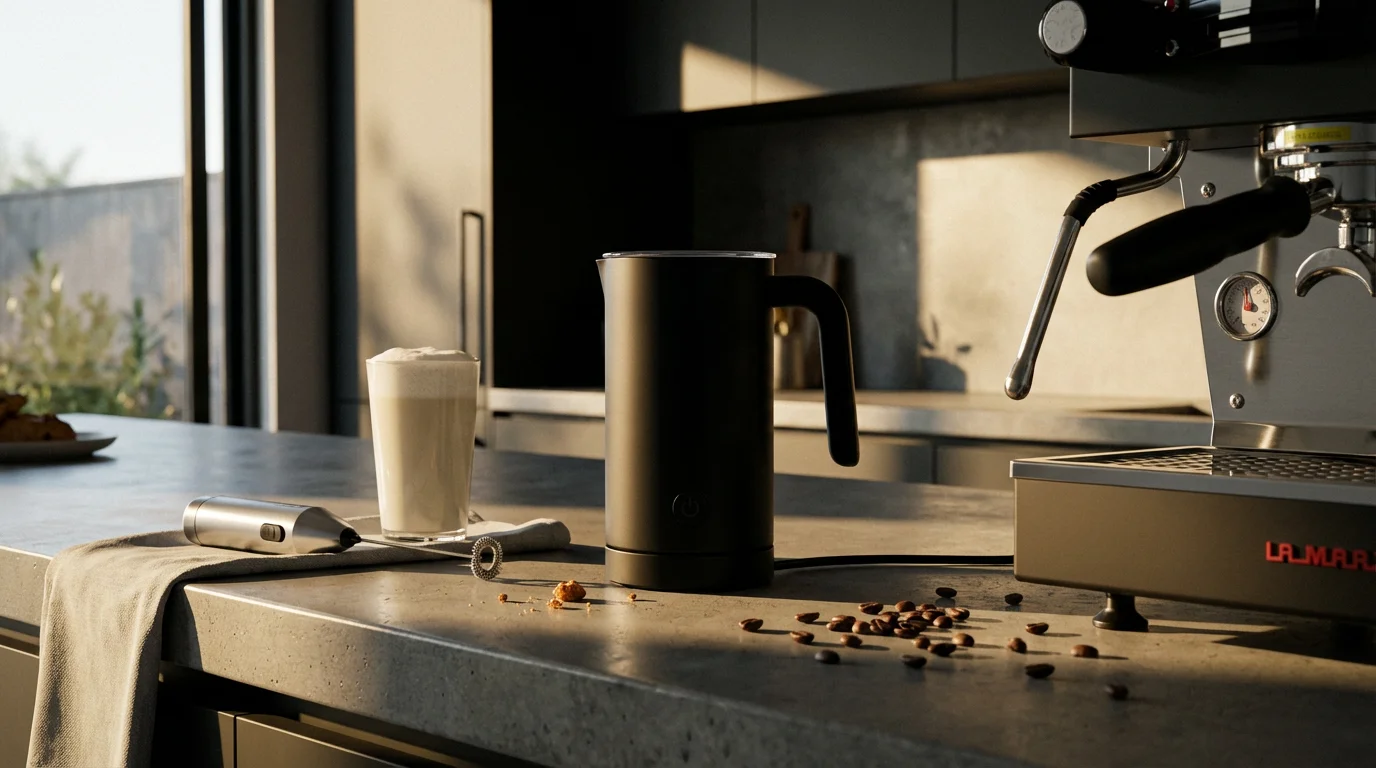
Understanding Frother Types: Which Fits Your Routine?
Before analyzing specific models, you need to determine which style of frother aligns with your kitchen workflow. There are three primary categories, each with distinct advantages regarding space and effort.
1. Electric Automatic Frothers
These are countertop appliances that look like small kettles. You pour in the milk, press a button, and the machine heats and aerates the milk simultaneously. They typically use a whisk at the bottom of a pitcher.
- Pros: Truly hands-free; heats and froths simultaneously; consistent results.
- Cons: Takes up counter space; higher price point ($40–$160); requires cleaning a pitcher after every use.
- Best for: The daily latte drinker who wants push-button convenience.
2. Handheld Motorized Wands
These battery-operated devices look like mini immersion blenders. You submerge the whisk head into a cup of milk and turn it on.
- Pros: Extremely inexpensive ($10–$20); tiny drawer footprint; easy to rinse.
- Cons: Does not heat the milk (you must microwave or stovetop heat first); batteries require replacing/charging; texture is less consistent.
- Best for: Small kitchens, occasional use, or whipping up matcha and protein powder.
3. Manual Plunger Style
Often resembling a French press, these use a hand-pump mesh screen to agitate the milk.
- Pros: Creates incredibly thick foam; no electricity required.
- Cons: Requires manual physical effort; milk must be heated separately; difficult to clean the mesh screen.
- Best for: Traditionalists who want thick “dry” foam for cappuccinos.
“Counter space is premium real estate. Before you buy any appliance, ask: will I use this at least once a week?” — Kitchen Designer
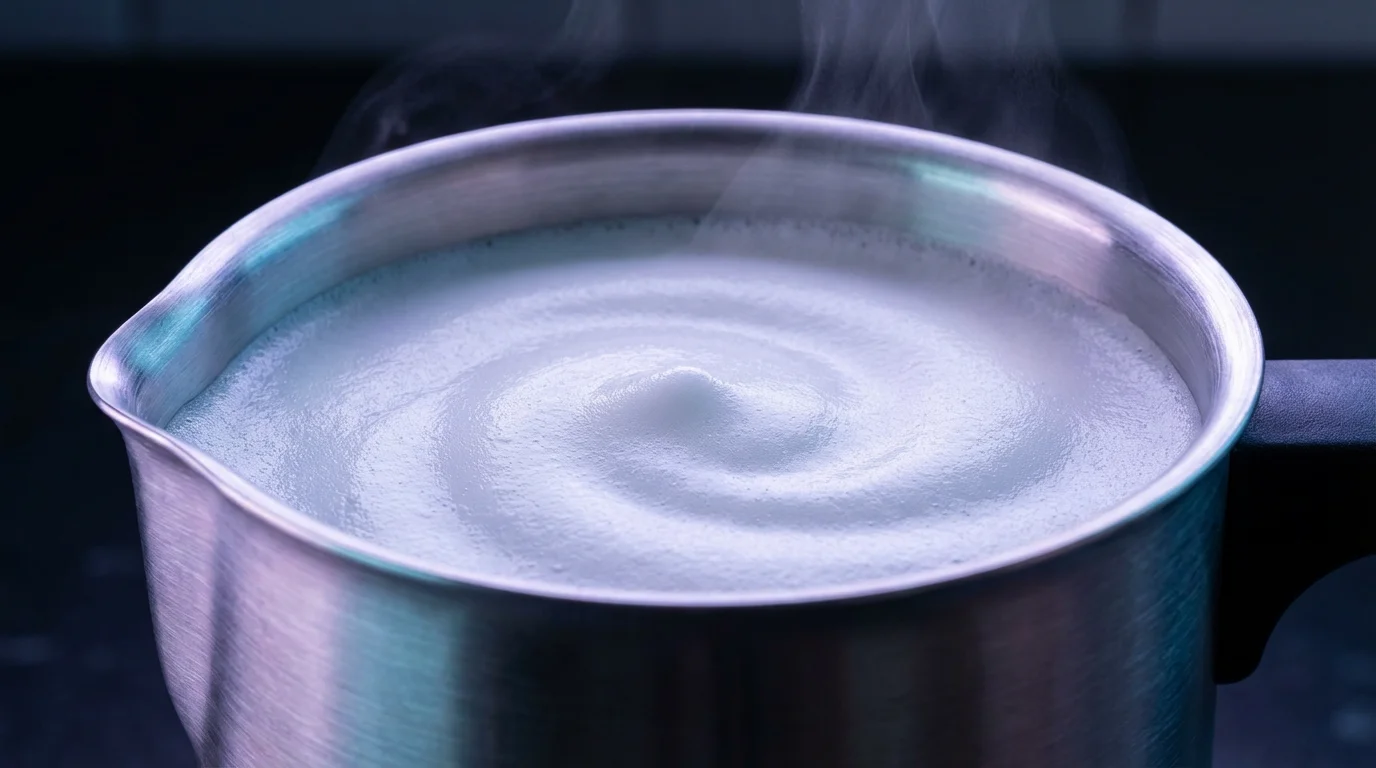
Top Picks: Electric & Automatic Frothers
If you want hot, frothy milk without managing a microwave or a stove, an electric frother is the gold standard.
The Premium Choice: Breville Milk Cafe
The Breville Milk Cafe stands out because it utilizes induction heating. Instead of a heating element built into the jug (which can cause milk to scorch), the base generates a magnetic field to heat the stainless steel carafe directly.
The standout feature here is capacity and cleanliness. This machine holds up to 3 cups of milk, making it ideal for serving multiple people. More importantly, the jug is dishwasher safe—a rarity in this category. It comes with two separate whisk attachments: one for lattes (smooth milk) and one for cappuccinos (thick foam).
According to Serious Eats, the Breville Milk Cafe consistently produces the most uniform microfoam among electric models, justifying its larger footprint.
The Compact Performer: Nespresso Aeroccino 4
For those with less counter space, the Nespresso Aeroccino series is legendary. The Aeroccino 4 improves on previous models by adding a handle and a spout for easier pouring, and it is now dishwasher safe (unlike the Aeroccino 3). It offers four buttons: cold foam, hot milk (no foam), warm airy foam, and warm dense foam.
It shuts off automatically and operates nearly silently. If you live in an apartment with thin walls or have early-rising housemates, this silence is a significant feature.
The Value Pick: Instant Pot Milk Frother
Known for their pressure cookers, Instant Brands produced a surprisingly robust 4-in-1 electric frother. It mimics the functionality of the Nespresso at a fraction of the cost. It heats quickly and creates a stable foam. The trade-off is the non-stick coating inside the carafe; you must be gentle during cleaning to avoid scratching it, as once the coating is compromised, milk will burn to the bottom.
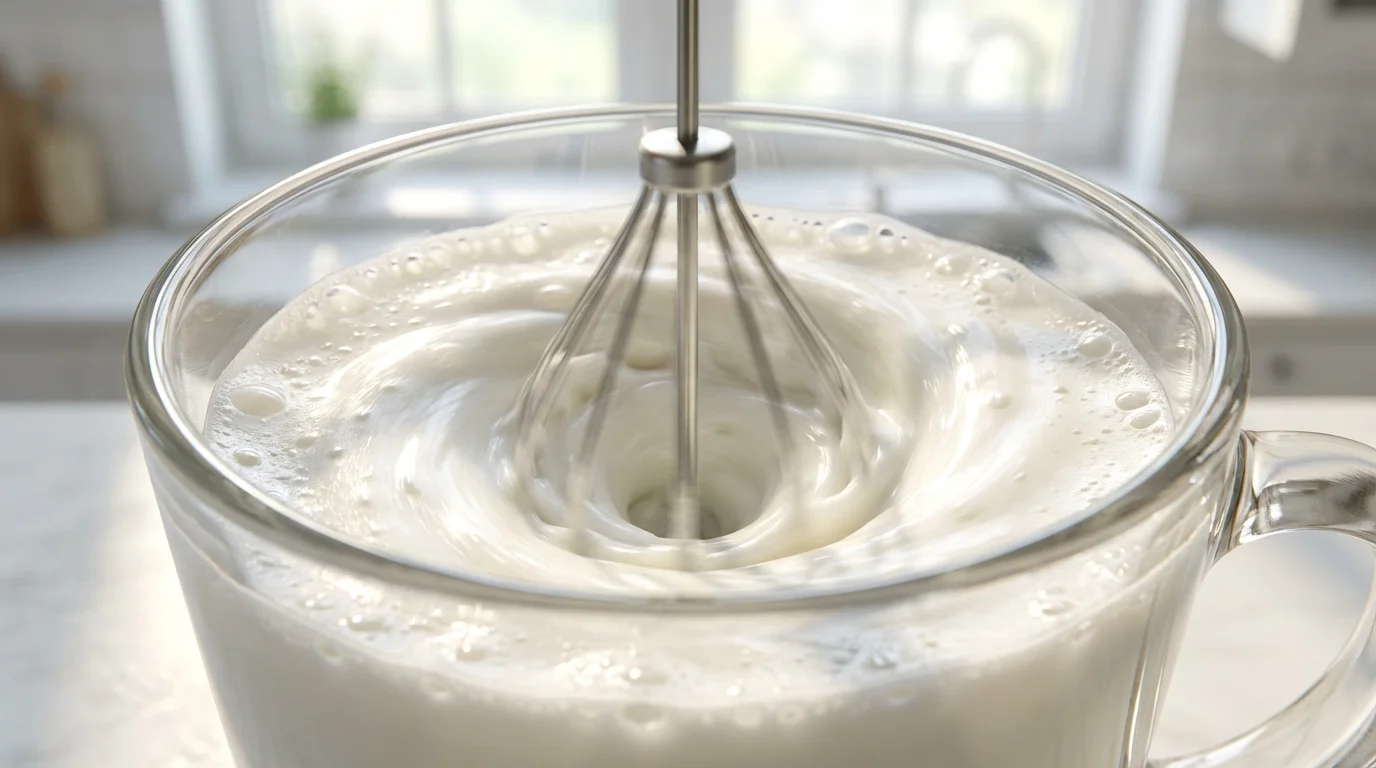
Top Picks: Handheld Mixing Wands
If you have limited space or a tight budget, a handheld wand is a powerful tool. While they don’t heat milk, they give you complete control over the aeration process.
The Powerhouse: Zulay Kitchen Original Milk Frother
The Zulay frother is ubiquitous for a reason. It features a high-torque motor that spins the whisk at roughly 13,000 RPM (revolutions per minute). This power is crucial because it allows the whisk to drag air into the milk quickly before the liquid slows down.
It runs on two AA batteries and includes a stand, so you can keep it on the counter without the whisk touching surfaces. While it excels at dairy, the motor is strong enough to emulsify vinaigrettes or mix protein shakes, adding to its utility.
The Rechargeable Upgrade: FoodVille MF02
One downside to handhelds is the constant need for batteries. As batteries die, the motor slows, resulting in poor foam. The FoodVille MF02 solves this with a built-in rechargeable battery via USB. It offers three speed settings, which helps prevent splashing when you are frothing in a shallow mug.
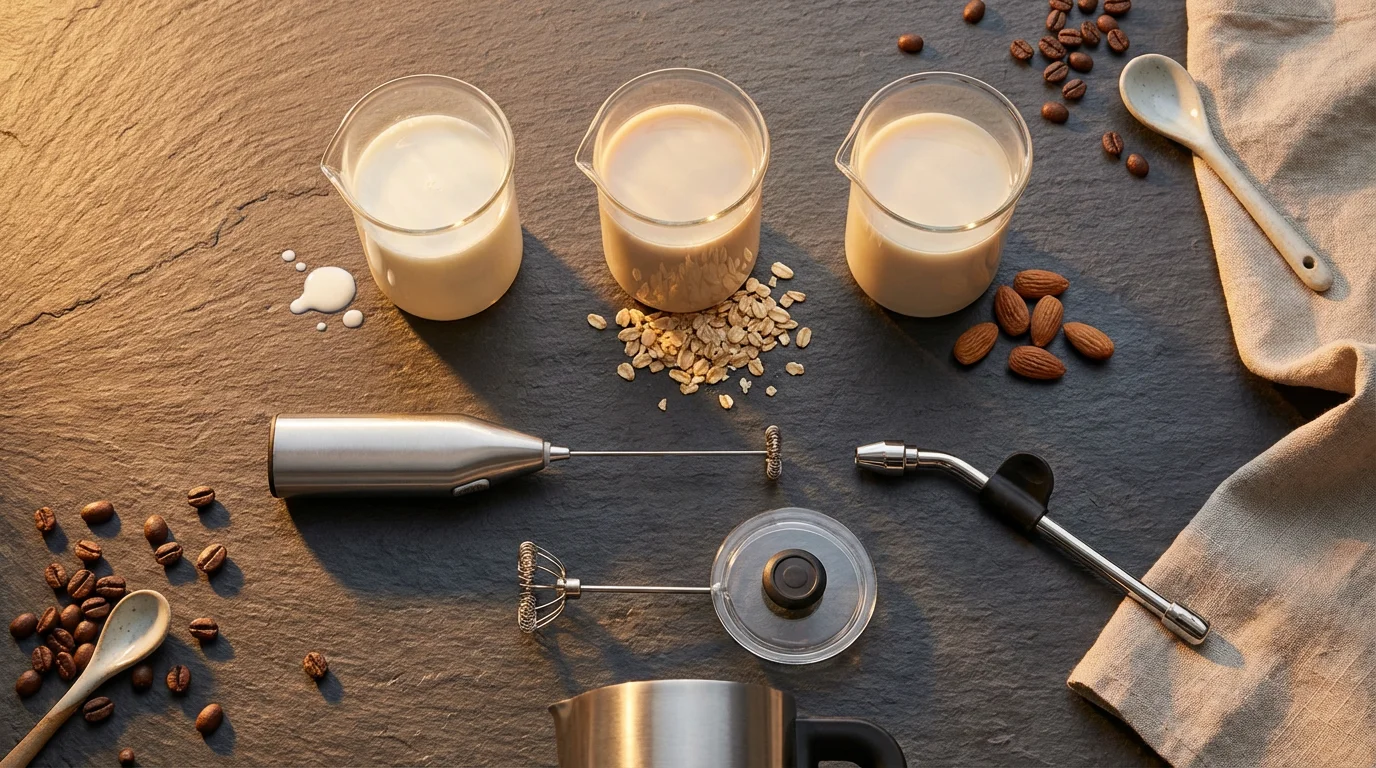
Head-to-Head Specification Comparison
To help you visualize the differences, here is a breakdown of the key specifications for the top contenders. Note the difference in “Working Capacity,” which refers to the maximum amount of milk you can froth without it overflowing.
| Model | Type | Heats Milk? | Max Capacity | Dishwasher Safe? | Dimensions (Appx) |
|---|---|---|---|---|---|
| Breville Milk Cafe | Electric (Induction) | Yes | 24 oz (3 cups) | Jug Only | 6″ x 6″ x 10″ |
| Nespresso Aeroccino 4 | Electric (Base) | Yes | 8 oz (1 cup) | Jug Only | 4″ x 4″ x 8″ |
| Instant Pot Frother | Electric (Base) | Yes | 10 oz | No (Hand wash) | 4.5″ x 4.5″ x 8″ |
| Zulay Original | Handheld | No | N/A (Cup dependent) | Whisk Only | 1″ x 1″ x 10″ |
| Bodum Latteo | Manual Plunger | No | 8 oz | Yes | 4″ x 4″ x 7″ |
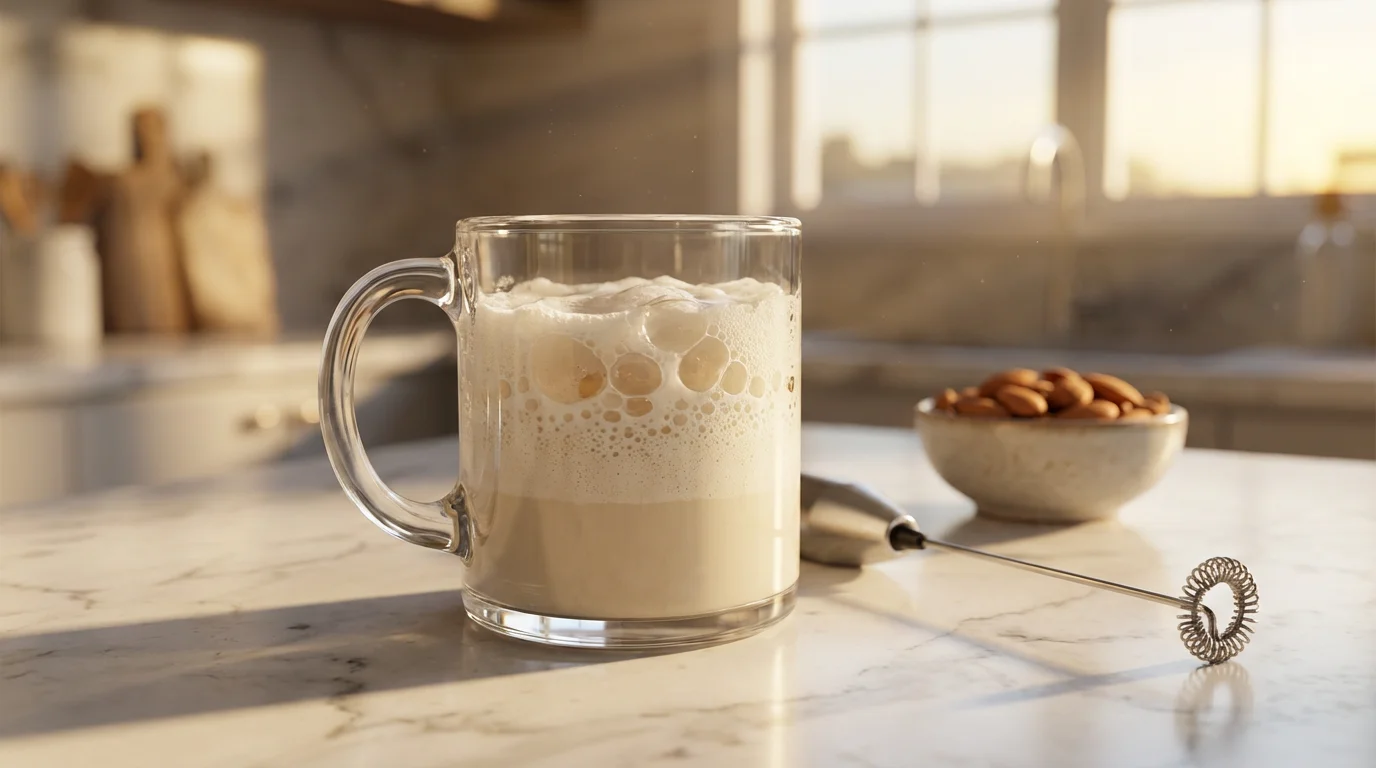
The Science of Frothing Non-Dairy Alternatives
A common frustration for home baristas is buying a highly-rated frother only to find it fails to foam their almond milk. The appliance is rarely the problem; the chemistry of the milk is.
Cow’s milk foams because of proteins (casein and whey) that trap air bubbles, and fats that stabilize the texture. Plant-based milks often lack these proteins or have fats that destabilize foam.
When shopping for a frother for non-dairy use, consider the following:
- Oat Milk: This is generally the best plant-based option for frothing due to its fiber content and added oils in “Barista” blends. Both electric and handheld frothers handle oat milk well.
- Almond Milk: Often too watery (low protein) to hold a foam structure. You need a high-speed electric frother to get decent results, and the foam will dissipate quickly.
- Soy Milk: Similar protein structure to dairy. It foams easily in almost any device, though it can curdle at high heat.
If you exclusively drink almond or coconut milk, avoid manual plunger frothers. They typically cannot generate the speed required to emulsify low-protein liquids. Stick to high-speed electric models or high-torque handhelds.
Buying Guide: Key Features to Look For
When evaluating which specific model to purchase, look beyond the brand name and check these specific technical details.
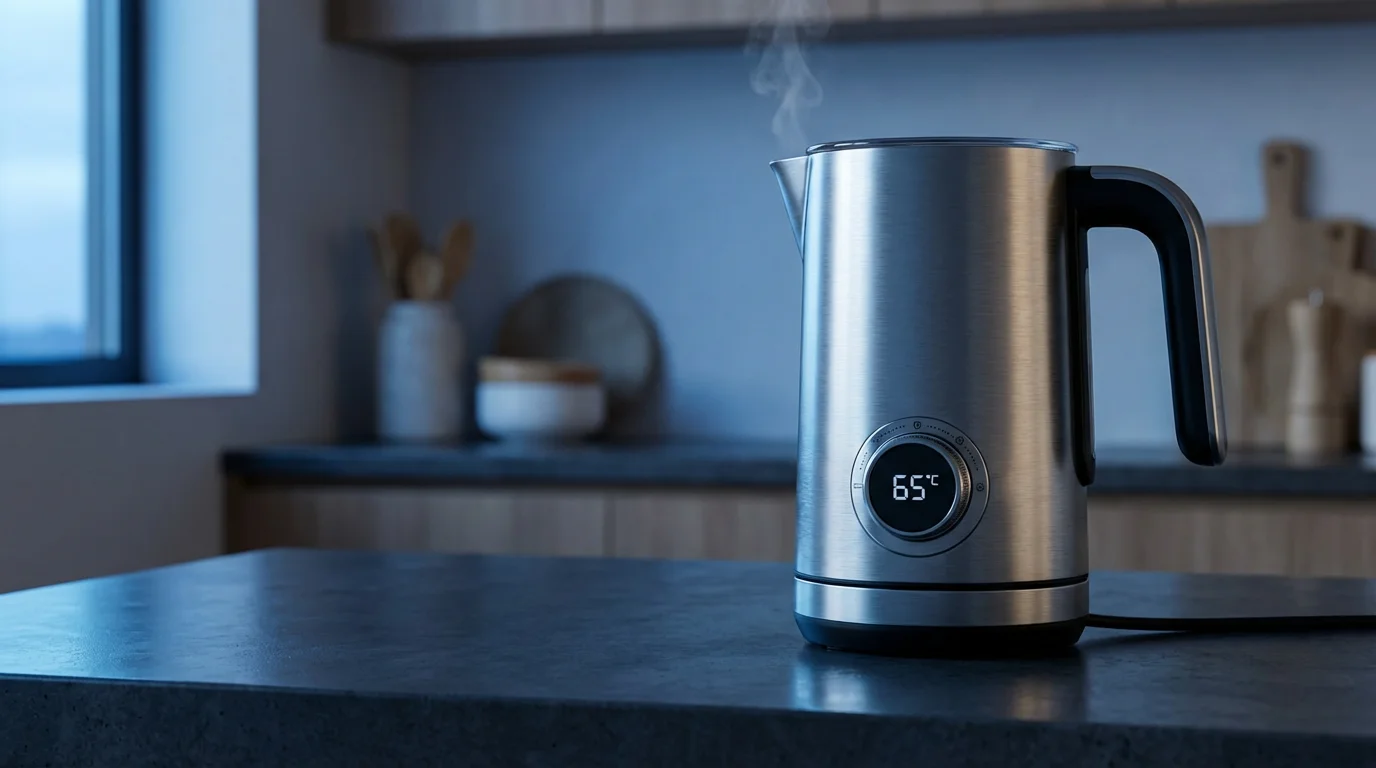
1. Temperature Control
Milk sweetness is temperature-dependent. Lactose (milk sugar) tastes sweetest at around 140°F (60°C). If you scorch the milk above 160°F, it tastes burnt and sulfurous. Budget electric frothers usually have a single “On” button that heats until a sensor trips. Premium models like the Breville allow you to dial in the exact temperature.
2. Wattage and Speed
Wattage measures the power consumption. For electric frothers, a higher wattage (500W+) generally means the milk heats faster, which is crucial for busy mornings. For handhelds, look for motor RPM (revolutions per minute). You want at least 10,000 RPM to create true microfoam.
3. Interior Coating
This is the most common failure point. Most electric frothers use a non-stick coating similar to a frying pan. Over time, whisking can scratch this coating, leading to peeling. Wirecutter experts note that ceramic coatings or pure stainless steel (like the Breville) offer significantly better longevity than standard Teflon-style coatings.
4. Capacity
Pay close attention to the “Frothing Capacity” versus “Heating Capacity.” When you froth milk, it doubles in volume. An electric frother might hold 8 ounces of liquid for heating, but only 4 ounces for frothing. If you have a large family, a standard 4-ounce frothing capacity means you will be making drinks one at a time.
Cleaning, Maintenance, and Durability
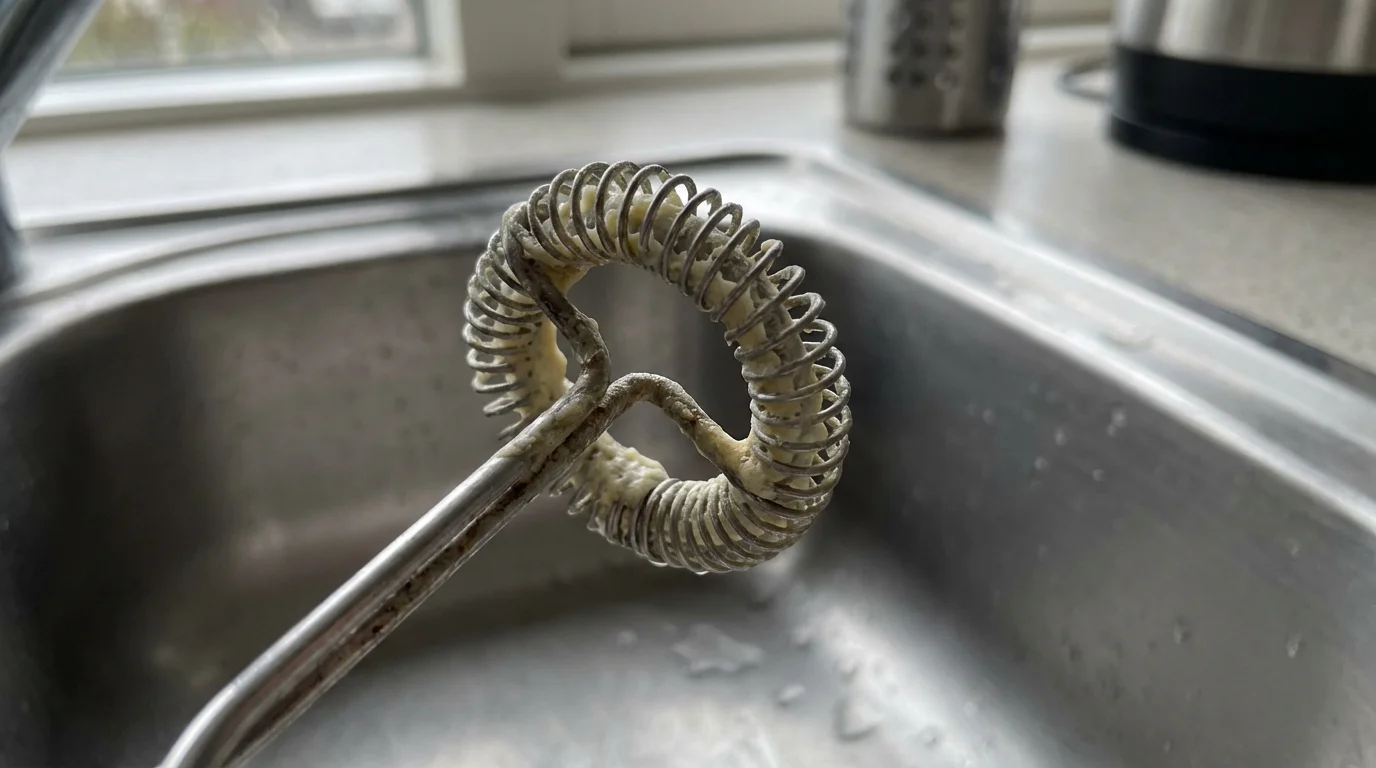
The reality of kitchen appliances is that if they are hard to clean, they sit in the cabinet. Milk residue is particularly troublesome because as it dries, it acts like glue and creates a breeding ground for bacteria.
For Electric Frothers:
Never submerge the base of a standard electric frother in water. The electrical contacts are on the bottom. Wipe the interior immediately after use with a soft sponge. Do not use scouring pads, as they will destroy the non-stick surface. If you see a burnt ring of milk at the bottom, fill it with warm soapy water and let it soak for 15 minutes before wiping.
For Handheld Wands:
To clean a handheld wand, fill a glass with hot soapy water and turn the frother on inside the water for 10 seconds. Rinse and spin dry. Never put the handle (motor housing) in the dishwasher.
For Steam Wands (Espresso Machines):
You must “purge” the wand before and after every use. This means turning the steam on for two seconds to blow out any condensation or milk sucked back into the wand. Wipe the wand with a damp cloth immediately. If milk bakes onto the wand, it insulates the metal and reduces steaming power.
Frequently Asked Questions
Can I use a milk frother for heavy cream?
Yes, but you must be careful. Heavy cream has a very high fat content (over 36%). If you over-froth it, especially with a high-speed electric frother, you will accidentally make butter. For heavy cream, use the “cold froth” setting or short bursts with a handheld wand to create a soft whipped topping.
What is the difference between “frothing” and “steaming”?
Steaming heats the milk while injecting steam (water vapor) into it, which textures the milk throughout the liquid for a silky “microfoam.” Frothing generally refers to introducing air bubbles to create a distinct layer of stiff foam on top of the milk. Electric frothers generally “froth,” while espresso machines “steam.”
Why is my electric frother blinking red and not working?
This is almost always due to a safety sensor on the heating element. If there is a thin film of burnt milk on the bottom of the jug from the previous use, the sensor detects overheating immediately and shuts the machine down to prevent a fire. Thoroughly clean the bottom of the interior to resolve this.
Does fat content matter for frothing?
Absolutely. Fat provides flavor and stability, while protein provides the structure for the bubbles. Whole milk (3.25% fat) is the easiest to froth and creates the creamiest texture. Skim milk foams very easily because of the higher protein-to-fat ratio, but the foam is often dry, airy, and dissolves quickly. It lacks the velvety mouthfeel of whole milk.
Disclaimer: Product prices, features, and availability change frequently. Prices shown were accurate at time of writing but may have changed. We may earn a small commission from purchases made through links on this site, at no extra cost to you. Always verify current pricing and specifications on the retailer’s website before purchasing.

Leave a Reply