
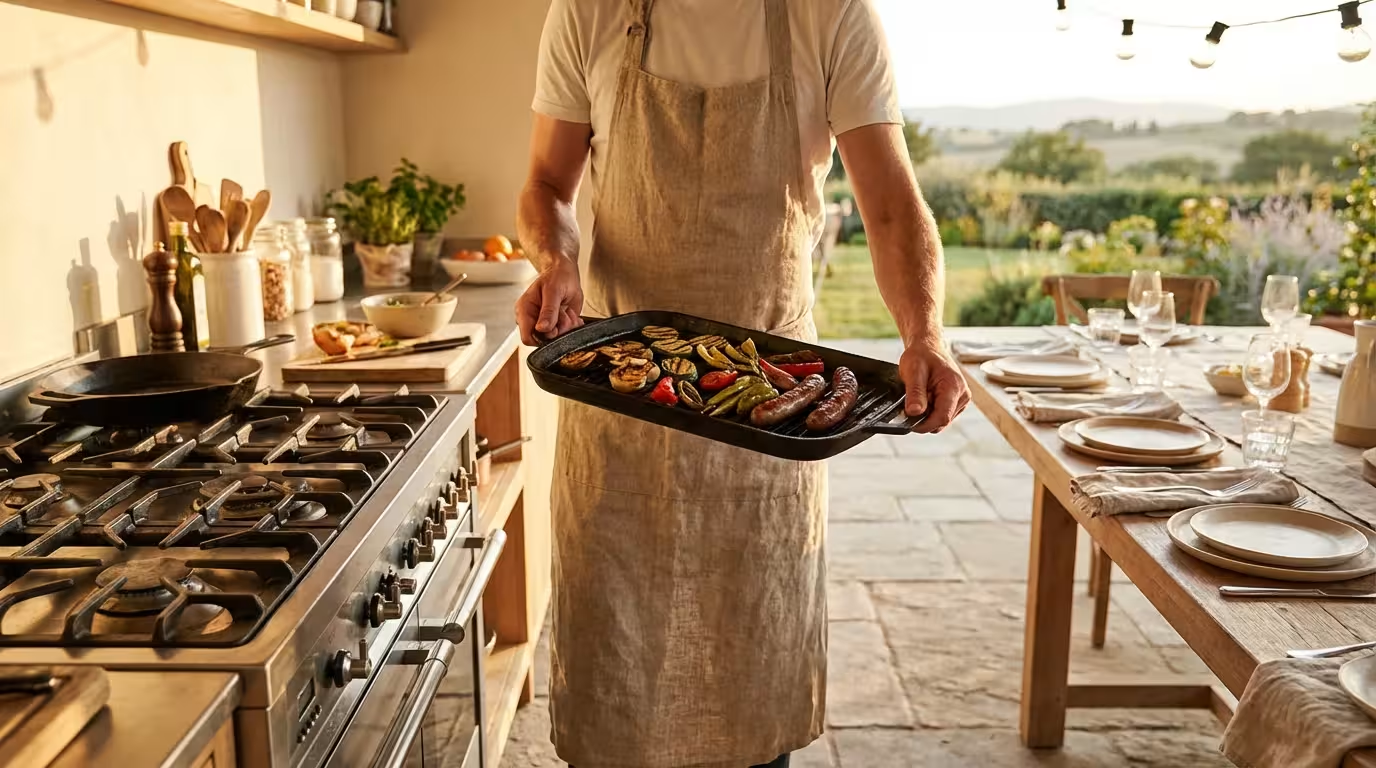
You crave the char of a perfect steak or the smoky sweetness of grilled vegetables, but it is Tuesday night, raining, or you live in an apartment without outdoor space. This is where the grilling pan becomes the most valuable tool in your arsenal. It bridges the gap between outdoor barbecuing and indoor cooking, bringing distinct sear marks and flavor to your table without the need for charcoal or propane.
However, grilling pans—often called grill pans or griddles—are frequently misunderstood. Many home cooks buy one expecting it to replace a charcoal grill entirely, only to be frustrated by smoke or difficult cleanup. Others struggle to choose between cast iron, non-stick, or carbon steel. The truth is that a grilling pan is a specialized tool. When you understand how to choose the right material and use it correctly, it unlocks a new category of texture and presentation for your meals.
Why You Need a Grill Pan in Your Kitchen
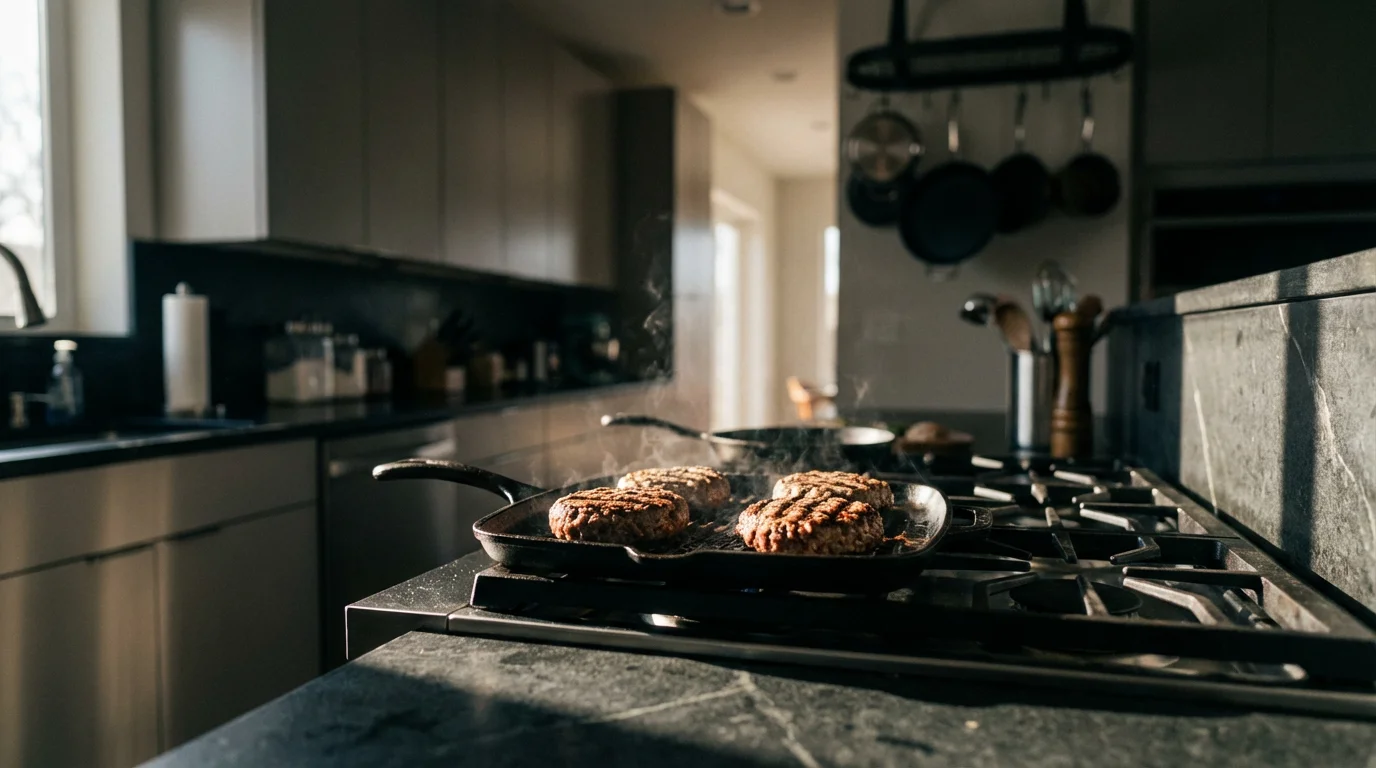
A grilling pan does two things a standard flat skillet cannot: it elevates food away from rendering fat and creates distinct char marks through conduction. When you cook a burger in a flat pan, it sears in its own juices. This is delicious, but it results in a crust rather than a char. A grill pan uses raised ridges to lift the meat.
The fat drips down into the valleys between the ridges, allowing the high points of the metal to sear deep lines into the food. This mimics the grates of an outdoor grill. While you won’t get the woody, smoky flavor derived from dripping fat hitting hot coals, you do get the visual appeal of grill marks and a texture that feels lighter and less greasy than pan-frying.
Furthermore, many of the best grilling pans are designed with a “stovetop to table” philosophy. Heavy materials like cast iron retain heat for a long time, meaning you can serve the food directly in the pan. It keeps dinner warm and adds a rustic, professional aesthetic to your table setting.
Material Matters: Cast Iron, Non-Stick, and Carbon Steel
The material of your pan dictates its performance, durability, and how much effort you need to put into cleaning it. Unlike saucepans where copper or stainless steel might reign supreme, grilling requires high heat retention.
Cast Iron: The Gold Standard
For grilling pans, cast iron is the undisputed king. It has high thermal mass, meaning once it gets hot, it stays hot. When you drop a cold steak onto the ridges, the temperature of the ridges does not plummet. This is essential for getting those dark, restaurant-quality grill marks.
There are two types of cast iron to consider:
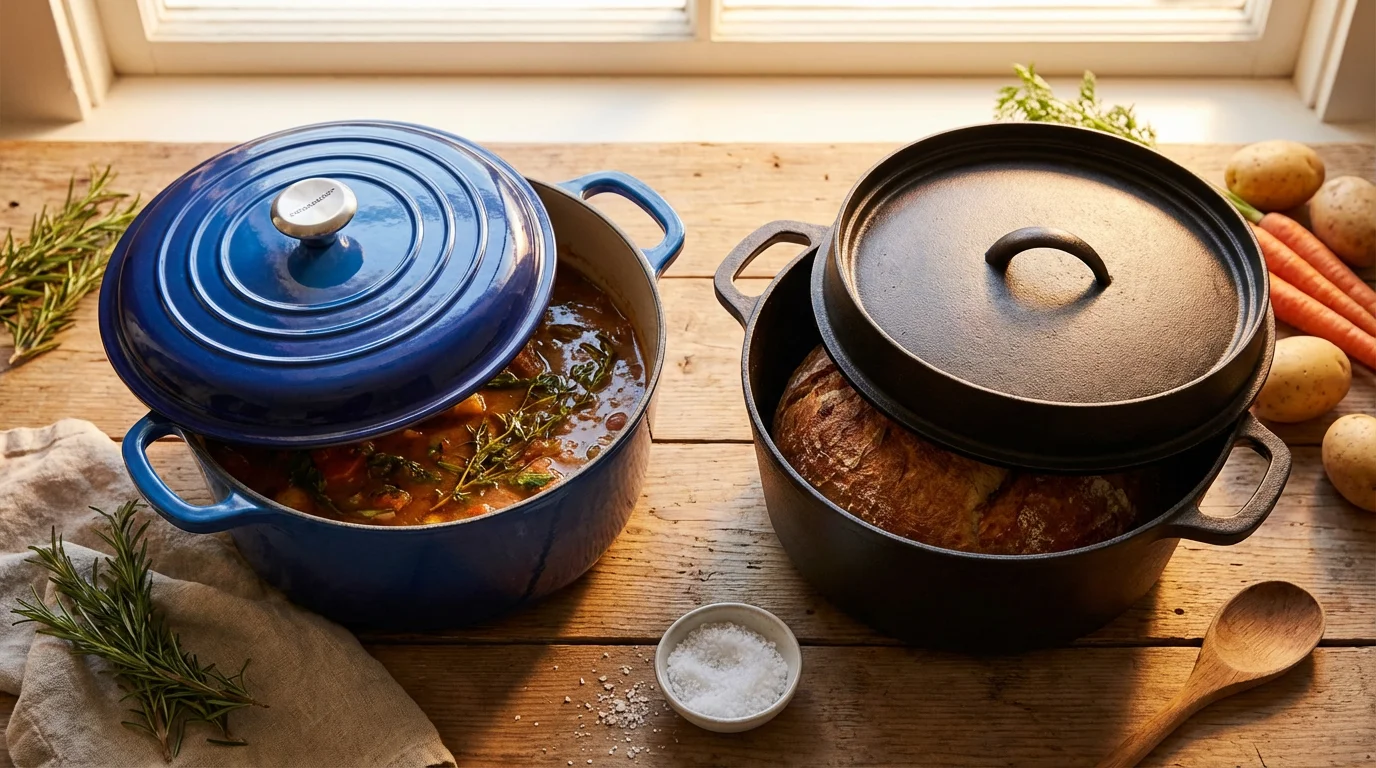
- Raw Cast Iron (e.g., Lodge): Inexpensive and virtually indestructible. It requires “seasoning”—a polymerized layer of oil baked onto the iron to prevent rust and create a natural non-stick surface. It gets better with age but reacts with acidic foods (like tomato sauce) if the seasoning isn’t thick enough.
- Enameled Cast Iron (e.g., Le Creuset, Staub): These pans are coated in glass-based enamel. They do not require seasoning and can handle acidic marinades without issue. They are easier to clean but significantly more expensive.
“A $30 cast iron pan, properly cared for, will outlast a $300 non-stick. Know what you’re paying for.” — Professional Chef
Non-Stick: Convenience Over Sear
Non-stick grill pans (usually aluminum with a PTFE or ceramic coating) are lightweight and easy to clean. The “valleys” in a grill pan are notoriously hard to scrub, so a non-stick surface solves a major pain point.
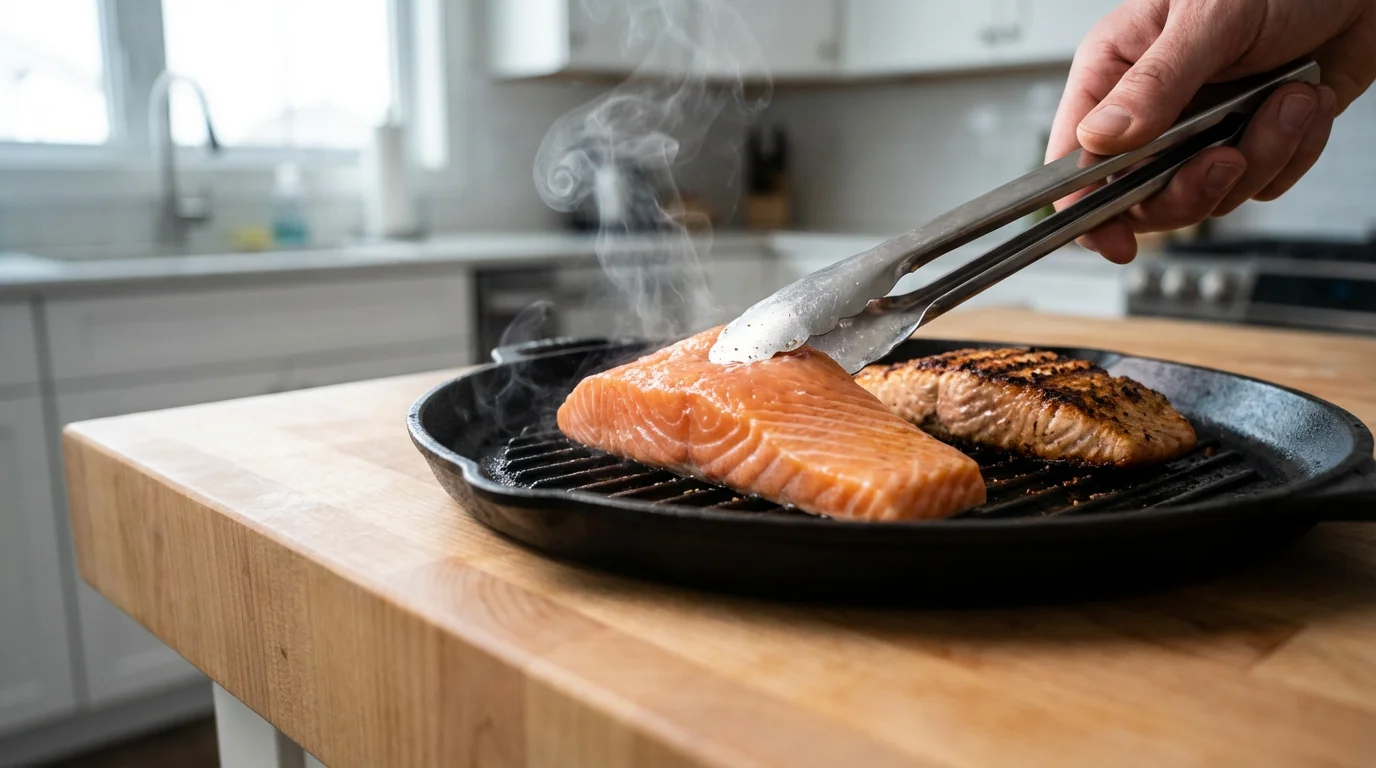
However, there is a trade-off. Non-stick coatings generally degrade under high heat (above 500°F), which is exactly the temperature you want for a great sear. If you mostly grill delicate items like fish, zucchini, or chicken breast, non-stick is a fine choice. If you want to sear a ribeye, you will be disappointed.
Carbon Steel: The Chef’s Hybrid
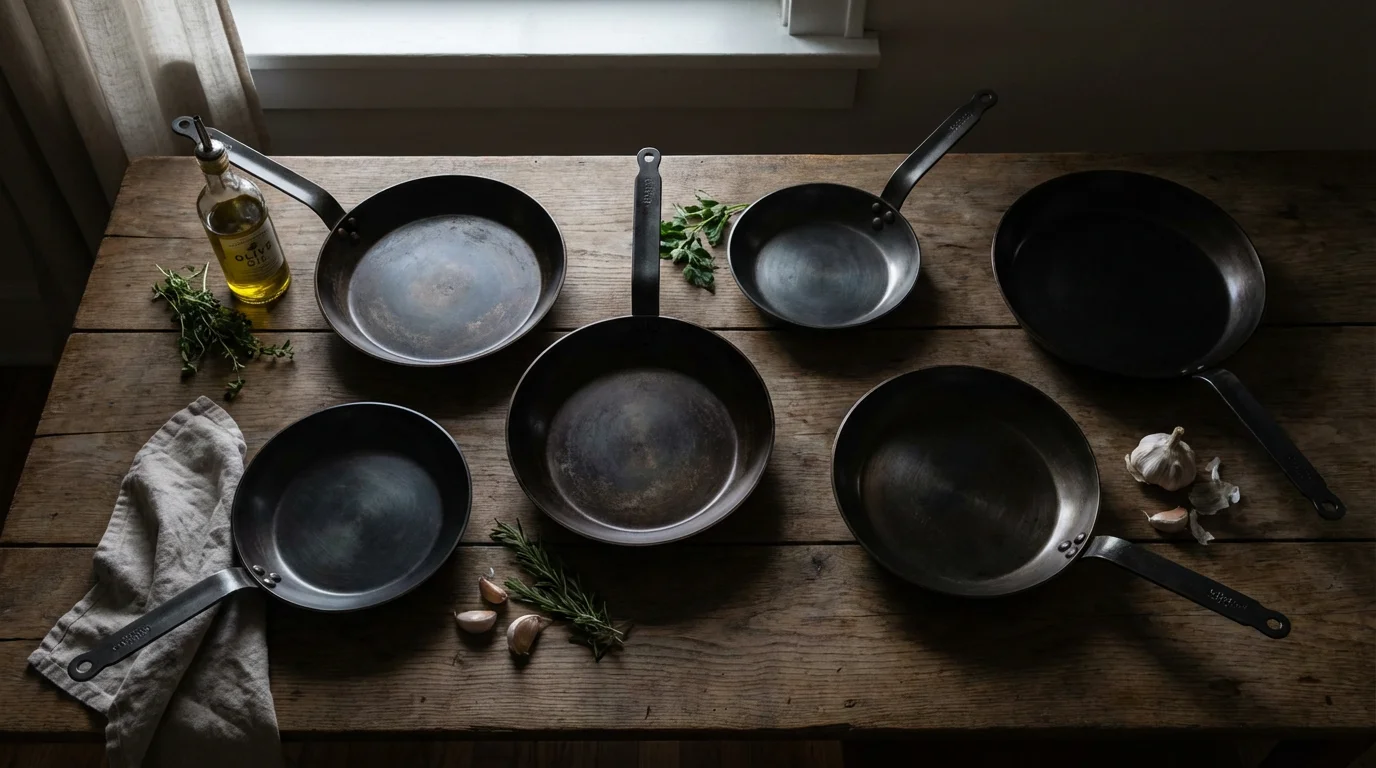
Carbon steel is lighter than cast iron but shares many of its properties. It heats up faster and is more responsive to temperature changes. Like raw cast iron, it requires seasoning. While less common for dedicated grill pans, carbon steel options exist and are excellent for those who find cast iron too heavy to maneuver.
Anatomy of a Great Grill Pan
Not all pans are created equal. When shopping, look at the physical specifications of the pan. These details determine if the pan will be a joy to use or a burden.
Ridge Height and Shape
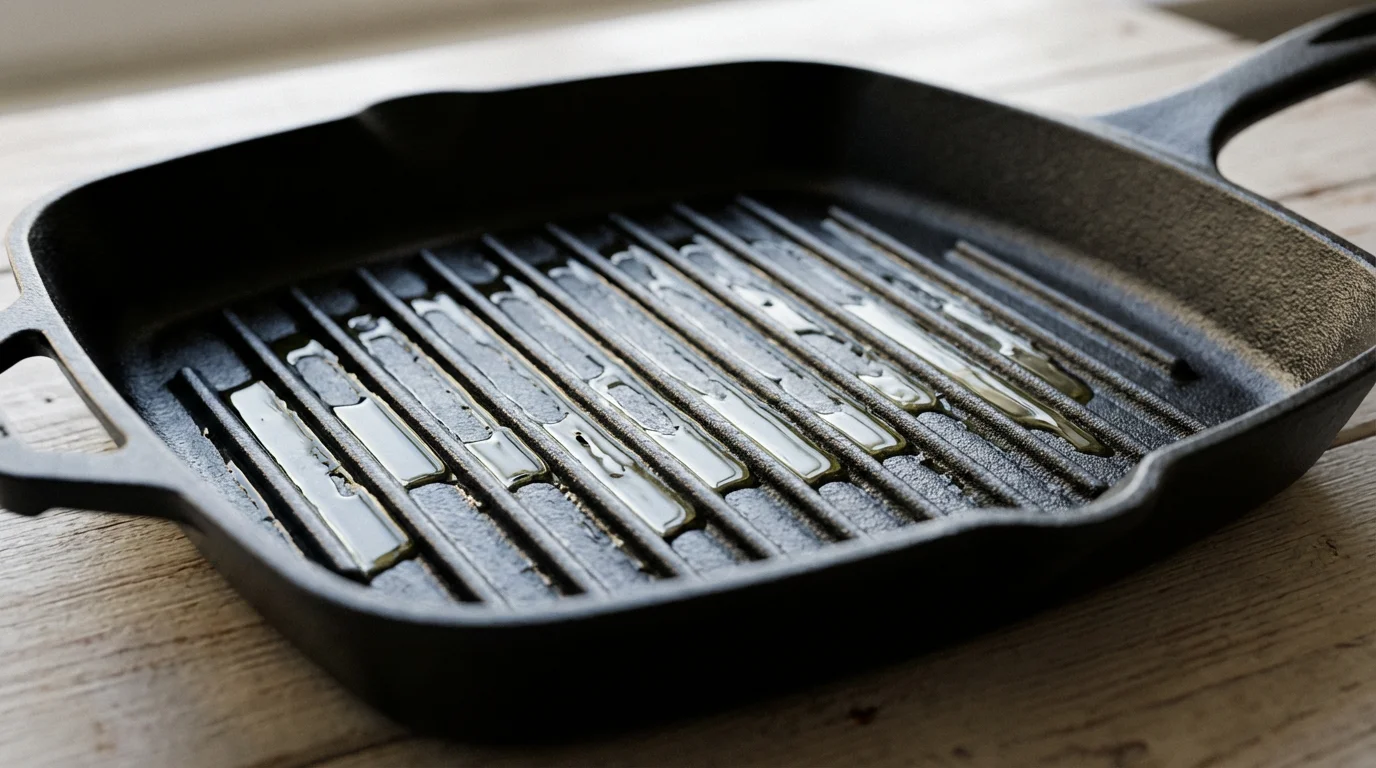
The ridges are the defining feature. You want high, prominent ridges. If the ridges are too low or shallow, the food will sag in between them and touch the bottom of the pan, effectively steaming the meat instead of grilling it. Look for ridges that are at least 3-4mm tall.
Square vs. Round
In the world of skillets, round is standard. For grilling pans, square is superior. A square pan offers roughly 25% more surface area than a round pan of the same width. This is crucial because you generally should not overcrowd a grill pan; overcrowding traps steam and prevents browning. The extra corners in a square pan give you room to grill three chicken breasts or two large steaks comfortably.
Handles
Cast iron is heavy. A 10-inch square grill pan can weigh 6 to 7 pounds. Look for a pan with a “helper handle”—a small U-shaped handle opposite the main handle. This allows you to lift the pan with two hands, which is safer when moving a hot pan from the stovetop to the oven or table.
Heat Distribution and Performance Science
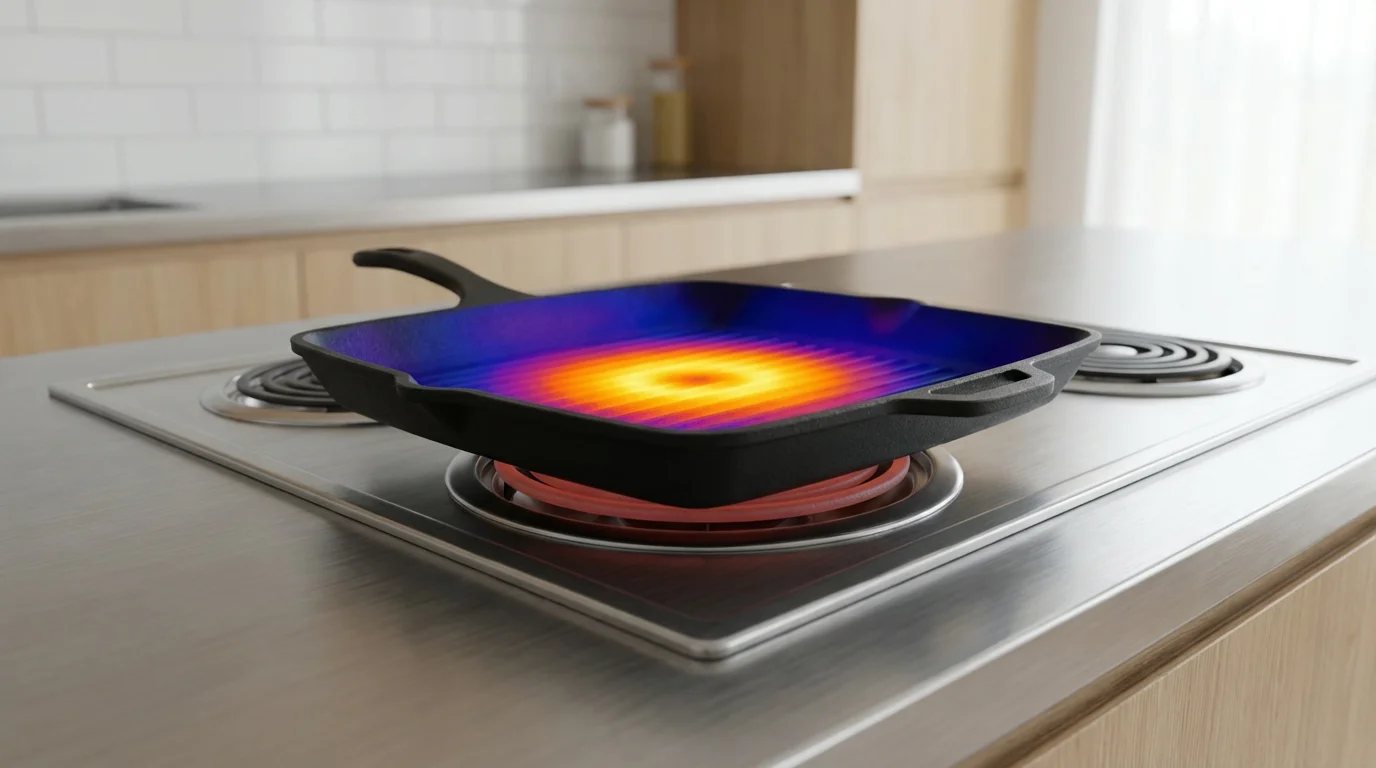
Understanding “heat distribution” helps you cook better. Cast iron is actually a poor conductor of heat compared to aluminum or copper. If you place a large cast iron grill pan on a small burner, the center will get very hot while the corners stay cool.
However, cast iron excels at heat retention. To overcome the uneven heating, you must preheat the pan slowly. Place the pan on medium-low heat for 5–10 minutes before cranking it up to searing temperature. This allows the heat to radiate through the heavy metal, ensuring the ridges in the corners are just as hot as the ones in the center.
According to Serious Eats, achieving a proper sear requires a pan that can maintain its surface temperature when cold food is added. This is why thin aluminum pans often fail at grilling; the metal cools down instantly upon contact with meat, resulting in grey, steamed food rather than brown, crusted food.
Comparison: Grill Pan vs. Flat Skillet
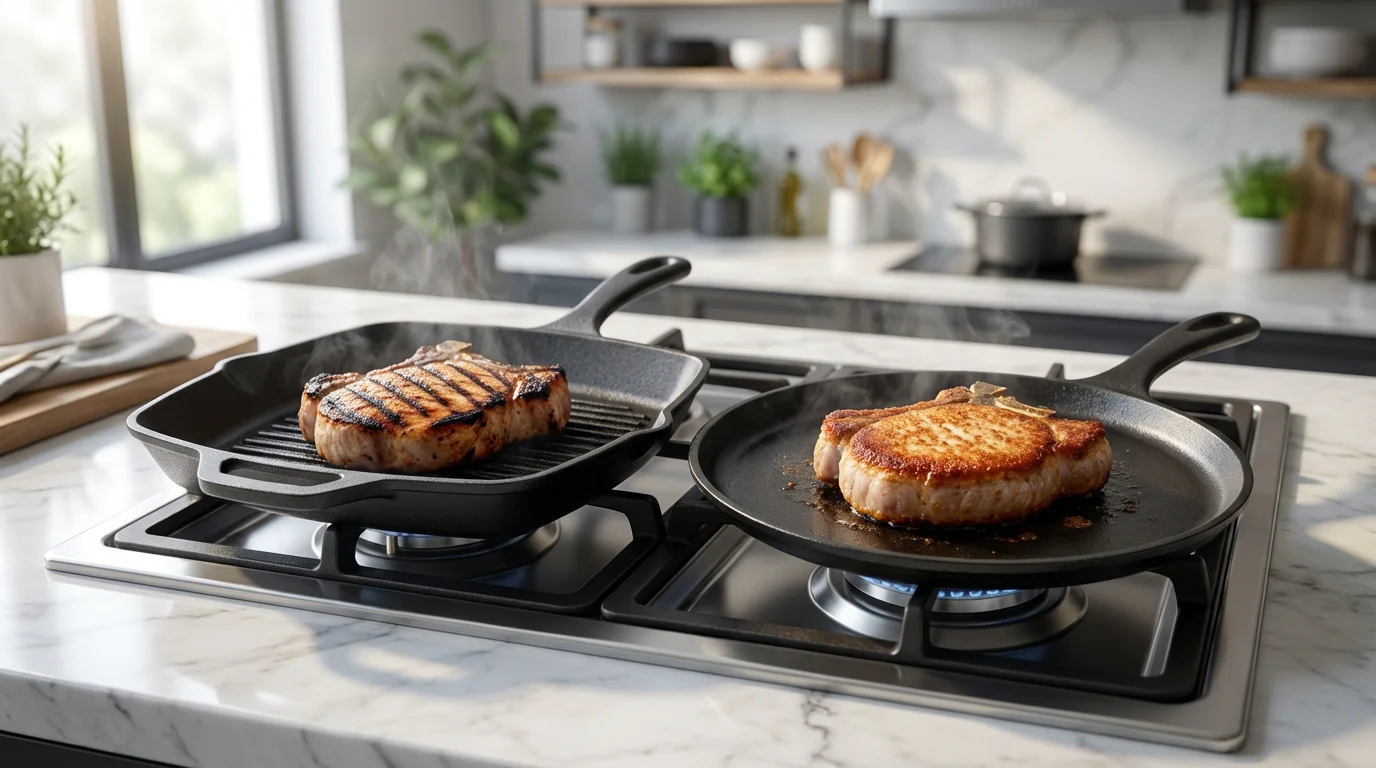
Should you buy a grill pan if you already own a cast iron skillet? Here is a breakdown of how they compare in functionality.
| Feature | Grill Pan | Flat Skillet (Cast Iron) |
|---|---|---|
| Searing Area | Partial (Ridges only) | Full surface contact |
| Fat Drainage | Excellent (Drains into valleys) | Poor (Food cooks in fat) |
| Aesthetic | Distinct grill marks | Uniform brown crust |
| Cleaning Difficulty | High (Scrubbing between ridges) | Low (Easy to wipe out) |
| Versatility | Specialized (Meats, Veggies, Paninis) | High (Eggs, Sauces, Baking, Searing) |
| Best For | Fatty cuts, presentation, drainage | Even crust, pancakes, searing |
Top Brands and Value Picks
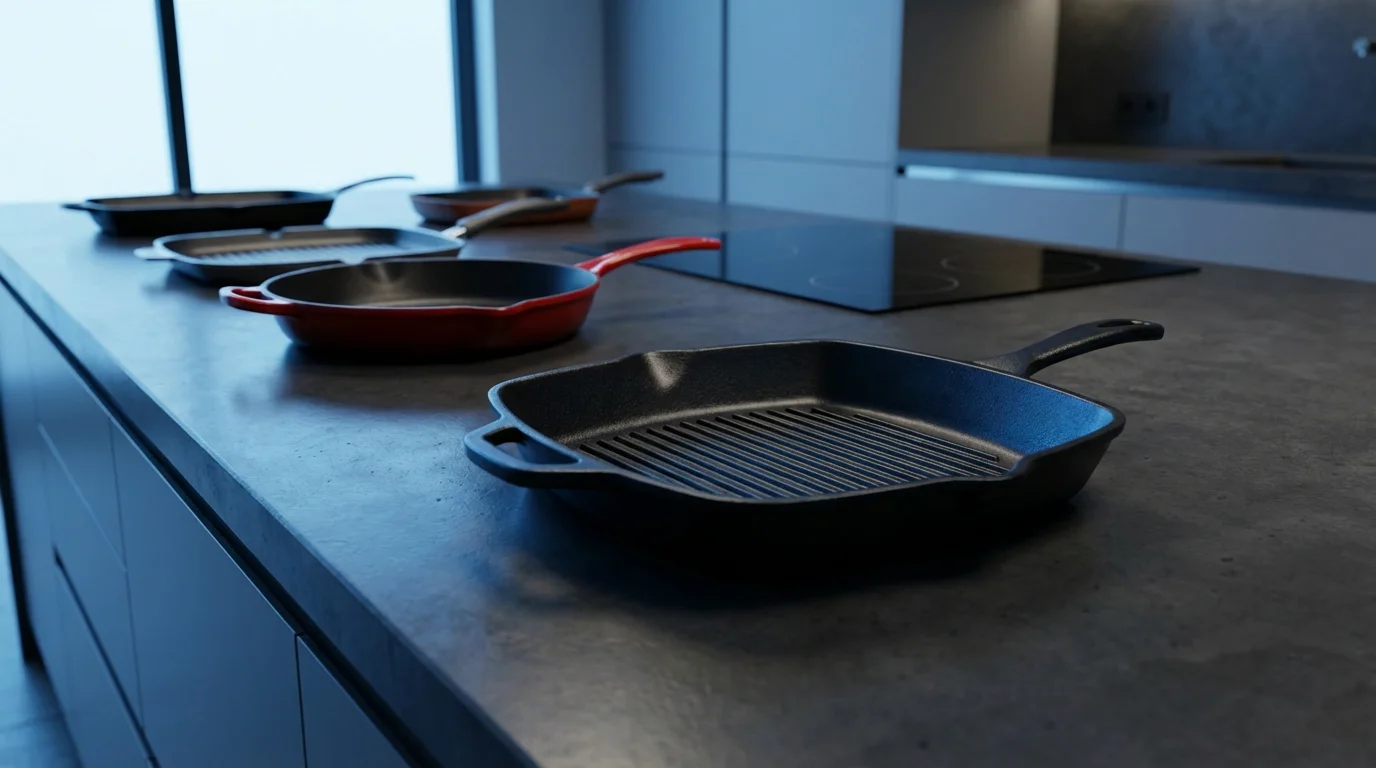
The market is flooded with options, but a few brands consistently perform well in durability and heat tests.
Lodge (Best Value)
Lodge is the standard for raw cast iron in the USA. Their square grill pans are affordable, come pre-seasoned, and last practically forever. The ridges are well-defined, and the helper handle is standard. If you are willing to maintain the seasoning, this is the best value purchase.
Le Creuset (Best High-End)
If you want the performance of cast iron without the maintenance, Le Creuset’s enameled grill pans are the top choice. The black satin enamel interior does not require seasoning and develops a patina over time that improves performance. They are available in vibrant colors that look stunning on the dining table, though they come with a premium price tag.
All-Clad (Best Stainless/Non-Stick Hybrid)
For those who prefer a modern look or lighter weight, All-Clad offers hard-anodized aluminum non-stick grill pans. As noted by Wirecutter, high-quality non-stick can be convenient for lighter grilling tasks, though you must be careful not to overheat the coating.
Mastering Indoor Grilling Techniques
Using a grill pan requires a slightly different approach than a flat skillet or an outdoor grill.
1. The Pre-Heat is Non-Negotiable
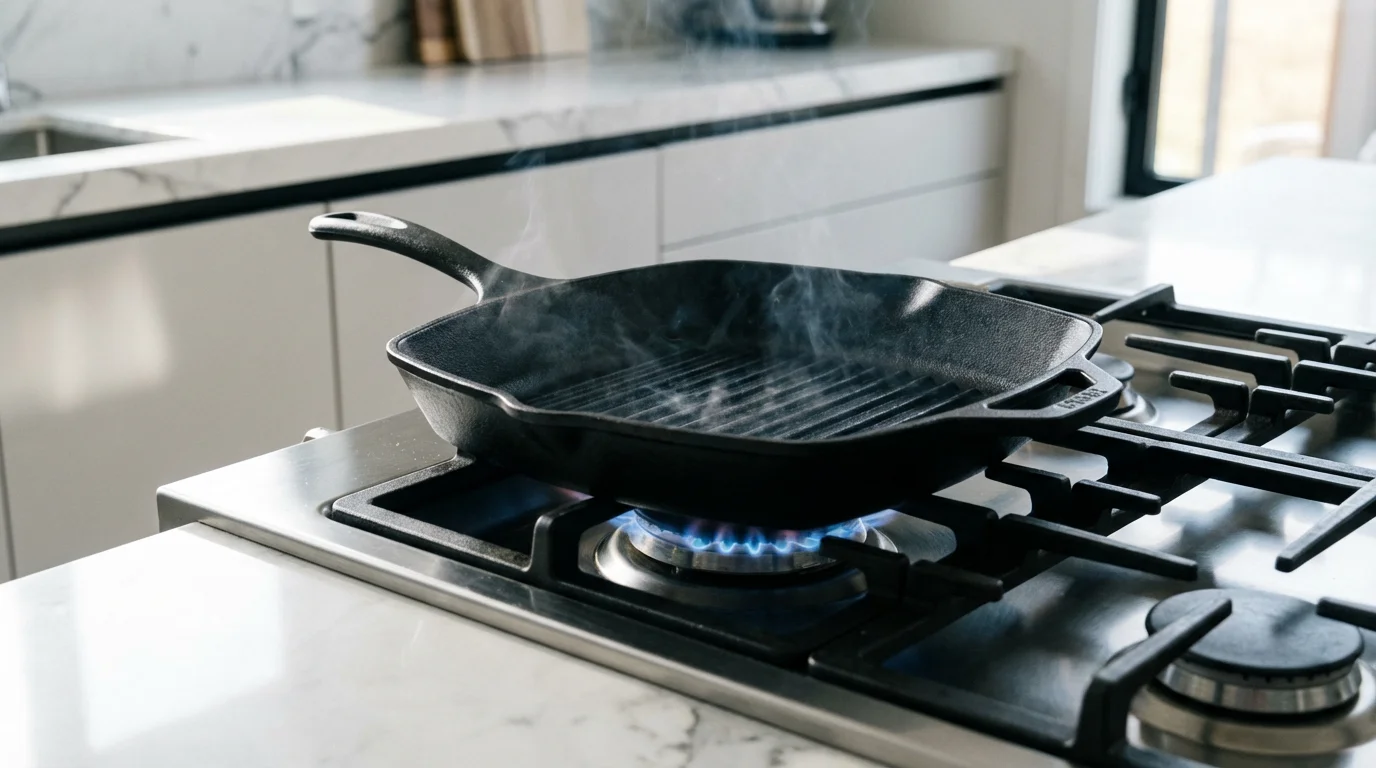
Place your pan on the burner and let it heat up for at least 5 minutes on medium heat. Do not go straight to “High” or you might warp the pan or burn off your seasoning. The ridges need time to absorb thermal energy.
2. Oil the Food, Not the Pan
If you pour oil into a grill pan, it pools in the valleys and smokes without helping the food. Instead, brush your steak, chicken, or vegetables with a high-smoke-point oil (like avocado or grapeseed oil) before placing them in the pan. This ensures the contact points are lubricated without creating excess smoke.
3. The Quarter-Turn Technique
To get those professional cross-hatch diamond marks:
- Place the food on the grill pan (at a 45-degree angle to the ridges).
- Sear for 2–3 minutes without moving it.
- Rotate the food 90 degrees and sear for another 2–3 minutes.
- Flip and repeat.
4. Use a Press
A “grill press” (a heavy cast iron weight) is a great accessory. Placing a press on top of a steak or panini ensures maximum contact with the ridges, resulting in deeper sear marks and faster cooking.
Cleaning and Maintenance Guide
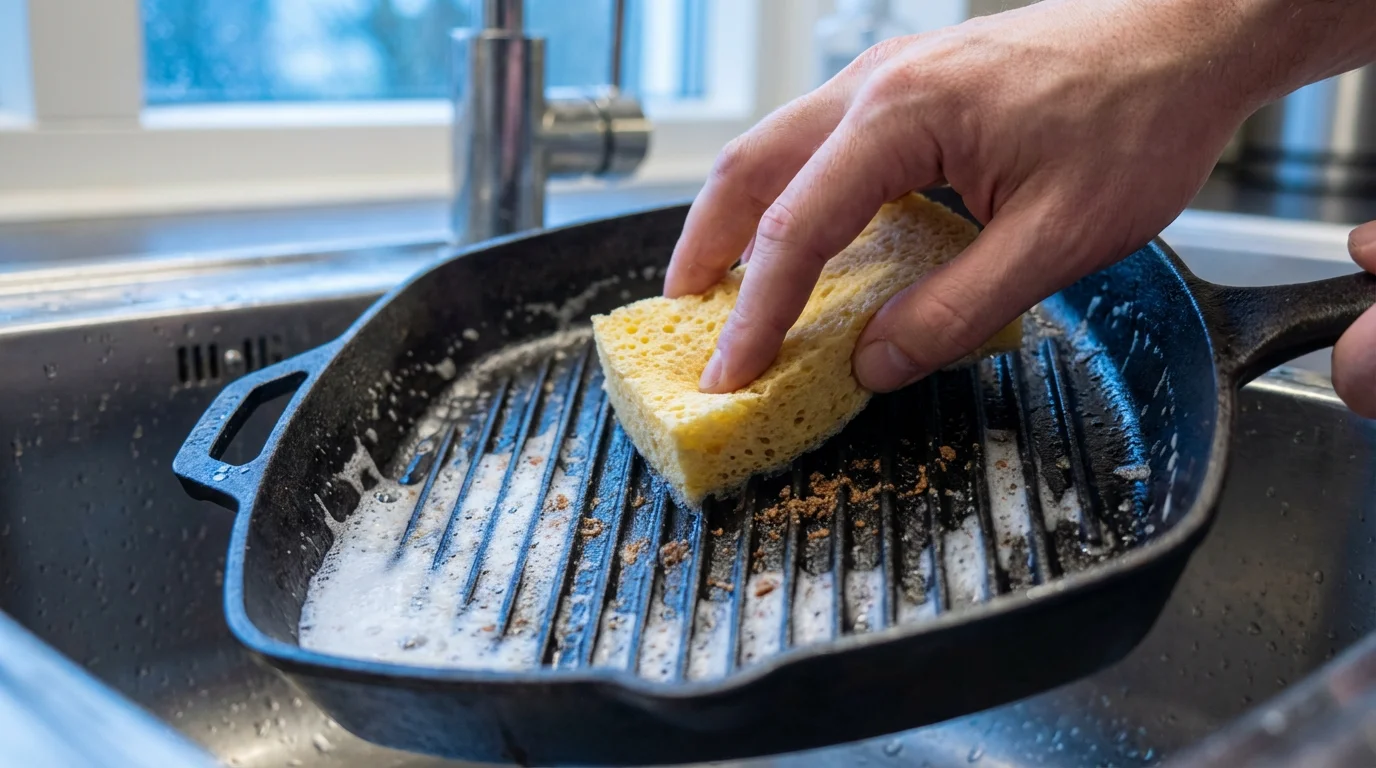
The biggest complaint about grilling pans is cleaning the “gunk” stuck between the ridges. Here is how to make it painless.
Cleaning Cast Iron
- While Warm: Clean the pan while it is still warm (but not scalding hot).
- Hot Water & Brush: Use hot water and a stiff nylon brush. Avoid soap if you are a purist, though a little mild soap is actually fine for modern seasoning.
- The Salt Scrub: If food is stuck, make a paste of kosher salt and a little water. Scrub with a paper towel. The salt acts as an abrasive without damaging the iron.
- Chainmail Scrubber: For stubborn burnt-on bits, a chainmail scrubber is a lifesaver. It scrapes the iron clean without stripping the seasoning.
- Dry and Oil: Immediately dry the pan thoroughly with a towel (or on the stove) to prevent rust. Rub a thin layer of oil over the surface before storing.
Cleaning Enameled Pans
Soak the pan in warm soapy water for 15 minutes to loosen residue. Use a soft sponge or a nylon scraper. Never use steel wool or metal scrubbers on enamel, as you can scratch the glass surface, leading to chipping.
Frequently Asked Questions
How do I stop my grill pan from smoking so much?
Smoke usually comes from overheating oil. Ensure you are using an oil with a high smoke point, such as avocado oil (520°F) or refined olive oil. Avoid extra virgin olive oil or butter for high-heat grilling. Also, oil the food lightly rather than pooling oil in the pan.
Can I use a grill pan on a glass-top stove?
Yes, but be careful. Cast iron is heavy and rough; dragging it can scratch the glass. Always lift the pan to move it. Additionally, because glass tops cycle heat on and off, give your heavy pan plenty of time to preheat so the temperature stabilizes.
Why is my meat sticking to the grill pan?
Sticking usually happens for two reasons: the pan wasn’t hot enough, or you tried to flip the food too soon. Protein releases naturally from the metal once a sear has formed. If it is sticking, give it another minute. If using cast iron, ensure your seasoning layer is well-maintained.
Is a grill pan dishwasher safe?
Generally, no. Raw cast iron should never go in the dishwasher—it will rust immediately. Enameled cast iron is technically dishwasher safe, but frequent washing will dull the shine and potentially damage the enamel over time. Hand washing preserves your investment.
Disclaimer: Product prices and availability change frequently. Prices shown were accurate at time of writing but may have changed. We may earn a small commission from purchases made through links on this site, at no extra cost to you. Always verify current pricing on the retailer’s website before purchasing.

Leave a Reply