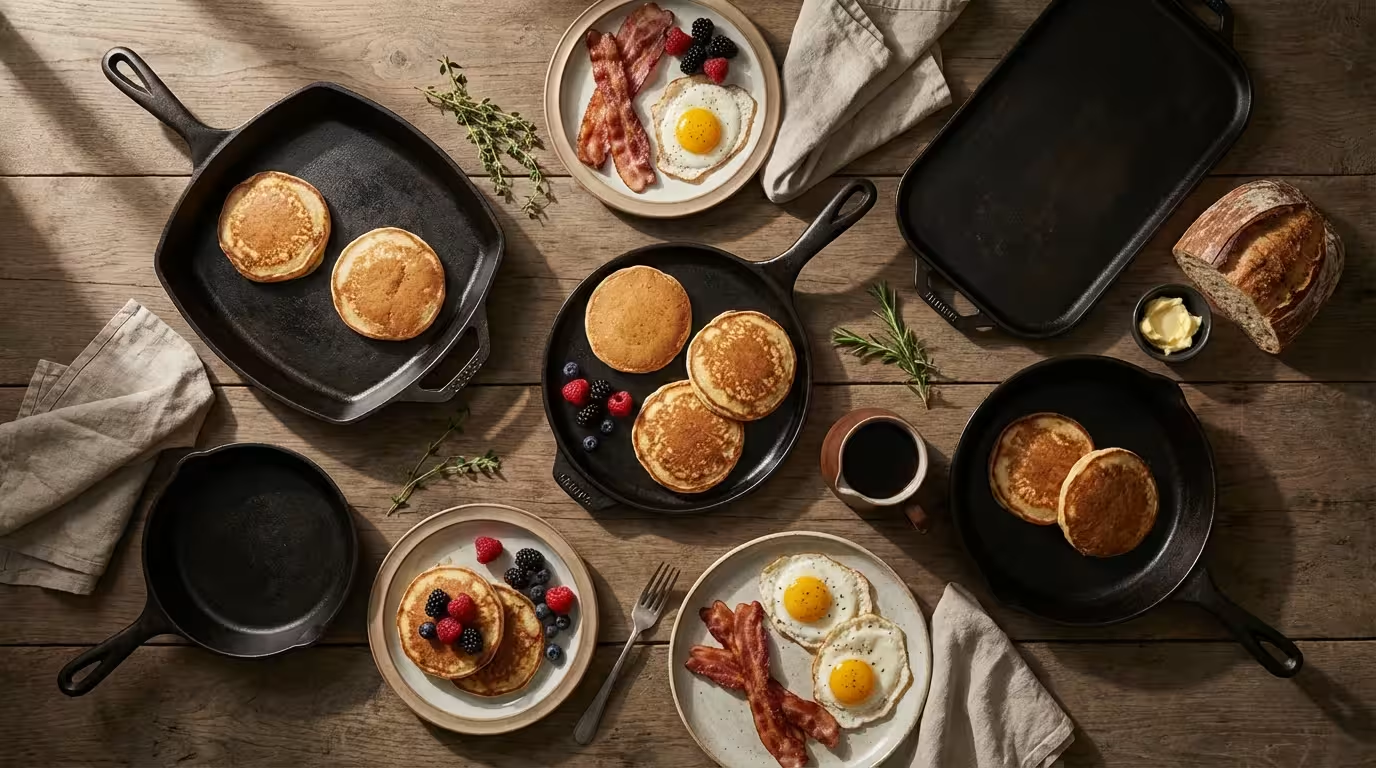
Saturday morning arrives, and the vision is clear: a stack of golden buttermilk pancakes, crispy strips of bacon, and eggs fried just right. You pull out your standard 10-inch skillet, and reality sets in. You can only fit two pancakes at a time. By the time the last batch is done, the first is cold. The bacon is crowded and steaming rather than crisping. This is the moment you realize your kitchen is missing a vital tool.
A dedicated griddle pan changes the entire flow of breakfast cooking. Unlike a skillet, which has high sloped sides designed to contain liquids and stir-fries, a griddle offers a broad, flat surface with a barely-there rim. This design maximizes usable surface area and allows you to slide a spatula under delicate foods with zero obstruction. Whether you are feeding a hungry family or just want to cook different components of a meal simultaneously, the right griddle transforms breakfast from a juggling act into a synchronized performance.
Why You Need a Dedicated Griddle Pan
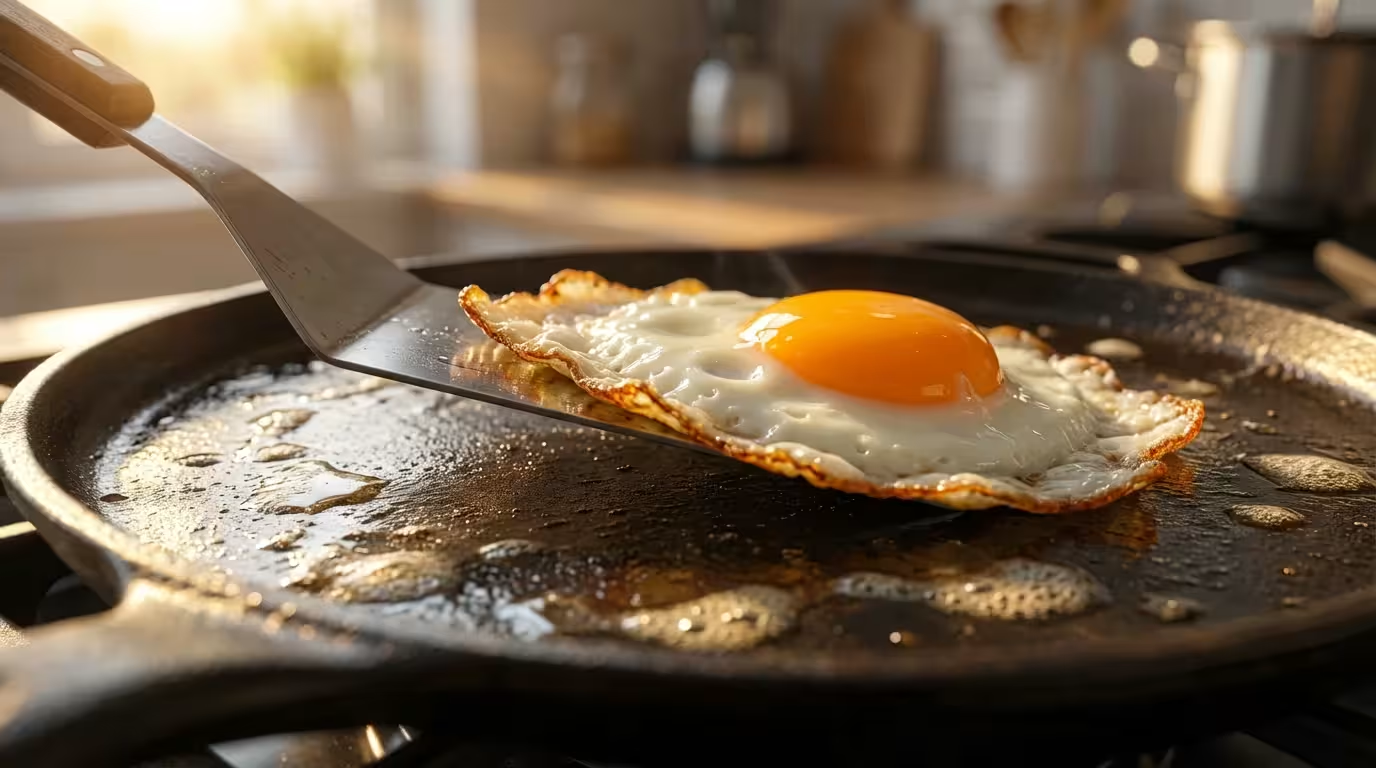
You might argue that you already have a large frying pan. While versatile, frying pans have limitations when it comes to standard breakfast fare. The primary advantage of a griddle is the lack of high sidewalls. In a standard skillet, the walls trap moisture, which can steam your hash browns instead of searing them. More importantly, those walls block your angle of approach.
When you are trying to flip a delicate crepe or a sunny-side-up egg, the angle of your spatula matters. A griddle allows you to come in flat, parallel to the cooking surface, ensuring you pick up the entire item without crumpling it. Furthermore, the expansive surface area allows for “zone cooking.” You can keep one side of the griddle hotter for searing sausages while the cooler edge keeps the first round of French toast warm.
Material Matters: Choosing the Right Foundation
The material of your griddle dictates how it cooks, how you clean it, and how long it lasts. Understanding the physics of these materials will help you make a purchase you won’t regret.
Cast Iron: The Breakfast King
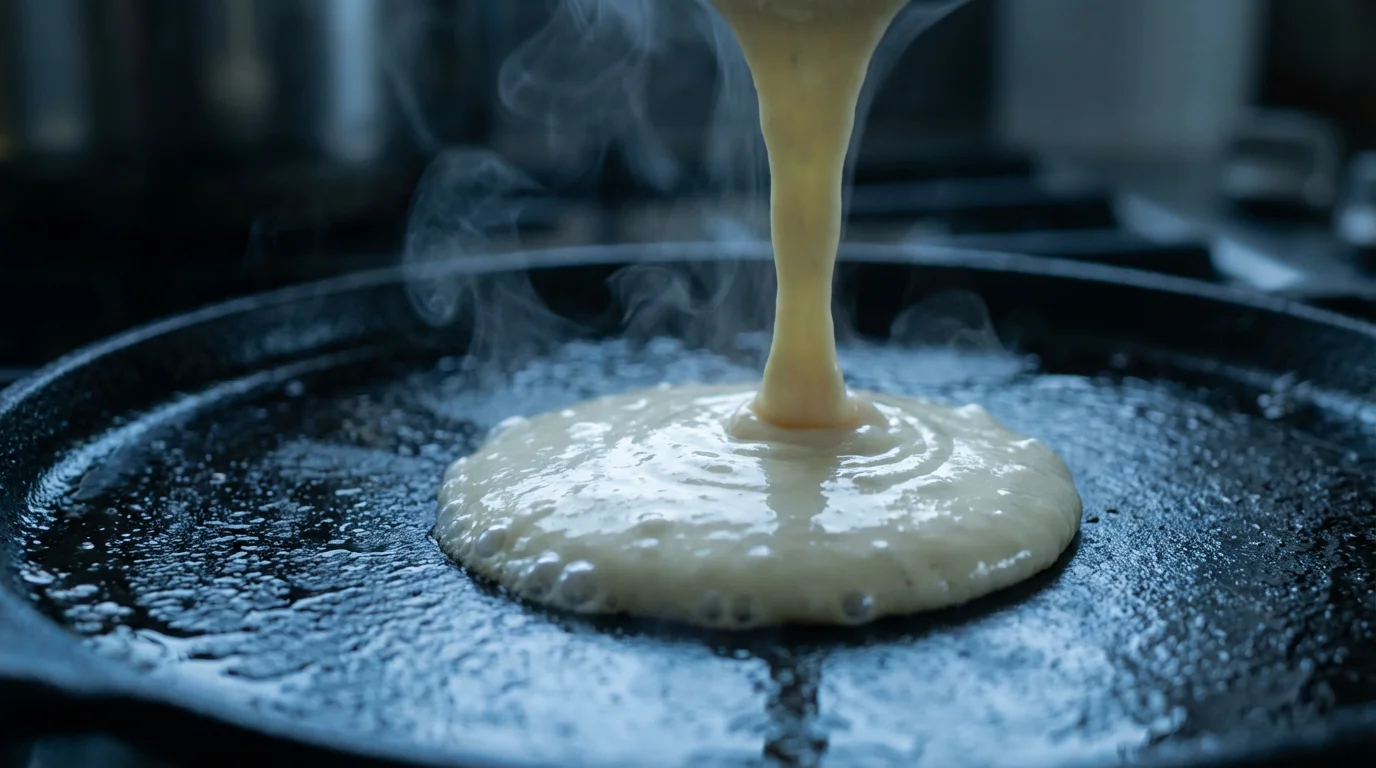
Cast iron is the traditional choice for a reason. It has immense thermal mass, meaning once it gets hot, it stays hot. This is crucial when you pour cold pancake batter onto the surface; a thin pan would drop in temperature, resulting in pale, gummy pancakes. Cast iron recovers quickly, crisping the edges immediately.
However, cast iron is heavy and requires maintenance. It must be “seasoned”—a process where oil is baked into the iron to create a natural non-stick patina. A well-seasoned cast iron griddle is virtually non-stick and can last for generations.
Carbon Steel: The Professional’s Choice
Think of carbon steel as cast iron’s lighter, smoother cousin. It shares the same heat retention properties but is generally thinner and more responsive to temperature changes. If you realize your heat is too high, carbon steel will cool down faster than cast iron when you lower the flame. The surface is much smoother than modern cast iron, which often has a pebbly texture, making carbon steel excellent for sliding eggs around.
Non-Stick Aluminum: The Convenience Option
For pure ease of use, non-stick aluminum griddles are popular. They are lightweight and heat up very quickly because aluminum is an excellent conductor. The coating, usually PTFE (the generic term for Teflon-style compounds) or ceramic, guarantees that nothing sticks.
“While non-stick pans offer immediate convenience, their lifespan is finite. Even the best coating will degrade after 3-5 years of regular use.”
If you choose non-stick, look for “hard-anodized” aluminum, which is more durable and resistant to warping. Be aware that you cannot use metal utensils on these surfaces, and high heat can damage the coating.
Single Burner vs. Double Burner Options
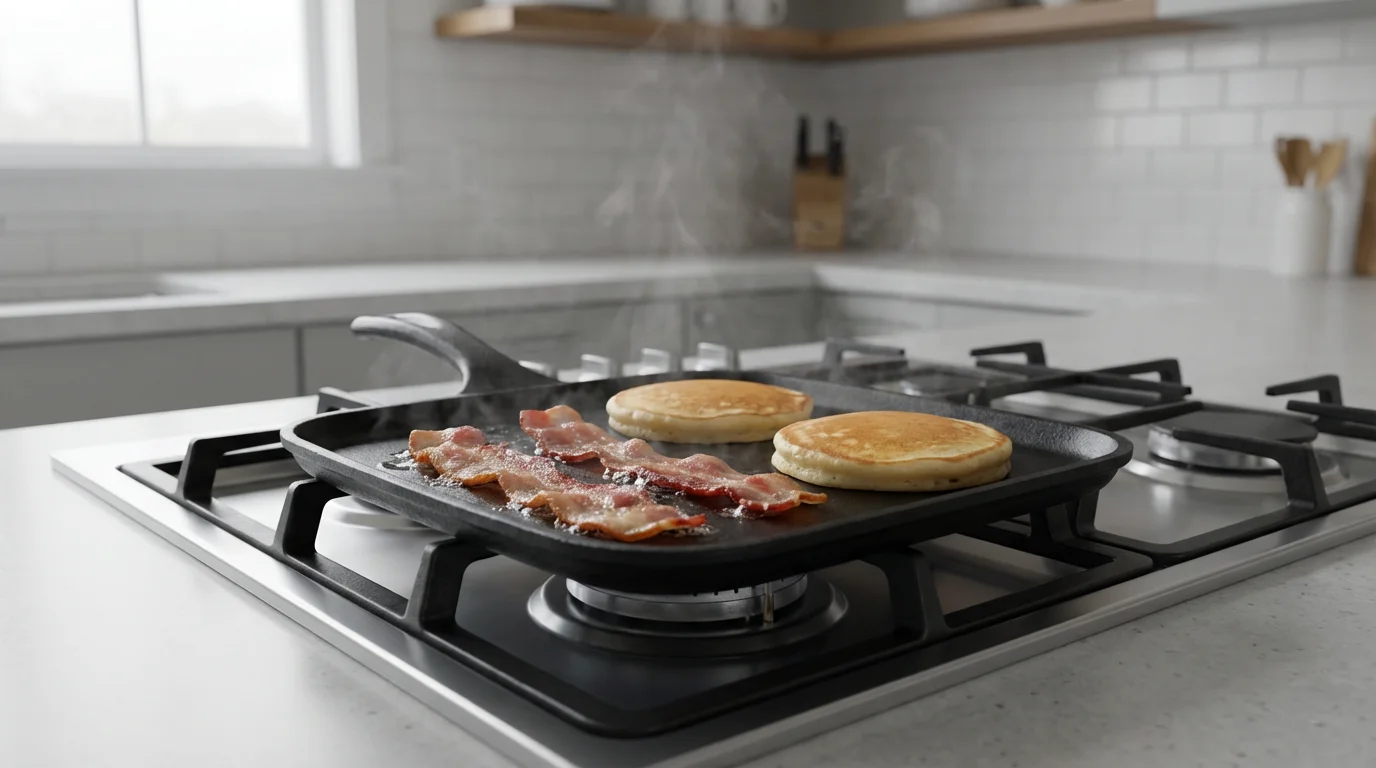
Space is your next consideration. Griddles generally come in two form factors: square pans that fit over a single burner, and rectangular plates that span two burners.
Single Burner Squares: These are essentially handle-less skillets. They are easier to store and lighter to handle. If you cook for one or two people, a 10-to-12-inch square griddle is sufficient. They fit easily in the sink for cleaning and don’t dominate the stovetop.
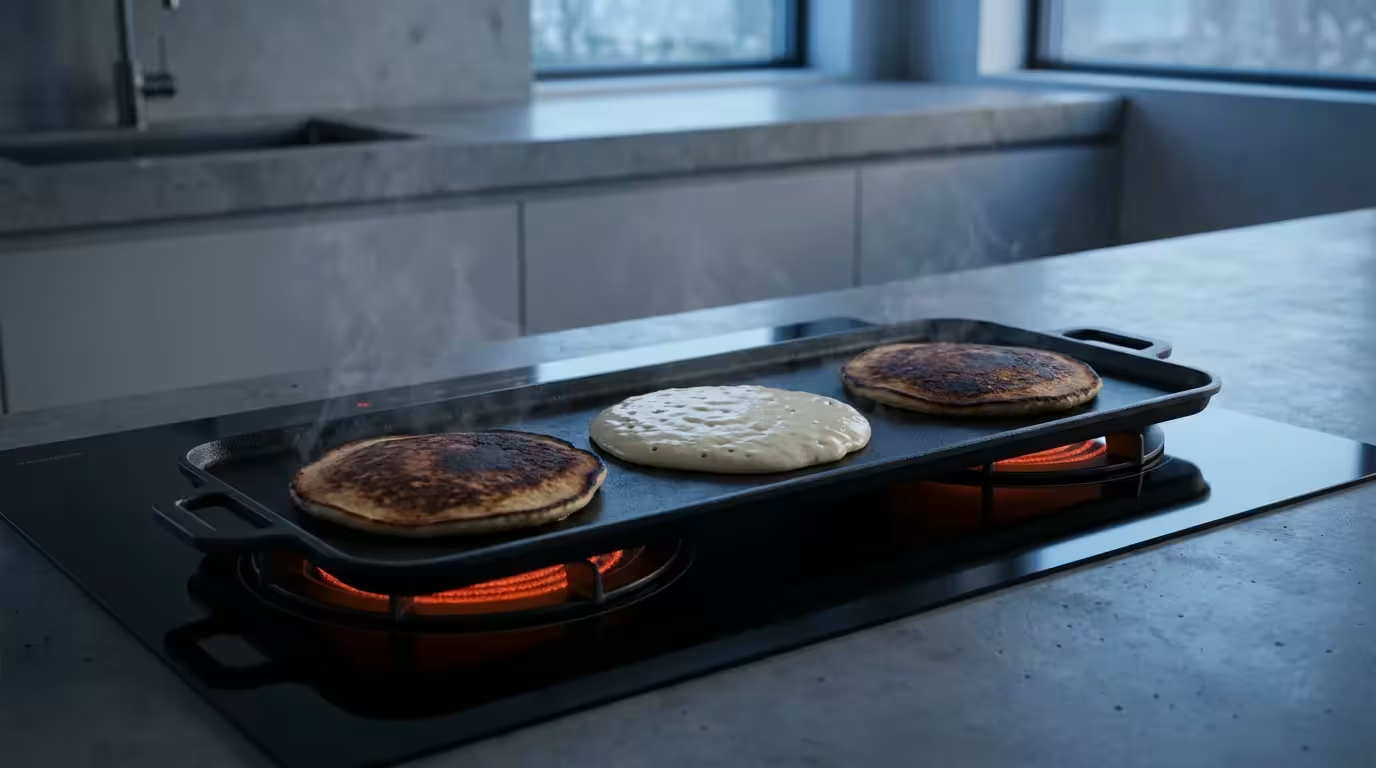
Double Burner Rectangles: This is the upgrade most home cooks are looking for. Spanning two burners, these griddles offer massive real estate. You can cook a full pound of bacon at once or six pancakes simultaneously. However, they present a heating challenge. The area directly over the burners will be hottest, while the “bridge” area between them may be cooler.
If you have an induction cooktop, you must check if your stove has a “bridge element” feature that syncs two burners. Additionally, you must ensure the griddle material is magnetic (cast iron or carbon steel); standard aluminum will not work on induction unless it has a bonded steel plate.
Understanding Heat Distribution and Control
The biggest complaint users have with double-burner griddles is uneven heating. You might find your pancakes burning in two circular spots while the middle remains raw. This is where material thickness, known as “gauge,” comes into play.
Thicker metal distributes heat more evenly. In the world of metal gauge, a lower number indicates a thicker product. For example, a heavy-duty baking sheet might be 10-gauge, while a flimsy one is 18-gauge. For griddles, you want weight. A thin aluminum griddle will inevitably have hot spots.
According to Serious Eats, the most effective double-burner griddles are those that manage the temperature differential between the area over the flame and the dead space in the middle. Cast iron helps mitigate this by holding onto heat and slowly radiating it sideways, filling in the cool zones.
For tri-ply stainless steel griddles (which consist of aluminum sandwiched between layers of steel), the heat conduction is very fast, but they may struggle to push heat to the center bridge unless your burners are close together.
Top Brands and Value Picks
Navigating the brand landscape can be confusing. Here is a breakdown of trusted manufacturers based on material categories.
Lodge (Cast Iron)
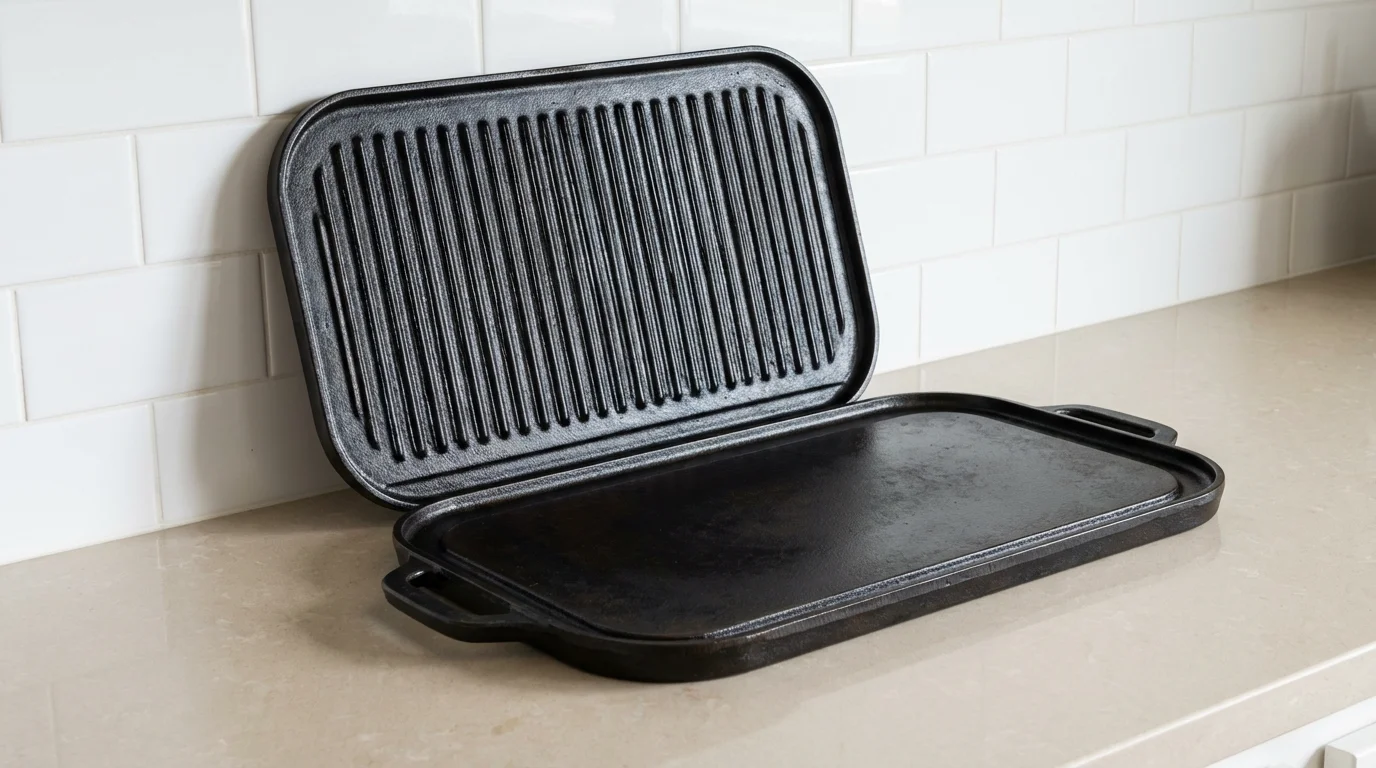
Lodge is the gold standard for affordable, American-made cast iron. Their reversible grill/griddle is a staple in many kitchens. It features a flat side for pancakes and a ridged side for grilling steaks. It is incredibly durable and comes pre-seasoned, though adding your own layers of seasoning helps. The price point makes it an unbeatable value.
Le Creuset (Enameled Cast Iron)
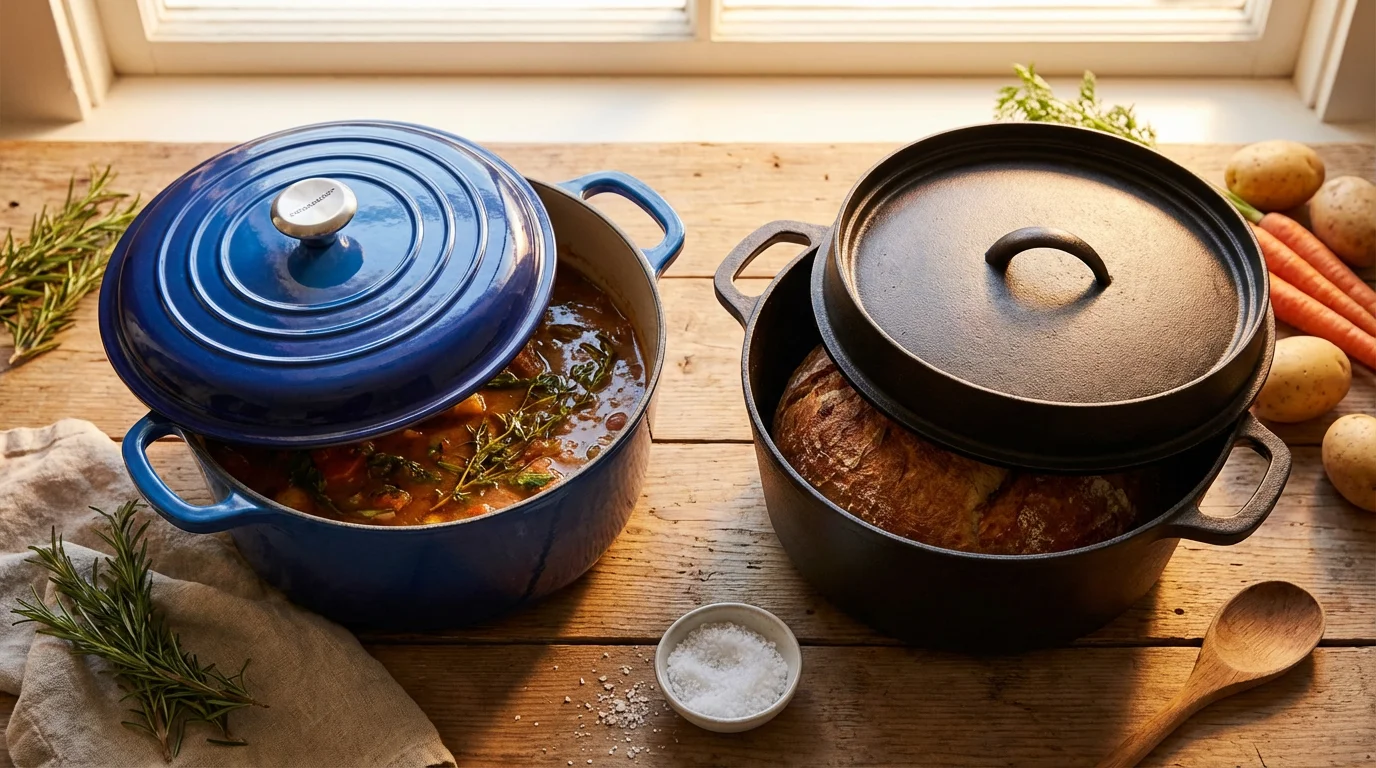
If you want the heat properties of cast iron without the maintenance of seasoning, Le Creuset offers enameled options. The matte black enamel interior doesn’t require oiling to prevent rust. It is significantly more expensive, but it offers aesthetic appeal and can be soaked in water without fear of ruining the finish.
All-Clad (Stainless/Aluminum Clad)
All-Clad is famous for its fully clad construction. Their non-stick griddles usually feature a heavy-gauge aluminum core for even heating. These are lighter than cast iron and look sleek in a modern kitchen. They are generally dishwasher safe (though hand washing is always recommended for non-stick) and offer a more responsive cooking experience.
Cuisinart (Budget Friendly)
For those equipping a first kitchen or working with a tighter budget, Cuisinart offers reliable double-burner griddles with non-stick coatings. While they may not have the thermal mass of a Lodge or the longevity of an All-Clad, they perform well for weekend breakfasts and are easy to clean.
Comparison: Cast Iron vs. Non-Stick vs. Carbon Steel
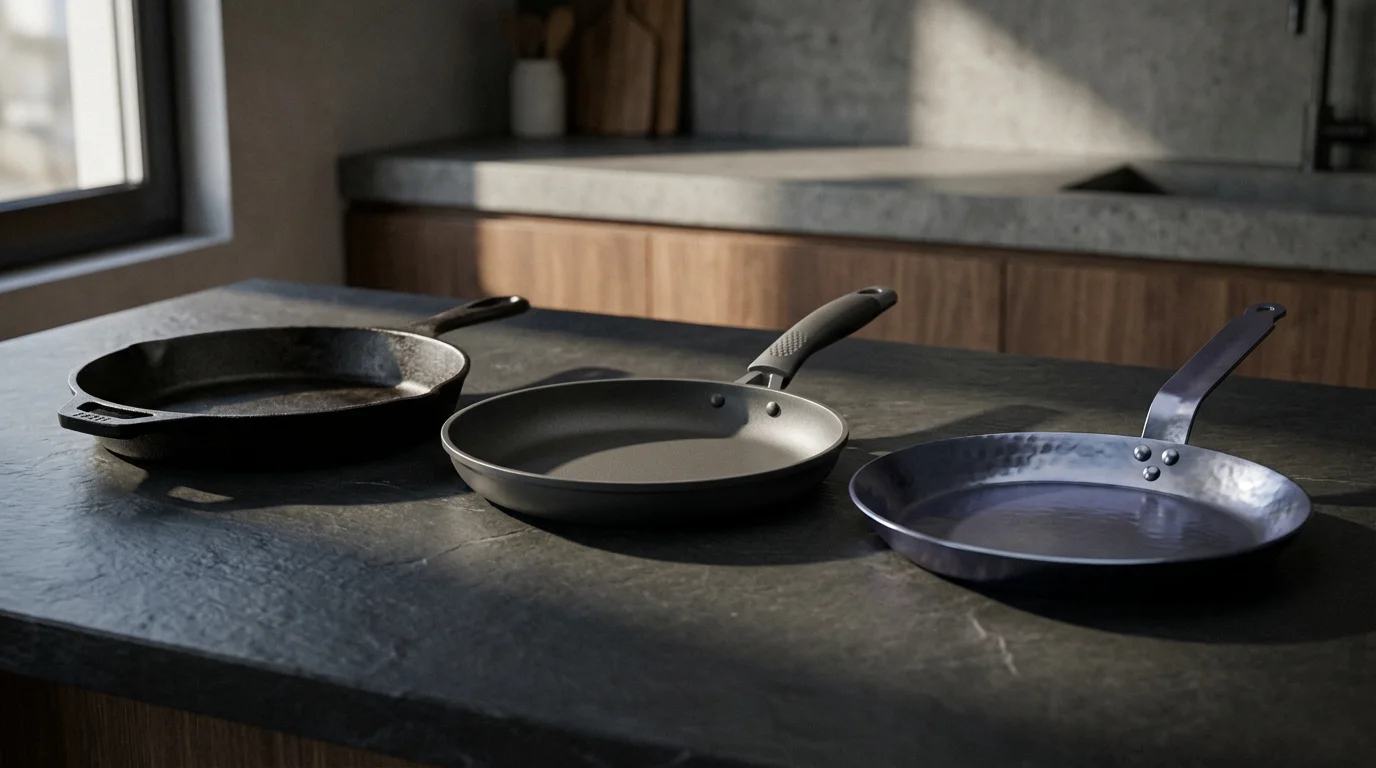
Use this table to decide which material fits your cooking style.
| Feature | Cast Iron | Non-Stick Aluminum | Carbon Steel |
|---|---|---|---|
| Durability | Excellent (Lasts forever) | Fair (3-5 years) | Excellent (Lasts forever) |
| Heat Retention | High (Stays hot) | Low (Cools fast) | Medium-High |
| Maintenance | High (Needs seasoning) | Low (Wash and go) | Medium (Needs seasoning) |
| Weight | Heavy | Lightweight | Medium |
| Best For | Crispy bacon, searing | Delicate eggs, low fat | Everyday use, searing |
| Price Range | $30 – $60 | $40 – $150 | $50 – $100 |
Care and Maintenance for Longevity
Your griddle is an investment. Treating it right ensures your pancakes slide off easily for years to come.
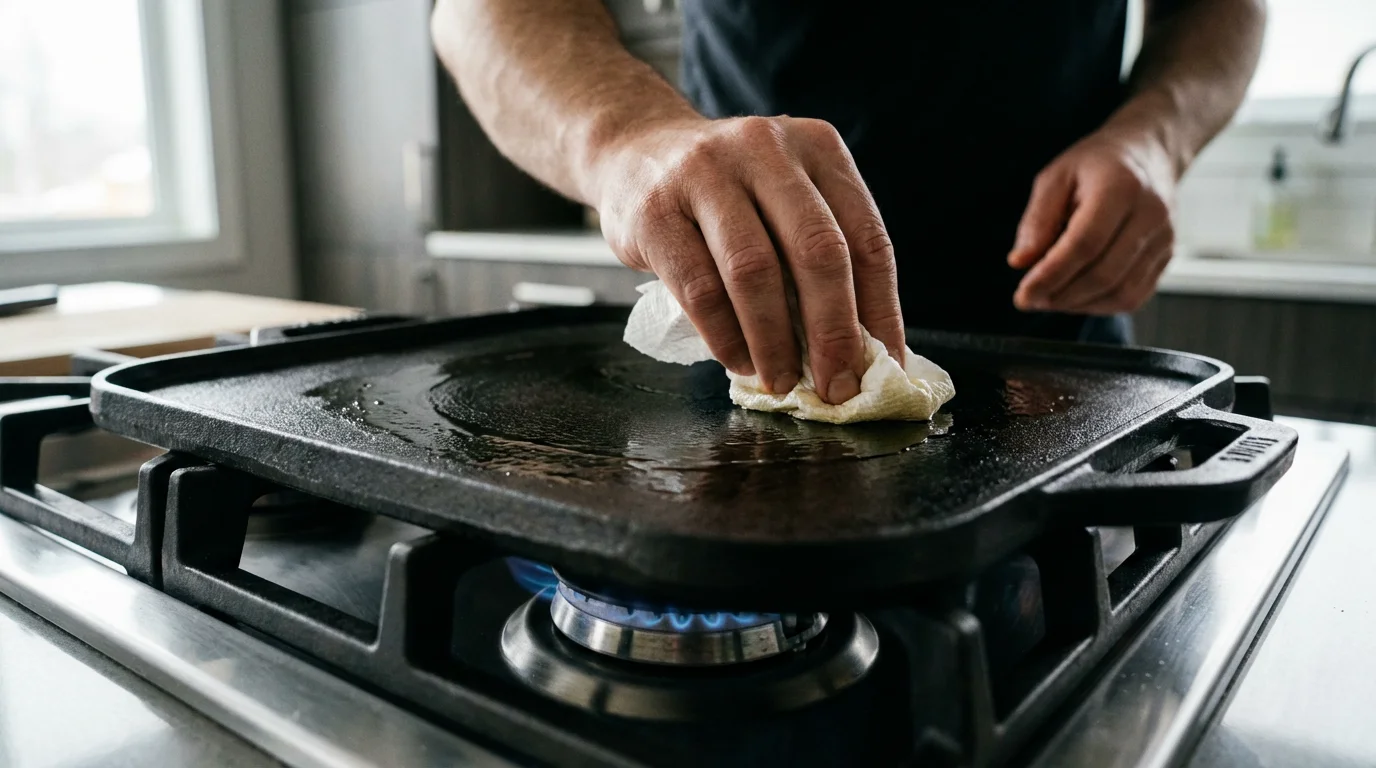
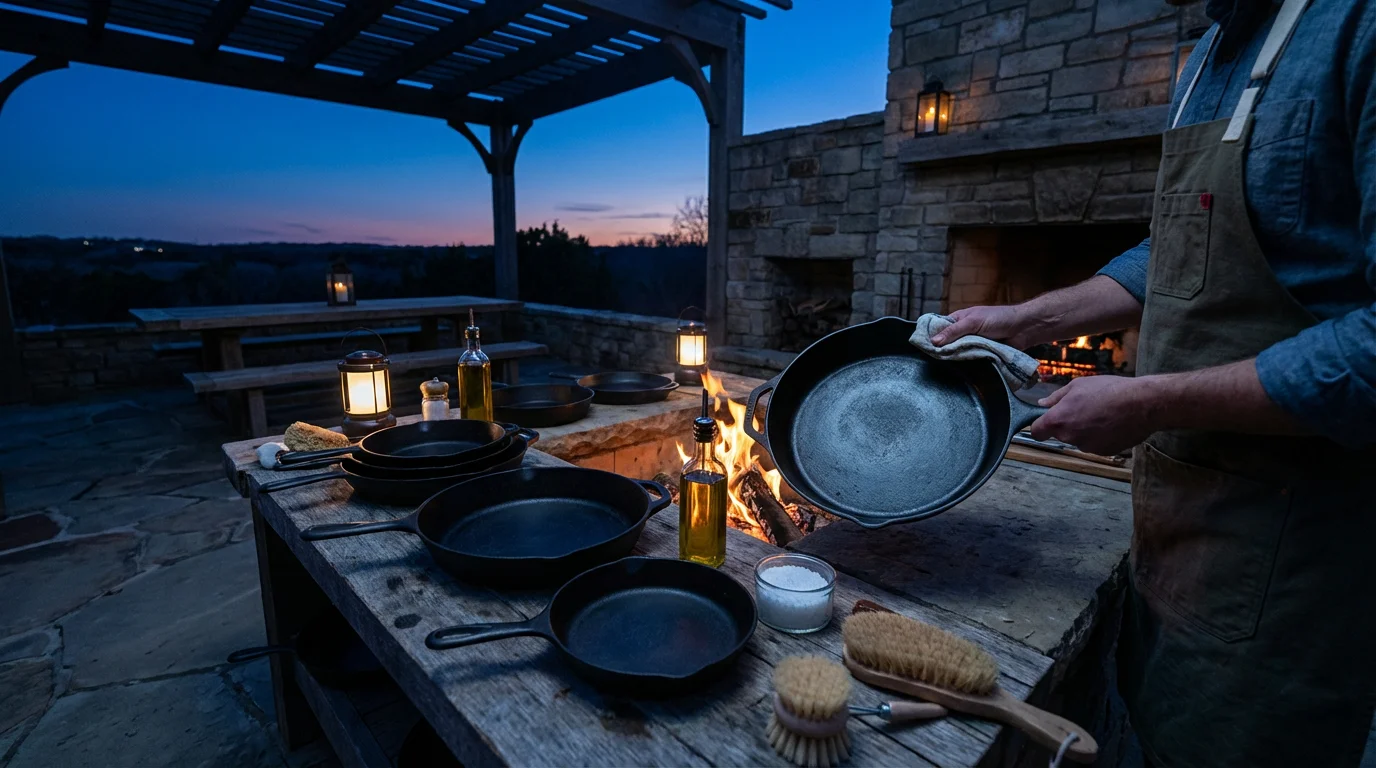
Cast Iron and Carbon Steel: The golden rule is to keep it dry. After cooking, rinse with hot water. For stuck-on bits, use a chainmail scrubber or coarse salt and a paper towel. Dry the pan immediately on the stove over low heat, then rub a thin layer of neutral oil (like canola or grapeseed) over the surface. Never put these in the dishwasher.
Non-Stick: Avoid thermal shock. Do not take a hot non-stick griddle and plunge it into cold water; this can warp the metal and separate the coating. Use soft sponges rather than abrasive scrubbing pads. Even if the box says “dishwasher safe,” the harsh detergents in dishwasher tabs can degrade the non-stick surface over time.
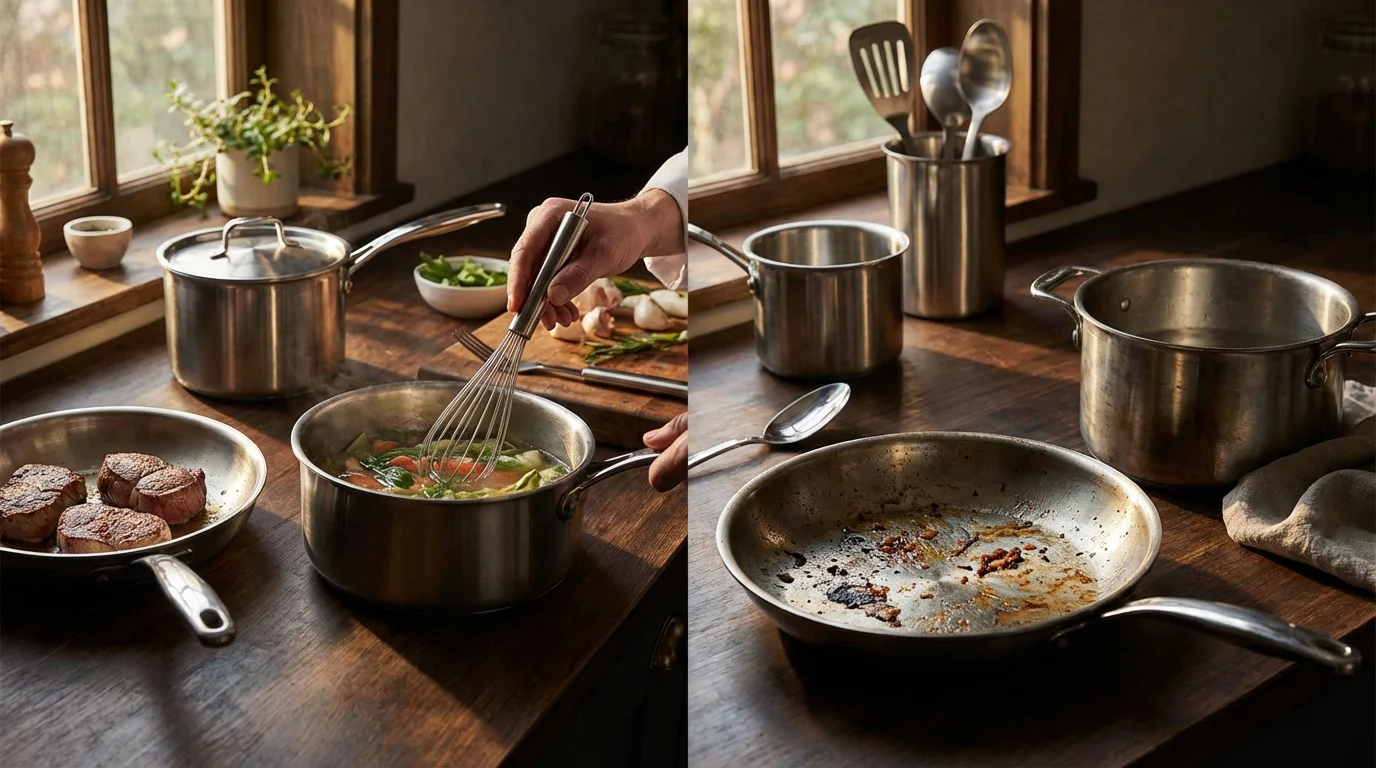
Stainless Steel: These are the workhorses. You can scrub them with Bar Keepers Friend to remove polymerized oil stains and restore the shine. They are generally the most forgiving if you accidentally overheat them.
The Essential Breakfast Toolkit
A griddle is only as good as the tools you use with it. Because you are working with a large flat surface, standard spoons and ladles won’t cut it.
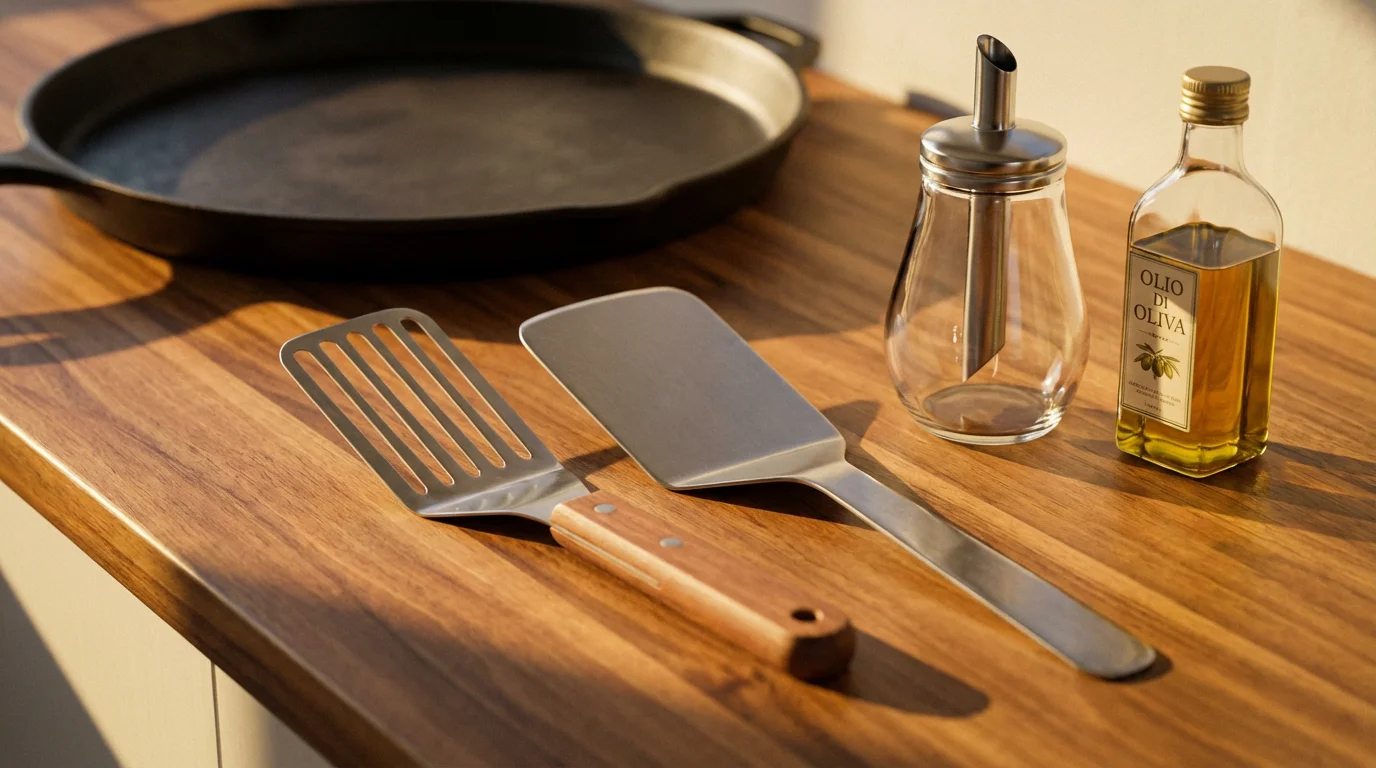
- Long Offset Spatula: This is critical. A long, flexible metal spatula (or high-heat silicone for non-stick pans) allows you to flip expansive items like large crepes or multiple strips of bacon at once.
- Grill Press (Bacon Weight): To get perfectly flat bacon and maximize the contact with the hot griddle, a cast iron press is essential. It prevents curling and speeds up the rendering of fat.
- Squeeze Bottles: For pancake art or just controlling the amount of oil you put down, inexpensive plastic squeeze bottles give you chef-level control.
- Scraper: If you are using a flat top cast iron griddle, a stiff metal scraper helps clean off burnt bits while the pan is still warm, keeping the surface smooth for the next cook.
According to extensive testing by Wirecutter, having the right spatula geometry can make the difference between a broken yolk and a perfect service. They recommend fish spatulas for their flexibility and thin edges, which work beautifully on griddles.
Frequently Asked Questions
Can I use a double-burner griddle on a glass-top stove?
Yes, but you need to be careful. Cast iron is heavy and rough; sliding it can scratch the glass. Place it gently. Also, ensure the griddle is perfectly flat. If it rocks, it won’t heat evenly and could cause the glass surface to crack due to trapped heat pockets.
Why do my pancakes stick even on a non-stick griddle?
This usually happens because of “polymerized” cooking spray. Aerosol sprays often contain lecithin, which builds up as a gummy residue on non-stick surfaces that is hard to remove. Instead, use a small amount of butter or oil wiped on with a paper towel.
Is a reversible grill/griddle worth it?
Reversible pans offer great value, giving you a flat surface for eggs and a ridged surface for grill marks on steaks or burgers. However, be aware that the side facing down (over the flame) will get dirty from the burner. If you flip it to cook, you might transfer soot or grease to your food unless you clean it thoroughly between uses.
How do I know when my griddle is hot enough for pancakes?
Use the water test. Flick a few drops of water onto the surface. If the water sizzles and evaporates immediately, it’s hot. If the droplets bead up and dance around the surface (the Leidenfrost effect), it might be slightly too hot for thick pancakes, so lower the heat just a touch.
Disclaimer: Product prices and availability change frequently. Prices shown were accurate at time of writing but may have changed. We may earn a small commission from purchases made through links on this site, at no extra cost to you. Always verify current pricing on the retailer’s website before purchasing.
Leave a Reply