
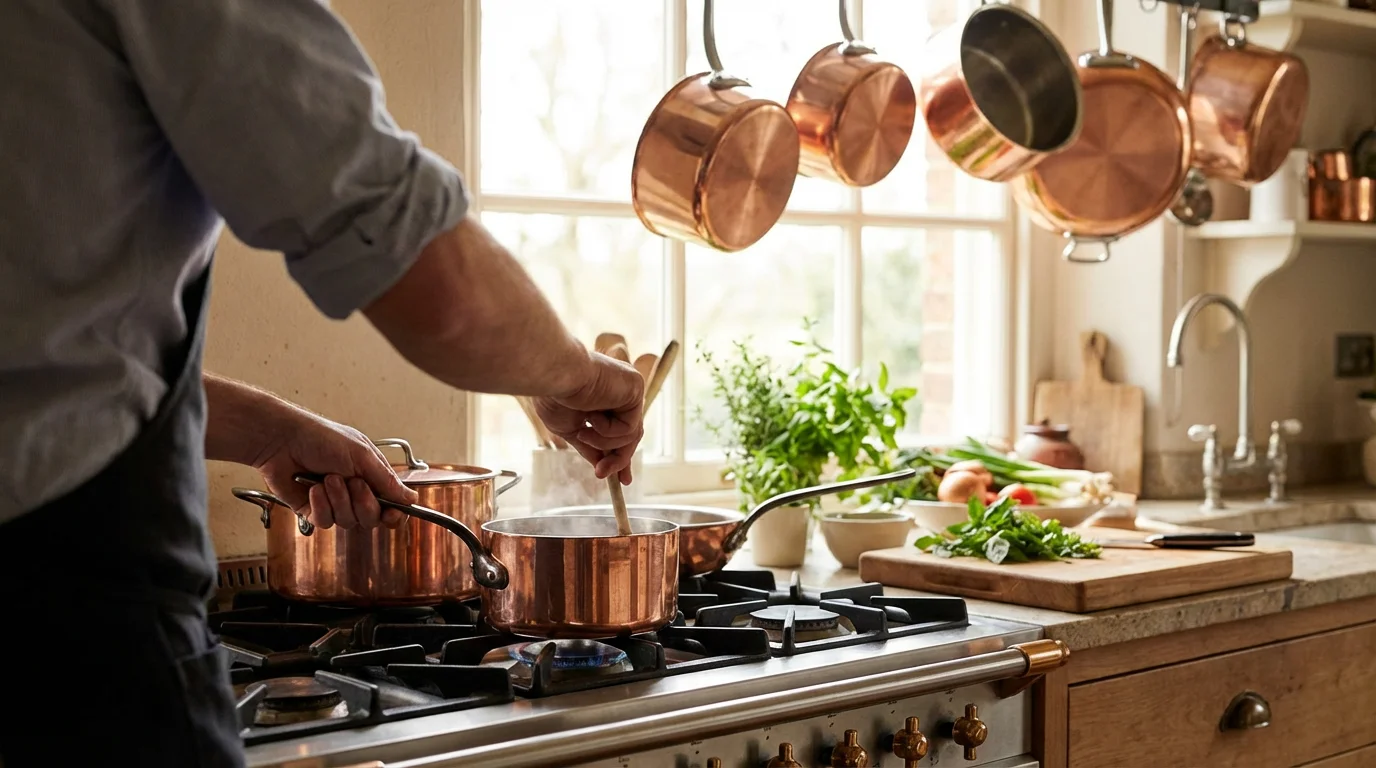
Walking into a kitchen adorned with gleaming copper pots hanging from a rack evokes a specific kind of culinary romance. It calls to mind classic French cooking, Julia Child, and the promise of professional-level meals. But when you look at the price tag—often ranging from $300 to over $600 for a single pan—the romance often hits a hard wall of reality.
Is copper cookware simply kitchen jewelry, a status symbol for the aesthetics-obsessed? or does it offer a performance advantage that justifies the cost? The answer lies in thermodynamics, your specific cooking style, and how much maintenance you are willing to tolerate.
For the home cook looking to upgrade their arsenal, understanding the nuance of copper is essential. It is not a magic wand that fixes bad cooking, but in the right hands, it is the most responsive tool available. This guide cuts through the marketing hype to analyze the material science, the maintenance realities, and the value proposition of high-end copper cookware.
The Science: Why Copper Costs More
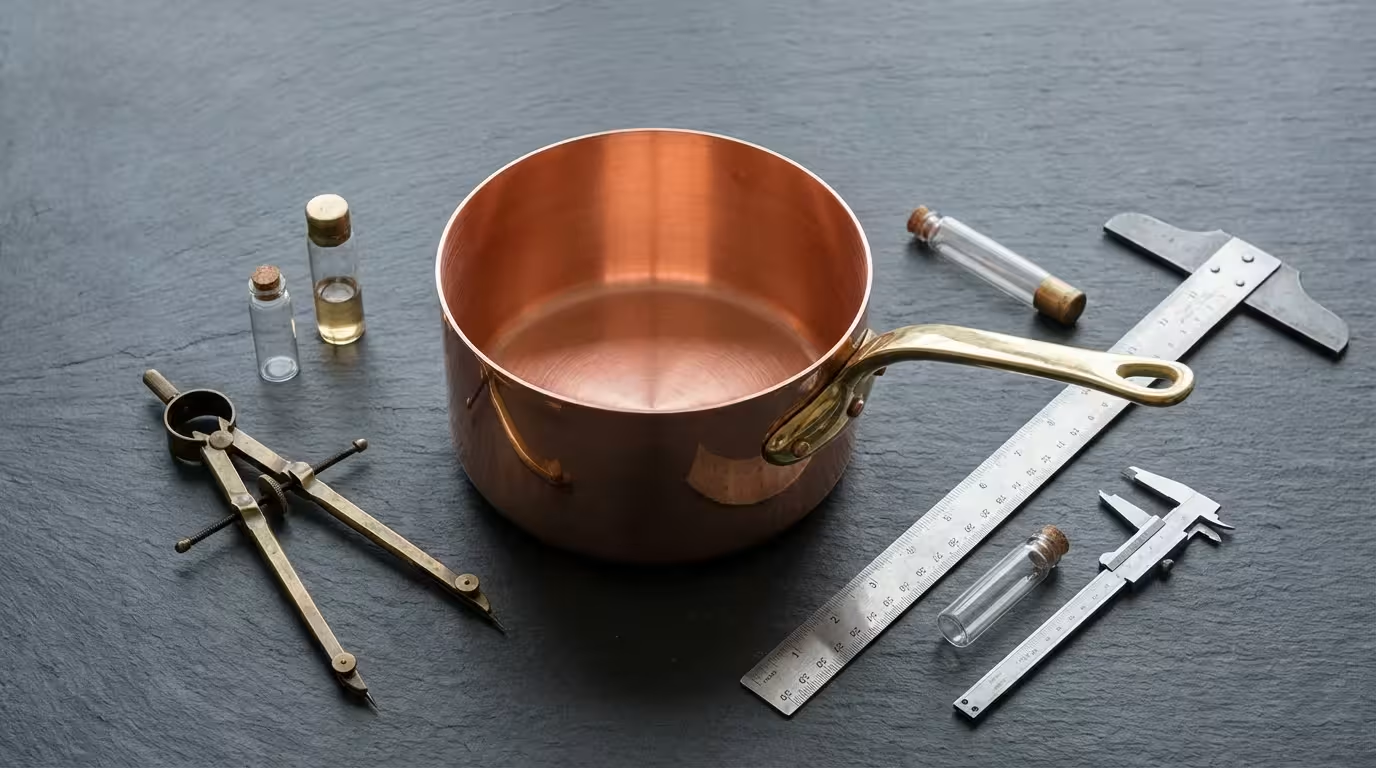
To understand the value of copper, you have to look at it as a conductor of energy, not just a vessel for food. In the world of cookware, thermal conductivity is the metric that matters most. This measures how quickly and efficiently a material transfers heat from the burner to the food.
Copper is widely regarded as the gold standard for conductivity in the kitchen. It heats up almost instantly and, perhaps more importantly, cools down the moment you remove it from the heat source.
- Responsiveness: When you are making a delicate delicate sauce like Hollandaise or melting sugar for caramel, temperature control is everything. With cast iron, the pan retains heat so well that even if you kill the flame, the food keeps cooking (and potentially burning). With copper, when you turn the dial down, the pan reacts immediately.
- Even Heating: Copper eliminates hot spots. Because the heat travels so efficiently through the metal, the temperature at the edge of the pan is nearly identical to the center, even on a small burner.
“Using copper cookware is like driving a sports car. It handles the curves of temperature change instantly, whereas cast iron is like a freight train—slow to start, but impossible to stop once it gets going.”
According to Serious Eats, the thermal conductivity of copper is roughly double that of aluminum and over twenty times higher than stainless steel. This physical property is the primary driver of the cost. You are paying for precision.
Understanding Construction: Tin, Stainless, and Core
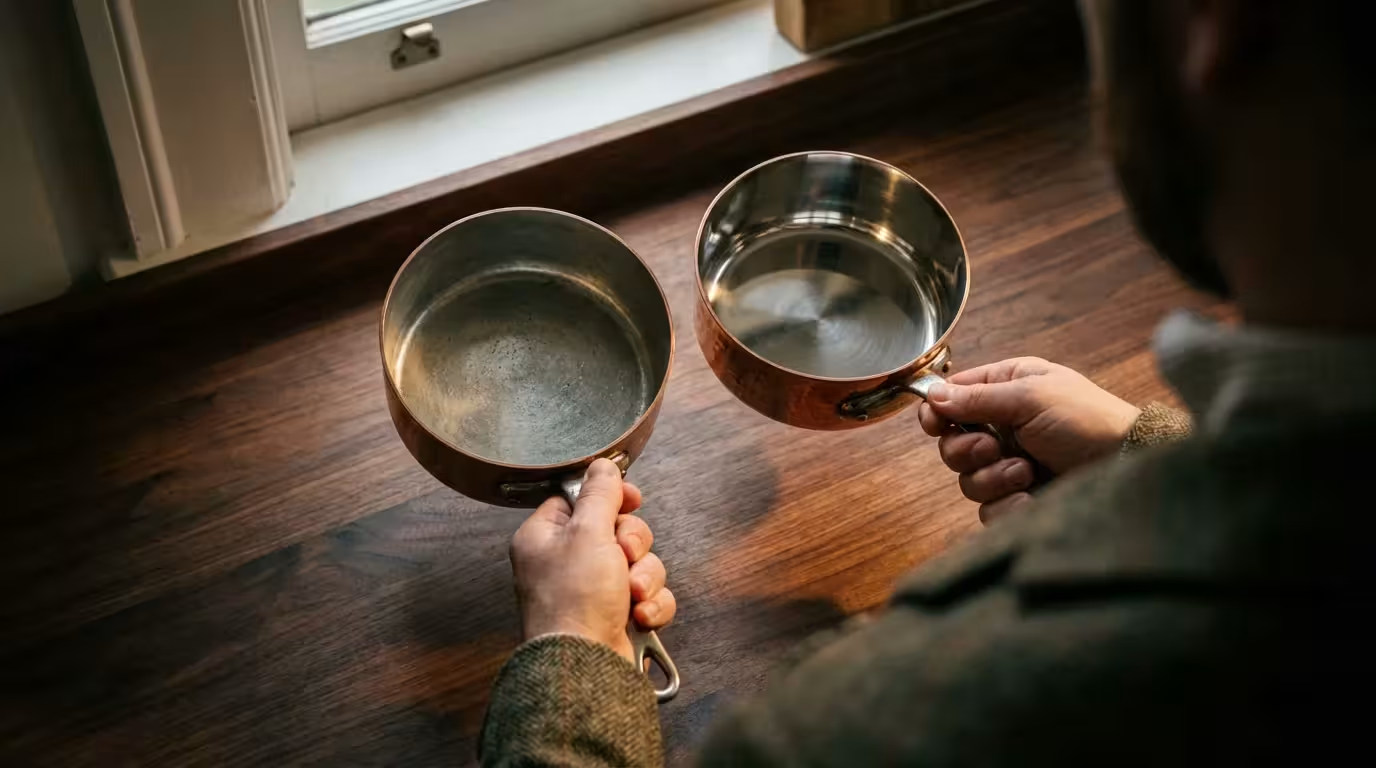
Pure copper is highly reactive. If you were to cook acidic foods (like tomato sauce or wine reductions) in a bare copper pot, the metal would leach into your food, creating a metallic taste and potentially toxic compounds. Therefore, almost all copper cookware intended for general cooking is lined with another metal. The type of lining dictates the durability and price.
1. Tin-Lined Copper
This is the traditional method used for hundreds of years. Tin is naturally non-stick and bonds easily to copper.
- Pros: Excellent chemical bond; food releases easily.
- Cons: Tin is soft and melts at roughly 450°F. You cannot sear a steak at high heat in a tin-lined pan, or you will bubble the lining. It also scratches easily, requiring wood or silicone utensils.
- Maintenance: Eventually, the tin wears through and requires professional “re-tinning,” which can be costly and inconvenient.
2. Stainless Steel-Lined Copper
Modern high-end cookware (like Mauviel M’250 or Matfer Bourgeat) typically uses a stainless steel interior.
- Pros: Indestructible lining. You can use metal utensils, scour it, and heat it to high temperatures for searing without fear of melting.
- Cons: Stainless steel is a poor conductor of heat, slightly dampening the responsiveness of the copper (though not enough for most cooks to notice). It is also difficult to bond stainless steel to copper, which drives up manufacturing costs.
3. Copper Core (Cladding)
Brands like All-Clad offer “Copper Core” lines. This is technically multi-ply stainless steel cookware with a thin layer of copper sandwiched in the middle.
- Pros: You get the durability of stainless steel and the dishwasher compatibility of standard cookware.
- Cons: The copper layer is often thin, providing only a fraction of the thermal benefits of real, heavy-gauge copper cookware. It is an improvement over standard stainless, but it is not the same experience as solid copper.
The Importance of Gauge and Thickness
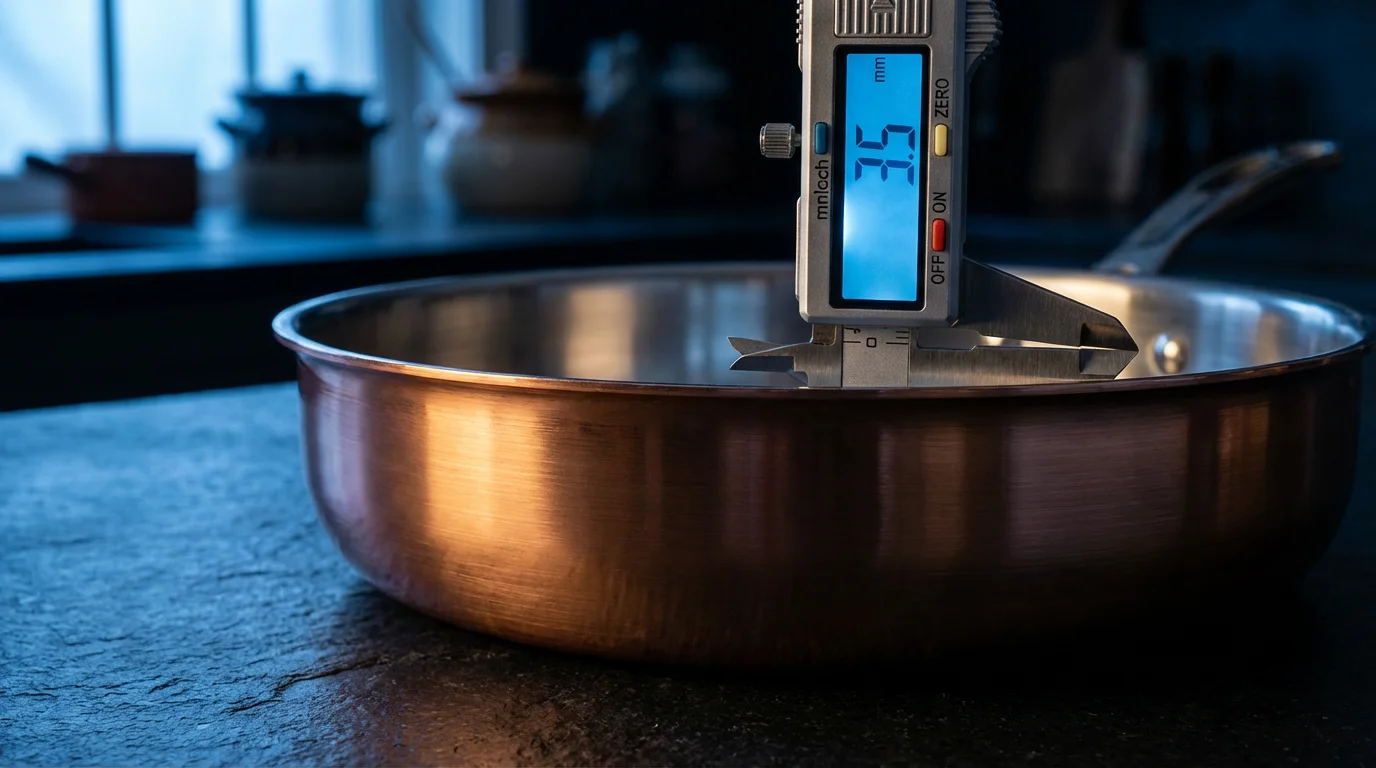
If you decide to invest, you must check the specifications for thickness. In the culinary world, this is often measured in millimeters.
The Golden Standard: 2.5mm
Classic, professional-grade copper cookware is typically 2.5mm thick. This provides enough mass to sear meat effectively while maintaining the famous heat distribution. Brands producing 2.5mm copper (often with a stainless lining) are the top tier of the market.
The Table Service Grade: 1.5mm to 2.0mm
Many manufacturers produce thinner lines (often 1.5mm) to lower the price point. While these look beautiful, they lack the thermal mass to cook evenly. They heat up fast but can scorch food more easily because the barrier between the flame and the food is too thin. These are excellent for table presentation (gratins or roasting dishes) but less ideal for stovetop saucemaking.
Decorative Grade: Under 1.0mm
Avoid anything this thin for cooking. It will warp under heat and burn your food instantly. These are purely for decoration.
Performance Comparison: Copper vs. The Rest
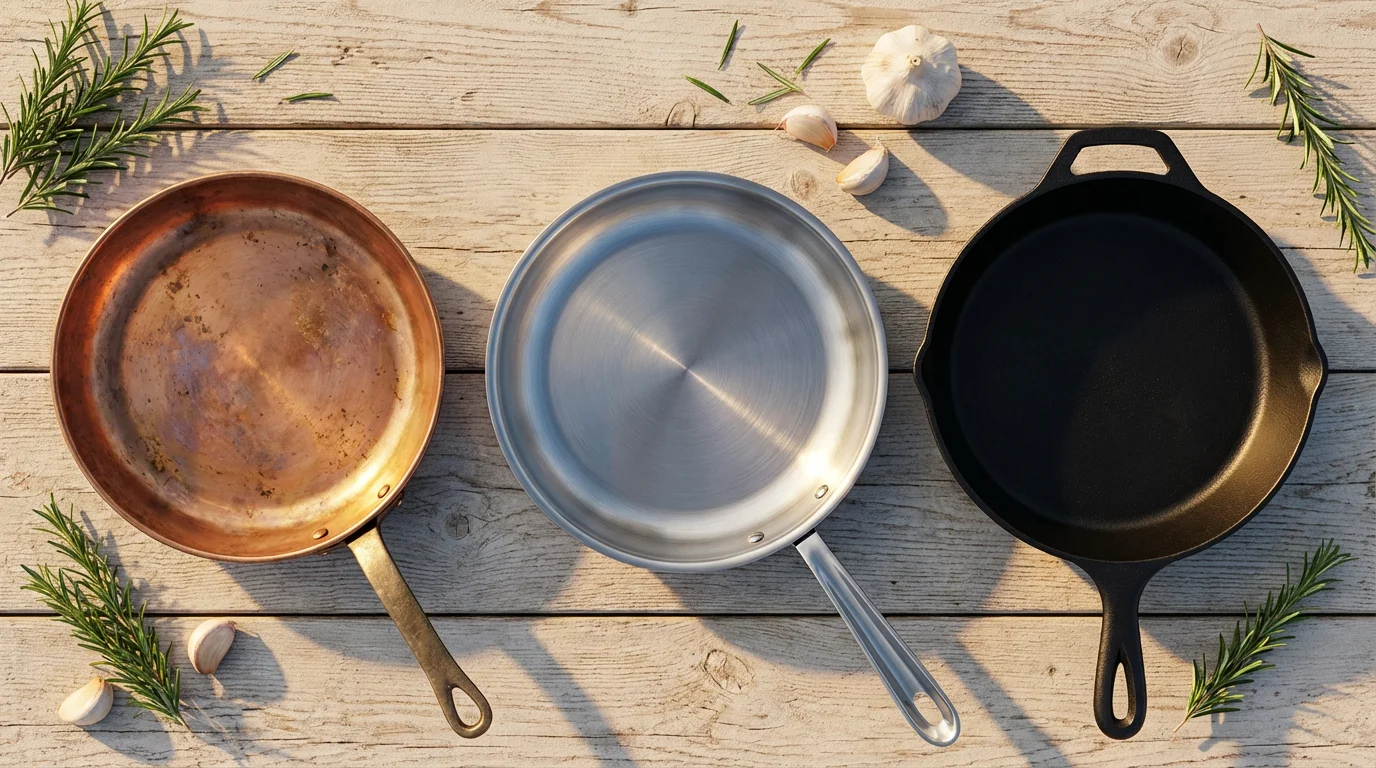
To help you decide if the investment makes sense for your kitchen, let’s compare copper against the other two heavyweights: Tri-ply Stainless Steel and Cast Iron.
| Feature | Copper (Stainless Lined) | Tri-Ply Stainless Steel | Cast Iron |
|---|---|---|---|
| Heat Conductivity | Superior (10/10) | Good (7/10) | Poor (3/10) |
| Responsiveness | Instant | Moderate | Very Slow |
| Heat Retention | Moderate | Low to Moderate | Excellent |
| Weight | Heavy | Light to Medium | Very Heavy |
| Maintenance | High (Polishing required) | Low (Dishwasher safe usually) | Medium (Seasoning required) |
| Price Range (Sauté Pan) | $300 – $600 | $100 – $250 | $30 – $200 (Enameled) |
The Maintenance Reality Check
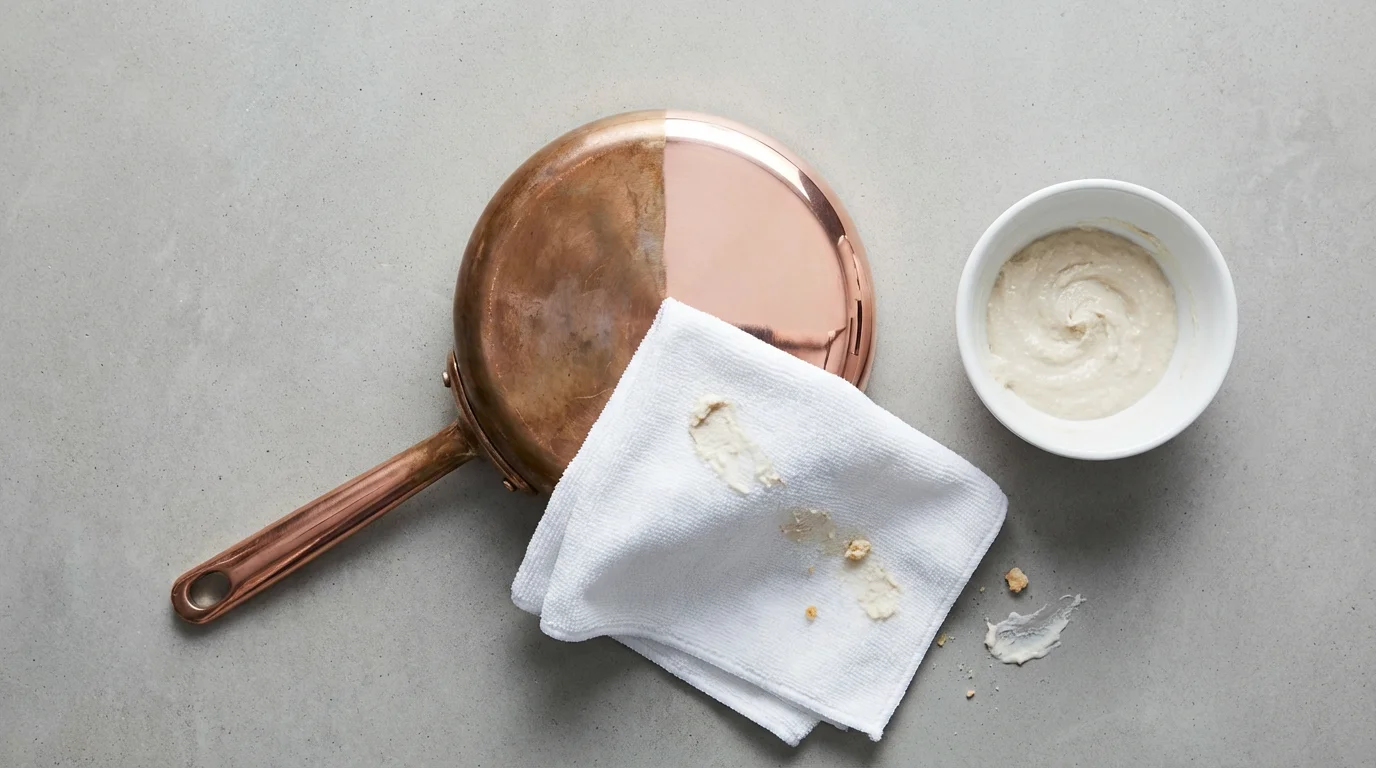
This is where many home cooks get off the train. Copper oxidizes. It reacts with oxygen in the air to form a patina—a brownish, penny-like tarnish. This does not affect cooking performance, but it ruins the “shiny magazine” look.
If you want your copper to gleam, you must polish it. You will need a commercial copper cleaner or a homemade paste of flour, salt, and vinegar. For a busy home cook, adding 10 minutes of polishing time to the cleanup routine can be a dealbreaker.
However, many chefs embrace the patina. A darkened copper pot looks like it works for a living. If you can accept that your pans won’t look brand new after the first use, the maintenance becomes much more manageable. The interior stainless lining requires no more care than a standard stainless steel pan.
Important Note on Dishwashers: Never put real copper cookware in the dishwasher. The harsh detergents will corrode the copper and dull the finish instantly. Hand washing is mandatory.
Smart Buying Strategy: What You Actually Need
You do not need a full set of copper cookware. In fact, buying a 10-piece set is often a financial mistake. As Wirecutter suggests, mixing and matching materials based on the task is the hallmark of a functional kitchen.
Here is where copper is worth the money, and where it isn’t:
Where to Invest (Worth It)
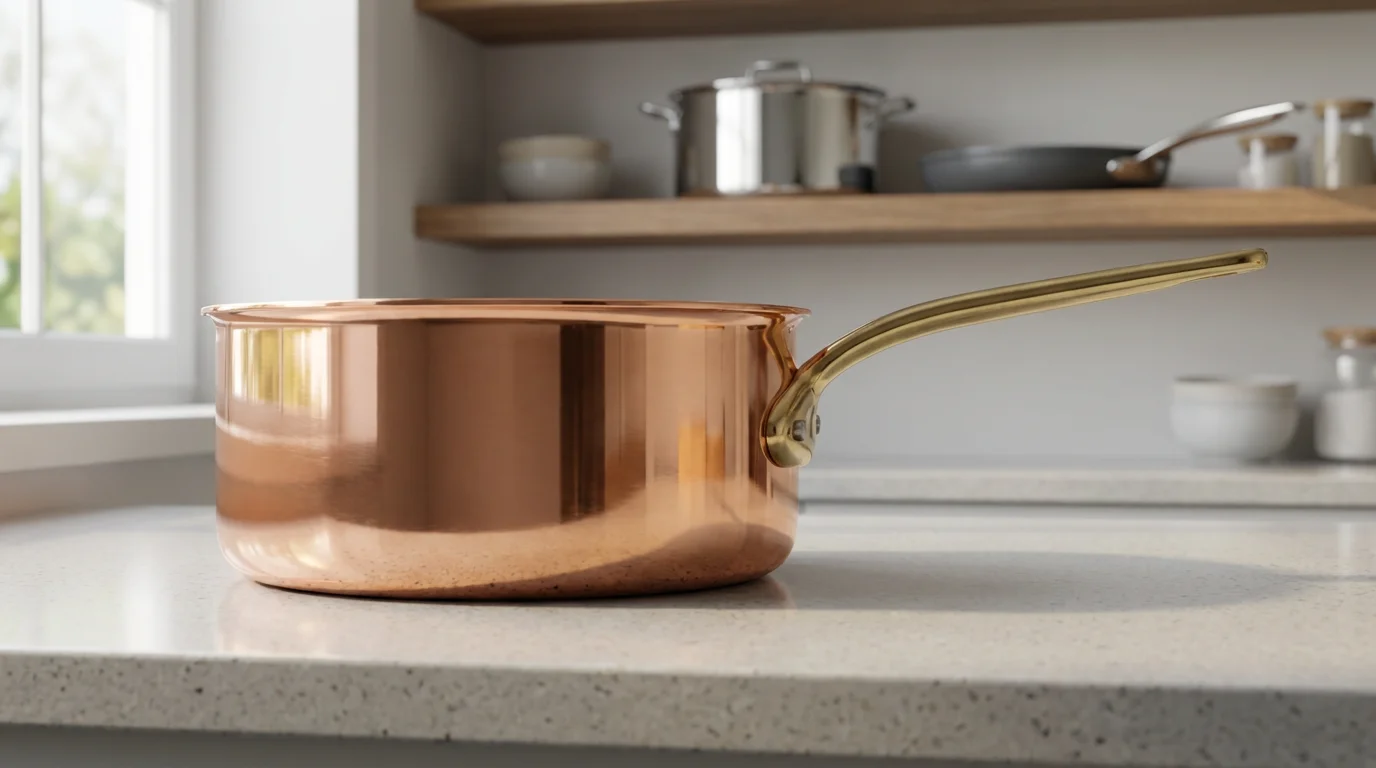
- The Saucier or Saucepan: This is the best use case. If you make delicate reductions, candy, caramel, or temperamental emulsified sauces like Béarnaise, copper is a game-changer. The responsiveness saves you from broken sauces and burnt sugar.
- The Sauté Pan: Great for quickly sautéing vegetables where you want high heat to wither greens instantly, then cut the heat to prevent overcooking.
Where to Save (Skip It)
- Stockpots: You use a stockpot to boil water or simmer bones for hours. You do not need instant temperature responsiveness for boiling water. A heavy stainless steel pot works perfectly fine for a fraction of the price.
- Frying Pans (for eggs): Copper (lined with stainless) is sticky. For eggs, pancakes, or fish, a high-quality non-stick or well-seasoned carbon steel pan performs better than stainless-lined copper.
Recommendation: Start with one piece. Buy a 2-quart or 3-quart copper saucepan (2.5mm thick). Use it for a few months. See if the performance boost is worth the hand-washing and polishing. If you fall in love, expand your collection.
Frequently Asked Questions
Does copper cookware work on induction cooktops?
Generally, no. Copper is non-magnetic, so it does not work on standard induction burners. However, some modern brands like Prima Matera by de Buyer have developed a special ferromagnetic bottom specifically for induction. Unless the manufacturer explicitly states “induction compatible,” assume it is not.
Is copper cookware safe for my health?
Yes, provided it is lined. Unlined copper can cause copper toxicity if used with acidic foods. However, the stainless steel or tin lining found in 99% of household copper cookware creates a safe barrier between the food and the copper. The only time you might use unlined copper is a dedicated sugar pot or a bowl for whipping egg whites.
Why do professional chefs use copper?
Chefs value control above all else. In a busy restaurant kitchen, time is money. A pan that heats up in 20 seconds is more valuable than one that takes 2 minutes. Furthermore, the ability to stop the cooking process instantly by removing the pan from heat allows for precise execution of delicate dishes that might otherwise overcook in cast iron or heavy stainless steel.
Disclaimer: Product prices and availability change frequently. Prices shown were accurate at time of writing but may have changed. We may earn a small commission from purchases made through links on this site, at no extra cost to you. Always verify current pricing on the retailer’s website before purchasing.

Leave a Reply