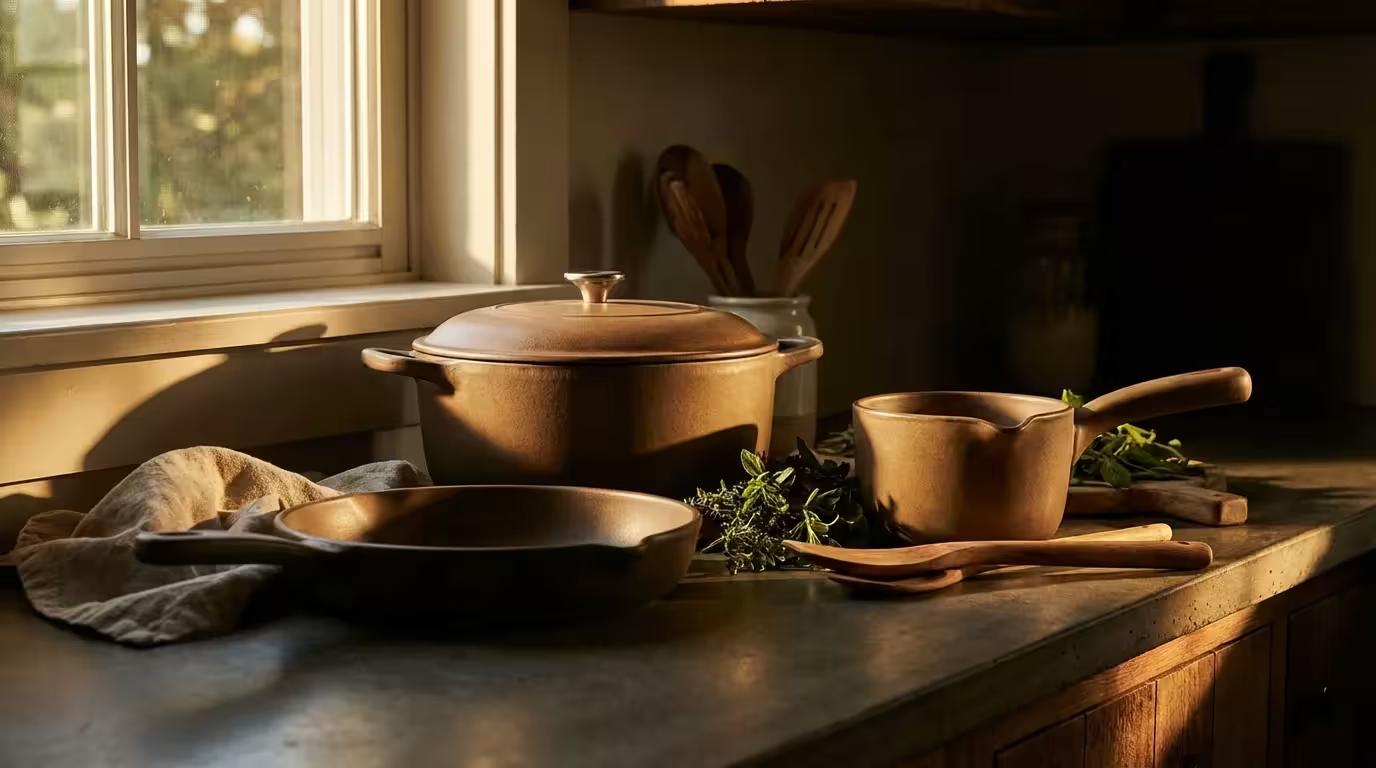
If you have scrolled through social media in the last five years, you have likely seen them: sleek, colorful pans with minimalist handles, promising a non-toxic cooking experience and eggs that slide right off the surface. Ceramic cookware has exploded in popularity, marketed as the healthier, more aesthetic alternative to traditional non-stick pans.
But beyond the viral marketing and beautiful colors, what are you actually buying? Is ceramic cookware a durable kitchen workhorse, or is it a fragile trend that will need replacing in a year?
To build a functional kitchen, you need to understand the materials you cook with. This guide cuts through the marketing noise to explain exactly what ceramic cookware is, how it differs from Teflon, and whether it deserves a spot on your stove.
What Is Ceramic Cookware (and What It Isn’t)
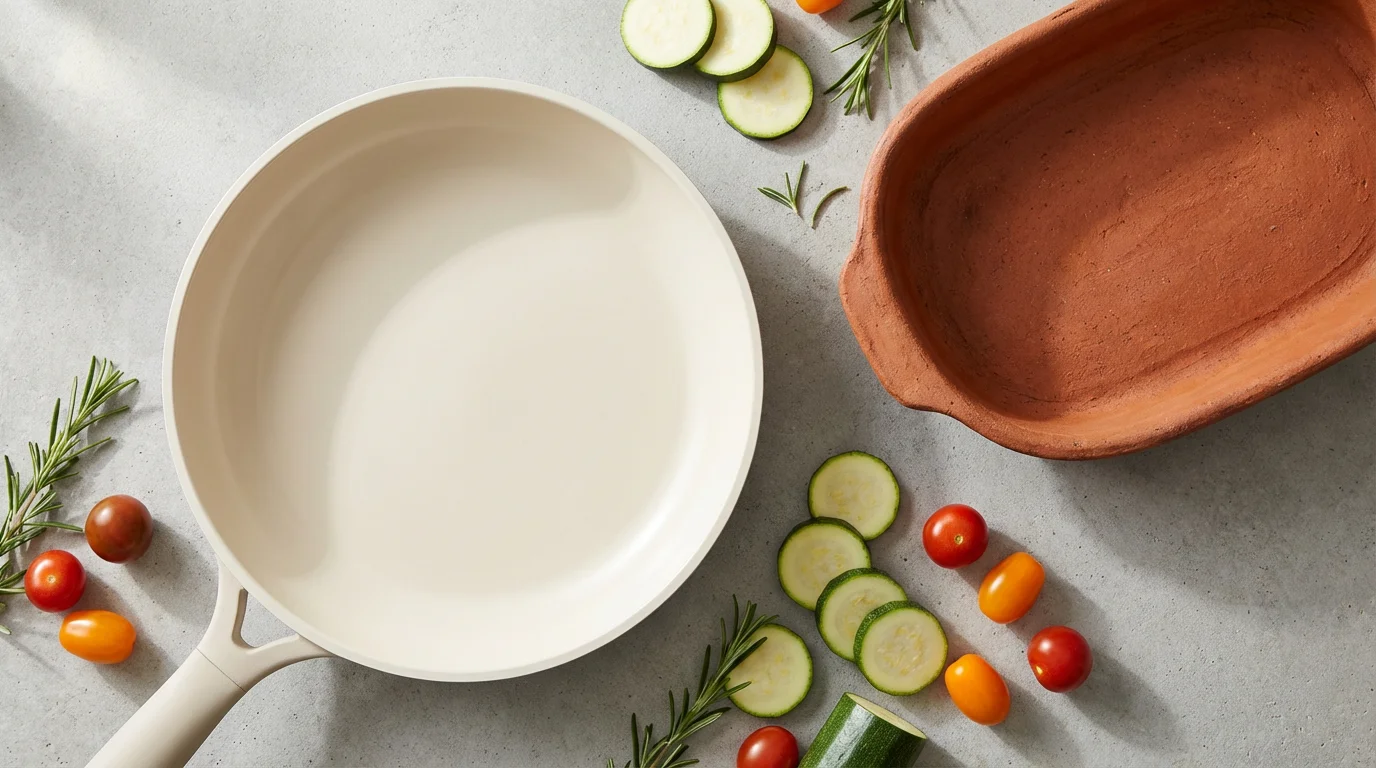
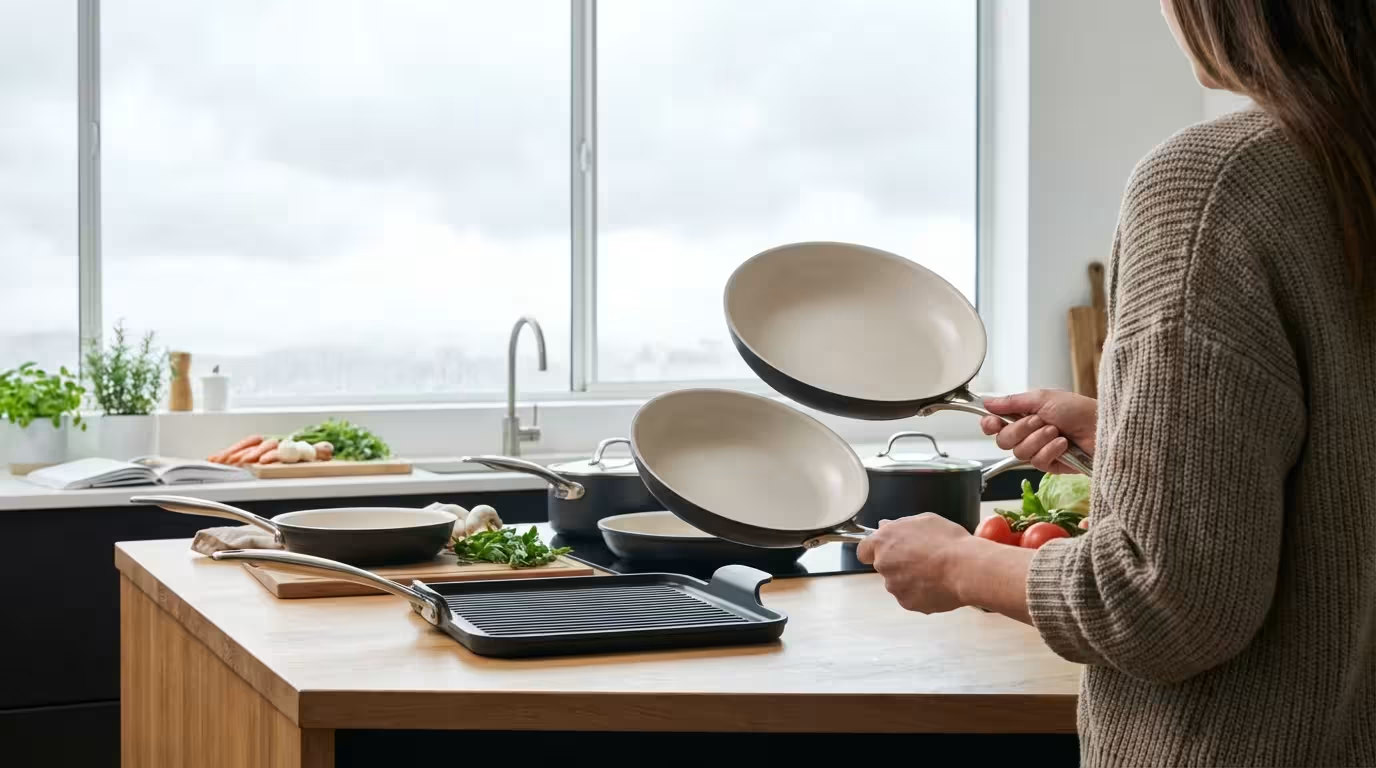
First, we need to clear up a common misconception. When we talk about “ceramic non-stick cookware” (like GreenPan, Caraway, or Blue Diamond), we are not talking about a pan made entirely of clay or ceramic, like a stoneware baking dish or a pure ceramic pot from brands like Xtrema.
Modern ceramic cookware is actually metal cookware—usually aluminum or stainless steel—finished with a specialized coating. This coating is made using “sol-gel” (solution-gel) technology.
The Science of Sol-Gel
The coating starts as a liquid solution containing silica (sand) and other inorganic chemicals. It is sprayed onto the metal pan and then cured at high heat. During curing, the solution turns into a hard, glass-like gel on the surface of the pan.
This silica-based surface is naturally slick and smooth. Unlike traditional non-stick pans, which rely on synthetic polymers (plastics), ceramic coatings are inorganic. This distinction is the primary driver behind their “non-toxic” marketing claims.
The Benefits: Why Home Cooks Choose Ceramic
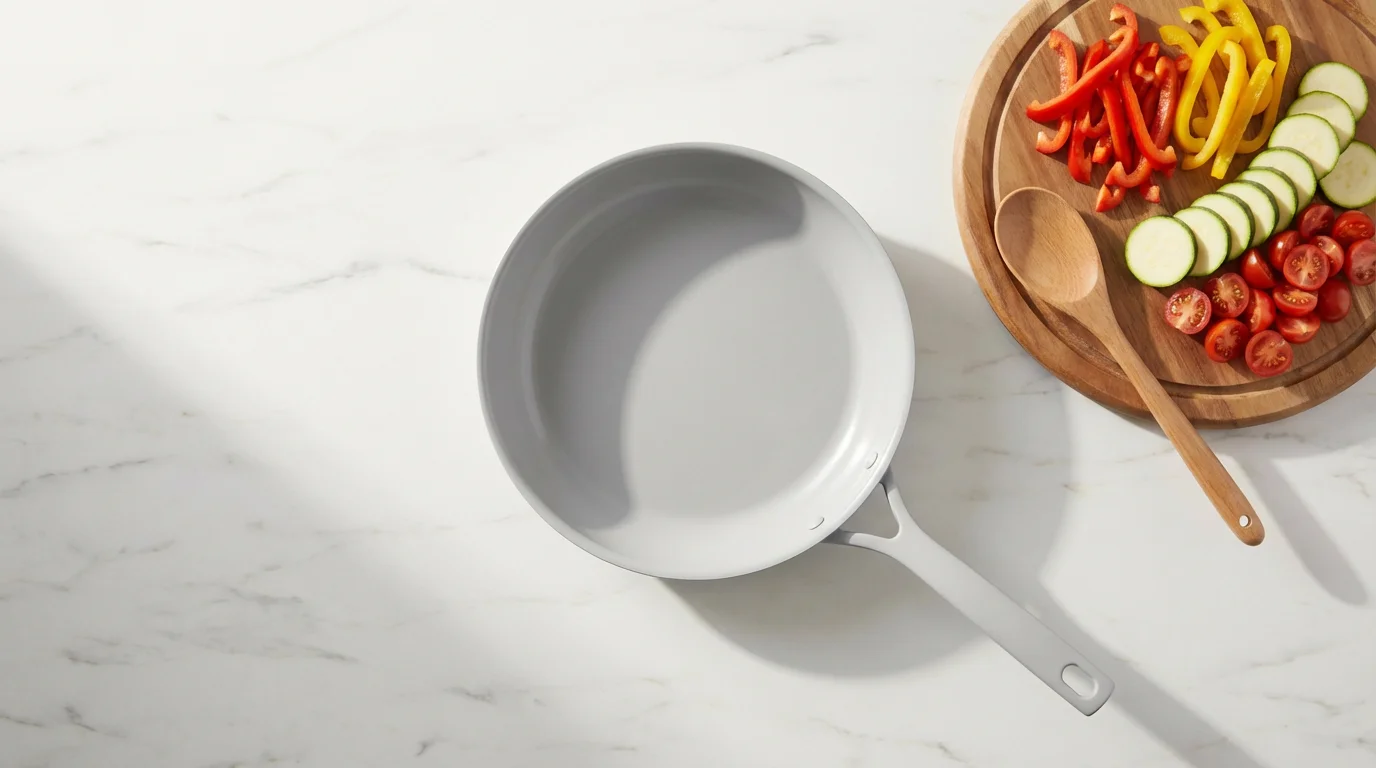
There are valid reasons why ceramic cookware has captured a significant portion of the market. For many home cooks, the benefits outweigh the limitations.
1. Free from PFAS and PTFE
The biggest selling point for ceramic cookware is its chemical composition. Traditional non-stick pans use PTFE (polytetrafluoroethylene), often known by the brand name Teflon. While modern PTFE is generally safe when used correctly, there are concerns regarding the manufacturing process and the release of fumes if the pan is accidentally overheated above 500°F.
Ceramic coatings are free from PTFE and PFAS (per- and polyfluoroalkyl substances), often called “forever chemicals.” If you accidentally overheat a ceramic pan, it won’t release toxic polymer fumes. As Consumer Reports notes in their testing, ceramic pans offer a peace-of-mind alternative for those concerned about chemical coatings.
2. Heat Resistance
Because the coating is derived from sand (silica), it can withstand higher temperatures than traditional Teflon-style pans. Many ceramic pans are rated heat-safe up to 800°F or more. However, you should treat this as a safety buffer, not a target. While the coating won’t melt or release fumes at high heat, cooking at those temperatures will still degrade the non-stick properties over time (more on that later).
3. Aesthetic Appeal
We eat with our eyes, and we cook with our eyes, too. Brands have realized that cookware is part of home decor. Ceramic coatings can be produced in virtually any color, allowing for the pastel greens, deep navies, and cream colors that have made these pans social media stars.
The Drawbacks: Durability and Performance Issues
While the safety profile is excellent, ceramic cookware has a reputation for being short-lived. It is important to manage your expectations regarding longevity.
1. The “Sticky” Phase
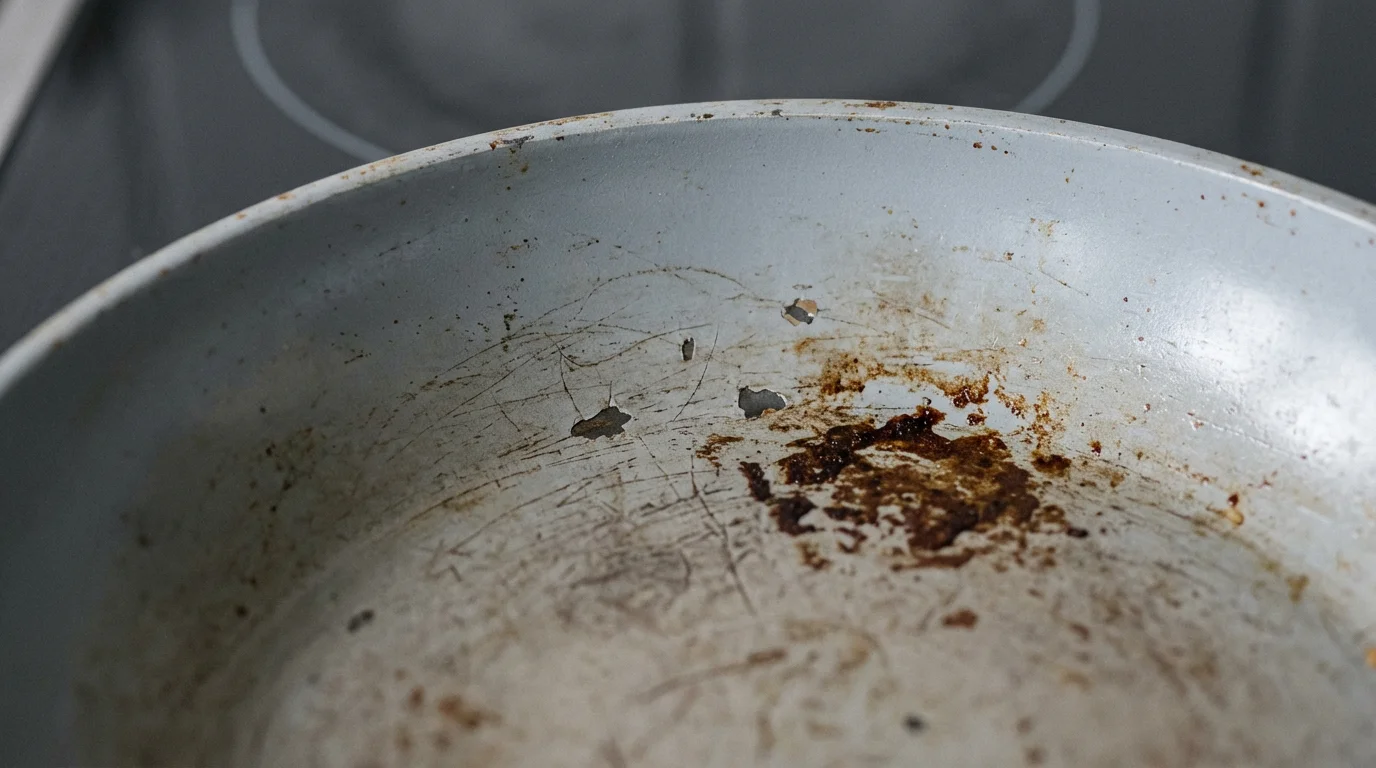
The non-stick performance of ceramic is fantastic out of the box—often slicker than Teflon. However, this performance degrades faster than traditional non-stick. The sol-gel coating is brittle and microscopic imperfections develop over time. Food particles and oils get trapped in these micro-abrasions, creating a sticky surface.
“Think of ceramic cookware as a pair of running shoes. It performs beautifully at first, but it has a finite mileage. It is not an heirloom item like cast iron.”
2. Brittle Nature
Because the coating is essentially a thin layer of glass/ceramic, it is prone to chipping. If you bang a metal spoon against the rim or stack another heavy pan inside it without a protector, the coating can chip off, exposing the metal underneath.
3. Uneven Heating (in Cheap Models)
Ceramic itself is an insulator, meaning it holds heat well but doesn’t distribute it quickly. The performance of the pan depends entirely on the metal core. Many budget ceramic pans use thin, stamped aluminum that warps and creates hot spots. You must look for high-quality core materials to get good results.
Comparison: Ceramic vs. Traditional Non-Stick (PTFE)
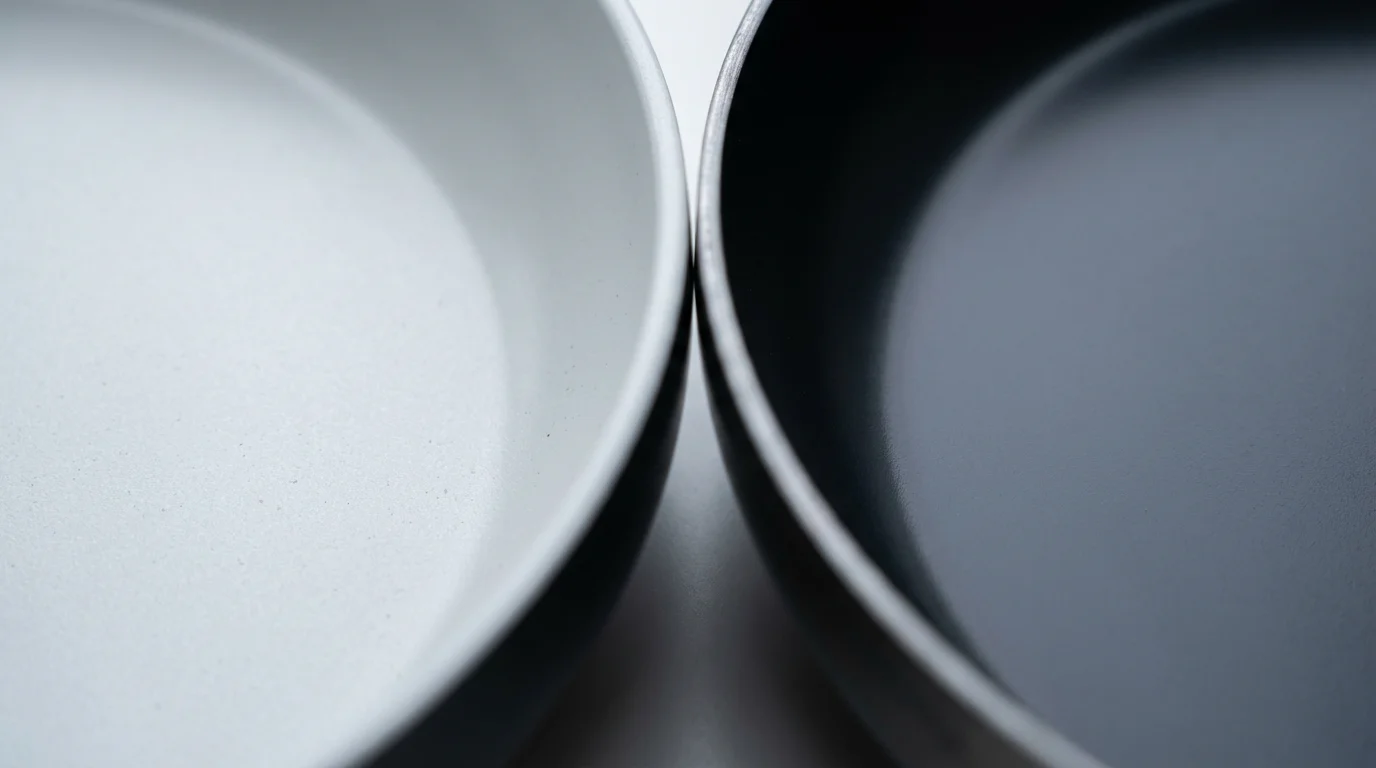
Choosing between these two comes down to your priorities: longevity vs. material composition.
| Feature | Ceramic (Sol-Gel) | Traditional Non-Stick (PTFE) |
|---|---|---|
| Base Chemistry | Silica (Sand-based) | Synthetic Polymer (Plastic-based) |
| Heat Tolerance | High (up to 800°F+) | Medium (max 500°F) |
| Non-Stick Longevity | 1–2 years on average | 3–5 years (high-quality brands) |
| Utensil Safety | Low (Prone to chipping) | Medium (Prone to scratching) |
| Dishwasher Safe? | Rarely (Hand wash recommended) | Often (but hand wash is better) |
| Best For | Eco-conscious cooks, low-heat cooking | Everyday durability, budget shoppers |
Buying Guide: Anatomy of a Quality Ceramic Pan
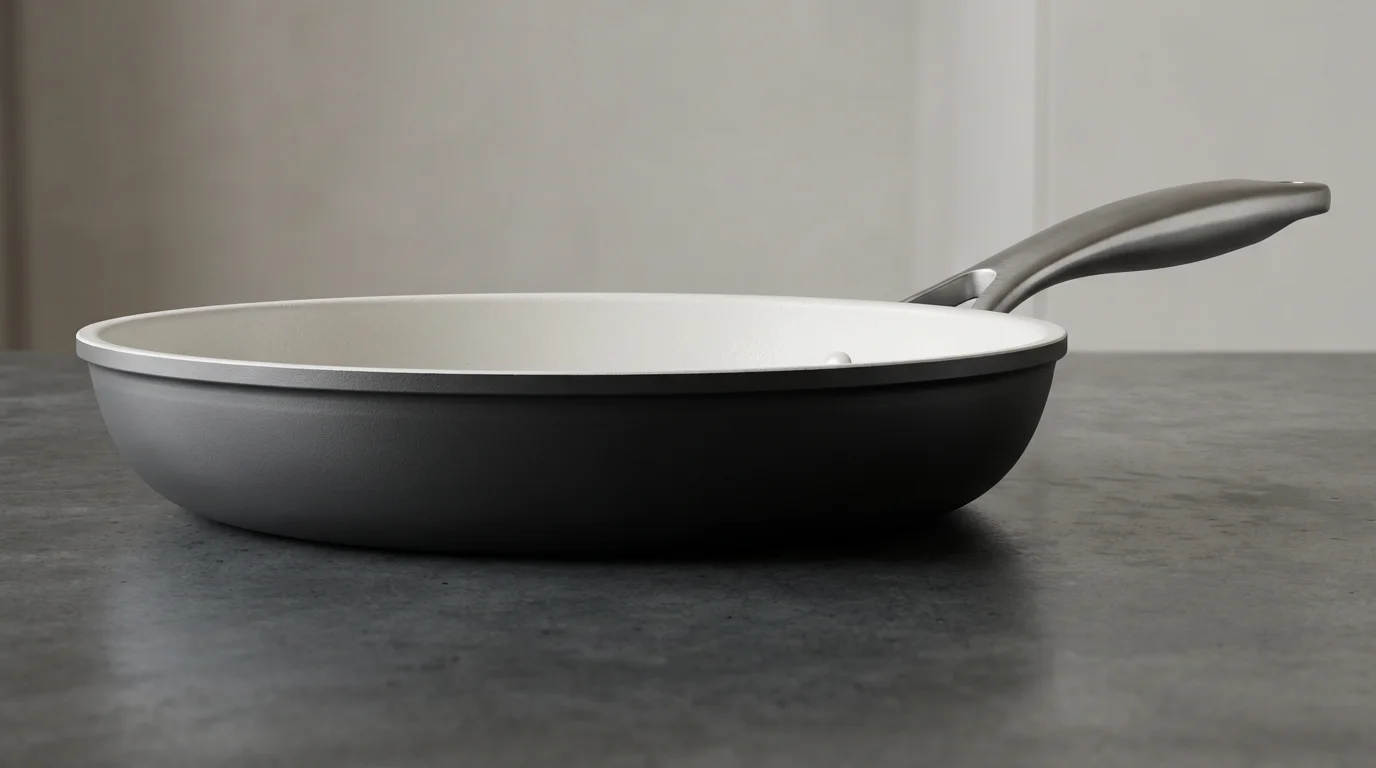
If you decide ceramic is right for you, do not just buy the prettiest pan. You need to look at the specifications to ensure you aren’t buying a pan that will warp in three months.
1. The Core Material
Avoid “pressed aluminum.” This is thin, cheap metal that deforms easily. Instead, look for Hard-Anodized Aluminum. The anodization process makes the aluminum harder than stainless steel and creates a sturdy, non-reactive foundation for the ceramic coating.
Alternatively, look for Tri-ply Stainless Steel with a ceramic interior. This gives you the durability of steel with the non-stick benefits of ceramic, though it is heavier and more expensive.
2. The Coating Layers
Premium brands often reinforce their ceramic coating with diamonds or titanium. While this sounds like marketing fluff, these particles do add structural integrity to the brittle ceramic layer, making it more resistant to utensil scratches.
3. Handle Construction
Look for riveted stainless steel handles. Avoid plastic or bakelite handles if you want the flexibility to finish dishes in the oven. A good ceramic pan should be oven-safe up to at least 400°F (handle included).
4. Induction Compatibility
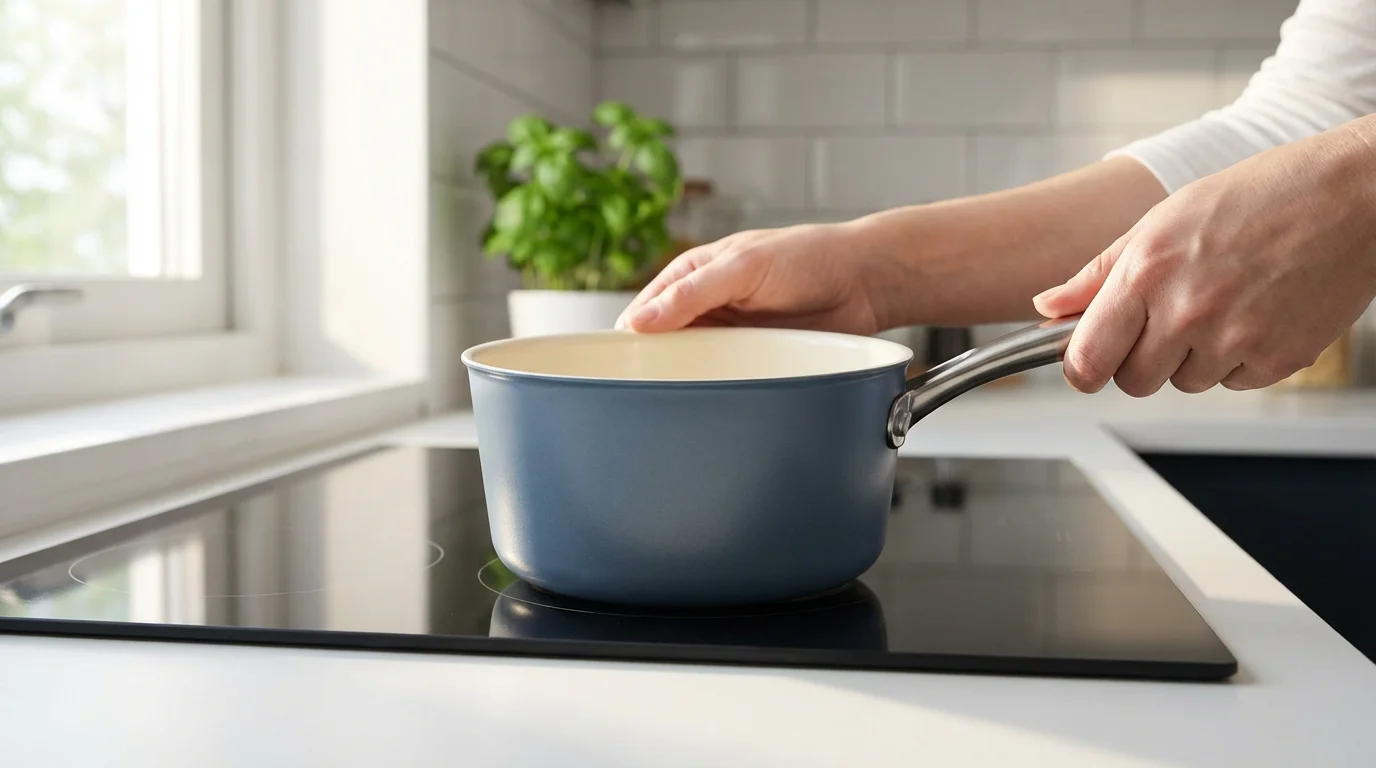
Aluminum is not magnetic, so it won’t work on induction cooktops unless it has a stainless steel plate bonded to the bottom. Check the packaging specifically for “Induction Compatible.”
Critical Care: Making Your Pan Last
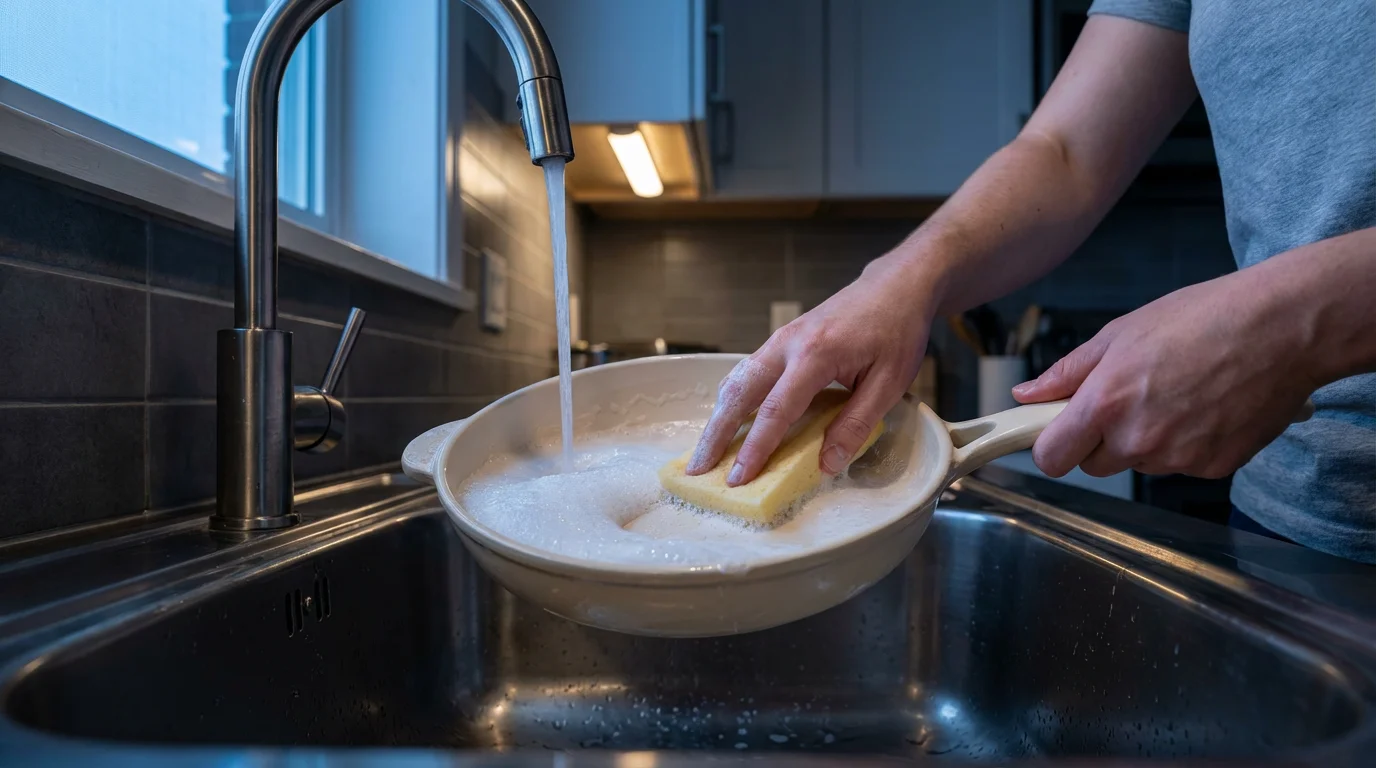
You can double the lifespan of your ceramic cookware by following strict care rules. Most negative reviews come from users who treated their ceramic pans like stainless steel.
- Skip the Cooking Spray: Never use aerosol cooking sprays (like Pam). They contain propellants and lecithin that burn onto the ceramic surface at low temperatures, creating an invisible, sticky gummy layer that is impossible to remove without destroying the pan. Use real butter or oil.
- The “Low and Slow” Rule: Ceramic conducts heat very efficiently. You rarely need to go above medium heat. High heat carbonizes oils onto the surface, killing the non-stick ability.
- Hand Wash Only: Even if the box says “dishwasher safe,” do not do it. Dishwasher detergents are abrasive and the high heat cycles will degrade the coating quickly.
- Thermal Shock is the Enemy: Never take a hot pan off the stove and plunge it into cold water. This causes the metal to contract faster than the ceramic coating, leading to microscopic cracks and loss of non-stick performance. Let the pan cool completely first.
According to Wirecutter, hand-washing and avoiding high heat are the two most significant factors in extending the life of non-stick cookware.
Brand Landscape: From Budget to High-End
The market is flooded, but a few brands have established themselves as leaders in the ceramic space.
The Aesthetic Leaders: Caraway and Our Place
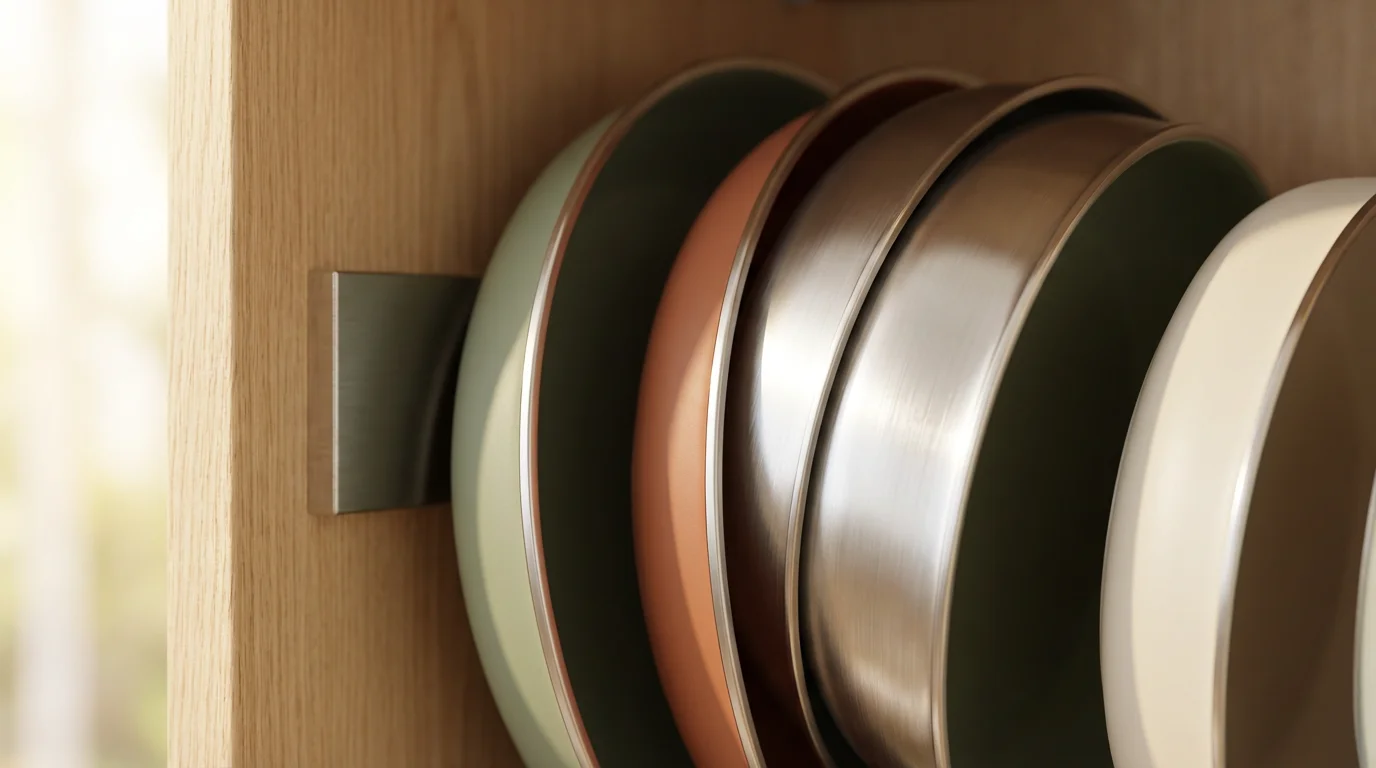
These are the “Instagram” brands. They offer stunning designs and clever storage solutions. Caraway uses an aluminum core with a sol-gel coating. They are solid performers, but you are paying a premium for the design and the marketing. If style is your priority, these are the winners.
The Pioneer: GreenPan
GreenPan was one of the first to market Thermolon (their proprietary ceramic coating). They offer a huge range of lines, from budget (Rio) to high-end (Valencia Pro). Their higher-end lines use hard-anodized aluminum and are generally more durable than the viral social media brands.
The Budget Pick: T-fal and Blue Diamond
You can find ceramic pans for under $30. These usually have thinner bodies and fewer layers of coating. They are fine for a college apartment or a vacation home, but do not expect them to last more than 6 to 12 months of daily use.
The “Pure” Ceramic: Xtrema
Xtrema is different. It is solid ceramic clay, kiln-fired. There is no metal core. It is chemically inert and lasts forever, but it is not non-stick (food will stick if you don’t use oil) and it is very breakable if dropped. This is a niche product for those who want zero metal in their cooking.
The Final Verdict: Who Should Buy Ceramic?
Is ceramic cookware right for you? It depends on your cooking style.
Buy Ceramic If:
- You are strictly avoiding PTFE/Teflon for health or environmental reasons.
- You primarily cook delicate foods like eggs, pancakes, and fish.
- You are willing to hand wash your pans and treat them gently.
- You want cookware that matches a specific kitchen aesthetic.
Skip Ceramic If:
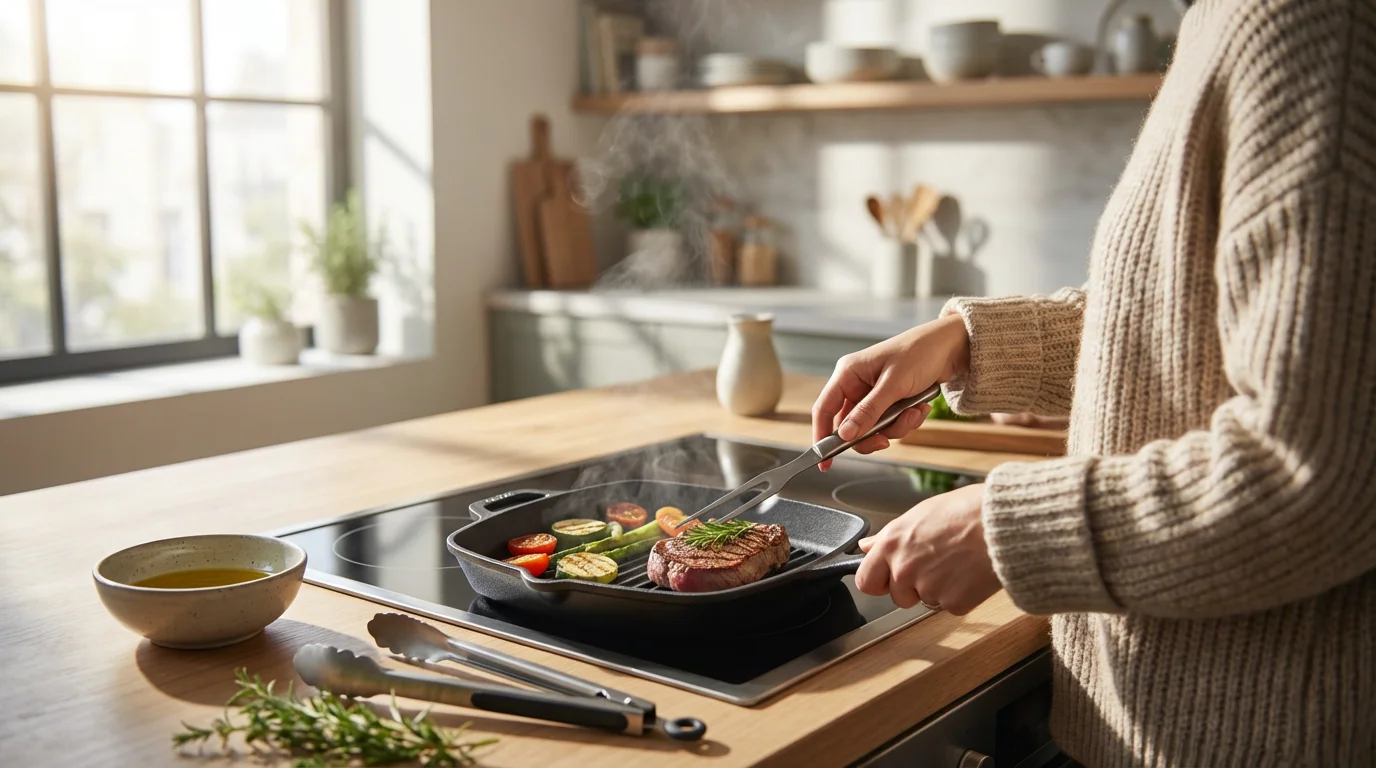
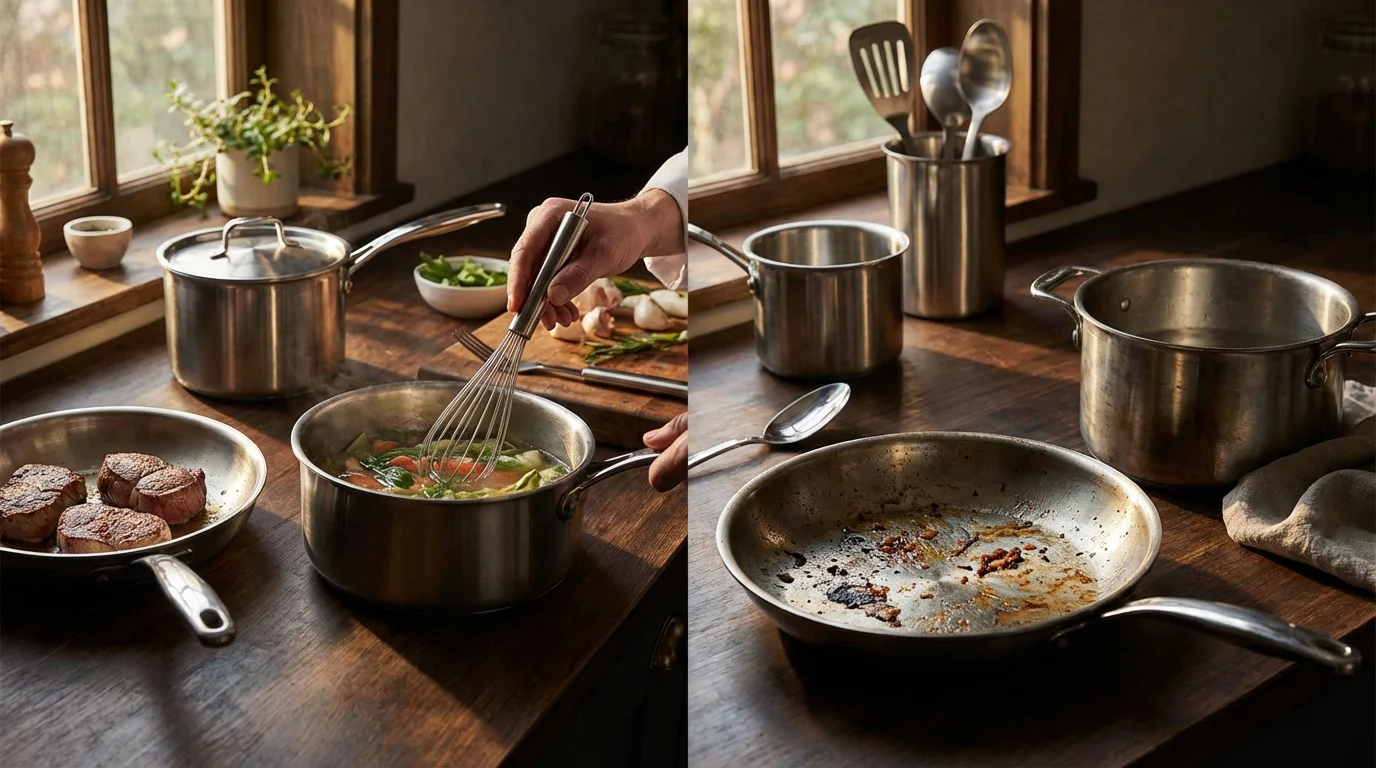
- You love to sear steaks or cook at high heat (buy Stainless Steel or Cast Iron instead).
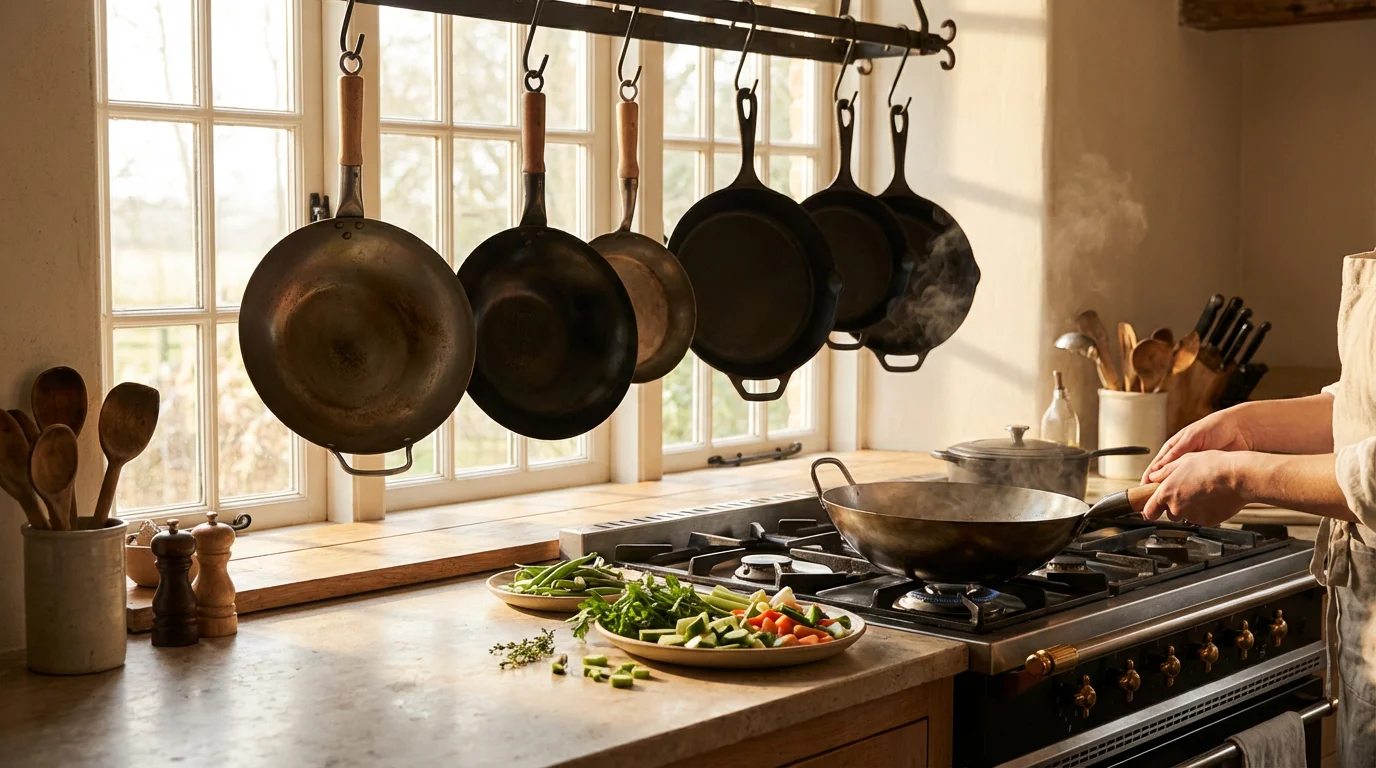
- You want a pan that will last 10 years (buy Cast Iron).
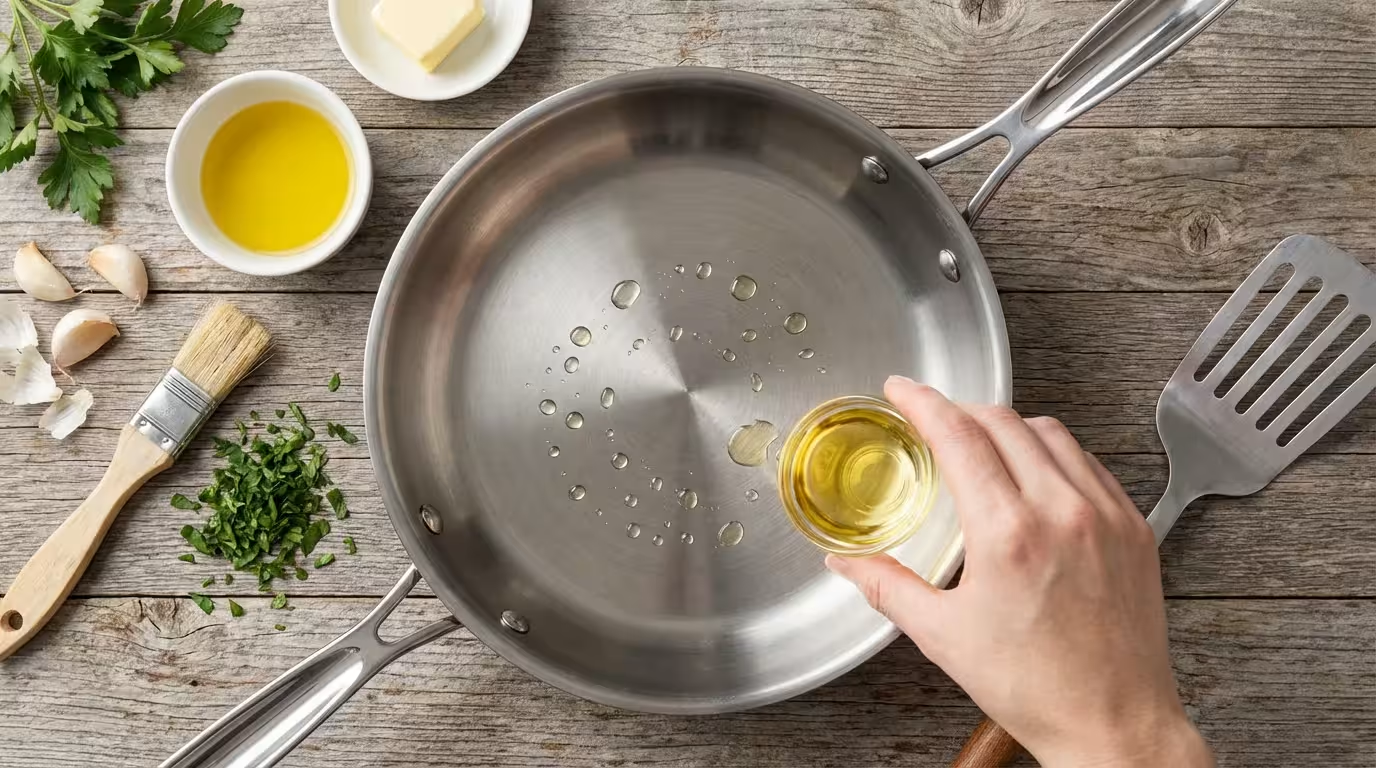
- You want to toss everything in the dishwasher (buy Stainless Steel).
- You are on a tight budget and want the longest-lasting non-stick performance (buy a reputable PTFE pan like T-fal Professional).
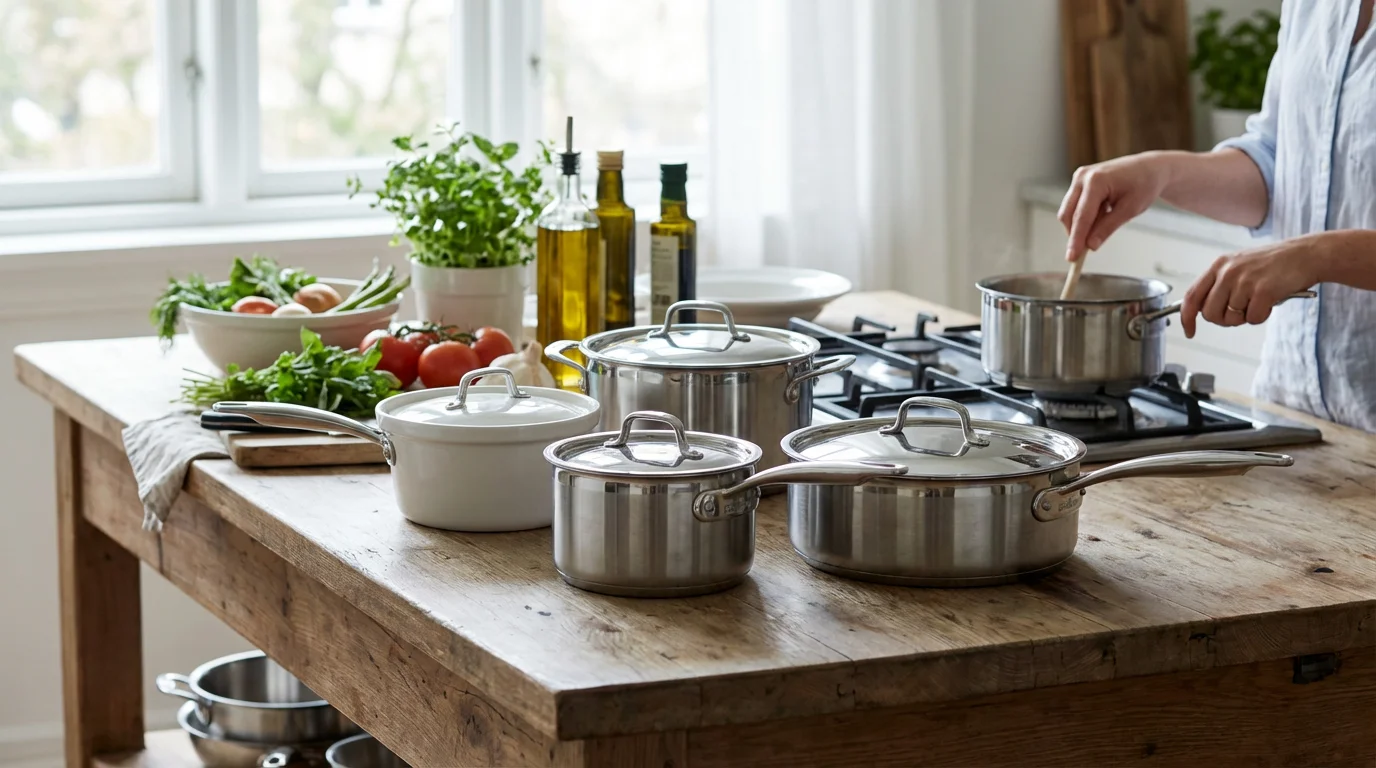
For the most functional kitchen, I recommend a “hybrid” approach: Buy one high-quality ceramic or non-stick skillet for your eggs and fish, and use stainless steel or cast iron for everything else. This saves you money in the long run and ensures you always have the right tool for the job.
Frequently Asked Questions
Is ceramic cookware safer than Teflon?
In terms of chemical stability at high heat, yes. Ceramic coatings (sol-gel) will not release fumes if overheated, whereas Teflon (PTFE) can release fumes if heated above 500°F. However, both are considered safe for general home cooking when used properly.
Can you use metal utensils on ceramic pans?
Generally, no. Even brands that claim to be “metal utensil safe” should be treated with wood or silicone utensils. The ceramic coating is brittle and scratches easily. Once scratched, the non-stick properties decline rapidly.
How do I restore a ceramic pan that sticks?
If your pan is sticking, it likely has a buildup of carbonized oil (burnt oil) or the coating has worn off. Try deep cleaning it with a paste of baking soda and water, or boiling a mixture of water and vinegar in the pan for a few minutes to dissolve mineral deposits and oil residue. If deep cleaning doesn’t work, the coating has likely worn away and the pan needs to be replaced.
Do ceramic pans work on induction cooktops?
Not all of them. Ceramic coatings are usually applied to aluminum, which is not magnetic. You must look for ceramic pans that have a stainless steel plate bonded to the bottom to ensure they are induction compatible.
Disclaimer: Product prices and availability change frequently. Prices shown were accurate at time of writing but may have changed. We may earn a small commission from purchases made through links on this site, at no extra cost to you. Always verify current pricing on the retailer’s website before purchasing.
Leave a Reply