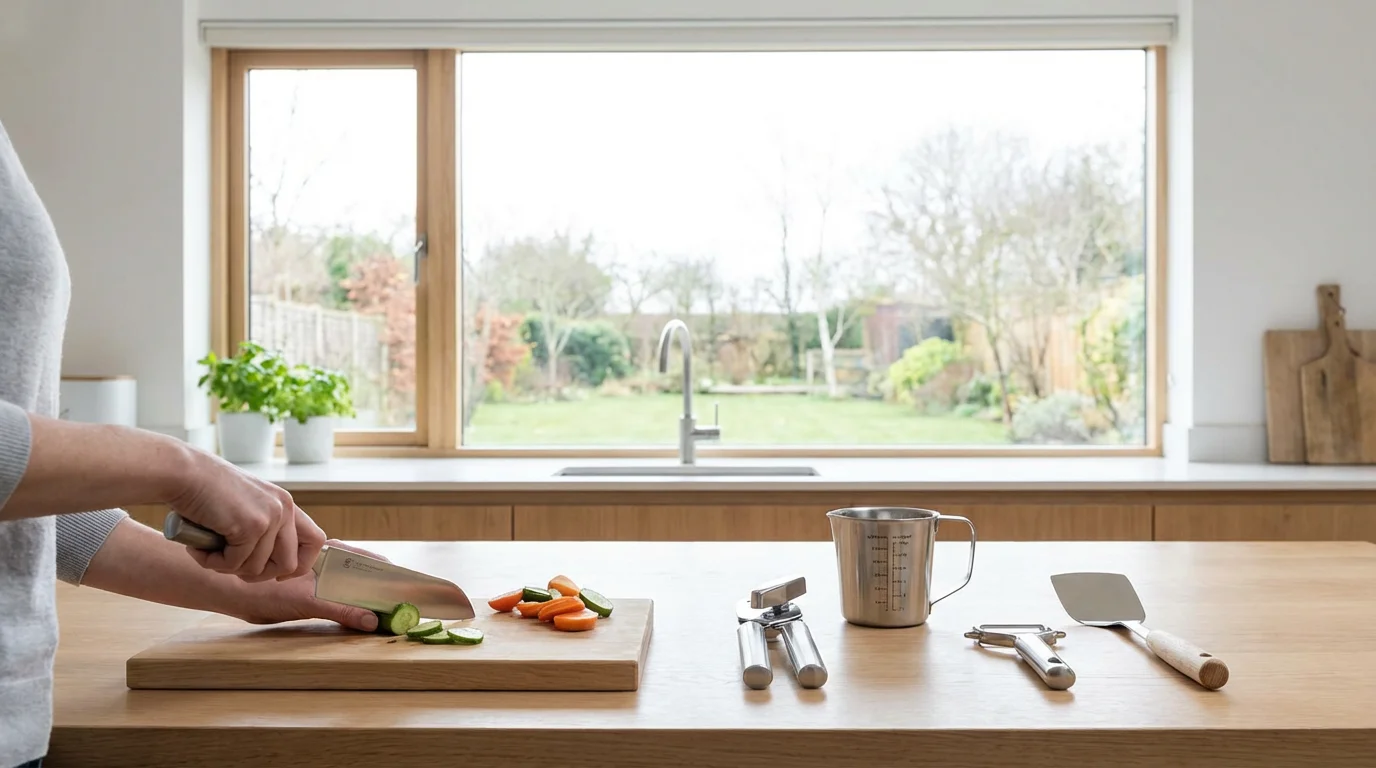
If you are among the roughly 10 percent of the population who is left-handed, you know that the world is generally designed for the right hand. Nowhere is this more apparent—and potentially dangerous—than in the kitchen. Standard scissors force your thumb into an unnatural contortion, serrated knives drift wildly off course, and measuring cups hide their numbers from your line of sight.
Cooking should be a joy, not a battle against ergonomics. While adaptability is a hallmark of being left-handed, using tools that fight your natural movement slows down your prep time and increases the risk of injury. A slip of a knife due to poor grip or incorrect blade beveling can ruin a meal or result in a trip to the emergency room.
This guide cuts through the marketing noise to identify which tools genuinely require a left-handed version and which standard tools you can adapt to use safely. We will explore the mechanics of blades, the ergonomics of handles, and the practical gear that will speed up your meal prep.
The Mechanics: Why Handedness Matters in Prep
Before buying specific gear, it helps to understand the physics working against you. Most kitchen tools are not neutral; they are biased by design. This bias usually appears in three specific ways: blade bevel, rotational torque, and sightlines.
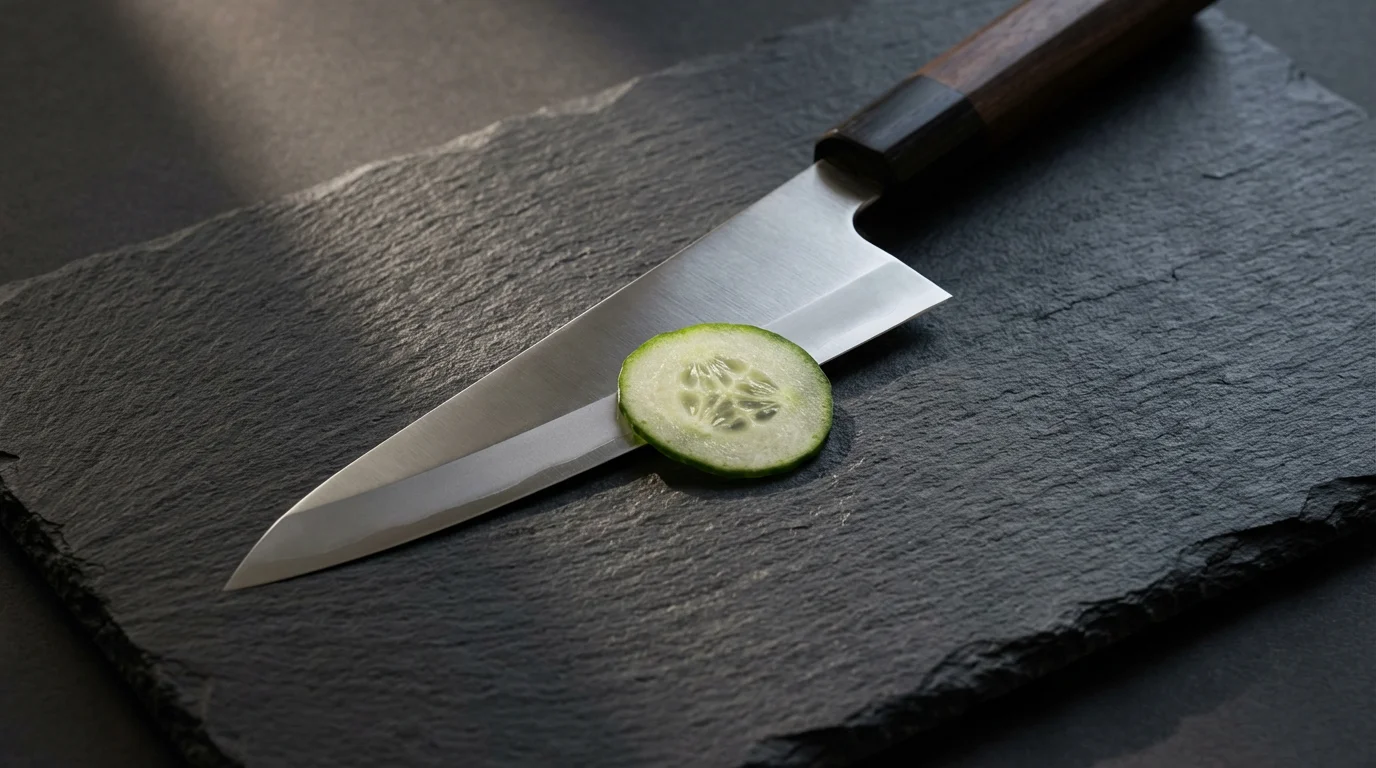
First, consider the blade edge. Many precision cutting tools feature a single bevel—meaning the blade is flat on one side and angled (sharpened) on the other. This design pushes the cut slice away from the bulk of the food. If you use a right-handed single-bevel knife in your left hand, the blade pulls into the food rather than slicing straight through, causing wedging and uneven cuts.
Second is rotational torque. Tools like can openers and corkscrews rely on clockwise rotation, which allows a right-handed user to use their bicep (pulling) strength. A left-handed user often has to push awkwardly away from the body or reach across their chest, reducing leverage and control.
“Using the wrong tool isn’t just frustrating; it builds unnecessary fatigue. When your hand fights the tool, your grip tires faster, leading to a loss of precision and a higher chance of accidents.”
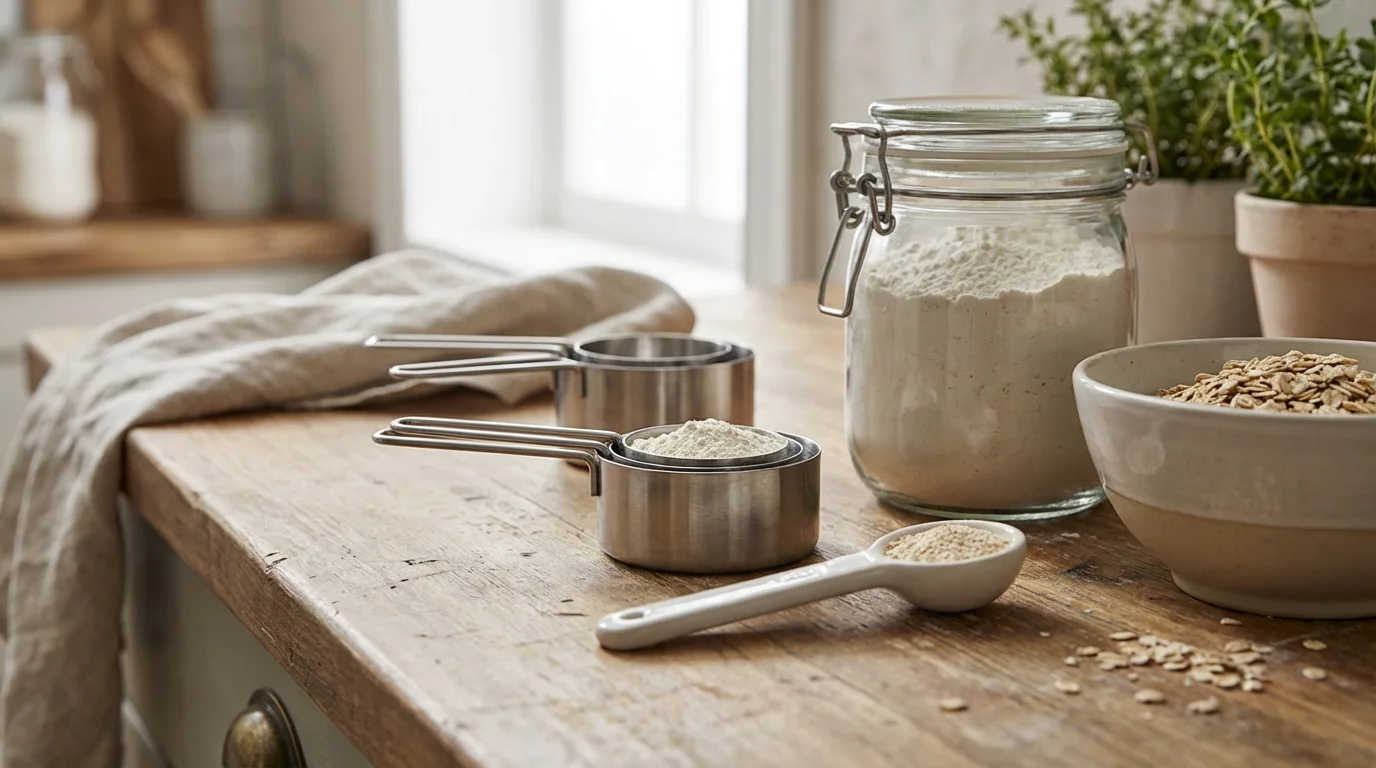
Finally, sightlines are critical for measuring. Manufacturers print measurement lines on glass cups so they are visible when held in the right hand. Hold that same cup in your left hand, and you are often staring at blank glass or metric conversions when you need imperial units.
Kitchen Knives: Bevels, Serrations, and Safety
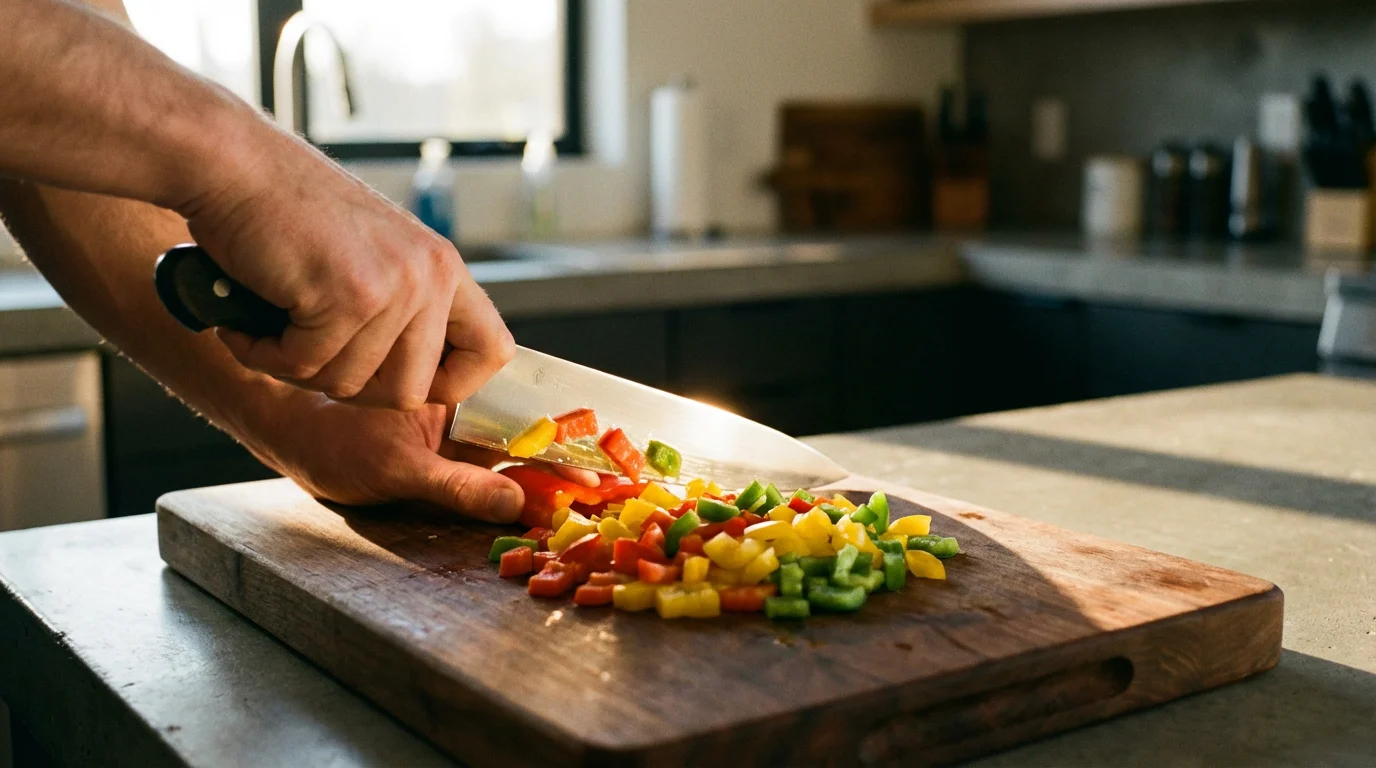
The knife is the most important tool in your arsenal. For left-handed cooks, selecting the right blade depends heavily on the style of knife and the cuisine you are preparing.
The Chef’s Knife: Western vs. Japanese
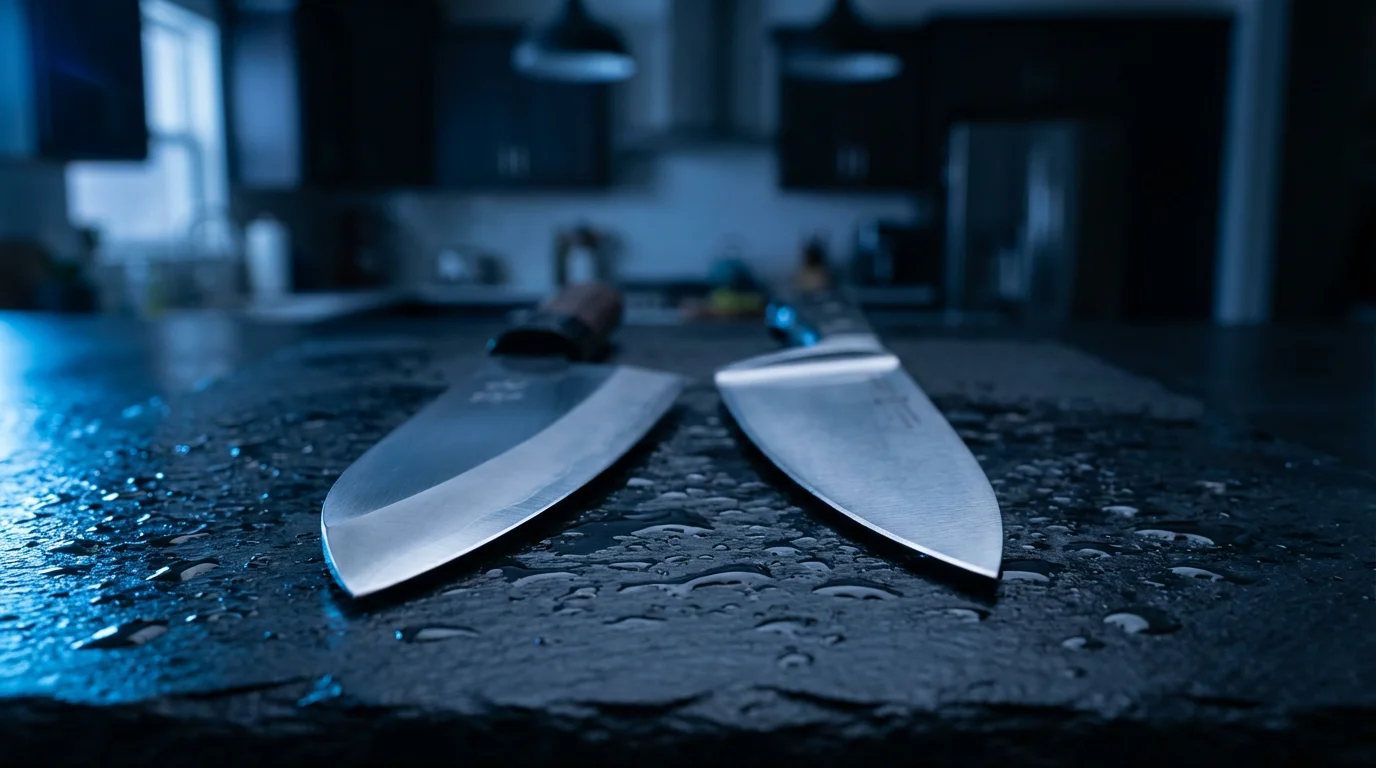
In the world of Western cutlery (think German or French styles), the standard chef’s knife is typically “double beveled” with a 50/50 grind. This means the edge is sharpened equally on both sides, making it a V-shape. These are generally ambidextrous. If you pick up a standard Wüsthof or Zwilling chef’s knife, it will likely cut just as well in your left hand as your right.
However, handle ergonomics (the shape of the grip) can be an issue. Some ergonomic handles are molded specifically for a right-hand grip. When shopping, look for neutral handles that are symmetrical, often found on Japanese-style knives or classic riveted handles.
Japanese knives present a different challenge. Traditional Japanese blades, like a Yanagiba (sashimi knife) or Deba (fish butchery knife), are single-beveled. They are flat on the back and angled on the front. A left-handed cook using a standard right-handed Yanagiba will ruin the texture of the fish and struggle to cut straight. If you are investing in high-end Japanese steel, you must order a left-handed version (often called a “lefty grind”). Note that these often cost 10–15% more due to lower production volumes.
The Bread Knife Problem
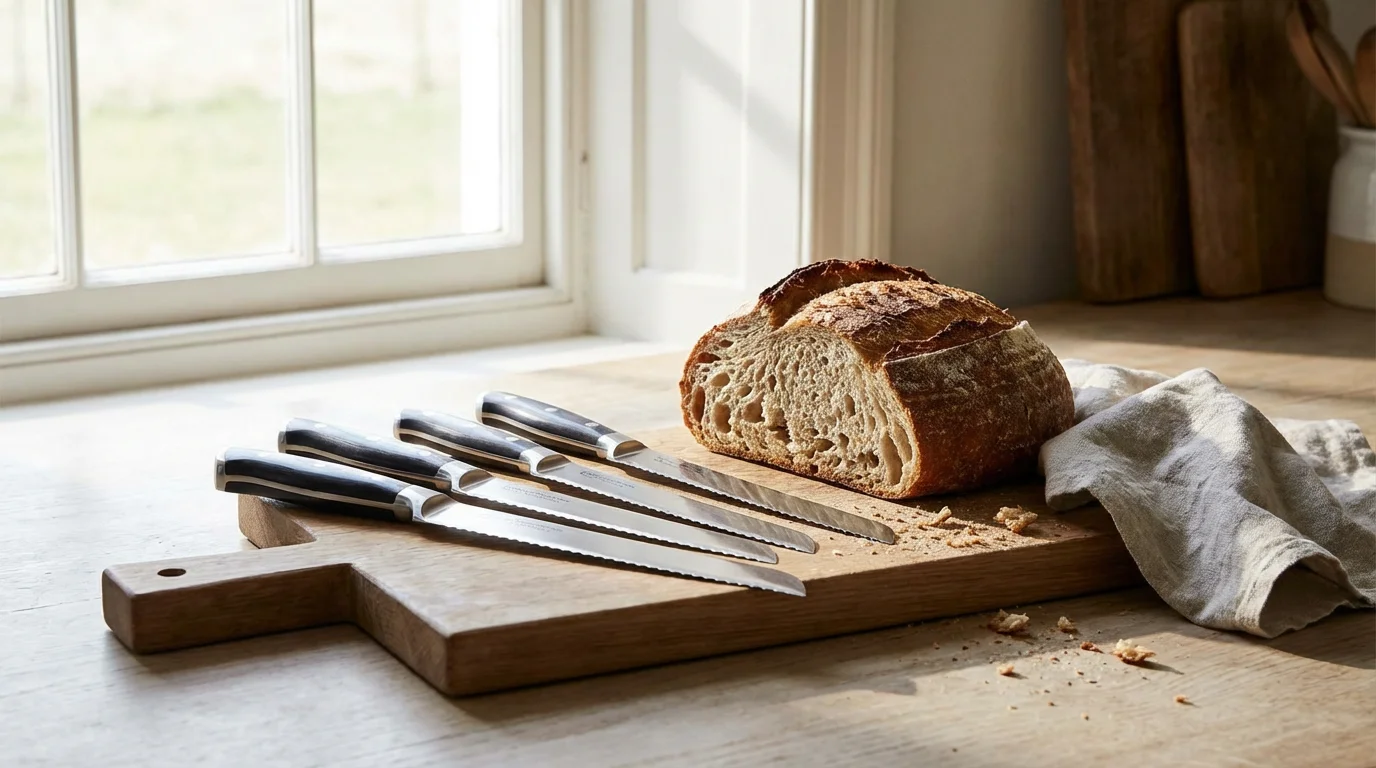
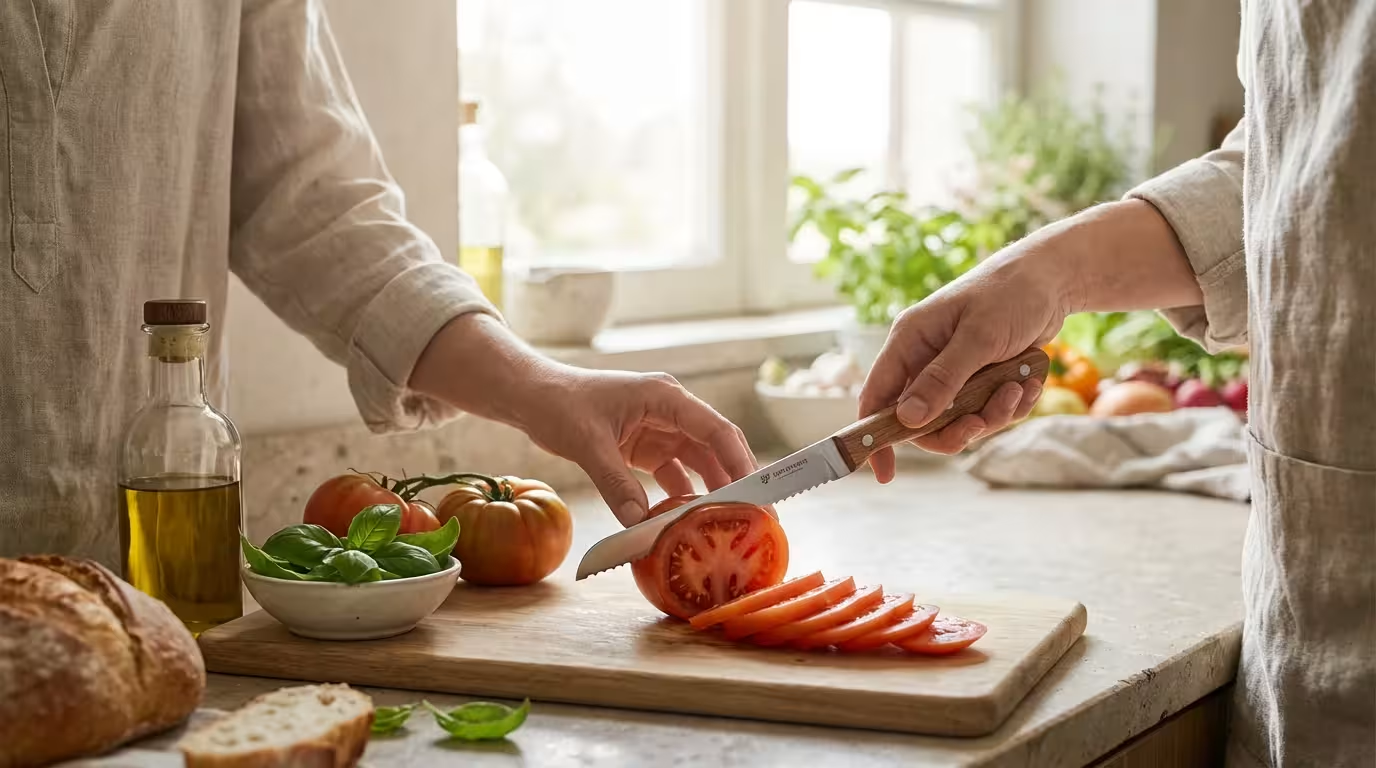
Serrated knives are notoriously difficult for lefties. Most bread knives are serrated on the right side of the blade. As you slice, the flat back of the blade (on the left) acts as a guide against the loaf.
When you switch hands, the dynamics reverse. The serrations bite into the bread at an angle, and because the flat side is now facing away from the cut, the knife tends to drift dramatically. You might start with a straight slice and end up with a wedge that is two inches thick at the top and paper-thin at the bottom. A true left-handed bread knife mirrors the serrations, placing them on the left side of the blade to counteract the natural rotation of your hand and ensure a straight cut.
Shears and Scissors: The Most Critical Upgrade
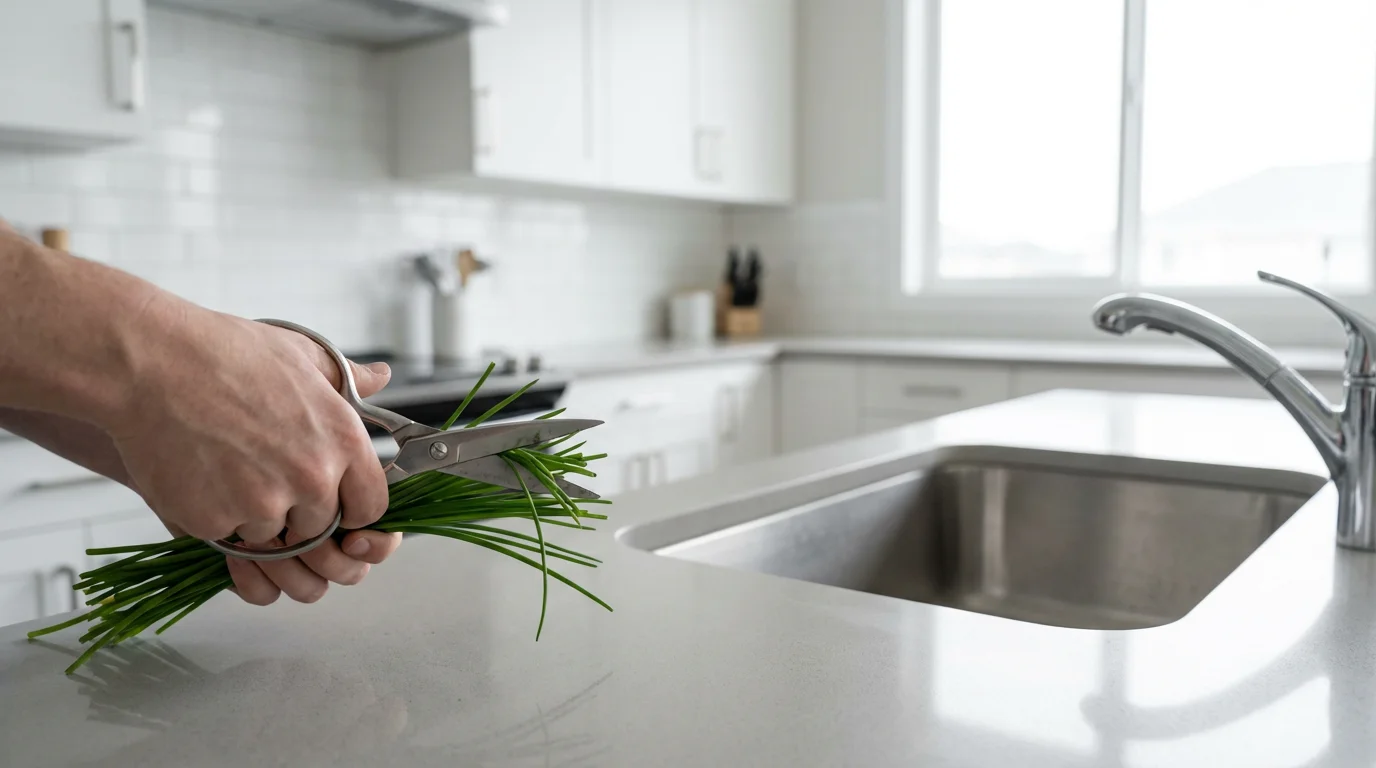
If you only buy one left-handed tool, make it kitchen shears. Standard scissors are designed so that the natural squeezing motion of the right hand pushes the two blades together, creating a crisp shearing action.
When you use those same scissors in your left hand, your thumb and fingers naturally push the blades apart. This creates a gap between the blades. Instead of cutting, the paper or herb stems fold over between the blades. You end up hacking and tearing rather than snipping.
Furthermore, standard handles are molded to accommodate the right thumb. Using them with the left hand forces your thumb against a hard ridge of plastic or metal, causing blisters during heavy prep sessions. True left-handed shears reverse the blade overlap and the handle molding. This ensures the blades stay tight against each other for a clean cut on fresh herbs, parchment paper, or poultry packaging.
As Wirecutter notes in their detailed testing, quality kitchen shears should separate for cleaning and offer robust handles; for lefties, the blade orientation is the non-negotiable feature for functionality.
Can Openers and Peelers: Solving Rotational Issues
These two gadgets cause the most daily frustration because they rely heavily on directionality.
Can Openers
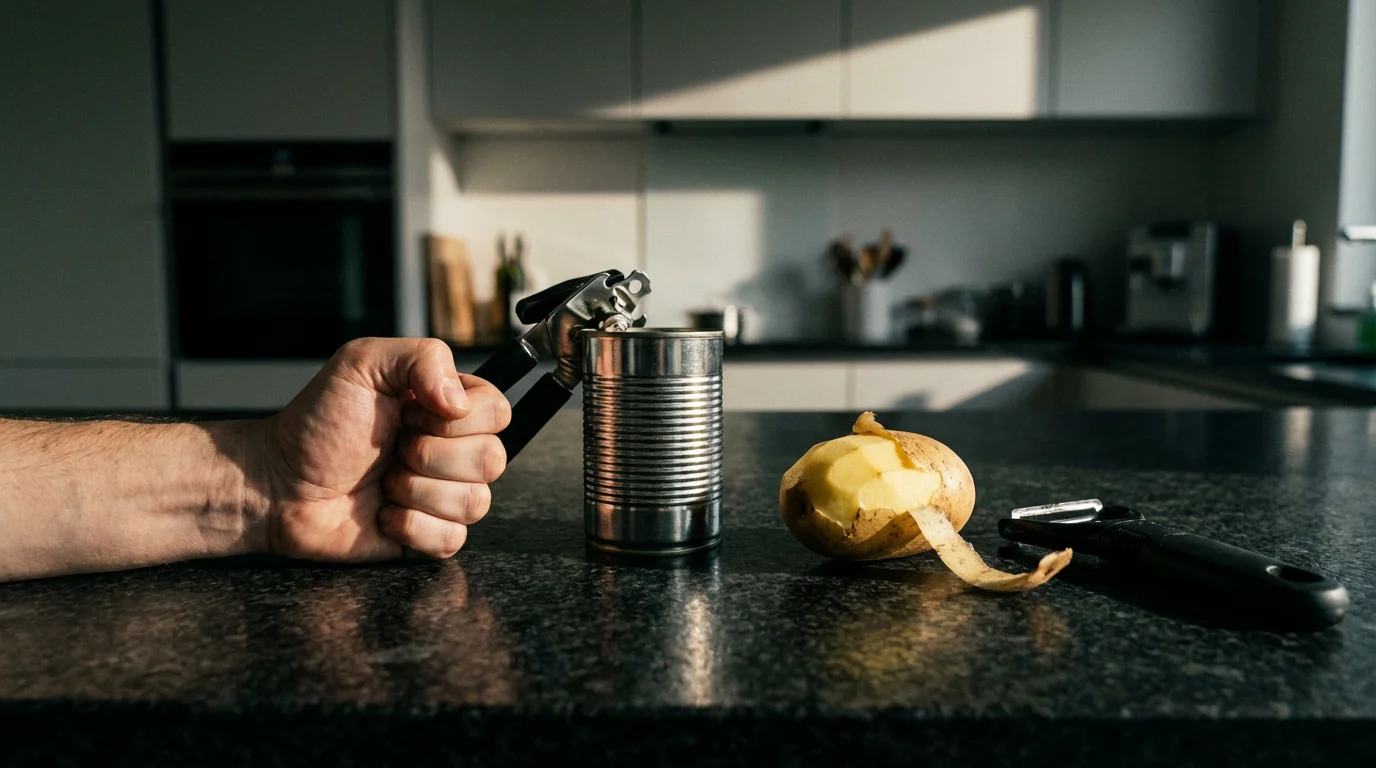
Standard manual can openers are designed to be held in the left hand (clamped onto the can) while the right hand turns the crank clockwise. For a lefty, this is counter-intuitive. You generally want to hold the can/tool with your dominant hand (for stability) or turn the crank with your dominant hand (for power).
When a lefty uses a standard opener, they often have to reach over the can to turn the crank, blocking their view of the cutting wheel. Left-handed can openers mount the cutting mechanism on the opposite side, allowing you to hold the handles in your right hand and turn the knob comfortably with your left.
Vegetable Peelers
Peelers generally fall into two categories: swivel and Y-peelers.
- Swivel Peelers: Many straight swivel peelers have a blade sharpened on both sides, making them ambidextrous. However, some older or cheaper models only sharpen the side used by a right-handed pulling motion. If you push the peeler away from you (a common safety technique), a standard peeler works fine for a lefty. If you peel toward yourself, you need a dual-edge blade.
- Y-Peelers: These are generally the superior choice for professional prep. Because the blade sits perpendicular to the handle, they are largely ambidextrous by design. However, watch out for ergonomic handles with finger grooves meant for righties. A simple, straight-handled Y-peeler is usually the best bet for any cook.

Measuring and Mixing: Visibility and Pouring
Liquid measuring cups are a classic example of “invisible” bias. The standard Pyrex cup has red markings that face you when held in the right hand. Pick it up with your left, and you are looking at the metric side (which is fine if you bake by weight/metric, but annoying if you need cups/ounces) or the blank back of the glass.
The Fix: Look for “read-from-above” measuring cups. These feature an angled plastic ramp inside the cup with measurement markings visible as you look down into the vessel. This design is completely ambidextrous and eliminates the need to lift the cup to eye level or squat down to check the fill line.
Ladles and Spatulas
Most ladles are round and therefore neutral. However, ladles with a “pour spout” are almost always designed for pouring to the left (using the right hand). A lefty pouring soup will dump the liquid over the rounded edge, causing drips. Look for dual-spout ladles or perfectly round rims.
Similarly, angled wooden spatulas or turners are often cut at a slant to scrape the bottom of a pan effectively using a right-handed grip. For a lefty, the point of the spatula hits the pan wall awkwardly. Flat-edged spatulas or those specifically cut for lefties are essential for proper sautéing.
Workflow Ergonomics: Setting Up a Left-Handed Station
Buying tools is only half the battle. How you organize your workspace—your mise en place—dramatically affects your speed and safety.
Standard culinary training teaches a workflow that moves from Left to Right:
Raw Food (Left) → Cutting Board (Center) → Finished Prep (Right) → Pan.
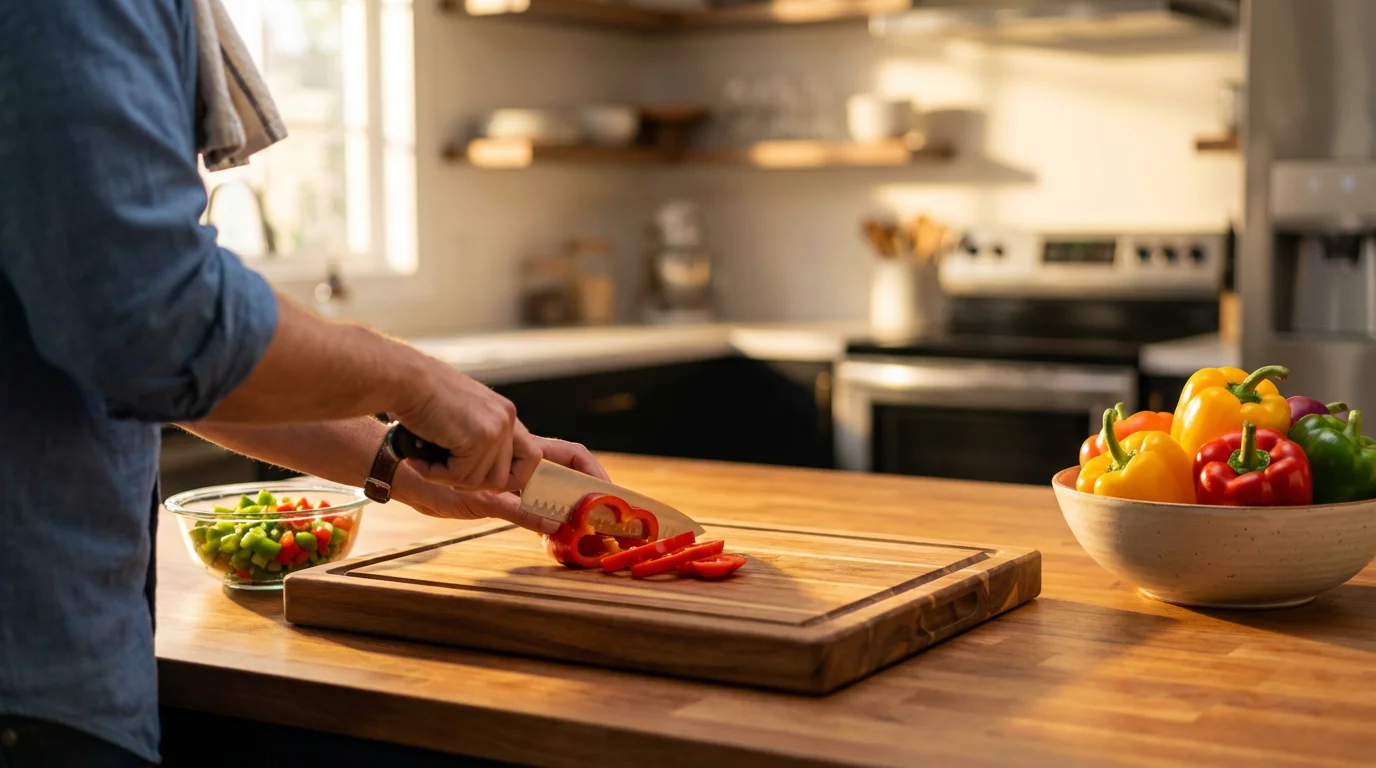
This keeps the knife in the right hand and allows the left hand to feed food from the raw pile into the blade. For a left-handed cook, you should mirror this setup:
Raw Food (Right) → Cutting Board (Center) → Finished Prep (Left).
By placing your raw vegetables on the right, your right hand (your non-knife hand) can grab an onion, place it on the board, hold it for your left hand to slice, and then sweep the finished product to the left. This prevents your arms from crossing over each other, which reduces the chance of knocking over items or cutting yourself.
Additionally, pay attention to your stove setup. If you are stirring a pot with your left hand, ensure the pot handle is turned to the left or back-left. A handle sticking out to the right creates a leverage point where you might accidentally knock the pot while reaching for ingredients.
Comparison: Ambidextrous vs. True Lefty Tools
Not every tool needs to be replaced. Use this chart to decide where to spend your budget.
| Tool Category | Standard Tool Issues | Left-Handed Necessity? | Recommendation |
|---|---|---|---|
| Kitchen Shears | Blades separate; handles hurt thumb | High | Buy true left-handed shears. |
| Chef’s Knife | Usually ambidextrous (Western) | Low (unless Japanese) | Use standard double-bevel Western knives. |
| Bread Knife | Blade drifts; cuts crooked slices | Medium/High | Buy a lefty serrated knife or use a high-quality ambidextrous electric knife. |
| Can Opener | Awkward cross-body reach | High | Buy a lefty opener or a battery-operated “hands-free” opener. |
| Vegetable Peeler | Only sharp on one side | Low | Switch to a Y-Peeler or dual-blade swivel. |
| Cutting Board | None | None | Standard boards work perfectly. Focus on stability (rubber feet). |
Frequently Asked Questions
Do left-handed cooks really need special knives?
For most Western-style chef’s knives, no. Brands like Wüsthof or Zwilling use a 50/50 double bevel, meaning the edge is symmetrical and cuts equally well for both hands. However, for serrated bread knives and single-bevel Japanese knives, a left-handed version is essential for straight, safe cuts.
Can I sharpen a right-handed knife to work for a lefty?
If the knife is a standard double-bevel knife, it likely already works for you. If you have a single-bevel Japanese knife, you generally cannot “convert” it simply by sharpening, as the entire geometry of the blade (the hollow ground back) is asymmetrical. You would need to purchase a specific left-handed blade.
Are ambidextrous tools better than left-handed ones?
Ambidextrous tools, like Y-peelers or read-from-above measuring cups, are excellent because they are widely available and can be shared with right-handed family members. However, for mechanics-heavy tools like scissors or can openers, a specific left-handed tool will always offer better ergonomics and control than a “universal” design.
Where is the safest place to store knives for a lefty?
Standard angled knife blocks are often slotted for right-handed retrieval (pulling across the body). A magnetic knife strip is a superior storage solution for lefties. It allows you to grab the handle comfortably with your left hand without twisting your wrist, and you can mount it anywhere in your kitchen to suit your workflow.
Disclaimer: Product prices and availability change frequently. Prices shown were accurate at time of writing but may have changed. We may earn a small commission from purchases made through links on this site, at no extra cost to you. Always use cutting tools carefully and follow manufacturer safety guidelines.
Leave a Reply