
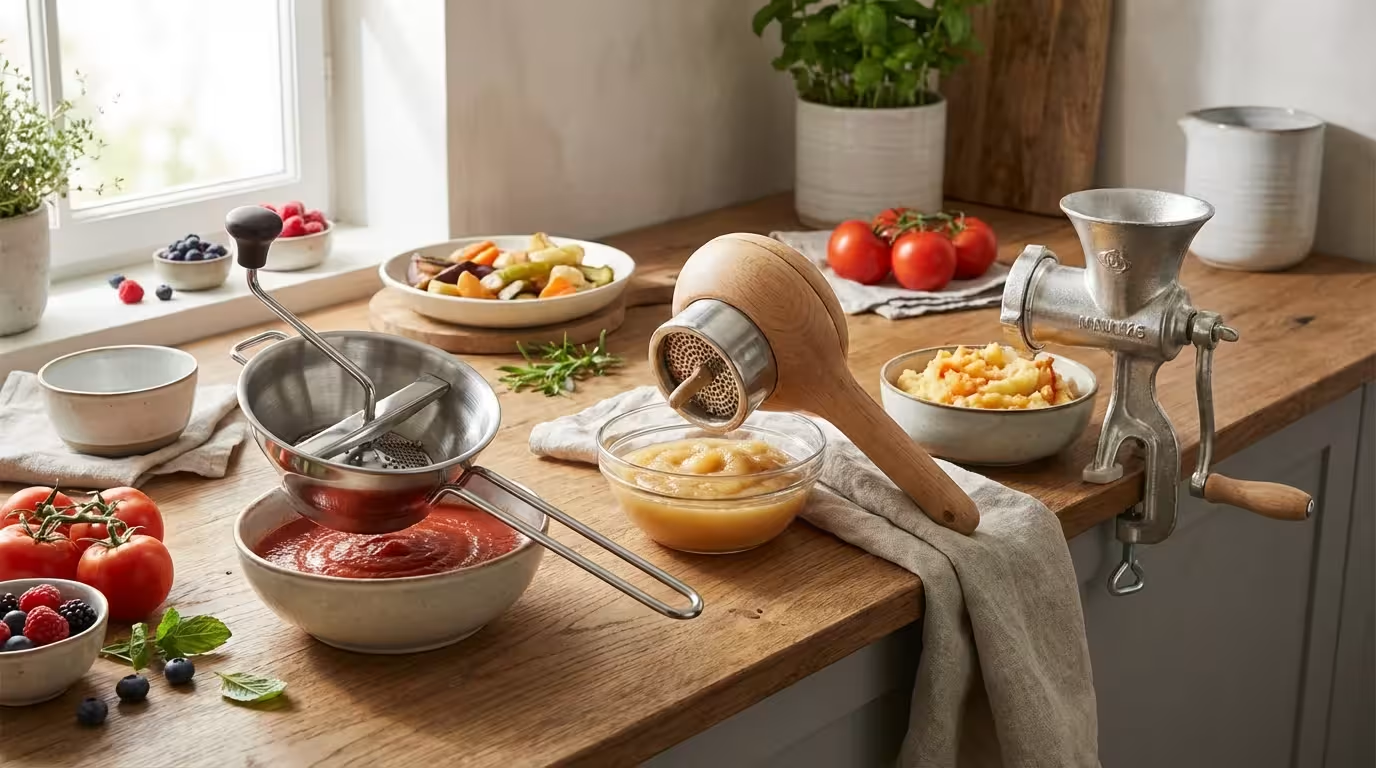
There is a specific frustration that comes with making homemade tomato sauce or applesauce. You spend hours peeling skins, coring apples, or deseeding tomatoes before you even start the cooking process. If you are looking for a way to skip that tedious prep work while achieving a texture that a blender simply cannot replicate, the solution is likely already sitting in your grandmother’s recipe box: the food mill.
While high-powered blenders and food processors have taken over many countertop tasks, the manual food mill remains the superior tool for specific jobs. It separates skins and seeds from pulp while mashing the fruit or vegetable, rather than pulverizing it. This distinction is crucial for texture. A food processor shears starch molecules, turning potatoes into glue; a food mill gently extrudes them, creating fluffy, airy mounds.
Whether you are tackling a harvest of canning tomatoes, making baby food, or perfecting your Thanksgiving mashed potatoes, finding the right food mill can change your relationship with scratch cooking. We will break down what features matter, how to use them efficiently, and which models deserve a spot in your cabinet.
Why You Need a Food Mill (vs. a Blender)
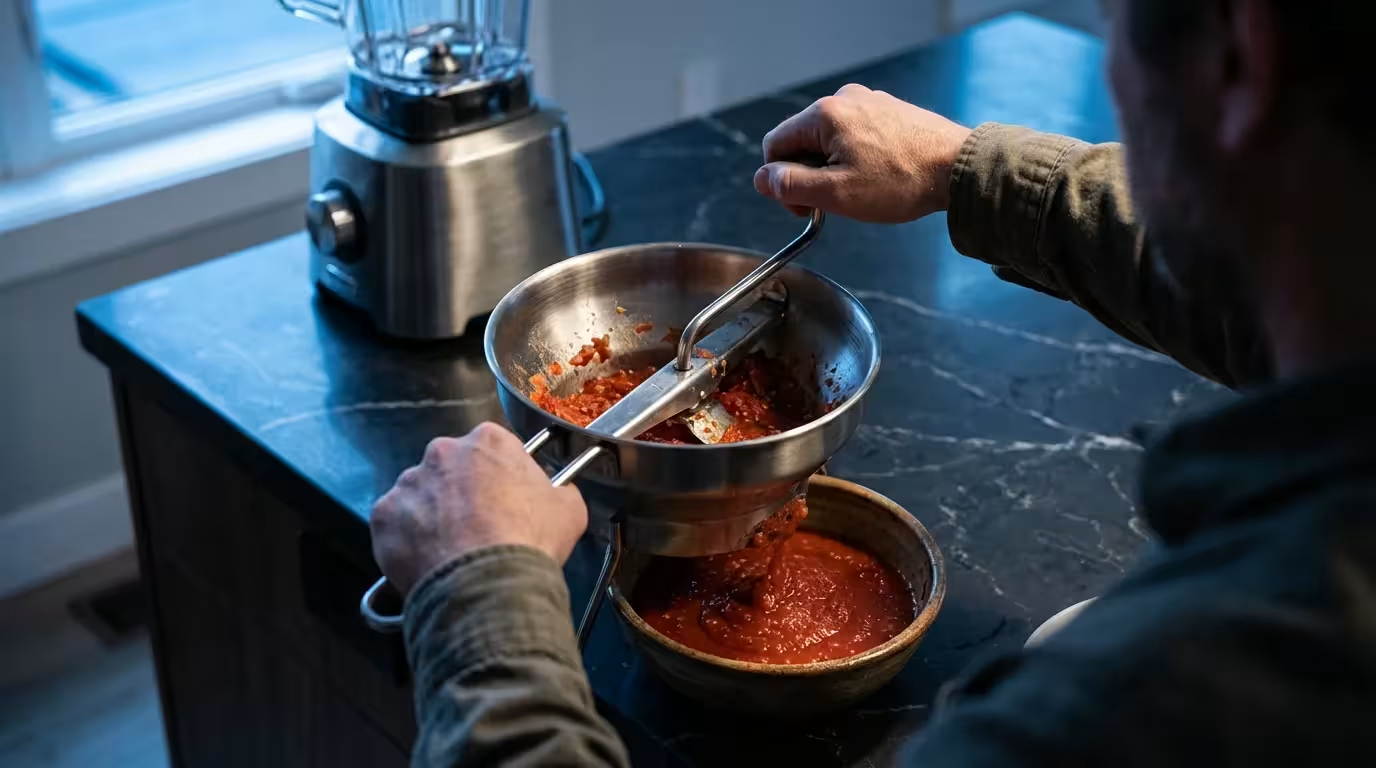
You might wonder if a food mill is redundant if you already own an immersion blender or a high-end food processor. The answer lies in the mechanics of how these tools process food. Blenders use high-speed blades to cut and pulverize ingredients. This is excellent for smoothies or emulsified vinaigrettes, but it can be disastrous for starchy vegetables or rustic sauces.
When you put boiled potatoes in a food processor, the violent shearing action ruptures the starch cells, releasing a sticky, glue-like substance. The result is a gummy mess that no amount of butter can fix. A food mill, however, uses pressure to push the cooked potato through a perforated disc. This keeps the starch cells intact and incorporates air, resulting in a lighter, fluffier texture.
Furthermore, the food mill acts as a sieve. If you are making tomato sauce, you can roast or boil your tomatoes whole—skins and seeds included. As you crank the mill, the pulp is forced through the holes, while the skins and seeds are trapped behind. This saves you significant time on mise en place (the French culinary phrase for having all your ingredients prepped and ready) by eliminating the need to blanch and peel beforehand.
“A food mill doesn’t just puree; it separates. It allows you to cook fruit and vegetables in their skins, extracting flavor and pectin that you would otherwise lose by peeling first.”
Key Features to Look For
Not all food mills are created equal. Poorly designed models can slip off the bowl, leave too much waste behind, or rust after a few washes. Here are the specific criteria you should evaluate before buying.
Bowl Stability and Hooks
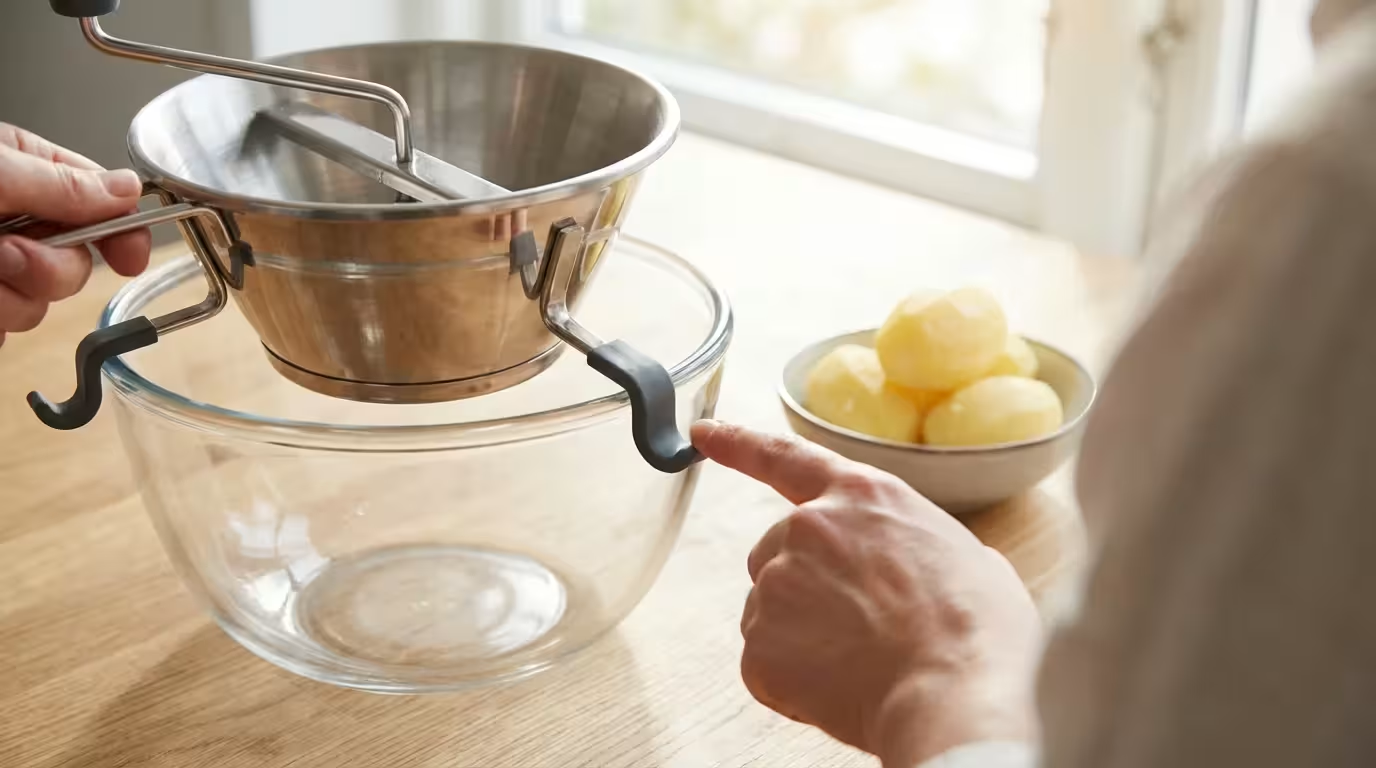
Stability is the most critical safety and efficiency feature. A food mill requires two hands: one to hold the handle and one to crank. If the mill slips, you risk splashing hot puree on yourself. Look for a model with aggressive, non-slip hooks or legs that span a wide variety of pot sizes. According to Serious Eats, stability is often the deciding factor between a top-tier tool and a frustrating gadget; if the mill wobbles, you lose leverage and energy.
Interchangeable Discs
Versatility comes from the size of the holes in the grinding disc. A good set should include at least three options:
- Fine (approx. 2mm): Best for berry coulis (removing tiny seeds) and smooth baby food.
- Medium (approx. 3mm): Ideal for applesauce, vegetable soups, and tomato sauce.
- Coarse (approx. 4mm+): Perfect for mashed potatoes, spaetzle, or chunky salsas.
Blade Tension and the “Sweeper”
The mechanism inside a food mill consists of a rotating blade or paddle that presses food against the perforated bottom. Good mills have a spring-loaded system that maintains constant downward pressure. Additionally, look for a “sweeper” or scraper on the underside. This wire or blade scrapes the pureed food off the bottom of the disc so it falls into your bowl. Without this, the holes clog, and you have to constantly stop to scrape it manually.
Top Pick: The Best All-Around Performer
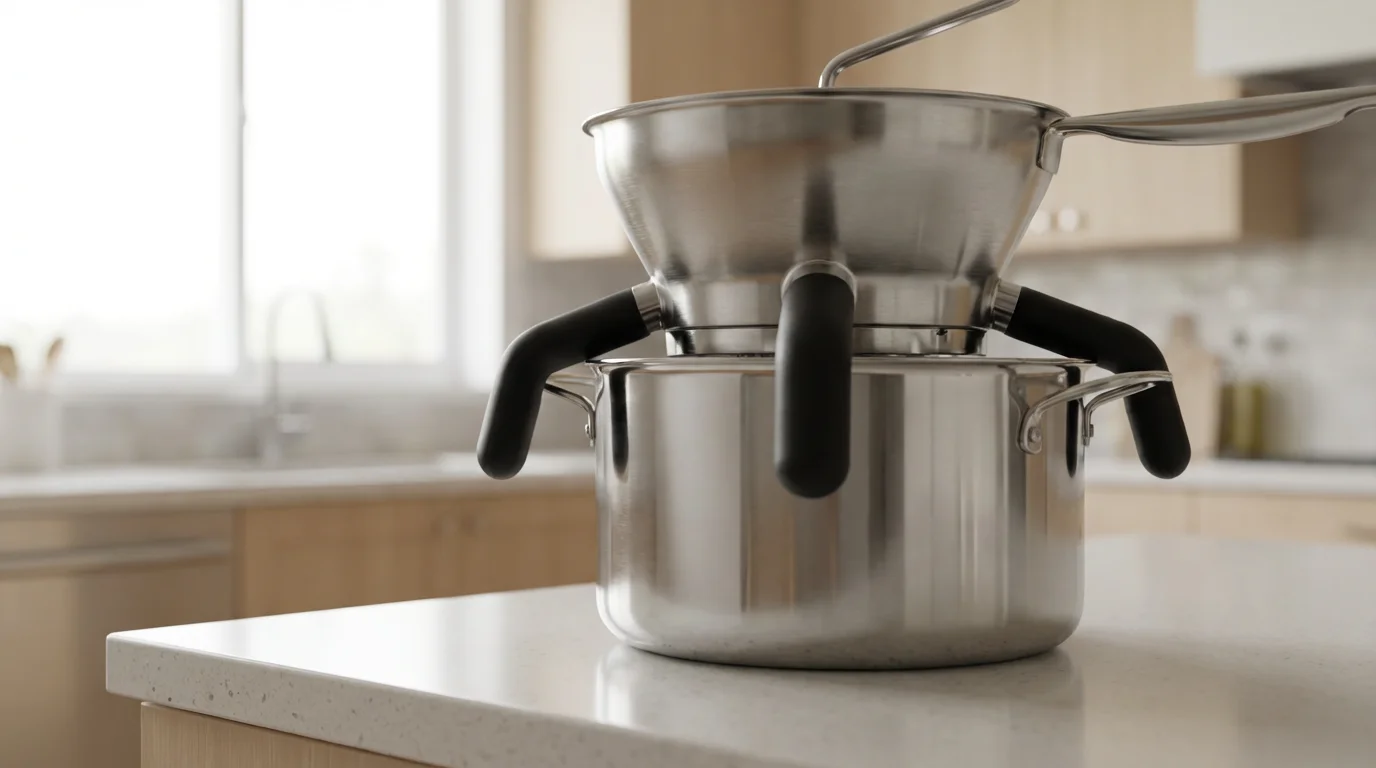
For most home cooks, the OXO Good Grips Food Mill strikes the perfect balance between price, performance, and ergonomics. It solves the biggest complaints users generally have about traditional stainless steel mills: comfort and storage.
The OXO features three sturdy, rubberized legs that fold in for compact storage. When extended, they grip the rim of almost any 2-quart to 5-quart pot securely, preventing the dangerous wobbling mentioned earlier. The crank handle is large and soft, reducing hand fatigue during large batches of applesauce.
Another standout feature is the ease of swapping discs. Many vintage mills require you to wrestle with a high-tension spring to change the bottom plate. The OXO uses a simple spring-loaded lever that makes assembly and disassembly straightforward. It comes with three stainless steel grinding discs (fine, medium, coarse), making it a versatile tool for any texture you need to achieve.

Premium Pick: For High-Volume Canning
If you grow your own tomatoes or plan on canning dozens of jars of sauce every autumn, you should consider the Rösle Food Mill. This is a significant investment compared to standard models, but the construction quality is industrial-grade. Made from 18/10 stainless steel, it is built to last a lifetime.
The Rösle distinguishes itself with a unique design. Instead of a flat bottom, it has a slightly conical shape and a steeper pitch on the blade. This gravity-assisted design feeds food into the crushing zone more efficiently, allowing you to process high volumes faster than flat-bottomed models. The sieve discs are sold separately or in sets depending on the retailer, so check the configuration before purchasing.
While Wirecutter and other experts often note the high price point, they also acknowledge that for serious preservationists, the speed and durability of the Rösle are unmatched. It also features a sealed welding construction, meaning there are fewer crevices for food bacteria to hide in, making it exceptionally sanitary.
Budget Pick: The Classic Stainless Option
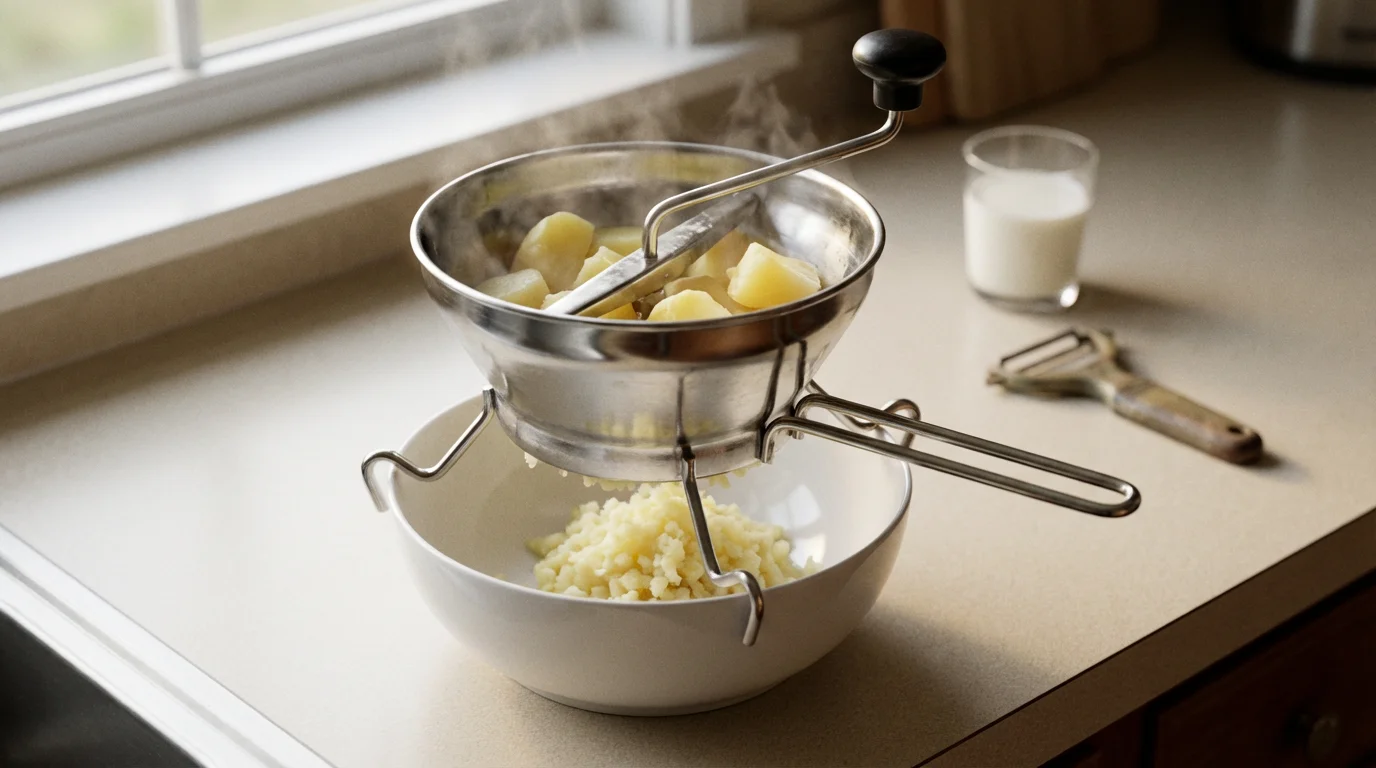
If you only need a food mill once or twice a year for Thanksgiving potatoes, you may not want to spend top dollar. The classic Foley-style stainless steel food mill remains a viable option. These are often generic or sold under brands like Mirro or RSVP International.
These units typically have a permanently attached bottom disc (usually medium coarse) or a simpler 2-disc system. They rely on side hooks to hang onto a bowl. While they lack the ergonomic grips of the OXO or the speed of the Rösle, they are lightweight, durable, and get the job done for basic tasks. Be aware that without interchangeable discs, you lose the ability to switch between removing blackberry seeds (needs fine) and mashing potatoes (needs coarse).
Mastering the Technique: Efficiency Tips
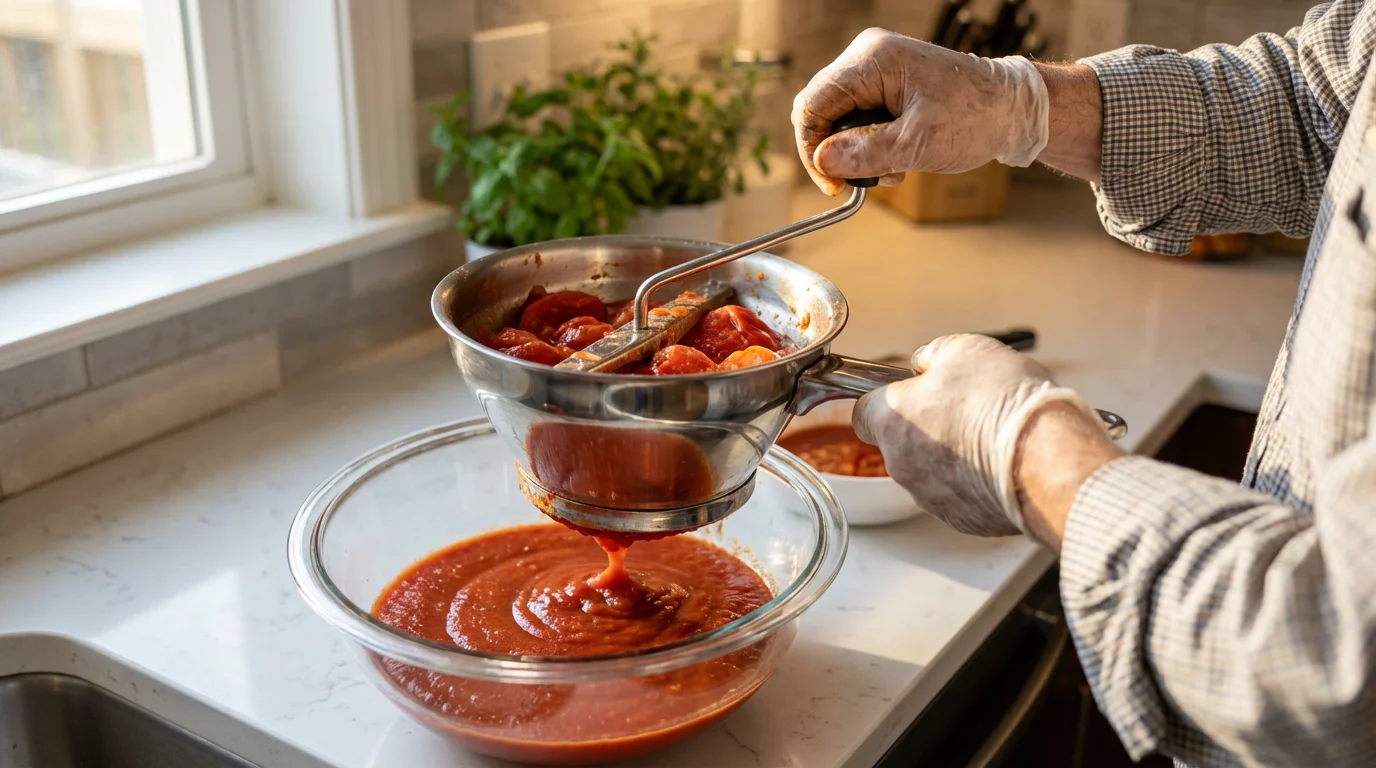
Using a food mill appears simple—turn the crank, get puree—but improper technique can lead to clogging and frustration. Here is how to operate your mill like a professional.
1. Cook Your Food Properly
A food mill is not a grinder; it is a masher. You cannot put raw apples or hard potatoes into it. Food must be cooked until it is soft enough to be crushed with the back of a spoon. For tomatoes, a quick roast or simmer softens the flesh enough to pass through the mill easily.
2. The “Reverse Crank” Maneuver
As you process food, skins and seeds will accumulate inside the mill, blocking the holes and preventing the pulp from passing through. If you feel resistance or notice the flow stopping, do not force it. instead, crank the handle in reverse for two or three turns. This lifts the blade and scrapes the skins up and away from the holes. Then, resume cranking forward. You will find the flow returns immediately.
3. Manage Your Batch Size
Do not overfill the hopper. If you fill it to the brim, the food at the top just spins around without engaging the blade. Fill the mill about half to two-thirds full. This gives the blade enough room to grab the food and push it down against the sieve.
Cleaning and Blade Maintenance
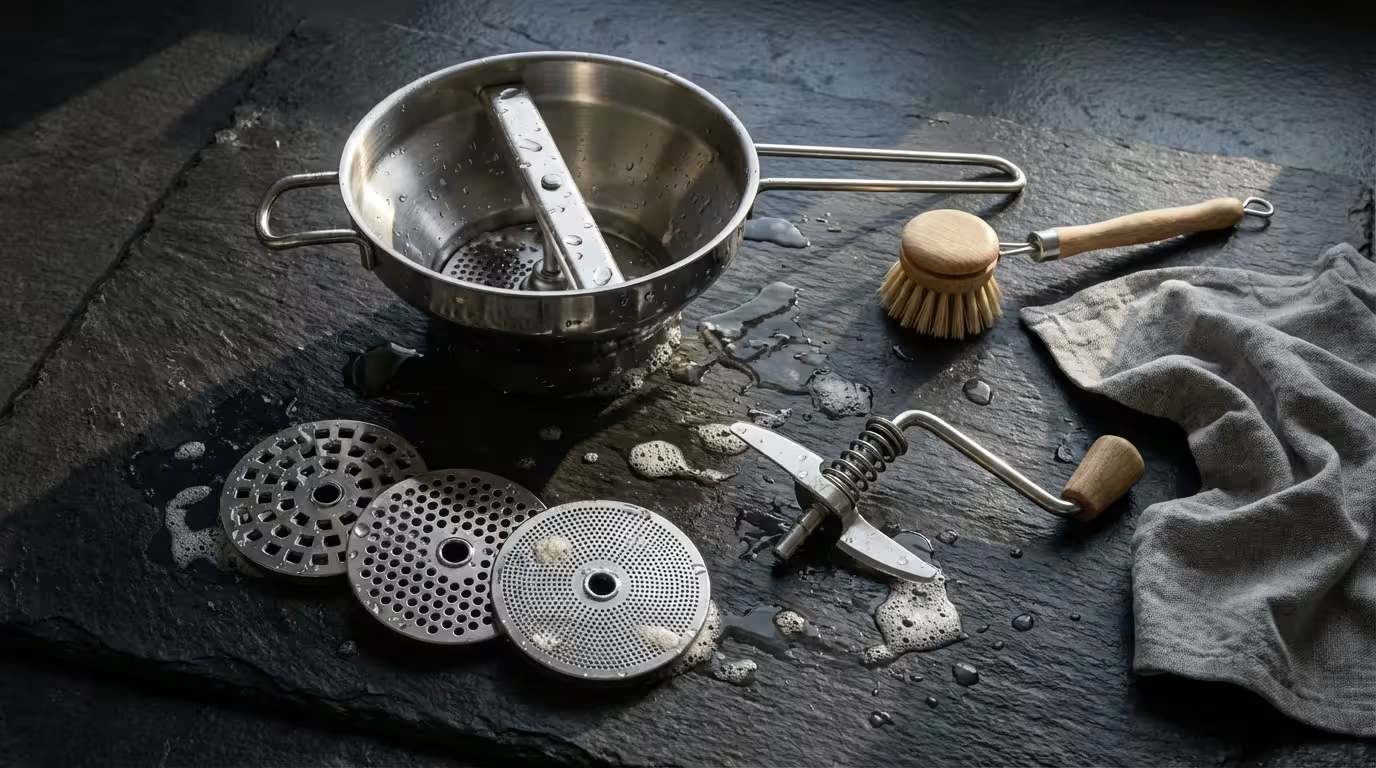
Because food mills mechanically crush food, fibers and skins can get wedged tightly into the pivot points and under the rim. Proper cleaning is essential to prevent bacterial growth and rust.
Most modern stainless steel mills are listed as dishwasher safe, but we recommend hand washing the grinding discs. The high heat and harsh detergents in dishwashers can dull the cutting edges of the holes over time and may corrode the spring mechanism if it isn’t fully stainless steel. If you must use the dishwasher, disassemble the unit completely first.
Pro Tip: Wash your food mill immediately after use. Once potato starch or tomato pulp dries in the tiny sieve holes, it acts like cement. If you cannot wash it right away, soak the disassembled parts in a basin of warm soapy water.
Model Comparison Guide
| Feature | OXO Good Grips | Rösle Food Mill | Classic Stainless (Generic) |
|---|---|---|---|
| Best For | Everyday Home Cooks | Canning & High Volume | Occasional Use |
| Material | Stainless / Plastic Exterior | 18/10 Stainless Steel | Stainless Steel |
| Discs Included | 3 (Fine, Med, Coarse) | Varies (often sold separate) | 1 (Fixed) or 2 |
| Stability | Excellent (Rubber Legs) | Good (Pot Rest) | Fair (Side Hooks) |
| Dishwasher Safe | Yes | Yes | Yes |
Frequently Asked Questions
Can I use a food mill for raw vegetables?
Generally, no. Food mills are designed to process soft, cooked foods. Trying to force raw carrots or potatoes through the mill will likely damage the blade or the mesh disc. The only exceptions are very soft fruits like ripe berries or bananas, which can be processed raw.
What is the difference between a food mill and a potato ricer?
A potato ricer is a single-purpose tool that looks like a giant garlic press. It is excellent for fluffy mashed potatoes but requires you to peel the potatoes first. A food mill is a multi-purpose bowl with a crank that can process larger volumes and, crucially, can separate skins from pulp, which a ricer cannot do.
How do I stop my food mill from sliding around the bowl?
This is a common issue with vintage or budget models. Ensure the hooks or legs are fully extended and resting securely on the rim of your collection vessel. Placing a damp kitchen towel under the collection bowl can also prevent the entire setup from spinning on the counter while you crank.
Will a food mill remove raspberry seeds?
Yes, provided you use the finest disc available (usually around 2mm or smaller). A standard medium disc may let small raspberry or blackberry seeds pass through. If your mill only has a medium disc, you may need to pass the puree through a fine-mesh strainer afterward for a perfectly smooth coulis.
Disclaimer: Product prices and availability change frequently. Prices shown were accurate at time of writing but may have changed. We may earn a small commission from purchases made through links on this site, at no extra cost to you. Always use cutting tools carefully and follow manufacturer safety guidelines.



Leave a Reply