
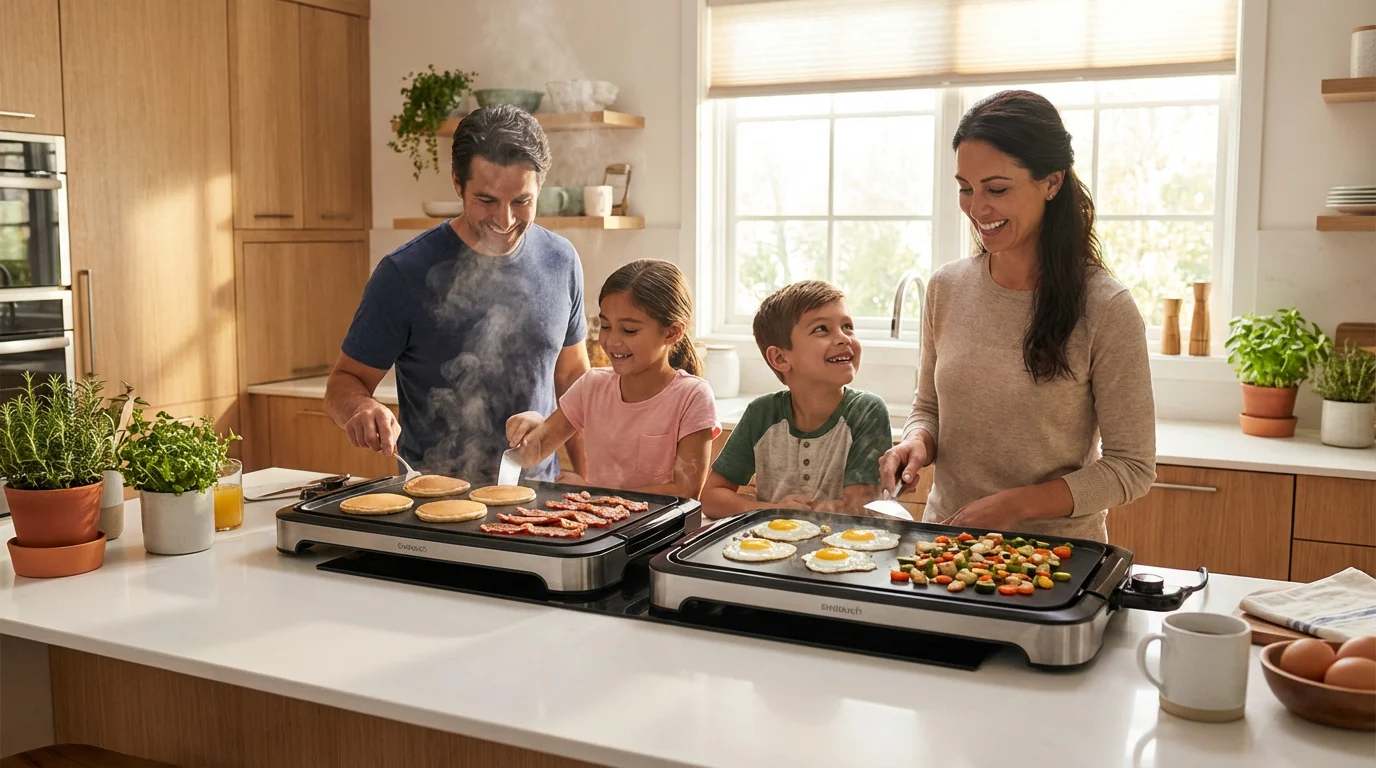
Cooking breakfast for the entire family often feels like a coordinated culinary dance, juggling multiple pans on the stove, trying to keep everything warm, and still having enough counter space for plating. An electric griddle simplifies this morning chaos, transforming your breakfast routine from a stress-filled sprint to a smooth, enjoyable start to the day. This versatile appliance offers a large, consistent cooking surface, perfect for batch cooking pancakes, bacon, eggs, and more, making it an indispensable tool for any family kitchen.
While a griddle is perfect for pancakes, many families also enjoy using waffle makers to provide even more variety during weekend brunches.
Why an Electric Griddle Transforms Family Breakfasts
An electric griddle is more than just a large pan; it is a dedicated breakfast station. It addresses common breakfast challenges directly, offering solutions that stovetop cooking simply cannot match. For families, the ability to cook large quantities simultaneously saves time and effort, ensuring everyone eats together while food remains perfectly warm.
To round out the meal, having one of the top coffee makers ready to serve fresh java is essential for the adults at the table.
The primary advantage of an electric griddle lies in its consistent and controlled heat distribution across its entire “flat top” surface. Unlike a stovetop griddle pan which relies on the burner below, an electric griddle uses an internal heating element and a precise thermostat. This means you avoid hot spots and cold zones, delivering perfectly browned pancakes, evenly cooked bacon, and eggs fried just right, every time. This consistency is crucial when you are trying to feed a hungry crowd.
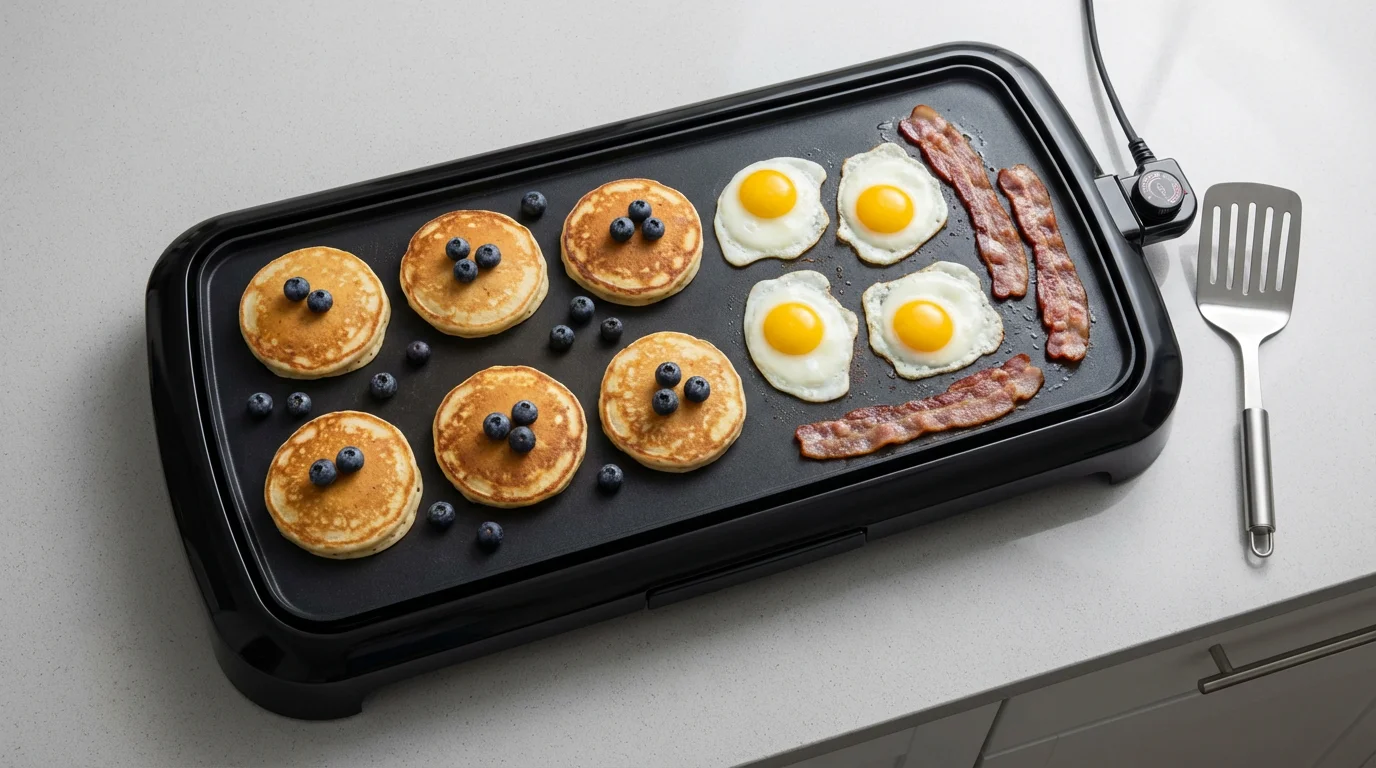
Consider a typical Sunday morning: you need to cook a dozen pancakes, several slices of bacon, and a scramble of eggs. On a stove, this involves multiple pans, continuous stirring, and often sacrificing quality for speed. With an electric griddle, you can lay out six to eight pancakes, several strips of bacon, and even cook eggs simultaneously on the same surface. Many models boast expansive cooking areas, often ranging from 180 to over 300 square inches, providing ample room for a complete family breakfast without needing constant rotation or waiting for batches to finish.
Electric griddles also excel at maintaining a steady temperature, a feature many stovetop setups lack. Once you set your desired temperature, the griddle’s thermostat works to keep that heat consistent, which is ideal for achieving perfect results, especially for delicate items like crepes or French toast. According to Consumer Reports, precise temperature control is a key factor in appliance performance, directly impacting cooking consistency and overall satisfaction.
Understanding Electric Griddle Features and Specifications
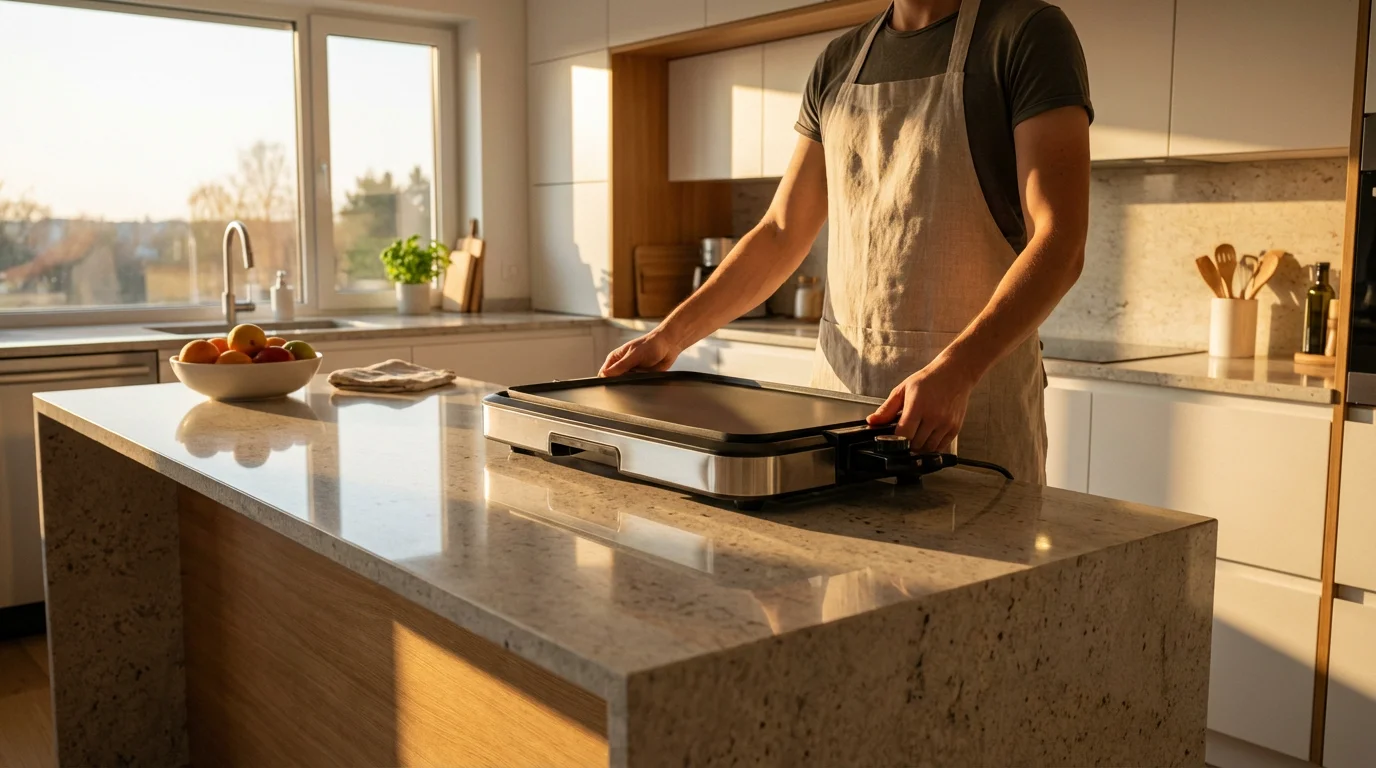
To choose the best electric griddle for your family, you need to understand the key features and specifications that influence performance, usability, and durability. Focusing on these details helps you identify a model that truly meets your needs.
If you are preparing large batches of hash browns or veggie mix-ins, using a food processor can significantly cut down on your morning prep time.
- Temperature Control: Look for models with an adjustable thermostat that allows you to set precise temperatures, usually ranging from “warm” to around 400°F. Some griddles feature a dial with numbers, while others offer more granular digital controls. Good temperature control prevents burning and undercooking.
- Cooking Surface Material and Coating: Most electric griddles feature a non-stick coating over an aluminum or steel base. Modern non-stick surfaces are often PFOA-free, providing a safer cooking experience. Some higher-end models use ceramic or titanium-infused coatings for enhanced durability and scratch resistance. A robust non-stick surface is crucial for easy food release and effortless cleaning.
- Size and Capacity: The physical dimensions of the cooking surface dictate how much food you can prepare at once. Typical sizes range from approximately 10×16 inches (160 sq. inches) for smaller models to 14×22 inches (308 sq. inches) or larger for family-sized units. Consider how many people you typically cook for and what quantity of food you make.
- Wattage: This specification tells you how much power an appliance uses. Higher wattage, typically ranging from 1200W to 1800W for electric griddles, generally means faster heat-up times and better heat recovery when cold food hits the surface. A griddle with adequate wattage will maintain its temperature better, even during continuous cooking.
- Drip Tray/Grease Management System: Essential for cooking items like bacon or sausages, a removable drip tray collects excess grease, making cleanup simpler and promoting healthier cooking. Ensure the tray is easy to remove, empty, and clean.
- Handles and Base: Look for sturdy, heat-resistant handles that stay cool to the touch. A stable base with non-slip feet prevents the griddle from sliding around on your countertop.
- Submersibility and Dishwasher-Safe Parts: Many electric griddles feature removable probes and fully submersible bases, making them incredibly easy to clean. Some even have dishwasher-safe griddle plates, which is a major time-saver for busy families.
- Storage Profile: While not a cooking feature, how a griddle stores away is vital, especially for smaller kitchens. Many models are designed with a low profile for easy cabinet storage.
Choosing the Right Size and Surface for Your Family
Selecting the ideal electric griddle requires you to consider your household size, your available counter space, and your cooking habits. A griddle that is too small limits your efficiency, while one that is too large might sit unused due to storage challenges.
Matching Size to Household Needs:
- Small Households (1-2 people): A compact griddle with a cooking surface around 10×16 inches, offering approximately 160 square inches, often suffices. These models are typically easier to store and quicker to heat.
- Medium Families (3-4 people): The sweet spot for most families is a griddle with a cooking area between 200 and 250 square inches, often found in dimensions like 12×20 inches or 13×22 inches. This size allows you to cook a good batch of pancakes, a few strips of bacon, and several eggs without overcrowding.
- Large Families (5+ people) or Frequent Entertainers: For bigger gatherings, aim for griddles with 280 square inches or more. Models measuring 14×22 inches or even larger can handle significant volumes of food, making them the best electric griddle for pancakes for a large group. Some specialty models feature “bridge” designs that combine two smaller griddles or a very long rectangular shape to maximize capacity.
Counter Space Footprint:
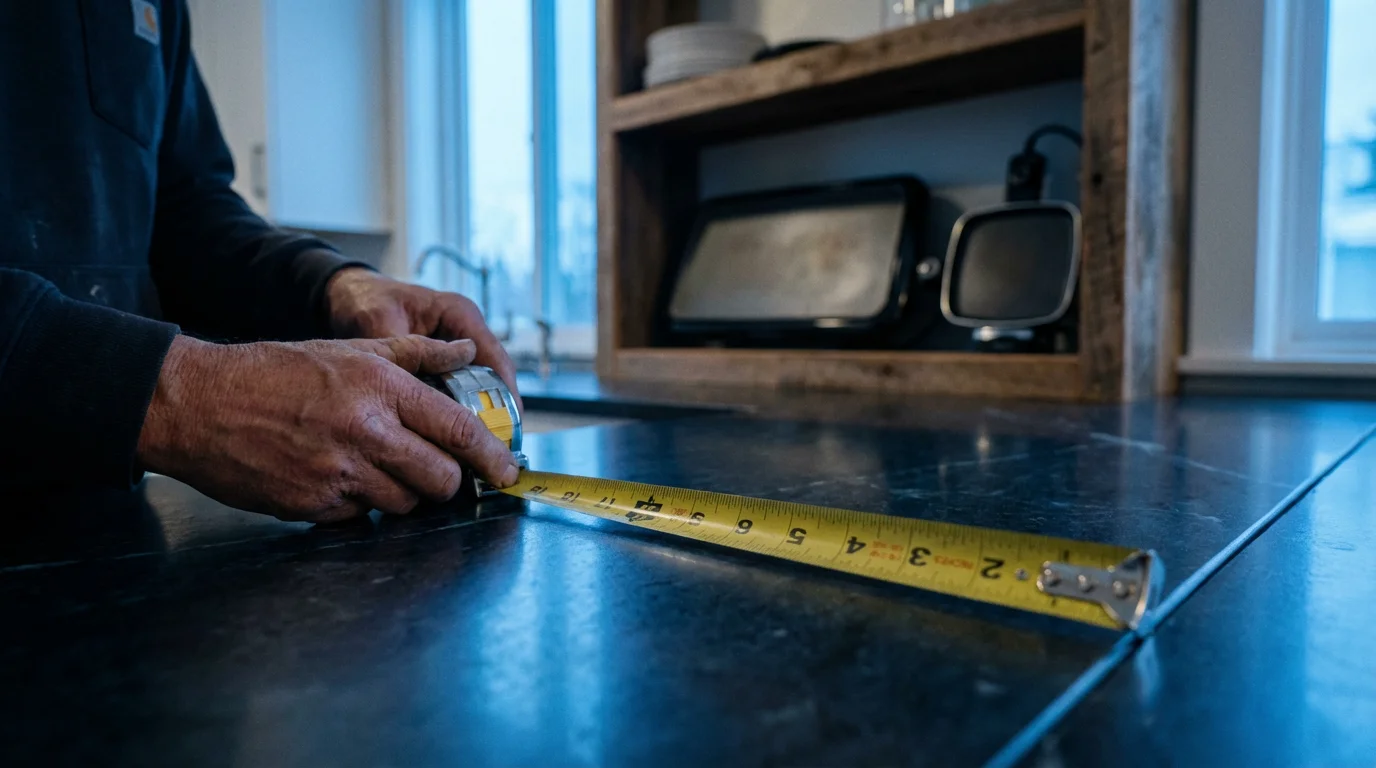
Before purchasing, measure your available counter space. A griddle’s total dimensions, including handles, can be significantly larger than its cooking surface. For instance, a 10×20 inch cooking surface might require a 12×24 inch footprint on your counter. Also, consider storage. Can it fit in a cabinet or pantry without being cumbersome? Some models offer unique features like foldable legs or vertical storage capabilities to minimize their profile when not in use.
Surface Material and Durability:
While most electric griddles use a non-stick coating, the quality and type vary. Ceramic-based non-stick coatings are gaining popularity for their enhanced durability and resistance to scratching compared to traditional PTFE (Teflon) coatings. Always check if the coating is PFOA-free for health and safety reasons. For optimal performance and ease of cleaning, look for a robust, smooth surface that heats evenly and releases food without effort.
“Counter space is premium real estate. Before you buy any appliance, ask: will I use this at least once a week? If the answer is yes for a griddle, ensure it fits your daily life, not just your cooking aspirations.” — Kitchen Designer
Essential Griddle Types: From Basic to Advanced
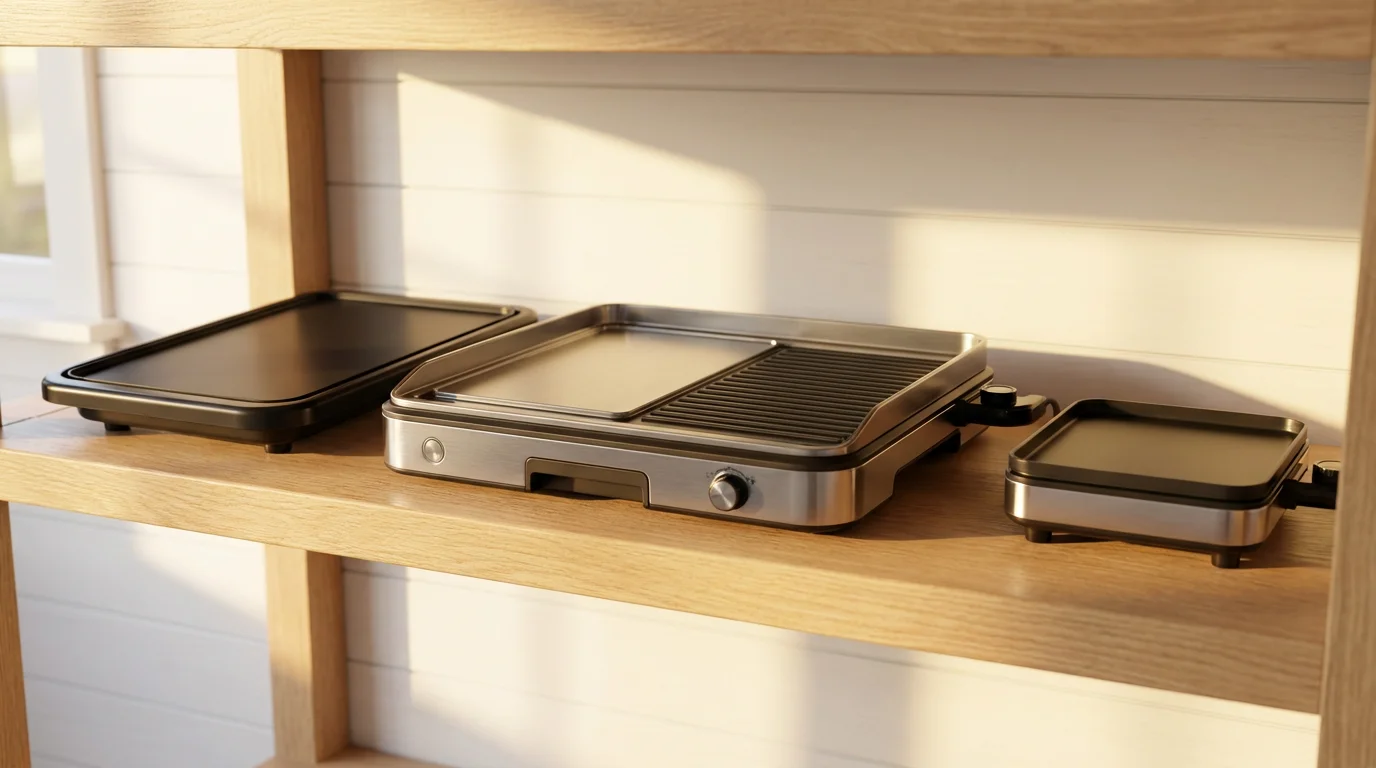
Electric griddles come in various configurations, each designed with different user needs in mind. Understanding these types helps you pinpoint the best fit for your kitchen and cooking style.
- Basic Flat-Top Griddles: This is the most common and straightforward type. It features a single, expansive flat cooking surface with integrated heating elements and a removable temperature probe. These are excellent for general breakfast cooking, offering maximum cooking area and ease of use. They are usually the most affordable and widely available.
- Griddle/Grill Combos (Reversible Plates): Some electric griddles feature interchangeable or reversible plates. One side offers a flat griddle surface, while the other provides a ridged grill surface, perfect for grilling sandwiches, burgers, or paninis indoors. This type offers versatility, effectively giving you two appliances in one, but typically has a smaller cooking area than dedicated flat-top griddles.
- Immersive or Submersible Griddles: These models feature a fully sealed heating element and control housing, allowing the entire griddle base (once the temperature probe is removed) to be submerged in water for cleaning, or even placed in a dishwasher. This design dramatically simplifies cleanup, making it a highly desirable feature for busy families.
- Specialty Griddles:
- Automatic Pour Griddles: These models simplify pancake making by measuring and dispensing batter automatically at the press of a button. While innovative, they often have a higher price point and a more complex design.
- “Cool-Touch” Base Griddles: Designed with an insulated base that remains cool to the touch during operation, enhancing safety, especially around children.
- Digital Griddles: These advanced models feature digital displays for precise temperature settings and sometimes include timers or preset programs for common foods. They offer superior temperature accuracy.
For most families focused on breakfast cooking, a basic flat-top griddle with a good non-stick surface and submersible features will provide the best balance of performance, ease of use, and value. The “pancake griddle” designation often refers to these traditional, large flat-top models.
Mastering Your Electric Griddle: Cooking Techniques and Recipes
An electric griddle excels at more than just pancakes. With proper technique, you can use your griddle for a wide array of meals, making it a truly versatile kitchen appliance.
When preparing large volumes of batter, stand mixers can be a lifesaver for ensuring a smooth, lump-free consistency before it hits the heat.
Key Techniques for Success:
- Preheating is Paramount: Always preheat your electric griddle to the desired temperature before adding food. This allows the entire surface to reach an even heat, preventing cold spots and ensuring consistent cooking. A common mistake is adding food too soon, leading to uneven browning.
- Temperature Zones: Many larger griddles naturally create subtle temperature zones, even with precise controls. You can exploit this by placing items needing higher heat (like bacon) in the hotter spots and items needing lower, gentler heat (like scrambled eggs or keeping food warm) in slightly cooler areas.
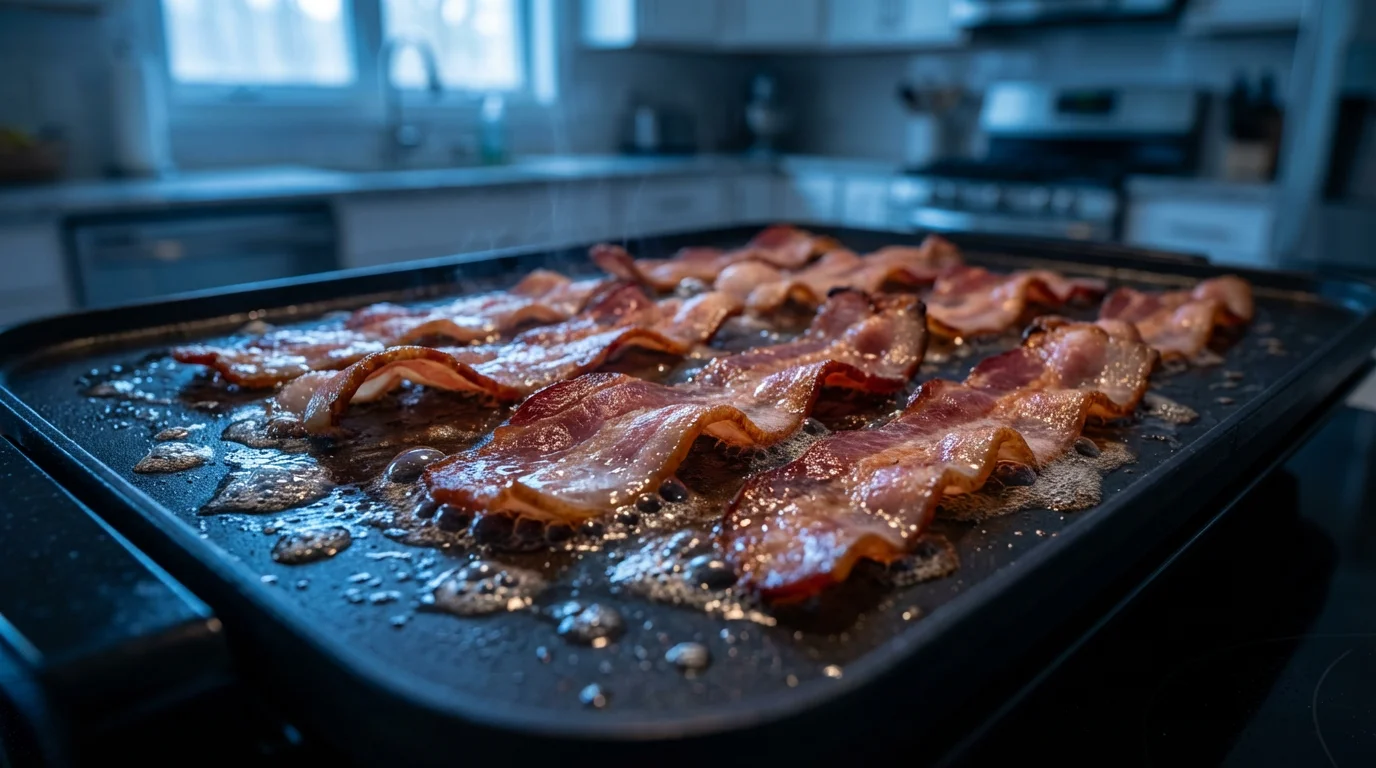
- Use the Drip Tray: Position the griddle so the drip tray can effectively collect grease. For high-fat foods like bacon, you might need to empty the tray once during cooking.
- Gentle Utensils: To protect the non-stick coating, always use silicone, wooden, or heat-safe plastic spatulas and tongs. Metal utensils can scratch and damage the surface, reducing its lifespan and non-stick properties.
How to Cook Eggs on Electric Griddle:
- Scrambled Eggs: Preheat your griddle to about 300°F (medium-low heat). Add a small amount of butter or oil. Pour beaten eggs onto the griddle. As they set, gently push the cooked portions towards the center, allowing uncooked egg to flow to the hot surface. Continue until cooked to your liking.
- Fried Eggs: Preheat to 325-350°F (medium heat). Add a touch of butter or oil. Crack eggs directly onto the griddle. Cook until the whites are set and the yolks reach your desired consistency. For over-easy eggs, carefully flip them once the whites are mostly set.
Perfect Pancakes and French Toast:
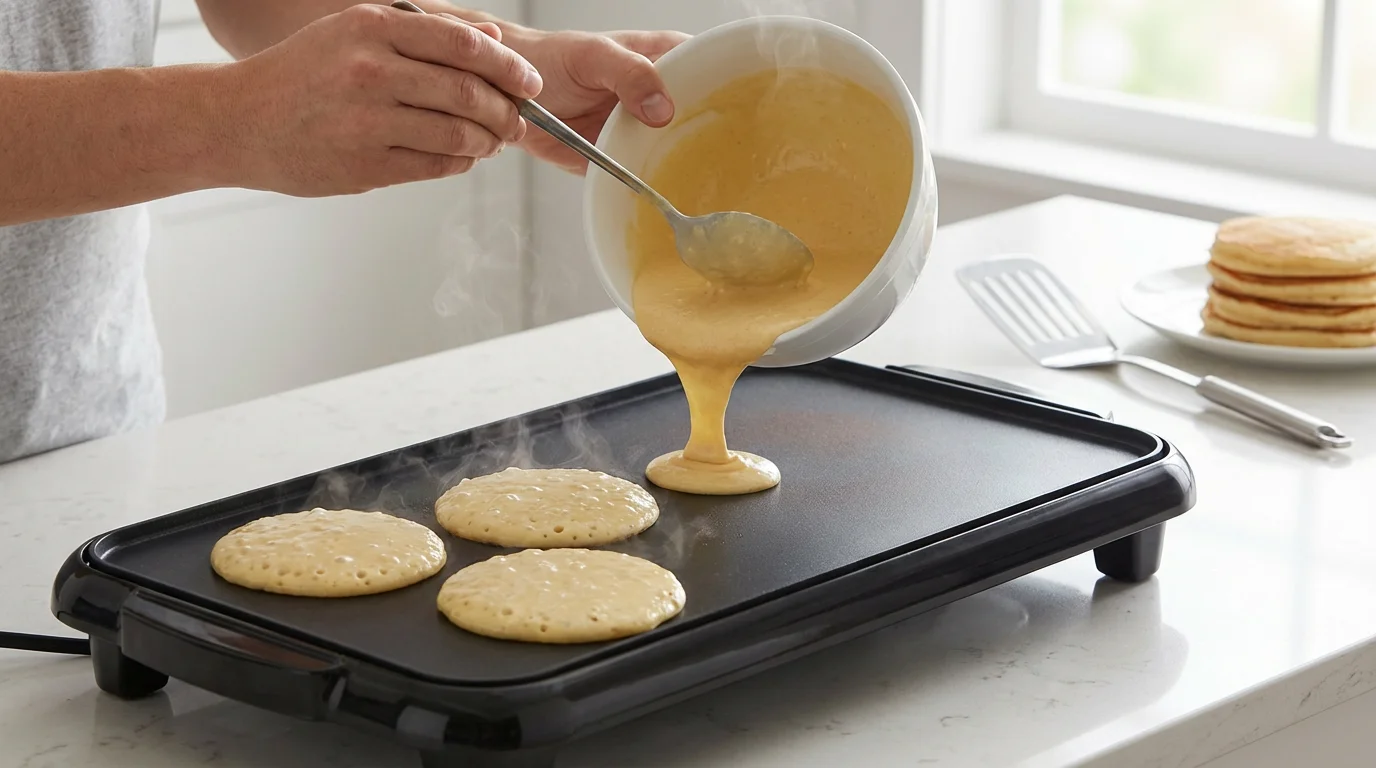
For the best electric griddle for pancakes results, preheat to 350-375°F. A good indicator that the griddle is ready for pancakes is when a drop of water sizzles and evaporates quickly, but does not immediately disappear. For pancakes, look for bubbles forming on the surface before flipping. For French toast, aim for a golden-brown crust on both sides, flipping only once to achieve this.
Beyond Breakfast:
Your electric griddle is a workhorse for other meals too:
- Grilled Sandwiches: From classic grilled cheese to gourmet paninis, a griddle delivers beautifully browned bread and melted fillings.
- Quesadillas: Quickly cook multiple quesadillas, achieving a crispy exterior and melted interior.
- Searing Meats: While not a replacement for a cast iron skillet, a griddle can sear thin cuts of meat or vegetables, producing a delicious crust.
- Stir-fries: With its open surface, a griddle can be a surprisingly effective tool for making a large batch of stir-fried vegetables.
Many electric griddles also feature a “keep warm” function, which maintains a low temperature (around 170-200°F) after cooking, ideal for holding pancakes or bacon while you finish other items or wait for family members to gather. This ensures everything is served hot.
Cleaning and Maintaining Your Griddle for Longevity
Proper cleaning and maintenance extend the life of your electric griddle, especially its non-stick coating, ensuring it remains a reliable tool for family breakfasts for years. Neglecting cleaning can lead to sticky surfaces and decreased performance.
After Each Use:
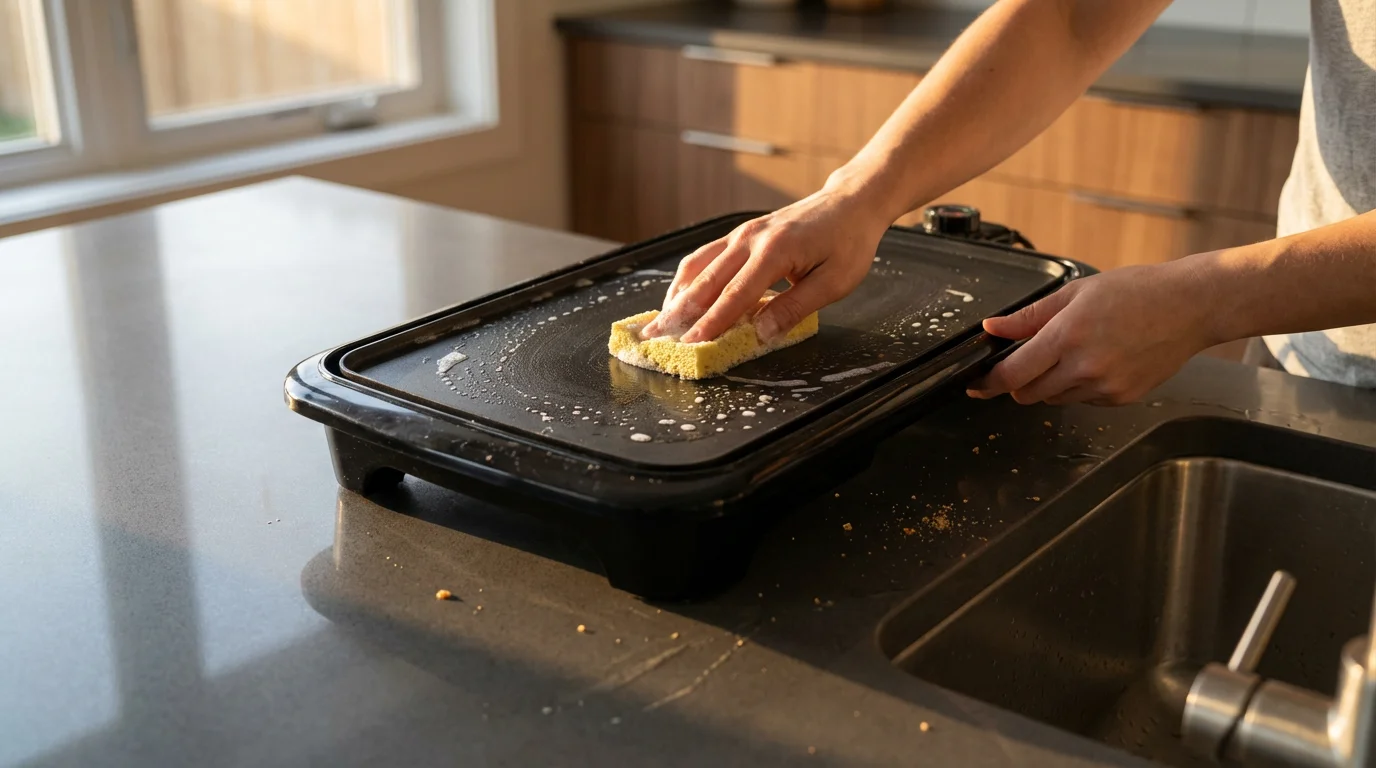
The best time to clean your griddle is immediately after cooking, once it has cooled down but is still slightly warm. This allows food residue and grease to be removed more easily.
- Scrape Residue: Use a non-abrasive spatula (silicone or plastic) to scrape off any significant food residue into the drip tray or trash.
- Wipe Down: With the griddle unplugged and cooled, use a damp cloth or paper towel to wipe down the cooking surface. For stubborn spots, a little mild dish soap can be used.
- Clean the Drip Tray: Remove and empty the drip tray. Wash it with warm, soapy water.
- Rinse and Dry: If your griddle is submersible, remove the temperature probe and either rinse it under running water or place it in the dishwasher, as directed by the manufacturer. Ensure all parts are thoroughly dried before storing to prevent water spots or mineral buildup.
For Fixed-Plate Griddles (Non-Submersible):
If your griddle is not submersible, you must clean it manually without getting the electrical components wet.
- After scraping and wiping, dampen a cloth with warm, soapy water and carefully clean the surface.
- Use a separate, clean, damp cloth to wipe off any soap residue.
- Finish by drying the surface thoroughly with a clean towel.
Common Failure Points and Durability:
The most common failure point for electric griddles is the degradation of the non-stick coating. This often occurs due to:
- Using Metal Utensils: Scratches compromise the non-stick layer.
- Abrasive Cleaners: Harsh scrubbers or cleaners can strip the coating.
- Overheating: While rare with proper temperature control, prolonged excessive heat can damage some non-stick surfaces.
To maximize durability, always follow the manufacturer’s cleaning instructions and use gentle cleaning methods. Choose models with durable non-stick coatings, as highlighted by publications like Wirecutter, to ensure your investment lasts.
Top Picks: Recommended Electric Griddles for Every Family
Choosing an electric griddle involves balancing performance, size, features, and budget. Here are some top picks that cater to different family needs and kitchen spaces, offering a range of capabilities to simplify your breakfast cooking.
| Model Name | Cooking Surface | Wattage | Dimensions (L x W x H) | Weight | Key Features | Pros | Cons |
|---|---|---|---|---|---|---|---|
| Presto 07061 22-inch Electric Griddle | 231 sq. inches (11×21 in) | 1500W | 26.5 x 12.5 x 2.5 inches | 6.5 lbs | Submersible, heavy cast aluminum base, large drip tray, low profile | Excellent heat distribution, easy to clean, affordable, lightweight | Analog temperature dial, plastic handles feel less premium |
| Cuisinart GR-4NP1 Griddler | 100 sq. inches (5×10 in, each plate) | 1500W | 13.5 x 11.5 x 7 inches | 11 lbs | 5-in-1 (contact grill, panini press, full grill, full griddle, half grill/half griddle), removable/reversible plates | Versatile, premium feel, precise temperature, compact storage | Smaller griddle surface area than dedicated models, heavier |
| Black+Decker Family-Sized Griddle | 200 sq. inches (10×20 in) | 1500W | 22 x 12 x 4 inches | 5.5 lbs | Non-stick surface, warm function, removable probe, compact design | Good value, ample space for 3-4 people, lightweight, basic functionality | Less durable non-stick coating over time, temperature can vary slightly |
| Zojirushi EA-DCC10 Gourmet Sizzler | 197 sq. inches (11.8 x 16.5 in) | 1350W | 23 x 14.5 x 4.25 inches | 13 lbs | Ceramic cooking surface, titanium-enhanced non-stick, variable temperature, lid included | Superior durability and non-stick, precise temperature control, easy to clean, lid for steaming | Higher price point, heavier, smaller cooking surface than some large models |
Best Overall for Families: Presto 07061 22-inch Electric Griddle
The Presto 07061 stands out for its generous 231 square inches of cooking space, making it an excellent pancake griddle for families of 4-6. Its heavy cast aluminum base ensures even heat distribution, powered by a robust 1500W element. The fully submersible design (with probe removed) simplifies cleanup, addressing one of the biggest pain points for griddle owners. It provides a reliable, consistent cooking experience without breaking the bank.
Best for Small Kitchens: Cuisinart GR-4NP1 Griddler
While not a traditional flat-top griddle, the Cuisinart Griddler offers exceptional versatility in a compact footprint (13.5 x 11.5 x 7 inches). Its 5-in-1 functionality means you gain a panini press, contact grill, and a smaller griddle that can serve 2-3 people. The removable, reversible plates are dishwasher-safe, making cleanup easy. If your kitchen storage is limited, this multi-functional appliance saves space by replacing several single-purpose units.
Best Value Pick: Black+Decker Family-Sized Griddle
For families seeking an affordable yet effective solution, the Black+Decker Family-Sized Griddle delivers. With 200 square inches of cooking space and 1500W of power, it handles standard breakfast duties for 3-4 people efficiently. It includes a “warm” setting, a large drip tray, and a non-stick coating, offering all the essential features at an accessible price point. While its non-stick may not be as durable as premium models, its overall performance for the cost is outstanding.
Electric Griddles vs. Other Appliances: What You Need
When you consider adding an electric griddle to your kitchen, you might wonder how it compares to or overlaps with other small appliances you already own or are considering. Understanding these distinctions helps you make an informed decision and ensures you invest in an appliance you will actually use regularly.
Electric Griddle vs. Stovetop Griddle Pan:
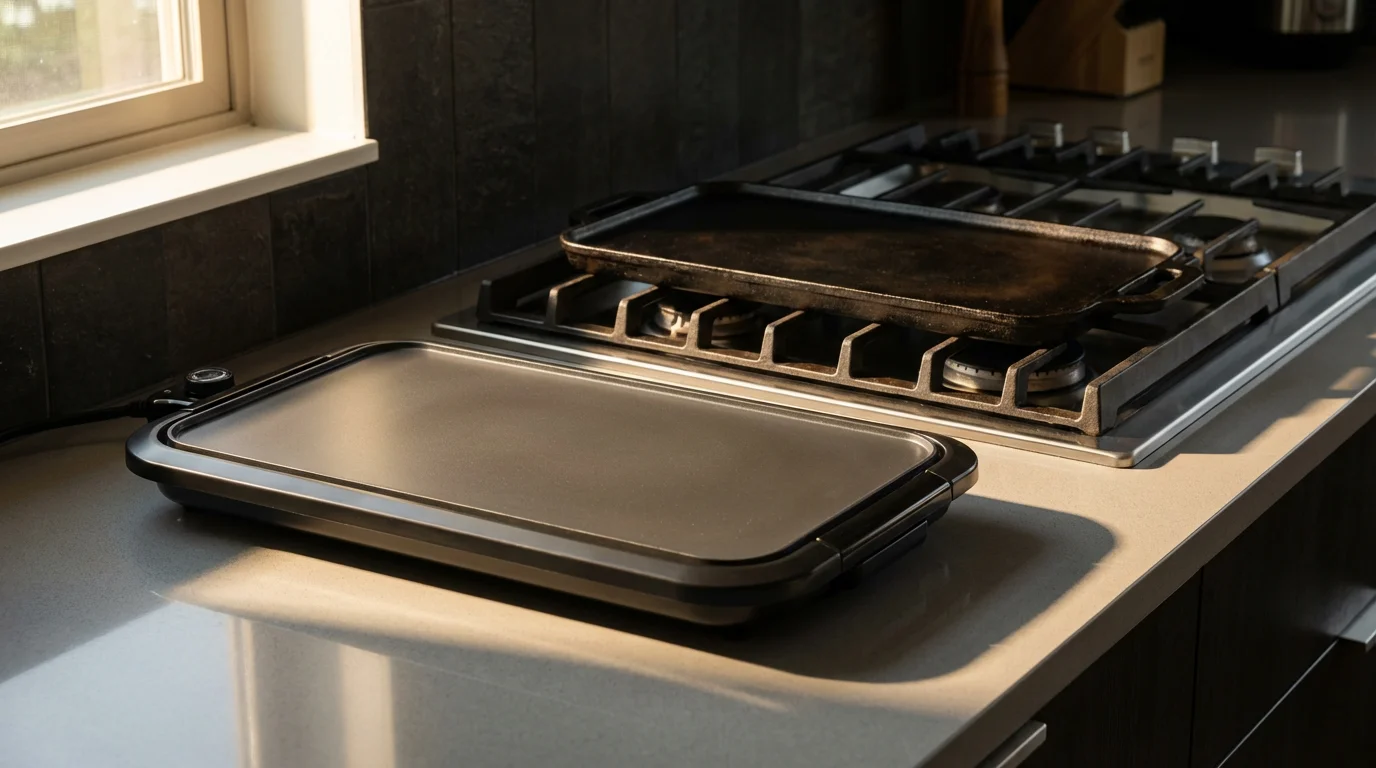
A stovetop griddle pan (often cast iron or aluminum) fits over one or two burners on your range. While effective, it suffers from inconsistent heating; hot spots directly over the burners and cooler zones elsewhere. This leads to unevenly cooked food, especially when cooking multiple items. An electric griddle, conversely, provides consistent, edge-to-edge heat thanks to its internal heating element and thermostat. It also frees up your stove burners for other tasks, like cooking sausage in a separate pan or heating syrup, making it far superior for batch cooking and precise temperature control. For extensive “how to cook eggs on electric griddle” success, the electric model wins on consistency.
Electric Griddle vs. Waffle Maker:
These two appliances serve distinct purposes. A waffle maker is specifically designed to create waffles with their characteristic grid pattern, requiring a specific batter and shape. An electric griddle, on the other hand, provides a flat surface for pancakes, French toast, eggs, bacon, and grilled sandwiches. While you can make “silver dollar” pancakes on a griddle, you cannot make traditional waffles. If waffles are a family staple, a dedicated waffle maker is essential. If versatile, flat-surface cooking for a crowd is your priority, the griddle is the clear choice.
Electric Griddle vs. Toaster Oven:
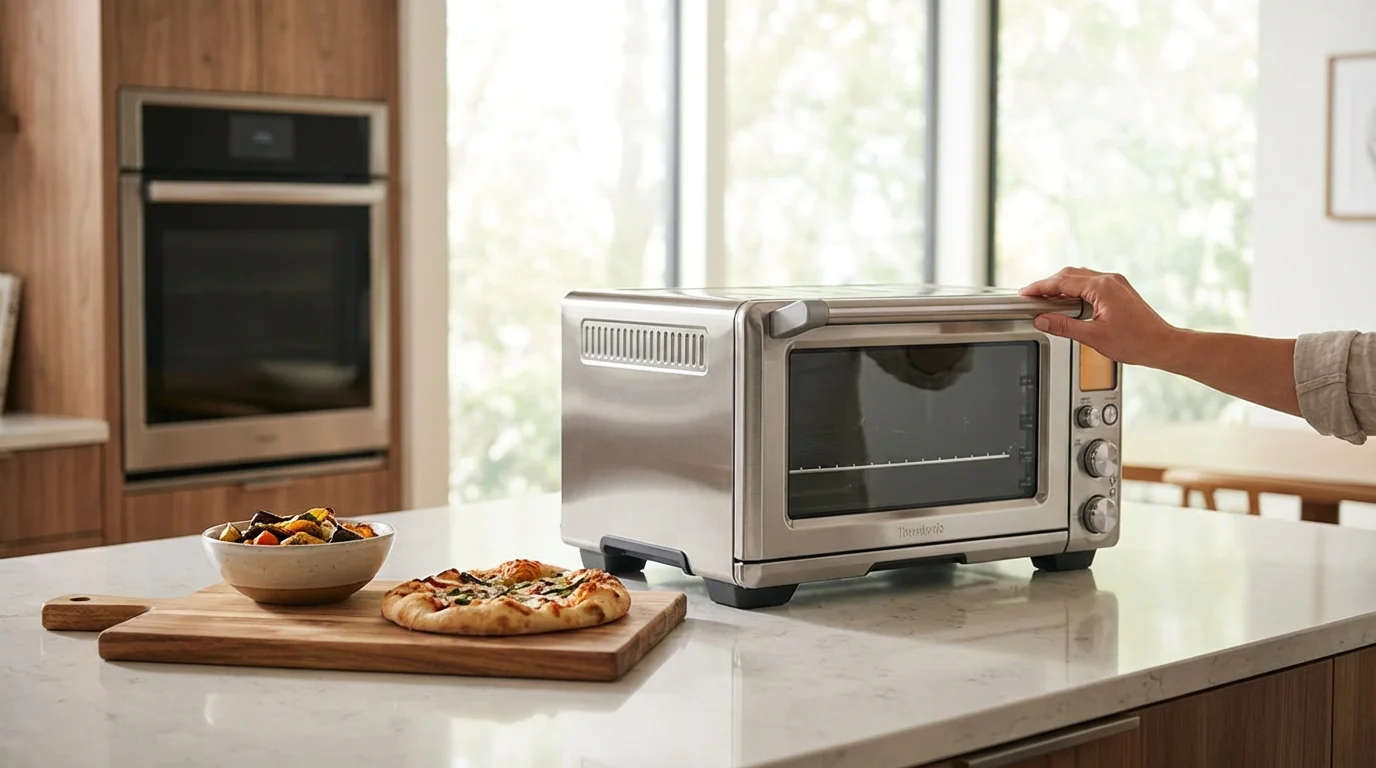
An electric griddle and a toaster oven are complementary appliances, not substitutes. A toaster oven excels at baking, toasting, roasting small items, and reheating. It uses enclosed heat to cook from all sides. A griddle uses direct, open-surface heat for flat cooking. You would use a toaster oven to toast bread or bake pastries, and your electric griddle to cook pancakes and bacon. They fulfill different roles in the kitchen, and many families benefit from having both.
Your choice depends on your cooking style. If you frequently make large breakfasts, need consistent heat for pancakes, or want to cook multiple items simultaneously, an electric griddle is an invaluable addition. It excels at specific tasks that other appliances cannot replicate with the same efficiency and quality, making it a worthy investment for family meal preparation.
Frequently Asked Questions
Can I cook anything other than breakfast on an electric griddle?
Absolutely! An electric griddle is surprisingly versatile. You can use it to prepare grilled cheese sandwiches, quesadillas, paninis, burgers, sausages, stir-fried vegetables, and even sear thin cuts of meat. Its large, flat surface and consistent heat make it suitable for many lunch and dinner applications.
How do I prevent food from sticking to my electric griddle?
To prevent sticking, always preheat your griddle thoroughly to the correct temperature before adding food. Most modern electric griddles feature a non-stick coating; however, a thin layer of cooking oil or butter can further enhance food release. Avoid using metal utensils which can scratch the coating, reducing its non-stick effectiveness over time.
Are electric griddles energy efficient?
Compared to heating multiple pans on a stovetop, an electric griddle can be more energy efficient for large-batch cooking. They typically use between 1200W and 1800W. Their enclosed heating element and thermostat control ensure heat is concentrated on the cooking surface, minimizing wasted energy. For daily-use appliances, their efficiency is generally good for the volume of food they produce.
What is the ideal temperature for cooking pancakes?
The ideal temperature for cooking pancakes on an electric griddle is typically between 350°F and 375°F. This range allows the pancakes to cook through evenly, achieving a golden-brown exterior without burning. A good test is to drop a small amount of water on the griddle; it should sizzle and evaporate quickly, but not immediately disappear.
How do I store a large electric griddle in a small kitchen?
For small kitchens, look for electric griddle models designed with a low profile that allows for easier vertical storage in a cabinet or pantry. Some innovative designs feature foldable legs or bases that reduce their footprint. Measuring your available cabinet space before purchasing is crucial to ensure a good fit.
Disclaimer: Product prices, features, and availability change frequently. Prices shown were accurate at time of writing but may have changed. We may earn a small commission from purchases made through links on this site, at no extra cost to you. Always verify current pricing and specifications on the retailer’s website before purchasing.

Leave a Reply