
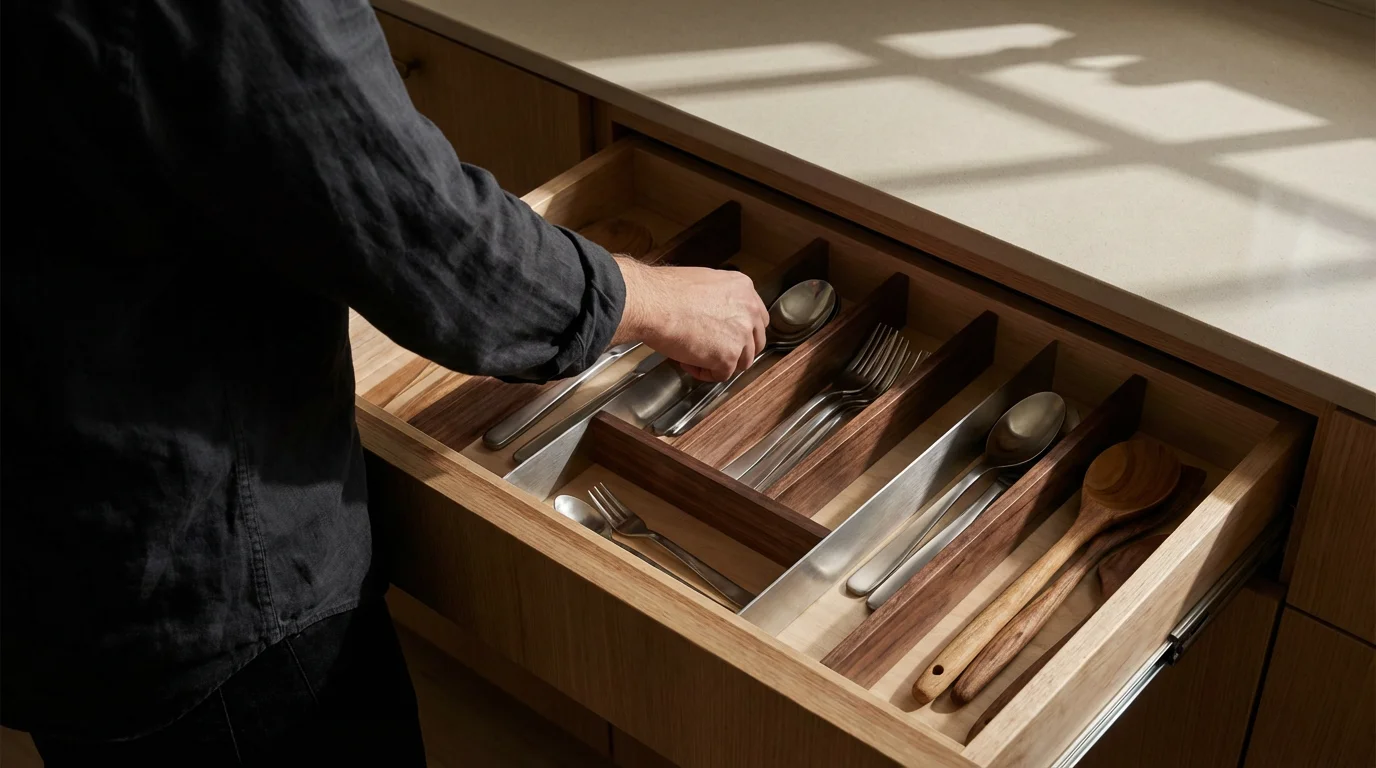
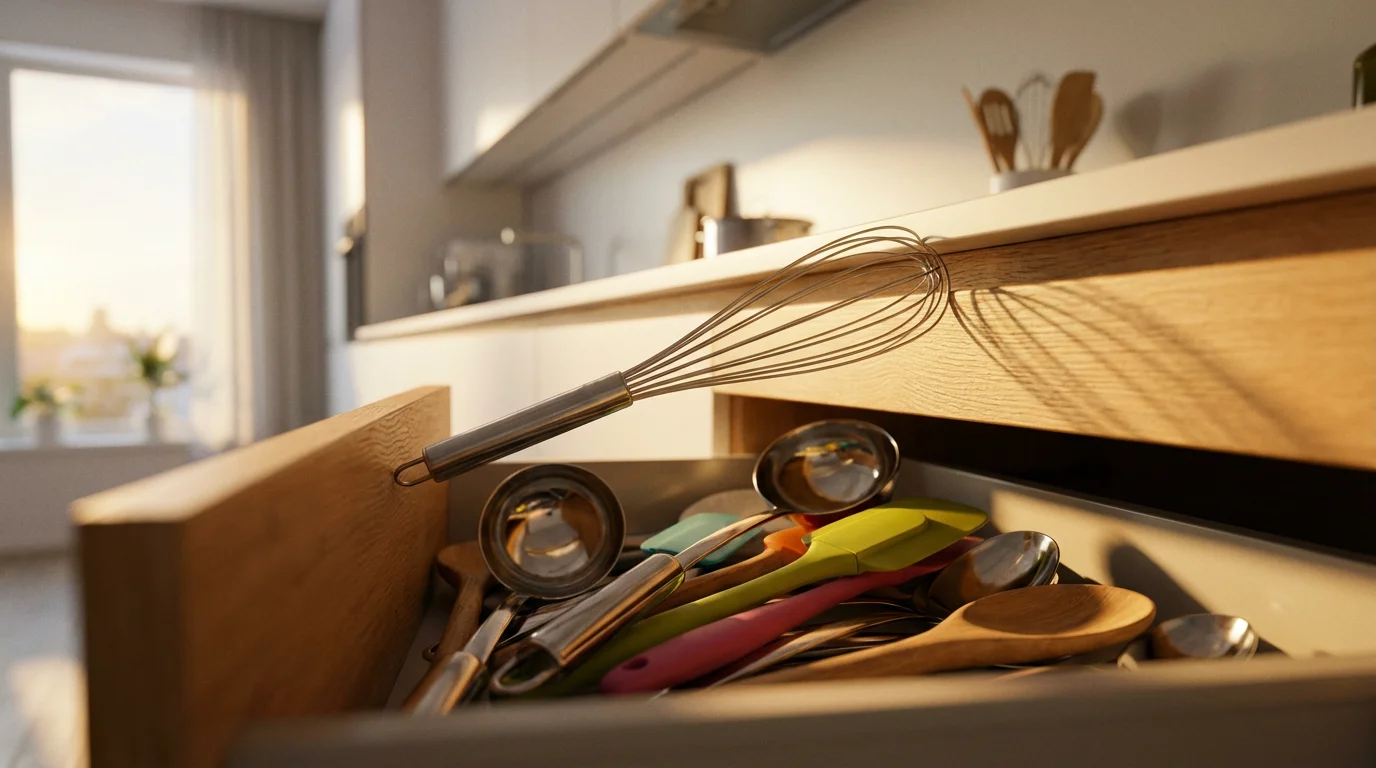
A cluttered kitchen drawer frustrates even the most patient home cook. The search for a specific spatula amidst a jumble of spoons and whisks wastes precious time and adds unnecessary stress to your cooking routine. If your kitchen drawers resemble a battleground of misplaced gadgets, you are not alone. Many home cooks in the USA face the challenge of limited space and an ever-growing collection of kitchen tools. Transforming that chaos into calm starts with smart storage solutions, especially for your frequently used utensils.
This article guides you through selecting and implementing the best drawer organizers to maximize your kitchen space, specifically focusing on your cutlery and cooking tools. We offer practical, actionable insights to help you create a highly functional kitchen, even without expensive renovations. You will discover how simple organizers can bring order and efficiency to your everyday cooking.
Why a Tidy Utensil Drawer Matters
An organized utensil drawer does more than just look good. It dramatically improves your kitchen’s functionality and hygiene. Imagine grabbing the exact measuring spoon you need in seconds, or never again struggling to close a drawer because items are jammed. This efficiency reduces cooking time and eliminates frustrating searches.
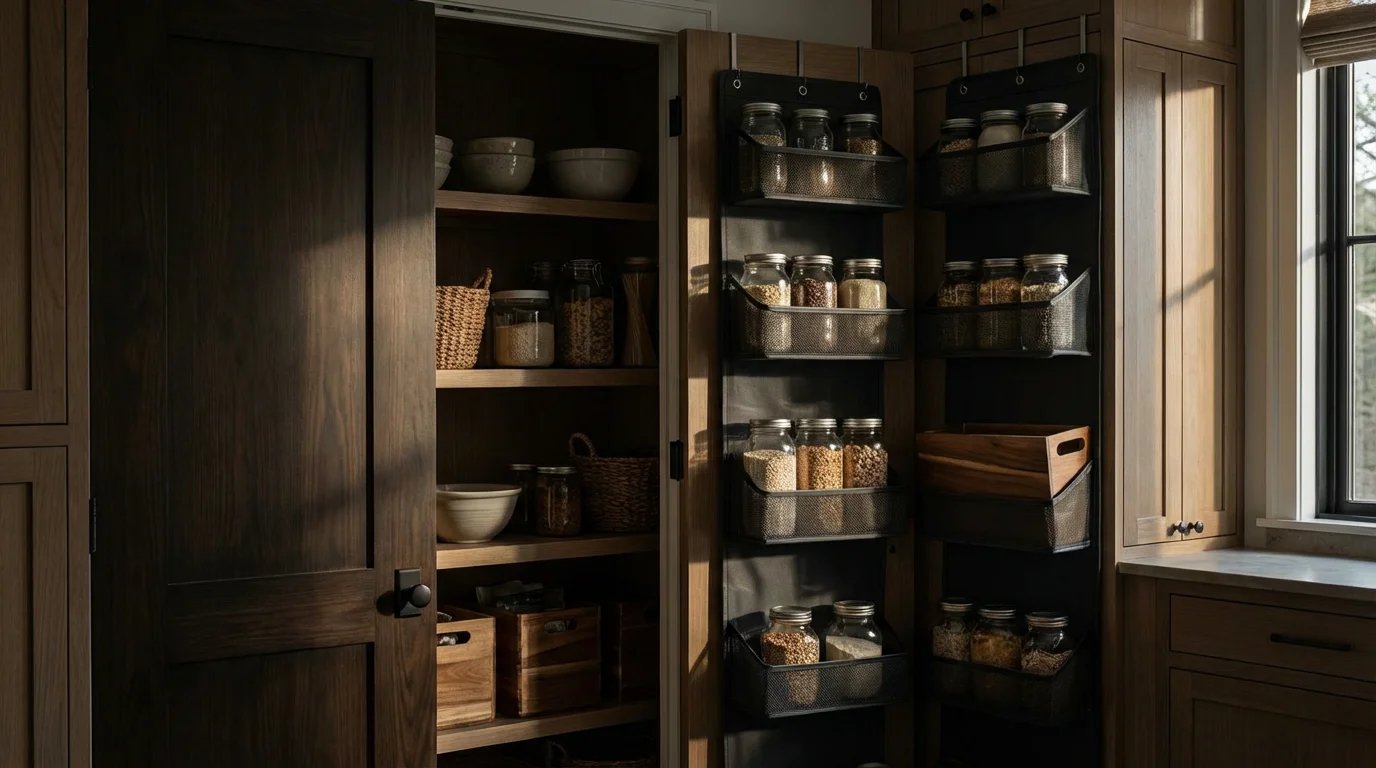
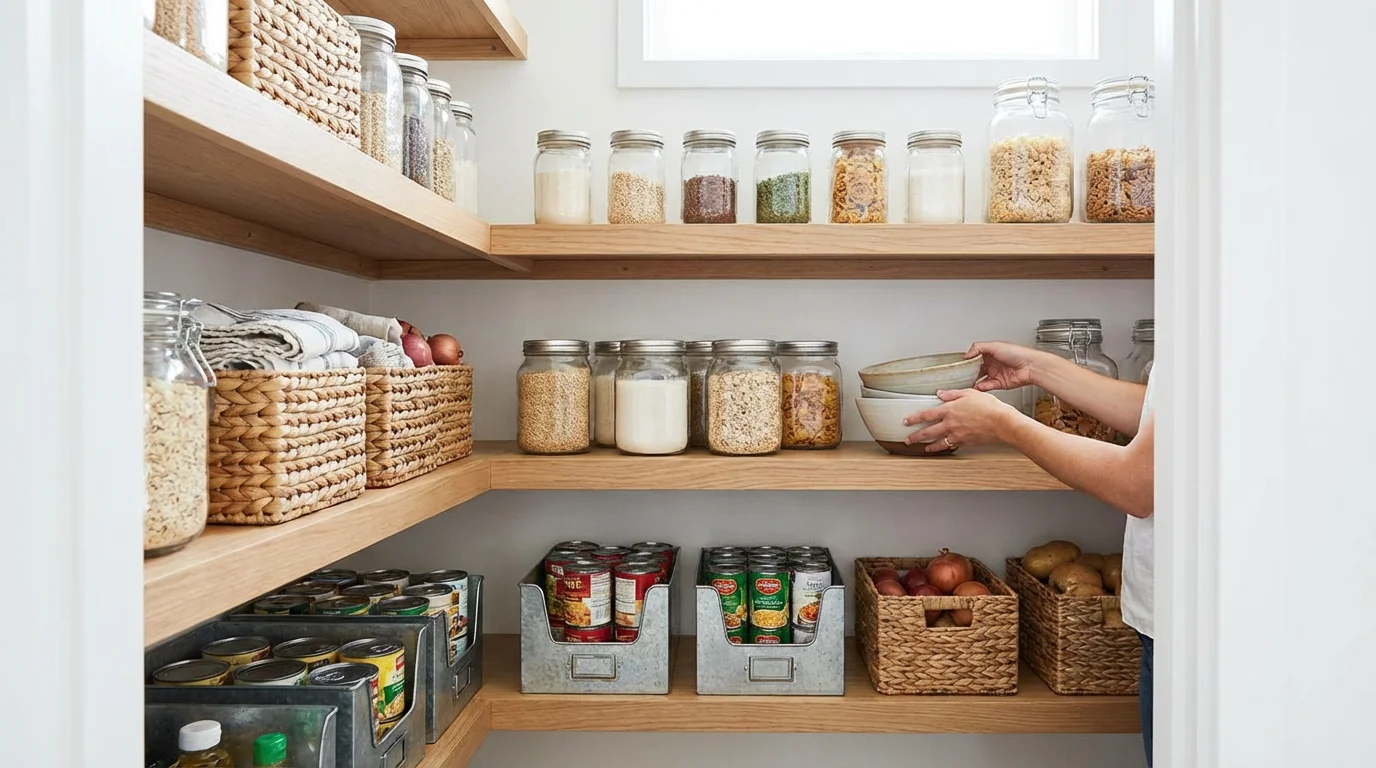
Beyond drawers, implementing pantry organization ideas that actually work can further reduce clutter throughout your entire kitchen.
Furthermore, proper organization protects your utensils. Sharp knives banging against delicate silicone spatulas can dull blades and damage coatings. A dedicated space for each item extends its lifespan. From a cleanliness standpoint, a tidy drawer allows for easier cleaning, preventing crumbs and debris from accumulating beneath a messy pile of tools. Kitchen drawer organization is a foundational step toward a more enjoyable and efficient cooking experience.
Assess Your Utensil Inventory and Drawer Space
Before you purchase any `drawer organizer`, you must first understand what you need to organize and the space you have available. This crucial assessment phase prevents wasted money and ensures a perfect fit for your `kitchen drawer`.
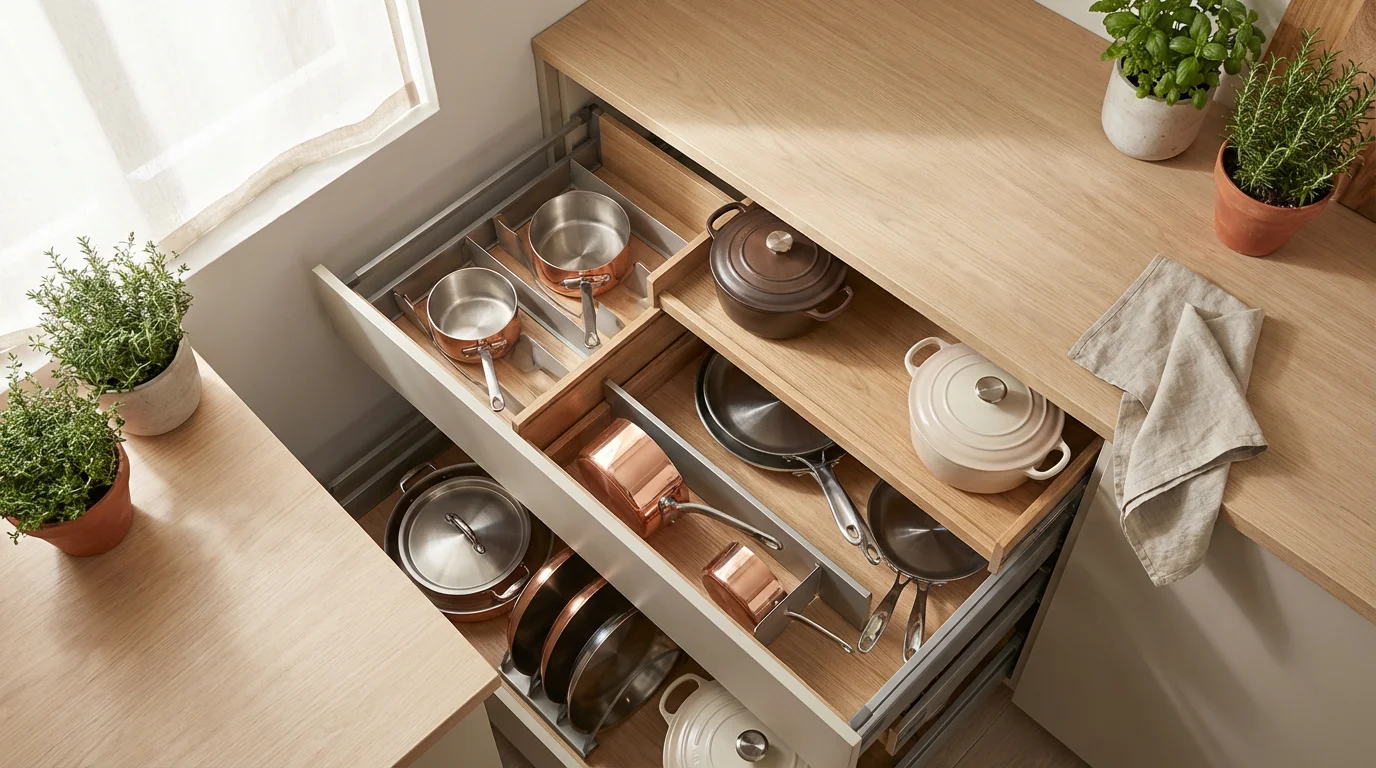
If your deep drawers are full, you might also benefit from specialized cabinet organizers for pots and pans to streamline your larger cookware.
Step 1: Declutter Ruthlessly
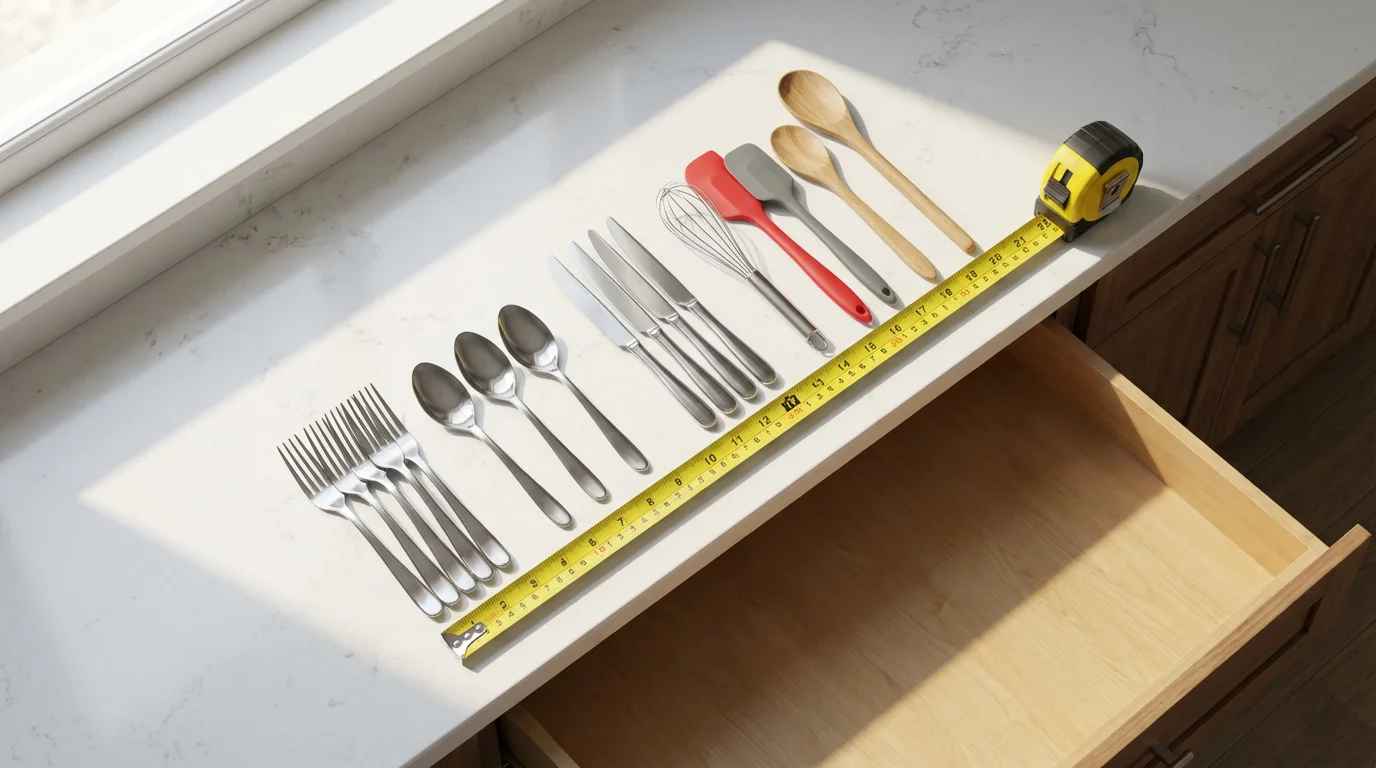
Pull everything out of your utensil drawers. Lay all items on your countertop. Now, critically evaluate each piece:
- Duplicates: Do you really need five identical spatulas? Keep only the best one or two.
- Broken or Damaged Items: Discard anything that is broken, melted, or otherwise unusable.
- Rarely Used Gadgets: If you use a specialized gadget once a year, consider if it belongs in a primary utensil drawer or if it can live in a less-accessible cabinet or a dedicated storage bin elsewhere.
- “Dead space”: This refers to unused storage areas. In drawers, it means areas where items shift or spaces remain empty around fixed organizers. When you declutter, you free up this dead space.
Be honest about what you truly use. According to Good Housekeeping’s home organization tips, a significant step in organizing any space involves purging items you no longer need or use. This step lightens your load and clarifies your actual storage needs.
Step 2: Measure Your Drawers Accurately
With a measuring tape, record the internal dimensions of your kitchen drawers. Measure:
- Width: From inside wall to inside wall.
- Depth: From the front of the drawer box to the back wall.
- Height: From the bottom of the drawer to the top edge (or the underside of the countertop/next drawer).
Standard kitchen drawers typically range from 18 to 24 inches wide, 21 to 24 inches deep, and 3 to 6 inches high. However, variations exist, particularly in older homes or custom kitchens. Knowing your exact measurements is paramount for selecting a `utensil tray` that fits snugly and maximizes space without sliding around. Write these measurements down and keep them handy when shopping.
Types of Utensil Drawer Organizers: A Comparison
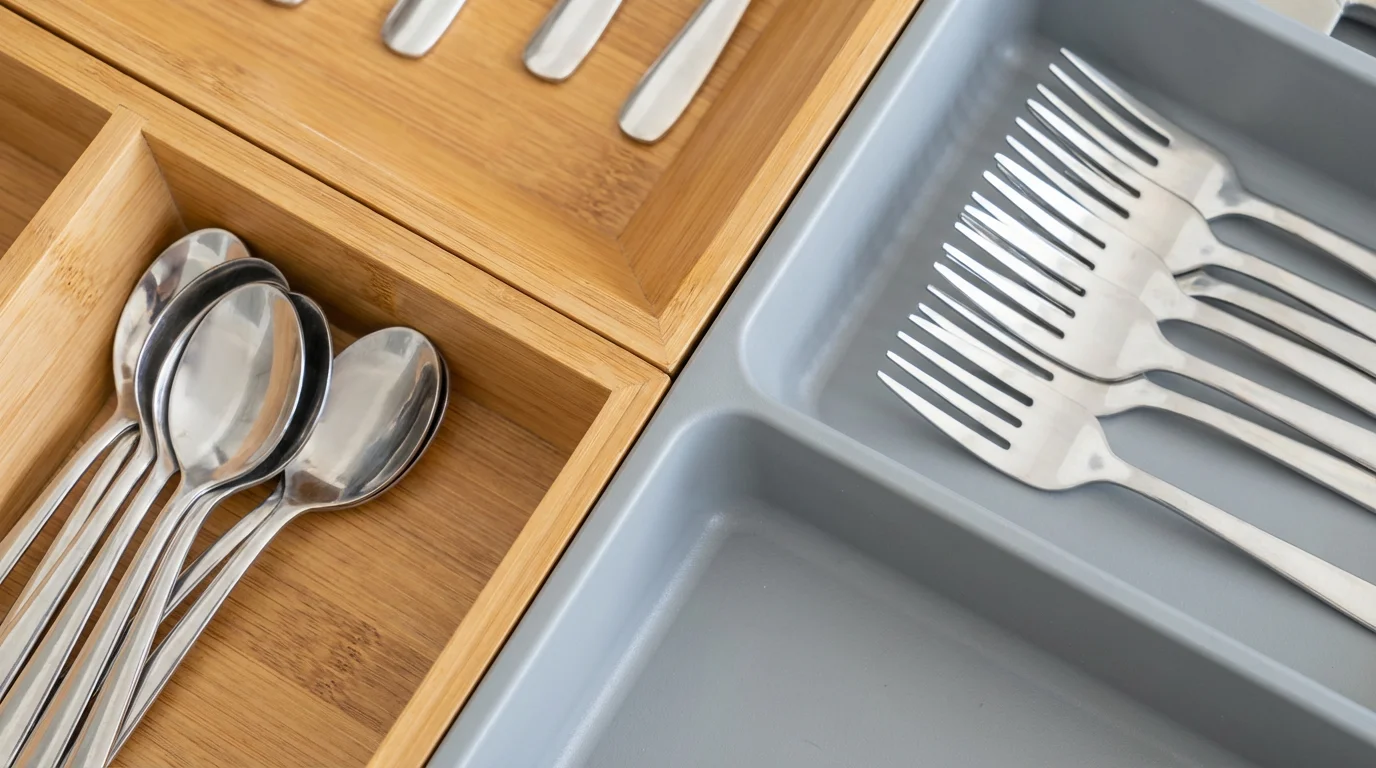
The market offers a wide array of options for organizing your kitchen utensils. Each type comes with its own advantages and disadvantages. Your choice depends on your drawer dimensions, the volume and variety of your utensils, and your budget. Here, we compare the most popular `drawer organizer` solutions.
| Organizer Type | Description | Pros | Cons | Ideal For |
|---|---|---|---|---|
| Fixed Plastic/Bamboo Trays | Pre-segmented trays, often with 5-7 compartments. Common sizes: 10-14 inches wide, 14-18 inches deep, 2-3 inches high. | Affordable, easy to clean, readily available, provides immediate structure. Bamboo options are durable and aesthetically pleasing. | Not adjustable, may leave gaps in larger drawers, compartments are fixed sizes and might not suit all utensils. | Those with standard-sized drawers and a consistent set of utensils. Excellent for basic cutlery sets. |
| Expandable Inserts | Features sliding sides that extend the organizer’s width to fit various drawer sizes. Expands typically from 12-18 inches to 20-24 inches wide. | Offers a custom fit, maximizes drawer width, often made from durable bamboo or plastic. Many feature additional compartments when expanded. | Can be pricier than fixed trays, expansion mechanism might loosen over time, requires careful measurement to ensure full expansion is possible. | Individuals with non-standard drawer widths or those wanting a more tailored fit without permanent installation. |
| Modular Drawer Dividers | Separate pieces (plastic, bamboo, or tension-spring dividers) that you arrange and configure yourself within the drawer. Define “modular”: pieces that can be combined and configured different ways. | Highly customizable, allows for unique compartment sizes to fit specific tools, adaptable as your utensil collection changes. Great for oversized tools. | Requires more effort to set up and configure initially, individual dividers can shift if not secured, can be more expensive per piece. | Home cooks with diverse utensil collections, oddly shaped drawers, or a preference for complete control over layout. |
| Tiered/Stacked Organizers | Features multiple levels or angled trays that allow utensils to overlap vertically. “Stackable” means designed to safely pile on top of each other. Often 4-6 inches high, fitting into deeper drawers. | Maximizes vertical space in deeper drawers, excellent for small kitchens where horizontal space is limited, allows for more items in one footprint. | Requires a minimum drawer height (usually 4 inches or more), can make some items harder to see or access on lower tiers, might not be suitable for very long utensils. | Those with deep kitchen drawers needing to store a high volume of items, especially useful for knives or measuring spoons. |
| In-Drawer Knife Blocks | Blocks with slots designed specifically to hold knives horizontally within a drawer, protecting blades and fingers. Typically 8-16 inches long, 4-8 inches wide. | Safely stores sharp knives, protects blade edges, keeps knives readily accessible but out of sight, frees up countertop space. | Takes up significant drawer real estate, only suitable for knives, may not fit all knife handle types. | Anyone prioritizing knife safety and seeking to declutter countertops. |
“The true measure of a well-organized kitchen drawer is not its aesthetic perfection, but how quickly and effortlessly you can find the tool you need when you are actively cooking.” — Professional Organizer
For individuals wondering `how to organize messy utensil drawer` effectively, starting with an assessment and then choosing the right organizer type is paramount. Each option provides a distinct approach to compartmentalization, addressing different needs in your kitchen.
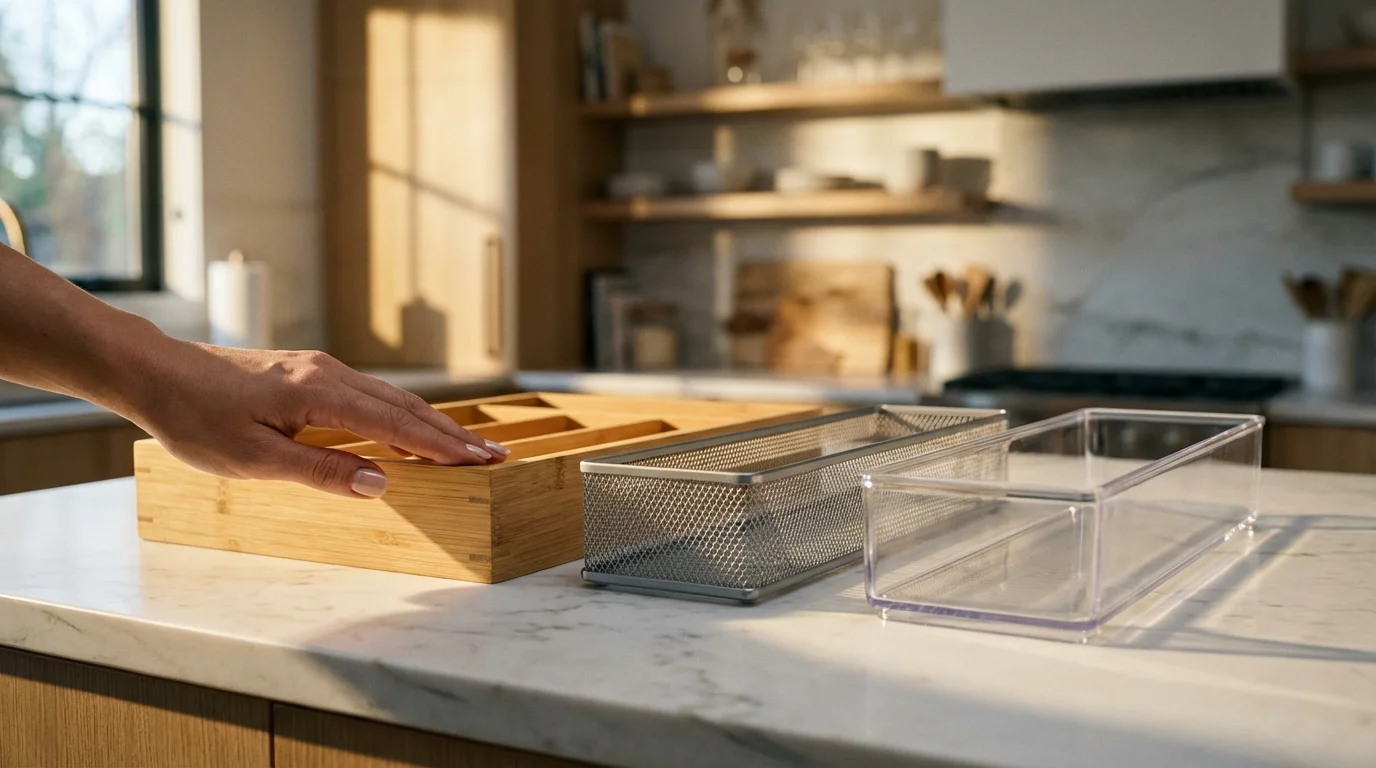
Choosing the Best Material for Your Kitchen Drawer Organizer
The material of your `utensil tray` impacts its durability, appearance, ease of cleaning, and price point. Consider these popular options:
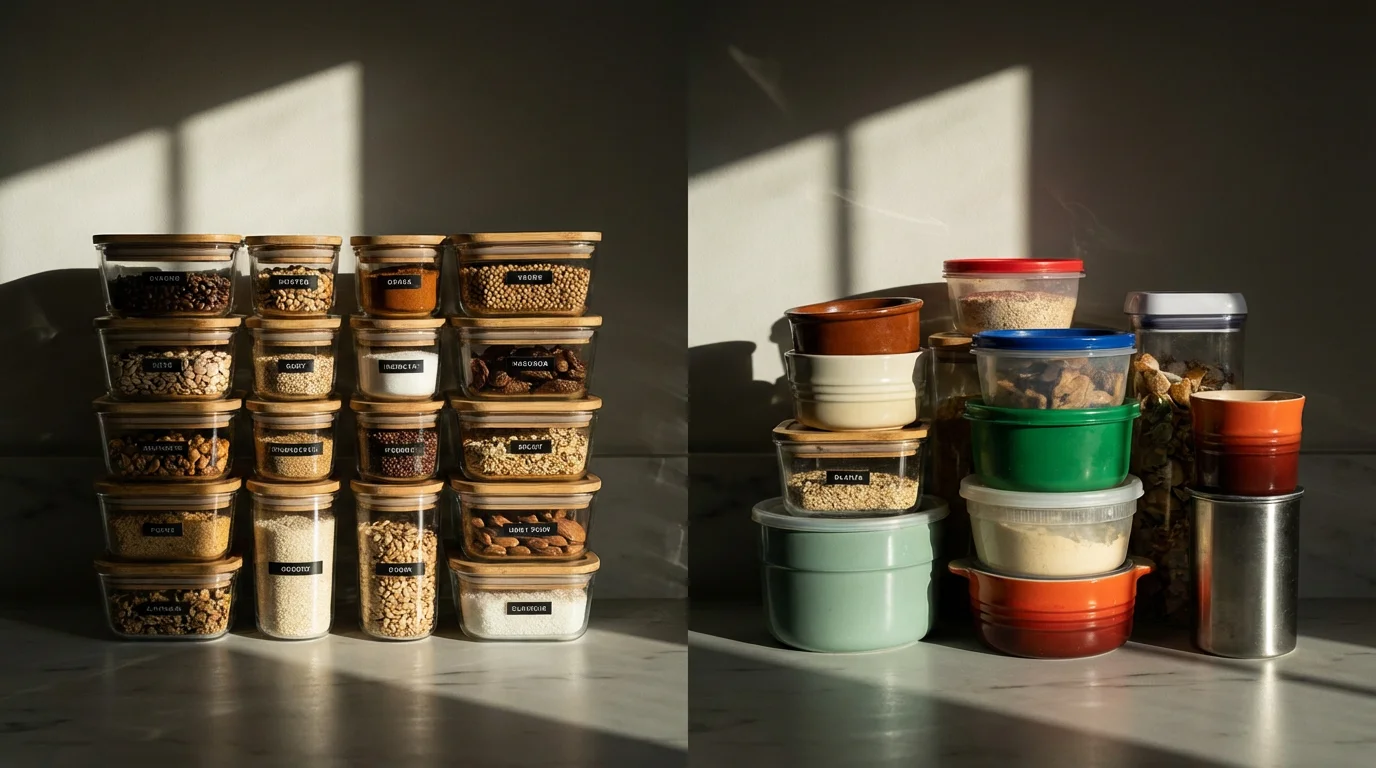
Just as you select drawer inserts, choosing the right food storage containers helps maintain order inside your cabinets and fridge.
Bamboo
- Pros: Eco-friendly, highly durable, water-resistant (when sealed), attractive natural aesthetic, often expandable. Bamboo is a sustainable resource and lends a warm, natural look to your drawers.
- Cons: Can be more expensive than plastic, may require occasional oiling to maintain luster, can warp if exposed to excessive moisture over time.
- Ideal For: Homeowners seeking a premium, durable, and stylish solution.
Plastic
- Pros: Most affordable, lightweight, easy to clean (often dishwasher safe), available in a wide range of colors and configurations, excellent for wet utensils.
- Cons: Can be less durable than wood or bamboo, prone to scratching, some cheaper plastics may stain or crack over time.
- Ideal For: Budget-conscious organizers, renters who need versatile and non-permanent solutions, or those prioritizing easy maintenance.
Wood (Hardwood)
- Pros: Very sturdy, elegant appearance, long-lasting, often comes in fixed, high-quality constructions.
- Cons: Generally the most expensive option, heavy, not as water-resistant as sealed bamboo or plastic, typically fixed sizes with less flexibility.
- Ideal For: Luxury kitchens, custom-built drawers, or those prioritizing longevity and a sophisticated look.
Mesh or Metal
- Pros: Modern aesthetic, good air circulation (prevents dust/crumbs build-up), lightweight, durable for specific uses.
- Cons: Can sometimes scratch the inside of drawers (use drawer liners), mesh can allow small items to fall through, potential for rust if not properly coated.
- Ideal For: Industrial or modern kitchen styles, or specific tool organization where airflow is beneficial.
As Wirecutter’s reviews on kitchen organization often highlight, the “best” material depends heavily on individual needs, aesthetic preferences, and how much wear and tear your organizers will endure daily. You will find that many `best kitchen drawer organizer for utensils` options are available across these material types, allowing you to match your style and needs.
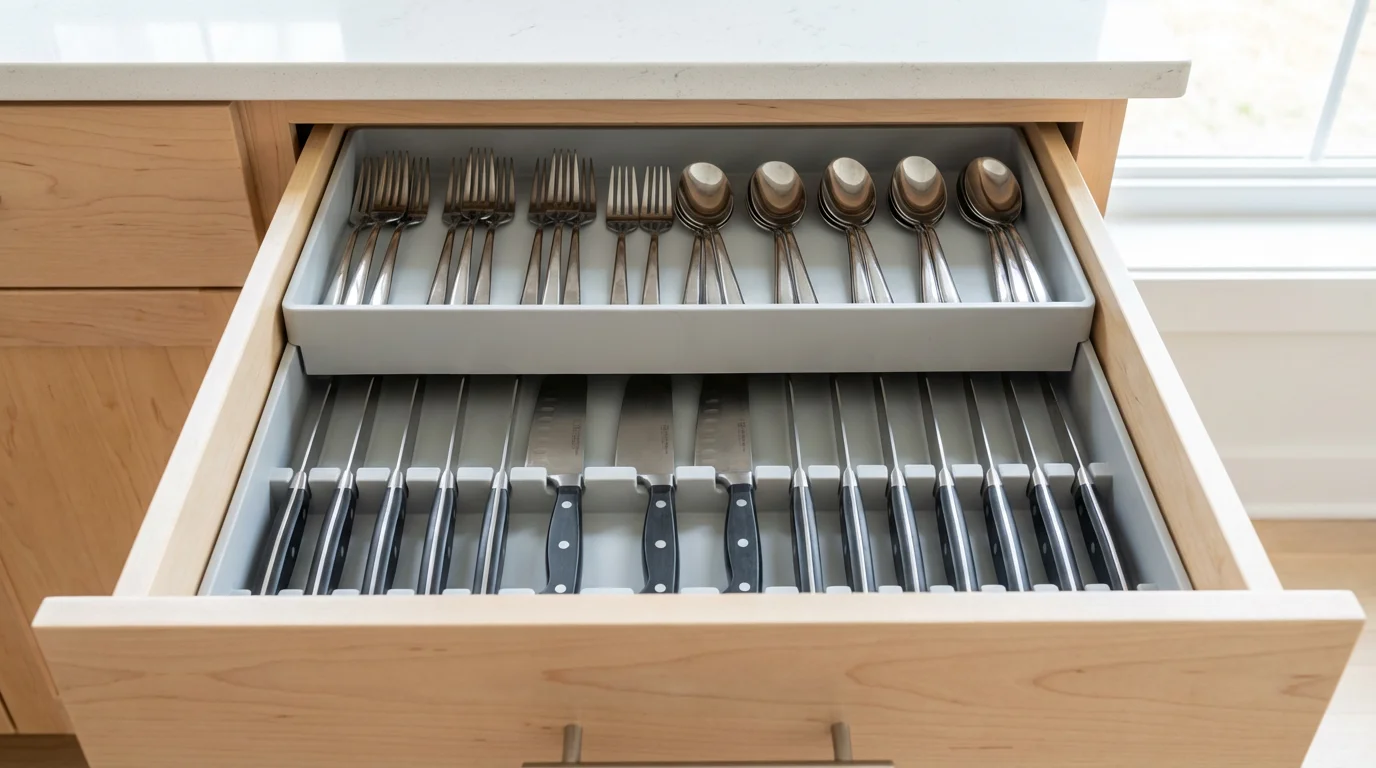
Smart Solutions for Maximizing Limited Drawer Space
If you have a small kitchen or drawers that feel perpetually full, maximizing every inch becomes crucial. These strategies help you get the most out of your existing `kitchen drawer` space:
Go Vertical with Tiered Organizers
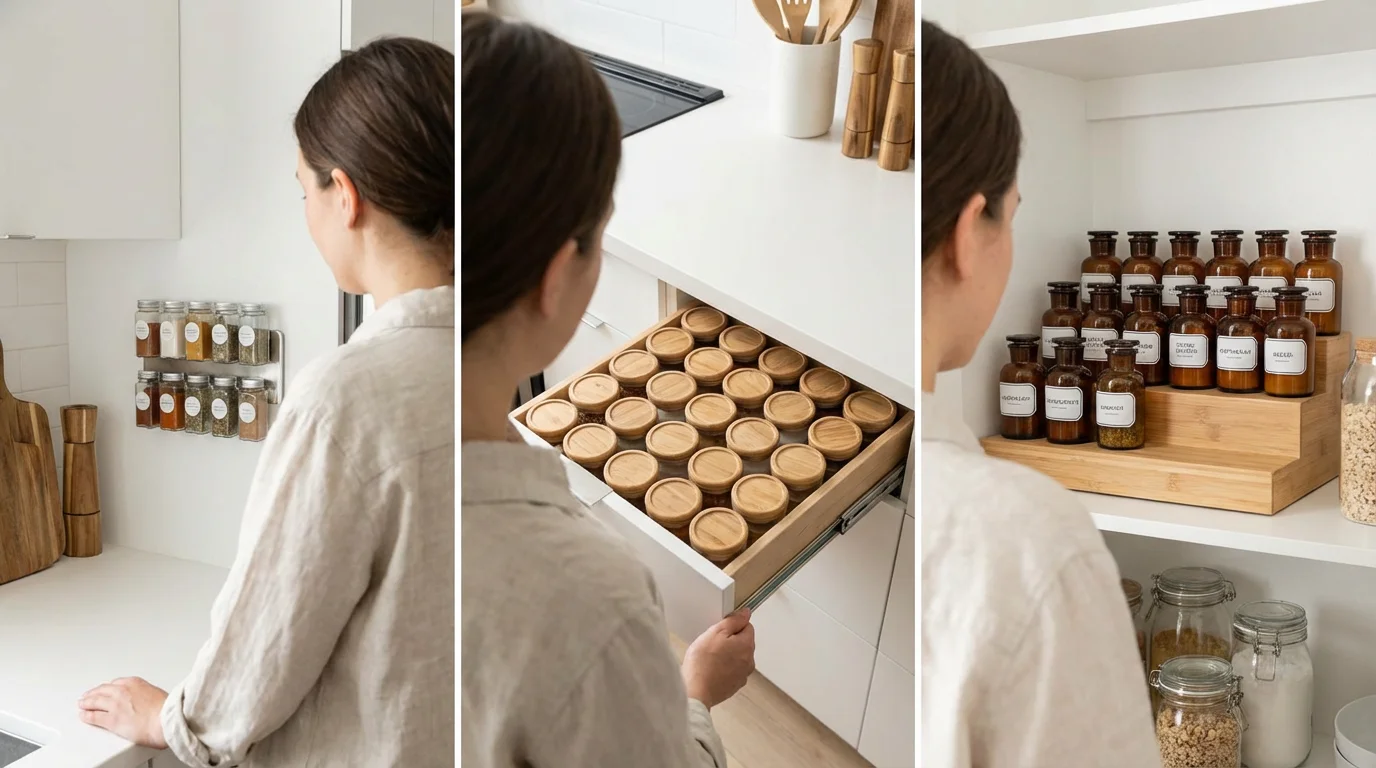
Tiered or stacked organizers utilize the vertical height of your drawers. For instance, a tiered spice rack or an angled utensil insert can hold double the amount of items in the same footprint. These work wonderfully for shallower items like measuring spoons, small spatulas, or even a collection of steak knives. Look for options that are 4-6 inches high to fit most standard deeper drawers without obstruction.
Embrace Slim-Profile and Compact Designs
Manufacturers design many organizers specifically for efficiency. Look for `utensil tray` options with thinner walls or overlapping compartments. For example, some compact cutlery organizers stack knives, forks, and spoons at an angle, reducing the horizontal space needed for a full set by up to 50%.
Utilize Modular Dividers for Custom Fits
Modular drawer dividers offer unparalleled flexibility. Instead of forcing your items into pre-defined slots, you create custom compartments. This is especially beneficial for uniquely shaped gadgets or longer utensils that do not fit standard trays. You can adjust them to fit perfectly around larger tools, eliminating “dead space” and ensuring every item has its own designated spot. This is a top strategy for `how to organize messy utensil drawer` dilemmas when conventional trays fail.
Zone-Based Organization
Implement zone-based organization by grouping items according to your cooking workflow. For example:
- Baking Zone: Spatulas, whisks, measuring cups, and spoons in one drawer.
- Cooking Zone: Ladles, tongs, serving spoons, and turners in another drawer near the stove.
- Eating Zone: Everyday cutlery in a drawer close to your dining area.
This strategy ensures that the tools you need most often are always within arm’s reach for specific tasks, streamlining your kitchen operations. Organizing by zones reduces the mental load of searching and makes putting things away intuitive.
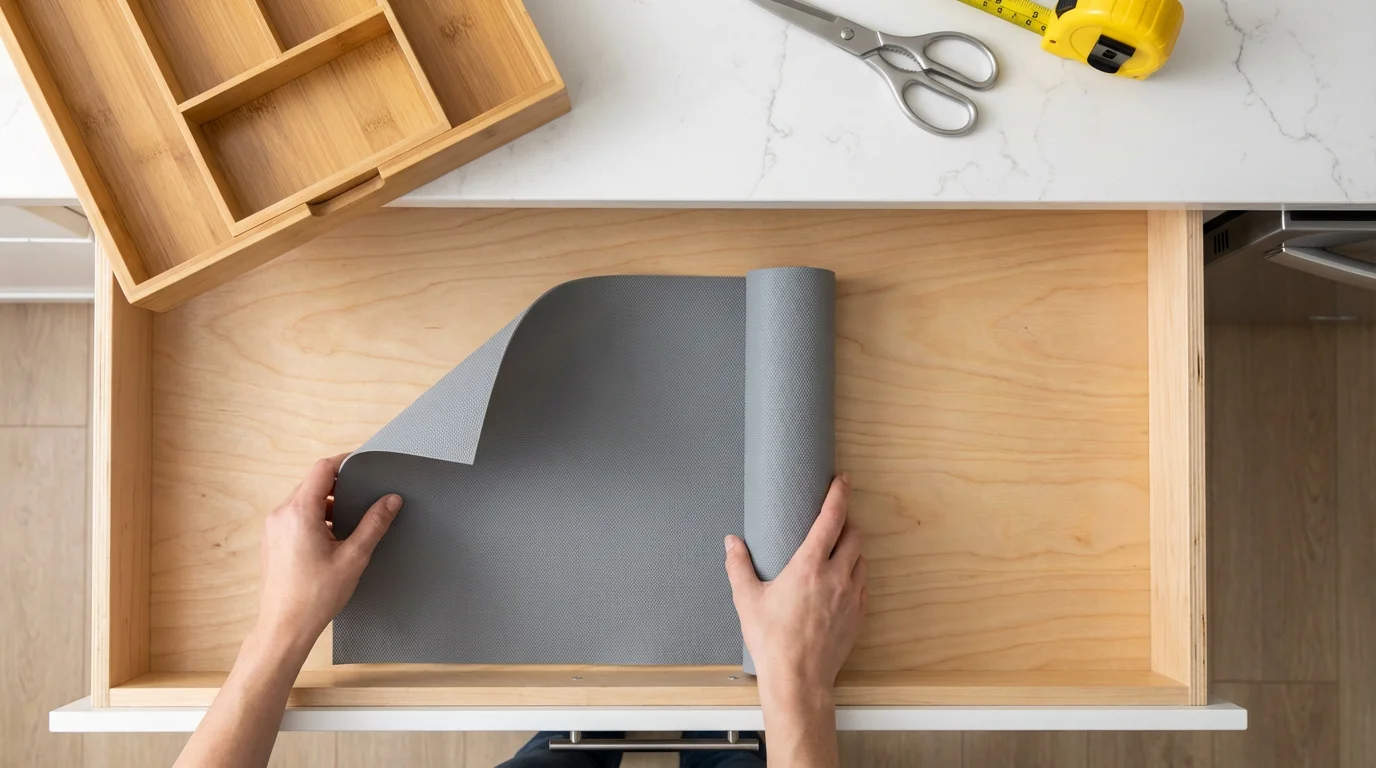
Installation and Maintenance Tips for Your Utensil Organization
Installing your new `drawer organizer` is only the beginning. Maintaining that order requires a few simple practices to ensure your efforts deliver long-term benefits.
To ensure every family member knows where tools go, consider using labels and label makers for your new drawer compartments.
Secure Your Organizers
Prevent organizers from shifting every time you open or close a drawer. Many expandable options include rubber feet or non-slip pads. If yours does not, purchase non-slip gripper liner and cut it to fit the bottom of your drawer. This simple addition keeps your `utensil tray` firmly in place, preventing contents from mixing.
A Realistic Before and After
Imagine this: your current utensil drawer involves a tangled mess where you might stab yourself searching for a knife. You pull out items, trying to find your whisk, only to realize it is under a stack of spatulas. After implementing a well-chosen `best kitchen drawer organizer for utensils`, you now open the drawer to clearly defined compartments. Each utensil has a home, standing upright or lying neatly, instantly visible. You grab the whisk without a second thought, and the drawer closes smoothly. This transformation is achievable, but it demands consistent effort initially and ongoing commitment.
Establish a “Home” for Every Item
Once you have your organizer in place, assign a specific spot for each type of utensil. Every fork, every spoon, every spatula needs its home. When you or a family member puts an item away, it goes back to its designated spot. This is the cornerstone of lasting organization. As Real Simple’s organization guides emphasize, consistency is key.
Regular Reviews and Cleaning
Organization takes work, and it is not a one-time event. Plan for a quick “tidy-up” every few weeks. This might involve:
- Pulling out the organizer and wiping down the drawer interior.
- Washing the organizer itself if it collects crumbs or spills.
- Re-evaluating contents: Did a new gadget sneak in? Are there items you have not used in months?
These small, regular tasks prevent clutter from accumulating again. It is much easier to maintain order than to completely re-organize from scratch.
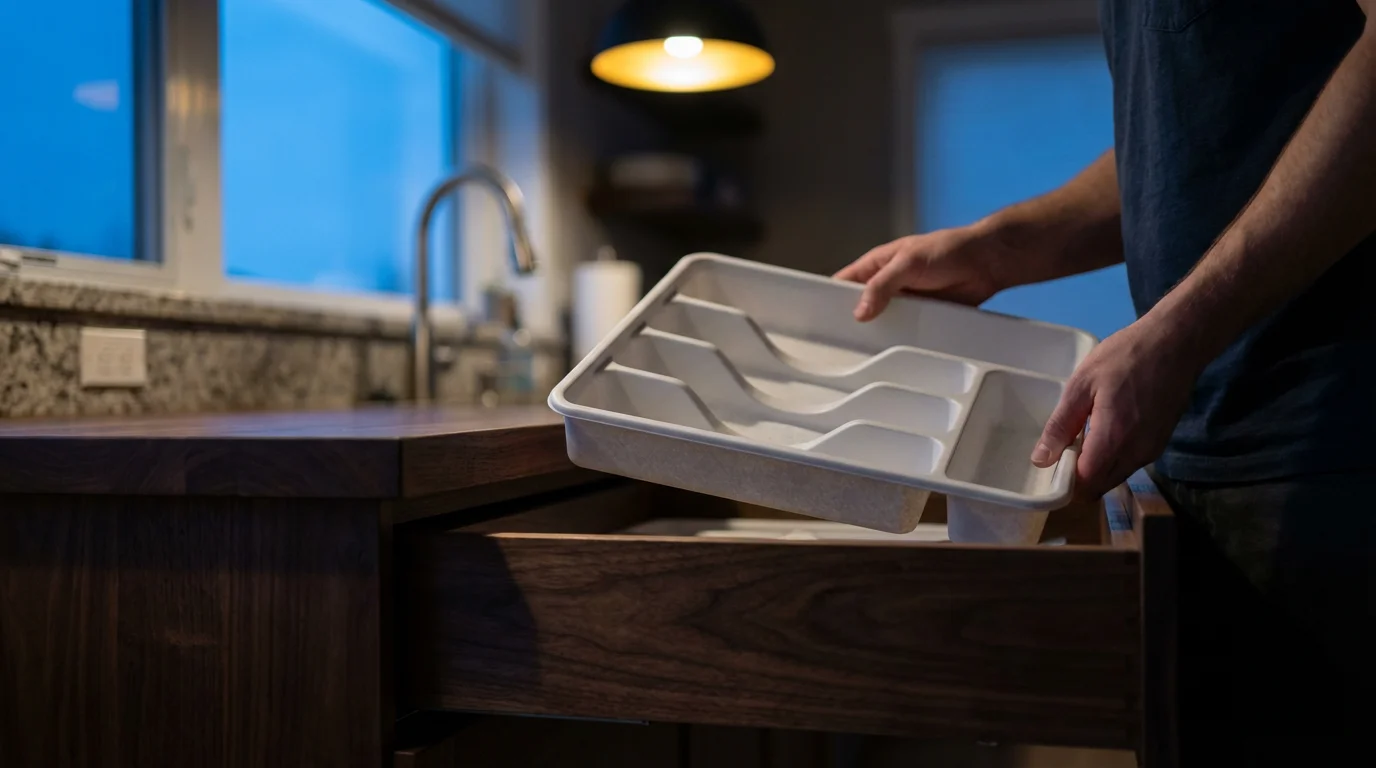
Budget-Friendly to Premium Options for Every Wallet
Effective drawer organization does not require a hefty investment. You can find excellent solutions across a range of price points, catering to different budgets and aesthetic preferences.
Economical Choices
For those on a tight budget or renters looking for temporary solutions, basic plastic `utensil tray` options are incredibly effective. You can find sturdy, compartmentalized plastic trays for under $10 at most home goods stores. While they may lack the aesthetics of bamboo, they perform the core function of separating and containing items. Look for models with rubber feet to prevent sliding. As an alternative, consider DIY drawer dividers using sturdy cardboard covered in decorative paper or thin scrap wood pieces. These require a bit of effort but offer a truly custom, budget-conscious approach.
Mid-Range Value
The sweet spot for many home cooks lies in mid-range options, often featuring expandable designs in bamboo or higher-quality plastics. These `drawer organizer` options usually cost between $15 and $40. They strike a balance between durability, functionality, and aesthetic appeal. Expandable bamboo organizers are particularly popular because they adapt to your drawer size, reducing “dead space” and offering a more integrated look than fixed trays. They are an excellent investment for their versatility and durability.
Premium and Custom Solutions
At the higher end, you will find custom-fit drawer inserts made from solid hardwood, often integrated directly into the drawer during cabinet installation or purchased as bespoke pieces. These can range from $50 to hundreds of dollars, offering a seamless, luxurious finish. While a significant investment, they provide unparalleled durability and a perfectly tailored appearance. For those seeking the `best kitchen drawer organizer for utensils` with a truly built-in feel, these are the top choice. For renters or those wanting premium quality without custom installation, high-end bamboo or stainless steel modular systems offer a refined look and exceptional longevity.
Regardless of your budget, the key is to prioritize functionality and a good fit. A well-organized drawer, whether achieved with a $5 plastic tray or a $100 bamboo system, ultimately delivers the same benefit: a more efficient and enjoyable kitchen experience. The most important factor is measuring your drawer correctly and selecting an organizer that complements your specific utensil collection and usage habits.
Frequently Asked Questions
How do I choose the right size drawer organizer?
First, empty your drawer completely. Then, use a tape measure to get the internal width, depth, and height of the drawer. Choose an organizer that fits snugly within these dimensions. For the width, expandable organizers offer flexibility. For depth, ensure your chosen organizer leaves room for the drawer to close if it has an overhang or a lip. Most importantly, ensure the organizer’s height allows the drawer to close freely, especially if you opt for tiered solutions.
Can I use drawer organizers in deep drawers?
Absolutely. Deep drawers present a fantastic opportunity for vertical organization. Instead of a single flat `utensil tray`, consider tiered or stacked organizers that maximize the drawer’s height. In-drawer knife blocks also work well in deeper drawers, keeping blades safe. You can also stack smaller modular bins on top of each other for less frequently used items, ensuring easy access when needed.
What’s the best material for a utensil organizer?
The “best” material depends on your priorities. Bamboo offers durability, a natural aesthetic, and often expandability, making it a popular choice for many. Plastic is budget-friendly, easy to clean, and comes in many configurations. Hardwood provides a premium, built-in look but is typically the most expensive. Consider durability, ease of cleaning, appearance, and how much you are willing to invest when making your decision.
How often should I reorganize my utensil drawer?
After the initial organization, aim for a quick review and tidy-up every 1-3 months. This involves pulling out the organizer, cleaning the drawer, and assessing if any items have accumulated or shifted. A full declutter and reorganization might be needed once or twice a year, especially if your cooking habits or utensil collection change. Regular, small maintenance tasks prevent major overhauls.
Are expandable organizers better than fixed ones?
Expandable organizers offer superior flexibility, adapting to a wider range of drawer widths and maximizing space by eliminating gaps. This customization makes them a top choice for achieving a truly tailored fit. Fixed organizers are generally more budget-friendly and simpler, but if your drawer dimensions do not perfectly match, you will likely have unused space. For a customized and efficient solution, expandable `drawer organizer` options often prove more advantageous.
Disclaimer: Product prices and availability change frequently. Prices shown were accurate at time of writing but may have changed. We may earn a small commission from purchases made through links on this site, at no extra cost to you. Always measure your space before purchasing organizers to ensure proper fit.


Leave a Reply