
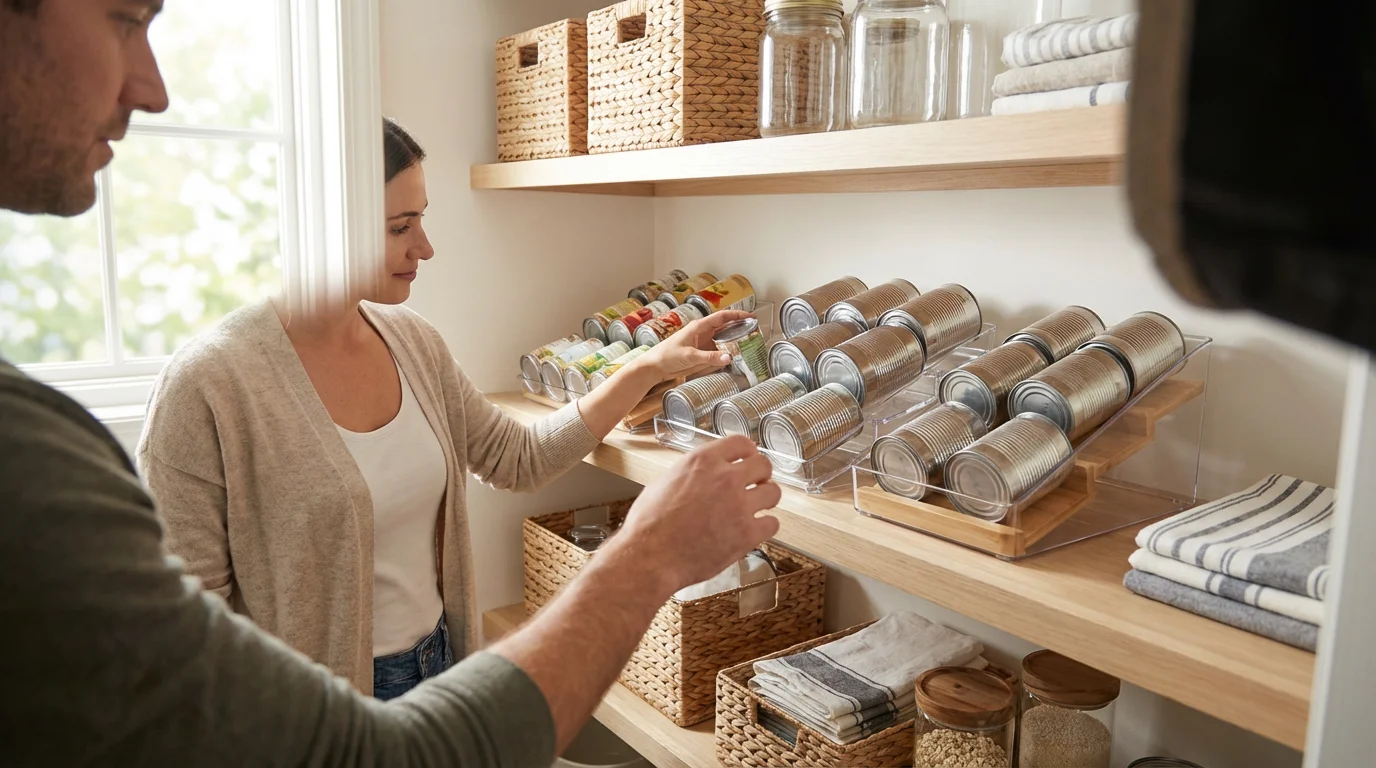
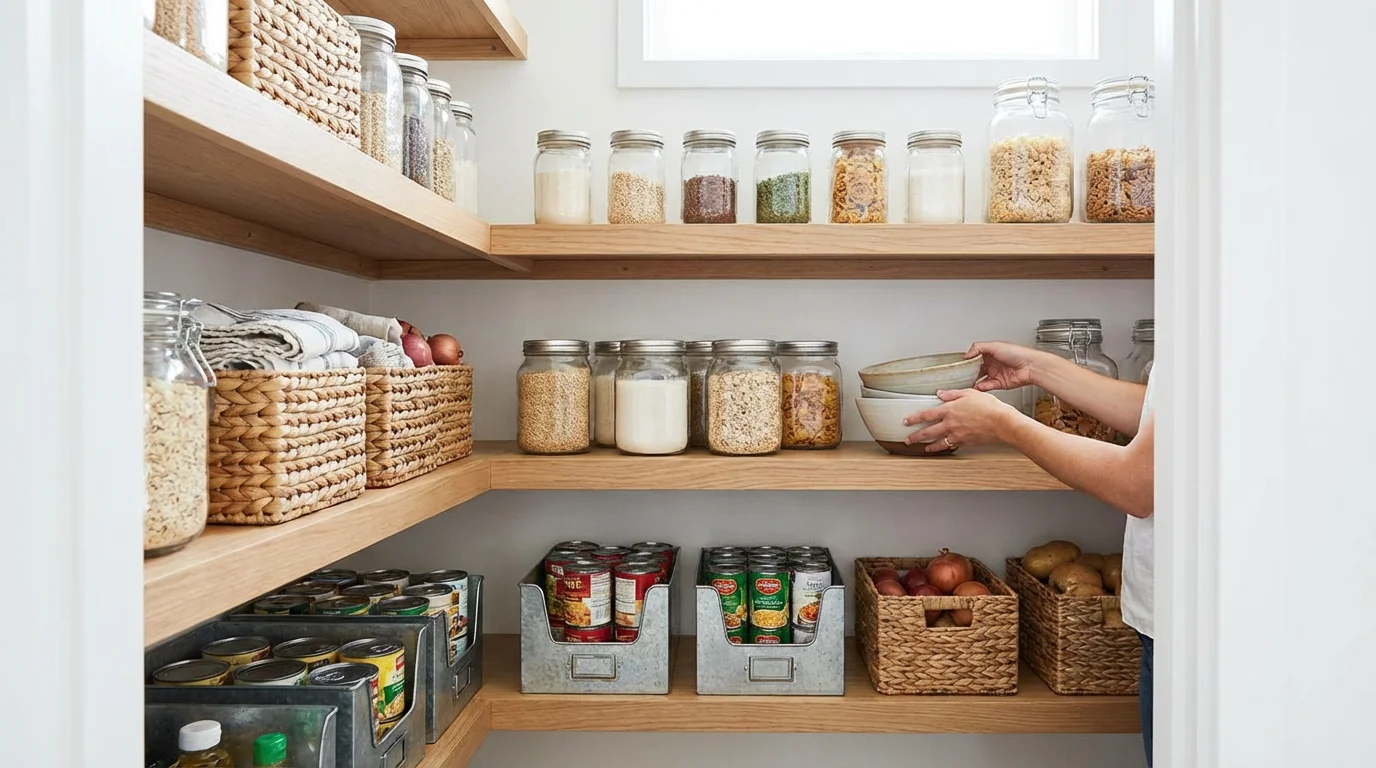
Your kitchen pantry or cabinets often become a battleground for canned goods, leading to a frustrating mess where you buy duplicates, lose track of expiration dates, and struggle to find what you need. A disorganized canned goods collection wastes both food and money. The solution involves implementing smart storage solutions that bring order to your pantry, making every can visible and accessible. We’ll explore the best can organizers and racks available, helping you transform your cluttered space into an efficient, organized system.
The Canned Goods Dilemma: Why Organization Matters
Every home cook knows the struggle. You open the pantry door, and cans tumble out. You discover five cans of diced tomatoes you didn’t know you had, while the black beans you desperately need are nowhere to be found. This daily frustration costs you time and money. When canned goods are disorganized, you likely purchase items you already own, let food expire before you use it, and lose precious cooking time searching for ingredients.
Organizing your canned goods brings immediate benefits. You gain clear visibility of your inventory, enabling you to meal plan effectively and reduce food waste. An organized system also frees up valuable space in your pantry or cabinets, making your entire kitchen feel more functional and less overwhelming. According to Good Housekeeping’s home organization experts, an organized pantry reduces stress and improves cooking efficiency. Imagine reaching for any can and finding it instantly. This level of efficiency is entirely achievable with the right tools and strategies.
Start with a Clean Slate: Decluttering Your Canned Goods
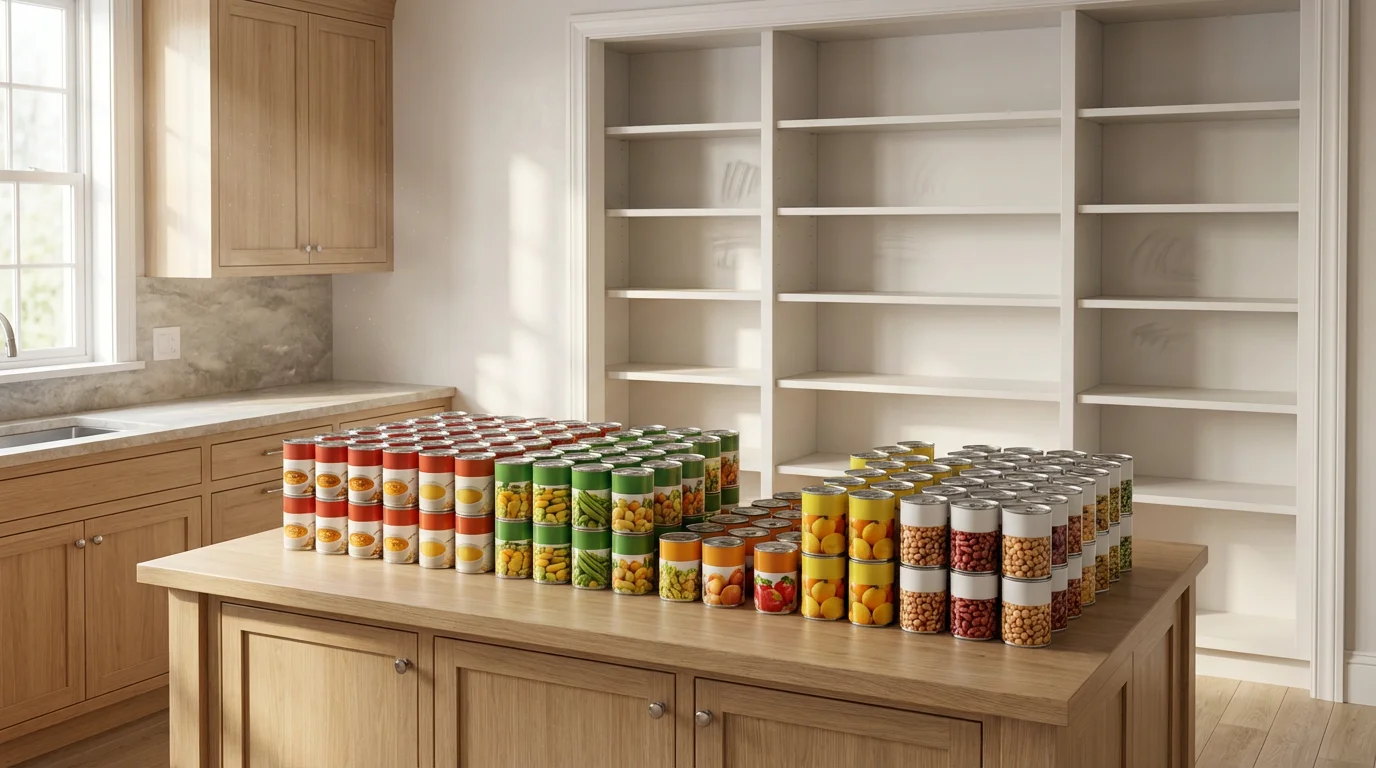
Before you invest in any can organizer, you must declutter your current collection. This critical first step ensures you organize only what you truly need and will use. Pull every single can out of your pantry or cabinets. You might be surprised by how many you have, or how many are lurking in forgotten corners.
Follow these steps for an effective declutter:
- Check Expiration Dates: Discard any cans past their expiration date. Many items, especially acidic ones like tomatoes, can degrade in quality or safety over time even if sealed.
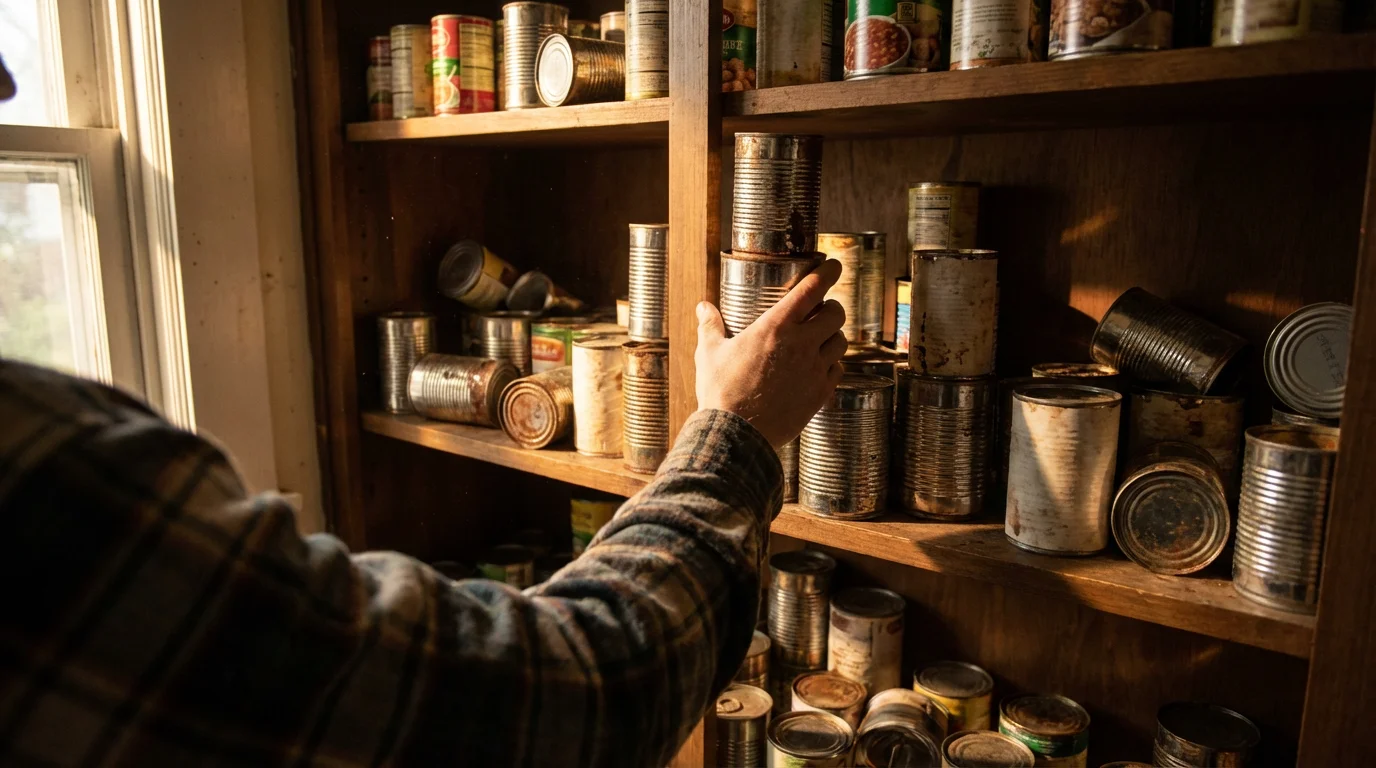
- Assess Damage: Look for rust, deep dents, or bulging cans. Bulging cans indicate bacterial growth and are unsafe to consume. Discard these immediately.
- Evaluate Usage: Do you actually use that can of pickled beets you bought three years ago? Be honest with yourself. If you haven’t touched it, or don’t plan to, consider donating unopened, unexpired, undamaged cans to a local food bank.
- Group Similar Items: As you sort, group like items together. Put all vegetables in one pile, all beans in another, soups, fruits, and so on. This gives you a clear picture of your inventory and helps you decide which types of organizers you need most.
While you have everything pulled out, it is also a great opportunity to check if your cutlery needs attention with the best drawer organizers for utensils.
This initial purge might feel daunting, but it’s the foundation for a truly organized and functional system. You avoid organizing “dead weight” and create space for the food you actually eat.
Types of Can Organizers and Racks: A Comparison
The market offers a wide variety of can organizers, each designed to tackle specific storage challenges. Understanding the pros and cons of each type helps you make an informed decision based on your kitchen layout and storage needs.
1. Gravity-Fed Can Dispensers
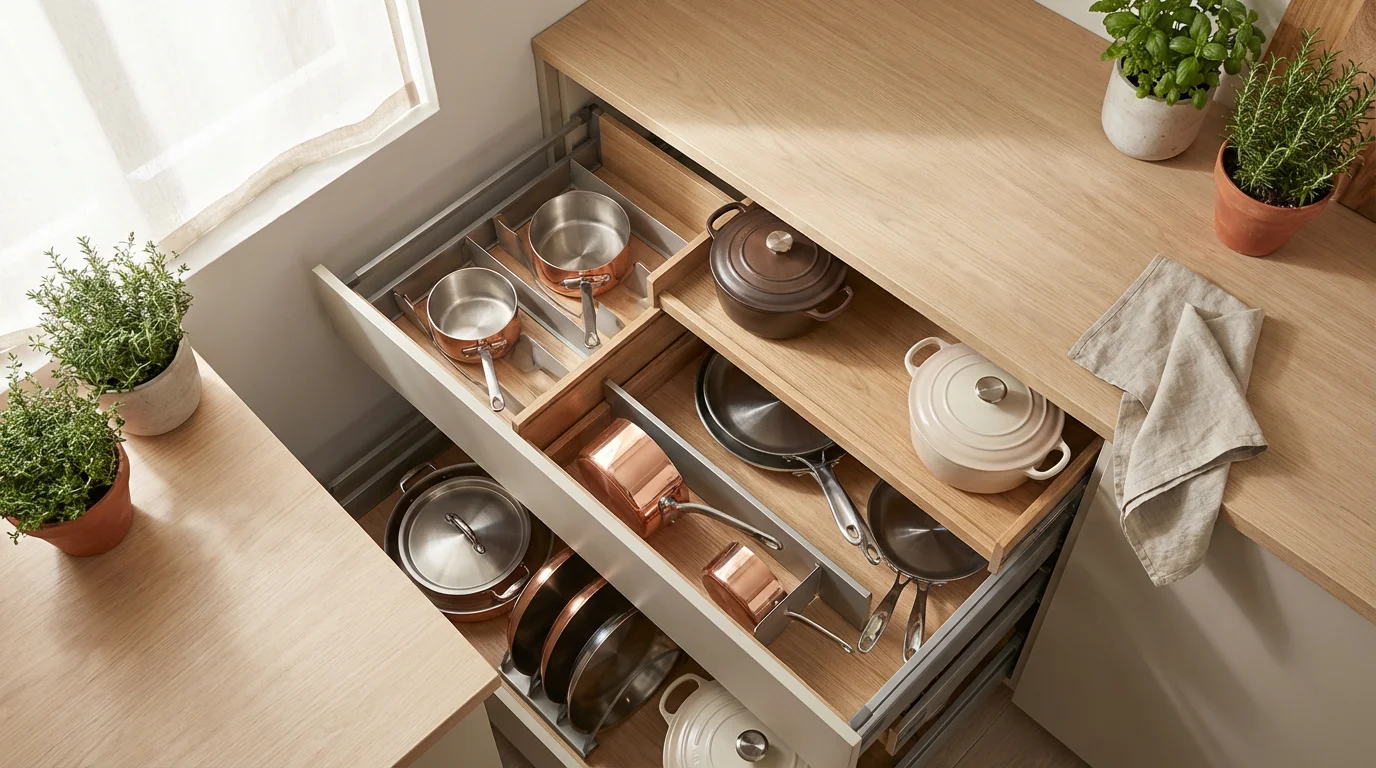
If your cabinets are feeling crowded, you might also benefit from specialized cabinet organizers for pots and pans to maximize your lower storage space.
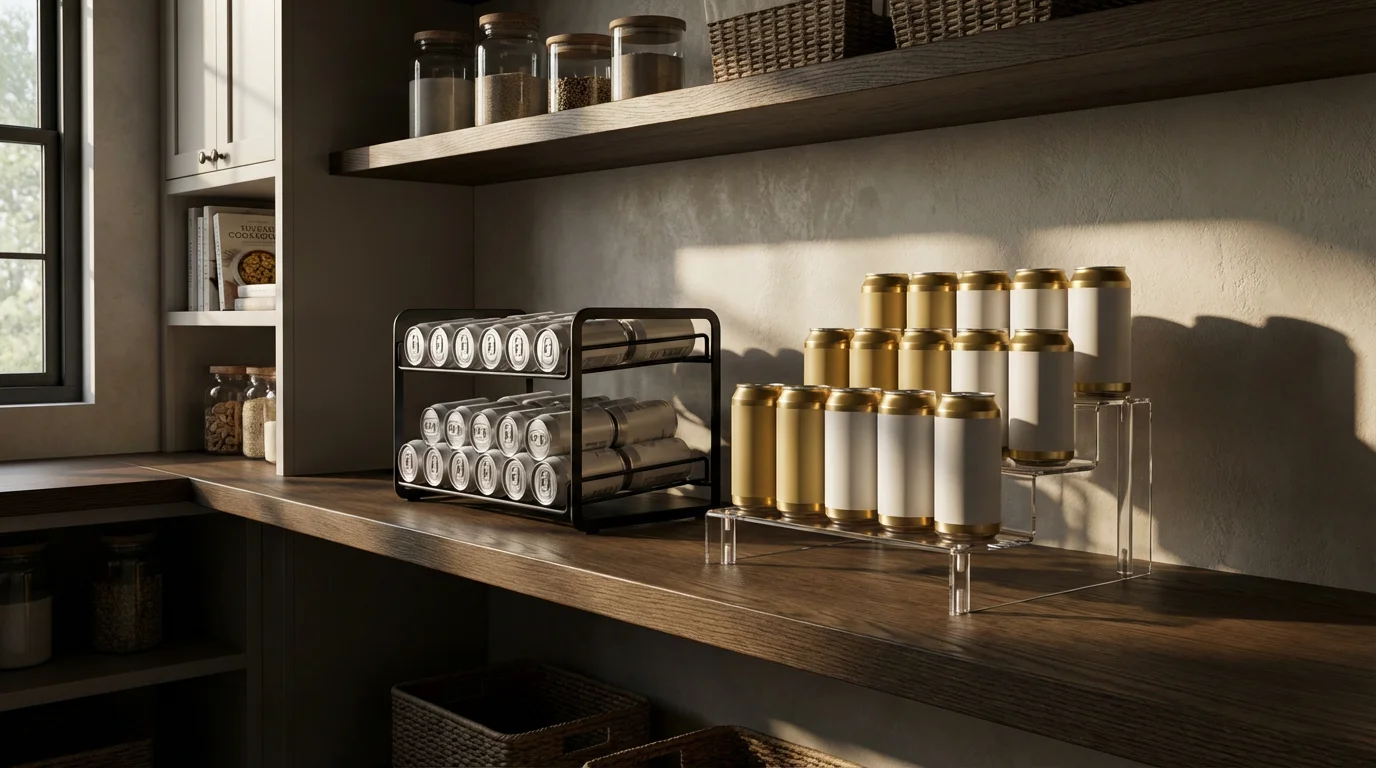
These organizers feature angled shelves that allow cans to roll forward as you remove the front one. This system ensures “FIFO,” or first in, first out, which means you always use the oldest cans first, preventing spoilage and ensuring proper rotation. They typically hold standard 15-ounce cans but often accommodate smaller or larger sizes.
* Pros: Excellent for FIFO rotation, clear visibility of current stock, space-efficient for high-volume items.
* Cons: Can be bulky, may not fit all can sizes, requires specific shelf height clearance.
* Ideal For: Deep pantries, garages, or anyone who buys many identical canned goods.
2. Stackable Can Organizers
These units feature multiple horizontal tiers, often allowing you to stack them vertically. They offer flexibility, letting you expand your storage as your needs grow. Many stackable organizers are “modular,” meaning you can combine and configure pieces in different ways to fit your space.
* Pros: Flexible configuration, can be expanded, good for mixed can sizes.
* Cons: Doesn’t automate FIFO, cans can sometimes be hard to reach from lower tiers if stacked too high.
* Ideal For: Upper cabinets, shallow pantries, or areas where you need adaptable storage.
3. Adjustable Shelf Racks
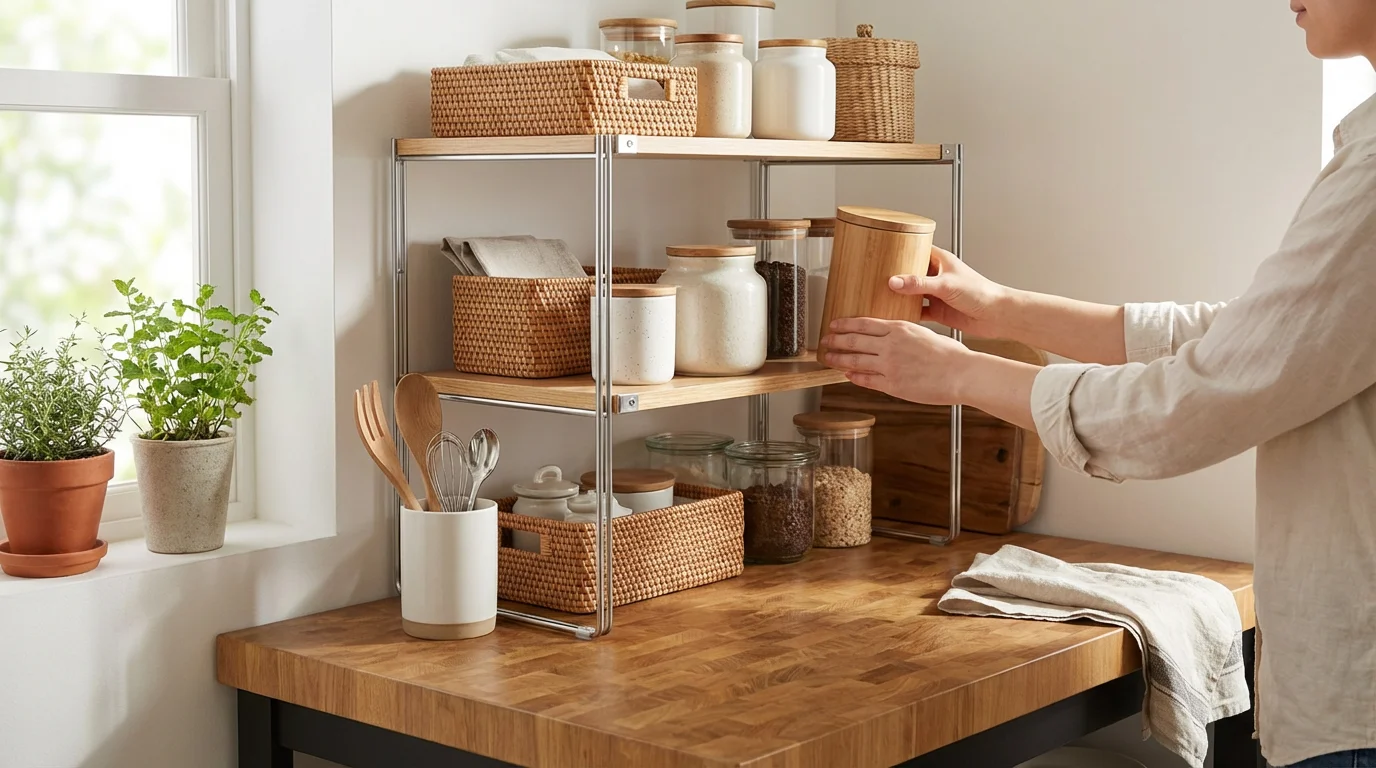
These are often wire racks with adjustable shelves, allowing you to customize the height between tiers. Some models function as “shelf risers,” mini shelves that create two levels of storage in one space, effectively doubling your vertical storage capacity.
* Pros: Highly customizable, versatile for various can sizes, creates new storage levels.
* Cons: May not keep cans perfectly aligned, can be less stable if heavily loaded with small feet.
* Ideal For: Cabinets with fixed shelves, maximizing vertical “dead space” above smaller cans.
4. Pull-Out Organizers (Drawer-Style)
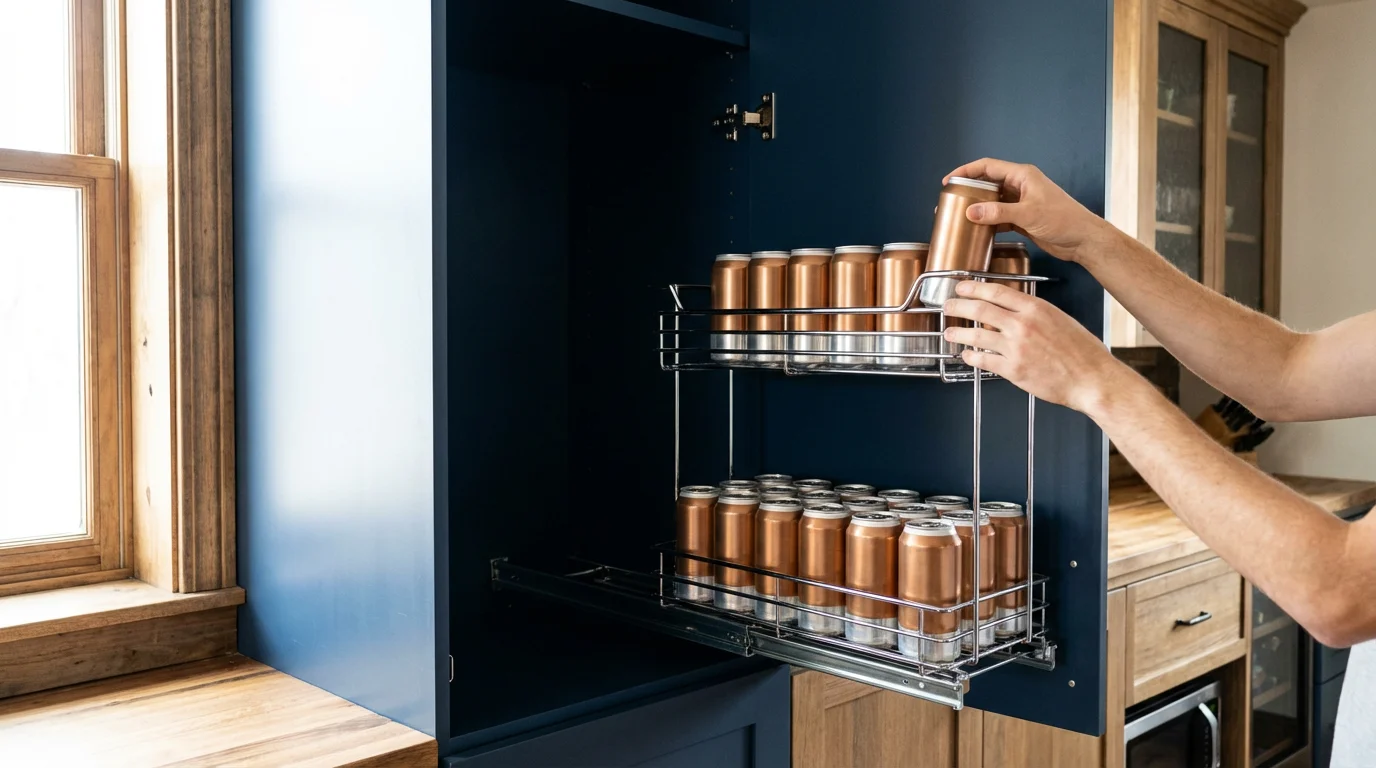
While less common specifically for cans, some pull-out drawers or bins can be effective for organizing canned goods in lower cabinets or deep pantry shelves. A “pull-out organizer” is a drawer or shelf that slides out, providing easy access to items at the back.
* Pros: Excellent access to deep storage, prevents forgotten items, reduces bending/reaching.
* Cons: Can be more expensive, requires cabinet installation (screwing into the base), not specifically designed for can rotation.
* Ideal For: Lower cabinets, base cabinets, or deep pantry shelves where accessibility is a major concern.
5. Door-Mounted Racks
These organizers hang on the inside of your pantry door or cabinet door, utilizing often-overlooked “dead space.” A “door-mounted rack” is storage that hangs on the inside of cabinet doors. They are usually wire shelves or baskets.
* Pros: Utilizes vertical “dead space,” keeps frequently used items accessible, frees up shelf space.
* Cons: Limited capacity, can interfere with closing the door if cans are too large, not ideal for heavy loads.
* Ideal For: Smaller cans, spices, or lighter items, in shallow pantry doors or deep cabinets.
Let’s look at a comparative table to help visualize the differences:
| Organizer Type | Best For | Key Benefit | Common Dimensions (approx.) | Considerations |
|---|---|---|---|---|
| Gravity-Fed Dispenser | Deep Pantries, Bulk Cans | Automatic FIFO Rotation | 17-20″D x 5-7″W x 10-12″H (single stack) | Requires consistent can size, can be bulky |
| Stackable Can Rack | Upper Cabinets, Varied Cans | Flexible, Expandable Capacity | 10-15″D x 10-12″W x 5-7″H (per tier) | Manual rotation, may not be ideal for very heavy stacks |
| Adjustable Shelf Riser | Cabinets with Fixed Shelves | Maximizes Vertical Space | 10-14″D x 10-16″W x 5-8″H | Cans can roll, less structured than dispensers |
| Pull-Out Drawer/Bin | Lower Cabinets, Deep Shelves | Easy Access to Back Items | 18-22″D x 8-12″W x 5-7″H (per drawer) | Higher cost, typically requires installation |
| Door-Mounted Rack | Shallow Pantries, Small Cans | Utilizes Door “Dead Space” | 20-50″H x 10-20″W x 3-5″D | Limited weight capacity, can block door if too deep |
Choosing the Right Can Organizer for Your Space
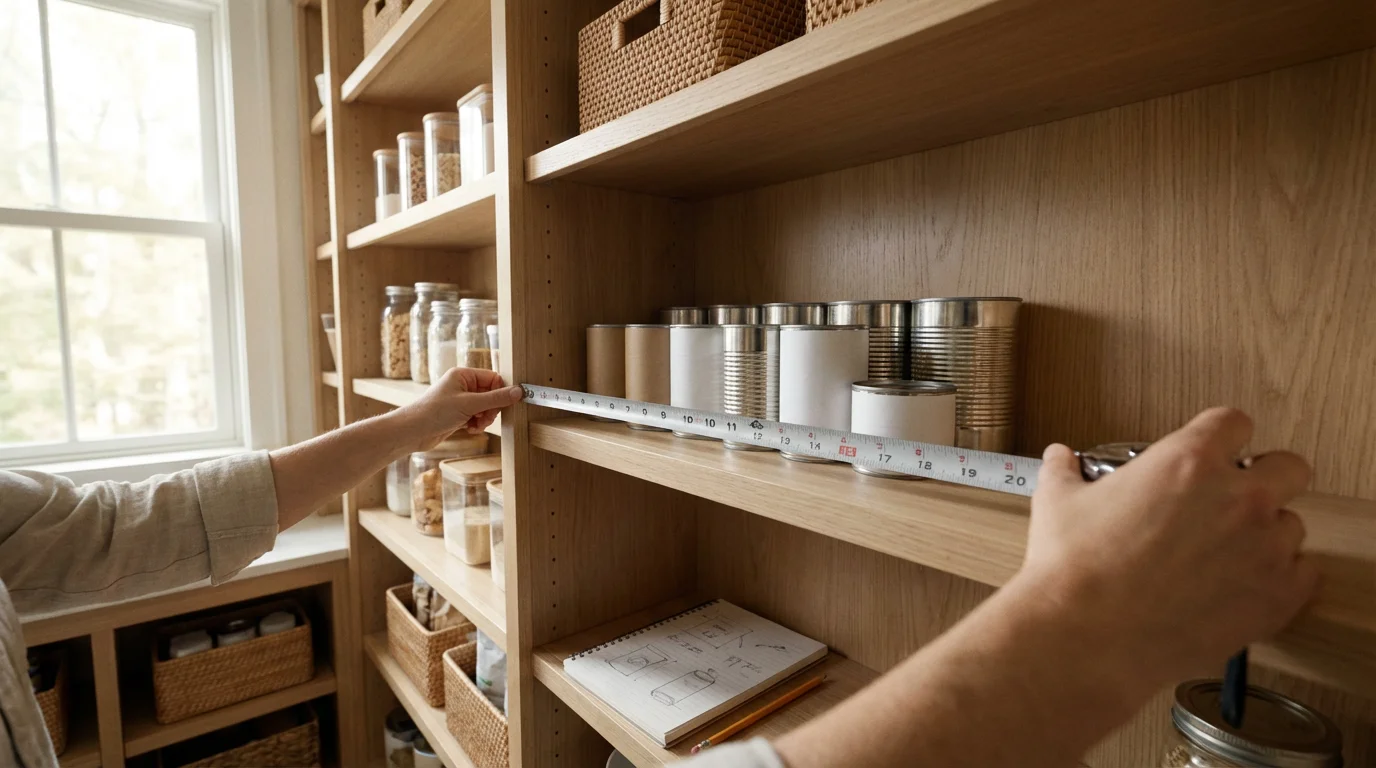
Selecting the perfect can organizer depends entirely on your specific kitchen layout, cabinet dimensions, and pantry configuration. Measure your available space meticulously before purchasing. Standard upper cabinets typically have a depth of 12 inches, while lower cabinets are often 24 inches deep. Pantry shelves can vary widely.
For Deep Pantries
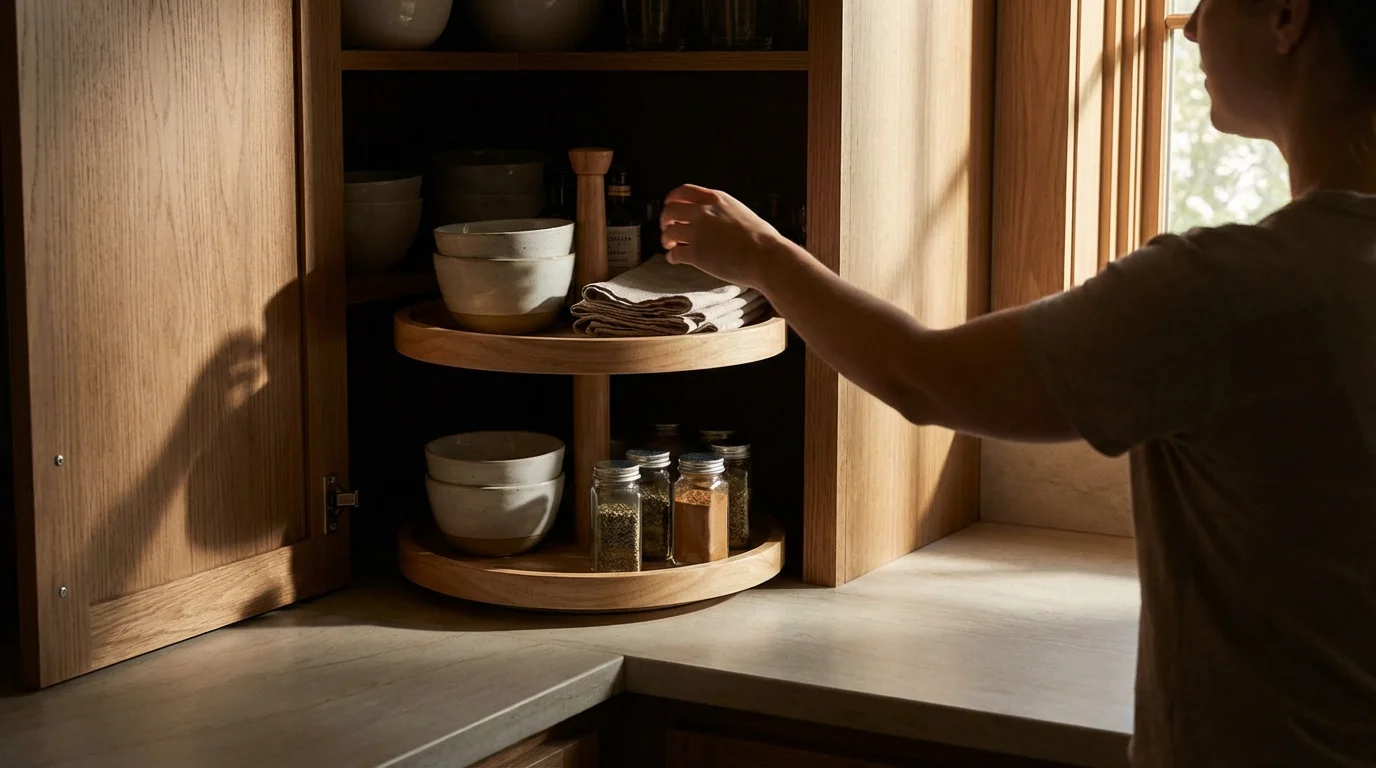
For those difficult-to-reach areas, lazy Susans for corner cabinets are another excellent way to ensure no can gets lost in the back.
A deep pantry often becomes a black hole where items disappear. Gravity-fed can dispensers excel here. Look for units that are 17-20 inches deep and 5-7 inches wide per stack, allowing you to create multiple rows of cans and implement FIFO effectively. Alternatively, pull-out organizers, especially those designed for pantry use, bring the back of the shelf to you. A 20-inch deep pull-out bin, for instance, transforms a dark corner into accessible storage. As Wirecutter reviews often highlight, ease of access in deep spaces is paramount.
For Shallow Shelves
If your pantry or cabinet shelves are shallow, gravity-fed dispensers might be too deep. Opt for stackable can organizers or adjustable shelf risers that fit within your 10-12 inch depth. Many stackable units are around 10 inches deep and 10-12 inches wide, making them ideal for standard upper cabinets. Shelf risers, typically 5-8 inches high, create an additional level for cans without taking up much footprint.
For Cabinets (Upper and Lower)
Upper cabinets benefit greatly from stackable can racks or shelf risers. These solutions maximize the vertical space and keep cans visible. For lower cabinets, pull-out drawers or sturdy bins are often the best choice. Measuring the interior width and height of your cabinet opening is crucial here to ensure the pull-out unit clears the door frame and any hinges. Some pull-out systems require a minimum 15-inch cabinet opening width.
For Renters vs. Homeowners
Renters need solutions that don’t involve drilling or permanent alterations. Stick to freestanding units like gravity-fed dispensers, stackable racks, and shelf risers. Door-mounted racks that hook over the door rather than screw in are also great renter-friendly options. Homeowners have more flexibility for built-in solutions, such as pull-out organizers that install directly into cabinet bases or walls, offering a more permanent and integrated system.
“The goal isn’t a Pinterest-perfect pantry. It’s being able to find what you need in 10 seconds or less.” — Professional Organizer
Installation and Maximizing Efficiency: The FIFO Method
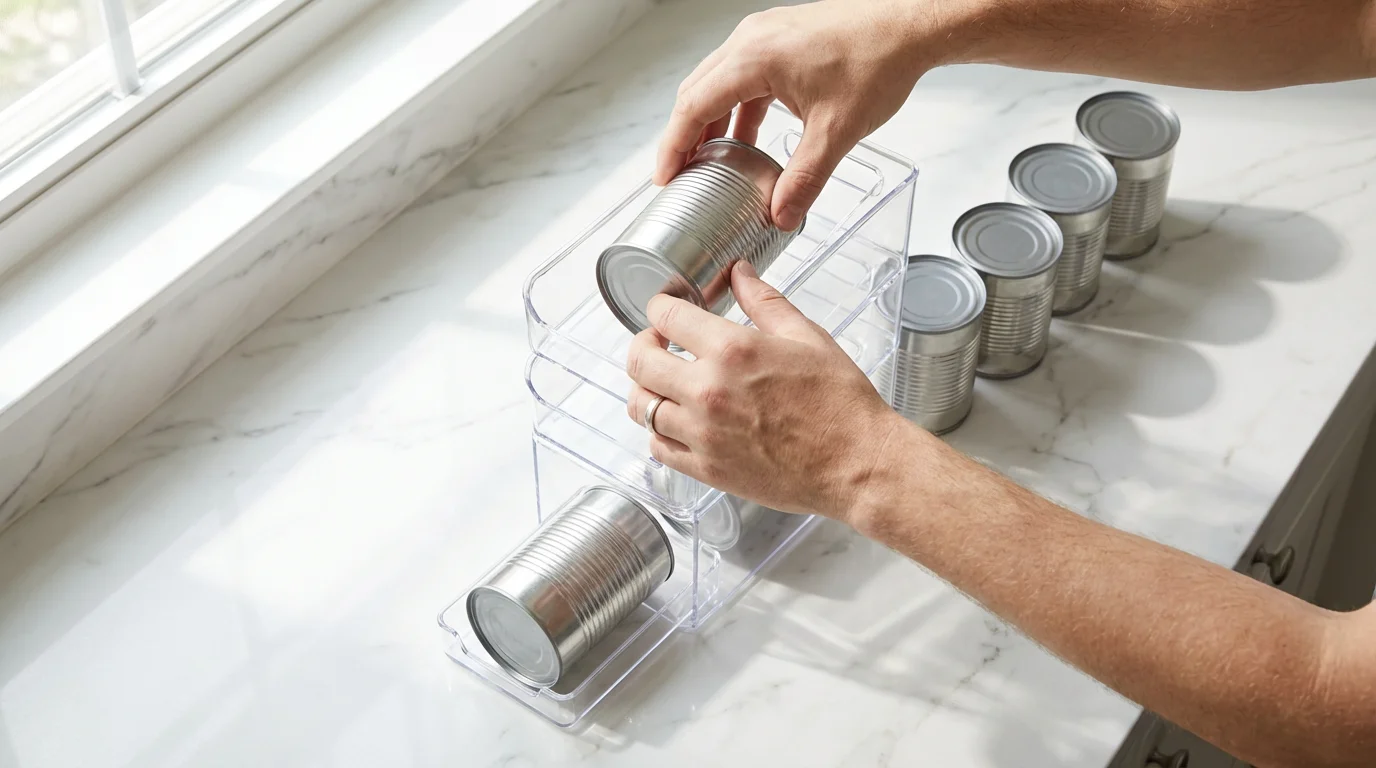
Once you select your can organizers, proper installation and arrangement are key to a truly efficient system. Most stackable and gravity-fed units require minimal assembly, often snapping together without tools. Pull-out organizers, however, usually involve screwing tracks into the base of your cabinet or pantry shelf. Always use a drill with the correct bit size and ensure the unit is level before loading it.
Implementing FIFO (First In, First Out)
FIFO, or “first in, first out,” is a crucial method for rotating your food supply to ensure you use older items before they expire. This method minimizes waste and keeps your inventory fresh.
* Gravity-Fed Systems: These naturally enforce FIFO. When you buy new cans, you load them into the back of the dispenser, and the oldest cans roll to the front for easy retrieval.
* Manual FIFO: For stackable racks or shelf risers, you must manually rotate. When you bring home new cans, place them behind or underneath your existing stock. Always grab from the front or top. Consider adding a small label or marker to the oldest cans to remind yourself.
Zone-Based Organization
Consider organizing your canned goods by category or how you use them in your cooking workflow. For example:
- Baking Zone: Canned pumpkin, evaporated milk, condensed milk.
- Meal Prep Zone: Diced tomatoes, beans, corn, green beans.
- Soup/Broth Zone: Various broths, cream of mushroom soup, tomato soup.
- Fruit Zone: Canned peaches, pears, fruit cocktail.
This “zone-based organization” makes finding ingredients for specific cooking tasks much faster. If you often make chili, for instance, group all your chili-related cans like diced tomatoes, kidney beans, and pinto beans together.
Maintaining Your Organized Canned Goods System
Implementing a new organization system is only half the battle. Long-term maintenance ensures your pantry remains functional and clutter-free. Consistency is paramount.
Regular Audits
Schedule a quick audit of your canned goods every 2-3 months. This is a brief check, not a full overhaul.
- Scan for approaching expiration dates.
- Identify items running low.
- Ensure items are still in their designated zones.
A quick five-minute check prevents a small mess from becoming a large problem.
Shop Smart
Adjust your shopping habits to support your new system. Buy only what fits comfortably into your organizers. If you consistently find yourself with an overflow of a certain item, consider whether you need to re-evaluate your purchasing habits or invest in additional, appropriate storage for that item. Avoid buying in bulk if you lack the storage space, even if it seems like a good deal.
Involve the Household
If others in your household access the pantry, educate them on the new system. Explain where everything goes and the importance of putting items back in their designated spots. Labeling shelves or bins can be incredibly helpful for family members to follow the system correctly.
Budget-Friendly vs. Premium Can Organization Solutions
Organizing your canned goods doesn’t require a huge investment. Solutions exist for every budget, from simple DIY approaches to high-end, integrated systems.
Budget-Friendly Options (Under $30 per unit)
You can find excellent, effective can organizers without breaking the bank.
- Wire Stackable Racks: Many brands offer simple, coated wire racks that stack. These are often around $10-20 for a set, providing flexible, expandable storage. Look for dimensions like 10″D x 12″W x 6″H for individual units.
- Plastic Bins: Basic plastic bins, while not specifically designed for cans, can serve as “modular” containers, grouping cans together. You can often find these for $5-15 each. Ensure they are sturdy enough for the weight of cans.
- DIY Shelf Risers: Use sturdy cereal boxes or small wooden crates as temporary shelf risers. While not a permanent solution, they offer immediate vertical organization.
These budget-friendly choices are excellent for renters or those who want to test different organizational styles before committing to a larger investment. They also work well for homeowners who prioritize cost-effectiveness.
Premium Options (Over $30 per unit)
Higher-end solutions often offer enhanced durability, aesthetics, and specialized features.
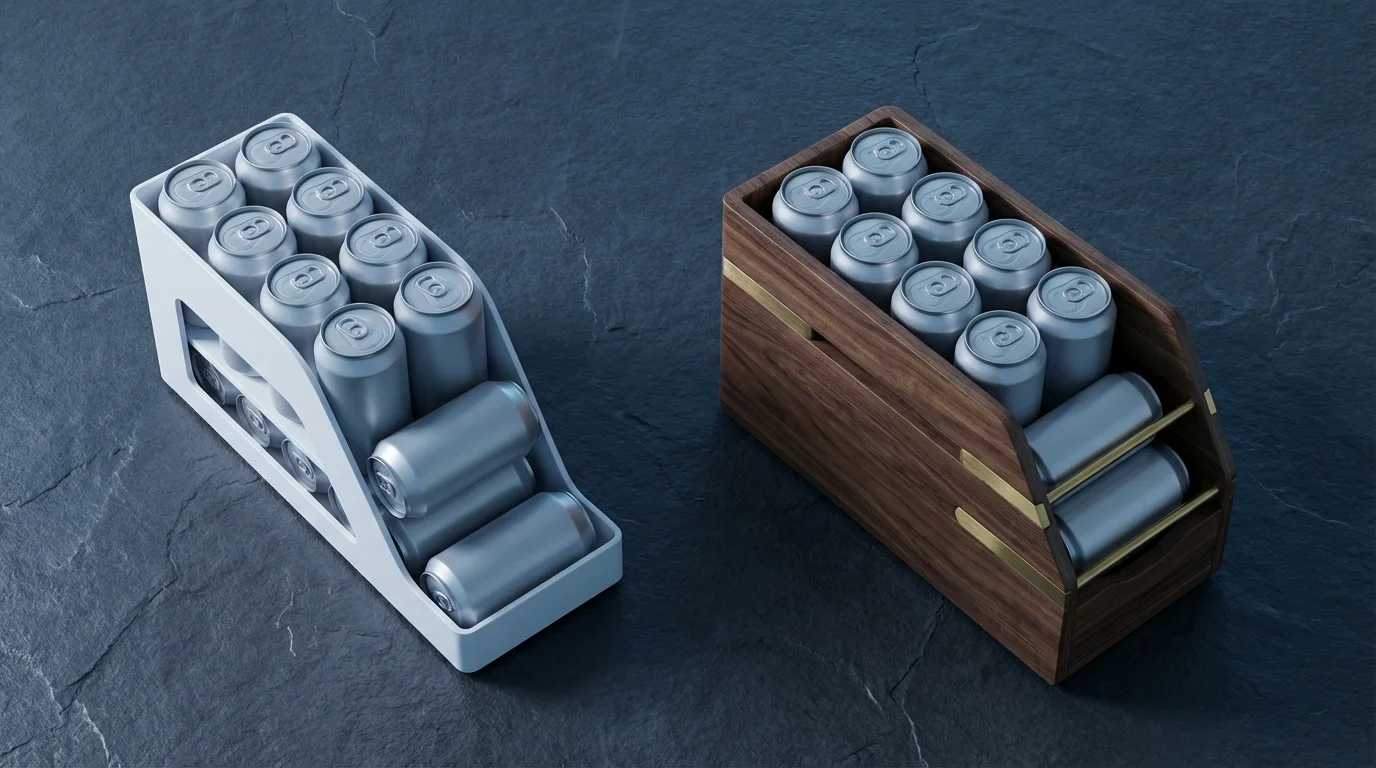
- Heavy-Duty Gravity-Fed Dispensers: Constructed from chrome-plated steel or durable acrylic, these units are designed for heavy use and longevity. They often feature sturdier construction and smoother rolling mechanisms. Expect to pay $30-70 for a multi-stack unit. A robust unit might hold 36 standard cans within a 15″W x 18″D x 15″H footprint.
- Custom Pull-Out Pantry Systems: For homeowners, custom pull-out organizers or full pantry systems can offer a seamless, integrated look and unparalleled accessibility. These can range from $50-200+ per drawer/shelf, depending on size and material. These often come in widths designed to fit common cabinet sizes, such as 9, 12, 15, or 18 inches wide.
- High-Quality Acrylic or Bamboo Organizers: These offer a more aesthetically pleasing option, often found in drawer organizers or specialized can tiers. While stylish, they usually come at a premium price.
Premium solutions often provide superior stability, a cleaner appearance, and greater long-term durability, making them a worthwhile investment for those with specific aesthetic goals or a permanent kitchen setup.
Frequently Asked Questions
How can I organize canned goods in a deep pantry effectively?
For a deep pantry, gravity-fed can organizers are highly effective. They allow cans to roll forward, ensuring you use the oldest items first, known as FIFO. Pull-out drawers or sturdy bins also work well. They bring the items from the back of the deep shelf to the front, improving accessibility and preventing items from getting lost. Always measure your pantry depth to select an organizer that maximizes the space without leaving excessive “dead space.”
What is the best can organizer for deep pantry spaces that prevents items from getting lost?
The best can organizer for deep pantries to prevent items from getting lost is usually a gravity-fed dispenser or a pull-out shelf system. Gravity-fed units ensure continuous rotation and visibility. Pull-out systems bring all contents forward, eliminating the need to reach into dark, deep corners and ensuring every can is easily viewable and accessible.
How do I make sure I’m using “first in, first out” with my canned goods?
To ensure “first in, first out” (FIFO), load new cans behind or underneath existing ones. Gravity-fed dispensers automate this process. For other organizers, when you buy new stock, consciously place it at the back of the line. When you need a can, always take the one from the front or top. You might also add a small sticker with the purchase date to help track rotation.
Are can organizers suitable for renters, or do they require permanent installation?
Most can organizers are renter-friendly and do not require permanent installation. Stackable can racks, gravity-fed dispensers, and shelf risers are all freestanding units you can easily remove when you move. Some door-mounted racks also hook over the door without screws. Only specific pull-out drawer systems typically require drilling into cabinet bases, which homeowners might prefer.
What are the ideal dimensions for a can organizer in a standard upper kitchen cabinet?
Standard upper kitchen cabinets are typically 12 inches deep. Therefore, ideal can organizers should be no more than 10-11 inches deep to allow for the cabinet door to close easily. Stackable can racks or shelf risers that are 10-11 inches deep and 10-12 inches wide are generally good fits. Measure your cabinet’s interior height and width to ensure proper clearance for stacked cans or organizer frames.
Disclaimer: Product prices and availability change frequently. Prices shown were accurate at time of writing but may have changed. We may earn a small commission from purchases made through links on this site, at no extra cost to you. Always measure your space before purchasing organizers to ensure proper fit.
Leave a Reply