
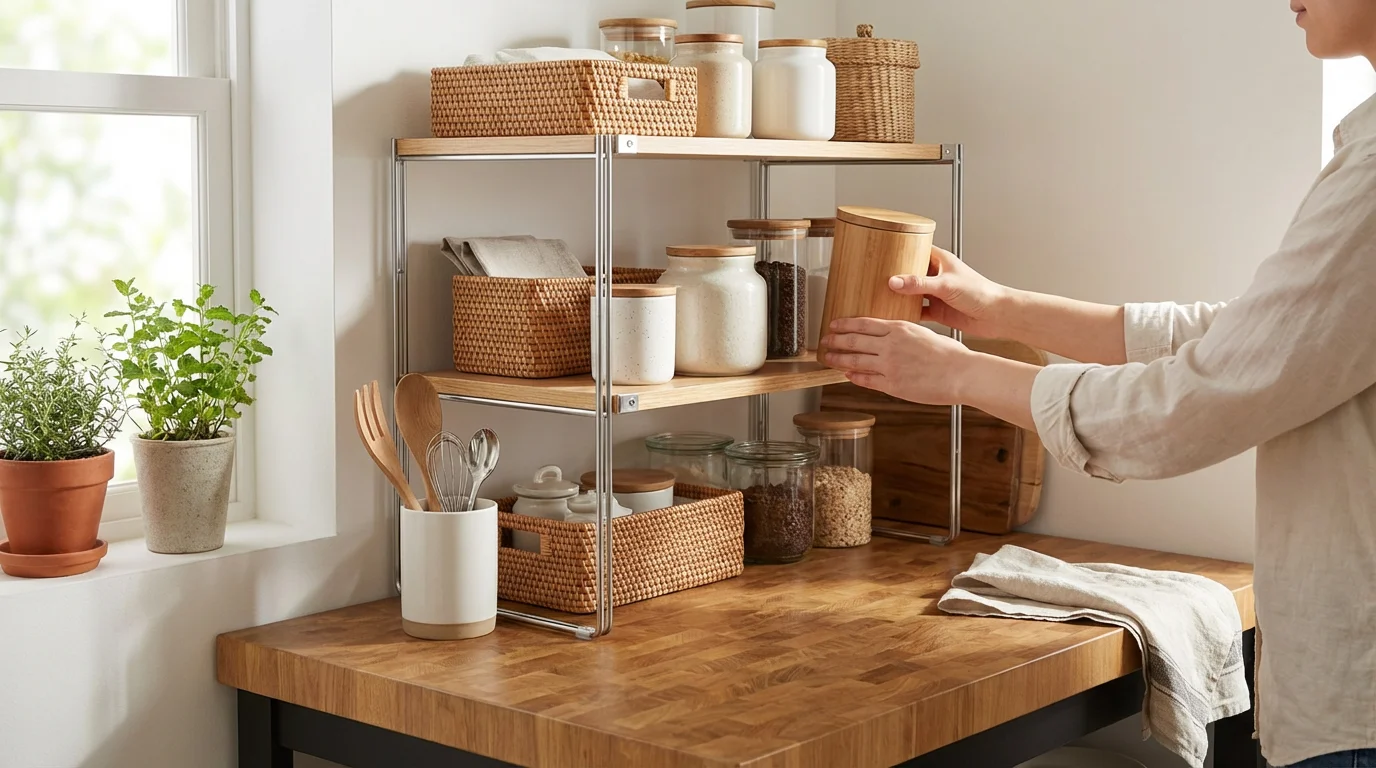
You know the struggle: a small kitchen where every inch of counter space feels like prime real estate. Between appliances, meal prep, and the everyday essentials, your countertops can quickly become a battleground of clutter. If you are a home cook frustrated with limited space and too many gadgets, you are in the right place. This article delivers practical, actionable strategies to transform your crowded surfaces into organized, efficient workstations. You do not need expensive renovations; you need smart solutions that maximize your existing footprint.
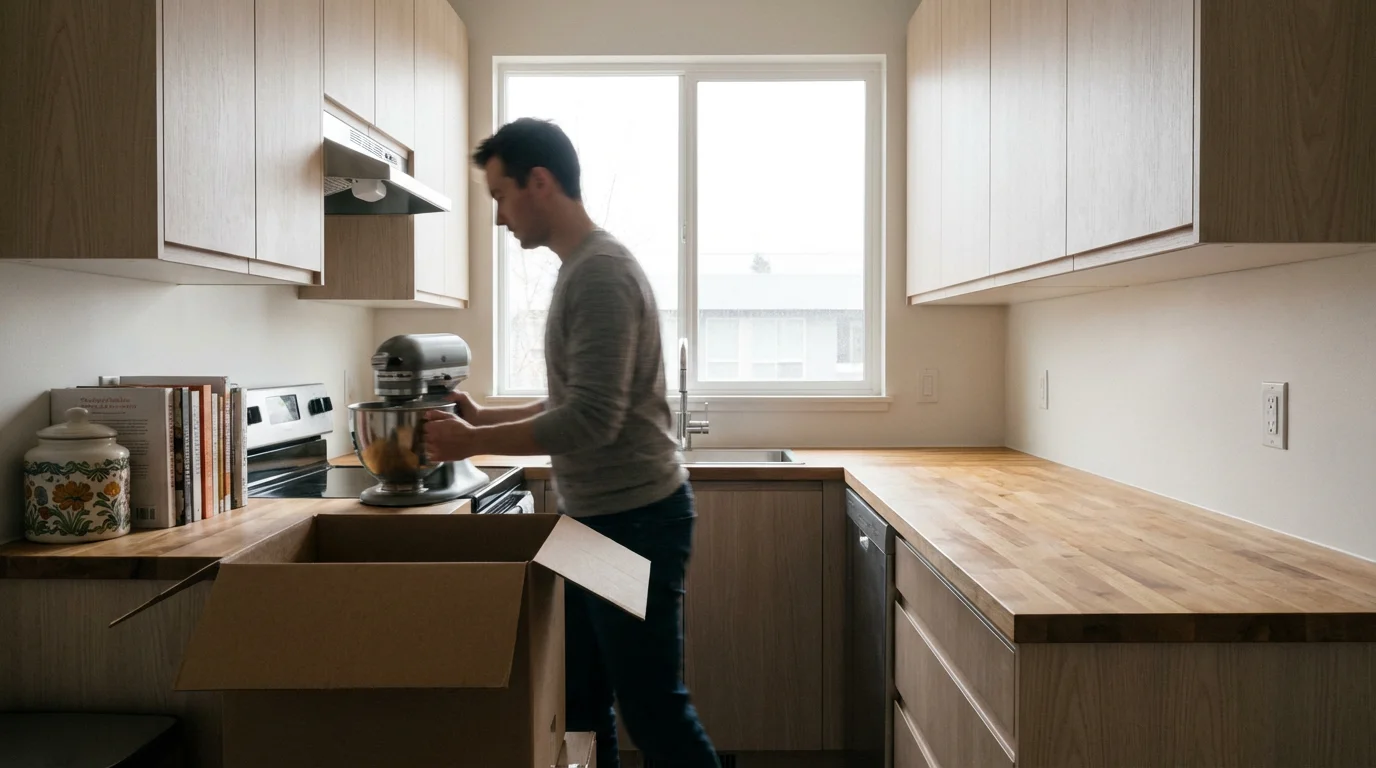
The Foundation: Decluttering Your Countertops
Before you even think about buying a new organizer, you must declutter. This step is non-negotiable for anyone looking to organize a small kitchen. Look at everything on your countertops right now. Do you use it daily, or even weekly? If an item does not serve a frequent purpose, it should not occupy valuable counter space. This is how to organize small kitchen with no counter space: by ruthlessly removing non-essentials.
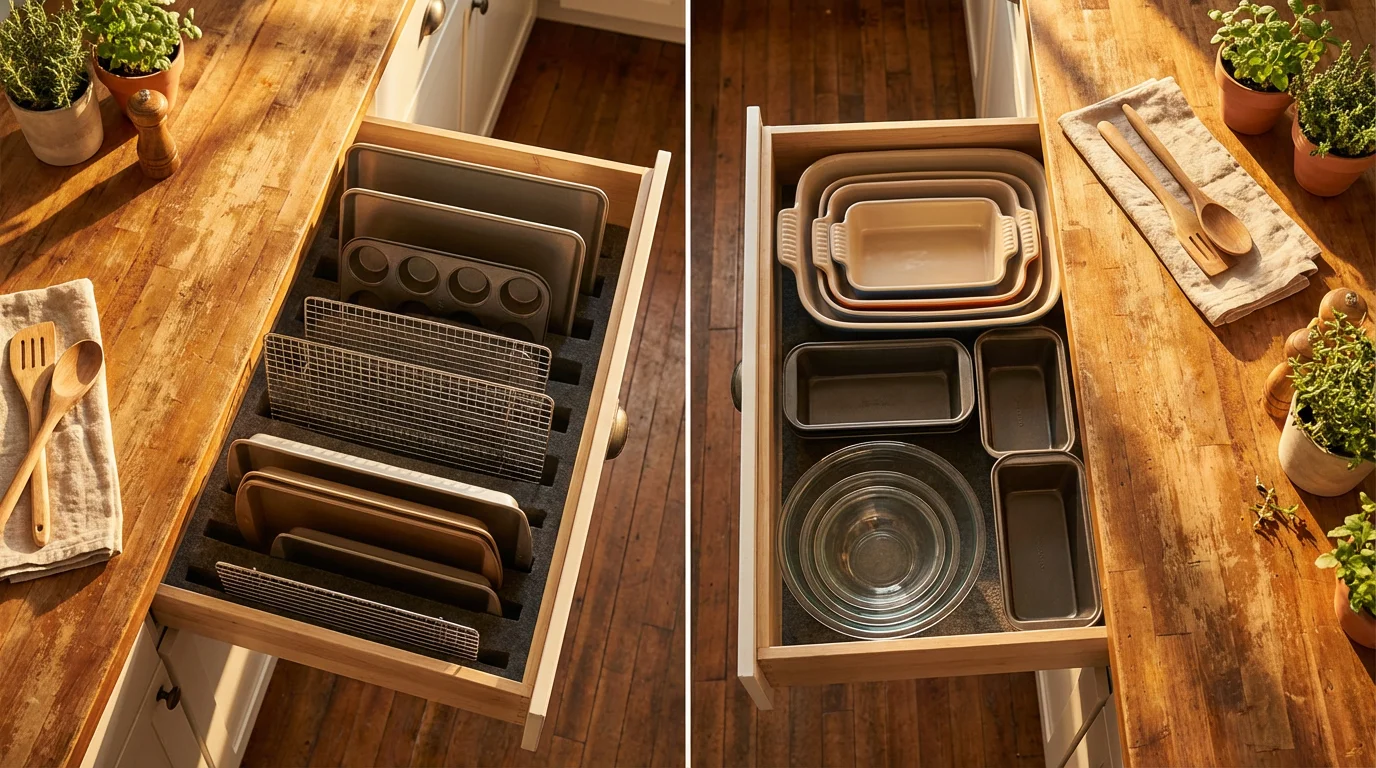
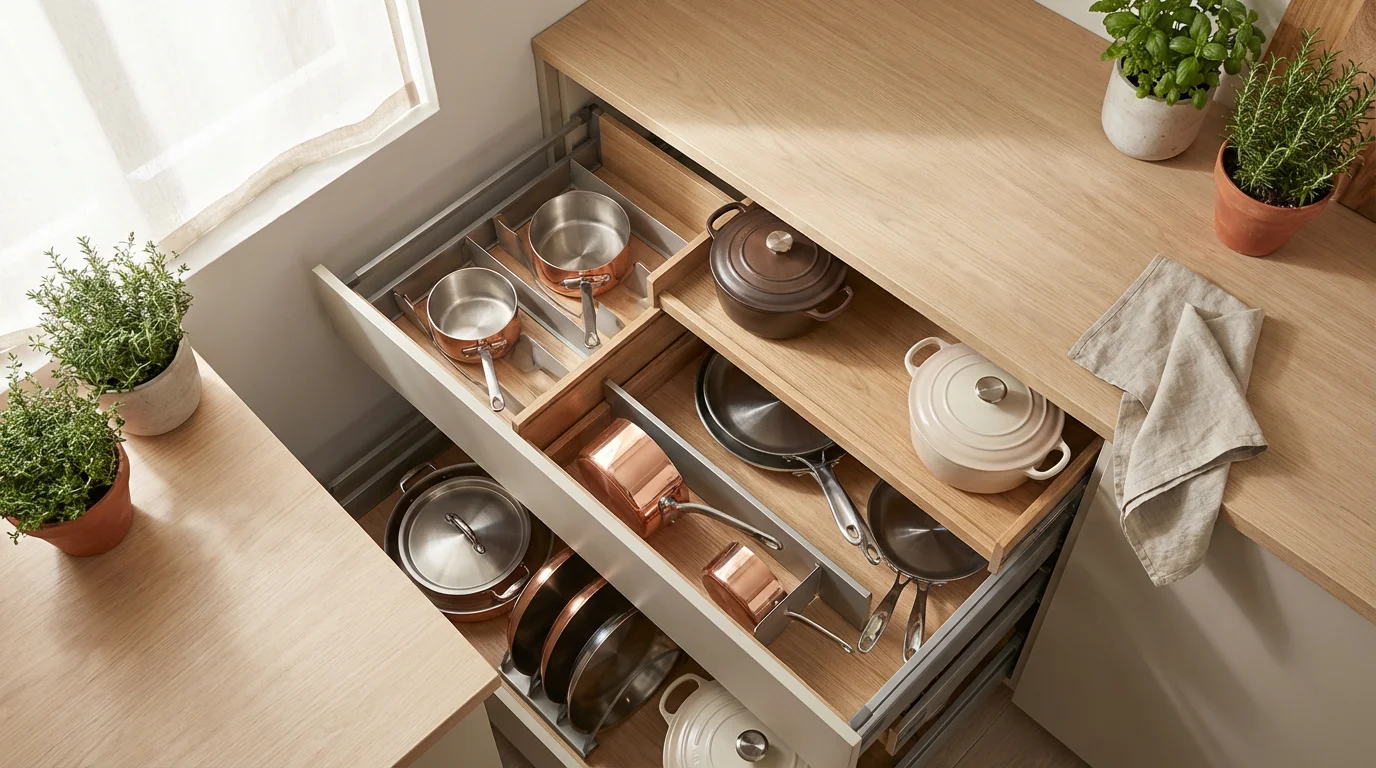
Properly managing your internal cabinet space is also vital; for instance, using lid organizers for pots and containers prevents mismatched pieces from migrating back onto your work surfaces.
Start by removing everything from your counters. Wipe them down. Now, categorize each item: “Daily Use,” “Weekly Use,” “Occasional Use,” and “Seldom/Never Use.”
- Daily Use: Coffee maker, toaster, frequently used oils and spices. These earn a spot back on the counter, but ideally in an organized manner.
- Weekly Use: Blender, food processor, mixer. These need accessible storage, perhaps in a lower cabinet or pantry, but not on the counter.
- Occasional Use: Specialty gadgets, holiday serving dishes. Store these in less accessible spots, like high shelves or deep cabinets.
- Seldom/Never Use: Items you forgot you even had. These are prime candidates for donation, selling, or discarding.
The goal is to create maximum clear surface area. As Real Simple recommends, a clutter-free space starts with removing items you no longer need. You will be amazed by how much more space you find once the excess is gone.
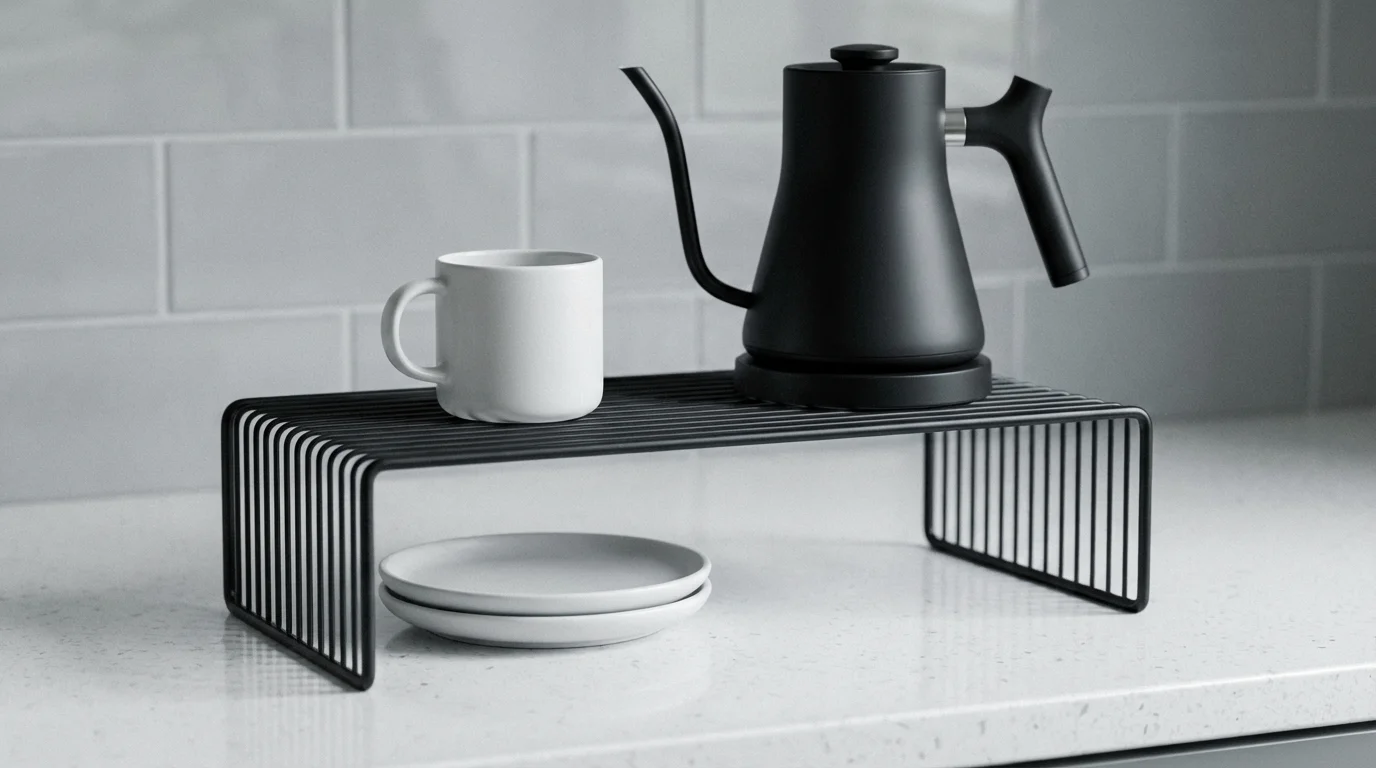
Unlocking Vertical Space with Stackable and Tiered Organizers
When horizontal space is scarce, look up. Vertical storage is your secret weapon for countertop storage in a small kitchen. You can effectively double or triple your usable area without expanding your footprint.
Shelf Risers
A shelf riser is a mini shelf that creates two levels of storage in one space. These are perfect for small countertops. For example, a metal shelf riser measuring 12 inches wide, 8 inches deep, and 6 inches high allows you to store spice jars underneath and a fruit bowl or frequently used mugs on top. Look for stackable versions, which means they are designed to safely pile on top of each other, offering even more verticality. Some models feature adjustable widths or heights, making them modular pieces that can be combined and configured different ways to fit various spaces.
Tiered Organizers
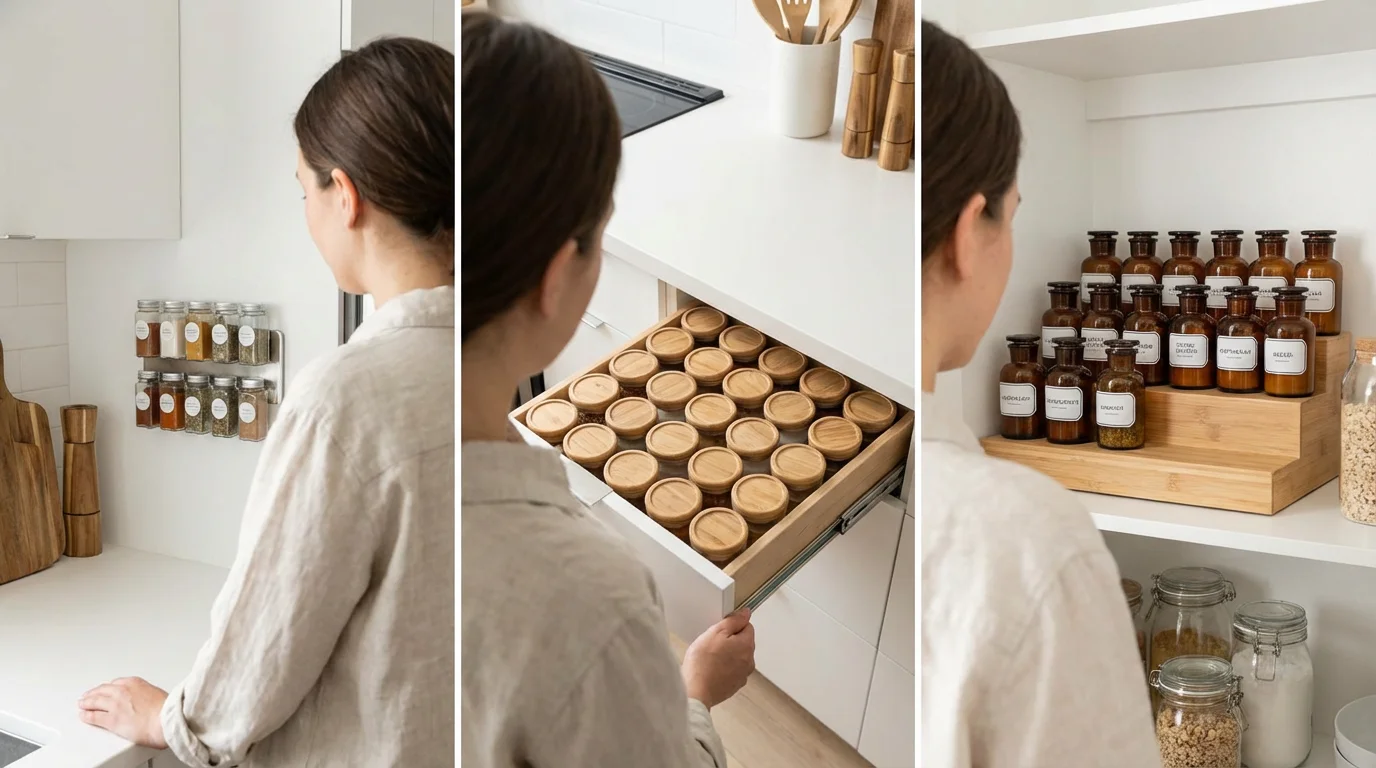
Tiered organizers, like a three-tier spice rack or a two-tier fruit basket, similarly leverage vertical height. A typical tiered spice rack is approximately 14 inches high, 10 inches wide, and 3 inches deep. It can hold dozens of spices, keeping them easily visible and accessible without consuming broad counter space. Consider tiered corner shelves for maximizing corner dead space, which is unused storage areas, often in corners or above appliances.
“The true art of small kitchen organization lies in seeing not just the surface, but the air above it as potential storage.”
For renters, shelf risers and tiered units are ideal because they require no installation and are easily removable. Homeowners might also consider more permanent built-in tiered solutions or custom shelving for a seamless look, but off-the-shelf options provide excellent flexibility for all.
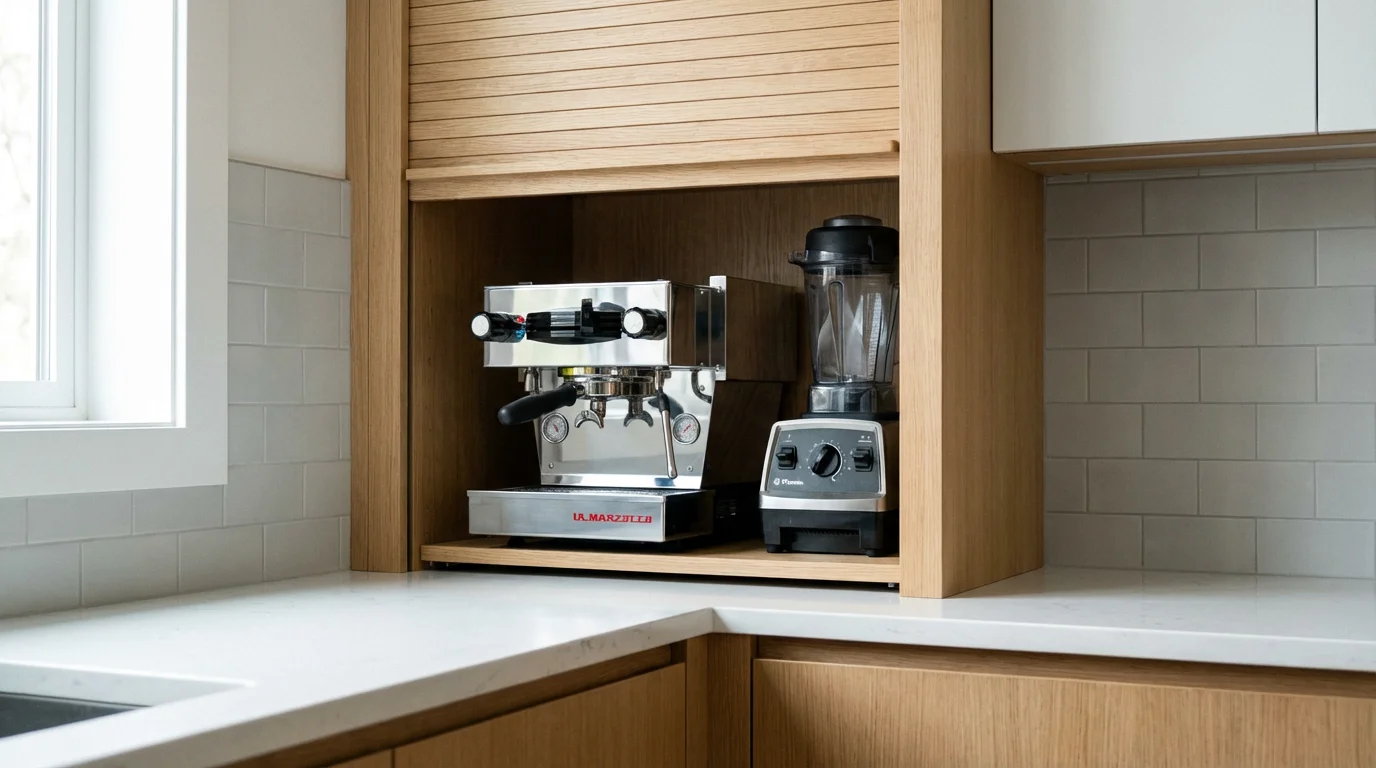
Smart Appliance Garages and Dedicated Zones
Appliances are notorious counter hogs. An appliance garage offers a dedicated, concealed spot for your toaster, coffee maker, or blender. While typically built-in, freestanding versions or clever cabinet modifications can provide a similar effect. A simple wooden bread box, for instance, can hide not just bread, but also small appliances or charging stations, effectively reducing visual clutter.
If a true appliance garage is not feasible, creating dedicated zones helps. Group similar items together. Your “coffee station” might consist of your coffee maker, mugs stacked on a shelf riser, and coffee beans in an airtight container, all confined to one corner. This strategy helps define boundaries and prevents clutter sprawl. For example, a compact coffee station might occupy a 12×12 inch area, keeping all related items in one contained footprint.
Harnessing Wall Space: Mounted Racks and Floating Shelves
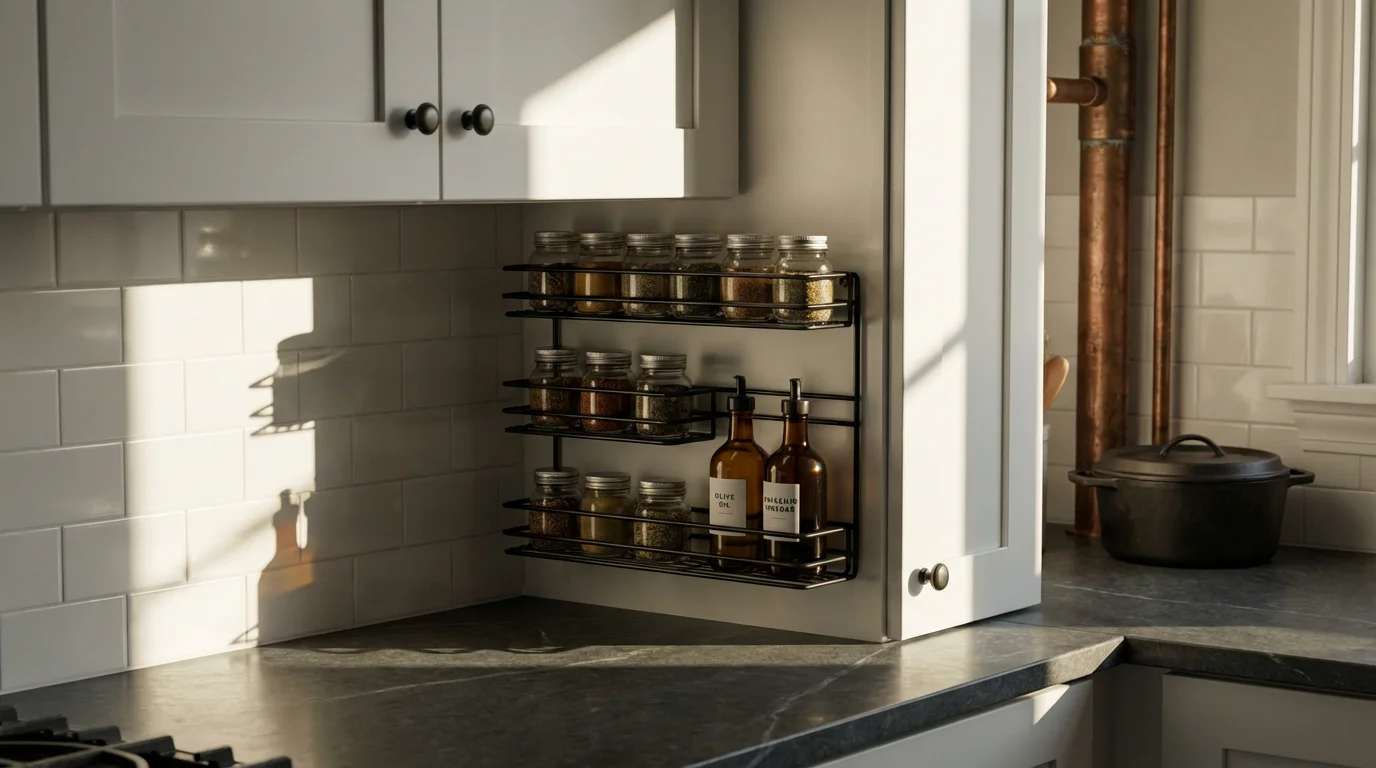
When you have no counter space, look to your walls. Wall-mounted solutions are a game-changer for small kitchens. They lift items off your precious surfaces entirely, freeing up critical real estate.
Door-Mounted Racks and Cabinet Side Organizers
While often used inside pantry doors or cabinets, some door-mounted rack designs can attach to the side of a cabinet if it faces an open area. A door-mounted rack is storage that hangs on the inside of cabinet doors, providing extra space for spices, wraps, or cleaning supplies. Imagine a slim metal rack, 10 inches wide and 2 inches deep, holding your most used oils and vinegar right next to your cooking zone, completely off the counter.
Floating Shelves
Floating shelves provide elegant, open storage. Install them above your main prep area or in an unused corner. They are perfect for displaying cookbooks, often-used dishware, or decorative items that add personality without consuming counter space. Consider shelves with a depth of 6-8 inches and a length appropriate for your wall. Ensure they are installed securely, especially if holding heavier items. For renters, tension rod shelves or adhesive shelves offer temporary, damage-free alternatives.
INFOGRAPHIC: {“prompt”: “Infographic showing different types of wall-mounted kitchen organizers (magnetic knife strip, floating shelf, pegboard, spice rack) with pros and cons for small kitchens, and space-saving examples.”, “alt”: “Infographic comparing wall-mounted kitchen organization solutions for small kitchens.”}
Magnetic Knife Strips
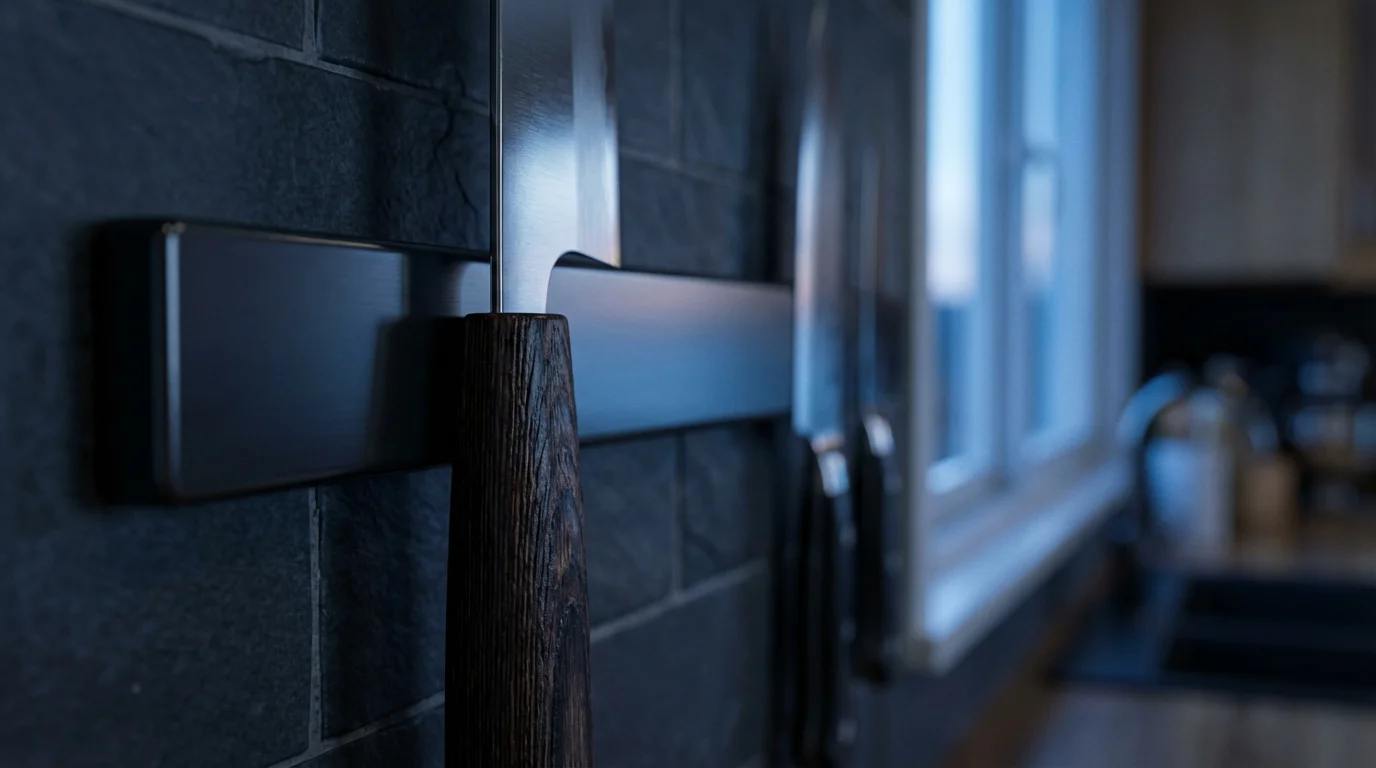
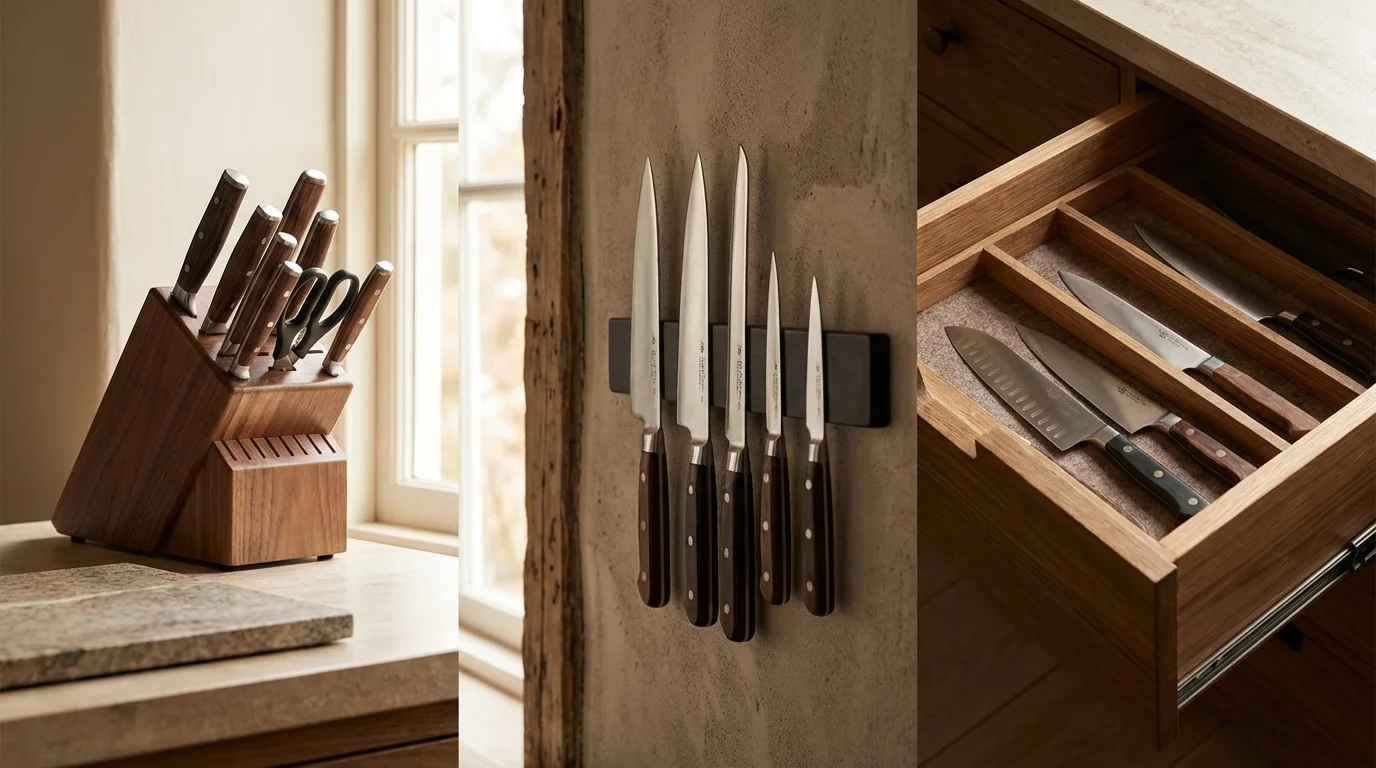
A magnetic knife strip, typically 12-18 inches long, adheres knives to your wall, keeping them off the counter and out of drawers. This solution is safer than a traditional knife block taking up precious space and makes knives easily accessible. Just ensure it is installed in a spot where it is safe from accidental bumps.
Optimizing Utensil and Knife Storage
Utensil crocks and knife blocks are common counter dwellers. However, in a small kitchen, they take up valuable space. You have better options.
Drawer Organizers
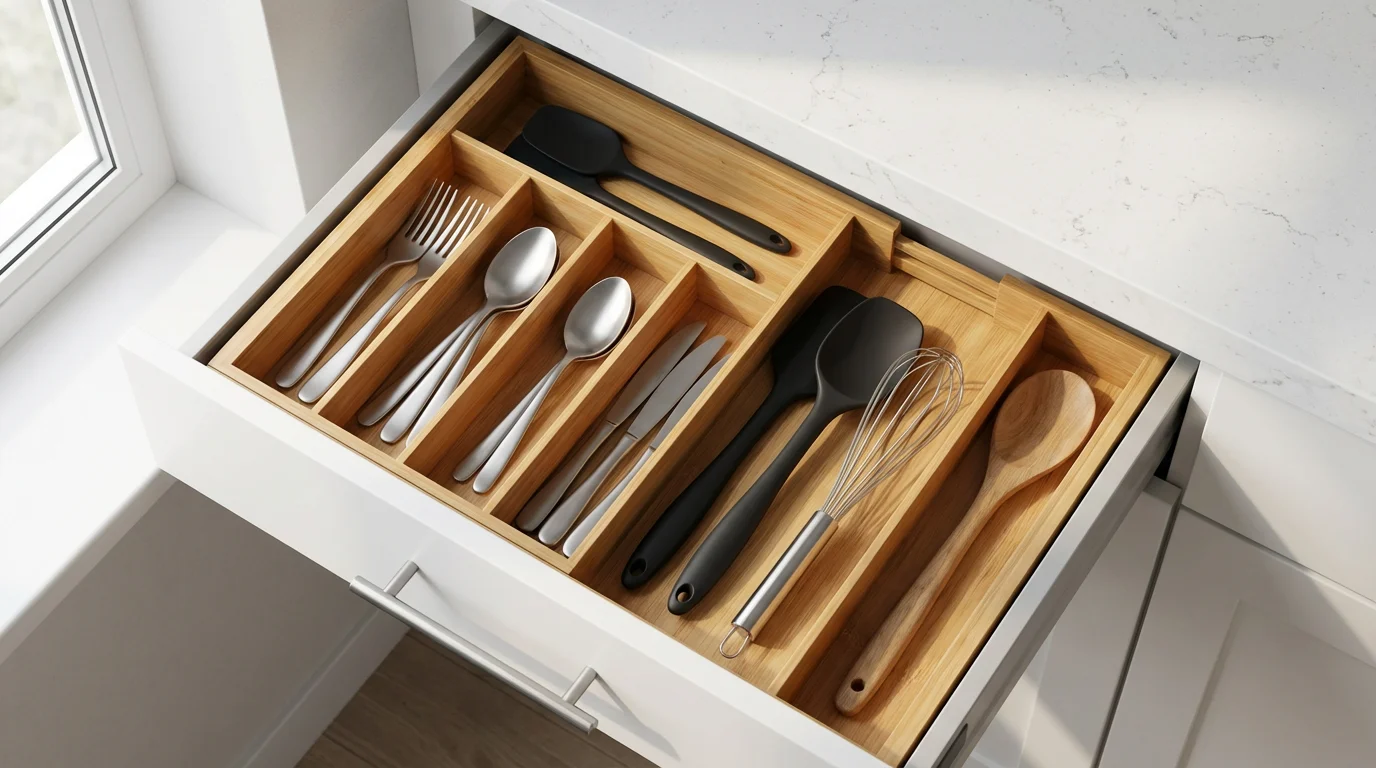
For utensils, invest in high-quality drawer organizers. These include utensil trays, dividers, and expandable inserts that fit snugly into your drawers. A typical expandable utensil tray might adjust from 12 inches to 20 inches wide, ensuring a custom fit for your existing drawer. You can sort forks, spoons, spatulas, and whisks into dedicated compartments, keeping them organized and off the counter. According to Good Housekeeping’s home organization tips, maximizing drawer space is key to freeing up your counters.
Wall-Mounted Solutions for Utensils
Consider wall-mounted utensil holders or rail systems with S-hooks. These hang spatulas, ladles, and whisks directly on the wall above your stove or prep area. A 24-inch rail can accommodate multiple utensils, making them easy to grab while cooking and completely freeing up a drawer or counter crock.
In-Drawer Knife Blocks
Instead of a bulky countertop knife block, use an in-drawer knife block. These usually fit within standard drawer depths (around 2 inches high) and safely store knives horizontally. A typical block can hold 8-12 knives, keeping sharp blades protected and out of sight. This is one of the best countertop organizers for small kitchen because it solves a specific problem without adding clutter.
Strategic Refrigerator and Pantry Organization to Free Counters
While this article focuses on countertop storage, effective refrigerator and pantry organization directly impacts how much space you need on your counters. When your fridge and pantry are disorganized, items spill out onto your counters. By optimizing these areas, you reduce the need for overflow storage on your limited surfaces.
Refrigerator Organization
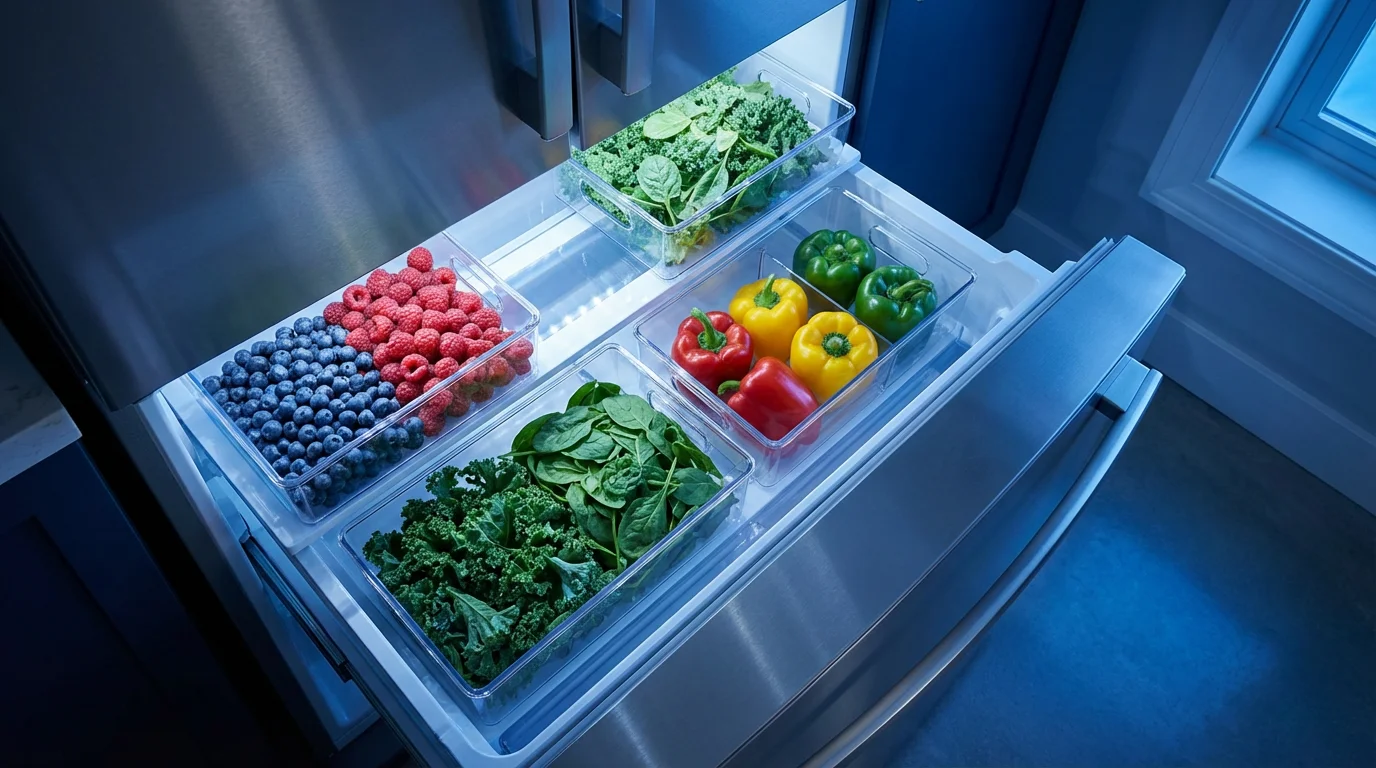
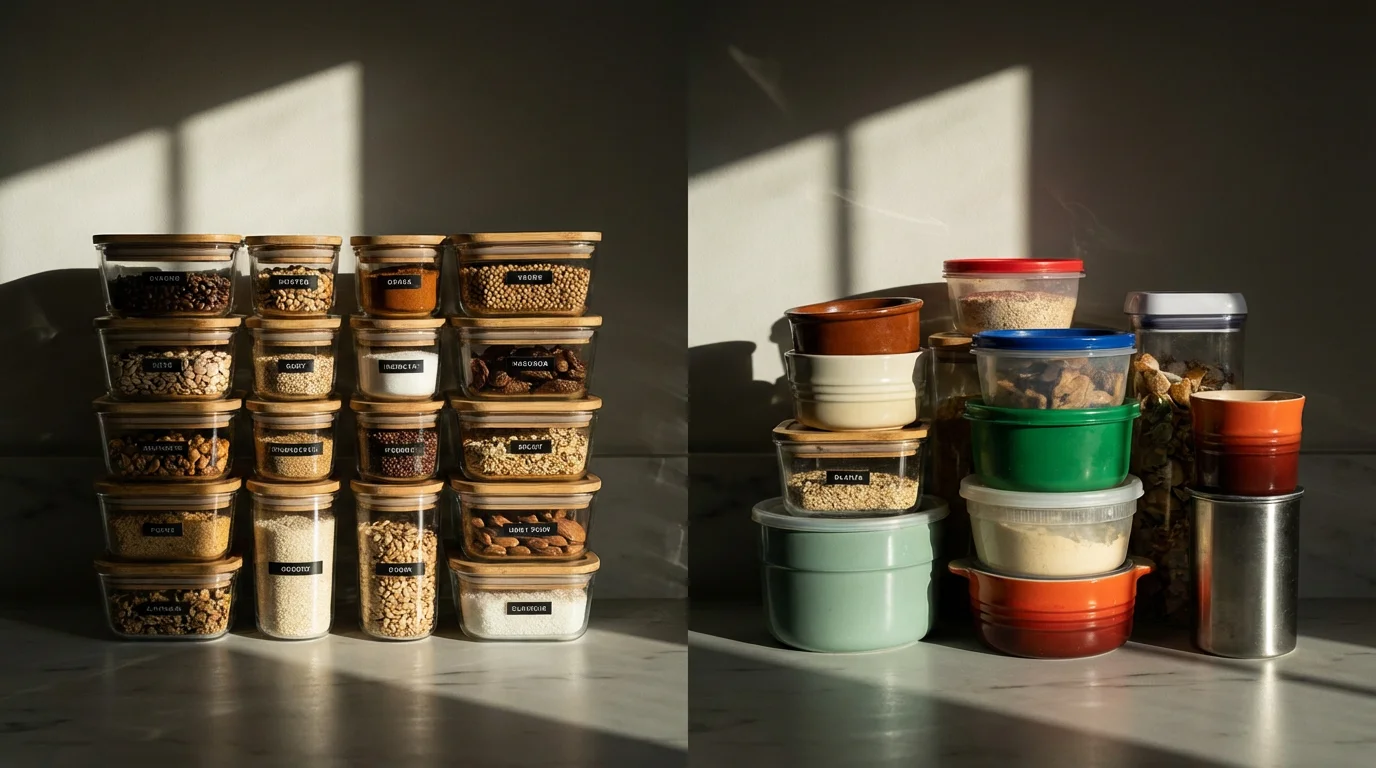
Use clear bins, stackable containers, and drawer dividers inside your fridge. This creates zones and maximizes vertical space. For example, a clear plastic bin, 10 inches deep by 6 inches wide and 5 inches high, can contain all your yogurts or condiments. Adopt the FIFO method, which means “first in, first out,” to rotate food so the oldest items get used first, preventing forgotten items from expiring and taking up space. This system ensures less food waste and a more efficient fridge, leaving less “extra” to sit on the counter.
Pantry Organization
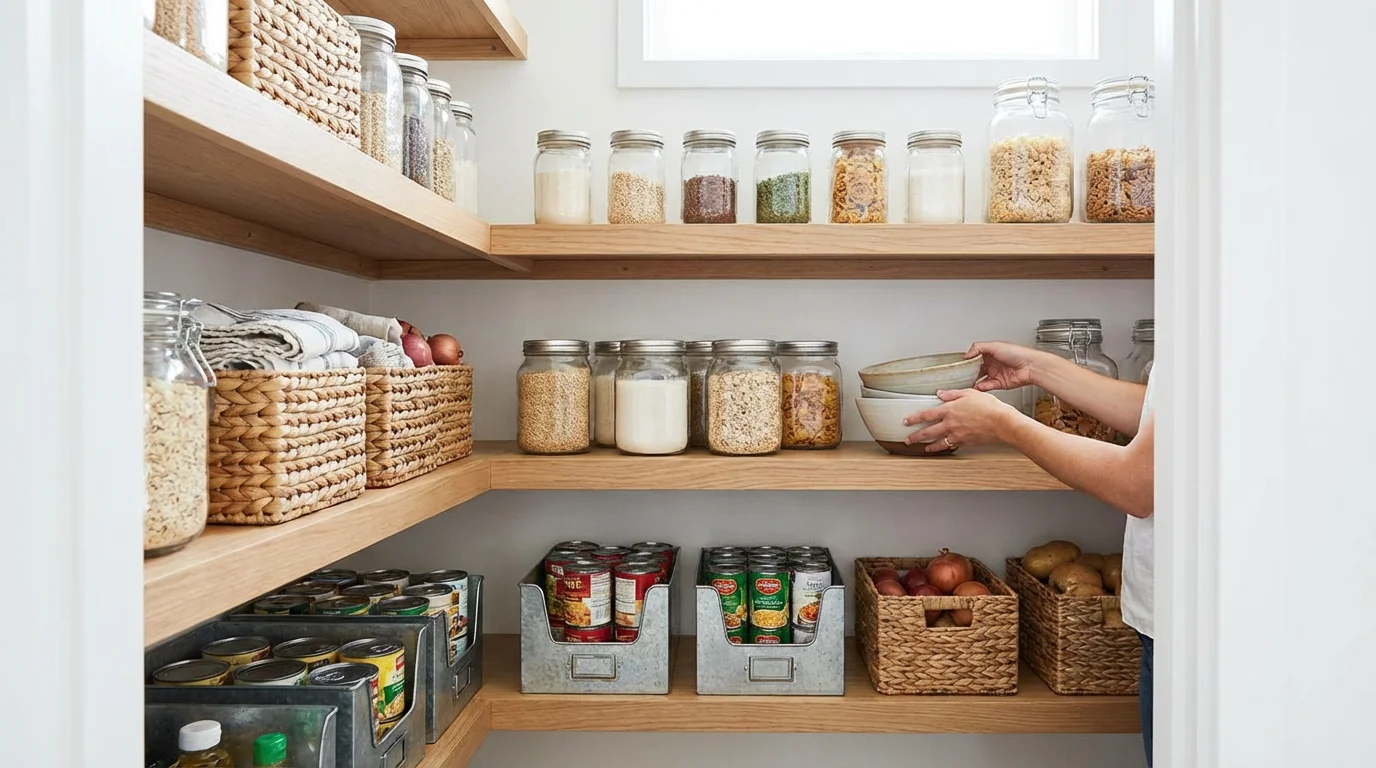
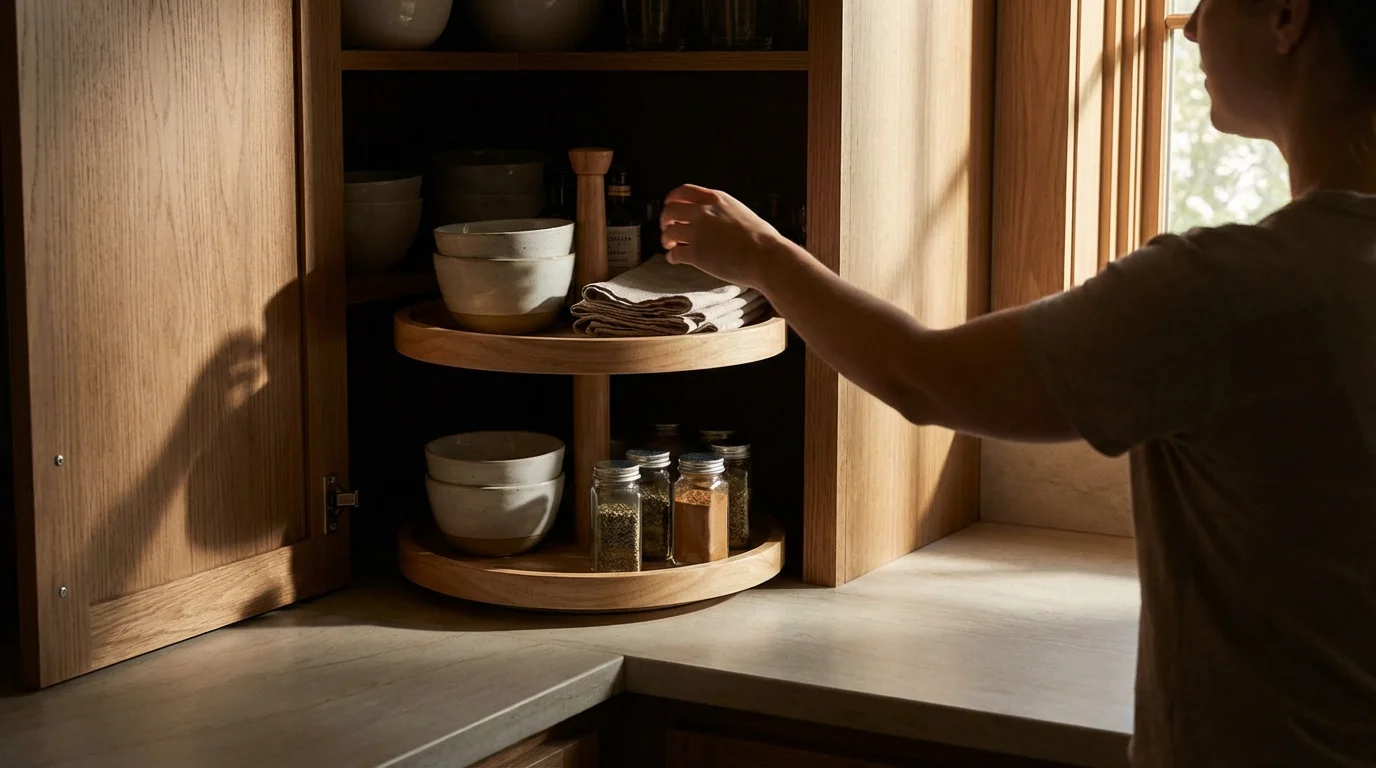
For your pantry, deploy bins, baskets, and shelf risers. Utilize a lazy susan, a rotating tray that makes corner cabinet items accessible, for oils, sauces, or spices. This prevents items from getting lost in the back of deep shelves and migrating to your counters. For instance, a 10-inch diameter lazy susan makes a world of difference in a corner pantry cabinet. Stackable containers for dry goods like pasta, rice, and flour also free up valuable shelf space, allowing you to store more inside the pantry and less on the counter.
As The Spruce highlights, a well-organized pantry is the cornerstone of an efficient kitchen, reducing clutter throughout your entire space.
Maximizing Corner Dead Space with Clever Solutions
Corners on countertops are often underutilized, becoming zones for random items or simply empty dead space. With the right strategy, you can turn these tricky areas into efficient storage hubs.
Corner Shelving Units
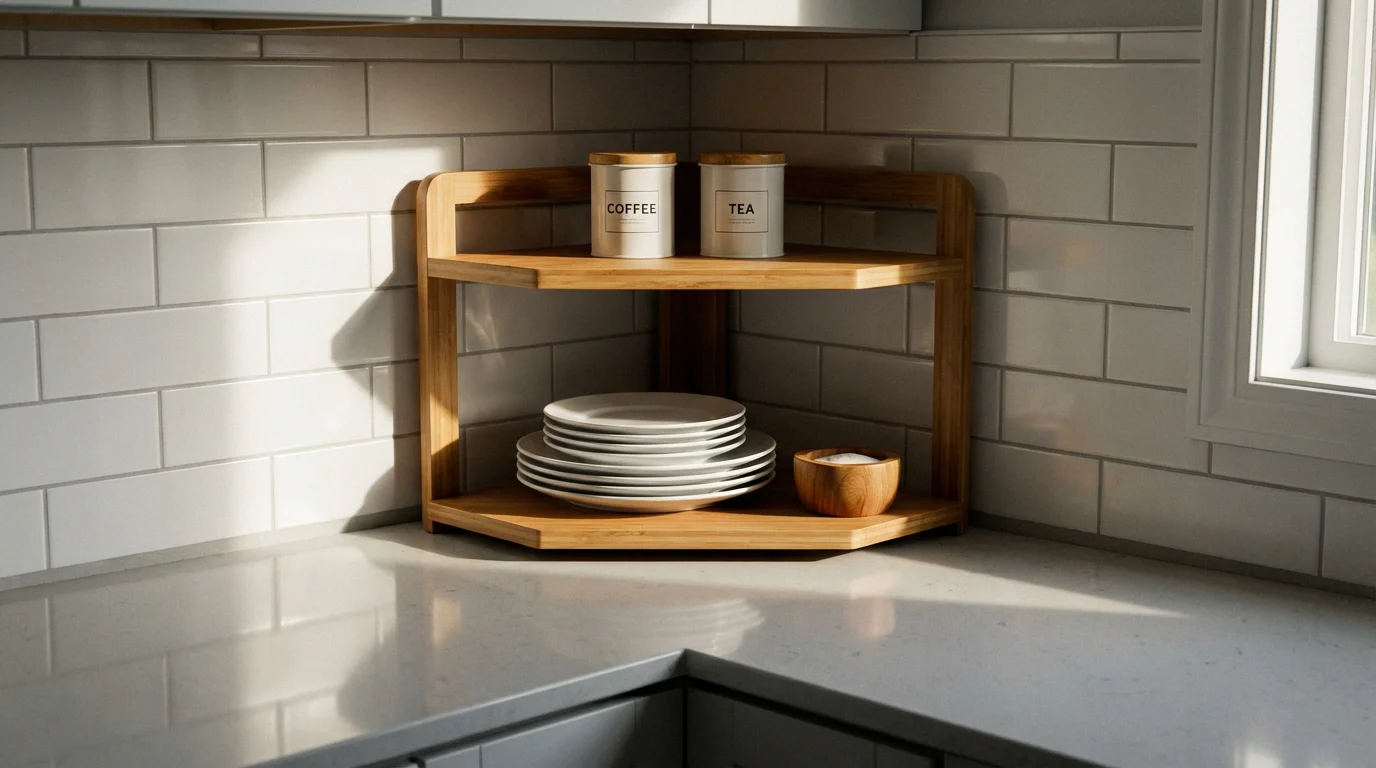
Specialized corner shelving units are designed to fit snugly into a 90-degree angle. These can be single-tiered or multi-tiered, often made from wire, wood, or bamboo. A typical two-tier corner shelf unit might measure 10 inches on each side, offering two levels of storage for spices, small appliance accessories, or decorative items. This immediately transforms an awkward corner into a functional display or storage area.
Lazy Susans for Corners
While often used inside cabinets, a compact lazy susan (a rotating tray that makes corner cabinet items accessible) can be effective on a countertop corner. A 10-inch diameter lazy susan can hold oils, vinegars, salt, and pepper shakers, making them easily accessible with a spin. This prevents you from reaching awkwardly into a corner and dislodging other items, keeping the area tidy.
Utilizing Triangular Bins
Some companies manufacture triangular-shaped bins or baskets specifically designed for corner placement. These are ideal for holding dish sponges, scrub brushes, or even frequently used fruit, keeping these items contained and preventing them from scattering across the counter.
Long-Term Habits for a Clutter-Free Countertop
Organizing your small kitchen is not a one-time event; it is an ongoing process. Maintaining your beautifully organized countertop requires consistent habits and a shift in mindset. You must be honest about the effort required. It takes work.
- The “One-In, One-Out” Rule: When you buy a new kitchen gadget, commit to donating or discarding an old one. This prevents accumulation.
- Daily Reset: Before bed, take five minutes to clear your counters. Put dishes in the dishwasher, wipe down surfaces, and return items to their designated spots. This ensures you wake up to a clean, calm kitchen.
- Regular Purges: Schedule a quarterly “countertop audit.” Re-evaluate everything. Do you still use that electric can opener? Could your immersion blender be stored in a drawer?
- Containment is Key: Always use trays, baskets, or risers. They visually contain items, making surfaces appear less cluttered.
Your goal is a functional kitchen where you can find what you need quickly and enjoy the cooking process, even with limited space. Consistency is your most powerful tool.
Choosing Your Best Countertop Organizers: A Practical Comparison
Selecting the right organizers depends on your specific needs, the layout of your small kitchen, and your budget. Here is a comparison of common countertop storage solutions:
| Organizer Type | Best For | Typical Dimensions (Approx.) | Pros | Cons | Budget |
|---|---|---|---|---|---|
| Shelf Riser | Spices, mugs, small plates, fruit bowls | 12″W x 8″D x 6″H | Creates vertical space, versatile, inexpensive, renter-friendly | Can look cluttered if overfilled, limited to item height | $ |
| Tiered Corner Shelf | Spices, oils, small accessories, plants | 10″W x 10″D x 12″H | Maximizes corner dead space, attractive display | Specific to corner use, can be less stable if top-heavy | $$ |
| Appliance Garage (Freestanding) | Toasters, coffee makers, blenders, bread | 15″W x 12″D x 10″H | Hides visual clutter, protects appliances | Takes up a large footprint, can be expensive | $$$ |
| Wall-Mounted Magnetic Knife Strip | Knives, metal utensils | 12″-18″L x 1″D x 2″H | Frees counter/drawer space, safe, hygienic | Requires drilling (usually), not suitable for all knife types | $ |
| Wall-Mounted Utensil Rail with S-Hooks | Spatulas, ladles, whisks | 18″-24″L x 2″D x 3″H | Keeps frequently used tools accessible, frees drawer space | Requires drilling, can look busy if too many items | $ |
| Lazy Susan (Countertop) | Oils, spices, condiments, sauces | 8″-12″ Diameter | Easy access to items, keeps small bottles contained | Circular footprint may not fit all spaces efficiently | $ |
Frequently Asked Questions
How can I organize my small kitchen with no counter space?
Focus on vertical and wall-mounted solutions. Utilize shelf risers, tiered organizers, and magnetic knife strips to get items off the counter. Also, declutter ruthlessly, keeping only daily essentials on display and storing less-used appliances in cabinets or pantries.
What are the best countertop organizers for a small kitchen?
Top recommendations include narrow shelf risers, two- or three-tier corner shelves, and wall-mounted magnetic knife strips or utensil rails. These items specifically address the challenge of limited horizontal space by utilizing vertical height or wall area.
How do I make my small kitchen look less cluttered?
The key is minimizing the number of items visible on your countertops. Use closed storage like appliance garages or bread boxes. Contain smaller items in bins and trays. Opt for a cohesive color palette for your organizers and appliances to create visual calm. Regularly put items away immediately after use.
Should I store small appliances on my countertop in a small kitchen?
Only keep appliances you use daily, such as a coffee maker or toaster, on your countertop. For weekly or occasional use appliances like blenders or food processors, find dedicated spots in cabinets, pantries, or utility closets. If you have absolutely no other storage, consider a compact appliance garage to hide them.
Disclaimer: Product prices and availability change frequently. Prices shown were accurate at time of writing but may have changed. We may earn a small commission from purchases made through links on this site, at no extra cost to you. Always measure your space before purchasing organizers to ensure proper fit.
Leave a Reply