
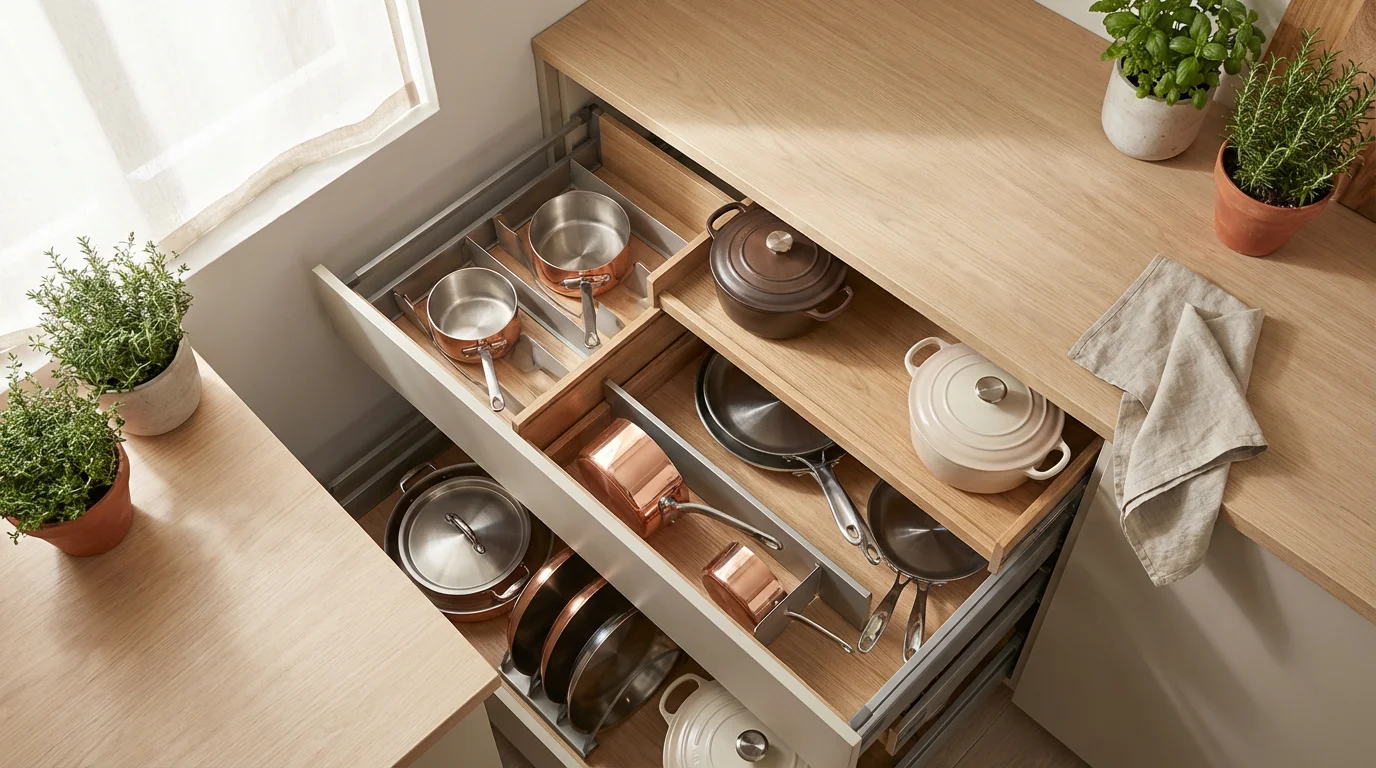
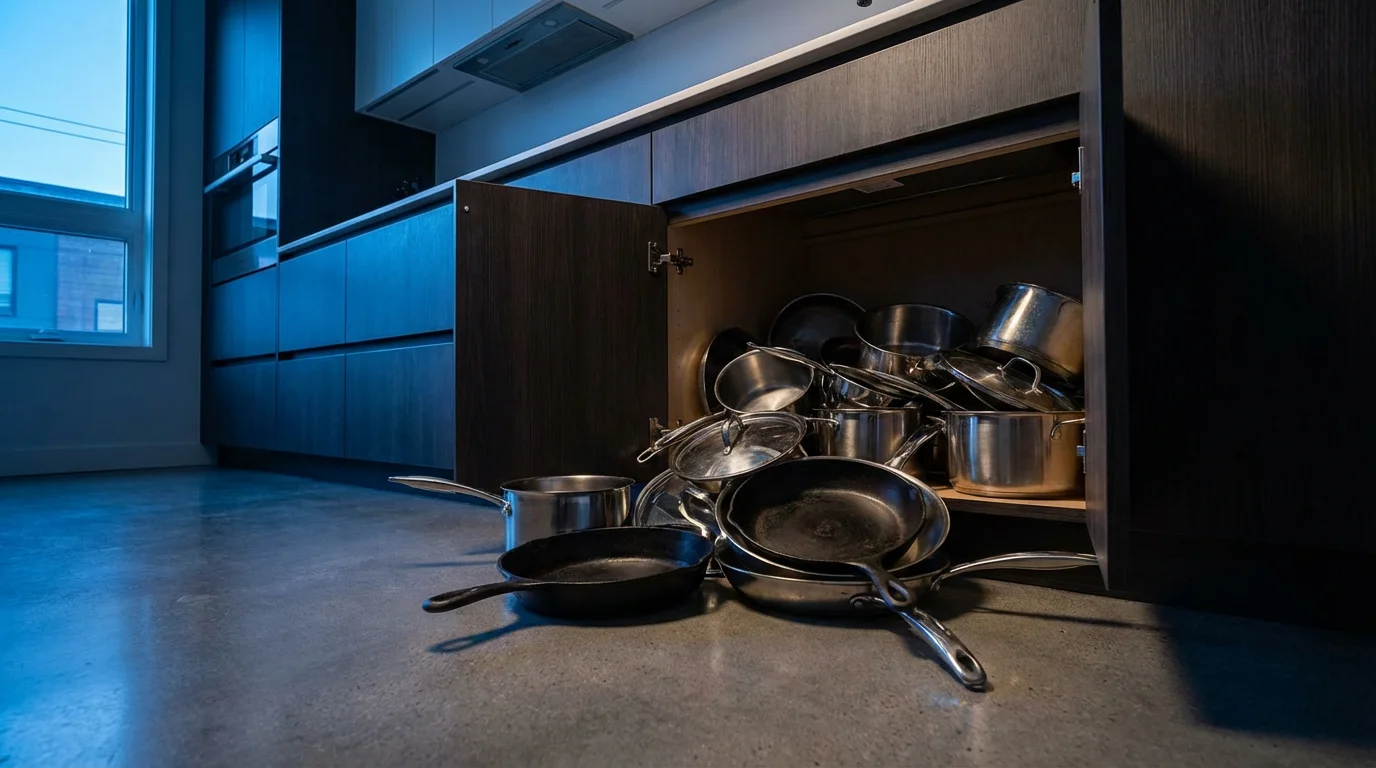
Your kitchen often feels like a battlefield, with pots, pans, and lids waging war for cabinet space. You open a cabinet, and a cascade of cookware threatens to tumble out, leaving you frustrated and delaying your meal prep. This common struggle stems from a lack of effective storage solutions for these bulky, essential items. Instead of expensive renovations, smart cabinet organizers offer practical, actionable ways to transform your cluttered kitchen into an efficient cooking haven.
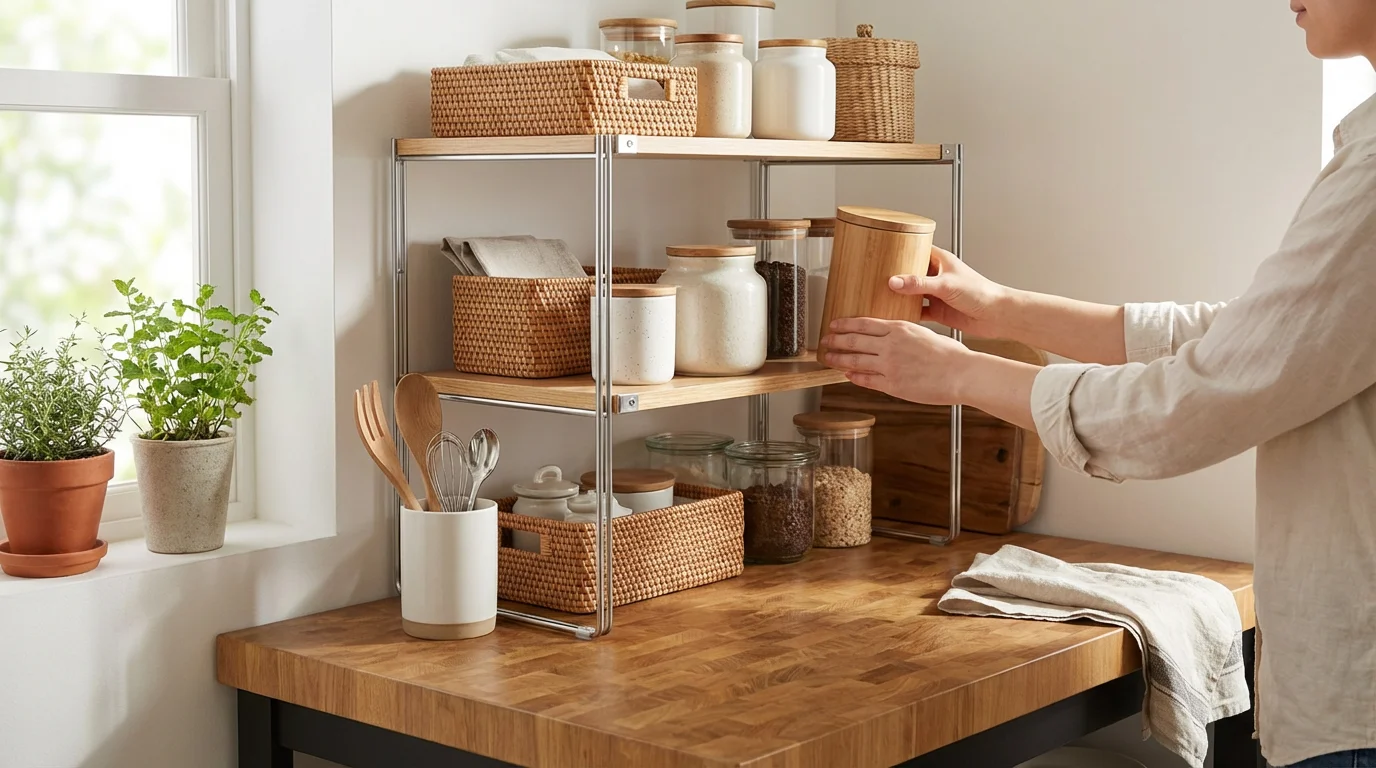
While maximizing cabinet space is essential, you can also explore countertop storage solutions for small kitchens to keep your most-used items within easy reach.
We understand your frustration. Many home cooks face limited space, too many gadgets, and the daily challenge of finding the right pot without a full-scale archaeological dig. This guide helps you regain control, create a functional kitchen, and maximize your existing space with practical minimalism and real-world solutions. We focus on effective strategies for heavy item storage, specifically your collection of pots and pans, ensuring easy access and a clutter-free environment.
Why Your Pots and Pans Need a System
A disorganized collection of pots and pans impacts more than just aesthetics. It wastes time, causes stress, and can even damage your cookware. When you stack pots haphazardly, their non-stick coatings scratch, and heavy enamel chips. Lids disappear, making cooking a frustrating guessing game. An organized system ensures you find what you need quickly, preserves your investment in quality cookware, and streamlines your cooking workflow. You deserve a kitchen that works for you, not against you.
Essential Decluttering Before You Organize
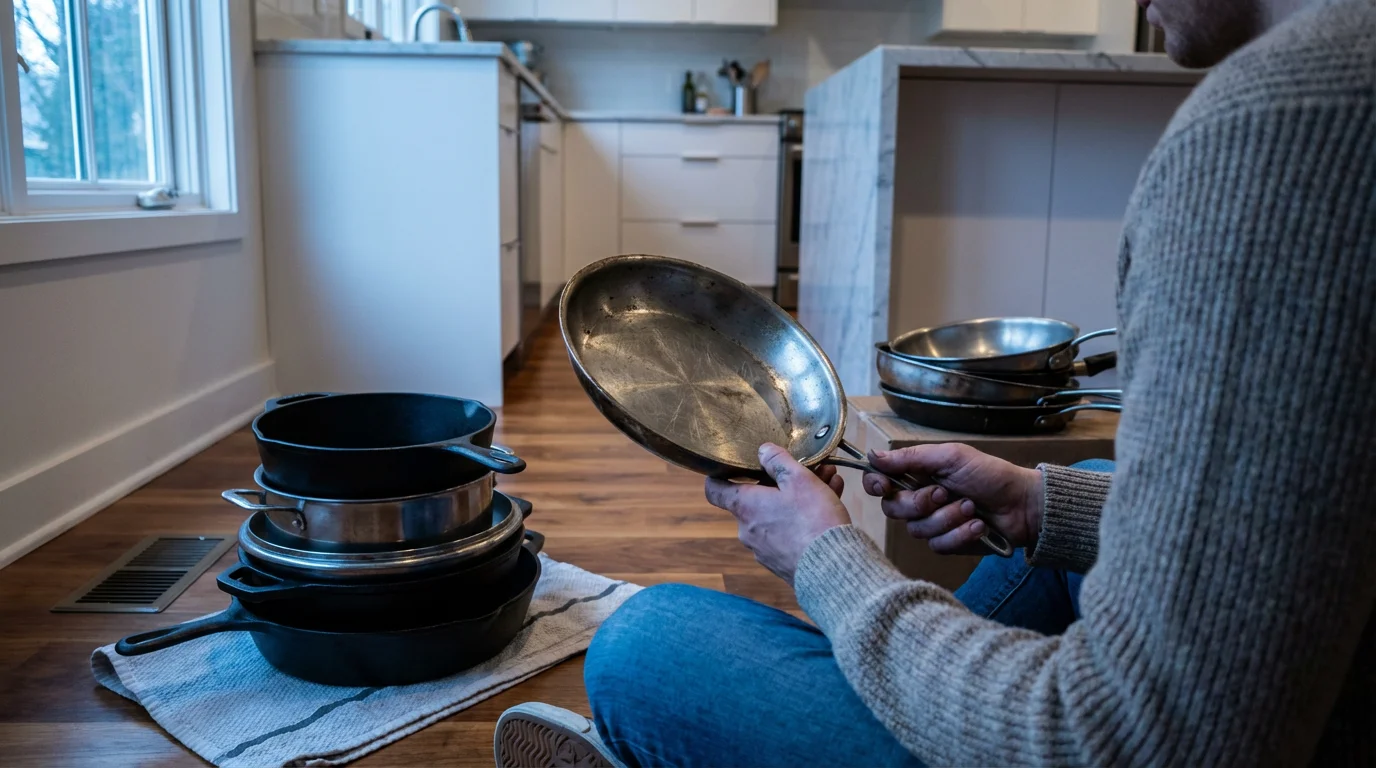
Before you even think about buying a cabinet organizer or a pot organizer, you must declutter. This crucial first step prevents you from organizing clutter, which defeats the entire purpose. Evaluate every pot, pan, and lid you own with a critical eye. Ask yourself these questions:
- Do I use this item? If you haven’t used a pot or pan in over a year, consider donating or selling it. Many specialty items, like a colossal stockpot for holiday meals, might warrant keeping, but be honest about truly unused items.
- Do I have duplicates? You likely do not need three 10-inch frying pans. Keep the best quality one and let the others go.
- Is it damaged beyond repair? Deep scratches on non-stick surfaces, warped bottoms, or broken handles mean it is time to replace, not organize.
- Do all my lids have corresponding pots? A lid without its pot or a pot without its lid becomes dead space in your cabinet. Match them up and discard the orphans.
According to Good Housekeeping’s home organization experts, a successful organization project always begins with a thorough purge. This step alone frees up significant space and clarifies your actual storage needs.
Pull-Out Cabinet Organizers: The Gold Standard for Heavy Cookware
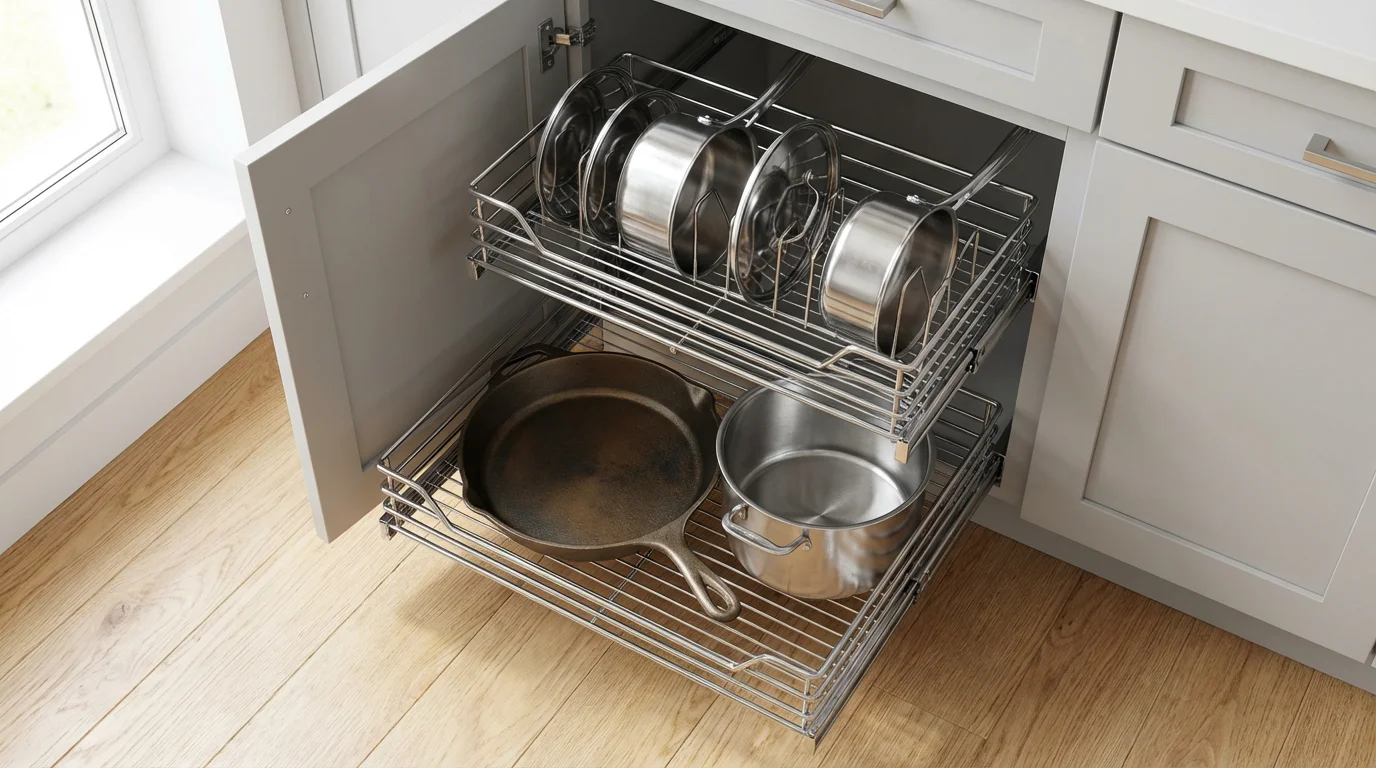
Pull-out cabinet organizers for pots offer the most effective solution for managing heavy cookware, especially in base cabinets. A “pull-out organizer” is a drawer or shelf that slides out from your cabinet on glides, providing full access to items at the back without bending or reaching. These systems convert deep, often inaccessible cabinet interiors into highly functional storage.
If your cookware is currently buried in a hard-to-reach corner, lazy Susans for corner cabinets provide another effective way to bring items to the front without hassle.
Types of Pull-Out Organizers
- Single-Tier Pull-Out Shelves: These typically replace an existing fixed shelf or sit on the cabinet floor, offering a single level of slide-out storage. They are excellent for larger, heavier pots and Dutch ovens.
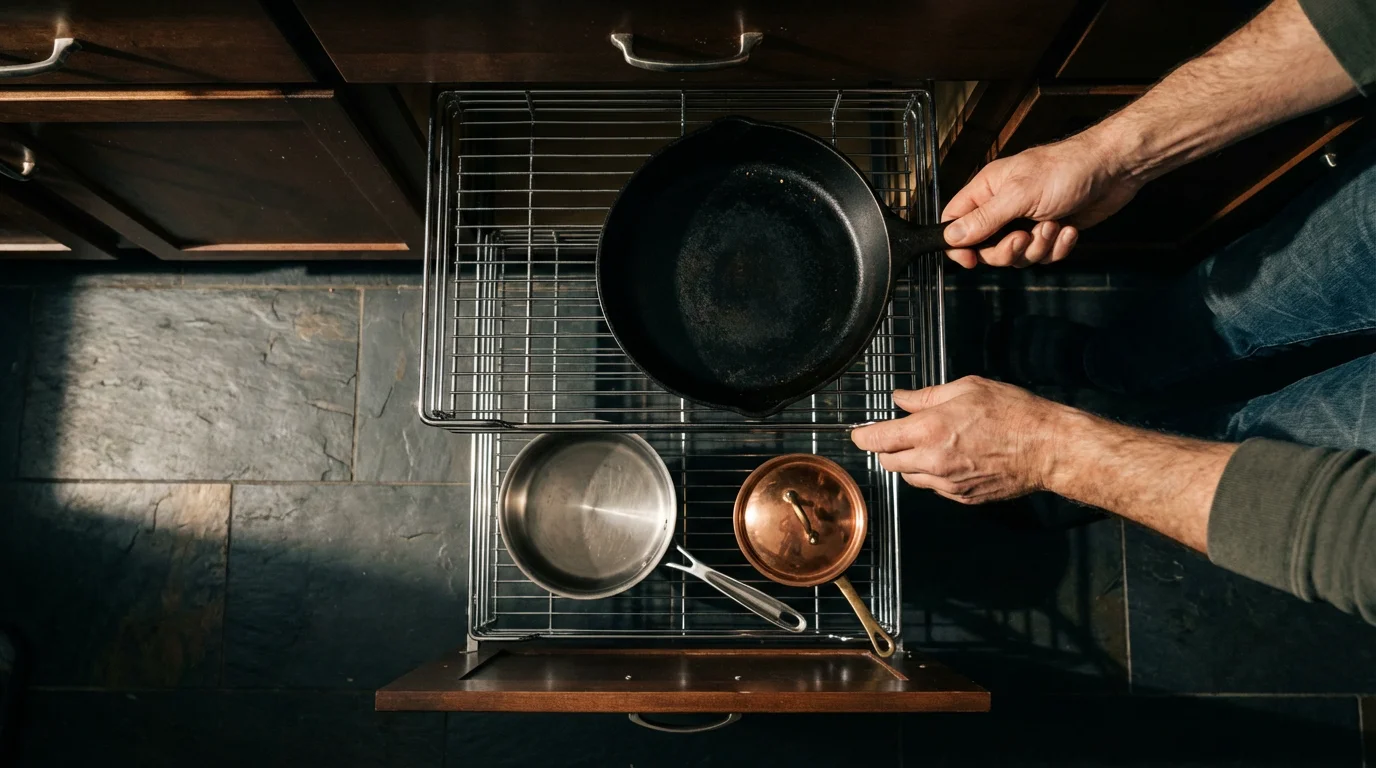
- Two-Tier Pull-Out Systems: These units feature two shelves, one above the other, both sliding out independently or together. They double your storage capacity in the same cabinet footprint, ideal for stacking smaller pots or separating pots from their lids on different levels.
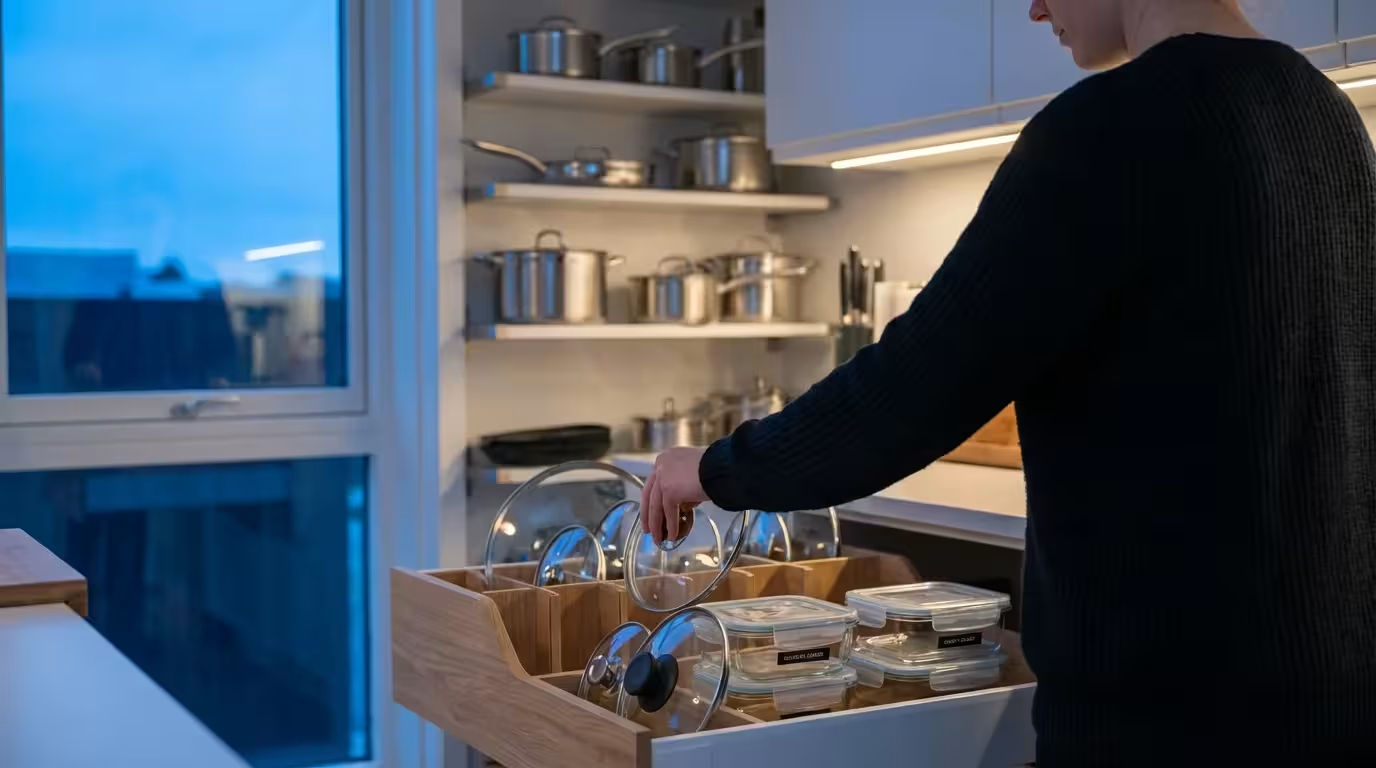
- Customized Pot and Pan Organizers: Some pull-out units come with integrated dividers or pegs, allowing you to secure pots and pans vertically, preventing them from shifting or clanging together. These specialized options offer the best way to organize pots and pans and their lids together.
Installation and Fit
Most pull-out organizers require screw-in installation to the cabinet base, providing stability for heavy cookware. This makes them ideal for homeowners. Renters might consider tension-mounted or freestanding pull-out options, though these may not support as much weight or offer the same stability. Always measure your cabinet dimensions meticulously before purchasing.
- Width: Standard base cabinets in the USA typically come in widths like 12, 15, 18, 21, 24, 30, and 36 inches. A common pull-out unit designed for an 18-inch cabinet will measure approximately 15.5 inches wide, accommodating the cabinet’s internal frame. For a 24-inch cabinet, look for organizers around 21.5 inches wide.
- Depth: Most pull-outs are designed for standard 24-inch deep base cabinets, with units measuring about 22 inches deep to allow for door clearance. Ensure your cabinet’s interior depth, from front frame to back wall, is sufficient.
- Height: Single-tier units might be 3-6 inches high, while two-tier systems can range from 18-24 inches high. Consider the height of your tallest pot when selecting a unit.
“A key benefit of pull-out shelves is their ability to transform the ‘dead space’ at the back of deep cabinets into easily accessible storage, eliminating the need to unload front items to reach those in the rear.”
When selecting a pull out cabinet organizer for pots, consider the weight capacity. High-quality steel or chrome-plated units with robust glides can hold 100 pounds or more, ensuring durability for your cast iron or stainless steel cookware. Brands like Rev-A-Shelf or Knape & Vogt offer premium options, while various retailers provide more budget-friendly alternatives that still deliver excellent functionality.
Example Scenario: Imagine your 24-inch base cabinet. Previously, you stacked five pots, two frying pans, and their lids in a precarious tower. With a two-tier pull-out cabinet organizer, you can place your heavier Dutch oven and large stockpot on the bottom tier, and smaller saucepans and frying pans on the top. Lids can stand upright in a separate section of the top tier or a lid rack. This setup allows you to smoothly slide out the entire unit, grab the exact item you need, and slide it back, all without disturbing other cookware.
Vertical Pan Dividers and Lid Racks: Maximizing Vertical Space
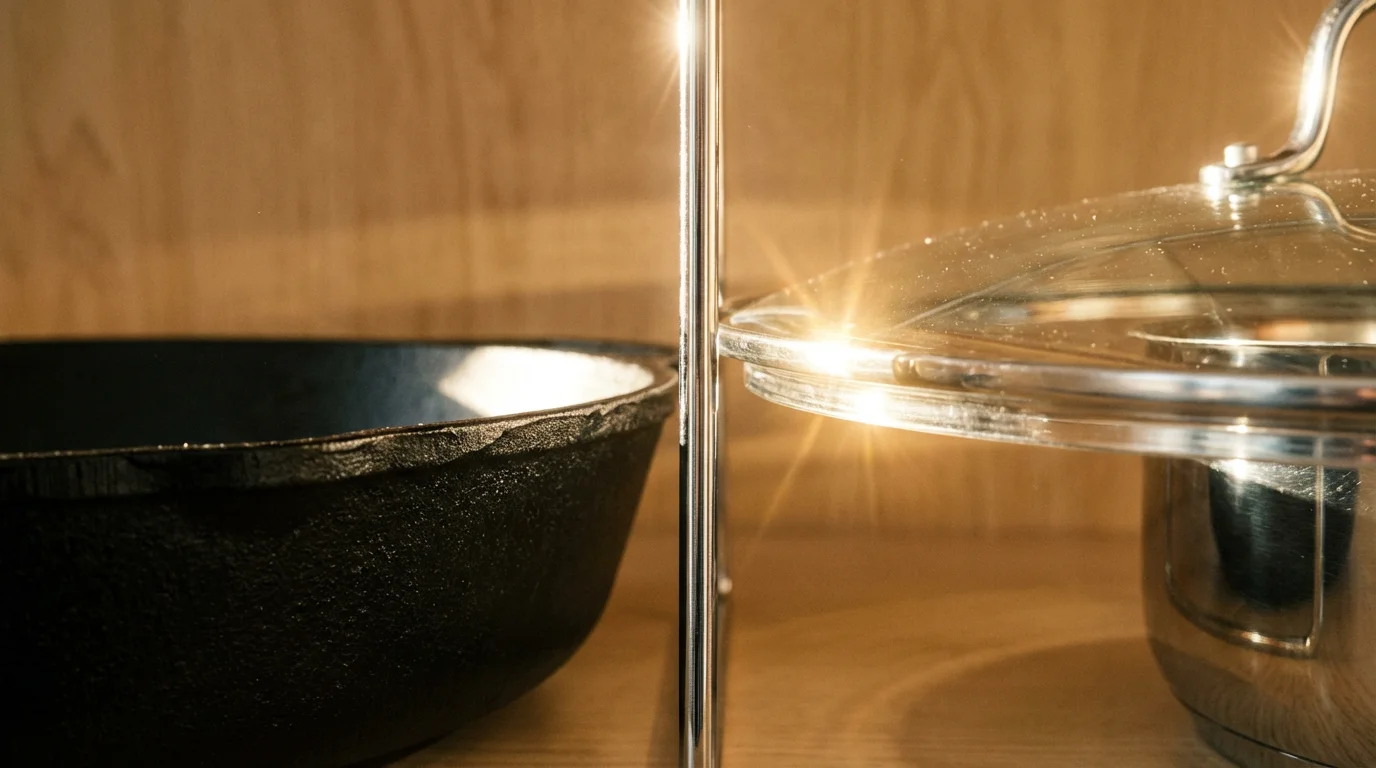
Vertical pan dividers and lid racks offer another effective strategy for pan storage, particularly for frying pans, baking sheets, cutting boards, and pot lids. These organizers stand items on their side, preventing scratching and making each piece easily accessible.
Types and Placement
- Adjustable Dividers: These freestanding or screw-in units feature adjustable wires or bars, allowing you to customize the slot width for different pan sizes. They are highly modular, meaning you can configure pieces different ways.
- Fixed Dividers: Often simpler, these have fixed slots and work well for uniform pan collections or dedicated lid storage.
- In-Cabinet Racks: Place these inside a base cabinet or pantry shelf. A typical rack measures 10-14 inches long, 7-10 inches wide, and 6-8 inches high, offering 4-7 slots. Many are expandable, extending up to 22 inches in length.
- Deep Drawer Inserts: If you have deep drawers, vertical dividers prevent pans from nesting and allow you to grab any pan without lifting others.
For pot lids, specialized racks keep them organized and prevent them from becoming loose, clanging obstacles. These can be freestanding or designed to mount inside cabinet doors or walls. A standard lid organizer can hold 6-8 lids and typically measures 10-15 inches long and 4-6 inches wide. Some feature U-shaped grooves to cradle the lid handles, keeping them secure.
Specific Dimensions: A common vertical divider designed for frying pans might be 12 inches long, 8 inches wide, and 7 inches high, with individual slots around 2 inches wide. For larger items like griddles, look for units with wider slots or adjustable options. You can find options constructed from heavy-gauge steel wire for durability, ensuring they can support your heavier cast iron skillets without bending.
Door-Mounted Racks: Utilizing Hidden Real Estate
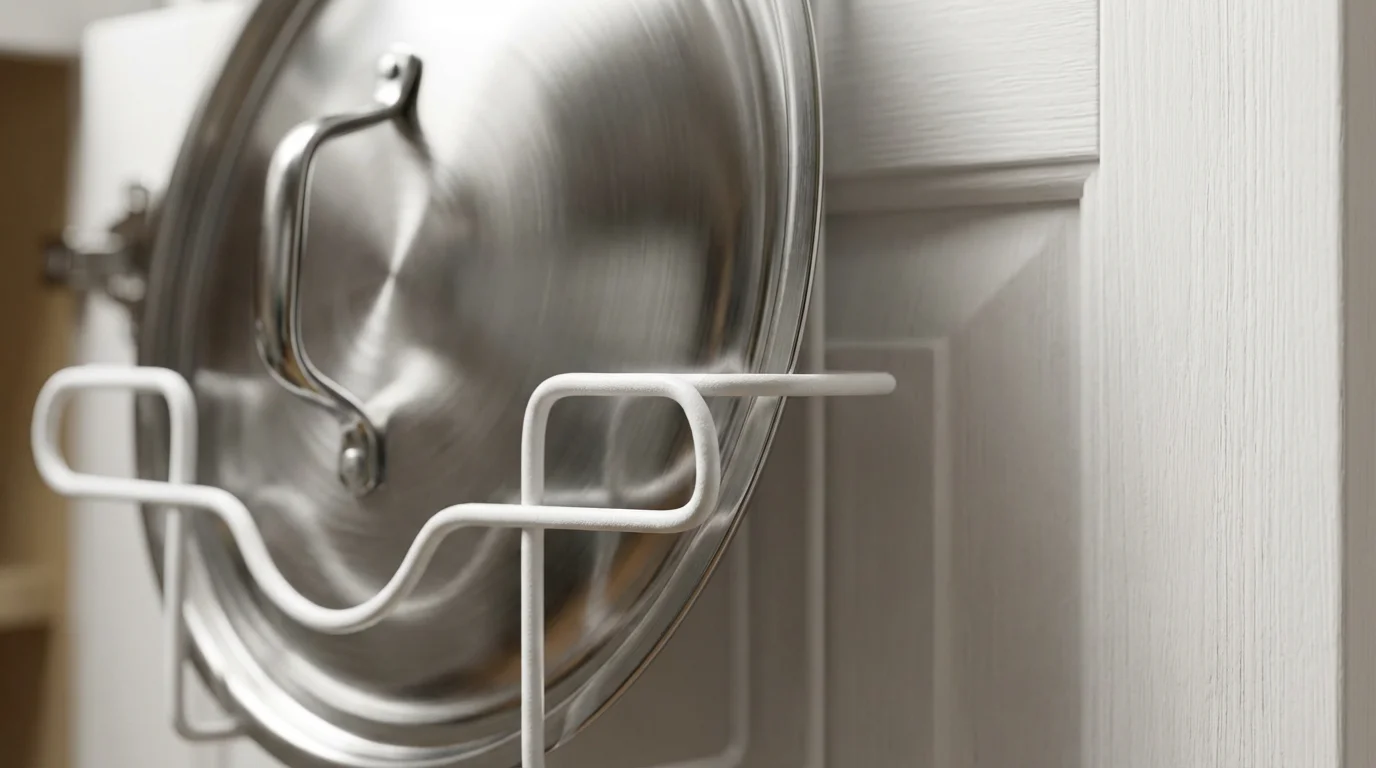
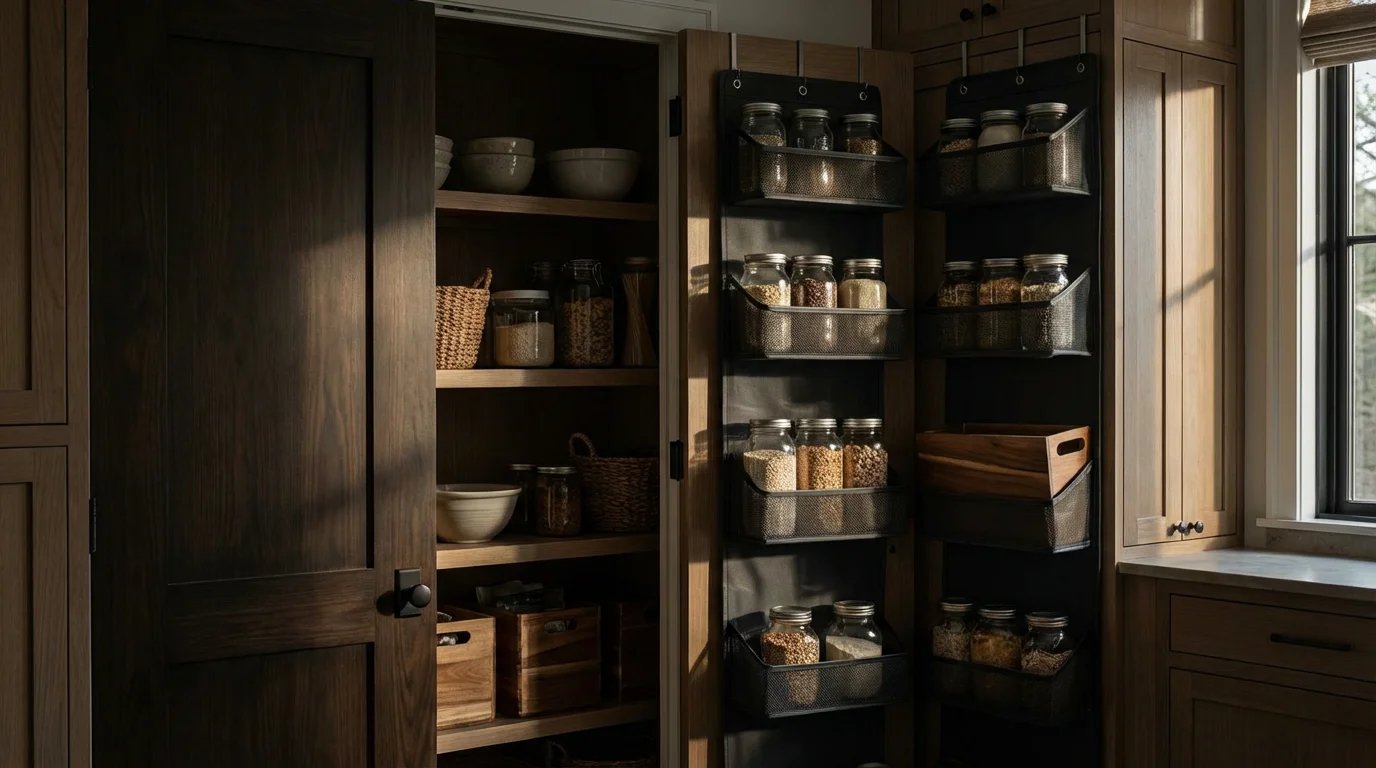
A “door-mounted rack” is storage that hangs on the inside of cabinet doors, transforming previously unused space into valuable storage. While not suitable for heavy pots, these racks excel at organizing pot lids, smaller frying pans, cutting boards, and oven mitts.
Benefits and Considerations
- Lid Storage: This is arguably their best use. Keeping lids on the door means they are always visible and accessible, freeing up interior cabinet space. A typical lid rack for a door measures 10-20 inches wide and 2-4 inches deep, accommodating a range of lid sizes.
- Small Pan Storage: Some designs can hold lightweight frying pans or smaller saucepans, but verify weight capacity.
- Installation: Door racks come in various installation types. Over-the-door hooks require no drilling, making them renter-friendly. Screw-in options provide greater stability and weight capacity for homeowners. Always ensure the rack does not interfere with interior shelves or contents when the door closes. Measure the clearance between your cabinet door and the nearest shelf. You need at least 3-4 inches of clearance.
As Real Simple’s organization guides often highlight, utilizing vertical surfaces like cabinet doors is a clever way to expand storage without adding bulk.
Organizing Pots and Pans in Deep Drawers
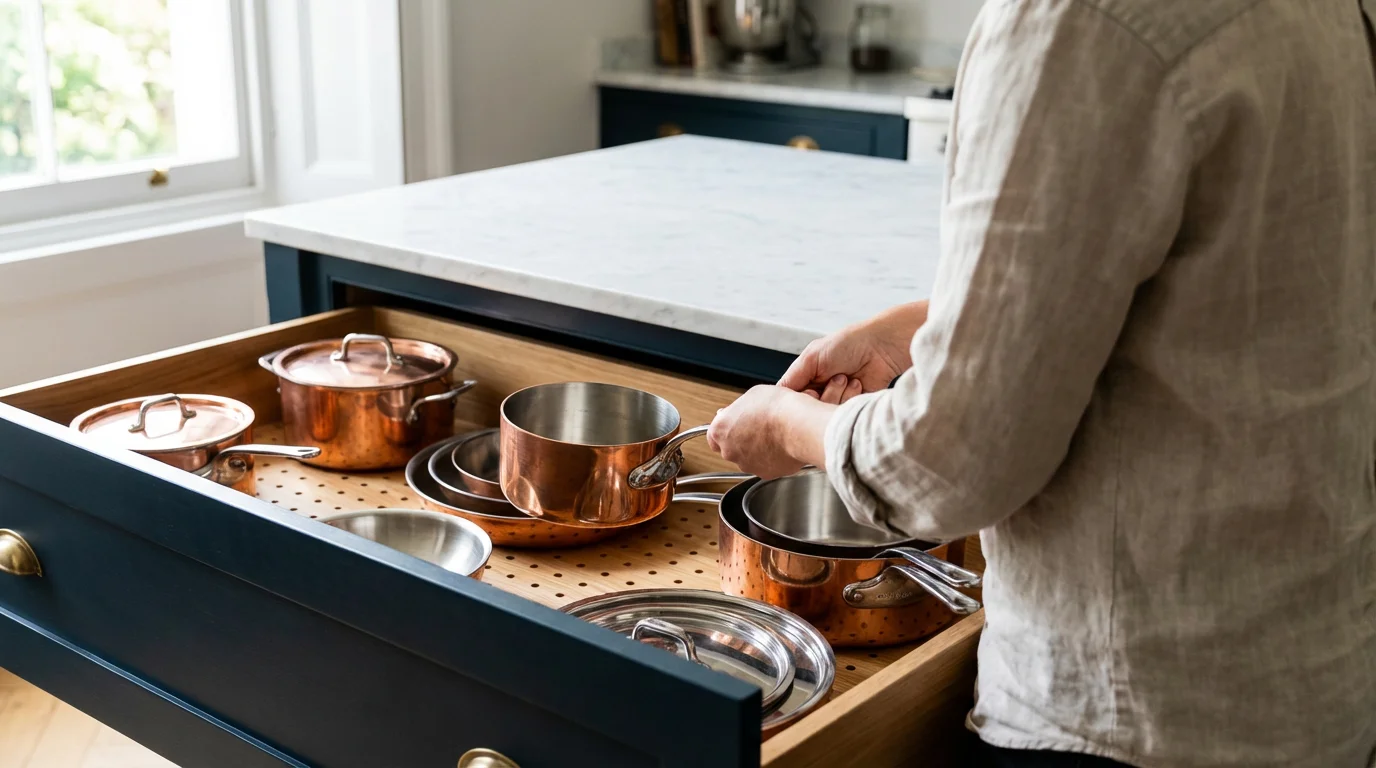
If your kitchen features deep base drawers, you possess a prime opportunity for efficient pot and pan storage. Deep drawers inherently offer easy access, as you pull them out to view contents from above. The key here is effective compartmentalization to prevent items from shifting and to make each piece individually accessible.
Solutions for Deep Drawers
- Drawer Organizers with Pegs: These systems consist of a pegboard base with adjustable pegs. You arrange the pegs around your pots and pans, holding them securely in place. This allows you to customize layouts for varying cookware sizes and shapes. Most pegboard bases fit drawers from 20 to 36 inches wide and 18 to 24 inches deep.
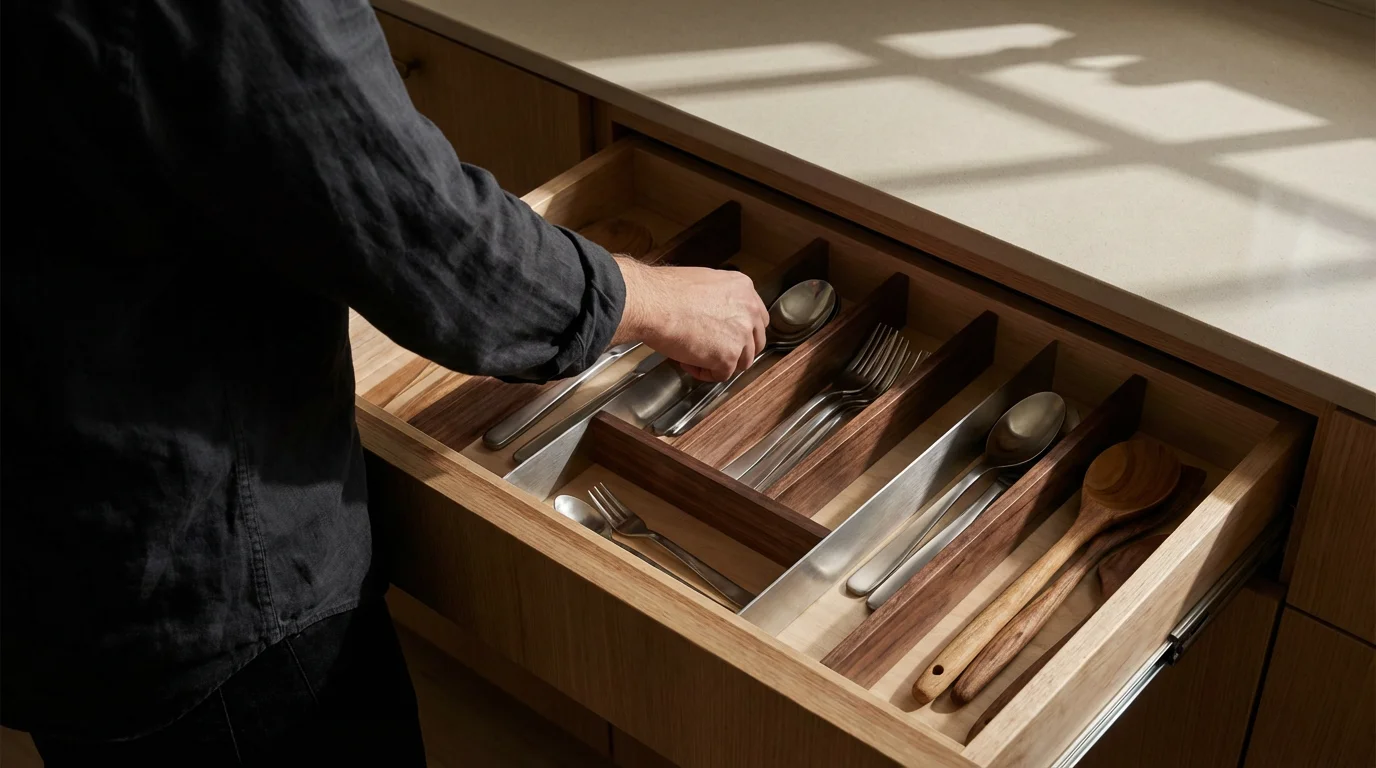
- Fixed or Expandable Drawer Dividers: Use heavy-duty, spring-loaded dividers to create custom compartments within the drawer. This keeps pots separate from lids, or different-sized pans from nesting. Expandable inserts often adjust from 12 to 24 inches in length, fitting most standard drawer depths.
- Vertical Drawer Inserts: Similar to in-cabinet vertical dividers, specific inserts allow you to stand frying pans or smaller saucepans on their sides within a deep drawer. This is an excellent solution for preventing scratched non-stick surfaces.
Organizing pots and pans by cooking workflow in deep drawers works exceptionally well. Store frequently used items, like your everyday frying pan or small saucepan, in the drawer closest to your stovetop. Less frequently used items, such as specialty baking dishes, can go in a deeper drawer further away.
Budget-Friendly Hacks and DIY Approaches
Effective pot organizer solutions do not always require significant investment. Several budget-friendly hacks and DIY methods can greatly improve your pan storage without breaking the bank.
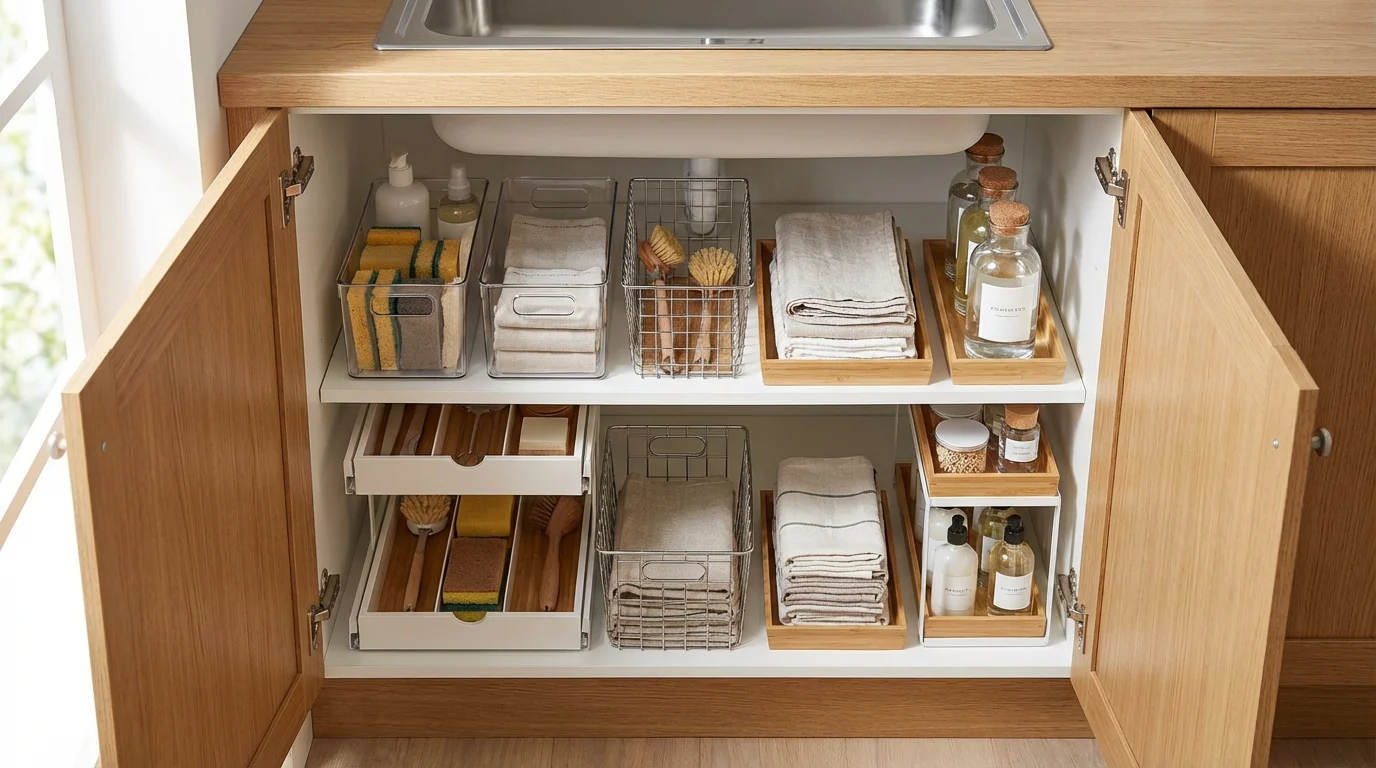
You can apply these same space-saving principles to your cleaning cabinet using dedicated under sink organization solutions.
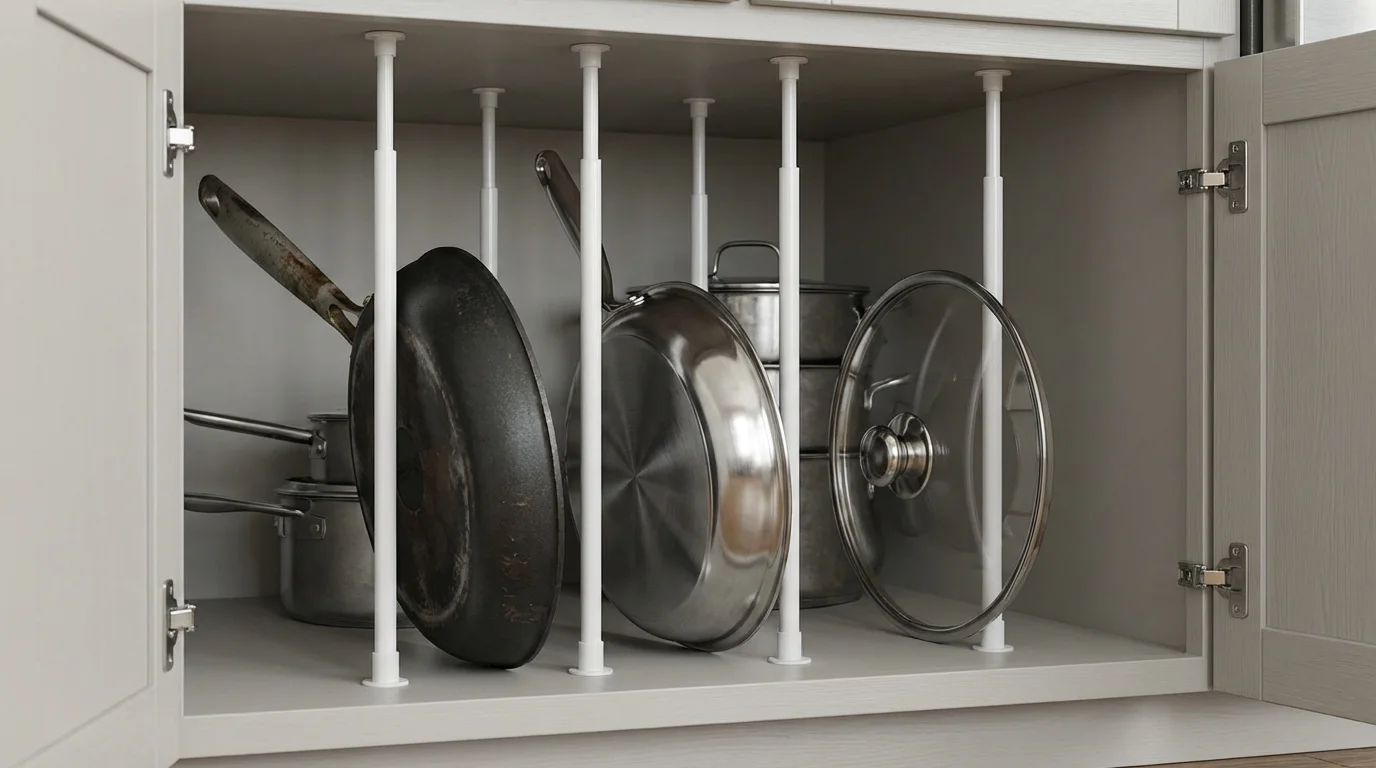
- Tension Rods: In a cabinet, install two or three sturdy tension rods vertically across the width of the cabinet. These act as instant dividers for frying pans, baking sheets, or pot lids. Ensure the rods are strong enough to hold the weight of your items without slipping. This is a renter-friendly option as it requires no permanent installation.
- Command Hooks for Lids: If your cabinet doors have sufficient clearance, affix large Command hooks to the inside. Hang pot lids by their handles for easy access. Always check the weight capacity of the hooks.
- Repurposed Magazine Holders: Metal or sturdy plastic magazine holders, placed on their side, create instant vertical slots for smaller frying pans, cutting boards, or casserole dish lids.
- DIY Cardboard Dividers: For deep drawers or shelves, cut sturdy cardboard (from appliance boxes, for example) to create custom dividers. Cover them with contact paper for a cleaner look and added durability. This is a highly modular solution.
These solutions acknowledge that not everyone has the same storage challenges or budget, offering achievable ways to start decluttering and organizing immediately.
Maintaining Your Organized Pot and Pan System
Implementing an organization system is only half the battle; maintaining it ensures long-term success. Your goal is a functional kitchen, not a one-time project. Here are strategies to keep your pots and pans in order:
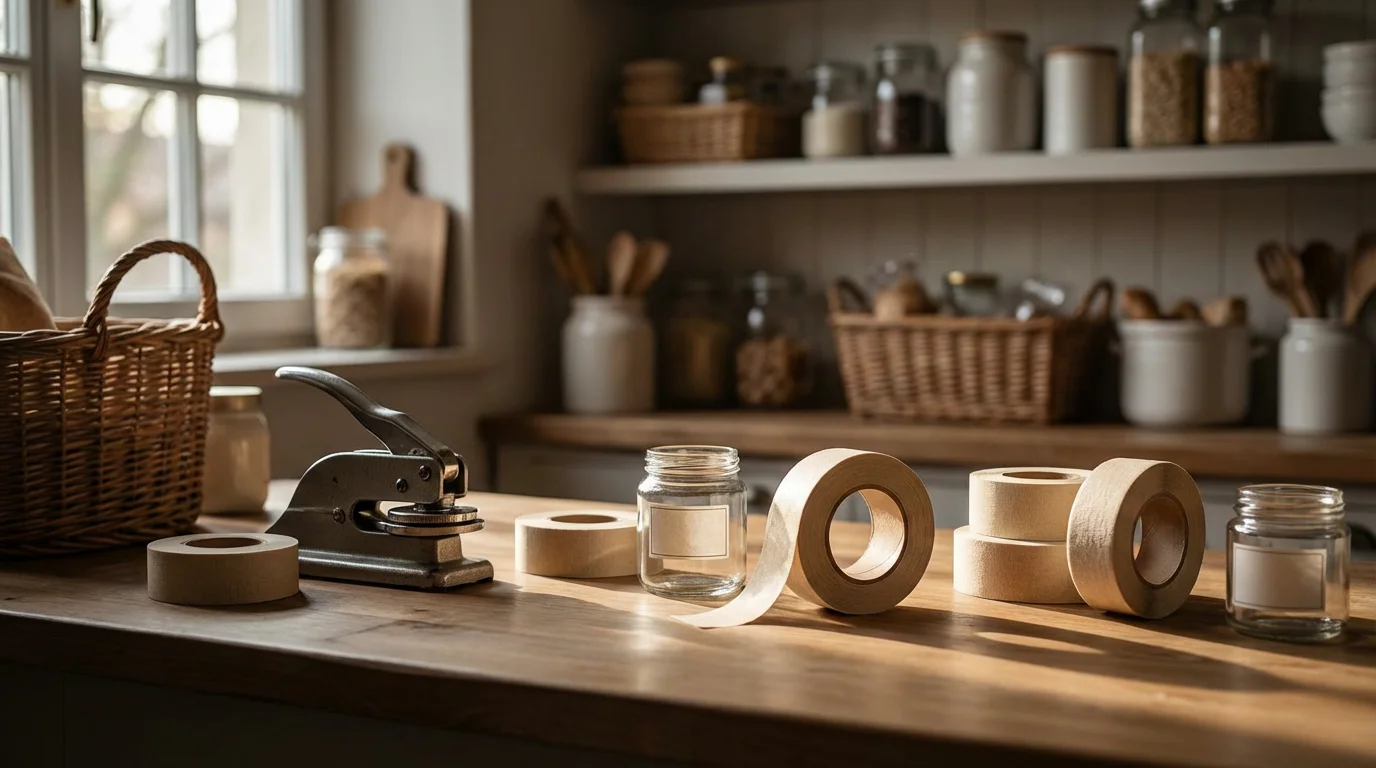
To ensure every item is returned to its correct home, consider using labels and label makers for kitchen organization on your shelves or within your deep drawers.
- The “One In, One Out” Rule: When you purchase a new pot or pan, commit to donating or discarding an older, less-used item. This prevents accumulation and keeps your system from overflowing.
- Regular Audits: Once every few months, quickly review your pot and pan storage. Does everything still have a place? Are items returning to their designated spots? Adjust as needed.
- Zone-Based Organization: Continue to store items where they make the most sense for your cooking workflow. Your most frequently used pot organizer should be easily accessible, ideally near the stovetop or prep area. Less frequently used specialty pans can reside in higher or deeper cabinets.
- Educate Household Members: Ensure everyone who uses the kitchen understands and respects the new system. It takes collective effort to maintain order.
- Immediate Cleanup: After washing a pot or pan, return it directly to its designated spot. Avoid leaving items on countertops or piled in the sink, as this quickly leads to disorganization.
Maintaining an organized kitchen takes consistent effort, but the payoff in reduced stress and increased efficiency makes it worthwhile. You create functional systems that serve your daily cooking needs.
Frequently Asked Questions
What is the best way to organize pots and pans with lids?
The best way involves a combination of solutions. For pots, pull-out cabinet organizers provide easy access to heavy items and prevent stacking. For lids, consider door-mounted racks or vertical lid organizers within the cabinet or deep drawer. Some specialized pull-out organizers also include integrated lid storage or adjustable pegs that secure both pots and their lids vertically.
Are pull-out organizers difficult to install?
Most standard pull-out organizers require basic DIY skills, a drill, and a screwdriver. Installation involves screwing the glides and frame into the base of your cabinet. Instructions are typically clear, and many videos demonstrate the process. It usually takes 30-60 minutes per unit. If you are a renter or prefer no permanent alterations, freestanding or tension-mounted options exist, though they may offer less stability for very heavy items.
What do I do with unusually shaped pots, like woks or Dutch ovens?
Unusually shaped or very large pots like woks and Dutch ovens benefit most from dedicated, easily accessible spots. Pull-out organizers are ideal for these heavy items, preventing you from having to lift other pots to reach them. A single-tier pull-out shelf often works best. For a wok, a large vertical divider in a deep cabinet or pantry can also keep it upright and accessible without scratching.
How can I organize pots and pans in a small kitchen?
In a small kitchen, maximize every inch of vertical and door space. Utilize door-mounted racks for lids and flat items. Opt for vertical pan dividers to stand frying pans and baking sheets upright in cabinets or deep drawers. Consider an over-the-stove pot rack if your kitchen layout allows, freeing up cabinet space. Finally, ruthlessly declutter; only keep essential, multi-functional pieces.
Can I use these organizers if I am a renter?
Yes, many solutions are renter-friendly. Tension rod dividers, over-the-door racks (for lids), freestanding vertical organizers, and drawer inserts require no permanent installation. For pull-out organizers, look for models that use strong friction or tension to secure them, or freestanding wheeled carts that fit inside cabinets if space allows. Always prioritize solutions that avoid drilling or permanent alterations.
Disclaimer: Product prices and availability change frequently. Prices shown were accurate at time of writing but may have changed. We may earn a small commission from purchases made through links on this site, at no extra cost to you. Always measure your space before purchasing organizers to ensure proper fit.
Leave a Reply