
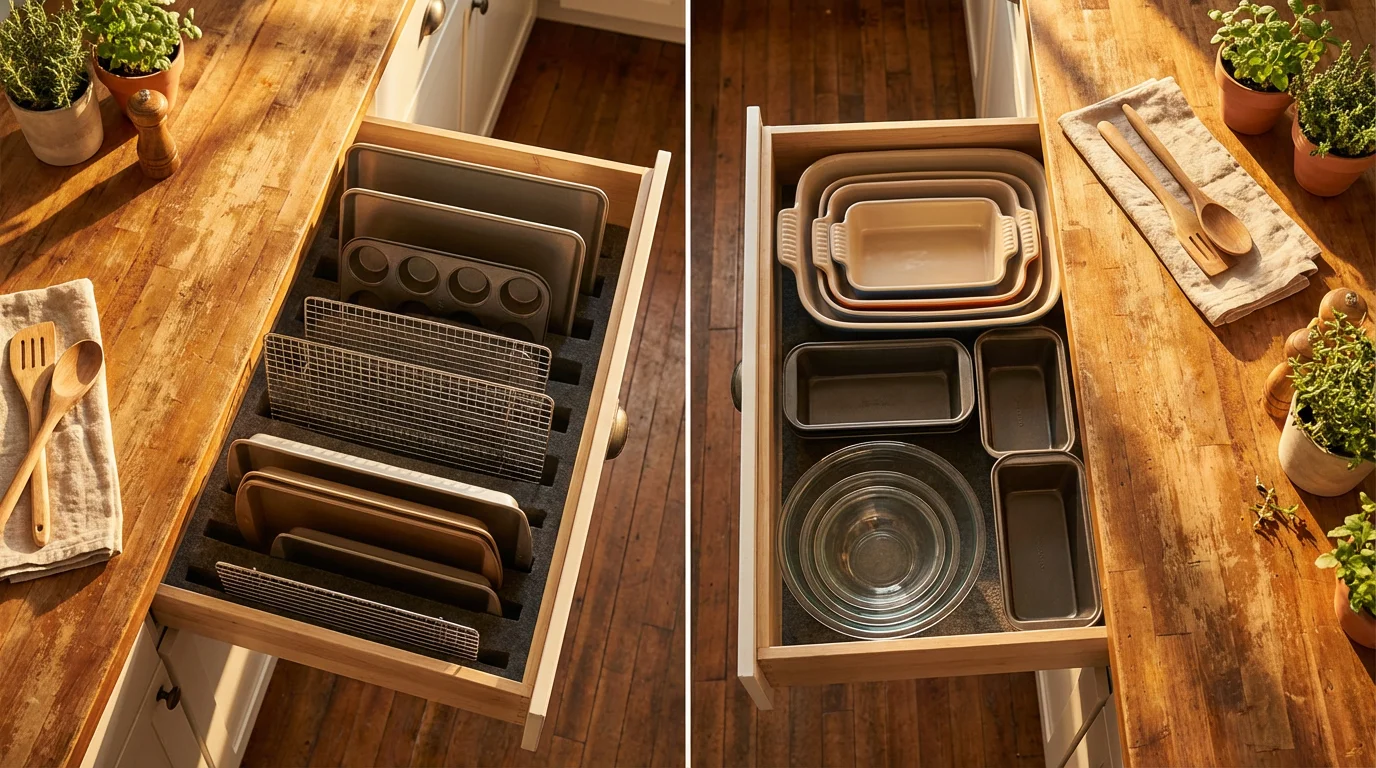
A cluttered kitchen quickly transforms from a culinary haven into a source of frustration. If your baking sheets, muffin tins, and cake pans tumble out of cabinets or disappear into a disorganized abyss, you understand this struggle. Effective bakeware organization is not about achieving a showroom look, but about creating a functional, stress-free cooking environment. You want to easily access your favorite cookie sheet without a cascade of metal. The core decision often boils down to two primary approaches: vertical versus horizontal storage. Each method offers distinct advantages, and the best choice for you depends on your kitchen layout, the type of bakeware you own, and your personal workflow.
Many home cooks face the same challenges: limited cabinet space, too many specialized baking tools, and a constant battle against clutter. This guide helps you navigate the options, providing practical, actionable strategies to optimize your kitchen space for bakeware. You will learn specific product recommendations, installation tips, and how to make informed decisions that transform your kitchen into an efficient workspace.
Understanding Your Bakeware Inventory
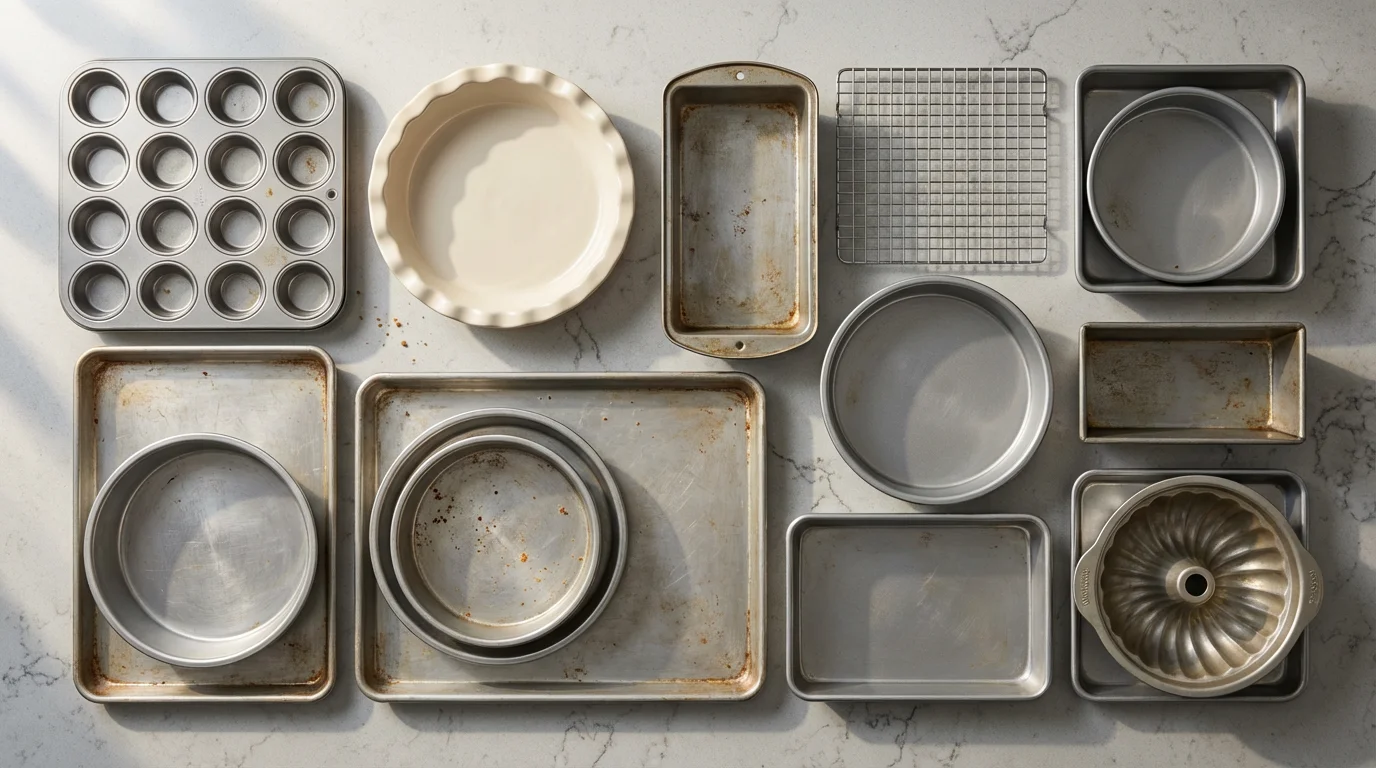
Before you invest in any organizational tools, a thorough decluttering of your current bakeware collection is essential. You cannot organize clutter effectively; you only rearrange it. Begin by pulling every baking sheet, cake pan, muffin tin, pie dish, and cooling rack out of your cabinets. Lay them out on your counter or floor.
Ask yourself these critical questions for each item:
- When did I last use this? If it has been over a year and it is not a seasonal item (like a turkey roaster), consider letting it go.
- Do I have duplicates? You likely do not need three 9×13 inch baking dishes unless you frequently bake for very large crowds.
- Is it damaged? Heavily scratched non-stick coatings, rusted pans, or bent cookie sheets should be replaced or discarded.
- Does it fit my lifestyle? A single person who bakes occasionally probably does not need commercial-sized baking sheets or a Bundt pan collection.
Once you have identified the bakeware you genuinely use and want to keep, categorize it. Separate baking sheets from cake pans, muffin tins from cooling racks. Note the dimensions of your largest and most frequently used items. This inventory gives you a clear picture of what you need to store and guides your choices for organizational solutions. For example, a standard half-sheet pan measures approximately 18 x 13 inches, while a quarter-sheet pan is 13 x 9 inches. Knowing these sizes helps you select organizers that accommodate your specific items.
The Power of Vertical Bakeware Storage
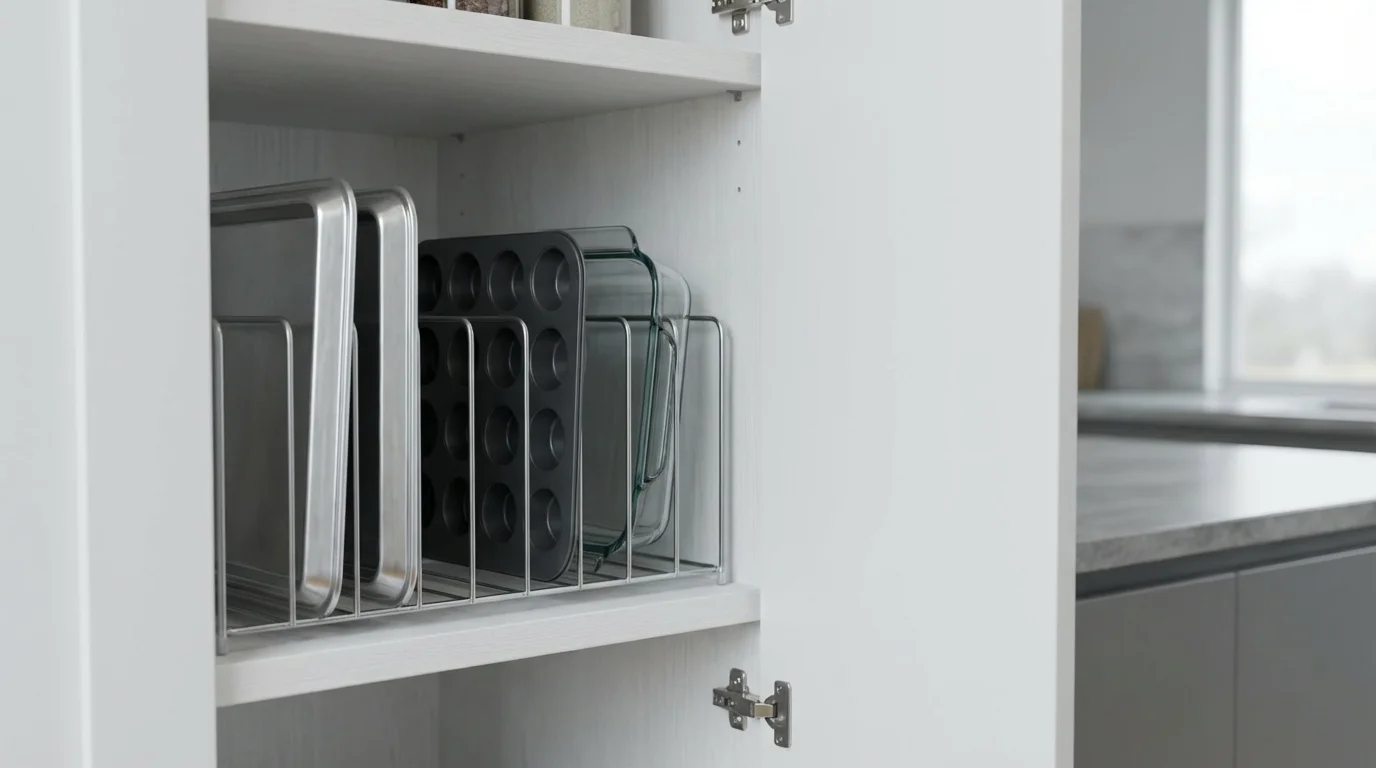
Vertical bakeware storage involves storing items on their sides, upright, rather than stacked flat. This method offers unparalleled accessibility and prevents the frustrating “domino effect” when you try to pull out a single pan from a stack. Imagine reaching for your favorite cookie sheet without lifting five other items first; that is the core benefit of vertical storage.
Key Benefits of Vertical Storage:
- Enhanced Accessibility: You grab exactly what you need without disturbing other items. This saves time and reduces clutter during baking prep.
- Damage Prevention: Stacking pans horizontally often leads to scratches, especially on non-stick surfaces, and can bend lighter gauge metal. Vertical storage protects your bakeware from unnecessary wear and tear.
- Maximizes Cabinet Depth: While some space is lost to the organizer itself, vertical storage effectively utilizes the full depth of your cabinet, particularly for deep items like pizza pans or cutting boards.
- Clear Visibility: You can see all your items at a glance, making it easier to select the right pan for the job.
Ideal Bakeware for Vertical Storage:
- Baking sheets and cookie sheets (half-sheet, quarter-sheet, jelly roll pans)
- Muffin tins and cupcake pans
- Cooling racks
- Pizza pans
- Cutting boards and platters
- Lid storage (pot and pan lids)
Implementing Vertical Solutions for Your Bakeware
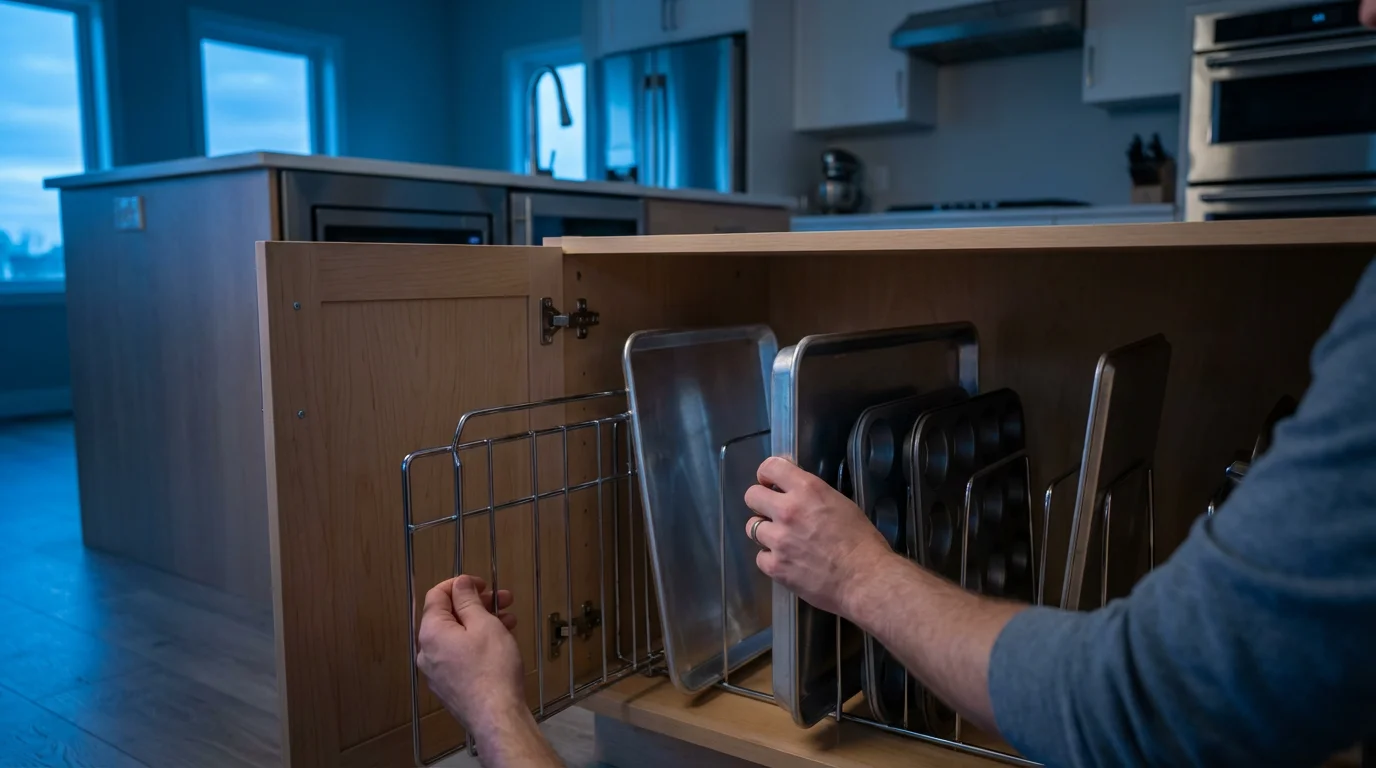
Many clever products exist to help you implement vertical storage. These solutions are generally straightforward to install and do not require extensive renovations, making them suitable for both homeowners and renters.
Recommended Vertical Organizers:
-
Upright Pan Organizers: These are essentially metal or wire racks with several slots, designed to hold pans on their side. You place them directly into a cabinet. They come in various sizes; a common choice is a 10-inch wide by 12-inch high by 8-inch deep organizer with 4-6 slots, spaced approximately 2-3 inches apart. Larger versions can be 15-20 inches wide. Consider an expandable version, which allows you to adjust the width from 12 to 22 inches, providing flexibility for varying cabinet sizes and bakeware collections. These are excellent for organizing baking sheet storage and muffin tins.
-
Cabinet Dividers (Tension Rods or Mounted): For a custom or budget-friendly option, you can install vertical dividers. Tension rods, typically adjustable from 15 to 28 inches, can create makeshift slots within a wide cabinet. For a more permanent solution, choose cabinet dividers that screw into the cabinet base or sides. These often come in sets of two or more, allowing you to create custom-width slots for specific bakeware. For example, installing two dividers 3 inches apart creates a perfect slot for a thin cookie sheet. This is a highly effective way for how to store baking sheets and pans.
-
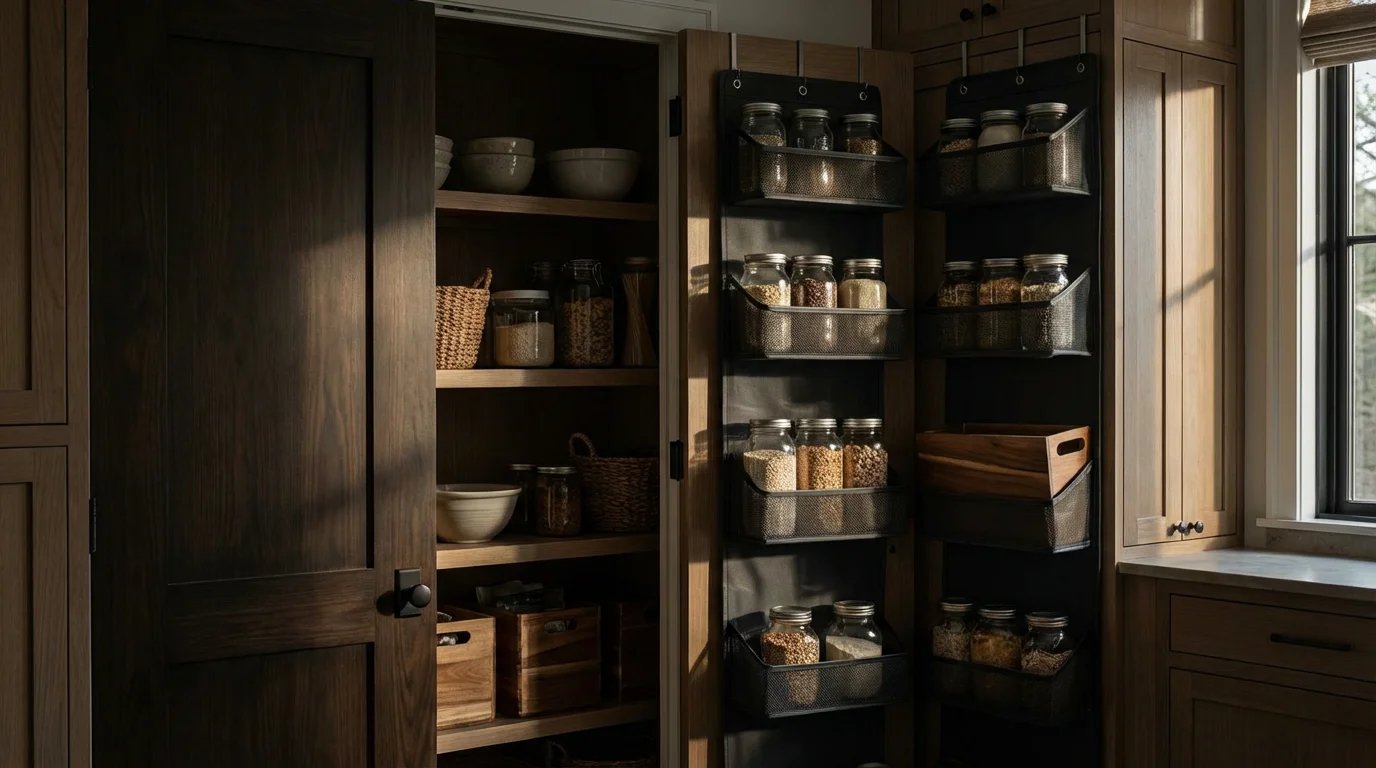
Over-the-Door Racks: A door-mounted rack is storage that hangs on the inside of cabinet doors, utilizing what is often dead space, meaning unused storage areas. While more commonly seen for spices or cleaning supplies, some wider, sturdier versions can accommodate thinner bakeware items like small cutting boards or cooling racks. Measure your cabinet door carefully to ensure clearance with internal shelves. A common size for these is 18 inches high by 12 inches wide, with shelves 3-4 inches deep.
-
Pull-Out Organizers with Dividers: A pull-out organizer is a drawer or shelf that slides out for easy access. Some pull-out systems come with integrated vertical dividers or allow you to add them. This offers the best of both worlds: the easy access of a pull-out combined with the organized separation of vertical storage. These units typically range from 12 to 24 inches wide and 18 to 22 inches deep, fitting into standard base cabinets. They represent an excellent choice for the best bakeware organizer for cabinet, especially for those heavy stacks of cast iron or ceramic bakeware.
“The simplest organization solutions often yield the biggest impact. Vertical storage for bakeware is a prime example; it transforms a cluttered pile into an easily accessible library of pans.” — Professional Organizer
When selecting a vertical organizer, measure your cabinet’s internal width, depth, and height. Standard base cabinets are typically 24 inches deep, offering ample space for upright organizers. Ensure the height of your bakeware, plus the organizer, fits comfortably under any shelves or the cabinet top. According to Real Simple’s organization guides, prioritizing accessibility significantly reduces kitchen stress.
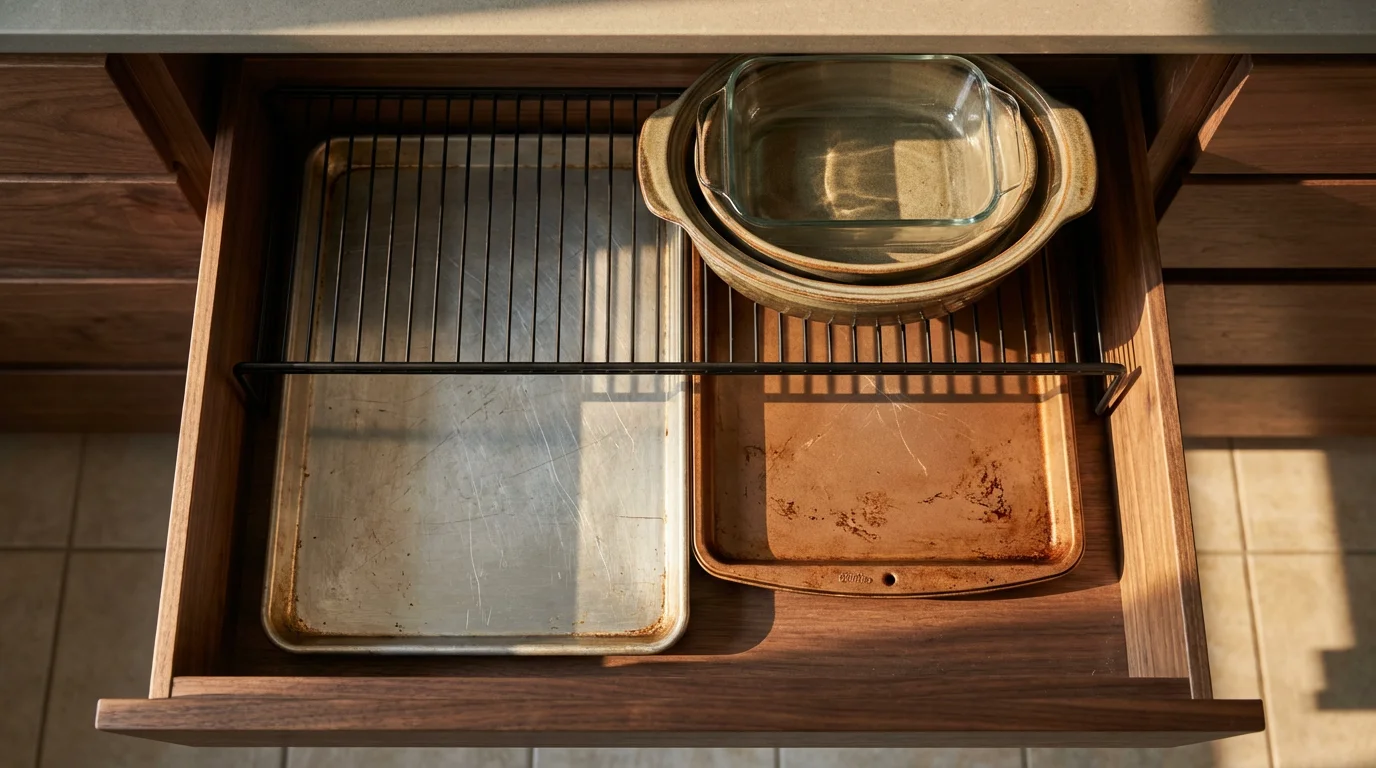
The Advantages of Horizontal Bakeware Storage
Horizontal bakeware storage involves stacking items flat, one on top of the other. While often the default, unorganized method, implementing smart horizontal solutions can still be efficient, especially for specific types of bakeware or in certain cabinet configurations.
Key Benefits of Horizontal Storage:
- Space Maximization (for homogeneous items): When you have many identical items, like a set of round cake pans, stacking them neatly can utilize vertical cabinet space very efficiently.
- Stability for Heavier Items: Heavy items like ceramic casseroles or cast iron Dutch ovens often feel more stable when stored horizontally. Stacking them vertically might cause tipping or instability if not properly secured.
- Less Hardware Required: Basic horizontal stacking often requires fewer specialized organizers, making it a budget-friendly starting point.
- Versatility: Some bakeware shapes, such as deep roasting pans with handles, are simply not well-suited for vertical storage and fit better lying flat.
Ideal Bakeware for Horizontal Storage:
- Round and square cake pans (especially if they nest)
- Glass or ceramic baking dishes and casseroles
- Roasting pans
- Bundt pans (if nesting)
- Springform pans
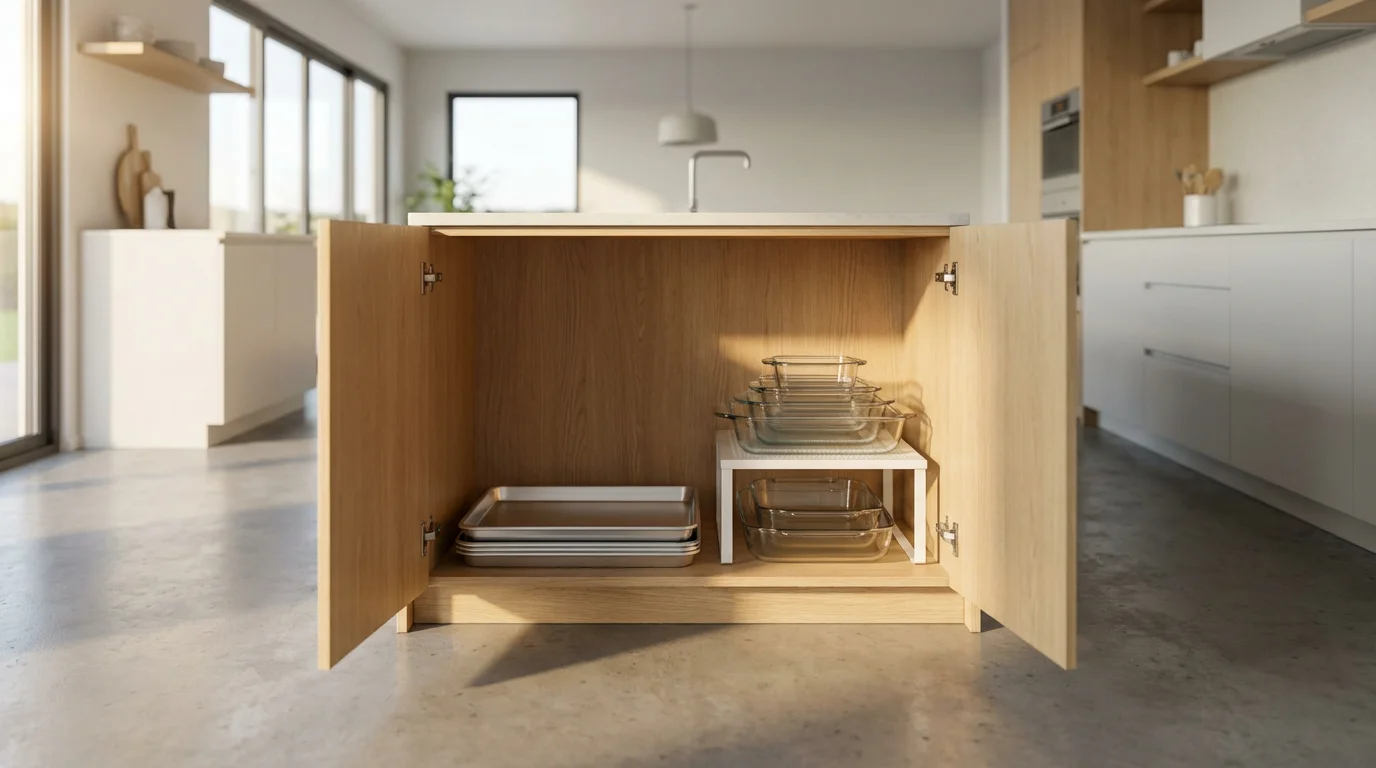
Implementing Horizontal Solutions for Your Bakeware
Strategic horizontal organization goes beyond just piling things up. It involves using tools to create order and ease of access.
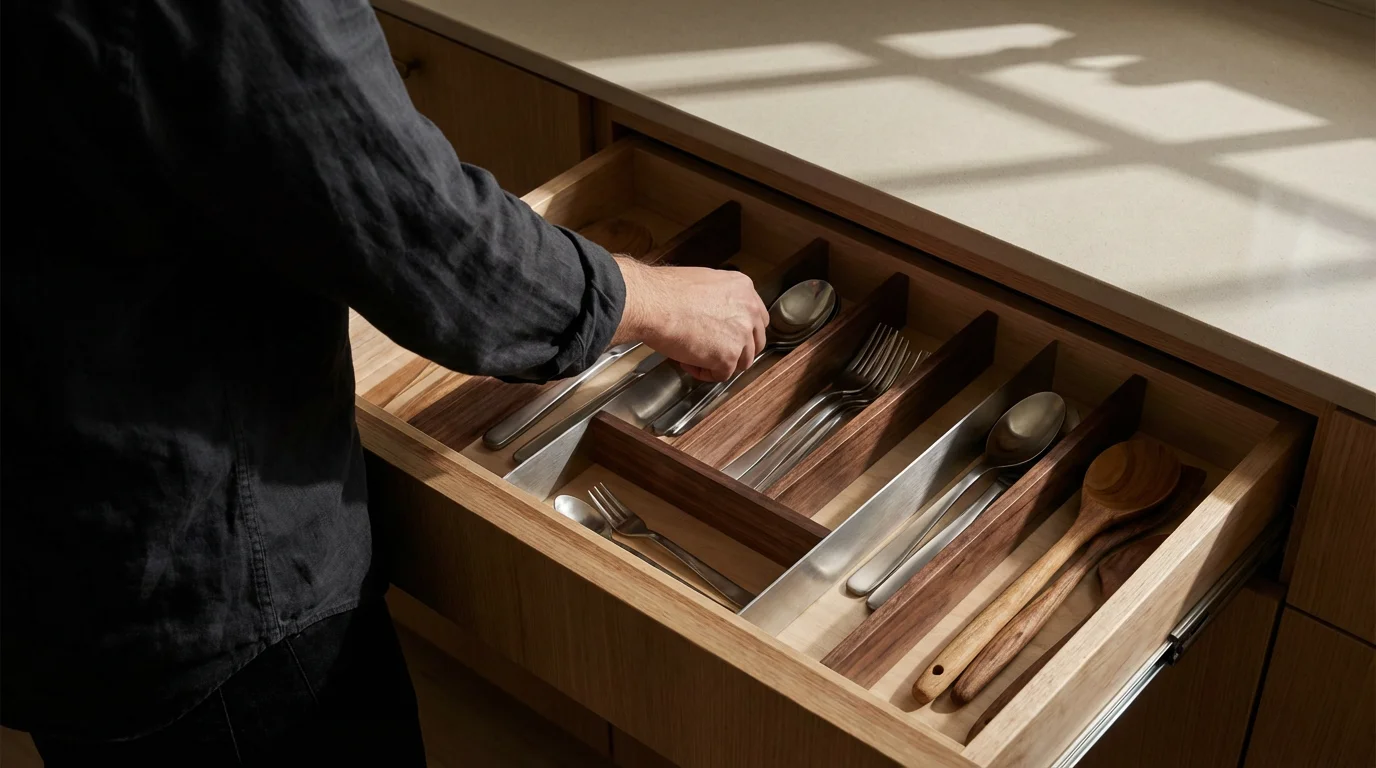
While you are streamlining your cabinets, don’t forget your drawers; finding the best drawer organizers for utensils can prevent small tools from getting lost.
Recommended Horizontal Organizers:
-
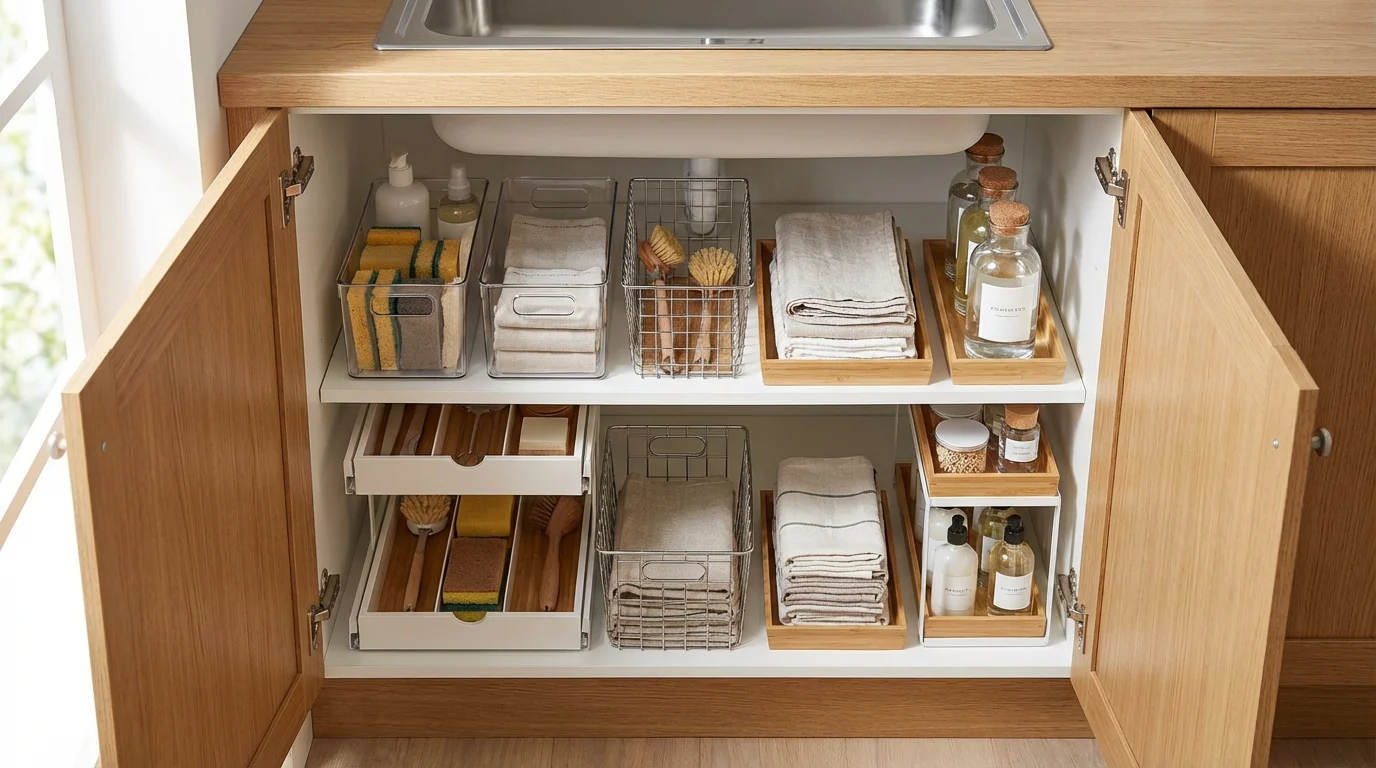
Stackable Shelves or Shelf Risers: A shelf riser is a mini shelf that creates two levels of storage in one space. These are excellent for doubling the storage capacity within a cabinet. For example, you can place smaller cake pans or pie dishes on the lower shelf and larger items on the riser, or vice versa. They come in various widths (10-15 inches) and heights (5-8 inches). Choose stackable options for even more flexibility. Stackable means designed to safely pile on top of each other, maximizing vertical space without permanent installation.
-
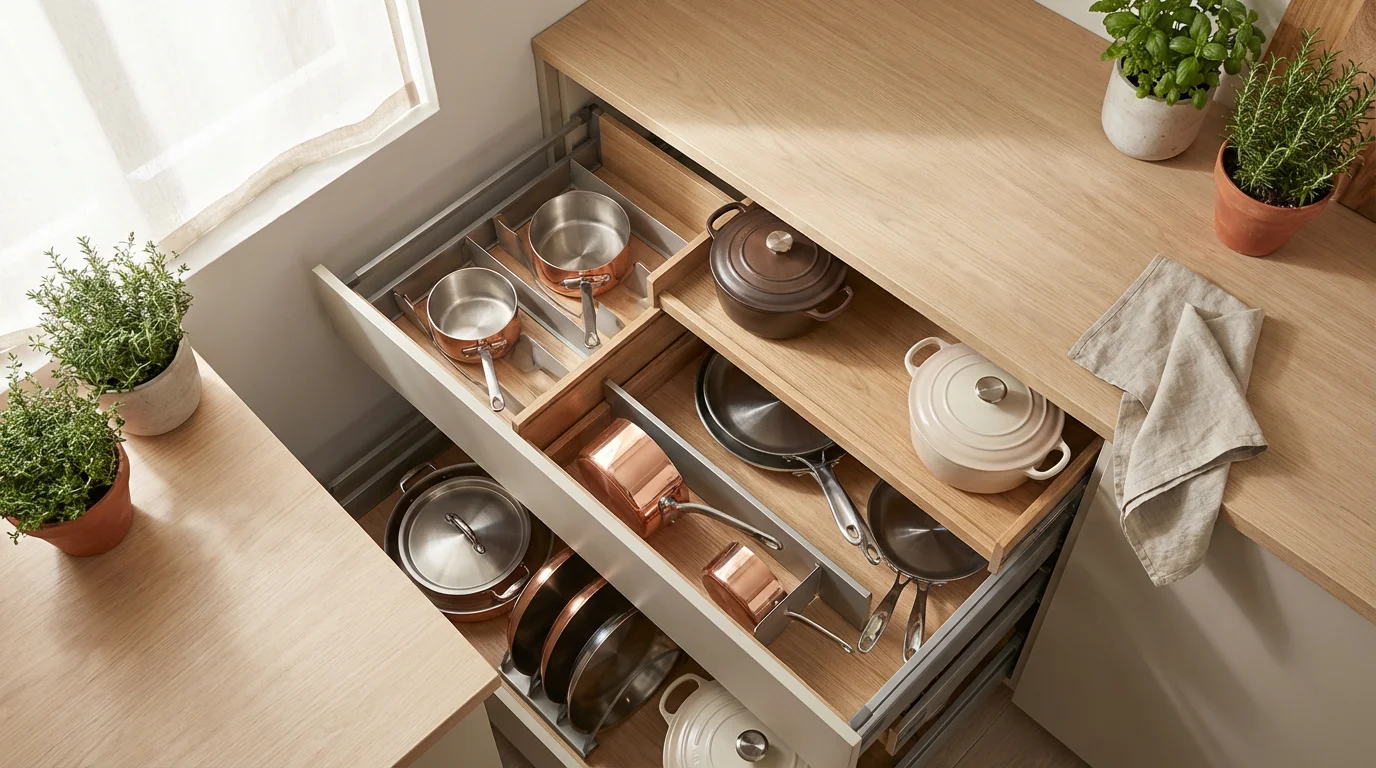
Pull-Out Drawers or Trays: As mentioned before, a pull-out organizer is a drawer or shelf that slides out for easy access. While they can support vertical dividers, they are also excellent for organized horizontal storage. Install a single, sturdy pull-out drawer in a base cabinet for easy access to heavy stacks of casserole dishes or multiple sets of round cake pans. They eliminate the need to rummage through the back of a deep cabinet. A common pull-out unit can be 18 inches wide and 20 inches deep, ideal for a standard 24-inch deep base cabinet.
-
Deep Baskets or Bins: For bakeware that nests well but you want to contain, use deep, sturdy baskets or bins. Place a stack of cake pans into a basket, and then slide the basket into a pantry or cabinet. This helps keep stacks tidy and allows for easy retrieval of the entire stack. This method is particularly useful in pantries or on open shelving. Look for bins made from sturdy plastic or metal, roughly 10-12 inches wide and 14-18 inches deep.
-
Under-Shelf Baskets: These wire baskets slide onto an existing shelf, creating an extra storage layer beneath it. They are ideal for storing lighter, flatter items like parchment paper rolls, silicone baking mats, or even very thin baking sheets that you do not mind stacking. Measure your shelf thickness and the clearance beneath it to ensure a proper fit. These typically hang 5-6 inches below the shelf.
When using horizontal methods, remember the FIFO principle, or “first in, first out,” particularly if you have duplicate items. Always place newer items at the back or bottom of the stack, ensuring the oldest items are used first. This prevents forgotten bakeware from languishing unused. As Good Housekeeping’s home organization experts often suggest, easy access encourages consistent use and better maintenance of your items.
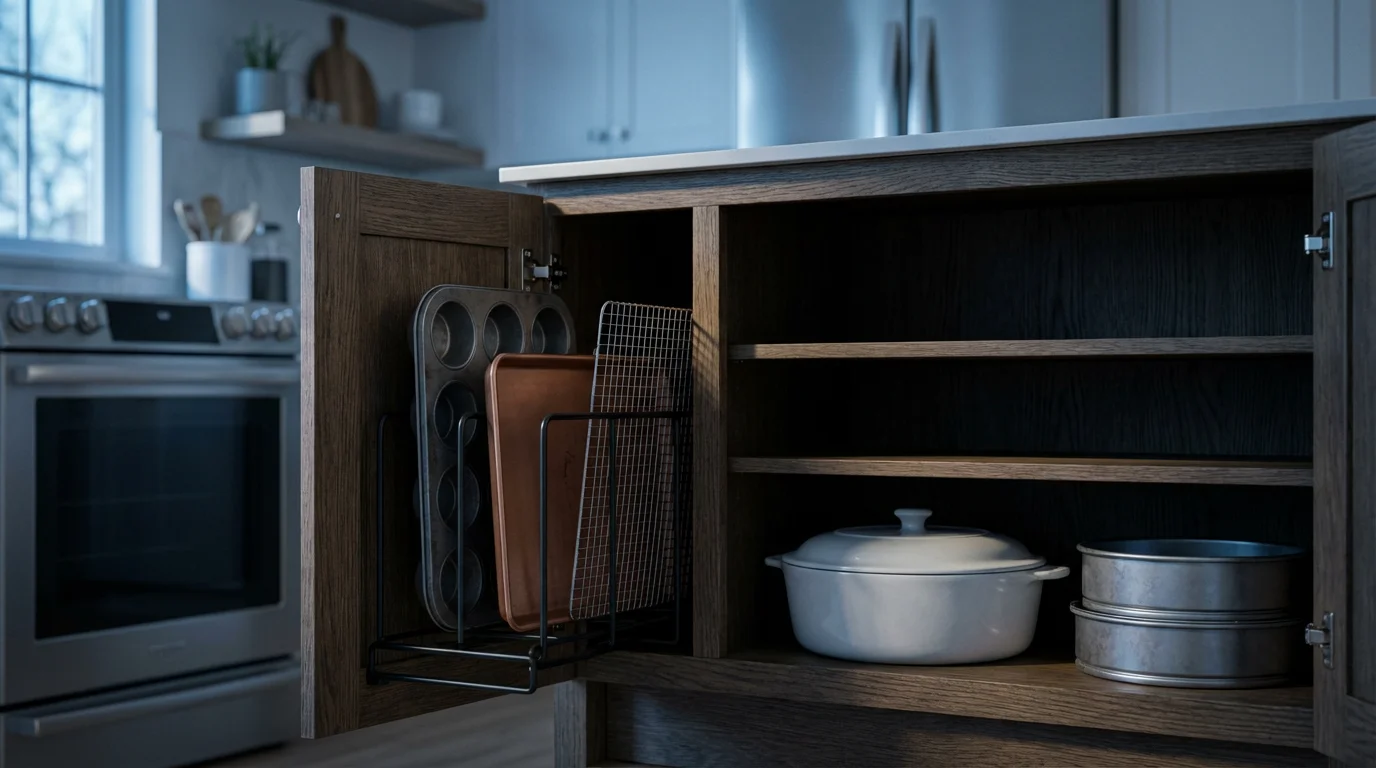
Vertical vs. Horizontal: A Direct Comparison
Choosing between vertical and horizontal storage often comes down to your specific bakeware, cabinet dimensions, and personal preference. Here is a direct comparison to help you decide for various scenarios.
| Feature | Vertical Storage | Horizontal Storage |
|---|---|---|
| Accessibility | Excellent; pull out one item without disturbing others. | Good for top items; can require lifting or shifting a stack for bottom items. |
| Space Efficiency | Best for flat items (sheets, racks, thin pans); utilizes cabinet depth. | Best for nesting items (round cake pans, casseroles); utilizes cabinet height. |
| Damage Prevention | High; items are separated, preventing scratches and dents. | Low to moderate; potential for scratches and dents from stacking. |
| Stability | Excellent with proper organizers; items are held upright. | Excellent for heavy, wide items; can be unstable for tall, narrow items. |
| Installation Effort | Moderate; may involve installing dividers or placing racks. | Low; often just stacking, though pull-outs require installation. |
| Cost | Moderate to high (specialized racks, pull-outs). | Low to moderate (shelf risers, baskets, simple stacking). |
| Best For | Baking sheets, cutting boards, muffin tins, cooling racks, pizza pans. | Round cake pans, casserole dishes, roasting pans, heavy stoneware. |
Consider your most frequently used items. If you bake cookies weekly, prioritizing vertical storage for your baking sheets makes sense. If you are a casserole connoisseur, ensuring your heavy dishes are easily accessible horizontally might be your priority. Sometimes, a hybrid approach works best, combining vertical for sheet pans and horizontal for nesting cake pans.
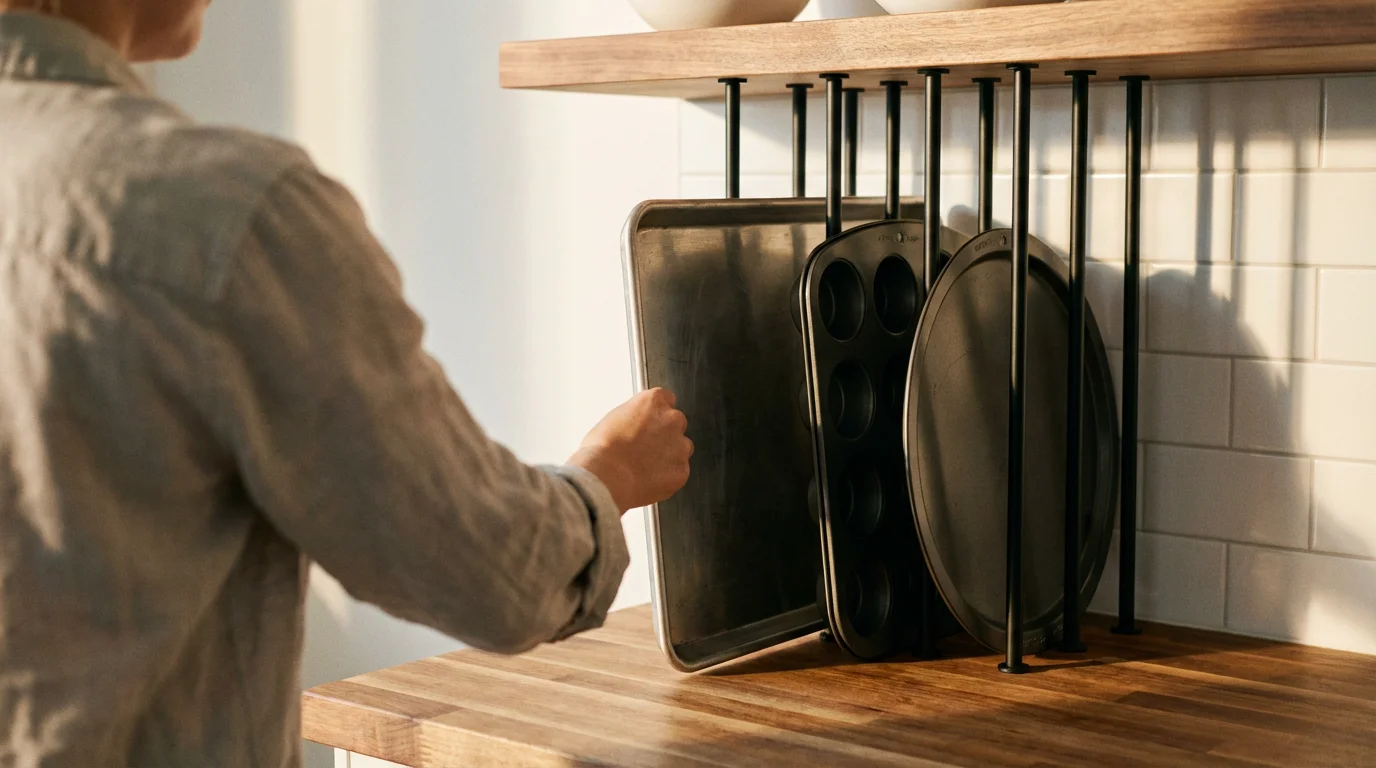
Beyond Cabinets: Innovative Bakeware Storage
Not all kitchens offer ample cabinet space. If you have a small kitchen or limited built-ins, consider these creative, space-saving solutions.
For those with minimal built-in options, exploring countertop storage solutions for small kitchens can provide the necessary room for frequently used items.
- Oven Drawer Storage: Many ovens have a bottom drawer. While often intended for broiler pans or warming, this space is excellent for storing baking sheets, cooling racks, and even shallow muffin tins vertically. Ensure the drawer is clean and dry. Measure its internal dimensions before committing; typical dimensions are around 20-22 inches wide, 16-18 inches deep, and 4-6 inches high. You can often fit a small upright pan organizer inside.
- Wire Shelving Systems: For a pantry or utility closet, freestanding wire shelving offers adjustable and visible storage. You can configure shelves to accommodate bakeware horizontally or add vertical dividers. These systems are modular, meaning pieces can be combined and configured different ways, and relatively inexpensive, providing robust storage without permanent installation. A 3-tier wire shelf, for example, often measures 30 inches wide by 14 inches deep and 36 inches high.
- Pegboard Walls: If you have an unused wall in your kitchen or pantry, a pegboard is a highly versatile solution. You can hang hooks and small shelves to store lighter bakeware items like cooling racks, small cutting boards, or even lightweight muffin tins. This is particularly beneficial for renters, as pegboard can be easily removed and patched.
- Appliance Garages (for occasionally used items): An appliance garage is a cabinet designed to hide countertop appliances, but you can repurpose it. If you have an empty one, it could temporarily house specialty bakeware you only use a few times a year. This keeps items accessible but off your main storage.
- Zone-Based Organization: Organize your kitchen by activity zones. Keep baking ingredients and bakeware together. If you have a dedicated baking station, store your most-used baking sheets and pans in a nearby cabinet. This minimizes steps and improves workflow. According to The Spruce’s kitchen organization advice, arranging items by use significantly improves efficiency.
Remember to consider both budget-friendly and premium options. Tension rods and repurposed dish drying racks can offer quick, cheap vertical storage, while custom pull-out shelves represent a more significant investment. Many solutions are adjustable or expandable, offering flexibility as your bakeware collection or storage needs change over time.
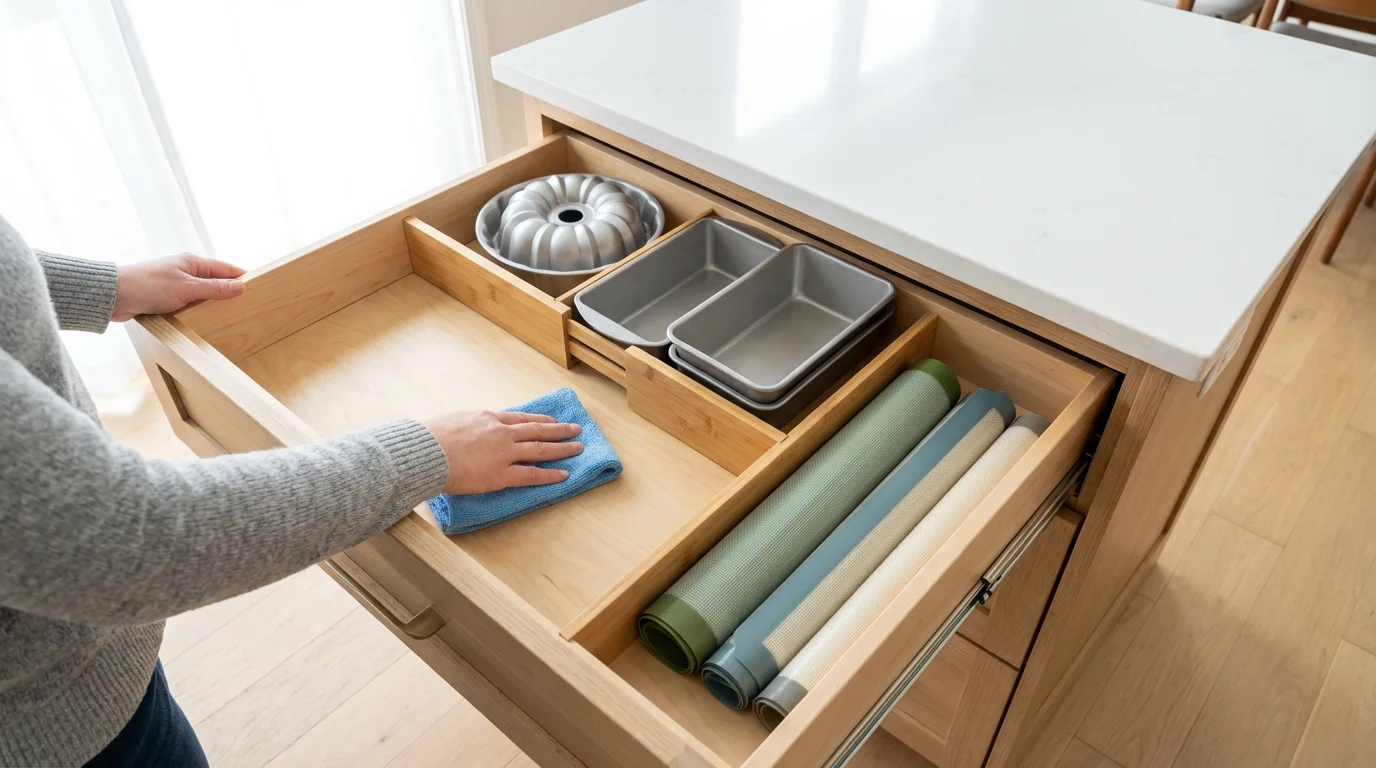
Maintaining Your Organized Bakeware System
Implementing an organizational system is only half the battle; maintaining it is crucial for long-term success. Expect that organization takes work, and an initial setup will not stay perfect forever without effort.
To keep your new system functioning perfectly, consider using labels and label makers for kitchen organization so every family member knows where things belong.
- Designate a Home for Everything: Every pan needs a specific spot. When you finish using an item, return it to its designated place.
- The One-In, One-Out Rule: If you buy a new bakeware item, commit to donating or discarding an old one. This prevents clutter creep.
- Regular Reviews: Periodically, perhaps every 6-12 months, take 15-30 minutes to quickly review your bakeware area. Straighten items, re-evaluate what you use, and adjust as needed.
- Clean As You Go: Wipe down organizers and cabinet interiors when bakeware is removed for cleaning. This prevents grime buildup and keeps your storage pristine.
- Be Realistic: Your kitchen is a functional space, not a museum. A little imperfection is fine. The goal is easy access and reduced stress, not magazine perfection.
By integrating these habits, you ensure your bakeware organization remains effective, keeping your kitchen functional and your baking endeavors enjoyable.
Frequently Asked Questions
How do I stop my baking sheets from falling over in the cabinet?
To prevent baking sheets from falling over, use a vertical pan organizer. These metal or wire racks have individual slots that hold sheets upright, preventing them from leaning or toppling. You can also use tension rods installed horizontally within a cabinet to create custom dividers for thinner items.
What is the best bakeware organizer for a small kitchen?
For a small kitchen, the best bakeware organizer maximizes vertical space and uses often-overlooked areas. Consider an upright pan organizer in a deep base cabinet, an over-the-door rack for thinner items, or storing bakeware vertically in your oven’s bottom drawer. These solutions utilize existing space without requiring additional square footage.
Can I store heavy casserole dishes vertically?
You can store some heavy casserole dishes vertically, but it depends on their shape and weight. Use very sturdy, heavy-duty vertical dividers or a dedicated pull-out organizer with robust slots. For extremely heavy or irregularly shaped ceramic and glass casseroles, horizontal storage on a sturdy pull-out shelf or a low, accessible cabinet shelf is often safer and more stable.
How do I organize bakeware in a deep pantry?
In a deep pantry, use a combination of solutions. For baking sheets and muffin tins, implement vertical pan organizers or tension rod dividers. For nesting cake pans or casserole dishes, use pull-out shelves or sturdy, deep bins to prevent items from getting lost at the back. Labeling bins can also improve organization in deep spaces.
Disclaimer: Product prices and availability change frequently. Prices shown were accurate at time of writing but may have changed. We may earn a small commission from purchases made through links on this site, at no extra cost to you. Always measure your space before purchasing organizers to ensure proper fit.
Leave a Reply