
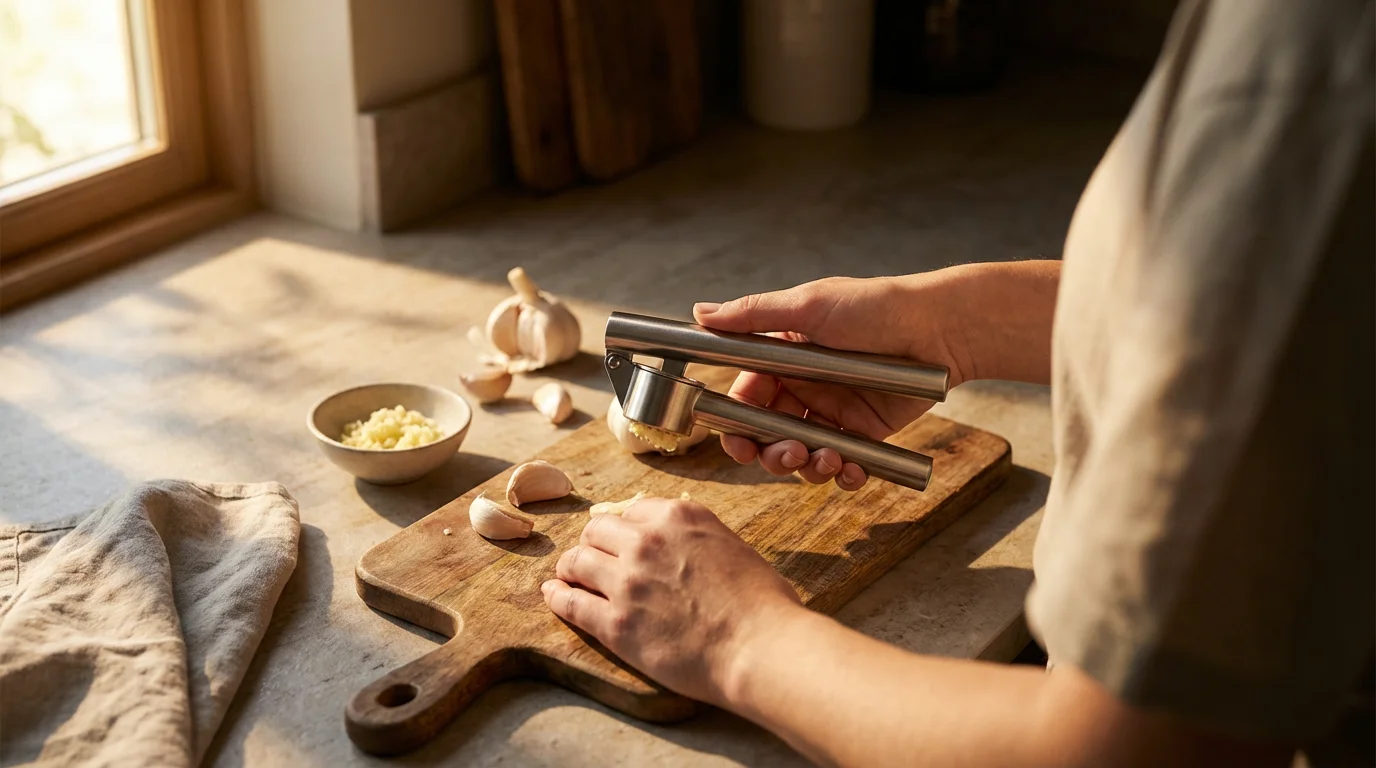
Garlic is a cornerstone of countless cuisines, adding a pungent, aromatic depth to dishes from stir-fries to pasta sauces. While a sharp chef’s knife can certainly mince garlic, the prospect of sticky fingers, uneven pieces, and lingering odor often leads home cooks to seek out a specialized tool. Among kitchen gadgets, the garlic press is a classic unitasker, designed specifically for one job: transforming whole cloves into a fine, paste-like consistency.
However, not all garlic presses perform equally. Many consumers have been burned by flimsy models that break easily, prove difficult to clean, or simply fail to extract garlic effectively. Our mission at QuickKitchenTools.com is to cut through the marketing hype and identify kitchen gadgets that genuinely make your cooking life easier. We put several top garlic presses through rigorous testing, focusing on durability, ease of use, cleaning, and performance. We paid particular attention to ergonomic design, considering how well these tools perform for different hand sizes and those who may experience discomfort with traditional kitchen tasks.
Why a Dedicated Garlic Press Matters (and When It Doesn’t)
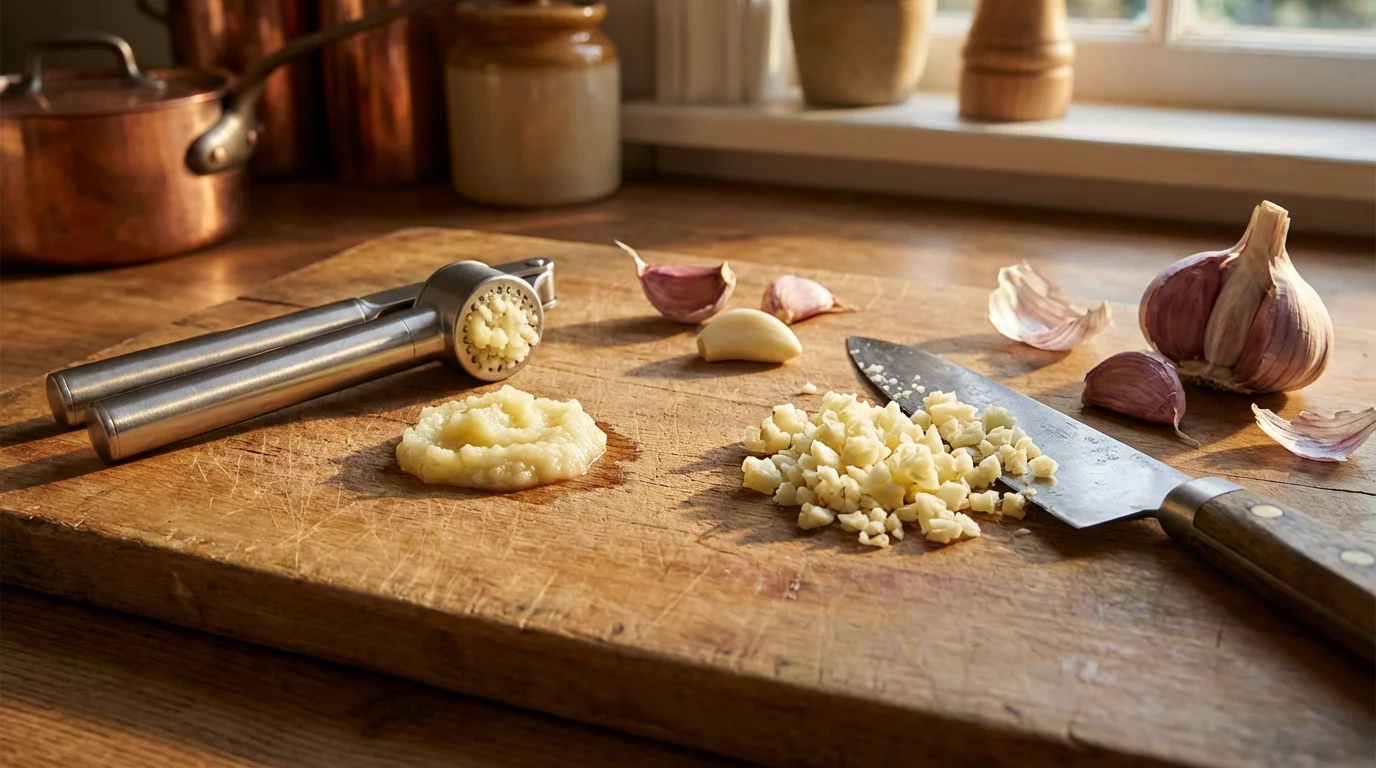
A garlic press is a kitchen gadget specifically designed to crush garlic cloves, transforming them into a fine paste. This type of tool is often called a “unitasker,” meaning it performs only one specific task. While a skilled chef can finely mince garlic with a knife, a good garlic press offers several distinct advantages for the home cook.
First, speed and convenience. A quality garlic press can mince multiple cloves in seconds, saving valuable prep time, especially when a recipe calls for a large amount of garlic. You can often press unpeeled cloves, which reduces contact with the sticky papery skin and the lingering garlic scent on your fingers.
Second, consistency. A press produces uniformly fine garlic, which integrates seamlessly into sauces, dressings, and marinades. This consistency helps distribute garlic flavor evenly throughout your dish, preventing pockets of intensely flavored raw garlic.
Third, texture. Pressed garlic has a more paste-like consistency than knife-minced garlic. This allows its strong aromatic compounds to release more readily, contributing a bolder flavor to cooked dishes. For raw applications, like vinaigrettes or dips, the paste-like texture ensures a smoother mouthfeel and more uniform flavor distribution.
However, a garlic press is not always the best choice. If a recipe specifically calls for thinly sliced garlic, roughly chopped garlic, or whole roasted cloves, a press will not deliver the desired texture. For instance, a stir-fry often benefits from larger slices that caramelize and soften, offering a different flavor profile than finely pressed garlic. As America’s Test Kitchen often highlights, choosing the right tool depends entirely on the specific culinary goal. If your goal is a quick, potent burst of uniform garlic flavor, a press excels.
Key Features That Define a Superior Garlic Press
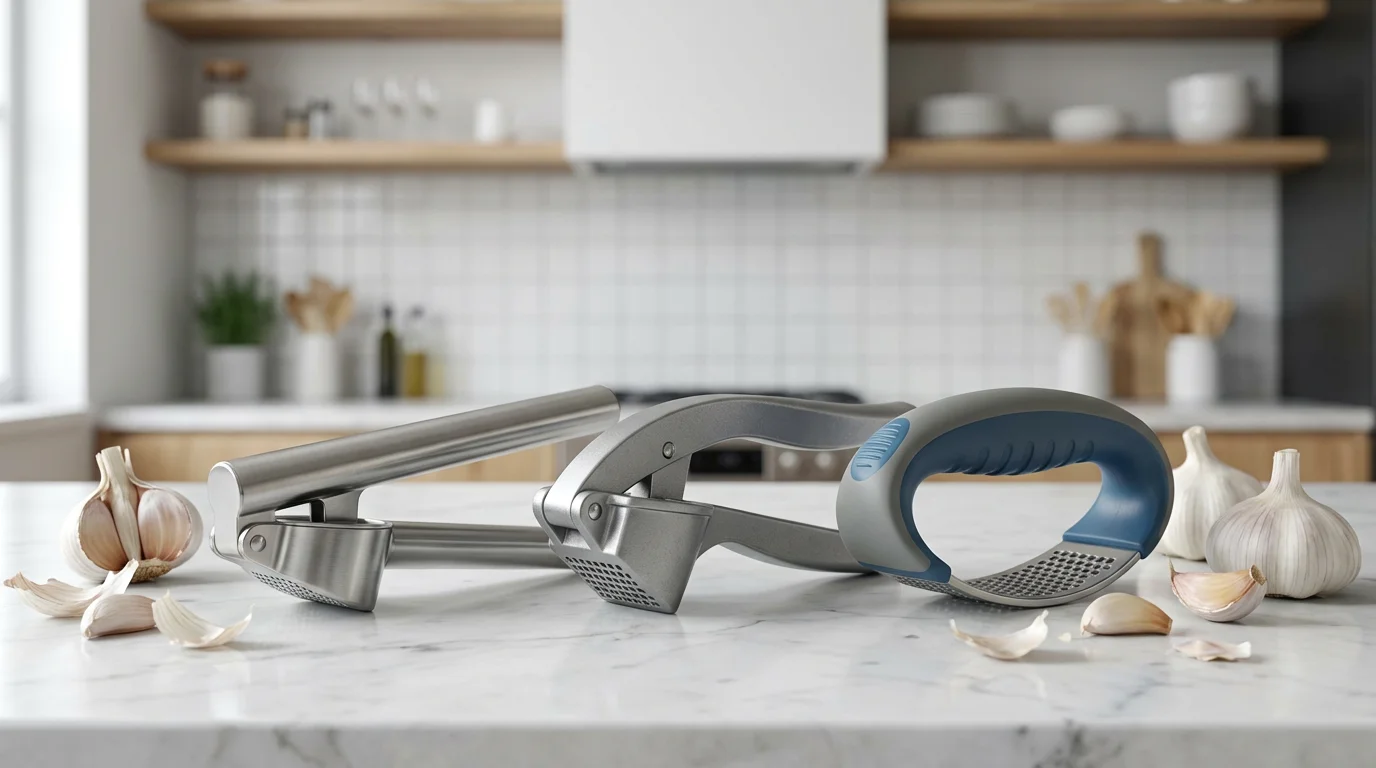
Identifying a truly great garlic press involves evaluating several crucial design and material considerations. Our testing revealed that these elements collectively determine a press’s efficiency, durability, and user comfort.
Much like selecting an ergonomic press, choosing the best can openers can significantly reduce hand strain for those who cook frequently.
Material Quality: Durability and Longevity
The primary materials used in garlic presses are typically stainless steel, aluminum, and sometimes high-grade plastic or zinc alloys. Stainless steel is a durable metal that resists rust, staining, and corrosion. It is highly valued for its strength and hygiene, making it a top choice for kitchen tools. Many high-end presses feature heavy-gauge stainless steel, which translates to a robust tool that withstands repeated pressure and frequent use. Aluminum presses are lighter but can be prone to pitting or discoloration over time, especially with acidic foods. Plastic components, when present, should be high-quality and free of harmful chemicals. Some manufacturers specify their plastics are “BPA-free,” meaning they are made without Bisphenol A, a chemical some people prefer to avoid in food contact materials.
Ergonomic Design: Comfort and Leverage
An “ergonomic” design means the tool is designed to be comfortable to hold and use, minimizing strain and maximizing efficiency. For a garlic press, this translates to handles that fit well in the hand, provide a secure grip, and offer sufficient leverage to crush cloves with minimal effort. Look for presses with ample handle length, a comfortable grip material (like silicone), and a well-engineered pivot point. A “non-slip grip” on the handles ensures the press remains stable in your hand, even when wet or greasy, preventing accidental slips.
Basket Design and Mincing Efficiency
The crushing basket and its hole pattern are critical to how effectively the press minces garlic. A well-designed basket holds cloves securely without allowing them to escape around the edges. The hole pattern should allow garlic to pass through easily, creating a fine, uniform paste. Smaller, numerous holes tend to produce a finer mince, while larger holes might leave chunkier bits. Some presses feature a larger capacity basket, accommodating multiple smaller cloves or a single large one.
Ease of Cleaning and Maintenance
This is often the deal-breaker for many unitaskers. A good garlic press should be easy to clean. Many presses come with integrated cleaning tools or have a hinged design that allows the crushing plate to swing out, making it simple to scrape out residual pulp and clear clogged holes. “Dishwasher safe” means the item can be cleaned in a dishwasher without damage. Stainless steel presses are typically dishwasher safe, but some aluminum or plastic parts might require handwashing. We prioritize presses that avoid intricate crevices where garlic pulp can get stuck, becoming a breeding ground for bacteria.
Hands-On Review: Top Garlic Presses for Performance and Comfort
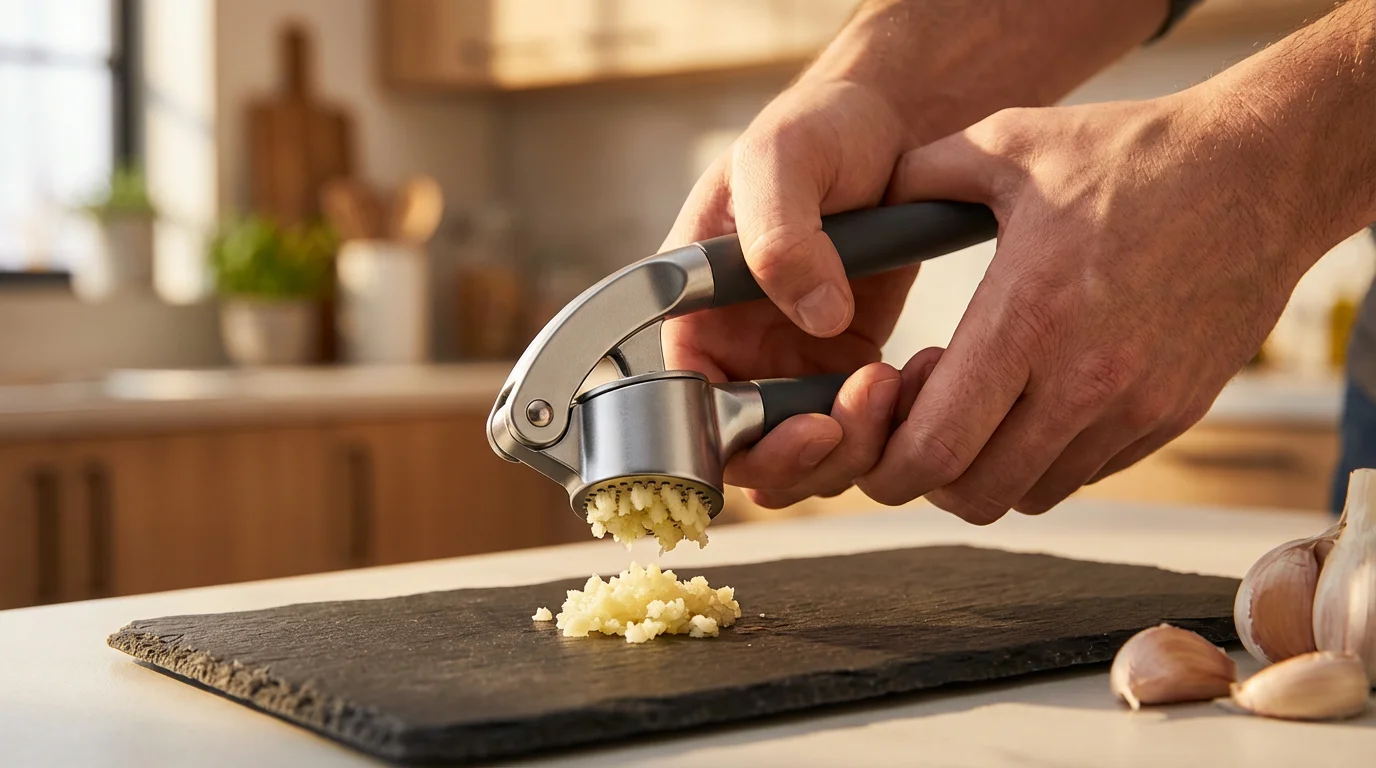
We put several leading garlic presses to the test, evaluating them on their core function: mincing garlic effortlessly. Our selection included popular models known for their durability and user-friendliness, as well as some budget-friendly options.
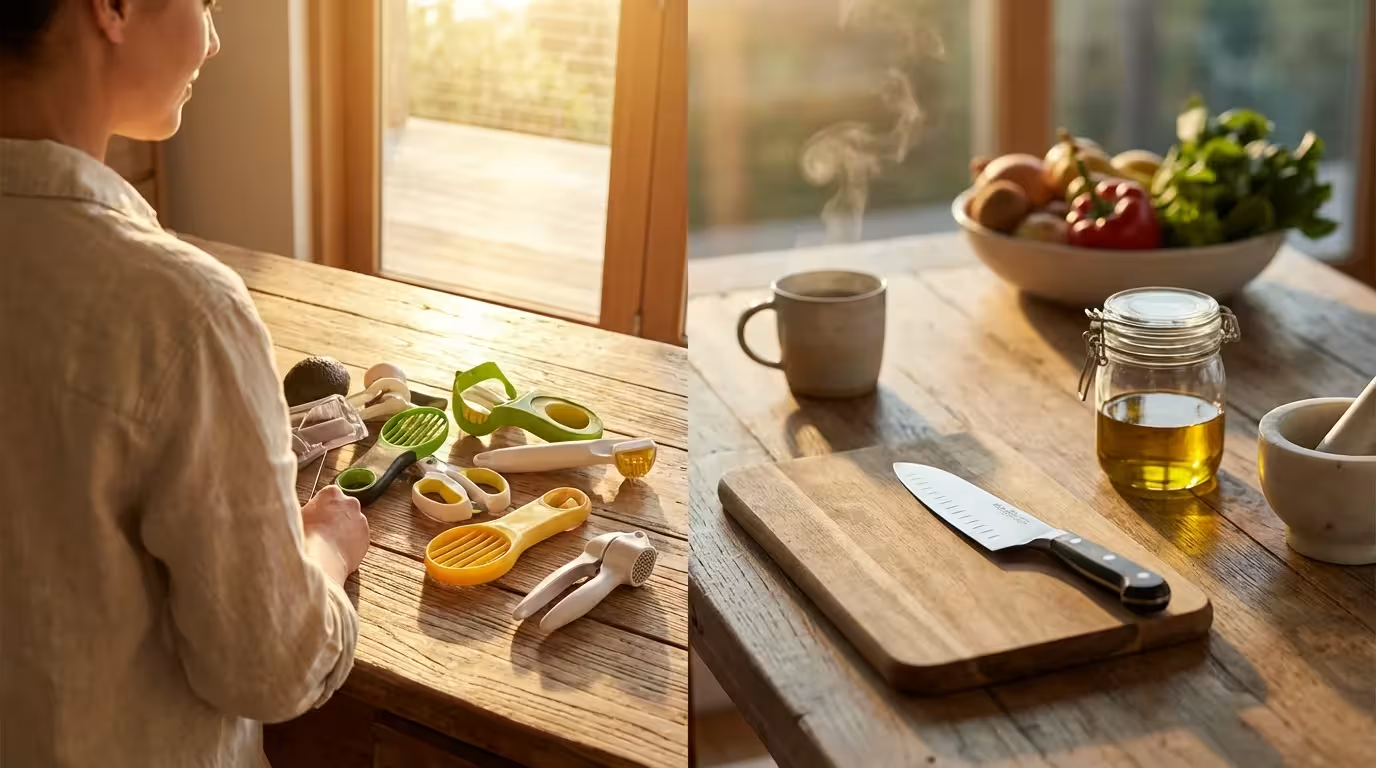
For those who enjoy efficient prep for healthy fats, exploring dedicated avocado tools is another way to make your time in the kitchen more productive.
OXO Good Grips Soft-Handle Garlic Press
Build Quality: The OXO Good Grips press features a sturdy zinc alloy body with generous, soft, non-slip silicone handles. The construction feels robust and durable. It weighs in at a reassuring 9.6 ounces, providing a good sense of balance and strength.
Mincing Efficiency: This press performed admirably. It consistently produced a fine, even mince from both peeled and unpeeled cloves. The basket is adequately sized for a large clove or two smaller ones. We found it delivered about 75% yield from an unpeeled clove, leaving behind minimal paper and pulp.
Comfort and Ease of Use: The soft silicone handles are a standout feature, providing an excellent non-slip grip that feels comfortable even during extended use. The ergonomic design means it requires less hand strength than many other models, making it a strong contender for the best garlic press for arthritis hands. Its leverage is well-engineered, allowing for smooth, controlled pressing.
Cleaning: A built-in cleaner, a small plastic protrusion on one handle, pushes out trapped garlic from the holes, simplifying cleanup. It is dishwasher safe, but a quick rinse under hot water with the cleaner engaged usually suffices.
Pros: Excellent ergonomics, comfortable non-slip grip, effective built-in cleaner, consistent mince, durable construction.
Cons: Zinc alloy can discolor over time if not dried properly, slightly heavier than some alternatives.
Kuhn Rikon Epicurean Garlic Press
Build Quality: This press is a marvel of Swiss engineering. Crafted entirely from polished heavy-gauge stainless steel, it exudes quality and durability. Its weight, at 10.4 ounces, reinforces its premium feel. The hinges are tight, and the entire unit feels virtually indestructible.
Mincing Efficiency: The Kuhn Rikon consistently delivered the finest, most uniform garlic paste of all the presses we tested. Its unique design allows it to extract nearly all the garlic from both peeled and unpeeled cloves, leaving behind a dry, paper-thin husk. The small, precisely drilled holes ensure maximum flavor release.
Comfort and Ease of Use: Despite its all-stainless steel construction, the handles are well-shaped, providing a comfortable, secure grip. The leverage is exceptional, requiring surprisingly little effort to press cloves. We found it very manageable, even for those with weaker hands, making it another excellent option for the best garlic press for arthritis hands due to its mechanical advantage.
Cleaning: Its all-stainless steel construction means there are no small parts to trap garlic, and it is entirely dishwasher safe. The inner sieve swings out for easy access, making hand cleaning very straightforward. No separate cleaning tool is required, as the design inherently prevents clogging.
Pros: Superior mince quality, exceptional durability (full stainless steel), excellent leverage, very easy to clean, comfortable despite lack of soft grip.
Cons: Premium price point, can feel a bit industrial to some.
IKEA IDEALISK Garlic Press
Build Quality: The IKEA IDEALISK offers a functional design with a combination of stainless steel and plastic. The pressing plate is stainless steel, while the handles feature a sturdy plastic casing. It feels less substantial than the OXO or Kuhn Rikon, weighing around 6 ounces, but still holds up well for its price.
Mincing Efficiency: This press produces a decent mince, though slightly coarser than the top-tier models. It handles peeled cloves better than unpeeled, as the plastic-clad handles offer less robust leverage for tougher skins. Yield was acceptable, around 65-70% for unpeeled cloves.
Comfort and Ease of Use: The plastic handles are smooth and offer a reasonable grip, but they lack the soft-touch comfort of the OXO or the sheer mechanical advantage of the Kuhn Rikon. It requires a bit more hand strength to operate effectively, making it less ideal for continuous use or for individuals with limited hand strength.
Cleaning: It features a small, integrated cleaning tool that stores within one of the handles. This tool effectively clears most holes. The press is dishwasher safe. Its simpler design means fewer nooks and crannies for garlic to hide in compared to some more complex models.
Pros: Very affordable, functional for basic needs, includes a cleaning tool, dishwasher safe.
Cons: Requires more hand strength, mince is not as fine, less durable construction compared to premium options.
Product Comparison Summary
Here is a quick overview of how these popular garlic presses stack up against each other:
| Feature | OXO Good Grips Soft-Handle | Kuhn Rikon Epicurean | IKEA IDEALISK |
|---|---|---|---|
| Material | Zinc Alloy, Silicone | 100% Stainless Steel | Stainless Steel, Plastic |
| Mince Quality | Fine, Consistent | Finest, Most Uniform Paste | Good, Slightly Coarser |
| Ergonomics/Comfort | Excellent (Soft Grip) | Excellent (Leverage) | Good (Smooth Plastic) |
| Cleaning Ease | Very Easy (Built-in Cleaner) | Very Easy (Swing-out Sieve) | Easy (Integrated Cleaner) |
| Dishwasher Safe | Yes | Yes | Yes |
| Unpeeled Cloves | Good Performance | Excellent Performance | Fair Performance |
| Price Point | Mid-Range | Premium | Budget-Friendly |
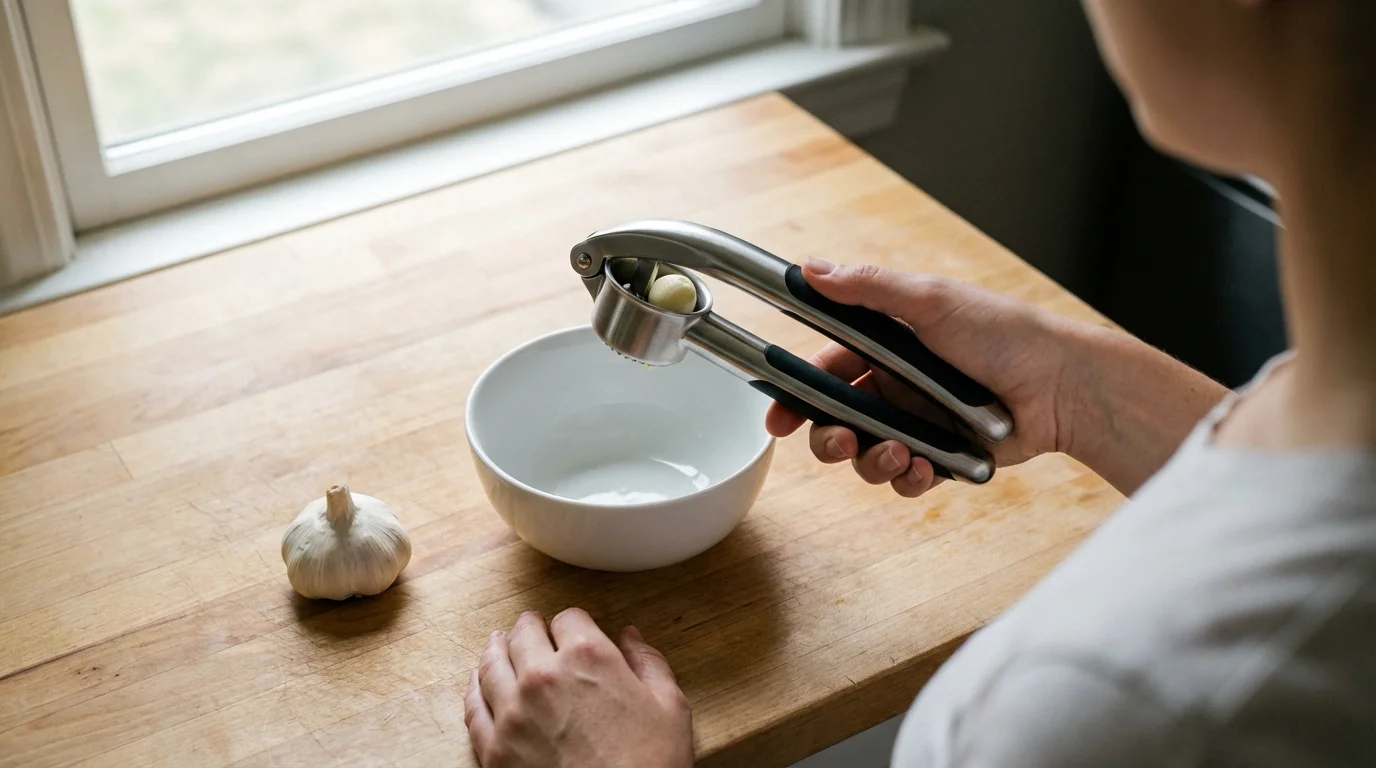
Ergonomic Design: Comfort for Every Hand
The term “ergonomic” refers to a design that optimizes for human comfort and efficiency. For a garlic press, this translates directly to how comfortably and easily you can operate the tool. Our testing revealed significant differences in ergonomic performance across various models, impacting both the effort required and the overall user experience.
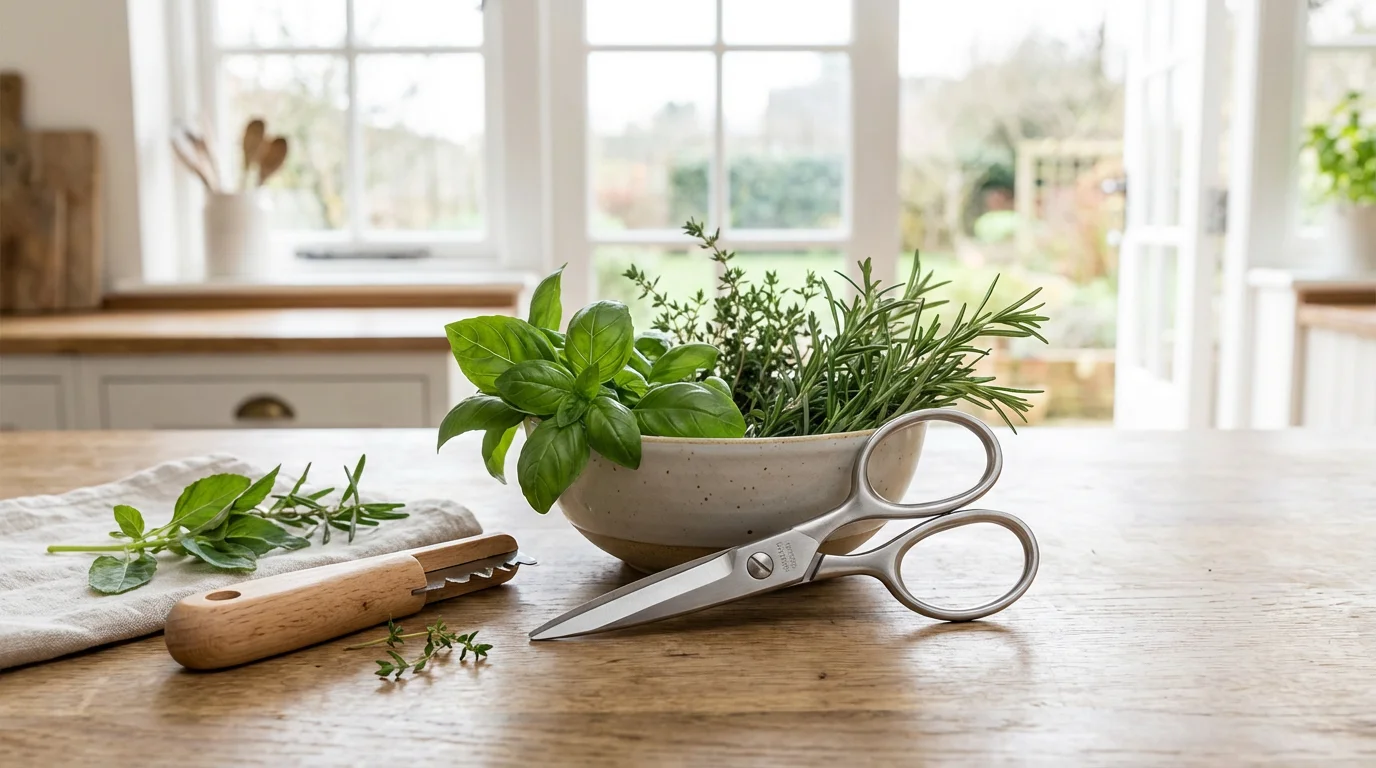
If you find prep work taxing, specialized herb strippers and scissors can further streamline your workflow alongside an ergonomic garlic press.
Presses with longer handles generally provide better leverage, reducing the hand strength needed to crush garlic. The OXO Good Grips press, for instance, features generously sized handles covered in a soft, grippy silicone material. This “non-slip grip” is crucial, as it prevents your hand from sliding even if it is wet or greasy, ensuring a secure hold and more effective pressing. The soft material also cushions your hand, making it much more comfortable during repeated use.
For those seeking the best garlic press for arthritis hands or similar conditions that limit grip strength, leverage becomes paramount. The Kuhn Rikon Epicurean, while lacking the soft-grip handles, excels in its mechanical advantage. Its meticulously engineered pivot point and robust stainless steel construction allow it to crush garlic with surprisingly little effort. This means you do not need to apply as much direct pressure, which significantly reduces strain on the joints.
In contrast, smaller or less robust presses, like some budget plastic models, often require a tighter grip and more forceful squeezing. This can quickly lead to hand fatigue and discomfort. When choosing a garlic press, consider not just the material of the handle, but also its overall length, the smoothness of its action, and the feedback it provides as you press. A well-designed ergonomic press feels like an extension of your hand, not a tool you are fighting against.
“Consumer Reports emphasizes that for everyday kitchen tools, ease of use and consistent performance often outweigh flashy features. A gadget you avoid because it’s awkward or difficult to operate is a wasted investment.”
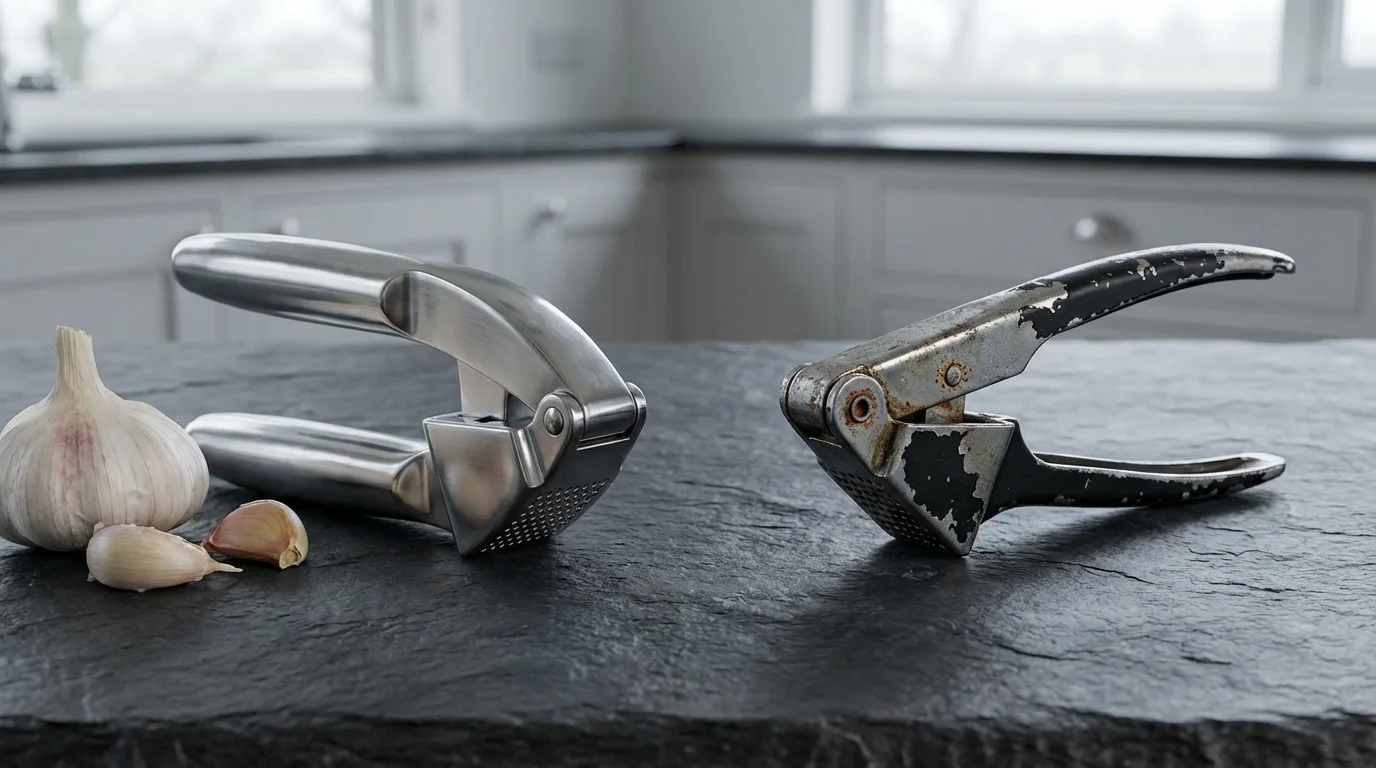
Durability and Materials: Stainless Steel vs. Other Options
When investing in any kitchen gadget, durability is a primary concern. No one wants a tool that breaks after a few uses or degrades quickly. For garlic presses, the choice of material significantly impacts longevity and performance.
The Case for Stainless Steel
Stainless steel is a durable metal that resists rust, staining, and corrosion. Presses made entirely from stainless steel, like the Kuhn Rikon Epicurean, stand out for their exceptional longevity. This material does not react with acidic garlic, nor does it absorb odors. Its strength means it can withstand the significant pressure required for mincing without bending or warping. A solid stainless steel construction also typically means fewer moving parts or potential weak points that could fail over time. According to Serious Eats’ equipment reviews, solid stainless steel designs consistently perform better and last longer in rigorous kitchen testing compared to multi-material constructions.
Zinc Alloy and Plastic Considerations
Many popular garlic presses, including the OXO Good Grips, use a heavy zinc alloy for the main body. Zinc alloy offers good strength and weight, providing a solid feel and effective pressing power. However, zinc alloy can sometimes be prone to pitting or discoloration if left wet for extended periods or if exposed to very harsh detergents. While generally durable, it might not offer the same absolute imperviousness to corrosion as high-grade stainless steel.
Plastic components are often found in the handles (for grip) or as integrated cleaning tools. When plastic is used, it should be robust and, ideally, “BPA-free.” Bisphenol A (BPA) is an industrial chemical used to make certain plastics, and some consumers prefer to avoid it in food contact items. While BPA-free plastics are generally safe, plastic elements can be the first point of failure in an otherwise sturdy press, especially if they are thin or poorly integrated.
Some budget presses utilize aluminum. While lightweight and inexpensive, aluminum can react with acidic garlic, potentially leading to discoloration or a metallic taste in your food. It is also softer than stainless steel or zinc alloy, making it more susceptible to bending or denting over time.
Ultimately, a robust construction, whether it is full stainless steel or a high-quality zinc alloy with durable `silicone` (a flexible, heat-resistant material used in many kitchen tools) or plastic handles, proves most reliable. Prioritize heavy-duty components and avoid flimsy designs, regardless of the specific material.
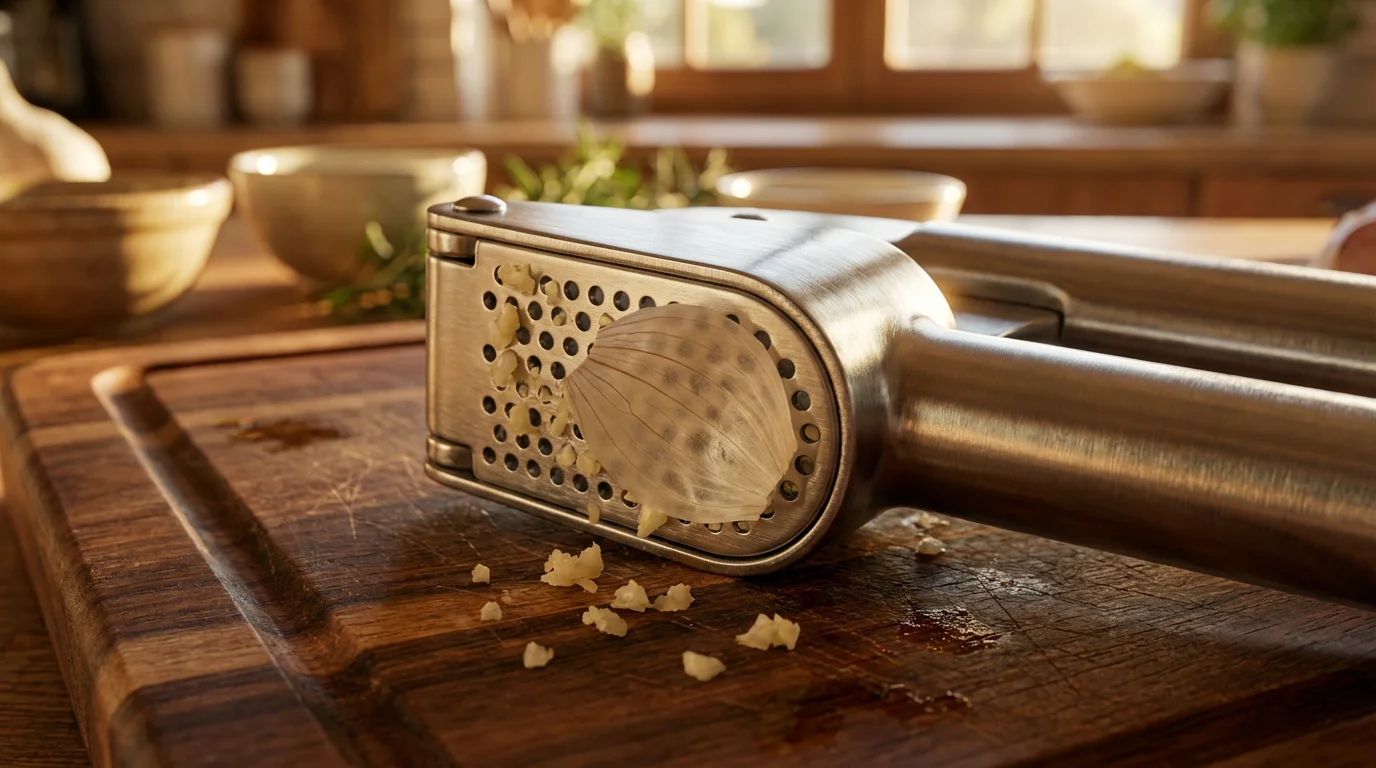
Mastering Your Garlic Press: How to Use It Properly
Getting the most out of your garlic press involves more than just squeezing. Following a few simple steps ensures you maximize yield, minimize waste, and achieve that perfect mince every time. Addressing “how to use a garlic press properly” can significantly enhance your cooking experience.
Step 1: Choose Your Cloves
Select fresh, firm garlic cloves. Avoid any that are soft, shriveled, or have green sprouts, as these indicate older garlic with diminished flavor. Most presses accommodate standard-sized cloves. If you have particularly large cloves, you might need to cut them in half before pressing.
Step 2: To Peel or Not to Peel?
This is where a good garlic press truly shines. Many high-quality presses, especially those with strong leverage like the Kuhn Rikon Epicurean or OXO Good Grips, handle unpeeled cloves effectively. The skin stays largely contained in the basket, separating easily from the pressed garlic. Pressing unpeeled saves time and keeps your hands cleaner. If your press struggles with unpeeled cloves, or if you are using smaller, more delicate ones, a quick smash with the flat side of a knife blade loosens the skin, making peeling effortless.
Step 3: Load the Basket
Place one or two cloves into the press’s basket. Avoid overfilling, as this reduces efficiency and can strain the press. Ensure the cloves sit snugly within the chamber.
Step 4: Press with Purpose
Hold the press firmly, with the basket positioned over your desired container or directly into your pan. Apply steady, firm pressure to the handles. You should feel the garlic yielding and see it extruding through the holes as a fine paste. Continue pressing until no more garlic emerges, or only a dry husk remains in the basket.
Step 5: Scrape and Collect
Use the edge of a small knife, a spoon, or a mini spatula to scrape the pressed garlic from the exterior of the pressing plate. This ensures you collect all the flavorful goodness. For presses with integrated cleaners, like the OXO or IKEA, activate the cleaner to push out any residual garlic from the holes.
Step 6: Clean Immediately
Garlic residue can harden and become difficult to remove if left to dry. Rinse your press immediately after use under hot running water. Utilize any built-in cleaning tools or a small brush to clear the holes thoroughly. This prepares your press for its next use and extends its lifespan.
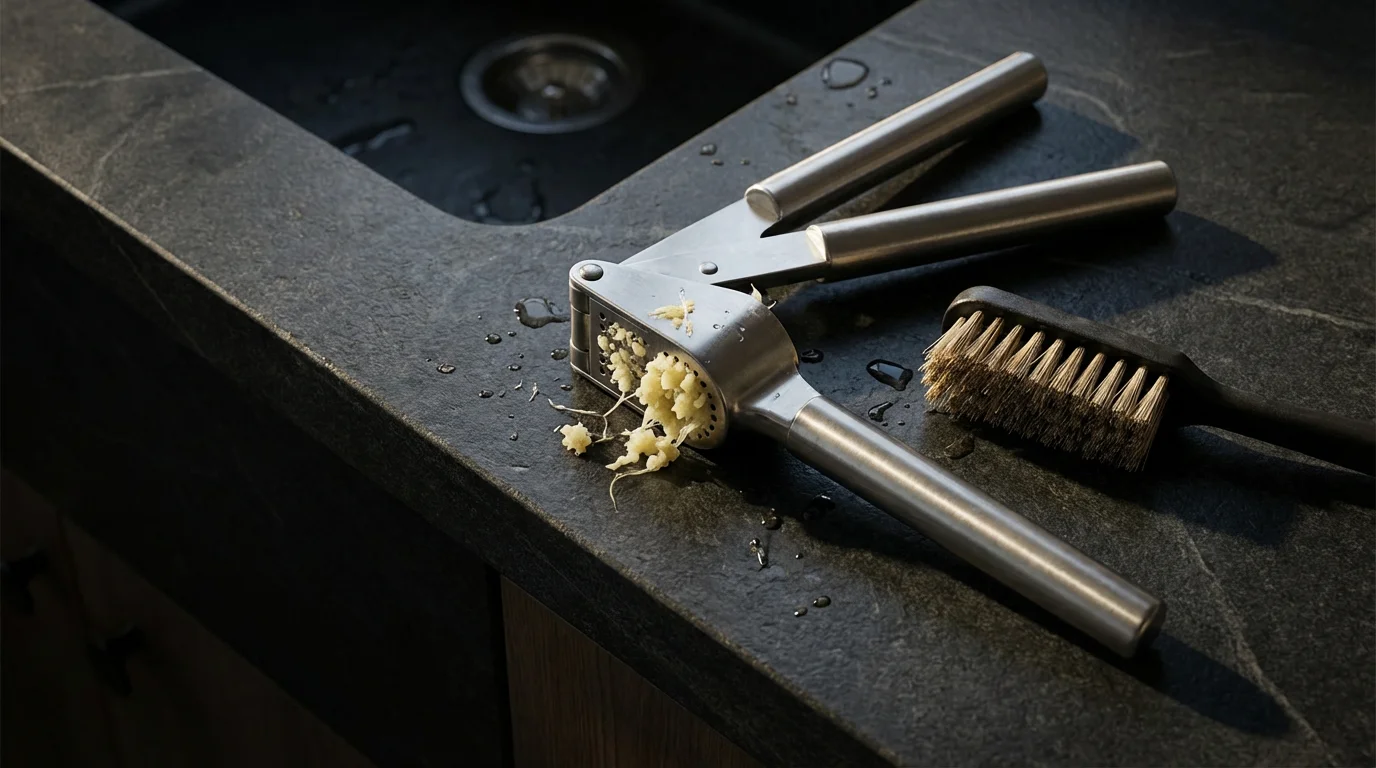
Cleaning and Storage: Keeping Your Gadget Ready
The biggest complaint about many kitchen gadgets, especially unitaskers, is the difficulty in cleaning. A garlic press is no exception. Residual garlic pulp can dry and clog the small holes, making future use frustrating and unhygienic. Our testing prioritized presses that were genuinely easy to clean.
Along with keeping your small gadgets clean, using meat thermometers is a crucial habit for ensuring both safety and flavor in your cooking.
Immediate Action is Key
The most effective cleaning strategy for any garlic press is to rinse it immediately after use. Do not let garlic residue dry and harden in the holes. A quick rinse under hot water, often combined with a little scrubbing, prevents most major cleaning headaches.
Cleaning Mechanisms
- Integrated Cleaning Tools: Many presses, such as the OXO Good Grips and IKEA IDEALISK, come with a small cleaning tool. This is typically a set of pins or a textured surface that fits perfectly into the press’s holes, dislodging any trapped garlic. This feature dramatically simplifies cleanup, making it a strong positive in our evaluations.
- Swing-Out Sieves: The Kuhn Rikon Epicurean uses a clever design where the inner sieve plate swings open, allowing for complete access to the holes from both sides. This makes scraping out any remaining pulp and rinsing much easier. The design minimizes trapped garlic and eliminates the need for a separate cleaning tool.
- Simple Designs: Some basic presses have fewer nooks and crannies. While they might lack specialized cleaning tools, their straightforward construction can sometimes make handwashing relatively quick.
Dishwasher Compatibility
Most quality garlic presses are “dishwasher safe,” meaning they can be cleaned in a dishwasher without damage. This offers ultimate convenience. However, even if a press is dishwasher safe, we often recommend a quick pre-rinse to remove the bulk of the garlic, ensuring the dishwasher can effectively clean the tiny holes. Stainless steel presses are almost always dishwasher safe and emerge spotless. Presses with zinc alloy or plastic components also tend to fare well in the dishwasher, but always check manufacturer instructions for specific care.
Storage Considerations
Most garlic presses are compact tools that fit easily into a utensil drawer. Their size means they do not demand significant counter or drawer footprint. Consider models with a smooth profile if your drawers are tightly packed, as some presses with chunky handles can snag on other tools. The OXO Good Grips, despite its comfortable handles, is still relatively sleek for storage. The Kuhn Rikon’s all-stainless design ensures it holds up well to jostling in a drawer.
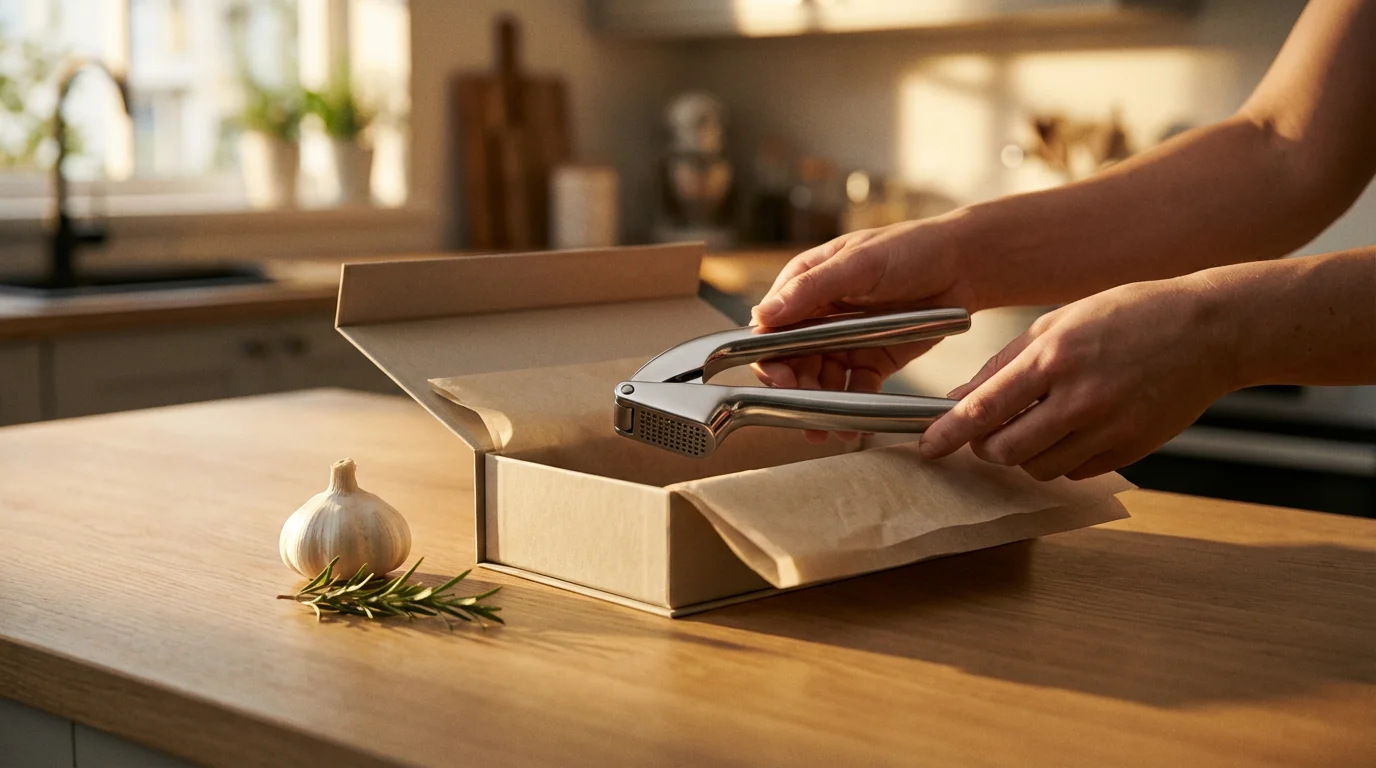
Beyond the Basics: Are These Gadgets Gift-Worthy?
The world of kitchen gadgets is vast, filled with both ingenious problem-solvers and notorious drawer clutterers. A common question arises: is a garlic press a thoughtful gift, or will it join the pile of unused novelty items? Our ethos encourages skepticism, especially for “unitaskers,” but a well-chosen garlic press can be a surprisingly practical and appreciated present.
When a Garlic Press Makes a Great Gift
- For the Avid Home Cook: Someone who cooks regularly and uses garlic frequently will genuinely appreciate a high-quality garlic press. It streamlines a common task, saves time, and produces consistent results. Consider it for someone who values efficiency and fresh ingredients.
- As a Kitchen Stocking Stuffer: For smaller gifts or stocking stuffers, a well-regarded garlic press fits perfectly. It is a functional item that enhances daily cooking, unlike many fleeting novelty gadgets.
- For Those with Dexterity Challenges: A top-tier, ergonomically designed press, particularly one recognized as the best garlic press for arthritis hands, can be a game-changer. It offers independence and comfort in the kitchen for individuals who find knife-mincing difficult or painful. This thoughtful consideration transforms a simple gadget into a tool of empowerment.
- Part of a Starter Kitchen Set: If you are assembling a basic kitchen setup for a new homeowner or college student, a reliable garlic press is a worthwhile addition. It introduces them to the joys of cooking with fresh garlic without the intimidation of intricate knife skills.
When to Skip Gifting a Garlic Press
- Minimalist Cooks: Some cooks prefer a minimalist kitchen, relying solely on essential tools. If your recipient proudly boasts about their single chef’s knife and cutting board, a unitasker might not be appreciated.
- Professional Chefs: While some professional chefs use presses, many prefer their knife skills for garlic preparation. They might see a press as superfluous or as a tool for a different texture than they typically aim for.
- If They Already Have a Good One: There is little value in gifting an upgrade if their current press is already a high-performing model they love.
In summary, while we maintain a skeptical view on kitchen gadgets that offer solutions to non-existent problems, a premium garlic press addresses a real, common kitchen task efficiently. It is a gift that offers tangible value and convenience, proving itself a practical addition to many home kitchens.
Frequently Asked Questions
Can you put unpeeled garlic in a garlic press?
Yes, many high-quality garlic presses, particularly those with strong leverage and sturdy construction, handle unpeeled garlic cloves effectively. The skin typically stays contained within the press’s basket, allowing the garlic pulp to pass through. This is a major time-saving advantage and helps keep your hands free of garlic odor. However, some budget or less robust presses may struggle, requiring more force or leaving more garlic in the husk.
Is a garlic press better than mincing with a knife?
The “better” tool depends on your desired outcome. A garlic press delivers a very fine, paste-like consistency with minimal effort and sticky hands, ideal for sauces, dressings, and situations requiring evenly distributed, intense garlic flavor. Knife mincing, however, allows for more control over texture, from thin slices to coarse chops, which can be preferable for certain dishes where you want varying textures or slower flavor release.
How do you clean a garlic press effectively?
The most effective way to clean a garlic press is immediately after use. Rinse it under hot running water to prevent garlic residue from drying and hardening. Many presses include a built-in cleaning tool or have a swing-out sieve that helps dislodge trapped garlic. For thorough cleaning, most quality presses are dishwasher safe. If handwashing, use a small brush or toothpick to clear any stubborn bits from the holes.
What should I look for in a garlic press for arthritis hands?
When selecting a garlic press for arthritis hands, prioritize ergonomic design, focusing on leverage and grip comfort. Look for models with long handles that provide ample mechanical advantage, reducing the force you need to apply. Soft, non-slip grip handles, often made of silicone, also enhance comfort and stability. Presses with smooth, effortless action, such as the OXO Good Grips or Kuhn Rikon Epicurean, are excellent choices as they minimize strain on your joints.
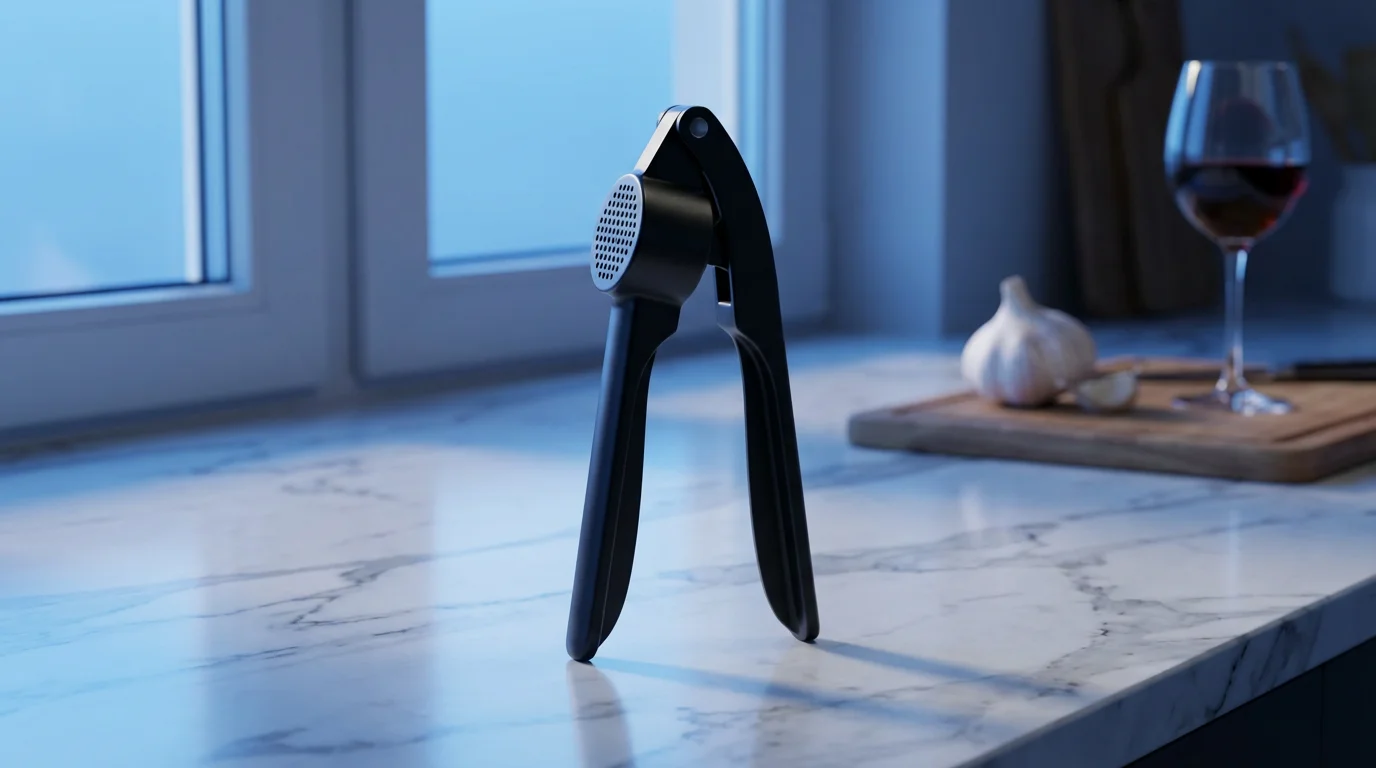
Our Final Recommendation for Your Kitchen
After extensive testing, it is clear that while many garlic presses exist, a select few truly stand out as valuable kitchen gadgets. The “do you really need this?” question for a unitasker like a garlic press receives a resounding “yes” if you frequently cook with garlic, value efficiency, or seek to minimize hand strain. A well-designed garlic press elevates your cooking, delivering consistent results and saving precious prep time.
To continue building your collection of efficient tools, check out our guide to vegetable spiralizers to add more variety to your vegetable prep.
Buy if…
- You frequently mince garlic: If garlic is a staple in your daily or weekly cooking, a quality press will become an indispensable tool.
- You value speed and consistency: For quick meal prep and uniformly flavored dishes, a press outperforms knife mincing.
- You experience hand fatigue or have limited grip strength: Models like the OXO Good Grips or Kuhn Rikon Epicurean are excellent choices for the best garlic press for arthritis hands, providing superior leverage and comfort.
- You prefer to avoid sticky, smelly hands: The ability to press unpeeled cloves is a significant convenience.
Skip if…
- You rarely use fresh garlic: If a recipe calls for garlic only occasionally, a knife will suffice.
- You prefer coarser garlic textures: For dishes requiring sliced, chopped, or roughly smashed garlic, a press is not the right tool.
- Your kitchen space is extremely limited: While compact, it is still an additional gadget.
Our top picks consistently delivered on performance, durability, and ease of cleaning. The Kuhn Rikon Epicurean shines as the premium choice, offering unparalleled mince quality and heirloom durability. For an excellent balance of comfort, performance, and value, the OXO Good Grips Soft-Handle Garlic Press is a fantastic all-rounder, particularly noted for its ergonomic design. Even a budget-friendly option like the IKEA IDEALISK can be a reasonable starting point if you are simply testing the waters.
Ultimately, investing in a high-quality garlic press is a smart move for any home cook looking to streamline their culinary routine and enjoy the full, rich flavor of freshly pressed garlic without the fuss. It is one of those kitchen gadgets that, when chosen wisely, truly earns its place in your drawer.
Disclaimer: Product prices and availability change frequently. Prices shown were accurate at time of writing but may have changed. We may earn a small commission from purchases made through links on this site, at no extra cost to you. Always verify current pricing on the retailer’s website before purchasing.
While a press is ideal for pastes, using a Microplane grater is another excellent way to achieve a very fine mince for your aromatic ingredients.




Leave a Reply