
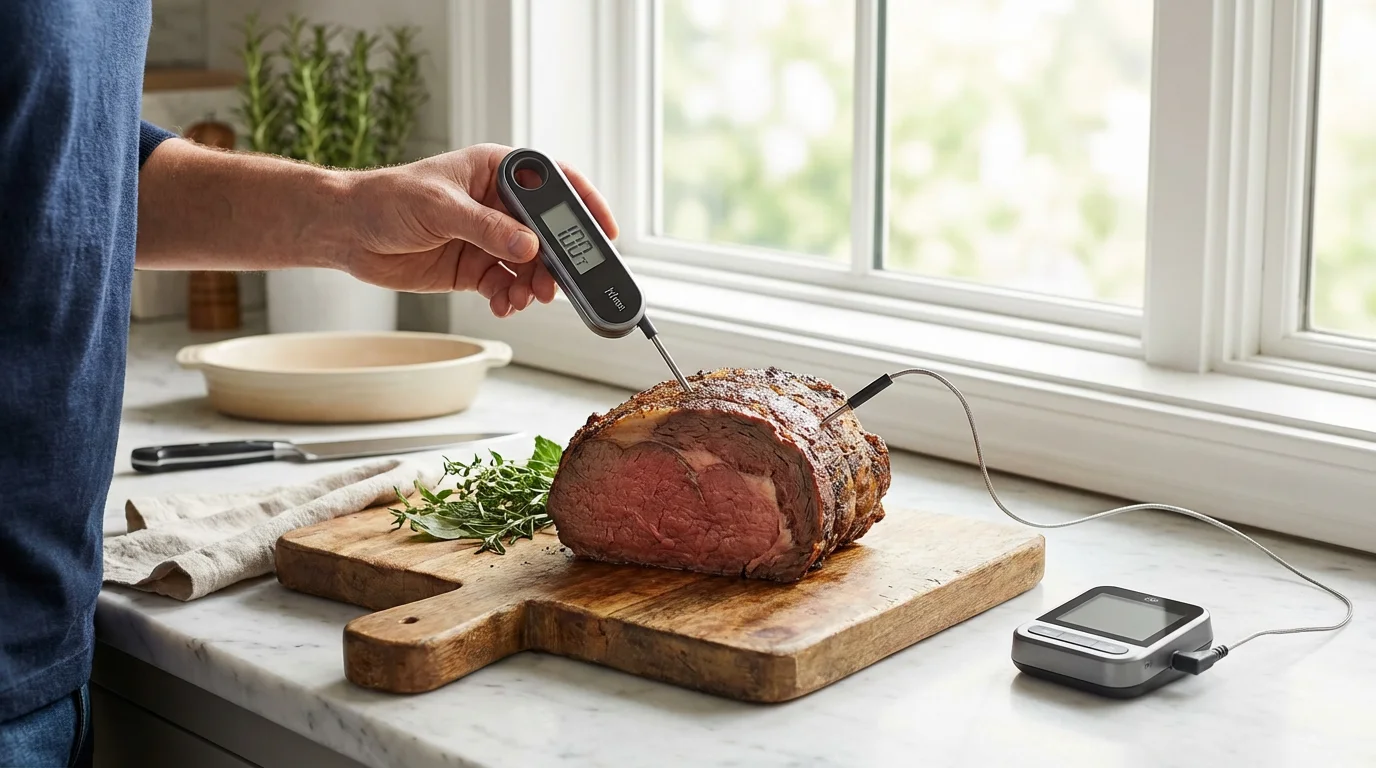
Achieving perfectly cooked meat, whether a juicy steak, a tender roast, or a perfectly smoked brisket, relies heavily on one crucial factor: internal temperature. Guessing can lead to disappointing results, ranging from dry, overcooked cuts to dangerously undercooked food. A reliable meat thermometer eliminates guesswork, ensuring both culinary excellence and food safety. This guide explores the two primary types of digital meat thermometers available today: instant read and leave-in models, helping you decide which tool best fits your cooking style.
While temperature is the primary focus, using the best kitchen timers for precise cooking will help you manage the rest of your meal preparation effectively.
Understanding the Stakes: Why Accurate Cooking Temperature Matters
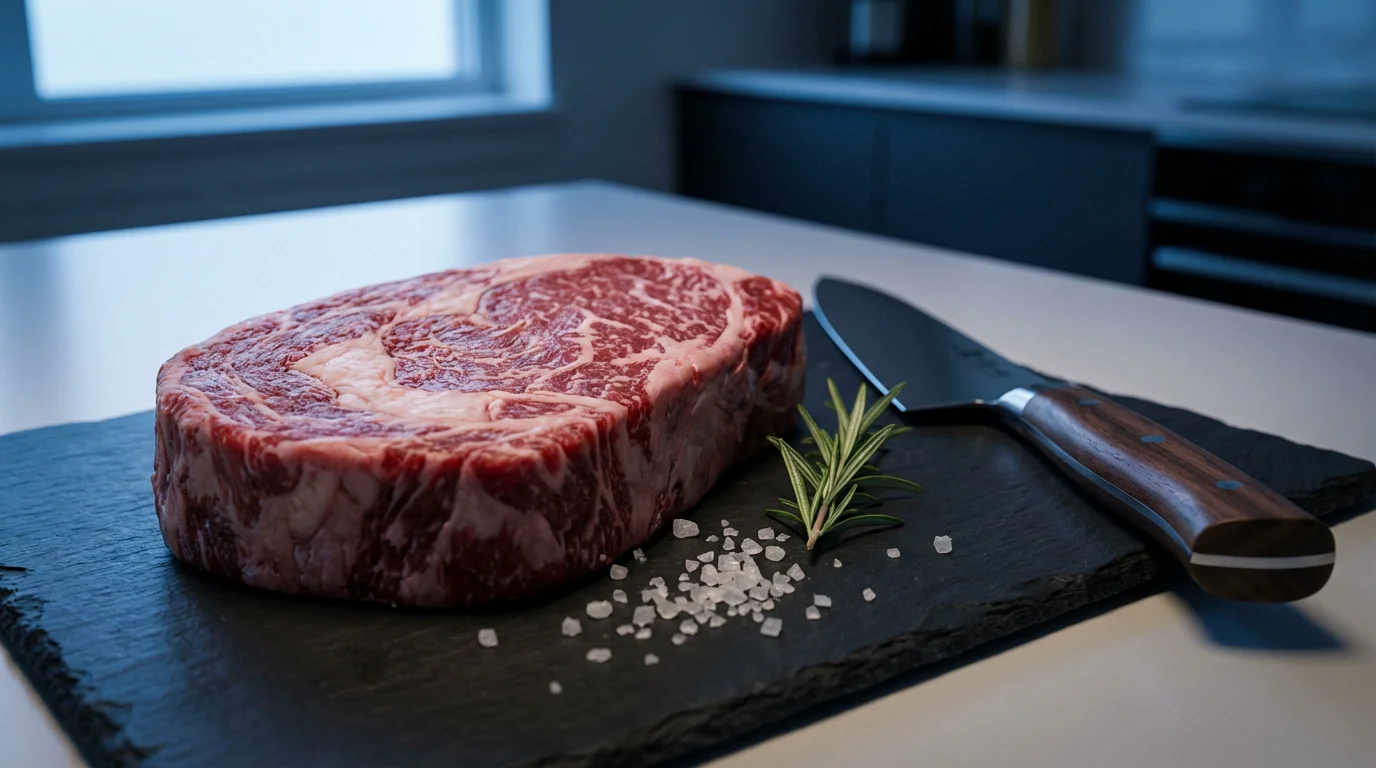
Cooking meat to the correct internal temperature is not merely about achieving optimal flavor and texture. It is a critical aspect of food safety. Raw meats can harbor harmful bacteria, which proper cooking destroys. The USDA provides specific safe minimum internal temperatures for various proteins, and a meat thermometer verifies you reach these thresholds.
While meat thermometers ensure safety, other tools like a good microplane grater are essential for adding delicate flavor accents to your final dish.
Beyond safety, precision also prevents overcooking. Imagine investing in a prime cut of steak, only to serve it dry and tough because you cooked it too long. A good meat thermometer helps you pull your food off the heat at its peak doneness, ensuring juicy, tender results every time. For instance, achieving a medium-rare steak requires pulling it at 130-135°F, allowing for carryover cooking to bring it to a perfect 135-140°F. Without an accurate instant read thermometer, hitting this narrow window consistently proves challenging.
Instant Read Thermometers: Precision in a Flash
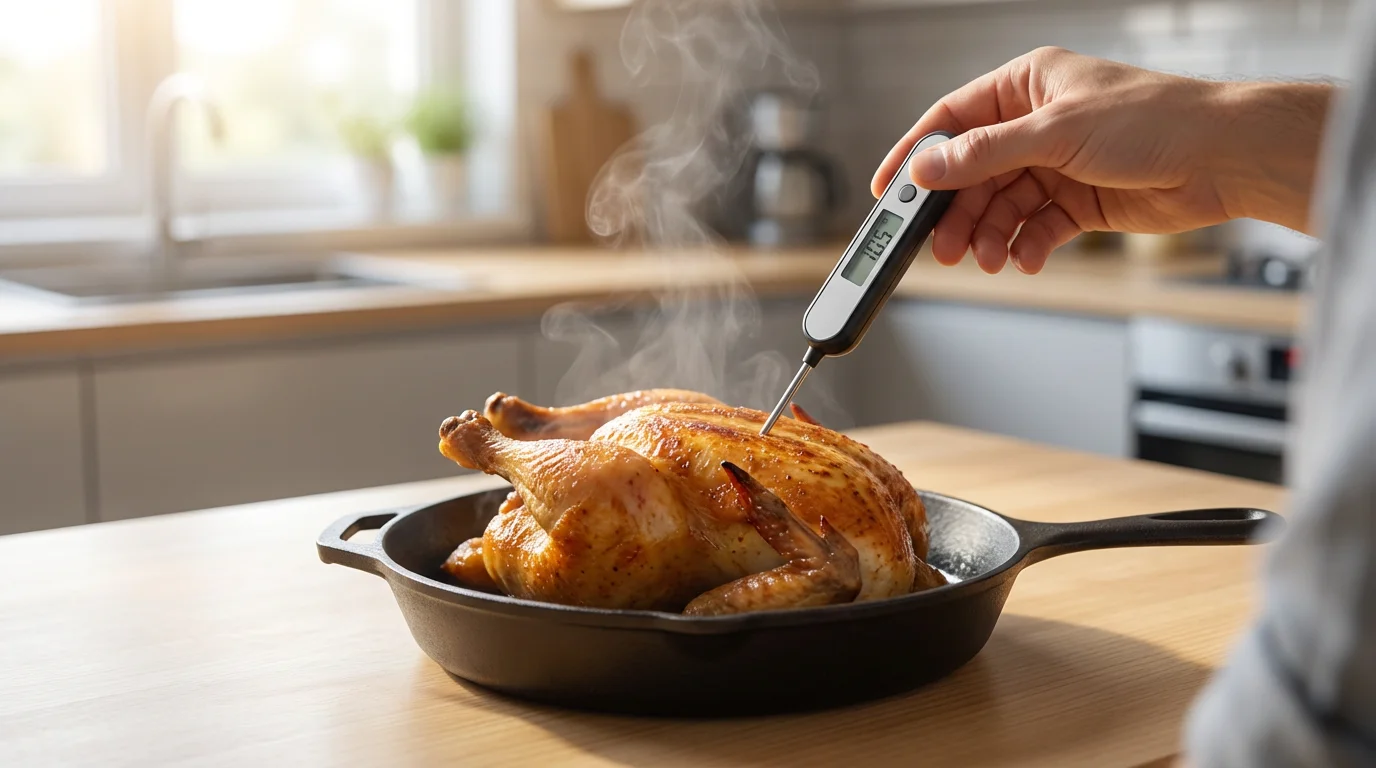
Instant read thermometers provide quick temperature readings, typically within 2-5 seconds. Their design features a slender probe extending from a handle that houses a digital display. You insert the probe into the thickest part of the meat, avoiding bone, and wait for the stable reading. This makes them ideal for checking doneness rapidly, allowing you to react quickly to prevent overcooking.
Key Features and Ideal Uses
- Speed: Essential for grilling, pan-searing, or sautéing, where you frequently check doneness without losing too much heat from the cooking surface. You need to quickly assess the internal cooking temperature without letting the meat cool down.
- Accuracy: Most high-quality instant read models offer accuracy within ±1°F, crucial for delicate proteins or specific doneness levels.
- Portability: Many models feature a folding probe, making them compact and easy to store in a drawer or even a chef’s jacket pocket.
- Versatility: Use them for everything from checking frying oil temperature to ensuring baked goods are fully cooked.
- How to use meat thermometer for perfect steak: For a perfect steak, sear it on high heat, then move it to a lower temperature zone or indirect heat. Begin checking the internal temperature with your instant read thermometer approximately 5-7 degrees below your target doneness. Insert the thin, stainless steel probe into the center of the thickest part of the meat, avoiding any bone. Pull the steak off the heat when it reaches your desired temperature. The meat will continue to cook a few degrees due to carryover heat as it rests.
Considerations
While invaluable, instant read thermometers are not designed to remain in the meat throughout the entire cooking process. The electronics are often not rated for sustained high heat, and leaving them in can damage the unit. You also need to open the oven or grill lid each time you check, which can cause temperature fluctuations and extend cooking times.
“The best instant read thermometers balance speed, accuracy, and durability. Look for a model with a thin probe and a clear, backlit display for easy reading in any kitchen light.” — QuickKitchenTools.com Reviewer
Leave-In Thermometers: Set It and Forget It Monitoring
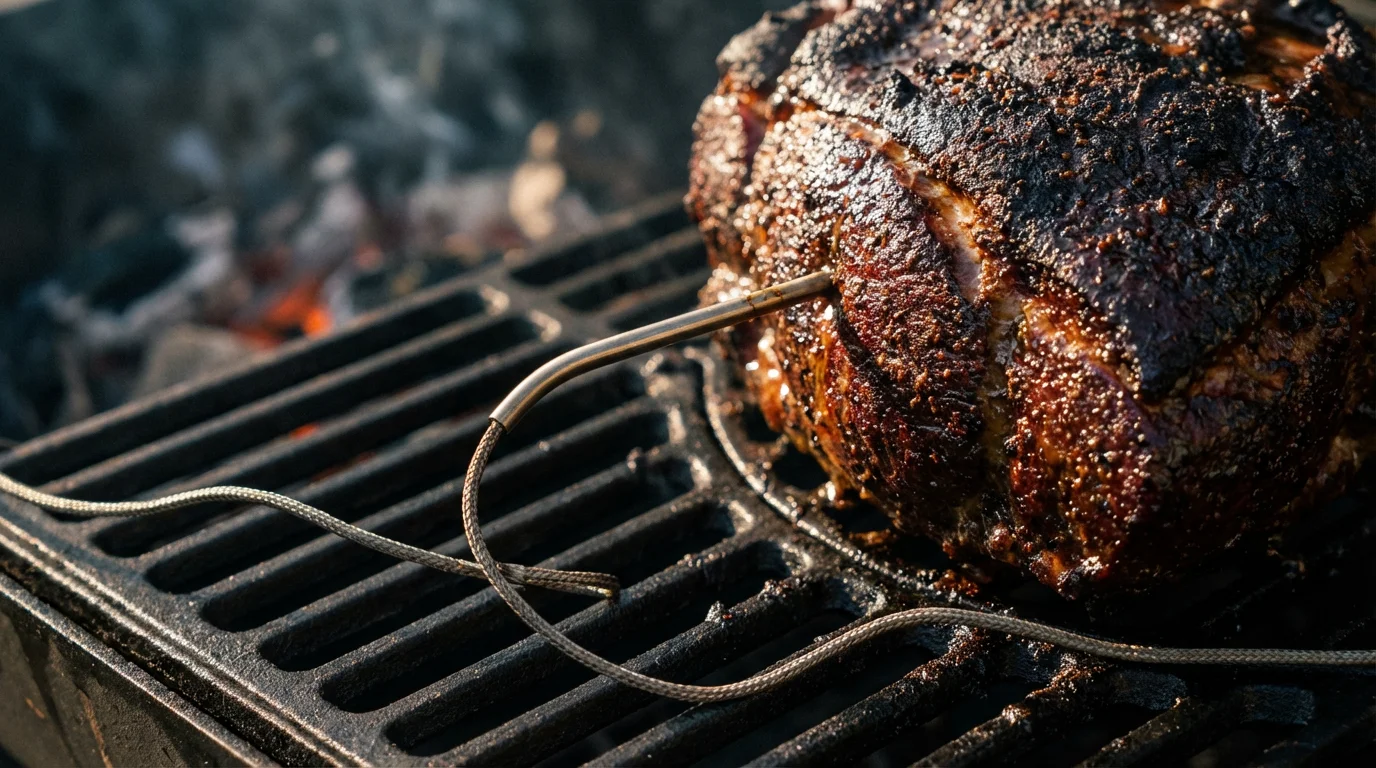
Leave-in thermometers, often referred to as probe thermometers, consist of a heat-resistant probe connected by a long, thin wire to an external base unit. You insert the probe into the meat before cooking and leave it there for the duration. The base unit, which stays outside the oven, smoker, or grill, displays the real-time internal temperature. Many models feature programmable alarms that alert you when your food reaches a preset target temperature, offering a truly hands-off monitoring experience.
Much like how the best can openers for easy use simplify opening canned ingredients, a leave-in thermometer simplifies the roasting process.
Key Features and Ideal Uses
- Continuous Monitoring: Perfect for long cooks like roasts, briskets, pork shoulders, or turkeys, where opening the oven or grill frequently would significantly extend cooking times and reduce efficiency. This is particularly useful for achieving the best digital meat thermometer for grilling and smoking.
- Remote Monitoring: Many leave-in thermometers offer wireless connectivity, allowing you to monitor the cooking temperature from a smartphone app or a separate handheld receiver. This freedom lets you socialize or attend to other tasks without constantly hovering over the cooker.
- Programmable Alarms: Set your desired internal temperature, and the unit will alert you when the meat reaches it, preventing overcooking and ensuring consistent results.
- Multi-Probe Options: Some advanced models come with multiple probes, letting you monitor different cuts of meat simultaneously or track both the meat’s internal temperature and the ambient temperature of your grill or smoker.
Considerations
While excellent for long cooks, leave-in thermometers typically take longer to register a stable temperature than instant read models. This makes them less suitable for quick checks on thinner items like steaks or burgers, where you need rapid feedback. The wires connecting the probes to the base unit require careful handling to avoid damage, and ensuring a good seal if passing through an oven or grill door can be a minor challenge.
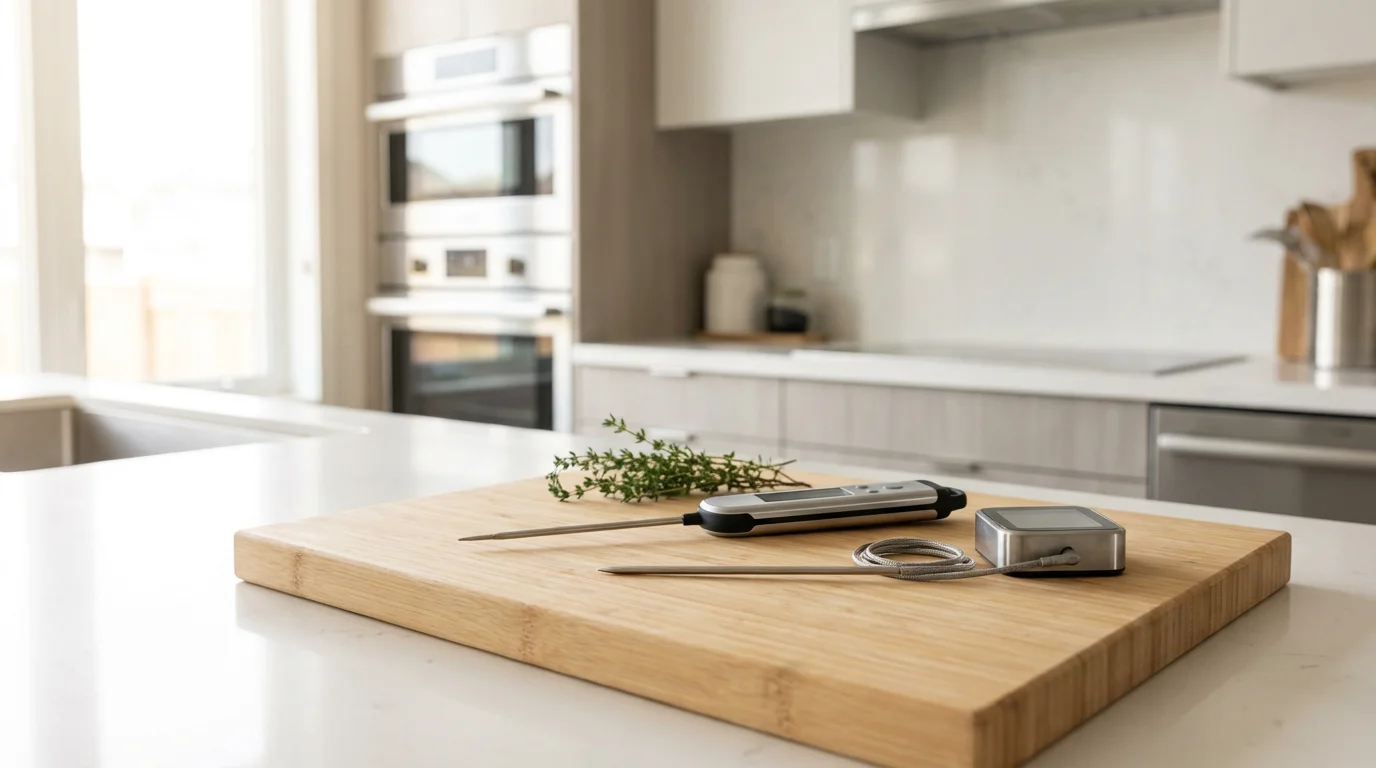
Comparing the Contenders: Instant Read vs. Leave-In Side-by-Side
To help you weigh the options, here is a direct comparison of instant read and leave-in meat thermometers:
| Feature | Instant Read Thermometer | Leave-In Thermometer |
|---|---|---|
| Primary Use Case | Quick spot checks, grilling, pan-searing, candy making, deep frying | Long roasts, smoking, BBQ, baking, continuous oven monitoring |
| Reading Speed | Very fast (2-5 seconds typically) | Slower to stabilize, but provides continuous readings |
| Monitoring Style | Manual, active checks | Passive, continuous monitoring with alarms |
| Probe Placement | Inserted only when checking, then removed | Inserted at start, left in throughout cooking |
| Portability | High, often pocket-sized | Lower, usually a base unit with a wire probe |
| Cost Range | $20 – $100+ | $30 – $200+ (multi-probe/wireless models) |
| Advanced Features | Backlit display, auto-off, calibration | Wireless connectivity, multiple probes, preset temperatures, alarms |
| “How to use meat thermometer for perfect steak” suitability | Excellent, allows quick checks to hit precise doneness. | Not ideal for quick checks, but great for thick roasts cut into steaks after cooking. |
Build Quality, Durability, and Materials
The longevity and performance of your meat thermometer largely depend on its construction. Pay close attention to the materials used and the overall build quality.
- Probes: The vast majority of quality meat thermometer probes consist of stainless steel. This durable metal resists rust and staining, withstands high temperatures, and cleans easily. Look for probes with a thin tip, as this minimizes the hole created in your meat, reducing juice loss. While some budget options may use lower-grade metals, opting for food-grade stainless steel ensures safety and durability.
- Casing and Display: Instant read thermometers typically feature a plastic or sometimes metal casing for the display unit. High-quality plastics offer good impact resistance and thermal stability. Look for models with a clear, bright display that is easy to read, even in low light, potentially with a backlight. Some units offer water resistance or even waterproofing, which significantly enhances durability against kitchen spills.
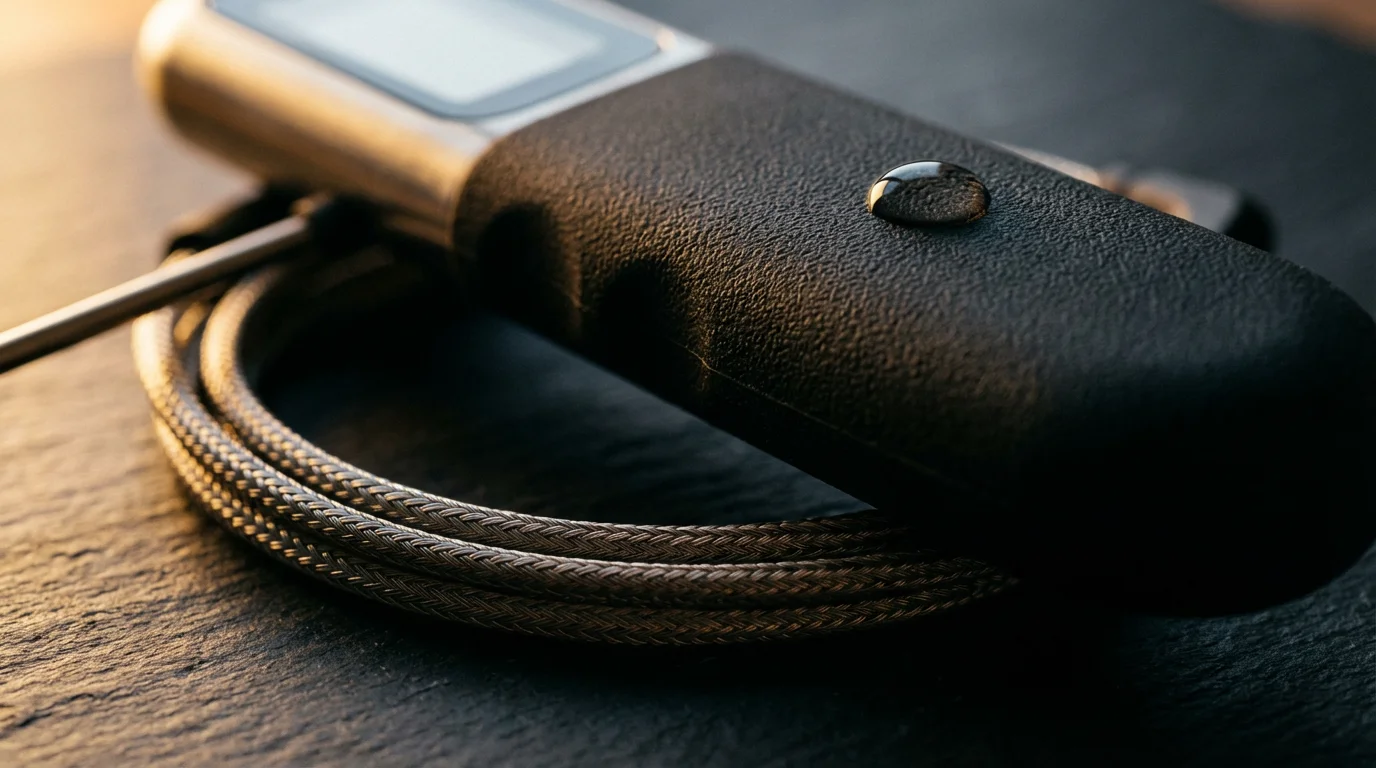
- Wire Quality (for Leave-In): The wire connecting the probe to the base unit on leave-in thermometers is a common point of failure. Good models use braided stainless steel or heavy-duty silicone-coated wires that can withstand high oven and grill temperatures without melting or fraying. Ensure the wire length is sufficient for your cooking setup without being excessively long and cumbersome.
Ergonomics and Ease of Use for Every Cook
A thermometer’s usability goes beyond its technical specifications. How comfortable it feels in your hand, how intuitive its controls are, and how easily you can read its display all contribute to a positive cooking experience.
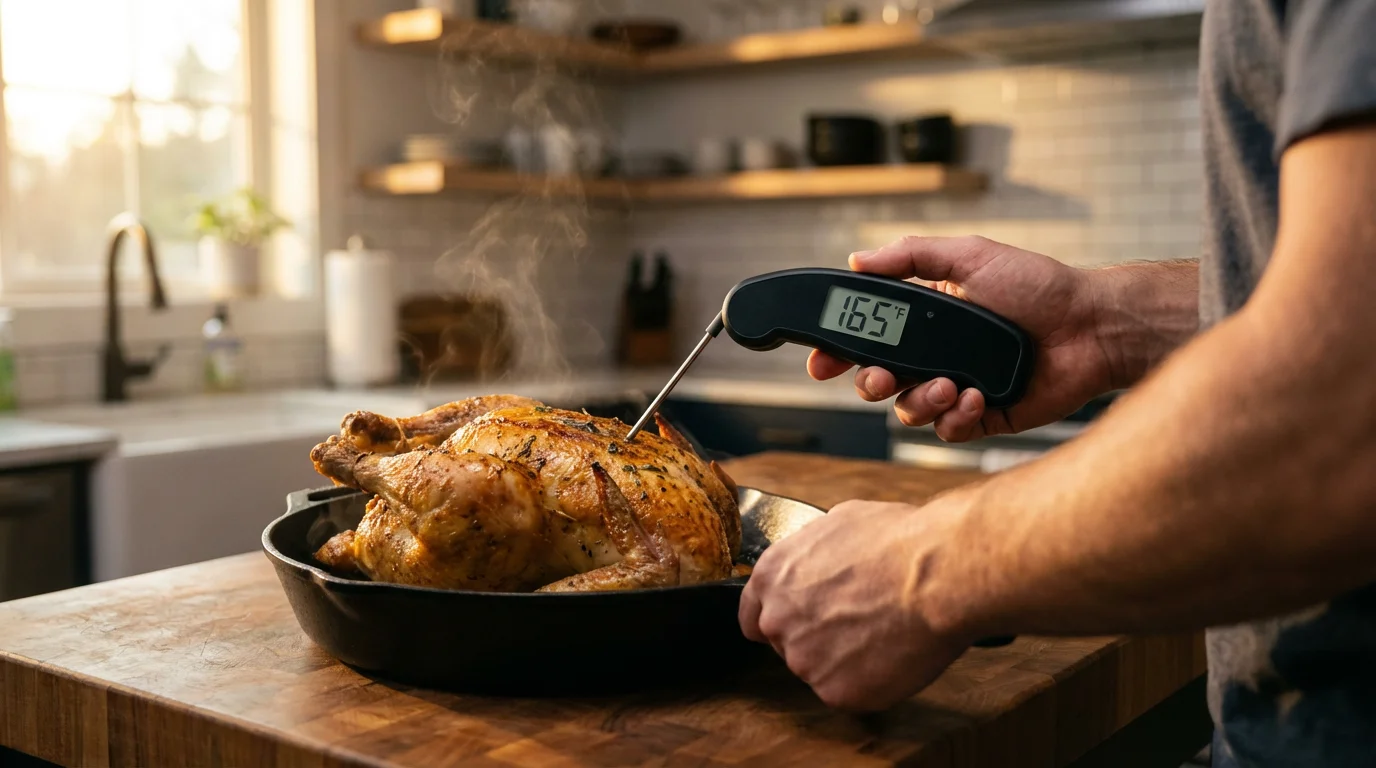
- Handle Design: For instant read thermometers, an ergonomic handle, meaning it is designed to be comfortable to hold and use, prevents hand fatigue during repeated checks. A non-slip grip, often made from silicone, ensures the thermometer remains secure in your hand, even when wet or greasy.
- Display Readability: Look for large, clear digits on the display. Backlighting is a significant advantage, particularly when grilling at dusk or checking a roast in a dim oven. Some models offer rotating displays for left- or right-hand use or magnetic backs for convenient attachment to ovens or refrigerators.
- Button Layout and Functionality: Simple, intuitive controls are best. You want to quickly turn the unit on, switch between °F and °C, and perhaps calibrate, without consulting a manual every time. For leave-in thermometers, easy-to-program temperature alerts are a must.
Cleaning, Storage, and Maintenance
Proper care extends the life of your meat thermometer and prevents cross-contamination.
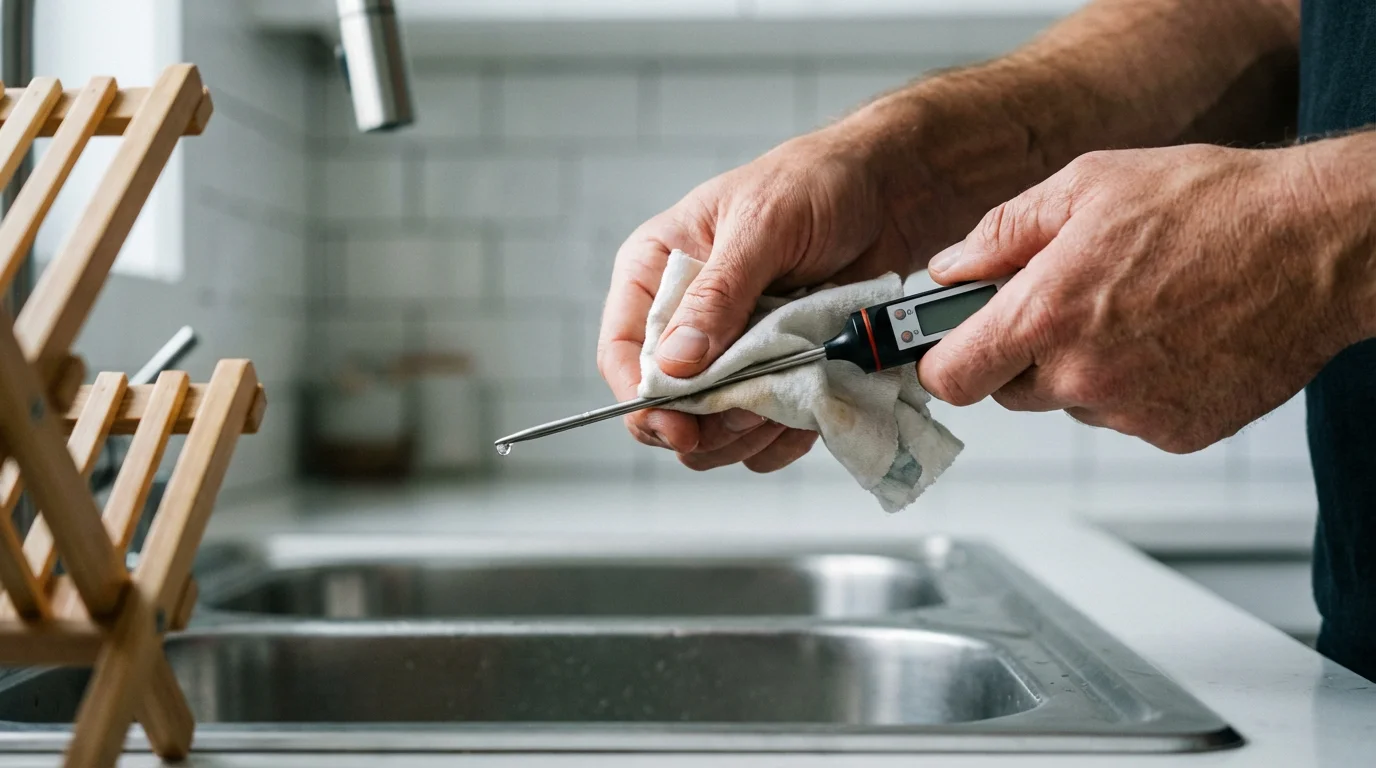
- Cleaning: Always clean the probe after each use with hot soapy water. For most digital thermometers, the display unit is not dishwasher safe, meaning it cannot be cleaned in a dishwasher without damage, and should only be wiped with a damp cloth. Some higher-end instant read models offer waterproof ratings, allowing you to rinse the entire unit under a faucet. However, never submerge the base unit of a leave-in thermometer.
- Storage: Instant read thermometers with folding probes store compactly in a kitchen drawer. Magnetic backs on some models offer convenient counter or appliance storage. For leave-in thermometers, consider how you will store the probes and wires to prevent tangles and damage. Many come with protective covers for the probe tips.
- Batteries: Digital thermometers run on batteries, typically AAA, AA, or button cells. Consider models with long battery life and an auto-off feature to conserve power. Have spare batteries on hand to avoid interruptions during crucial cooking moments.
- Calibration: Over time, any thermometer can drift. Periodically calibrate your thermometer using an ice bath (32°F or 0°C) or boiling water (212°F or 100°C at sea level) to ensure accuracy. Many digital models allow for easy recalibration.
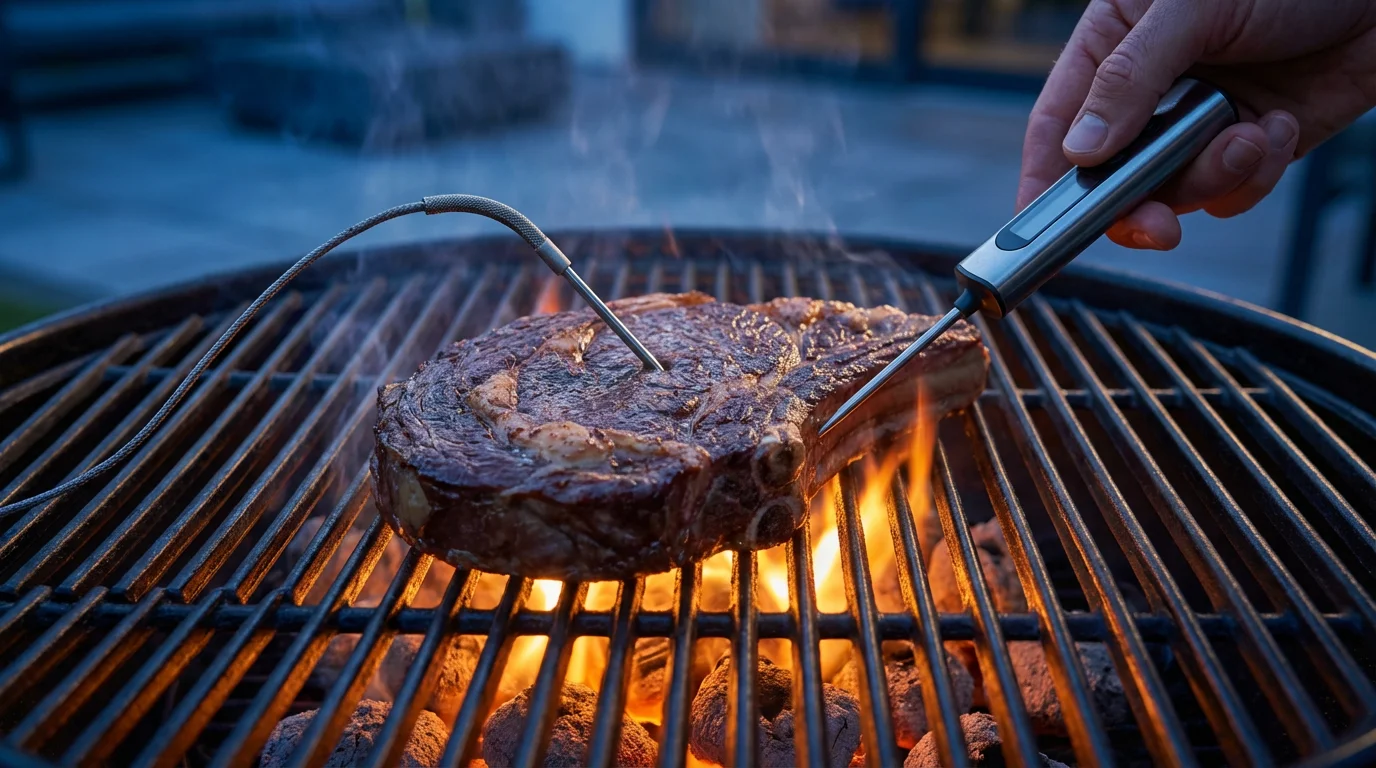
Making Your Choice: Instant Read or Leave-In?
Deciding between an instant read and a leave-in thermometer often comes down to your most frequent cooking needs and personal preferences. Many serious home cooks find value in owning both.
Whether you’re deciding on a thermometer or exploring herb strippers and scissors for fresh cooking, choosing the right tool is about matching your specific cooking habits.
- Buy an Instant Read Thermometer if:
- You frequently grill, pan-sear, or fry and need quick, precise temperature checks.
- You prioritize speed and accuracy above continuous monitoring.
- You appreciate a compact, portable tool for various kitchen tasks.
- You need the best digital meat thermometer for grilling and want to hit perfect doneness on individual items like burgers and thin steaks.
- Skip an Instant Read Thermometer if:
- Your primary cooking involves long, slow roasts or smoking where you prefer continuous monitoring without opening the oven or grill.
- You prefer a hands-off approach with alarms to signal doneness.
- Buy a Leave-In Thermometer if:
- You regularly cook large roasts, briskets, whole chickens, or participate in slow smoking and BBQ.
- You desire continuous monitoring and remote alerts for ultimate convenience.
- You want to monitor ambient temperatures in your smoker or grill alongside meat temperature.
- Skip a Leave-In Thermometer if:
- Your cooking mainly consists of quick-cooking items like thin steaks, burgers, or chicken breasts.
- You prefer to actively check doneness and don’t require remote or continuous monitoring.
- You have limited storage space and want a simpler, more compact tool.
Do you really need this? For any serious home cook who aims for consistent results and prioritizes food safety, a quality meat thermometer is not a luxury, but an essential tool. It moves you from guessing games to culinary confidence. If you frequently cook meat, especially for guests, the investment in a reliable meat thermometer pays for itself in avoided food waste and consistently delicious meals.
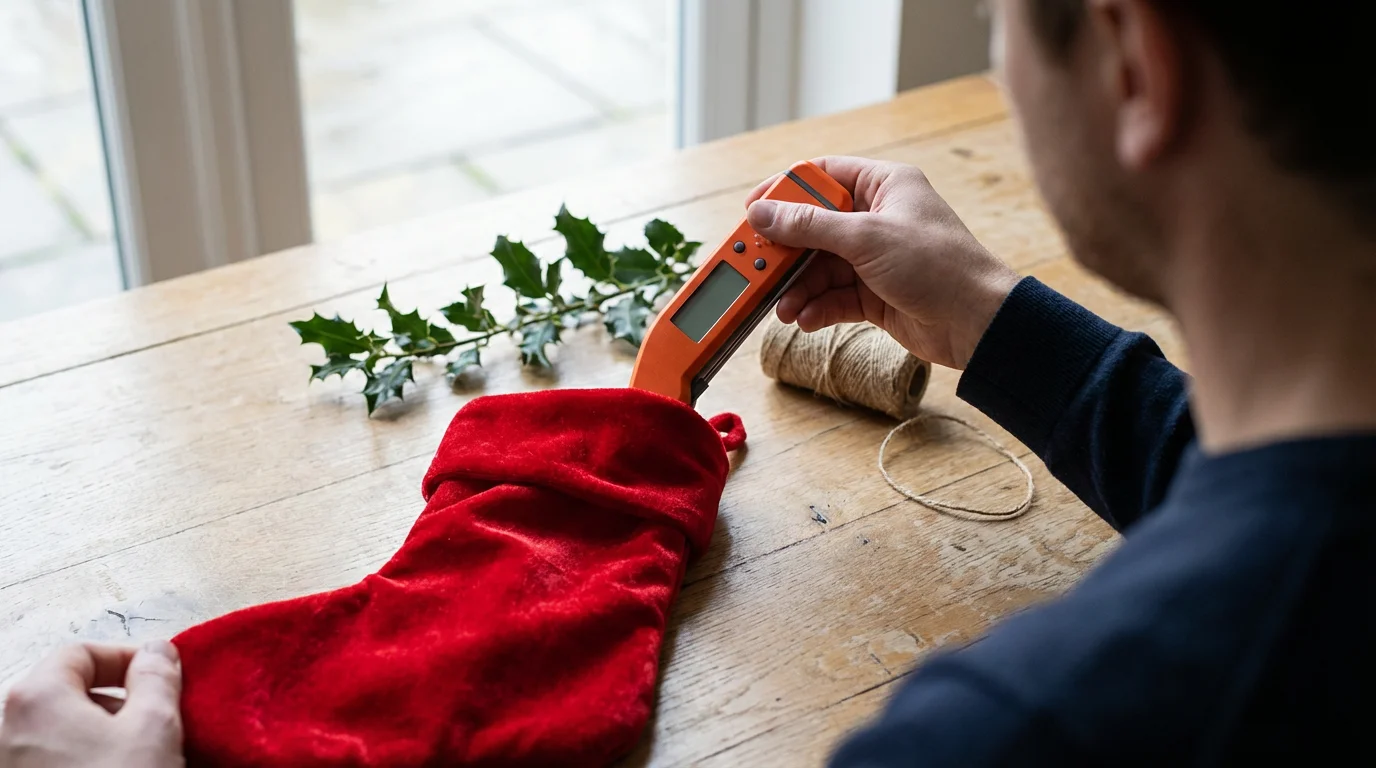
Gift-Worthy Gadgets and Kitchen Stocking Stuffers
Both types of meat thermometers make excellent gifts for home cooks, new chefs, or grilling enthusiasts. An instant read thermometer often works as a fantastic kitchen stocking stuffer due to its compact size and broad utility. A high-quality instant read model, such as one with a folding probe and a bright backlight, is a welcome upgrade for almost any kitchen.
For more small gift ideas, specialized items like avocado tools for slicing and pitting are excellent additions to any home cook’s collection.
For the avid griller or smoker, a multi-probe leave-in thermometer with wireless capabilities makes a more substantial and highly appreciated gift. It shows you understand their passion for low-and-slow cooking and want to make their hobby easier and more precise. When choosing, consider the recipient’s typical cooking methods to select the most impactful type.
Frequently Asked Questions
What is the ideal internal cooking temperature for common meats?
For poultry like chicken and turkey, ensure a minimum internal temperature of 165°F (74°C). For ground meats, including beef, pork, and lamb, aim for 160°F (71°C). Whole cuts of pork and ham require 145°F (63°C). Steaks, roasts, and chops from beef, veal, and lamb can be cooked to 145°F (63°C) for medium-rare, though personal preference for doneness varies, always allowing a three-minute rest time after cooking.
How do you calibrate a meat thermometer?
You can calibrate most digital meat thermometers using either the ice point method or the boiling point method. For the ice point method, fill a large glass with crushed ice and add cold water until it is full. Stir well and let it sit for a few minutes. Insert your thermometer probe into the center of the ice water, ensuring it does not touch the bottom or sides of the glass. The reading should stabilize at 32°F (0°C). If it does not, follow your thermometer’s instructions for manual adjustment, which often involves holding a button or turning a nut.
Can you use a meat thermometer for purposes other than meat?
Absolutely. Meat thermometers are versatile tools. You can use them to check the temperature of deep-frying oil, ensure bread dough reaches the correct internal temperature, test candy making stages, or verify the doneness of casseroles and baked goods. Their accuracy and broad temperature range make them useful for many culinary tasks beyond just protein.
What makes a meat thermometer “digital” and is it better than analog?
A digital meat thermometer uses electronic sensors to measure temperature and displays the reading numerically on an LCD screen. Analog thermometers, conversely, use a bimetallic coil or mercury and display temperature on a dial. Digital thermometers generally offer faster readings, greater accuracy, and are easier to read than analog models, making them the preferred choice for most home cooks and professionals seeking precise temperature control.
Disclaimer: Product prices and availability change frequently. Prices shown were accurate at time of writing but may have changed. We may earn a small commission from purchases made through links on this site, at no extra cost to you. Always verify current pricing on the retailer’s website before purchasing.






Leave a Reply