
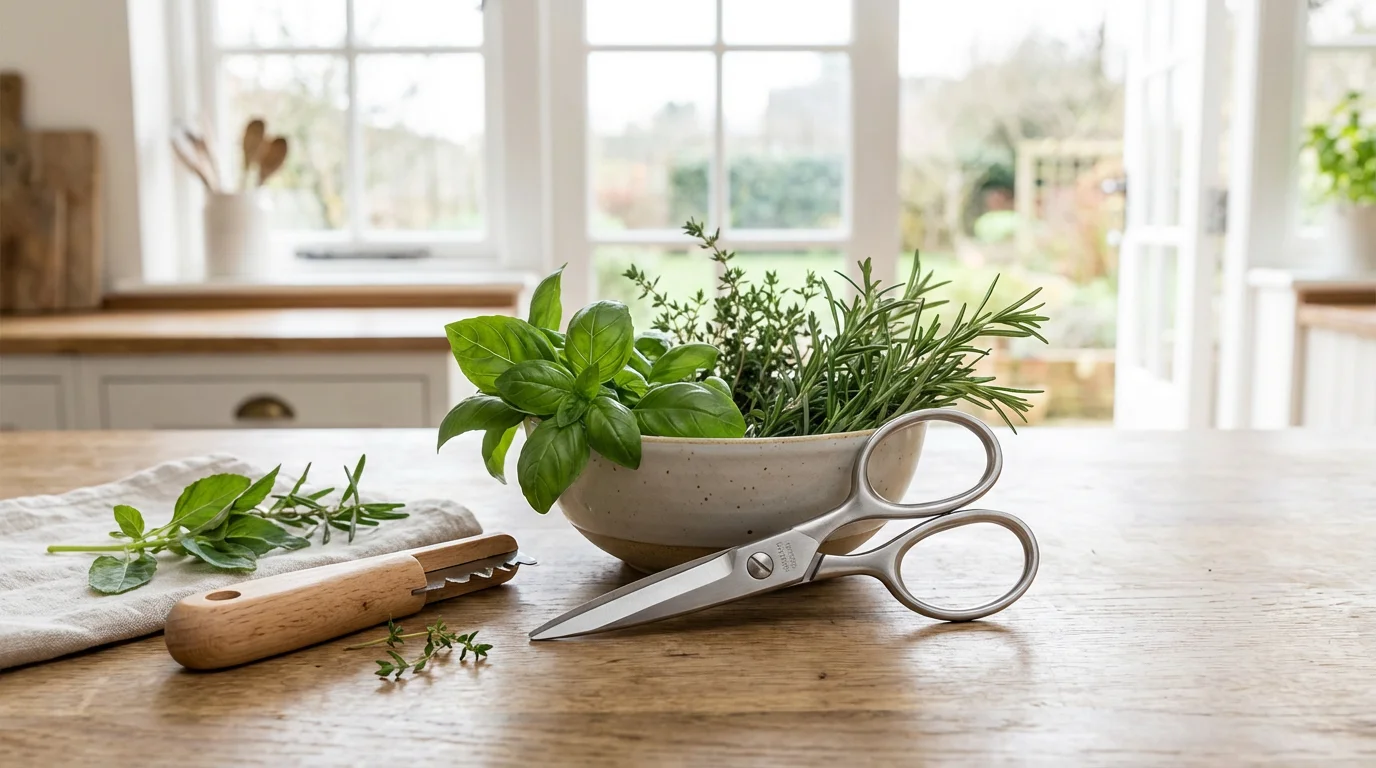
Cooking with fresh herbs elevates any dish, transforming it from good to extraordinary. The vibrant flavors and aromas of parsley, cilantro, thyme, and rosemary bring life to your meals. However, preparing fresh herbs can be a chore, especially when recipes call for large quantities. Removing delicate leaves from their stems often feels tedious, slowing down your prep time. Many home cooks struggle with inefficient methods, leaving them frustrated and sometimes opting for dried herbs instead. This article cuts through the clutter, offering practical, actionable insights into the kitchen gadgets designed to simplify fresh herb preparation: herb strippers and herb scissors.
Why Fresh Herbs Matter and the Tool Dilemma
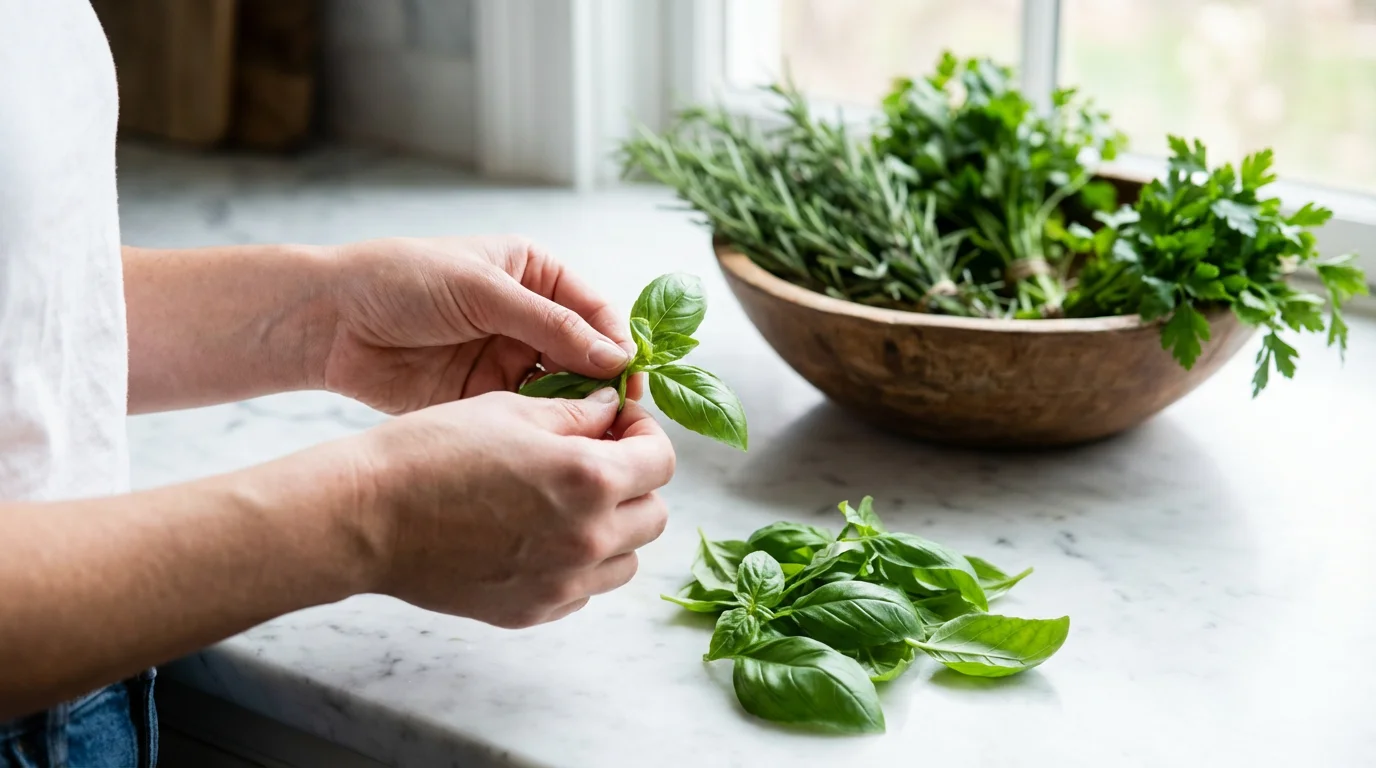
Fresh herbs deliver a depth of flavor and freshness that dried alternatives simply cannot match. They provide essential oils and aromatic compounds that enhance the overall taste profile of a dish. Incorporating fresh herbs into your cooking elevates everything from roasted vegetables and grilled meats to delicate sauces and vibrant salads. The challenge often lies in the prep work. Plucking individual leaves by hand takes time and can bruise delicate herbs. Many kitchen gadgets promise to solve this problem, but as seasoned home cooks know, many “solutions” end up gathering dust in a drawer. We approach these tools with a healthy dose of skepticism, testing their claims rigorously to ensure they genuinely save you time and effort.
Beyond herbs, adding a bright splash of lemon or lime using a quality citrus juicer is another essential way to elevate the flavor profile of any dish.
“The best kitchen gadget is one you’ll actually use every week, not the one with the most Amazon reviews.” — Home Cook
Understanding the Tools: Herb Strippers vs. Herb Scissors
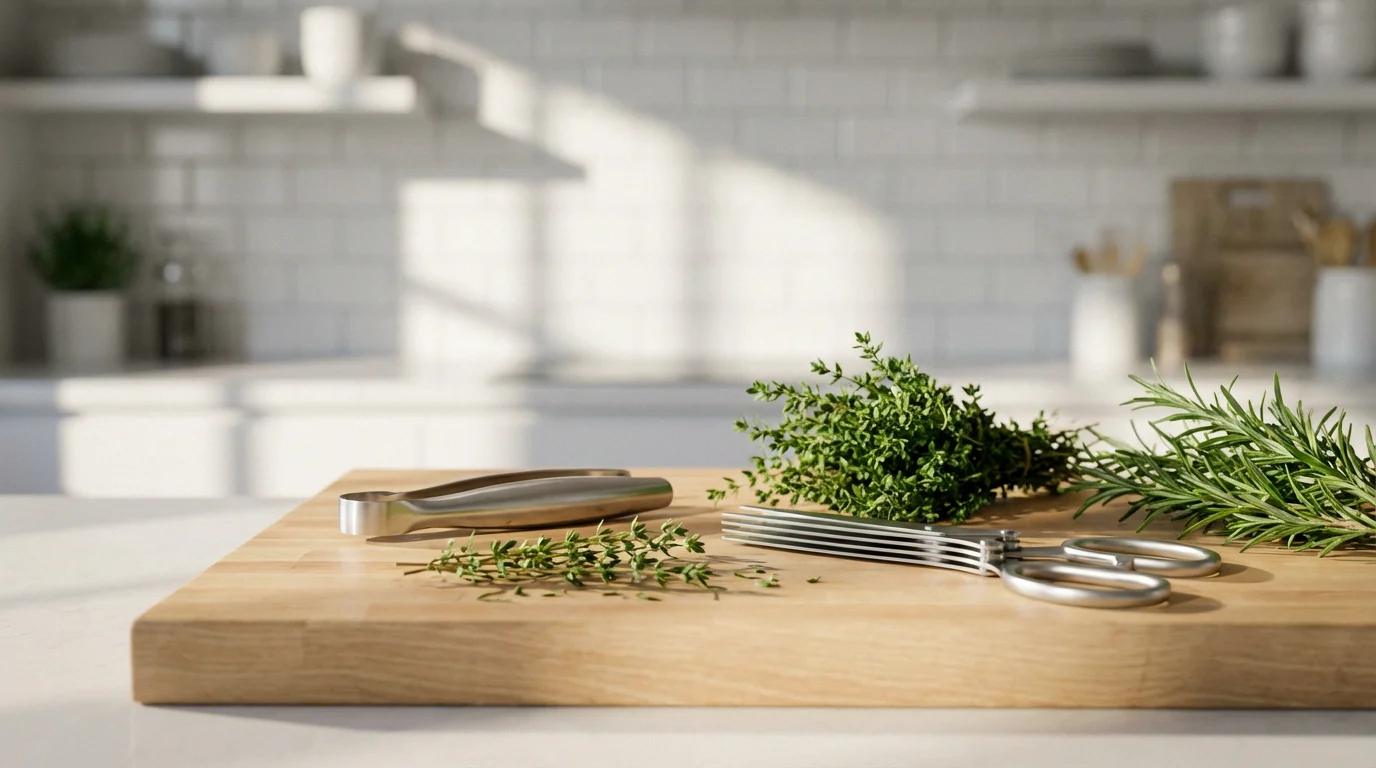
When it comes to preparing fresh herbs, two specific tools consistently appear: the herb stripper and the herb scissors. Each offers a different approach to a similar problem. Understanding their design and intended function helps you determine which one best fits your cooking style.
Herb Strippers: The Efficiency Experts
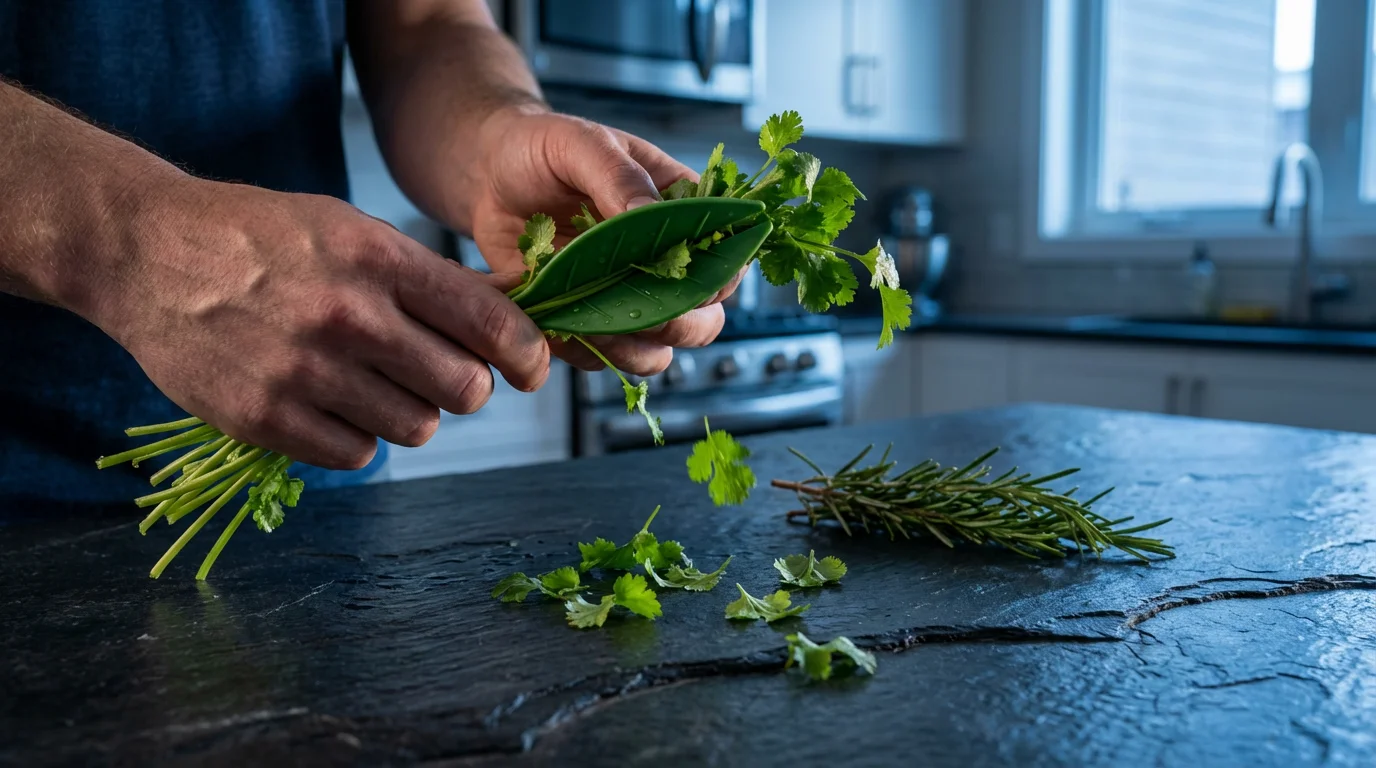
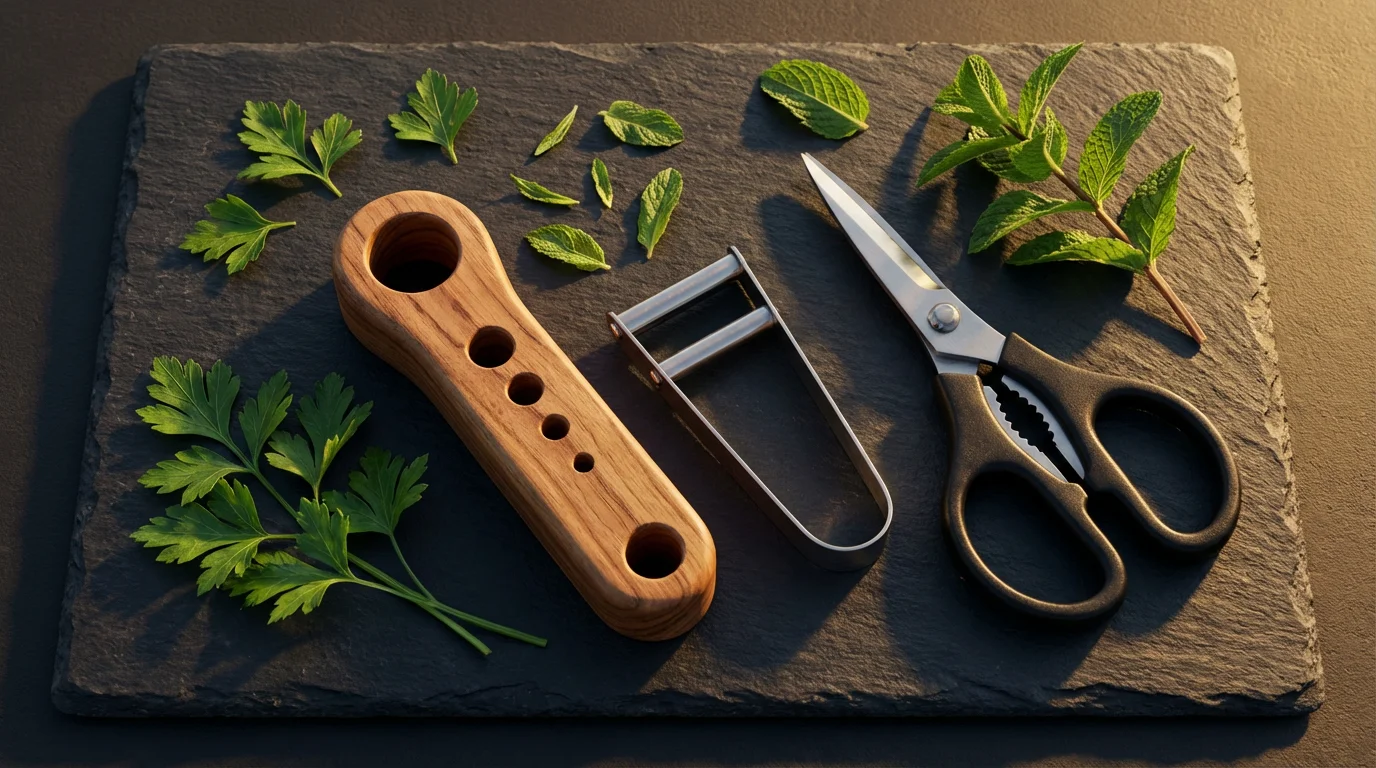
An Serious Eats’ equipment reviews often highlight the practical design of simple tools, and the herb stripper fits this mold. Most herb strippers feature a series of progressively sized holes set into a flat paddle or a ring. You simply insert the herb stem through an appropriately sized hole, pull the stem through, and the leaves detach. This process makes them a unitasker, meaning a gadget that only does one specific task. While some designs integrate a leaf-shaped edge for cutting, their primary function remains stripping. Materials typically include BPA-free plastic or stainless steel, sometimes with a silicone grip for comfort and stability.
Herb Scissors: The Multi-Blade Choppers
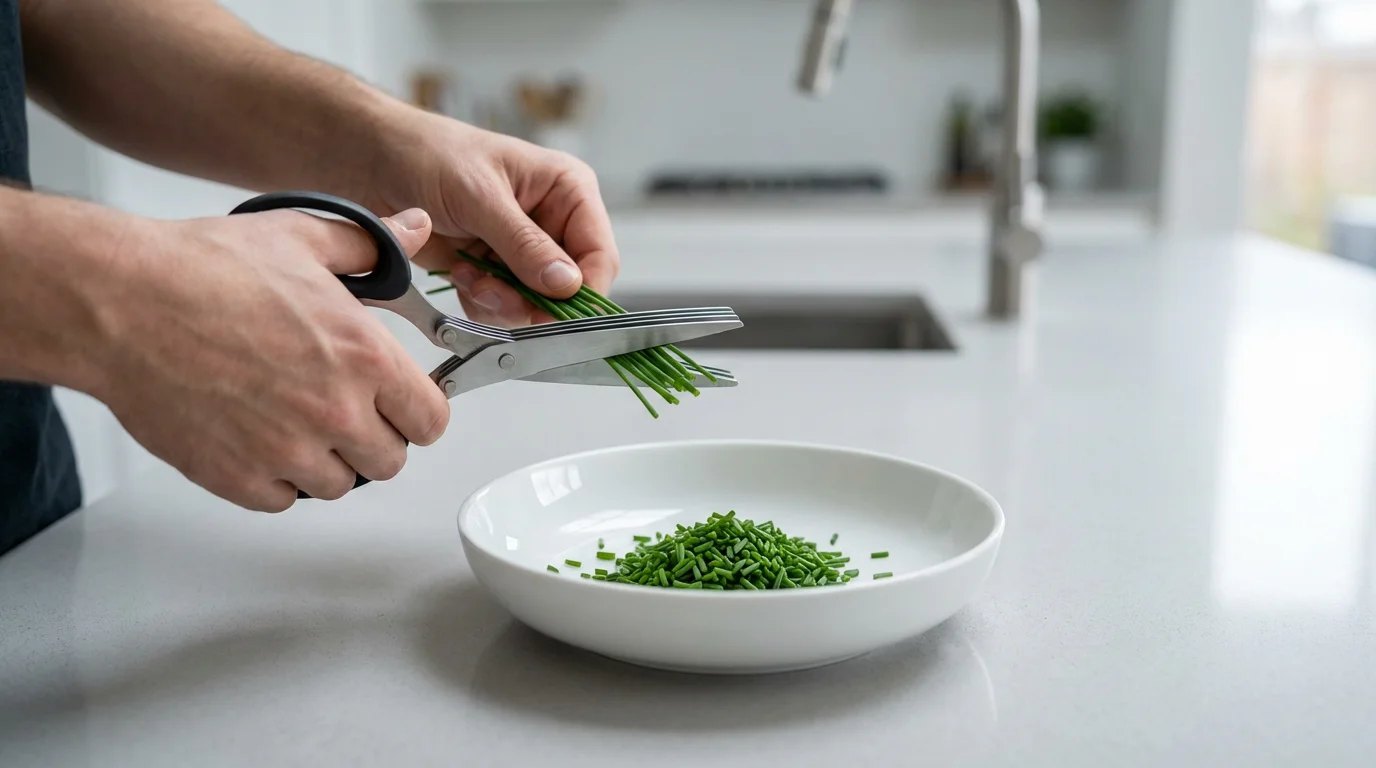
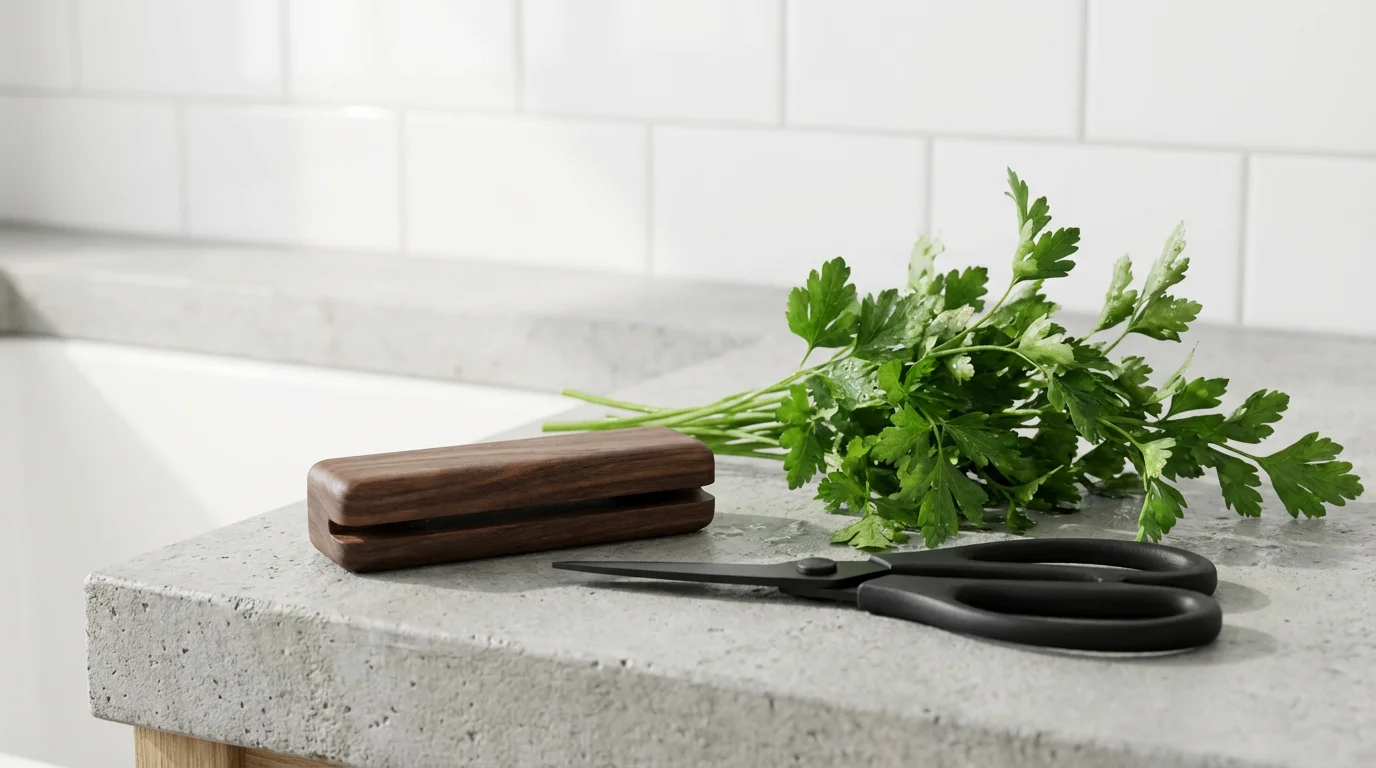
Herb scissors, on the other hand, resemble conventional kitchen shears but feature multiple blades, typically three to five, arranged parallel to each other. This design allows you to snip herbs directly over your dish or cutting board, producing finely chopped pieces with each cut. While they primarily chop, their multi-blade design is specifically for herbs, making them a specialized tool. Many models include a cleaning comb to help remove trapped herb bits from between the blades. They usually feature stainless steel blades and plastic or silicone handles, often designed for an ergonomic grip. These are designed for quick snipping, perfect for finishing a dish or preparing small to medium quantities.
Deep Dive: Herb Strippers Put to the Test
We put several popular herb strippers through their paces, evaluating their effectiveness on various types of fresh herbs. Our goal was to assess how to strip herbs from stems quickly and cleanly, with minimal waste.
While strippers are excellent for kale and herbs, vegetable spiralizers offer another great way to incorporate more nutrient-dense greens and vegetables into your meals.
Testing Methodology:
We tested each herb stripper using bundles of rosemary, thyme, cilantro, and kale. We focused on stripping speed, the completeness of leaf removal, and any damage to the leaves or stems.
Performance Observations:
- Rosemary and Thyme: These woody-stemmed herbs are where herb strippers truly shine. Our tests showed that a well-designed stripper removes 95-100% of leaves in a single pull. The OXO Good Grips Herb and Kale Stripper, for example, consistently performed well, quickly detaching leaves without bruising. The different hole sizes accommodate various stem thicknesses, a crucial design feature.
- Cilantro and Parsley: For softer-stemmed herbs, results were more mixed. While herb strippers can remove leaves, the softer stems sometimes bend or fray, pulling through a few leaves rather than stripping all of them. Users might need to make a second pass or finish by hand.
- Kale and Collard Greens: Larger, tougher leaves like kale respond well to the larger stripping holes. A good stripper removes the tough central rib efficiently, leaving you with tender greens ready for cooking.
“Buy if…”:
You frequently cook with woody-stemmed herbs like rosemary, thyme, or oregano. You prepare large quantities of leafy greens like kale. You prioritize speed and minimal effort for stripping leaves from stems.
“Skip if…”:
Your primary use for fresh herbs involves delicate herbs like dill or chives, or soft-stemmed herbs you only use in small quantities. You prefer a tool that can also chop.
Beyond the Blades: Evaluating Herb Scissors
Multi-blade herb scissors promise quick, precise chopping. We examined their effectiveness, ease of use, and overall value in a busy kitchen. The key question was: are these the best herb scissors for kitchen use, or a gimmick?
If you are snipping cilantro for a fresh batch of guacamole, pairing your scissors with specialized avocado tools can make the entire preparation process effortless.
Testing Methodology:
We tested various herb scissors on parsley, cilantro, basil, and chives. We measured the time taken to finely chop a standard bunch of herbs, evaluated the consistency of the cut, and assessed ease of cleaning.
Performance Observations:
| Herb Type | Performance with Herb Scissors | Notes |
|---|---|---|
| Parsley | Excellent, very fine chop | Multiple blades quickly create uniform pieces. Ideal for garnishes or mixing into dishes. |
| Cilantro | Very Good, quick snipping | Similar to parsley, though softer stems can occasionally get slightly crushed if not sharp. |
| Basil | Good, but requires gentle touch | Delicate basil leaves can bruise if blades are dull or too much force is applied. Best for chiffonade. |
| Chives | Excellent, clean cuts | Easily creates small, uniform pieces. Superior to knife for fine chives. |
| Rosemary/Thyme (Leaves only) | Fair, only for pre-stripped leaves | Not designed to strip stems. Effective for chopping leaves after stripping. |
Our tests showed that good quality herb scissors cut herbs quickly and consistently. The ProChef Multi-Blade Herb Scissors, for example, produced finely diced herbs in seconds, a significant time-saver compared to a knife and cutting board for small to medium quantities. The included cleaning comb proved essential for removing trapped herb bits, preventing a sticky mess.
“Buy if…”:
You frequently chop small to medium quantities of fresh, leafy herbs like parsley, cilantro, or chives. You prefer to snip herbs directly into a pot or onto a plate. You want to avoid using a cutting board and knife for herb prep.
“Skip if…”:
You deal with large batches of herbs or need to strip leaves from woody stems. You already have excellent knife skills and a sharp chef’s knife for herb prep, as America’s Test Kitchen often emphasizes mastery of basic tools.
Durability and Materials: What to Look For
The longevity and performance of your kitchen gadgets depend heavily on their construction materials. When choosing between herb strippers and scissors, pay close attention to the components.
Herb Strippers:
- Plastic: Many herb strippers use BPA-free plastic. This material is lightweight and generally affordable. Look for sturdy, rigid plastics that do not flex excessively when you pull a stem through. Thicker construction often indicates better durability.
- Stainless Steel: Some premium herb strippers feature stainless steel construction. This offers superior durability, rust resistance, and often a more substantial feel. Stainless steel strippers generally cost more but provide a lifetime of use.
- Silicone: Many designs incorporate silicone elements for a non-slip grip or as part of the stripping holes. Silicone provides excellent grip and is heat-resistant, contributing to overall ease of use.
Herb Scissors:
- Stainless Steel Blades: This is non-negotiable for herb scissors. High-quality stainless steel blades retain their sharpness longer, resist rust, and provide clean cuts. Avoid models with thin, flimsy blades that might bend or dull quickly. Look for blades securely fastened to the handles.
- Handles: Handles commonly use durable plastic or a combination of plastic and silicone. The best handles feature a non-slip grip, making them comfortable and secure even with wet hands. Ensure the handles feel sturdy and do not flex during use.
- Rivets/Bolts: Check how the blades are joined. High-quality scissors use sturdy rivets or bolts, indicating a durable construction that withstands repeated use and cleaning.

Ergonomics and Ease of Use for Every Home Cook
Ergonomic design ensures a tool feels comfortable and intuitive in your hand, regardless of hand size or strength. This significantly impacts whether a gadget becomes a kitchen staple or an unused drawer inhabitant. We tested various models for grip comfort, control, and overall user experience.
Herb Strippers:
The best herb strippers feature a comfortable grip and a design that allows for easy leverage. Some are small, paddle-shaped tools, requiring you to hold the stem with one hand and pull the stripper with the other. Others integrate into a larger gadget, like a cutting board or bowl scraper. For paddle-style strippers, look for a textured or silicone non-slip grip that accommodates different hand sizes. The hole sizes themselves contribute to ease of use; a good range ensures compatibility with various herb stems.
Herb Scissors:
Ergonomics are paramount for herb scissors. You will be making repetitive cutting motions, so a comfortable handle design prevents fatigue. Look for:
- Large finger loops: These accommodate various finger sizes, making them comfortable for most users.
- Soft, non-slip grip materials: Silicone or rubberized handles provide a secure grip, even when wet.
- Spring-loaded action: Some scissors feature a spring that gently opens the blades after each cut, reducing hand strain.
- Balanced weight: Scissors should feel balanced in your hand, not too heavy or too light.
Our evaluations found that models with larger, cushioned finger loops, like the KitchenAid Multi-Blade Herb Scissors, offered superior comfort during extended use compared to those with small, rigid plastic handles. Ease of use also extends to how smoothly the blades operate; they should glide without excessive friction or stiffness.
Cleaning and Storage Considerations
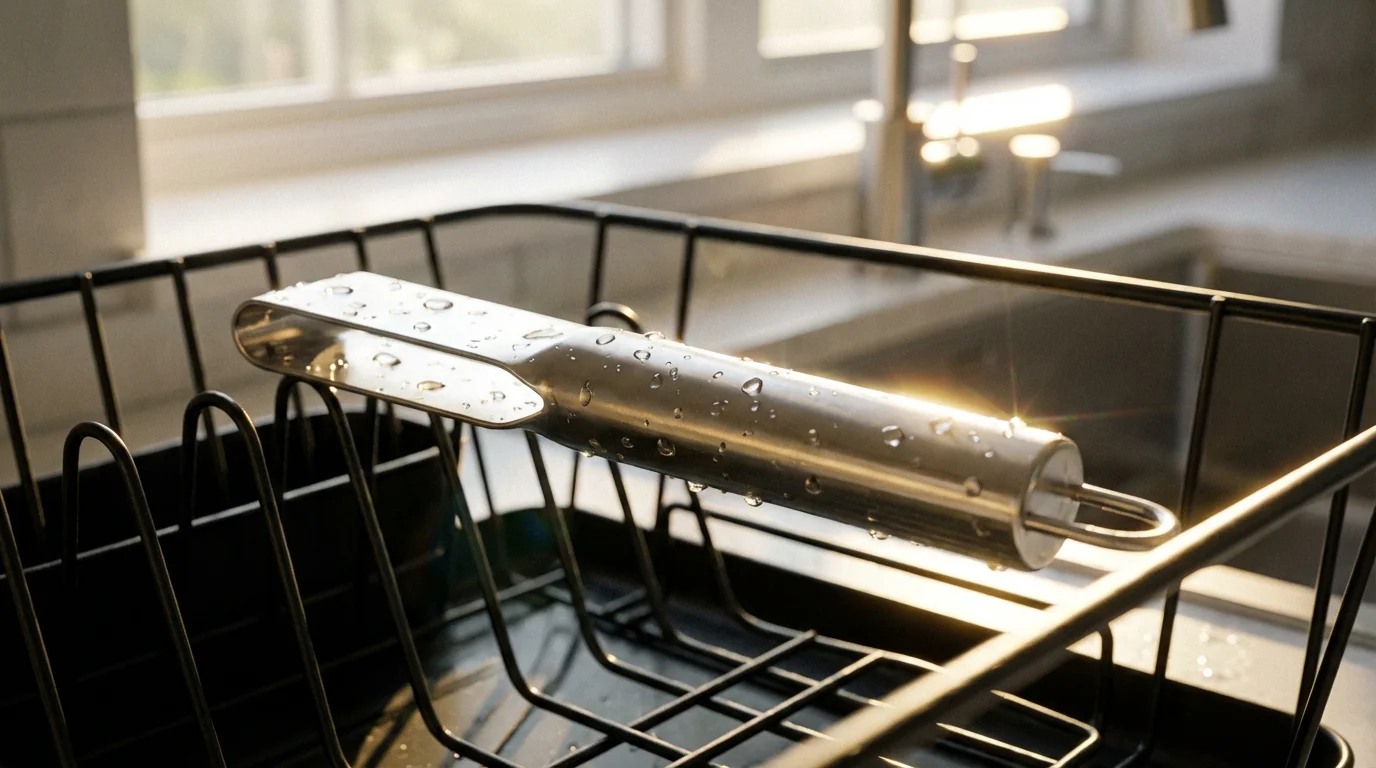
A gadget’s true utility extends beyond its primary function to how easily you can clean and store it. No one wants a tool that takes longer to clean than to use, or one that clutters valuable drawer space.
Herb Strippers:
Most herb strippers are simple to clean. Their flat or paddle design means few crevices for herb bits to get stuck. Many plastic and stainless steel models are dishwasher safe, which is a major convenience. Always check the manufacturer’s instructions. Hand washing with warm, soapy water works quickly for those not suitable for the dishwasher. Storage is typically easy due to their compact size. Many have a hole for hanging, or they fit neatly into a utensil drawer without taking up much room.
Herb Scissors:
Cleaning herb scissors requires a bit more attention due to the multiple blades. Herb bits can easily get lodged between the blades, leading to potential rust or unsanitary conditions if not cleaned properly. Most good quality herb scissors include a cleaning comb, which is essential. Run the comb between the blades to dislodge any stuck herbs before rinsing. While many are advertised as dishwasher safe, hand washing immediately after use often yields better results and helps maintain blade sharpness. Allowing herbs to dry onto the blades makes cleaning significantly harder. For storage, some herb scissors come with a protective cover for the blades, preventing accidental cuts and keeping the blades clean in a drawer. They are generally compact enough for a utensil drawer, but larger models might require dedicated space.
Making the Choice: Which Tool is Right for You?
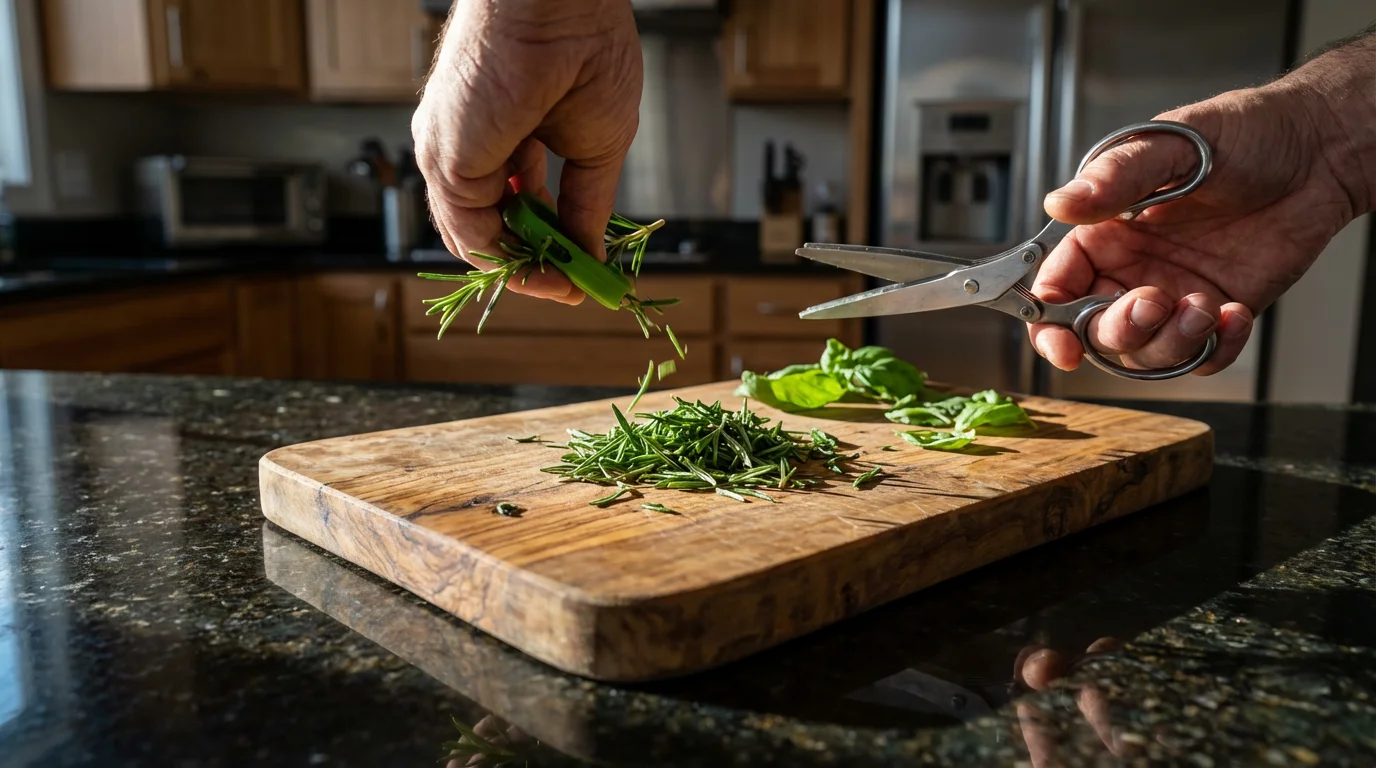
Deciding between an herb stripper and herb scissors depends on your specific cooking habits and the types of herbs you use most often. Both offer distinct advantages.
To further enhance your dishes, consider using a Microplane grater to add citrus zest or hard cheeses alongside your fresh herbs.
Consider an Herb Stripper if:
- You regularly prepare dishes requiring large quantities of woody-stemmed herbs (rosemary, thyme, oregano).
- You frequently cook with leafy greens that need destemming (kale, collards).
- You want to maximize efficiency for stripping, even if it is a unitasker.
- You prefer to then chop your herbs with a knife, or use them whole.
- Your budget is modest; strippers are generally less expensive.
Consider Herb Scissors if:
- You primarily use delicate, leafy herbs like parsley, cilantro, basil, or chives for garnishes or to mix into dishes.
- You value speed for chopping small to medium quantities of herbs.
- You want to avoid the mess and cleanup of a cutting board and knife.
- You appreciate the precision of a fine, uniform chop.
- You do not mind the extra step of using a cleaning comb.
For many home cooks who frequently use fresh herbs, owning both tools provides the most versatile solution. An herb stripper handles the bulk work of destemming, while herb scissors offer quick, precise chopping for finishing touches or smaller tasks. According to Consumer Reports’ kitchen appliance recommendations, specialized tools often deliver superior performance within their niche, confirming that sometimes two tools are better than one.
Gift-Worthy Gadgets for the Herb Enthusiast
If you are looking for a practical gift for the home cook who loves fresh herbs, both herb strippers and herb scissors make excellent choices. They are often overlooked but incredibly useful tools that enhance the cooking experience.
- For the gardener or CSA subscriber: An herb stripper is invaluable for processing large quantities of herbs or leafy greens straight from the garden or farm share. Pair it with a good quality, BPA-free salad spinner for a complete prep kit.
- For the meticulous home chef: High-quality herb scissors with sharp stainless steel blades and an ergonomic non-slip grip make an impressive stocking stuffer. Look for a set that includes a cleaning comb and a blade cover.
- For the budding cook: Both tools are easy to use and can encourage experimentation with fresh ingredients, making cooking more approachable and enjoyable. Consider a colorful, dishwasher safe plastic herb stripper for a fun, functional gift.
These gadgets are affordable, practical, and truly help create a more efficient and enjoyable cooking process, making them thoughtful gifts that will actually get used.
Frequently Asked Questions
Can I use herb scissors for other kitchen tasks?
While primarily designed for herbs, you can use herb scissors for cutting other soft foods like green onions, mushrooms, or even shredding lettuce. However, avoid using them on tougher items or bones, as this can dull or damage the multiple blades. They excel at delicate, repetitive snipping.
Are all herb strippers suitable for large leaves like kale?
Not all herb strippers feature holes large enough for kale or collard greens. When buying, look for models specifically advertised as “herb and kale strippers” or those with a dedicated, larger slot for broad leaves. The larger holes are key for efficiently removing thick stems.
How do I sharpen herb scissors?
Sharpening multi-blade herb scissors is challenging due to the parallel blade arrangement. Most manufacturers design them for extended use without sharpening, often recommending replacement when they dull significantly. For single-blade kitchen shears, you can use a knife sharpener, but this is generally not suitable for multi-blade herb scissors.
What does “dishwasher safe” truly mean for these tools?
“Dishwasher safe” means the item can withstand the high temperatures and detergents of a dishwasher without immediate damage. However, for herb scissors especially, frequent machine washing can accelerate blade dulling due to aggressive detergents and high heat. Hand washing often extends the life and sharpness of cutting tools, even if they are technically dishwasher safe. Always remove any food debris before washing.
Disclaimer: Product prices and availability change frequently. Prices shown were accurate at time of writing but may have changed. We may earn a small commission from purchases made through links on this site, at no extra cost to you. Always verify current pricing on the retailer’s website before purchasing.
Much like herb scissors streamline leaf prep, using the best garlic press can significantly speed up the process of mincing aromatics for your recipes.



Leave a Reply