There is a specific kind of kitchen rage that occurs when you are in the middle of searing a steak or scrambling eggs, and the drawer containing your spatula refuses to open. It’s jammed. A stray potato masher or an errant pair of tongs has wedged itself against the top of the cabinet frame, locking your tools away right when you need them most.
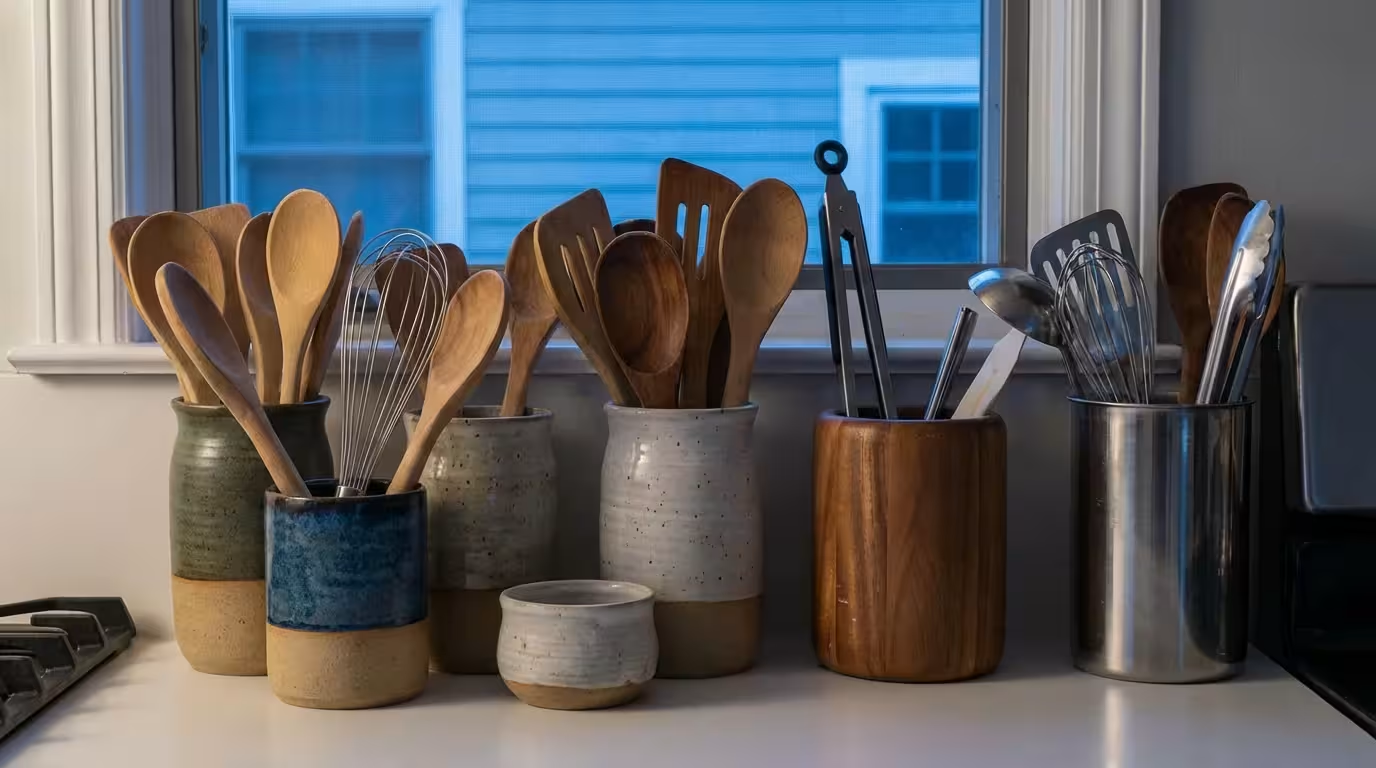
This is the primary argument for the countertop utensil holder. It isn’t just about aesthetics; it is about workflow. A well-chosen crock keeps your most essential tools within arm’s reach, turning a chaotic search into a seamless grab-and-go motion. However, not all cylinders are created equal. Some are too light and tip over the moment you insert a heavy ladle. Others are too short, causing long silicone spatulas to flop out like wilted flowers. And many are simply bacterial traps that are impossible to clean.
At QuickKitchenTools.com, we believe kitchen organization should serve your cooking, not just your Instagram feed. We have analyzed the stability, capacity, and hygiene of various storage solutions to help you find the best utensil holder for your specific cooking style.
The Drawer vs. Counter Debate
Before you buy a vessel to sit on your counter, you have to decide what actually belongs there. A common mistake home cooks make is trying to store everything on the countertop. This leads to the “bouquet of chaos”—a holder so packed that pulling out one whisk brings three wooden spoons with it.
The best approach is a hybrid system. Your countertop holder should be reserved for the “high-rotation” team: the chef’s knife (if you use a block), your favorite wooden spoon, a metal turner, a silicone spatula, tongs, and a ladle. Everything else—the potato masher, the specialized zester, the corn cob holders—belongs in a drawer.
According to organization experts at Wirecutter, keeping your most-used tools visible and accessible streamlines the cooking process, allowing you to react quickly to burning garlic or boiling-over pasta. The goal is friction reduction. If you have to take a step, open a drawer, and dig, you are adding friction. If you can reach out blindly and grab a turner, you are cooking efficiently.
Critical Features: What to Look For
It seems simple—it’s just a jar, right? Wrong. The difference between a frustrating utensil holder and a great one usually comes down to three factors: geometry, weight, and grip.
1. The Tipping Point (Weight and Balance)
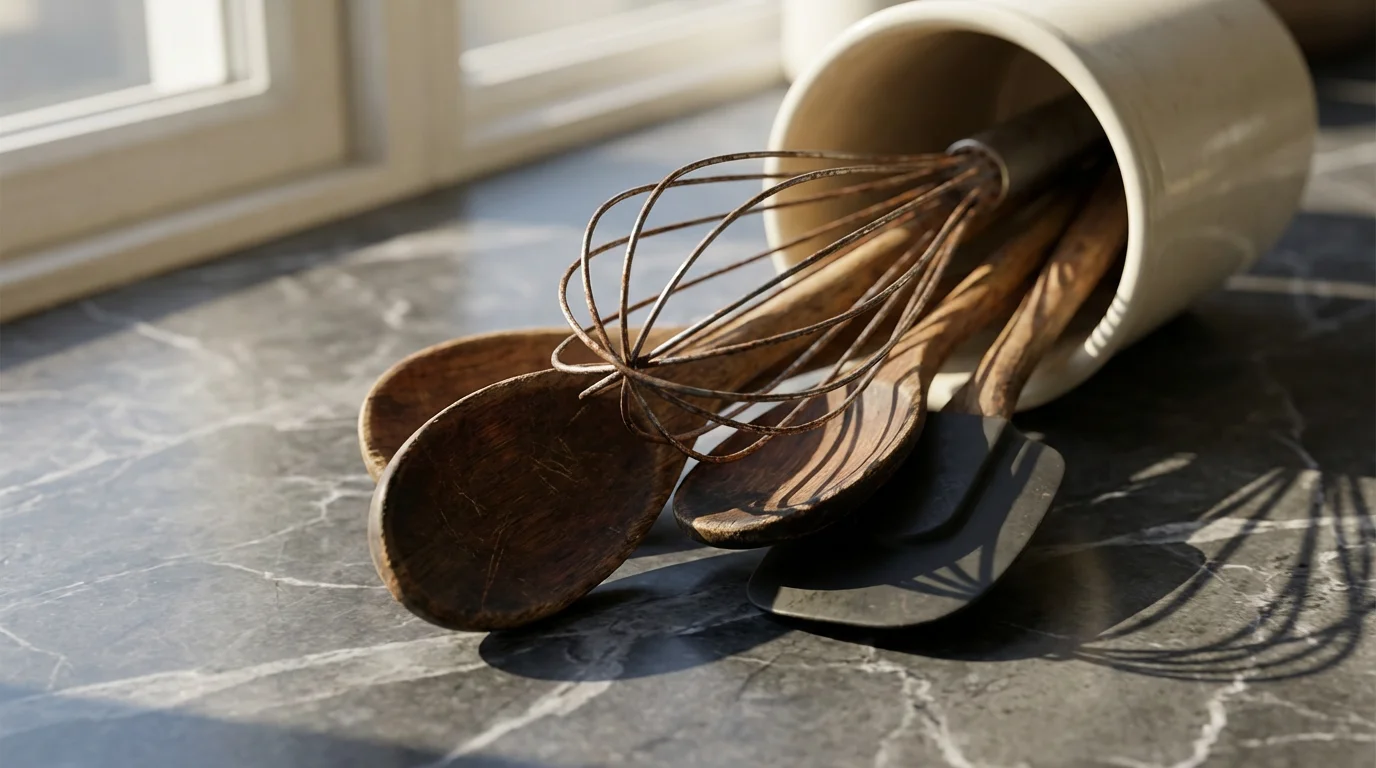
The most dangerous flaw in cheap utensil holders is a lack of bottom weight. Kitchen tools are top-heavy. Stainless steel ladles and long handled spiders have a high center of gravity. If you place a heavy tool into a lightweight plastic or thin aluminum holder, the whole unit can topple over.
You want a holder with a weighted base or heavy material construction (like stoneware or marble). A good rule of thumb is that the holder itself should weigh at least as much as the tools you plan to put in it. If you nudge it with your elbow, it should slide, not tip.
2. Diameter and Flaring
The mouth of the holder dictates how usable it is. If the sides are perfectly straight and the diameter is narrow, your tools will stand straight up like soldiers, making it hard to grab the handle of the one in the middle. A slight outward flare allows the tools to fan out, making handles easier to identify and grab.
3. Height Matters
Standard kitchen tools are roughly 12 to 14 inches long.
- Under 6 inches tall: Too short. Heavy tools will fall out.
- Over 7.5 inches tall: Too deep. You will lose shorter items like peelers or small whisks in the abyss.
- The Sweet Spot: Look for a height between 6.5 and 7 inches. This supports the handle while leaving enough exposed to grab comfortably.
“The best kitchen gadget is one you’ll actually use every week—not the one with the most Amazon reviews. If your utensil holder fights you every time you try to put a spatula back, it belongs in the trash.” — QuickKitchenTools Testing Team
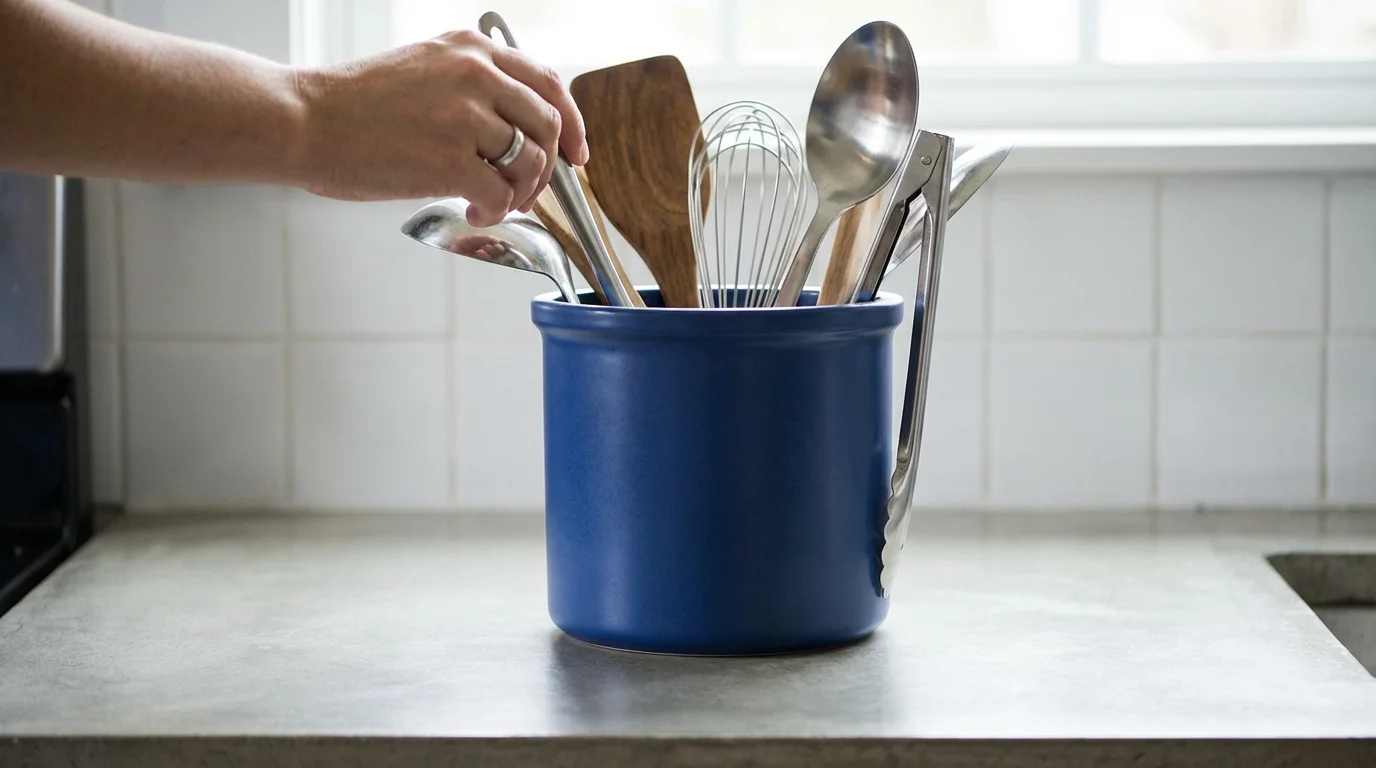
The Heavyweight Contender: Ceramic Crocks
The classic stoneware crock—often associated with brands like Le Creuset or Emile Henry—remains a top choice for a reason: mass. These holders are heavy. You can aggressively shove a pair of locking tongs into a ceramic crock, and it won’t budge.
Pros:
- Stability: The sheer weight of stoneware prevents tipping, even when the holder is barely full.
- Aesthetics: Available in glazed colors to match dutch ovens and kitchen decor.
- Hygiene: High-quality glazing makes the interior non-porous and easy to wipe down.
Cons:
- Fragility: If you drop it, it shatters. If you forcefully drop a heavy metal meat tenderizer into it, you might crack the bottom.
- Lack of Drainage: Most ceramic crocks are solid buckets. If you put damp tools in them, water pools at the bottom, creating a breeding ground for bacteria.
When shopping for ceramic, check the bottom. You want an unglazed ring or a silicone foot to prevent it from sliding around on smooth quartz or granite countertops.
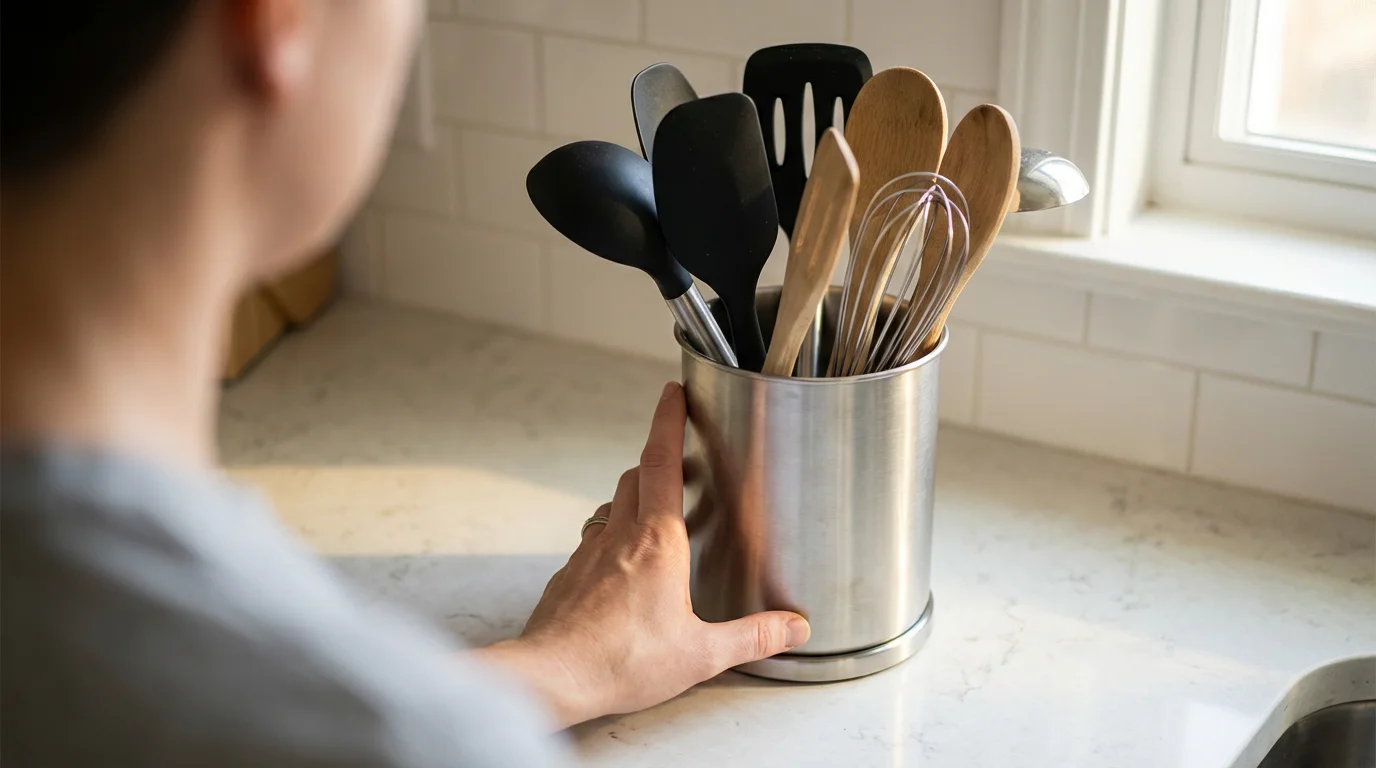
The Efficiency Pick: Rotating Stainless Steel
If you have a small kitchen or deep corners where reach is an issue, a rotating holder (lazy Susan style) is a game-changer. Brands like OXO Good Grips have popularized this design. These usually feature stainless steel bodies with a plastic rotating base.
The primary advantage here is density. Because you can spin the holder, you can pack tools in tighter and still access the item at the back without removing the front items. This is ideal for cooks with limited counter space who need to maximize every square inch.
However, be wary of the “spin drift.” Cheaper rotating holders spin too freely. If you spin it too hard, centrifugal force (the outward force on a rotating body) can cause top-heavy tools to fly out. Look for a rotation mechanism that has a bit of resistance or friction.
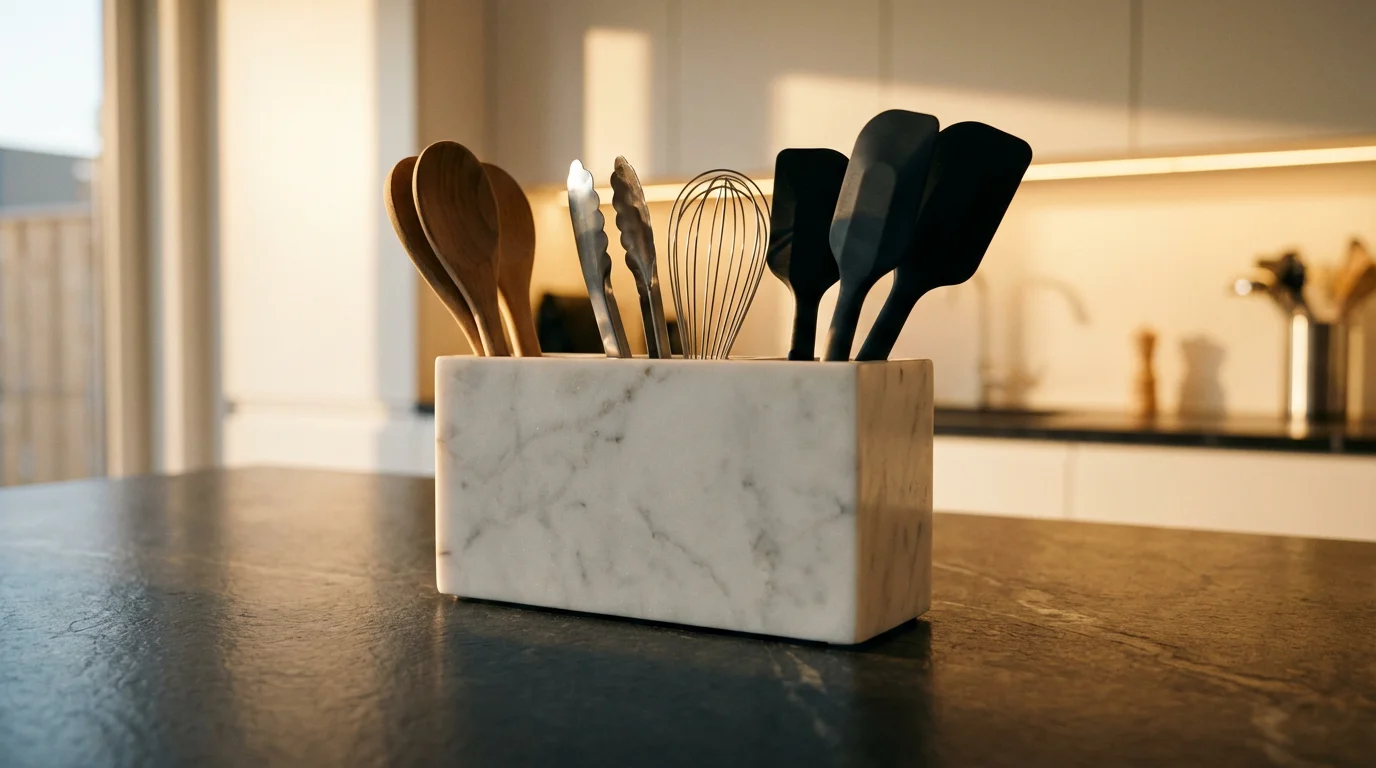
The Type-A Solution: Segmented Holders
Have you ever tried to pull out a whisk, only to have the tines get tangled with the locking mechanism of your tongs and the slot of a fish spatula? This is known as “utensil tangling,” and it is infuriating. Segmented organizers solve this by placing dividers inside the crock.
These typically have three or four internal compartments. This allows you to categorize your layout:
- Section 1: Wooden spoons and spatulas (baking/mixing).
- Section 2: Metal turners and tongs (high heat/searing).
- Section 3: Whisks and ladles (liquids).
While this organization is satisfying, there is a trade-off: capacity. The dividers take up internal volume. A segmented holder often holds fewer total tools than an open crock of the same diameter because you lose the ability to nest items together tightly.
For recommendations on high-quality equipment that often requires such organization, Serious Eats frequently reviews the durability of the tools themselves, emphasizing that protecting your gear (like delicate whisk wires) is just as important as organizing it.
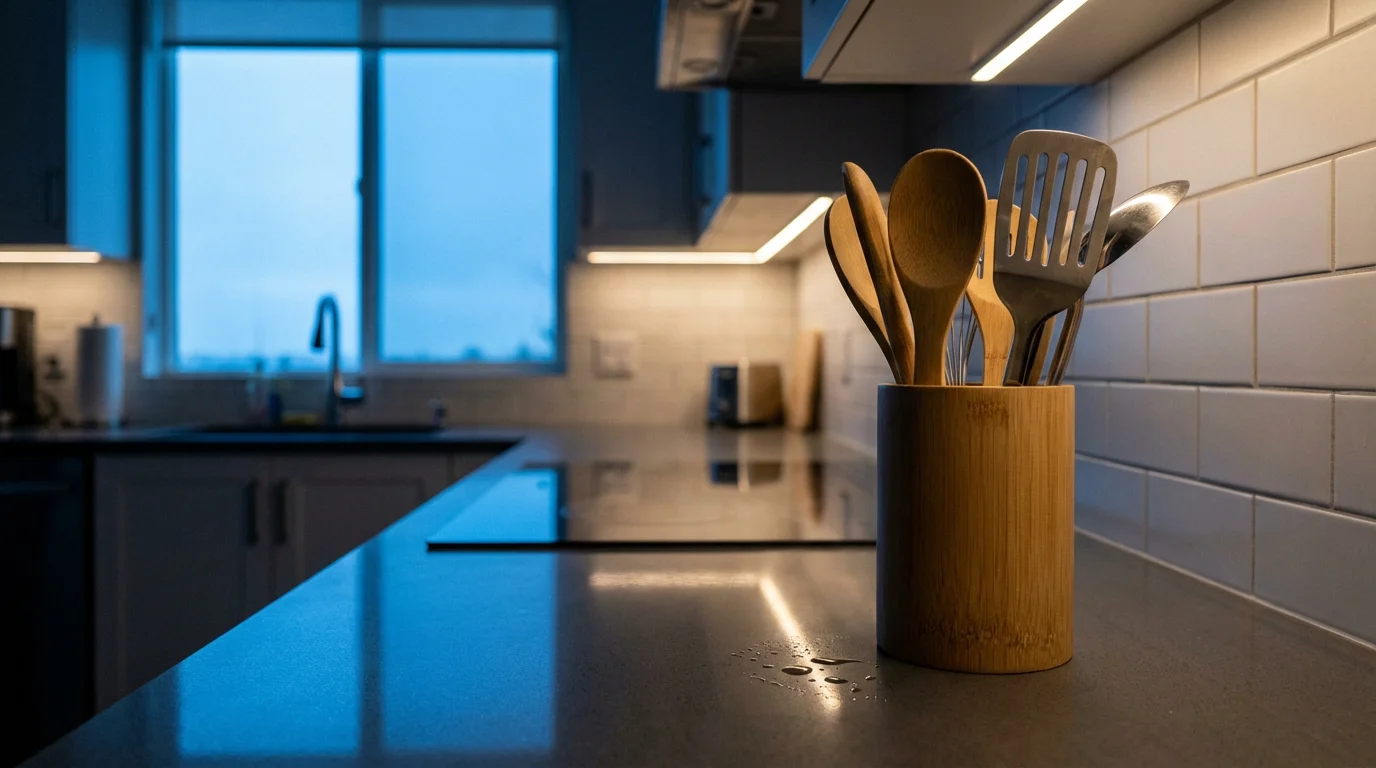
Material Showdown: Durability and Hygiene
Your choice of material affects more than just the look of your kitchen; it dictates how often you need to clean the holder and how long it will last. Here is how the most common materials stack up.
| Material | Stability (Weight) | Cleaning Ease | Durability | Best For… |
|---|---|---|---|---|
| Ceramic / Stoneware | High | High (Dishwasher safe) | Medium (Can shatter) | Heavy tools & aesthetics |
| Stainless Steel | Medium | Medium (Shows fingerprints) | Very High (Indestructible) | Modern kitchens & high volume |
| Wood / Bamboo | Low to Medium | Low (Hand wash only) | Medium (Can warp/rot) | Dry tools only & rustic looks |
| Plastic | Low | High (Dishwasher safe) | High | Budget & drawer inserts |
A Note on Wood and Bamboo: While bamboo organizers look beautiful and sustainable, they are susceptible to moisture damage. If you place a slightly damp wooden spoon into a bamboo holder, the trapped moisture can cause mold growth at the bottom. If you choose wood, ensure it has drainage holes or a removable plastic insert for cleaning.
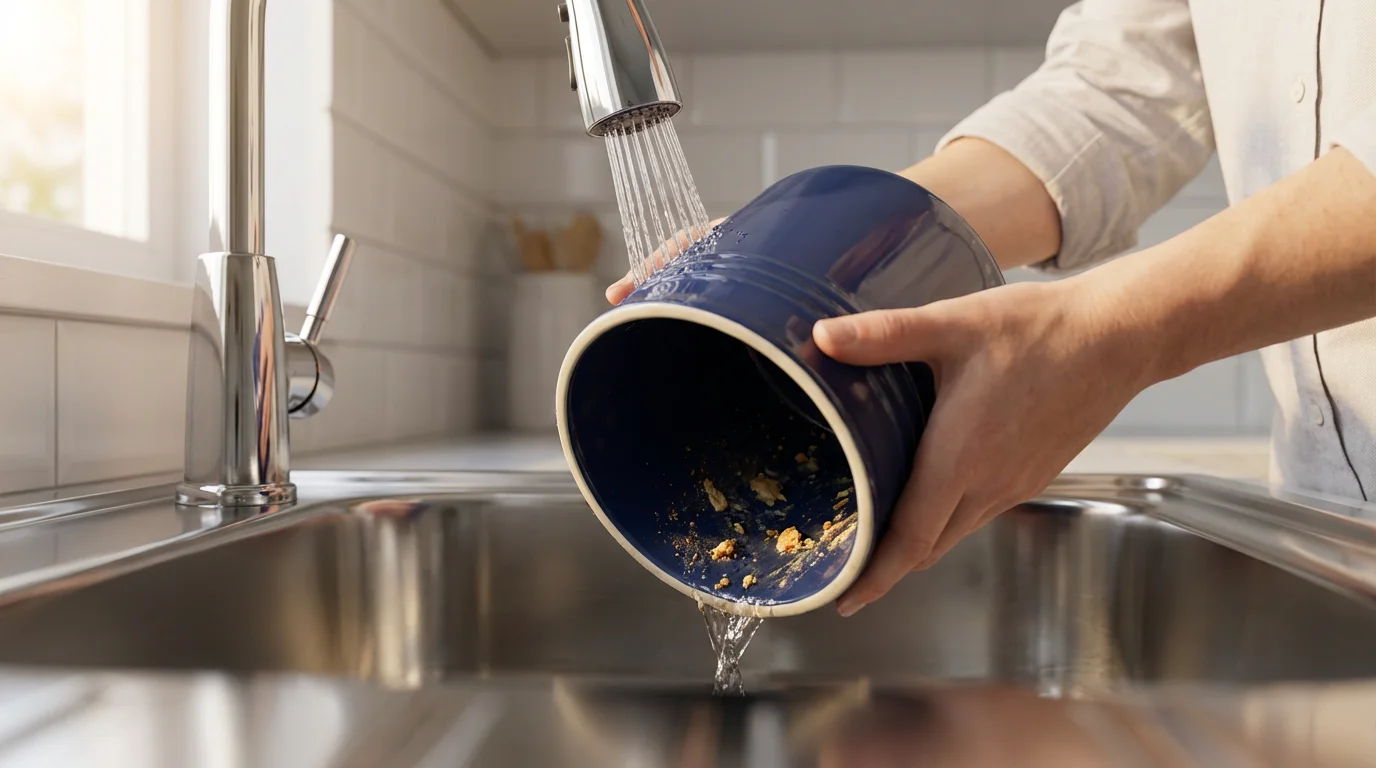
Cleaning and Maintenance
The bottom of a utensil holder is one of the dirtiest places in the kitchen. Dust, grease splatter from the stove, and crumbs settle there, mixing with any residual moisture from “clean” tools to create a sludge.
To keep your workspace sanitary:
- The Monthly Wash: Empty the holder completely once a month. If it is dishwasher safe (ceramic or stainless steel), run it through a cycle. If it is wood, wipe it out with a damp cloth and let it dry completely in the sun.
- The Liner Trick: If you have a solid-bottomed crock that is hard to clean, cut a piece of silicone mat or a paper towel to fit the bottom. Replace this liner monthly to catch the grime.
- Exterior Care: Stainless steel holders near the stove will accumulate a sticky layer of polymerized oil (grease dust). Wipe them down weekly with a 50/50 mix of water and vinegar to cut the grease before it hardens.
How We Evaluate Stability
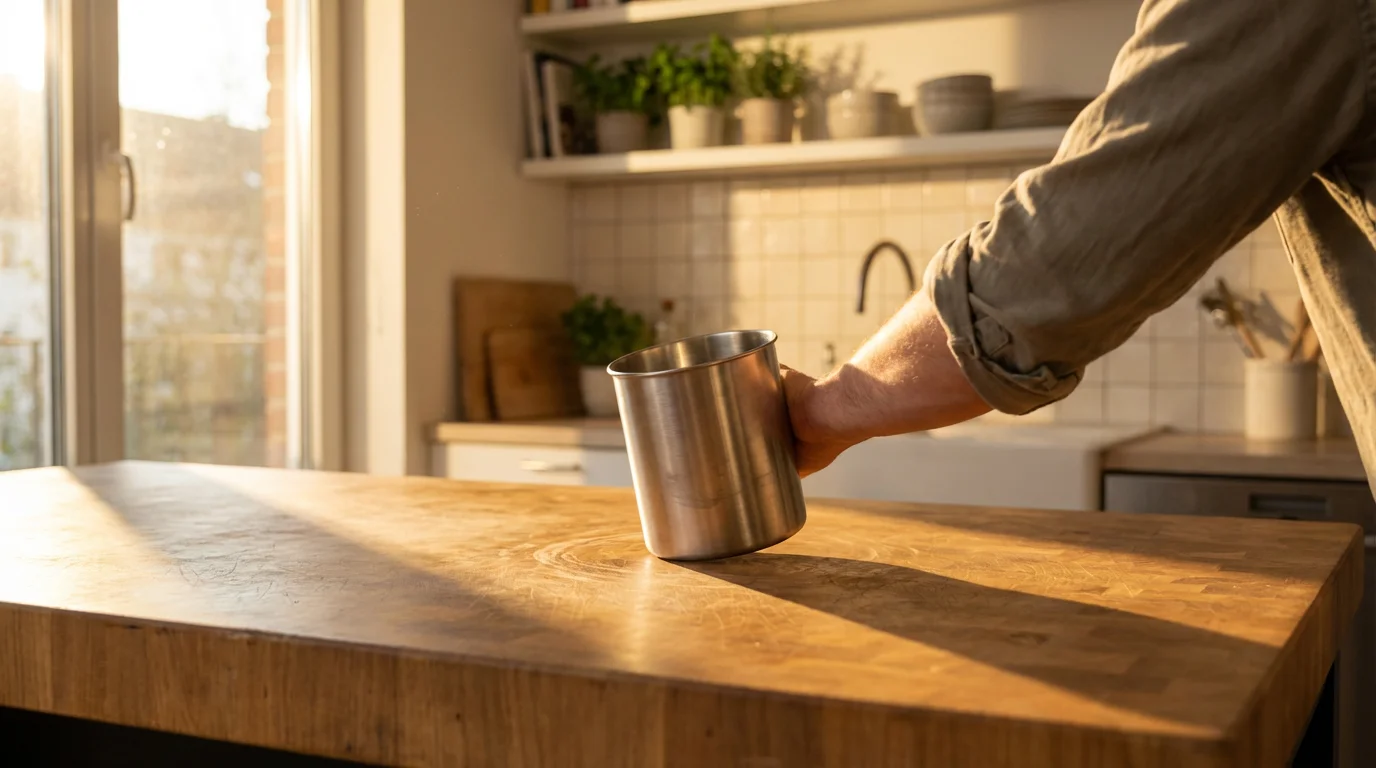
When you are shopping, you can perform two simple tests to determine if a holder is worth your money. We use these in our own evaluation process.
1. The Elbow Bump Test
With the holder empty, give it a firm nudge with your elbow. Does it slide across the counter, or does it tip over? A good holder should have a low center of gravity and a non-slip grip (a rubberized base) that causes it to slide rather than tumble. If an empty holder tips easily, a full one will be a disaster.
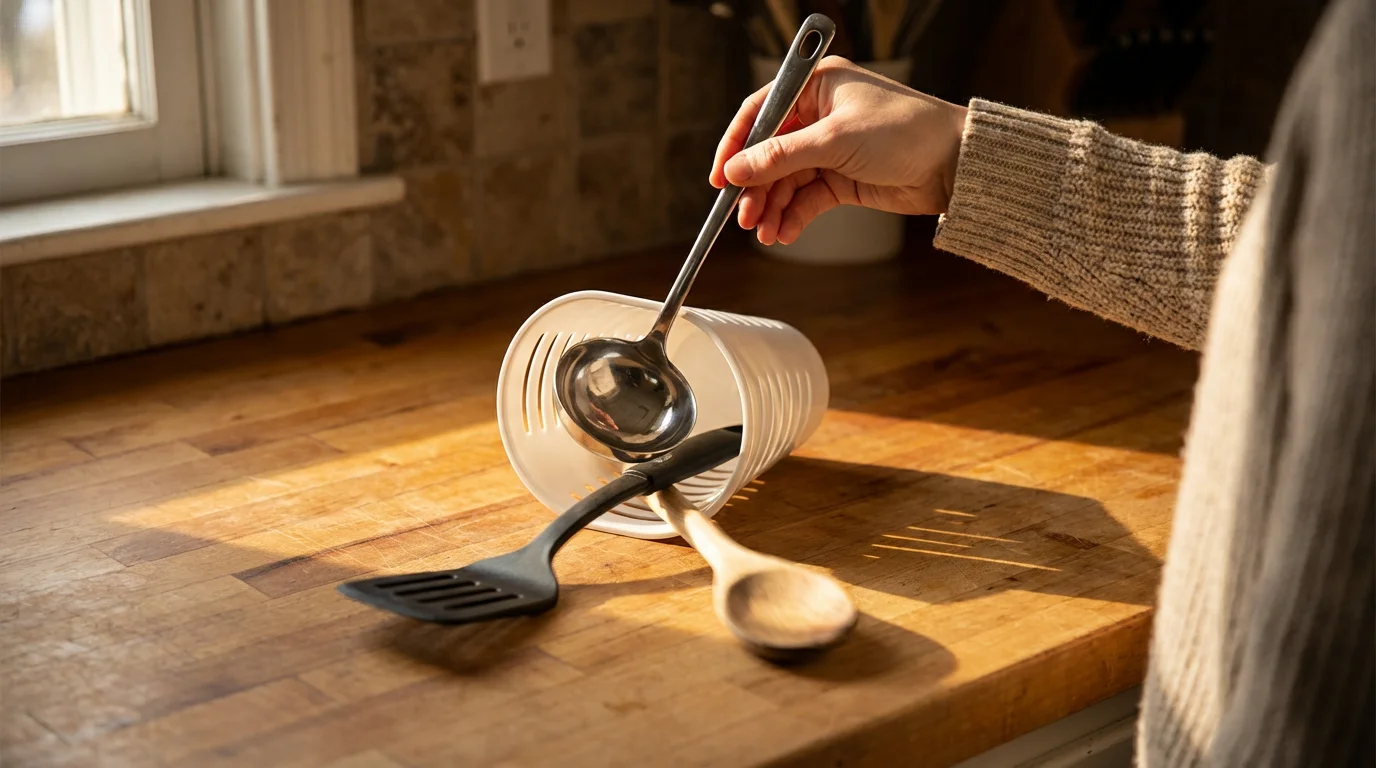
2. The Ladle Drop
Take a heavy stainless steel ladle and drop it into the holder, handle leaning against the rim. If the weight of the ladle handle causes the holder to lift off the counter, it is too light. This is common with decorative wire-frame holders or thin aluminum buckets.
Frequently Asked Questions
How many utensils should fit in a standard holder?
A standard 6-to-7-inch diameter crock should comfortably hold 10 to 15 tools. If you are cramming in more than 15, you likely have duplicates that should be stored in a drawer or donated. Overstuffing leads to damage, as you have to forcefully yank tools out, which can bend whisk wires or tear silicone heads.
Can I just use a flower vase or a planter?
You can, but proceed with caution. Flower vases are often tall and narrow (designed for long stems), which makes it hard to reach the handles of shorter tools. Planters are better, but terra cotta can scratch your countertops if not sanded or felted on the bottom. Additionally, ensure any pottery you use is lead-free and food-safe, even if you aren’t eating directly off it.
What is the best way to organize tools within the holder?
Place the tallest tools in the center and shorter tools around the perimeter. This prevents the shorter tools from being hidden. If you have a rotating holder, place the most frequently used items (tongs, main spatula) on the outer ring for the easiest grab.
Is stainless steel better than ceramic?
Stainless steel is more durable and won’t break if dropped, but it is lighter and more prone to tipping unless it has a weighted base. Ceramic is naturally heavier and more stable but is fragile. For a busy household with kids or pets, a weighted stainless steel or heavy plastic option might be safer than breakable stoneware.
Disclaimer: Product prices and availability change frequently. Prices shown were accurate at time of writing but may have changed. We may earn a small commission from purchases made through links on this site, at no extra cost to you. Always verify current pricing on the retailer’s website before purchasing.
Leave a Reply