
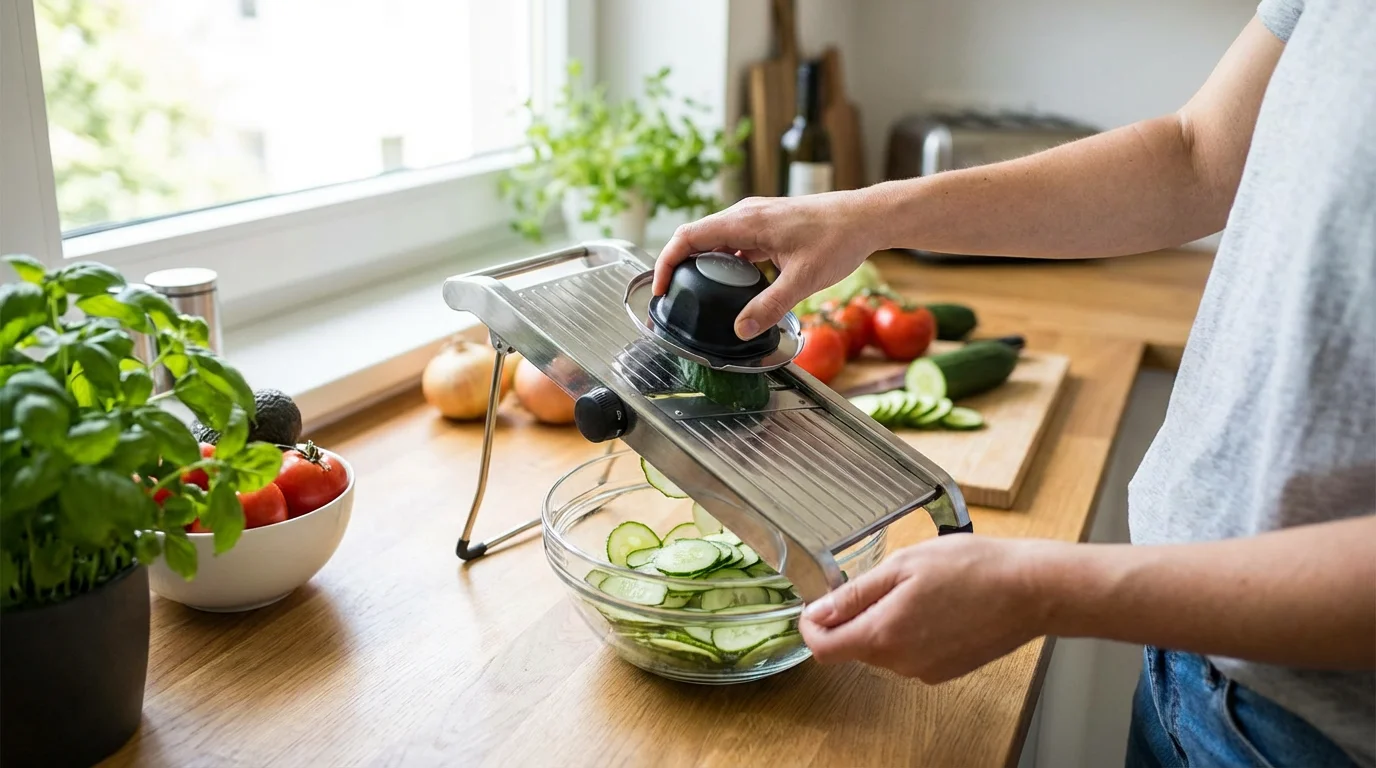
Achieving consistently thin slices of vegetables and fruits transforms your cooking. Professional chefs master knife skills for precision, but home cooks can achieve restaurant-quality results with a specialized tool: the mandoline slicer. This kitchen workhorse delivers uniform cuts faster than even the most skilled hands, speeding up your meal prep significantly. However, its exceptionally sharp blades demand a strong focus on safety. We guide you through selecting and using the best mandoline slicers, ensuring you create perfect slices while keeping your fingers protected.
Understanding the Mandoline Slicer
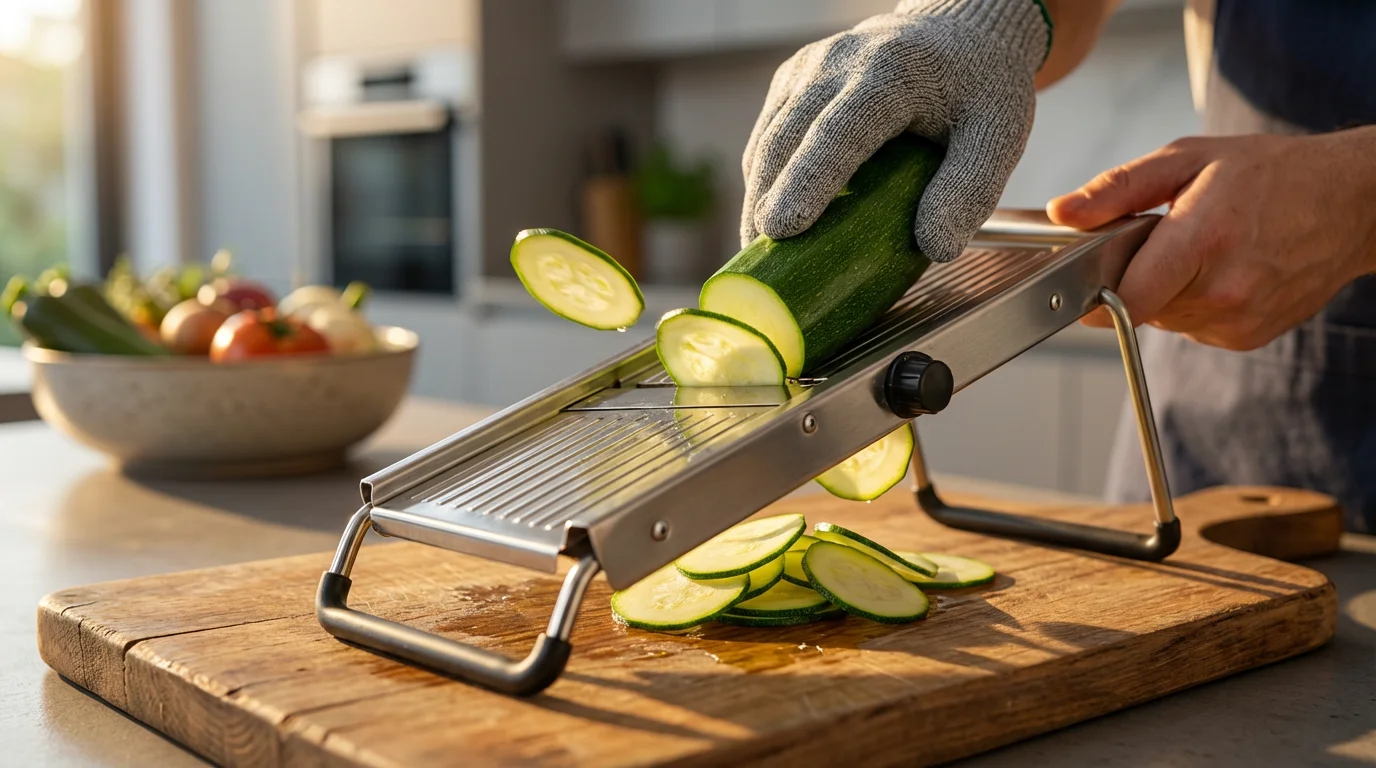
A mandoline slicer is a specialized kitchen tool designed for slicing food uniformly and rapidly. It consists of a flat, angled blade or set of blades mounted on a rigid frame. You slide food across the blade, producing consistent slices. While a good chef’s knife offers versatility, a mandoline excels at repeatable precision, making it an invaluable vegetable slicer for dishes requiring exact thicknesses, like potato gratins, cucumber salads, or perfectly thin onion rings.
The term “mandoline” itself refers to this particular design, allowing for adjustable slicing thickness and often various blade inserts for different cuts. Understanding its basic mechanics demystifies the tool, helping you use it with confidence.
Why Precision Matters for Uniform Cuts
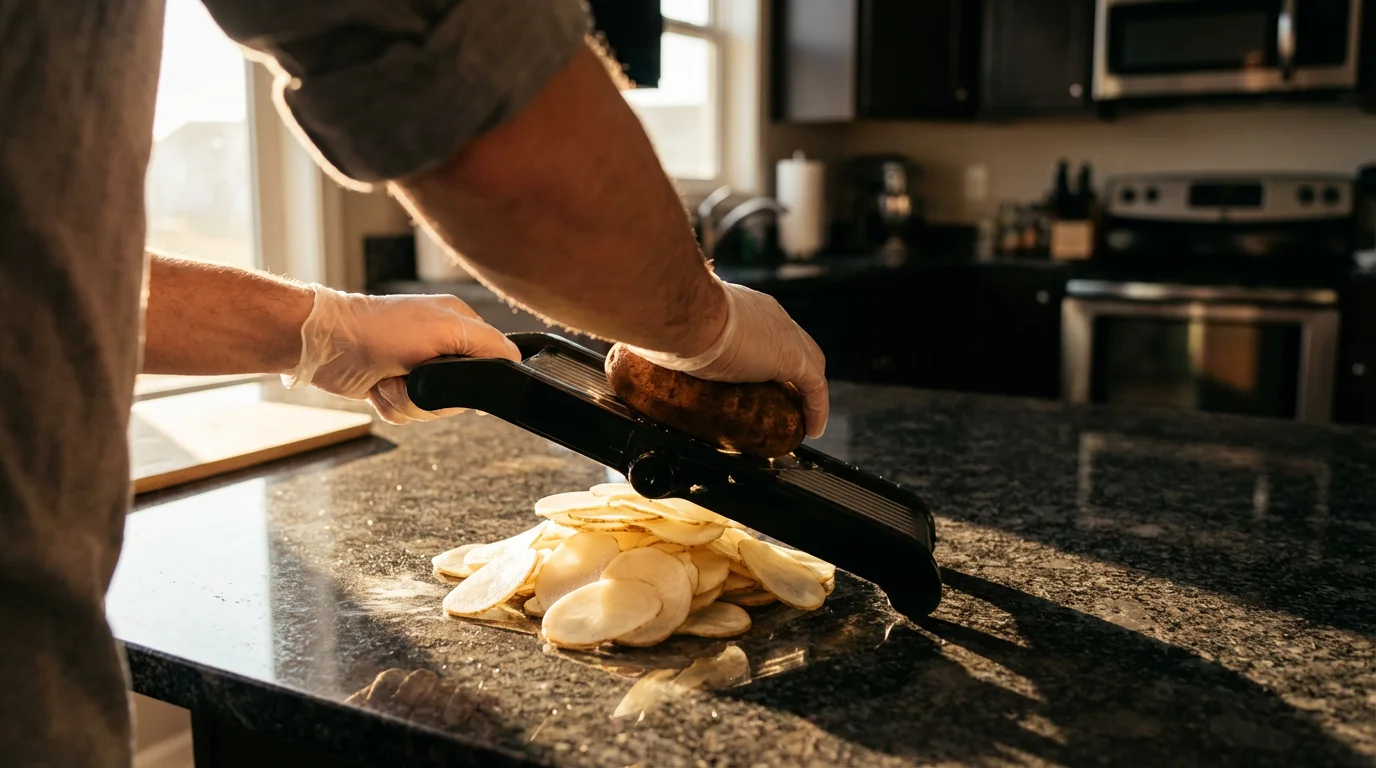
You might wonder why uniform cuts are so important. Even cooking and appealing presentation are the primary reasons. When all your potato slices for a gratin share the same thickness, they cook at the same rate, resulting in a dish with a consistent texture throughout. Uneven slices cook unevenly, leaving some pieces raw and others overcooked. Visually, uniform cuts elevate a simple side dish to something elegant and professional looking. Achieving this level of consistency by hand takes extensive practice, time, and focus, making a mandoline slicer a significant time-saver for busy home cooks.
This precision directly contributes to efficient meal prep. Preparing ingredients with exact dimensions means you streamline cooking times and enhance the final dish’s quality. Achieving perfect julienne, which means cutting vegetables into thin matchstick strips, becomes effortless with the right mandoline, whereas hand-cutting julienne demands advanced knife skills.
Prioritizing Safety: Essential Mandoline Features
Mandoline slicers feature exceptionally sharp blades, which can cause severe injury if you do not handle them properly. Safety must be your top priority when choosing and using this tool. Manufacturers incorporate several design elements to minimize risk:
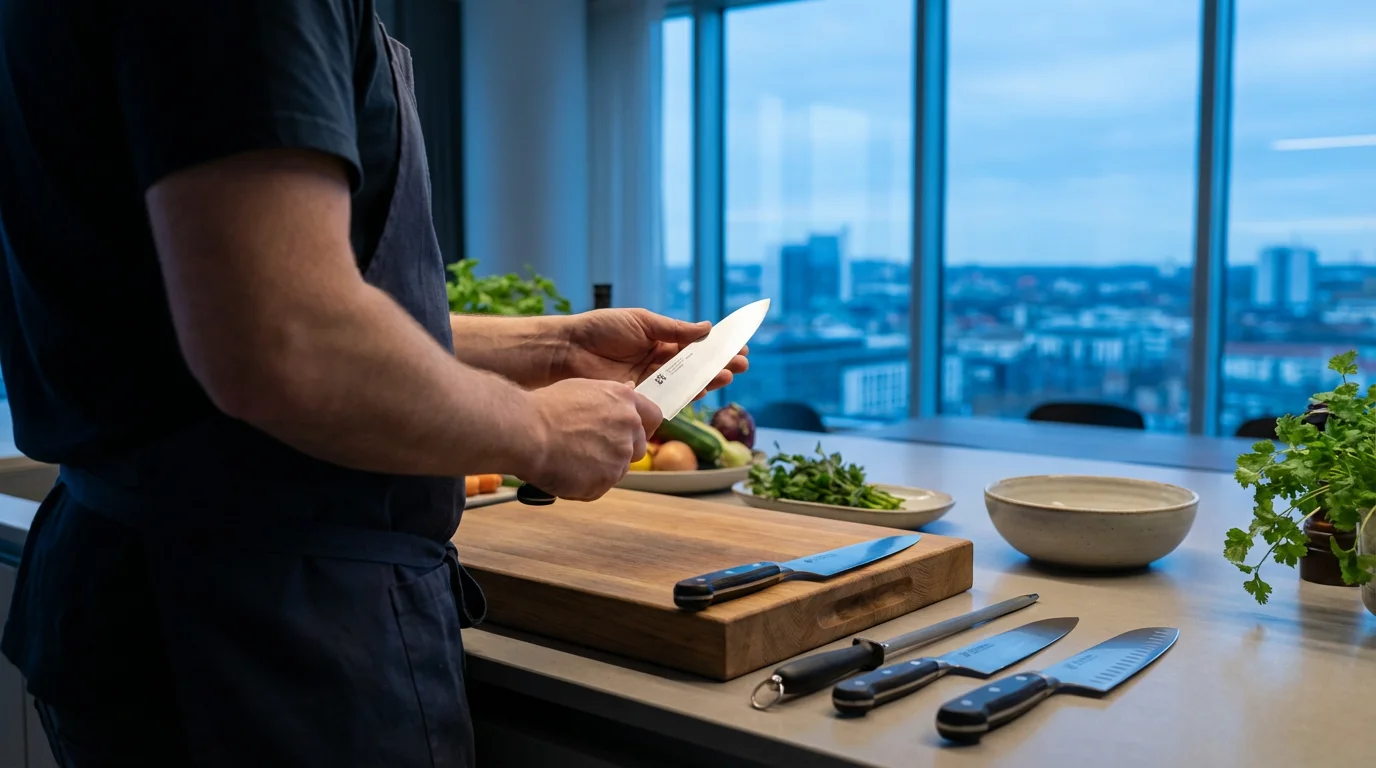
Just as with traditional blades, understanding knife sharpening methods helps you appreciate the mechanics of a truly sharp edge.
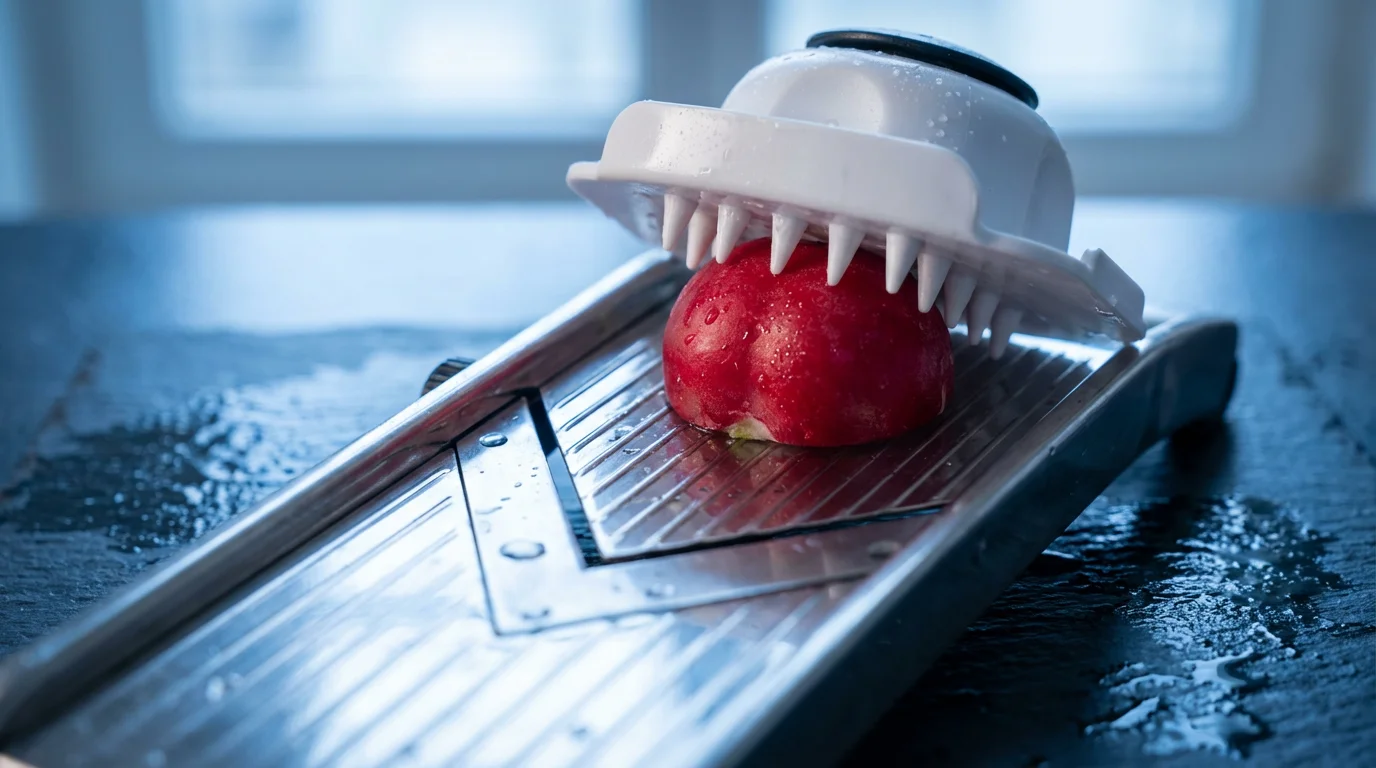
- Hand Guard or Food Holder: This is arguably the most critical safety feature. A hand guard secures the food you slice, protecting your fingers from the blade. Look for models with comfortable, ergonomic guards that offer a firm grip and securely hold various food shapes. Some guards feature internal prongs that grip the food, preventing slippage.
- Non-Slip Base or Feet: Stability is paramount. A mandoline that shifts or slides during use significantly increases your risk of injury. Opt for models with robust rubberized feet or a stable base that firmly grips your countertop. This ensures the tool stays put as you push food across the blade.
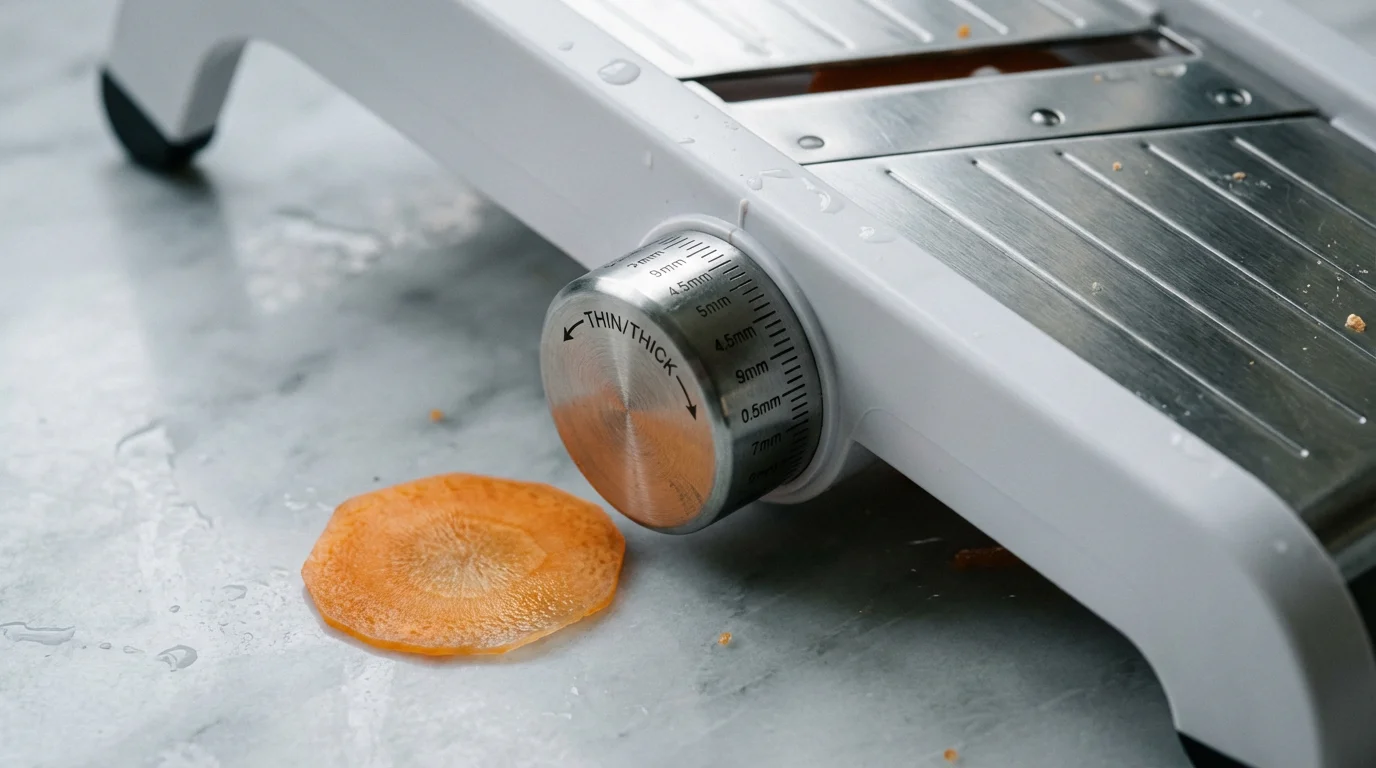
- Blade Storage and Protection: Many mandolines come with multiple interchangeable blades for different cuts, such as julienne or waffle cuts. Safe storage for these extra blades, often in a dedicated compartment or a protective sleeve, prevents accidental cuts when the tool is not in use. Adjustable models often integrate blades directly into the frame, minimizing handling.
- Secure Blade Locking Mechanisms: For models with adjustable blades or interchangeable inserts, reliable locking mechanisms keep the blades firmly in place during operation. You do not want a blade to come loose mid-slice.
- Ergonomic Design: While not a direct safety feature, a comfortable grip and logical design reduce hand fatigue, allowing you to maintain focus and control throughout the slicing process. Less fatigue means fewer mistakes.
“Always use the hand guard. Even experienced chefs get complacent. Your fingers are irreplaceable; protect them without compromise.” – QuickKitchenTools Reviewer Insight
Types of Mandoline Slicers: Choosing Your Tool
The market offers various mandoline slicers, each with distinct advantages. Understanding the types helps you select the best tool for your specific needs:
For larger batches of prep that require more than simple slicing, you might also compare the efficiency of food processors vs blenders.
- Basic Flat Mandolines (Japanese Style):
- Description: These are often simpler, more compact devices with a single fixed-angle straight or diagonal blade. You adjust the slicing thickness by raising or lowering the cutting bed or by inserting shims.
- Pros: Typically very sharp, easy to clean, compact storage, excellent for basic straight slicing. Often more affordable.
- Cons: Limited versatility for other cuts (like julienne) unless specific accessory blades are included. Blade exposure can be a concern if not handled carefully during thickness adjustments.
- Best For: Home cooks needing a reliable tool for consistent straight slices of firm vegetables.
- French-Style Mandolines:
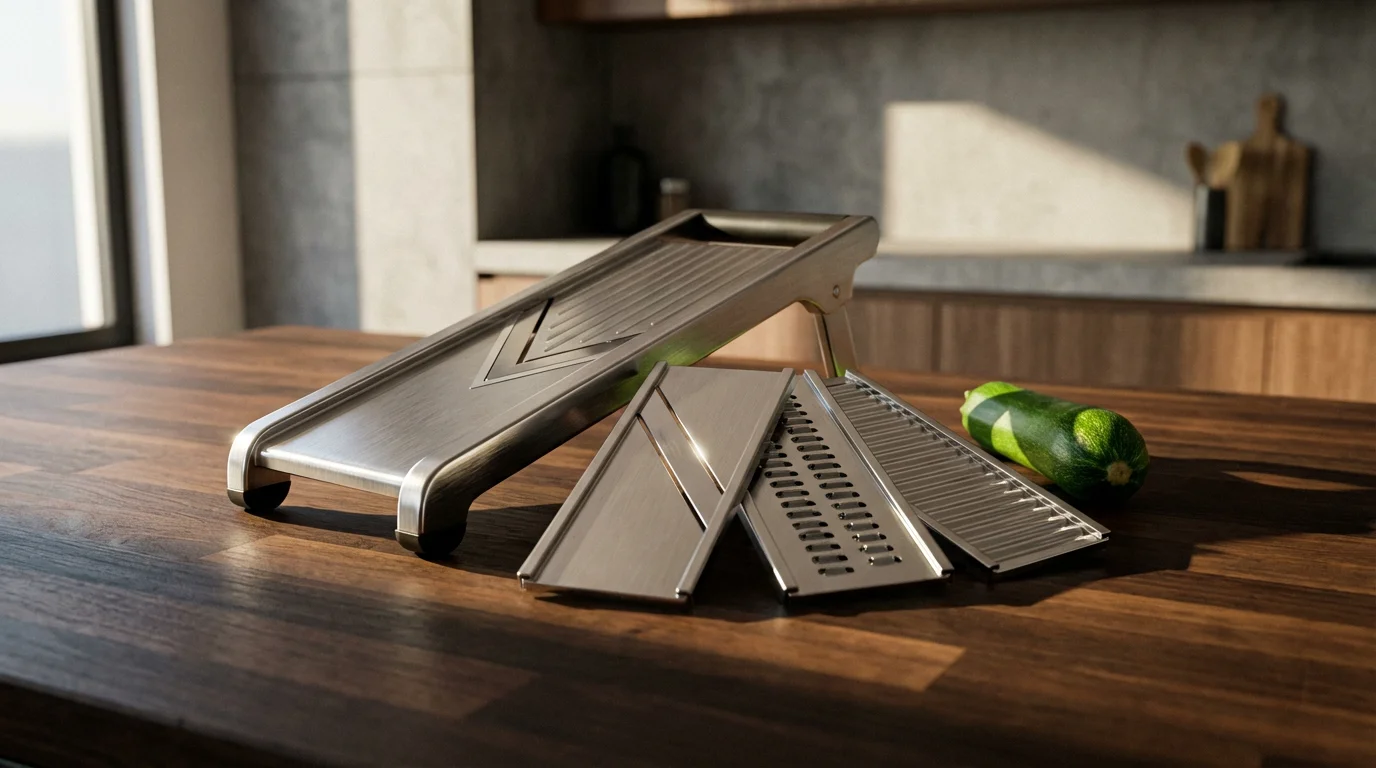
- Description: These are often larger, more robust, and made of stainless steel. They feature multiple integrated blades and interchangeable plates for various cuts: straight, crinkle, waffle, and julienne. Thickness adjustment uses a crank or lever.
- Pros: Highly versatile, extremely durable, professional-grade results. Built to last.
- Cons: Can be expensive, bulky to store, and sometimes more complex to clean due to multiple components.
- Best For: Serious home cooks and those frequently preparing elaborate dishes requiring a wide range of precise cuts.
- V-Blade Mandolines:
- Description: These models feature a V-shaped blade configuration. The food slices on both sides of the “V” as it passes through, which makes slicing softer foods, like tomatoes, easier and cleaner.
- Pros: Excellent for soft fruits and vegetables that might tear on a straight blade. Offers smooth, clean cuts.
- Cons: May not offer the same range of intricate cuts as some French-style models. Blade assembly can sometimes be trickier to clean.
- Best For: Anyone frequently slicing tomatoes, citrus, or other delicate produce.
- All-in-One Safety Slicers (often upright designs):
- Description: These newer designs prioritize safety by completely enclosing the blade. You place food in a chute, push a lever, and the food slices automatically into a container below.
- Pros: Unparalleled safety, minimal blade exposure, excellent for beginners or those with dexterity issues.
- Cons: Can be slower than traditional mandolines, larger footprint, more components to clean, typically higher price point.
- Best For: Safety-conscious beginners, those seeking maximum protection, or individuals with limited mobility.
Key Features to Evaluate When Buying
When selecting a mandoline slicer, you weigh several factors beyond just its type:
When a mandoline is not the right fit for your ingredients, consider the versatility found in box graters vs rotary graters for different textures.
- Blade Material: Most high-quality mandolines use stainless steel blades. Stainless steel offers excellent sharpness, corrosion resistance, and durability. Ceramic blades, while incredibly sharp, are more brittle and prone to chipping. Ensure the blade is consistently sharp out of the box and maintains its edge.
- Thickness Settings: Look for a mandoline with a wide range of adjustable thickness settings. Basic models might offer 2-3 settings, while more advanced ones provide granular control, sometimes up to 1/32-inch increments. This versatility allows you to prepare everything from paper-thin potato chips to thick vegetable planks.
- Additional Blades and Attachments: Many mandolines come with interchangeable blades for various cuts. These include julienne blades (for matchsticks), crinkle or waffle cut blades, and sometimes dicing attachments. Assess which cuts you realistically need. More attachments mean more versatility, but also potentially more parts to store and clean.
- Ease of Cleaning: Food can get lodged in crevices and around blades. Dishwasher-safe components simplify cleaning, but always exercise extreme caution when hand washing blades. Some designs minimize hard-to-reach areas, which helps immensely.
- Storage Footprint: Consider your kitchen space. Compact models fold flat or have smaller dimensions. Larger, more professional mandolines require dedicated storage space.
- Durability and Construction: A well-built mandoline feels solid and stable. Look for sturdy plastics or stainless steel construction. Flimsy components indicate a shorter lifespan and potential safety hazards. According to Wirecutter’s kitchen tool reviews, durability significantly impacts a tool’s long-term value and user satisfaction.
How to Use a Mandoline Slicer Safely and Effectively
Even with the best safety features, proper technique remains crucial. Follow these steps to maximize efficiency and minimize risk:
- Read the Manual: Every mandoline has unique features and safety instructions. Familiarize yourself with your specific model before first use.
- Set Up for Stability: Place your mandoline on a clean, dry, stable surface. Ensure its non-slip feet securely grip the countertop. Position a bowl or container at the mandoline’s output to catch your slices.
- Wear Protection: While the hand guard offers primary protection, many professionals wear cut-resistant gloves as an additional layer of defense. This is especially wise if you are new to using a mandoline or slicing a large volume of food.
- Adjust Thickness: Select your desired slice thickness before you begin. For models with interchangeable blades, insert the correct blade type (e.g., julienne) and secure it firmly.
- Prepare Your Food: Trim your vegetables or fruits to a manageable size that fits comfortably in the hand guard. For longer items like carrots, cut them in half to make them easier to handle. Ensure the surface you place against the blade is flat for the first few slices.
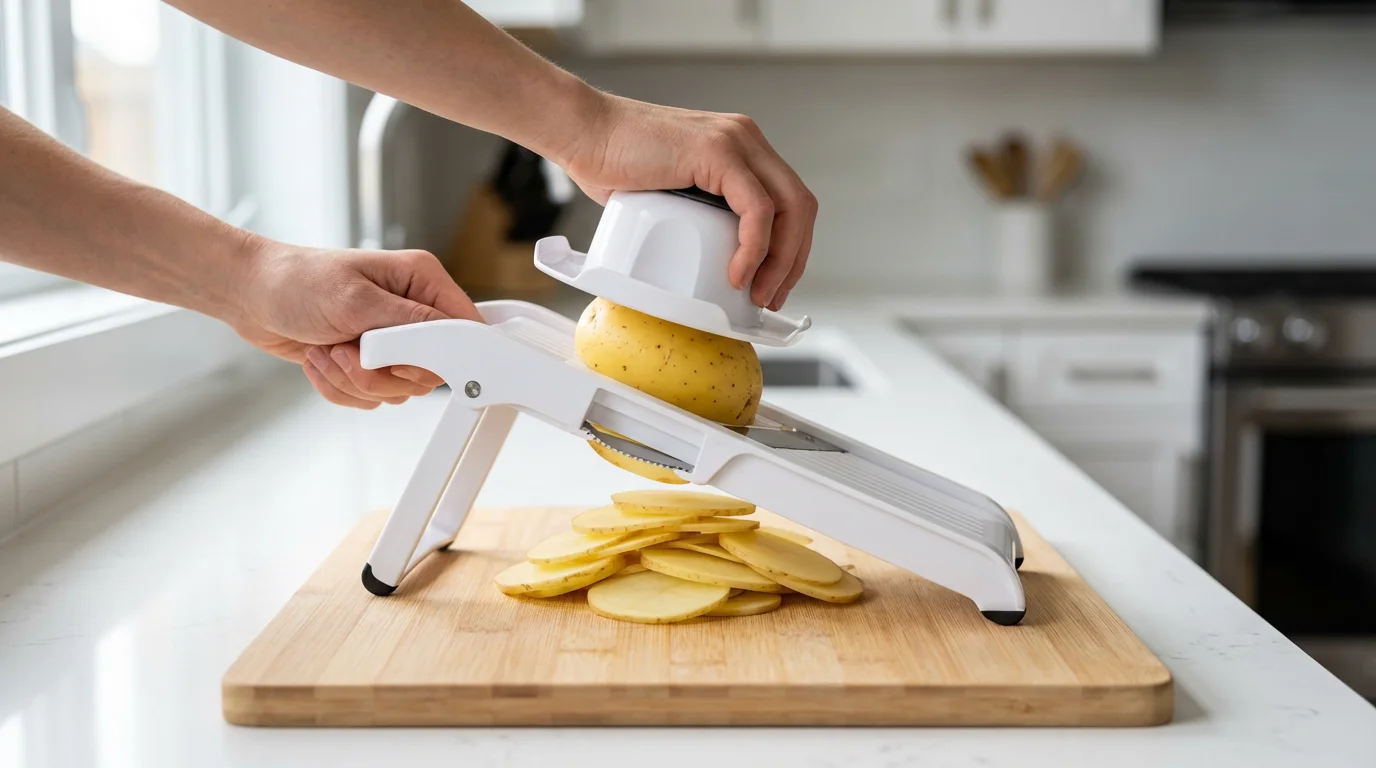
- Engage the Hand Guard: Impale or secure your food firmly into the hand guard’s prongs. Ensure your fingers are nowhere near the blade’s path. This is your primary defense.
- Proper Slicing Motion: Apply firm, even pressure to the food through the hand guard. Push the food down and forward across the blade in a smooth, continuous motion. Lift the food slightly as you bring it back to the starting position to avoid dulling the blade on the return stroke. Maintain control throughout the entire motion.
- Stop Before the End: As the food item becomes small and approaches the hand guard, stop slicing. You can finish the last small piece with a knife, or save it for another use. Never force the last bit of food through the blade without adequate hand protection.
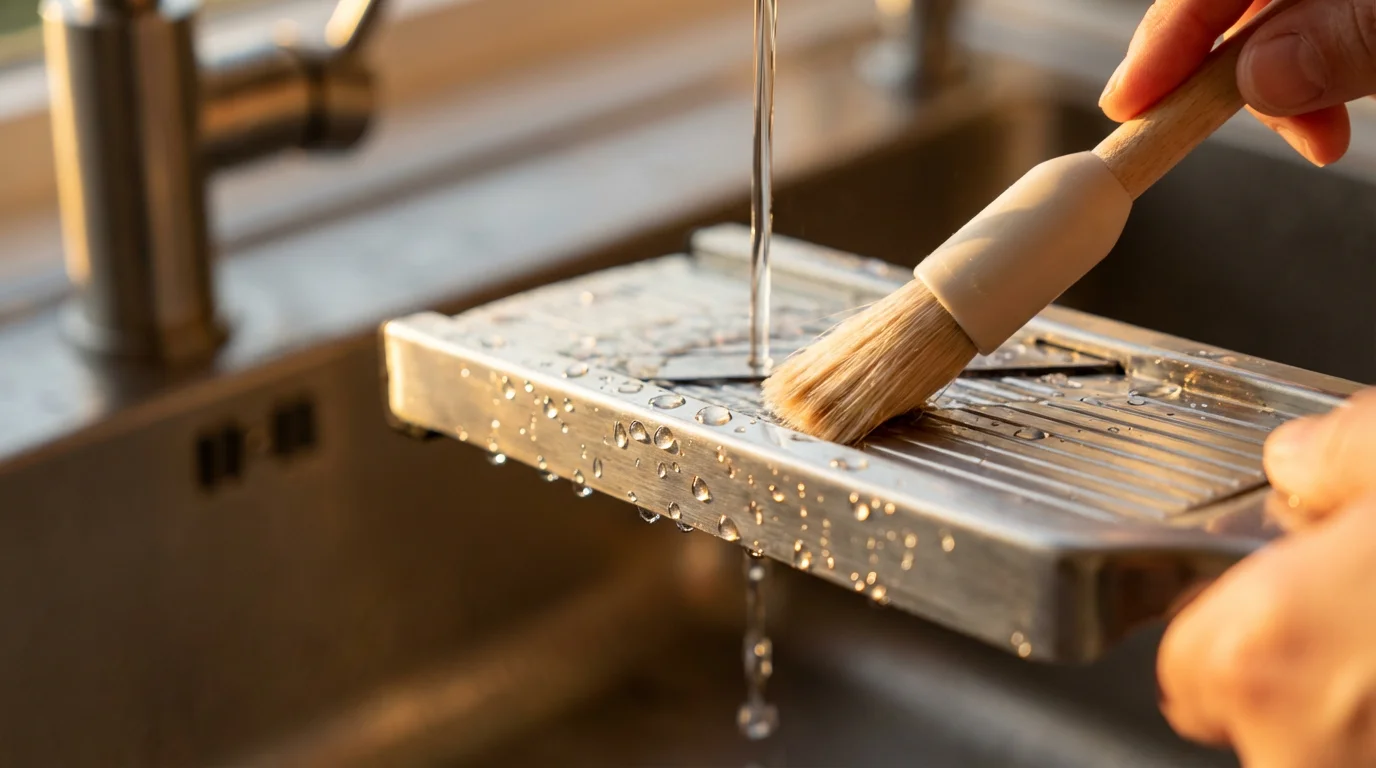
- Clean Carefully: Immediately after use, clean your mandoline. Use a brush to dislodge food particles, and wash it according to manufacturer instructions. Exercise extreme caution around blades, even when they appear clean.
Practicing mise en place, which means having all ingredients prepped and ready before cooking, becomes much faster when you integrate a mandoline slicer into your routine. This efficiency helps streamline your entire cooking process.
Top Mandoline Slicer Picks for Every Kitchen
Selecting the right mandoline slicer depends on your budget, cooking frequency, and desired features. We highlight categories to help you navigate the options, focusing on models that prioritize safety and deliver uniform cuts.
Best Overall: The Versatile V-Blade Slicer
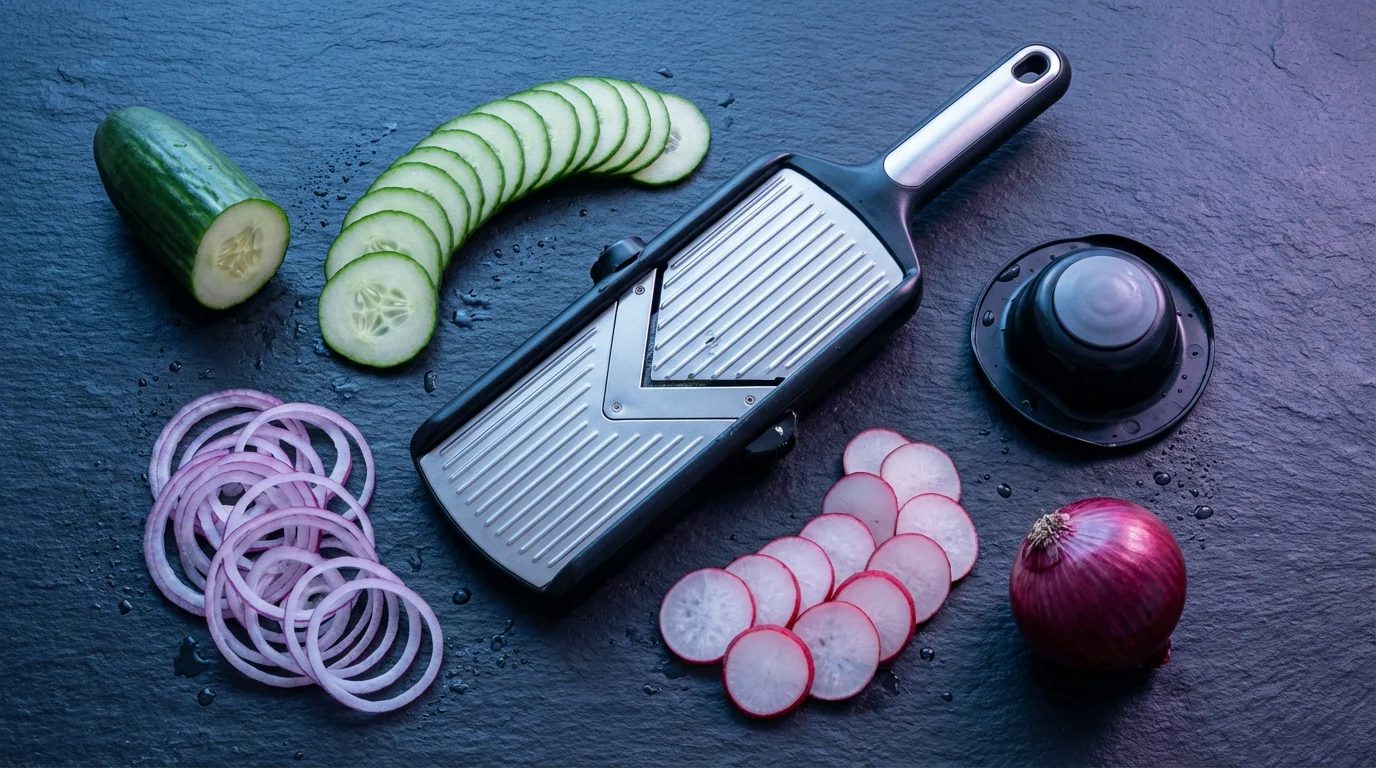
Many professional and serious home cooks gravitate towards high-quality V-blade mandolines. These models typically feature a robust construction, often combining durable plastic and stainless steel. A V-blade excels at slicing both firm and soft ingredients cleanly, from potatoes to ripe tomatoes, minimizing tearing. Key attributes include easily adjustable thickness settings, typically ranging from paper-thin 1mm up to 9mm, and integrated julienne blades. They often come with a sturdy, oversized hand guard that securely grips food, and non-slip feet ensure stability. Cleanup generally requires careful hand washing, but many parts detach for thorough cleaning. You invest in precision and durability with a quality V-blade.
Best for Beginners: The Safety-First Upright Mandoline
For those intimidated by exposed blades, the upright safety mandoline offers peace of mind. These designs completely enclose the blade, requiring you to load food into a chute and press a handle down. Your hands never approach the cutting surface. They offer various slicing and julienne options, usually controlled by external dials, and collect slices directly into a container. While sometimes slower than traditional models, the trade-off for absolute safety is significant. They are often dishwasher-safe for convenient cleaning. This type excels at being a truly safe vegetable slicer, removing much of the apprehension. Good Housekeeping’s appliance reviews frequently praise kitchen tools that balance performance with user-friendly safety features.
Best Value: The Essential Japanese Flat Mandoline
If you primarily need precise, thin slices and prioritize a compact design, a well-regarded Japanese flat mandoline provides exceptional value. These models often feature a single, incredibly sharp straight or diagonal blade, adjustable for thickness via a simple lever or interchangeable shims. While they might lack julienne attachments, their core slicing performance is outstanding. They are typically lightweight, easy to store, and straightforward to clean. The key is to always use the included hand guard, as the blade remains exposed. For making consistent vegetable chips or elegant salads on a budget, this mandoline delivers. These models prove that effective tools do not always require a high price tag.
Best for Serious Cooks: The Professional French-Style Mandoline
For dedicated home cooks who value ultimate versatility and professional-grade performance, a high-end French-style mandoline is the gold standard. These are often constructed from stainless steel, featuring highly precise adjustments for thickness, julienne, waffle, and crinkle cuts. Their robust build ensures stability and longevity, even with heavy use. While they represent a significant investment and require more space, their ability to perform a wide array of intricate cuts with unmatched precision makes them indispensable for gourmet meal preparation. Cleanup can involve more components, but their lasting quality and performance justify the effort.
Here is a comparison of typical features across different mandoline types:
| Feature | Japanese Flat Mandoline | V-Blade Mandoline | French-Style Mandoline | All-in-One Safety Slicer |
|---|---|---|---|---|
| Blade Type | Straight or Diagonal | V-Shaped | Integrated Multiple, e.g., Straight, Julienne, Waffle | Integrated Multiple, Enclosed |
| Slicing Range (Approx.) | 1mm – 6mm | 1mm – 9mm | 0.5mm – 12mm | 1mm – 8mm |
| Julienne/Waffle Cuts | Limited, often with inserts | Commonly integrated | Extensive, integrated | Integrated |
| Safety Features | Hand guard essential, exposed blade | Hand guard essential, exposed blade | Hand guard essential, exposed blade | Fully enclosed blade, minimal hand contact |
| Ease of Cleaning | Very easy (minimal parts) | Moderate (more crevices) | Complex (many parts, large) | Moderate (many components) |
| Footprint | Compact, often foldable | Medium, often foldable | Large, robust | Medium to Large, upright |
| Price Range | $20 – $50 | $40 – $100 | $100 – $300+ | $60 – $150 |
Maintaining Your Mandoline: Care and Cleaning
Proper maintenance extends your mandoline’s lifespan and keeps it operating safely and effectively. Sharp blades are safer blades because they require less force, reducing the chance of slippage.
- Immediate Cleaning: Clean your mandoline immediately after each use. Dried food particles become harder to remove and can dull blades or harbor bacteria.
- Hand Washing is Preferred: While some components might be dishwasher-safe, hand washing is generally recommended for blades. High dishwasher temperatures and harsh detergents can degrade plastic components and potentially dull very fine blade edges over time. Use warm, soapy water and a soft brush to dislodge food. Always wipe blades away from your body, using a sponge or cloth that protects your hand.
- Blade Safety During Cleaning: This is critical. Never run your bare hand over the blade. Use a sturdy brush to clean around the cutting edge. For mandolines with removable blades, carefully remove them and clean each part separately. Store them in their protective sleeves or dedicated compartments immediately after cleaning and drying.
- Drying and Storage: Thoroughly dry all parts to prevent rust on stainless steel blades. Store your mandoline in a safe place, ideally with blades protected or locked into a safe position, away from curious hands or accidental contact. Many models fold flat or include covers for storage.
Beyond Basic Slicing: Creative Uses
Your mandoline slicer offers more than just basic straight cuts. Once you master safe operation, you unlock a world of culinary possibilities:
- Perfect Potato Chips: Slice potatoes paper-thin for homemade crispy chips, either baked or fried. The consistent thickness ensures even cooking.
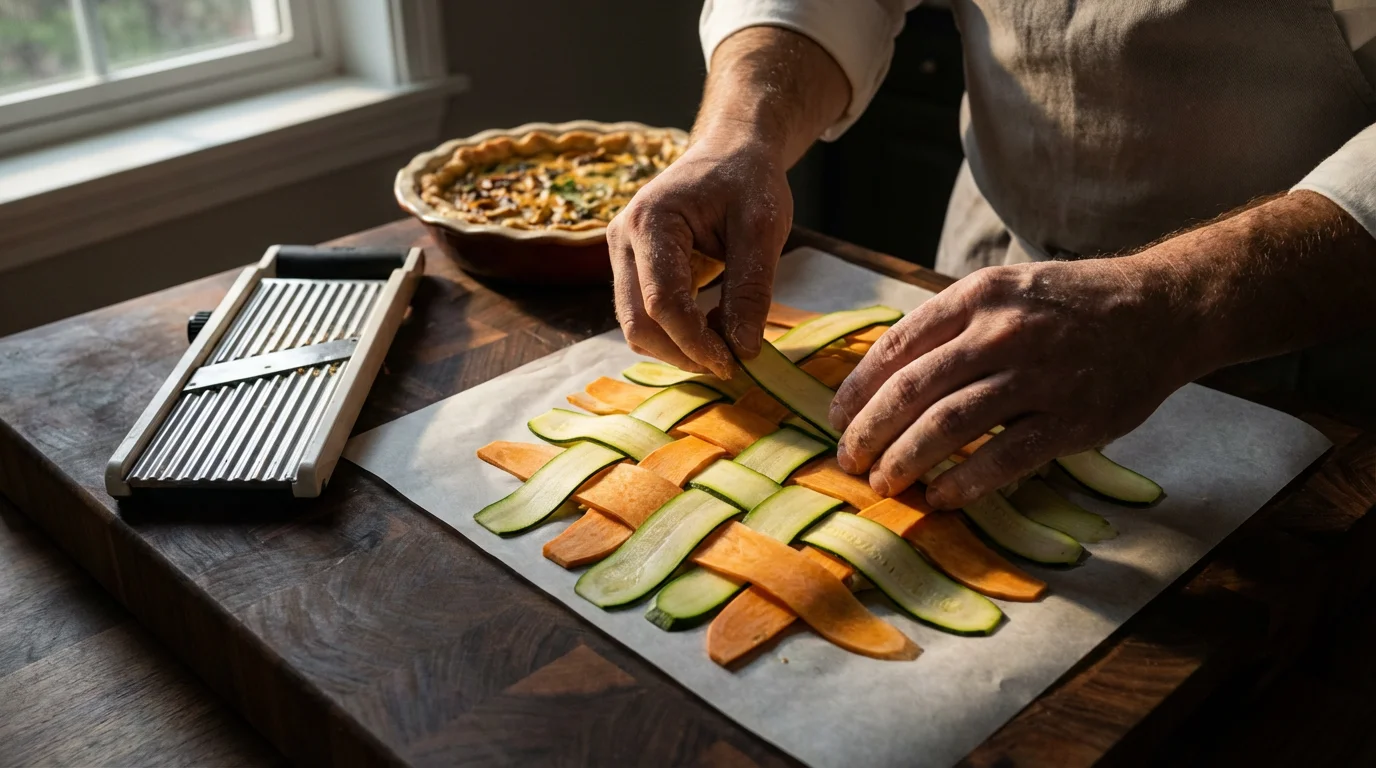
- Elegant Gratins: Mandoline-sliced potatoes, sweet potatoes, or apples make stunning gratins. Layering perfectly uniform slices creates a beautiful presentation and ideal texture.
- Julienne Vegetables for Stir-Fries or Salads: Quickly create uniform matchstick carrots, zucchini, or bell peppers for stir-fries, spring rolls, or vibrant raw salads. This is where a good julienne blade truly shines.
- Waffle or Crinkle Cuts: Impress your guests with wavy potato fries, decorative cucumber slices, or fancy vegetable garnishes using specialized blades.
- Onion Rings: Achieve perfectly consistent onion rings for frying or pickling, making sure each ring cooks evenly.
- Coleslaw and Shredded Cabbage: Certain mandolines, especially those with wider blades, can shred cabbage and other vegetables quickly for coleslaw or slaws, often faster than a food processor.
- Fruit Slices for Dehydrating: Create thin, even apple or citrus slices for dehydrating, garnishing, or drying.
As America’s Test Kitchen often demonstrates, the right tool dramatically expands your culinary repertoire, allowing you to recreate complex restaurant dishes at home with greater ease.
Frequently Asked Questions
Is a mandoline slicer worth buying for a home cook?
Yes, a mandoline slicer is absolutely worth it for many home cooks. If you frequently make dishes requiring uniform slices, such as gratins, potato chips, or finely julienned vegetables for salads and stir-fries, a mandoline saves significant time and delivers precision unmatched by hand-cutting. Its efficiency, especially for meal prep, makes it a valuable addition to your kitchen arsenal, provided you prioritize safety.
How do I clean a mandoline slicer safely?
Always hand wash mandoline blades with extreme caution. Use warm, soapy water and a stiff brush, never your bare hands, to dislodge food particles from the blade. Clean the body and other components according to the manufacturer’s instructions. If parts are dishwasher-safe, place them securely on the top rack. Ensure all parts are thoroughly dry before storing to prevent rust and maintain hygiene.
Can I sharpen a mandoline blade?
Most fixed mandoline blades are not designed for user sharpening, unlike kitchen knives. The precise angle and razor sharpness are factory set. Some high-end French-style mandolines might have blades that a professional knife sharpener can service, but for most home models, once the blade dulls significantly, you typically replace the entire mandoline or blade insert. Regular cleaning helps maintain the edge for longer.
What is the most important safety feature on a mandoline slicer?
The most important safety feature is the hand guard or food holder. This device secures the food you are slicing and keeps your fingers far away from the blade. Always use the hand guard, even for the largest food items, and never attempt to slice without it. Additionally, a stable, non-slip base is crucial to prevent the mandoline from shifting during use, which significantly reduces injury risk.
Disclaimer: Product prices and availability change frequently. Prices shown were accurate at time of writing but may have changed. We may earn a small commission from purchases made through links on this site, at no extra cost to you. Always use cutting tools carefully and follow manufacturer safety guidelines.



Leave a Reply