
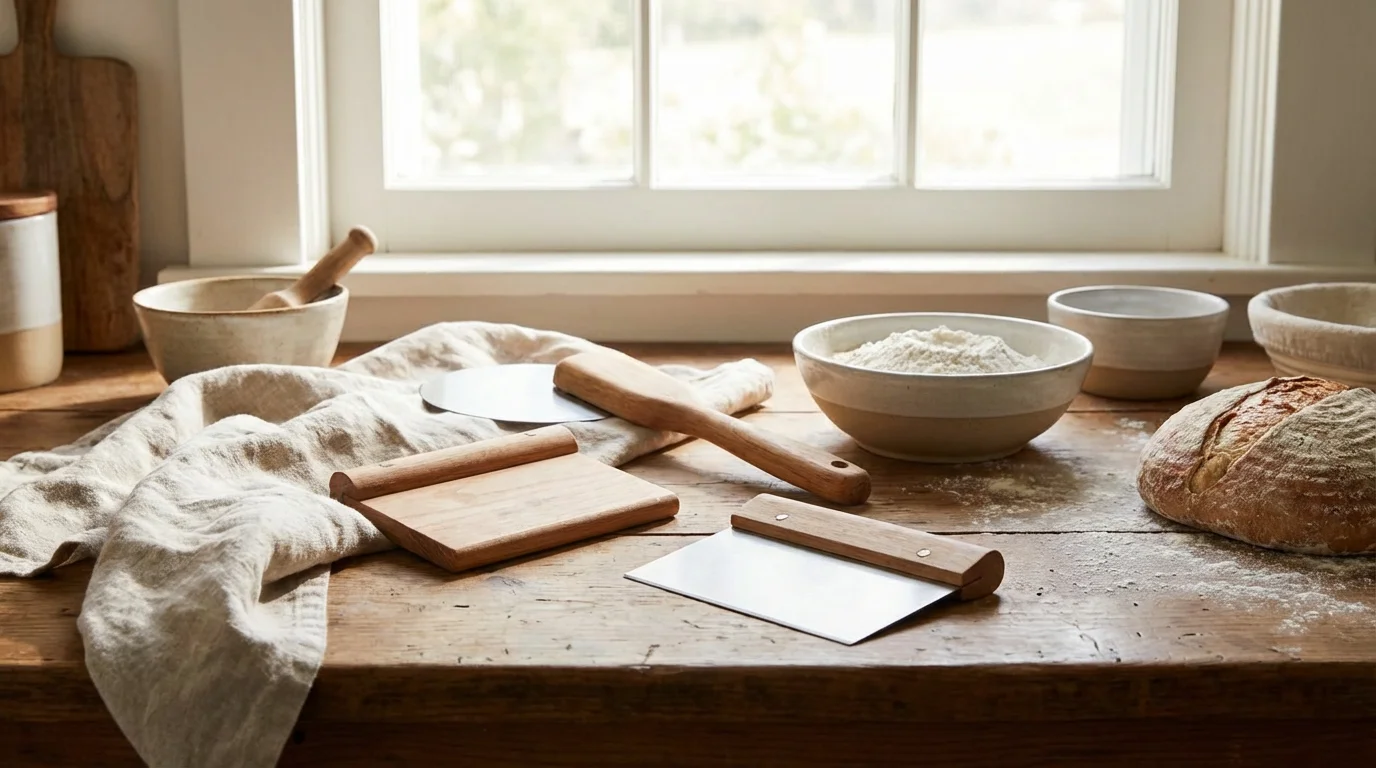
Transform your baking and kitchen efficiency with a tool you might overlook: the humble bench scraper, also widely known as a dough cutter. This versatile pastry tool simplifies many tasks, from portioning dough to scraping sticky surfaces clean. Mastering its use saves you time, reduces mess, and improves the consistency of your baked goods. We explore how this simple tool becomes indispensable for home cooks looking to elevate their kitchen game, focusing on practical applications and safety.
The Essential Utility of a Bench Scraper and Dough Cutter
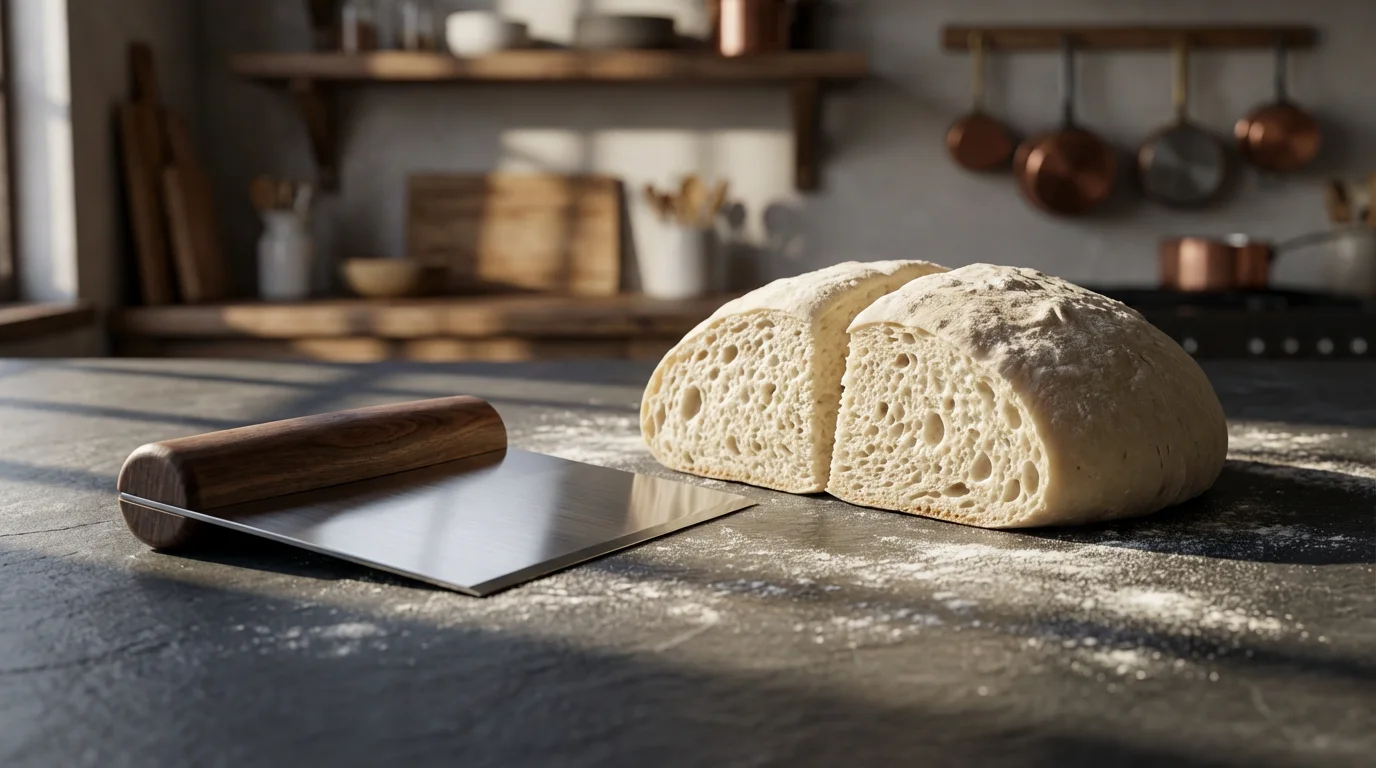
A bench scraper, or dough cutter, is a flat, rectangular tool with a handle along one edge, typically made from stainless steel or sturdy plastic. Its primary purpose is to manipulate dough, particularly sticky or high-hydration varieties, without overworking it or transferring too much heat from your hands. Bakers use it to scrape dough from work surfaces, divide it into uniform portions, and transfer ingredients. This pastry tool is a game-changer for anyone who bakes bread, pastries, or even prepares pasta.
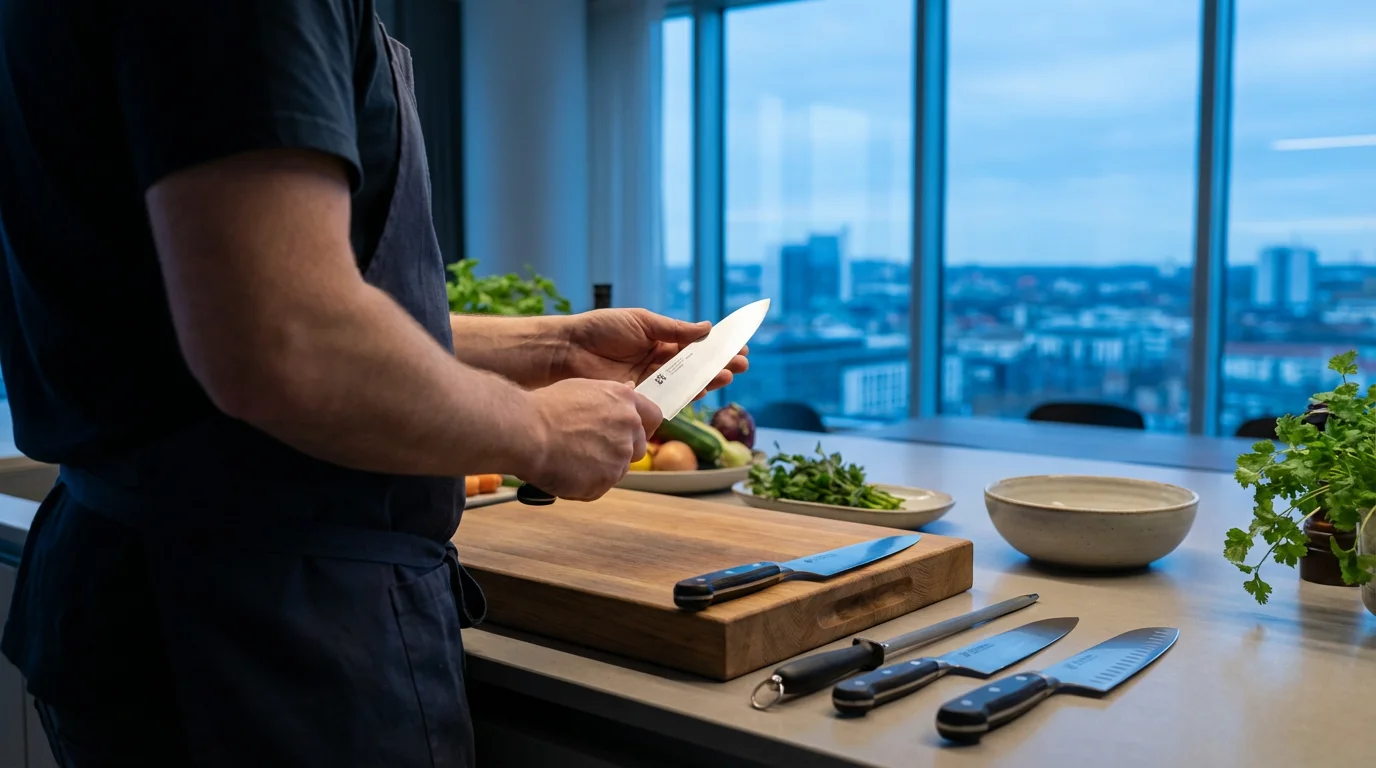
Using your scraper on durable cutting boards can also protect your countertops from potential scratches during heavy dough work.
Before you even begin kneading, a bench scraper sets the stage for efficiency. You can use it to gather flour and other dry ingredients into a mound before adding liquid, ensuring a tidy workspace. As you mix and knead, the scraper helps contain the dough, preventing it from spreading uncontrollably across your counter. For those struggling with sticky dough, the tool allows you to scrape it cleanly from the surface and fold it back onto itself, aiding gluten development without the frustration of dough clinging to your fingers.
Safety considerations extend to all kitchen tools, even simple ones. While a bench scraper does not possess a razor-sharp edge like a knife, its metal blade can be surprisingly effective at slicing if misused. Always maintain control and keep your fingers clear of the cutting path when portioning dough. When scraping, push away from your body to prevent accidental scrapes. The robust construction of most bench scrapers means they withstand significant pressure, making them reliable for demanding tasks. You invest in efficiency and safety when you integrate a quality bench scraper into your baking routine.
Understanding Bench Scraper Types and Materials
Bench scrapers come in various designs and materials, each offering distinct advantages. Understanding these differences helps you select the best tool for your specific baking needs.
Stainless Steel Bench Scrapers:
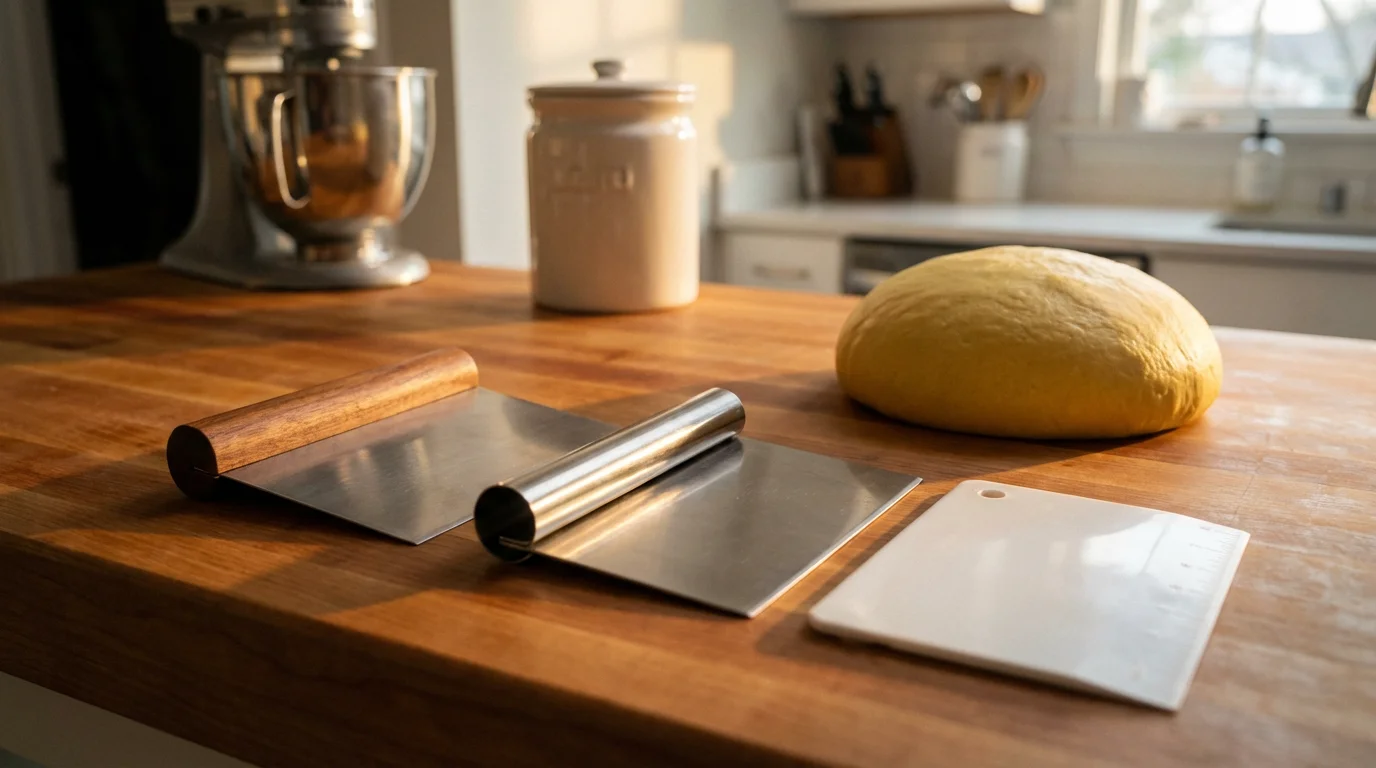
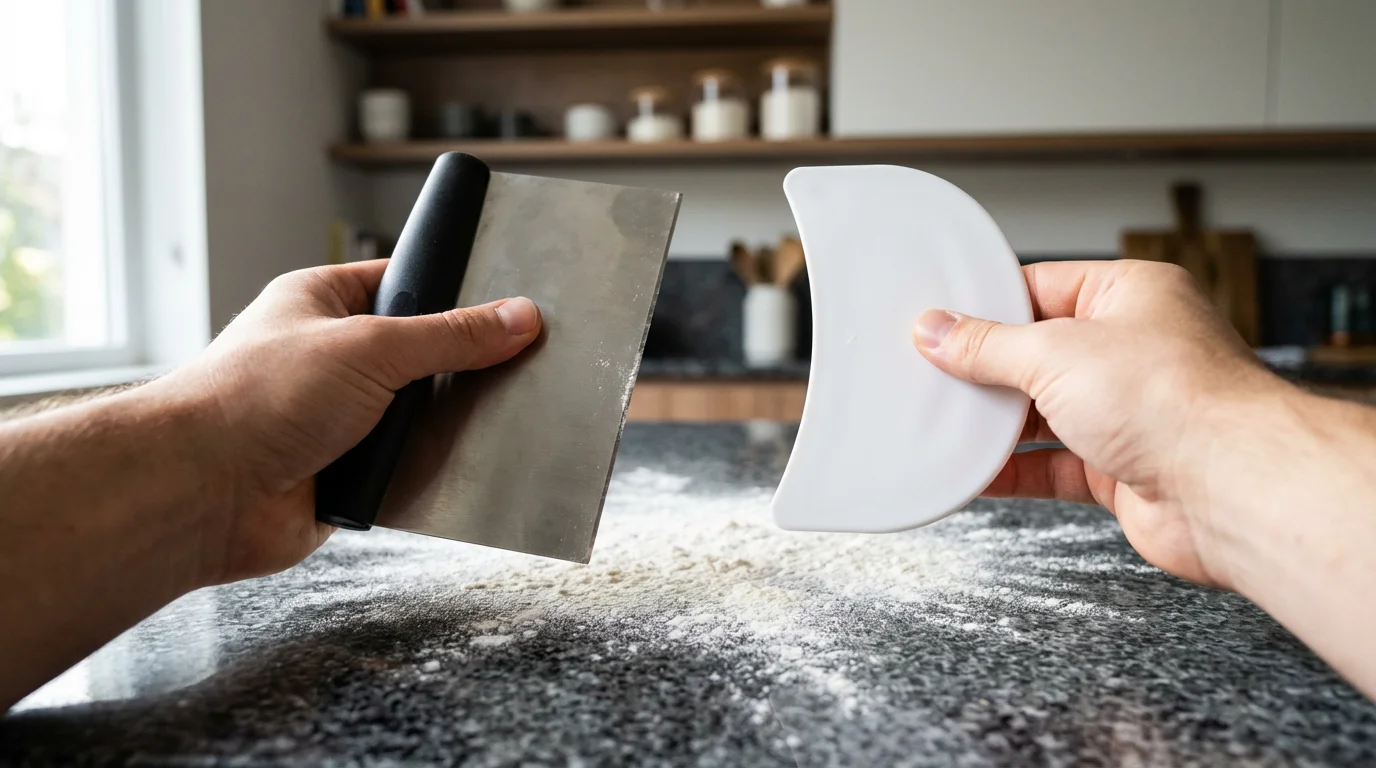
These are the most common and often considered the best bench scraper for baking. Stainless steel provides durability, a sharp edge for clean cuts, and resistance to rust. A typical stainless steel scraper measures about 6 inches wide and 3-4 inches high. This material holds up well to repeated use, even against hard surfaces, and its smooth, non-porous surface makes cleanup simple.
- Pros: Excellent for dividing stiff dough, durable, easy to clean, often dishwasher-safe, precise cutting edge.
- Cons: Can be heavier than plastic, metal edge may scratch delicate countertops if not used carefully.
Plastic/Nylon Bench Scrapers:
Softer than metal, plastic dough cutters offer flexibility and are ideal for working with delicate doughs or scraping mixing bowls without scratching them. They are also excellent for clearing sticky dough from surfaces without the risk of damaging your countertop. Many plastic scrapers feature a curved edge on one side, perfectly conforming to the shape of a mixing bowl.
- Pros: Gentle on bowls and surfaces, flexible for bowl scraping, lightweight, affordable, often dishwasher-safe.
- Cons: Less effective for cutting stiff dough, can stain, may wear down over time.
Bench Scrapers with Measuring Guides:
Some bench scrapers include etched or printed measurement markings along the blade. These guides assist with portioning dough accurately, a crucial step for consistent bake times and sizes in recipes like rolls or biscuits. You get precision without needing an extra ruler.
Bench Scrapers with Ergonomic Handles:
Handles vary significantly. Some feature a simple metal strip, while others incorporate a soft-grip, non-slip material like rubber or silicone. An ergonomic handle provides better comfort and control, particularly during extended baking sessions, reducing hand fatigue. This feature is important for serious bakers or those with dexterity concerns.
Choosing the right material impacts performance and longevity. For heavy-duty bread baking, a sturdy stainless steel model is often the best choice. If you frequently work with delicate pastries or need a tool for bowl scraping, a plastic alternative serves you well. Many bakers find value in owning both types for maximum versatility.
Mastering Bench Scraper Techniques for Baking
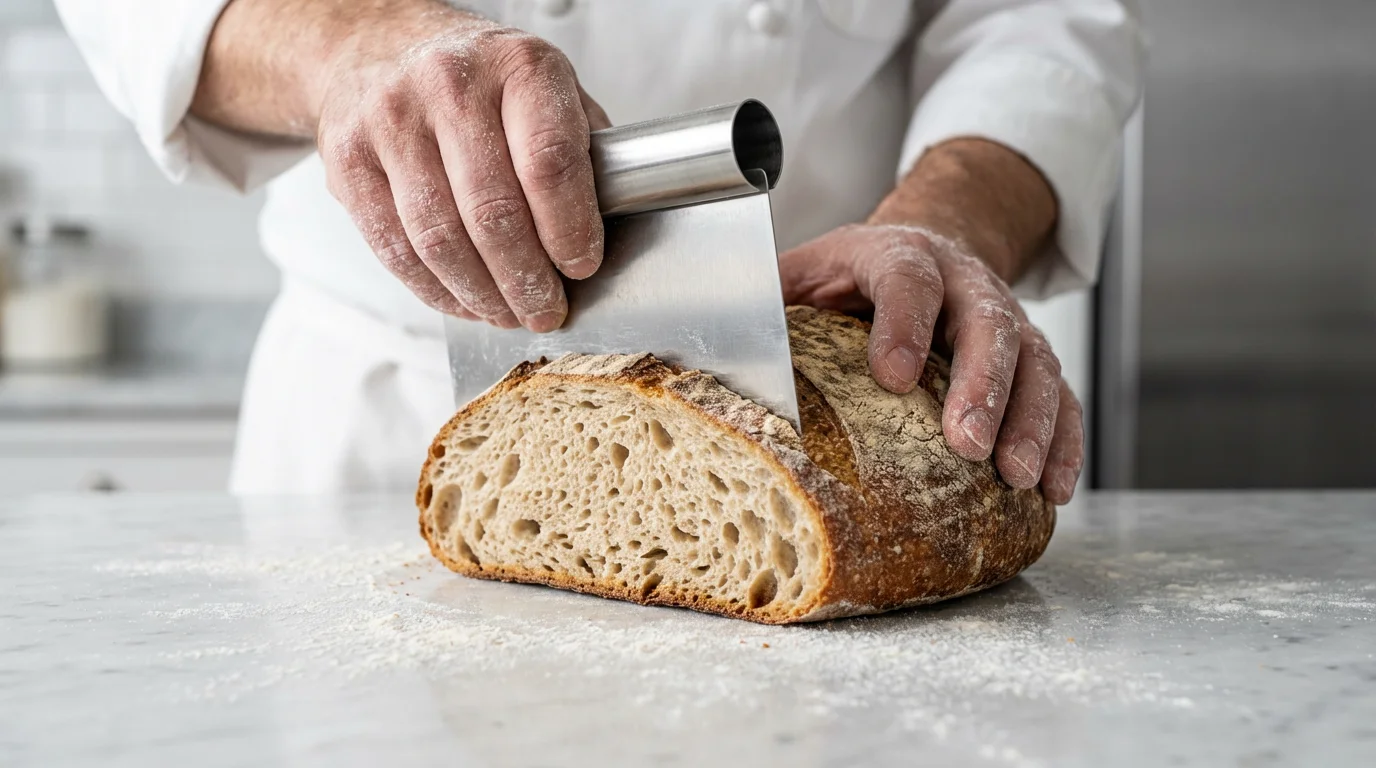
A bench scraper unlocks efficiency and precision in your baking. Here are practical techniques to master.
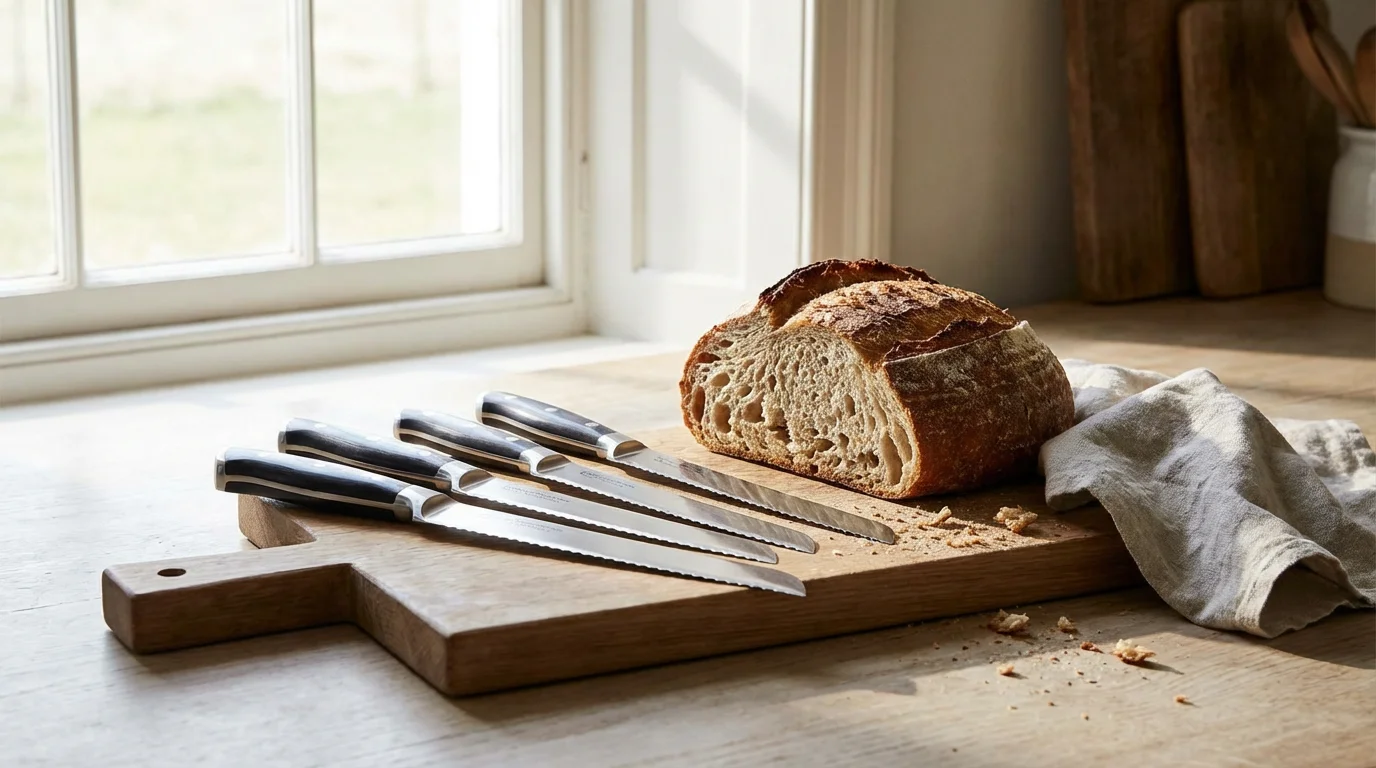
While a scraper handles the raw dough, you will need high-quality bread knives to slice through your finished crusty loaves.
1. Dough Division:
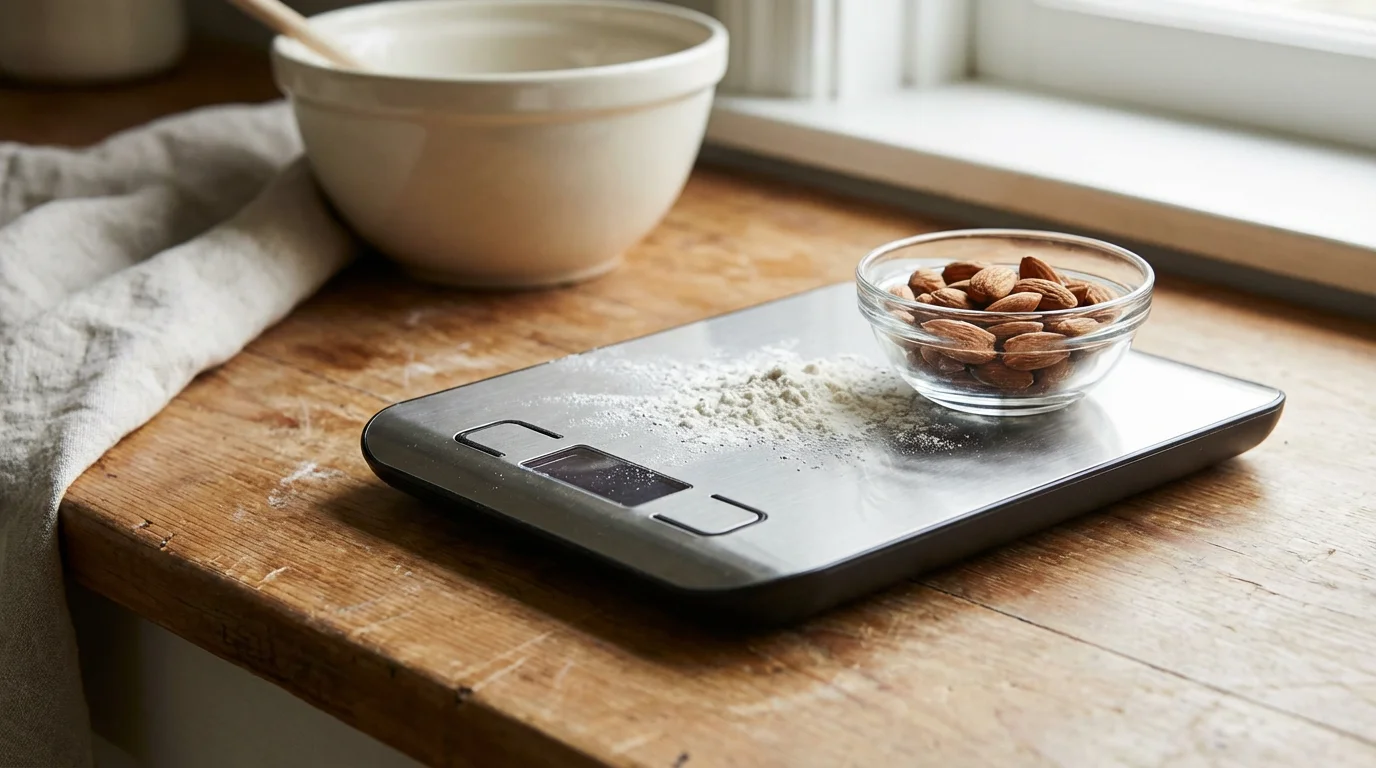
To achieve consistent results, accurately divide your dough. First, gently shape your bulk dough into a rough rectangle or log. Place the bench scraper on your work surface, ensuring the blade is perpendicular to the dough. Press down firmly and swiftly to cut through the dough. For highly accurate portions, use a kitchen scale to weigh each piece, adjusting as necessary with your scraper. For instance, if a recipe calls for twelve 80-gram rolls, you divide your dough into twelve equal parts using the scraper and scale, ensuring uniform proofing and baking.
2. Scraping and Cleaning:
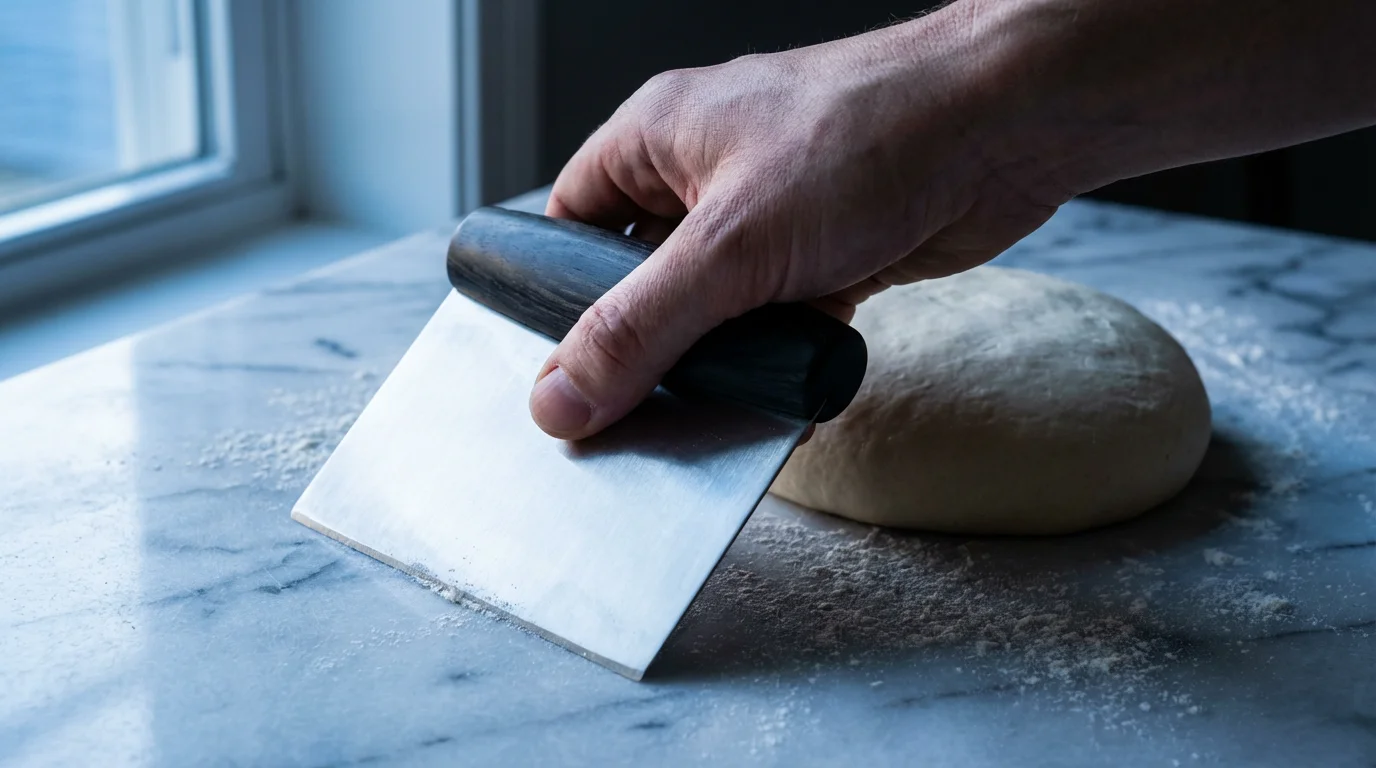
After kneading, sticky dough often adheres to your countertop. Hold the bench scraper at a low angle, almost parallel to the surface, and push it firmly across the counter. The sharp edge efficiently lifts even the most stubborn dough remnants. This technique is invaluable for maintaining a clean workspace, preventing flour and dough from accumulating and interfering with subsequent steps. You save significant time on cleanup after your baking is complete.
3. Lifting and Transferring:
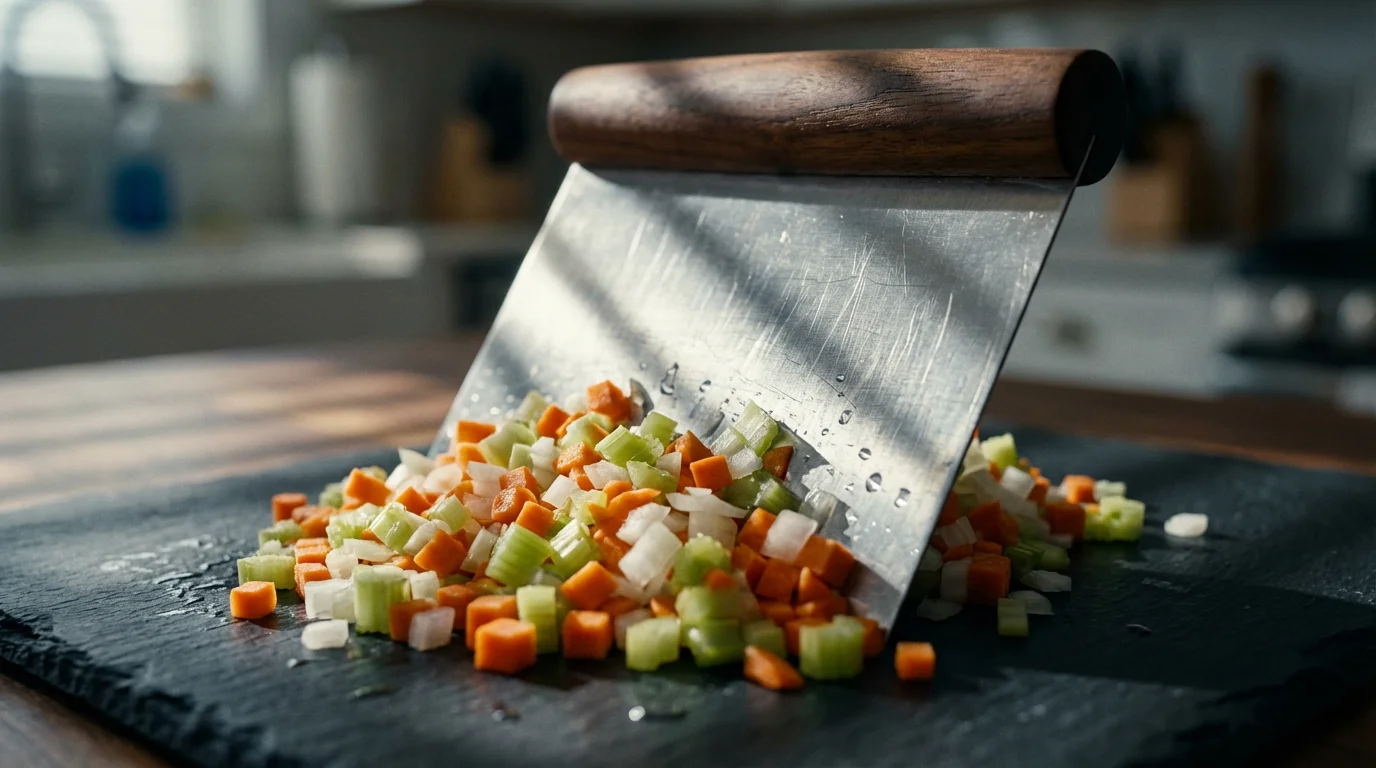
Use the broad, flat blade of the bench scraper to scoop and transfer ingredients. For example, after chopping vegetables, you can use the scraper to gather them quickly and slide them into a bowl or pan, much like a chef’s knife. In baking, it helps move delicate dough, like proofed brioche or focaccia, from your work surface to a baking sheet without stretching or tearing. This method preserves the air pockets you worked hard to develop.
4. Incorporating Add-ins:
When adding ingredients like chocolate chips, nuts, or dried fruit to dough, a bench scraper helps integrate them evenly without overworking the dough. Flatten your dough slightly, scatter the add-ins, then use the scraper to fold the dough over itself repeatedly, pressing gently to distribute the additions. This avoids crushing delicate ingredients and keeps your hands clean.
5. Shaping Bread Dough (French Fold/Stretch and Fold):
For bread dough, especially high-hydration types, the bench scraper becomes an extension of your hand. Instead of traditional kneading, many bakers use “stretch and fold” or “French fold” techniques. With sticky dough, you often use the scraper to lift an edge of the dough, stretch it upward, and fold it over itself. Rotate the dough and repeat. This method develops gluten gently and cleanly. America’s Test Kitchen often highlights such hands-off techniques for superior bread results, emphasizing tools like the bench scraper for managing sticky doughs without excess flour. America’s Test Kitchen frequently reviews and recommends kitchen equipment that supports these types of advanced but accessible baking methods.
“A good bench scraper is more than just a dough divider; it is an indispensable extension of the baker’s hands, making sticky dough manageable and cleanup a breeze. Prioritize a model with a comfortable grip and a sturdy blade.” — Professional Baker
Beyond Bread: Everyday Kitchen Uses for Your Scraper
While invaluable for baking, a bench scraper is a surprisingly versatile tool for everyday kitchen tasks. You might find yourself reaching for it far more often than you expect.
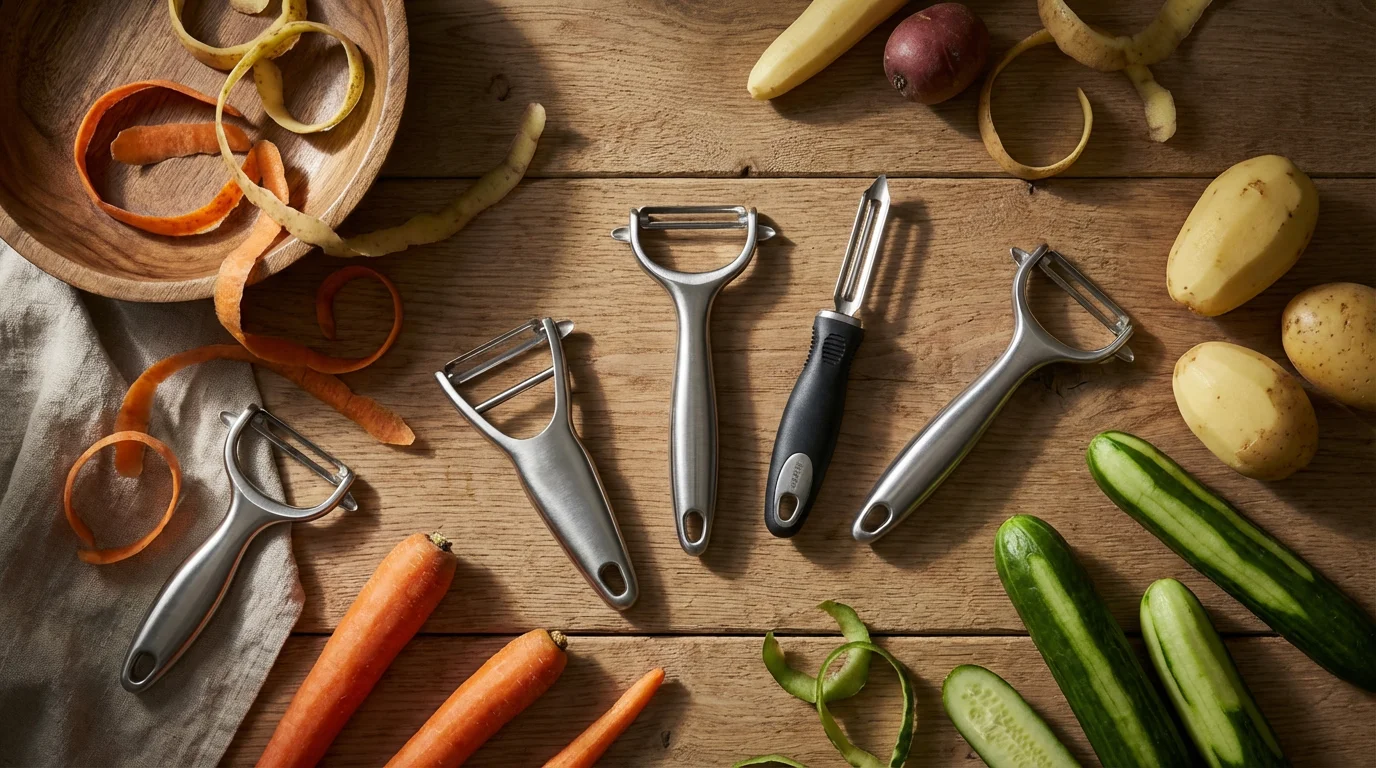
To speed up your mise en place even further, pair your scraper’s scooping ability with efficient vegetable peelers for faster skinning and dicing.
Chopping and Prepping:
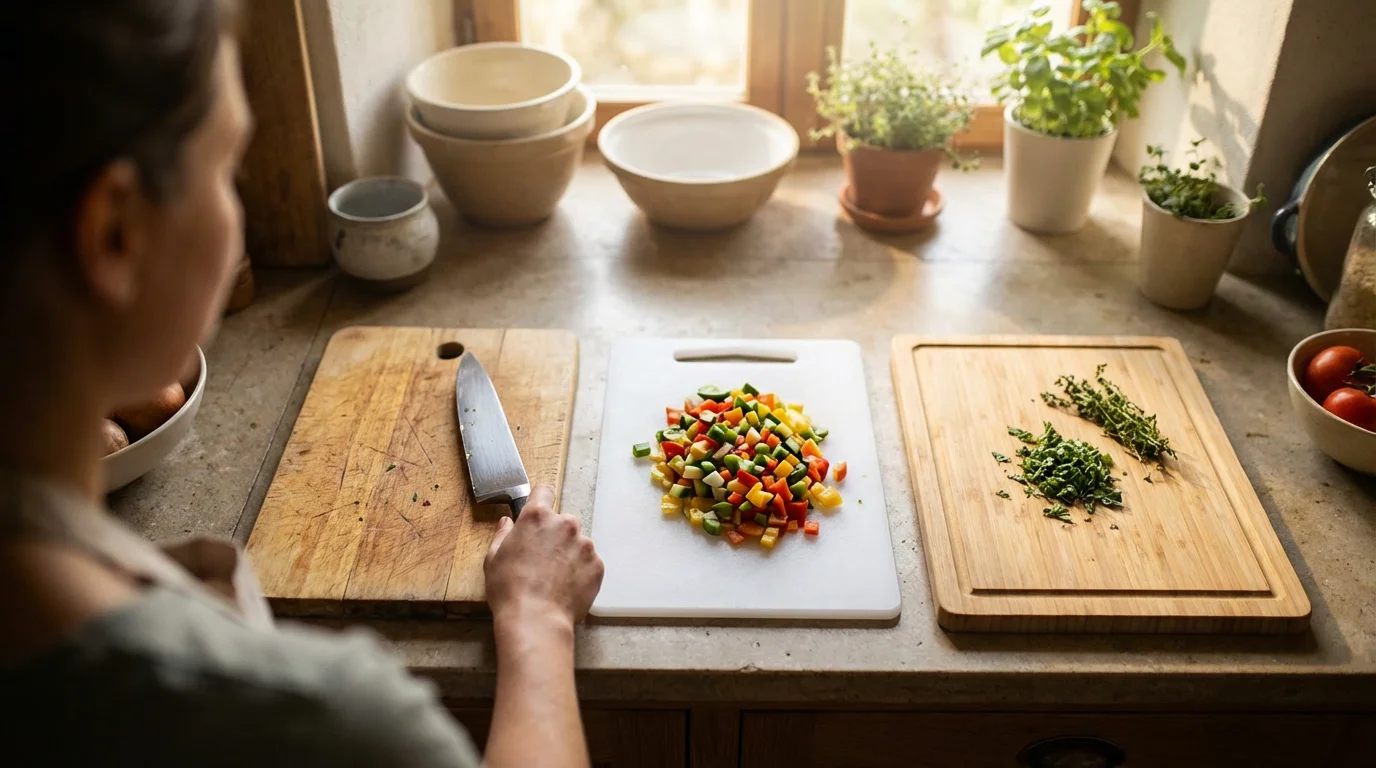
After dicing vegetables, such as onions, carrots, or celery for a mirepoix, use your bench scraper to gather all the pieces efficiently. Its wide, flat blade acts like a giant spatula, allowing you to scoop up large quantities of chopped items and transfer them directly into a pot, pan, or storage container. This minimizes spills and speeds up your mise en place – having all ingredients prepped and ready before cooking.
Grill and Griddle Cleaning:
For outdoor cooks, a sturdy metal bench scraper can tackle stuck-on food residues on a flat-top grill or griddle. After the surface cools slightly, use the scraper to push off burnt-on bits, making the final wipe-down much easier. Ensure your scraper is robust enough for this, as cheaper models might bend.
Pastry and Cookie Prep:
Beyond bread, use the scraper to cut butter into flour for pie crusts or biscuits, creating that flaky texture. It precisely cuts raw cookie dough into squares for bars or divides dough for various pastries. You get clean lines and uniform sizes, which contribute to even baking.
Cake Decorating:
A bench scraper excels at smoothing frosting on the sides of cakes. Hold it vertically against the cake’s side, and as you rotate the cake on a turntable, the scraper creates perfectly smooth, even layers of buttercream or ganache. Some scrapers even come with serrated edges for creating decorative patterns.
Spreading and Leveling:
Spread batters, fillings, or ganache evenly across pans or between cake layers. Its flat edge ensures a consistent thickness, important for desserts that require precise layers. This makes your finished product look more professional and appealing.
Choosing the Right Bench Scraper for Your Needs
Selecting the best bench scraper involves considering material, size, handle design, and additional features. Your specific baking habits and preferences guide this decision.
Material Matters:
For most bakers, a stainless steel bench scraper offers the best balance of durability, precision, and ease of cleaning. If you prioritize protecting delicate surfaces or frequently scrape bowls, a plastic scraper is a valuable secondary tool. Some very specialized scrapers might use carbon steel, but these are less common for general home use due to rust concerns.
Size and Blade Edge:
Standard scrapers are typically 6 inches wide and 3-4 inches high. This size provides ample surface area for scooping and dividing without being unwieldy. Ensure the blade edge is sharp enough to cut through dough cleanly, but not so sharp that it poses an unnecessary safety risk or easily damages your counter. A slightly beveled edge works well for both cutting and scraping.
Handle Ergonomics:
A comfortable, non-slip handle is crucial, especially if you spend extended periods baking. Look for handles made from rubberized plastic, silicone, or even well-shaped wood. They provide a secure grip, reducing the chance of accidental slips and minimizing hand fatigue. A handle that sits high enough above the blade prevents your knuckles from hitting the work surface.
Additional Features:
Measurement markings are a practical addition for precise portioning. Some scrapers feature a ruler etched along the bottom edge of the blade, which eliminates the need for a separate measuring tool. Consider whether these extra features add genuine value for your baking style or if they are simply unnecessary additions.
Here is a comparison of common bench scraper features:
| Feature | Stainless Steel Scraper | Plastic Scraper | Ergonomic Handle | Measurement Markings |
|---|---|---|---|---|
| Material | Food-grade stainless steel | Durable, food-grade plastic or nylon | Rubber, silicone, or wood over metal/plastic | Etched or printed on blade |
| Primary Use | Dough division, heavy-duty scraping, general prep | Bowl scraping, delicate dough, surface protection | Comfort for prolonged use, improved grip | Precise dough portioning |
| Durability | High, resistant to wear and rust | Moderate, can dull or stain over time | Adds to overall tool longevity if well-made | Does not affect physical durability |
| Maintenance | Dishwasher-safe (most) | Dishwasher-safe (most) | Varies (some hand-wash for wood) | No special maintenance |
| Cost | Moderate to high | Low to moderate | Adds to cost | Adds slightly to cost |
| Pros | Sharp edge, strong, versatile | Gentle, flexible, affordable | Reduces hand fatigue, secure grip | Ensures consistent portion sizes |
| Cons | Can scratch surfaces, less flexible | Less effective for cutting, prone to staining | Can be bulkier, sometimes higher price | Markings can fade on some models |
Maintaining Your Bench Scraper for Longevity and Safety
Proper care of your bench scraper ensures it remains effective and safe for years. The maintenance routine is straightforward but important.
Cleaning:
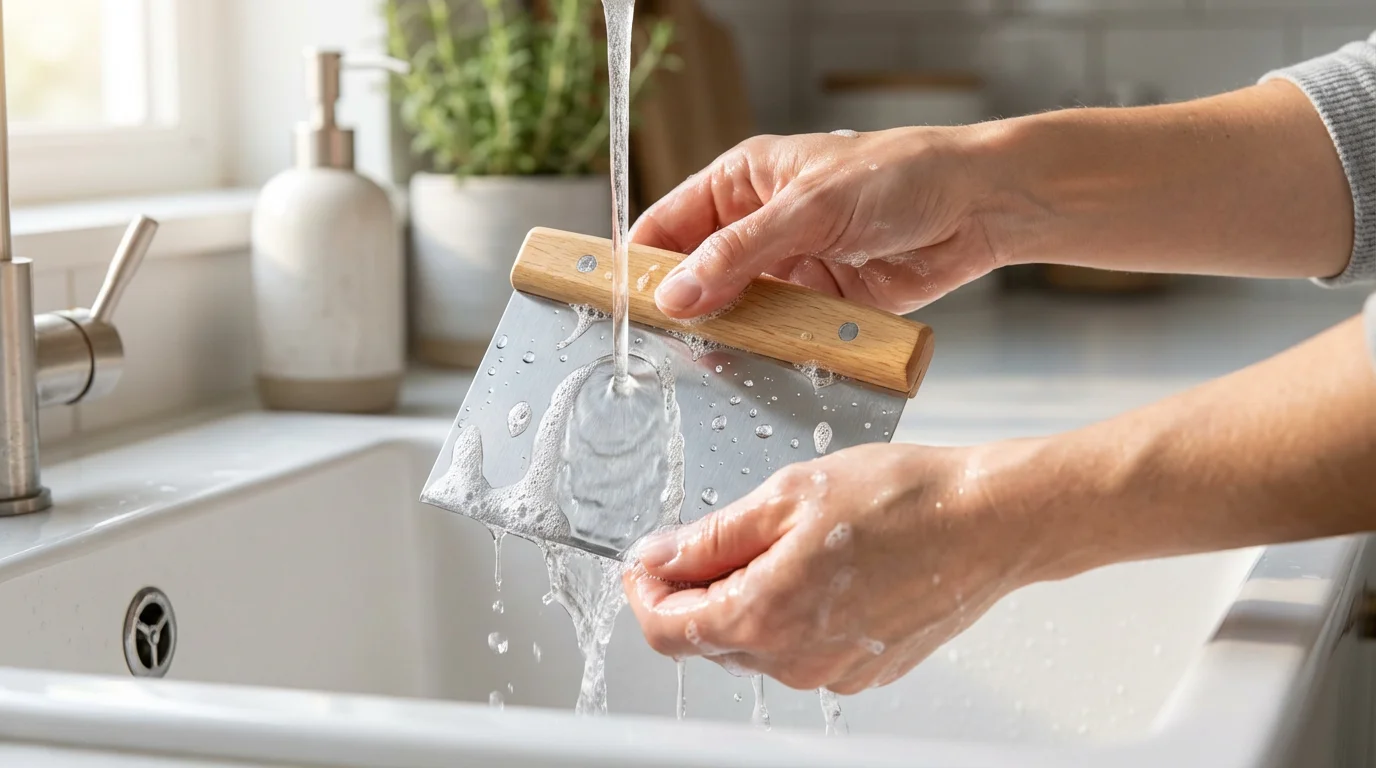
Immediately after use, wash your bench scraper. For stainless steel models, a quick wash with warm, soapy water usually suffices. Most stainless steel and plastic bench scrapers are dishwasher-safe, offering maximum convenience. However, if your scraper has a wooden handle, hand-washing is essential to prevent the wood from drying, cracking, or splintering. Always dry your scraper thoroughly to prevent water spots on stainless steel or to protect wooden handles from moisture damage. For sticky residues, a stiff brush helps remove lingering dough.
Storage:
Store your bench scraper safely to protect both the tool and your hands. Avoid tossing it into a drawer full of other utensils where its sharp edge could cause injury or become damaged. Many bakers prefer to hang their scrapers from a magnetic strip or a hook. Alternatively, store it in a dedicated slot in a utensil holder or a drawer organizer where its blade is protected. Proper storage prevents dulling of the edge and keeps it ready for your next baking project.
Blade Maintenance:
While a bench scraper does not require sharpening in the same way a knife does, inspect its edge periodically. If you notice nicks or a significantly dulled edge on a metal scraper, it might be time for a replacement. For plastic scrapers, excessive wear or a softened edge diminishes their effectiveness. Serious Eats often emphasizes the importance of proper tool care to extend their lifespan, a principle that applies even to simple tools like the bench scraper. Serious Eats’ equipment reviews frequently cover maintenance tips for various kitchen tools.
Ergonomics and Comfort in Bench Scraper Design
Ergonomics plays a significant role in kitchen tool design, impacting comfort, efficiency, and safety. A well-designed bench scraper minimizes hand fatigue and provides a secure grip, especially important during prolonged baking sessions.
Handle Shape and Material:
The shape and material of the handle dictate how comfortably the scraper rests in your hand. Look for handles that are broad enough to fill your palm, providing leverage without straining your fingers. Many high-quality scrapers feature contoured handles made from soft-touch materials like silicone or textured rubber. These materials offer superior grip, even when your hands are slightly damp or floured, reducing the risk of slipping. A handle with sufficient clearance between your knuckles and the work surface also prevents chafing and discomfort.
Weight and Balance:
The overall weight and balance of the bench scraper affect its usability. A well-balanced scraper feels natural in your hand, allowing you to apply pressure evenly without excessive effort. While stainless steel scrapers are generally heavier than plastic ones, the distribution of that weight matters. A scraper that feels too top-heavy or bottom-heavy can lead to awkward movements and increased hand strain over time.
User Feedback and Testing:
Reputable kitchen equipment reviewers, such as Wirecutter, frequently evaluate kitchen tools based on user comfort and ergonomic design. They conduct extensive testing to determine how various tools perform in real-world scenarios, noting aspects like handle comfort during repetitive tasks. Consulting their findings helps you choose a scraper that prioritizes user experience. You can find detailed reviews and recommendations for kitchen tools, including those used in baking, from sources like Wirecutter.
For individuals with arthritis or other hand-related conditions, choosing a scraper with an exceptionally comfortable, non-slip, and ergonomically shaped handle is paramount. Investing a little more in a tool that prevents discomfort pays dividends in baking enjoyment and reduced physical strain.
Top Bench Scraper Recommendations for Every Baker
Selecting the ideal bench scraper depends on your baking frequency, specific tasks, and budget. Here are some categories to help you choose:
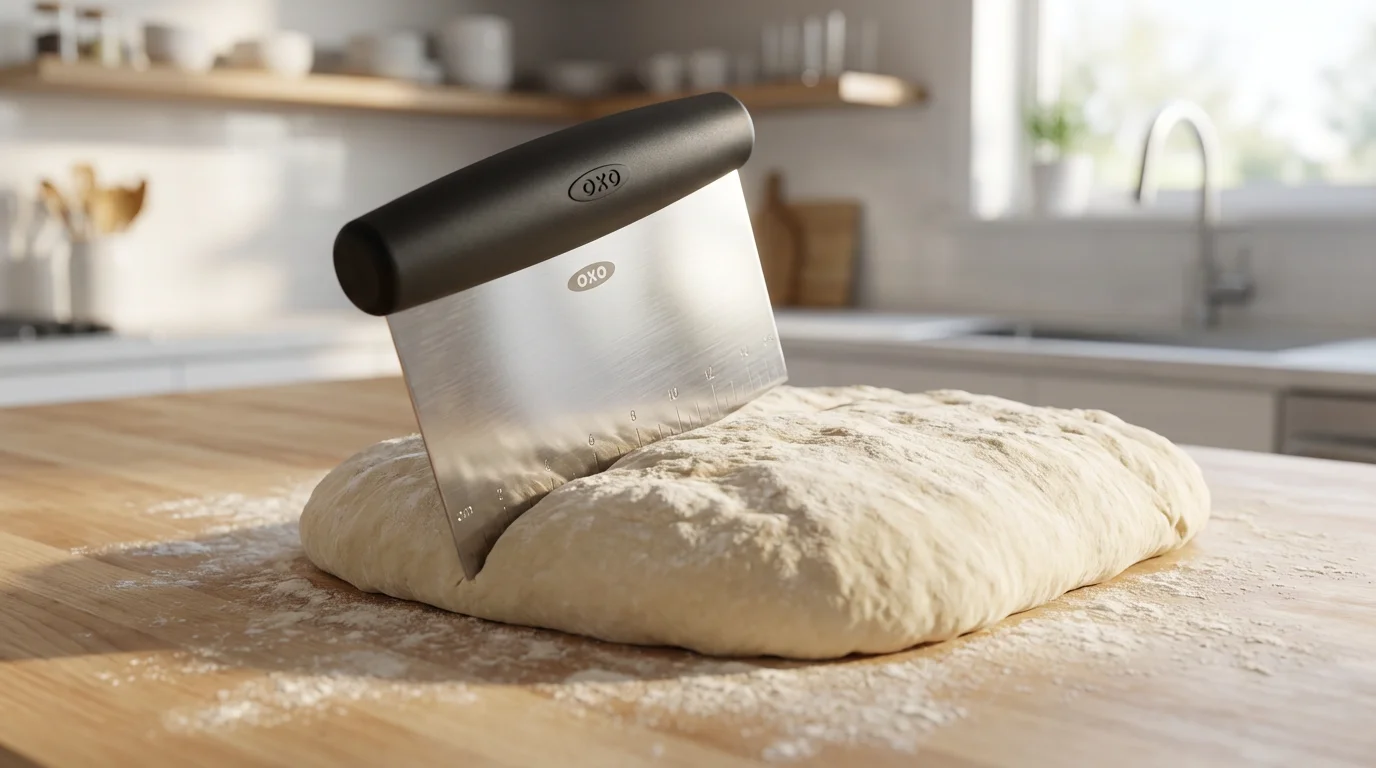
Best for Beginners: The OXO Good Grips Multi-purpose Scraper & Chopper
This stainless steel scraper features a comfortable, non-slip handle that is easy to grip, even with flour-dusted hands. It includes measurement markings, aiding new bakers in precise dough division. Its sturdy construction withstands regular use, and it is dishwasher-safe, simplifying cleanup. This model offers an excellent balance of functionality, comfort, and value, making it an unintimidating first bench scraper.
Best for Serious Bakers: The Ateco Stainless Steel Bench Scraper
Known for its robust construction, the Ateco scraper is a favorite among professional and serious home bakers. It features a heavy-gauge stainless steel blade and a sturdy, riveted handle that provides a secure grip. While it lacks measurement markings, its exceptional durability and effectiveness in cutting through tough doughs make it a reliable workhorse. This scraper delivers consistent performance for high-volume or intensive baking projects, standing up to rigorous daily use.
Best Value Option: Norpro Grip-EZ Scraper/Chopper
The Norpro Grip-EZ offers a strong stainless steel blade and a comfortable, ergonomic handle at an accessible price point. It performs admirably for most standard baking tasks, including dough division and counter scraping. While it may not have the premium finish of higher-priced models, it provides excellent utility and durability for its cost. This is a smart choice for bakers seeking a reliable tool without a significant investment.
Best for Delicate Doughs and Bowls: Flexible Plastic Dough Scrapers (e.g., from King Arthur Baking)
While not a traditional “bench scraper,” a flexible plastic dough scraper is an essential companion. These soft, pliable tools excel at scraping down mixing bowls, ensuring no dough is wasted, and for gently folding or turning very sticky, high-hydration doughs without damaging the gluten structure. They are also ideal for cleaning delicate countertops or wooden surfaces where a metal blade might scratch.
Remember, the best bench scraper for you aligns with your personal baking style and the types of recipes you create. Many experienced bakers own both a sturdy metal scraper for heavy tasks and a flexible plastic one for lighter work and bowl cleaning.
Frequently Asked Questions
What is the difference between a bench scraper and a dough cutter?
There is no practical difference between a bench scraper and a dough cutter. The terms are interchangeable and refer to the same multi-purpose kitchen tool: a flat, rectangular blade with a handle used primarily for baking tasks like dividing dough, scraping surfaces, and transferring ingredients. The name often reflects its most common usage.
Can I use a bench scraper on any countertop material?
You can use a bench scraper on most durable countertop materials such as granite, quartz, or stainless steel without concern. However, exercise caution on softer surfaces like wood, laminate, or certain synthetic materials, as a metal bench scraper could scratch or dent them. For these delicate surfaces, a plastic bench scraper offers a safer alternative, preventing potential damage.
How do I keep my dough from sticking to the bench scraper?
To prevent dough from sticking to your bench scraper, lightly dust the blade with flour before using it. You can also lightly oil the blade, especially when working with very sticky or high-hydration doughs. Keeping your scraper clean and wiping it down between uses also minimizes stickiness. For highly adhesive doughs, work quickly and confidently, as hesitation can allow more adhesion.
Is a bench scraper dishwasher-safe?
Most stainless steel and plastic bench scrapers are dishwasher-safe. Always check the manufacturer’s instructions for specific care recommendations. If your bench scraper has a wooden handle, it is best to hand-wash it to prevent the wood from drying, cracking, or warping due to harsh dishwasher detergents and high heat. Hand-washing and immediate drying extend the life of wooden components.
Beyond baking, what other uses does a bench scraper have?
Beyond baking, a bench scraper is excellent for gathering chopped vegetables, herbs, or other ingredients from your cutting board, efficiently transferring them to a pot or bowl. It also effectively scrapes sticky residues off countertops, cuts brownies or bar cookies into neat portions, and even smooths frosting on cakes. Its flat, sturdy blade makes it a surprisingly versatile cleaning and prep tool.
Disclaimer: Product prices and availability change frequently. Prices shown were accurate at time of writing but may have changed. We may earn a small commission from purchases made through links on this site, at no extra cost to you. Always use cutting tools carefully and follow manufacturer safety guidelines.

Leave a Reply