
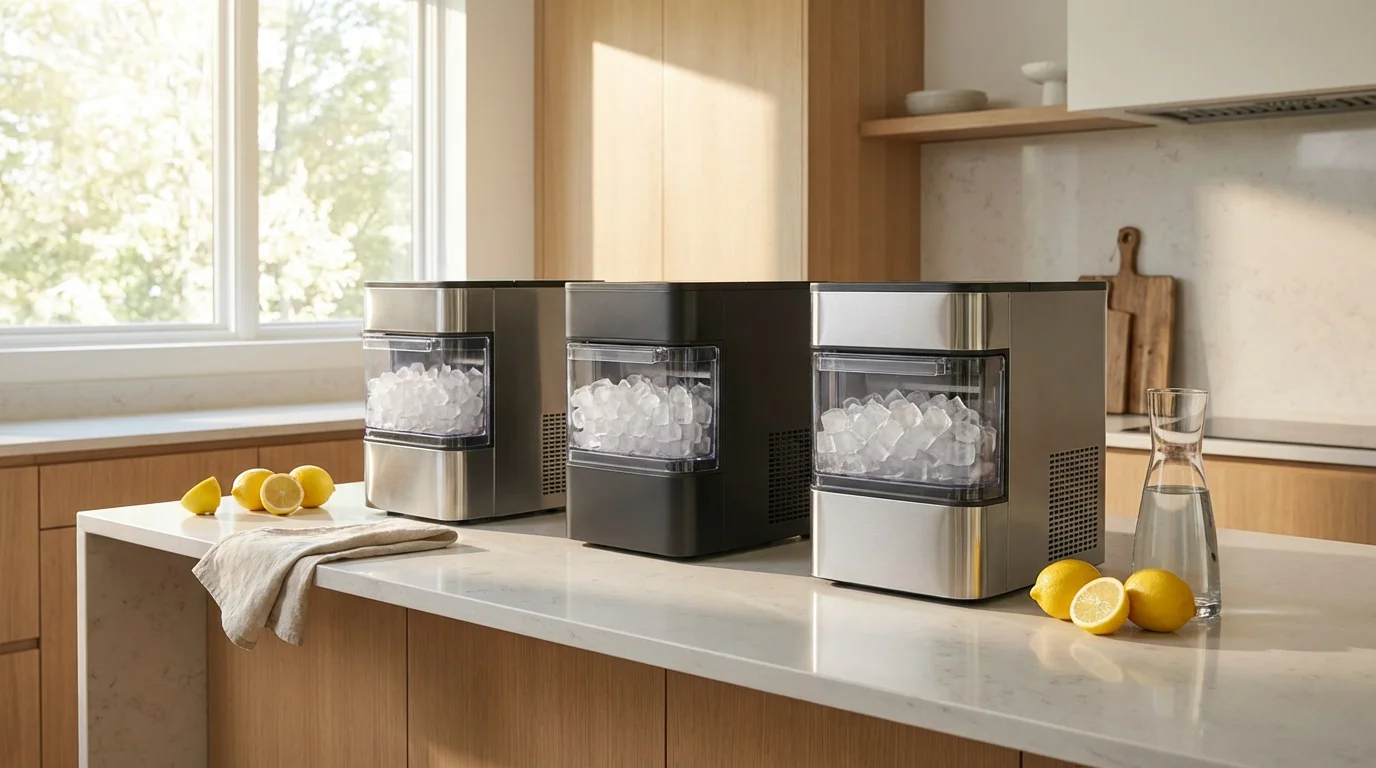
A constant supply of fresh ice transforms your home beverage experience. Whether you host frequently, enjoy chilled drinks daily, or simply want to avoid refilling ice trays, a quality countertop ice maker offers unparalleled convenience. These compact appliances deliver a steady stream of ice without requiring a dedicated water line, making them ideal for kitchens, home bars, RVs, and even offices. This guide helps you navigate the options, focusing on practicality, performance, and how each model fits your specific needs.
While many homeowners focus on popular additions like air fryers, a dedicated ice maker is an equally transformative tool for modern kitchens.
You often find your freezer’s ice bin running low at the worst possible moment: mid-party, during a heatwave, or when you crave that perfectly chilled afternoon refreshment. Countertop ice makers solve this problem by providing on-demand ice, ensuring you never face an empty ice bucket again. They also free up valuable freezer space, which can be particularly beneficial in smaller kitchens or for households that rely heavily on frozen goods. Beyond mere convenience, these machines introduce you to different types of ice, elevating your everyday drinks and making your home bar genuinely impressive. From the classic bullet shape to the coveted chewable nugget, your perfect ice is within reach.
Why Choose a Countertop Ice Maker?
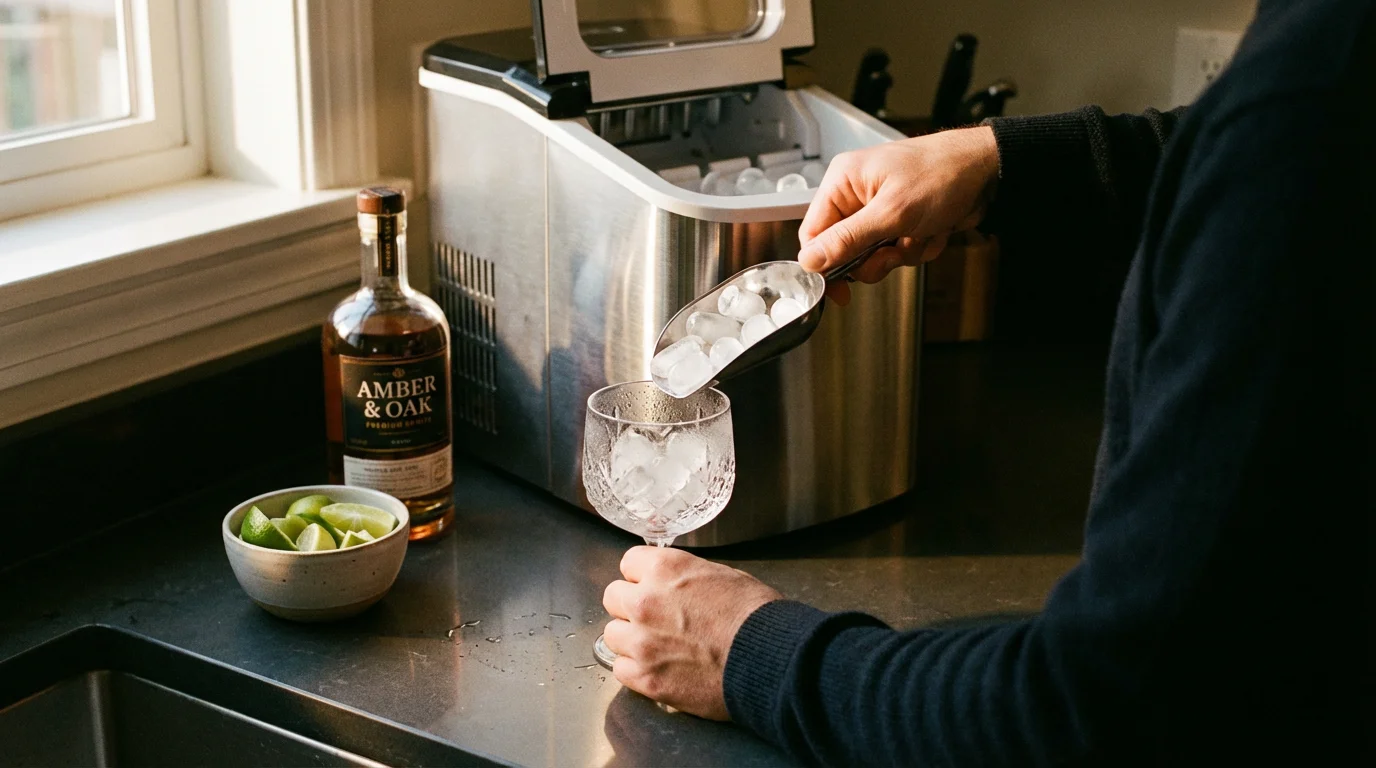
Modern living demands convenience, and a countertop ice maker delivers precisely that. You no longer need to worry about ice running out during parties, struggling with stubborn ice trays, or making last-minute trips to the store for bags of ice. These portable ice makers free up freezer space, which is often at a premium, and provide ice on demand. This makes them perfect for entertaining, enjoying cold beverages on a hot day, or upgrading your home bar experience. Imagine never running out of ice for your favorite cocktails or smoothies again; that is the core promise of these appliances.
This convenience pairs well with other breakfast essentials, like electric griddles, for a seamless hosting experience.
As Wirecutter consistently emphasizes in their kitchen reviews, an appliance earns its keep when it solves a real problem and sees regular use. A reliable countertop ice maker addresses the common frustration of insufficient ice, especially for homes that lack a built-in refrigerator ice dispenser or for those who simply consume more ice than a standard freezer can produce efficiently. Consider these scenarios: hosting a summer barbecue, preparing daily iced coffee, or mixing craft cocktails for friends. In each instance, an immediate, abundant supply of fresh ice significantly enhances the experience. These machines are also incredibly versatile. Their portability means you can use them in your kitchen, move them to your patio for outdoor entertaining, take them to a holiday gathering, or even use them in an RV or boat. This flexibility makes them a smart investment for diverse lifestyles.
Understanding Ice Types: Bullet, Nugget, and Clear
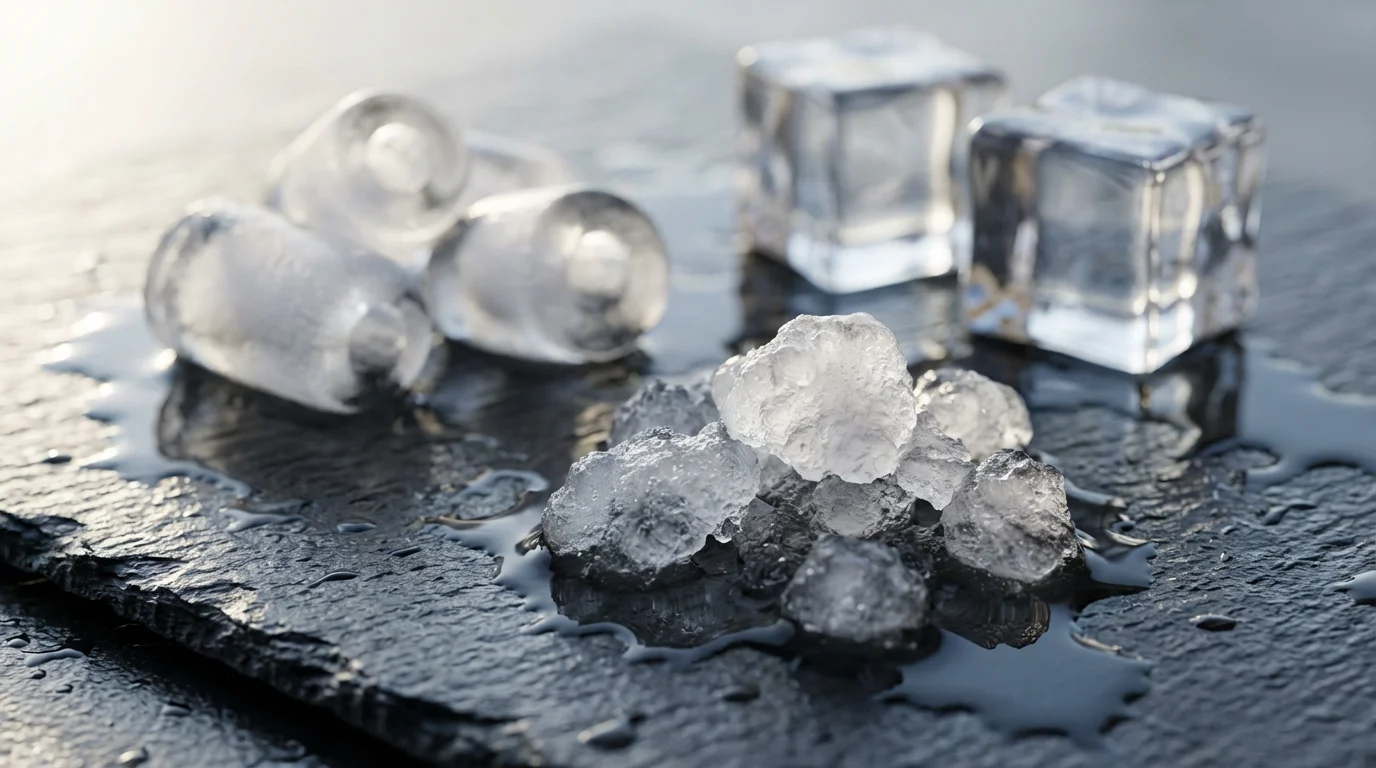
Not all ice is created equal. Countertop ice makers typically produce three main types, each with unique characteristics that might appeal to different users:
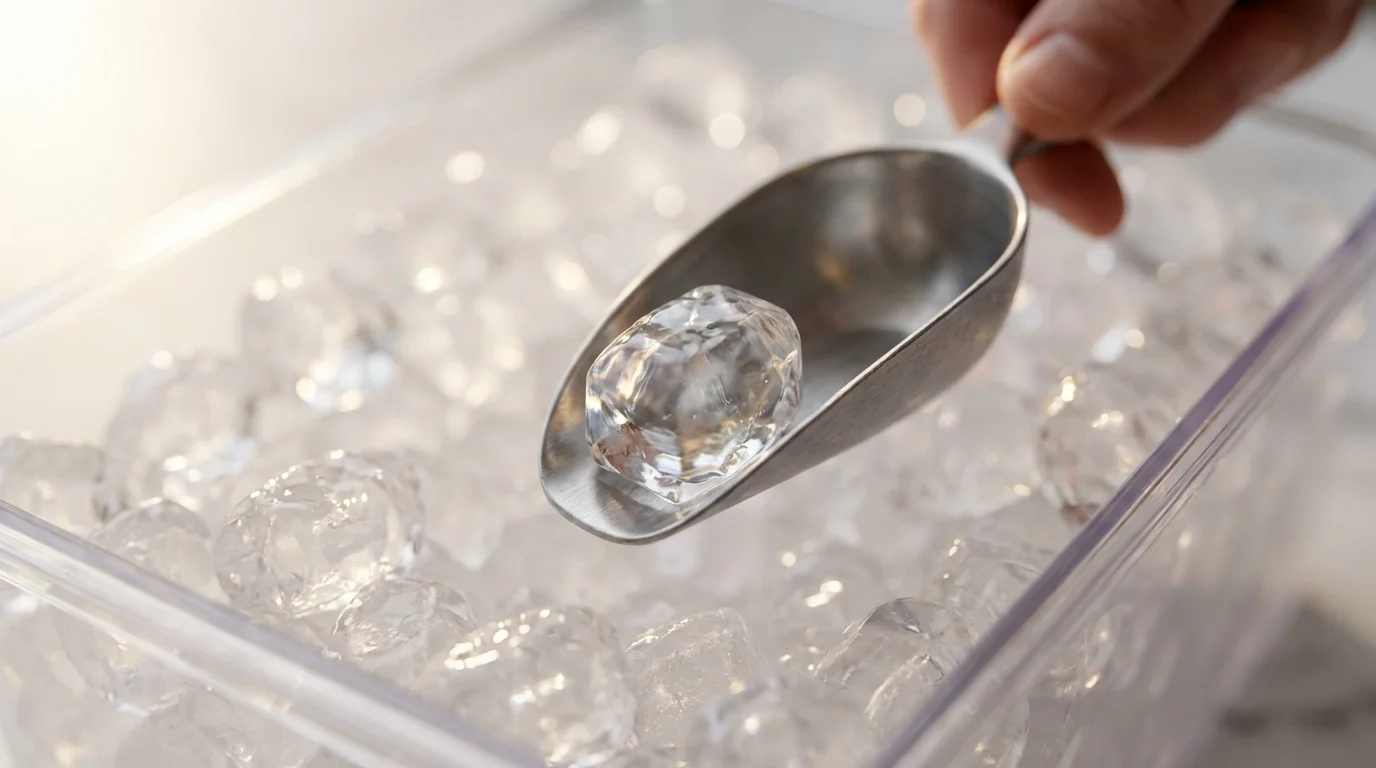
- Bullet Ice: This is the most common type produced by portable ice makers. Bullet ice has a hollow, thimble-like shape. It melts relatively quickly but chills drinks efficiently and fits easily into most glass types. Its soft texture also makes it easy to chew, a favorite for many. Most entry-level and mid-range countertop ice makers produce bullet ice. Because of its shape, bullet ice works well in blenders, easily crushing for smoothies or frozen drinks without over-taxing the motor. It also displaces liquid effectively, making your beverage appear fuller.
- Nugget Ice (or “Sonic Ice”): Highly sought after, nugget ice consists of small, chewable, soft pellets. It absorbs drink flavors well and provides excellent chilling without diluting beverages too rapidly. This type of ice is popular in restaurants and cafes, particularly for soft drinks and iced coffee, where its chewable texture adds to the enjoyment. Nugget ice makers often command a higher price point due to their specialized production mechanism but offer a premium experience for enthusiasts who prioritize this specific ice texture. For many, once you experience nugget ice, it is difficult to go back to standard cubes.
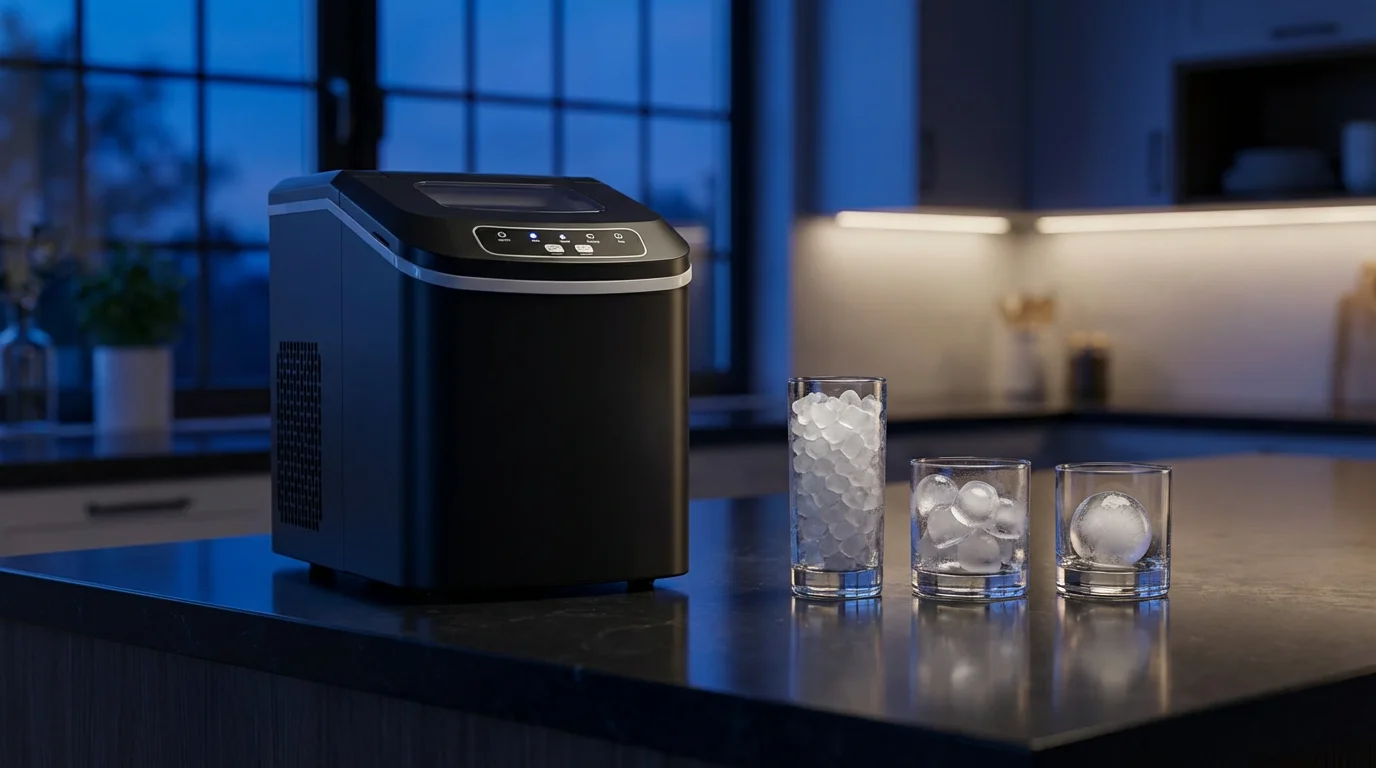
- Clear Ice: Unlike the cloudy ice you often get from standard freezers, clear ice is dense and melts much slower, minimizing drink dilution. It also looks more elegant, making it ideal for cocktails and spirits where presentation and taste purity are paramount. Producing clear ice requires a specific freezing process that eliminates impurities and air bubbles, resulting in a purer, more visually appealing product. Clear ice makers are typically more expensive and may have a slightly slower production rate than bullet ice machines, but they deliver superior quality for connoisseurs who appreciate the subtleties of a well-crafted drink. This ice type truly elevates a home bar.
“The type of ice an appliance produces drastically affects your drink experience. For serious cocktail enthusiasts, clear ice is non-negotiable. For everyday use, bullet or nugget ice offers excellent versatility, but nothing beats that soft chew of a true nugget.”
Key Features for Your Ideal Ice Maker
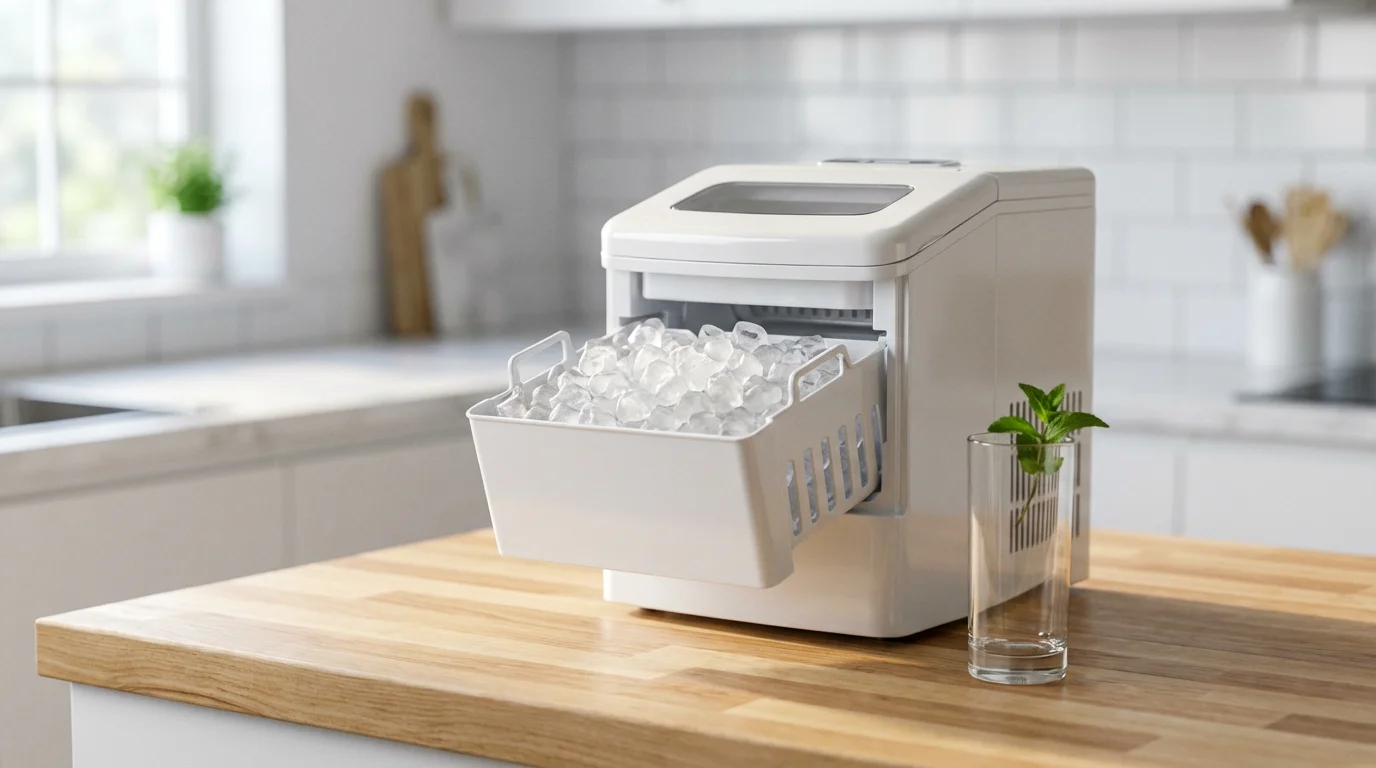
Choosing the best countertop ice maker involves considering several critical features that impact performance, convenience, and how well the unit integrates into your kitchen space.
Just as you would check a food processor’s size before buying, measuring your counter clearance for an ice maker is a vital first step.
Production Rate and Capacity
The production rate tells you how many pounds of ice the machine can make in a 24-hour period. Most portable ice makers produce between 26 and 40 pounds of ice daily. Consider your household’s ice consumption:
- 26-30 lbs/day: Sufficient for a small household (1-2 people) or occasional use, like weekend entertaining or daily iced tea for one. This category delivers convenience without excessive capacity.
- 30-40 lbs/day: Ideal for families (3-4 people), frequent entertaining, or home bars. This range ensures you keep up with demand during events or provide ample ice for a family’s daily needs, including sports bottles and coolers.
- Over 40 lbs/day: Best for large gatherings, heavy daily use, or commercial-like demands. If you host parties weekly or have a large family of ice connoisseurs, this higher output prevents any ice shortages.
The ice basket capacity, typically measured in pounds, indicates how much ice the machine holds at one time before you need to transfer it to your freezer or use it. A larger basket means less frequent emptying, which is particularly useful during parties. For example, a 3-pound ice basket allows for a good buffer of ice before you need to scoop it out. The water reservoir capacity, usually measured in liters or quarts, determines how much water the machine holds for ice production. A larger reservoir translates to more ice production between refills. A 2.5-liter (approximately 2.6-quart) reservoir will produce significantly more ice than a 1.5-liter reservoir before you need to add water again, saving you time and effort.
Size and Footprint
Counter space is often precious real estate in any kitchen. Before you buy, measure the available space precisely, considering depth, width, and height. Common dimensions for countertop ice makers range from approximately 10-12 inches wide, 14-16 inches deep, and 12-15 inches high. Nugget ice makers or those with higher daily production rates might be slightly larger. For example, a popular nugget ice maker might be 13.5 inches wide by 16.5 inches deep, significantly larger than a compact bullet ice maker. Ensure you have ample clearance, at least 4-6 inches, around the unit for proper ventilation. Blocking vents can cause the machine to overheat, reduce efficiency, and shorten its lifespan.
Water Source and Drainage
Most portable ice makers require manual refilling of the water reservoir. This design enhances their portability, as you can place them anywhere you have an electrical outlet. Some advanced models, typically higher-end nugget or clear ice makers, offer the option to connect directly to a water line, providing a continuous supply. This eliminates the need for manual refills but sacrifices the appliance’s portability. For draining, many models feature a conveniently placed drain plug at the bottom or side, allowing for easy water removal during cleaning or storage.
Noise Level
Ice makers, like many small appliances, generate some noise. This usually comes from the compressor, fan, and the sound of ice dropping into the basket. Manufacturers rarely provide specific decibel (dB) ratings, but user reviews often mention noise levels. Look for models described as “quiet” or “low noise” if you plan to use it in an open-concept kitchen, an office, or a home bar where conversations happen. Generally, models producing less than 50 dB are considered quiet enough for most kitchens without being disruptive. The dropping of ice, particularly into an empty basket, can be the most noticeable sound. Some models feature dampening mechanisms to reduce this impact noise.
Cleaning and Maintenance
Regular cleaning prevents mold, mildew, and mineral buildup, ensuring fresh-tasting ice and prolonging your machine’s lifespan. Look for features like a self-cleaning function, which typically involves running a cycle with water and sometimes a cleaning solution. This automates part of the cleaning process, saving you time. Easy-to-access reservoirs and drain plugs simplify manual cleaning, allowing you to thoroughly wipe down internal surfaces. Using filtered water significantly reduces mineral buildup, which is a primary cause of reduced efficiency and potential machine failure.
Smart Features and Controls
Convenient features enhance user experience. Most ice makers include indicator lights for “add water” or “ice full,” preventing guesswork. Digital displays provide clear information on the machine’s status. Some models offer programmable timers, allowing you to set the machine to start ice production before you need it. Different ice size options (small, medium, large bullet ice) cater to personal preference. Wi-Fi connectivity and app control are emerging features on premium models, allowing you to monitor and start ice production remotely, a valuable feature if you are preparing for guests while still out of the house.
How Fast Do Portable Ice Makers Work?
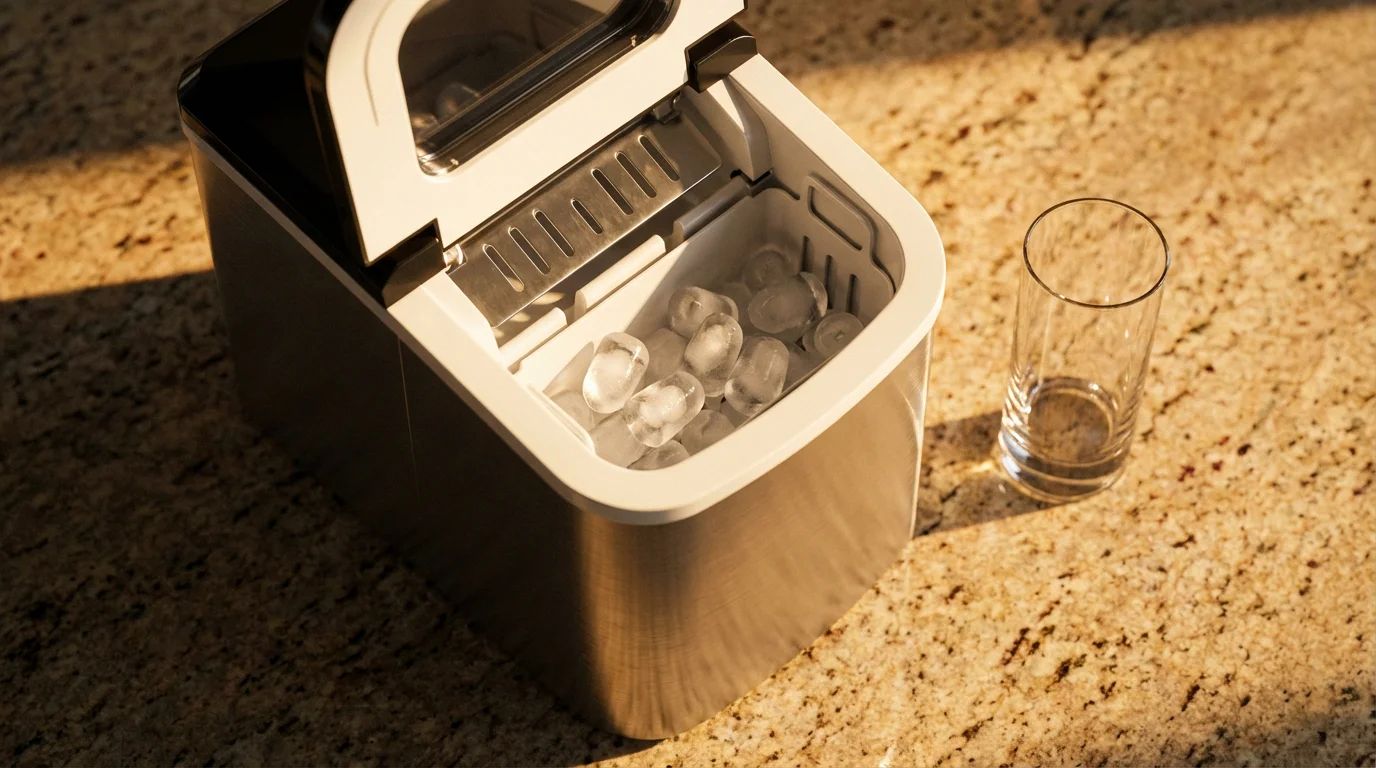
A crucial question for anyone considering a countertop ice maker is, “How fast do portable ice makers work?” The speed at which an ice maker produces its first batch of ice varies significantly by model, type of ice, and the ambient temperature of your kitchen. Generally, most bullet ice makers produce their first batch of ice in about 6 to 10 minutes. This rapid initial production makes them incredibly convenient for last-minute needs, like quickly chilling an unexpected guest’s drink or making a pitcher of iced tea. Factors like the efficiency of the compressor, the insulation of the unit, and the initial water temperature all influence this speed. Cold water and a cool room reduce the time required.
Speed is a hallmark of modern kitchen tech, much like how electric kettles provide boiling water almost instantly.
After the first batch, the machine continues to produce ice at a steady rate, typically completing a full basket within an hour or two, depending on its capacity. Nugget ice makers often take slightly longer for the first batch, usually 15-20 minutes, because their mechanism is more complex, involving the compression of ice flakes. Clear ice makers also tend to have a longer initial production time, sometimes 20-30 minutes, due to the slower freezing process required to achieve crystal clarity and purity. This deliberate process eliminates air bubbles and impurities, making a denser, slower-melting ice.
The wattage, which measures how much power an appliance uses, plays a role in speed. Higher wattage often correlates with faster ice production, though efficiency in design also contributes significantly. For instance, a 120-watt portable ice maker will generally make ice faster than an 80-watt model, assuming comparable design and insulation. However, a higher wattage does not automatically mean higher quality ice; it primarily indicates the power dedicated to the freezing cycle. Understanding these timeframes helps you manage expectations and choose a model that aligns with your immediate ice needs.
Top Picks for Different Needs
Identifying the “best” ice maker depends entirely on your specific requirements. Here are our top recommendations tailored to common user scenarios:
Rounding out your kitchen with automated tools like egg cookers can save you even more time during busy mornings.
Best for Home Bars: Frigidaire EFIC108-RED Compact Ice Maker
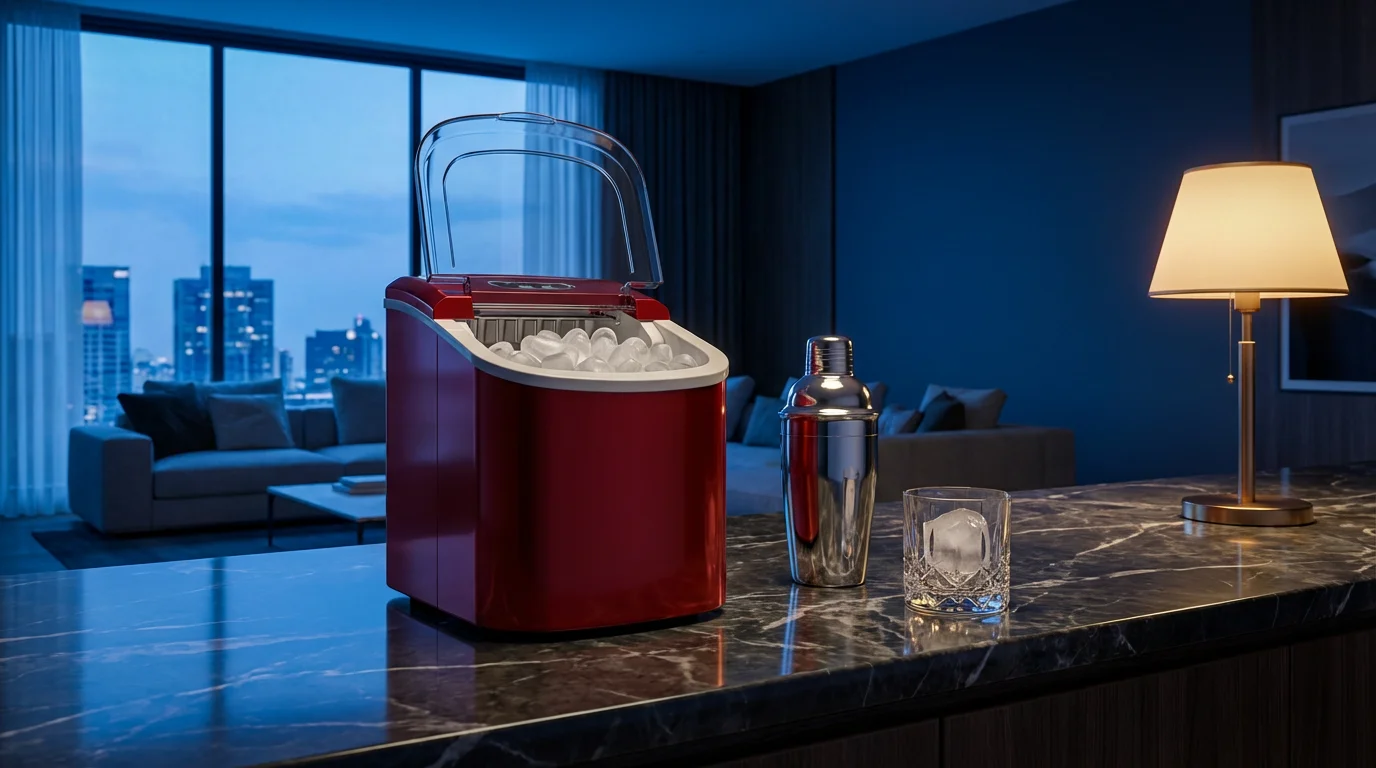
For your home bar, you need speed, style, and consistent bullet ice that fits perfectly into cocktail glasses. The Frigidaire EFIC108-RED is a fantastic choice, consistently ranking high for reliable performance and aesthetic appeal. It produces up to 26 pounds of bullet ice daily, with its first batch ready in as little as 6 minutes. Its compact footprint, approximately 11 inches wide, 15 inches deep, and 14.5 inches high, allows it to sit discreetly on your bar cart or countertop without dominating the space. It comes in various colors, like a vibrant red or sleek black, adding a touch of personality to your setup. Its 1-gallon (approximately 3.7-liter) water reservoir minimizes refills, ensuring your drinks stay cold throughout the evening without constant attention. The intuitive controls make operation simple, even when you are busy mixing drinks.
Best for Small Kitchens and Portability: Igloo ICEB26SS Automatic Portable Ice Maker
When counter space is at a premium and you value the ability to move your appliance, the Igloo ICEB26SS is an excellent option. This compact bullet ice maker measures roughly 9.5 inches wide, 14 inches deep, and 13 inches high, making it one of the most space-efficient models available. Its 26-pound daily capacity is excellent for a single person, a couple, or occasional small gatherings. The first batch of ice is ready in about 7 minutes, providing quick access to ice when you need it. Its lightweight design, around 18-20 pounds, enhances its portability, making it ideal for RVs, dorms, small apartments, or offices. It features simple button controls and indicator lights, ensuring ease of use. Remember, portability here primarily means no water hookup required, allowing you to move it freely between locations.
Best for Families and Entertaining: GE Profile Opal 2.0 Nugget Ice Maker (Countertop)
For families who consume a lot of ice or individuals who frequently entertain, the GE Profile Opal 2.0 offers a premium experience with its beloved nugget ice. While it has a slightly larger footprint than basic bullet ice makers (around 13.5 inches wide, 16.5 inches deep, and 17.5 inches high), its 24-pound daily capacity of high-quality nugget ice is a significant draw. It can store 3 pounds of ice in its basket. This machine is designed for continuous use, providing a steady supply of chewable ice that guests love. The Opal 2.0 also offers Wi-Fi connectivity, allowing you to schedule ice production or check its status from your smartphone. While a significant investment, its durability and the unique ice type make it a worthwhile splurge for those prioritizing quality and convenience for a larger household. Its self-cleaning feature also adds to the convenience, simplifying upkeep.
Best Value Pick: Euhomy IM-01 Countertop Ice Maker
For those seeking robust ice production without breaking the bank, the Euhomy IM-01 consistently offers excellent value. It produces up to 40 pounds of bullet ice per day, making it suitable for larger families or frequent entertainers. Despite its high output, its footprint remains relatively compact (around 10 inches wide, 15 inches deep, and 17 inches high). The large 2.2-liter (approximately 2.3-quart) water reservoir means fewer refills, and its 2.2-pound ice basket provides ample storage between scoops. With ice ready in 6-8 minutes, it combines speed with capacity, giving you the best of both worlds. It often features a self-cleaning function and comes at a price point that makes it an accessible choice for many households looking to upgrade their ice situation.
Comparative Analysis: Ice Maker Specs
To help you compare different types and popular models, here is a detailed specification table. This table highlights key metrics, offering a clear snapshot of what to expect from various price points and ice types. Please note that “daily production capacity” refers to how many pounds the machine can make in 24 hours, while “ice basket capacity” refers to how much ice it can store at one time.
| Feature | Igloo ICEB26SS (Entry-Level Bullet) | Euhomy IM-01 (High-Capacity Bullet) | GE Profile Opal 2.0 (Mid-Range Nugget) | Luma Comfort IM200SS (Premium Clear) |
|---|---|---|---|---|
| Ice Type | Bullet | Bullet | Nugget (Chewable) | Clear (Denser, Slow-Melting) |
| Daily Production Capacity | 26 lbs | 40 lbs | 24 lbs | 28 lbs |
| First Batch Time | 7-8 minutes | 6-8 minutes | 15-20 minutes | 20-30 minutes |
| Ice Basket Capacity | 1.5 lbs | 2.2 lbs | 3 lbs | 2.5 lbs |
| Water Reservoir Capacity | 2.5 Liters (2.6 quarts) | 2.2 Liters (2.3 quarts) | 3 Liters (3.1 quarts) | 2.2 Liters (2.3 quarts) |
| Dimensions (W x D x H) | 9.5″ x 14″ x 13″ | 10″ x 15″ x 17″ | 13.5″ x 16.5″ x 17.5″ | 11″ x 14.2″ x 13.8″ |
| Weight | 18-20 lbs | 21-23 lbs | 47 lbs | 28 lbs |
| Wattage (Power) | 100-120W | 120-150W | 150W | 130W |
| Self-Cleaning Feature | Yes | Yes | Yes, advanced | Yes |
| Typical Price Range | $100-$130 | $130-$180 | $450-$600 | $250-$350 |
As you review this table, notice the trade-offs. Nugget ice makers, while producing highly desired ice, are often heavier and more expensive. The GE Profile Opal 2.0, for instance, nearly doubles the weight of a typical bullet ice maker due to its robust internal components. Clear ice makers offer superior ice quality for beverages but may have slower initial production times. Bullet ice makers consistently offer the fastest initial ice production and the most compact designs, making them excellent all-rounders for everyday use and portability. When considering durability, Consumer Reports frequently highlights that higher-end appliances often use more robust components, which can contribute to a longer lifespan. This often holds true for ice makers as well. While a basic bullet ice maker might serve you well for a few years, a premium nugget or clear ice maker might offer more consistent performance and fewer issues over time, justifying the initial cost for dedicated users.
Maintenance and Longevity Tips
To ensure your countertop ice maker lasts for years and always produces fresh, clean ice, follow these essential maintenance practices:
Proper care ensures your investment lasts, a principle that applies to everything from ice machines to electric pressure cookers.
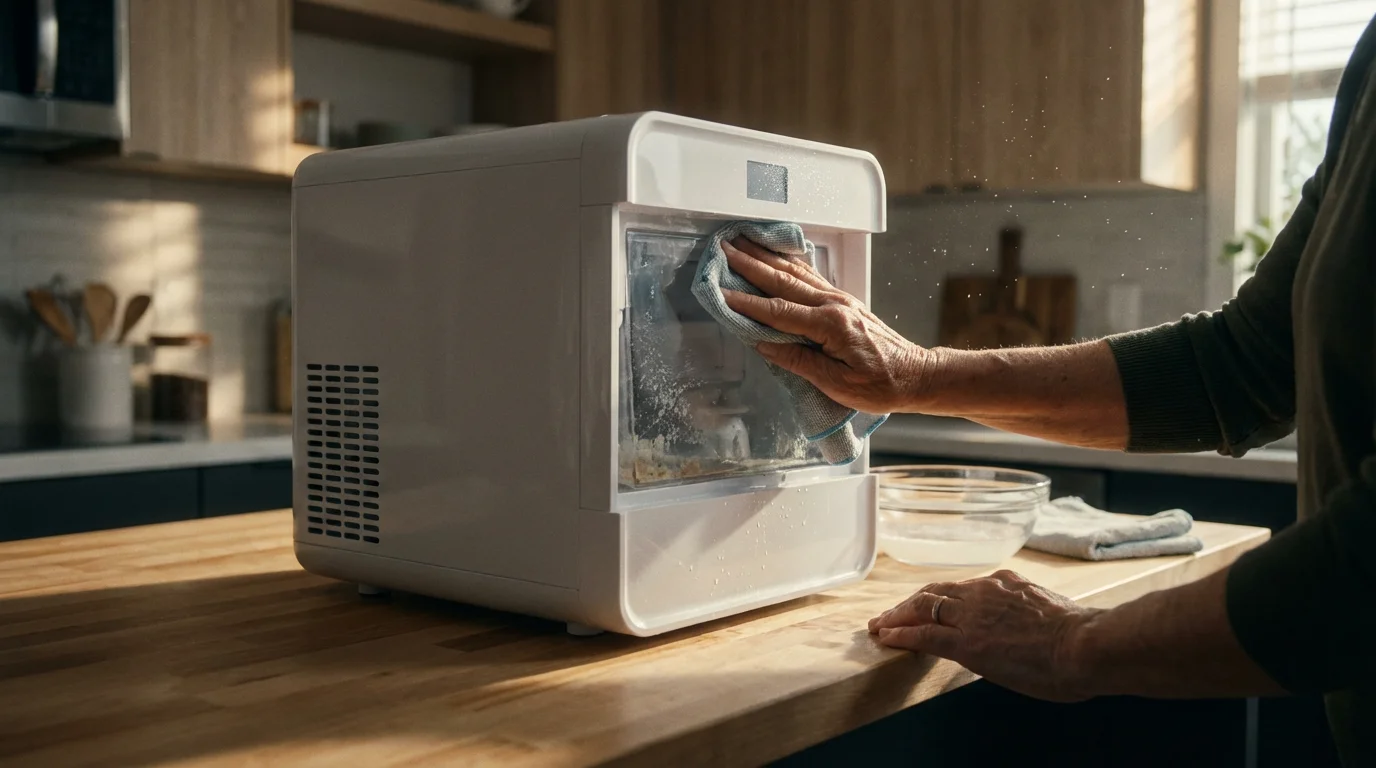
- Regular Cleaning: Clean your ice maker thoroughly at least once a month, or more frequently if you use it daily or notice any discoloration or film. Drain all water from the reservoir using the drain plug. Wipe down the interior surfaces, including the water tray and ice basket, with a soft cloth and a mixture of equal parts water and white vinegar, or a dedicated ice maker cleaning solution. This mixture helps dissolve mineral deposits and kills mold and bacteria. After cleaning, rinse the unit thoroughly by running a few cycles with clean water and draining it each time, ensuring no cleaning solution residue remains.
- Use Filtered Water: Tap water contains minerals like calcium and magnesium, which can build up over time, forming scale on internal components like the evaporator and pump. This mineral buildup reduces efficiency, slows ice production, and can eventually damage the machine’s sensitive parts. Using filtered or distilled water significantly reduces mineral deposits, extending the life of your ice maker and ensuring cleaner, better-tasting ice.
- Keep Vents Clear: Ensure the air vents, usually located on the sides or back of the unit, remain unobstructed. The compressor, the heart of your ice maker, generates heat, and the vents allow this heat to dissipate. Good airflow is critical for the compressor to operate efficiently, prevent overheating, and maintain optimal ice production speed. Place your ice maker with at least 4-6 inches of clearance from walls or other appliances.
- Empty and Dry Before Storage: If you do not plan to use your ice maker for an extended period, drain all water from the reservoir and internal lines. Then, clean it thoroughly as described above, and leave the lid open for several hours to allow it to air dry completely. Storing a damp unit can lead to mold and mildew growth. Once dry, store it in a cool, dry place.
- Inspect Regularly: Periodically inspect the unit for any signs of leaks, cracks, or unusual sounds during operation. A persistent grinding or rattling noise could indicate an issue with the fan or compressor. Addressing minor issues early can prevent major malfunctions and costly repairs.
Addressing common failure points proactively, such as mineral buildup or compressor strain due to poor ventilation, directly impacts the appliance’s durability. A well-maintained ice maker not only performs better but also significantly reduces the likelihood of needing repairs or premature replacement, safeguarding your investment.
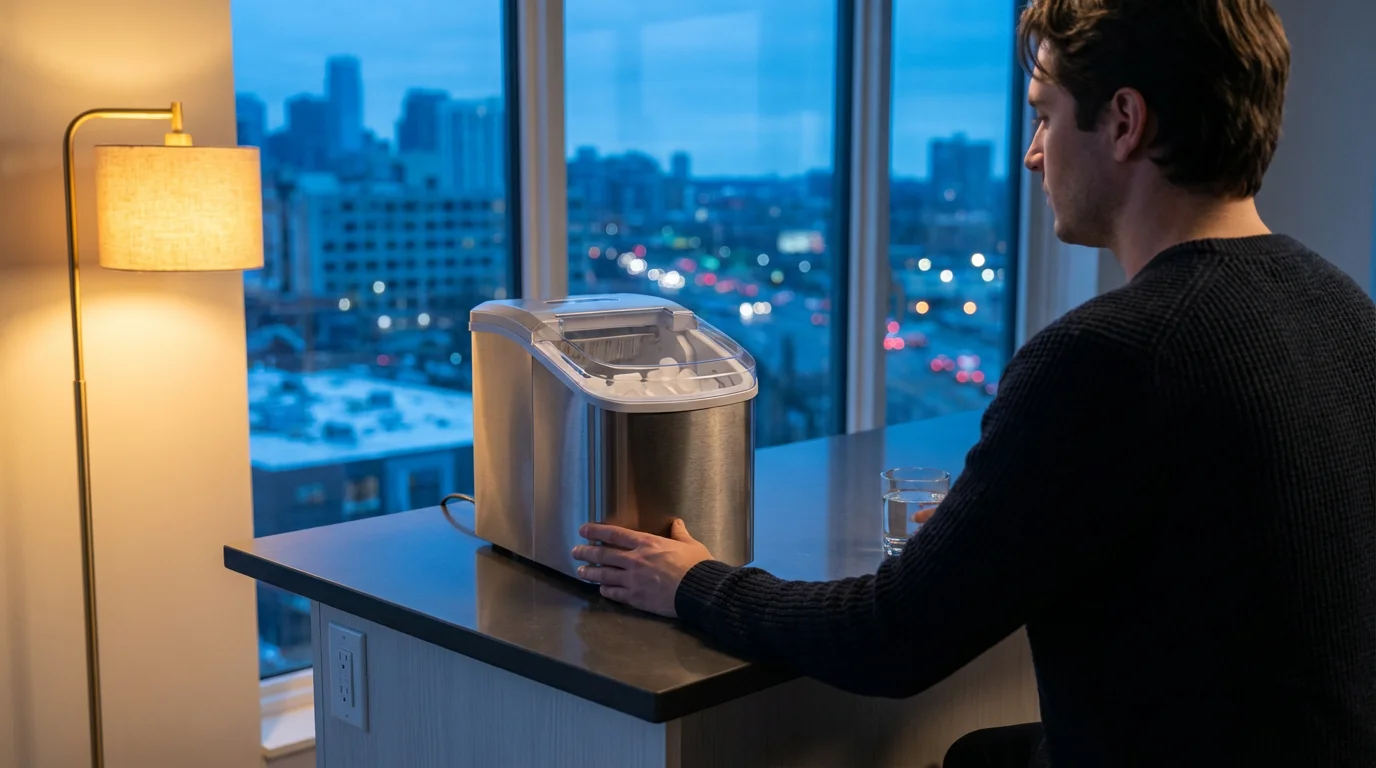
Energy Consumption and Noise Levels
While often seen as a luxury item, countertop ice makers are designed for intermittent use. Understanding their energy consumption and noise levels helps you integrate them seamlessly into your home without unexpected utility spikes or constant disruption.
Energy Usage
Most portable ice makers operate between 100-200 watts. This wattage, which measures how much power an appliance uses, is relatively low compared to larger kitchen appliances like dishwashers (1200-2400W) or ovens (2000-5000W). However, unlike a refrigerator that runs continuously to maintain a set temperature, an ice maker typically cycles on to make ice and then goes into a “standby” or “ice full” mode, where it might keep the ice cold or simply allow it to melt back into the reservoir for re-freezing. If you use your ice maker for an hour or two a day to fill an ice bucket, its energy impact is minimal. For example, a 120-watt ice maker used for 2 hours a day consumes about 0.24 kWh (kilowatt-hours). At an average US electricity cost of $0.16 per kWh, this equates to roughly $0.04 per day or about $1.20 per month. Continuous operation, however, will naturally consume more. Opting for models with good insulation and efficient compressors can help minimize energy waste, as they spend less time actively freezing and can hold ice slightly longer before it melts.
Noise Levels
Noise is a common concern, especially for appliances in open-plan living areas or home bars where quiet is appreciated. Ice makers produce noise from two main sources: the compressor and fan, and the dropping of ice into the basket. The compressor and fan create a low hum, similar to a mini-fridge or a desktop computer fan, typically ranging from 45-55 dB. The sound of ice dropping can be more noticeable, particularly when the basket is empty, creating a clattering sound. While manufacturers rarely provide exact decibel ratings, user reviews often highlight models that are “surprisingly quiet” or “noticeably loud.” Generally, models under 50 dB are considered acceptable for most environments, blending into typical household background noise without being overtly disruptive. Nugget ice makers tend to be slightly noisier due to their more complex ice-making mechanism, involving grinding and compressing ice flakes, which can generate a distinct whirring sound. Bullet ice makers are often among the quietest options. Consider placement when noise is a factor. Placing the ice maker on a solid, level surface away from direct earshot, perhaps in a less trafficked corner of the kitchen or on a sturdy bar cart, can help mitigate perceived noise levels. Avoiding hollow or resonant surfaces also helps reduce noise amplification.
Making Your Final Decision
Selecting the ideal countertop ice maker involves balancing your ice needs, budget, and available kitchen space. Your goal is to find an appliance you will actually use regularly, not one that gathers dust after the novelty wears off. Review these questions to guide your choice and ensure your investment delivers consistent satisfaction:
- What type of ice do you prefer, and how important is it? If nugget ice is a non-negotiable for your daily soft drinks, prepare for a higher investment in a specialized machine. For basic chilling in beverages, bullet ice makers offer excellent value and speed. If you frequently mix cocktails and prioritize presentation and minimal dilution, a clear ice maker is your best bet.
- How much ice do you need daily, and for what purposes? A single person or couple might be perfectly content with a 26 lb/day machine for their daily iced coffee or water. However, if you regularly entertain, host large families, or fill coolers for events, a 30 lbs/day or 40+ lbs/day unit will be far more practical and prevent constant monitoring and refilling.
- How critical is immediate speed for your first batch of ice? Most bullet ice makers produce ice in under 10 minutes, making them perfect for on-demand use and spontaneous needs. Nugget and clear ice makers take longer for the first batch, typically 15-30 minutes, so plan accordingly if you choose one of these.
- What are your kitchen’s space constraints? Measure your counter space precisely, accounting for depth, width, and height. Remember to leave space around the unit for ventilation. A bulky ice maker in a cramped kitchen quickly becomes a nuisance. Consider how it will fit visually and functionally.
- How important are noise levels in your home environment? If it will sit in a quiet area, an open-concept kitchen, or near a home office, prioritize models known for quieter operation. Check user reviews for feedback on noise.
- How much maintenance are you willing to do? All ice makers require cleaning, but self-cleaning features significantly simplify the process. If you prefer minimal upkeep, a self-cleaning model using filtered water will save you time and effort in the long run.
Your best countertop ice maker should be an appliance you use often and find indispensable. It should fit seamlessly into your lifestyle, whether it is for daily chilled water, crafting sophisticated cocktails, or keeping guests’ drinks perfectly cold. By considering these practical aspects and matching features to your real-world needs, you ensure your purchase provides long-term satisfaction and never becomes another appliance gathering dust.
Frequently Asked Questions
Can I leave water in my ice maker when not in use?
It is generally not recommended to leave water in the reservoir for extended periods when not in use. Stagnant water can lead to mold, mildew, and bacterial growth, affecting the taste and safety of your ice. Always drain the water, clean the unit, and let it dry if you do not plan to use it for more than a day or two, especially in warm climates.
Do countertop ice makers keep ice frozen?
No, most countertop ice makers are not freezers. They produce ice, but their internal insulation only keeps the ice cold enough to slow melting for a short period. Any ice produced will eventually melt back into the water reservoir to be re-frozen. For long-term storage, transfer ice to your freezer’s ice bin.
How often should I clean my portable ice maker?
You should clean your portable ice maker at least once a month if you use it regularly. If you use it daily, or if you notice any unusual odors or slime, clean it more frequently. Using filtered water can reduce mineral buildup, but regular sanitization remains essential to prevent bacterial growth and maintain ice quality.
What type of water should I use in my ice maker?
Using filtered or distilled water is highly recommended. Tap water contains minerals that can cause scale buildup on internal components, reducing efficiency and potentially damaging the machine over time. Filtered water also results in cleaner, better-tasting ice and extends the lifespan of your appliance.
What is the typical lifespan of a countertop ice maker?
The typical lifespan of a countertop ice maker ranges from 2 to 5 years, depending on the model’s quality, frequency of use, and adherence to maintenance. Higher-end models with robust compressors and better build quality often last longer. Regular cleaning and using filtered water are the most significant factors in maximizing your unit’s longevity.
Disclaimer: Product prices, features, and availability change frequently. Prices shown were accurate at time of writing but may have changed. We may earn a small commission from purchases made through links on this site, at no extra cost to you. Always verify current pricing and specifications on the retailer’s website before purchasing.
Leave a Reply